This is a repository copy of Genomic and proteomic identification of Late Holocene remains: Setting baselines for Black Sea odontocetes.
White Rose Research Online URL for this paper: http://eprints.whiterose.ac.uk/120386/
Version: Accepted Version
Article:
Biard, Vincent, Gol'din, Pavel, Vishnyakova, Karina et al. (6 more authors) (2017) Genomic and proteomic identification of Late Holocene remains: Setting baselines for Black Sea odontocetes. Journal of Archaeological Science Reports. ISSN 2352-409X
https://doi.org/10.1016/j.jasrep.2017.07.008
Reuse
This article is distributed under the terms of the Creative Commons Attribution-NonCommercial-NoDerivs (CC BY-NC-ND) licence. This licence only allows you to download this work and share it with others as long as you credit the authors, but you can’t change the article in any way or use it commercially. More
information and the full terms of the licence here: https://creativecommons.org/licenses/
Takedown
If you consider content in White Rose Research Online to be in breach of UK law, please notify us by
TITLE
1 2
Genomic and proteomic identification of Late Holocene remains: setting baselines for Black
3 Sea odontocetes 4 5 AUTHORS 6 7
Vincent Biard1*, Pavel GolÕdin2, Elena Gladilina2, 3, Karina Vishnyakova2,3, Krista McGrath4,
8
Filipe G. Vieira1, Nathan Wales1, Michael C. Fontaine5, Camilla Speller4, and Morten Tange
9 Olsen1* 10 11 AFFILIATIONS 12 13 1
Section for Evolutionary Genomics, Natural History Museum of Denmark, University of
14
Copenhagen, ¯ster Voldgade 5-7, 1350 Copenhagen K, Denmark
15 2
Schmalhausen Institute of Zoology, National Academy of Sciences of Ukraine, 15 Bogdan
16
Khmelnytskyi Street, Kiev, 01601, Ukraine
17 3
Ukrainian Scientific Centre of Ecology of the Sea, 89 Frantsuzsky Blvrd., Odessa, 65009,
18
Ukraine
19 4
BioArCh, Department of Archaeology, University of York, Environment Building, York,
20
North Yorkshire YO10 5DD, UK
21 5
Groningen Institute for Evolutionary Life Sciences (GELIFES), University of Groningen, PO
22
Box 11103 CC, Groningen, The Netherlands
23 24 CORRESPONDING AUTHORS 25 26 *Vincent Biard 27
4 Rue Roger Senturenne, D103
28
33140 Villenave dÕOrnon, France
29
E-mail: [email protected]
30 31
*Morten Tange Olsen
32
Section for Evolutionary Genomics
33
Natural History Museum of Denmark
34
University of Copenhagen
35
¯ster Voldgade 5-7
36
1350 Copenhagen K, Denmark
37
Fax: +45 353210102
38
E-mail: [email protected]
ABSTRACT
42
43
A critical challenge of the 21st century is to understand and minimise the effects of human
44
activities on biodiversity. Cetaceans are a prime concern in biodiversity research, as many
45
species still suffer from human impacts despite decades of management and conservation
46
efforts. Zooarchaeology constitutes a valuable approach for informing conservation and
47
management decisions by providing baseline information on the past distribution and human
48
uses of species. However, traditional morphological species identification of mixed
49
assemblage bones can be challenging, particularly in the case of cetaceans. To address this
50
issue, we applied and evaluated the performance of three biomolecular approaches Ð Sanger
51
sequencing, shotgun sequencing and collagen peptide fingerprinting (ZooMS) Ð for species
52
identification in a mixed assemblage of 800 to 1600 years old odontocete (toothed whale)
53
samples from the site of Chersonesus in Crimea, Ukraine. We found that ZooMS allowed for
54
identification to the taxonomic level for 28 of our 30 samples (>90%), identifying them as
55
either ÒporpoiseÓ or ÒdolphinÓ, and approximately half of those samples could be further
56
identified to species level with the shotgun sequencing approach. In addition, shotgun
57
sequencing produced several complete ancient odontocete mitogenomes and auxiliary nuclear
58
genomic data for further exploration in a population genetic context. In contrast, both
59
morphological identification and Sanger sequencing lacked taxonomic resolution and/or
60
resulted in misclassification of samples. We found that the combination of ZooMS and
61
shotgun sequencing provides a powerful tool in zooarchaeology, and here allowed for a
62
deeper understanding of past marine resource use and its implication for current management
63
and conservation of Black Sea odontocetes.
64
3 67
Species identification; mixed assemblage; odontocete; ZooMS; shotgun sequencing; Sanger
68
sequencing; mitogenome.
69
INTRODUCTION
71
72
One of the critical challenges of the 21st century is to investigate and reduce the negative
73
effects of human activities on the EarthÕs biodiversity. To address these issues, detailed
74
baseline information on the ecology and evolution of plant and animal populations and
75
species is required, including information on past abundance, distribution, species life history
76
or phenology, as well as historic and prehistoric human resource use, context and impacts.
77
While this is true for much of EarthÕs biota, cetaceans constitute an iconic group where many
78
species and populations, despite decades of management and conservation efforts, still suffer
79
from past and present human impacts, such as overexploitation, habitat alterations, bycatch,
80
and ocean noise (Schipper et al. 2008; Pimm et al. 2014).
81
82
Zooarchaeology is particularly suited to provide such baseline information, as this approach
83
documents a broad range of direct material evidences of animals, including their abundance,
84
distribution, diversity, population structure and individual traits, as well as long-term changes
85
of these parameters (Steadman 1995; Dietl et al. 2015; Hofman et al. 2015). However, in the
86
case of cetaceans, accurate identification of species constitutes a special problem. On many
87
archaeological sites, cetacean assemblages contain multiple species (Mulville 2002), which
88
are represented by only incomplete fragments of postcranial bones and often are considered to
89
be non-diagnosable by morphological methods (Mulville 2002; Amundsen et al. 2013). For
90
example, isolated vertebrae of Delphinus sp. are hardly discriminated from Stenella sp., small
91
Tursiops sp. or Steno sp. Furthermore, in an assemblage containing kitchen refuse of
92
Delphinus sp., Stenella sp. and Tursiops sp., most of postcranial fragments were unidentified,
93
unlike well informative cranial and, in particular, dental remains (Cooke et al. 2016). In
5
cetaceans, caudal vertebrae (comprising 35Ð50% of all vertebrae, depending on the species)
95
and vertebral centra with missing processes are especially difficult for diagnostics. This may
96
also be true for other mammalian groups, but many terrestrial mammalian taxa are often
97
represented by a single species in each assemblage or a few species of different size
98
categories and, thus, are more easily discriminated (Dunnell 1971; Grayson 1984).
99
100
The ability to extract and analyse ancient DNA (aDNA) from subfossil material have greatly
101
contributed to the resolution of this problem (Willerslev & Cooper 2005), allowing for
102
determining the species identity of e.g. historical whale remains from whaling stations at
103
South Georgia (Lindqvist et al. 2009; Sremba et al. 2010). Moreover, although driven
104
primarily by research in human (Briggs et al. 2009; Rasmussen et al. 2010; Allentoft et al.
105
2015) and terrestrial megafauna evolution (Gilbert et al. 2008; Lorenzen et al. 2011; Dabney
106
et al. 2013a), several studies have utilized aDNA to assess the evolutionary and demographic
107
history of cetaceans (see Foote et al. 2012a). For instance, McLeod et al. (2012) have
108
examined the demographic history of bowhead whales (Balaena mysticetus) in the Canadian
109
Arctic using mitochondrial DNA fragment, and have revealed a population expansion over
110
the past 30,000 years BP. Similar historic inference have been made from Eastern Atlantic
111
bowhead whales (Foote et al. 2013), as well as common bottlenose dolphin (Tursiops
112
truncatus) (Nichols et al. 2007), killer whales (Orcinus orca) (Foote et al. 2009) and North
113
Atlantic right whales (Eubalaena glacialis) (McLeod et al. 2010).
114
115
To date, most molecular approaches for ancient cetacean species determination have been
116
based on Sanger sequencing of short fragments of mitochondrial genes such as cytochrome-b
117
(CytB), ribosomal 12S or cytochrome oxidase-I (COI). However, for highly degraded
material, sufficient DNA template may not be preserved, or this approach might not yield
119
sufficient coverage and resolution for species distinction Ð in particular if these are from
120
closely related species (Goldstein & DeSalle 2011). Moreover, the focus on a single short
121
fragment often limits additional population genetic inference of evolutionary and
122
demographic trajectories, as well as associated historical anthropogenic and climatic impacts.
123
The recent development of peptide mass fingerprinting of bone collagen (ZooMS), where
124
species identification can be accomplished by comparing ancient peptide fingerprints to
125
modern reference databases, allows for analysis of degraded ancient material otherwise
126
suboptimal for DNA analysis (Buckley et al. 2009; Welker et al. 2015). However, due to the
127
relatively slow rate of evolution within the collagen chains, taxonomic resolution is often
128
limited to the genus or even family level. Studies combining analysis of aDNA Sanger
129
sequencing and collagen targeting have successfully been applied to a few diverse
130
assemblages of baleen whales (Buckley et al. 2014; Evans et al. 2016; Speller et al. 2016),
131
however for some species and materials, even the combined use of these methods may not
132
provide sufficient resolution for species identification. By generating massive amounts of data
133
across the genome, short-read DNA ÒshotgunÓ sequencing techniques may circumvent the
134
obstacles of aDNA fragmentation and taxonomic resolution, as well as provide additional data
135
for population genetic inference of demography and phylogeography (Leonardi et al. 2016).
136
Thus, the approach has a great potential to become the gold standard for species identification
137
of ancient material. However to date the applicability of shotgun sequencing relative to
138
Sanger sequencing and collagen profiling have not been evaluated..
139
140
All three odontocete populations inhabiting the Black Sea, the common bottlenose dolphin
141
(Tursiops truncatus), the short-beaked common dolphin (Delphinusdelphis) and the harbour
7
porpoise (Phocoenaphocoena), though of widespread species, are recognized as separate
143
subspecies and of special management and conservation concern. The IUCN has classified the
144
Black Sea harbour porpoise (P. p. relicta) and the Black Sea bottlenose dolphin (T. t.
145
ponticus) as endangered (Birkun Jr & Frantzis 2008; Birkun Jr 2012) and the Black Sea
146
common dolphin (D.d.ponticus) as vulnerable (Birkun Jr 2008). These have all been
147
severely depleted by decades of extensive hunting (Kleinenberg 1956; Birkun Jr 2002a), and
148
are now affected by fisheries bycatch and consequences of ctenophore Mnemiopsis leidyi
149
invasion, undermining their trophic base (Bushuev 2000; Vishnyakova & Gol'din 2015b). The
150
common bottlenose dolphin (Viaud-Martinez et al. 2008; Moura et al. 2013) and short-beaked
151
common dolphin (Amaral et al. 2007) both appear to have colonised the Black Sea a few
152
thousand years ago. Similarly, it has been suggested that a relict harbour porpoise population
153
in the Eastern Mediterranean founded the Black Sea population a few thousand years after the
154
reconnection of the two basins, probably tracking suitable habitats (Fontaine et al. 2012;
155
Fontaine et al. 2014; Fontaine 2016). Moreover, in contrast to the two other odontocete
156
species present in the basin, the Black Sea harbour porpoise is unique in its isolation to other
157
populations situated in the Atlantic Ocean, around 4,000 km apart. Its absence from the
158
Mediterranean Sea, already noted by Aristotle (350 BC) (Frantzis et al. 2001), might be the
159
consequence of changing oceanic conditions, notably warming temperatures and low
160
productivity of Mediterranean ecosystems (Thunell et al. 1977; Thunell 1979; Fontaine
161
2016). Thus isolated, the Black Sea harbour porpoise has evolved distinct morphological and
162
genetic characteristics (Viaud-Mart’nez et al. 2007; Galatius & GolÕdin 2011), and additional
163
sub-structuring might even exist among the different water bodies of the Black Sea region
164
(Gol'din 2004; GolÕdin & Vishnyakova 2016), although this question requires further
165
investigations.
167
Here we tested the applicability of different species identification methods on a mixed
168
assemblage of odontocete (toothed whale) zooarchaeological remains excavated at the site of
169
Chersonesus on the Black Sea coast of Crimea, Ukraine. Specifically, we i) compared and
170
evaluated the performance of four approaches: morphology, Sanger sequencing, collagen
171
peptide mass fingerprinting (ZooMS), and shotgun sequencing of short-read DNA; and ii)
172
discuss our findings in the context of historic marine resource use, and in relation to setting
173
baselines for contemporary conservation and management schemes in the region. To our
174
knowledge this is one of the first studies to utilise the full extent of recent genomic and
175
proteomic techniques to identify and analyse highly degraded ancient odontocete material.
176
Importantly, although the present focus is on odontocetes, our findings should apply to other
177
organisms and study systems.
178
MATERIALS & METHODS
180
181
Study site
182
183
Chersonesus (also known as Chersonesus Taurica or Tauric Chersonesus = Chersonese) is
184
located on the Black Sea coast in the southern Crimea (Supplementary Figure S1). It was the
185
greatest city, trade and cultural centre of the northern Black Sea region during the Hellenistic,
186
Roman and Byzantine ages between 2400Ð600 years BP (Strabo 1929; Porphyrogenitus 1993;
187
Carter & Mack 2003). Founded by Greeks from Asia Minor, it was populated by colonists
188
and visited by traders from various Black Sea and Mediterranean localities, and thus, the
189
archaeology of the city shows a great variety of regional economic and cultural practices
190
(Kadeev 1970; Kadeev & Sorochan 1989). In particular, marine fisheries and seafood played
191
an important role in economy and diet of the Chersonesus population, and diverse marine
192
fauna was reported from zooarchaeological evidence, as well as from art representations and
193
some descriptive sources (Semenov-Zuser 1947; Kadeev 1970; H¿jte 2005; Morales et al.
194
2007).
195
196
Zooarchaeological material
197
198
The zooarchaeological material comprised 259 samples of small toothed whales excavated in
199
2011-2013 from the Kruze basilica and adjoining area in Chersonesus (Ushakov 2011),
200
consisting of partial skulls and skull fragments, mandibles, ear bones, isolated teeth, sternum
201
bones, humeri, partial vertebrae, epiphyses of vertebral bodies, ribs and rib fragments and
202
pelvic bones. Of these, 30 samples of vertebrae, teeth, mandibles, epiphyses and skull
fragments were used for comparison of species identification methods, as representing
204
individuals that were identified as different specimens in terms of morphology, taphonomy
205
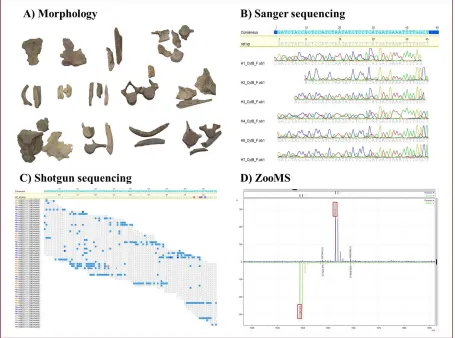
and archaeological context (Table 1, Figure 1A). The samples dates ranged from 1600 to 800
206
years BP based on the archaeological context, as presented by age-specific ceramics and coins
207
(Ushakov 2011, 2013; Ushakov et al. 2013); but most of specimens came from the layers
208
dated as 1600-1500 years BP (400-530 CE).
209
210
Morphological species identification
211
212
Based on morphological characteristics, the majority of the samples were assigned to species
213
level (Supplementary Table S1). Identification was conducted by comparing the samples with
214
museum collection specimens (Supplementary Figure S2). Specifically, all three species are
215
well distinguished from their teeth, skull vertices, facial skulls, ear bones, sternum, humerus
216
and pelvic bones (Supplementary Table S2). In addition, bottlenose dolphins are significantly
217
larger than harbour porpoises in all dimensions, independent of ontogenetic age. In contrast to
218
the above distinctions, vertebrae and ribs are less indicative than other bones. Generally,
219
vertebrae of bottlenose dolphins can be identified from their relative large size, and those of
220
common dolphins by their narrow bodies and long spines. However, incomplete vertebrae can
221
generally only be provisionally identified. Here, as for ribs, they were identified to species
222
only with other associated bones.
223
224
Genetic species identification
225
226
DNA extraction
11 228
All DNA extractions were conducted in a designated clean laboratory for ancient DNA
229
analysis at the Centre for GeoGenetics, Natural History Museum of Denmark. First, the outer
230
layer of the bone was removed by drilling and bleaching to limit contamination from soil
231
composition. Then, 72 to 420mg of cleaned bone powder was obtained by drilling the bones
232
inner part or, when drilling was impossible, by grinding of the full samples. Drilling was
233
performed using a Dremel with a rounded drill head, running at <1000rpm to minimise
234
heating of the sample. DNA was extracted using a silica-in-solution method (Rohland &
235
Hofreiter 2007; Dabney et al. 2013a; Allentoft et al. 2015). Extraction blanks were included
236
in each batch to monitor potential contamination. DNA quality and quantity was assessed
237
using High Sensitivity D1000 ScreenTape for 2200 TapeStation (Agilent Technologies) and a
238
Qubit¨ 2.0 Fluorometer. The former estimates peak molarities of the short-fragment
239
component of the DNA extracts, and is hence expected to provide the most reliable
240
approximation of DNA concentration in our subfossil samples.
241
242
Endogenous DNA content
243
244
The DNA extracts were tested for the presence and amount of endogenous (odontocete) DNA
245
by real time qPCR using previously designed primers specifically developed for odontocete
246
species identification by targeting a 43bp region of the CytB gene (Foote et al. 2012b).
247
qPCRs were performed on a Stratagene Mx3000P (Agilent Technologies) and each 25µL
248
reaction contained 2µL of DNA, 1 x PCR buffer, 2.5mM MgCl2, 0.8µg/µL BSA, 0.4µM of 249
each primer, 0.25µM mixed dNTPs, 1µL SYBR Green and 0.25µL AmpliTaq Gold¨ enzyme
250
(Applied Biosystems). Thermocycling was performed at 95¡C for 10 min, 55 cycles of 95¡C
for 30sec, 55¡C for 30sec and 72¡ for 30sec, and concluded by a dissociation step at 95¡C for
252
1min, 50¡C for 30sec and 95¡C for 30sec. DNA extracts were used at 1:5, 1:10 and 1:20
253
dilution. Furthermore, for each qPCR reaction, one PCR blank (containing ddH2O instead of 254
sample) was run in triplicate to control eventual contamination during the qPCR set up. The
255
qPCRs also included a standard, composed of 1:1, 1:10, 1:100 and 1:1000 dilution of modern
256
DNA from a harbour porpoise, which was run in triplicate to monitor the specificity of the
257
amplification. The Ct values (cycle threshold) and amplification efficiency was determined
258
using the Pfaffl method (Pfaffl 2001). The Ct value refers to the numbers of cycles needed to
259
observe the amplification of the DNA template, as the fluorescence level is correlated to the
260
amount of double stranded DNA that is synthetized. Such approach is therefore more specific
261
targeting, theoretically, only endogenous DNA. The Ct values were determined in the
262
exponential phase of the qPCR amplification and normalized to the standard for comparison
263
between the different qPCR assays.
264
265
Furthermore, to investigate the eventual impact of the quantity of starting material in the
266
DNA retrieval from the archaeological material, we compared the amounts of bone powder
267
with extract peak molarities and the normalized Ct values from the qPCR assays.
268
269
Species identification by Sanger sequencing
270
271
To illustrate the traditional approach to species determination, the qPCR products were used
272
as a template for PCR amplification and Sanger sequencing using the CytB primers
273
mentioned above (Figure 1B). Each 25µL reaction contained 2µL of qPCR product, 1 x PCR
274
13
0.2µL AmpliTaq Gold¨ enzyme (Applied Biosystems) under thermocycling 95¡C for 5min,
276
25 cycles of 95¡C for 30sec, 55¡C for 30sec and 72¡C for 30sec, finishing by 72¡C for 7min.
277
The resulting PCR products were visualised by electrophoresis on 2% agarose gel and
278
positive PCRs were purified and sent for Sanger sequencing at Macrogen¨, Korea.
279
280
Species identification by shotgun sequencing
281
282
In order to test the applicability of shotgun sequencing of short-read sequence data for species
283
determination (Figure 1C), DNA extracts were converted to Illumina indexed libraries using
284
the NEBNext¨ DNA Library Prep Master Mix Set for 454ª (New England BioLabs¨). The
285
resulting libraries were tested by real time qPCR to determine the optimal number of cycle for
286
the library PCR amplification prior to sequencing. qPCRs were performed on a Stratagene
287
Mx3000P (Agilent Technologies) and each 100µL reaction contained 20µL of 1:20 diluted
288
library, 1 x PCR buffer, 2.5mM MgCl2, 0.6µg/µL BSA, 0.2µM of each primer (PE1.0 and 289
Index), 0.15µM mixed dNTPs, 1µL SYBR Green and 2µL AmpliTaq Gold¨ enzyme (Applied
290
Biosystems) under thermocycling 95¡C for 12min, 40 cycles of 95¡C for 20sec, 60¡C for
291
30sec and 72¡ for 40sec, finishing by 72¡C for 5min.
292
293
Libraries were amplified by PCR under the above-described conditions (excluding SYBR
294
green). Amplified libraries were purified using the QIAquick¨ PCR Purification Kit
295
following the manufacturerÕs instructions, and then tested for quality and quantity using High
296
Sensitivity D1000 ScreenTape for 2200 TapeStation (Agilent Technologies). The final
297
libraries were pooled into two groups (BS_01 to BS_17 and BS_18 to BS_30) to equimolarity
298
based on the 2200 TapeStation profiles and single read sequenced on respectively one lane
and a partial lane of the Illumina HiSeq 2000 platform. Moreover, five samples (BS_07,
300
BS_10, BS_11, BS_12 and BS_15) were re-sequenced on a partial lane. The library of the
301
sample BS_16 did not reveal any insert based on the DNA profile and was consequently not
302
sequenced.
303
304
Given the lack of nuclear reference genomes for most cetaceans and general low yield of
305
endogenous nuclear DNA from zooarchaeological material, the genetic species determination
306
was done by use of mitochondrial genomic data (mitogenomes). First, sequencing adapters
307
were removed from the de-multiplexed reads and reads shorter than 30bp were discarded
308
using the program AdapterRemoval 1.5.4 (Lindgreen 2012). Then, all reads were mapped to
309
reference mitogenomes of the harbour porpoise (Accession number NC005280) and
310
bottlenose dolphin (Accession number KF570325). Full mitogenomes are not available for
311
short-beaked common dolphin so reference data for this species was created by compiling
312
available mtDNA sequence fragments in GenBank (Accession numbers KC312628,
313
AB481388, and EU685091), as well as by mapping the short-read data to the mitogenome of
314
a sister species, the long-beaked common dolphin (Delphinus capensis) (Accession number
315
NC012061). Mapping was done using the program BWA 0.7.5a-r405 (Li & Durbin 2009),
316
reads were quality filtered (Q>30) using the program samtools 1.2 (Li et al. 2009), and PCR
317
duplicates were removed using the program Picard (http://picard.sourceforge.net) before
318
being imported into Geneious (Kearse et al. 2012). Also, to aid in species identification by
319
phylogenetic matching, we constructed a phylogenetic tree, including all mitogenome
320
references and samples presenting high coverage mitogenomes, using the MrBayes 3.2.2.
321
(Huelsenbeck & Ronquist 2001) plugging in Geneious. The mitogenome reference of the
322
Ginkgo-toothed beaked whale (Mesoplodon ginkgodens) (Accession number NC027593) was
15
used as an out-group. Four independent chains for 1,000,000 generations under the
General-324
time-reversible (GTR) model substitution were performed, with a burn-in length of 100,000
325
generations, and a sampling frequency of 5,000 generations.
326
327
Taxonomic identification by collagen peptide mass fingerprinting (ZooMS)
328
329
The identification of zooarchaeological remains through peptide mass fingerprinting of bone
330
collagen (also known as ZooMS) has been applied in several contexts, including the
331
identification of marine mammals (Buckley et al. 2014; Evans et al. 2016; Speller et al.
332
2016). We applied ZooMS to 29 of the odontocete samples after they had been processed for
333
ancient DNA analysis (BS_16 was destroyed entirely during DNA analysis). The samples
334
were processed in BioArCh, University of York, using protocols for ancient bone (Buckley et
335
al. 2009). We immersed ca. 10-30mg of bone in 250µL of 0.6M hydrochloric acid at 4ûC until
336
the samples were demineralised. The samples were centrifuged and the supernatant discarded,
337
before being rinsed in 200µL of 0.1M NaOH to remove humics and other chromophoric
338
compounds. The NaOH was removed, and the samples were rinsed three times in 200µL of
339
50mM ammonium bicarbonate solution (NH4HCO3) pH 8.0 (AmBic). A final 100µL of
340
AmBic was then added to the samples, followed by incubation for one hour at 65¡C to
341
gelatinise the collagen; 50µL of this supernatant was incubated overnight at 37¡C with 0.4µg
342
of trypsin, then acidified to < pH 4 with 0.1% trifluoroacetic acid (TFA), and purified using a
343
100µl C18 resin ZipTip¨ pipette tip (EMD Millipore). 344
345
For mass spectrometry, we combined 1µL of extract with 1µL of matrix (α
-cyano-346
hydroxycinnamic acid) and spotted them in triplicate along with calibration standards onto a
Bruker ground steel target plate and ran them on a Bruker ultraflex III MALDI TOF/TOF
348
mass spectrometer, resulting in 90 individual spectra. Spectra were analyzed using the mMass
349
software (Strohalm et al. 2008); spectra with low signal to noise ratios, or few to no discrete
350
peaks were eliminated from the dataset. We averaged spectra from replicates of the same
351
sample and compared them to the list of m/z markers for both marine and non-marine
352
mammals (Buckley & Kansa 2011; Kirby et al. 2013; Buckley et al. 2014). We assigned
353
taxonomic identifications at the most conservative level of identification (genus, or family
354
level) based on the presence of unambiguous m/z markers (Figure 1D).
355
356
Population genetic analyses
357
358
Finally, we illustrate the additional use of short-read DNA sequence data from ancient
359
odontocetes in a population genetic context by assembling and comparing it with publically
360
available modern sequences from studies on same species and geographical regions. As an
361
example, the ancient Black Sea harbour porpoise sequences were aligned with a 706bp
362
fragment of the mitochondrial region of 64 modern harbour porpoise from the Black Sea and
363
the Aegean Sea from Fontaine et al. (2012) and a parsimony-based TCS haplotype network
364
was created using PopART ver. 1.7 (Leigh & Bryant 2015). This species was chosen based on
365
the availability of modern reference data.
366
367
368
17
RESULTS
370
371
Morphological species determination
372
373
A total of 30 odontocete samples were analysed, comprising 16 vertebrae, four mandibles,
374
four individual teeth, three epiphyses, two skulls and one occipital condyle (Table 1). Of
375
these, 14 were morphologically identified as bottlenose dolphin remains, 12 were identified as
376
harbour porpoises, one was identified as a short-beaked common dolphin, and three were
377
unidentified.
378
379
Genetic species identification
380
381
Endogenous DNA content
382
383
The DNA concentrations were between 0.42ng/µL and 68.0ng/µL with an average of
384
4.96ng/µL, and peak molarities were ranging from 0.15nmol/L to 42.5nmol/L, with an
385
average concentration of 10.12nmol/L (Supplementary Table S3). The average amplification
386
efficiency of the qPCR assay was of 98.1±1.7%, and the melting curves were composed of
387
single peaks for most of the samples, indicating the successful amplification of DNA from
388
subfossil odontocetes. In a few samples, we also observed amplification in both extraction
389
and qPCR blanks. However, these amplifications started after 40 cycles, more than 10 cycles
390
after the amplification start of the latest amplified sample, and melting curves revealed qPCR
391
products that were different from the standard (Supplementary Figure S3). We therefore
392
attributed these amplifications to the formation of primer dimers and to the high number of
cycles performed compare to modern DNA template qPCR assays. A PearsonÕs correlation
394
was run to determine the relationship between the amounts of bone powder and the extract
395
peak molarities and no direct correlation was observed (r (28) = -0.042, P>0.5) (Figure 2 A).
396
Rather there seemed to be a weak but nonsignificant correlation with Ct values (r (28) =
-397
0.250, P>0.1) (Figure 2 B), indicating that amount of starting material determines endogenous
398
DNA yield, although it is not statistically significant.
399
400
Species identification by Sanger sequencing
401
402
In the Sanger sequencing approach, CytB sequence chromatograms were obtained from 28 of
403
the 30 samples. However, the quality of the data was poor and chromatograms difficult to
404
score, leaving uncertainties in the base calls. Moreover, even in the cases where quality was
405
sufficient for reliable base calling, the amplified CytB sequence fragment was found to
406
contain few diagnostic sites to reliably distinguish between bottlenose dolphin and
short-407
beaked common dolphin. Thus, Sanger sequencing data only allowed for species
408
identification of eight harbour porpoises, whereas the remaining 20 samples were classified as
409
Dolphin sp. (Table 1).
410
411
Species identification by shotgun sequencing
412
413
Fourteen of the 29 samples that were shotgun sequenced yielded sufficient short read data for
414
assembling partial and high coverage mitogenomes and species determination
415
(Supplementary Table S4). The identified species included seven harbour porpoises, four
416
short-beaked common dolphins and three bottlenose dolphins (Table 1, Supplementary Figure
19
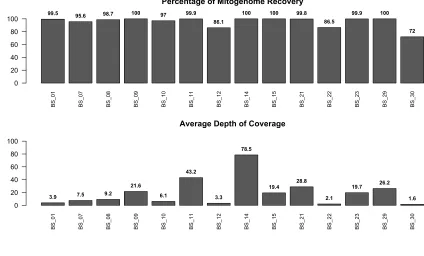
S4). For these samples, the proportion of mitogenome recovery and depth of coverage ranged
418
from 72% to 100% (average = 90.2%) and 1.6 to 78.5 (average = 19.4) (Figure 3),
419
respectively, whereas the remaining 15 samples yielded a very low number of reads (<120) or
420
insufficient depth of coverage for species identification (Supplementary Table S4).
421
422
Species identification by collagen peptide mass fingerprinting (ZooMS)
423
424
We used ZooMS to assign broad level taxonomic identifications for all 29 samples tested for
425
both Sanger and shotgun sequencing. Twenty-eight of the samples were confirmed as
426
odontocetes, falling into two broad categories: 21 samples were identified as ÔdolphinsÕ,
427
which includes bottlenose dolphin, striped dolphin (Stenella coeruleoalba), short-beaked
428
common dolphin, white-beaked dolphin (Lagenorhynchus albirostris); and 7 samples were
429
identified as ÔporpoisesÕ, which includes DallÕs porpoise (Phocoenoides dalli) and harbour
430
porpoise, but also white-sided dolphin (Lagenorhynchus acutus/obliquidens) and killer whale
431
(Orcinus orca) (Table 1; Figure 1D; Supplementary Table S5). One sample was identified as
432
a carnivore based on a lack of peptide markers common to cetaceans (e.g. m/z value 1,079)
433
(Buckley et al. 2014), and the presence of peptides common to the order Carnivora (e.g. m/z
434
values 1,105; 1,453; 2853; 2869) (Buckley et al. 2009; Kirby et al. 2013). The spectra was
435
compared against available peptide markers for both terrestrial and marine carnivores (e.g.
436
seals) (Kirby et al. 2013; Buckley et al. 2014; Buckley et al. 2017); due to the presence of
437
peptide markers 2,131 (marker (D)) and particularly 1,576 (2t76), the spectra for BS_03
438
appears to be most consistent with the genus Canis (Buckley et al. 2017) (Supplementary
439
Figure S5).
440
Comparison of species identification methods
442
443
The three biomolecular methods for species identification Ð Sanger sequencing, shotgun
444
sequencing and ZooMS Ð only disagreed for two (BS_03 and BS_10) of the 28 samples
445
where data was obtained from at least two of the molecular methods (Table 1). Specifically,
446
the sample BS_10 Ð an occipital condyle, and morphologically determined to be Cetacean
447
species Ð was determined to be a dolphin species by Sanger sequencing, a harbour porpoise
448
by the shotgun sequencing method, and ZooMS identified this as a member of the ÔporpoiseÕ
449
group, thus agreeing with the shotgun species identification. In the case of BS_03, this sample
450
was morphologically identified as short-beaked common dolphin, but as a harbour porpoise
451
using the Cytb sequencing, while the ZooMS identification pointed to a carnivore. Shotgun
452
sequencing did not produce exploitable data for this sample, leaving its identification
453
uncertain.
454
455
For the remaining 26 samples, the three molecular approaches agreed, although only shotgun
456
sequencing provided identification at species level. The molecular approaches also revealed
457
multiple errors in identifications from morphology. For instance, species identification was
458
confirmed only for 6 of 11 specimens morphologically identified as harbour porpoises,
459
whereas the others were re-identified as dolphins (BS_08 was re-identified to species level as
460
a short-beaked common dolphin). Moreover, 2 of 13 specimens morphologically identified as
461
bottlenose dolphins, were re-identified as short-beaked common dolphins using biomolecular
462
approaches. Therefore, all the errors in morphology, which were tracked to the species level
463
by genetic analysis involved short-beaked common dolphins and were likely due to
21
misidentification or omission of this species, and there was no confusion in discrimination
465
between harbour porpoises and bottlenose dolphins.
466
467
Phylogenetic analyses
468
469
Four ancient Black Sea harbour porpoises yielded sufficient data for comparison with the
470
mitochondrial control region fragment available for modern data. One transition was observed
471
between the four ancient sequences, segregating them into two distinct haplotypes: BS_09
472
and BS_14 to one, and BS_11 and BS_15 to the other. Comparison with modern Black Sea
473
sequences reveals that both haplotypes are still present in the modern population, including
474
the southern Crimean waters, with one being the most abundant and central in the star-like
475
topology of network (Figure 4), indicating a recent population expansion. .
476
DISCUSSION
478
479
Species identification in zooarchaeology
480
481
Species identification of archaeological materials can be challenging. Morphological
482
identifications can be subject to human error and is sometimes impossible, being limited by
483
reference to a higher taxon. This is especially common in the case of cetaceans, which are
484
often found in multispecies assemblages, consisting of numerous closely related taxa of
485
similar size. Biomolecular approaches may provide an excellent alternative for confirming a
486
morphological label or resolving uncertainties. Here, we applied and evaluated four
487
approaches to identify material from a mixed assemblage of odontocetes; one
morphology-488
based, one protein-based and two DNA-based. We found that the proteomic ZooMS approach
489
and Sanger sequencing could assign taxonomic grouping (ÒporpoiseÓ or ÒdolphinÓ) to the
490
majority of samples. In contrast, shotgun sequencing only yielded sufficient genetic
491
information for half of the samples, but for those samples working well, it allowed for
492
identification to species level and provided the first ancient mitogenomes from Black Sea
493
odontocetes, allowing for species level identification and additional population genetic
494
inference.
495
496
There are several advantages to a protein-based method such as ZooMS for species
497
identification of subfossil material. First, collagen in particular, is a robust protein, and can
498
generally be recovered from tropical or subtropical archaeological sites where DNA may not
499
be preserved (Welker et al. 2015). Second, ZooMS can identify samples without prior
500
taxonomic knowledge potentially identifying Ônon-targetÕ species that might fail PCR based
23
approaches such as Sanger sequencing due to a lack of primer specificity. The main limitation
502
of ZooMS is its level of taxonomic resolution: although all odontocete samples were
503
identified, they could only be assigned to broad taxonomic groups due to the lack of diversity
504
within the collagen sequences of odontocetes and poor resolution within certain areas of the
505
spectrum (Buckley et al. 2014). For instance, species such as killer whales and white-sided
506
dolphin within the Delphinidae family have a peak at mass 1652 grouping them with
507
porpoises, but differ from porpoises and matches other dolphins at masses in the 1500s area of
508
the spectrum. However this area is often poorly resolved, making conclusive identification
509
difficult. Thus, ZooMS classifications may not be correct in systems unlike ours, where we
510
can rule out certain species based on their known taxonomic distributions, habitat preference
511
and absence from the Black Sea. For example, we could quite confidently rule out killer
512
whale, Dall's porpoise, white-beaked dolphin, and white-sided dolphin from the Black Sea,
513
leaving the ÔdolphinÕ group to include the genera Tursiops, Delphinus and, hypothetically,
514
Stenella, and the ÔporpoiseÕ group to include only Phocoena.More precise taxonomic
515
identifications can occasionally be obtained from the mass spectra, but this requires the
516
successful recovery of multiple diagnostic peptides.
517
518
Sanger sequencing has previously been successfully applied for species identification in
519
cetacean mixed assemblages (Lindqvist et al. 2009; Sremba et al. 2010; Evans et al. 2016).
520
Although the primers used here have been successful in a previous study for identifying
521
odontocetes (Foote et al. 2012b), we generally found the chromatograms difficult to interpret,
522
the approach failed to identify samples beyond taxonomic level, and two samples (BS_03 and
523
BS_10) were misclassified. The CytB fragment that we targeted contains 12 and 15 variations
524
sites that differentiate between harbour porpoise and bottlenose dolphin or harbour porpoise
and common short-beaked dolphin respectively. The two dolphin species differ at 3 sites,
526
which in our case was insufficient for clear species identification. These obstacles may be
527
overcome by designing new primers and/or targeting larger mitochondrial fragments, as
528
reported for some baleen whale samples (e.g. Yang & Speller 2006; Evans et al. 2016).
529
However, for highly fragmented ancient DNA, amplification of large PCR products may be
530
problematic, so targeting of short regions are recommended. If such short fragment primers
531
can be designed and highly degraded ancient material can be avoided, Sanger sequencing may
532
provide species identification, but the obtained sequences will likely not provide much data
533
for population genetic inference.
534
535
In contrast, having previously been limited by costs and laborious methodology, shotgun
536
sequencing has emerged as an efficient and simple method for generating a large number of
537
short-read sequence data for species identification and population genetic inference from
538
degraded material (Blow et al. 2008). In particular, this method can by-pass difficulties
539
occurring using Sanger sequencing, including significant DNA fragmentation, which was an
540
issue in our study. In addition, the ability to recover larger regions of the mitochondrial
541
genome rather than just a short fragment can often provide a more robust taxonomic
542
identification. Still, shotgun sequencing is not without limitations. Specifically, although all
543
of the samples seemed to contain well-preserved collagen, only half of the samples yielded
544
sufficient amounts of sequence data for species identification. The geographical region from
545
which our samples originate is characterised by temperate to arid subtropical climate, and thus
546
typically not considered optimal for preservation of aDNA (Willerslev & Cooper 2005;
547
Dabney et al. 2013b). Moreover, the samples are likely kitchen refuse and some have
548
certainly been boiled or cooked, probably resulting in some DNA degradation already before
25
burying. As observed here, sequencing success could potentially be improved by increasing
550
the amount of starting material (e.g. bone powder), and for small or valuable samples where
551
material is limited, issues of poor sequence recovery may be solved by re-sequencing
552
troublesome samples, applying capture-enrichment methods (çvila-Arcos et al. 2011;
çvila-553
Arcos et al. 2015) or using bioinformatics software capable of handling low depth sequencing
554
data (Korneliussen et al. 2014).
555
556
ZooMS has been suggested as a pre-screening method ahead of more intensive or destructive
557
bimolecular approaches, including PCR-based and shotgun DNA analyses (Von Holstein et
558
al. 2014; Brown et al. 2016; Speller et al. 2016), shotgun proteomics (Welker et al. 2016) or
559
radiocarbon dating (Harvey et al. 2016). As ZooMS is typically less expensive and requires
560
less bone powder than other biomolecular techniques, pre-screening with ZooMS can provide
561
both taxonomic information, as well as an indication of overall biomolecular preservation. In
562
this study, the ZooMS technique provided comparable taxonomic resolution as the Sanger
563
sequencing approach, and could therefore act as a cost-effective pre-screening method ahead
564
of shotgun sequencing. Thus, we recommend using a combination of ZooMS and shotgun
565
sequencing for more effectively resolving uncertainties in species determination. Under such
566
an approach, ZooMS will likely allow for the assignation to a taxonomic level of most or all
567
species, as well as a pre-screen of suitable material that can be shotgun sequenced for further
568
identification to species level and generation of mitogenomic and nuclear data for population
569
genetic inference.
570
571
Marine resource use in ancient Chersonesus
572
The overall species composition of wild fauna on archaeological sites, and particularly in
574
ancient kitchen refuse, provides numerous insights for the reconstruction of ancient
575
environments, paleoclimatic conditions, catch techniques and seasonality of different hunting
576
and fisheries activities. For example, numerous anchovy (Engraulisencrasicolus) remains at
577
the Chersonesus sites are indicative of set net fisheries during the autumn and spring seasonal
578
migration; turbot (Scophthalmus maximus) is indicative for bottom gill net fisheries, which
579
are the most productive in spring; and tuna (Thunnus sp) is indicative for longline and
580
intensive boat tending activities in warm season. From these perspectives, the identify
581
odontocetes can be either a product of incidental catches in bottom gill nets set for turbot, as it
582
is in present times (Vishnyakova & Gol'din 2015a), specimens recovered from strandings, or
583
an object of direct hunt from boats in coastal waters, as it appeared in the early 20th century
584
(Kleinenberg 1956). Of these alternatives, the former idea is well supported by abundant
585
turbot remains in the Kruze basilica. Meanwhile, strandings of common dolphins are
586
relatively rare in Crimea, as well as bycatches in any modern fishery practices in the Black
587
Sea (Birkun Jr 2002b). On a global scale, bycatch is generally associated with modern types
588
of fisheries, such as pelagic trawling and big purse seine fisheries (Tregenza et al. 1997;
589
Bilgmann et al. 2008), rather than artisanal fisheries. Therefore, stable catches of common
590
odontocetes might have implied boat-based direct hunting. For instance, Black Sea fishermen
591
hunted common dolphins in early 20th century, using a few small boats setting a single purse
592
seine (alaman) (Kleinenberg 1956). Aelian described a similar net for tuna fisheries used in
593
the Roman-era southern Black Sea and mentioned dolphin catches in this context. In an
594
earlier evidence, Strabo (1929) mentioned ancient dolphin catches in the same area in
595
association with tuna and bonito fisheries. Also, Brito & Vieira (2009) found evidence for
596
catches of common dolphins and tuna in medieval Portugal with the same type of trap net
27
(almadrava). Additionally, Kadeev (1970) suggested that dolphins could be hunted by
598
Chersonesus fishermen with a harpoon. Our study showed a stable presence of common
599
dolphins in archaeological kitchen refuse assemblages, comprising more than half of the
600
specimens that were identify to ÒdolphinÓ by ZooMS and could be further identified to
601
species by shotgun sequencing. These were greatly underestimated by the morphological
602
analyses and, thus, support the idea of diverse odontocete catch practices in the ancient
603
Chersonesus. These practices seem to have affected all the local odontocete species and
604
possibly included, not only common fisheries bycatch products, but also, direct
cetacean-605
focused hunting.
606
607
Implications for management and conservation of Black Sea odontocetes
608
609
The geographically isolated Black Sea harbour porpoise, as well as other Black Sea
610
odontocetes, seem to have undergone dramatic population size reductions during the past
611
century as a result of substantial hunting and bycatch peaking between the 1930s and 1950s
612
and killing hundreds of thousands, if not a million, animals (Kleinenberg 1956; Birkun Jr
613
2002a; Fontaine et al. 2012; Fontaine et al. 2014). The extensive fisheries and other
614
anthropogenic disturbances also impacted fish abundance and resulted in an ecosystem
615
regime shift, intrusion of invasive species and economic collapse in the 1970s (Bushuev 2000;
616
Daskalov 2002, 2003; Daskalov et al. 2007; Llope et al. 2011). Consequently, the three
617
odontocete species inhabiting the Black Sea have been classified as species under special
618
management and conservation concern.
619
To supplement management policies, detailed baseline knowledge on past occurrence and
621
human impacts is needed. Although human activities have clearly escalated in recent decades,
622
our species identification of Late Holocene zooarchaeological material indicate that Black Sea
623
odontocetes, similarly to other marine resources, have been impacted by hunting and fisheries
624
bycatch for millennia. For instance, our population genetic analyses of ancient harbour
625
porpoise samples supported previous studies based on modern material (Fontaine et al. 2012),
626
suggesting a long term presence of harbour porpoise in the Black Sea. A more complete
627
understanding of the relative roles of past and present human activities on odontocete
628
demography will require additional zooarchaeological investigations, and upscaling current
629
genetic efforts to include genomic data from both contemporary and ancient samples. In
630
demonstrating the use of biomolecular approaches for species identification, and obtaining the
631
first full mitogenomic and auxiliary nuclear data from ancient Black Sea odontocetes, we
632
have taken the first step.
29
ACKNOWLEDGEMENTS
634 635
The authors wish to thanks the Dr B¿je Benzon Foundation and the Section for Evolutionary
636
Genomics at the Natural History Museum of Denmark for their financial support. The authors
637
also thank Sergey Ushakov, Alexey Ivanov and Larisa Sedikova for providing access to the
638
Black Sea samples and the Danish National High-Throughput DNA Sequencing Centre for
639
sequencing the samples.
640 641
REFERENCES
642 643
Aelian (1959) On the Characteristics of Animals, Trans. A.F. Schofield. 3 vols. TheLoeb
644
Classical Library. London: Heinemann; Cambridge, MA: Harvard University Press.
645
Allentoft ME, Sikora M, Sjšgren K-G, et al. (2015) Population genomics of Bronze Age
646
Eurasia. Nature522, 167-172.
647
Amaral A, Sequeira M, Mart’nez-Cedeira J, Coelho M (2007) New insights on population
648
genetic structure of Delphinus delphis from the northeast Atlantic and phylogenetic
649
relationships within the genus inferred from two mitochondrial markers. Marine
650
Biology151, 1967-1976.
651
Amundsen C, Perdikaris S, McGovern TH, et al. (2013) Fishing booths and fishing strategies
652
in medieval Iceland: an Archaeofauna from the of Akurv’k, North-West Iceland.
653
Environmental Archaeology10, 127-142.
654
Andersen D, Kinze CC, Skov J (1992) The use of pelvic bones in the harbour forpoise
655
Phocoena phocoena as an indication of sexual maturity. Lutra35, 105-112.
656
çvila-Arcos MC, Cappellini E, Romero-Navarro JA, et al. (2011) Application and
657
comparison of large-scale solution-based DNA capture-enrichment methods on
658
ancient DNA. Scientific reports1, 74.
659
çvila-Arcos MC, Sandoval Velasco M, Schroeder H, et al. (2015) Comparative
660
performance of two whole genome capture methodologies on ancient DNA Illumina
661
libraries. Methods in Ecology and Evolution6, 725-734.
662
Benke H (1993) Investigations on the osteology and the functional morphology of the flipper
663
of whales and dolphins (Cetacea). Investigations on Cetacea24, 9-252.
664
Bilgmann K, Mšller L, Harcourt RG, Gales R, Beheregaray LB (2008) Common dolphins
665
subject to fisheries impacts in Southern Australia are genetically differentiated:
666
implications for conservation. Animal Conservation11, 518-528.
667
Birkun Jr A (2002a) Cetacean direct killing and live capture in the Black Sea. Cetaceans of
668
the Mediterranean and Black Seas: State of Knowledge and Conservation Strategies.
669
A report to the ACCOBAMS Secretariat, Monaco.
670
Birkun Jr A (2002b) Interactions between cetaceans and fisheries in the Black Sea. Cetaceans
671
of the Mediterranean and Black Seas: State of knowledge and conservation strategies
672
98, 107.
673
Birkun Jr A (2008) Delphinus delphis ssp. ponticus. The IUCN Red List of Threatened
674
Species.
675
Birkun Jr A (2012) Tursiops truncatus ssp. ponticus. The IUCN Red List of Threatened
676
Species.
677
Birkun Jr A, Frantzis A (2008) Phocoena phocoena ssp. relicta. The IUCN Red List of
678
Threatened Species.
Blow MJ, Zhang T, Woyke T, et al. (2008) Identification of ancient remains through genomic
680
sequencing. Genome research18, 1347-1353.
681
Briggs AW, Good JM, Green RE, et al. (2009) Targeted retrieval and analysis of five
682
Neandertal mtDNA genomes. Science325, 318-321.
683
Brito C, Vieira N (2009) Historical accounts about the occurrence and capture of common
684
dolphins in Portugal mainland. . International Whaling Commission, Scientific
685
Committee, Document IWC SC/61/SM17: 1-10.
686
Brown S, Higham T, Slon V, et al. (2016) Identification of a new hominin bone from
687
Denisova Cave, Siberia using collagen fingerprinting and mitochondrial DNA
688
analysis. Scientific reports6.
689
Buckley M, Collins M, Thomas Oates J, Wilson JC (2009) Species identification by
690
analysis of bone collagen using matrix assisted laser desorption/ionisation time
691
of flight mass spectrometry. Rapid communications in mass spectrometry 23,
3843-692
3854.
693
Buckley M, Fraser S, Herman J, et al. (2014) Species identification of archaeological marine
694
mammals using collagen fingerprinting. Journal of Archaeological Science 41,
631-695
641.
696
Buckley M, Harvey VL, Chamberlain AT (2017) Species identification and decay assessment
697
of Late Pleistocene fragmentary vertebrate remains from Pin Hole Cave (Creswell
698
Crags, UK) using collagen fingerprinting. Boreas.
699
Buckley M, Kansa SW (2011) Collagen fingerprinting of archaeological bone and teeth
700
remains from Domuztepe, South Eastern Turkey. Archaeological and Anthropological
701
Sciences3, 271-280.
702
Bushuev SG (2000) Depletion of food resources as a factor limiting the number of the Black
703
Sea dolphins. In: In Ecological Safety of Coastal and Shelf Zones and Comprehensive
704
Use of Shelf Resources, pp. pp. 437Ð452 (Russian), Sevastopol.
705
Carter JC, Mack GR (2003) Crimean Chersonesos: city, chora, museum, and environs
706
University of Texas at Austin Inst of.
707
Cooke RG, Wake TA, Mart’nez-Polanco MF, et al. (2016) Exploitation of dolphins (Cetacea:
708
Delphinidae) at a 6000yr old Preceramic site in the Pearl Island archipelago, Panama.
709
Journal of Archaeological Science: Reports6, 733-756.
710
Dabney J, Knapp M, Glocke I, et al. (2013a) Complete mitochondrial genome sequence of a
711
Middle Pleistocene cave bear reconstructed from ultrashort DNA fragments.
712
Proceedings of the National Academy of Sciences110, 15758-15763.
713
Dabney J, Meyer M, PŠŠbo S (2013b) Ancient DNA damage. Cold Spring Harbor
714
perspectives in biology5, a012567.
715
Daskalov GM (2002) Overfishing drives a trophic cascade in the Black Sea. Marine Ecology
716
Progress Series225, 53-63.
717
Daskalov GM (2003) Long-term changes in fish abundance and environmental indices in the
718
Black Sea. Marine Ecology Progress Series255, 259-270.
719
Daskalov GM, Grishin AN, Rodionov S, Mihneva V (2007) Trophic cascades triggered by
720
overfishing reveal possible mechanisms of ecosystem regime shifts. Proceedings of
721
the National Academy of Sciences104, 10518-10523.
722
Dietl GP, Kidwell SM, Brenner M, et al. (2015) Conservation paleobiology: leveraging
723
knowledge of the past to inform conservation and restoration. Annual Review of Earth
724
and Planetary Sciences43, 79.
725
Dunnell RC (1971) Systematics in Prehistory. McMillan, New York and London.
31
Evans S, i Godino IB, çlvarez M, et al. (2016) Using combined biomolecular methods to
727
explore whale exploitation and social aggregation in hunterÐgathererÐfisher society in
728
Tierra del Fuego. Journal of Archaeological Science: Reports6, 757-767.
729
Fontaine M (2016) Harbour Porpoises, Phocoena phocoena, in the Mediterranean Sea and
730
Adjacent Regions: Biogeographic Relicts of the Last Glacial Period. Advances in
731
Marine Biology75, 333-358.
732
Fontaine MC, Roland K, Calves I, et al. (2014) Postglacial climate changes and rise of three
733
ecotypes of harbor porpoises, Phocoena phocoena, in western Palearctic waters.
734
Molecular Ecology23, 3306-3321.
735
Fontaine MC, Snirc A, Frantzis A, et al. (2012) History of expansion and anthropogenic
736
collapse in a top marine predator of the Black Sea estimated from genetic data.
737
Proceedings of the National Academy of Sciences109, E2569ÐE2576.
738
Foote AD, Hofreiter M, Morin PA (2012a) Ancient DNA from marine mammals: studying
739
long-lived species over ecological and evolutionary timescales. Annals of
Anatomy-740
Anatomischer Anzeiger194, 112-120.
741
Foote AD, Kaschner K, Schultze SE, et al. (2013) Ancient DNA reveals that bowhead whale
742
lineages survived Late Pleistocene climate change and habitat shifts. Nature
743
communications4, 1677.
744
Foote AD, Newton J, Piertney SB, Willerslev E, Gilbert MTP (2009) Ecological,
745
morphological and genetic divergence of sympatric North Atlantic killer whale
746
populations. Molecular Ecology18, 5207-5217.
747
Foote AD, Thomsen PF, Sveegaard S, et al. (2012b) Investigating the potential use of
748
environmental DNA (eDNA) for genetic monitoring of marine mammals. PLoS ONE
749
7, e41781.
750
Frantzis A, Gordon J, Hassidis G, Komnenou A (2001) The enigma of harbor porpoise
751
presence in the Mediterranean Sea. Marine Mammal Science17, 937-944.
752
Galatius A, GolÕdin P (2011) Geographic variation of skeletal ontogeny and skull shape in the
753
harbour porpoise (Phocoena phocoena). Canadian Journal of Zoology89, 869-879.
754
Gilbert MTP, Drautz DI, Lesk AM, et al. (2008) Intraspecific phylogenetic analysis of
755
Siberian woolly mammoths using complete mitochondrial genomes. Proceedings of
756
the National Academy of Sciences105, 8327-8332.
757
Gol'din P (2004) Growth and body size of the harbour porpoise, Phocoena phocoena
758
(Cetacea, Phocoenidae), in the Sea of Azov and the Black Sea. Vestnik Zoologii.
759
GolÕdin P, Vishnyakova K (2016) Habitat shapes skull profile of small cetaceans: evidence
760
from geographical variation in Black Sea harbour porpoises (Phocoena phocoena
761
relicta). Zoomorphology135, 387-393.
762
Goldstein PZ, DeSalle R (2011) Integrating DNA barcode data and taxonomic practice:
763
determination, discovery, and description. Bioessays33, 135-147.
764
Grayson DK (1984) Quantitative Zooarchaeology: Topics in the analysis of archaeological
765
faunas Elsevier.
766
Harvey VL, Egerton VM, Chamberlain AT, Manning PL, Buckley M (2016) Collagen
767
fingerprinting: a new screening technique for radiocarbon dating ancient bone. PLoS
768
ONE11, e0150650.
769
Hofman CA, Rick TC, Fleischer RC, Maldonado JE (2015) Conservation archaeogenomics:
770
ancient DNA and biodiversity in the Anthropocene. Trends in Ecology & Evolution
771
30, 540-549.
772
H¿jte JM (2005) The archaeological evidence for fish processing in the Black Sea region.
773
Bekker-Nielsen2005, 133-160.