DEMENTIA AND DEPRESSION IN THE ELDERLY BY GENERAL PRACTITIONERS
JENNIFER BOWERS
LIBRARY . J
A thesis submitted for the degree of Doctor of Philosophy of The Australian National University
NH & MRC Social Psychiatry Research Unit through the National Centre for Epidemiology
and Population Health
data and analyses in this thesis represent my original research.
I would like to thank Dr Tony Jorm and Professor Scott Henderson, my supervisors from the NH & MRC Social Psychiatry Research Unit at the Australian National University for their ceaseless support, practical guidance and valuable advice prior to and during this research. Secondly, I would like to thank Dr John McCallum, my supervisor from the National Centre for Epidemiology and Public Health at the Australian National University for his continued interest and assistance. Thirdly, I thank Dr Hal Kendig for being my supervisor in the early stages of this research and his useful advice during that time. Fourthly, I would like to acknowledge the staff from the Social Psychiatry Research Unit who have willingly provided advice, encouragement and administrative assistance. Especially, I would like to thank Trish Jacomb who prepared Figures 2.1, 3.1, 4.1, 4.2, 6.1, 6.2, 6.3, 7.1 and 9.1 for the thesis.
I thank Professor Linda Rosenman, Department of Social Work and Dr Gerard Byrne, Department of Psychiatry, from the University of Queensland, for their valuable comments on the draft thesis and discussions on the topic.
Award, this investigation would not have been possible. I also appreciate the continued interest and support of Mr Glenn Rees and Dr Claudia Thame from the Department.
I would like especially to acknowledge the general practitioners, their receptionists and particularly their patients for their willingness and generosity in taking part in the research.
General practitioners are in a unique position to detect, diagnose and treat t
mental illness in their practices. The aims of the study were to determine how well one sample of general practitioners detect dementia and depression in their elderly patients; and to ascertain the level of knowledge these general practitioners have of dementia and depression.
Eleven general practitioners were recruited through the Royal Australian College of General Practitioners and each general practitioner requested 10 consecutive patients over 70 years to be interviewed. Three indices for both depression and dementia were used to obtain levels of probable psychiatric disorder in the 101 participating patients. Socio-demographic information and the level of assistance needed with activities of daily living were also obtained.
The initial 11 general practitioners, and subsequently a further 25 general practitioners, were interviewed to ascertain the symptoms and signs they look for when diagnosing dementia and depression, the treatment or mode of action taken, and the types of services most frequently recommended.
probable dementia identified by the Mini-Mental State Examination and 12 of the 15 patients identified as depressed by a standardised interview and algorithm. It was thought that the general practitioners’ poor detection of depression might be related to a limited knowledge of depressive symptomatology and their reliance on the patients raising of depression as a problem.
Data from the interviews with 36 general practitioners revealed that they also had a limited knowledge of the symptoms and signs of dementia. Twenty one of the general practitioners did not report that Alzheimer’s disease is the most common dementing disorder in general practice. This is contrary to a recent Australian neuropathological study of the causes of dementia.
Page 4, line 18 -Insert in references "Australian Bureau of Statistics, 1988;"
Page 6, line 21 -Insert "17% of expenditure is on
medical benefits"
Page 22, line 11 -Omit "and the threat" and replace with
"are threatened with"
Page 29, line 5 -Change "has" to "have"
Page 35, line 21 -Change "pscyhiatric" to "psychiatric"
Page 37, line 21 -Omit "whilst consulting with a general
practitioner who was less accurate in his/her" and
insert "during consultations with general practitioners who had been identified as less accurate in their"
Page 46, line 5 -Insert after "practitioners"
Page 46, line 7 -Omit "treatment was well after the
onset of symptoms, the prognosis was the worst" and insert "depressed patients who received treatment well after the onset of symptons had the worst prognosis"
Page 47, line 2 -Change "are" to "were"
Page 47, last line "related to"
-Insert "general practitioners'" after
Page 48, line 5 -Insert "to" after "position"
Page 49, line 2 -Omit "They" and insert "Elderly people"
Page 49, lines 13,14-Insert after "recovery", "(prognosis for dementia and depression outlined in Chapter 2)" and insert after "return", "(length of consultations and interest in psychogeriatrics is discussed in subsequent chapters)."
Pa<e 51, line 14 -Change "do not proceed to the first
filter" to "who do not proceed through the first filter"
Pa<e 71, line 8 -Insert after "....instrument.",
"(Limitations of screening instruments are discussed in Chapters 6 and 11.)"
Pa<e 77, line 14 -Insert "a" after "approach"
Pa<e 78, line 14 -Insert after "patients; the",
"elicitation and"
Pate 90, last line -Insert after "consultations", "purely"
Pa(a 105, line 14 -Insert after "service provision",
"(total number of services per patient)"
Paca 122 -Insert "Footnote: The prevalence of a
disorder can affect the sensitivity and
specificity of its detection and can be used to correct hit-rates for the GHQ."
Pacs 125 -Insert "Footnote: The information for
this section is based solely on the information from the participating general practitioners. Oxazepam was prescribed as an antidepressant by one of the general practitioners even though it is an anxiolytic."
Pae 136, line 21 -Omit "Using" and insert "Based on"
Pae 137, lines 7,8-Omit "do", insert "may" and insert after "practitioner", "(Henderson, 1984)".
Pae 162, para 1,
Section 9.4.2 -Omit "weas", insert "was"
Pa^ 174, line 9 -Insert after "...field." "This finding
poses an important question."
Pag* 177, para 3,
line 13 -Omit "first" and "second" and replace
Pagee 181, line 4 -Omit "showed were rare in the elderly" «and insert "found made up only 11% of their elderly
(cases. "
Pagee 185, line 1 -Insert new paragraph after
. purposes . "
"To examine the general practitioners' implicit diagnosis more accurately and thoroughly,
subsequent diagnostic tests and management procedures could be more fully documented and
analysed. This would involve at least two factors
which may present further limitations or prove
impracticable. First, the identity of the patient
with suspected dementia would have to be provided
to the general practitioner. This additional
component would have to be included in the design of the methods, especially for ethical reasons. Second, the continued co-operation of the general practitioners would have to be sought to compare subsequent procedures with the initial diagnosis and the results derived from screening
instruments."
Pagee 188 -Insert after 8th reference
"Australian Bureau of Statistics (1988), Projections of the Populations of Australia,
CONTENTS
PAGE
AC.CKNOWLEDGEMENTS iii
ABBSTRACT v
COONTENTS vii
LISI ST OF TABLES xiv
LISIST OF FIGURES xvii
CKHAPTER 1: INTRODUCTION
1.1.1 The major issues 1
1.2.2 The purpose of the study 2
1.3.3 Demographic and social changes 3
1.3.1 Demography 4
1.3.2 Socio-economic factors 5
1.3.3 Living arrangements 7
1.3.4 Physical health 9
1.4.4 Outline of thesis 9
CEHAPTER 2: MENTAL HEALTH OF THE ELDERLY 2.1.1 Epidemiology and description of mental
disorders in the elderly 11
2.2.2 Dementia 11
2.2.1 Prevalence of dementia 12
2.2.2 Alzheimer’s disease 16
2.3 Depression 17
2.3.1 Prevalence of depression 18
2.3.2 Management of depression 22
2.4 Dementia and depression 22
2.5 Anxiety disorders 23
2.6 Summary 24
CHAPTER 3: ROLE OF GENERAL PRACTITIONERS IN MENTAL HEALTH CARE
3.1 General practitioners 25
3.2 Conceptual model of primary care 26
3.3 Non-consulters and the decision to consult 29 3.4 Detection of psychological disorders in
general practice 31
3.5 Factors which influence recognition 36
3.6 Defining a ‘case’ 42
3.7 Classification and screening questionnaires 43
3.8 Treatment and referral 45
3.8.1 Why treat mental disorders? 45
3.8.2 The decision to refer 46
3.9 Summary 48
3.9.1 The future of general practice 48
CHAPTER 4: GENERAL PRACTITIONERS AND MENTAL HEALTH CARE OF THE ELDERLY
4.1 Introduction 50
4.2 Recognition of dementia and depression in
elderly patients 53
4.3 Comparative analysis of general
4.4 Significance of findings relating to
recognition 64
4.4.1 Screening for dementia and depression
in general practice 66
4.4.2 Benefits of detection 67
4.5 Factors affecting recognition 69
4.5.1 Gaps in general practitioners’
knowledge 70
4.5.2 Diagnostic processes 71
4.5.3 ‘Ageism’ and other discriminating
factors 73
4.6 Rationale for the study 77
CHAPTER 5: METHODS: RECOGNITION OF DEMENTIA AND DEPRESSION BY GENERAL PRACTITIONERS
5.1 Introduction 81
5.2 Pilot study 81
5.3 Recruiting of general practitioners 82
5.4 Recruiting of patients 83
5.4.1 Patient interview procedure 85
5.4.2 Patients’ instruments 86
5.5 Follow-up visit to general practitioners 92
5.6 Ethical approval 93
5.7 Summary of methods 93
CHAPTER 6: RESULTS: GENERAL PRACTITIONERS’ DETECTION OF DEMENTIA AND DEPRESSION
6.1 Introduction 96
6.2 General practitioner characteristics and
participation 96
6.3 Patient participation 97
6.3.1 Comparison of sample with aged
6.3.2 Interval between consultation and
interview 98
6.4 Patient characteristics 99
6.4.1 Where patients lived 99
6.4.2 Living conditions of patients 100
6.4.3 Patients’ living arrangements 101
6.4.4 Marital status of patients 102
6.4.5 Level of education 102
6.4.6 Physical health 103
6.5 Community services and assistance 106
received by patients
6.5.1 Summary of patients’
characteristics and assistance 109
6.6 Informant responses and characteristics 109 6.7 General practitioners’ detection of
dementia 110
6.7.1 Patients diagnosed as demented 111
6.7.2 MMSE 111
6.7.3 General practitioners’ detection of
dementia measured by the MMSE 111
6.7.4 Influence of other variables on the
MMSE 112
6.7.5 Information/Orientation scale from
CAPE 112
6.7.6 General practitioners’ detection of dementia measured against the I/O
scale 113
6.7.7 IQCODE 113
6.7.8 General practitioners’ detection of
dementia compared with the IQCODE and
informant report 114
6.7.9 Influence of other variables on
IQCODE 115
6.7.10 Summary of general practitioners’
detection of dementia 115
6.8 Depression and general practitioners
recognition 118
6.8.1 Depressive symptoms in the patient
sample 118
6.8.2 Patients diagnosed as depressed 120
6.8.3 General practitioners’ detection of
depression compared with the Diagnostic
depression compared with the GHQ 122
6.8.5 Informants’ opinions 123
6.8.6 Analysis of general practitioners’ ratings with various continuous
measures of depression 123
6.8.7 Antidepressant medication 125
6.9 General practitioners’ detection of a
combination of dementia and depression 127
6.9.1 Comparison of measures of cognitive
impairment with those of depression 127
6.10 Summary 129
CHAPTER 7: DISCUSSION ON RECOGNITION OF DEMENTIA AND DEPRESSION BY GENERAL PRACTITIONERS
7.1 Prevalence of depression 130
7.1.1 Detection of depression 131
7.1.2 Treatment of depression 135
7.2 Prevalence of dementia 136
7.2.1 Detection of dementia 137
7.2.2 Factors influencing the MMSE 140
7.3 Patient characteristics 140
7.4 Patient selection 142
7.5 Summary 142
CHAPTER 8: METHODS: GENERAL PRACTITIONERS5 KNOWLEDGE ABOUT DEPRESSION AND DEMENTIA IN ELDERLY
PATIENTS
8.1 Introduction 144
8.2 Recruitment of an increased sample of
general practitioners 144
8.3 Interview procedure 145
8.4 Scoring of the interview 146
CHAPTER 9: RESULTS: GENERAL PRACTITIONERS’ KNOWLEDGE OF DEMENTIA AND DEPRESSION
9.1 Characteristics of general practitioners 150 9.2 General practitioners’ knowledge of
depression 151
9.2.1 Depression and anxiety 153
9.2.2 Depression and physical illness 153
9.2.3 Contributory factors to depression 154 9.2.4 General practitioners’ knowledge
compared with depressive symptom
prevalence 155
9.3 General practitioners’ knowledge of
dementia 155
9.3.1 Problems encountered by general
practitioners 159
9.4 Responses to case vignettes 160
9.4.1 Vignette 1 161
9.4.2 Vignette 2 162
9.4.3 Vignette 3 163
9.5 Summary of general practitioners’ comments
on care and service provision in the A.C.T. 164
9.5.1 Home care and community services 164
9.5.2 Residential services 166
9.5.3 General comments on service
provision 166
CHAPTER 10: DISCUSSION ON GENERAL PRACTITIONERS’ KNOWLEDGE
10.1 Introduction 168
10.2 Knowledge of depression 168
10.3 Knowledge of dementia 170
10.4 Types of dementia 170
10.5 Management of depression and dementia 171
10.7 The future of geriatrics in general
practice 174
CHAPTER 11: CONCLUSIONS
11.1 Summary of research findings 176
11.2 Limitations of the study 177
11.3 Implications of findings 179
11.4 Practical implications 181
11.5 Future research 183
11.5.1 Direct extensions of the study 183
11.5.2 Broader issues to be covered in
future work 186
11.6 Conclusion 187
REFERENCES 188
LIST OF TABLES
TABLE PAGE
4.1: Summary of studies on recognition of psychiatric disorders in the elderly in general practice in
chronological order. 61
6.1: Proportion of elderly people over 70 years of age
in the A.C.T. at 1986 Census compared with proportion
in study sample (ABS, 1988). 98
6.2: Postcodes indicating areas in which patients resided. 100
6.3: Types of residence of patients. 101
6.4: Living arrangements of patients. 101
6.5: Highest qualification obtained by patients. 102 6.6: Percentages of patients requiring the various levels
of assistance for activities-of-daily-living. 104 6.7: Analysis of patients’ age, physical health (ADL) and
service provision using Pearson Correlation Coefficients. 105 6.8: Community services received by patients. 106 6.9: Number of patients who received assistance or advice from
a professional person in the month prior to the interview. 108 6.10: Relationship of informants to patients. 110 6.11: Rating of severity of dementia by the general
practitioners. 110
6.12: General practitioners’ detection of cognitive impairment
compared with the MMSE. 112
6.13: General practitioners’ detection of cognitive impairment
compared with the Information/Orientation scale of CAPE. 113 6.14: General practitioners’ detection of cognitive impairment
6.15: Correlations between general practitioner ratings of
dementia, dementia scales and physical impairment. 117 6.16: Examination of socio-demographic factors on general
practitioners’ ratings of dementia by multiple regression. 118 6.17: Number of patients with depressive symptoms. 119 6.18: Patients who scored positively on the diagnostic criteria
for DSM-III-R criteria for Major Depressive Episode
(MDE). 120
6.19: Rating of severity of depression by the general
practitioners. 121
6.20: General practitioners’ detection of depression. 122 6.21: General practitioners’ detection of depression compared
with the GHQ-12. 123
6.22: Correlations between general practitioner ratings of depression, depression symptoms score, the opinion of an informant, whether the patient discussed depression with the general practitioners, the 12-Item General
Health Questionnaire, and physical impairment. 124 9.1: DSM-III-R Criteria for Major Depressive Episode together
with numbers and percentages of general practitioners’ reporting each symptom or sign in response to the question: "What are the particular symptoms and signs you look for
when a patient presents with possible depression?" 152 9.2: Factors which general practitioners considered contributed
to depression in the elderly. 154
9.3: DSM-III-R criteria for dementia together with numbers and percentages of general practitioners reporting each
symptom or sign in response to the question: "What are the particular symptoms and signs you look for when a
patient presents with possible dementia?" 157 9.4: Frequency of general practitioners’ responses to the
question: "What type of dementia do you see most
frequently?" 158
9.5: Ratio of types of dementia thought to be seen most
9.6: Problems encountered by general practitioners with
dementing patients. 160
9.7: Summary of responses to management questions in
Vignette 1. 162
9.8: Summary of responses to management questions in
Vignette 2. 163
9.9: Summary of responses to management questions in
LIST OF FIGURES
FIGURE
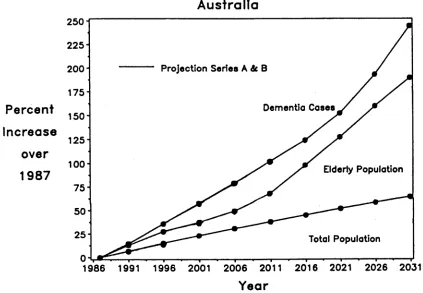
2.1: Projected increases in dementia cases, elderly population and total population for Australia, 1987-2031
(reproduced from Jorm & Henderson, 1990). 3.1: Pathway to mental health care: diagrammatic
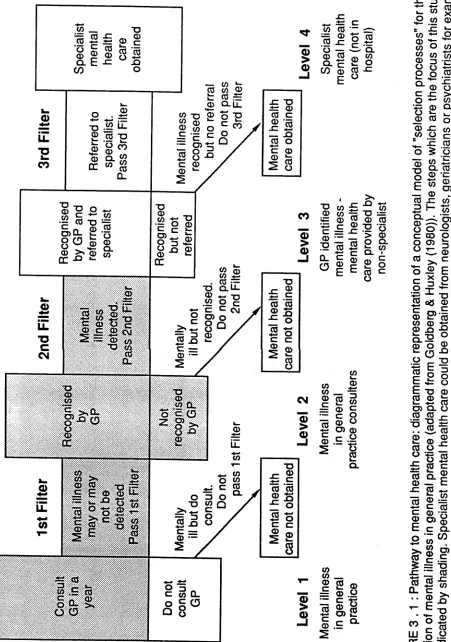
representation of a conceptual model of "selection processes" for the detection of mental illness in general practice (adapted from Goldberg & Huxley (1980)). 4.1: ROC points and areas under them (McNicol, 1972)
comparing levels of accuracy in the detection of dementia and depression by general practitioners.
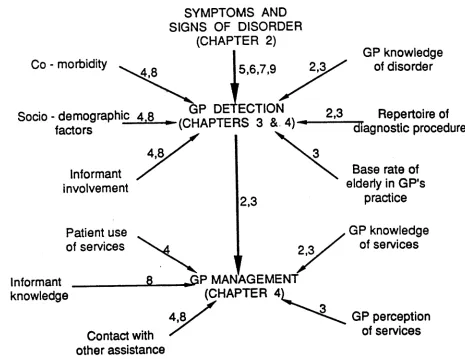
4.2: Schematic presentation of rationale for study illustrating general practitioner and patient variables and their relationship to symptoms and signs, detection and management of dementia and depression.
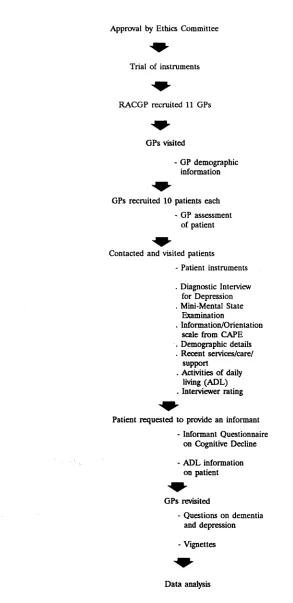
5.1: Flow diagram summarising method.
6.1: ROC curves comparing the general practitioners’ ratings of the severity of dementia with the three dementia
screening scales.
6.2: ROC curves comparing the general practitioners’ ratings of the severity of depression with the Diagnostic Interview on Depression and the GHQ.
6.3: ROC curves illustrating general practitioners’ detection of depression (severe, moderate/severe, mild/moderate/ severe) with the cases of depression diagnosed by the depression diagnostic algorithm. Figure 6.3.1 includes all patients and Figure 6.3.2 excludes patients who had been prescribed antidepressant medication in the four weeks prior to the consultation.
7.1: Frequency with which initial sample of general practitioners cited DSM-III-R criteria for major
knowledge of dementia and depression.
9.1: Frequency with which total sample of general practitioners cited DSM-III-R criteria for major depression and
CHAPTER 1
INTRODUCTION
1.1 The major issues
General practitioners are central to mental health care and services for the community at large and, in particular, for the aged population. It should be of specific interest to general practitioners, geriatricians, psychiatrists, health care professionals, policy makers and families to have information on:
the mental health of elderly people who consult general practitioners;
whether general practitioners recognise problems, especially mental health problems, in the elderly, and, if not, why not; how they treat and manage problems if they have been identified; and
how much general practitioners know about the mental health problems of the elderly.
colleagues (cited below)), Burvill (1988) suggests that fundamental issues cannot be addressed satisfactorily with the current level of knowledge, but they are "eminently susceptible to investigation" (Shepherd, 1980).
1.2 Purpose o f the study
What then are the fundamental issues and priorities for research in the area
of mental health in general practice? Priorities for research on mental health in
primary care settings were sought from a multi-disciplinary group of experts who were attending a conference on mental illness in primary care (Wilkinson & Williams, 1985). One of the three areas elicited was the elderly who are mentally ill; and the three priority subjects were the effectiveness of treatment; the mental health problems encountered in primary care; and training general practitioners in psychiatric skills. The aims of this thesis are focused on these priorities. The first objective is to contribute to existing information on how well Australian general practitioners detect dementia and depression, the two most common psychiatric disturbances in the elderly. The second objective is to assess the level of general practitioners’ knowledge about dementia and depression in elderly patients.
This investigation is designed to clarify the conflicting data presently available on general practitioners’ detection of dementia and depression in elderly patients. In order to do this, the investigation aims to:
examine the accuracy of general practitioners’ detection of dementia and depression (Aim 1); and
Training for medical students and general practitioners cannot be modified or developed until the gaps in their knowledge have been determined. The first step was, therefore, to ascertain how well they were informed about dementia and depression. Thus, the study aimed to assess:
general practitioners’ knowledge of dementia, especially in light of (i) the burgeoning aged population; and (ii) the current publicity and public awareness of dementia and related disorders (Attwood (Time), 1989; Ferry (New Scientist), 1988; Beaumont (Ita), 1989; Australian Dr Weekly, 1988) (Aim 3); and
general practitioners’ knowledge of depression, especially in light of (i) the burgeoning aged population; and (ii) the evidence suggesting that elderly people with medical problems are at high risk of developing depression (Aim 4).
Before exploring the theoretical basis to the above aims, the remainder of this chapter sets the background scene relating to the ageing population with particular emphasis on predictions for social and demographic change in Australia.
13 Demographic and social changes
"Medical science and modern technology have transformed the demographic picture. Aging is more than a statistic, however, and more than a problem for the public finances. It is among the most acute of human dilemmas, confronting the years when health and mental vigour inevitably decline." (Cavalier, 1988)
13.1 Demography
The aged population of Australia is not only increasing in number but also in relative proportions. In 1986, 10.5% of the population was aged 65 years or over. The proportion of the population aged 65 years and over is projected to increase to 11.4% in 1991, 11.9% in 2001, 13.0% in 2011 and 18.9% by 2031. During this time the aged population will have increased from 1.7 million in 1986 to over 5 million in 2031. It is predicted that there will be two phases of ageing in Australia; up to the year 2001 the population over 70 years, the ‘old’ old, will increase more rapidly, and between 2006 and 2021 the rate of increase will accelerate and the numbers of people aged 60 to 69 years, the ‘young’ old, will increase more rapidly than the ‘old’ old (Kendig & McCallum, 1986; Hugo & Rudd, 1988).
A reduction in mortality for both males and females will continue to contribute to the ageing population: males can expect to live another 17 years after they reach 65 by the year 2021 compared with 14 years during 1980-82; and females can expect to live another 22 years after they reach 65 by 2021 compared with 18 years during 1980-82.
in the birth rate. This ratio is expected to increase up to 2001 and to increase more rapidly from 2011 to 2021 (Kendig & McCallum, 1986; Hugo & Rudd,
1988).
13.2 Socio-economic factors
There are many economic, social and political implications relating to the changing age structure of our society. Some of the changes which will occur with the ageing population are:
the continued predominance of females in the aged
population. Of the people over 60 years at the last census (2.346 million), 56% were women and of the people over 85 years, 73% were women;
the numbers of aged migrants, especially those from non- English speaking countries, will double by the year 2001 (Kendig & McCallum, 1986); and
an improvement in educational and financial independence for both men and women due to increased employment opportunities.
In a paper which examined the key economic aspects of the long term care of elderly people, Philips (1988) foreshadowed some of the chief impacts:
more people will be in receipt of an age pension or superannuation;
use of community care services is likely to increase,
especially with increasing Government funded home care services;
total government outlays on the aged population are anticipated to increase by 131% between 1981 and 2001. as the ‘old’ old population is increasing rapidly this
century, the numbers cared for in nursing homes and hostels are expected to increase; and
costs of health care are expected to increase due to the ageing population and number of services provided.
These last few factors allude to the impact of a rapidly ageing population on health care in broad terms. But more specifically, they indicate that the responsibilities and practising time of general practitioners will, in the future, be focused to a much greater degree than ever before on the health and social problems of the elderly.
by Medicare1 for all patients was about 7 (or 8 when those over 64 years are included); 9 for females and 6 for males. Females over 64 years received the highest number of services; they ranged from 13 (65-74 years) to 15 (over 75 years). Males over 64 years received an average of 10 and 12 services for these respective age groups (Health Insurance Commission, 1985-86). The number of services received by elderly people is almost double that of the general population. The level of services provided can be expected to increase especially within the ‘old’ old population over the coming years.
The cost of the services can also be expected to increase. The average value of Medicare benefit to all patients (including the elderly) was $161.31 in 1985-86. The average value of benefit for elderly people is substantially more and ranged from $228.27 for elderly males (65-74 years) to $291.61 for elderly females (over 75 years) (Health Insurance Commission, 1985-86).
The implications of the "demographic shift are profound for those who will practise medicine in the 21st century" (Henderson & Rosenman, 1989, p. 218) and there is no doubt that general practitioners will be treating more elderly people and at an ever increasing cost.
1 3 3 Living arrangements
How much responsibility does the general practitioner have to take for the
health o f their elderly patients in relation to social factors such as living conditions
and community assistance? Nearly all elderly people live in a private dwelling:
89% of people over 70 years live in a private dwelling, about 6% reside in nursing homes and 3% in hostels. Of those who live in their own homes, 62% live with someone, a spouse or a close relative, and 38% live alone (Australian Bureau of Statistics Census, 1986). In a survey of Older People at Home it was found that the level of home care and assistance provided by agencies increases with age and degree of physical disability and is more likely to be for people who live alone. For people who do not live alone, spouses (and other members of the household or family) provide the majority of assistance. About 50% of people over 75 years have a need for assistance with domestic or other household tasks. On the other hand, the remaining 50% have no such apparent need. Almost 50% of people participate in a social or community group at least monthly (Australian Council on the Ageing (ACOTA), 1985).
According to a survey of health, welfare and family support for the elderly, the majority of elderly people, whether they live with someone or live alone, live in close proximity to children (Gibson, 1983). This suggests that community care primarily by spouses and children is available to most of the surveyed elderly people in a time of crisis. Families provide much of the support for the elderly residing at home but this is sometimes supplemented with other community services. There are, however, a minority who are physically disabled and vulnerable due to little or no family support. In fact only 7% of the elderly people surveyed made use of the three main community services: housekeeping, meals on wheels and home nursing (Gibson, 1983).
who provide the majority of assistance; do not depend heavily on services provided by agencies; and are not socially isolated. General practitioners, therefore, may need to intervene in relation to these aspects of welfare of the elderly in a small minority of cases.
1.3.4 Physical health
It is frequently suggested that the greater the degree of physical morbidity, the more likely it is that a person will consult a doctor (Lurie, 1987). Thus it is of relevance to this study briefly to describe, in general terms, the level of physical health in the aged population.
The majority of people over 60 years who live in the community consider themselves to be healthy and are "relatively unaffected by sickness and disability" (p. 64) and only about 10% were found to be in poor health (Gibson, 1983). About one third of the people who were surveyed to determine their needs and resources had problems with eyesight, hearing, their feet or mobility. These authors also found little evidence for age related decline in physical health.
In some respects it is perhaps of more interest to note that elderly people perceived ‘good health’ to be related to independence and a sound mental state rather than their physical health per se. They also felt that general practitioners were only required for "reassurance and information about illnesses and treatments" (Saltman et al, 1989).
1.4 Outline o f thesis
the thesis. Chapter 2 briefly sets the epidemiological scene for mental disorders in the aged population over the coming years. Chapter 3 considers the reasons why patients, not only the aged, do or do not consult a general practitioner. It also examines the factors which influence the detection of mental illness. Chapter 4 focuses more particularly on the elderly and reviews the literature on general practitioners’ recognition of dementia and depression in depth. This chapter also highlights some of the issues which may affect recognition of mental illness in the elderly. Finally, it draws together the theoretical framework outlined in the first four chapters and links them in a practical sense to the research plan.
Chapter 5 describes the methods used to examine Aims 1 and 2. Chapters 6 and 7 analyse and discuss the findings of this component of the study on recognition. Chapter 8 presents the methods used to examine Aims 3 and 4. Chapters 9 and 10 analyse and discuss the findings of the second part of the study on knowledge and relate the findings to the first component on detection.
CHAPTER 2
MENTAL HEALTH OF THE ELDERLY
2.1 Epidemiology and description of mental disorders in the elderly
Organic brain syndromes, affective disorders, anxiety disorders, hypochondriasis, suicide and paranoid state (delusional disorder) are the main psychiatric illnesses observed in elderly people, the first two being the most conspicuous (reviewed by Henderson & Rosenman, 1989). With the ageing of the population, these two disorders will implicitly increase in prevalence and, therefore, they will be the focus of this thesis.
Epidemiological studies based on community surveys provide most of the data regarding the occurrence of these disorders and they have recently been reviewed by Henderson (1990a) and Jorm & Henderson (1990). Some of their findings on the prevalence of dementia and depression are summarised below.
2.2 Dementia
dementia are Alzheimer’s disease, which is the most common, vascular dementia and a combination of both of these. The following clinical description of dementia is taken from the Diagnostic Criteria and Guidelines of the Draft
ICD-10 on Mental and Behavioural Disorders (May 1990) (p. 31). "Dementia is a syndrome due to disease of the brain, usually of a chronic or progressive nature, in which there is impairment of multiple higher cortical functions, including memory, thinking, orientation, comprehension, calculation, learning capacity, language and judgement. Consciousness is not clouded. The cognitive impairments are commonly accompanied, and occasionally preceded, by deterioration in emotional control, social behaviour, or motivation."
2.2.1 Prevalence of dementia
A statistical integration of data from 22 studies giving age-specific data on the prevalence of dementia, found that:
the actual prevalence rates differed greatly from study to study;
prevalence consistently increased exponentially with age; and
the prevalence rate of dementia was found to double with every 5.1 years of age (Jorm & Korten, 1988).
Percent Increase
over
1987
Australia 2501
2 2 5
-Projection Series A & B 2 0 0
-Damentia Casas
Elderly Population
Total Population
0 1 , —,--- , , , , ,--- ,--- - I ■— — t *--- 1--- * 1 »
1986 1991 1996 2001 2006 2011 2016 2021 2026 2031
Year
[image:34.552.66.489.227.520.2]population will not be as great as the increase in the percentage of cases of dementia. For example, the increase in the total Australian population between 1987 and 2031 is expected to be 65%, the aged population’s increase is expected to be 190%, compared with an increase of 245% for the cases of dementia. This marked difference in the percentage increases is due to the concomitant increase in the ‘old’ old age group, where the prevalence of dementia is highest and is increasing at an even faster rate than the total population or the ‘young’ old (Hugo & Rudd, 1988; Jorm & Henderson, 1990).
The prevalence of specific dementing diseases, the most common being Alzheimer’s disease and multi-infarct dementia, can be estimated with a high level of confidence only by autopsy. In a neuropathological survey of 60 dementia cases in Perth, 73% had changes characteristic of Alzheimer’s disease; 45% had neuropathological signs of Alzheimer’s disease alone and 28% had Alzheimer’s disease as well as other brain pathology (Ojeda et al, 1986). This prevalence concurs closely with estimates obtained by Henderson & Jorm (1986) when they summarised neuropathological studies from Europe and concluded that about 70% of patients had Alzheimer’s disease or Alzheimer’s disease mixed with other dementing disorders. They also concluded that 17% had multi-infarct dementia and the remaining 10% were found to have other related disorders.
mild dementia, has also been estimated by Mowry & Burvill (1988) using a random sample of people over 70 years residing in the community in Perth, another Australian city. Their estimates, using the same diagnostic and severity criteria as the Hobart study, were very close to the results of that study. Moreover, they found that prevalence of mild dementia varied greatly depending on the criteria used.
2.2.2 Alzheimer’s disease
Terminology such as "senile dementia of the Alzheimer type" and "atrophic brain syndrome" (Comfort, 1980) have been replaced in recent years by
Alzheimer’s disease.
"It is a slowly progressive disorder with an insidious onset. Usually the first signs are impairment of recent memory and of the ability to process information. As the disease progresses, the individual’s thinking becomes increasingly limited and the ability to retain information deteriorates further. This leads to impaired performance in daily living, such as shopping or the handling of money, holding a conversation, cooking or dressing and behaving in an appropriate manner. Parietal involvement is indicated by difficulty in the use of words (dysphasia), leading to the use of clumsy circumlocutions; or of simple motor acts, such as dressing (dyspraxia). Frontal damage shows as impaired ability to behave appropriately, leading to tactlessness, disinhibition and loss of finer feelings and self-awareness, particularly in company, together with impairment of initiative and planning." (Henderson, 1984)
Certain diagnosis of Alzheimer’s disease whilst the patient is alive is impossible and can only be made following the examination of neuropathological changes found at autopsy (McKhann et al, 1984).
2 .2 3 Vascular dementia
Vascular (including multi-infarct ) dementia was formerly termed "arteriosclerotic dementia" or "cerebral atherosclerosis" (Comfort, 1980, p. 41).
It was, however, concluded by Hachinski et al in 1974 that infarcts or strokes rather than arteriosclerosis were the cause of dementia.
"The patient usually has a history of hypertension and previous small strokes. With accumulated damage, the picture appears of impaired memory and cognition, pseudobulbar palsy with dysarthria and dysphasia, emotional incontinence ... and a characteristic gait..." (Henderson, 1984)
The progress of multi-infarct dementia is classically described as episodic or stepwise which is in contrast to the steady deterioration observed in Alzheimer’s disease.
The prevalence of both Alzheimer’s disease and multi-infarct dementia increases with age and so the likelihood of both disorders occurring together also increases.
The definitive clinical description of and diagnostic criteria for dementia of the Alzheimer type and multi-infarct dementia used in this thesis are from the American Psychiatric Association’s (APA) Diagnostic and Statistical Manual of
Mental Disorders (3rd Edition-Revised (DSM-III-R), 1987).
2 3 Depression
changed sleeping patterns; restlessness or agitation other than as a subjective complaint, but which has been noticed by other people; loss of energy; feelings of worthlessness or excessive guilt; reduced ability to concentrate and recurrent thoughts of death or suicide.
To be diagnosed as having dysthymia or symptomatic depression, at least two of the above criteria, as well as depressed mood, must have been present for two years or more.
23.1 Prevalence of depression
authors cite evidence similar to that obtained by Blazer & Williams (1980), which suggests that about only 3% were categorised as having a DSM-III ‘major depressive episode’ but that a much greater proportion suffered from dysphoria, depressive symptoms and a mixed depression-anxiety syndrome which was not severe enough to warrant a DSM-III diagnosis.
Contrary to the above findings, a considerably higher prevalence of major depression was observed in one Australian community sample of elderly people. The prevalence of major depression was found to be about 10% and the rate for dysphoric mood was also comparatively higher, at 19% (Kay et al, 1985).
Similar results to the Australian study were obtained in a study of the prevalence of chronic mild depression in elderly Finns with a prevalence of 21% for dysthymic disorder (Kivela & Pahkala, 1989). They also found more elderly women with dysthymia than men, especially in those over 70 years. Widowhood was much more common in this group of women and may contribute to the increase in dysthymic disorders in elderly females.
Catchment Area (E.C.A.) s t u d y , may jeopardise the recognition of treatable depression by recently graduated physicians as they will not be aware that it is a common disorder in the elderly. Snowdon concluded by suggesting the E.C.A. data be reanalysed, especially those relating to physical illness or cognitive impairment because they may be masking depression.
The prevalence of depressive symptoms increases in elderly people who suffer a bereavement and "The presenting symptoms and the underlying dynamics are frequently difficult to disentangle" (Blazer, 1982, p. 164). In addition, the prevalence of major depression has been found to increase with age in the elderly residing in the community (Kay et al, 1985). In the U.S.A., fewer elderly people with depression seek help or are given a referral for psychiatric care and mental health facilities are used half as much by the elderly when compared with the general population (Hendrie & Crossett, 1990; Feinson, 1989; Jorm & Henderson, 1989).
There is little information available on the prevalence of depression in the
elderly consulting patient in primary care settings. In consulting samples of patients
of all ages, there is considerable variation in the prevalence which ranges from 14% to over 30%. Blacker & Clare (1988) propose that depression, much of it mild, is the most common psychiatric disorder encountered by general practitioners and that 5% of consulting patients suffer from major depressive disorder. Most studies carried out in a general practice setting suggest that the
prevalence is higher than 5%. An indication of prevalence can be obtained from the studies which examined general practitioners’ recognition of depression. However, the sample sizes of these studies are small when compared to the large scale community prevalence studies (such as, Copeland et al, 1987). Waxman & Carner (1984), using Zung’s Self-Rating Depression Scale4, observed a prevalence of 17%. Macdonald (1986) found a high prevalence of 31% using the depression scale from the Comprehensive Assessment and Referral Evaluation (CARE) schedule. Pond et al (1990) obtained a prevalence of 14% for depression using the Geriatric Depression Scale (GDS). As a high proportion of patients in this study were from residential care where it is recognised that depression is commonplace (Snowdon, 1986; Snowdon & Donnelly, 1986; Snowdon & Macintosh, 1989), it might have been expected to find a higher prevalence.
Due to the conflicting evidence and opinions on the prevalence of depression in the elderly, not only in community studies but also studies based on
consumers, the prevalence is not easily determined. The conflict in the evidence
appears to be related to the degree to which the elderly present with a depressive syndrome (ranging from major depressive disorder to dysthymia) as well as whether or not the elderly are more depressed than younger people. Further, the question arises whether the same diagnostic criteria used for younger people should be applied to the elderly. In summary, the Australian studies suggest that a minimum prevalence for major depression in the community may be about 10% and for depression amongst consulters may be 14% or more.
23.2 Management of depression
The treatment and management of depression have recently been extensively reviewed (for example, Johnson & Wilson, 1989; Williams, 1989). Management of depression can be by pharmacological and non-pharmacological treatments or a combination of both (Johnson & Wilson, 1989). Diagnostic assessment must be made to ascertain the type and severity of depression, especially to determine if suicidal risk is involved, and identify problems relating to social functioning. This will assist in the decision on the form of treatment (Johnson & Wilson, 1989). The prognosis for elderly people with depression is dependent upon the initial severity of the depression, the physical health of the patient and whether there have been severe life events (Murphy, 1983; Williams, 1989). Elderly men who have a severe physical and/or mental illness, and the threat of institutionalisation are more at risk of suicide than women (Williams, 1989). In a prospective study of 92 elderly depressed in- and out-patients, Murphy (1983) confirmed previous findings that the prognosis for depression in the elderly is poor compared to younger patients. All forms of treatment were available to this group of patients but with disappointing results. Elderly people are less likely to recover from a major depression than younger patients and are more likely to experience further episodes (Blacker & Clare, 1987).
2.4 Dementia and depression
(Rubin et al, 1988). However, the distinction between the two is critical in clinical practice because Alzheimer’s disease and vascular dementia are progressive5 and irreversible with no specific treatment but depression is, at least potentially, reversible.
Reports of the prevalence of depression coexisting with Alzheimer’s disease have varied markedly from almost zero to over 50% (Rovner et al, 1989). Further research on the co-occurrence of depressive and cognitive symptoms is warranted in light of the scarcity of information (reviewed by Henderson, 1990).
In addition, there appears to be very little consensus in this area due to differing sampling methods, diagnostic criteria and various antidepressant strategies (Reynolds et al, 1988). However, one point is certain: "a mistaken diagnosis of dementia in such a case may lead a patient with a treatable illness to be inappropriately consigned to nursing home care. Hence, it is best to err on the side of over-diagnosing depression in the elderly." (Henderson & Rosenman, 1989, p. 224)
2.5 Anxiety disorders
Although anxiety disorders are not specifically examined in this thesis, they are briefly mentioned here because "Major depressive illness frequently presents with anxiety as its principal manifestation" and anxiety is frequently observed in elderly patients (Henderson & Rosenman, 1989). Many elderly people are continually highly anxious (Blazer, 1982) especially in new situations. Hendrie &
Crossett (1990) point out that when elderly patients present with both anxiety and depression, it is the anxiety which appears to be the more disabling and, therefore, the condition which is treated. In fact, it is the depression which should be treated initially not the anxiety (Henderson & Rosenman, 1989; Watts, 1982).
2.6 Summary
CHAPTER 3
ROLE OF GENERAL PRACTITIONERS IN MENTAL HEALTH CARE
3.1 General practitioners
General practitioners are the first point of contact for patients; they manage common problems by assessing, treating or counselling patients; they provide or co-ordinate further health care; and they maintain contact with the patient (Petersdorf, 1975; Andersen et al, 1986).
General practitioners are thus considered to be the linchpin to mental health care and services (Anonymous, BMJ, 1964). Psychological and emotional problems consume a considerable proportion of their time and effort. They, therefore, require a broad knowledge of psychiatric conditions in order to effectively deal with all aspects of mental health in primary care. For example, familiarity with normal and abnormal psychological conditions from the young to the elderly is essential if general practitioners are to treat mental health conditions effectively (Adams et al, 1978).
many cases do not present to or remain undetected by general practitioners (Shepherd et al, 1966; Brody, 1980; Goldberg & Huxley, 1980; Dunn, 1985). Similarly, in Australia there have been a few investigations of general practitioners’ detection of psychological disorders in their patients (Chancellor et al, 1977; Brodaty et al, 1982).
There have been fewer studies on the detection by general practitioners of mental disorders in elderly patients and the most frequently cited studies have all been carried out in the United Kingdom (Williamson et al, 1964; Parsons, 1965; Macdonald, 1986). The only known study undertaken specifically on the aged population in Australia was by Mant (1988) and Pond (1990) and their colleagues. These studies on elderly people will be explored in depth in the next Chapter. This Chapter deals primarily with a review of general practice studies in respect of the younger adult.
3.2 Conceptual model o f primary care
From the research on samples of the general population, it has become evident that:
psychiatrists and other mental health professionals are consulted by a small, atypical segment of the general population; and
the majority of people with mental disorders consult their general practitioners.
For example, the concept of general practitioners being the gate-keeper to specialist care is the same but the funding mechanism is very different. In the U.S.A., general or family practitioners, for the most part, are not the gate-keeper to specialist care, which can be obtained without referral. This appears to be changing and the gatekeeper concept is being tested in the hope that health care can be provided more cost-effectively (Eisenberg, 1985).
In the U.K., the majority of people are registered with a general practitioner who represents "a common channel through which individuals may obtain medical advice and care; [and] his records offer a potentially unique opportunity" for research (Dunn, 1985). The health care system in the United Kingdom has distinct advantages for research as the denominator is known thereby allowing a methodical and more precise investigation to be undertaken on patients registered with a general practice. The work of Goldberg & Huxley (1980) is an example of research undertaken within the health care system of the United Kingdom. They devised a model which conceptualises the ‘selection
processes' for psychologically disordered individuals who must pass through a range
of filters in order to obtain different levels of care. This model provides the
S*
cd ;g o c$ o CD Q . CO CO CO CD c To c CD 2 CO CD ■4—»CD C
c o
Cl) o
O ) Q)
c .9
" S
<o <0 _ 0> CO
CO
CD
2
_ CD
CD . 9
§ t> o) 2
c
Q-=7= CO r, c
g s s s I
CL E -C -QC/D O
[image:49.552.43.494.80.722.2]detected the disorder; and Level 3 represents patients who are assessed by general practitioners to have a psychological disorder or ‘conspicuous psychiatric morbidity’, a phrase coined by Kessel in 1960.
The present study is primarily focused on the ‘first filter’, that is, the consulting population who has psychological disorders which may or may not be recognised by their general practitioners and the subsequent second level which consists of the consulting population with ‘conspicuous psychiatric morbidity’ and ‘hidden psychiatric morbidity’ (Goldberg & Blackwell, 1970).
3 3 Non-consulters and the decision to consult
In focusing on the so called ‘first filter’ and subsequent Level 2, it must be recognised that there are people with psychological disorders who do not present at their general practice (Level 1). Factors determining whether medical help is sought may include the lack of a general practitioner in close proximity combined with inadequate transport; lack of assistance or interest by the general practitioner in the past; a perceived deficiency in or lack of knowledge of services; an unwillingness or an inability to face or accept symptoms; perhaps an unwillingness to burden others; or there may be financial disincentives. Elderly people in particular may attribute their symptoms to their age, or an appointment with a general practitioner may be too difficult or too exhausting (Henderson & Rosenman, 1989) (discussed further in Section 4.1).
that symptom severity was the main determinant of a person seeking a consultation. In addition they showed that, if the patient thought that there was a physical cause of her/his problem, s/he were more likely to consult than if s/he thought it was a psychological cause.
People visit general practitioners primarily because they are experiencing symptoms which relate to a physical disorder. However, evidence has been gradually built up to suggest that a significant proportion of such patients have co existing psychological symptoms (Burvill, 1988). Somatic presentation of psychiatric illness in primary care settings is the single most common reason why psychiatric disorders remain undetected in general practice (Goldberg & Bridges, 1985).
Shepherd and his colleagues (1966) found that "in the majority of cases of minor psychiatric disorder .... the main burden of medical care rests on the general practitioner." (p. 163) They also stressed that the "implications for the medical care of mentally disturbed patients" delineate into two distinct categories: "indications for referral to a psychiatric specialist, and the function of the general practitioner in relation to those psychiatric conditions which he must treat himself." (p. 172-3).
As a result of the case identification, treatment was shown to be "beneficial and immediate". The duration of the disturbance was significantly shorter in the treated group.
There will always be a group of people in the community who choose not to consult a general practitioner for a range of reasons. But as mental or physical symptoms worsen, the likelihood of a person consulting a general practitioner increases. However, psychological disorders may be masked by physical symptoms. This may be particularly so in the elderly with their higher level of physical morbidity. General practitioners must, therefore, be alert to the symptoms and signs of psychological disorders.
3.4 Detection of psychological disorders in general practice
Huxley, 1980) have proposed that there are two components to under-recognition or misclassification. The first is the degree to which general practitioners’ assessment or diagnosis agrees with patients’ self-assessment such as the GHQ, or with an independent psychiatric assessment. The second component is a bias which is a general practitioner’s consistent tendency to make, or avoid making, a diagnosis. Bias relates to the general practitioners’ personality, attitudes and experience, and accuracy of diagnosis is influenced by how a consultation is conducted. This component, and possible reasons for it, are discussed below in Section 4.5.
Sanson-Fisher & Hennrikus (1988) have compared the results of studies into the detection of psychological disturbances in primary care and found a large variation in rates of psychological disorders. The proportion of patients with a psychological disturbance (scored on a case-finding instrument) correctly identified by the general practitioners (sensitivity) ranged from 27% to 74%. In other words, some detect disorders accurately but in the majority of cases there is significant disagreement with instruments. Marks et al (1979), in a large and much cited study carried out in Manchester on the determinants of the ability of general practitioners to recognise psychiatric disorders, compared doctors’ ratings of ‘conspicuous morbidity’ with patients’ responses to the GHQ. The sensitivity was 54% which meant that the general practitioners missed almost half of the possible cases.
practices, they concluded that the difference was primarily due to variation in the ability of general practitioners to recognise psychiatric symptoms and not to differences between practices in the prevalence of disorders.
Skuse & Williams (1984) screened 272 patients for psychiatric disorder through one general practitioner in a London practice. In this particular study, the general practitioner’s rating was compared with the GHQ and an independent psychiatric assessment. The general practitioner identified only 51% of the psychiatric morbidity in his practice.
The results obtained by Sireling et al (1985) with 36 participating general practitioners were of the same order, as major depression was more often missed than detected. This study compared three groups of patients: two in whom depressive symptoms had been recognised and treated with antidepressants or other treatments by the general practitioners; and the third comprised missed cases. The general practitioners prescribed antidepressants for eight cases and nine others received another treatment. Twenty four cases of major depressive disorder were missed. It is also important to note that about a quarter of the patients treated by the general practitioners did not meet diagnostic criteria for depression and that, even though the majority did satisfy the criteria, ihe cases were considered to be mild compared with cases treated by psychiatrists.
and were unable to identify the specific mental disorder in the majority of cases. Defining ‘recognition’ and how often a ‘mental diagnosis’ should be made is difficult in a general practice setting. This point was demonstrated by Jencks (1985) when he analysed data obtained in an American survey of 45,000 patients’ visits to primary care physicians in office practice. This survey of visits, rather than patients, found that a high proportion of visits recorded treatment (either psychotropic drugs or psychotherapy) without a diagnosis of a mental disorder; the patients tended to be older, established patients who saw the physician for a short time and were more likely to have a follow-up visit. Jencks (1985), however, was unable to clarify whether treatment without a diagnosis resulted from an inadequate diagnostic system or inadequate physician knowledge and skills. It may be that general practitioners consider psychiatric symptoms are combined with certain somatic disorders or that there are limitations to the psychiatric classificatory systems currently in use in primary care (discussed in detail in Section 3.3.5 below).
disturbed and elderly people to be less psychologically disturbed. In contrast, the general practitioners assessed elderly women to be more disturbed than young women (Chancellor et al, 1977).
In an extension of the above study and using the same sample of general practitioners, 13 general practices were surveyed to determine why general practitioners miss psychiatric disorders in many of their patients (Brodaty et al, 1982). Two hundred and fifteen patients were categorised as either having a psychiatric disorder or not by the general practitioner and by a psychiatrist, and this was compared with the GHQ score. The general practitioner missed about half the patients with significant psychological symptoms. The observing psychiatrist did not differ greatly from the general practitioners and did not identify many more cases. The patient or general practitioner attributes, and psychological attitude scores, did not determine accuracy, but inadequate information being obtained from the patient by the general practitioner did. The authors suggested that if the observing psychiatrist had conducted the consultation, the detection rate would have improved because that was how the GHQ was validated. Thus, they imply that the general practitioners were not obtaining adequate information from the patient and the patient was not forthcoming with the necessary information.
that attitudes of general practitioners to the treatment of psychiatric disorders and doctor patient communication influenced accuracy.
As concluded by Sanson-Fisher & Hennrikus (1988), "it is clear that GPs do not detect psychological disturbance in a large proportion of their patients whose scores on a screening questionnaire are in the probable case range" (p. 248) and that there is great variability in the accuracy of general practitioners. The critical question then, is: Why do general practitioners miss such a high proportion o f psychological disturbances?
3.5 Factors which influence recognition
There are more possible reasons for poor recognition rates of psychiatric disorders in general practice other than those mentioned above. First, knowledge of or interest in psychiatric disorders by general practitioners may be minimal; second, short consultations or financial constraints prevent them from giving sufficient time to patients; third, the manner and attitude of the general practitioner towards a psychologically disturbed patient can influence whether or not the disturbance is raised by the patient or detected by the general practitioner; and, fourth, general practitioners may have reservations regarding the efficacy of the range of treatments available, and therefore overlook psychological disturbances. (These factors are discussed in relation to elderly patients in Section 4.5 below). Recognition could also be influenced by a combination of two or more of these reasons.
friends, rather than patients, provide reliable and accurate information, especially in relation to cognitive impairment, for example (O’Connor et al} 1990). However, there is little reported evidence in the literature of informants being a formally accepted source of reliable information in the general practice setting and thus a valuable aid to accurate recognition of psychological illness.
Wilmink and his colleagues (1989) in a recent investigation in the Netherlands, examined general practitioners’ characteristics in relation to their assessment of psychiatric illness. A sample of 25 general practitioners was divided by the researchers into three groups: clinical orientation, intermediate, and family medicine orientation. Then a sample of 2237 patients, who were consecutive consulters on ten days over four weeks, was divided into subgroups according to their GHQ score, general practitioner rating and whether they were ‘old patients’ (with a previous mental health problem) or ‘new patients’ (without a problem). They found that general practitioners under-identified psychiatric disorders in ‘new’ and over-identified them in ‘old’ patients and that there were no differences in the general practitioners’ assessment behaviour between the three categories.
In an important study aimed at finding how patients communicate psychological distress and the ability of general practitioners to recognise verbal, vocal, postural and body movement cues given by the patient to their distress, Davenport and his colleagues (1987) found that some patients with psychiatric disorders exhibited fewer cues whilst consulting with a general practitioner who was less accurate in his/her detection of psychiatric disorders than the others in the study. This indicates that such a general practitioner suppresses the expression