City, University of London Institutional Repository
Citation
:
Khan, S. and Finkelstein, L. (2013). Mathematical modelling in the analysis and
design of hard and soft measurement systems. Measurement, 46(8), pp. 2936-2941. doi:
10.1016/j.measurement.2013.04.045
This is the accepted version of the paper.
This version of the publication may differ from the final published
version.
Permanent repository link: http://openaccess.city.ac.uk/14378/
Link to published version
:
http://dx.doi.org/10.1016/j.measurement.2013.04.045
Copyright and reuse:
City Research Online aims to make research
outputs of City, University of London available to a wider audience.
Copyright and Moral Rights remain with the author(s) and/or copyright
holders. URLs from City Research Online may be freely distributed and
linked to.
City Research Online:
http://openaccess.city.ac.uk/
[email protected]
Mathematical modelling in the analysis and design of hard
and soft measurement systems
q
Sanowar Khan
⇑, Ludwik Finkelstein
City University London, Instrumentation and Sensors Research Centre, School of Engineering and Mathematical Sciences, Northampton Square, London EC1V 0HB, UK
a r t i c l e i n f o
Article history:
Available online 9 May 2013
Keywords:
Mathematical models
Measurement and instrumentation Design
Soft measurement
Weakly-defined measurement
a b s t r a c t
This paper briefly looks into the role and extent of mathematical modelling in the design and analysis of measurement systems, especially measurement sub-systems in the form of instruments and instrument elements. These fall within the classical domain of hard measurement (physical, strongly-defined measurement). It also examines the role and use of mathematical modelling in the area of soft measurement (non-physical, weakly defined measurement). These constitute two sub-sets of widely-defined measurement. Based on a number of examples it demonstrates the use of modern modelling techniques in the design and analysis of sub-systems in measurement technology. In doing so, it focuses on the scope and importance of physical modelling at a sub-system level, which ultimately contributes to modelling activities at a global systems level.
!2013 Elsevier Ltd. All rights reserved.
1. Introduction
With the ever increasing availability of computing tech-nology significant progress is being made in the applica-tion of mathematical modelling techniques, especially numerical techniques for modelling, CAD, performance prediction and validation of measurement systems and sub-systems. Mathematical modelling is a key enabling tool and a means by which the functioning of systems and sub-systems can be predicted from a description of its physical principles, geometric features and material properties.
It is now widely understood that a model of a system is the description of the system in a formal language, such that relations between symbols in statements in the lan-guage imply and are implied by relations between the
ob-jects and attributes of the system and its components[1]. In other words, a model can be looked upon as the repre-sentation of a physical process and possesses the essential attributes of that physical process. Models are extensively used in design and by modelling it is meant the study of the mechanisms inside a system, and through using basic laws and relationships, a model is inferred. In terms of rep-resentation schemes, there could be linguistic, pictorial and mathematical models [2,3]. This paper primarily fo-cuses on mathematical models in which physical sub-sys-tems are described as a set of mathematical relations (e.g. equations, discrete data, etc.) representing the physical processes, properties and behaviour of the sub-systems. At the same time it also briefly investigates current devel-opments and challenges in mathematical modelling and analysis in the domain of soft measurement systems.
2. Mathematical models of instruments as measurement sub-systems
In modern instrumentation, information is generally carried by electrical signals. The analysis and design of these signals is generally performed by standard methods
0263-2241/$ - see front matter!2013 Elsevier Ltd. All rights reserved.
http://dx.doi.org/10.1016/j.measurement.2013.04.045
q I presented a shorter version of this paper, our last joint paper at the IMEKO Joint TC1 + TC7 + TC13 Symposium, Jena, Germany, 31 August-2 September, 2011 almost at the same time as Ludwik’s funeral took place in London.
⇑Corresponding author.
E-mail address:[email protected](S. Khan).
Contents lists available atSciVerse ScienceDirect
Measurement
of signal theory. The signal and information processing components of modern instrumentation are generally standard components and are described by functional models. They are commonly implemented by standard information technology hardware and software and are analysed and designed by the general methods of informa-tion technology. However, the sensors and actuators of instrument systems are required to be analysed and de-signed in terms of their physical embodiment and function. Their analysis and design thus require special methods.
The ultimate objective of developing mathematical models and computer-aided methods of design of instru-ment sub-systems is the developinstru-ment of integrated com-puter environments in which the total design of these systems can be undertaken. Such an environment would be based on a modern model of the design process, based on the concepts of knowledge processing and problem solving. A model of the design process, based on a black-board architecture, has been proposed and discussed in [4]. There continue to be developments reported in the lit-erature of knowledge engineering, and artificial intelli-gence, problem solving and design. Models of the design process based on these advances and other modelling ap-proaches [5] have significant conceptual value for mea-surement science and education in the field. However, there is considerable gap between these models and prac-tical application. With the availability of state of the art numerical modelling tools, both generic and application-specific, in all areas of measurement science and technol-ogy this gap between the reality and its mathematical rep-resentation is rapidly shrinking. However, significant challenges are still being posed by large and complex sys-tems in both hard (e.g. biological[6]) and soft measure-ment (e.g. economic, financial, etc.[7]) areas.
3. Evolution of mathematical modelling of instruments as measurement sub-systems
Design by computer modelling and simulation of mea-surement sub-systems is based on their appropriate repre-sentation by models, which can be handled by computers. The general concepts of instrument modelling have been considered in [2,3]. For example, in the case of sensors and actuators two kinds of models are used: power flow models which represent the functional relationship be-tween physical inputs and physical outputs, and embodi-ment models that represent these relationships in terms of the geometry and material properties of the embodi-ment. Power flow models have seen substantial applica-tion. They are extensively used in the modelling and design of systems that consist of interacting components with diverse forms of energy. Mechatronics is an area in which such models are extensively and effectively used. In general instrumentation they provide a means of repre-senting archetype models of sensors and actuators [2]. They also are tools for modelling the interaction of sensors and the system being sensed, and that of actuators with the system upon which they act.
The main advances in these types of models have been in the development and application of computer software
that automates model formulation and solution of system models. Significant advances have been made in languages and computer packages for power flow models. In particu-lar they are bond graphs[8–12], Modelica[13–15], Scilab/ Scicos[16], MATRIXx/SystemBuild and the widely applied MATLAB[17–20]. The main requirement in the modelling of measurement sub-systems is for embodiment models. It is in this area where the principal advances have been made for sensors and actuators.
Qualitative, computer implemented, models have sig-nificant application potential in the description and in the design concept generation of complex instrumentation systems. Such models are making progress and they are beginning to provide useful insight and find effective prac-tical applications[21,22].
4. Mathematical modelling in soft measurement systems
Soft measurement (or weakly-defined measurement) is a sub-set of widely-defined measurement which is not strongly defined. It constitutes representation by symbols of properties of entities of the real world, based on an objective empirical process, but lacks some, or all, of the distinctive characteristics of strongly-defined measure-ment[23–27]. It lacks well-formed theories and involves predominantly non-physical sciences. Examples might be: psychology[28–30]– intelligence[31], attitude, sub-jective perception of physical stimuli (colour, odour); sociology[32,33]– class, status, segregation, poverty; eco-nomics, linguistics – measurement of phonological, lexical, grammatical and other attributes of natural language com-munication. In general, a soft system is any system for which there is not an adequately complete, empirically validated theory. This embraces much of the psychological, social and economic domains[7]. Modelling and analysis by modelling of such soft systems pose significant chal-lenges and it is made much more complicated by the fact that these systems involve human action, perception [34], feeling, decisions and the like. They can thus not be described by a system of invariant relations[24,25,27].
The main difficulties for modelling in soft measurement systems stem from the fact that soft measurement systems (a) are based on ill-defined concept of quality, (b) have sig-nificant uncertainty in the empirical relational system that it represents, (c) have symbolic relational system with lim-ited relations defined on it, and (d) have no adequate the-ory relating the measurement to other measurements in the same domain.
judgement, quality and organisational performance mea-sures, (iv) reliability, validity, generalizability – measure-ment in the social and psychological sciences, and (v) verifiability – economic and accountancy measurements, educational measurements.
An example could be measurement and natural lan-guage[23]. There is a strong relation between description by measurement, in the weakly defined sense, and descrip-tion by natural language, which is in some of its funcdescrip-tions a general form of symbolic representation. In measurement the meaning of a symbol is its reference. In natural lan-guage there are other views of meaning. Meaning may be related to an idea in the mind of the originator or receiver of an utterance or it may be considered as determined by conventional use. The function of measurement is informa-tional but natural language has other functions such as aesthetic or phatic. A linguistic symbol, even in its infor-mational function may, in addition to its denotation, con-vey other meanings, such as emotional colour. The essence of measurement is that it is an objective, empirical process. Description by natural language may be derived from empirical observation, though it is not necessarily so. It may be subjective, though it may have a high level of objectivity. Description by natural language has often a degree of ambiguity, and vagueness. Description by mea-surement has generally a high degree of precision. Finally description by measurement is generally more concise than description by natural language.
As evidenced from the above, it is clear that despite these issues and difficulties there is now good progress in modelling soft measurement systems.
5. Mathematical modelling for design and analysis of measurement sub-systems – physical modelling
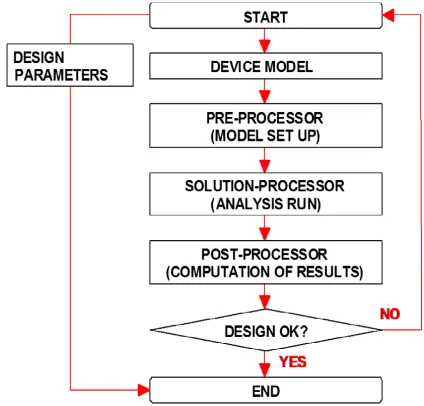
Fig. 1shows a simplified heuristic procedure for math-ematical modelling and design of physical sub-systems in engineering and technology. It is a simple procedure yet
it could be identified as the core activity in modelling and design of many sensors, actuators and devices, espe-cially at a sub-system level.
The procedure comprises three main processes – the process of defining and setting up appropriate mathemat-ical models (pre-processor), the process of solving the defining equations (solution-processor), and the process of calculating the necessary output parameters from the solution of these equations (post-processor). This proce-dure is repeated until a satisfactory design is obtained. In many areas of science and technology, sub-systems that are implemented using standard information technology, are modelled using the techniques of signals and informa-tion systems science. The relainforma-tionship between a sub-sys-tem’s physical embodiment and its function can be represented by idealised lumped parameter models[35– 37]. Such models are based on the relation between the in-put power flow to a sub-system, or system, and the outin-put flow.
[image:4.595.64.276.526.729.2]While idealised models like these are useful in the rep-resentation and analysis of concepts, detailed analysis and design require models, which relate the detailed geomet-ric and material properties of the object modelled to its functional behaviour. Measurement sub-systems are char-acterised by complex geometries and distributed proper-ties. The physical laws governing their behaviour are represented by partial differential equations, which are often non-linear and transcendental. There are a number ways of solving such realistic models – analytical, exper-imental and numerical. Analytical solutions are generally not feasible. They are normally applicable to problems with simple topology and linear materials. The experi-mental techniques, although applicable to many systems, are usually inaccurate, very time consuming and extre-mely expensive. In comparison, the numerical techniques based on, for example, the finite element (FEM) [38–43], boundary element (BEM) [44–47] and hybrid finite ele-ment–boundary element (FEM–BEM) [48–52] methods can tackle a wide variety of electrical, mechanical, ther-mal, structural and coupled problems. With the availabil-ity of powerful and affordable desktop computers, these techniques have revolutionised the formulation and solu-tion of realistic models in the past few decades or so. This is especially true for the numerical finite element (FE) technique because of the relative ease of its computer implementation and the flexibility it provides in the def-inition of complex topology. FE models are fast, accurate and applicable to most physical systems. Finite element techniques have made possible the formulation and anal-ysis of realistic models. The underlying principle of this method lies in the fact that the problem domain is di-vided (‘discretised’) into a number of triangular or rectan-gular elements of finite size (‘finite elements’) and the solution is sought at the vertices (‘nodes’) of these ele-ments. The size, shape and the density of the 2D/3D ‘mesh’ thus obtained affect the accuracy of the numerical solution obtained by FEM. Today, significant progress has been made in this area. Various 2D/3D finite element models are being routinely used for computer aided de-sign, investigation and performance modelling of instru-ment transducers and sensors.
6. Physical modelling of measurement sub-systems – generic approach
Here the examples are given for some of the most widely used electrical measurement sub-systems compris-ing capacitive sensors and electromagnetic (EM) actuators. They are used in a wide variety of diversified industrial applications ranging from measuring displacement to moving micro-mirrors in MEMS-based video projection systems. In general, they are based on the well-known capacitive technique in which the capacitance in a system of electrodes is changed owing to the redistribution of electric field caused by changes in the dielectric properties and/or geometric parameters in the system. In most cases, for modelling, design and performance evaluation of these sensor/actuator sub-systems, the core activities focus on the accurate computation and characterisation of 2D/3D electrostatic fields in complex geometry. This constitutes the main mathematical model of these sub-systems, the solution of which involves the solution of the following La-place’s or Poisson’s equation governing the field distribu-tion in the 2D/3D problem domainX(x,y,z):
r
!e
r
U
¼0 ð1Þr
!e
r
U
¼ %q
ð2Þwhere
q
is the charge density ande
=e
(x,y,z) is the dielec-tric permittivity distribution in the problem domain.Under appropriate boundary conditions, the solution of the above Laplace’s(1)or Poisson’s(2)equation gives the unknown electric potential distribution /=/(x, y, z) in the problem domainX(x,y,z). In most cases it is assumed that the dielectric materials in X are linear, piece-wise homogeneous and isotropic. Following the solution of(1), (2), the field intensity and flux density vectors Eand D, and other quantities like capacitance are calculated. The capacitanceCis calculated either from the electric field en-ergyEefor a given potential differenceVor from chargeQ using the following relationships:
Ee¼12CV2 ð3Þ
C¼Q
V ð4Þ
Here chargeQis calculated by integrating the flux den-sity vectorDover the appropriate electrode surfaces using the Gauss’s law:
Q¼I
s
Dnds¼ I
s
Dcoshds¼ I
s
D!nds¼I
s
D!ds ð5Þ
Q&I
s Dds ð6Þ
Although(1) and (2)are universal for sensors and actu-ators based on electrostatic principles, the specific formu-lation of their solution by FEM may vary depending on the material and geometric parameters, and the overall topology of the problem domain.
Electromagnetic (EM) actuators of wide variety of sizes, shapes, power outputs and technological realizations are
used in many applications where discrete cyclic motions are required. Compared to other actuating mechanisms based on, for example, piezoelectric and hydraulic princi-ples EM actuators are simpler, cheaper, easily repairable, robust, and easier to manufacture. EM actuators rarely operate in the steady state and various operational factors like start–stop duty, operating frequency, response time and damping have a significant influence on their design. The EM part of the system is represented by electric and magnetic circuits with self-inductance, resistance and reluctance which are subject to variations, in general, due to eddy currents, saturation conditions, motional electro-motive force (e.m.f.), demagnetisation and hysteresis. The mechanical part is represented by friction, damping, elas-ticity and inertia as well as external forces. The nonlinear and transient EM, thermal, and motional problems that need to be solved in high speed actuators pose substantial challenges because of their high frequency of operation and the requirement, in many cases, for a continuous and fail-safe multibillion cycle operational regimes. In general, the mathematical model of an EM actuator can be ade-quately represented by the following four differential equations shown below:(7)an electrical circuit equation for the excitation coil and control circuitry,(8)a nonlinear magnetic field equation (Poisson’s equation) for the flux, the change of which changes the EM energy storage in the system and produces the magnetic force,(9)a mechan-ical equation for this force, load (e.g. pneumatic force), fric-tion, inertia, accelerafric-tion, speed and displacement, and (10)a nonlinear thermal diffusion equation for the conduc-tion of heat produced by electrical power losses:
uðtÞ ¼iRþNd
W
ði;zÞdt ð7Þ
curlð
m
curlAÞ ¼J%r
@A@tþ
r
V( ðcurl AÞ ð8ÞFmði;zÞ ¼md 2z
dt2þB dz
dtþKzþFe ð9Þ
q
C@T@t%
r
!½kðTÞr
T* ¼q Bð10Þ
current also generates the heat and the resulting tempera-ture distribution given by(10). There are two main ap-proaches to the coupled solution of these equations: the direct coupled approach and the indirect coupled ap-proach, neither of which alone is suitable to incorporate the whole array of factors which are expected to be encountered in the practical exploitation of high-speed EM actuators. The methodologies for modelling and design of EM actuators are normally based on modelling and com-putation of 2D/3D nonlinear magnetic field distribution using the numerical FE technique. This involves the stea-dy-state and transient solutions of nonlinear Poisson’s equation(8). The results are used for design optimisation and for investigating the effects of various geometric, material, EM and mechanical parameters on the output performance of actuators. As mentioned above the thermal modelling involves the development of 2D/3D thermal models and the FE solution of the heat transfer equation gi-ven by(10). The coupling of magnetic field and thermal equations may be realised either by indirect coupling or by direct coupling in which the equations are solved simul-taneously. Following the solution of(8)above, the global quantities of interest such as inductance L and forceFm are calculated from the EM field energyEm:
Em¼1 2Li
2
)L¼2Em
i2 ð11Þ
Fm¼@Em @x
! ! ! !i
¼const: ð
12Þ
Besides the above virtual work method of calculating force Fm, there exist two other methods for calculating the magnetic force – Maxwell stress tensor method and the magnetising current method. This procedure is generic for all such EM instruments as measurement sub-systems. As examples, the above approach was successfully used for mathematical modelling, design and performance eval-uation of primary sensors, actuators and devices which comprise measurement sub-systems[53–59].
7. Conclusions
Mathematical modelling has been playing and it will continue to play an important role in measurement theory and practice. This is particularly so for design, performance modelling and analyses of physical sub-systems in the form of instrumentation which measurement systems are often made up of. This has been the case for measurement systems since the inception by Helmholtz of the founda-tion of modern theory of measurement in 1887. Hence, to-day there has been significant development in the techniques and approaches to modelling in all areas of strongly-defined measurement (e.g. physical modelling). However, the same is not necessarily so for soft measure-ment systems where, as it is pointed out above significant challenges still remain despite considerable progress that has been made in recent years. There are objective empir-ical processes of assignment of numbers to properties of such systems so as to describe them. However, there are logical and philosophical problems underlying some of
these processes. A unified approach is needed to establish widely-defined measurement in the mainstream and to encompass measurements in both hard and soft domains. And, perhaps this indicates pathways for future develop-ment areas of measuredevelop-ment theory and practice.
Finally, this paper is devoted to the memory of my co-author Professor Ludwik Finkelstein – a close friend, an inspiring colleague and, above all a decent man who in-spired me to work in the area of mathematical modelling and design in measurement and instrumentation. It was Ludwik who introduced me to the exciting and challenging area of widely-defined measurement, particularly soft measurement. From our many discussions it was clear he passionately believed that this area should be actively pur-sued by researchers, especially by future generation of younger researchers to develop it further and provoke de-bates to establish its place within the wider remit of mea-surement. It is hoped that this paper contributes to this in some way.
References
[1]L. Finkelstein, K.T.V. Grattan (Eds.), Concise Encyclopedia of Measurement and Instrumentation, Pergamon Press, Oxford, 1994. [2]F. Abdullah, L. Finkelstein, S.H. Khan, W.J. Hill, Modelling in
measurement and instrumentation – an overview, Measurement 14 (1994) 41–54.
[3]S.H. Khan, L. Finkelstein, Advances and generic problems in instrument design methodology, Metrol. Meas. Syst. XIII 17 (2007) 39–57.
[4] L. Finkelstein, A. Finkelstein, Design theory advances and measurement science, in: Proceedings of XVI IMEKO World Congress, 2000, pp. 43–48.
[5] Roman Z. Morawski, An application – oriented mathematical meta-model of measurement, Measurement. http://dx.doi.org/10.1016/ j.measurement.2013.04.004.
[6] R. Summers, Progress on measurement in medicine and biology: a multiscale systems engineering approach, in: Proceedings of the IMEKO Joint TC1 + TC7 + TC13 Symposium, Jena, Germany, 31 August–2 September 2011.
[7]K. Barker, Economic modelling: theory, reality, uncertainty and decision-making, in: C. Haines, P. Galbraith, W. Blum, S. Khan (Eds.), Mathematical Modelling (ICTMA12): Education, Engineering and Economics, Horwood Publishing Limited, Chichester, 2007. [8]A. Mukherjee, R. Karmakar, Modelling and Simulation of Engineering
Systems through Bondgraphs, CRC Press/Narosa Publishing House, Boca Raton, FL, 2000.
[9]W. Borutzk, Bond Graph Methodology: Development and Analysis of Multidisciplinary Dynamic System Models, Springer, 2010. [10]Y. Orbak, Physical Model Reduction: A Bond Graph Approach for
Engineering Systems, LAP LAMBERT Academic Publishing, 2010. [11]W. Borutzk, Bond Graph Modelling of Engineering Systems: Theory,
Applications and Software Support, Springer, 2011.
[12]J. Kypuros, System Dynamics and Control with Bond Graph Modeling, CRC Press, 2013.
[13]D.C. Karnopp, D.L. Margolis, R.C. Rosenberg, System Dynamics, fourth ed., Wiley, 2006 (System Dynamics: Modeling and Simulation of Mechatronic Systems, third ed.).
[14]M. Tiller, Introduction to Physical Modeling with Modelica, Springer, 2001.
[15]P. Fritzson, Introduction to Modeling and Simulation of Technical and Physical Systems with Modelica, Wiley–IEEE Press, 2011. [16]S.L Campbell, J-P. Chancelier, R. Nikoukhah, Modeling and
Simulation in Scilab/Scicos with ScicosLab 4.4, second ed., Springer, 2010.
[17]B. Barnes, G.R. Fulford, Mathematical Modelling with Case Studies: A Differential Equations Approach using Maple and MATLAB, second ed., Chapman and Hall/CRC, 2008.
[18]V. Giurgiutiu, S.E. Lyshevski, Micromechatronics: Modeling, Analysis, and Design with MATLAB, second ed., CRC Press, 2009. [19]S.M Musa, Computational Nanotechnology: Modeling and
[20]S.T Karris, Signals and Systems: With MATLAB Computing and Simulink Modeling, fifth ed., Orchard Publications, 2012.
[21]J. de Kleer, Qualitative physics, in: S.C. Shapiro (Ed.), Encyclopedia of Artificial Intelligence, vol. 2, Wiley, New York, 1990, pp. 907–914. [22]J.M.M. Tura, F.E. Cellierb, R.M. Hubera, S.J. Qinc, On the selection of
variables for qualitative modelling of dynamical systems, Int. J. Gen. Syst. 31 (5) (2002) 435–467.
[23]L. Finkelstein, Widely, strongly and weakly defined measurement, Measurement 34 (2003) 39–48.
[24]L. Finkelstein, Problems of measurement in soft systems, Measurement 38 (4) (2005) 267–274.
[25] L. Finkelstein, Problems of widely – defined measurement, in: Proceedings of the IMEKO joint TC1 and TC7 Symposium, Annecy, France, 3–5 September 2008, pp. 23–29.
[26] L. Finkelstein, Standing on the shoulders of VIM, in: Proceedings of the XIX IMEKO Congress, Lisbon, Portugal, 6–11 September 2009, pp. 1058–1060.
[27]L. Finkelstein, Widely-defined measurement – an analysis of challenges, Measurement 42 (9) (2009) 1270–1277.
[28]E.R. Carson, C. Cobelli, Modelling Methodology for Physiology and Medicine, Academic Press, San Diego, 2001.
[29]K. Sijtsma, Introduction to the measurement of psychological attributes, Measurement 44 (2011) 1209–1219.
[30]J. Michell, Measurement in Psychology: A Critical History of a Methodological Concepts, Cambridge University Press, Cambridge, 2004.
[31] M. Wilson, The role of mathematical models in measurement: A perspective from psychometrics, in: Proceedings of the IMEKO Joint TC1 + TC7 + TC13 Symposium, Jena, Germany, 31 August–2 September 2011.
[32]K. Sapozhnikova, R. Taymanov, Improvement of traceability of widely-defined measurements in the field of humanities, Meas. Sci. Rev. 10 (3) (2010) 78–88.
[33] T. Salzberger, The quantification of latent variables in the social sciences: requirements for scientific measurement and shortcomings of current, procedures, in: Proceedings of the IMEKO Joint TC1 + TC7 + TC13 Symposium, Jena, Germany, 31 August–2 September 2011.
[34] G.B. Rossi, B. Berglund, Measurement related to human perception and interpretation – state of the art and challenges, in: Proceedings of the XIX IMEKO Congress, Lisbon, Portugal, 6–11 September 2009, pp. 1164–1169.
[35] G.R. Hopkins, Nonlinear Lumped Parameter Mathematical Model of Dynamic Response of the Human Body, PN, 1971.
[36]L. Finkelstein, R.D. Watts, Fundamentals of transducers – description by mathematical models, in: P.H. Sydenham (Ed.), Handbook of Measurement Science, Wiley, Chichester, 1983, pp. 747–795. [37]A. Dey, Lumped Parameter Modeling and Model Parameter
Estimation: Analysis of Elastic, Elastoplastic and Viscoelastic Unreinforced and Reinforced Foundation Beds, LAP LAMBERT Academic Publishing, 2011.
[38]K.J. Binns, P.J. Lawrenson, C. Trowbridge, The Analytical and Numerical Solution of Electric and Magnetic Fields, John Wiley & Sons, Chichester, 1992.
[39]O.C. Zienkiewicz, R.L. Taylor, J.Z. Zhu, The Finite Element Method: Its Basis and Fundamentals, sixth ed., Elsevier Butterworth– Heinemann, Oxford, 2005.
[40]S.S Rao, The Finite Element Method in Engineering, fifth ed., Butterworth–Heinemann Ltd., 2010.
[41]C. Johnson, Numerical Solution of Partial Differential Equations by the Finite Element Method, Dover Publications Inc., 2009.
[42]A. Bossavit, Computational Electromagnetism, Academic Press Inc., 1998.
[43]P.P. Silvester, R.L. Ferrari, Finite Elements for Electrical Engineers, third ed., Cambridge University Press, Cambridge, 1996.
[44]D. Poljak, C.A. Brebbia, Boundary Element Methods for Electrical Engineers (Advances in Electrical Engineering and Electromagnetics), WIT Press, 2005.
[45]C.A Brebbia, J.C.F. Telles, L.C. Wrobel, Boundary Element Techniques: Theory and Applications in Engineering, Springer, 2012.
[46]C.A Brebbia, Electromagnetic Applications (Topics in Boundary Element Research), Springer, 2011.
[47]G. Manolis, D. Polyzos, Recent Advances in Boundary Element Methods: A Volume to Honor Professor Dimitri Beskos, Springer, 2009.
[48]J. D’Angelo, Hybrid finite element/boundary element analysis of electromagnetic fields, Top. Boundary Elem. Res. 6 (1989) 151–181. [49]G. Beer, J.O. Watson, Introduction to Finite and Boundary Element
Methods for Engineers, Wiley-Blackwell, 1992.
[50]G.C. Hsiao, E. Schnack, W.L. Wendland, A hybrid coupled finite-boundary element method in elasticity, Comput. Methods Appl. Mech. Eng. 173 (3–4) (1999) 287–316.
[51]J. Raamachandran, Boundary and Finite Elements: Theory and Problems, Narosa Publishing House, Delhi, 2000.
[52]Y. Takahashi, S. Wakao, Large-scale magnetic field analysis by the hybrid finite element-boundary element method combined with the fast multipole method, Electr. Eng. Jpn. 162 (1) (2008) 73–80. [53] K. Neumaier, D. Haller, S.H. Khan, K.T.V. Grattan, 3D solid modelling
of multilayer printed circuit Boards, in: Proceedings of CAT Engineering 2001 conference, Stuttgart, Effiziente 3D-Produktmodellierung – Fortschritte und Fallsttricke, VDI-Berichte 1624, 19–22 June 2001, pp. 269–283.
[54] K. Neumaier, D. Haller, S.H.Khan, K.T.V. Grattan, Automated modelling and thermal FEA simulation of printed wiring assemblies, in: Proceedings of the 20th IEEE Semiconductor and Thermal Measurement and Management Symposium, SEMI-THERM XX, San Jose, USA, March 9–11 2004, pp. 271–278.
[55]S.H. Khan, M. Cai, K.T.V. Grattan, K. Kajan, M. Honeywood, S. Mills, Design and investigation of high-speed, large-force and long-lifetime electromagnetic actuators by finite element modelling, Journal of Physics: Conference Series 15 (2005) 300–305. [56]S.H. Khan, K.Y. Aristovich, A.I. Borovkov, Solution of the forward
problem in magnetic field tomography (MFT) based on magnetoencephalography (MEG), IEEE Trans. Magnetics 45 (3) (2009) 1416–1419.
[57] S.H. Khan, K.Y. Aristovich, A.I. Borovkov, Mathematical Modelling of Human Brain for Magnetic Field Tomography Based on Magnetoencephalography, in: Proceedings of the 12th IMEKO TC1-TC7 Joint Symposium, Annecy, France, 3–5 September 2008, pp. 191–195.
[58]K.Y Aristovich, S.H. Khan, A new submodelling technique for multi-scale finite element computation of electromagnetic fields: application in bioelectromagnetism, in: S.H. Khan, K.T.V. Grattan, L. Finkelstein, P. Kyriacou (Eds.), Journal of Physics: Conference Series, vol. 238, 2010. p. (8)012050.