R E S E A R C H A R T I C L E
Open Access
Comparative evaluation of drug
information leaflets for non-steroidal
anti-inflammatory drugs in Palestine: local
versus imported products
Dina A. Arandy
1, Maysa W. Abu-Hashia
1, Bahaa M. Al-hroub
1, Sandra A. Qatmosh
1, Amer A. Koni
1, Baraa G. Qeeno
1,
Samah W. Al-Jabi
2and Sa
’
ed H. Zyoud
2,3*Abstract
Background:Drug information leaflets (DILs) are written for patients and health care providers to show how to use the medications safely and effectively, in order to reach the required therapeutics outcomes. This comparative study was conducted to evaluate various DILs of non-steroidal anti-inflammatory drugs (NSAIDs) that are produced in Palestine, along with their imported equivalents.
Methods:Thirty-five DILs of NSAIDs were analyzed and evaluated in a cross-sectional comparative study. Thirty-one statements were obtained from literature and used; evaluation was performed on basis of both any presence or absence of these statements in the leaflets. 23 of the 31 statements that were available in both local and imported DILs were also evaluated in terms of total word-counts: the median (interquartile range) word-count for each statement was determined separately for the two groups and then compared. For the remaining 8 statements, this was not performed,either because they were not present in any leaflet, or because counting the number of words would not be meaningful.
Results:A total of 35 DILs for nine different active ingredients of NSAIDs were analyzed. In 97% of leaflets,
“Instructions to convert medication into liquid forms”were missing and 94% did not provide any information about “Pharmacokinetics”. 83% of DILs provided no information about“Mechanism of action”and 74% did not mention any reliable references. 66% of the analyzed inserts did not include any instruction about the possibility of a tablet splitting. And in 63%, the“Date of last revision”was missing. Further,“Duration of using”and“Inactive ingredients” were not found in 51% of leaflets. In terms of word-count, the related sections of the 23 selected criteria were expressed with more words by imported leaflets compared with the local ones, significant differences were found in 12 categories, the highest significance of > 42.4-fold difference was found in“Geriatric considerations”category whereas 1.4-fold difference was found in“Shelf life,”being the lowest one.
Conclusions:This study shows that local products provide less information than imported products, so we
recommend that appropriate measurements be taken by both Palestinian authorities and manufacturers to improve both quantity and quality of local DILs.
Keywords:Patient package insert, Non-steroidal anti-inflammatory drugs, Palestine
© The Author(s). 2019Open AccessThis article is distributed under the terms of the Creative Commons Attribution 4.0 International License (http://creativecommons.org/licenses/by/4.0/), which permits unrestricted use, distribution, and reproduction in any medium, provided you give appropriate credit to the original author(s) and the source, provide a link to the Creative Commons license, and indicate if changes were made. The Creative Commons Public Domain Dedication waiver (http://creativecommons.org/publicdomain/zero/1.0/) applies to the data made available in this article, unless otherwise stated. * Correspondence:[email protected];[email protected]
2
Department of Clinical and Community Pharmacy, College of Medicine and Health Sciences, An-Najah National University, Nablus 44839, Palestine
3Clinical Research Centre, An-Najah National University Hospital, Nablus
44839, Palestine
Background
Drug information leaflets (DILs) are package inserts, providing information for safe and effective medication use, are based on specific regulatory guidelines [1, 2]. DILs should be an unambiguously-written information source about our medications, not only for health care professionals but also for any car givers and, of course, the patients [3]. They should be correct, comprehensive, and up to date, to minimize the incidence of errors dur-ing the handldur-ing or the takdur-ing these medications [4]. DILs should contain information that enhances a pa-tient’s awareness towards optimal medication use, ensur-ing safety and efficacy to achieve the desired therapeutic plan [5]. It’s been seen that the quantity and quality of DILS information can influence the patients’compliance and therefore give a satisfactory result [6]. In a system-atic review of the role and value of written information for patients about individual medicines, Grime, et al. [7], reported that patients can get confused due to inconsist-ent DILs information, resulting in a decreased patiinconsist-ent medication compliance. Straightforward DILs informa-tion plays an important role in helping patients to follow medication instructions properly.
Several studies have shown that availability of informa-tion about non-steroidal anti-inflammatory drugs (NSAIDs) to patients and health care providers improves patients’ knowledge about medications they use, enhances benefits and reduces risks in treatment [8–15]. A study in Thailand was undertaken in order to determine information content and availability of NSAIDs leaflets. In that survey, the leaf-lets of the original drug manufacturers’products contained more information than Palestine-produced ones. Further-more, no leaflet mentioned the required warnings that are specified by Thai regulations [16].
The Palestinian Ministry of Health (MOH) requires that medication inserts be bilingual, in both Arabic and Eng-lish, but does not give any recommendations about spe-cific DIL designs, the quality of information or length of text [17–19]. It was noted that DILs of Palestinian-marketed medications contained incomplete and limited information compared with their counterparts marketed in other countries [5,20–22]. Although some research has been done of the DILs of medications available in Palestine [5, 20], no study compared the the information provided by local and imported NSAIDS. The reasons that NSAIDs were selected in this study is that they are among the most commonly dispensed medications in the Palestinian pharmacies, and these medications are usually dispensed as self-medications or sold over-the-counter (OTC) [23–25]. Also, these medications are known to cause serious adverse effects, so, in the light of this, the DILs of NSAIDs medications should provide a high qual-ity information to the health-care providers and patients [26, 27]. We performed this study to evaluate and
compare the DILs of local and imported NSAID products available in the community pharmacies in Palestine. It is hoped that this research will contribute to a deeper under-standing of information gaps in DILs.
Methods Study design
A cross-sectional comparative study was used to assess the quantity and quality of DILs information of NSAIDs.
DILs selection
Each non-steroidal anti inflammatory active ingredient that included in this study was produced by both a local and a foreign company. Furthermore, all of its alternatives were equivalent pharmaceutically and made of a uniform strength, registered with the Palestinian MOH, and avail-able in the local market; availability was checked by asking 20 different local pharmacies distributed in different gov-ernorates of West Bank-Palestine including Hebron, Jenin, Nablus and Ramallah. There are around 1000 community pharmacies in West Bank-Palestine distributed in 11 Gov-ernorates [28]. Four governorates were selected randomly to represent the northern, central, and southern regions.
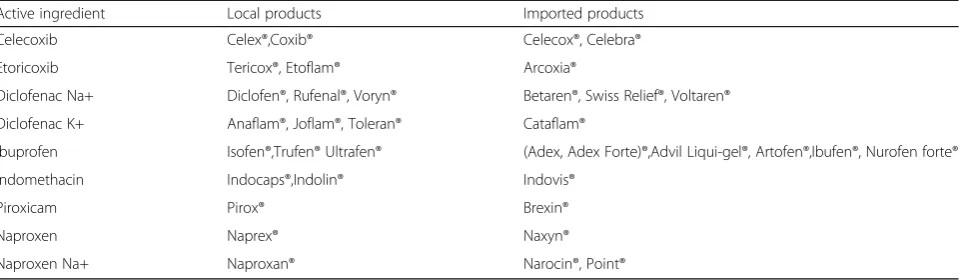
Medications that can be used as anti-platelets; which contain acetylsalicylic acid or dosage forms other than oral such as injections or topical preparations were ex-cluded, as most of these have either fewer side effects or are administered under a health’s professional direct intervention. According to the above selection and ex-clusion criteria, 9 different NSAIDs were included in this study: Ibuprofen, Indomethacin, Piroxicam, Naproxen, Naproxen Sodium, Diclofenac Sodium, Diclofenac Po-tassium, Etoricoxib, and Celecoxib. The selected NSAIDs were available in the Palestinian West Bank market as 35 products (n= 18 imported products; n= 17 Palestinian-produced medicines), all that are available in the market; (Table 1). The 35 package inserts for these products were collected from different pharmacies in Palestine on request.
DILs assessment and evaluation
convert tablets or capsules into liquid forms, possibility of crushing and mixing with food or beverages, possibility of tablet splitting, pharmacokinetic information, shelf life, stor-age, name and address of manufacturers/ distributors, date of last revision, and references. DILs were evaluated and the scoring method in our study was modified according to the previous literature [3, 5,16, 20, 29]. Each product’s infor-mation was scored either as 1 or as 0 (if present or absent respectively). The total of these scores was calculated for both local and imported products separately, and then compared. The second method was manual word-counting [5,20,29,30]. Twenty-three of the 31 statements that were available in both local and imported DILs were also evaluated in terms of total word-counts: the median (interquartile range) word-count for each statement was determined separately for the two groups and compared. For the remaining 8 statements this was not performed, either because they were not present in any leaflet, or be-cause counting the number of words would not be meaningful.
Two Pharm. Ds′ authors (Dina Arandy and Maysa Abu-Hashia) reviewed all the DILs independently for extracting data, and summarizing findings. Disagree-ments in the selection of criteria or substance were re-solved by consensus-based discussion and then assessed by a third reviewer (Bahaa Al-hroub).
Statistical analysis
The data were entered and analyzed by using Statistical Package for Social Sciences (SPSS) Version 16. Descrip-tive results were expressed as frequency and percentage, or/and median and interquartile range (IQR). Compari-son of the word-counts between the local and imported drugs was by Mann-Whitney U-test. Apvalue of < 0.05 was considered significant.
Results
Thirty-five NSAID package inserts that are available in the Palestinian marketplace were analyzed based on 31 cri-teria. As previously noted, 18 (51%) were local products
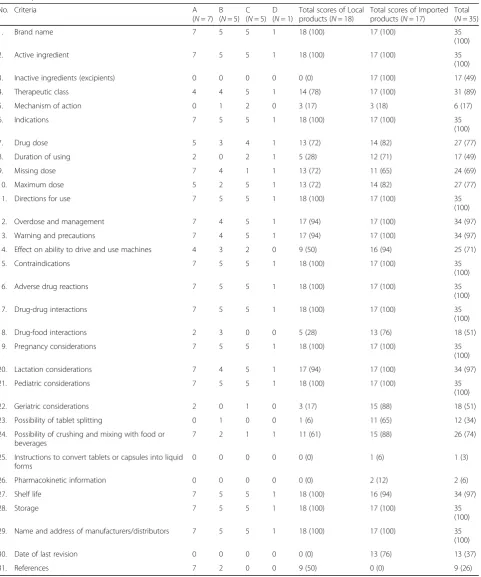
and 17 (49%) were imported. The 18 locally-produced agents are manufactured by 4 Palestinian pharmaceutical companies specified as A (7 products), B (5 products), C (5 products) and D (one product). Upon analysis, and as Table 2 illustrated, we found that all DILs (100%) men-tioned brand name, active ingredient, indications, direc-tion for use, contraindicadirec-tions, adverse drug reacdirec-tions, drug-drug interactions, name and address of manufac-turer, pregnancy considerations and storage. Most DILs had information regarding therapeutic class (89%), over-dose and management (97%), warnings and precautions (97%), lactation considerations (97%) and shelf life (97%). Information regarding missing dose, maximum dose, mechanism of action and effect on ability to drive and use machines presented in 96, 77, 17, and 71% of all DILs re-spectively. Information regarding pharmacokinetics, date of last revision, inactive ingredients and instructions to convert tablet or capsule into liquid forms were not men-tioned in any local product, whereas the ‘references’ cat-egory was not used by any imported product. In general, the number of local leaflets that met the listed criteria was lower than the number of the imported ones.
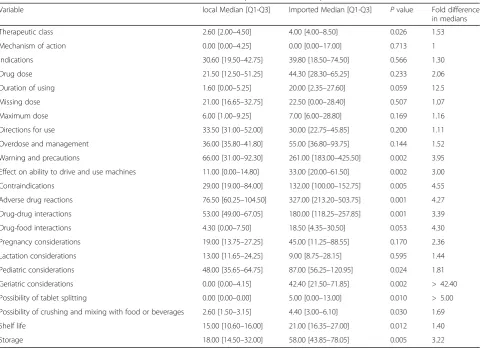
As for word-counting, 12 categories out of the 23 se-lected criteria were significantly different between the two studied agents. As Table 3shows, significant differ-ences were found in the following criteria and were more likely to be higher in imported agents:“therapeutic class” (p-value = 0.026), “warnings and precautions” (p -value = 0.002), “effects on ability to drive and use machines” (p-value = 0.002), “contraindications” (p -value = 0.005),“adverse drug reactions”(p-value = 0.001), and“drug-drug interactions”(p-value = 0.001).
In addition, the difference between the two studied categories was significant in word-count of the cat-egories “pediatric considerations” (p-value = 0.024),
[image:3.595.59.540.99.239.2]“geriatric considerations” (p-value = 0.002), “possibility of tablet splitting” (p-value = 0.010), “possibility of crushing and mixing with food and beverages” (p -value = 0.030), “shelf life” (p-value = 0.012) and “ stor-age” (p-value = 0.005); (Table 3).
Table 1list of nine active ingredients of NSAIDs included in our study with their local and imported trade names
Active ingredient Local products Imported products
Celecoxib Celex®,Coxib® Celecox®, Celebra®
Etoricoxib Tericox®, Etoflam® Arcoxia®
Diclofenac Na+ Diclofen®, Rufenal®, Voryn® Betaren®, Swiss Relief®, Voltaren® Diclofenac K+ Anaflam®, Joflam®, Toleran® Cataflam®
Ibuprofen Isofen®,Trufen® Ultrafen® (Adex, Adex Forte)®,Advil Liqui-gel®, Artofen®,Ibufen®, Nurofen forte®
Indomethacin Indocaps®,Indolin® Indovis®
Piroxicam Pirox® Brexin®
Naproxen Naprex® Naxyn®
As for the“geriatric considerations” category, the me-dian word-count of local DILs was 0.00 [0.00–4.15] words against 42.40 [21.50–71.85] words for the
[image:4.595.59.541.109.687.2]imported, which is a > 42.4-fold difference, whereas the median word-count of local DILs was 15.00 [10.60– 16.00] words against 21.00 [16.35–27.00] words for the
Table 2Scores of the thirty one statements written in the leaflets inserted in the local and imported NSAIDs
Local Companies
No. Criteria A
(N= 7) B (N= 5)
C (N= 5)
D (N= 1)
Total scores of Local products (N= 18)
Total scores of Imported products (N= 17)
Total (N= 35)
1. Brand name 7 5 5 1 18 (100) 17 (100) 35
(100)
2. Active ingredient 7 5 5 1 18 (100) 17 (100) 35
(100)
3. Inactive ingredients (excipients) 0 0 0 0 0 (0) 17 (100) 17 (49)
4. Therapeutic class 4 4 5 1 14 (78) 17 (100) 31 (89)
5. Mechanism of action 0 1 2 0 3 (17) 3 (18) 6 (17)
6. Indications 7 5 5 1 18 (100) 17 (100) 35
(100)
7. Drug dose 5 3 4 1 13 (72) 14 (82) 27 (77)
8. Duration of using 2 0 2 1 5 (28) 12 (71) 17 (49)
9. Missing dose 7 4 1 1 13 (72) 11 (65) 24 (69)
10. Maximum dose 5 2 5 1 13 (72) 14 (82) 27 (77)
11. Directions for use 7 5 5 1 18 (100) 17 (100) 35
(100)
12. Overdose and management 7 4 5 1 17 (94) 17 (100) 34 (97)
13. Warning and precautions 7 4 5 1 17 (94) 17 (100) 34 (97)
14. Effect on ability to drive and use machines 4 3 2 0 9 (50) 16 (94) 25 (71)
15. Contraindications 7 5 5 1 18 (100) 17 (100) 35
(100)
16. Adverse drug reactions 7 5 5 1 18 (100) 17 (100) 35
(100)
17. Drug-drug interactions 7 5 5 1 18 (100) 17 (100) 35
(100)
18. Drug-food interactions 2 3 0 0 5 (28) 13 (76) 18 (51)
19. Pregnancy considerations 7 5 5 1 18 (100) 17 (100) 35
(100)
20. Lactation considerations 7 4 5 1 17 (94) 17 (100) 34 (97)
21. Pediatric considerations 7 5 5 1 18 (100) 17 (100) 35
(100)
22. Geriatric considerations 2 0 1 0 3 (17) 15 (88) 18 (51)
23. Possibility of tablet splitting 0 1 0 0 1 (6) 11 (65) 12 (34)
24. Possibility of crushing and mixing with food or beverages
7 2 1 1 11 (61) 15 (88) 26 (74)
25. Instructions to convert tablets or capsules into liquid forms
0 0 0 0 0 (0) 1 (6) 1 (3)
26. Pharmacokinetic information 0 0 0 0 0 (0) 2 (12) 2 (6)
27. Shelf life 7 5 5 1 18 (100) 16 (94) 34 (97)
28. Storage 7 5 5 1 18 (100) 17 (100) 35
(100) 29. Name and address of manufacturers/distributors 7 5 5 1 18 (100) 17 (100) 35
(100)
30. Date of last revision 0 0 0 0 0 (0) 13 (76) 13 (37)
“shelf life” category, which is 1.4-fold difference. For other categories that have significantPvalues, 1.5–5-fold difference was found (Table3).
Discussion
In the current study, Palestinian DILs of NSAIDs were analyzed and evaluated to assess if they provide relevant information concerning safe and proper medication use. Both the quality and scope of DILs’ information are im-portant for patients, health care professionals and others i.e.: medical students.
The results of our study indicate that there are many information deficiencies in DILs and these should be ad-dressed. In our study,“duration of using”was mentioned in about half of the DILs and these results seem to be consistent with other research conducted in Saudi Arabia, which found that about 50% of DILs mentioned this [31]. Inclusion of a“date of last revision”is desirable as this will increase both the physician and patient’s trust toward the prescribed drug. It is interesting to note that most DILs in our study mentioned adverse drug re-actions, warning and precautions, and this encourages the rational use of drugs. The “shelf life” of the drug is
of obvious importance and is mentioned in the majority of DILs in our study. While observing the shelf life will not necessarily affect the safety of the drug, it can pos-sibly influence the efficacy and quality of the drug, resulting in a poor control of the disease. What is sur-prising is that “inactive ingredients” are not mentioned in any DILs of Palestinian-produced products, but are noted in all imported products. These results match those observed in another study performed in our coun-try [5]. Inactive ingredients such as artificial sweeteners, sodium salts and others should be listed in DILs. These ingredients may affect certain patient conditions or dis-eases [32,33], i.e. sodium salts can affect blood pressure in patients with hypertension, and some patients may in fact be allergic to those ingredients. Thus, if inactive in-gredients go unmentioned, it could expose a patient to a dangerous event that leads to hospitalization or even death.
[image:5.595.58.540.96.445.2]The most controversial finding to emerge from the analysis of word-count is that the related sections of the most criteria were more fully expressed by imported leaflets, compared with the local ones. Of course, in-creased text volume can alter leaflet design in terms of
Table 3Statistical difference between word-counts for local and imported NSAID for all products combined
Variable local Median [Q1-Q3] Imported Median [Q1-Q3] Pvalue Fold difference in medians Therapeutic class 2.60 [2.00–4.50] 4.00 [4.00–8.50] 0.026 1.53 Mechanism of action 0.00 [0.00–4.25] 0.00 [0.00–17.00] 0.713 1 Indications 30.60 [19.50–42.75] 39.80 [18.50–74.50] 0.566 1.30
Drug dose 21.50 [12.50–51.25] 44.30 [28.30–65.25] 0.233 2.06
Duration of using 1.60 [0.00–5.25] 20.00 [2.35–27.60] 0.059 12.5 Missing dose 21.00 [16.65–32.75] 22.50 [0.00–28.40] 0.507 1.07
Maximum dose 6.00 [1.00–9.25] 7.00 [6.00–28.80] 0.169 1.16
Directions for use 33.50 [31.00–52.00] 30.00 [22.75–45.85] 0.200 1.11 Overdose and management 36.00 [35.80–41.80] 55.00 [36.80–93.75] 0.144 1.52 Warning and precautions 66.00 [31.00–92.30] 261.00 [183.00–425.50] 0.002 3.95 Effect on ability to drive and use machines 11.00 [0.00–14.80] 33.00 [20.00–61.50] 0.002 3.00 Contraindications 29.00 [19.00–84.00] 132.00 [100.00–152.75] 0.005 4.55 Adverse drug reactions 76.50 [60.25–104.50] 327.00 [213.20–503.75] 0.001 4.27 Drug-drug interactions 53.00 [49.00–67.05] 180.00 [118.25–257.85] 0.001 3.39 Drug-food interactions 4.30 [0.00–7.50] 18.50 [4.35–30.50] 0.053 4.30 Pregnancy considerations 19.00 [13.75–27.25] 45.00 [11.25–88.55] 0.170 2.36 Lactation considerations 13.00 [11.65–24.25] 9.00 [8.75–28.15] 0.595 1.44 Pediatric considerations 48.00 [35.65–64.75] 87.00 [56.25–120.95] 0.024 1.81 Geriatric considerations 0.00 [0.00–4.15] 42.40 [21.50–71.85] 0.002 > 42.40 Possibility of tablet splitting 0.00 [0.00–0.00] 5.00 [0.00–13.00] 0.010 > 5.00 Possibility of crushing and mixing with food or beverages 2.60 [1.50–3.15] 4.40 [3.00–6.10] 0.030 1.69 Shelf life 15.00 [10.60–16.00] 21.00 [16.35–27.00] 0.012 1.40
font size and other characteristics, and this may affect both the readability and the patient’s motivation to read medication leaflets. Fuchs and his colleagues showed that small font sizes and the paper size itself is more likely with increased text volume, and this makes it harder for patients to locate product medical informa-tion, affecting their confidence to take the required med-icines [34]. A high information volume in leaflets can also affect patients’comprehensibility and perceptions of cor-rect medication instructions. Two studies revealed that the increase in DIL length guaranteed a higher incidence of long sentences, non-quantifiable phrases, or even diffi-cult words; this hindered the desire of concise and essen-tial information for both patients and healthcare providers [35, 36]. Also, according to many guidelines, information about overdose should be clear and concise, to avoid con-fusing patients and making them concerned about their ability to follow instructions [37–39].
DILs with high information volume meet the criteria of ample content and can protect the drug’s manufac-turer legally, but this can be distracting to many patients at the same time, affecting the attainability of adequate information to achieve the desired therapeutic outcomes [2]. In an American survey, prescriptions for Metformin and Lisinopril were filled by professional shoppers in a sample of 365 nationwide pharmacies, with consumer medication information leaflets that differed consider-ably in word-count. The range was 33-to-2482 words and this study found that leaflets with higher informa-tion volume, that got better scores of content quality, but failed to achieve the intended purpose of how pa-tients can get optimal benefits from therapy [40].
As for the“side effects”section, complex and long lists of potential adverse reactions are considered to be“over warning” and result in overloaded information, dimin-ishing labeling effectiveness. This issue was highlighted by the US Food and Drug Administration (FDA) as a new labeling guideline in 2006, that discourages the in-clusion of adverse events lists which are exhausted in spite of frequency and minority [41]. In 2015, the FDA stated that adverse reactions which are considered as
“less common” should be present in medication leaflets only if they are linked to medications by a causal rela-tionship [42]. Herber and his coworkers stated that the high amount of mentioned drug interactions and side ef-fects in package inserts provokes different emotional re-actions and leads to different patient behaviors toward taking medications [43].
This is the first comparative study that evaluates DILs of both local and imported NSAIDs in the Palestinian West Bank market; one of its expected results is to stimulate more research into the evaluation of locally-produced DILs. The present study had the following lim-itations: First, the number of package inserts included in
the study was small; for some active ingredients, only one local product and one imported product were in-cluded. Second, the study covered only one group of medication (NSAIDs) and included only such drugs as were manufactured by both local and imported compan-ies, and only the oral solid dosage forms were included. Finally, this study has been focused on the bulk and availability of key information, and did not evaluate the readability or the comprehensibility of DILs. Therefore, studies that focus on these issues are required.
Conclusions
The present study showed that both the quality and the quantity of DILs provided information of Palestine-produced NSAIDs is significantly different compared with its imported equivalents to be found in the Pales-tinian market. Incomplete information about contraindi-cations, interactions, warnings and precautions affect the safety and efficacy of medication use, so to avoid any medication errors that may be a result from information deficits in local DILs, we recommend that appropriate measures should indeed be implemented by the Palestin-ian Ministry of Health and local manufacturers, to deter-mine the key information, and to make an improvement in the existing DILs, based on best practice. This will help improve the quality and fulsomeness in the DILs of local NSAIDs and make them complete, up to date, and meet the needs of the Palestinian patients.
Abbreviations
DILs:Drug information leaflets; FDA: Food and Drug Administration; IQR: Interquartile range; IRB: Instutional Review Board; MOH: Ministry of Health; NSAIDs: Non-steroidal anti-inflammatory drugs; OTC: Over-the-counter; SD: Standard deviation; SPSS: Statistical package for social sciences
Acknowledgments
The authors thank retired British Library curator Andy Simons for English editing of the manuscript.
Authors’contributions
DA, MA, and BA designed the study, collected data, performed the analyses and literature search, and drafted the manuscript. SQ, AK, and BQ participated in the study design, and and literature search. SA interpreted the data and revising manuscript for all the new concerns have been addressed. SZ conceptualized and designed the study, coordinated, supervised and analyzed the data, and assisted in final write-up of the manuscript. All have read and approved the final manuscript.
Funding
No funding was received in preparation of this study.
Availability of data and materials
The raw data supporting the findings presented in this study will be available from the corresponding author upon request.
Ethics approval and consent to participate
This study was approved by the IRB at An-Najah National University, which deemed the process exempt, as it did not report any human data.
Competing interests
The authors declare that they have no competing interests.
Author details
1PharmD program, College of Medicine and Health Sciences, An-Najah
National University, Nablus 44839, Palestine.2Department of Clinical and
Community Pharmacy, College of Medicine and Health Sciences, An-Najah National University, Nablus 44839, Palestine.3Clinical Research Centre, An-Najah National University Hospital, Nablus 44839, Palestine.
Received: 15 January 2019 Accepted: 19 November 2019
References
1. Ramdas D, Chakraborty A, Hs S, Faizan S, Kumar VP, Bn S. A study of package inserts in southern India. J Clin Diagn Res. 2013;7(11):2475–7. 2. World Health Organization. Guidelines on packaging for pharmaceutical
products. 2002.https://www.who.int/medicines/areas/quality_safety/quality_ assurance/GuidelinesPackagingPharmaceuticalProductsTRS902Annex9.pdf
(Accessed May 25 2019).
3. Rahim N, Rafiq K. Judgement of pharmaceutical package insert available in Pakistan from local and multinational companies. Asian J Pharm Health Sci. 2013;3(1):597–600.
4. Nabors LA, Lehmkuhl HD, Parkins IS, Drury AM. Reading about over-the-counter medications. Issues Compr Pediatr Nurs. 2004;27(4):297–305. 5. Sawalha A, Sweileh W, Zyoud S, Jabi S. Comparative analysis of patient
package inserts of local and imported anti-infective agents in Palestine. Libyan J Med. 2008;3(4):181–5.
6. Gibbs S, Waters WE, George CF. Prescription information leaflets: a national survey. J R Soc Med. 1990;83(5):292–7.
7. Grime J, Blenkinsopp A, Raynor DK, Pollock K, Knapp P. The role and value of written information for patients about individual medicines: a systematic review. Health Expect. 2007;10(3):286–98.
8. Jarernsiripornkul N, Phueanpinit P, Pongwecharak J, Krska J. Experiences of and attitudes towards receiving information about non-steroidal anti-inflammatory drugs: a cross-sectional survey of patients in Thailand. Expert Opin Drug Saf. 2016;15(4):417–26.
9. Phueanpinit P, Jarernsiripornkul N, Pongwecharak J, Krska J. Hospital pharmacists' roles and attitudes in providing information on the safety of non-steroidal anti-inflammatory drugs in Thailand. J Eval Clin Pract. 2014;36(6):1205–12.
10. Phueanpinit P, Pongwecharak J, Krska J, Jarernsiripornkul N. Knowledge and perceptions of the risks of non-steroidal anti-inflammatory drugs among orthopaedic patients in Thailand. Int J Clin Pharm. 2016;38(5):1269–76. 11. Phueanpinit P, Pongwecharak J, Sumanont S, Krska J, Jarernsiripornkul N.
Physicians’communication of risks from non-steroidal anti-inflammatory drugs and attitude towards providing adverse drug reaction information to patients. J Eval Clin Pract. 2017;23(6):1387–94.
12. Gibbs S, Waters WE, George CF. The benefits of prescription information leaflets (1). Br J Clin Pharmacol. 1989;27(6):723–39.
13. Gibbs S, Waters WE, George CF. The benefits of prescription information leaflets (2). Br J Clin Pharmacol. 1989;28(3):345–51.
14. Pope JE, Stevens A, Rooks M. A randomized double blind trial of verbal NSAID education compared to verbal and written education. J Rheumatol. 1998;25(4):771–5.
15. Arthur V, Clifford C. Evaluation of information given to rheumatology patients using non-steroidal anti-inflammatory drugs. J Clin Nurs. 1998;7(2):175–81. 16. Phueanpinit P, Pongwecharak J, Krska J, Jarernsiripornkul N. Medicine
information leaflets for non-steroidal anti-inflammatory drugs in Thailand. Int J Clin Pharm. 2016;38(1):25–9.
17. Palestinian Ministry of Health. Guidance on pharmaceutical products registration in Palestine. 2007.http://pharmacy.moh.ps/Content/Laws/QKvRJ5p7dA8t1 KldczJNVlzf_txnSEZWrwpj9CBvBc51v7VDG.pdf(Accessed March 25 2017). 18. Sweileh WM, Aker OA, Jaradat NA. Drug informational value of patient package
insert (PPI): a sample study in Palestine. IUG J Nat Stud. 2015;12(2):59–68. 19. Al-Ramahi R, Zaid AN, Kettana N, Sweileh W, Al-Jabi D. Attitudes of
consumers and healthcare professionals towards the patient package inserts - a study in Palestine. Pharm Pract (Granada). 2012;10(1):57–63.
20. Qatmosh SA, Koni AA, Qeeno BG, Arandy DA, Abu-Hashia MW, Al-Hroub BM, Zyoud SH. Comparative analysis of package inserts of local and imported antihypertensive medications in Palestine. BMC Public Health. 2017;17(1):741.
21. Gebran N, Al Haidari K. Assessment of prescribing information for generic drugs manufactured in the Middle East and marketed in Saudi Arabia. Ann Saudi Med. 2006;26(3):192–9.
22. Reggi V, Balocco-Mattavelli R, Bonati M, Breton I, Figueras A, Jambert E, Kopp C, Montane E, Rago L, Rocchi F. Prescribing information in 26 countries: a comparative study. Eur J Clin Pharmacol. 2003;59(4):263–70. 23. Sweileh W. Self–medication and over-the-counter practices: a study in
Palestine. J Al-Aqsa Unv. 2004;8:1–9.
24. Zyoud SH, Al-Jabi SW, Sweileh WM, Nabulsi MM, Tubaila MF, Awang R, Sawalha AF. Beliefs and practices regarding childhood fever among parents: a cross-sectional study from Palestine. BMC Pediatr. 2013;13:66.
25. Khatib R, Daoud A, Abu-Rmeileh NM, Mataria A, McCaig D. Medicine utilisation review in selected non-governmental organisations primary healthcare clinics in the West Bank in Palestine. Pharmacoepidemiol Drug Saf. 2008;17(11):1123–30. 26. Suleyman H, Demircan B, Karagoz Y. Anti-inflammatory and side effects of
cyclooxygenase inhibitors. Pharmacol Rep. 2007;59(3):247–58.
27. Tong V, Raynor DK, Aslani P. Design and comprehensibility of over-the-counter product labels and leaflets: a narrative review. Int J Clin Pharm. 2014;36(5):865–72. 28. Sweileh WM, Zyoud SH, Al-Haddad MS.Pharmacy practice in developing
countries. In: Fathelrahman AI, MIM I, Wertheimer AI, editors. Chapter 13 -pharmacy practice in Palestine. Boston: Academic Press; 2016. p. 253–66. 29. Munsour EE, Awaisu A, Hassali MAA, Darwish S, Abdoun E. Readability and
comprehensibility of patient information leaflets for antidiabetic medications in Qatar. J Pharm Technol. 2017;33(4):128–36.
30. Schmitz J, Kamping S, Wiegratz J, Muller M, Stork J, Colloca L, Flor H, Klinger R. Impact of patient information leaflets on pain medication intake behavior: a pilot study. Pain Rep. 2017;2(6):e620.
31. Al-Aqeel SA. Evaluation of medication package inserts in Saudi Arabia. Drug Healthc Patient Saf. 2012;4:33–8.
32. Kumar A, Rawlings RD, Beaman DC. The mystery ingredients: sweeteners, flavorings, dyes, and preservatives in analgesic/antipyretic, antihistamine/ decongestant, cough and cold, antidiarrheal, and liquid theophylline preparations. Pediatrics. 1993;91(5):927–33.
33. Hermann F, Herxheimer A, Lionel ND. Package inserts for prescribed medicines: what minimum information do patients need? Br Med J. 1978;2(6145):1132–5. 34. Fuchs J. The way forward in package insert user tests from a CRO’s
perspective. Ther Innov Regul Sci. 2010;44(2):119–29.
35. Weitbrecht WU, Vosskamper C. Influence of the drug package information paper on compliance of neurological and psychiatric outpatients. Fortschr Neurol Psychiatr. 2002;70(4):178–84.
36. Fuchs J, Banow S, Görbert N, Hippius M. Importance of package insert information in the European union. Pharm Ind. 2007;69(2):165–72. 37. Patient Information Quality Unit. Further guidance on designing patient
information leaflets and how to achieve success in user testing. 2007.
http://www.pensar.myzen.co.uk/piltesting/images/PIL%20Web%20PDFs/ Further%20Guidance%20March%202007.pdf(Accessed March 11 2017). 38. Communication Research Institute. Guideline for the labelling of medicines.
2014. https://www.tga.gov.au/sites/default/files/consult-labelling-medicines-140822-submission-cri.pdf(Accessed March 11 2017). 39. The European Commission. Guideline on the readability of the label and
package leaflet of medicinal products for human use. 2009.http://ec. europa.eu/health//sites/health/files/files/eudralex/vol-2/c/2009_01_12_ readability_guideline_final_en.pdf(Accessed March 11 2017).
40. Winterstein AG, Linden S, Lee AE, Fernandez EM, Kimberlin CL. Evaluation of consumer medication information dispensed in retail pharmacies. Arch Intern Med. 2010;170(15):1317–24.
41. Food and Drug Administration. Requirements on content and format of labeling for human prescription drug and biological products. Final rule. Fed Regist. 2006;71(15):3921–97.
42. US Food Drug Administration. Adverse reactions section of labeling for human prescription drug and biological products—content and format. 2015.https:// www.fda.gov/downloads/Drugs/GuidanceComplianceRegulatoryInformation/ Guidances/UCM075057.pdf(Accessed March 11 2017).
43. Herber OR, Gies V, Schwappach D, Thurmann P, Wilm S. Patient information leaflets: informing or frightening? A focus group study exploring patients' emotional reactions and subsequent behavior towards package leaflets of commonly prescribed medications in family practices. BMC Fam Pract. 2014;15(1):163.
Publisher’s Note