S H O R T R E P O R T
Open Access
Validation of reference genes aiming accurate
normalization of qPCR data in soybean upon
nematode parasitism and insect attack
Vívian de Jesus Miranda
1, Roberta Ramos Coelho
1,2, Antônio Américo Barbosa Viana
2,3,
Osmundo Brilhante de Oliveira Neto
2,4, Regina Maria Dechechi Gomes Carneiro
2, Thales Lima Rocha
2,
Maria Fatima Grossi de Sa
1,2,3*and Rodrigo Rocha Fragoso
1,5*Abstract
Background:Soybean pathogens and pests reduce grain production worldwide. Biotic interaction cause extensive changes in plant gene expression profile and the data produced by functional genomics studies need validation, usually done by quantitative PCR. Nevertheless, this technique relies on accurate normalization which, in turn, depends upon the proper selection of stable reference genes for each experimental condition. To date, only a few studies were performed to validate reference genes in soybean subjected to biotic stress. Here, we report reference genes validation in soybean during root-knot nematode (Meloidogyne incognita) parasitism and velvetbean
caterpillar (Anticarsia gemmatalis) attack.
Findings:The expression stability of nine classical reference genes (GmCYP2,GmELF1A,GmELF1B,GmACT11,GmTUB,
GmTUA5,GmG6PD,GmUBC2andGmUBC4) was evaluated using twenty-four experimental samples including different organs, developmental stages, roots infected withM. incognitaand leaves attacked byA. gemmatalis. Two different algorithms (geNormandNormFinder) were used to determine expression stability.GmCYP2andGmUBC4
are the most stable in different organs. Considering the developmental stages,GmELF1AandGmELF1Bgenes are the most stable. For spatial and temporal gene expression studies, normalization may be performed usingGmUBC4,
GmUBC2,GmCYP2andGmACT11as reference genes. Our data indicate that bothGmELF1AandGmTUA5are the most stable reference genes for data normalization obtained from soybean roots infected withM. incognita, and
GmCYP2andGmELF1Aare the most stable in soybean leaves infested withA. gemmatalis.
Conclusions:Future expression studies using nematode infection and caterpilar infestation in soybean plant may utilize the reference gene sets reported here.
Keywords:Glycine max,Meloidogyne incognita,Anticarsia gemmatalis, Gene expression, Real-time PCR
Background
Soybean is a crop of enormous economic importance due to several nutritional and industrial applications. The soy grain is the world's leading source of protein and vegetable oil [1]. Nutritional benefits are due to high levels of essential amino acids and fatty acids, vitamins and minerals [2]. In addition to the extensive use of the
grain in the food industry (animal and human foodstock), the soybean is also used in the production of biodiesel [3].
However, despite the great expansion of soybean acreage, insect-pests and diseases have reduced the crop productivity [4]. Anticarsia gemmatalis, known as the velvetbean caterpillar, attacks the leaves causing severe plant damage. This caterpillar is native from tropical and subtropical areas of the western hemisphere and is com-monly found in tropical America, being a major pest of soybean crops in Brazil, a major producer of the grain [5]. They are able to feed on young leaves, causing
* Correspondence:[email protected];[email protected]
2Embrapa Genetic Resources and Biotechnology, Laboratory of Molecular
Plant-Pest Interaction, PqEB Final Av. W/5 Norte, Brasília, DF, Brazil
5Embrapa Cerrados, Laboratory of Phytopathology, Planaltina, DF, Brazil
Full list of author information is available at the end of the article
reduction of leaf area and photosynthetic rate. When in large populations, the damages are so severe as the complete loss of leaves, including the ribs and the petiole, which causes up to 100% of production losses [6].
The root-knot nematode Meloidogyne incognita is probably the most important nematode in agriculture due to its worldwide distribution and wide variety of host plants [7,8], being widely distributed in soybean crops, causing an average of 5% of crop losses around the world [9]. The infective stage, known as second-juvenile (J2), invades the root tips and migrates in root tissues between cell walls to reach the vascular cylinder, where it secretes proteins from esophageal glands that induce giant cells formation resulting in a structure named feeding site. Hyperplasia and hyper-trophy of cortical cells are achieved by interfering with plant gene expression, what therefore leads to gall formation [10].
Aiming to understand the plant-pest interactions, several functional genomics studies have been done [11]. The large-scale technique of gene expression pro-filing usually reported is the use of microarrays, some of them initiated by laser capture microdissection (LCM) at giant cells [12,13]. However, these results demand a validation step to confirm differential gene expression, which is made by quantitative PCR. qPCR is currently the most accurate technique to quantify transcript expression, due to its high sensitivity, reproducibility, high resolution, wide dynamic range, and no post-PCR processing [14].
The qPCR reliability, however, depends on normalization, to correct for non-biological variations such as sample quantity and quality, RNA preparation, cDNA synthesis and sample dilution and pipetting errors [15]. The com-monly used reference genes in plant are related with basal cell metabolism (housekeeping genes), these being structural genes of the cytoskeleton (actin and tubulin), genes involved in protein folding (cyclophilin and metalloproteases), genes involved in protein degrad-ation (ubiquitin), in protein synthesis (elongdegrad-ation fac-tor) and glucose metabolism (glyceraldeide-3-phosphate dehydrogenase, glucose-6-phosphate dehydrogenase) [15-17]. All these genes are referred to as constitutive genes, however, several studies have demonstrated that levels of transcripts of these genes may vary consider-ably under different experimental conditions, tissues and life cycle [16]. Therefore, there is a demand for stable reference genes aiming their use in different experimental settings.
In this work, the expression stability of nine reference genes was analyzed in various organs, at different devel-opmental stages of soybean and during leaf infestation with velvetbean caterpillar A. gemmatalis and root infection with the root-knot nematodeM. incognita.
Methods Plant material
The BRSGO Raissa soybean plants were grown at 25 ± 4°C in a greenhouse. Samples were collected at three soybean developmental stages: Vegetative 4 (V4 - characterized by the presence of the third fully developed trifoliate leaf), Reproductive 2 (R2 - full flowering) and Reproductive 4 (R4 - fully developed pods). Plant organs (root, stem, leaf, flower and pod) were collected and pooled (Additional file 1).
Soybean roots inoculation withMeloidogyne incognita Santa Rosa soybean plants were grown in acclimatized chamber (25–28°C, 70% humidity and 16 h photoperiod). Raissa soybean variety was not used to the nematode interaction study because it shows natural resistance to Meloidogyne incognita. The nematodes previously isolated from soybean fields, were multiplied in tomato plants for 35 days. After this period, the roots were collected, ground in a blender with 0.5% (v/v) sodium hypochlorite and the material were separated in 100 and 500 mesh sieves. Eggs obtained in 500 mesh sieve was mixed with kaolin and centrifuged at 2500 g for 10 minutes. The precipitate was resuspended in 50% sucrose and centrifuged at 2500 g for 1 min. The suspension of eggs free of impurities was col-lected from the supernatant in 500 mesh sieve and placed in the hatching chamber at 28°C for 48 hours. Juveniles (J2) were then collected and counted in a Peters chamber. Seedlings at VC (vegetative cotiledonar) on soil pots were inoculated at four points around the stem with approxi-mately 5,000M. incognitaJ2. The root tips, galls and non-inoculated control were collected at 7, 14, 21, 28 DAI (Additional file 1). Additional roots were collected and stained with acid fuchsin at each time point [18] to moni-tor nematode infection (Additional file 2).
Soybean infestation with the velvetbean caterpillar (Anticarsia gemmatalis)
The BRSGO Raissa soybean plants were grown in accli-matized chamber as described in the previous section. Soybean leaves at the V4 stage (the phase often attacked by defoliating caterpillars) were subjected to caterpillars of fourth-instarA. gemmatalis obtained from rearing on artificial diet. A total of 25 caterpillars were distributed in two trifoliate leaves of the same plant to start the feeding process. The leaves from three plants were then collected at 15, 30, 60 and 180 minutes after caterpillar wounding (Additional file 1). As a control, soybean leaves without any contact with the caterpillars were also collected (Additional file 3).
Extraction of total RNA and cDNA synthesis
at −80°C for further RNA extraction. All procedures were repeated in a distinct setting in order to obtain a biological replicate. Total RNA was extracted using Trizol reagent (Invitrogen, CA, USA) according to the manufacturer's protocol. RNA quantification was per-formed using the ND-1000 spectrophotometer NanoDrop. The integrity of total RNA was analyzed by 260/280 nm ratio and confirmed by electrophoresis (Additional file 4). Before cDNA synthesis, RNA was treated with DNase I (Amplification Grade DNase kit - Invitrogen) according to the manufacturer's instructions to eliminate any possible contamination with genomic DNA. cDNA was synthesized from 1 μg of total RNA using the kit SuperScript™ III First-Strand Synthesis Supermix for qRT-PCR (Invitrogen) according to the manufacturer's instructions. The cDNA samples were stored at - 20°C until needed.
PCR primers design
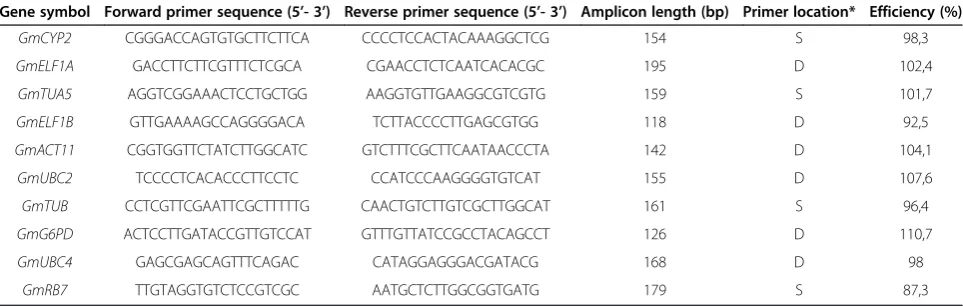
Primers were designed using the Primer 3 software and checked for the presence of hetero and homodimers using OligoTech 1.00. Six pairs of primers were designed to align in different exons as a strategy to identify the presence of contaminant genomic DNA in the cDNA samples (Table 1).
qPCR and data analyses
The quantitative real-time PCR amplifications were performed using the Mastercycler Realplex (Eppendorf ) thermal cycler. Rox plus Sybr Green Master Mix 2X (LGC) were used with 200 nM of each primer (sense and antisense) and 2μL of cDNA (40-fold dilution) for each experimental condition. All experiments were performed in experimental triplicate and biological duplicate. The PCR cycling conditions were: 95°C for 15 min to activate the hot-start Taq DNA polymerase, 40 cycles at 95°C for 20 s, 55°C for 20 s and 72°C for 20 in soil pots. The raw data of fluorescence for all runs were imported into the
Real-time PCR Minersoftware [19] in order to determine the Ct value and the PCR efficiency. The analyses of GmRB7 expression were performed using qBasePlus software [20].
Analysis of reference genes expression stability
The Ct values relative to both biological replicates were imported into qBase v.1.3.5 and the arithmetic mean of the Ct value was calculated and submitted to the NormFindersoftware to rank the most suitable reference genes. This software ranks the genes according to their stability of expression in a set of experimental condi-tions, and selects the most stable combination of two genes to establish the normalization factor, based on the lowest intra-and inter-group variation [21].
The same procedure was performed for analysis in geNormPLUS. Moreover, Ct values were imported into qBasePLUS software, which combines the calculation of relative quantities with geNorm analysis in a single soft-ware. The geNormPLUS software determines the most stable reference gene based on the M value, which means that genes with low M value have a high expres-sion stability. This value is based on the geometric mean of genes and on the average pairwise variation of gene against all others in the different samples. The algorithm also calculates the pairwise variation (Vn/Vn+1) between two factors standards (FNn/FNn+1) to determine how many genes are required for accurate normalization and the combined M value to the more stable genes. A cut-off point of 0.15 was established, in which the inclusion of an additional gene has no effect on the pairwise variation.
Findings
[image:3.595.57.539.572.725.2]Some reference genes have been previously validated in soybean using different organs, at different life stages, light exposition treatments and during infection with the Asian soybean rust (Phakopsora pachyrhizi) [15-17].
Table 1 Primer sequences and amplicon characteristics of tested genes
Gene symbol Forward primer sequence (5’- 3’) Reverse primer sequence (5’- 3’) Amplicon length (bp) Primer location* Efficiency (%)
GmCYP2 CGGGACCAGTGTGCTTCTTCA CCCCTCCACTACAAAGGCTCG 154 S 98,3
GmELF1A GACCTTCTTCGTTTCTCGCA CGAACCTCTCAATCACACGC 195 D 102,4
GmTUA5 AGGTCGGAAACTCCTGCTGG AAGGTGTTGAAGGCGTCGTG 159 S 101,7
GmELF1B GTTGAAAAGCCAGGGGACA TCTTACCCCTTGAGCGTGG 118 D 92,5
GmACT11 CGGTGGTTCTATCTTGGCATC GTCTTTCGCTTCAATAACCCTA 142 D 104,1
GmUBC2 TCCCCTCACACCCTTCCTC CCATCCCAAGGGGTGTCAT 155 D 107,6
GmTUB CCTCGTTCGAATTCGCTTTTTG CAACTGTCTTGTCGCTTGGCAT 161 S 96,4
GmG6PD ACTCCTTGATACCGTTGTCCAT GTTTGTTATCCGCCTACAGCCT 126 D 110,7
GmUBC4 GAGCGAGCAGTTTCAGAC CATAGGAGGGACGATACG 168 D 98
GmRB7 TTGTAGGTGTCTCCGTCGC AATGCTCTTGGCGGTGATG 179 S 87,3
There is a lack of validated reference genes, however, during nematode parasitism and caterpillar wounding.
The nine commonly used reference genes evaluated here were: GmCYP2, GmELF1A, GmELF1B, GmACT11,
GmTUB, GmTUA5, GmG6PD, GmUBC2 and GmUBC4
[15] (Additional file 5). The specificity of each gene amplification was evaluated using the dissociation curve (Additional file 6). Except for theGmTUB, all amplifica-tions resulted in just one peak. All reference gene candi-dates showed similar ranges of cycle of threshold (Ct) from 21.31 (GmCYP2) to 29.46 (GmTUB) (Additional file 7). The amplification efficiencies were determined individually to each well by theMinersoftware and were above 90% for almost all genes in every treatment, except for some genes, especially GmRB7 (Table 1) in root gall samples (Additional file 7).
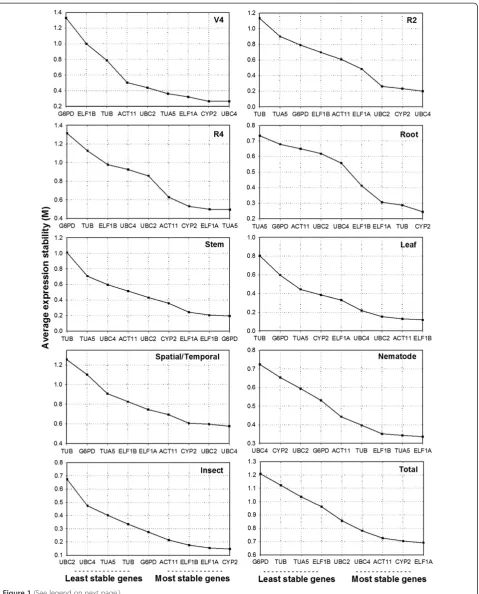
The validation of reference genes in soybean was determined according to geNorm, which demonstrated
thatGmCYP2 and GmUBC4 gene expression were the
most stable amongst different organs at V4 and R2 stages (Figure 1), with a combined M value for both genes of 0.093 at V4 stage and of 0.149 at R2 stage. Jian and colleagues [15] obtained similar results with CYP2 as the second most stable gene to be used in normalization in different organs of soybean. On the other hand, Ruibo Ru and collaborators [16] observed that CYP2 showed a medium stability profile in differ-ent organs, when compared to other candidate genes, and that CYP2 was the least stable among different developmental stages in soybean. At soybean R4 stage, the most stable genes are GmTUA5 and GmELF1A (Figure 1) with a combined M of 0.401.
In the developmental series, GmTUB and GmCYP2 are the most stable genes in roots (Figure 1), showing a combined M of 0.235, whereasGmG6PDand GmELF1B in stem (M = 0.094), and GmELF1B and GmACT11 in leaves (M = 0.055). Jian and colleagues [15] suggested ELF1B as the most stable gene in all samples for soybean expression analyses, whereas we detected GmELF1A as the most stable, reinforcing the well established concept that translation is a highly stable process. In all tested experimental conditions, the GmELF1A gene was the most stable and, on the other hand, GmG6PD was the most variable (Figure 1). Considering spatial and temporal gene expression together, four genes are required for accurate normalization: GmUBC4, GmUBC2, GmCYP2 andGmACT11with a combined M value of 0.693.
Gene expression studies in plants subjected to patho-gens and pests attack have increased the knowledge in plant defense mechanisms, what could be applied in biotechnological strategies to improve pathogen and pest control [22]. Biotic stresses cause extensive changes in plant gene expression [10,23], what hinders data normalization studies. Some previous studies reported that several
housekeeping genes, usually used as reference genes, demonstrated expression variation during biotic stress in plants [17,24,25]. Previous microarray analyses carried out in soybean inoculated withM. incognitaat 12 and 10 DAI have revealed that M. incognita not only activates re-sponses of plant defense but also induces morphological and physiological changes in roots during feeding site es-tablishment and maintenance [13]. Indeed, Ibrahim et al. [13] observed expression changes greater than 1.5-fold in 1,867 genes involved in cell division, cell wall remodeling, carbon and energy metabolism, defense-related genes and transcriptional factors, due to the extensive morphological changes in plant cells upon nematode infection. Therefore, some housekeeping genes associated with cell division, cytoskeletal structure and glycolytic pathway, commonly used as reference genes, are not suitable for this purpose due to its demonstrated up-regulation in infected roots, as a response to biotic stress [13].
In this report, we validate the most stable genes in galls of soybean inoculated with the root-knot nematode M. incognita. The most stable genes here described are
GmELF1A and GmTUA5 (M = 0.316), considering the
eight samples of non-inoculated and inoculated roots at four points of the time course, although GmUBC4 was the most variable (Figure 1). A similar work to identify reference genes was performed onA. thalianainoculated withM. incognitaandHeterodera schachii, in which roots were collected at 5, 10 and 15 DAI [6]. It was verified that ELF1A was up-regulated in galls as well as in syncytia, demonstrating that this gene is not suitable for normalization of expression studies. In potato, ELF1A presented a highly stable expression pattern in plants submitted to biotic (the late blight caused byPhytophthora infestans) and abiotic (cold and salt) stresses [24].
GmUBC4andGmUBC2genes have not shown a stable expression pattern in galls in our study. This low stability observed is in accordance with previous studies, which have shown that UBCs are modulated in nematode feed-ing sites [10]. TheGmCYP2also showed a wide variation in root galls. Some studies have reported differential in-duction of cyclophilin during development or exposure to certain stresses [26]. Conditions such as exposure to mercuric chloride [27], heat shock, virus infection, the growth regulators ethephon and salicylic acid [28] have been shown to induce the expression of CYP in plants.
exposed to the late blight, salt stress and cold stress, suggesting that actin is not suitable as a normalization reference in conditions of abiotic and biotic stresses [24].
In leaves attacked by the soybean caterpillar, we observed that GmCYP2 and GmELF1Agenes were the most stable, with a combined M value of 0.092
[image:6.595.59.539.269.717.2](Figure 1), considering all the five samples. A high stability of ELF-4A1 expression was also previously ob-served in microarray experiments onA. thalianaplants infested withPieris rapae,Frankliniella occidentalisand Myzus persicae [30]. In that same report it was also demonstrated a higher expression stability of Tubulin (See figure on previous page.)
Figure 1Expression stability values (M) and ranking of the candidate reference genes as predicted bygeNorm.Average expression stability values (M) were measured using stepwise exclusion of the least stable gene to organize candidate genes from the least (left) to the most stable (right). Different organs at three developmental stages (V4, R2 and R4). Developmental series in different plant organs (Root, Stem and Leaf). All organs and developmental stages together (Spatial/Temporal). Biotic stress treatments: Nematode-infected root (Nematode) and leaf infested with caterpillar (Insect). All conditions combined (Total).
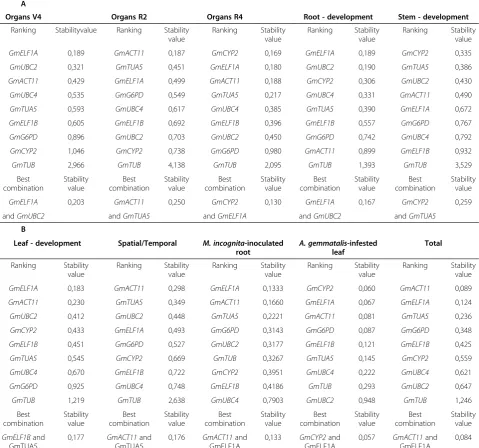
Table 2 Expression stability values and rankings of the reference genes calculated byNormFindersoftware
A
Organs V4 Organs R2 Organs R4 Root - development Stem - development
Ranking Stabilityvalue Ranking Stability
value
Ranking Stability value
Ranking Stability value
Ranking Stability value
GmELF1A 0,189 GmACT11 0,187 GmCYP2 0,169 GmELF1A 0,189 GmCYP2 0,335
GmUBC2 0,321 GmTUA5 0,451 GmELF1A 0,180 GmUBC2 0,190 GmTUA5 0,386
GmACT11 0,429 GmELF1A 0,499 GmACT11 0,188 GmCYP2 0,306 GmUBC2 0,430
GmUBC4 0,535 GmG6PD 0,549 GmTUA5 0,217 GmUBC4 0,331 GmACT11 0,490
GmTUA5 0,593 GmUBC4 0,617 GmUBC4 0,385 GmTUA5 0,390 GmELF1A 0,672
GmELF1B 0,605 GmELF1B 0,692 GmELF1B 0,396 GmELF1B 0,557 GmG6PD 0,767
GmG6PD 0,896 GmUBC2 0,703 GmUBC2 0,450 GmG6PD 0,742 GmUBC4 0,792
GmCYP2 1,046 GmCYP2 0,738 GmG6PD 0,980 GmACT11 0,899 GmELF1B 0,932
GmTUB 2,966 GmTUB 4,138 GmTUB 2,095 GmTUB 1,393 GmTUB 3,529
Best combination
Stability value
Best combination
Stability value
Best combination
Stability value
Best combination
Stability value
Best combination
Stability value
GmELF1A 0,203 GmACT11 0,250 GmCYP2 0,130 GmELF1A 0,167 GmCYP2 0,259
andGmUBC2 andGmTUA5 andGmELF1A andGmUBC2 andGmTUA5
B
Leaf - development Spatial/Temporal M. incognita-inoculated root
A. gemmatalis-infested
leaf
Total
Ranking Stability
value
Ranking Stability value
Ranking Stability value
Ranking Stability value
Ranking Stability value
GmELF1A 0,183 GmACT11 0,298 GmELF1A 0,1333 GmCYP2 0,060 GmACT11 0,089
GmACT11 0,230 GmTUA5 0,349 GmACT11 0,1660 GmELF1A 0,067 GmELF1A 0,124
GmUBC2 0,412 GmUBC2 0,448 GmTUA5 0,2221 GmACT11 0,081 GmTUA5 0,236
GmCYP2 0,433 GmELF1A 0,493 GmG6PD 0,3143 GmG6PD 0,087 GmG6PD 0,348
GmELF1B 0,451 GmG6PD 0,527 GmUBC2 0,3177 GmELF1B 0,121 GmELF1B 0,425
GmTUA5 0,545 GmCYP2 0,669 GmTUB 0,3267 GmTUA5 0,145 GmCYP2 0,559
GmUBC4 0,670 GmELF1B 0,722 GmCYP2 0,3951 GmUBC4 0,222 GmUBC4 0,621
GmG6PD 0,925 GmUBC4 0,748 GmELF1B 0,4186 GmTUB 0,293 GmUBC2 0,647
GmTUB 1,219 GmTUB 2,638 GmUBC4 0,7903 GmUBC2 0,948 GmTUB 1,246
Best combination
Stability value
Best combination
Stability value
Best combination
Stability value
Best combination
Stability value
Best combination
Stability value
GmELF1Band GmTUA5
0,177 GmACT11and
GmTUA5
0,176 GmACT11and
GmELF1A
0,133 GmCYP2and
GmELF1A
0,057 GmACT11and
GmELF1A
0,084
β-4,actin 2,aquaporin PIP-1Band 40S ribosomal protein S16 genes, suggesting that these genes are suitable candi-dates for normalization upon infestation with caterpillars, thrips and aphids [30]. Rehrig et al. [25] analyzed twelve traditional reference genes inA. thalianasubjected to the attack by two caterpillars, Spodoptera exigua and Pieris rapae and reported that all analyzed reference genes are not stable after the attack of these insects. The authors suggested a method of normalization using mRNA quanti-tation in combination with the addition of an external mRNA (luciferase mRNA), commercially available as the normalization factor in studies involving herbivores [25]. We confirmed here that expression of the actin gene is among the most stable afterA. gemmatalis larvae attack using both geNorm and NormFindersoftwares (Figure 1, Table 2). Rayapuram and Baldwin [31] indicated that actin expression is not affected in plants ofNicotiana attenuata afterManduca sextainfestation.
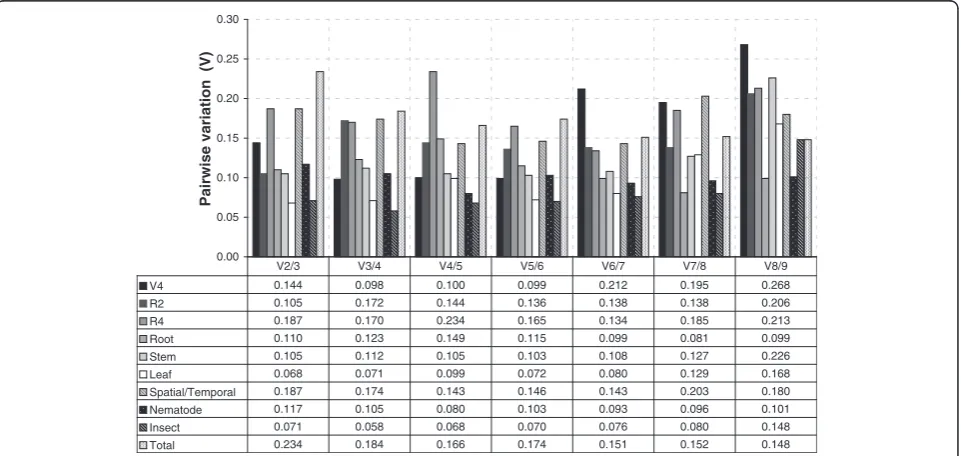
The optimal number of reference genes for normalization was calculated by the geNorm software. According to geNorm, two genes are required to normalize the target gene in different organs between V4 (V = 0.144) and R2 (V = 0.105), due to the V value below the cut-off value (0.15) suggested by Vandesompele et al. [32], excluding the need to add another gene to form the normalization factor (Figure 2). Among the different organs in the R4 stage, geNorm recommended six genes to form the normalization factor (V = 0.134), however, a low combined M value (0.401) was detected when onlyGmTUA5and GmELF1A are used. In the series of development for
all organs (root, stem and leaf ), only the two most stable genes are required for normalization. Consider-ing all organs at all stages, four genes are required for normalization (V = 0.143). In the two stress treatments (nematod infection V = 0.117 and velvetbean caterpillar wounding/feeding V = 0.071), only two genes are required for normalization, indicating low variation of reference genes stability in these samples.
According toNormFinder, the most stable gene amongst organs at V4 stage was GmELF1A, with a 0.189 stability value, and the best combination of two genes to form the normalization factor genes wereGmELF1AandGmUBC2, with a stability value of 0.203 (Table 2). At R2 stage, GmACT11was the most stable gene andGmACT11 and GmTUA5 were the most stable gene set to form the normalization factor with a stability value of 0.250. At R4 stage, the most stable genes were GmCYP2, GmELF1A, GmACT11and GmTUA5, which is similar to the results obtained with the geNorm software (Figure 1), However, the most stable genes for the normalization wereGmCYP2 andGmELF1Awith a 0.130 stability value. In the devel-opment series, the geneGmELF1Ashowed high stability in the three organs analyzed, but the most stable in stem was theGmCYP2gene, with a 0.335 stability value, and theGmELF1Awas the most stable gene in root and leaf (Table 2).
The classification generated byNormFinderwas slighty distinct from that determined by the geNorm software, which can be explained by intrinsic differences in the mathematical models applied in each software. geNorm
0.00 0.05 0.10 0.15 0.20 0.25 0.30
Pairwise variation (V)
V4 0.144 0.098 0.100 0.099 0.212 0.195 0.268
R2 0.105 0.172 0.144 0.136 0.138 0.138 0.206
R4 0.187 0.170 0.234 0.165 0.134 0.185 0.213
Root 0.110 0.123 0.149 0.115 0.099 0.081 0.099
Stem 0.105 0.112 0.105 0.103 0.108 0.127 0.226
Leaf 0.068 0.071 0.099 0.072 0.080 0.129 0.168
Spatial/Temporal 0.187 0.174 0.143 0.146 0.143 0.203 0.180
Nematode 0.117 0.105 0.080 0.103 0.093 0.096 0.101
Insect 0.071 0.058 0.068 0.070 0.076 0.080 0.148
Total 0.234 0.184 0.166 0.174 0.151 0.152 0.148
[image:7.595.59.540.468.696.2]V2/3 V3/4 V4/5 V5/6 V6/7 V7/8 V8/9
Figure 2Pairwise variation (V) analysis of the candidate reference genes as predicted bygeNorm.The Pairwise variation (Vn/Vn+1) was
analyzed using the normalization factors NFnand NFn+1to determine the optimal number of reference genes required for effective normalization
determines the most stable reference genes from a set of genes and a given panel of cDNA samples. It computes the best combination of reference genes to compose the normalization factor based on the geometric mean of the genes and the average pairwise variation [32]. The NormFinderidentifies the best combination of two genes to form the normalization factor among a set of candi-dates. It performs a model-based variance calculation that estimates the variation of intra and intergroup expression and calculates the stability expression value of each gene [21]. This model selects the best combination of genes with the best normalization factor, i.e., with less variation of intra and intergroup, whereas models based on pair-wise variation, like geNorm, selects genes with lower variation intragroups and with the same variation intergroups [21,32].
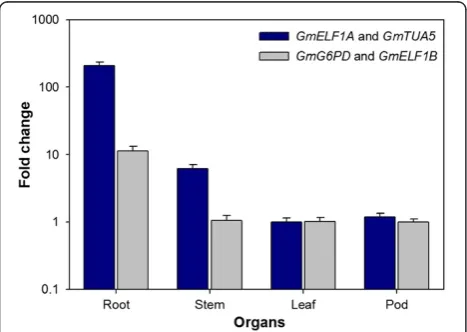
[image:8.595.306.538.87.259.2]The aquaporin GmRB7 transcript abundance pattern in different organs at R4 stage was confirmed using the most or the least stable gene pairs for normalization (Figure 3). The GmRB7 gene encodes for a multipass transmembrane water transporter protein, known to be abundant in root tissues. GmRB7 was chosen in this study because it was previously characterized to be a specific gene whose expression is induced by root-knot nematodes at giant cells of feeding sites [33]. The RB7gene transcripts, first analyzed in tobacco plants by in situ hybridization was localized in the root meristem and immature central cylinder regions [33].
When GmRB7 gene expression was normalized using the two most stable genes (GmELF1A and GmTUA5) according togeNorm, the root-specific expression pattern
was 208-fold higher than leaf (Figure 3). When the normalization was performed using the two least stable genes (GmG6PD and GmELF1B) the root expression was only 11-fold higher than leaf (Figure 3). Thus, normalization using reference genes with low stability can mask tissue-specificity and/or be innacurate. The pattern of aquaporin expression was also analyzed in roots inoculated with root-knot nematodes, once its expression is nematode-induced [33]. It was found that GmRB7 expression increased 9.86- and 3.37-fold at 7 and 14 DAI, respectively (Figure 4).
Conclusion
In conclusion, the validation of reference genes in soybean hereby presented demonstrates that GmELF1A and GmTUA5are the most stable genes during the infection of roots byM. incognitaandGmCYP2andGmELF1Aare the most stable genes during A. gemmatalis leaf attack. The reference genes validated in this work enables more accurate and reliable normalization of qPCR results for gene expression studies in soybean during interaction with the root-knot nematode and the velvetbean caterpillar.
Additional files
Additional file 1:Set of samples (organ/treatment) used for gene expression analysis.
[image:8.595.57.291.469.635.2]Additional file 2:Progress of soybean root infection withM. incognitarevealed by acid fuchsin staining. (A) 7 DAI, second-stage juvenile (J2) during penetration and migration into root; (B) 14 DAI, gall formation by J2-J3 in the vascular cylinder; (C) 21 DAI, root knot completely developed; (D) 28 DAI, adult female during egg posture and egg mass.
Figure 4Relative quantification ofGmRB7expression in soybean roots infected withM. incognita.Abundance ofGmRB7 transcript was determined relatively to non-infected roots during the four-week experimentation period and normalized withGmTUA5 andGmELF1A. The four time points are shown at the X-axis, whereas samples of non-inoculated roots are in blue bars and samples of inoculated roots in gray. The bars represent standard deviations.
Additional file 3:Progress of soybean leaf infestation withA. gemmatalis. Twenty-five larvae of fourth instar ofA. gemmatalis were transferred to each soybean trifolium. Leaves were collected at (A) 15, (B) 30, (C) 60 and (D) 180 minutes after infestation.
Additional file 4:RNA quality analysis in agarose electrophoresis. (A) Soybean RNA samples collected from different organs at different developmental stages; (B) RNA samples collected from leaves attacked byA. gemmatalis, and (C) RNA samples extracted fromM. incognita-infected roots.
Additional file 5:Reference genes tested for gene expression normalization in soybean under biotic stresses.
Additional file 6:Dissociation curves for qPCR products amplified. Additional file 7:Average value ofCtfrom two biological replicates ± standard deviation (SD) of all 10 genes along all 24 treatments.
Abbreviations
GmCYP2:Cyclophilin 2;GmELF1A: Translation elongation factor 1α; GmELF1B: Translation elongation factor 1β;GmACT11: Actin 11;GmTUB: β-tubulin 5;GmTUA5:α-tubulin;GmG6PD: Glucose-6-phosphate dehydrogenase;GmUBC2: Ubiquitin-conjugating enzyme E2, UBC2 family member;GmUBC4: Ubiquitin-conjugating enzyme E2, UBC4 family member; GmRB7: Aquaporin; qPCR: quantitative real-time polymerase chain reaction; DAI: Day after inoculation; Ct: Cycle threshold; cDNA: Complementary DNA.
Competing interests
The authors declare that they have no competing interests.
Authors’contributions
VJM was responsible for conducting the experiments, RNA and cDNA samples preparation, qPCR experiments and drafting the manuscript. RRC participated in experimental design andA. gemmatalisassays. AABV and TLR participated in experimental design and manuscript writing. OBON aided in the conduction and preparation of qPCR runs. RMDGC participated in the design of experimental assays with nematodes and assisted in the collection of root galls. MFGS participated in the supervision of the work and in experimental design. RRF participated in experimental design and supervision of the study, data analysis and manuscript writing. All authors read and approved the final manuscript.
Acknowledgements
This work was supported by the Brazilian Agricultural Research Corporation (Embrapa), National Council for Science and Technology (CNPq) and Coordination for the Improvement of Higher Education Personnel–Brazil (CAPES). We also thank Waldir Pereira Dias, from Embrapa Soybean, for supplying the soybean seeds (cv. Santa Rosa) andM. incognita. We also thank the Biological Control Lab at Embrapa Genetic Resources and Biotechnology for supplying the insects for the biological assays.
Author details
1
Department of Cell Biology Graduate Program in Molecular Biology, University of Brasília, Brasília, DF, Brazil.2Embrapa Genetic Resources and
Biotechnology, Laboratory of Molecular Plant-Pest Interaction, PqEB Final Av. W/5 Norte, Brasília, DF, Brazil.3Catholic University of Brasília, Graduate
Program in Genomic Sciences and Biotechnology, Brasília, DF, Brazil.
4Faculdades Integradas do Planalto Central–Faciplac, Brasília, DF, Brazil. 5
Embrapa Cerrados, Laboratory of Phytopathology, Planaltina, DF, Brazil.
Received: 28 January 2013 Accepted: 4 May 2013 Published: 13 May 2013
References
1. Sudaric A, Vrataric M, Drinic SM, Matosa M:Biotechnology in soybean breeding.Genetika2010,42:91–102.
2. Dwevedi A, Kayastha AM:Soybean: a multifaceted legume with enormous economic capabilities.InSoyben - biochemistry, chemistry and physiology. Edited by Ng T-B. India: InTech; 2011:177–197.
3. Koc AB, Abdullah M, Fereidouni M:Soybean processing for biodiesel production.InSoybean - application and technology.Edited by Ng T-B. United States: InTech; 2011:19–32.
4. Grossi-de-Sá MF, Pelegrini PB, Fragoso RR:Genetically modified soybean for insect-pest and disease control.InSoybean - molecular aspects of breeding. Volume 4.1st edition. Edited by Sudaric A. Brazil: InTech; 2011:429–452.
5. Macedo MLR, Freire Md GM, Kubo CEG, Parra JRP:Bioinsecticidal activity of talisia esculentareserve protein on growth and serine digestive enzymes during larval development ofanticarsia gemmatalis.Comp Biochem Physiol C Toxicol Pharmacol2011,153:24–33.
6. Hofmann J, Grundler FMW:Identification of reference genes for qRT-PCR studies of gene expression in giant cells and syncytia induced in arabidopsis thalianabymeloidogyne incognitaandheterodera schachtii. Nematology2007,9:317–323.
7. Ehwaeti ME, Fargette M, Phillips MS, Trudgill DL:Host status differences and their relevance to damage bymeloidogyne incognita.Nematology 1999,1:421–432.
8. Trudgill DL, Blok VC:Apomictic, polyphagous root-knot nematodes: exceptionally successful and damaging biotrophic root pathogens. Annu Rev Phytopathol2001,39:53–77.
9. Sasser JN, Eisenback JD, Carter CC, Triantaphyllou AC:The international meloidogyne project-its goals and accomplishments.
Annu Rev Phytopathol1983,21:271–288.
10. Gheysen G, Fenoll C:Gene expression in nematode feeding sites. Annu Rev Phytopathol2002,40:191–219.
11. De Vos M, Van Zaanen W, Koornneef A, Korzelius JP, Dicke M, Van Loon LC, Pieterse CM:Herbivore-induced resistance against microbial pathogens in arabidopsis.Plant Physiol2006,142:352–363.
12. Ramsay K, Wang Z, Jones MG:Using laser capture microdissection to study gene expression in early stages of giant cells induced by root-knot nematodes.Mol Plant Pathol2004,5:587–592.
13. Ibrahim HM, Hosseini P, Alkharouf NW, Hussein EH, Gamal El-Din Ael K, Aly MA, Matthews BF:Analysis of gene expression in soybean (glycine max) roots in response to the root knot nematodemeloidogyne incognita using microarrays and KEGG pathways.BMC Genomics2011,12:220. 14. Pfaffl MW:Quantification strategies in real-time PCR.InA-Z of quantitative
PCR.2nd edition. Edited by Bustin SA. La Jolla, CA, USA: International University Line (IUL); 2004:87–112 [Tsigelny IF (Series Editor): IUL Biotechnology Series].
15. Jian B, Liu B, Bi Y, Hou W, Wu C, Han T:Validation of internal control for gene expression study in soybean by quantitative real-time PCR. BMC Mol Biol2008,9:59.
16. Hu R, Fan C, Li H, Zhang Q, Fu YF:Evaluation of putative reference genes for gene expression normalization in soybean by quantitative real-time RT-PCR.BMC Mol Biol2009,10:93.
17. Libault M, Thibivilliers S, Radwan O, Clough SJ, Stacey G:Identification of four soybean reference genes for gene expression normalization. The Plant Genome2008,1:44–54.
18. Bybd DW, Kirkpatrick T, Barker KR:An improved technique for clearing and staining plant tissues for detection of nematodes.J Nematol1983, 15:142–143.
19. Fernald SZRD:Comprehensive algorithm for quantitative real-time polymerase chain reaction.J Comput Biol2005,12:1047–1064. 20. Hellemans J, Mortier G, De Paepe A, Speleman F, Vandesompele J:QBase
relative quantification framework and software for management and automated analysis of real-time quantitative PCR data.Genome Biol2007, 8:R19.
21. Andersen CL, Jensen JL, Orntoft TF:Normalization of real-time quantitative reverse transcription-PCR data: a model-based variance estimation approach to identify genes suited for normalization, applied to bladder and colon cancer data sets.Cancer Res2004,64:5245–5250. 22. Christou P, Capell T, Kohli A, Gatehouse JA, Gatehouse AM:Recent
developments and future prospects in insect pest control in transgenic crops.Trends Plant Sci2006,11:302–308.
23. Vogel H, Kroymann J, Mitchell-Olds T:Different transcript patterns in response to specialist and generalist herbivores in the wildarabidopsis relativeboechera divaricarpa.PLoS One2007,2:e1081.
25. Rehrig EM, Appel HM, Schultz JC:Measuring 'normalcy' in plant gene expression after herbivore attack.Mol Ecol Resour2011,11:294–304. 26. Sturzenbaum SR, Kille P:Control genes in quantitative molecular
biological techniques: the variability of invariance.Comp Biochem Physiol B Biochem Mol Biol2001,130:281–289.
27. Martinez-Gonzalez J, Hegardt FG:Characterization of a cDNA encoding a cytosolic peptidylprolylcis-trans-isomerase fromblattella germanica. Eur J Biochem1995,234:284–292.
28. Marivet J, Margis-Pinheiro M, Frendo P, Burkard G:Bean cyclophilin gene expression during plant development and stress conditions. Plant Mol Biol1994,26:1181–1189.
29. JdA E, Poucke KV, Karimi M, Groodt R, Gheysen G, Engler G, Gheysen G: Dynamic cytoskeleton rearrangements in giant cells and syncytia of nematode-infected roots.Plant J2004,38:12–26.
30. De Vos M, Van Oosten VR, Van Poecke RM, Van Pelt JA, Pozo MJ, Mueller MJ, Buchala AJ, Metraux JP, Van Loon LC, Dicke M, Pieterse CM:Signal signature and transcriptome changes ofArabidopsisduring pathogen and insect attack.Mol Plant Microbe Interact2005,18:923–937. 31. Rayapuram C, Baldwin IT:Host-plant-mediated effects ofNadefensinon
herbivore and pathogen resistance inNicotiana attenuata.BMC Plant Biol 2008,8:109.
32. Vandesompele J, De Preter K, Pattyn F, Poppe B, Van Roy N, De Paepe A, Speleman F:Accurate normalization of real-time quantitative RT-PCR data by geometric averaging of multiple internal control genes. Genome Biol2002,3:1–11.
33. Opperman CH, Taylor CG, Conkling MA:Root-knot nematode directed expression of a plant root-specific gene.Science1994,263:221–223.
doi:10.1186/1756-0500-6-196
Cite this article as:Mirandaet al.:Validation of reference genes aiming accurate normalization of qPCR data in soybean upon nematode parasitism and insect attack.BMC Research Notes20136:196.
Submit your next manuscript to BioMed Central and take full advantage of:
• Convenient online submission
• Thorough peer review
• No space constraints or color figure charges
• Immediate publication on acceptance
• Inclusion in PubMed, CAS, Scopus and Google Scholar
• Research which is freely available for redistribution