White Rose Research Online URL for this paper:
http://eprints.whiterose.ac.uk/134612/
Version: Published Version
Article:
Irvine, Katherine N., O'Brien, Liz, Ravenscroft, Neil et al. (5 more authors) (2016)
Ecosystem services and the idea of shared values. Ecosystem Services. pp. 184-193.
ISSN 2212-0416
https://doi.org/10.1016/j.ecoser.2016.07.001
[email protected]
https://eprints.whiterose.ac.uk/
Reuse
This article is distributed under the terms of the Creative Commons Attribution (CC BY) licence. This licence
allows you to distribute, remix, tweak, and build upon the work, even commercially, as long as you credit the
authors for the original work. More information and the full terms of the licence here:
https://creativecommons.org/licenses/
Takedown
If you consider content in White Rose Research Online to be in breach of UK law, please notify us by
Contents lists available atScienceDirect
Ecosystem Services
journal homepage:www.elsevier.com/locate/ecoser
Ecosystem services and the idea of shared values
Katherine N. Irvine
a,⁎, Liz O
’
Brien
b, Neil Ravenscroft
c, Nigel Cooper
d,e, Mark Everard
f,
Ioan Fazey
g, Mark S. Reed
h, Jasper O. Kenter
iaSocial, Economic and Geographical Sciences, James Hutton Institute, Aberdeen, UK bForest Research, Social and Economic Research Group, Farnham, Surrey, UK cSchool of Environment and Technology, University of Brighton, Brighton, UK dGlobal Sustainability Institute, Anglia Ruskin University, Cambridge, UK eThe Diocese of Ely, UK
fDepartment of Geography and Environmental Management, University of the West of England, Frenchay Campus, Bristol, UK gSchool of Social Sciences & Centre for Environmental Change and Human Resilience, University of Dundee, Dundee, UK hSchool of Agriculture, Food and Rural Development, Agriculture Building, Newcastle University, Newcastle upon Tyne, UK iLaurence Mee Centre for Society and the Sea, Scottish Association for Marine Science (SAMS), Oban, UK
A R T I C L E I N F O
Keywords:
Shared values
Ecosystem service valuation Value formation Deliberation Public forests Ecological economics
A B S T R A C T
Ecosystem services conceptualise the diverse values that ecosystems provide to humanity. This was recognised in the United Kingdom's National Ecosystem Assessment, which noted that appreciation of the full value of ecosystem services requires recognition of values that are shared. By operationalising the shared values concept, it is argued that the contribution of ecosystem services to human well-being can be represented more holistically. This paper considers current understanding of shared values and develops a new metanarrative of shared values beyond the aggregated utilities of individuals. This metanarrative seeks to conceptualise how values can be held both individually and communally, and what this means for identifying their scale and means of enumeration. The paper poses a new reading of theideaof shared values that reconciles the elicitation of pre-formed individual values with the formation and expression of shared social values. The implication is that shared values need to be conceived as normative constructs that are derived through social processes of value formation and expression. Shared values thus do not necessarily exist a priori; they can be deliberated through formal and informal processes through which individuals can separate their own preferences from a broader metanarrative about what values ought to be shared.
1. Introduction
Ecosystem services (ES) constitute a systemic framework concep-tualising the diversity of interconnected values that ecosystems provide to humanity, many of which may be degraded or lost through solely utilitarian exploitation (Millennium Ecosystem Assessment, 2005). This plurality of values, found in many pioneering ES classifications, was reflected in the qualitatively distinct categories of provisioning, regulating, supporting and cultural ES recognised by theMillennium Ecosystem Assessment (2005), all of which were understood to be fundamental to an equally plural suite of human well-being outcomes (Everard et al., 1995; Irvine et al., 2013). In valuing ES, conventional economics focuses on‘narrow’measures of efficiency, in contrast to
ecological economics, which encompasses broader notions of sustain-ability (Farley, 2012). In making this distinction, Farley recognised that the economic valuation of ES had largely been conceptualised in
neoclassical economic terms, assuming that aggregation of individual preferences can reflect societal-level valuation (see Brown, 2013; Kenter et al., 2015; Ravenscroft, 2010). This apparent mismatch –
between the atomised individual and the complexity of ecosystems–
was acknowledged in the United Kingdom's National Ecosystem Assessment (UK NEA, 2011) and the UK NEA Follow-on (UK NEAFO, 2014) which highlighted the potential of shared values to reflect the contribution of ES to human well-being (Fish et al., 2011) and by subsequent work to develop and operationalise the shared values concept (Kenter et al., 2014b).
This new work has developed a better understanding of the relationship between individual and shared values and the techniques for eliciting or forming such values (Brown, 2013; Kenter, 2016a; Raymond et al., 2014). However, a focus on operationalisation also has the capacity to mask what for us are deeper and more fundamental questions about the goals of economic valuation: what does it really
http://dx.doi.org/10.1016/j.ecoser.2016.07.001
Received 21 December 2015; Received in revised form 30 June 2016; Accepted 1 July 2016
⁎Corresponding author.
E-mail address:[email protected](K.N. Irvine).
Ecosystem Services 21 (2016) 184–193
Available online 21 October 2016
2212-0416/ © 2016 The Authors. Published by Elsevier B.V.
This is an open access article under the CC BY license (http://creativecommons.org/licenses/BY/4.0/).
mean to conceptualise ES in terms of values that are shared, and what does this tell us about the potential utility of shared values in policy making? In posing these questions, we do not wish to rehearse extant definitional work (Ives and Kendal, 2014; Kenter et al., 2015; Raymond et al., 2014; Scholte et al., 2015), but rather to explore the potential for understanding how we can value ES in a new way that reflects the deep and collective meanings that we ascribe to natural environments. While remaining consistent with conventional economic approaches in terms of seeking to understand the relative value of one course of action over another, our aim here is to move away from the assumption that this can be achieved by reference to the aggregate of individual utilities alone. Instead, we wish to expand the concept of social value to include both individual utility and the broader shared meanings and signifi -cance attributed to natural environments that are potentially missing from conventional economic approaches. AsKenter et al. (2015: p. 87)
observe: “Choices about the environment are fundamentally ethical
and social, because the preferences we hold as individuals are influenced by socialisation within a particular society, but also because of the environmental impacts that individual behaviour has on others.”
We have conceptualised this expanded aim of assessing and enhancing value to society through theideaof shared values. In developing this concept we suggest that in addition to individual utility, there are forms of value that are held in common, and that these values are formed and shaped through shared social processes. By adopting this approach we argue that policy decisions can revolve around values that focus on the common, not just the individual, good. In developing our argument, this paper is intended to be both exploratory and conceptual, with the purpose of inviting readers to join with us in unpacking both theidea
and the power of shared values.
Our starting point is that the conventional approach to the economics of the environment is at a crossroads, because it has reached the limits of its ability to relate individual to shared and social values, at least within the neoclassical paradigm. ForSagoff(1986: p. 302), this is because shared values (which he also termed ‘public
values’) are normative–values that the individual ascribes to others in
an‘impersonal’(or extra-personal) context that cannot be identified by
reference to that individual alone. He argues that shared values cannot fully emerge from standard neoclassical valuation methods that seek to elicit and aggregate individual values, and instead proposed the use of deliberative and political processes to establish value to society.Kenter et al. (2015)add to this analysis by arguing that there are also technical problems associated with all forms of decision-making that cause particular issues when related to the aggregation of individual prefer-ences. For example, complex rules are required on how to aggregate both within dimensions (i.e. how much does each individual count?) and across dimensions of valuation (i.e. how much does each value criterion count?). Following Arrow's impossibility theorem, it is apparent that individual preference patterns can exist such that it is impossible to derive a social ranking that meets certain minimal conditions: consistency, non-dictatorship, universality, monotonicity, and independence. This suggests that there is no logically infallible way to compare, let alone aggregate, the preferences of diverse individuals (Arrow, 1950; Feldman, 1987). Even if this were achieved, this does not mean that the sum of those individual preferences necessarily equates to the total value to society. As Parks and Gowdy (2012)
observed, if it is assumed that individual values are a function of the revealed and stated preferences of self-regarding, narrowly rational individuals, whatrationalway is there to aggregate these preferences to form anything other than the sum of individual preferences?
For us, these issues are insurmountable within the current econom-ic paradigm. How can a ‘group morality’ exist in the context of
individual preferences when ‘the mere pursuit of individual ends is
harmful to the ends and peace of the whole…and hence in the end to the individual’(Mauss, 1954: p. 75)? In contrast to the conventional
elicitation of data on individual utility-based benefits and costs, the
ideaof shared values–starting fromSagoff's (1998: p. 215)notion of
‘society should’ –views values as a relational input to debate about
what is best for society. In place of the conventional process of value capture, therefore, we suggest that valuation becomes primarily a process of value formation and expression (see:Kenter et al. 2016b and Kenter et al., 2016c), generating data to inform debate, which in turn informs policy. This, for us, is no less than a paradigm shift that invites new work in research and policy formation on shared values in relation to ES. In place of the apparent schism between the collection of essentially pre-formed value data and its subsequent policy application, often in a rather narrower technical paradigm (seeMace et al., 2011), we suggest that novel approaches to, and understandings of, delibera-tion have the potential to offer new insights into the formation and expression of shared values. Take, as an example, research on the knowledge controversies associated with flooding in England, UK (Landström et al., 2011; Whatmore, 2009). While not referring explicitly to ES, the research team use a participatory co-produced approach toflood risk knowledge as a means of forming and expressing a body of values and knowledges that ‘redistributes’expertise away
from professionals and towards local people with local knowledges. Similarly, Ranger et al. (2016) provide an example of opening the knowledge and perspectives offishing communities and policy makers up for debate to establish shared values around implementation options for a marine protected area, through a combination of ethnography and group deliberation.
Approaches such as these, we suggest, are starting to embed the
ideaof shared values in both research and novel, more participatory approaches to policy formulation. Indeed, such approaches offer the intriguing possibility that shared values are (co)produced (and repro-duced) on a case-by-case basis; that they do not exist at a supra-level awaiting elucidation by an enlightened economist, but rather are formed (and re-formed) as specific circumstances require. Not only does this suggest that it is possible to integrate a significant level of public agency in generating the evidence required for policy-making, but it also implies that there is potentially a new socioeconomic metanarrative of value beyond that of the individual. Thus, theidea
of shared values suggests an (eco)systemic approach to understanding human and human/other than human relations that has considerable potential in offering new ways to understand the power and potential of ecosystem services.
We commence this paper with a review of how shared values have been understood and constructed in several key domains of literature before offering an exploration of a knowledge controversy arising in England, UK, around forests and forest ownership. From this founda-tion we then develop and characterise a potential new reading of the
ideaof shared values and how they might be operationalised to provide new evidence-based insights into environmental and other policy arenas.
2. Current understandings of shared values
sought to characterise insight from the literature along several para-meters, including: the value term discussed, geographical location of studies, categories of issues or areas in which these values are considered, methods utilised, and the extent to which such values were incorporated into decision making. A deliberative element was incorporated into the REA process through use of an online shared space and a two-day facilitated retreat providing opportunities for reflexive thinking, critique and discussion on findings and concepts that had been generated (Kenter et al., 2014b).
Here we build primarily on the REA with some reference in later sections of the paper to findings from the economic expert review; material from the other expert reviews inform other papers in this issue (Cooper et al., 2016 and Kenter et al., 2016b). The REA used search terms of shared values, cultural values, social values and plural values combined with ecosystem, natural environment and nature. Afinal set of 117 English-language, peer-reviewed literature published from the 1990s through to March 2013 was identified; disciplinary areas included social and natural sciences as well as the humanities (see
Kenter et al., 2014bfor further details of inclusion/exclusion criteria). We updated the search to November 2015 for the search terms‘shared
value*’and‘social value(s)’and the same inclusion/exclusion criteria as
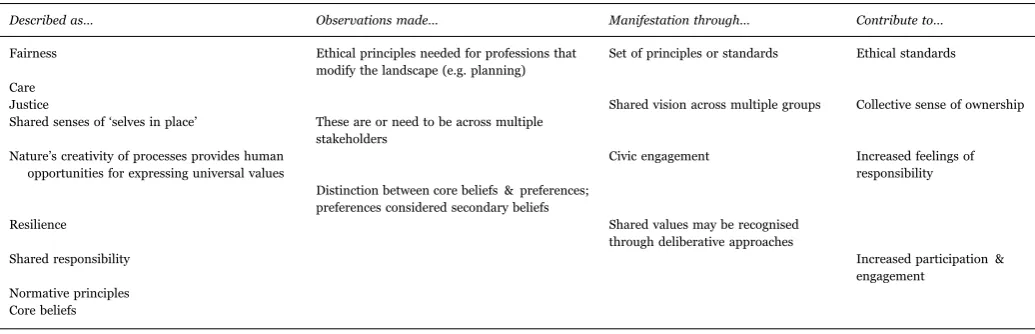
[image:4.595.39.557.561.728.2]Kenter et al. (2014b). This resulted in an additional 9 relevant papers published since April 2013 being included (Chapin and Knapp, 2015; Ives and Kendal, 2014; Kenter et al., 2015; Raymond et al., 2014; Rodriguez-Piñeros and Lewis, 2013; Schnegg et al., 2014; Scholte et al., 2015; Zagarola et al., 2014). Examples from the literature are provided inTable 1.
Table 1illustrates the extent to which the literature continues to highlight a plurality of ways in which shared values are being conceptualised. This plurality, typified by frequent interchangeability in usage of the terms shared, cultural, social and plural values within and between papers, leads to a fuzziness of concept and vagueness in meaning that is unhelpful for the methodological challenges associated with valuation. A recently published theoretical framework of shared/ social values (Kenter et al., 2015), which discriminatesfive dimensions and seven non-mutually exclusive types of shared/social values, brings greater clarity for purposes of identification, elicitation and measure-ment for such assessmeasure-ments (see also: Kenter, 2016c; Kenter et al., 2016b; Kenter et al., 2016c) as doScholte et al.’s (2015)review of
concepts and methods,Raymond et al.’s (2014)comparison of different
methodological paradigms,Ives and Kendal's (2014)overview for the practitioner engaged in environmental management, andKenter et al.'s (2014a)overview for decision-makers.
Shared values seem to be most clearly centred around issues of fairness (e.g. Arlinghaus, 2006), ethics (e.g. Aikenhead and Ogawa,
2007), shared responsibility (e.g. Evans et al., 2008) and shared meanings (e.g. Klain and Chan, 2012). Many of these values are considered to be fundamental, or‘transcendental’(i.e. transcending
specific situations;Kenter et al., 2015) and include ethical and moral values (e.g.Norton, 2000), key beliefs (e.g.Schnegg et al., 2014) and spiritual values (e.g. Kearns and Keller, 2007). These values are commonly viewed as incommensurable, such that if people are asked to reduce them to a single metric (e.g. monetary value) or trade them off, there may be a reluctance to engage or a potential for protest (e.g.
Klain and Chan, 2012; Sarkar and Montoya, 2011).Klain and Chan (2012)argue that the spiritual values of nature, sense of place, and stewardship obligations are often interrelated with transcendental values about moral concerns that could motivate people to protect and restore ecosystems. The potential for sense of place as a motiva-tional factor for stewardship has been further developed byChapin and Knapp (2015).
Values associated with the importance of nature are often strongly related to the meanings associated with a particular place. These places can be at different scales, e.g. a landmark or a catchment, and they may also have a temporal dimension to them.Ansary (2007)for example describes such landmarks and markers as ones that can‘operate as symbolic devices for community narratives and shared values’(p. 546),
offering opportunities to reinforce people's identification with specific values as well as particular traditions and practices. These symbolic, spiritual and meaningful sites/landmarks can also provide social continuity (Ishii et al., 2010) and contribute to collective memory (Cantrill and Senecah, 2001).
Forms of deliberation, featuring social interaction between different people through focus groups, discussion groups or workshops (e.g.
Aanesen et al., 2015;Kenter, 2016b; Kenter et al., 2016a; Orchard-Webb et al., 2016; Ranger et al., 2016), and social and participatory mapping (e.g.Ihse and Lindahl, 2000;Kenter, 2016b;Klain and Chan, 2012), are commonly used approaches within the literature for discussion of values held for particular places and behavioural prac-tices. Quantification of these values is considered problematic and reduction to a single metric is largely absent. The difficulty of spatially allocating these values onto the physical landscape as well as across different communities is also noted. Indeed, there appears to be an implicit acceptance of the plurality of values, i.e. that values consist of multiple dimensions and the need for multiple methodological ap-proaches to valuation. This is particularly apparent in research on and with indigenous communities, with respect to how one can ‘know’
nature. In much of this work, nature is conceptualised as possessing both physical and spiritual dimensions, as well as being holistic and universal. Indeed, much research suggests that the history of a people
Table 1
Examples of plurality within non-economically focused literature with regards to shared values.a
Described as… Observations made… Manifestation through… Contribute to…
Fairness Ethical principles needed for professions that
modify the landscape (e.g. planning)
Set of principles or standards Ethical standards
Care
Justice Shared vision across multiple groups Collective sense of ownership
Shared senses of‘selves in place’ These are or need to be across multiple stakeholders
Nature’s creativity of processes provides human opportunities for expressing universal values
Civic engagement Increased feelings of responsibility Distinction between core beliefs & preferences;
preferences considered secondary beliefs
Resilience Shared values may be recognised
through deliberative approaches
Shared responsibility Increased participation &
engagement Normative principles
Core beliefs
Note: Table adapted fromKenter et al. (2014b).
aExample literature:Arlinghaus (2006), Cantrill and Senecah (2001), Evans et al. (2008), Hoekveld and Needham (2013), Lipsky and Ryan (2001), Norton (2000).
K.N. Irvine et al. Ecosystem Services 21 (2016) 184–193
is often inseparable from the history of the land that they inhabit (Adamowicz et al., 1998).
To suggest that the shared values underlying these plural and integrated conceptions of nature can be quantified by reference to the sum of individual utility is to prompt a reductionist, positivist approach to the study and valuation of nature, the results of which might (mistakenly) be considered to be a ‘true’ or complete reflection of
why nature is important (O’Neill, et al., 2008). This argument about the plurality of ‘knowing’ nature is, in many respects, a touchstone for
understanding why theideaof shared values is so significant. AsPike et al. (2010, 2011) argue, the formation of values that are shared necessitates some form of community interaction or participation in order to effectively uncover the existent communal values–something
that cannot be achieved by researching individuals alone. Anthony et al.’s (2009)discussion of social values also highlights the existence of
tacit values (e.g. sense of place, informal local traditions, spiritual appreciation) that are certainly collectively held, if not also collectively formed (cf.Cantrill and Senecah, 2001).
This puts us in mind of the epistemic debates about the production of knowledge guided byCallon (1999), who has suggested that we need new models of political decision-making in which decisions are reversible and are only adopted after extensive deliberation involving a range of expert and lay interests and, crucially, values. This is part of whatWhatmore (2009)sees as a new knowledge polity:
The logic of ontology involves a shift in register from that of the knowledge economy, with which both the logics of accountability and innovation are caught up, to that of a knowledge polity if the potential of environmental knowledge controversies as generative events is to be mobilized effectively (Whatmore, 2009: p. 592).
This approach to understanding values has recently been used in England, UK through the formation of‘competency groups’that have
brought together a range of specialists and local people to take an holistic approach to water management and flood prevention (Whatmore, 2009; Donaldson et al., 2010). The operation of the competency groups as described byWhatmore (2009)involves:
… ‘slowing down’ reasoning…in order to collectively interrogate
explanations for, and solutions to, flooding in the locality that members…bring to the table. One of the primary means by which
this‘slowing down’is achieved is by working with various‘things’
that serve to objectify the knowledge claims and practices of different members of the group–from photos and video footage
brought and/or produced by local members to computer models and policy documents brought and/or produced by university members (Whatmore, 2009: p. 595).
One of the key purposes of the groups is to develop new collective competencies in handling what Whatmore (2009: p. 595)terms the
‘double uncertainty’offlood-risk knowledge that has the capacity to
redistribute expertise across the expert/lay divide. This calls into question the established knowledge practices of the group members, requiring them to be reflexive in their approach to the group and to the knowledge produced by the group. While still within the realm of
‘engagement’, this approach to knowledge production reflects a new
constructivist dynamic in which it is understood that there are no over-arching certainties as equally as there are no all-consuming experts. Rather, there is dialogue about issues and values through which a collective understanding can develop and be deployed.
While suggesting that some researchers are beginning to under-stand the need to engage with people as experts in their own knowl-edges and values, this review argues that there remains a considerable degree of uncertainty about how the subsequent plurality of knowl-edges and values can be conceptualised and operationalised, even in forums that embody the ideas of a knowledge polity. In most instances, values that have been elicited or identified through various mechan-isms remain separate from–or are construed as separate from–the
process of decision making. Although not always the case (e.g.:
Orchard-Webb et al. 2016 and Ranger et al. 2016), there is frequently no clear link between the elicitation process and the formation of policy. Values are often elicited by experts (e.g. researchers) and then handed on to other experts (e.g. policy analysts) to incorporate into decision making. This is not to suggest that including multiple dimensions of values into the process is not seen as important, but that it is largely absent or at least constrained by narrowly defined areas of organisational responsibility. This clearly, to us, needs to be addressed, because the goal of any valuation exercise must be to generate and express values in a way that is consistent with the needs of the decision-maker. We illustrate this inSection 3with respect to the public protest that arose over the proposed sale of the Public Forest Estate in England, UK.
3. From values to policy-making: the example of England's Public Forest Estate consultation
The Public Forest Estate (PFE) in England is managed by Forest Enterprise England (FEE) which is an agency of Forestry Commission England. The PFE is highly significant in terms of public access to woodlands in England; it provides 45% of the access despite it being only 18% of woodland cover (Independent Panel on Forestry, 2011). Research suggests that people do not always know who owns the forests that they use but that they do distinguish between the idea of public and private ownership (Carter et al., 2009). Indeed, 70% of respondents from a representative survey in England, drawing upon the views of 1726 people, could list values for publicly owned woods, while only 55% could list values for privately owned woods (Carter et al., 2009). In 2010, after some initial research and debate, and despite its well-established value for recreational access, the Government outlined its intention to sell, lease and give away the PFE, and powers to enable this privatisation were included in the Public Bodies Bill 2010 (Parliament UK, 2010). This was part of a wider discourse and policy focus within Government on shifting the balance of power from what was termed ‘Big Government’ to ‘Big
Society’. Big Society was seen as a way to give citizens, communities
and local government more power to work together and solve the problems they faced (Civil Exchange, 2015). In terms of forestry, there were claims in the media that the Government was primarily focused on increasing the profitability of commercial forests while reducing the net costs of running local and heritage woodlands (Vidal, 2011), although its own Impact Assessment ([IA]Defra, 2011) suggested this was unlikely to be achieved.
Based on the initial IA, a public consultation was launched in early 2011, outlining three options for the future management of the PFE: (1) leasing large-scale commercial forest; (2) community/civil society right to buy multi-purpose, environmental and community forest sites; and (3) transfer to charitable organisations of large-scale heritage forests (seeDefra, 2011). Consistent with the IA, no option was given in the public consultation to continue with current FEE management practices. While this might have suggested that decisions had already been made at the highest level to change ownership, it is more to the point that, within Government, utility maximisation from forests was clearly felt to be possible under different ownership types without the need to keep the PFE as a public asset and in public management. Indeed, previous research by theForestry Commission (2001)had not identified public ownership as a key reason why people visit public forests for recreation activities, although Carter et al.’s (2009) research
had identified that people expect different things from publically owned land, such as greater input into decision making concerning its management.
(2015)subsequently highlighted that, in contrast to the Government's utilitarian understanding of people's values, normative shared values were clearly evident, and were articulated through a range of tactical and operational interventions involving social media, the formation of new campaign groups and collective protests in a number of forests, as well as by people writing to their local Members of Parliament. These were articulations of shared values that were deliberated informally, as people identified the importance of the PFE for future generations, for families, children and for wildlife. These values were expressed both by individuals but also collectively when people came together to protest or form new groups. While redolent of the types of value discussed in
Kenter et al.’s (2015)shared/social values framework, it was clear that
there was a strong normative element to the expression of these values
–that they related not to the utility of any individual per se, but to a
wider assertion that these forests ought to continue to be in public ownership and to provide public benefit for all society. These values had been identified in a range of research projects (Carter et al., 2009; O’Brien and Morris, 2013), however they were not at the forefront of
people's everyday discourse until the threat to those values gave rise to the protests that illustrated people's strong relationship with trees and woodlands often created through associations and contact throughout people's life course. Therefore, some of the values for the PFE would have been pre-formed via people's interactions with trees and wood-lands, while others may not have existed a priori but have been generated through the local and national debates that arose when the Government consultation was published.
At the core of this assertion about public ownership was the sense that‘these forests are ours’and are for the common good of the whole
population. Linked to this was the issue of access and whether people would still be able to use the forests if they were under different ownership. This was felt to be particularly important in light of the improvements made to recreation provision by the FEE over the last 15 years (Gill, 2006; Morris and O’Brien, 2011). Public expectations for
future benefits from the PFE were also higher than for comparable benefits from other woodlands, potentially related to issues of justice and fairness identified in the REA.
The newly formed IPF was given a remit to consider the future of forestry in England as a whole, thus reducing some of the tension around the future of the PFE. The IPF initiated another public consultation. This time it included open and broad questions (rather than tick box closed-ended questions) that allowed people to provide a narrative response; for example one question asked people what the benefits of England's forests and woods were to society. The consulta-tion received 42,000 responses (IPF, 2011). The IPF also visited ten different wooded areas in England, meeting and facilitating discussions with local people. These events allowed a range of people (local communities, volunteer groups, recreation groups) and organisations (such as charities and non-government bodies) to discuss the future of forestry in a more open and deliberative way, drawing on different expert and tacit knowledges. This enabled recognition of shared values, including societal, cultural and communal values that people hold for trees, woodlands and forests, which have been outlined in a range of evidence in recent years (Kenter et al., 2015; Lawrence et al., 2009; O’Brien, 2005; O’Brien and Morris, 2013; Ward Thompson et al., 2004). As Dwyer et al. (1991: 279) highlight, ‘trees and forests,
especially large trees or groups of trees, touch our lives in so many ways it's difficult to describe them’. The IPF'sfinal report demonstrates
the extent to which the Government had under-estimated the norma-tive shared values associated with the PFE. In seeking to address this deficiency, the report argues for a new woodland culture for the 21st century in which the value of woodlands to society as a whole would be recognised in terms of the wide range of benefits they bring (IPF, 2011).
4. The implications of theideaof shared values
At the core of the IPF report is recognition that some values are pre-formed, while others are not. AsKenter et al. (2016b)argue, people's preferences and values are often incomplete when considering complex situations such as the sale of the public forest estate. In such cases, shared contextual values may need to be formed (at least formed in part) through formal and informal deliberation; these same processes may also help to order the shared priority given to transcendental values, which are likely to be largely pre-formed (see alsoRaymond and Kenter, 2016). In fostering this‘deliberative turn’in economic
valua-tion (Hanington, 2007; Rodela, 2012; Zografos and Howarth, 2010), we are mindful of its limitations. Not only does it invite critique because such processes are bound up in issues of power, but its focus on value formation around specific policy contexts risks underappre-ciating that individuals have pre-existing, but often implicit, shared transcendental values. These require explicit elicitation in the process of contextual value formation. Notwithstanding the need to address questions about the deployment and impact of power in group dynamics, and other institutional issues, therefore (see:Kenter et al. 2016b and Orchard-Webb et al. 2016), the chief implication of theidea
of shared values is the real need for shared social processes. Stagl (2004) described shared values in this sense of deliberated group values as the outcome of the processes of effective social interaction, open dialogue and social learning.
Several studies from our literature review (and the empirical papers in this issue ofEcosystem Services)have sought to use deliberative approaches drawing on multiple, and mixed, methods. For example,
Fagerholm et al. (2012)incorporated aerial photos into semi-struc-tured interviews with individual community members to identify and map‘indicators for landscape services’collated results were incorpo-rated into a workshop for further discussion with the wider community. In a study of sustainable forest management in Mexico, Rodriguez-Piñeros and Lewis (2013)brought deliberative discussion alongside in-depth interviews and questionnaires into a community-requested initiative to develop a new forest management plan for the commu-nity-owned forest. Haines-Young (2011) combined future scenarios with Bayesian Belief Networks to examine the latter's effectiveness at integrating and visualising different types of information (qualitative, quantitative) and values across multiple stakeholders and disciplines to facilitate an analytical-deliberative approach to values identification. A number of researchers have experimented with the use of GIS to map ecological and social values of the landscape (e.g.Bryan et al., 2010; Ihse and Lindahl, 2000; Sherrouse et al., 2011; Kenter, 2016b). While some of these studies have attempted to promote participatory means to data generation, others have remained contained within a non-deliberative approach to public participation.
Even in cases where forms of deliberative approaches have been used, the resulting shared values have not been consistent regarding the degree to which they have differed from aggregated individual values. For example,Clark et al. (2000)found in a study of the cultural benefits of landscape, that the values stated in discussion groups alongside a contingent valuation (CV) survey were complex and heterogeneous. Indeed, most participants felt that they were not meaningfully able to identify their values without carefully considering impacts, ethics and wider policies and contexts, and deliberating on this with others. In contrast,Brouwer et al. (1999), in a study onflood alleviation, found from focus groups held in conjunction with CV that the vast majority of participants felt that their willingness to pay reflected their true values and that the CV process was an appropriate way of capturing these to improve decision making. Nonetheless, participants inBrouwer et al.’s (1999)study favoured a more
delib-erative and participatory approach to inform the environmental decision-making process.
In attempting to address some of these shortcomings, Kenter and colleagues developed a deliberative monetary valuation (DMV)
ap-K.N. Irvine et al. Ecosystem Services 21 (2016) 184–193
proach around tropical forest ES in the Solomon Islands that specifi -cally addressed issues surrounding valuing ES in developing countries (Christie et al., 2012; Kenter et al., 2011; Kenter and Fazey, 2015). Building on this, integrated studies were conducted, linked to the UK NEAFO, that combined two or more of the following range of deliberative approaches: participatory mapping, conceptual systems modelling, DMV, multi-criteria analysis, visioning, use of a ‘values
compass’, artistic deliberative interventions, beach walks, video-based value discussions, and storytelling (Kenter et al., 2014b; Edwards et al., 2016; Kenter, 2016b; Kenter et al., 2016a; Orchard-Webb et al., 2016; Ranger et al., 2016).Reed and Kenter (2015) and Reed et al. (in press)
also integrated DMV with a values compass and storytelling in an appraisal of different management options in a proposed Payments for ES (PES) scheme for moorland management. In the UK NEAFO study on Marine Protected Areas (Kenter et al., 2016a), participants pre-ferred deliberative group formats, and felt more confident about their group-based values than individual values. There were also substantial differences between deliberated group and non-deliberated individual values, with deliberated individual values falling halfway between group and (non-deliberated) individual values. A second DMV study in this issue (Kenter, 2016b), around valuing estuarine ES associated with a coastal realignment and conservation project, showed remark-ably similar results.
It appears from this that questions around commensurability and plurality of values and motivations are most important when addres-sing the valuation of complex and intangible goods such as many types of ES. However, the significance placed on pre-formed values is often inconsistent, or uncertain, leading to a ‘plural’ outcome, where
different types of elicited and deliberatively formed values are mixed. AsKenter (in press)has observed, in stated preference exercises some participants will consider their utility, some will respond with random votes, some will make protest bids because they feel uncomfortable with the way they are asked to express their values, and others will bid in a way that they feel corresponds most to their pre-formed environ-mental attitudes and social norms. The resulting plurality of outcomes thus reflects a mix of transcendental and contextual values as well as beliefs and concerns. In such a case it would appear particularly appropriate for valuation participants to be able to consider and discuss their transcendental, ethical and cultural values as well as considerations such as equity, fairness, rights and responsibilities, alongside discussions of costs, benefits and trade-offs, uncertainties and risks, in order to come to a more meaningful formation of their contextual values. This suggests that valuation needs to be conceived in a new way, as a normative shared social process of value expression and formation, rather than being primarily a case of parallel, individual value elicitation (see also:Kenter et al. 2016b and Kenter et al. 2016c). We see this new conception of valuation as part of a broader participative and deliberative turn in social sciences (Hanington, 2007; Rodela, 2012; Zografos and Howarth, 2010) in which individuals and groups are simultaneously producers and consumers of multiple knowledges (Bruns, 2008). This has the potential to be a co-productive process of creating a shared collaborative and discursive (formal or informal) space in which values can be articulated, clarified and formed in relation to specific questions or issues (e.g.Hanington, 2007). Such an approach is not widely removed from some current approaches to deliberation, particularly those associated with experiential learning (Kolb, 1984) and social learning (Reed et al., 2010), while it is also redolent of Habermasian‘communicative rationality’where discussion
and making sense of information is considered to generate new knowledge (McCrum et al., 2009) and enhance democratic processes (Lo, 2011;Orchard-Webb et al., 2016). Additionally, the recognition of shared values as a new value paradigm builds on the ongoing expansion over time of our ‘ethical envelope’ of the environment (Everard et al., 2016).
The way in which processes for deliberation in relation to environ-mental valuation are designed or are encouraged will have a major
influence on the outcomes for both the (conventional) values that are elicited and/or how (new) shared values are formed. AsKenter et al. (2016b)argue, this includes a range of considerations about both the process itself (such as the tools and practices that are used to stimulate deliberation), the composition of the group deliberating, and the context within which the process is staged (such as the diversity or plurality of how the values held by the individuals involved are made) (see alsode Vente et al., 2016; Sharpe et al., 2016). Additionally, the way in which a topic is framed (for example as a matter of individual choice or as a collective community decision) and who frames it (for example government actors versus community groups (de Vente et al., 2016) can have a strong impact on issue interpretation (Orchard-Webb et al., 2016). Importantly, the dynamics of deliberative processes and their outcomes will be subtly altered in ways closely related to debates about empowerment and using participatory approaches (Gilchrist et al., 2015; Kapoor, 2002; Parfitt, 2004; Pretty, 1995). For example, viewing deliberation as a means to an end, such as when eliciting values for others to make‘important’decisions, will result in process designs that are less engaging and less likely to encourage participants to take responsibility for the values that they express. Viewing deliberation as an end in itself–one that sees the processes more as an emancipatory
tool–is more likely to result in designs that encourage the formation,
shaping and application of shared values. Thus, how deliberation is framed and the purpose for which it is applied will have important implications for both individual and wider societal outcomes.
This raises several questions, notably about the potential for appropriation of deliberative processes for political ends, and the extent to which it is then safe to assume that the elicited outcomes of such political processes reflect anything beyond people's responses to the process itself. Unlike knowledge, which social learning theory suggests can spread through social networks beyond the deliberative context in which it is formed (Reed et al., 2010), there is less evidence that values will operate in the same way. Changes in values are most likely to occur where people re-evaluate the assumptions that underlie their positions, leading to changes in attitudes that may in some cases lead to a shift in their values in relation to the environment (Fazey et al., 2005; Keen and Mahanty, 2006; Reed et al., 2010). However, consensus may not be achievable or even in some cases desirable. The deliberative democracy literature, for example, recognises that societies are characterized by divergent and irreducible values and that decisions may be built on respect for reasonable differences rather than consensus of values (Lo, 2011), where values are shaped by a process of contestation (Dryzek, 2000). Here consensus may not be necessary if the aim is to improve the capacity for greater cooperation in the presence of considerable disagreement about values (Lo, 2011, 2013; Spash, 2007).
This suggests to us that the task to be addressed is not so much one of differentiating between conventional elicitative deliberative pro-cesses and new value co-formative alternatives, but rather one of identifying practices within deliberative processes that encourage the construction and articulation of normative shared values. As recent evidence suggests (Kenter and Reed, 2014; Lo, 2013;Orchard-Webb et al., 2016;Ranger et al., 2016; Reed et al., in press;), it is possible to catalyse new democratic spaces for deliberation. In these spaces, deliberation is not only a means of eliciting values, but also of creating an institutional frame in which people can generate, explore and share their values in ways that are meaningful for them. An important element to these processes is the opportunity for reflection on and re-consideration of these deliberatively constructed contextual values. The case studies elsewhere in this issue illustrate several ways in which such shared values can be re-examined through inspection or interpretation of cultural features, for example through incorporating a walk in the local environment (Orchard-Webb et al., 2016) or an interpretative artistic activity into the deliberative process (Edwards et al., 2016).
institutional frame, addressing issues such as the location, size and regularity of meetings, who participates and how they are selected. However, deliberative processes, and the spaces in which they are practised, are likely to reflect the differentials of power that are found in wider society. Indeed, technical valuation processes feature the same rule-bound top-down approach that is reminiscent of the dominant institutional culture of government. The key problems that have to be faced, therefore, are the appropriateness of the participants and the extent to which the power differentials have been recognised and addressed. Thus, in the same way that the results of conventional valuation approaches should not be considered without regard to the institutional context from which they originated (Vatn, 2009), the outcomes of deliberation should always be considered alongside their institutional characteristics, including who was included and who was not represented, how was the valuation framed and how were power dynamics managed.
This, then, is the crux of theideaof shared values: that over time and by processes novel to economics, people should be facilitated to work collaboratively towards forming shared contextual values in-formed by elicitation, discussion and ordering of transcendental values applied to a specific context. While many of the processes may take forms similar to those used in conventional deliberative valuation exercises, this gesture of co-production is different: it starts from the premise that the social values that people share towards a particular environment (for example) have been formed for that purpose, by those people. These values did not previously exist in that form (although they may have resided in some implicit pre-formed state within many of those involved), and they cannot necessarily be generalised beyond the specific situation to which they refer. Crucially, those involved accept that the shared social values that have been established do not necessarily reflect the preferences that each might hold individually towards the same environment (although they might). This raises key questions around how long shared values that have been established this way endure before new deliberation is required, and whether an assumption can be made that non-partici-pants will similarly agree to a set of shared values that may be at odds with their individual preferences –despite, in their case, not having
had an opportunity to deliberate.
5. Concluding remarks: the power of theideaof shared
values
We have, in this paper, attempted to create a space for a new socioeconomic metanarrative of value beyond the individual. Our argument is that shared values do not necessarily exist a priori –
particularly when focussing on complex intangible goods and services–
and thus require the development of a value formation process where participants can work together to moderate their own preferences from a broader metanarrative about what values ought to be shared for a particular context. As we have argued, this means moving away from a singular focus on conventional ‘expert’ systems of eliciting values
towards new co-developed processes in which data are not the whole story as much as part of the co-produced evidence from which shared values are understood. This emphasis on redistributing expertise–and
thus power–promotes democratic renewal through the development
of collective competencies, conditional of course on engaging repre-sentative views across society, and putting in place measures to suppress capture by dominant societal sectors and interests. Usefully, this is consistent with some existing frameworks, e.g. the Ecosystem Approach (Convention on Biological Diversity, undated), where four of its twelve principles state that: (1) ecosystem management is a matter of societal choice; (2) decentralisation of decision-making; 11) con-sideration of all forms of relevant knowledge; and (12) the involvement of all relevant sectors of society and scientific disciplines (see also
Orchard-Webb et al., 2016). For us, then, the core of the new socio-economic metanarrative of value is that the idea of shared values
challenges us to rethink the process of value expression, formation and elicitation in ways that allow us to make a fresh start in understanding how individual and shared values are related and formed, and, by extension, how these values can contribute to shaping public policy decisions.
Our view is that valuation is by definition a moral and ethical act, as are the decisions that are made on the basis of the values that are elicited and formed. While these dimensions are not usually addressed in conventional economic evaluation (Hockley, 2014; Kenter et al., 2015), theideaof shared values makes it explicit that they should be. What is patently clear to us is that it is intellectually (and one might argue ethically) unsafe to continue to assume that there is a direct and inferential relationship between individual utility and values that are shared. This is not to say that there is no relationship between the values held by individuals and shared values, but that we are not convinced that current attempts to extrapolate from a narrow spectrum of individual utilities to what in some cases are understood as inviolable rights and duties are valid. We thus see theideaof shared values as a normative metanarrative informed by what individuals and groups believe ought to be. This may be in accord with the pre-formed values of some or all of the individuals, but there remains an epistemological difference between the derivation and formation of values that are held individually and values that are assigned norma-tively to others.
While being a defensible thesis, the idea of a shared value of a society that is contingent on the times and spaces in which it was formed provokes all sorts of complications, not least about how we can possibly imagine scenarios in which there are no pre-formed values to consider and scenarios in which shared values cannot be inferred from one situation to another, but need to be deliberated each time that they are required. Beyond this, questions must also arise about the degree to which we rely only on formal deliberative processes and, to the extent that we do, how individuals can develop the level of social and political skill to be able to function effectively in these types of settings; clearly
‘ability to deliberate’can become a major source of potential inequality
in these cases (Kenter et al., 2016b). These are important questions, of course, and ones that cannot be addressed in full until more empirical research is undertaken.
Kenter et al. (2014a), in a handbook for decision makers on shared, plural and cultural values, argue that many existing methods could be combined and applied in new ways to fruitfully understand shared values, as illustrated by several articles in this special issue. The work of Whatmore and colleagues (Whatmore, 2009;Landstrom et al., 2011) illustrates approaches that have the potential to help form shared values. Similarly, our understanding of deliberation and social learning is such that we can begin to envisage how pre-formed individual transcendental and deliberated shared values might be combined, as required, on an on-going basis. In addition, just as benefit transfer is used in conventional environmental economics (Richardson et al., 2015), it may be possible for a grounded approach to building an evidence base to identify classes of decision or scenario that tend to lead to the formation of similar shared values. The availability of an already familiar set of methods, approaches and processes is important to acknowledge; it means we can use the familiar in novel ways in terms of reconcilingpre-formed individual values with the idea of shared values into more robust, inclusive and far-sighted decision making.
Shared values that people hold together as members of commu-nities (of interest, locally and even as part of the global community), point to something much more powerful than the sum of individual values, that go far beyond what are useful, but limiting, neoclassical economic methods. As Gretchen Daily notes in the preface toKenter et al. (2014a: p. 3),“in assessing and cultivating shared values, we lay
the necessary foundation for effective action. [We need to] explore
how we can recognise the plurality of values people hold in relation to ecosystems, and how the tremendous potential energy in communities
K.N. Irvine et al. Ecosystem Services 21 (2016) 184–193
might be channelled and magnified to greatly accelerate the
trans-formation we seek.”
Despite the problems that we face in imagining how the ideaof shared values could be implemented, it is clear to us that the alternative
–even if it takes the form of‘open policy making’(Democratic Society, 2015) –risks misunderstanding the derivation and power of shared
values. In returning to our case study of England's forests, we can see that while the work of the Independent Panel on Forestry demon-strated how a more open process of deliberation can give expression to a level of shared value that was previously hidden, it is equally clear that an opportunity was missed to move the agenda forward by using an explicit co-design approach to policy review and formation. An open deliberative dialogue could have provided the space for shared values to be co-constructed so that a really new vision for forestry in England could have emerged. There may be opportunities for this in the future via the implementation of open policy making that is beginning to emerge in, for example, the UK (Cabinet Office, 2015; Rutter, 2012), Canada (Government of Canada, 2014), Denmark (Public Policy Lab, 2014) and Finland (Sitra, 2011). In a‘co-design of policy approach’a
range of organisations and citizens could begin to generate ideas and solutions, to collaborate, challenge and innovate to form policy through the sharing of knowledge and potential creation of new knowledge. The focus would be less on the elicitation and extraction of data from citizens and stakeholders, and more on involving people more deeply in constructing new knowledges. Indeed, these processes could go beyond the formality of the deliberation event, to include a broader range of knowledges generated in a wider range of contexts and settings, that are framed in terms of common good rather than individual benefit. In closing, we suggest that had such a process been undertaken before the original consultation on the PFE was developed, resources could have been saved and a process of co-designed deliberation could have provided a legitimate and agreed approach for the future management of England's public forests. Indeed, a slow-changing policy-making shift from DAD (decide-announce-defend) towards a more open EDD (engage-deliberate-decide) approach is resulting in lower life cycle costs and delays, the former frequently encountering unanticipated resistance and retrospective investment and delay following a see-mingly imported‘expert’decision. The latter may have higher up-front
time and other costs, but can result in more rounded and socially accepted final decisions (Walker, 2009). This, we believe, is the potential of theideaof shared values.
Acknowledgements
This research was funded through the UK National Ecosystem Assessment Follow-On (Work Package 6: Shared, Plural and Cultural Values) funded by the UK Department for Environment, Food and Rural Affairs (Defra), the Welsh Government, the UK Natural Environment Research Council (NERC), Economic and Social Research Council (ESRC), and Arts and Humanities Research Council (AHRC). The Scottish Government Rural and Economic Sciences and Analytical Service Division provided support for Katherine Irvine's development of the manuscript and the European Union Seventh Framework Programme supported Jasper Kenter's contribution under grant agreement no. 315925. The authors would also like to thank the anonymous reviewers for their comments.
References
Aanesen, M., Armstrong, C., Czajkowski, M., Falk-Petersen, J., Hanley, N., Navrud, S., 2015. Willingness to pay for unfamiliar public goods: preserving cold-water corals in Norway. Ecol. Econ. 112, 53–67.
Adamowicz, W., Beckley, T., Macdonald, D.H., Just, L., Luckert, M., Murray, E., Phillips, W., 1998. In search of forest resource values of indigenous peoples: are nonmarket valuation techniques applicable? Soc. Nat. Resour.: Int. J. 11 (1), 51–66. Aikenhead, G.S., Ogawa, M., 2007. Indigenous knowledge and science revisited. Cult.
Stud. Sci. Educ. 2, 539–620.
Ansary, H., 2007.‘Burying the dead’: making Muslim space in Britain. Hist. Res. 80, 545–566.
Anthony, A., Atwood, J., August, P., Byron, C., Cobb, S., Foster, C., Fry, C., Gold, A., Hagos, K., Heffner, L., Kellogg, D.Q., Lellis-Dibble, K., Opaluch, J.J., Oviatt, C., Pfeiffer-Herbert, A., Rohr, N., Smith, L., Smythe, T., Swift, J., Vinhateiro, N., 2009. Coastal Lagoons and climate change: ecological and social ramifications in U.S. Atlantic and Gulf Coast Ecosystems. Ecol. Soc. 14 (1), 8.
Arlinghaus, R., 2006. Overcoming human obstacles to conservation of recreational
fishery resources, with emphasis on central Europe. Environ. Conserv. 33 (1), 46–59. Arrow, K., 1950. A difficulty in the concept of social welfare. J. Political Econ. 58,
328–346.
Brouwer, R., Powe, N., Turner, R.K., Bateman, I.J., Langford, I.H., 1999. Public attitudes to contingent valuation and public consultation. Environ. Value 8, 325–347. Brown, G., 2013. The relationship between social values for ecosystem services and
global land cover: an empirical analysis. Ecosyst. Serv. 5, 58–68.
Bruns, A., 2008. Blogs, Wikipedia, Second Life, and Beyond: From Production to Produsage. Peter Lang, New York.
Bryan, B.A., Raymond, C., Crossman, N.D., King, D., 2010. Comparing spatially explicit ecological and social values for natural areas to identify effective conservation strategies. Conserv. Biol. 25, 172–181.
Cabinet Office, 2015. Open Policy Making Toolkit.〈 https://www.gov.uk/guidance/open-policy-making-toolkit〉, (accessed 10.12.15).
Callon, M., 1999. The role of lay people in the production and dissemination of scientific knowledge. Sci., Technol. Soc. 4, 81–94.
Cantrill, J.G., Senecah, S.L., 2001. Using the‘sense of self-in-place’construct in the context of environmental policy-making and landscape planning. Environ. Sci. Policy 4, 185–203.
Carter, C., Lawrence, A., Lovell, R, O’Brien, L., 2009. England’s public forest estate: social use, value and expectations. Full Report to Forestry Commission England.〈http:// www.forestry.gov.uk/fr/INFD-82LDHU〉, (accessed 15.12.15).
Chapin, F.S., Knapp, C.N., 2015. Sense of place: a process for identifying and negotiating potentially contested visions of sustainability. Environ. Sci. Policy 53, 38–46. Christie, M., Fazey, I., Cooper, R., Hyde, T., Kenter, J.O., 2012. An evaluation of
monetary and non-monetary techniques for assessing the importance of biodiversity and ecosystem services to people in countries with developing economies. Ecol. Econ. 83, 69–80.http://dx.doi.org/10.1016/j.ecolecon.2012.08.012. Civil Exchange, 2015. Whose Society: The Final Big Society Audit. Civil Exchange.
〈http://www.civilexchange.org.uk/whose-society-the-final-big-society-audit〉, (accessed 15.12.15)
Clark, J., Burgess, J., Harrison, C.M., 2000. I struggled with this money business: respondents’perspectives on contingent valuation. Ecol. Econ. 33, 45–62. Convention on Biological Diversity (undated).〈http://www.cbd.int/ecosystem/
principles.shtml〉, (accessed 17.01.15).
Cooper, N., Brady, E., Bryce, R., Steen, H., 2016. Aesthetic and spiritual values of ecosystems: recognising the ontological and axiological plurality of cultural ecosystem‘services’. Ecosyst. Serv. 21, 218–229.http://dx.doi.org/10.1016/ j.ecoser.2016.07.014.
Cornwall, A., 2008. Democratising Engagement: What the UK can Learn From International Experience. Demos, London.
de Vente, J., Reed, M.S., Stringer, L.C., Valente, S., Newig, J., 2016. How does the context and design of participatory decision-making processes affect their outcomes? Evidence from sustainable land management in global drylands. Ecol. Soc. 21 (2), 24 .
Defra, 2011. Models for the future of the public forest estate in England. Defra and Forestry Commission England.
Democratic Society, 2015. What is Open EU.〈http://www.demsoc.org/past_projects/ openeu/what-is-open-eu/〉, (accessed 10.12.15).
DFID (Department for International Development), 2015. Rapid Evidence Assessments. 〈https://www.gov.uk/government/collections/rapid-evidence-assessments〉. Donaldson, A., Ward, N., Bradley, S., 2010. Mess among disciplines: interdisciplinarity in
environment research. Environ. Plan. A 42, 1521–1536.
Dryzek, J.S., 2000. Deliberative Democracy and Beyond: Liberals, Critics, Contestations. Oxford University Press, Oxford.
Dwyer, J., Schroeder, H., Gobster, P., 1991. The significance of urban trees and forests: towards a deeper understanding of values. J. Arboric. 18, 227–234.
Edwards, D., Collins, T., Goto, R., 2016. An arts-led dialogue to elicit shared, plural and cultural values of ecosystems. Ecosyst. Serv. 21, 319–328.http://dx.doi.org/ 10.1016/j.ecoser.2016.09.018.
Evans, S.M., Gebbels, S., Stockill, J.M., 2008.‘Our shared responsibility’: participation in ecological projects as a means of empowering communities to contribute to coastal management processes. Mar. Pollut. Bull. 57, 1–5.
Everard, M., Denny, P., Croucher, C., 1995. SWAMP: a knowledge-based system for the dissemination of sustainable development expertise to the developing world. Aquat. Conserv.: Mar. Freshw. Ecosyst. 5, 261–275.
Everard, M., Reed, M.S., Kenter, J.O., 2016. The ripple effect: institutionalising pro-environmental values to shift societal norms and behaviours. Ecosyst. Serv. 21, 230–240.http://dx.doi.org/10.1016/j.ecoser.2016.08.001.
Fagerholm, N., Kayhko, N., Ndumbaro, F., Khamis, M., 2012. Community stakeholders’ knowledge in landscape assessments–mapping indicators for landscape services. Ecol. Indic. 18, 421–433.
Farley, J., 2012. Ecosystem services: the economics debate. Ecosyst. Serv. 1, 40–49. Fazey, I., Fazey, J.A., Fazey, D.M.A., 2005. Learning more effectively from experience.
Ecol. Soc. 10 (2), 4.