A STUDY ON MATERNAL AND PERINATAL
OUTCOME IN PROGRAMMED LABOUR
Dissertation submitted to
THE TAMILNADU DR.M.G.R MEDICAL UNIVERSITY
In partial fulfilment of the regulations for
the award of the degree of
OBSTETRICS AND GYNAECOLOGY
M.D. BRANCH
–
II
THANJAVUR MEDICAL COLLEGE,
THANJAVUR – 613 004.
THE TAMILNADU DR.MGR MEDICAL UNIVERSITY
CHENNAI – 600 032.
CERTIFICATE
This is to certify that this dissertation entitled “
A STUDY ON
MATERNAL AND PERINATAL OUTCOME IN PROGRAMMED
LABOUR”
is a bonafide original work of
Dr. M.AJEETHA BANU
in
partial fulfilment of the requirements for M.D Branch –II (Obstetrics and
Gynaecology) Examination of the Tamilnadu Dr.M.G.R. Medical University
to be held in APRIL - 2013. The period of study was from December 2011
to August - 2012.
Dr.C.GUNASEKARAN M.D.D.C.H,
The Dean (I/C),
Thanjavur Medical College, Thanjavur–613004.
Dr.S.SWARUPARANI,M.D.,D.G.O.,
Professor and Head of the Department, Department of Obstetrics & Gynaecology, Thanjavur Medical College,
Thanjavur Medical College
THANJAVUR, TAMILNADU, INDIA-613004
(Affiliated to the T.N Dr.MGR Medical University, Chennai)
ETHICAL COMMITTEE
CERTIFICATE
CERTIFICATE
CERTIFICATE
CERTIFICATE
Name of the Candidate :
Dr.M.AJEETHA BANU
DrCourse
:
M.D.(O.G)
M D PHYSIOLOGYPeriod of Study
:
Dec 2011- Aug 2012
2011-2014College
: THANJAVUR MEDICAL COLLEGE
MEDICALCOL
Dissertation Topic
:
A
STUDY
ON
MATERNAL
AND
PERINATAL
OUTCOME IN PROGRAMMED LABOUR.
CTS OF OBIC TRAINING ON
The Ethical Committee, Thanjavur Medical College has decided to inform
that your Dissertation Topic is accepted and you are permitted to proceed
with the above study.
Thanjavur
Secretary
DECLARATION
I,
Dr. M.AJEETHA BANU
, solemnly declare that dissertation titled
“A STUDY ON MATERNAL AND PERINATAL OUTCOME IN
PROGRAMMED LABOUR”
is a bonafide work done by me at Thanjavur
Medical College, Thanjavur between December 2011 to August - 2012
under
the
guidance
and
supervision
of
our
beloved
Dr.S.SWARUPARANI, M.D., DGO.,
Department of Obstetrics and
Gynaecology, Thanjavur Medical College, Thanjavur.
This dissertation is submitted to Tamilnadu Dr. M.G.R Medical
University towards partial fulfilment of the requirement for the award of
M.D degree (Branch -II)
in Obstetrics and Gynaecology.
Place: Thanjavur
Date: - 12 – 2012.
(Dr.M.AJEETHA BANU)
ACKNOWLEDGEMENT
First and foremost I’d like to express my gratitude to the God
Almighty for everything.
I gratefully acknowledge and express my sincere thanks to
Prof. Dr.C.GUNASEKARAN M.D.D.C.H,
Dean (I/C), Thanjavur Medical
College,Thanjavur for allowing me to do this dissertation and utilizing the
Institutional facilities.
I am extremely grateful to
Dr.S.SWARUPARANI, M.D., DGO.,
Head of the Department, Dept. of Obstetrics and Gynaecology, Thanjavur
Medical college, for her full-fledged support throughout my study and
valuable suggestions and guidance during my study and my post graduate
period.
I express my gratitude to my respected Associate Professors,
Dr.B.THAMARAI SELVI, M.D.,D.G.O., Dr.R.RANI, M.D.,D.G.O.,
I express my gratitude to
Dr.P.AMUDHA M.D.,
Registrar and
Dr.S.SUDHA MD.,
Assistant professor of Obstetrics and Gynaecology, for
their valuable guidance and support.
A special thanks to all the patients who willingly co-operated and
participated in this study.
I would like to thank all my colleagues and friends who have been a
constant source of encouragement to me.
Last but not the least; I would like to express my most sincere gratitude
to my parents, my husband and my kids for their constant support and
CONTENTS
S.NO
CONTENT
PAGE
NO
1
INTRODUCTION
1
2
AIMS AND OBJECTIVES
4
3
REVIEW OF LITERATURE
5
4
MATERIALS AND METHODS
48
5
RESULTS OF THE STUDY
53
6
DISCUSSION
77
7
SUMMARY
84
8
CONCLUSION
86
9
BIBLIOGRAPHY
10
ANNEXURES
CONSENT FORM
PROFORMA
ABBREVIATIONS
PARTOGRAM
LIST OF TABLES
S.NO
CONTENT
PAGE NO
1
Age Distribution
53
2
Gestational Age
55
3
Mode of onset of labour
57
4
Rate of cervical dilatation
58
5
Duration of 3 stages of labour
59
6
Total duration of labour
61
7
Mode of delivery
62
8
Pain Relief Score
64
9
Inability to co operate at 2
ndstage of labour
66
10
Meconium stained liquor
67
11
Blood loss
68
12
Maternal complication
69
13
Maternal satisfaction score
71
14
Birth weight of the babies
73
15
NICU admission
75
LIST OF FIGURES
S.NO
CONTENT
PAGE
NO
1
Age Distribution
54
2
Gestational Age
56
3
Mode of onset of labour
57
4
Rate of cervical dilatation
58
5
Duration of 3 stages of labour
60
6
Total duration of labour
61
7
Mode of delivery - Study Group
63
8
Mode of delivery - Control Group
63
9
Pain Relief Score
65
10
Inability to co operate at 2
ndstage of labour
66
11
Meconium stained liquor
67
12
Blood loss
68
13
Maternal complication
70
14
Maternal satisfaction score
72
15
Birth weight of the babies
74
16
NICU admission
75
ABSTRACT
Background and objectives:-
Objective of the study is to compare the effects of programmed labour
protocol with the conventional labour protocol with regards to
Adequacy of pain relief
Duration of labour
Blood loss
Maternal and neonatal adverse effects.
Material and methods:-
This was a prospective, monocentric clinical trial. Total of 300
women who attended Raja Mirasudhar Hospital, Thanjavur were included in
the study. All were low risk gravid women. After they fit into the inclusion
criteria, protocol of programmed labour was implemented on them as
developed by Daftary SN etal and the labour outcome was studied.
Partogram was plotted for all patients recommended by WHO.
Results:-
In the study group 4.7% had outlet forceps delivery and 4% had
caesarean section. Of the study group 26% had excellent pain relief as
compared to 0% in control group. The mean rate of cervical dilation was
duration of active phase 1
ststage, 2
ndstage, 3
rdstage of labour were
116.95mins, 21.23mins, 4.36mins respectively in the study group as
compared to this 236.44mins, 23.57mins, 4.83mins respectively in the
control group. Maternal and fetal outcome were comparable in both groups.
Conclusion:-
Programmed labour protocol provides adequate labour analgesia,
augments the process of labour thereby shortens the duration of labour
reduces blood loss during labour without adverse maternal and fetal effects.
Key words:-
INTRODUCTION
On recognition of the hard work that the parturient as well as the
myometrium have to perform in order to deliver the fetus, human parturition
has been termed as labour.
Onset of regular, effective, painful, uterine contractions leading to
progressive effacement and dilatation of the cervix, resulting in the
expulsion of the fetus, placenta and the membranes is known as labour.
These uterine contractions causing ischemia of myometrium is
perceived as pain.Women seek assistance when they give birth. Midwifery
or obstetrics is the ‘oldest profession’1. Stress of the labour together with
the labour pains exhausts the mother and prolongs the labour. When there is
no medical contraindication, maternal request is enough to provide labour
analgesia2.
Ether was first used for pain relief in surgery by Morton in 1846.
Obstetricians in United Kingdom used anaesthetic drugs for pain relief in
labour. Dr. John Snow and Dr. James Young Simpson were the pioneers in
this area. There were controversies, one group for and another group against
labour analgesia. Detractors argued that it was violating God’s decree and
The first woman anesthetized for child birth was Fanny Longfellow in
1847 for her third childbirth 3. Henry Wadsworth Longfellow administered
the ether for his wife. Fanny Longfellow wrote,
“I had it for the good of every woman as no woman will have to
suffer much pain. I’m sorry you all will think that I’m so naughty in trying
ether. This is the greatest blessing of our age."
Labour analgesia became popular only after Snow gave chloroform to
Queen Victoria for her 8th childbirth in 1853.
Dr. Oscar gave spinal cocaine to six parturient in their 2nd stage of
labour for pain relief in 1900. That was the first documented regional
anaesthesia in obstetrics.
Dr.Hopkins did his first caesarean section using spinal anaesthesia in
1902 in the united states. Dr. Eugen Abuel reported his successful story of
using epidural analgesia for a patient throughout her labour, the first such
application in obstetrics.
Pain relief during labour is need of the hour. The International
Association for the study of pain (IASP) declared 2007-2008 as the “Global
year against pain in women – Real Women, Real Pain’. Although epidural
Programmed labour was developed by researchers to provide pain
relief without adverse maternal and neonatal side effects. It includes
judicious use of labour inducers, analgesics, antispasmodics and partogram.
Partogram is used to monitor the progress of labour and to identify the
dysfunctional labour earlier and to intervene at an appropriate time.
This study was undertaken to compare the maternal and neonatal
AIMS AND OBJECTIVES
Objective of the study is to compare the effects of programmed labour
protocol with the conventional labour protocol with regards to
Adequacy of pain relief
Duration of labour
Blood loss
REVIEW OF LITERATURE
PHYSIOLOGY OF LABOUR
Series of events that take place in the genital organs in an effort to
expel the products of conception into the outer world is called as labour.
CASUATION OF LABOUR
Exact trigger is not known-fetus or mother or both. Postulates are the
loss of pregnancy maintenance factors and the synthesis of factors of labour
inducers
Uterine distension
Feto-placental endocrine cascade
Hormones
Uterine distension
Mechanical stretching effect on the myometrium by growing fetus
and amniotic fluid increase the gap junction proteins –connexin 3, as well as
the oxytocin receptors. Increased incidence of preterm deliveries in
Feto-maternal endocrine cascade4
Human labor at term is a multifactorial physiologic event involving
an integrated set of changes within the maternal tissues of the uterus
(myometrium, decidua, and uterine cervix), which occur gradually over a
period of days to weeks. Such changes include but are not limited to
An increase in prostaglandin synthesis and release within the
uterus
An increase in the myometrial gap junction formation
Up-regulation of myometrial oxytocin receptors.
Once the myometrium and cervix are prepared, endocrine or
paracrine-autocrine factors from the fetoplacental unit bring about a switch
in the pattern of myometrial activity from irregular to regular contractions.
The fetus may coordinate this switch in myometrial activity through
its influence on placental steroid hormone production, through the
mechanical distention of the uterus and through the secretion of
neurohypophyseal hormones and other stimulators of prostaglandin
synthesis. The final common pathway toward labor appears to be the
activation of the fetal HPO axis and is probably common to all viviparous
HORMONES OESTROGENS
Oestrogens increase the excitability of the myometrial cell by
decreasing their resting membrane potential. It stimulates the production of
connexion-43 gap junction protein. It also stimulates the prostaglandin
synthesis. Estrogen increases the oxytocin receptors and also sensitises the
uterus for oxytocin to act.
PROSTAGLANDINS
It constitutes the final common pathway for the onset of labour. Its
synthesis is stimulated by rise in estrogen, cortisol, uterine distension,
increase in cytokines,(IL-6,TNF), infection, vaginal examination, separation
or rupture of membranes. Gap junctions formation are enhanced by it.
OXYTOCIN
It is the major stimulus for the initiation of labour. Oxytocin receptors
are higher in early labour than in advanced labour. The release of
prostaglandins from the decidua is promoted by oxytocin.
PHASES OF PARTURITION5.
Phase 1: Uterine quiescence and cervical competence.
Uterine muscle is kept unresponsive to natural stimuli and the ability
of the myometrium to contract is held in abeyance. This phase comprise
95% of the pregnancy.
Phase 2: Phase of Activation: preparation for labour
It occurs during the last 6-8 weeks of pregnancy. Phase 2 is called
uterine awakening / activation. Myometrial changes prepare it for labour
contractions. Shift of phase 1 to phase 2 results from the alteration in the
expression of contraction associated proteins (CAP) like oxytocin receptor,
prostaglandin F receptor, and connexion 43. This increases the sensitivity to
uterotonins and uterine irritability.
Cervix undergoes extensive remodelling for the transition from the
softening to the ripening phase. Collagen fibrils are disorganised and the
space between the fibrils increased in cervical ripening. Dermatan sulphate
and chondroitin sulphate are replaced by hyaluronic acid, which imbibes
water. Collagenases and leucocyte elastase decreases the collagen content of
the cervix.
Phase 3: Process of labour: Phase of Stimulation
II stage is the stage of fetal expulsion. III stage is the stage of placental
separation and expulsion.
Phase 4: Puerperium
Uterine involution occurs in phase 4. Uterus remains in a state of
persistent contraction and retraction immediately after delivery and for an
hour or so. Larger uterine vessels are compressed and thrombosis of their
lumen occurs, thereby postpartum haemorrhage is prevented. Oxytocin
facilitates maternal-type behaviour pattern and compression of uterine
vessels. Uterine involution and cervical repair follow in a timely fashion.
Stages of labour
Prelabour or preparatory stage
- Lightening or falling forward of the uterus occur.
- Cervical canal undergo shortening gradually
- False pains frequently occur
Stage I : Begins with the onset of true labour pains to full cervical dilatation Three functional divisions of I stage of labour are:
Preparatory division
Preparatory division
Components of the cervical connective tissue undergo changes
considerably. Cervical dilatation is little. Sedation and analgesia can arrest
this division of labour.
Dilatational division
Dilatation of cervix proceeds rapidly. This division is unaffected by
sedation or analgesia.
Pelvic division
It commences with the deceleration phase of cervical dilatation.
Cardinal movements occur during this division.
Two phases of cervical dilation are,
i) Latent Phase - Corresponds to preparatory Division
ii) Active Phase - Corresponds to dilatation division
Latent Phase
Begins with the onset of regular uterine contraction and ends with the
cervical dilatation of 3-5cm. Latent phase > 20 hr in primipara and > 14 hr
Active phase: It is further divided into 3 phases 1. Acceleration Phase
2. Phase of maximum slope
3. Phase of Deceleration
Primi Multi
Mean duration 4.9 hr 2.5 hr
Rate of Cx dilatation 1.2 cm/hr 1.5 cm/hr
II stage:
It begins with the full dilatation of the cervix to the delivery of the
fetus. It has 2 phases.
Propulsive phase
Expulsive Phase
III stage of labour
It is the interval between the delivery of the fetus to the delivery of
the placenta & membranes.
IV stage
Following the delivery of the placenta, 1st hour of the Pueperium is
known as the 4th stage of labour. Vitals are monitored (BP, Pulse) every 15
minutes to identify any postpartum haemorrhage at the earliest.
Active Phase Disorders
Active phase problems are divided into protraction disorder and arrest
disorder by Friedman. Protraction is defined as the slow rate of cervical
dilatation of <1.2cm per hour for nullipara and <1.5cm per hour for
multipara or slow rate of fetal descent of <1cm per hour and <2cm per hour
for nullipara and multipara respectively. Arrest of dilatation is defined as the
complete cessation of dilatation for 2 hours, and arrest of descent as no fetal
ACTIVE MANAGEMENT OF LABOUR
6,7To reduce the duration of labour and for earlier identification of
dysfunctional labour, active management of labour concept was first
implemented by O’ Driscoll and colleagues at the National maternity
hospital in Dublin in 1968.
Active Management of labour includes patient education, a
disciplined approach to labour diagnosis and management, indications for
intervention and review of the outcomes.
The goal is to achieve efficient uterine contractions thereby shorten
the duration of labour to affect spontaneous delivery in primigravida6.
Components of active management of labour are
Organizational component
Medical component.
A.ORGANIZATIONAL COMPONENTS
a. Antenatal education regarding birthing process and approach to labour on
admission.
b. Daily physician assessment of all patients.
c. Bedside support and supervision to ensure labour progression and to
provide emotional support to patient and families.
B.MEDICAL COMPONENTS a. Rigid inclusion criteria:
Only low risk term gravid women with cephalic presentation are actively
managed.
b. Strict diagnosis of labour:
Labour is defined as onset of regular painful uterine contractions with any one of the following,
a) Complete effacement of the cervix
b) Bloody show
c) Ruptured membranes
c. Early Amniotomy
It is done to assess the volume & liquor colour, if liquor is scanty (or)
meconium stained, intense surveillance is made and is not eligible for
augmentation with high dose oxytocin.
d. Ensuring labour progression by using partogram. e. High dose oxytocin
High dose oxytocin is used to correct dystocia at 6 mIU per minute,
increased every 15mt to maximum 40 mIU per minute till there are 3-5
Wei S et al8 (2012) concluded that when early amniotomy and early
oxytocin were used, there was modest decrease in the caesarean section rate
when compared with standard care.
Jose et al9 (1992) in his study of active management of labour observed
that there are no serious maternal or neonatal adverse effects while dystocia
was reduced with the resultant increase in spontaneous vaginal delivery.
Pattinson et al 10(2003) in his study on aggressive management of
labour, he used single line partogram and oxytocin was started when the line
was crossed. He observed reduced caesarean section rate in nulliparas but
there is need for intensive monitoring.
Labour Pain
The most severe pain the women experiences during her life time is
the labour pain. It is influenced by emotional, motivational, cognitive, social
and cultural circumstance11. Nulliparous women are more likely to
experience severe pain than multiparous women.
Pain may be aggravated by anxiety, fear, maternal expectations and
the mother’s state of preparation for delivery. Maternal oxygen
consumption, cardiac output and circulating catecholamine levels are
increased. Increased serum catecholamine may cause fetal tachycardia,
Anatomy of labour pain I stage
- It is diffuse and poorly localised, cramping and visceral in nature.
- Uterine contractions and stretching of the cervix cause pain
- It can be blocked by paracervical plexus blockade.
II stage
- Somatic pain.
- Pain is sharp and localised.
This is due to the distension of the vagina, traction on pelvic
structures, pelvic floor and the perineum.
Mechanisms of Pain
There are two types of pain transmitted from the female reproductive
tract, visceral and somatic.
Visceral pain is caused by the distension of the cervix and the lower
uterine segment. Sympathetic visceral afferents transmit sensation to various
plexuses and then to the lumbar sympathetic chain. From the sympathetic
chain, impulses pass into the spinal cord through the tenth, eleventh, and
twelfth thoracic and the first lumbar nerves. These must be blocked to gain
relief from pain during the first stage of labour. Sensation, from the cervix is
also transmitted via parasympathetic afferents along the second, third and
Somatic afferents transmit sensation from the vagina and the
perineum in the later stages of labour. Impulses pass to the spinal cord via
the pudendal nerve to the second, third and fourth sacral nerves.
Proposed theory:
a. Hypoxia of the contracted myometrium
b. Interlocking muscle bundles cause compression of nerve
ganglia in the cervix and lower uterus
c. Inflammatory changes of the uterine muscles.
d. Stretching of the peritoneum overlying the fundus.
e. Stretching of the cervix during dilatation.
Peripheral pathways:
o Nerve supply of the uterus involves T11, T12, frequently T10,
L1 and L2 Segments.
o Cervix supplied by the S2, S3 and S4.
o The pain caused by stretch of the birth canal was transmitted
through “sacral segments”
o The pain from lower uterine segment and cervix is transmitted
through the pelvic nerve and the S2, S3 and S4 spinal
segments.
o Nociceptive afferents → lumbar sympathetic chain → lower
posterior roots of these nerves to make synaptic contact with
inter neurons in the dorsal horn.
o During latent phase, pain is limited to T11 and T12
dermatomes.
o As labour progresses to the active phase and uterine
contractions become intense the pain in T11 and T12
dermatomes become severe and spreads to the adjacent T10-L1
dermatomes.
o The distribution of T10-L1 dermatomes in the back overlies the
lower three lumbar vertebra and the upper half of sacrum.
Second and third stage of labour :
The amount of nociceptive stimulation decreases.
Contractions of the uterus and distension of lower uterine
segment continue to cause pain.
In addition pressure of the presenting part on pain sensitive
structures in the pelvis and distension of the outlet and
perineum become new sources of pain.
Progressively greater distension causes intense stretching,
tearing of fascia and pressure on skeletal muscles of the
Perineal pain is sharp and localized to the regions supplied by
the pudendal nerves.
In the late part of the first stage and during the second stage, the
parturient develop aching and cramping discomfort in the thigh due to
stimulation of pain sensitive structures in the pelvic cavity including
Traction on the pelvic parietal peritoneum and the structures it
envelops including uterine ligaments.
Stretching and tension of bladder, urethra and rectum.
The thought of labor produces fear and anxiety in the women. Labour
pain is associated with increase in cortisol, ACTH, epinephrine,
nor-epinephrine and endorphins, which produce maternal exhaustion and
uteroplacental insufficiency leading on to fetal distress. Duration of the
labour is prolonged.
To alleviate the women of her sufferings, various labour analgesics
have been tried.
LABOUR ANALGESIA
An ideal analgesic technique should therefore take into consideration
maternal wishes and preferences, available expertise, support staff and
facilities. Practices in various countries may vary from culture to culture.
The technique used should be cheap, easy to administer, produce
good and reliable relief from pain, but not impair consciousness or
cooperation. It should be nontoxic to mother and fetus and should not
produce cardio respiratory depression in the fetus. The technique must have
NON PHARMACOLOGICAL METHODS
They are noninvasive and safe but their efficacy is unproven16.
Attempts to minimize the pain of labour non – pharmacologically first
began in the early twentieth century.
Natural childbirth was pioneered by Grantly Dick – Read in 1932. He
suggested that the pain of childbirth was brought about by fear and tension
and recommended passive muscle relaxation to reduce the pain.
Psychoprophylaxis is a technique which involves educating the
mother about the functioning of her body and the physiology of labour. It
originated in Russia and was later popularized in France by Lamaze (Lamae
1958). The aims of psychoprophylaxis were similar to those of natural
childbirth but directed at blocking pain impulses from the uterus and
perineum by conditioned reflexes. The establishment of conditioned reflexes
involved an intensive training period. Unlike dick – Read, Lamaze did not
rule out the use of analgesics in labour. Leboyer (1975) advocated a
modification of natural childbirth and advised delivery in a dark and quiet
place, with massage of the newborn and a warm bath for baby shortly after
delivery. He claimed that this technique produced a happier and healthier
Studies on these methods have shown mixed results, with some
researchers finding that they resulted in decreased analgesic requirements,
shorter labours and lower instrumentation rates. Others however found no
differences from control groups.
Other techniques include simple emotional support from the patient’s
partner or another labour companion, touch and massage, the application of
hot or cold compresses, hydrotherapy and adoption of the vertical position.
This last technique includes ambulation during early labour, use of the
squatting position or a birthing chair, and may aid maternal comfort.
Some techniques require extensive preparation and antenatal training.
These include biofeedback, acupuncture, hypnosis and transcutaneous
electrical nerve stimulation (TENS).
TRANS CUTANEOUS ELECTRICAL NERVE STIMULATION (TENS)15
2 pairs of electrodes were placed on either side of the vertebral
column about 2 cm over the T10–L1 dermatomes and over S2-S4
dermatome to provide analgesia for the first stage of labour and second
stage of labour respectively. Local release of ß-endorphin and the blockade
of pain transmission to the brain through stimulation of A-fibre are
In the comparative study of TENS versus tramadol in labour
analgesia by Thakur Ratna and Patir Reka17 (2004), TENS had pain relief as
good as tramadol with little side effects.
MASSAGE
Massage can be provided by anyone at anytime.
Smith et al18 (2012) reported less pain during labour from massage
when compared with usual care.
BREATHING AND RELAXATION TECHNIQUE
Smith et al 19 (2012) observed pain intensity during the latent phase
and the active phase of labour were reduced with relaxation when compared
with no treatment. Assisted vaginal deliveries were reduced, with increased
satisfaction with pain relief.
ACUPUNCTURE
Acupuncture needles are inserted into the skin and manipulated
manually or passing low dose current to get pain relief. Analgesia is
mediated through release of serotonin and encephalin or release of
endorphins. Pain relief achieved is inconsistent and unpredictable.
Non pharmacological agents are indicated in women refusing
pharmacological agents in pregnancy but seeking for pain relief .These
methods have little side effects but efficiency of pain relief is poor and
PHARMACOLOGICAL METHODS OF
LABOUR ANALGESIA
Systemic Regional
1. Inhalational methods
2. Systemic analgesics
Opioid analgesics
(Meperidine, Morphine, Fentanyl, sufentanil, Alfentanil, Remifentanil)
Agonist- antagonist analgesics
(Nalbuphine Butarphanol, Tramadol)
Non opioid analgesics Sedatives tranquilizers
(Barbiturates, Phenothiazine
derivatives, Benzodiazepines)
Dissociative or amnesic drugs
(Ketamine, Scopolamine)
1. Epidural analgesia-lumbar
2. Combined spinal epidural
3. Continuous labour analgesia
4. Lumbar sympathetic block
5. Alternative regional anaesthetic
techniques
Pudendal block.
PHARMACOLOGICAL AGENTS
On January 19, 1847 Sir James young Simpson first used ether and
chloroform for labour analgesia.3.
The most important consideration in pregnancy is that there are in fact
two individuals receiving treatment : mother and baby.
Anesthetic requirements in the peripartum period include long periods
of constant pain relief, and an increased depth of analgesia might be needed
as labour progresses and pain increases. Instrumental delivery might
necessitate even deeper levels of sensory blockade, and any analgesic
technique used will have to accommodate a sudden need for expeditious
delivery.
Inhalational agents:
Earlier ether, chloroform and methoxy flurane were used. They were
used in subanaesthetic doses for labour analgesia maintaining
consciousness. They readily cross the placenta and reach the equipotent
concentration in fetus but rapidly excreted through fetal lungs.
Ether has pungent odour and is irritant to the respiratory tract. It has
strong emetic effect. It is explosive and cannot be used in modern times as
Nitrous oxide is a colourless, odourless non irritating gas but a low
potent anaesthetic. As it is not metabolized in the body and removed by the
lungs from the body, it is non toxic to brain, kidney and liver.
Entonox is 50% nitrous oxide with oxygen. On inhalation it produces
analgesia within 20-30 seconds with maximum effect after 45 seconds.
Limitations for its use are technical difficulties in administration,
scavenging and theatre pollution.
Klomp et al20 (2012) reviewed 26 studies and reported that nitrous
oxide have more side effects when compared with flurane derivatives or no
treatment. Flurane derivates had better pain relief than nitrous oxide in first
stage of labour.
PARENTAL OPIOIDS
Opiates help the patient to tolerate pain better, but do not provide total
analgesia. Opioids can be given orally, intramuscularly, intravenously or
subcutaneously, either as intermittent boluses or continuously as an infusion
or via a patient – controlled analgesia pump. This last technique generally
provides good analgesia at lower analgesic dosages, and gives great patient
satisfaction.
Maternal side effects include nausea, vomiting, drowsiness, decreased
Fetal effects include respiratory depression at birth, and decreased
baseline variability in the fetal heart rate.
Ullman et al21 (2010) Cochrane reviewed 54 studies and concluded
that parental opioids have more adverse effects though they have pain
relief. Maternal satisfaction with parental opioids is moderate. There was no
clear evidence of adverse effects of opioids on the newborn.
Epidural anaesthesia
Epidural analgesia provides the most effective form of pain relief
devised so far for labour and delivery. The mother is conscious and can
participate in the birth process. Advantages:-
Good analgesia is achieved throughout the labour.
As she is conscious airway in maintained, and able to interact with
others and with her baby immediately after delivery.
Postpartum exploration and episiotomy repair can be easily
performed.
Levels of maternal catecholamine are lowered, which may result in
improved uteroplacental perfusion and better uterine contractility. The
hyperventilation due to pain is reduced, limiting the leftward shift of the
If labour does not progress satisfactorily and a caesarean section
becomes necessary, epidural analgesia can be converted to an anesthetic by
deepening the sensorimotor block. Post – operative pain can also be
addressed by leaving the catheter in situ and giving epidural opiates, alone
or with a local anesthetic infusion of low concentration (for example, 0.25%
bupivacaine or lower).
Fetal benefits include lack of the respiratory depressant effect of
parenteral opioids, and less fetal hypoxia and acidosis.
Limitations of epidural analgesia in labour include the consequences
of autonomic blockade and hypotension, a possible dural tap leading to post
dural puncture headache, missed segments, and high and total spinal
blockade. Motor blockade is another significant problem.
Epidural analgesia provides effective pain relief but at the cost of
increased instrumental deliveries
Epidural analgesia mandates the service of trained anaesthesiologist.
Developing countries like India, where it is not possible to provide epidural
analgesia for all, programmed labour is a safe alternate option which can be
provided by the attending obstetrician herself.
Anim-somuah M and Smyth R22(2011) Reviewed 21 studies
comparing Epidural with any form of pain relief or no pain relief in labour
increased risk of instrumental delivery. It has no impact on risk of LSCS
and long term backache.
Combined spinal epidural
In this technique spinal anaesthesia is provided through epidural
needle. It is known as walking epidural. The patients have rapid onset of
pain relief and profound analgesia lasting for 120 minutes and does not have
motor blockade. Once the spinal block effect wanes, analgesia can be
provided with the indwelling epidural catheter.
Paracervical Block
Frakenhauser ganglion, which is lying posterolateral to cervicouterine
junction is blocked by paracervical block. It is used for pair relief only is
first stage of labour. It does not affect the progress of labour. It is used
rarely.
Pudendal Block:
In pudendal block, the pudendal nerve is blocked before its division.
The sensory innervations of the lower vagina, vulva, perineum and the
motor innervations of perineal muscles and the external anal sphincter are
carried by the pudendal nerve. It is used for satisfactory vaginal delivery and
outlet forceps delivery.
Novikova N and Cluver C23 (2012) reviewed 41 trials and concluded
PROGRAMMED LABOUR24 Definition
It is an indigenously developed protocol by Shirish Daftary and his
colleagues in 2003 for labour management.
Dual objectives are
1. Providing optimum pain relief
2. Optimizing obstetric outcome to reach the goal of safe motherhood.
Programmed labour incorporates the 3 principles of active
management of labour advantageously. Pain relief is given utmost
importance in programmed labour.
Concept of programmed labour rests on 3 piliars (Daftary etal 1993)
1. Ensuring adequate effective uterine contractions
Active management of labour
2. Providing pain relief
Use of analgesics and antispasmodics
3. Close monitoring of labour events
Benefits of pain relief
1. As the fear and anxiety in the mother is relieved, uteroplacental
circulation is maintained thereby baby is protected against hypoxia.
2. Maternal exhaustion is prevented by providing adequate rest and
sleep.
3. As the cervical dilatation is facilitated, duration of the labour is
shortened.
4. Less operative deliveries and cervical tears.
5. As the duration of labour is shortened, intrapartum infections are
reduced.
DRUGS USED IN THE PROGRAMMED LABOUR PROTOCOL
1. Injection oxytocin 2.5 U in RL(augmentation of labour).10 U IM for
active management of third stage of labour
2. Injection pentazociine 6mg in dilution slow IV
3. Injection tramadol 1mg/kg body weight IM
4. Injection Diazepam 2mg in dilution slow IV
5. Injection Drotaverine hydrochloride 40mg IM, every 2 hours
(maximum 120mg).
OXYTOCIN25,26:
It comes under category B
Oxytocin is a nana peptide which is structurally similar to
vasopressin. It was discovered by Sir Henry Dale in 1906. It was the first
polypeptide to be synthesized and sequenced. In 1909, first pituitary extract
was used in labor.
Sensitivity and the number of oxytocin receptors increases in the
uterus near term. G- Protein coupled oxytocin receptors mediates the
response by phosphoinositide hydrolysis and IP3 mediated intracellular
release of calcium ions and depolarization of muscle fibers and influx of
Oxytocin relaxes the lower uterine segment and increases the
contractility of fundus and body of the uterus. Contractile response is
contributed by the prostaglandin whose synthesis and release by the
endometrium and decidua is increased by oxytocin.
At higher doses basal tone increases, which at lower doses, uterus
relaxes in-between the contractions.
Side effects
maternal hypotension
reflex tachycardia
water intoxication can occur when large doses are given along with
IV fluids.
Fetal bradycardia and fetal heart rate decelerations can occur.
Dosage
2.5 units in Ringer Lactate as infusion- for augmentation during
labour
10 units intramuscularly after delivery
Buqq GJ, Siddiqui Fand Thornton JG27(2011) included eight studies
They concluded that the use of oxytocin was associated with the
reduction of duration of labour. It does not decrease the caesarean rate.
Mori et al28 ( 2011) observed that high dose oxytocin at starting and
incremental dose of equal to or more than 4 MU per minute was associated
with a significant increase in spontaneous vaginal birth and reduction is
duration of labor and caesarean section.
PENTAZOCINE
Pentazocine is a benzomorphan derivative, which comes under
receptor agonist and µ receptor weak antagonist. It is the first analgesia to
be used with agonist and antagonist action.
Though it undergoes extensive metabolism (oxidation and
glucoronide conjugation) in the liver, it is orally effective. Onset of action
is within a minute when given intravenously and lasts for 4-6 hours and
excreted in urine. Half life of the drug is 3-4 hours.
Dosage
30 mg intramuscularly
In our protocol, we use 6 mg pentazocine diluted with distilled water
and given slowly intravenously.
Side Effects
Maternal hypertension
Tachycardia
Sedation
Dizziness
Sweating
Vomiting
Elbourne D and Wiseman RA29 (2000) observed pentazocine and
pethidine had similar pain relief and maternal satisfaction with pentazocine
having less nausea and vomiting.
TRAMODOL
Tramadol is a Category C drug.
It is a centrally acting synthetic opioid analgesia relieving pain by
opioid as well as other mechanism. It has very low affinity for Kappa
receptors and low affinity for µ opioid receptor. It activates
monoaminergic spinal inhibition of pain by inhibiting the reuptake of nor
epinephrine and serotonin. It is metabolized in the liver. Half life of the
drug is 3-5 hours and its duration of action is 4-6 hours.
Dosage
Side Effects
Dryness of the mouth
Nausea
Dizziness
Sleepiness
Sweating
Neonatal depression occur at large repeated doses.
Nagaria T and Acharya J30 (2006) when comparing tramadol and
pentazocine for pain relief in labour observed that both drugs had no
significant changes in fetal heart rate pattern or maternal cardio respiratory
depression. Tramadol group had shortened duration of 1st stage of labour
than that in pentazocine group.
Suvonnakote et al31 (1986) and viegas et al32 (1993) observed that,
neonate in the tramadol group has lower respiratory depressant effect than
that in pethidine group.
Tramadol, though an opioid analgesic, is safe for the mother and her
baby and provide adequate pain relief with an additional effect of reducing
DROTAVERINE HYDROCHLORIDE
This novel anticholinergic drug, smooth muscle antispasmodic comes
under category B of FDA classifications. It is an isoquinolone derivative
with the potent spasmolytic property. It inhibits the enzymes
phosphodiesterase IV, which is turn increase cAMP and cGMP to produce
in the liver with half of the drug excreted unchanged in the urine.
Dosage
40 mg oral / IV. Maximum 120mg.
Side Effects
Headache
Dizziness
Flushing
Nausea
Tachycardia
Dryness of the mouth
It is safe for the fetus.
Roy et al33 (2007) noted that Drotaverine hastens the cervical
dilatation and thereby reduces the duration of active phase of I stage of
labour. Drotaverine reduces the cervical tears and traumatic postpartum
hemorrhage.
Madhu et al 34(2010) observed that both valethamate and Drotaverine
helps cervical dilatation and augments first stage of labour but not the
second or third stage with Drotaverine having lesser adverse effects.
Sharma et al 35(2011) and Mishra et al36 (2002) concluded similarly
that drotaverine hastens cervical dilatation than valethemate with fewer
adverse effects. It is safe for the baby.
Meena Thapa et al37 (2007) differed slightly saying Drotaverine
dilates the cervix rapidly in multigravida while in primigravida both
Drotaverine and valethamate are equally effective in reducing the duration
Salma BN and Zaib-Un Haroon38 (2011) observed phlorogulcinol
hastens cervical dilatation and decreases the duration of labour when
compared with drotaverine.
DIAZEPAM
Diazepam, benzodiazepine group is category B drug. It is first
introduced around 1960 as anti anxiety drug; It also has hypnotic and
anticonvulsant action. It acts by facilitating inhibitory GABAergic (GABAA
receptors) transmission.
On slow intravenous injection, diazepam produces analgesia. It
produces prolonged milder effect preceded by brief initial phase of strong
action due to a 2 phase plasma concentration decay curve (distribution phase
half-life 1 hour and elimination half life of 20-30 hours). It is due to the
Side effects
Drowsiness
Nausea
Vomiting
poor neonatal suckling reflex, sedation and hypotonia in the fetus.
KETAMINE
(2-[0-chlorophenyl] – 2 methylamino cyclohexane) It comes in the
strength of 10mg, 50mg, and 100mg ketamine base per milliliter of sodium
chloride solution containing benzethonium chloride as preservative.
In 1962 ketamine was synthesized by Stevens corssen. Domino in
1965 first used ketamine in humans. From 1970 it is in clinical use for
surgical anesthesia, profound analgesia and rapid recovery with less
prominent emergence reaction. Among the 2 isomers, dextro rotatory isomer
Pharmacokinetics:
It is externally metabolized in the liver, first, it is demethylated to
norketamine, then hydroxylated to hydroxynorketamine and finally
undergoes glucoronide conjugation.
Peak plasma level is reached within 30 seconds to one minute on
intravenous injection and within 5 minutes following intramuscular
injection. It has distribution half life of 10minutes and elimination half life
of 2 – 3 hours.
It is a hallucinogen, induces dissociative anesthesia. Concomitant
activation of the limbic system and the depression of the thalamo
neocortical pathway cause functional and electrophysiological dissociation
are stated as dissociative anesthesia.
Dissociative anesthesia is characterized by profound analgesia,
amnesia with light sleep, immobility and feeling of dissociation from one’s
own body and the surroundings. Ketamine is available as racemic mixtures.
It inhibits NMDA receptor noncompetitively and interferes with the
transmission of pain in the spinal cord. It inhibits nitric oxide synthase. It is
serotogenic and noradrenergic reuptake inhibitor.
Dosage
0.25mg/kg –Analgesia
Side Effects
Hypertension
Bradycardia
Delirium
Hallucination
Hyper salivation
Altissimi C39 (1979) observed that ketamine is nontoxic to the fetus
and mother as tested with cardiotocography and blood gas analysis and
ACTIVE MANAGENT OF THIRD STAGE OF LABOUR40
AMTSL is evidence based low – cost intervention for preventing
PPH.
Routine use of active management of the third stage of labour is
recommended by the International Federation of Gynaecologists and
Obstetricians (FIGO) and the International Confederation of Midwives
(ICM), as well as by WHO.
The FIGO–ICM definition
1. use of a uterotonic immediately following delivery of the fetus
2. Delayed cord clamping.
3. Controlled cord traction
4. Fundal massage immediately after delivery of the placenta, followed
by palpation of the uterus every 15 minutes for 2 hours to assess the
continued need for massage.
Oladapo OT etal41 (2009) on comparing the outcome of third stage of
labour in parturient who received AMTSL with those who did not, observed
Uterotonic drugs:
Cochrane systemic review compared oxytocin and syntometrine in
active management of third stage of labour and concluded that syntometrine
had higher side effects like vomiting, hypertension. No other significant
differences in maternal outcome were observed.
In a Cochrane review comparing oral misoprostol with oxytocin for
AMTSL showed that oral misoprostol had more blood loss and shivering
and elevated body temperature. Despite this, it is useful in low resource
setting.
Controlled cord traction: 42
Maternal risks are
Uterine inversion
Cord separation.
In 5 major randomized controlled trials on AMTSL versus expectant
PARTOGRAM
43,44,45,46The basis for the scientific study of the progress of labour was
developed by Friedman (1954), who described it graphically by plotting the
rate of cervical dilatation against time.
The resulting graph of cervical dilatation forms the basis of modern
partogram, which now incorporates many relevant parameters related to
labour, like the condition of the mother and the fetus in relation to each
other chronologically on one page. These parameters include cervical
effacement and dilatation, the descent of the presenting part (in fifths of the
head palpable above the pelvic brim rather than the station in cm above or
below the ischial spines), fetal heart rate (FHR), the frequency and duration
of uterine contractions, the colour and quantity of amniotic fluid, maternal
parameters such as temperature, pulse and blood pressure, and drugs used.
The pictorial documentation of labour facilitates the early recognition
of poor progress. Plotting of cervical dilation also enables prediction of the
TYPES OF PARTOGRAPHS
1. WHO partographs
a. Includes latent phase of 8 hrs and alert line starts at 3 cm
dilatation and action line at 4 hrs to the right of alert line.
b. Modified partograph in 2000 excluded the latent phase.
c. Color coded Partograph
i. Area left to alert – green – normal progress.
ii. Right to action – red – dangerously slow progress.
iii. Inbetween lines – amber – need for great vigilance.
iv. Dilatation recorded and not descent.
2. Other Partographs
a. Round partogram – not commonly used.
MATERIALS AND METHODS SUBJECTS:
This study was conducted in the Department of Obstetrics and
Gynaecology, Raja Mirasudhar Hospital from December 2011-August 2012.
300 parturient women in their active phase of labour were included in the
study.
Inclusion criteria:
- Age : 18-35 yeas
- Primigravida
- Gestational age : 37-41 weeks
- Singleton gestation
- Vertex presentation
- Clear liquor
- NST Reactive
Exclusion criteria:
- Elderly primi
- Cephalopelvic disproportion
- Medical complications in pregnancy
- Hydramnios / IUGR
- Multiple pregnancy
Methods of study:
Three hundred low risk parturient women satisfying the above
criteria were included in the study. They were alternately allocated into 2
groups.
Group 1
150 women received programmed labour protocol.
Group 2
150 women were observed expectantly
The time when they entered into the active phase was marked as zero
hour in the partogram. Partogram was plotted and progress of labour
monitored in all the patients. Only liquid or semisolid diets were allowed to
reduce nausea or vomiting.
Group 1: STUDY GROUP:
All women were started an intravenous line of Ringer lactate at the
rate of 15 drops per minute. If the uterine contraction are not adequate,
oxytocin 2.5Units in Ringer lactate infusion were started at the rate of 12
drops per minutes and increased every 15-30 minute to get effective uterine
1 ampoule of pentazocine 30mg in 1ml and 1 ampoule of diazepam
10mg in 2ml is diluted with 7ml distilled water to get diluents of 10ml. 2ml
of the diluents containing 6mg injection pentazocine and 2mg of injection
diazepam is given slowly intravenously. Injection Tramadol 1mg/kg (body)
is given intramuscularly. Injection drotaverine hydrochloride 40mg is given
intravenously. 2nd hourly drotaverine is repeated till full cervical dilatation
to a maximum of 3 doses. Drotaverine helps cervical dilatation and also pain
relief. Antispasmodic and analgesics are synergistic. Injection Tramadol
have longer duration of action and it takes care of mild to moderate pain.
On 7-8 cm dilatation of cervix, injection Ketamine 0.25 mg/kg body
weight diluted with distilled water is given slowly intravenously over 10
minutes. If needed injection ketamine is repeated after 30 minutes in the half
of the above dose. 10 ml of 1% lignocaine is infiltrated locally before
episiotomy if required. Injection oxytocin 10U IM is given within one
minute of delivery of the baby, as per active management of III stage of
labour. Blood loss is estimated by PPH drape/mop count.
Pain relief score was asked by rupees scale method
1. No pain relief : score zero
2. Mild pain relief: score one
Control group:
All women were started an intravenous line of Ringer lactate. If
uterine contractions are inadequate, injection oxytocin 2.5U in 500ml of
Ringer lactate is started at the rate of 12 drops per minute and titrated to
achieve effective uterine contractions.
On delivery of the baby, 10 units of oxytocin injection is given
intramuscularly within one minute as per Active management of III stage of
labour. Blood loss is estimated.
Parameters studied are
Mean duration of all 3 stages of labour
1. Active phase of I stage
2. II stage
3. III stage
Mode of delivery
Pain relief score
Maternal outcome
Ability to cooperate at 2nd stage
Ability to feed her baby at 30 minutes
Maternal adverse effects
Maternal satisfaction score
Neonatal outcome
Birth weight
APGAR score at 1minute and 5 minute.
RESULTS OF THE STUDY
TABLE: 1
AGE DISTRIBUTION
Age Study Control
(n=150) (100%) (n=150) (100%)
Below 20yrs 26 17.3% 23 15.3%
21 to 25yrs 101 67.3% 100 66.7%
26 to 30yrs 23 15.3% 23 15.3%
31 to 35yrs 0 .0% 4 2.7%
The mean age of the patients in the study group and the control group
is 22.91 years and 23.18 years respectively. In the study group the age of
patients ranged from 18-30 years and in the control group from 18-34years.
FIGURE:1
AGE DISTRIBUTION
0 10 20 30 40 50 60 70
below 20 21 -25 26-30 31-35
TABLE :2
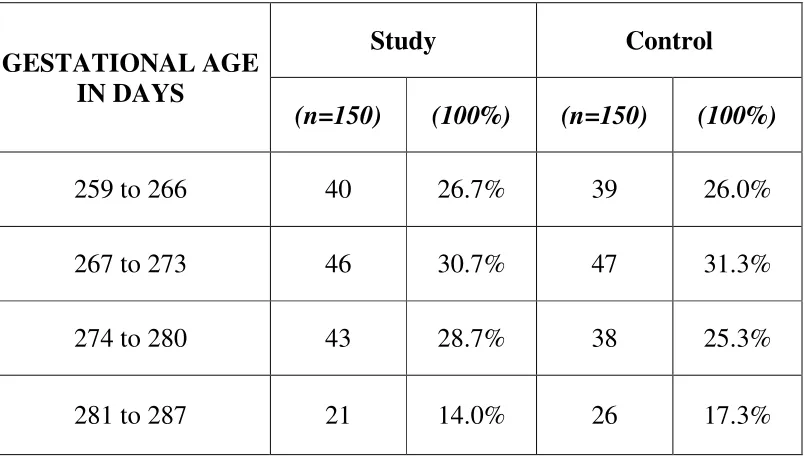
GESTATIONAL AGE
GESTATIONAL AGE IN DAYS
Study Control
(n=150) (100%) (n=150) (100%)
259 to 266 40 26.7% 39 26.0%
267 to 273 46 30.7% 47 31.3%
274 to 280 43 28.7% 38 25.3%
281 to 287 21 14.0% 26 17.3%
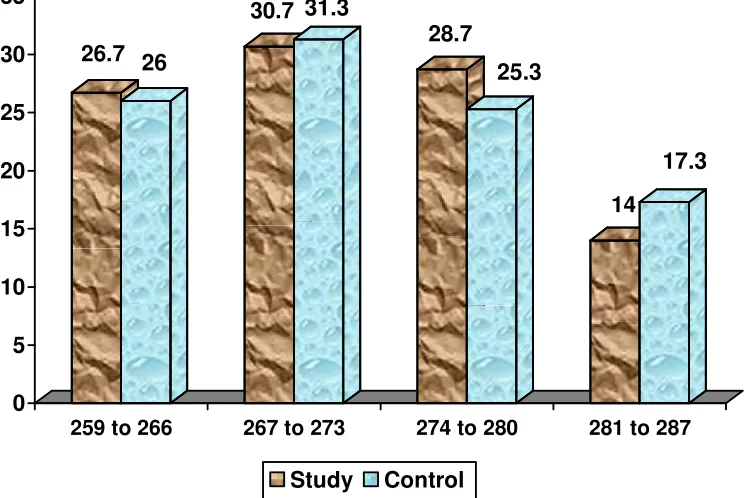
Mean Gestational age of the patients in the study group and control
FIGURE:2
GESTATIONAL AGE
26.7 26
30.7 31.3
28.7
25.3
14
17.3
0 5 10 15 20 25 30 35
259 to 266 267 to 273 274 to 280 281 to 287
TABLE:3
MODE OF ONSET OF LABOUR
Study
Control
Spontaneous
114 76.0% 125 83.3%Induced
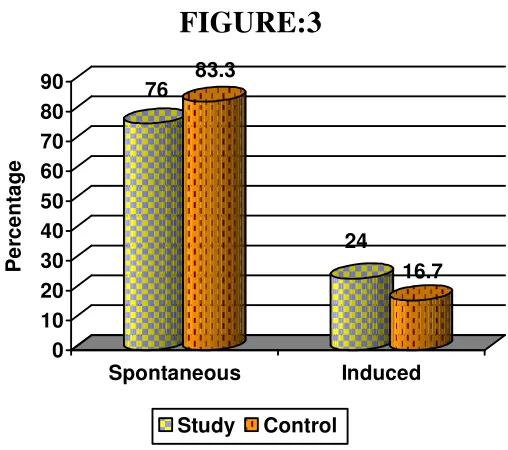
36 24.0% 25 16.7%83 .3% of the control group and 76.0% of the study group had
spontaneous onset of Labour.
FIGURE:3
76 83.3
24
16.7
0 10 20 30 40 50 60 70 80 90
P
e
rc
e
n
ta
g
e
Spontaneous Induced
[image:69.612.191.445.446.671.2]TABLE:4
RATE OF CERVICAL DILATATION
Rate of cervical
Dilatation Study Control
cm/hr 3.71 ±1.64 1.53±0.64
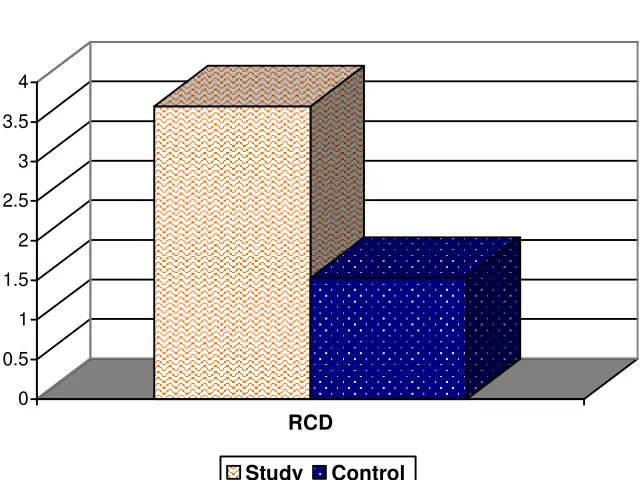
The mean rate of cervical dilatation in the study and the control group were
3.71cm/hr and 1.53 cm/hr respectively.
FIGURE: 4
RATE OF CERVICAL DILATATION
0 0.5 1 1.5 2 2.5 3 3.5 4
[image:70.612.157.478.471.711.2]TABLE:5
DURATION OF 3 STAGES OF LABOUR
Duration (min)
Study control
mean SD mean SD
Active phase
I stage 116.95 45.679 236.44 90.933
II stage 21.23 9.292 23.57 12.404
III stage 4.36 .979 4.83 1.589
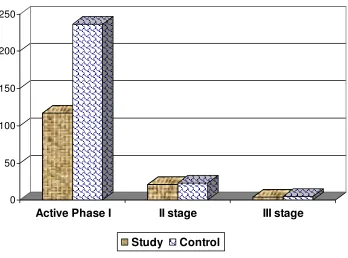
The mean duration of active phase of I stage of labour in the study
and the control group were 116.95 min (1.95hr) and 236.44 min (3.94 hr)
respectively. The mean duration of II stage of labour in the study group and
control group were 21.23 & 23.57 min respectively. Mean duration of the III
stage of labour in the study group and the control group were 4.36min and
FIGURE: 5
DURATION OF THREE STAGES OF LABOUR
0 50 100 150 200 250
Active Phase I II stage III stage
TABLE:6
TOTAL DURATION OF LABOUR
Study Control
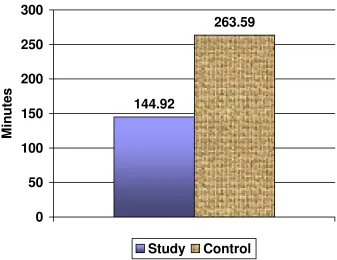
Mean (min) 144.92 ± 55.799 263.59 ± 99.928
Total duration of labour in the study and the control group were
[image:73.612.151.488.418.678.2]144.92 min (2.415 hr) and 263.59 min (4.39hr) respectively.
FIGURE: 6
TOTAL DURATION OF LABOUR
144.92
263.59
0 50 100 150 200 250 300
M
in
u
te
s
TABLE: 7
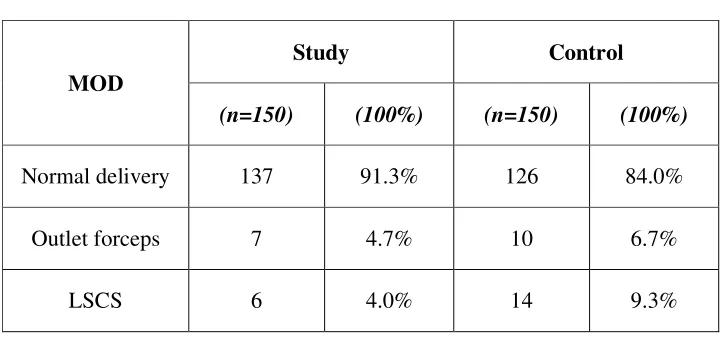
MODE OF DELIVERY
MOD
Study Control
(n=150) (100%) (n=150) (100%)
Normal delivery 137 91.3% 126 84.0%
Outlet forceps 7 4.7% 10 6.7%
LSCS 6 4.0% 14 9.3%
91.3% of the women in the study group and 84% of the
control group had normal vaginal delivery 4.7% of the study group
and 6.7% of the control group have outlet forceps delivery. 4% of
the study group and 9.3% of the study control group have
FIGURE:8
[image:75.612.180.460.172.279.2]MODE OF DELIVERY - CONTROL GROUP
FIGURE:7
MODE OF DELIVERY - STUDY GROUP
91.3%
4.7% 4%
TABLE:8
PAIN RELIEF SCORE
Pain Relief score
Study Control
(n=150) (100%) (n=150) (100%)
No pain relief 0 0% 50 33.3%
Mild relief 21 14.0% 90 60%
Moderate relief 90 60.0% 10 6.66%
Excellent relief 39 26.0% 0 0%
All the parturient in the study group had pain relief, out of which 26% had
excellent pain relief and 60% had moderate pain relief. In the control group
FIGURE: 9
PAIN RELIEF SCORE
0 10 20 30 40 50 60
TABLE: 9
INABILITY TO COOPERATE AT 2ND STAGE OF LABOUR
Study Control
5(3.3%) 4(2.7%)
Five women in the study group were not able to cooperate in the
second stage of labour. While in the control group four women did not
cooperate because of maternal exhaustion.
FIGURE: 10
3.3
2.7
0 0.5 1 1.5 2 2.5 3 3.5
M
in
u
te
s
[image:78.612.207.464.472.671.2]TABLE: 10
MECONIUM STAINED LIQUOR
Study
Control
8
5.3%
10
6.6%
5.3 percentage of the study group and 6.6 percentage of the control
group had meconium Stained Liquor.
FIGURE: 11
MECONIUM STAINED LIQUOR
0 1 2 3 4 5 6 7
P
e
rc
e
n
ta
g
e
[image:79.612.193.445.407.574.2]TABLE: 11
BLOOD LOSS
Study Control
Mean(ml) SD Mean(ml) SD
103.8 36.55 139.94 76.33
Mean blood loss in the study group is 103.8ml, while in the control
group it was 139.94ml
FIGURE: 12
BLOOD LOSS
103.8
139.94
0 20 40 60 80 100 120 140
m
l
TABLE: 12
MATERNAL COMPLICATION
Maternal complication
Study Control
(n=150) (100%) (n=150) (100%)
No 111 74.0% 138 92%
Nausea/Vomiting 15 10.0% 12 8.0%
Tachycardia 9 6.0% 0 0%
Drowsiness 11 7.3% 0 0%
Dryness of mouth 7 4.7% 0 0%
Hyper salivation 3 2% 0 0%
Most common complication in the both groups was nausea
FIGURE:13
MATERNAL COMPLICATION
10 8 6 0 7.3 0 4.7 0 2 00
1
2
3
4
5
6
7
8
9
10
P
e
rc
e
n
ta
g
e
Nausea / vomitingTachycardia Drowsiness Dryness of
mouth
Hyper salivation
TABLE:13
MATERNAL SATISFACTION SCORE
With the programmed labour protocol 100% of the women were
satisfied. Majority of the women (61.3%) had good satisfaction with 25.3%
of them had excellent satisfaction, nobody were unsatisfied. while in the
control group 74% were unsatisfied.
Maternal satisfaction
Study Control
(n=150) (100%) (n=150) (100%)
Unsatisfied 0 .0% 111 74.0%
Just satisfied 20 13.3% 37 24.7%
Good satisfication 92 61.3% 2 1.3