Volume 3, No. 7, Nov-Dec 2012
International Journal of Advanced Research in Computer Science
RESEARCH PAPER
Available Online at www.ijarcs.info
Reaodv: Reliability Enhanced AODV Routing Protocol for MANET
Surabhi Purwar*
Department of Computer Science & Engineering, Madan Mohan Malaviya Engineering College
Gorakhpur-273010, U. P., INDIA [email protected]
Shiva Prakash
Department of Computer Science & Engineering, Madan Mohan Malaviya Engineering College
Gorakhpur-273010, U. P., INDIA [email protected]
Abstract:Mobile ad-hoc network (MANET) is always remains the centre of attention for research and development of wireless network. Its dynamic nature imposes several challenges to the MANET, frequent link breakage occurs due to its dynamic nature. Hence there must be some technique which maintains the link stability in spite of mobility. A challenging problem is how to select a more reliable path from source node to destination in moderate to high level of mobility. This paper presents an reliability enhanced AODV (RE-AODV) routing protocol in which we provides stable path selection considering stable links on the basis of different factors like power of node, signal strength of node and distance between the nodes and link expiration time and also presents a modified route discovery process. We discussed and analyzed this protocol with help of example which shows improvement over existing AODV protocol.
Keywords: Path Selection Factor, Reliability Pair Factor, Link Expiration Time
I. INTRODUCTION
An ad-hoc network, as the name suggests, is a network formed by nodes connected arbitrarily for some temporary time. Since a MANET has no infrastructure and it is multi hop in nature, each node acts as a router. The nodes are moving arbitrarily, and the topology of the network is dynamic. However, the advantages are numerous. Firstly, deployment is easy and speedy. Secondly, because there is no dependence on infrastructure, the network is robust and low-cost. Finally, MANETs form the basis of all pervasive and ubiquitous computing. Few examples which use the concept of Ad- hoc networking include students working with laptop for participation in an interactive lecture, soldiers communicating information for situational awareness on the battlefield and emergency disaster relief personnel coordinating efforts after a earthquake. MANETs can be a viable solution for communications and information access.
Routing poses several problems in MANET since mobility causes radio links to break frequently [1]. When any link or path breaks, this path needs to be either repaired by finding another link if any or replaced with a newly found path. This rerouting operation cost the radio resource and battery power while rerouting delay may affect quality of service (QoS) for applications and degrade the network performance. Link stability [2] is a qualitative measurement of the capacity of link for how much time of span this link can survive in the environment condition. Node mobility, limited battery and scarce Bandwidth resource makes the routing protocols designed for traditional networks impractical for use directly in MANETs.
It is necessary to find a new metric for selection of stability of link. This paper proposes a new metric for the Route Discovery process which is known as path selection factor which is composed of two parts one is reliability pair factor and another one is link expiration time. RE-AODV is
destination oriented routing strategy in which destination decides that which path has highest value of stability considering reliability pair factor [2] metric comprises of three main factors as energy of node, signal strength of node and distance between nodes. Another sub metric which is link expiration time [3] depends on the value of velocity of node of the link and the direction of movement of node. The path selection is done on destination side. Destination node accept all the Route Requests during ∆t time and compare all the value of the metric known as path selection factor and finally, send a route reply packet to the source node by path which has highest value of path selection factor. For the verification of our work we present here an example.
The remaining part of our paper is organized as follows: In section II related work done in field of link stability in MANET has discuss the and in section III problem statement has discuss and in section IV the proposed approach for the selection of stable path is describe and analysis of example discussed in section V finally in section VI we will conclude the paper and give the future scope of this paper.
II. RELATED WORK
A number of researches have been conducted on the link stability in MANET but still lot of work has to done in future for MANET and link stability for MANET is still an open problem for research work. In this section, we briefly present routing protocols in MANETs. Mainly link stability based algorithms are classified in to three categories:-
further utilized to found the remaining lifetime between nodes.
In power based routing algorithm the remaining battery power is used to calculate the link stability.
In [4] a composite metric has been developed which utilizes two sub parameters like mobility factor and energy factor to calculate the link stability. She define metric as Link Stability Degree (LSD) is defined as LSD = Mobility factor / Energy factor
It defines the degree of the stability of the link. Higher the value of LSD, higher is the stability of the link and greater is the duration of its existence. But the problem with this metrics is that in numerator part it considers the mobility factor and in denominator it uses the energy but stability is proportional to energy not mobility so this cannot be used as measuring link stability.
Mr. H.B.Li proposes a Link Life time based Segment-by-Segment Routing protocol (LL-SSR) [5] in mobile ad-hoc networks, where each node maintains a routing table for its k-hop region. A region is unstable if most of its nodes change their presence in the region during the time interval. In contrast, if most of the nodes in the region remain the same during the time interval, it is considered as a stable region.
To choose more stable route in Ad Hoc network, Limin Meng [6] integrated the link stability arithmetic and the principle of the least hop number in route discovery, and proposed link stability Dynamic Source Routing protocol. This protocol chooses route with high link stability, and decreases the number of route interrupted, which results in lower packet loss rate and improves the performance of the network.
The link stability arithmetic is based on radio communication model [7] which opens out the relationship among the send power, the receive power and communication distance. With proper radio communication model, we can calculate the distance between nodes. In this paper, we use Two-Ray model as,
Long-lived Route Prediction (LRP) [8] scheme is proposed to help discover long-lived routes. The LRP scheme predicts route based on the history of link lifetime. The benefit of the LRP scheme is that it is not using the GPS or the received signal strength has not affect by the presence
of shadow effect. Each node maintains a record of link lifetime, which is the history of link lifetime observed by the node. Each node monitors the lifetime of links to its neighbors. The age and lifetime of a link can be determined by counting the number of hello packets received.
Celimuge Wu proposes a MANET routing protocol considering link stability and bandwidth efficiency. This uses distributed Q-Learning and preemptively switching to better route before current route fails. It use dynamic Q-Table that the size of Q-Q-Table [9] of a node is determined by the number of destination nodes and neighbor nodes. QLAODV can efficiently reduce the number of route errors and route discoveries. QLAODV also increases the packet delivery ratio while considering bandwidth usage between nodes.
Little material focuses on the link expiration time prediction and its implementation with the DSR protocol. This approach discussed in [10] compares three prediction algorithms based on either the Global Positioning System (GPS), or the signal strength (SS), or both. this integrate of the link expiration time (LET) prediction in order to decrease the data packets’ loss due to links’ failures.
Weiying Zhu addresses the issue of reducing path breakage during data transmission. Ticket-based probing with stability estimation (TBP-SE) [11] is an enhancement for the multi-path distributed QoS routing scheme. TBP-SE enhances the stability of selected paths in terms of average relative path stability, path breakage speed, and amount of data transfer taken before path breaking.
III. PROBLEM STATEMENT
As the dynamic characteristics of MANETs impose many challenges to network protocol designs on all layers of the protocol stack. Considering [2] author gives a metric known as “Reliable pair factor” for the selection of stable path. In this approach author takes local decision for selection of reliable neighbor it calculate the reliability pair factor in the unicast manner and select the path in unicast pattern this scheme does not provide method for global selection of stable links and also the problem which I analyze is that in this approach does not calculate the reliability pair factor of possible links and if the case that it ignore the link of high reliability factor then this technique result in the lower link stability degree. So we can enhance this with broadcast version of route discovery process of the protocol that should be combined with the AODV protocol to the remaining strategy.
IV. PROPOSED APPROACH
[image:2.612.92.234.90.225.2]we take the decision of route selection at the destination node. As source node broadcast route request through all possible paths, when route request reaches to destination it
wait Δt time for more route request packet after that
destination send route reply to one path in which node have maximum numerical value of path selection factor. After route discovery process source node send packet to destination node with the selected path.
In this approach four different factor has been used to calculate the value of stability (Path selection factor), we are also giving here a discussion about the model which are used in this approach.
a. Energy model b. Signal strength model c. Mobility model d. Link Expiration time
A. Energy Model:
A limited battery backup is provided in MANET and when the data transmission occur each node’s energy decreases hence it is very important to discuss the energy model when we are talking about the link stability.
At the end of certain time interval, it is calculated as the remaining power of a node that may not be same as initial power when node transmit a number of packets during an interval causes little amount of drain in node’s battery power. The diagram below shows that as time are increases the power level of node decreases. As we know that power drop as data transmission takes places as shown in fig.2 suppose after each packet transmission decrement in power take place as shown in equation (1)
- N*Wtransfer ………..(1)
Fig. 2: Power Vs time Where
Wirem be the remaining battery power of node i after time t
sec
Wi total is the total energy of node i at initial stage
N is the number of transferred packets
Wtransfer is the amount of energy needed to transfer a packet
In our energy model we are also take the concept of threshold power (Wt). The threshold power is the minimum
power of a node which require for participation in further route discovery process. We take value Wt as threshold
value of power of node. If the node power level goes below this then node does not participate in the Route Discovery process Then node discard the RREQ packet and if node power level goes above this value, node take part in the route discovery process. We considered value of Wt as 120
mili Watt in our proposed approach.
B. Signal Strength Model:
Once the distance between two neighborhoods exceed a certain extent, the transmission signal will not be received correctly by receiver. Thus, it will result in link failure. If a node receives a strong signal from a neighbor then the link between them is considered as stable, otherwise the link is
considered as unstable. When two mobile nodes are moving closer or in opposite
direction, the latest signal power strength will be greater than the previous one or the latest signal power strength will be smaller than the previous one
Sfinal =S1±S2 ……….(2)
Where S1 and S2 are the signal strength of the nodes. If
they get closer this equation will take plus signa and if they are moving in opposite direction this equation will take minus sign.
C. Mobility Model:
Let initial positions of nodes i and j have coordinate values (X1, Y1) and (X2, Y2), respectively. Suppose nodes i
and j are moving with variable velocities V1 V2 in a
particular direction decided by angles θ1and θ2 with x-axis. We are finding the new co-ordinate of i,j. After movement node i, new co-ordinate is ( , Y1’).
Figure.3: co-ordinate calculation
= + d1
1
D. Route Discovery Process:
For the calculation of Reliable pair factor and Link Expiration Time we need the energy and signal strength and distance moved by node .So we append this information in RREQ header and broadcast it.
a. Modified RREQ packet header: This approach adds five fields in existing route request header as following:
a) Power of node
b) Location of node (X,Y co-ordinate) c) Signal strength of node
d) Numerical value of Reliable pair factor calculated at each node in the route
e) Numerical value of Link Expiration Time of each link
The complete header is shown below:- Power
E. Working of Proposed Approach:
a. At Source Node: Source node append their geometric location and signal strength and power of node to the header of the route request and broadcast the RREQ to all their neighbors
b. At Intermediate Node: After receiving the route request packet neighbors’ extract the information and check that Power of node is above threshold. If power is below threshold then node discard the RREQ packet and does not take part in Route Discovery process and if the power is above the threshold value then computes the value of Path selection factor with the help of the formula-
Psf = FRP* LET.. ………(1)
Where reliability pair factor is computed as
FRP = ………..……(2)
Where Pi , Pj represents the power of node i and j
Ds represents the differential signal strength of link (i,j).
D (ij,t) represent the distance between node i and j at time t.
And also calculate the value of link expiration time of each link with the help of formula given in
LET=
……….(3)
Where a=
b=
c=
d=
Where are velocity of node i and j
direction.
Note also that the equation cannot be applied when Vi = Vj and and when LET is ∞.
Intermediate node put the computed value of reliability pair factor and link expiration time along with the header of RREQ packet. Each node rebroadcast RREQ packet to their neighbor .They receive RREQ header and calculate the value of FRP, LET and compute the average value and
replace these value by previous value in header and further broadcast it.
c. At Destination Node: After receiving the route request
the destination node will wait for Δt time where Δt is
defined as the extra time of .02ms of TTL for receiving the more requests where default value of TTL is 1ms.
After Δt time destination node check for all the value
of reliability pair factor, successive average of link expiration time and calculate the path selection factor as:-
Psf = FRP *LET
Coming from different RREQ destination calculate the value of path selection factor and make a route reply to the source node with that path which have maximum value of path selection factor.
F. Route Maintenance Process:
In the routing of mobile ad hoc networks (MANET), frequent link breaks occur in the path due to random motion of nodes and link failures can also take place which arises the need of route maintenance. In this protocol destination node have more than one value RREQ and each RREQ corresponds to the value of Path selection factor and link expiration time.
Figure.5: Route Maintenance
Each value corresponding to a path i.e. destination node have more than one path so if link failure occur while communication taking place then destination can swap previous path to the new path which have link expiration time less than previous one .With this approach it does not have overhead of re Route Discovery. Suppose communication is taking place in fig5. Suppose the node which goes down is C .C cannot transfer the Data packet further transferred so C send a RRER message to its predecessor which is F.
path .If the predecessor of C is able to find that path then it send data with that path. But if it is not able to find the path then it propagate the REER message to their neighbor nodes .The same procedure has done on neighbor nodes until there is a new path along which we send the data. In this type route maintenance the packet drop is reduced because as we find route breakage then we start to find alternative path to send the data and as soon as we find new path we started sending the packet with new one.
V. NUMERICAL EXAMPLE
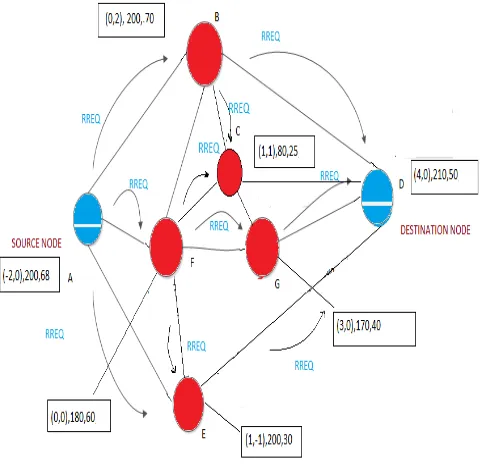
[image:5.612.41.281.229.463.2]Example: Here we are explaining our proposed approach with help of an example
Figure.6: Working of proposed approach
[image:5.612.321.552.253.335.2]The above diagram shows the network of seven nodes. Initial parameters are given in the square block of respective nodes as shown in fig. 4.6 and also summarized in the table below. We also consider the mobility of different nodes. Node’s velocity are also assumed and put on the same table. We consider the scenario after time t=1 mili second.
Table.1: Initial parameter
Node
Co-Ordinate
Energy (mW)
Signal Strength
(nW)
Angle Velocity (m/s)
A (-2,0) 200 70 180 2
B (0, 2) 160 50 90 1
C ( 1,1) 80 25 45 1.5
D (4,0) 210 50 0 2
E (1,-1) 200 30 225 1
F (0,0) 180 60 0 .5
G (3,0) 170 40 0 1.6
Node A broadcast the RREQ packet to the neighbors’. Node B,F,E are receiving the packet. Now at node B, E, F they check the header of node A for the checking of threshold value of power and find that it takes part in the
Route Discovery process and then perform the computation for reliability pair factor for the value of FRP we need the
distance between node A and B.
For the calculation of Distance (A,B) we need the new co-ordinate of A,B during motion. New co-ordinate are calculated as-
Suppose Node A Co-Ordinate =(X1, Y1),
Node A angle with X-axis=Ɵ1,
Node A velocity=V1
d1=V1*T1
New co-ordinate (X1’, Y1’) calculated as
= + d1
1
[image:5.612.314.563.397.559.2]In the same way we find the new co-ordinate of each node which is summarized in table below
Table.2: Nodes new co-ordinate
Name of Node New Co-ordinate
A (-2.002,0)
B (0,2.0001)
C (1.001,1.001)
D (4.0002,0)
E (1.001,-1.001)
F (.0005,0)
G (3.0016,0)
[image:5.612.37.278.569.670.2]After calculating new co-ordinate we calculate the distance between them which is summarized as below in table
Table.3: Calculated Distance
Link name Distance
AB .000223
BC 1.414
AF 2.002
AE 3.165
ED 3.1663
GD .968
FG 3.015
CF 1.415
EF 1.416
After computing the distance we compute the reliability pair factor as per equation no (2)
FRp(A,B)= =.67
Similarly We compute other value of FRP for each link
and put in table 4.4 below
Table.4: Reliability Pair Factor Value
Link Value of reliability pair factor
(A,B) .67
(A,E) .568
(A,F) .8
(B,C) .56
(F,C) .12
(F,G) .56
(F,E) .134
(C,D) .243
(G,D) .175
(E,D) .632
[image:5.612.323.554.583.697.2]LET =
Where a= ,
b=
c=
d=
Table.5: Link Expiration Time calculation
LINK A B c d LET(m Sec)
(A,B) -1 -2 -1 2 240
(A,F) -.5 -2 2 0 169.7
(A,E) .7 3 .7 1 350
(B,C) 1.06 1 -.006 2 180
(F,C) .5 1 1.07 1 296
(F,E) .965 1 .36 1 339
(F,G) -1.1 1 0 0 315
(G,D) 1.6 1 0 0 218
(E,D) 1.29 3 .7 1 228
When it perform the calculation it append the value of reliability pair factor and link expiration time into the header and again broadcast in the network. The same procedure is working at node F and E and again broadcasting take place further when this packet reach to the node C,G they again perform computation for reliability pair factor and link expiration time and append their values in RREQ header and broadcast it in the network and until it reaches to the destination node.
Now we are heaving all the computed value of LET and FRP. Now referring again to fig.6 we find the following path
Table.6: Path Selection Factor Value
PATH NAME
FRP VALUE LET VALUE Psf
A-B-C-D 1.3 215 279.5
A-F-C-D 1.16 230 266.80
A-F-G-D 1.475 253 373.175
A-F-E-D 1.56 240 374.40
A-E-D 1.1 190 209.0
By looking at above table we find that the maximum value of path selection factor is for A-F-E-D and it comes out as 374.40. Hence we select the path A-F-E-D as most stable and most long lasting in the network.
At Destination After receiving the route request the
destination node will wait for Δt time where Δt is defined as
the extra time of .02ms of TTL for receiving the more
requests where default value of TTL is 1ms. After Δt time
destination node check for all the value of reliability pair factor, successive average of link expiration time and calculate the path selection factor
Psf = FRP* LET
Coming from different path and arrange value in the decreasing order and forward RREP packet to the path heaving maximum value of compare value of reliability pair factor. Dark blue line shows the path heaving max value average link expiration time and dark black shows path heaving max reliability pair factor.
Algorithm for Route Discovery:-
Step 1: Source node append own residual power, signal strength and co-ordinate to RREQ Packet and broadcast RREQ packet to neighbors
Step 2: Neighbors receive RREQ packet and check for node power
If (Power of node < 120 mWatt) {
Discard RREQ packet }
Step 2.1: Else if (Neighbor = Destination {
Destination node waits for ∆ t time, in ∆t time node have more than one RREQ,
each RREQ has value of FRP , and LET value and calculate
Psf for each path as Psf = FRP * LET
Finally calculate which path has maximum value of Psf as
Psfm = max (
and send RREP packet to the source by the same path }
Step 2.2: Else {
Neighbor’s nodes extract RREQ header and calculate reliability pair factor of header as
FRP =
and now replace header FRP value to this new calculated
FRP value and append this value to RREQ header and
neighbor’s node compute own link expiration time (LET) of each link LET=
a= ,
c=
b= , d=
and extract LET from header and compute average value of both LET value and replace to header value of LET to this average value of LET and replace this LET value to RREQ packet’s LET value and broadcast to their neighbors. }
VI. CONCLUSION AND FUTURE WORK
maintenance. We will present our simulation results in my upcoming research work.
VII.REFERENCES
[1] NZ Ali, R. B Ahmad, S.A.Aljunid, “Link Availability Estimation for Routing Metrics in MANETs : An Overview”, 2008 International Conference on Electronic Design December 1-3, 2008, Penang, Malaysia
[2] Rajashekhar Biradar, Sunilkumar Manvi,” Channel Condition and Mobility based Choice of Neighbor Node for Routing in MANET”, 2010 International Conference on Advances in Computer Engineering
[3] Huayi Wu and Xiaohua Jia QoS multicast routing by using multiple paths/tress in wireless ad hoc networks, Ad Hoc Networks 5 (2007), 600-612
[4] Hamed EL afandi. “An Intelligent Wireless Ad hoc Routing Protocol”. In University of Wisconsin Milwaukee, 2006.
[5] H. B. Li, Y. B. Cai, and Z. C. Li, “A Method of Selecting Steady Path Based on Neighbor Change Ratio in Mobile Ad Hoc Networks,” Journal of Software, 2007, Vol. 18, No. 3, pp. 681-692.
[6] Limin Meng, Wanxia Wu “Dynamic Source Routing Protocol Based on Link Stability Arithmetic” 2008 International Symposium on Information Science and Engineering.
[7] Hongyan Du', Hossam Hassanein' and Chihsiang Yeh,” ZONE-BASED ROUTING PROTOCOL FOR HIGH-MOBILITY MANET ”, 0-7803-778 1-8/03/$17.00 02003 IEEE
[8] Reza Shamekh Nasser Yazdani , ”Routing Table Stability Prediction in Mobile Ad hoc Networks ”, 1-4244-0000-7/05/$20.00 02005 IEEE.
[9] ACHOUR RHIM, ZBIGNIEW DZIONG,” Routing Based on Link Expiration Time for MANET Performance Improvement”, 15 -17 December 2009 Kuala Lumpur Malaysia.
[10] Xiaoqin Chen, Haley M. Jones and Dhamika Jaylath “Channel Aware routing in MANETS with route Handoff ” volume no 10 january 2011
[11] Weiying Zhua, IEEE, Min Songa, and Stephan Olariub ,”Integrating Stability Estimation into Quality of Service Routing in Mobile Ad-hoc Networks”,
![Table that the size of Q-Table [9] of a node is determined by better route before current route fails](https://thumb-us.123doks.com/thumbv2/123dok_us/701378.1078031/2.612.92.234.90.225/table-table-determined-better-route-current-route-fails.webp)