Article
Evolutionary and ecological role of apomixis and
function of the apomixis associated genes
CENH3
and
APOLLO
Evgeny Bakin1,5, Fatih Sezer2, Aslıhan Özbilen3, Irem Kilic3,Mike Rayko4, Kemal Melih Taskin2, VladimirBrukhin1,6,*
1 Dobzhansky Center for Genome Bioinformatics, St. Petersburg State University, Sredniy Prospekt 41, Vasilievsky Island, 199004 St. Petersburg, Russia; [email protected] (E.B.), [email protected], [email protected] (V.B.)
2 Department of Molecular Biology and Genetics, Çanakkale Onsekiz Mart University, Terzioglu Kampusu, 17100 Çanakkale, Turkey; [email protected] (F.S.), [email protected] (K.M.T.)
3 Department of Biology, Çanakkale Onsekiz Mart University, Terzioglu Kampusu, 17100 Çanakkale, Turkey; [email protected] (A. Ö.), [email protected] (I.K.)
4 Laboratory for Algorithmic Biology, Saint-Petersburg State University, Vasilievsky Island, 199004 St. Petersburg, Russia; [email protected] (M. R.)
5 Bioinformatics Institute, Kantemirovskaya str. 2A, 197342 St. Petersburg, Russia
6 Department of Plant Embryology and Reproductive Biology, Komarov Botanical Institute RAS, 197376 St. Petersburg, Russia
* Correspondence: [email protected], [email protected]
Abstract: Apomictic plants (reproducing via asexual seeds), unlike sexual individuals, skip meiosis therefore their chromosomes do not undergo recombination. Fast phenotypic responses of apomicts to selection on short time scales indicate that apomixis imposes immediate reproductive isolation on the polyploid lineages, interferes with genetic cohesion forming fragmented gene pools into populations that develop independently, increases expansion range and ecological plasticity. Despite the progress in the study of apomixis, molecular genetic regulation of the latter remains poorly understood. This article presents in silico characteristic of the apomixis associated genes CENH3 and APOLLO. The centromere-specific histone H3 variant encoded by CENH3 gene is essential for cell division. Mutations in CENH3 disrupt chromosome segregation during meiosis since the attachment of spindle microtubules to a mutated form of the CENH3 histone fails. Disruption of meiosis in A. thaliana CENH3 mutants resembles the major components of apomictic reproduction leading to apomeiosis. In this study, we characterized the structure of the CENH3 and its expression levels in flower buds of the natural diploid apomictic and sexual Boechera species at the stage of around fertilization. After the fertilization CENH3 expression decreased in apomictic flower buds and increased in sexual ones. These results might indicate to a role of CENH3 in apomictic development in Boechera species. While CENH3 was a single copy gene in all Boechera species, the APOLLO (Aspartate Glutamate Aspartate Aspartate histidine exonuclease) gene have several polymorphic alleles associated with sexual and apomictic reproduction in the Boechera genera. We also discuss polymorphism and phylogeny of APOLLO and CENH3 genes.
Keywords: Boechera; Brassicaceae; CENH3; APOLLO; apomixis associated genes; cell division; apomeiosis
1. Introduction
Flowering plants reproduce mainly via sexual mode, due to meiosis and fertilization (the main features of sexuality), which occurs through the fusion of haploid female and male gametes, providing the formation of genetically variable progeny. Persistent genetic changes in populations
due to meiotic recombination and mutations are a source influencing the evolution of the population
through acceleration or limitation of the rate of the population’s adaptation. Despite the fact that
sexual reproduction is energetically very expensive, the advantage of sex is that it produces a combination of useful mutations that are absent in asexual organisms [1,2]. Thus, the benefit of sexuality is that it helps to get rid of harmful mutations (Hill-Robertson effect) [3,4] and produces useful traits and variability, thereby provides material for selection and evolution.
However, apart from the high energy costs, the disadvantage of sexual reproduction is the segregation of beneficial traits in subsequent generations, so that the offspring can lose useful combinations of their parental genes [5,6]. According to the Fisher-Muller model, sexual reproduction would be beneficial only under the large population sizes and the relatively frequent occurrence of mutations [7]. In the case of co-adapted gene complexes, sex and recombination may
be virtually unprofitable. This later became known as the “recombination cost”.
One of the mechanisms that can produce “clones” of mother plants is apomixis, which is a
mode of asexual reproduction through seeds that has been identified in over four hundred of plant species [8,9]. In apomicts, meiosis and fertilization are modified or completely absent. Consequently, the embryo is formed without prior meiosis (apomeiosis) and fertilization (parthenogenesis), while endosperm development occurs either autonomously, i.e. without fertilization, or pseudogamously (by fertilization of the central cell) [6,9–14]. During double fertilization, intrinsic to all Angiosperms, pollen tube transports two sperm cells (male gametes) to the embryo sac, one of which fertilizes the egg cell (female gamete) and the second one fertilizes the central cell, giving rise to a 2n embryo and a 3n endosperm, respectively. In sexuals departure from the 2 maternal:1paternal (2m:1p) genome ratio in endosperm nuclei results in seed abortion. While in pseudogamous apomicts, endosperm ploidy varies according to the ploidy of the sperm and central cell. Deviations from 2m:1p genome ratio sometimes occur, demonstrating that the apomictic system is more resilient compare to sexuals [15].
Recent studies and population genetic models of adaptation have challenged the traditional view of de novo mutations as the primary source of adaptive genetic variations, suggesting that pre-existing genetic and epigenetic variations can provide the best substrate for fast phenotypic responses to selection on short time scales [16]. The apomictic plants produce clonal progeny, which dramatically affects the structure of populations, reducing gene flow, genetic cohesion, and variation. Thus, apomicts possess of reproductive and genomic mechanisms, which provide an excellent opportunity to test biologically important issues, such as the origin of meiosis, understanding the fundamentals of apomeiosis, seed formation, the role and importance of sexuality in maintaining and irradiation of the genetic changes, ecological adaptation, and creation of diversity. For example, under the scenario of limited gene flow and loss of genetic cohesion, apomictic plants traditionally assumed to be doomed to extinction [17,18]. Nonetheless, recent data have disproved this view and indicated that apomixis is associated with increased diversity [19], suggesting that apomixis may contribute to the establishment of new polyploids [20] and the diversification of angiosperms. However, little is known about the molecular background of apomixis and the processes underlying the diversification of plants in agamic complexes. Also, there is no marker genes reported to test apomixis in agamic complexes.
In Arabidopsis thaliana, the CENH3 mutants act like a haploid inducer parent when cross with a wild type plant [26,28] and the chromosomes in these mutants were lost in the developing embryo. The resulting plant contains a haploid set of the wild-type parent chromosomes, which can be induced to double its number. We investigated the structure and the expression profiles of CENH3 in apomictic and sexual Boechera species (Brassicaceae) to further understand its role in meiotic chromosome segregation. Plants from the Boechera genus are attractive models for research because both sexual and apomictic accessions are present within this genus. Moreover, plants from the Boechera genus are close relatives of Arabidopsis thaliana, which is very well studied in terms of molecular genetics and functional gene annotation [30–32]. In apomictic Boechera species, the Taraxacum type diplospory with pseudogamous endosperm development that requires fertilization of the central cell is reported [32–35]. A special attention deserves apomictic accessions of Boechera divaricarpa, which is known as an interspecific hybrid between sexual species B. stricta and B. retrofracta or a closely related species [36]. Although diploid apomixis is an extremely rare condition in plants [37], both diploid and triploid apomictic B. divaricarpa lineages have been reported [32,38].
Our study revealed different CENH3 expression levels in the flower meristems during apomictic and sexual development. While right after fertilization in apomicts CENH3 expression demonstrated decreasing levels, the sexual plants showed an increase in expression on the first day after fertilization. These results indicate a possible role that CENH3 might play in apomictic development in Boechera species. We also studied the evolution of the APOLLO (for APomixis-Linked LOcus; encodes Aspartate Glutamate Aspartate Aspartate histidine exonuclease) gene that was shown to have several polymorphic sex- and apo-alleles [39,40]. This gene is down-regulated in sexual ovules at the meiosis stage and is up-regulated in apomeiotic ovules at the same stage of development in Boechera plants. It was reported that genomes of apomictic plants are always heterozygous carrying at least one of the apo-alleles, while sexual genotypes were always homozygous for sex-alleles [39,40]. APOLLO is one of the important genes associated with apomixis in Boechera species. Evolutionary APOLLO gene analysis presented in this study shows that sexual and apomictic species of Boechera are clustered in different clades in the phylogenetic tree based on the multiple nucleotide sequence alignment. This could be partly because the APOLLO apo-alleles present in the genomes of apomictic species could acquire a new function [40].
Based on the differential expression during apomictic and sexual development CENH3 gene and presence of APOLLO apo-alleles in apomictic Boechera species, these two genes could presumably be used as the marker genes in agamic complexes to detect location of sexuals and apomicts in sympatry.
2. Materials and Methods
2.1 Plant material
The diploid sexual B. stricta (ES6, ID 500206; DG; DQ013050) and apomictic B. divaricarpa (ES9, 500209; BS) seeds were obtained from Dr. Eric Schranz (Wageningen University, Netherlands).
Boechera plants were grown as described in [38,41]. Seeds of ES6 and ES9 plants were germinated on moist filter paper after vernalization at 4 °C for 3 weeks in the dark to break seed dormancy. Then
petri dishes containing the seeds were transferred into a growth chamber under the condition of 16 h light: 8 h dark (21 °C). Germinated seeds were transferred to a peat: perlite mix (1:4) for 4 weeks.
Then the plants were grown at 10° C for 6 weeks. Flowering of the plants started in 6 weeks after the vernalization.
Emasculation was performed on unopened flower buds by removing anthers with fine
forceps. Hand pollination of stigmas was carried out with pollen from the same plant. Then the siliques were collected at the 1st, 3rd, 4th and 5th days after pollination, were immediately frozen in
2.2 APOLLO and CENH3 genes retrieval and pre-processing
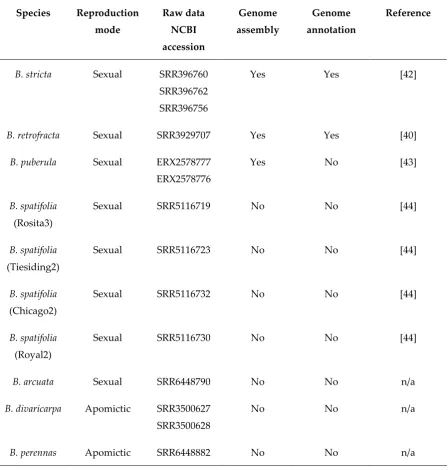
Sequences of the APOLLO (Aspartate Glutamate Aspartate Aspartate histidine exonuclease) and CENH3 (histone H3-like centromeric protein) genes in various Boechera species were obtained from the sources listed in table 1 (also see in [32]). For APOLLO phylogenetic analysis, additionally 10 accessions from [39] listed in table 2 (5 apo-alleles, 5 sex-alleles) were used.
Table 1. Genome sequencing datafor Boechera genus
Species Reproduction
mode
Raw data
NCBI accession
Genome
assembly
Genome
annotation
Reference
B. stricta Sexual SRR396760 SRR396762
SRR396756
Yes Yes [42]
B. retrofracta Sexual SRR3929707 Yes Yes [40]
B. puberula Sexual ERX2578777 ERX2578776
Yes No [43]
B. spatifolia (Rosita3)
Sexual SRR5116719 No No [44]
B. spatifolia (Tiesiding2)
Sexual SRR5116723 No No [44]
B. spatifolia (Chicago2)
Sexual SRR5116732 No No [44]
B. spatifolia (Royal2)
Sexual SRR5116730 No No [44]
B. arcuata Sexual SRR6448790 No No n/a
B. divaricarpa Apomictic SRR3500627 SRR3500628
No No n/a
Table 2.Boechera accessions used for investigation of APOLLO gene (from [39])
GenBank accession Sample ID Allele type
KF705583.1 369S2_S3 Sex-allele
KF705582.1 376S2_S5 Sex-allele
KF705581.1 355S2_S3 Sex-allele
KF705569.1 329S2_S1 Sex-allele
KF705572.1 385S2_S11 Sex-allele
KF705596.1 43A3_A3 Apo-allele
KF705598.1 1A2_A6 Apo-allele
KF705600.1 11A2_A1 Apo-allele
KF705599.1 11A2_A3 Apo-allele
KF705588.1 33A2_A5 Apo-allele
For the species with available assembled and annotated genome a BLAST search over extracted proteins datasets was performed using A. thaliana (AT1G01370) peptide sequence as a query. For the other species a local assembly using SRAssembler v1.0 was performed [45]. The assembly results were checked for consistency with another approach, in which a whole-genome assembly was
performed using Platanus software v1.2.1 [46] with a consequent search via Exonerate v2.2 run in protein2genome mode [47]. The most of the B. spatifolia accessions reported in [44] were excluded from the further analysis because of a significant divergence of the obtained CENH3 sequences and abnormally low their similarities with CENH3 homologs in the other Brassicaceae species. Presumably, this was due to the insufficient genome coverage in the datasets (30x in average) and a high complexity of the loci. Thus, only Rosita3 accession was accepted for CENH3 analysis. For APOLLO analysis Rosita3, Tiesiding2, Chicago2 and Royal2 accessions were accepted. In B.puberula and B.perrenas assemblies APOLLO gene was incomplete and thus these accessions were also excluded for this gene analysis. Sequences for non-Boechera species were retrieved directly from Phytozome v. 12.1 [48] and Uniprot [49] databases.
2.3 General characteristics of CENH3 gene
CENH3 gene length and exon structure were directly extracted from both SRAssembler and Exonerate output. The molecular weight and isoelectric point of the proteins were calculated with
Expasy’s ProtParam server [50]. Subcellular localizations of the Boechera proteins were predicted via
CELLO v.2.5: subcellular localization predictor [51]. Conserved regions were investigated with CDD (Conserved Domain Database) [52]. The promoter regions were analyzed for regulatory motifs using
2.4 Evolutionary analysis of the CENH3 gene
Multiple alignment of the obtained amino acid sequences was performed with MUSCLE algorithm [54] and then visualized with Jalview v2 [55]. The evolutionary history was inferred by the
Maximum Likelihood method and w/freq. model [56]. As a result, the tree with the highest log likelihood was reconstructed. The percentage of trees in which the associated taxa clustered together
is shown next to the branches (1000 iterations were performed). The tree was drawn to scale, with branch lengths measured in the number of substitutions per site. Evolutionary analyses were conducted in MEGA X [57]. Heatmaps visualization was performed by R package Pheatmap [58].
2.5 CENH3 gene expression studies
Total RNA was isolated from the siliques and unopened flower buds with Purelink RNA mini
kit (Invıtrogen – 12183018A) and TRIzol reagent (Invitrogen, 15596018). RNA quality was checked
on 1% agarose gel electrophoresis, the concentration of RNA was measured with a Qubit 2.0
Fluorometer (Life Technologies, Carlsbad, CA, USA). Before the cDNA synthesis 1 µg of total RNA was treated with Rnase-free Dnase I (Thermo Scientific, EN0521) for 30 minutes at 37 °C. Reverse
transcription reactions were performed using 1 µg of total RNA and High Capacity cDNA Reverse Transcription Kit (4368814; Applied Biosystems, Foster City, CA, USA) according to the
manufacturer’s instructions. Expression of the CENH3 gene was analyzed with the 7500 real-time
PCR system (Applied Biosystems) according to the manufacturer’s instructions. Efficiency of the
primers used in the study was evaluated with the standard curve experiments, only the primers
with 90%-100% efficiency were used. UBQ (Polyubiquitin) gene was used as endogenous control (Saitou and Nei 1987). No template (water instead of template) and – RT (water instead of reverse
transcriptase enzyme in cDNA synthesis) controls showed negative amplification. All reactions were performed in 3 technical replicates. Reactions included 10 µl SYBR Green PCR Master Mix (Applied
Biosystems – 4367659), 0,6 µl primers (10 µM stock), 1 µl cDNA template (50 ng/µl), 7,8 nuclease free water. The PCR cycling conditions were as follows: pre-denaturation at 95 °C for 10 min, denaturation at 95 °C for 15 s, annealing at 60 °C for 30 s and elongation at 72 °C for 60 s with 40
cycles. The data were analyzed with expression suite software (Applied Biosystems).
3. Results
3.1. Characteristics of CENH3 gene and protein isoforms
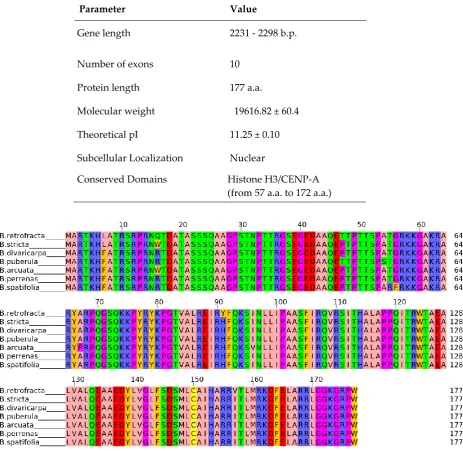
Table 3. General characteristics of CENH3 gene and CENH3 protein in studied seven Boechera species.
Parameter Value
Gene length 2231 - 2298 b.p.
Number of exons 10
Protein length 177 a.a.
Molecular weight 19616.82 ± 60.4
Theoretical pI 11.25 ± 0.10
Subcellular Localization Nuclear
Conserved Domains Histone H3/CENP-A
(from 57 a.a. to 172 a.a.)
Figure 1. Multiple alignment of CENH3 proteins in considered Boechera sp. Multiple alignment was performed using MUSCLE software and visualized in Jalview.
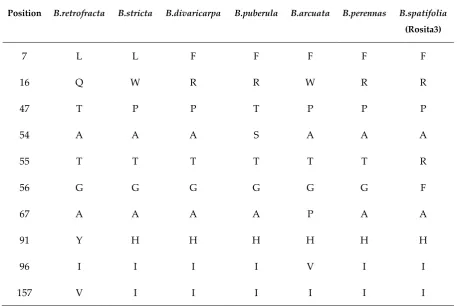
Table 4. Polymorphic positions in CENH3 protein
Position B.retrofracta B.stricta B.divaricarpa B.puberula B.arcuata B.perennas B.spatifolia
(Rosita3)
7 L L F F F F F
16 Q W R R W R R
47 T P P T P P P
54 A A A S A A A
55 T T T T T T R
56 G G G G G G F
67 A A A A P A A
91 Y H H H H H H
96 I I I I V I I
157 V I I I I I I
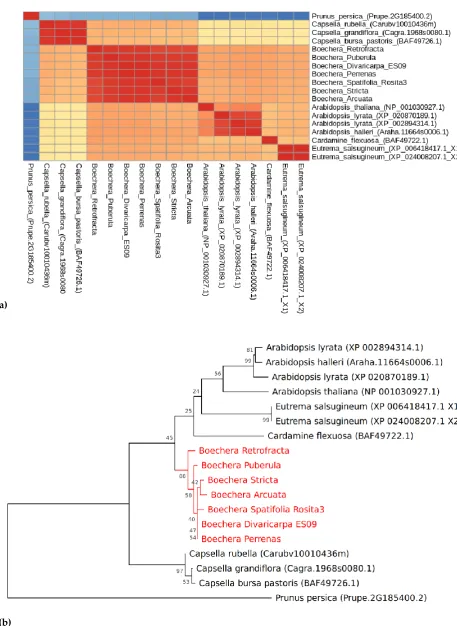
CENH3 similarity heatmap matrix and reconstructed phylogenetic tree are shown in Fig. 2, A and B respectively. The heatmap demonstrates that CENH3s in all Boechera species are almost identical, which is consistent with the protein alignment analysis (Fig. 1), and are very similar
(≥80%) to Arabidopsis and most of the other representatives of Brassicaceae studied. CENH3 gene is
(b)
Figure 2. (a) Similarity matrix and (b) Phylogenetic tree of CENH3 (histone H3-like centromeric protein) in seven species of interest. Sequences of Prunus persica was used as an outgroup. All Boechera species are grouped
in one clade. Numbers near nodes represent corresponding bootstrap support. Phylogenetic tree was
3.3 CENH3 promoter characteristic
Since it was found that genomes of all studied species contain only a single copy of the CENH3 gene, we decided to investigate and compare the structure of the CENH3 gene promoters in two species, sexual B. stricta and apomictic B. divaricarpa. 1000 bp upstream regions from the first codon (ATG) of BsCENH3 and BdCENH3 genes were analyzed. Several regulatory elements and core promoter regions like TATA and CAAT-box within both CENH3 promoters were found. Among the regulatory motifs, MYB transcription factors recognition and binding sites were common for both CENH3 promoters. MYB transcription factors are encoded by several genes that control plant development, differentiation, stress resistance, and defense [59]. The presence of several MYB binding motifs might indicate to a role of MYB transcription factors in CENH3 regulation. E2F transcription factor binding sites at -163 positions of BsCENH3 and BdCENH3 were found as well. At -115 site BdCENH3 and BsCENH3 had a single polymorphic site (GCGGGAAA/ GCGGGAAG). Promoter regions also included several light response motifs like Box 4, GT1-motif and TCT-motif. Hormone response elements like gibberellin responsive element (GARE-motif) and
auxin-responsive elements (TGA-element) were detected in the CENH3 promoters of both species. A cis-acting regulatory element involved in the MeJA-responsiveness (CGTCA-motif), cis-acting element involved in low-temperature responsiveness (LTR), cis-acting regulatory element involved
in circadian control, cis-acting regulatory element related to meristem expression (CAT-box) and cis-regulatory element involved in endosperm expression (GCN4_motif) were also found in the
CENH3 promoter (Fig 4). Our research of promoter regions of BsCENH3 and BdCENH3 genes did not reveal significant differences (Fig. 4). Therefore, we decided to check the expression level of
BsCENH3 and BdCENH3 genes at the early stages of flower meristem development.
Figure 4. Motifs found in 1000 bp upstream of the transcription start site of BsCENH3 and BdCENH3
3.4 CENH3 expression in gametophyte development
expression, in turn, was observed on the first day after pollination, which was >4 fold higher than
BdCENH3 at the same stage.
Observed results may suggest different regulation of CENH3 in apomictic and sexual Boechera plants (Fig 5). Since the structure of the CENH3 gene and CENH3 proteins were almost identical in all studied Boechera species, the observed difference in the level of CENH3 gene expression between sexual and apomictic accessions may be either due to differences in regulation of expression by the transcription factors and genes responsible for their expression or due to epigenetic factors that might regulate the expression at a post-translational level.
Figure 5. Expression levels of CENH3 genes in diploid apomict and sexual Boechera plants. 0: B. divaricarpa
and B. stricta young flower buds before pollination. 1-5: Days after pollination. Bars reflect standard
deviations of fold change levels.
3.2 Phylogenetic analysis of APOLLO gene
A comprehensive analysis of APOLLO geneand protein orthologs were performed previously [39,40], therefore, the objective of this research was to study the phylogeny of APOLLO gene using available in open access sequenced genomes of the Boechera species with sexual and apomictic mode of reproduction by translating APOLLO nucleotide sequences into proteins and applying Multiple alignment method for obtaining amino acid sequences using MUSCLE software and Maximum Likelihood method to construct a phylogenetic tree. The heatmap showed on the Fig. 3A demonstrates that all compared APOLLO proteinsof Boechera are rather similar (≥92.5%) despite the
presence of 5 apo-alleles and 5 sex-alleles of that gene (see table 2 in Methods). Phylogenetic tree of APOLLO (Fig. 3B) shows that the Boechera species are clustered in two separate subclades according to the mode of reproduction: the first subclade contains the homozygous accessions for sex-alleles reproducing via sexual mode and the second contains accessions with apo-alleles that reproduce via apomixis. At the same time, all the Boechera species represented in the phylogenetic tree are clustered in a common clade, slightly separating them from the other genera of the Brassicaceae
Figure 3. Similarity matrix (a) and Phylogenetic tree (b) of APOLLO in species of interest. Sequences of
Phylogenetic tree was reconstructed using Maximum Likelihood method. The Boechera species are
clustered in two separate subclades according to the mode of reproduction: the first subclade contains the
homozygous accessions for sex-alleles and the second contains accessions with apo-alleles.
4. Discussion
Apomixis via clonal seeds produces the offspring, that are genetically identical to the maternal plant. Understanding of the genetic components that regulate apomixis is very important for studying plant development and evolution, in addition, the introduction of apomixis in agricultural plants would allow a long-term fixation of complex genotypes, including F1 hybrids, often used in agriculture. Yet, the molecular mechanisms underlying apomixis are poorly understood. Namely, the factors inducing avoidance or modification of meiosis (apomeiosis) and parthenogenesis. To study the genes regulating meiosis and embryogenesis in comparison of sexual vs. apomictic plants we use a convenient model plants from the Boechera genus, that comprise species naturally reproducing both by sexual and apomictic ways and show features of hybrid origin [32].
In this paper we studied evolution and phylogeny of the two important apomixis associated genes CENH3 and APOLLO and also compared the expression patterns of CENH3 in apomictic and sexual plants of Boechera.
The CENH3 gene that plays an important role in meiosis and genome elimination when mutated. Mutations in CENH3 of Arabidopsis thaliana cause disturbed meiotic chromosome segregation [21,22] that was also used to induce genome elimination in A. thaliana and rice. In hybrids of cenh3 mutant lines with diploid wild type plants the cenh3 line genome was eliminated [60]. We showed that CENH3 is a single-copy gene and that its structure is almost identical among the seven studied Boechera species irrespective of the reproduction (sexual or apomictic) mode. Polymorphic sites were mostly found at the N-tail protein regions, although B. retrofracta and B. arcuata had one site at 91 a.a. and two polymorphic sites at 67 a.a. and at 96 a.a. respectively in conservative Histone H3/CENP-A domain. Variability within the N-terminal tail might lead to apomeiosis, since it influences the chromosome segregation in meiosis [21,25]. Still the Similarity index between all studied Boechera CENH3was ≥ 97% (both at nucleotide and protein levels). Also in
the CENH3 phylogenetic tree, performed by multiple alignment, all studied Boechera species are clustered into the same clade, although being very close to other Brassicaceae species from Arabidopsis, Eutrema, Cardamine genera. At the same time expression profiles of the sexual B. stricta BsCENH3 and apomictic B. divaricarpa BdCENH3 were dramatically different before and after pollination. While in diploid apomict BdCENH3 showed a decreasing expression level at the first day after pollination, in diploid sexual BsCENH3 revealed a dramatic increase of expression at the same time. The lower expression levels before and at the first day after pollination in B. divaricarpa (ES9) could indicate to a feasible CENH3 role in apomeiosis and initiation of parthenogenesis. Thus, different expression behavior of CENH3 before and after pollination in B. divaricarpa vs B. stricta ovules/seeds might suggest its involvement in apomictic development.
Promoter analysis revealed the presence of several MYB transcription factor binding and recognition motifs within the promoter regions of BsCENH3 and BdCENH3. These motifs in Boechera CENH3 promoters might suggest a regulation of these genes by a MYB family proteins. A study on ArabidopsisCENH3 promoter region and its regulation revealed two E2F binding region at -163 and -115 sites [59]. Our analysis of these regions in Boechera species detected the motif at -163 site in BsCENH3 and BdCENH3. At -115 site BdCENH3 and BsCENH3 had a single polymorphic site (GCGGGAAA/ GCGGGAAG). Further functional studies on the Boechera CENH3 gene and its epigenetic and transcription regulation could elucidate a functional difference of CENH3 between apomictic and sexual Boechera.
Boechera ancestors acquired an alter function leading to apomictic development from the sexual state [40]. Moreover, it was demonstrated that apo-alleles are under a positive selection [40]. In the current study we retrieved 5 apo- and 5 sex-alleles from [39] to screen the genomes of ten Boechera species with different reproduction modes as well as other Brassicaceae species from the Arabidopsis, Eutrema, Cardamine, and Capsella genera and to perform APOLLO gene phylogenetic analysis. The results showed that sexual and apomictic Boechera species are clustered into the separate sub-clades, while being very similar to each other and to other Brassicaceae species. As well as for the CENH3 gene, functional studies of the APOLLO alleles and their putative epigenetic and transcriptional regulation in Boechera species is required in order to find out if there are functional differences between sexual and apomictic accessions. However, the latter will only be possible when good quality diploid genome assemblies of the studied species have been implemented.
In conclusion, a detailed knowledge of the structure of alleles of genes closely related to apomixis and the dynamics of their expression can presumably be used to develop marker genes for detection of sexuals and apomicts in agamic complexes to study the evolutionary, ecological, and population role of apomixis.
Author Contributions: V.B., K.M.T. designed the study. F.S., I.K. and A.Ö. grown plants, extracted RNA,
CENH3 expression and promoter analysis. E.B., M.R. bioinformatic work, gene alignment, annotation and phylogenetic analysis. V.B., K.M.T., E.B. wrote the manuscript with revision by all other authors. All authors read and approved the final manuscript.
Funding:
The reported study was supported by the Russian Foundation for Basic Research (RFBR) research grant No. 20-54-46002 СТ_а to V.B.; TÜBİTAK research grant 119N384 and research grant No. FHD-2016-1038 form Çanakkale Onsekiz Mart University BAP to K.M.T.
Conflicts of Interest: The authors declare no conflict of interest. References
1. Muller, H.J. Some Genetic Aspects of Sex. The American Naturalist1932, 66, 118–138.
2. Fisher, R.A. The genetical theory of natural selection: by R.A. Fisher ; edited with a foreword and notes by J.H.
Bennett; A complete variorum ed.; Oxford University Press: Oxford, 1999; ISBN 978-0-19-850440-5.
3. Hill, W.G.; Robertson, A. The effect of linkage on limits to artificial selection. Genet. Res.1966, 8, 269–294. 4. Felsenstein, J. The evolutionary advantage of recombination. Genetics1974, 78, 737–756.
5. Spillane, C.; Curtis, M.D.; Grossniklaus, U. Apomixis technology development—virgin births in farmers’
fields? Nat Biotechnol2004, 22, 687–691.
6. Brukhin, V. Molecular and genetic regulation of apomixis. Russ J Genet2017, 53, 943–964.
7. Crow, James F., and Motoo Kimura Evolution in Sexual and Asexual Populations. The American Naturalist
1965, 99, 439–450.
8. Carman, J.G. Asynchronous expression of duplicate genes in angiosperms may cause apomixis, bispory,
tetraspory, and polyembryony. Biological Journal of the Linnean Society1997, 61, 51–94.
9. Johri, B.M. Embryology of Angiosperms; Springer Berlin Heidelberg: Berlin, Heidelberg, 1984; ISBN
978-3-642-69302-1.
10. Asker, S.E.; Jerling, L. Apomixis in plants; CRC Press: Boca Raton, 1992; ISBN 978-0-8493-4545-6.
11. The flowering of apomixis: from mechanisms to genetic engineering; Savidan, Y., Carman, J.G., Dresselhaus, T.,
International Maize and Wheat Improvement Center, Eds.; International Maize and Wheat Improvement
Center ; European Union ; Institut de recherche pour le développement: México, D.F. : [Luxembourg?] :
[Paris], 2001; ISBN 978-970-648-074-3.
12. Bicknell, R.A. Understanding Apomixis: Recent Advances and Remaining Conundrums. THE PLANT
13. Lost sex: the evolutionary biology of parthenogenesis; Schön, I., Martens, K., Dijk, P. van, Eds.; Springer:
Dordrecht ; New York, 2009; ISBN 978-90-481-2769-6.
14. Kotani, Y.; Henderson, S.T.; Suzuki, G.; Johnson, S.D.; Okada, T.; Siddons, H.; Mukai, Y.; Koltunow,
A.M.G. The LOSS OF APOMEIOSIS ( LOA ) locus in Hieracium praealtum can function independently of the
associated large-scale repetitive chromosomal structure. New Phytol2014, 201, 973–981.
15. Aliyu, O.M.; Schranz, M.E.; Sharbel, T.F. Quantitative variation for apomictic reproduction in the genus
Boechera (Brassicaceae). American Journal of Botany2010, 97, 1719–1731.
16. Messer, P.W.; Ellner, S.P.; Hairston, N.G. Can Population Genetics Adapt to Rapid Evolution? Trends in
Genetics2016, 32, 408–418.
17. Darlington, C.D. The Evolution of Genetic Systems; Cambridge at the University Press.; 1939;
18. Grant, V. Plant speciation; Columbia University Press: New York, 1981; ISBN 978-0-231-05112-5.
19. Hojsgaard, D.; Klatt, S.; Baier, R.; Carman, J.G.; Hörandl, E. Taxonomy and Biogeography of Apomixis in
Angiosperms and Associated Biodiversity Characteristics. Critical Reviews in Plant Sciences2014, 33, 414– 427.
20. Hojsgaard, D. Transient Activation of Apomixis in Sexual Neotriploids May Retain Genomically Altered
States and Enhance Polyploid Establishment. Front. Plant Sci.2018, 9, 230.
21. Lermontova, I.; Koroleva, O.; Rutten, T.; Fuchs, J.; Schubert, V.; Moraes, I.; Koszegi, D.; Schubert, I.
Knockdown of CENH3 in Arabidopsis reduces mitotic divisions and causes sterility by disturbed meiotic
chromosome segregation: Consequences of AtCENH3 depletion. The Plant Journal2011, 68, 40–50.
22. Lermontova, I.; Sandmann, M.; Mascher, M.; Schmit, A.-C.; Chabouté, M.-E. Centromeric chromatin and its
dynamics in plants. Plant J2015, 83, 4–17.
23. Talbert, P.B.; Henikoff, S. Histone variants — ancient wrap artists of the epigenome. Nat Rev Mol Cell Biol
2010, 11, 264–275.
24. Maheshwari, S.; Tan, E.H.; West, A.; Franklin, F.C.H.; Comai, L.; Chan, S.W.L. Naturally Occurring
Differences in CENH3 Affect Chromosome Segregation in Zygotic Mitosis of Hybrids. PLoS Genet2015, 11, e1004970.
25. Ravi, M.; Shibata, F.; Ramahi, J.S.; Nagaki, K.; Chen, C.; Murata, M.; Chan, S.W.L. Meiosis-Specific Loading
of the Centromere-Specific Histone CENH3 in Arabidopsis thaliana. PLoS Genet2011, 7, e1002121. 26. Ravi, M.; Chan, S.W.L. Haploid plants produced by centromere-mediated genome elimination. Nature
2010, 464, 615–618.
27. Marimuthu, M.P.A.; Jolivet, S.; Ravi, M.; Pereira, L.; Davda, J.N.; Cromer, L.; Wang, L.; Nogue, F.; Chan,
S.W.L.; Siddiqi, I.; et al. Synthetic Clonal Reproduction Through Seeds. Science2011, 331, 876–876.
28. Karimi-Ashtiyani, R.; Ishii, T.; Niessen, M.; Stein, N.; Heckmann, S.; Gurushidze, M.; Banaei-Moghaddam,
A.M.; Fuchs, J.; Schubert, V.; Koch, K.; et al. Point mutation impairs centromeric CENH3 loading and
induces haploid plants. Proc Natl Acad Sci USA2015, 112, 11211–11216.
29. Evtushenko, E.V.; Lipikhina, Y.A.; Stepochkin, P.I.; Vershinin, A.V. Cytogenetic and molecular
characteristics of rye genome in octoploid triticale (× Triticosecale Wittmack). CCG2019, 13, 423–434. 30. Koch, M.; Haubold, B.; Mitchell-Olds, T. Molecular systematics of the Brassicaceae: evidence from coding
plastidic matK and nuclear Chs sequences. Am. J. Bot.2001, 88, 534–544.
31. Al-Shehbaz, I.A. Transfer of Most North American Species of Arabis to Boechera (Brassicaceae). Novon
2003, 13, 381.
32. Brukhin, V.; Osadtchiy, J.V.; Florez-Rueda, A.M.; Smetanin, D.; Bakin, E.; Nobre, M.S.; Grossniklaus, U.
33. Böcher T. Experimental taxonomical studies in the Arabis holboellii complex. Svensk Botanisk Tidskrift1954,
48, 31–44.
34. Naumova, T.N.; van der Laak, J.; Osadtchiy, J.; Matzk, F.; Kravtchenko, A.; Bergervoet, J.; Ramulu, K.S.;
Boutilier, K. Reproductive development in apomictic populations of Arabis holboellii (Brassicaceae). Sex
Plant Reprod2001, 14, 195–200.
35. Taskin, K.M.; Turgut, K.; Scott, R.J. Apomictic development in Arabis gunnisoniana. Israel Journal of Plant
Sciences2004, 52, 155–160.
36. Koch, M.A. Multiple Hybrid Formation in Natural Populations: Concerted Evolution of the Internal
Transcribed Spacer of Nuclear Ribosomal DNA (ITS) in North American Arabis divaricarpa (Brassicaceae).
Molecular Biology and Evolution2003, 20, 338–350.
37. Voigt-Zielinski, M.-L.; Piwczyński, M.; Sharbel, T.F. Differential effects of polyploidy and diploidy on
fitness of apomictic Boechera. Sex Plant Reprod2012, 25, 97–109.
38. Schranz, M.E.; Dobes, C.; Koch, M.A.; Mitchell-Olds, T. Sexual reproduction, hybridization, apomixis, and
polyploidization in the genus Boechera (Brassicaceae). American Journal of Botany2005, 92, 1797–1810. 39. Corral, J.M.; Vogel, H.; Aliyu, O.M.; Hensel, G.; Thiel, T.; Kumlehn, J.; Sharbel, T.F. A Conserved
Apomixis-Specific Polymorphism Is Correlated with Exclusive Exonuclease Expression in Premeiotic
Ovules of Apomictic Boechera Species. PLANT PHYSIOLOGY2013, 163, 1660–1672.
40. Kliver, S.; Rayko, M.; Komissarov, A.; Bakin, E.; Zhernakova, D.; Prasad, K.; Rushworth, C.; Baskar, R.;
Smetanin, D.; Schmutz, J.; et al. Assembly of the Boechera retrofracta Genome and Evolutionary Analysis
of Apomixis-Associated Genes. Genes2018, 9, 185.
41. Schranz, M.E.; Kantama, L.; de Jong, H.; Mitchell-Olds, T. Asexual reproduction in a close relative of
Arabidopsis: a genetic investigation of apomixis in Boechera (Brassicaceae). New Phytol2006, 171, 425–438. 42. Lee, C.-R.; Wang, B.; Mojica, J.P.; Mandáková, T.; Prasad, K.V.S.K.; Goicoechea, J.L.; Perera, N.; Hellsten,
U.; Hundley, H.N.; Johnson, J.; et al. Young inversion with multiple linked QTLs under selection in a
hybrid zone. Nat Ecol Evol2017, 1, 0119.
43. Kiefer, C.; Willing, E.-M.; Jiao, W.-B.; Sun, H.; Piednoël, M.; Hümann, U.; Hartwig, B.; Koch, M.A.;
Schneeberger, K. Interspecies association mapping links reduced CG to TG substitution rates to the loss of
gene-body methylation. Nat. Plants2019, 5, 846–855.
44. Lovell, J.T.; Aliyu, O.M.; Mau, M.; Schranz, M.E.; Koch, M.; Kiefer, C.; Song, B.-H.; Mitchell-Olds, T.;
Sharbel, T.F. On the origin and evolution of apomixis in Boechera. Plant Reprod2013, 26, 309–315.
45. McCarthy, T.W.; Chou, H.; Brendel, V.P. SRAssembler: Selective Recursive local Assembly of homologous
genomic regions. BMC Bioinformatics2019, 20, 371.
46. Kajitani, R.; Toshimoto, K.; Noguchi, H.; Toyoda, A.; Ogura, Y.; Okuno, M.; Yabana, M.; Harada, M.;
Nagayasu, E.; Maruyama, H.; et al. Efficient de novo assembly of highly heterozygous genomes from
whole-genome shotgun short reads. Genome Res.2014, 24, 1384–1395.
47. Slater, G.; Birney, E. Automated generation of heuristics for biological sequence comparison. BMC
Bioinformatics2005, 6, 31.
48. Goodstein, D.M.; Shu, S.; Howson, R.; Neupane, R.; Hayes, R.D.; Fazo, J.; Mitros, T.; Dirks, W.; Hellsten, U.;
Putnam, N.; et al. Phytozome: a comparative platform for green plant genomics. Nucleic Acids Research
2012, 40, D1178–D1186.
50. Gasteiger, E.; Hoogland, C.; Gattiker, A.; Duvaud, S.; Wilkins, M.R.; Appel, R.D.; Bairoch, A. Protein
Identification and Analysis Tools on the ExPASy Server. In The Proteomics Protocols Handbook; Walker, J.M.,
Ed.; Humana Press: Totowa, NJ, 2005; pp. 571–607 ISBN 978-1-58829-343-5.
51. Yu, C.-S.; Chen, Y.-C.; Lu, C.-H.; Hwang, J.-K. Prediction of protein subcellular localization. Proteins2006,
64, 643–651.
52. Marchler-Bauer, A.; Derbyshire, M.K.; Gonzales, N.R.; Lu, S.; Chitsaz, F.; Geer, L.Y.; Geer, R.C.; He, J.;
Gwadz, M.; Hurwitz, D.I.; et al. CDD: NCBI’s conserved domain database. Nucleic Acids Research2015, 43,
D222–D226.
53. Lescot, M. PlantCARE, a database of plant cis-acting regulatory elements and a portal to tools for in silico
analysis of promoter sequences. Nucleic Acids Research2002, 30, 325–327.
54. Edgar, R.C. MUSCLE: multiple sequence alignment with high accuracy and high throughput. Nucleic Acids
Research2004, 32, 1792–1797.
55. Waterhouse, A.M.; Procter, J.B.; Martin, D.M.A.; Clamp, M.; Barton, G.J. Jalview Version 2--a multiple
sequence alignment editor and analysis workbench. Bioinformatics2009, 25, 1189–1191.
56. Jones, D.T.; Taylor, W.R.; Thornton, J.M. The rapid generation of mutation data matrices from protein
sequences. Bioinformatics1992, 8, 275–282.
57. Kumar, S.; Stecher, G.; Li, M.; Knyaz, C.; Tamura, K. MEGA X: Molecular Evolutionary Genetics Analysis
across Computing Platforms. Molecular Biology and Evolution2018, 35, 1547–1549.
58. Kolde, R. pheatmap: Pretty Heatmaps. R package version 1.0.12 Available online:
https://CRAN.R-project.org/package=pheatmap.
59. Ambawat, S.; Sharma, P.; Yadav, N.R.; Yadav, R.C. MYB transcription factor genes as regulators for plant
responses: an overview. Physiol Mol Biol Plants2013, 19, 307–321.
60. Mieulet, D.; Jolivet, S.; Rivard, M.; Cromer, L.; Vernet, A.; Mayonove, P.; Pereira, L.; Droc, G.; Courtois, B.;
![Table 2. Boechera accessions used for investigation of APOLLO gene (from [39])](https://thumb-us.123doks.com/thumbv2/123dok_us/8074525.1347003/5.595.59.549.95.393/table-boechera-accessions-used-investigation-apollo-gene.webp)