A Novel OFDM using Radix 22 and FFT Algorithm
1
Miss.Sk.Asha Jasmine &
2Mr. R. SrinivasaRao
1PG Student, Department of VLSI system design ,Khammam Institute of Technology and Sciences,
Khammam, Telangana,
Mail Id: - [email protected]
2Associate Professor, Department of ECE, Khammam Institute of Technology and Sciences, Khammam, Telangana.
Mail Id: - [email protected]
Abstract
Several new generation wideband data communication systems nowadays, have adopted Orthogonal
Frequency division Multiplexing technique. FFT/IFFT is one of the main kernel in the OFDM system,
therefore, special attention needs to be given to optimize the FFT block. Hence, utilizing low power,
area efficient as well as high speed multipliers and adders in Fast Fourier Transform will ensure
enhanced performance and efficiency. Urdhva Tiryakbhyam is one of the age-old Indian Vedic sutra
dealing with multiplication which enables parallel generation of partial products and completely
eliminates unwanted multiplication steps. Multipliers implemented using Vedic mathematics is superior
in terms of area efficiency. Carry Select Adders (CSLA) are one of the fastest adders used in several
processors to perform fast and complex arithmetic functions. In this work, the Vedic multiplier which is
developed using the Urdhva Tiryakbayam Sutra along with modified carry select adder is used to
perform a Radix-2 2 pipeline Fast Fourier Transform. The Fast Fourier Transform (FFT) which is
implemented using Vedic multiplier and modified adder is then compared with FFT implemented using
traditional multipliers and adders and its performance is verified. Such an FFT will be most suitable to
OFDM communication system. The coding of the FFT processor developed based on Vedic
mathematics is done in VHDL (very high speed integrated circuit hardware description language) and
synthesis is done using Xilinx ISE series.
Keywords:Radix 22 FFT, Algorithm, OFDM, Urdhava Tiryakbhyam, CSLA
1.
Introduction
OFDM transmissions are emerging as a
predominant multi- carrier modulation
technique because of its capability of ensuring
high level robustness against interference.
OFDM modulation technique is now
extensively used in numerous high speed mobile
and wireless communication systems as; fixed
802.16a standard), Asymmetric digital
subscriber line (ADSL), mobile WiMAX system
(IEEE 802.16e standard) and Wireless Local
Area Network (WLAN). It provides high
bandwidth efficiency because the carriers are
orthogonal to each other and multiple carriers
share the data among themselves. Fast Fourier
Transform (FFT) is one of the key components
in an OFDM system. Nowadays, several
communication systems require higher points
FFT and higher symbol rates. This requirement
establishes challenges for low power and high
speed FFT designs with large number of points.
The FFT algorithm eliminates the redundant
calculation which is needed in computing
Discrete Fourier Transform (DFT) and is thus
very suitable for efficient hardware
implementation [13]. In addition to computing
efficient DFT, the FFT is the core processing
block in several widely used applications such
as linear filtering, digital spectral analysis,
image processing and correlation analysis .One
of the major concerns for researchers is to meet
this real-time processing requirement and to
reduce the hardware complexity mainly with
respect to area and power and to improve
processing speed over the last decades. Hence,
designing a pipeline FFT processor would
provide optimum solution for speed, but it
occupies more area for different stages used in
the pipeline and also increases the
implementation complexity. Thus, utilizing a
novel structure suitable for FPGA
implementation along with reduced complexity
of the FFT processor is necessary to ensure
enhanced computational efficiency and
improved performance. An efficient hardware
oriented radix-2 2 algorithm is developed by
integrating a twiddle factor decomposition
technique. This is done by divide and conquers
approach to form a spatially regular Signal Flow
Graph (SFG). Mapping the proposed algorithm
to the cascading delay feedback structure leads
to the proposed architecture [11]. Vedic
Mathematics is the ancient system of
mathematics which has unique techniques of
calculations based on 16 Sutras .All the Vedic
formulae areclaimed to be based on the natural
principles on which the human mind works. The
paper utilizes “Urdhva Tiryakbhyam” algorithm
of ancient Indian Vedic Mathematics which is
utilized for multiplication in complex twiddle
multipliers. The next sections describes about
the literature reviewed. The algorithms & also
the design methodology towards developing an
efficient FFT Core utilizing vedic mathematics
which is aimed at increasing the performance of
the OFDM system. Finally, we conclude with a
comparison of the hardware requirement of our
proposed FFT with conventional FFT.
Satyendra Sharma and Unnati.C.Mehta in 2011
[17] presented a straightforward approach for
pipeline implementation of radix-2 FFT
algorithm called as Radix-2 single-path Delay
Commentator (R2SDF) along with FIFO design
for Mobile Wi-MAX. It was observed that at
different stages of the design, the requirement of
FIFO was different. The length of the FIFO
depended on which stage of pipeline it was
used. Width of the FIFO depends upon the word
length used; this led to increased width for
higher word length. The input sequence was
broken into two parallel data stream flowing
forward, with correct “distance” between data
elements entering the butterfly scheduled by
proper delays. This architecture required log2 N
radix-2 butterflies, as well as Log2 N-2
multipliers which were considered as the
disadvantage of this architecture.
Bin Zhou, David Hwang and Yingning Peng in
2007[4] noticed most of the works related to
Radix-4 Single-path Delay Commutator
(R4SDC) and proposed an area-efficient
algorithm. The R4SDC which was a Radix-4
version of Radix-2 Single-path Delay Feedback,
employed CORDIC iterations for the pipelined
processing of fast Fourier transform. A single
data stream goes through the multiplier at every
stage. The utilization of multipliers was
increased to 75% due to the storage of three out
of radix-4 butterfly outputs. The utilization of
the radix-4 butterfly was fairly complicated and
contained at least 8 complex adders; hence it
resulted in a very complex implementation of
the processing elements (PEs). This design
involved complex controller design which
created a long critical path. It required log4 N -1
multipliers, log4 N full radix-4 butterflies and
storage of size N – 1. Such architecture
provided a lesser throughput per area.
Marti-Puig, Reig Bolano in 2009[14] derived
two families of radix-4 factorizations for the
FFT that have the property that both inputs and
outputs are addressed in natural order. These
families were obtained from another two
families of radix-2 algorithms that have the
same property. The algorithms obtained had the
same number of multiplications and additions
(mathematical complexity) as that of Radix-4
Cooley-Tukey algorithms but eliminated the
input or output bit-reversal ordering applied in
Cooley-Tukey algorithm. The hardware
realization of Radix 4-FFT was done by
multi-bank memory along with "in place" addressing
strategy which reduces the memory access time
and minimizes the hardware consumption. The
main drawback was that, it suffered from low
utilization of all components, which could be
compensated only in certain special
applications.
Angel M. Burón, GustavoRuiz, Jesús García
realization of a Split Radix FFT (SRFFT)
processor based on a pipeline architecture for
signal and image processing application. This
architecture focused on combining the higher
parallelism of the Radix-4 FFTs and the
possibility of processing sequences having
length of any power of two. This architecture
has as its basic building blocks a Complex
Butterfly and a Delay Commutator. But the
delay commutator had to be designed to be
customized for even and odd SRFFT
computation levels. The main drawback was the
irregular structure compared to mixed radix and
constant radix algorithms. Because of the
irregular structure, this algorithm was not
suitable for parameterization. It was most used
with segmented arithmetic of any level of
pipeline in order to speed up the operating
frequency.
3.
Implementation
In the proposed FFT architecture, Radix-2 2 DIF
FFT algorithm derived in the previous section is
mapped to the radix-2 Single delay
feedback(SDF) architecture, and a new Radix
22 SDF architecture approach is obtained. Fig 2
outlines an implementation of the proposed
architecture for N=64, the similarity of the
data-path to R2SDF and the reduced number of
multipliers within the architecture can be noted.
The implementation uses two kinds of
butterflies; one identical to that in Radix2 SDF
architecture, while the other also contains the
logic to implement trivial twiddle factor
multiplication, as shown below in Fig 3 and Fig
4 respectively.The proposed 64-point Radix- 2
fixed-point FFT consists of six Radix-2
butterflies designed using modified adders,
feedback registers along with each butterfly,
two complex vedic multipliers, two twiddle
factor rom, and a controller module that
provides the control signals to each of the
butterflies. The feedback registers vary in length
from 1 to 32-bits and are indicated below
accordingly in the fig2.The twiddle values are
generated by a Matlab program and the twiddle
values are converted to fixed point and stored in
the rom. Due to the spatial regularity of Radix-2
2 algorithm, the controller module of the
processor is very simple. It serves two purposes:
address counter for twiddle factor reading in
each stage and also as a synchronization
Fig2 Block Diagram of proposed N point Radix22 Vedic FFT Processor.
A. Butterfly Structures:
The scheduled operation of the pipelined Radix
22 Single- path delay feedback FFT processor in
Fig 3 can be explained with the help of the
butterfly structures shown below is as follows.
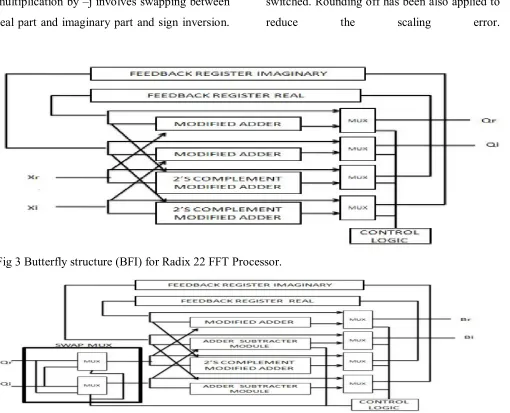
Fig. 3 shows the Butterfly I structure(BF I), the
inputs Xr, Xi of this butterfly comes from the
FFT input data and in the succeeding stages this
input comes from the previous component
which is the twiddle factor multiplier. The
output data Qr, Qi goes to the next stage which
is normally the Butterfly II. The control signal
(CNT1) has two options: when CNT1=0, the
multiplexers direct the input data to the
feedback registers until they are filled in the
initial N/2 cycles. The other option is
CNT1=1,in the next N/2 cycles, the
multiplexers select the output of the adders and
sub tractors which is implemented by 2’s
complement modified adder in the proposed
design. This is the butterfly output i.e. a 2-point
DFT computation with the incoming data and
the data stored in the feedback registers.
The butterfly outputs Q (n) and Q1 (n + N/2) are
computed according to the equations given in
eqn (5). Q (n) is sent to the next stage and Q1 (n
+ N/2) is sent back to the feedback registers to
be “multiplied” in the next N/2 cycles when the
first half of the next frame of time sequence is
loaded in. Operation of the second butterfly (BF
II) is similar to that of the first one (BF I),
except the “distance” of butterfly input sequence
are just N/4. After N-1 clock cycles, the result
of the complete DFT transform streams out to
transform can be computed continuously
without pausing due to the pipelined processing
of each stage. The input data Qr, Qi comes from
the previous component, Butterfly I. The output
data from the Butterfly II are Yr, Yi, as well as
the real and imaginary feedback signals.
Feedback signals are fed to the next component,
which is the twiddle factor multiplier. The
multiplication by –j involves swapping between
real part and imaginary part and sign inversion.
Swap-MUX efficiently handles the swapping
and the sign inversion is handled by switching
between the adding and the subtracting
operations performed by the adder/subtractor
module. The control logic is activated when
there is a need for multiplication by −j, therefore
the real and imaginary data will swap and the
adding and subtracting operations will be
switched. Rounding off has been also applied to
reduce the scaling error.
Fig 3 Butterfly structure (BFI) for Radix 22 FFT Processor.
4.
Experimental Work
An efficient 64 point Radix-2 2 FFT module
was designed using Vedic multipliers and
modified adder and simulated using VHDL.FFT
utilizing modified wallace multiplier and regular
carry select adder was also simulated to
compare the performances in terms of area and
speed. Both the designs were implemented
using the Sparten 3E and their synthesis reports
were analyzed. Fig 5 shows the simulation of
the test bench which was developed to test and
verify the 64 point FFT. The values were
verified with Matlab output. Fig 6&7 show the
simulation of the complex vedic multiplier and
the modified adders utilized in the proposed
processor. The 32 bit inputs are entered in both
cases and the product and sum is verified
respectively. The conclusion proves that our
proposed system is better in terms of area and
speed compared to the existing FFT processors.
FIGURE.5: simulation result of 128 point FFT
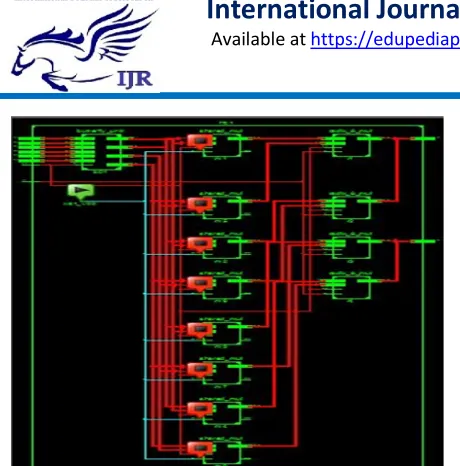
FIGURE 7: RTL schematic diagram of 128 point FFT.
5.
Conclusion
In this paper, Vedic FFT processor with Radix 2
FFT algorithm is designed and implemented
using Spartan 3E FPGA and is attractive to be
used in real-time systems .Implementation
results prove that the proposed FFT led to 26%
area reduction and 29% speed improvement
when compared with conventional FFT. This
design had a maximum clock frequency of
95.2MHz. Such a 64-point FFT implemented
using vedic concepts and modified adder was
found to have a good balance between
performance and hardware requirements and is
therefore most suitable for use in OFDM. The
results are a clear indication that the processing
time of the proposed FFT is below the OFDM
symbol period of 4µsec, which ensures an
appropriate operation for the communication
standard application requirements of mobile
WLAN(IEEE 802.11a), which uses OFDM
modulated wireless communication system.
6. References
[1] A.Satish ,N. Ravi , Dr.T.Jayachandra Prasad
and Dr.T.Subba Rao, “Design for Array
Multiplier Array Multiplier with Trade off in
Power andArea”, IJCSI International Journal of
Computer Science Issues, Vol. 8, Issue 3, May
2011.
[2] Anders Berkeman, Viktor Öwall, and Mats
Torkelson, “A Low Logic Depth Complex
Multiplier Using Distributed Arithmetic”, IEEE
Journalof Solid-State Circuits, Vol. 35, April
2000.
[3] Angel M. Burón, GustavoRuiz, Jesús García,
"FPGA realization of a split radix FFT
processor", Proc. SPIE 6590, VLSI Circuits and
[4] Bin Zhou, David Hwang and Yingning
Peng, “Pipeline FFT Architectures Optimized
for FPGAs”, International Journal of
ReconfigurableComputing Vol: 2, 2009.
[5] Earl E. Swartzlander and Ron S, “A
Reduced Complexity Wallace Multiplier
Reduction”, IEEE Transactions on computers,
Vol. 59, August2010.
[6] Digital Signal Processing: Principles,
Algorithms and Applications (3rd Edition) by
John G. Praxis and Dimities K Melonakos -
Prentice-Hall,Inc., - Oct 5, 1995.
[7] G.Abdelfadeel, Ahmed Saeed, M.Elbably,
M. I. Eladawy, “Efficient FPGA implementation
of FFT/IFFT Processor”, International Journal
ofcircuits Systems and Signal Processing, Issue
3 ,Volume 3,2009.
[8] G.Vaithiyanathan, K.Venkatesan,
S.Sivaramakrishnan, S.Siva and S. Jayakumar,
“Simulation and Implementation of vedic
multiplier usingvhdl code”, International
Journal of Scientific & Engineering Research
Volume 4, Issue 1, January-2013.
[9] Harish M Kittur and B. Ramkumar,
“Low-Power and Area-Efficient Carry Select
Adder”,IEEE Transactions on very large scale
integration(VLSI)systems, Vol. 20, No. 2,
February 2012.
[10] Hazem H. Refai, W. Justin Barnes, Nick
LaSorte , “The History of Orthogonal
Frequency Division Multiplexing”, 2008 IEEE.
[11] K.Harikrishna and T. Rama Rao, “FPGA
based FFT Algorithm Implementation in
WiMAX Communications System”, IEEE
March 2011
[12] S Sukhsawas, K Benkrid, “A High-level
Implementation of a High Performance Pipeline
FFT on Virtex-E FPGAs”, Proceedings of the
IEEEComp. Society Annual Symp. on VLSI
Emerging Trends in Systems Design
(ISVLSI’04). 0-7695-2097-9/2004.
[13] K. Harikrishna, T. Rama Rao and Vladimir
A. Labay, “A RADIX-22 Pipeline FFT for Ultra
Wide Band Technology”,
InternationalConference on Computer &
Network Technology (ICCNT), conference
proceedings published by World Scientific
Press, Singapore, India,Jul 24-28, 2009.
[14] Marti-Puig, Reig Bolano, “Radix-4 FFT
algorithms with ordered input and output data”,
International Conference on Digital
signalprocessing,2009.
[15] Mian Sijjad Minallah, Gulistan Raja, “Real
Time FFT Processor Emerging Technologies”,
Peshawar, Pakistan 13-14, Pages:
[16] S. He and M. Torkelson, “A new approach
to pipeline FFT processor”,10th Int. Parallel
Processing Symp. (IPPS’96), p. 766–770, 1996.
[17] Satyendra Sharma ,Unnati C Mehta, “VLSI
Implementation of 2048 Point FFT/IFFT for
Mobile Wi-MAX”, International Journal
ofAdvances in Electrical and
Electronics,Volume2,2011.
Author's profile
Miss.Sk.Asha Jasmine received her B.Tech degree from Khammam Institute of Technology and Sciences affiliated to JNTU, Hyderabad and pursuing M. Tech (VLSI) in Khammam
Institute of Technology and Sciences,
Khammam District, Telangana, India.Her area of interests includes VLSI System design, signal processing and communications.
Mr. R. SrinivasaRaois working as an Associate professor in the Department
of Electronics and
Communication Engineering at Khammam Institute of Technology and
Sciences, Khammam
District, Telangana, India. He has 11 years of teaching experience and a research scholar from Vignan University, Guntur and his current area of research interests are Signal Processing,