Abstract
WINDELL, DAVID THOMAS. The Effects of Multiple Presentation Formats on Subjective Mental Workload Rating Scale Techniques in Multimedia Educational Environments. (Under the direction of Dr. Eric Wiebe and Dr. Sharolyn Lane.)
The Effects of Multiple Presentation Formats on Subjective Mental Workload Rating Scale Techniques in Multimedia Educational Environments
by
David T. Windell
A thesis submitted to the Graduate Faculty of North Carolina State University
in partial fulfillment of the requirements for the Degree of
Master of Arts Psychology Raleigh, North Carolina
2006 Approved by:
_______________________________ _______________________________
Eric Wiebe, PhD. Sharolyn Lane, PhD.
Co-Chair of Advisory Committee Co-Chair of Advisory Committee
_______________________________ Barry Beith, PhD.
Biography
David Windell was born in Canton, Ohio to proud parents Thomas and Gayle
Windell. Raised in the neighboring town of Massillon, David lived his entire youth in the same loving home with his parents and two older sisters, Melissa and Laura. Surrounded by grandparents and extended family, David’s network of support as a child and
adolescence was both caring and accommodating.
As a teen, David held many odd jobs, but of them all he most enjoyed his days working at the local golf courses. Upon his high school graduation, David was able to attend undergraduate college at Miami University due in large part to a full tuition and housing scholarship given by the Western Golf Association Evans Scholars Foundation. David earned this scholarship both for his academic success and dedication to his work as a golf caddie.
Acknowledgements
Of the many individuals who have had an influence on my career, I would most like to thank my wife Lisa for all of the love and support she has given me. Her devotion, caring, and continual encouragement have allowed me to become the professional that I am.
Additionally, I would like to thank my parents and sisters for the support and
confidence they’ve given me. Many extended family and close friends have also been a large part of my ability to succeed in my research. I would like to specifically thank several
individuals including: Tammy, Larry, Jana, Krista, Tim, Josh, Chris, John, and Charlie. As a working student, I also owe a debt of gratitude to those who have aided in the development of my professional career. Special thanks to David, Tim, Dan, Nat and Roland from IBM Corporation as well as Barry, Marvin, Shanna, and many others either formerly or currently at HumanCentric.
Table of Contents
List of Figures... vi
List of Tables ... vii
Introduction... 1
Human Information Processing ... 4
Cognitive Load Theory... 6
Three Types of Load... 7
Controlling Extraneous Load... 10
Assessing Cognitive Load... 11
Summary... 15
The Current Research ... 16
Hypothesis... 20
Cognitive Load and Task Difficulty ... 20
Cognitive Load and Condition... 21
NASA-TLX Subscales... 21
Design ... 23
Independent variables ... 23
Level of extraneous load.... 23
Level of intrinsic load.... 24
Dependent variables... 25
Cognitive load level.... 25
Difference score.... 25
Method ... 27
Participants... 27
Apparatus ... 27
Procedure ... 28
Analysis... 29
Cognitive load and task difficulty... 29
Cognitive load and condition... 30
NASA-TLX Subscales.... 30
Results... 32
Cognitive Load and Task Difficulty ... 32
Cognitive Load and Condition... 41
NASA-TLX Subscales... 41
Discussion... 48
Cognitive Load and Task Difficulty ... 48
Cognitive Load and Condition... 49
NASA-TLX Subscales... 51
Practical Implications... 51
Limitations ... 53
Future Research ... 54
References... 56
Appendix B: NASA Task Load indeX (TLX)... 63
Appendix C: Informed Consent Form ... 66
Appendix D: Learning Module Pre-tests ... 68
Appendix E: Learning Module Post-tests... 74
Appendix F: Demographic Questionnaire ... 81
Appendix G: ANOVA Tables-Display of Within-Subjects Effects ... 83
Appendix H: Between Subjects Test Results... 90
List of Figures
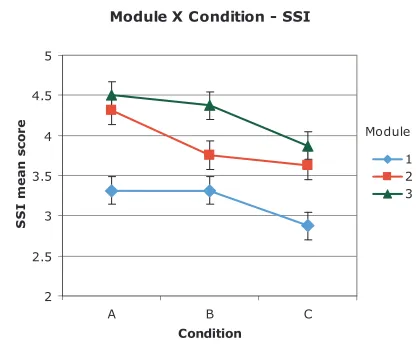
Figure 1. Module x Design Condition Results- Short Subjective Instrument ... 39
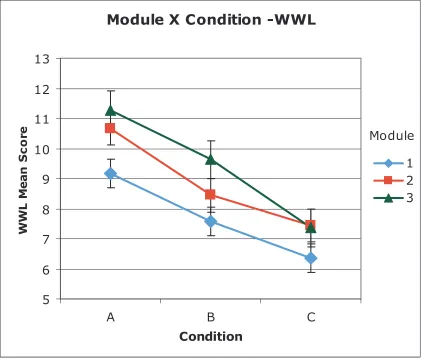
Figure 2. Module x Design Condition Results- Weighted Work Load ... 40
Figure 3. Module x Design Condition Results- NASA-TLX Frustration... 43
Figure 4. Module x Design Condition Results- NASA-TLX Effort... 44
Figure 5. Module x Design Condition Results- NASA-TLX Performance... 45
List of Tables
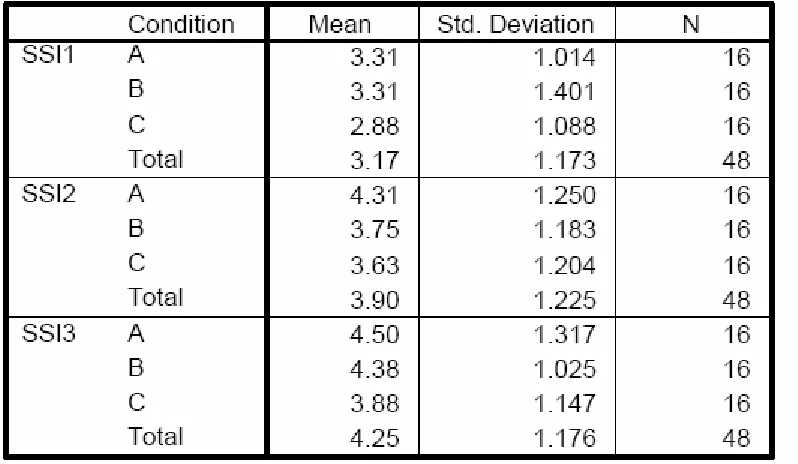
Table 1. Means and Standard Deviations of Short Subjective Instrument ... 33
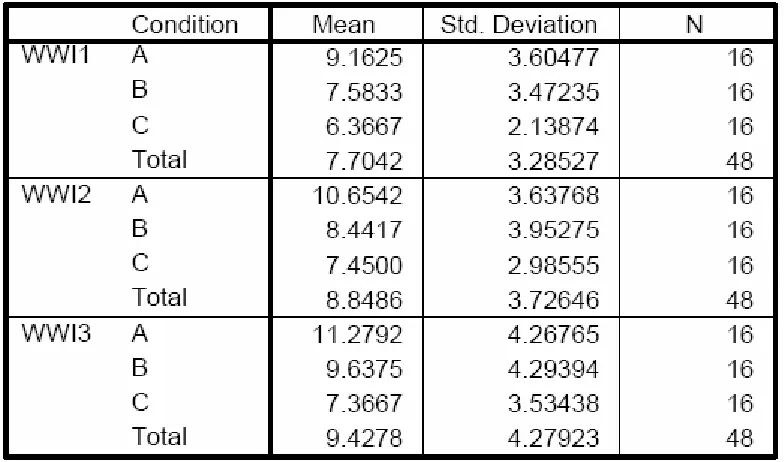
Table 2. Means and Standard Deviations of the NASA-TLX Weighted Work Load ... 34
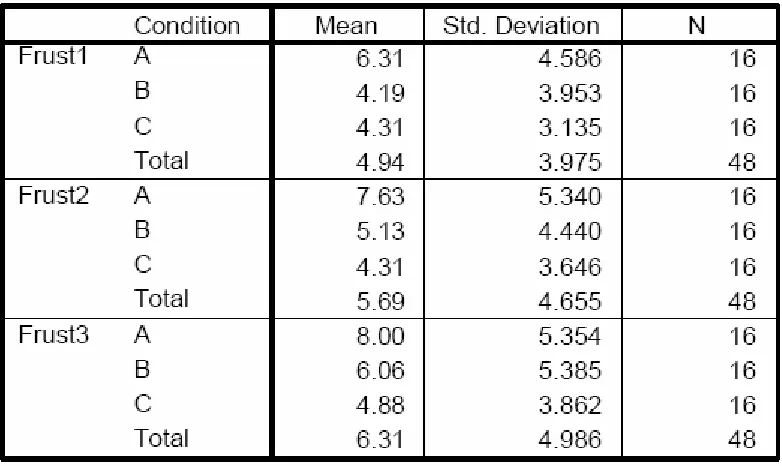
Table 3. Means and Standard Deviations of the NASA-TLX Frustration Subscale ... 35
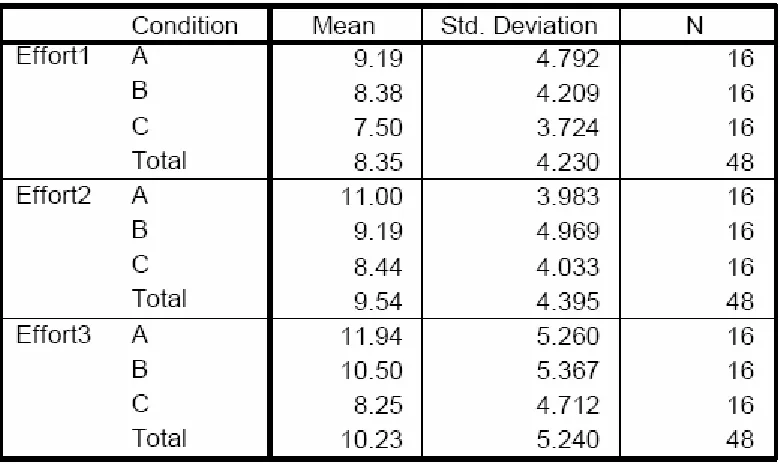
Table 4. Means and Standard Deviations of the NASA-TLX Effort Subscale ... 36
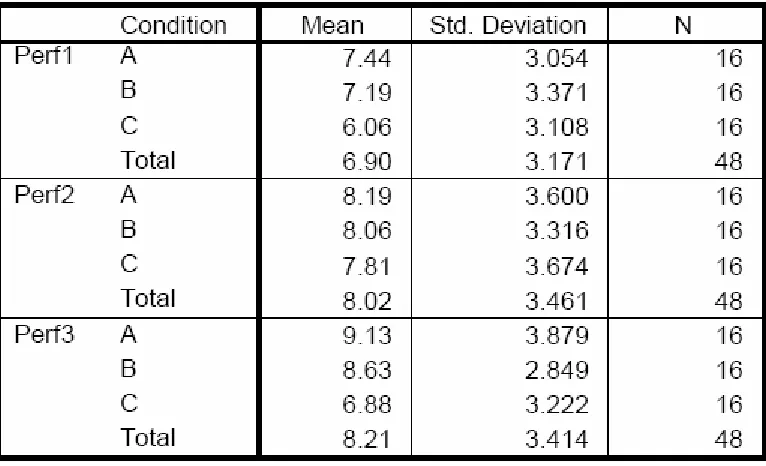
Table 5. Means and Standard Deviations of the NASA-TLX Performance Subscale... 37
Introduction
In recent years, distance education and the use of interactive, remote instructional material has proven integral in the education of millions of people worldwide. On-line instruction, as well as in class use of multimedia learning materials are no longer considered as last resorts to learning. In a period from 1997-98 to 2000-01 enrollments in distance education courses at postsecondary institutions nearly doubled from 1.7 million to 3.1 million, with this trend expected to continue. In the 2000-2001 academic year, 89 percent of public four-year institutions offered distance education courses and 90 percent public two-year institutions had such courses offered to students (Livingston & Wirt, 2004).
In addition to institutional distance education, multimedia presentation of materials to be learned is applicable in a number of other environments. Personal communication, consumer electronics, corporate presentations and home entertainment all stand to gain from research in the present domain. Research methodology and the identification of best practice will serve such industries whose goal is to present material to individuals by making effective use of technology.
complex visual representations of information in online instructional materials affordable and widespread.
Unfortunately for designers as well as for users of distance education, the
considerable amount of design alternatives can lead to the creation of ineffective instructional material. A major reason that leads to this ineffectiveness is that the use of multimedia
materials in distance education does not lead to a deep understanding of the material to be learned. In this context, a deep understanding of materials is intended to refer to the
comprehension and subsequent ability to integrate novel information in long term memory for recall and problem solving purposes (Mayer & Moreno, 2003). This deep understanding is the goal of not only distance education, but also a variety of other uses of multimedia information tutorials, including the on-line instruction for consumer products, tools and systems.
Achieving a deep understanding of materials is in part accomplished by processing and managing information in the cognitive system as efficiently as possible. Information becomes difficult to understand when the essential aspects of concepts are not easily held in working memory (Sweller, van Merriënboer, & Paas, 1998). Material that is available in working memory can be examined, manipulated, and rehearsed so that the learner may broaden their mental representation of concepts thus building their mental models, or schemas (Wickens & Hollands, 2000). The effective input and manipulation of information in working memory is the beginning of gaining a deep understanding of materials to be learned.
Merriënboer, 1994). As such, the amount of cognitive load, measured at a given time, is a way of assessing the level of information being manipulated in working memory. Effectively understanding the level of cognitive load or stress on working memory can be accomplished one of several ways, including subjective and objective techniques, to assess overall task performance or learning in the case of distance education.
For over two decades, cognitive load theory (CLT) has been used to identify techniques that aid in the presentation of information to be learned. Introducing sub-goals (Sweller & Levine, 1982), adding worked examples to learning materials (Paas, 1992), and information integration (Chandler & Sweller, 1992), are all educational techniques that have their roots in cognitive load research. In addition, the recognition of subgroups in working memory (Baddeley, 1992), has led researchers in CLT and experimental psychology to look to split modality as a means of effectively increasing working memory capacity. Research, such as that done by Mousavi, Low, and Sweller (1995), shows the working memory advantages of presenting information through multiple input channels.
The ultimate goal of such tools is to gauge whether specific multimedia material provides the optimum opportunity for learning in a particular learning context. There are many ways of operationally defining ‘optimal’ opportunity, and this work uses management of cognitive load as the means to optimization. Identifying the most appropriate, accessible and robust tool to measure cumulative cognitive load surely will allow for researchers and teaching professionals to drive their focus further, specifically in the area of cognitive load theory and more generally to other pressing topics regarding distance education.
Human Information Processing
Understanding how the individual processes information is an ongoing and important topic for both theoretical researchers and application specialists alike, for by understanding human information processing, one can gain understanding on why humans perform tasks as they do. These underlying processes guide knowledge acquisition, decision making, situation awareness, gross locomotion, and fine motor procedures (Wickens & Hollands, 2000).
Human information processing can be understood by a variety of representations, as research continues to conflict when discussing the roles of several core components. For the current research, human information processing will be investigated on the basis of the stage model, which also takes on a variety of forms (Ashcraft, 1998; Wickens & Hollands, 2000). An exact representation of the model, however, need not be specified for this study, so long as some basic components that are shared across most models and the interaction between them can be identified. Mayer (2001), Chapter 3 on cognitive basis of multimedia learning presents a very similar base model, as does Sweller et al. (1998).
processing system occurs via a number of channels, including vision, audition, olfaction, and proprioception. Working memory can be defined as being analogous to a mental workbench where information gained is rehearsed, transformed, and comprehended (Baddeley, 1986). This mental resource has a limited capacity. While working memory capacity is subject to individual differences, the number of mental stimuli that are able to be manipulated at a given time was first defined as seven, plus or minus two, for the majority of individuals (Miller, 1956). While this number has been debated and scrutinized across disciplines, it is still taught as a basis for research in many contexts. For decades, working memory models have focused on parsing this important component of human information processing into multiple components; including the phonological rehearsal loop and the visuo-spatial spatial sketchpad (Baddeley, 1986, 2002). Respectively, these areas of working memory deal primarily with information gained through distinct input channels (audition and vision), and as with working memory as a whole, each processing unit has a finite capacity.
The central executive, outlined in Baddeley’s work, acts as a supervisory agent, and controls the allocation of mental resources to components of working memory. As schematic representations of information are developed, information processing becomes a more automatic process and requires less supervisory control, and thus, fewer burdens are placed on the primary management agent, the central executive (Baddeley, Gathercole, & Papagno, 1998).
Wickens (2002) provides an overview of a long-evolving line of research into multiple modality processing. Research within the domains of aviation and driving
visual display (Parkes & Coleman, 1990). This advantage is likely due to the multiple
processing units described by Baddeley (1986) and later applied to the human factors field by Wickens (1991). The same research, though, warns about the inappropriate input of
information in the auditory channel. Long strings of auditory information can not only overload working memory, but cannot be as easily retrieved as visual information (Wickens, Goh, Helleberg, Horrey, & Talleur, 2003).
The research in multiple modality processing does not only address cognitive load, but also provides additional complexity in resource allocation by considering the distribution of attentional resources. Another potential drawback of presentation through the auditory channel is that discrete auditory information (short, intermittent signals) can draw attention and resources from processing vital information through the visual channel (Spence & Driver, 2000). In an instructional setting, such misappropriation of attention could distract the learner from vital information presented as text or in a diagram.
Cognitive Load Theory
As mentioned above, each component of working memory has a finite amount of resources. When such working memory components reach their capacity limits, cognitive overload occurs. Cognitive load theory uses this concept as a means of explaining elements of learner/instructional material interactions. Cognitive load theory guides the optimization of instructional approaches by identifying working memory systems that may vary in
successful retaining of information (Paas et al., 2003). Recent research has provided a
framework to identify different types of mental workload that contribute additively to overall cognitive load, which will in turn either aid or detract from the development of schemas.
CLT defines three subclasses of cognitive load that additively contribute to the
accumulated cognitive load, or that load which is the total amount of load experienced during a learning task. These three interact and fluctuate throughout the task, and at any instance will have a differing impact of the limited ability to manage overall load. The amount that any one type of load fluctuates would allow for the other two to rise or lower in their contributions to overall load, as more mental resources may be allocated to handle
management of such loads. The three types of load identified include intrinsic load, germane load, and extraneous load (Paas et al., 2003).
Three Types of Load
Intrinsic load is that effort that results from the individual and is largely defined by the individual’s past experience. Generically, if an individual is facing a complex and novel situation, intrinsic load will rise. Conversely, familiar situations encountered by experts will yield smaller levels of intrinsic load. In addition to past experience, intrinsic load may have a dependency on motivation. Just as in a novel situation, intrinsic load is likely to rise in circumstances where a learner is highly motivated (Paas et al., 2003).
can be understood and learned without dependence on anything outside of them (low element interactivity), complex grammatical interact (i.e. understanding sentences and paragraphs) not only depends on understanding multiple words, but the order (or interaction) of those words is of great importance. The latter represents a situation of high element interactivity.
Germane load, in novel and complex learning tasks, is necessary in the successful coding, retaining, and manipulation of information. Germane load is that load created in construction of schemas and mental models. Schemas categorize information in long term memory so that past experience is used to help understand novel situations, helping to reduce working memory load (Sweller et al., 1998). Such schemas and mental models facilitate learning by automating the input of new information to be learned. The effective automation of schemas is also a learned process, thus additionally contributing to germane load (Paas et al., 2003).
Extraneous load, or ineffective load, is that cognitive load which is not necessary for learning. Under the control of the designer, extraneous load seizes portions of the overall load capacity, which otherwise could be designated for germane load. In circumstances of poor design, increased amounts of extraneous load can lead to poor performance and lowered amounts of knowledge acquisition. When intrinsic and germane load are both low, the effects of high extraneous load may not be apparent because the overall load still doesn’t reach an individual’s maximum capacity. Only under generally high load conditions will the effects of extraneous load (either raising it or lowering it) be apparent (Sweller et al., 1998).
components of working memory, depending on the format of the media. Paivio’s Dual Channel Theory (Paivio, 1986) describes the value of using multiple channels to ease the mental burden on any one channel. The rise in extraneous load in a given channel may cause an overload in that particular channel. By shifting intrinsic or germane resources to another channel, the same level of extraneous load may not create an overload situation.
Mayer (2001) and Mayer & Moreno (2002) expanded on Paivio’s work on dual channel theory in a series of experiments focusing on which combinations of multimedia presentation should be used in conjunction with one another. In this series of studies, the researchers found that, in the absence of animation, learners transferred learning to problem solving more effectively when information is presented redundantly as text and narration. In contrast, when animation was present, learners were able to perform better when information was presented only by narration. This disparity shows that, in cases of increased demand on visual resources, presenting text directly into what Baddeley refers to as the phonological loop instead of routing it through the visual processing system, can reduce the overall load on the visual channel and allow for an increase in learning.
Controlling Extraneous Load
The overarching goal of designing instructional materials in terms of CLT is to avoid situations of cognitive overload. This however is not as simple as reducing overall load. It is important to reduce unnecessary load (extraneous), while preserving that load which is necessary for effective learning (germane load, and in most cases intrinsic load).
Intrinsic load is largely embedded in the learner and in many instructional settings the designer has limited ability to control individual differences. Therefore the goal of the
designer shifts to lowering extraneous load while maximizing germane load, and/or
distributing overall load via multiple channels while minimizing additional extraneous load. Optimized instructional designs serve both of these tenants.
With complex information that is likely to overload working memory, it is particularly advantageous to use multiple channels to gain a deeper understanding of
materials to be learned (Mousavi, Low, & Sweller, 1995). In a situation of mutually referring diagrams and text, it may be necessary to mentally integrate the two in order to understand either respectively. Such integration likely imposes a high level of extraneous load (Sweller, Chandler, Tierney, and Cooper, 1990). Shifting some intrinsic or germane load to another channel (i.e. providing narration), could ultimately lead to the utility of a greater amount of resources.
Assessing Cognitive Load
In an effort to understand the amount of mental workload imparted on learners,
researchers have developed and tested methods for assessing cognitive load across a variety of tasks and situations. Theory predicts what factors will contribute to each part of the load, but measures of load by and large only measure the composite of all three of these parts either directly, usually using self report, or indirectly using methods such as dual task
techniques or measures of learning outcomes. Intrinsic, extraneous, and germane load, which are sometimes difficult to distinguish post hoc, are taken as a whole by the overall
measurement.
Paas et al. (2003) give a good overview of assessment techniques used. Such techniques vary not only in efficacy, but also the time and resources necessary for proper application. Two primary methods, analytical and empirical, for measuring cognitive load have been utilized in past research of multimedia learning. Analytical methods usually include such techniques as collecting subjective expert opinions, performing task analysis and using mathematical models. Contrasting this, empirical methods look to collect data to measure mental effort by most often directly questioning the learner. Empirical methods include, but are not limited to; psychophysical measurements, secondary (dual task) techniques, performance measures, and rating scales (Paas et al., 2003).
and stress can vary between subjects. Bulky, and sometimes expensive, equipment must also be used in most psychophysical methods of measuring cognitive load although equipment is becoming less of an issue as advanced technologies allow for more affordable and less obtrusive monitoring devices.
Task performance gives researcher feedback on the state of the learner’s mental model and is an additional way to measure cognitive load. Task measurements typically fall within one of two categories; primary task measurement, or secondary task measures.
Primary task measurements are often not used in evaluating instructional design. The primary reason for this is that a given task can be accomplished with the same output or results
through a variety of methods, thus two different methods (different use of multimedia in a learning task, for example) can impose different amounts of cognitive load to the learner, but produce the same result (Sanders & McCormick, 1993).
Secondary task, or dual task, techniques are those which use performance on a secondary concurrent task to assess the amount of mental workload imparted by the primary task. Lower performance on a secondary task would indicate higher levels of mental
workload for the primary task. This technique is used across research domains, and Brünken, Plass, and Leutner (2003), Chandler and Sweller (1996), Marcus, Cooper, and Sweller
(1996), and Van Gerven, Paas, van Merriënboer, and Schmidt (2002) have all used secondary task performance as a measure of cognitive load imparted in a learning environment (Paas et al., 2003).
task, a secondary task must be input and manipulated by the same channel as the primary task (Sanders & McCormick, 1993). This is often difficult or impossible to accomplish if the primary task exhausts all resources in that channel.
Secondary task techniques may not be at all applicable in situations where cognitive resources, for whatever reason, are limited or when the primary task approaches cognitive overload. This problem can be further exacerbated in certain populations, such as the elderly, where even prior to the primary task, there is a more limited pool of cognitive abilities.
Rating Scales, although introspective, rely on the idea that people are able to give accurate ratings on mental burden. Prior research has shown that this assumption is a safe and reliable one in learning tasks(Gopher & Braune, 1984). Semantic differential scales present the individual with one or more dimensions, anchored at either end with an extreme
Another subjective rating method used to assess cognitive load is the NASA Task Load indeX (NASA-TLX). Since its creation in the 1980’s, this assessment technique has incorporated six different dimensions of workload measurement; mental demands, physical demands, time demands, frustration, effort, and own performance. Experimenters are given the ability to weight each dimension in order to get an overall workload measurement that is task specific. The NASA-TLX mental demands subscale is well recognized as a standard for measuring mental workload (Xie & Salvendy, 2000). Sohn and Jo (2003) provide a nice summary of traditional uses of the NASA Task Load Index:
The NASA-TLX is a subjective multi-dimensional workload technique. An overall workload rating is determined from a weighted combination of scores on the six dimensions. The weights are determined from a set of relevance ratings provided by the participants. Use of the TLX requires two steps. First, participants rate each task performed on each of the six subscales: Mental demand, Physical demand, Temporal demand, Performance, Effort, Frustration level. They are measured in scales of 0 to 100. Secondly, participants must perform 15 pair-wise comparisons of six workload scales. The number of times each scale is rated as contributing more to the workload of a task is used as the weight for that scale. Mean weighted workload of six
subscales was used as an overall workload rating.
evaluations. Studies such as Murata (2005) have shown that subjective mental workload ratings from the NASA-TLX closely mirror recorded EEG signals in matching tasks.
The above two cognitive load assessment methods of focus utilize the previously mentioned introspective rating scale technique. Each provides the practitioner with relatively easy means of assessing instructional material and has been validated as accurate in assessing cognitive load in a number of research studies. Moreover, past human factors research has demonstrated the usefulness of the NASA-TLX as an instrument for measuring cognitive load. However, this tool has not been widely explored in educational research.
Summary
Due to the growing use of multimedia presentation of instructional material, there is a need to identify methods of designing such material to optimize learning. Ways to design and assess such materials are possible by using cognitive load theory, that enhances traditional views of human information processing, as a vehicle.
Given the previously defined relationship between overall cognitive load (including its three subclasses) and learning, it can be seen that multiple methods for measuring load are available. CLT and human factors research identify several such methods. However, there is a need to further explore these measures in order to identify those which provide the most robust, useful, and externally valid measures of cognitive load.
The Current Research
The focus of this research is to aid practitioners in identifying how certain design variables interact and compare two tools that gauge cognitive load. This comparison serves to assist researchers and practitioners alike in selecting rapid assessment techniques most
appropriate to their interests. Allowing researchers and instructional designers the ability to have faith that load measurements are robust and can be translated across a variety of presentation techniques not only facilitates the development of multimedia learning environments, but aids in the ability to ask deeper questions concerning them.
The current study expands on body of knowledge in both human factors and multimedia educational research by directly comparing two methods of assessing mental workload across three levels of extraneous load and three levels of intrinsic load. By so doing, it is possible to attain better insight into how robust the previously utilized methods are across diverse learning contexts.
Participants in the study were randomly assigned to one of three experimental condition (A-C). Each condition presented participants with a series of short tutorials in an effort to teach concepts associated with the forces acting on parcels of air in the atmosphere. Conditions differed from each other in the amount of extraneous load presented to the learner. This extraneous load was increased, altering the method of presentation from sub-optimal—violating the recommended heuristics for distributing information load over time, space and modality—to optimal. A series of past experiments by Lowe, et.al outlined the appropriate presentation method for information for the current learning area, the
Lowe (2003), using materials pertaining to atmospheric forces, has outlined the advantages of using animations with high spatial contrast in the creation of accurate mental models. In this study, Lowe points out that such animated graphical displays, in which relevant information for learning is presented such that important aspects of the display have a high spatial contrast relative to their surroundings, tend to aid in the building of accurate mental representations among novices.
In addition to the manipulation of extraneous load, intrinsic load—as a reflection of element interactivity—is being manipulated in the current research by requiring the
integration of more information in successive learning modules. In each condition, students were presented with three learning modules (1-3), each of which required students to
consider additional forces acting on parcels of air. The additive nature of the forces results in the gross direction of motion and acceleration of air in the atmosphere. This interaction requires students to integrate information learned to accurately predict resulting geostrophic winds.
Cognitive load theory aims to guide the design and implementation of instructional material by providing a framework emphasizing the way in which the human processes and organizes information. In addition to accounting for the task and individual differences, cognitive load theory describes three types of load: intrinsic, germane, and extraneous, each of which has an effect on learning.
accurate in describing overall load, but fail to individualize levels of intrinsic, germane, and extraneous load, respectively.
This gap in assessment techniques requires designers of instructional material to take a post hoc approach at changes in the materials that should be made, due to the inability to define which type of load is creating excess levels for learners in situations of overload. If the level of extraneous load is sub-optimal, designers should focus its reduction by manipulating the format in which materials are presented. However, if germane or intrinsic load are the primary culprits of an overload of working memory, the amount of information, element interactivity, or instructional approach should be revisited for instructional materials to be optimally effective to the end user.
The current research uses two rating scale assessment techniques, the SSI and NASA-TLX, to assess levels of cognitive load. Where the SSI provides only a measure of overall load, the NASA-TLX measures workload based on a combination of measures as described above. If the NASA-TLX, with its robust measurement technique, is shown to be more sensitive to variations in load across multiple combinations of extraneous load and intrinsic load, then more research should be devoted to identifying ways to parse levels of the three types of cognitive load outlined in CLT with a single measure so that designers of
multimedia instructional materials can more readily identify how to make improvements in design.
Hypothesis Cognitive Load and Task Difficulty
Across Learning Modules 1-3, higher amounts of element interactivity were presented to learners. In association with this increase in intrinsic cognitive load, it is expected that overall cognitive load, as measured by both the SSI and the NASA-TLX weighted work load (WWL), will increase. Since Learning Modules was a within subjects independent variable in the study and nested in Design Condition, the expected overall increase of load will be significantly differentacross modules due to increasing levels of intrinsic load. Therefore, the hypothesis for cognitive load and task difficulty were as follows:
H1: SSIlearning module 1 < SSIlearning module 2 < SSIlearning module 3, and that
Cognitive Load and Condition
Extraneous load was manipulated in this study as an independent between subjects variable by assigning participants to one of three Design Conditions (A, B, or C). Non-optimal presentation methods in Design Conditions A and B are expected to contribute to an increase in overall cognitive load as measured by the SSI and WWL. It is not expected that the resulting increase in extraneous load from Design Conditions A and B will differ
significantly from each other but that both conditions will have significantlyhigher loadthan Design Condition C. This result will likely be magnified as maximum cognitive load is approached with higher levels of intrinsic load in Learning Modules 2 and 3. Hypothesis for cognitive load and condition can be stated as follows:
H1: SSIDesign Condition A > SSIDesign Condition C, and that
SSIDesign Condition B > SSIDesign Condition C, and that
WWLDesign Condition A > WWLDesign Condition C, and that
WWLDesign Condition B > WWLDesign Condition C
NASA-TLX Subscales
The NASA-TLX, with a multidimensional measure of load, is expected to show more sensitivity to changes in both intrinsic load (manipulated across Learning Modules) and extraneous load (manipulated across Design Conditions).Namely, it is expected that
modules 1 and 2 in subjective ratings for the performance and mental demand subscales. Therefore, hypothesis for NASA-TLX subscales can be stated as:
H1: FrustrationDesign Condition A, B > FrustrationDesign Condition C, and that
EffortDesign Condition A, B > EffortDesign Condition C
H2: Performancelearning module 3 > Performancelearning module 1, 2, and that
Design Independent variables
Level of extraneous load. The presentation method for the two conditions is as follows:
Design Condition A (sub-optimal) - learning materials presented with a combination of text, static graphical displays, and animated graphical displays. Text and graphics are displayed sequentially, with informational text being followed by graphical representations of material to be learned. Animation will only be utilized in instances where motion is necessary for learning.
In order to accurately understand the material presented in the text and subsequent diagram, the information from both must be taken as a whole. The spatial and temporal disconnect between the two requires a high level of mental integration, causing increased extraneous load (Sweller, van Merriënboer, Paas, 1998). This presentation technique requires learners to store information, displayed in textual format, in working memory until presented with the graphical representation. In such a scenario, working memory resources that are required for integrating information into the graphic are being utilized for both the storage of materials from the text displays as well as inferring motion from graphical icons.
Presenting narration and graphics in a serial fashion requires the learner to store audio information in working memory in order to integrate it with information presented by
graphical display. The act of holding over narrative information until presented with graphics violates heuristics proposed by recent research pertaining to optimum multimedia
presentation of learning materials.
Design Condition C - learning materials presented with a combination of narration with the same static and animated graphics as Design Conditions A-B. Audio narration will be presented simultaneously with graphics. As is the case in conditions A-B, animation will only be utilized in instances where motion is necessary for learning. The synchronous use of narration serves two purposes in the reduction of extraneous cognitive load.
First, by presenting information in a synchronized fashion, it does not require the learner to store information for extended periods in working memory in order to integrate narrative (or textual, as in condition A) information with graphical information. Second, presenting information directly into phonological working memory eases the burden placed on the visual channel in condition A.
Although the presentation technique used in condition C aims at aiding in the construction of schemas, the reduction in load comes in a reduction in extraneous, or
unnecessary, load. Since base learning material is the same as condition A, the same amount of schematic construction, or germane load, is similar in both experimental conditions.
an additional force acting on air parcels with each subsequent module, with module 1 beginning with a single force, pressure gradient. Each additional force added interacts with other forces introduced in earlier modules. The additive effect of all forces acting on a parcel of air ultimately defines the direction of motion and acceleration of the parcel. By definition, adding element interactivity (i.e., more information elements that need to be simultaneously considered) requires more mental manipulation of information and, therefore, more
allocation of resources via intrinsic load in order to accurately integrate information
presented. Prior to experimental testing, pilot testing will be conducted to insure appropriate levels of complexity and element interactivity across modules 1-3.
The three learning modules were reviewed by two experts in meteorology instruction for content accuracy and appropriate instructional difficulty for undergraduates. In addition, the modules were piloted with a small number of participants to assure that there is neither floor nor ceiling effects on the difference scores.
Dependent variables
Cognitive load level. The current study uses two introspective rating scale instruments to measure cognitive load: the 7-point Short Subjective Instrument (SSI) and the NASA Task Load Index (NASA-TLX). For the SSI, see Appendix A and for the NASA-TLX, see Appendix B.
Method Participants
Forty-eight students enrolled in Introductory Psychology participated in this study (equal numbers of males and females assigned to each Design Condition). Participants received partial credit toward course completion for participating. Students were screened prior to exposure to experimental conditions for past experience in meteorology and earth science. If students had taken any course which emphasized the learning material to be presented, they were given full credit and excused from the experiment. One third of the students who participated in the study (16) were randomly assigned to each design condition (A-C).
Apparatus
Procedure
Prior to entering the experiment, participants were randomly assigned to one of the three experimental conditions outlined above. Order of the cognitive load instruments was counterbalanced, with half of the learners in each condition filling out the Short Subjective Instrument followed by the NASA-TLX, and vice versa for the remaining participants. Gender was balanced across all Design Conditions.
Upon entering the lab, students were greeted and asked to fill out an informed consent form (See Appendix C). The experimenter then asked the students to take the Learning Module 1 pre-test. See Appendix D for all Learning Module pre-tests. Following this, students used Module 1 (low task difficulty).
At the completion of this module, students answered the post-test questions. See Appendix E for all Learning Module post-tests. Immediately following, participants filled out both the Short Subjective Instrument and the NASA-TLX. Students were then given a short (three minute) break to stretch or get a drink before repeating this process for learning
Modules 2 and 3 (medium and high task difficulty, respectively). After completion of the last dependent measure for Learning Module 3 (SSI or NASA-TLX), students completed a short background questionnaire to obtain demographic information (see Appendix F) and provide a short distracter before they completed the NASA-TLX pair wise comparison, which
immediately followed the background questionnaire.
Analysis
The current study is a 3x3 mixed method design with three levels of Design Conditions (A,B,C) between subjects and three levels of module difficulty within subjects (Learning Modules 1-3). Multiple dependent variables are being analyzed: SSI score, NASA-TLX weighted workload score, and its associated subscales (Frustration, Effort, Performance, and Mental Demands).
Prior to hypothesis testing, frequency testing will be conducted to ensure against missing data points. All data categories will also be tested for outliers. If either missing data or outliers are found, appropriate steps for data correction be made prior to hypothesis testing.
Cognitive load and task difficulty. A two-way mixed-model factorial analysis of variance (ANOVA) will be run for each dependent variable, SSI and WWL, across the independent variable factors of Design Condition (between-subjects independent variable) and Learning Module (within-subjects independent variable). Results will be plotted with Design Condition on the horizontal axis and SSI and WWL on the vertical, with Learning Modules as separate lines.
At the time of analysis, Mauchly's Test of Sphericity will be conducted and observed results will dictate appropriate whether corrections for non-sphericity will be needed when interpreting results.
Results from the mixed-model ANOVAs will be used to test the hypothesis that both the SSI and WWL increase significantly with successive Learning Modules (1-3). If
conducted to test for significance between individual levels of the significant variable without collapsing the Design Condition. If no significant interaction is found but a significant main effect is found, then the post hoc testing will be done with the Design Condition collapsed across levels.
Cognitive load and condition. Results from the above mixed-model ANOVAs will also be used to test the hypothesis that subjective cognitive load ratings for both SSI and WWL are significantly less for Design Condition C than those of Design Condition A and Design Condition B. If significant interaction is found between Design Condition and Learning Module and significant main effect for Learning Module is found, post hoc Bonofferi tests will be conducted to test for significance between individual levels of the significant variable without collapsing the Design Condition. If no significant interaction is found but a significant main effect is found, then the post hoc testing will be done with the Design Condition collapsed across levels.
NASA-TLX Subscales. A two-way mixed-model factorial analysis of variance
(ANOVA) will be run for each NASA-TLX subscale dependent variable, Frustration, Effort, Performance, and Mental Demands, across the independent variable factors of Design Condition (between-subjects independent variable) and Learning Module (within-subjects independent variable). Results will be plotted with Design Condition on the horizontal axis and NASA-TLX subscales on the vertical, with Learning Modules as separate lines.
between Design Condition and Learning Module and significant main effect for Learning Module is found, post hoc Bonofferi tests will be conducted to test for significance between individual levels of the significant variable without collapsing the Design Condition. If no significant interaction is found but a significant main effect is found, then the post hoc testing will be done with the Design Condition collapsed across levels.
Results from Performance and Mental Demands mixed-model ANOVAs will be used to test the hypothesis that both the subjective cognitive load ratings for NASA-TLX
Results
Participant self-report subjective rating scale measures for the NASA-TLX weighted work load and its associated subscales, as well as the Short Subjective Instrument measures are presented in this section. All statistical tests conducted in the accompanying analysis were performed using an alpha level of .05.
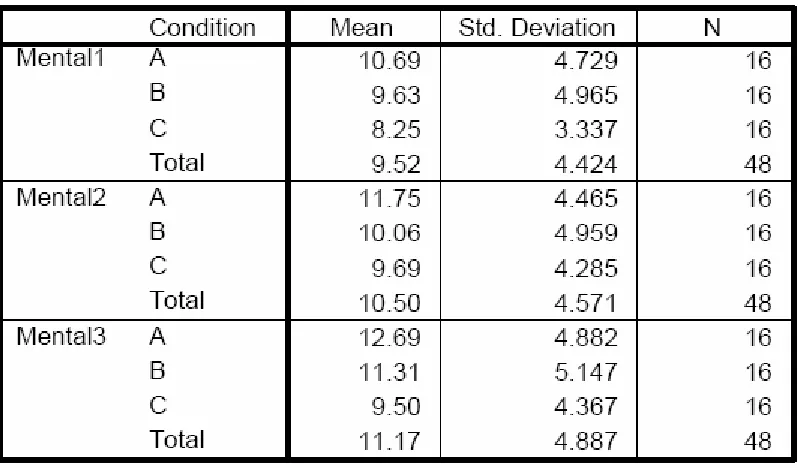
Prior to hypothesis testing, frequency testing was conducting to ensure against missing data points, with all data present. All data categories were also tested for outliers, with no extreme values found. Descriptive statistics were run for each dependent variable tested. Tables of means and standard deviations can be found in Tables 1 through 6. In addition, a one way ANOVA was run to look for differences of pre-test scores for Learning Modules 1-3 between Design Condition to insure that participant base knowledge was similar across the between subjects variable. No significance was found for this test (F(2, 141)=.361, p=.698).
Cognitive Load and Task Difficulty
Two-way repeated measures analyses of variances were conducted to investigate WWL and SSI differences in Design Condition and Learning Module categories among
Learning Modules 1 and 2 (p=.002), Learning Modules 2 and 3 (p=.022), and Learning Modules 1 and 3(p<.001). Figures 1 and 2 show results plotted with Design Condition on the horizontal axis and SSI and WWL on the vertical, with Learning Modules as separate lines. Tables 1-2 show means and standard deviations for the above variables.
Cognitive Load and Condition
Results from the above two-way repeated measures ANOVAs indicated a significant main effect for the between-subjects variable Design Condition on WWL (F(2,45)=3.980, p=.026), however, no significant main effect for Design Condition on SSI (F(2,45)=1.387, p=.260) was found. Results for between-subjects main effects are presented in Appendix H. As previously stated, interaction between factors was not significant for either SSI
(F(4,90)=.621, p=.649), or WWL(F(4,90)=..83, p=.510). Post hoc Bonferroni tests for the factor Design Condition were conducted to determine which groups were significantly
different for the dependent variable WWL. Results showed significance only between Design Conditions A and C for the dependent variable WWL (p=.022).
NASA-TLX Subscales
Two-way repeated measures analyses of variances were conducted to investigate NASA-TLX subscale differences in Design Condition and Learning Module categories among participants. ANOVAs were run for Frustration, Effort, Performance, and Mental Demands subscales. ANOVA results indicated significant main effects for Learning Module on Frustration (F(2,90)=4.301, p=.025) using Huynh-Feldt correction for non-sphericity, Learning Module on Effort (F(2,90)=7.659, p=.001), Learning Module on Performance (F(2,90)=7.343, p=.001) and for Learning Module on Mental Demands (F(2,90)=6.127, p=.003). See Appendix G for ANOVA tables. Interaction between factors was not significant for Frustration (F(4,90)=.526, p=.675), Effort (F(4,90)=.924, p=.454), Performance
Post hoc contrasts showed significance for the Frustration subscale between Learning Modules 2 and 3 (p=.046) and Learning Modules 1 and 3(p=.018) but not for Learning Modules 1 and 2 (p=.146). Post hoc contrasts showed significance for the Effort subscale between Learning Modules 1 and 2 (p=.015) and Learning Modules 1 and 3(p=.002) but not for Learning Modules 2 and 3 (p=.091). Also, post hoc contrasts showed significance for the Performance subscale between Learning Modules 1 and 2 (p=.006) and Learning Modules 1 and 3(p=.003) but not for Learning Modules 2 and 3 (p=.528), and for the Mental Demands subscale between Learning Modules 1 and 2 (p=.047) and Learning Modules 1 and 3(p=.005) but not for Learning Modules 2 and 3 (p=.078).
Discussion
The current study contributes to the body of research in both traditional information processing research as well as educational research addressing Cognitive Load Theory by not only validating previous presentation heuristics in those areas but also by introducing the use of an existing validation technique to Web and PC-based instructional materials. The results of this study, primarily the discriminatory power of the NASA-TLX WWL, serve to question the use of the SSI among educational researchers.
Results from this study indicate that the NASA-Task Load indeX, a weighted and multi-dimensional rating scale, is not only as effective as the more commonly used Short Subjective Instrument in measuring levels of intrinsic cognitive load, but differs from the SSI in its ability to measure the cognitive demands faced by learners in these widely used
instructional applications. This difference is likely due to the variation in response to TLX subscales across varying levels of extraneous load, as manipulated in this study by
presentation format.
Cognitive Load and Task Difficulty
Since learning materials required simultaneous processing of information to successfully predict outcomes, increases in measured load across Learning Modules are likely due to this increased amount of element interactivity, and previous research such as Sweller, et al. (1998) has shown similar results to the current study. Since both the NASA-TLX weighted work load and the Short Subjective Instrument showed a significant increase in cognitive demands faced by learns in successive Learning Modules when collapsed across Design Conditions, both can be said to be equally sensitive to these changes in intrinsic cognitive load faced by learners in the current research.
Cognitive Load and Condition
Aside from intrinsic cognitive load, the current study also manipulated extraneous cognitive load, or that load which is largely under the control of the instructional designer. Presentation format was manipulated between Design Conditions by taking into account specific advantages outlined in both Paivio’s Dual Channel Theory (Paivio, 1986) by
guidelines presented in Paas, et al.’s (2003) writings on information format and accessibility and Mayer & Moreno’s (2003) heuristics for reducing cognitive load through design.
By using narration to shift cognitive load from the visual channel into the separate audio input channel while still presenting it simultaneously with graphical representations of materials, the current research showed a significant decrease in overall cognitive load in Design Condition C when compared to Design Condition A, as reflected in post-hoc tests. This observed difference was only reflected in NASA-TLX weighted work load scores but was not seen in the results from the Short Subjective Instrument.
shown to be more sensitive to changes in amount of extraneous load and, therefore, changes in overall cognitive load than the short subjective instrument in the current research. The increased sensitivity for the WWL seen here was only present between two of the three presentation formats, indicating a lower perceived workload when graphic information was simultaneously overlaid with narration (Design Condition C) than the same information presented in text immediately followed by graphic information (Design Condition A). The use of multiple channels to convey information to working memory has been said to be more advantageous as information becomes more complex (Mousavi, et.al, 1995). An increase in discriminatory power between Design Conditions for both the WWL and the SSI may have been evident in conditions had learners been exposed to higher level of overall cognitive load.
NASA-TLX Subscales
The NASA-TLX weighted work load is an aggregate score based on ratings made by participants on six separate subscales, which are all weighted and contribute to the overall WWL. It was expected that for what appear to be the most relevant NASA-TLX subscales a priori, the un-weighted scores would show significant differences between Design
Conditions and Learning Modules. While the expected increase of the Performance and Mental Demands subscales between Learning Modules was significant, there was no significant difference seen between Design Conditions for any of the subscales tested, including the subscales of Frustration and Effort, which were predicted to be significantly lower for Design Condition C.
This lack of significance between Design Conditions for the NASA-TLX subscales that were deemed most relevant to the task in the current study, when combined with the significance that was found with the WWL between Design Conditions A and C indicate that other explanations for the increased sensitivity of the TLX are due to alternative
characteristics of the multi-dimensional scale. It is expected that the increased sensitivity could have been caused not by differences between the individual subscales between Design Conditions, but by the cumulative effect that all six NASA-TLX subscales have on the overall WWL.
Practical Implications
Given current technology, developers of distance education materials are faced with a myriad of choices when deciding on a presentation format of materials to be learned.
virtual environments and high fidelity computed generated graphics. Past research in both education and the fields of human factors and cognitive psychology has shown that the choice that is made between presentation of materials is not a trivial one, and can have a direct impact on the effectiveness of multimedia education and training.
Findings from the current research indicate that the NASA-TLX can provide
developers of distance education materials with a more robust and sensitive technique for the measurement of extraneous cognitive load. This ability of allows both researchers and practitioners to evaluate multiple presentation formats of learning materials side by side and choose the best format for a given topic based on NASA-TLX weighted work load scores.
The reduction of extraneous load allows for increased amounts of germane load, which is necessary for successful coding and retaining of information, and intrinsic load, which is that load that is inherent in the materials to be learned. By the reduction of extraneous load and the subsequent increase in both germane and intrinsic load, learning through distance education can become more efficient.
The current study also presents findings regarding the temporal presentation of narration in distance education that could be used during the development of learning materials. Results indicate that not only is the use of multiple channels to input information important, but that the temporal aspect of that input should be carefully considered. Design Condition C, with the synchronous presentation of narration and graphics showed a
Anecdotally, a common misconception among research and practitioners alike is that the NASA-TLX is time consuming and results are difficult to interpret. Differences between the two assessment techniques are not trivial (1 question SSI versus 6 question NASA-TLX along with pair-wise comparisons), but should be noted that all participants in the current study completed three distinct learning modules as well as the multidimensional NASA-TLX, including the associated paired comparison, and the Short Subjective Instrument in less than 1 hour of participation. Additionally, simple spreadsheets were used to record the results from the NASA-TLX, and the researcher, by using simple formulas, needed little time to calculate the NASA-TLX weighted work load index.
Limitations
Several limitations of the current study must be recognized in order to appropriately interpret results presented. First, by utilizing a university subject pool, the mean age of participants was skewed towards late adolescents (M = 19.91, SD = 4.36), with only four participants over the age of 21. Additionally, as university students, exposure to Web-based course material may impact performance across all conditions presented in this research. Ultimately, for industry or academic applications, subjects polled for future research should adequately reflect the focus population for the individual study.
modules are self-paced, wherein the learner is given the right to navigate as (s)he sees fit. Self-paced instructional material leads to a personalization of materials to individual learning styles and could thus increase overall performance. Contrasting this, self-paced designs also allow for a student to hurriedly navigate through materials if individually motivated to do so (Slyhkuis, Wiebe, & Annetta, 2005). This discrepancy is the driving reason behind the use of timed slides in this study.
In addition to being self-paced, Web or PC-based instructional materials also often allow learners to self-navigate through screens. Again, for experimental control, students in the current study were instructed to go through slides serially and not to backtrack to previous slides. Future research should carefully consider these aspects when choosing between timed and self-paced tutorials and serial presentation versus self-navigation of learning materials.
While some pre-test screening was completed prior to participation in the study to ensure against previous course exposure to the learning materials, there was no measure taken to ensure either visual acuity or hearing ability among participants. Although participants were encouraged to adjust sound levels to appropriate volumes in narration condition, all participants viewed images and text with equal display characteristics.
Individual differences in these areas may have had a small effect on results, although random assignment of participants across Design Conditions likely addressed this concern.
Future Research
studies can utilize the current theoretical foundation to answer questions such as how the current research extends to topics less visually intensive, what factors of the NASA-TLX specifically contribute to the results indicated in the current study, and how do the two
assessment techniques differ when sample populations consist of diverse age groups, cohorts, and individuals who may differ in learning style.
References
Ashcraft, M. H. (1998). Fundamentals in cognition. New York: Longman. Baddeley, A. D. (1986). Working Memory. Oxford, England: Clarendon. Baddeley, A. D. (1992). Working memory. Science, 255, 556-559.
Baddeley, A. D. (2002). Is working memory still working?. European Psychologist, 7(2), 85 97.
Baddeley, A. D., Gathercole, S., & Papagno, C. (1998). The phonological loop as a language learning device. Psychological Review, 105(1), 158-173.
Brünken, R., Plass, J. L., & Leutner, D. (2003). Direct measurement of cognitive load in multimedia learning. Educational Psychologist, 38, 53-61.
Chandler, P., & Sweller, J. (1992). The split-attention effect as a factor in the design of instruction. British Journal of Educational Psychology, 62, 233-246.
Chandler, P., & Sweller, J. (1996). Cognitive load while learning to use a computer program. Applied Cognitive Psychology, 10, 151-170.
Gopher, D., & Braune, R. (1984). On the psychophysics of workload: Why bother with subjective measures? Human Factors, 26, 519-532.
Gimino, A. (2002, April). Students’ investment of mental effort. Paper presented at the annual meeting of the American Educational Research Association, New Orleans, LA. Kalyuga, S., Chandler, P., & Sweller, J. (2000). Incorporating learner experience into the
design of multimedia instruction. Journal of Educational Psychology, 92, 126-136. Lee, Y. H., & Liu, B. S., (2003). Inflight workload assessment: Comparison of subjective and
physiological measurements. Aviation Space and Environmental Medicine, 74(10), 1078-1084.
Livingston, A., & Wirt, J. (2004). The condition of education 2004 in brief (ERIC No. ED483067; NCES 2004-076). Washington, DC: National Center for Education Statistics.
Lowe, R. K. (2003). Animation and learning: Selective processing of information in dynamic graphics. Learning and Instruction 13, 157-176.
Mayer, R. E., & Moreno, R. (2002). Verbal redundancy in multimedia learning: When reading helps listening. Journal of Educational Psychology, 92, 117-125. Mayer, R. E., & Moreno, R. (2003). Nine ways to reduce cognitive load in multimedia
learning. Educational Psychologist, 38(1), 43-52.
Marcus, N., Cooper, M., & Sweller, J. (1996). Understanding instructions. Journal of Educational Psychology, 88, 49-63.
Miller, G. A. (1956). The magical number seven, plus or minus two: Some limits on our capacity for processing information. The Psychological Review, 63, 81-97. Moray, N. (1982). Subjective mental workload. Human Factors, 24(1), 25-40.
Moroney, W. F., Biers, D. W., Eggemeier, F. T. and Mitchell, J. A. (1992). A Comparison of two scoring procedures with the NASA TASK LOAD INDEX in a simulated flight task, Proceedings of the IEEE NAECON 1992 National Aerospace and Electronics Conference, New York, 2, 734-740
Mousavi, S. Y., Low, R., & Sweller, J. (1995). Reducing cognitive load by mixing
auditory and visual presentation modes. Journal of Educational Psychology, 87, 319-334.
Murata, A. (2005). An attempt to evaluate mental workload using wavelet transform of EEG. Human Factors, 47, 498-508.
Paas, F. G. W. C. (1992). Training strategies for attaining transfer of problem-solving skill in statistics: A cognitive load approach. Journal of Educational Psychology, 84, 429 434.
Paas, F. G. W. C., Tuovinen, J. E., Tabbers, H., & Van Gervin, P. W. M. (2003). Cognitive load measurement as a means to advance cognitive load theory. Educational
Psychologist, 38(1), 63-71.
Paas, F. G. W. C., & van Merriënboer, J. J. G. (1994). Variability of worked examples and transfer of geometrical problem solving skills: A cognitive load approach. Journal of Educational Psychology, 86, 122-133.
Paas, F., van Merriënboer, J. J. G., & Adam, J. J. (1994). Measurement of cognitive load in instructional research. Perceptual and Motor Skills, 79, 419-430.
Parkes, A. M., & Coleman, N. (1990). Route guidance systems: A comparison of methods of presenting directional information to the driver. In E. J. Lovesey (Ed.), Contemporary ergonomics (pp. 480-485). London: Taylor & Francis
Sohn, S. Y., & Jo, Y. K. (2003). A study on the student pilot's mental workload due to personality types of both instructor and student. Ergonomics, 46(15), 1566-1577. Spence, C., & Driver, J. (2000). Audiovisual links in attention: Implications for interface
design. In D. Harris (Ed.), Engineering psychology and cognitive ergonomics (n.p.). Aldershot, UK: Ashgate.
Sweller, J., & Levine, M. (1982). Effects of goal specificity on means-ends analysis and learning. Journal of Experimental Psychology: Learning, Memory, and Cognition, 8, 463- 474.
Sanders, M. S., & McCormick, E. J. (1993). Human factors in engineering design (7thed.)
New York: McGraw-Hill.
Slyhkuis, D. A., Wiebe, E. N., & Annetta, L. A. (2005). Eye tracking students' use of science related PowerPoint presentations. Proceedings of the Annual meeting of the National Association for Research inScience Teaching, Columbia, MO: NARST.
, Columbia, MO: NARST
Sweller, J., Chandler, P., Tierney, P., & Cooper, M. (1990). Cognitive load and selective attention as factors in the structuring of technical material. Journal of Experimental Psychology: General, 199, 176-193.
Sweller, J., van Merriënboer, J. J. G., & Paas, F. G. W. C. (1998). Cognitive architecture and instructional design. Educational Psychology Review, 10(3), 251-296.
Svensson E., AngelborgThanderz M., Sjoberg L., & Olsson, S. (1997). Information complexity- Mental workload and performance in combat aircraft. Ergonomics, 40(3), 362-380.
Van Gerven, P. W. M., Paas, F., van Merriënboer, J. J. G., & Schmidt, H. G. (2002).
Modality and variability as factors in training the elderly. Manuscript submitted for publication.
Vekiri, I. (2002). What is the value of graphical displays in learning?. Educational Psychology Review, 14(3), 261-312.
Wickens, C. D. (1991). Processing resources and attention. In D. Damos (Ed.), Multiple task performance (pp. 3-34). London: Taylor & Francis.
Wickens, C. D., Goh, J., Helleberg, J., Horrey, W. J., & Talleur, D. A. (2003). Attentional models of multitask pilot performance using advanced display technology. Human Factors, 45(3), 360-380.
Wickens, C. D., & Hollands, J. G. (2000). Engineering psychology and human performance (3rd ed.). Upper Saddle River, NJ: Prentice Hall.
Appendix A: Short Subjective Instrument (SSI)
Short Subjective Instrument
Circle the number that best describes your experience today
How difficult was it for you to understand this learning module and correctly answer the questions that followed?
Extremely Easy Extremely Difficult
Appendix B: NASA Task Load indeX (TLX)
NASA- Task Load indeX
Instructions- Select the member of each pair that provided the most significant source of work to you in today’s tasks (circle your answer)
Physical Demand or Mental Demand
Temporal Demand or Mental Demand
Performance or Mental Demand
Frustration or Mental Demand
Effort or Mental Demand
Temporal Demand or Physical Demand
Performance or Physical Demand
Frustration or Physical Demand
Effort or Physical Demand
Temporal Demand or Performance
Temporal Demand or Frustration
Temporal Demand or Effort
Performance or Frustration
Performance or Effort
Appendix C: Informed Consent Form