Copyright to IJIRSET www.ijirset.com 218
A Novel Approach for Recognizing Facial
Structures Using Extreme Learning Machine
Algorithm
S.Sanjula1, C. Gowrishankar2
1
PG Scholar (Applied Electronics), Department of Electrical and Electronics Engineering, KSR College of Engineering (Autonomous), Tiruchengode, TamilNadu, India
2
Associate Professor, Department of Electrical and Electronics Engineering, KSR College of Engineering (Autonomous), Tiruchengode, TamilNadu, India
ABSTRACT: A facial recognition system is a computer application that deals with identification or verification of a person from digital image. To eliminate the error condition, the application of face recognition system is widely used. The altering facial appearance is one of the main challenging problems faced in face recognition algorithms. The proposed system consists of three stages namely; face detection, feature extraction and classification providing face recognition. Initially, the face is detected from the input image and the architectural features are extracted from the face detected image. Using classifier, the original image and morphed images is classified in reference with the features extracted from the detected face image. Finally, the system performs the retrieval of the original face from the morphed face. The proposed extreme learning machine algorithm yields high accuracy in face recognition technique as compared to the other algorithms. The proposed algorithm yields proper high detection and recognition accuracy as compared to different existing face algorithms.
KEYWORDS: Face detection, Extracting facial features, Face recognition, Extreme learning machine algorithm, Face image.
I. INTRODUCTION
Biometrics is being used increasingly now a day as a reliable method of providing valid recognition over traditional methods such as authentication, passwords and so on. Biometric security relies on identifying people based on certain specific biological characteristics such as face, fingerprints, iris, retina, persons signature that change less frequently over a period of time.
Plastic surgery procedures provide a skilled and permanent way to enhance the facial appearance by correcting feature abnormality and treating facial skin to get a younger look. Apart from beauty reasons, plastic surgery procedures are favourable for patients suffering from several kinds of disorders caused due to excessive structural growth of facial features or skin tissues. Plastic surgery procedures modify the facial features and skin texture thereby providing a makeover in the appearance of face. With reduction in cost and time required for these procedures, the fame of plastic surgery is increasing. Even the general tolerability in the society encourages individuals to undergo plastic surgery for cosmetic reasons.
Copyright to IJIRSET www.ijirset.com 219
aging and disguise. Singh et al. [2] analyzed various types of local and global plastic surgery procedures and their effect on different face recognition algorithms. They have practically shown that the non-linear variations induced by surgical procedures are difficult to address with current algorithm of face recognition. De Marsico et al. [3] developed an approach to integrate information derived from local regions to match pre- and post-surgery face images. Aggarwal et al. [4] proposed sparse representation approach on local facial fragments to match surgically altered face images.
Though recent results suggest that the algorithms are improving towards addressing the deal with, there is a significant scope for further improvement. This research presents an extreme learning machine based algorithm for recognizing altered face images due to plastic surgery procedures. Further, two feature extractors, Extended Uniform Circular Local Binary Pattern (EUCLBP) [5] and Scale Invariant Feature Transform (SIFT) [6], are used for extracting discriminating information from face granules. Finally, different responses are integrated using an extreme learning machine approach for improved accuracy. The performance result of the proposed algorithm is compared with another face recognition system for matching surgically altered face images against large scale gallery.
II. RELATED WORK
Sang -11 choi et al (2010) proposed a pixel selection method in face images based on discriminant features for recognition of face images. By analyzing face recognition the relationship between the pixels in a face image and features are extracted from face images, pixels that contain a large amount of discriminant information are selected, while pixels with less discriminant information are discarded. The proposed method is, the pixels based on the discriminant information in face recognition, instead of selecting relevant preceding regions. Comparative experiments are achieved using the CMU-PIE, FERET, and Yale B is various databases. The investigational results show complexity in the pixel range especially under illumination deviation.
Byeong Hwan Jeon (2011) proposed a model-based technique clustering algorithm for locating frontal views of human faces with in-plane rotation in difficult scenes, which can explain the random shape of the distributions efficiently in a feature space. An optimization method is employed for decide on representative face and non face models from the sample images. Image invariance assets on human faces and Hausdorff distance are used for finding the orientation of a candidate of face, and the Euclidean distance are stabilize correlation coefficient are used for the matching measures between characters. Three different types of feature spaces are used for the matching; binary image, gray level image, and frequency in order. Binary comparison is used for the minimization of the processing time in detecting candidate faces and their orientations in a scene, while the correlation measures of gray level images and frequency domain features obtained by Discrete Cosine Transform are used for the authentication. Experimental results proved that the proposed technique of face detection method features gives very low detection ratio compared to the other features.
Hyun – chul choi et al (2012) proposed a fast face detection technique which can find exact face regions in both gray and color static images using the Bayesian discriminating feature and the particle attractive genetic algorithm. In Bayesian discriminant characteristic method, face and non face probability can be calculated with probabilistic models of the face and non face feature vectors which consists of vertical, horizontal histograms, and 1D wavelets of the image inside the applicant window. These probabilities are representation as Gaussian distribution and can be used to distinguish face regions from non face regions. The main constraint with this method is that improper face candidate regions occur in detection.
III SYSTEM DETAILS
The system includes preliminary step is face detection and then recognition is done.
A. Face Detection
Copyright to IJIRSET www.ijirset.com 220
Figure 1: Face Detection Technique
Face detection is a computer tools that determines the position and amount of size of human faces in subjective digital images in Figure 1. It detects facial characteristics and ignores everything else, such as house, foliage and human bodies. Face detection performance is known to be highly influenced by variations and illuminations.
B. Process in Face Detection
Many algorithms implement the face-detection task as a binary pattern classification task. That is, the contented of a given image is changed into trained classifier or extracts the facial feature, after which a trained the classifier faces decides whether that particular part of the region of the image is face or non face. Frequently, a window-sliding method is in work. That is, the ELM classifier is used to categorize usually square or rectangular the portions of an image, at all locations and scales, as moreover faces or non-faces.
A face characters can contain the appearance, shape, and action of faces. There is some figure of faces is recognizable ones are oval, diamond, in a circle, rectangle, feeling, and triangle. Movement include, but not partial to, blinking, raised eyebrows, flared nostrils, wrinkled brow, and open lips. The face shapes will not be proficient to distinguish any person making any expression, it is very difficult to find other algorithms but the ELM method does result in a high accuracy.
C. Overview of Face Recognition
Facial recognition is an important field within biometrics and computer vision. With biometrics, we can more reliably identifying or verify a person. In this context, facial recognition can provide a user friendly way of recognizing a person by capturing the persons face using a camera attached to computer systems. Facial recognition is achieved by means of comparing the rigid features of face, which do not change over a period of time.
It can also achieved by comparing other parameters such as skin tone against the information that are stored in facial database. Many different algorithms are already available to perform this comparison. However, the basic steps remain the same.
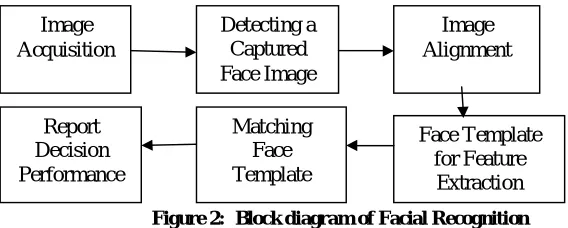
Figure 2: Block diagram of Facial Recognition
As Figure 2 facial recognition steps are described as separate components of a typical Face Recognition System.
Acquire involves capturing the image containing the face. In case of 2D face recognition, a digital camera is needed. For 3D face recognition, an additional digital camera is needed.
Detect involves identifying the face in the captured image and demarcating it from the image background. Image
Acquisition
Report Decision Performance
Matching Face Template
Face Template for Feature
Extraction Image Alignment Detecting a
Copyright to IJIRSET www.ijirset.com 221
Align is the face may not be perpendicular to the camera and hence the alignment needs to be determined and compensated to before recognition.
Extract involves a process of measuring various facial features and creating a facial template, face print for the purpose of matching and identification.
Match involves the process of matching the facial template with the records in the facial database. Similar often involves a scoring method are obtained by running the corresponding algorithms on the facial data. The high scores indicate a higher probability of match being accurate.
Report may involve returning one or more facial matches depending on the usage scenario. Matches can be returned based on the score and user preferences.
D. Feature Extraction and Recognition
Once the face image has been normalized, the features can be extracted and detection of the face and then recognize the face images by using proposed algorithm. In feature extraction, a mathematical representation called a biometric template or biometric referenceis engender, which is accumulate in the database manage initial recognition step.
Proposed algorithms of face recognition can be varied in different way to transfer a face image into simple mathematical equation and then perform the task in recognition. Then process of recognition and the maximum recognition features can be extracted and can template matched can be matched individually and can be processed. Then it cannot be processed in other algorithm but able to proper recognition rate in proposed method
Issues in the different face templates cannot be individually performed and then it should be proper biometric templates should be generated. The process of feature extraction and recognition proposed algorithm can be detected and provides exact recognition rate. The recognition of simple face regions can be extracted due to different approaches and the proposed method can be proper rate and it can be achieved proper detection rate. In the process of face detection more difficulties are occurred to overcome the problem of proposed method.
IV EXTREME LEARNING MACHINE
Learning time is an important factor while designing any computational intelligent algorithms used for classifications, medication, manage etc. Recently, Extreme Learning Machine has been proposed, which significantly decrease the quantity of time needed to train a Neural Network. It has been extensively used for many applications. This paper proposed ELM and its applications is described.When the input weights and the hidden layer biases are randomly assigned, SLFNs (single-hidden layer feed-forward neural networks) can be simply considered as a linear system and the output weights (linking the hidden layer to the output layer) can be computed through simple generalized inverse operation. Based on this idea, this paper proposes a simple learning algorithm for SLFNs called extreme learning machine. Different from traditional learning algorithms the extreme learning algorithm not only provides the smaller training error but also the better performance.
The input weights and hidden layer biases of SLFNs can be randomly assigned if the activation functions in the hidden layer are infinitely differentiable. Subsequent to the input weights and the hidden layer biases are chosen arbitrarily, SLFNs can be simply measured as a linear system and the output weights of SLFNs can be analytically determined through simple generalized inverse operation of the hidden layer output matrices.
Based on this concept, this paper proposes a simple learning algorithm for SLFNs called extreme learning machine (ELM) whose learning speed can be thousands of times faster than traditional other learning algorithms like local binary pattern, local ternary pattern, main element analysis, k nearest algorithm, linear discriminant algorithm while obtaining better generalization performance.
Different from established learning algorithms the proposed learning algorithm not only tends to reach the smallest training error but also the smallest norm of weights.
ELM was initially proposed for pattern single hidden layer feed forward neural networks and has recently been extended to kernel learning as well:
ELM provides a united learning platform with widespread type of feature mappings and can be applied in regression and multi-class classification applications directly.
From the optimization technique point of view ELM has milder optimization constraints compared to SVM, LS-SVM and so on.
Copyright to IJIRSET www.ijirset.com 222 In theory evaluate to ELM, SVM, LBP, LTP, LDA, KNN can be achieved different explanation and achieve the
more computation difficulties. The fundamental nature of ELM is that
1.Hidden layer of ELM should not be iteratively tuned.
2.According to feed forward neural network theory both the training error and the norm of weights need to be minimized.
3.The hidden layer feature mapping need to satisfy the universal approximation condition.
ELM is efficient for batch mode learning, sequential learning, incremental learning.ELM provides a unified learning model for regression, binary/multi-class classification.ELM works with different hidden nodes including kernels.ELM always provides better generalization performance than other techniques using equation 1.
Two-Step learning model
1.Initialization phase: where batch ELM is used to initialize the learning system.
2.Sequential learning phase: where recursive least square (RLS) method is adopted to update the learning system sequentially.
A. Implementation in Extreme Learning Machine Algorithm (ELM):
Given a training set of patterns of input are , activation function g(x), and hidden node features N.
Step 1: Randomly assign input weight i and bias i, i= 1,...,N. Step 2: calculate the hidden layer output matrix H.
Step 3: compute the output weight||β||
||β|| (1)
Where T= [T1,....,TN]
The advantages of extreme learning machine algorithm are needs less training time compared to popular Local Binary Pattern (LBP) and other algorithm. The prediction performance of ELM is usually a little better than LBP and close to SVM in many applications.Nonlinear activation function still can work in ELM.
V RESULTS AND DISCUSSION
The simulation tool used for processing input face images is MATLAB version 8.1. Image processing toolbox is utilized for the purpose of simulating the input face images which are in JPEG (Joint Photography Expert Group) digital format.
Camera used to capture the input images is NIKON COOLPIXS3200 with 16 megapixels resolution, 6X optical zoom CCD sensor and images displayed on 27 inch LCD. The resolution of these images is 4608 x 3456.
In Figure 2 represents the Input face images is given to the MATLAB tool. Totally 100 input images is given and are detect the each 100 face. In Figure 4 (a) represents input face image is given to matlab version 8.1 and output presents is shown in Figure 4 (c). In Figure 4 (b) shows detecting the face image in ELM algorithm. In Figure 4 shows process over in face detection. After detecting our face extracts some of the features to recognize the face image. After that we can proceed the original or as well as fake image. In existing algorithms detected our face is not clearly and having some drawbacks in feature extraction to overcome this we have to use proposed extreme learning machine algorithm.
Copyright to IJIRSET www.ijirset.com 223
(a) Input Face Image (b) Output of PCA Algorithm (c) Output of LBP Algorithm
(d)
Output of LDA Algorithm (e) Output of LTP Algorithm (f) Output of proposed Algorithm
Figure 2: Output of different algorithms in face detection
Figure 2 (d) represents the output of LDA algorithm, In this algorithm, faces in the feature space is treated as a only high-dimensional vector space, it is the disadvantage on using LDA algorithm, and also the threshold value is not selected properly for considering the original as well as fake image.it is also another disadvantage on using LDA algorithm for face detection. Figure 2 (e) represents the output of LTP algorithm, it is the extension of LBP algorithm, it is also having similiar disadvantages present in LBP algorithm. This algorithm didn’t consider about any extra presence of added objects in the face.So this algorithm also not a efficient one to detect face clearly.
Figure 2 (f) , it represents the output of ELM algorithm, it considers even the non-linear regions in the face and it also detect and retrieve the regressive face. ELM algorithm needs less training time compared to popular LBP and other algorithms. The prediction performance of ELM is usually a little better than LBP and close to SVM in many applications. So from the comparison with other algorithms it is clearly proved that the ELM algorithm is very efficient in face detection method and also recognize images.
Copyright to IJIRSET www.ijirset.com 224
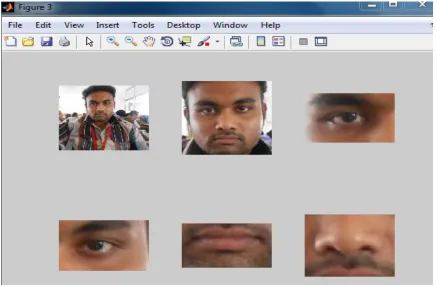
Figure 3: Architecture Feature of Face Image
Table 1: Performance measures of face images using different algorithm
The classification results of different image datasets for the proposed method using ELM are furnished in Table 1. The parameters sensitivity, specificity are calculated using Equation 2 and 3.
SPECIFICITY= (2)
SENSITIVITY= (3)
Algorithm Total
Images
True Positive
True Negative
False Positive
False Negative
Sensitivity (%)
Specificity (%)
Accuracy (%)
LBP 100 20 24 30 26 56 51 47.8
LTP 100 36 38 14 12 72 70 77
KNN 100 36 20 14 30 65 63 76.4
PCA 100 45 47 5 3 85 82 88
LDA 100 28 32 22 18 78 71 66.7
Copyright to IJIRSET www.ijirset.com 225
ACCURACY= (4)
In Equation 4 represents accuracy by considering TP is number of true positive, TN is number of true negative, FN is number of false negative, FP is number of true positive. The sensitivity and specificity analysis of each algorithm are listed in Table 1. The accuracy of different existing algorithms is low compared to proposed method. The simulated output of the system with various algorithms such as Local Binary Pattern, Local Ternary Pattern, Linear Discriminant Analysis, Principal Component Analysis, K Nearest Neighbour and Extreme Learning machine is listed in the Table 1 and analysis of the output of different algorithms is listed in Table 1.
In order to evaluate the potential advantages of the proposed method, the overall performance measures are calculated for various datasets and the results are given in Table 1. The performance of the proposed system in original and fake images is also tested by considering different images using Extreme Learning Machine. The accuracy of all face recognition is listed in above Table 1. The face retrieved image for computation speed is high and also accuracy is low in existing algorithm. So, a new technique of recognizing face images using extreme learning machine (ELM) is proposed in order to achieve high accuracy and with high computational speed.
VI CONCLUSION
This project provides for comparative study of various existing face recognition systems to detect the face images. The result shows that the accuracy of the existing methods is very low. The various existing algorithms in face recognition are compared and are found to provide low sensitivity and low specificity of face images. The simulation has been done for various face recognition systems that use local binary pattern, local ternary pattern, principle component analysis, linear discriminant analysis and K nearest neighbour algorithms but proposed algorithm accuracy is high compare to other algorithms and retrieving original from morphed face images is also high.
VII FUTURE WORK
For the future work in face recognition method by using an effective analysis, the more number of features are extracted in face images and also analysis of various resolutions in different image formats.
REFERENCES
[1]“American society for aesthetic plastic surgery 2010 statistics”, http://www.surgery.org/media/statistics, 2010.
[2]R. Singh, M. Vatsa, H.S. Bhatt, S. Bharadwaj, A. Noore, and S.S. Nooreyezdan, “Plastic surgery: A new dimension to face recognition”, IEEE Transactions on Information Forensics and Security, vol. 5, no. 3, pp. 441–448, 2010.
[3]M. De Marsico, M. Nappi, D. Riccio, and H. Wechsler, “Robust face recognition after plastic surgery using local region analysis”, in Proceedings of International Conference on Image Analysis and Recognition, 2011, vol. 6754, pp. 191–200.
[4]G. Aggarwal, S. Biswas, P.J. Flynn, and K.W. Bowyer, “A sparse representation approach to face matching across plastic surgery”, in Proceedings of Workshop on the Applications of Computer Vision, 2012, pp. 1–7.
[5] H.S. Bhatt, S. Bharadwaj, R. Singh, and M. Vatsa, “On matching sketches with digital face images”, in Proceedings of International Conference on Biometrics: Theory Applications and Systems, 2010, pp. 1–7.
[6] D.G. Lowe, “Distinctive image features from scale-invariant keypoints”, International Journal of Computer Vision, vol. 60, no. 2, pp. 91–110, 2004.
[7] H.S. Bhatt, S. Bharadwaj, R. Singh,and M. Vatsa are with the Indraprastha Institute of Information Technology (IIIT) Delhi, India.
[8] U.Park, R.R. Jillela, A.Ross, and A.K. Jain, “Pericular bio-metrices in the visible spectrum”, IEEE Transactions on Information Forensics and Security, Vol.6, No.1, 2011 pp.96-106.
[9]A.Pentland, B,Moghaddam, and T.Starner, “View-based and modular eigenspaces for face recognition”, IEEE Transactions on Computer Society Conference on Computer Vision and Pattern Recognition,1994 pp. 84–91.
[10]P.J.Phillips, H.Moon, S.A.Rizvi, and P.J.Rauss, “The FERET evaluation methodology for face recognition algorithms”, IEEE Transactions on Pattern Analysis and Machine Intelligence, 2000 ,Vol. 22, No. 10, pp. 1090–1104.
[11]C.Shan, S.Gong, and P.W.McOwan, “Robust Facial Expression Recognition Using Local Binary Patterns”, IEEE International Conference on Image Processing, 2005, pp. 914-917.