ISSN(Online): 2319-8753 ISSN (Print): 2347-6710
I
nternational
J
ournal of
I
nnovative
R
esearch in
S
cience,
E
ngineering and
T
echnology
(An ISO 3297: 2007 Certified Organization)
Website: www.ijirset.com
Vol. 6, Issue 6, June 2017
A Survey On: Cluster Based Routing
Protocols in Wireless Sensor Network
Sunil Kumar Patel 1, Dr. Ravi Kant Kapoor 2
P.G. Scholar, Department of Computer Engineering and Applications, NITTTR, Bhopal, MP, India1
Associate Professor, Department of Computer Engineering and Applications, NITTTR, Bhopal, MP, India 2
ABSTRACT: This paper opinion the mechanisms by which sensors collects information from the physical world and converts it into the electronic alerts that are utilized in today’s facts and control systems. In this paper, several fundamental key aspects of cluster based routing protocol are investigated. This paper review a variety of cluster based routing protocols used in wireless sensor networks. It summarizes types of cluster based routing protocols now a day used or being developed in remote sensing. It is expected that new types of cluster based routing protocol will be developed in future.
KEYWORDS:Text Wireless Sensor Networks, clustering protocols, WSN.
I. INTRODUCTION
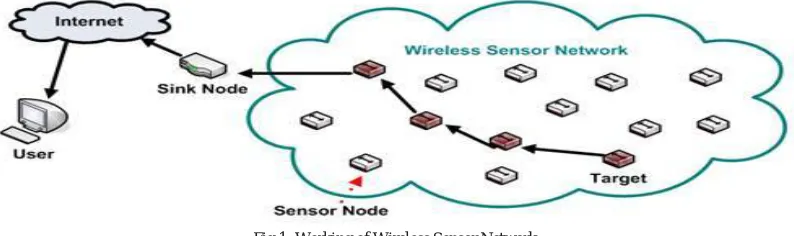
A wireless sensor network is a collection of large number of sensor nodes and at least one base station. The sensor node is an autonomous small device that consists of mainly four units that are sensing, processing, communication, and power supply. These sensors are used to collect the information from the environment and pass it on to the base station [1]. A base station provides a connection to the wired world where the collected data is processed, analysed and presented to useful applications. Thus by implanting processing and communication inside the physical world, wireless sensor network (WSN) can be utilized as a device to scaffold genuine and virtual environment. A typical WSN deployed to collect data about an environment is shown in Fig 1. The major components of this network are sensor nodes, a base station and a sensor field.
Fig 1: Working of Wireless Sensor Network
ISSN(Online): 2319-8753 ISSN (Print): 2347-6710
I
nternational
J
ournal of
I
nnovative
R
esearch in
S
cience,
E
ngineering and
T
echnology
(An ISO 3297: 2007 Certified Organization)
Website: www.ijirset.com
Vol. 6, Issue 6, June 2017
Some of the main features of wireless sensor networks are scalability, self-organization, self-healing, dense deployment, resource constrained, self configurable, application specific and data centric, low complexity, low cost and small size of nodes.
Scalability: The term scalability refers to the ability of a network to grow in terms of the number of nodes, without generating excessive overhead.
Self-organization: Self-organizing networks allow a new node to automatically join the network without the need for manual intervention.
Self-Healing: Self-Healing networks allow nodes to configure their link association and find alternatives pathways around failed or powered-downs nodes.
Dense node deployment: Sensor nodes are usually densely deployed in the field of interest.
Battery-powered sensor nodes: Sensor nodes are usually powered by the battery. In most situations, they are deployed in a harsh or hostile environment, where it is very difficult or even impossible to change or recharge the batteries.
Resource Constrained: Sensor nodes are highly deficient in energy, computation and storage capacities.
Self-Configurable: Sensor networks are usually deployed without careful planning and engineering. Once deployed, sensor nodes have to autonomously configure themselves into a communication network.
Application specific: Sensor networks are application specific. A network is usually designed and deployed for a specific application. The design requirements of a network change with its application.
Unreliable Sensor Nodes: Sensor nodes usually deployed in harsh or hostile environment and operate without attendance. They are prone to physical damages or failures.
Frequent Topology Change: Topology of these networks change frequently due to node failure, physical damage, nodes addition, energy depletion or channel fading.
No Global Identification: Due to large number of sensor nodes. It is usually not possible to build a global addressing scheme for the sensor networks because it would introduce a high network overhead for the maintenance of unique identification.
Many to one traffic pattern: In most of the applications of sensor networks, the data sensed by sensor nodes flow from multiple source sensor nodes to a particular sink node or base-station, exhibiting a many tone traffic pattern.
Low Cost: Even though there are many micro sensors replacing each macro sensor, due to reduced size, reliability and accuracy constraints on micro-sensor nodes, these nodes are much cheaper than their macro-sensor counterparts. Therefore, micro-sensor systems are less expensive than macro-sensor systems.
II. RELATEDWORK
The cluster based routing is energy efficient method in which nodes those having high energies are arbitrarily selected for processing and sending data while nodes having low energies are used for sensing and sending information to the cluster heads(CHs) [5]. This property of cluster based routing contributes to the scalability, lifetime maximization, and energy minimization. The cluster-based routing protocols play a pivotal role in achieving application specific goals.
The popular cluster based routing protocols are LEACH, HEED, TEEN, APTEEN, PEGASIS, LEACH-VF, EECS, CCS, and TSC.
ISSN(Online): 2319-8753 ISSN (Print): 2347-6710
I
nternational
J
ournal of
I
nnovative
R
esearch in
S
cience,
E
ngineering and
T
echnology
(An ISO 3297: 2007 Certified Organization)
Website: www.ijirset.com
Vol. 6, Issue 6, June 2017
distance to neighbours) are only used as secondary parameters to break a tie between candidate cluster heads, as a metric for cluster selection to achieve load balancing [10]. Advantage of the Hybrid Energy Efficient Distributed protocol is that it provides the cluster stability of the network is high. But the scalability, energy efficiency, load balancing, algorithm complexity of wireless sensor networks and delivery delay of the message is medium.
Threshold-Sensitive Energy Efficient Sensor Network (TEEN): The principle protocol created for responsive systems is TEEN (Threshold sensitive Energy Efficient sensor Network protocol). TEEN depends on group based various levelled approach and uses information-driven strategy. TEEN is occasion driven, a receptive protocol which is most appropriate for time basic application [12]. It transmits information in hard threshold and soft threshold values as it uses the information driven methodology in which information is essential and asked for in view of quality worth. The use of this protocol, for example, intrusion detection, explosion detection and so on. In TEEN protocol cluster head development procedure depends on LEACH (Low Energy Adaptive Clustering in Hierarchy). In TEEN protocol the energy efficiency and load balancing of the network are very good but the scalability of the network is low.
Adaptive Threshold-sensitive Energy Efficient Sensor Network Protocol (APTEEN): APTEEN is an extension to TEEN and its aims at both transmitting periodic data and reacting to time critical events. The structural design of APTEEN is similar to TEEN. In APTEEN firstly the cluster are formed by base station, now the cluster heads broadcast the attributes, the transmission schedule, count time and the threshold values to all nodes. All the nodes sense the environment continuously, if sensed value is equal to or beyond HT then transmission is permitted. If a node does not send data for a time interval equal to the CT, it must sense and transmit the data again. Cluster heads achieve data aggregation in APTEEN in order to save energy [7]. APTEEN protocol provides the better cluster stability of network but scalability and energy efficiency is not good. It’s another benefit is that it has small delivery time of message between source to destination.
Power-Efficient Gathering In Sensor Information Systems (PEGASIS): An improved protocol called PEGASIS (Power-Efficient Gathering in Sensor Information Systems), which is near optimal for this data gathering application in sensor networks. The idea in PEGASIS is to form a chain among the sensor nodes so that each node will receive from and transmit to a close neighbour [11]. Gathered data moves from node to node, get fused, and eventually a designated node to the Base Station. Nodes take turns transmitting to the BS so that the average energy spent by each node per round is reduced. One of benefit of this protocol is that it has better energy efficiency but scalability and cluster stability is very low.
Energy Efficient Clustering Scheme (EECS): EECS (Energy Efficient Clustering Scheme) is suitable for periodic data gathering applications. It is an extension of LEACH and differs from LEACH in the cluster set-up stage. The main idea of EECS is to elect cluster heads with more residual energy. EECS divides the network into cluster and uses direct single-hop communication between the cluster head and base station [9]. EECS creates uniform cluster heads across the network. This protocol has moderate cluster stability, energy efficiency, load balancing and delivery delay. The scalability of network is low and complexity of the algorithm is very high.
ISSN(Online): 2319-8753 ISSN (Print): 2347-6710
I
nternational
J
ournal of
I
nnovative
R
esearch in
S
cience,
E
ngineering and
T
echnology
(An ISO 3297: 2007 Certified Organization)
Website: www.ijirset.com
Vol. 6, Issue 6, June 2017
III. CLASSIFICATIONOFROUTINGPROTOCOLSINWSN
In WSNs, the routing protocols are broadly classified into four categories, i.e., location-based, QoS-aware, data-centric and cluster-based hierarchical protocols [6].
Location based routing protocols: Location-based routing protocols require the location information of nodes to establish network communication. Location information enables the nodes to calculate the distance between them which in turn estimates their energy consumption. In the absence of a global addressing scheme, location information is utilized for energy-efficient data routing in these protocols. If the region of interest is known, using the particular location of the nodes, queries are directly transmitted to the region for data collection. Therefore, not only the energy consumption is minimized but the number of transmissions is also reduced significantly. Most of the location-based routing protocols were primarily designed for ad hoc networks and are suitable for static WSNs as well. However, these protocols are not suitable for those applications where mobile nodes are required.
QoS-aware routing protocols: QoS-aware routing protocols consider the end-to-end delay requirements among sensor nodes while establishing the paths for traffic flow. All the nodes are assumed to have the same reporting rate, i.e., the number of packets transmitted per unit time is similar for all nodes. As a result, these protocols may not work efficiently for heterogeneous sensor nodes. Also, some of them rely on traffic arrival time and adjustment of packet service rate which may increase energy consumption due to the delay associated with the processing of packets.
Data-centric routing protocols: In data-centric routing protocols, the base station transmits queries to sensor nodes in certain geographical regions and waits for their responses. The Query is a programming logic which has its own particular syntax and contains the specifications and requirements for data collection. Query-based data collection requires an attribute-based naming, i.e., the properties and features of data to be collected are specified. The use of queries significantly reduces the redundancy in captured data. Data-centric routing forms a single-tier network which can overload a gateway node within a dense deployment. Overloading a gateway node increases latency, deterioration in QoS and loss of critical events. Moreover, single-gateway architecture is not scalable and may not be suitable for a large scale WSN.
Cluster-based hierarchical routing protocols: To address these deficiencies, cluster-based hierarchical routing protocols were developed. These protocols partition a network into small clusters and nominate one node in each cluster as a cluster head to collect data from member nodes. The role of a cluster head changes in each round and the nodes take turn to become cluster heads for a uniform distribution of energy load. Among all the routing protocols, cluster-based hierarchical protocols are highly efficient in terms of data aggregation, energy consumption, collision avoidance, load balancing, and fault-tolerance and network lifetime. Unlike other protocols, a single cluster head node collects data from multiple nodes in order to eliminate redundancy in the gathered data. Data aggregation reduces the energy consumption of a network because the duplicate packets are eliminated. Each cluster head aggregates data within its cluster and transmits to a base station using a single-hop communication link. However, aggregating the data of member nodes is a resource-intensive operation. Therefore, the nodes take turn to become cluster heads in different rounds to balance the resource consumption. In other routing protocols, the data is aggregated by each node on its way toward a base station. As a result, the higher delay is incurred by the time the data reach a base station.
IV. CLUSTERINGOBJECTIVEANDADVANTAGES
ISSN(Online): 2319-8753 ISSN (Print): 2347-6710
I
nternational
J
ournal of
I
nnovative
R
esearch in
S
cience,
E
ngineering and
T
echnology
(An ISO 3297: 2007 Certified Organization)
Website: www.ijirset.com
Vol. 6, Issue 6, June 2017
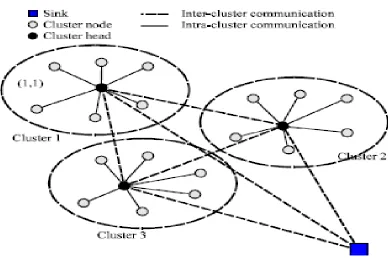
Fig 2: Clustering of Wireless Sensor Networks
Each cluster head allocates Time Division Multiple Access (TDMA) slots to member nodes within its cluster. The member nodes remain in sleep mode and periodically wake up to transmit their data to a cluster head using their allocated slots. The use of TDMA slots ensures that there is either minimal or no collision among the data packets of member nodes. Moreover, cluster heads are located at a distance far apart from each other which ensure that their transmissions have minimal chances of collision.
In contrast to flat routing schemes, cluster-based routing scheme is having the variety of advantages. Therefore, we summarize the advantages and objectives [9] of WSN clustering schemes are as follows:
More Scalability: Cluster-based routing scheme is more scalable as compare to flat topology. It is very easy to manage the events in the network.
Data Aggregation/Fusion: Data aggregation is the most popular method in which each cluster head perform the data aggregation, and sends it to the BS. It saves a significant amount of energy.
More Robustness: Cluster-based routing schemes should be dealt with any network changes, unpredictable failure, node mobility etc. Routing schemes only have to do with these changes within the individual cluster, in such a way robustness is achieved in the entire network.
Collision Avoidance: Sensor network is divided into clusters and communications among nodes involve two modes i.e. intra-cluster and inter-cluster, for the purpose of data gathering and data transmissions respectively.
ISSN(Online): 2319-8753 ISSN (Print): 2347-6710
I
nternational
J
ournal of
I
nnovative
R
esearch in
S
cience,
E
ngineering and
T
echnology
(An ISO 3297: 2007 Certified Organization)
Website: www.ijirset.com
Vol. 6, Issue 6, June 2017
V. COMPARISIONOFCLUSTERBASEDROUTINGSCHEMES
Table1. Summarizes the comparison between cluster-based routing schemes on the basis of scalability, cluster stability, energy efficiency, load balancing, algorithm complexity and delivery delay [4]. LEACH, TEEN, APTEEN and PEGASIS have similar features and fixed architecture in some extent [3].
Table1. Comparison of different Cluster-based Routing Schemes
VI. RESEARCHCHALLENGES
Power: Energy of sensor is always been a challenge for WSNs designs. One of the ways to enhance the network lifetime is to design the energy efficient algorithms and hardware that uses power cleverly.
Hardware Cost: Minimizing the cost of wireless sensor is one of the most important challenges. Currently available sensors nodes are mostly prototypes of respect to these objectives. Low cost of sensor nodes may be available in recent and future progress in the fields of MEMS.
Security: Security is one of the most important challenges in WSNs. Large numbers of the attacks that are performed on WSN that place the false information by compromised nodes within the networks [1]. This is also a challenge to development of security scheme for the wireless sensor network related to constrained environment.
System Architecture: Research area of wireless sensor network is going on around the world but still there is a problem that there is no universal network architecture for the wireless sensor.
Real World Protocols: Protocols required to be developed for real world problems allowing the theoretical concepts and synthesizing original solutions into a complete system wide protocol for real world application.
Analytical and Practical Results: Now days, very few analytical results exists for WSNs. All new applications only get confidence when it is tested & analysed practically and results are compared with existing schemes.
VII. CONCLUSION
This paper has presented some of the traditional cluster based energy efficient routing protocols of wireless sensor networks and highlighted their clustering methods and their performance in terms of energy efficiency. A comparison has been done among these protocols and result is listed in the table 1.
ISSN(Online): 2319-8753 ISSN (Print): 2347-6710
I
nternational
J
ournal of
I
nnovative
R
esearch in
S
cience,
E
ngineering and
T
echnology
(An ISO 3297: 2007 Certified Organization)
Website: www.ijirset.com
Vol. 6, Issue 6, June 2017
routing protocols. Many of these protocols have been developed in the past few years but still improvements are required in routing protocols in terms of quality of service parameters.
REFERENCES
[1] S. Sharma and P. Mittal, "Wireless Sensor Networks: Architecture, Protocols", International Journal of Advanced Research in Computer Science and Software Engineering, vol. 3, no. 1, pp. 2277–128, 2013.
[2] L. Yadav and C. Sunitha, "Low Energy Adaptive Clustering Hierarchy in Wireless Sensor Network ( LEACH )", International Journal of Computer Science and Information Technologies, vol. 5, no. 3, pp. 4661–4664, 2014.
[3] S. Dehghani, M. Pourzaferani, and B. Barekatain, "Comparison on energy-efficient cluster based routing algorithms in wireless sensor network", The Third Information Systems International Conference, vol. 72, pp. 535–542, 2015.
[4] C. Technology, A. Gupta, and A. Nayyar, "A Comprehensive Review of Cluster-Based Energy Efficient Routing Protocols in Wireless Sensor Networks", International Journal of Research in Computer and
Communication Technology, vol. 3, no. 1, pp. 104–110, 2014.
[5] A. Bharti, "Comparative Study of Clustering based Routing Protocols for Wireless Sensor Network", International Journal of Computer Applications, vol. 66, no. 21, pp. 9–12, 2013.
[6] A. Joshi, S. Mehta, and A. Khachane, "Performance Analysis and Comparison of Cluster Based Routing Protocol in in WSN", International Journal of Computer Science Trends and Technology, vol. 5, no. 2, pp. 277–290, 2017.
[7] R. Vadlamudi and S. Umar," A Review of APTEEN in Wireless Sensor Networks", IJCSET, vol. 3, no. 9, pp. 306–311, 2013.
[8] S. R. Biradar, "Energy Efficient Concentric Clustering Protocol for Wireless Sensor Network", International Journal for Research in Applied Science & Engineering Technology, vol. 3, no. Vii, pp. 246–253, 2015.
[9] M. K. Aulakh, "Analysis of Energy Efficient Clustering Scheme in Wireless Sensor Network", International Journal of Innovative Research in Electrical, Electronics, Instrumentation and Control Engineering, vol. 5, no. 3, pp. 19–22, 2017.
[10] H. Kour and A. K. Sharma, "Hybrid Energy Efficient Distributed Protocol for Heterogeneous Wireless Sensor Network", International Journal of Computer Applications, vol. 4, no. 6, pp. 4–8, 2010.
[11] C. S. Raghavendra, S. Lindsey, S. Lindsey, and C. S. Raghavendra, "PEGASIS : Power-Efficient Gathering in Sensor Information Systems Stephanie Lindsey", Computer Systems Research Department The Aerospace Corporation.
[12] A. Sharma, "Analyze and implementation of TEEN", International Journal of Innovative Research in Science, Engineering and Technology, pp. 3108–3115, 2016.