Original Research Article
Prevalence of diabetes mellitus and its associated risk factor
assessment among elderly in urban area of Punjab
Ishan Arora
1, Shairoly Singh
2*, Parveen Kumar Bhuwal
3, Shireen Singh
4INTRODUCTION
Greek Physician Aretaeus (30-90CE) observed a disease with symptoms such as constant thirst (polydipsia), excessive urination (polyuria) and loss of weight. Based on these findings, he named the condition ‘diabetes’, meaning ‘a flowing through.1
Diabetes is a major health problem globally and is one of the top five leading causes of death in most developed
countries. Substantial evidence suggests that it could reach epidemic proportions particularly in developing and newly industrialized countries. According to estimations, the global burden of type 2 diabetes mellitus for 2010 would be 285 million people which are projected to increase to 438 million in 2030. For India the increase is estimated to be 58%, from 51 million people in 2010 to 87 million in 2030. By the year 2025, 2/3rd of the world’s adults with diabetes will be in developing countries and almost a third in India and China alone.2 The prevalence
ABSTRACT
Background: Greek Physician Aretaeus (30-90CE) observed a disease with symptoms such as constant thirst (polydipsia), excessive urination (polyuria) and loss of weight. Based on these findings, he named the condition ‘diabetes’, meaning ‘a flowing through. Diabetes mellitus is a serious public health concern, not just because of its high prevalence or the chronicity, but more importantly because of its life-threatening micro vascular and macro vascular complications which are often silent and undetected until the advanced and irreversible stage has developed, and they may even appear years before the diagnosis of diabetes.
Methods: A cross-sectional study was carried out on elderly (60 years and above). This study was intended to measure prevalence of diabetes mellitus and associated risk factors.
Results: In present study, the prevalence of diabetes was found to be higher among female participants at 41.98% compared to males at 25.90%. Prevalence of diabetes was highest in the age group of 60-70 years. Mean BMI (28.05) of female participants was higher compared to the BMI of the male participants which was 25.52. It was observed that the prevalence of diabetes increases with increase in BMI.
Conclusions: Early detection and treatment of these chronic morbidities should be done with regular health check- ups and screening of these diseases before they can cause permanent damage to health of individual or death. People should also be educated and counselled about monitoring their health parameters to ensure early detection and treatment.
Keywords: Diabetes mellitus, Elderly, Risk factors, Physical activity 1
Department of Community Medicine, 2Department of Pathology, 3Department of Pharmacology, Pt Jawaharlal Nehru
Govt Medical College and Hospital, Chamba, Himachal Pradesh, India 4
Department of Periodontology, SGT Dental College, Gurugram, Haryana, India
Received: 10 October 2018
Revised: 06 January 2019
Accepted: 08 January 2019
*Correspondence:
Dr. Shairoly Singh,
E-mail: [email protected]
Copyright: © the author(s), publisher and licensee Medip Academy. This is an open-access article distributed under the terms of the Creative Commons Attribution Non-Commercial License, which permits unrestricted non-commercial use, distribution, and reproduction in any medium, provided the original work is properly cited.
of diabetes in India is showing a sharp upward rise as is evident from secular trends observed in studies from different parts of the subcontinent and migrant Indians.3
Diabetes mellitus is a serious public health concern, not just because of its high prevalence or the chronicity, but more importantly because of its life-threatening micro vascular and macro vascular complications which are often silent and undetected until the advanced and irreversible stage has developed, and they may even appear years before the diagnosis of diabetes.4
A very few studies have been done on diabetes mellitus among elderly people. Keeping in view the increasing trend of disease and its burden among the elderly there is an urgent need to study more detailed about the various aspects of the diabetes mellitus so that the diagnosis and treatment can be done along with disability limitation and prevention in chronic cases along with life style modifications and reduction in modifiable risk factors associated with the disease.
METHODS
A cross-sectional study was carried out on elderly (60 years and above) in the field practice area of urban training health center, Tripuri attached to the Department of Community Medicine, Government Medical College, Patiala during the period of April 2015 to March 2016.
This study was intended to measure prevalence of diabetes mellitus and associated risk factors. The target population was all the elderly people aged 60 years and above residing in the area of survey for at least six months or more. Then the participants were approached by house to house visits by the researcher and MPW (F). Detailed demographic profile along with anthropometric measurements, age, sex, address, education and occupation, marital status, socio-economic status, Diet, history of diabetes and hypertension, family history of diabetes and/or hypertension, smoking history, alcohol history were taken.
After recording all the relevant information participant was counseled and given relevant instruction to ensure overnight fasting of 8-14 hours. Next morning his/her fasting blood glucose level was measured using ONE TOUCH automated glucometer. Fasting blood glucose level was taken only once with glucometer due to constrain of time and resources. Depending on the fasting blood levels measured, participants were diagnosed as diabetics or non-diabetics using the ADA criteria shown below.
Table 1: Diagnostic criteria for the present study (ADA).5
Fasting glucose test
Diabetes mellitus 126 mg/dl or more
Impaired fasting glucose 100-125 mg/dl
Normal 70-99 mg/dl
Participants who were taking medications for diabetes treatment for last 4 weeks or more, or those informed as diabetic by qualified physician were also recorded as diabetics and included in the final analysis for prevalence of diabetes. Pre-structured and pretested proforma was be used to record the information. Persons not giving the consent to participate in the study, diabetics who were under the age of 60 years, newly migrated population within 6 months, not available physically after two house visits or too sick to participate in the study were excluded from the study. Excel, Epi-info and SPSS statistical tools were used to analyze the data statistically.
RESULTS
This study was carried out at the urban field practice area of Tripuri, under the Department of Community Medicine, GMC Patiala. The observations made in the study are shown as follows
Figure 1: Distribution of diabetes among participants according to gender.
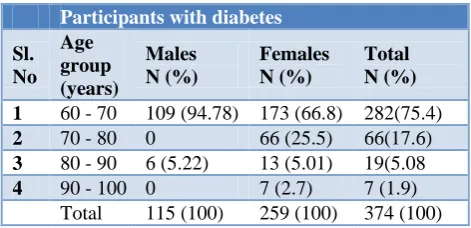
Table 2: Distribution of diabetes among participants according to age.
Participants with diabetes
Sl. No
Age group (years)
Males N (%)
Females N (%)
Total N (%)
1 60 - 70 109 (94.78) 173 (66.8) 282(75.4)
2 70 - 80 0 66 (25.5) 66(17.6)
3 80 - 90 6 (5.22) 13 (5.01) 19(5.08
4 90 - 100 0 7 (2.7) 7 (1.9)
Total 115 (100) 259 (100) 374 (100)
Table 2 shows that prevalence of the diabetes was highest, 75.4%, in the age group of 60-70 years. As the age of participants was increasing prevalence of diabetes was decreasing. Similar trend was observed in female and male gender as well. The results were found to be highly significant with chi square vale of 80.98 and p value<0.01.
0 50 100 150 200 250 300 350 400
Male Female
Non Diabetic Diabetic 74.1%
25.9%
58.02%
Table 3: Distribution of diabetes among participants according to BMI.
Sr.
No. BMI Grade
Diabetic N (%)
Non diabetic
N (%) Total
1 Under weight
(<18.5) 7 (9.46) 67 (90.54) 74
2 Normal
(18.5-24.9) 74 (27.21) 198 (72.79) 272
3 Overweight
(25-29.9) 161 (36.59) 279 (63.41) 440
4 Obese (>30) 132 (48) 143 (52) 275
Total 374 687 1061
From the Table 3, it was observed that the prevalence of diabetes increases with increase in BMI. As shown in table, prevalence of diabetes increased from 9.46% among underweight to the level of 27.21% in normal, 36.59% in overweight participants and among obese participants at 48.00%. The results were statistically highly significant with chi square =49.2 and p value <0.01.
Table 4: Distribution of diabetes among participants according to hypertension status.
Participant diabetic Participant hypertensive Yes N (%) No N (%) Total N (%)
Yes 233 (38.07) 379 (61.93) 612(100)
No 141(31.40) 308 (68.60) 449(100)
Total 374 (35.25) 687 (64.75) 1061(100)
In the Table 4, it was observed that diabetes was higher (38.07%) among the hypertensive participants than in the non-hypertensive participants (31.93%). These results were statistically significant with chi square value 4.75 and p value <0.05.
Table 5: Distribution of diabetes among participants according to mean waist circumference.
Mean waist circumference (cms)
t-test P value
Diabetic 94.19±14.02
2.81 <0.01
Non diabetic 91.59±14.58
The Table 5 shows that the mean waist circumference among diabetic participants was higher (94.19 cms) compared to the mean waist circumference (91.59 cms) among non-diabetic participants. The results were statistically highly significant with p<0.01.
The Table 6 below shows that 50.36% of participants who had family history of diabetes also developed diabetes themselves compared to 29.83% in those who did not have positive family history of diabetes. The
observation made in the table above were statistically significant with chi square=38.03 and p value<0.01.
Table 6: Distribution of diabetes among participants according to family history of diabetes.
Diabetic participants Family history of diabetes Yes N (%) No N (%) Total N (%) Present 141 (50.36) 139 (49.64) 280(100)
Not present 233 (29.83) 548 (70.17) 781(100)
Total 374 (35.25) 687(64.75) 1061(100)
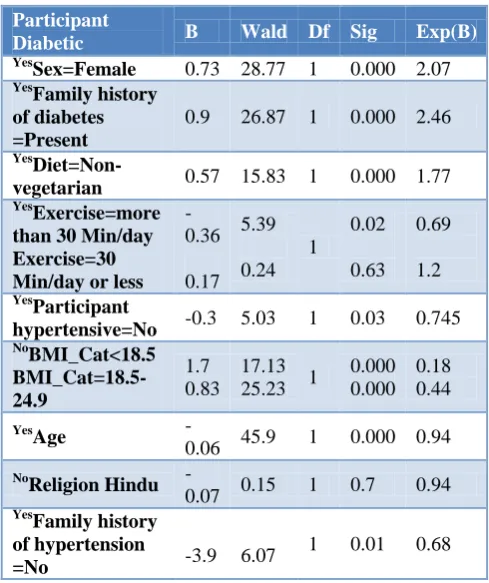
Table 7: Multinomial regression analysis for risk factors of diabetes.
Participant
Diabetic B Wald Df Sig Exp(B)
Yes
Sex=Female 0.73 28.77 1 0.000 2.07
Yes
Family history of diabetes =Present
0.9 26.87 1 0.000 2.46
Yes
Diet=Non-vegetarian 0.57 15.83 1 0.000 1.77
Yes
Exercise=more than 30 Min/day Exercise=30 Min/day or less
-0.36 0.17 5.39 0.24 1 0.02 0.63 0.69 1.2 Yes Participant
hypertensive=No -0.3 5.03 1 0.03 0.745
No BMI_Cat<18.5 BMI_Cat=18.5-24.9 1.7 0.83 17.13
25.23 1
0.000 0.000 0.18 0.44 Yes Age
-0.06 45.9 1 0.000 0.94
No
Religion Hindu
-0.07 0.15 1 0.7 0.94
Yes
Family history of hypertension
=No -3.9 6.07
1 0.01 0.68
As shown in the Table 7, there were ten independent variables added to multinomial logistic model to compare with the dependent variable. The independent variables were: Sex, Family history for diabetes, Diet, Exercise – none/30 min/day or less/ more than 30 min/day, Hypertension, BMI, Religion, Family history of hypertension, Age, RAPA (Rapid assessment of physical activity.
diabetes, non-vegetarian diet, BMI>25, and positive family history for hypertension were associated with increased risk of diabetes while with increasing age (60 & above) and exercise for more than 30 minutes per day lead to decreased risk of development of diabetes.
DISCUSSION
This study was done in field practice area of UTHC, Tripuri, under Community Medicine Department, GMC Patiala.
In present study, the prevalence of diabetes was found to be higher among female participants at 41.98% compared to males at 25.90%. Same observations were made by Kumar et al in their study as well. The prevalence of diabetes was higher among females compared to males in their study as well.6
Another observation made in the present study was that the prevalence of diabetes was highest in the age group of 60-70 years and with increasing age there was decrease in prevalence of diabetes as shown in Table 7. These observations are similar to the observations made from the study done in Delhi.7Survival bias could be the reason for decrease in prevalence of diabetes with increasing age.
Obesity is an important role for the development of non-communicable diseases. It plays an important role in developing diabetes as well. In present study we used BMI to find obesity and its association with diabetes in the study group. Table 3 shows that the prevalence of diabetes among participants with BMI=25 or above was higher compared to the participants with BMI<25. Rise in prevalence of diabetes was found to be associated with BMI>25. Similar finding were made in study done by Deepthi et al in 2013, their study also reported association between BMI>25 was increased risk of diabetes which was statistically significant.8
Waist circumference is good indicator of fat distribution in the body that help us to find who are at increased risk of developing obesity-related disease. In the present study, mean waist circumference among diabetics was observed to be 94.19 cms in comparison with
non-diabetic which was 91.59 cms. Higher waist
circumference was found to be associated with increased with risk of diabetes with p<0.05. Similar observations were made in other studies done in India.9,10
Table 7 shows that prevalence of diabetes among participants with positive family history of diabetes was higher (50.36%) compared to participants with no family history at 29.83%.
Study done by Prashar et al on bank employees of Meerut, found family history as important risk factor strongly associated with development of diabetes.10 Some
other studies done in India also had similar findings with that of present study.11,12
In Table 7, using multinomial regression analysis, following findings were made which were statistically significant. It was found that after age 60 as the age increases, the prevalence of diabetes decreases. Factors such as female gender, non-vegetarian diet, BMI>25, positive family history of diabetes, positive family history of hypertension were also associated with occurrence of diabetes. Study done by Bharti et al also found that prevalence of diabetes was significantly associated with diabetes in the family, obesity, increased waist hip ratio, blood cholesterol and hypertension.11
In Table 7, relationship between physical activity and risk of developing diabetes was assessed using logistic regression analysis. The relation between physical activity and risk of developing diabetes was found to be statistically non-significant.
Similar findings were reported by Robert. According to his study, there is a tendency for a decreased inf physical activity was observed with increasing age, partly due to change in habits but also by disabling conditions such as arthritis and other neurological disease. With decreased physical activity and fitness, there is an increased trend of insulin resistance and hyperglycemia. Although this is occurring in older people, they do not appear to account for all of the glucose intolerance of ageing and indeed physical inactivity is probably less important in this regard than increased body weight.13
CONCLUSION
There is an increased risk of non-communicable diseases among elderly. As the proportion of elderly population of our country is on the rise, the associated morbidity and mortality related to this age group is also on the rise. Therefore, early detection and treatment of these chronic morbidities should be done with regular health check- ups and screening of these diseases before they can cause permanent damage to health of individual or death. People should also be counseled about the importance of adherence to treatment prescribed. People should be educated and counseled about monitoring their health parameters to ensure early detection and treatment and also about healthy life style habits like daily exercise, weight reduction, balanced and healthy diet, avoiding use of alcohol and tobacco in order to promote health and live a long and healthy life. More frequent screening camps of NCD’s and IEC/BCC activities for life style modification should be undertaken by district and state health department and must be integrated with medical colleges.
Funding: No funding sources Conflict of interest: None declared
REFERENCES
1. Available at: http://www.diabetes.co.uk/diabetes-history.html. Accessed on 3 December 2015.
2. Vaibhav A, Singh OP, Tripathi AK. Present
Scenerio Of Diabetes Mellitus and Its Treatment Possibilities Asian J Modern Ayurvedic Med Sci. 2012;1(1):1-10.
3. King H, Zimmet P. Trends in the prevalence and
incidence of diabetes: non-insulin-dependent
diabetes m Cefalu W. Economics of diabetes —cost impact of not treating diabetes early and intensively. Clinical Cornerstone. 2004;6(2):51-60.
4. Cefalu W. Economics of diabetes —cost impact of not treating diabetes early and intensively. Clin Cornerstone. 2004;6(2):51-60.
5. American Diabetes Association. Standards of
medical care in diabetes-2013. Diabetes Care. 2013;36(1):S13.
6. Kumar P, Mallik D, Mukhopadhyay DK, Sinhababu
A, Mahapatra BS, Chakrabarti P. Prevalence of Diabetes Mellitus, Impaired Fasting Glucose, Impaired Glucose Tolerance, and its Correlates among Police Personnel in Bankura District of West Bengal. Indian J Public Health. 2013;57(1):24-8.
7. Singh AK, Mani K, Krishnan A, Aggarwal P, Gupta
SK. Prevalence, awareness, treatment and control among elderly persons in urban slum of Delhi. Indian J Community Med. 2013;37(4):236-239. 8. Jain A, Paranjape S. Prevalence of type 2 diabetes
mellitus in elderly in a primary care facility: An
ideal facility. Indian J Endocrinol Metab. 2013;318-322.
9. Ramachandran A, Snehalatha C. A Temporal
changes in prevalence of diabetes and impaired glucose tolerance associated with lifestyle transition occurring in the rural population in India. Diabetologia. 2004;47(5):860-5.
10. Parashar P, Maroof KA, Bansal R, Ahmad S, Pant B. Prevalence and risk factors of diabetes among bank employees of Meerut district. Indian J Prev Soc Med. 2009;40:3-4.
11. Bharati DR, Pal R, Kar S, Rekha R, Yamuna TV, Basu M. Prevalence and determinants of diabetes mellitus in Puducherry, South India. J Pharm Bioallied Sci. 2011;3(4):513–8.
12. Deepthi R, Chandini C, Pratyusha K, Kusuma N, Raajitha B, Shetty G. Screening for Diabetes and their risk factors among adults in Rural Kolar – A community based study. Int J Res Dev Health. 2013;1(4):152-9.
13. Rober WS. Glucose tolerance and ageing. J Royal Society Med. 1994;87:609.