R E S E A R C H
Open Access
I-RREACH: an engagement and assessment tool
for improving implementation readiness of
researchers, organizations and communities in
complex interventions
Marion Maar
1*, Karen Yeates
2, Marcia Barron
3, Diane Hua
4, Peter Liu
5, Margaret Moy Lum-Kwong
6, Nancy Perkins
4,
Jessica Sleeth
2, Joshua Tobe
7, Mary Jo Wabano
8, Pamela Williamson
9and Sheldon W Tobe
1,4Abstract
Background:Non-communicable chronic diseases are the leading causes of mortality globally, and nearly 80% of these deaths occur in low- and middle-income countries (LMICs). In high-income countries (HICs), inequitable distribution of resources affects poorer and otherwise disadvantaged groups including Aboriginal peoples. Cardiovascular mortality in high-income countries has recently begun to fall; however, these improvements are not realized among citizens in LMICs or those subgroups in high-income countries who are disadvantaged in the social determinants of health including Aboriginal people. It is critical to develop multi-faceted, affordable and realistic health interventions in collaboration with groups who experience health inequalities. Based on community-based participatory research (CBPR), we aimed to develop implementation tools to guide complex interventions to ensure that health gains can be realized in low-resource environments.
Methods:We developed the I-RREACH (Intervention and Research Readiness Engagement and Assessment of Community Health Care) tool to guide implementation of interventions in low-resource environments. We employed CBPR and a consensus methodology to (1) develop the theoretical basis of the tool and (2) to identify key implementation factor domains; then, we (3) collected participant evaluation data to validate the tool during implementation.
Results:The I-RREACH tool was successfully developed using a community-based consensus method and is rooted in participatory principles, equalizing the importance of the knowledge and perspectives of researchers and community stakeholders while encouraging respectful dialogue. The I-RREACH tool consists of three phases: fact finding, stakeholder dialogue and community member/patient dialogue. The evaluation for our first implementation of I-RREACH by participants was overwhelmingly positive, with 95% or more of participants indicating comfort with and support for the process and the dialogue it creates.
Conclusions:The I-RREACH tool was designed to (1) pinpoint key domains required for dialogue between the community and the research team to facilitate implementation of complex health interventions and research projects and (2) to identify existing strengths and areas requiring further development for effective implementation. I-RREACH has been found to be easily adaptable to diverse geographical and cultural settings and can be further adapted to other complex interventions. Further research should include the potential use of the I-RREACH tool in the development of blue prints for scale-up of successful interventions, particularly in low-resource environments.
Keywords:Complex intervention, Community-based participatory research, Methodology, RCT, Implementation tool, International health, Aboriginal health, LMIC, Canada, Tanzania
* Correspondence:[email protected] 1
Faculty of Medicine, Northern Ontario School of Medicine, Laurentian University, Sudbury, ON, Canada
Full list of author information is available at the end of the article
Background
Non-communicable chronic diseases such as cardiovas-cular disease (CVD), cancers, diabetes and chronic lung diseases are the leading causes of mortality globally, ac-counting for approximately two thirds of annual deaths. Nearly 80% of these deaths occur in low- and middle-income countries (LMIC) [1]. In high-middle-income countries (HIC), inequitable distributions of resources affect poorer and otherwise disadvantaged groups including Aboriginal peoples [2,3]. Furthermore, LMICs are faced with large competing burdens of communicable diseases and fragmented, poorly-resourced health care systems that result in significant challenges in managing the complexities of multiple risk factors that attribute to chronic non-communicable diseases.
Among chronic diseases, cardiovascular disease is the number one cause of mortality worldwide. However, car-diovascular mortality in high-income countries has recently begun to fall which can be attributed to both advances in treatment as well as control of risk factors using evidence-based management models [4,5]. Making these advances accessible to all should be a priority glo-bally. While HICs are effectively reducing cardiovascular mortality [6], the gains are not realized among citizens in LMICs nor in those subgroups in HICs who are dis-advantaged in the social determinants of health (SDOH) such as Aboriginal people [1]. As chronic diseases such as hypertension and diabetes continue to rise in LMICs and Aboriginal populations in Canada, it is critical to develop multi-faceted, affordable and realistic health in-terventions informed by an understanding of local SDOH in order to ameliorate them and improve health equity [1,7].
Barriers to CVD and hypertension treatment in LMICs and Aboriginal communities
The availability of clinical practice guidelines for cardio-vascular disease is necessary but not sufficient alone to bring about significant improvements in cardiovascular health. Risk factor reduction is complex and requires lifestyle modifications, behaviour changes and pharma-cologic therapy. Health care policies may actually con-tribute additional barriers to evidence-based care and changes to health systems, and these policies may be required to improve the prevention and management of chronic diseases [8].
Facing the mounting burden of CVD and related com-plications, LMICs and Aboriginal populations often lack the financial means and/or geographically accessible ser-vices for diagnosis, treatment and management options, leading to increased rates of morbidity and mortality [1]. In Canada for example, studies show that death rates from circulatory system diseases among Aboriginal people are significantly elevated compared with non-Aboriginal
people [9]. Hypertension, one of the major risk factors for CVD, is highly prevalent and has no noticeable symptoms; therefore, it is too often undiagnosed and goes untreated in low-resource and low access health care environments where the focus is on other more urgent or competing medical problems. A recent systematic review in Canadian Aboriginal communities found an average prevalence for hypertension of 23.5% [10]. High rates of undiagnosed hypertension [11] were also linked to elevated rates of chronic kidney disease [12]. Barriers to care include lower access to renal dialysis and transplantation [13].
Although geographically and culturally quite dissimilar to Canadian Aboriginal populations, resource-poor African countries such as Tanzania struggle with similar predicaments. While there are no national data sets on the rates of hypertension, current evidence points to higher hypertension prevalence with dramatically lower treatment and control rates [14] associated with higher stroke rates [15]. Compared to rural and remote Canadian communities, the lower access to hypertension management in Tanzania is due, in large part, to financial resource constraints limiting numbers of adequately trained health care providers, diagnosis and treatment as well as a lack of infrastructure connecting patients, their medical records and their health care providers [16].
DREAM-GLOBAL: a community-based hypertension intervention for LMIC and Aboriginal communities
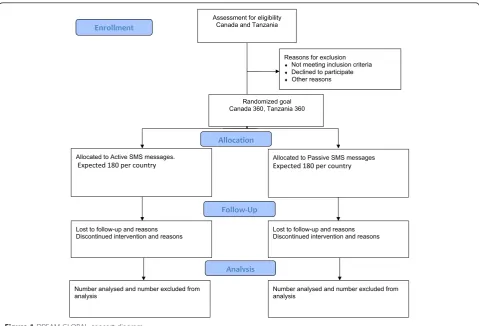
design to test the effectiveness of a mobile health strategy using cell phone-basedshort message service(SMS) tech-nologies to facilitate blood pressure measurements and feedback between patient and provider through the local existing mobile phone network. The flow diagram in Figure 1 displays the planned progression of participants through the trial. The study is a complex intervention leading to changes in the behaviour of patients, providers and local systems. It is implemented using a collaborative community-based participatory approach.
Informing complex interventions through community-based participatory research
The components of the DREAM-GLOBAL intervention are evidence-based, but we recognize that interventions can easily fall short of achieving the intended outcomes due to ineffective implementation and delivery in their
‘real life’ application within the health care system. In particular, low-resource environments are strongly af-fected by implementation issues. This phenomenon, known as the implementation gap, is linked to the lack of understanding of the multifarious factors that may impact on the effectiveness of an intervention when im-plemented at the community or population level [21].
Confounding factors include the uniqueness of local power structures, health systems, community organizations and human actors making standardization unrealistic.
There is an increasing acknowledgement that to meas-ure the degree of effectiveness of an intervention in real clinical practice, an RCT must be pragmatic, maximizing external validity (generalizability) while trying to pre-serve internal validity (reliability and accuracy) [22]. A traditional RCT design does not offer an analysis of the multiple factors that impact on outcomes nor how or why the observed impact occurred [23]. Leykum and colleagues argue that this leads to a profound dilemma:
“How do we design interventional trials that are generalizable, but also have enough flexibility to be meaningful and more likely to be successful locally?” [24] Research leading to a better understanding of key implementation factors and the mechanism by which these influence outcomes are needed to guide imple-mentation strategies for intervention trials as well as proven interventions in diverse environments.
Given the rising rates of CVD in disadvantaged popu-lations, it is essential to study the implementation factors of CVD interventions in low-resource environments where they are urgently needed rather than extrapolating
from high-income settings [21] The DREAM-GLOBAL intervention trial is planned for diverse communities in Tanzania and Aboriginal communities in Canada, and we therefore explored these key implementation issues through participatory research prior to rolling out the study. Our objective was to use the information gathered to develop an implementation tool to guide the process of identifying key implementation issues related to people, community, health systems, culture and relation-ships that are likely to differ between settings. As each of these factors introduces complexity, our goal was to design the implementation tool to be easily adaptable to various health care environments and health issues in a variety of communities globally.
Using community-based participatory research (CBPR), we aimed to develop a tool to guide dialogue between re-searchers and communities on key aspects of researcher, community, system functionality and readiness. We report on (1) the theoretical underpinnings of this tool, (2) the key domains of complexity and issues and how these are uncovered by this tool, and (3) the evaluation feedback from stakeholders during the testing of the tool.
Methodology
Our methodology for the development of the tool con-sisted of a three-pronged CBPR approach: We employed a consensus method to (1) develop the theoretical basis of the tool and (2) to identify key implementation factor domains; then, (3) we evaluated the tool.
A community-based participatory research approach
CBPR is not a research methodology but rather a value-based approach to inquiry. It has been defined as“a col-laborative research approach that is designed to ensure and establish structures for participation by communi-ties affected by the issue being studied, representatives of organizations, and researchers in all aspects of the re-search process to improve health and well-being through taking action, including social change” [25]. Israel and colleagues articulate several key principles that define CBPR. These principles include notions such as recog-nizing the community as a unit of identity, building on community strengths, collaboration in all phases of the research, integration of research and action based on co-learning and knowledge sharing to address in-equalities [26].
Translational and intervention research in low-resource environments frequently has a distinct cross-cultural aspect, with much of the scientific evidence provided by cultural outsiders. Rivkin and co-workers argue that this can pose challenges for intervention sci-ence as health concepts used in scientific research may not translate or have different meanings in culturally diverse partner communities [27]. Trickett and others
have further elaborated that“culture pervades all aspects of community interventions” and community collabor-ation are fundamental to the success of complex inter-ventions [28]. Warry noted that collaborative research in these settings requires researchers to relinquish control over the research process in order to strengthen their explanations [29].
In this study, the CBPR approach formally began when community stakeholders interested in exploring the implementation of DREAM-GLOBAL were invited to share their perspective on the development of an imple-mentation tool based on their lived experience within partner communities using a consensus method.
Indigenous consensus method approach to the
development of the theoretical basis and domains of the implementation tool
A consensus method informed by Indigenous values [30] and CBPR principles was used to initiate a dialogue involving academic researchers and community stake-holders addressing potential implementation issues for DREAM-GLOBAL. Community stakeholders consisted of people with lived experience and close connections in the targeted partner communities. They included health care workers and administrators, community-based re-searchers, health champions and those who were or had family affected by hypertension.
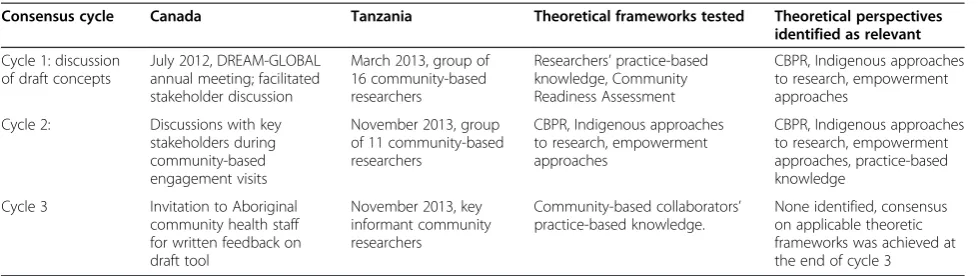
The Indigenous consensus method that we employed differs from traditional academic consensus methods such as the Delphi method [31] as it does not privilege the perspective of academic experts. Instead, the process invites cultural values and knowledge gained from the lived experience of participants, by eliciting the perspectives of those who are eventually affected by the intervention such as community members and local communities of practice. The consensus process is completed once the nexus between community, academic and practice-based knowledge manifests, which in this case was achieved after three consensus cycles (see Table 1).
First consensus cycle
theoretically contextualized within the literature on com-munity readiness assessment [32-34] to develop the first list of draft domains and proposed approach to assessing readiness.
The first consensus cycle to elicit community feedback on the draft domains and research approach was then initiated. In Canada, it took the form of a workshop meeting involving a group of invited stakeholders from Aboriginal communities interested in exploring the im-plementation of the project in their community in dia-logue with Aboriginal health and clinical researchers. In Tanzania, the workshop included community members, local community researchers and academic researchers. The dialogue was a rich exchange of lived and technical experience in both the Canadian and Tanzanian envi-ronments. Participants provided feedback on imple-mentation factors and the conceptual framework of implementation readiness assessment. Aboriginal and Tanzanian stakeholders provided significant direction for revisions to the theoretical orientation of the frame-work and commented on the relative importance of the draft domains.
Second consensus cycle
The second loop was designed to validate key implemen-tation issues and a revised theoretical framework (based on feedback from the first cycle) through member checking with additional stakeholders during various community meetings at sites in Canada and Tanzania. The researchers gathered detailed feedback on the re-vised tool, its implementation, as well as culturally com-petent phrasing of questions and probes.
Third consensus cycle
The third feedback loop was designed to gain a final member check on the key issues, domains, questions, probes and implementation process of the tool. The focus in this round was to include members of the community health care staff in Canada and Tanzania. This cycle provided only minor feedback on phrasing.
However, the name of the implementation tool was de-veloped during this final round.
Participant feedback on the I-RREACH tool
The finalized I-RREACH (Intervention and Research Readiness Engagement and Assessment of Community Health Care) tool is an implementation tool that in-cludes a community fact sheet, an interview, and focus group guide designed to elicit information on key factors that may impact the implementation of the intervention. It was implemented during visits to participating com-munities in Canada and Tanzania. At the end of each interview and focus group, participants were asked to complete a short anonymous evaluation form rating their immediate experience with the I-RREACH process. The evaluation tool was designed to gather information on a five-point scale on how participants perceived the following: (1) the clarity of questions, (2) rapport and understanding between researcher and themselves, (3) improvements in understanding of the interven-tion and implementainterven-tion issues, (4) cultural safety, (5) I-RREACH process as a facilitation tool for know-ledge exchange for implementation of the intervention and (6) any comments or additional suggestions for improvements. The evaluation form is provided in Table 2. It is scaled to indicate high levels of satisfac-tion when participants either “agree” or “strongly agree” with the provided statements. It can be easily adapted to I-RREACH evaluations by researchers who wish to use this tool in the future. To summarize the data, we tallied up scores for each of the five scored domains and thematically summarized the short re-sponses and suggestions for improvements. While any dissatisfaction is reason for concern that researchers may need to explore, we deemed the I-RREACH tool to be acceptable from the participants’ perspective if at least 85% of scores were in the combined “agree” and “strongly agree” categories and no major concerns were raised in the open-ended question component of the questionnaire.
Table 1 Participatory consensus cycles employed in the development of I-RREACH
Consensus cycle Canada Tanzania Theoretical frameworks tested Theoretical perspectives
identified as relevant
Cycle 1: discussion of draft concepts
July 2012, DREAM-GLOBAL annual meeting; facilitated stakeholder discussion
March 2013, group of 16 community-based researchers
Researchers’practice-based knowledge, Community Readiness Assessment
CBPR, Indigenous approaches to research, empowerment approaches
Cycle 2: Discussions with key stakeholders during community-based engagement visits
November 2013, group of 11 community-based researchers
CBPR, Indigenous approaches to research, empowerment approaches
CBPR, Indigenous approaches to research, empowerment approaches, practice-based knowledge
Cycle 3 Invitation to Aboriginal community health staff for written feedback on draft tool
November 2013, key informant community researchers
Community-based collaborators’ practice-based knowledge.
Ethics review
In line with the community-based participatory nature of the development of the I-RREACH tool, the study protocol was submitted for academic ethics review and community-based REB review (in Canada). Members of the research team also sought formal approval by deci-sion makers in each of the participating communities after local, in-person presentations. Academic and governmental ethics approvals include the following: The National Institute for Medical Research in Dar es Salaam, Tanzania (approved March 19, 2014); Queen’s University Health Sciences and Affiliated Teaching Hospitals Research Ethics Board, Kingston, Ontario (DMED-1603-13 approved June 21, 2013); and Sunnybrook Health Sciences Centre Research Ethics Board, Toronto, Ontario, (#182-2013, approved May 31, 2013). Community-based ethics review in Aboriginal communities included The Cree Board of Health and Social Services of James Bay, Ontario (approved September 11, 2013) and Manitoulin Anishinaabek Research Review Committee (MARRC) Ontario (approved October 7, 2013). The study was also formally approved by decision making bodies in all participating communities through Village Councils approvals in Tanzania and Band Councils Resolutions in First Nations in Canada.
Results
In this section, we present (1) the theoretical basis of the I-RREACH tool and its implementation; (2) the three components of I-RREACH, its information domains as
well as the finalized version of the I-RREACH tool tai-lored to DREAM-GLOBAL; and (3) participant evalua-tions of I-RREACH during implementation.
Resolving theoretical dissonance through consensus cycles Results of the first consensus cycle
The Community Readiness Assessment (CRA) approach was first explored by the academic researchers as a lens to guide the development of the implementation tool. CRAs presuppose that the locus of change is solidly an-chored within the community, with researchers assessing how much the community has “to be moved though stages of change”based on the transtheoretical model of change [33]. Further, the CRA emphasizes a predomin-antly quantitative approach that leads to ranking of com-munities (based on scores from ratings scales) with respect to their research readiness measured by parame-ters designated by the researchers. During the first con-sensus cycle however, stakeholders strongly advocated for a need to incorporate a community empowering CBPR approach as well as respect and understanding for Indigenous and community research values into the de-sign of the implementation tool. CRA was seen as dis-sonant with the aspirations of community stakeholders, because it ignores potential capacity gaps and changes required in the academic research team, health systems and policies that may be essential to make an interven-tion work in a given community. Community stake-holders therefore strongly rejected the CRA approach for DREAM-GLOBAL, as they perceived it and its use
Table 2 Participant evaluation form for the I-RREACH tool
DREAM-GLOBAL: Intervention and Research Readiness Engagement and Assessment of Community Health Care (I-RREACH) feedback form for participants
Your feedback would be appreciated regarding the focus group/interview sessions for the I-RREACH project of the DREAM-GLOBAL Study. This feedback is very important for future planning and use of this tool and process in other communities. We would appreciate you taking the time to complete this evaluation form and returning it at the end of the meeting.
Content evaluation (check one only)
Strongly disagree Disagree Neutral Agree Strongly agree
1. The questions asked were clear and made sense to me.
2. I think the researcher understood my perspective (two-way exchange of information).
3. After attending this focus group/interview, I have a better understanding of the DREAM-GLOBAL project goals and how it can be implemented.
Cultural safety evaluation (check one only)
4. I felt comfortable with what we discussed during the focus group/interview.
Please Explain:
5. The focus group/interview was a good way to exchange information and ideas related to the project.
Please Explain:
6. What did you like best about the session?
of rankings as unrealistic and paternalistic. While it is important as it has been argued in the CRA approach that communities pull together in the development of interventions [35], our CBPR showed that this is just one of many key issues that relates to effective imple-mentation. Our new understandings of the multiple fac-tors that may impact on implementation in communities in low-resource environments were incorporated into our implementation tool.
Another theme which emerged during the first con-sensus cycle was that Aboriginal and Tanzanian research participants preferred to move away from disempower-ing outsider-based assessments of communities centered on what outside experts deemed as important towards a dialogue and knowledge exchange to co-create a shared understanding of implementation issues in Aboriginal and Tanzanian communities.
Results of the second and third consensus cycles
Based on community feedback in the first consensus cycle, a new goal was articulated to develop a qualitative implementation tool with the following characteristics: (1) to employ the principles of CBPR and affirming practice-based knowledge and Indigenous lived experi-ence; (2) to enhance bidirectional learning between re-searcher and community stakeholders as well as their collective understandings of the individual, social and organizational determinants that may affect the inter-vention; (3) to identify existing strengths and empower-ing approaches that may support implementation; as well as (4) to recognize areas where additional assistance may be required by researchers, communities and sys-tems to enable effective implementation.
The consensus dialogue provided the impetus for a substantial theoretical shift of the tool from its first iter-ation as a researcher-driven, unidirectional assessment of community capacity to its final version as a collabora-tive, knowledge exchange and dialogue tool. As a result, alternative theoretical models had to be explored as the basis for the implementation tool and newly adjusted theoretical underpinnings incorporated into the tool were shared during the second feedback loop (see Table 1). The relevance of the CBPR and affirmation of collaboration in all aspects of implementation, as well as the need for capacity building with communities and academic researchers was confirmed. Minor adjustments were made and specific questions in each domain were developed for different audiences in the community. An interview guide for health care providers was de-veloped with a complementary focus group tool for community members as well as a fact-finding sheet designed to gather community specific information and contacts. The name of the tool was then changed from a‘Community Readiness Assessment Tool’to the
Intervention and Research Readiness, Engagement and Assessment of Community Health Care Tool (I-RREACH) to reflect the commitment to a participatory approach and bidirectional knowledge exchange.
Components and information domains of the finalized I-RREACH tool
The information gathering and dialogue tool we devel-oped consists of three stages: (1) a community profile section with a fact table which can be populated through various fact-finding activities, (2) an interview guide to help facilitate the discussion and understanding of stra-tegic topics with key stakeholders in the community and (3) a focus group guide to lead a dialogue on community-centered issues.
I-RREACH phase 1: community profile (fact table)
This section of the I-RREACH tool is designed to be employed at the start of the engagement phase. This sec-tion gathers relevant community profile informasec-tion to determine if a specific community has the basic charac-teristics that would enable implementation of the intervention. Information gathering is focused on the community, relevant governance, health care staff, struc-ture and programs, infrastrucstruc-ture and technology as well as resources. This data may be found in publically avail-able records and during initial contacts with the com-munity. When this part of the I-RREACH tool is used, it may not be clear yet if the implementation will occur, ei-ther because the community has not yet fully affirmed interest or because certain characteristics identified in the community profile may exclude the community from participation. For example, in the DREAM-GLOBAL study, cell phones are used to send educational SMS text messages to patients and lack of cell phone coverage would therefore disqualify a community from participa-tion. Other studies may require specific health care cap-acities or community demographics, all of which would be identified during this early data collection phase.
I-RREACH phase 2: key informant perspective (interview guide)
phase builds on the information gathered in the com-munity profile but elicits the more practical and community-specific knowledge that is needed for effect-ive implementation from an operational perspecteffect-ive. The interview phase also allows stakeholders to learn about the intervention and reflect on their expectations and level comfort with the project. The interview do-mains cover characteristics of local leadership, descrip-tions of services, access and awareness of relevant community programs, local understanding of the health issues, resources and planning, the perceived fit be-tween the intervention and community goals and finally the requirements and preparedness of researchers and community to conduct collaborative research and im-plementation of the intervention. Interviewers should continually probe for information that would lead them to a higher level of understanding of the role of polit-ics, policy and resource allocation on the health issue in question; the cultural context and community life; local interaction of medical traditions; oppressive hege-monic experiences in the community with health ser-vices or research; and community expectations related to the research and the academic team.
I-RREACH phase 3: community members perspective (focus group guide)
The focus group discussions with community members cover similar issues as the topics discussed in the previ-ous phase; however, the guide is designed to elicit the lived experience of those who are expected to be the main recipients of the intervention. The discussion framework explores the qualities of community life and history and how the health issue is culturally situated, such as the intertwining of health and social issues as well as expectations of community members. Providing a safe environment to exchange information about the intervention and inviting reflection on community mem-bers’ expectations and level comfort with the initiative and research team’s readiness to work with the commu-nity is an important requirement in this phase.
The domains of information covered in each of the I-RREACH phases are summarized in Table 3. Using the identified key domains, a comprehensive tool was developed to gather information and initiate dialogue. The complete tool adapted to the hypertension manage-ment intervention in Aboriginal communities in Canada and rural villages in Tanzania as part of the DREAM-GLOBAL RCT is provided in Additional file 1. The tool can be easily adapted to support implementation of interventions for other health issues in various environments.
Gathering information on key implementation domains from different sources as suggested in the I-RREACH tool allows for rigorous data collection, including identification,
triangulation and member checking of implementation is-sues. The collected information helps implementation teams to build on existing community strengths and antici-pate and ameliorate barriers to program implementation. The rich qualitative data from key informants as well as the lived experience of community members allows re-searchers to gain a deeper understanding of practical im-plementation aspects and community expectations. This, in turn, allows researchers to reduce their knowledge gaps and respond to local needs more effectively. Further, by en-gaging in meaningful dialogue, it is hoped that unexpected miscommunications or errors made along the way will be similarly communicated within the team of academic and community members for quick resolution.
Evaluation results of the I-RREACH tool
The I-RREACH tool was implemented during commu-nity visits in five Aboriginal Communities in Canada and in two communities in Tanzania. A total of 135 infor-mants participated in twelve focus groups and seven in-terviews in Canada and Tanzania. Modest incentives were provided for participants and included a catered meal and small monetary compensation in recognition of participant’s time and incurred expenses. Translators were present as required. An interactive education ses-sion on hypertenses-sion tailored to the audience was of-fered prior to the focus groups.
After their participation in I-RREACH focus group or interview sessions, 83 participants completed an evalu-ation of the I-RREACH session. When asked to assess the content of the I-RREACH dialogue, most of these participants (98.8%) agreed or strongly agreed that the interview and focus group questions were clear, helped the researcher to understand their perspective (90.4%) and enhanced their understanding of the project (95.2%). From the perspective of cultural safety, 95.2% agreed or strongly agreed that they felt comfortable with the I-RREACH sessions and 97.6 % agreed or strongly agreed that the I-RREACH sessions were a good way to exchange ideas between the research team and the com-munity stakeholders. Table 4 provides the evaluation tool and a summary of the relative scoring completed by participants in this study.
informal atmosphere made them feel comfortable and at ease. Many appreciated the opportunity to share their views and experiences of high blood pressure with others and to listen to others’perspectives in the friendly and empowering atmosphere.
Most participants indicated that no changes for I-RREACH were needed; however, based on the content
analysis of the open-ended questions, some stressed the importance of ongoing close contact between the re-search team and participants, requirements for training opportunities for staff and support for potential partici-pants who struggle with healthy lifestyles due to difficult economic circumstances. Their recommendations are in line with the CBPR approach.
Table 3 I-RREACH components with listing of respective information domains
Information Domain (Phase 1) (Phase 2) (Phase 3)
Community profile tool (document and internet based)
Key informant perspective (interview guide)
Community members perspective (focus group guide)
Basic community descriptions Demographic information n/a n/a
Leadership Basic contact information Formal and informal leadership; economic and political structures
n/a
Community programs Contact information, addresses, organizational information
Description of activities, quality, cultural relevance, integration of services, community awareness and access; interacting medical traditions
Lived experience of the health issues in the community, cultural context, program quality, perspectives on self-management, cultural perspectives; interacting medical traditions
Local understanding of the health issue
n/a Perceived importance and
quality of local health data on the issue
Pathways to access to health information
Resources and planning Basic descriptions of funders and initiatives
Implications of funding streams and planned initiatives
n/a
Perceived fit of the intervention with community objectives
n/a Past experiences with similar
interventions, potential challenges and facilitators
Context of culture and community, challenges and facilitators; medical traditions
Infrastructure and technology Basic descriptions Community comfort, use of technology, barriers
Community comfort, level of use in the community and with different groups
Readiness for community-based research
n/a Quality of community experience
with research; community expectations; competency and learning requirements for researchers
Quality of community experience with research; community expectations; competency and learning requirements for researchers; experience of past oppression
Table 4 Participant evaluation tool for I-RREACH with tallies of scores and percentages of participants choosing each score
Participant evaluation of I-RREACH
Content evaluation
Strongly disagree Disagree Neutral Agree Strongly agree
1. The questions asked were clear and made sense to me. 0 0 1 32 50
0.0% 0.0% 1.2% 38.6% 60.2%
2. I think the researcher understood my perspective. 1 2 4 38 37
1.2% 2.4% 4.8% 45.8% 44.6%
3. After attending this focus group/interview, do you have a better understanding of the DREAM-GLOBAL project and how it can be implemented?
0 1 3 39 40
0.0% 1.2% 3.6% 47.0% 48.2%
Cultural safety evaluation
4. I felt comfortable with what we discussed during the focus group/interview. 0 2 2 29 50
0.0% 2.4% 2.4% 34.9% 60.2%
5. The focus group/interview was a good way to exchange information and ideas related to the project.
1 0 1 43 38
Discussion
A focus on exchange of practical and technical knowledge
According to Buchannan [36], the most widely shared definitions of theory in health sciences are still based on the positivist ideas that a theory should be testable and generalizable. While this positivist model is adequate to explain and predict biological aspects of health prob-lems, the complexity of human practices and actions and variability in the characteristics of health care set-tings makes a natural sciences model much less appro-priate for health care research.
Researching not only if but also how an intervention has an impact on change on the other hand provides more useful knowledge and allows weak links in the causal chain to be strengthened during the implementa-tion. The UK’s Medical Research Council’s guidelines [37] for developing and evaluating randomized con-trolled trials for complex interventions emphasize the importance of understanding how and why an interven-tion works.
“The rationale for a complex intervention, i.e. what changes are expected, and how change is to be achieved, may not be clear at the outset. If so, a vitally important early task is to develop a theoretical understanding of the likely process of change, by drawing on exist-ing evidence and theory, supplemented if necessary by new primary research, for example interviews with stakeholders ”[23].
Similarly, Green argues that theory in health research should not be considered as “offering universal explana-tions or predicexplana-tions, but rather as enhancing under-standing of complex situations. Such underunder-standing will inevitably need to be sensitive to specific contextual fac-tors, and would necessarily draw on the experience of practitioners and communities” [38]. The notion of practice-based knowledge (or praxis) focuses on what we have learned through experience on how to move from theoretical knowledge to practice at the point of inter-vention [39]. Aristotle is credited with advancing the idea of praxis as knowledge which is based on experi-ences with social and historical relationships which cor-respond to“what we might call wisdom today”[36].
The notions of praxis and importance of community-held wisdom for implementation of a complex inter-vention became important theoretical underpinnings contributing to the development of the I-RREACH tool, as the team drew on researcher and community stakeholder experience to recognize the domains that may impact on the effectiveness of interventions in Aboriginal and Tanzanian communities. Furthermore, community stakeholders firmly emphasized the need for bidirectional learning, dialogue and ongoing reflection related to project implementation, which will provide ongoing information to the research team on how the
intervention is working or why it is not. Similarly, Leykum and colleagues have advocated for the inte-gration of local sensibilities and ongoing reflection into pragmatic research design [24]. Based on our experience thus far with DREAM-GLOBAL, practical reasoning can provide a critical lens to focus our inquiry to recognize and respond to insights based on the unique community and organizational context, circumstances and challenges as well as historical and cultural dimension that may affect the intervention.
In order to establish good working relationships, it is essential that university and community-based collabora-tors have an in-depth understanding of one another’s needs, resources and expectations related to research and action. Jacklin and Kinoshameg have argued that in order to be successful in CBPR, researchers “must un-learn the expert role they have been entrenched in” [40] and the I-RREACH tool can facilitate this process. Furthermore, implementation researchers require educa-tion not only by listening during the CBPR process but also more formally by learning about topics such as community history and cultural safety in research [41]. Therefore, research teams should also learn about and critically reflect on broader origins of ill health in their partner communi-ties through the implementation process.
The need for critical reflection on social realities of partner communities
In Canada, there is considerable evidence that govern-mental assimilation policies, residential schools and forced changes of lifestyle imposed on Aboriginal people have resulted in much of the disease burden and health inequities in Aboriginal communities seen today [42-44]. In the past, these forms of oppression were touted as be-ing in the best interest of Aboriginal people. Aboriginal perspectives were marginalized and negative outcomes were frequently associated with change imposed by outsiders. Given this negative impact of colonialism, Aboriginal communities often refuse standardized solu-tions offered or imposed by outsiders, and researchers must be cognizant of these historic facts. However, the consequences of a colonial legacy are often difficult to understand for researchers and representatives of governmental institutions, who are typically deeply entrenched in their own worldviews. Canadian Indigenous scholar Willie Ermine aptly observes that
The community stakeholders’ insistence in this study on focusing on a range of factors that may affect the outcomes of interventions beyond the community’s dir-ect control was based on their practice-based knowledge as well as an understanding of the hegemony that Ermine describes. The unique influences that underlie health care barriers and disparities in Indigenous com-munities are complex and include key factors such as socioeconomic status, racism, cultural and communica-tion differences, rural locacommunica-tion [46] as well as related lack of resources for services and lack of incentives for pro-viders to practice in rural areas. This perspective is also supported outside of the Indigenous health literature. For example, the notion that an intervention is af-fected by many factors beyond the control of the community is described by Tee and colleagues. They argue that even a strongly supported intervention within a health system can be seriously affected by
“political, financial, educational, cultural, logistic, an-thropological, and emotional” barriers [47]. Trickett and co-workers emphasize the importance of influence of culture, the state, policies and ideologies on community interventions [28].
The situation in communities in low-income countries is similar as shown in a recent systematic review indicat-ing that health equity initiatives face potential barriers from a host of challenges in LMICs, including potential resistance from influential actors whose interests or values could be challenged by the intervention and social processes that exclude special interest groups such as rural communities from decision making or intended benefits of the intervention [48]. The review indicates that“politics, process and power must be integrated into the study of health policies and the practice of health system development”. Conversely, research in South Africa shows the positive impact of meaningfully involv-ing local people includinvolv-ing Community Health Workers (CHW) in community-based initiatives designed to develop interventions for hypertension [49].
Finally, our evaluation data supports the theoretical framework and provides preliminary support for the validity of the I-RREACH tool as an appropriate imple-mentation tool from the perspective of community stakeholders. The evaluation data also provided import-ant feedback to the research team on the effectiveness of their approach and their own increasing level of cultural competence and safety. We therefore recommend that the evaluation form be used whenever the I-RREACH tool or an adapted version of it is used. Participants should be provided with several minutes to fill out the form (see Table 2) anonymously and to return forms in blank envelopes in order to reduce the social desirability bias. If participants’ literacy is not sufficient to fill out the form, community helpers are needed to help fill out
the forms based on the verbal feedback of each partici-pant (as our team did in Tanzania).
Limitations
The I-RREACH tool has been successfully used to sup-port the implementation of the DREAM-GLOBAL prag-matic RCT and the related health services changes with formal positive feedback from participants as described in this paper. The DREAM-GLOBAL study is still in its implementation phase, and comprehensive data on re-cruitment and retention of participating communities, providers and patients is not yet available. Additional time and research is required (1) to conduct a detailed process evaluation to inform best practices for the implementation of the tool; (2) to document how the I-RREACH tool and process enabled understanding of implementation issues that can foster effective relation-ships between researchers and community stakeholders throughout the span of a project ; and (3) to analyse the specific collaborative, CBPR and inter-professional skills required of the research team members to successfully im-plement I-RREACH.
Conclusion
The I-RREACH tool was designed to (1) pinpoint key domains required for dialogue between the community and the research team to facilitate implementation of complex health interventions and research projects and (2) to identify existing strengths and areas requiring further development for effective implementation. I-RREACH has been found to be easily adaptable to diverse geographical and cultural settings and can be further adapted to other complex interventions. Further research should include the potential use of the I-RREACH tool in the development of blue prints for scale up of successful interventions, particu-larly in low-resource environments. Methodological re-search is also needed on the ongoing requirements for sustainable community engagement in the implementation of interventions, the CBPR skills and other training re-quired of the academic team as well as the role of ongoing mindful reflection as a method of inquiry in implementa-tion research when the I-RREACH approach is applied to implementation research.
Additional file
Additional file 1:I-RREACH TOOL: Intervention and Research Readiness Engagement and Assessment of Community Health Care. A tool for improving implementation readiness of researchers, organizations and communities in a complex interventions of hypertension management in the First Nations, Inuit and LMIC home care.
Competing interests
Authors’contributions
MM drafted the paper in collaboration with ST and KY. MM and MB drafted the evaluation tool as well as updates of the I-RREACH tool after each of the consultation cycles in collaboration with ST and KY. All authors contributed to the design of the project, critically reviewed early drafts and approved the final version of the paper.
Acknowledgements
The authors would like to thank health care staff and leadership of both countries for their contributions to this participatory study. In Canada, these include the following: Aundeck Omni Kaning First Nation, Cree Nation of Chisasibi, Eel River Bar First Nation, M’Chigeeng First Nation, Noojmowin Teg Health Centre, Sheshegwaning First Nation, and Wikwemikong Unceded Indian Reserve. In Tanzania, they include Kisiki and Lambo villages in the Hai district. The project is funded by the Canadian Institutes of Health Research, Grand Challenges Canada and the Global Alliance for Chronic Diseases. We thank Lisa Boesch for helping with the preparation of the manuscript. We thank Drs. Alison Hamilton, Bev Holmes and Alison Hutchinson for their insightful and constructive review and comments on our draft manuscript.
Author details
1Faculty of Medicine, Northern Ontario School of Medicine, Laurentian
University, Sudbury, ON, Canada.2Department of Medicine, Queens University, Kingston, ON, Canada.3Riverstone Research Consulting, Guelph, ON, Canada.4Department of Nephrology, Sunnybrook Health Sciences Centre, Sunnybrook Research Institute, University of Toronto, Toronto, ON, Canada.5University of Ottawa Heart Institute, Ottawa, ON, Canada. 6Department of Research, Advocacy and Health Promotion, Heart and Stroke
Foundation of Ontario, Toronto, ON, Canada.7Department of Medicine, Western University, London, ON, Canada.8Wikwemikong Health Centre, Wikwemikong, ON, Canada.9Noojmowin Teg Health Centre, Little Current, ON, Canada.
Received: 23 September 2014 Accepted: 24 April 2015
References
1. World Health Organization. Global status report on noncommunicable diseases 2010. Geneva; 2011. [http://whqlibdoc.who.int/publications/2011/ 9789240686458_eng.pdf?ua=1]
2. Tjepkema M. The health of the off-reserve aboriginal population. Health Rep. 2002;13(Suppl):1–17 [http://www.statcan.gc.ca/pub/82-003-s/2002001/ pdf/82-003-s2002004-eng.pdf].
3. Dinca-Panaitescu M, Dinca-Panaitescu S, Raphael D, Bryant T, Pilkington B, Daiski I. The dynamics of the relationship between diabetes incidence and low income: longitudinal results from Canada’s National Population Health Survey. Maturitas. 2012;72(3):229–35.
4. Wijeysundera HC, Machado M, Farahati F, Wang X, Witteman W, van der Velde G, et al. Association of temporal trends in risk factors and treatment uptake with coronary heart disease mortality, 1994-2005. JAMA. 2010;303:1841–7.
5. McAlister FA, Wilkins K, Joffres M, Leenen FH, Fodor G, Gee M, et al. Changes in the rates of awareness, treatment and control of hypertension in Canada over the past two decades. CMAJ. 2011;183:1007–13.
6. Mathers CD, Loncar D. Projections of global mortality and burden of disease from 2002 to 2030. PLoS Med. 2006;3(11), e442.
7. King M. Chronic diseases and mortality in Canadian Aboriginal peoples: learning from the knowledge. Chronic Dis Can. 2010;31(1):2–3. 8. Tobe SW, Stone JA, Brouwers M, Bhattacharyya O, Walker KM, Dawes M,
et al. Harmonization of guidelines for the prevention and treatment of cardiovascular disease: the C-CHANGE Initiative. CMAJ. 2011;183(15):e1135–50. 9. Tjepkema M, Wilkins R, Senécal S, Guimond E, Penney C. Mortality of urban
Aboriginal adults in Canada, 1991–2001. Chronic Dis Can. 2010;31(1):4–21. 10. Foulds HJA, Warburton DER. The blood pressure and hypertension
experience among North American Indigenous populations. J Hypertens. 2014;32(4):724–34.
11. Bruce SG, Riediger ND, Zacharias JM, Young TK. Obesity and obesity-related comorbidities in a Canadian First Nation population. Prev Chronic Dis. 2011;8(1):a03.
12. Yeates K, Tonelli M. Chronic kidney disease among Aboriginal people living in Canada. Clin Nephrol. 2010;74 Suppl 1:S57–60.
13. Yeates K. Health disparities in renal disease in Canada. Semin Nephrol. 2010;30(1):12–8.
14. Edwards R, Unwin N, Mugusi F, Whiting D, Rashid S, Kissima J, et al. Hypertension prevalence and care in an urban and rural area of Tanzania. J Hypertens. 2000;18(2):145–52.
15. Walker R, Whiting D, Unwin N, Mugusi F, Swai M, Aris E, et al. Stroke incidence in rural and urban Tanzania: a prospective, community-based study. Lancet Neurol. 2010;9(8):786–92.
16. Kilonzo KG, Ghosh S, Temu SA, Maro V, Callegari J, Carter M, et al. Outcome of acute peritoneal dialysis in northern Tanzania. Perit Dial Int. 2012;32(3):261–6.
17. Tobe SW, Touyz RM, Campbell NR. The Canadian hypertension education program - a unique Canadian knowledge translation program. Can J Cardiol. 2007;23(7):551–5.
18. Glynn LG, Murphy AW, Smith SM, Schroeder K, Fahey T. Interventions used to improve control of blood pressure in patients with hypertension. Cochrane Database Syst Rev. 2010;3, CD005182.
19. Coleman K, Austin BT, Brach C, Wagner EH. Evidence on the chronic care model in the new millennium. Health Aff (Millwood). 2009;28(1):75–85.
20. Tobe SW, Yeates KE, Campbell NR, Liu P. Detecting and treating high blood pressure in Aboriginal population and low and middle income countries (DREAM-GLOBAL). ClinicalTrials.gov registration: NCT02111226. 2014 21. Haines A, Kuruvilla S, Borchert M. Bridging the implementation gap
between knowledge and action for health. Bull World Health Organ. 2004;82(10):724–31.
22. Godwin M, Ruhland L, Casson I, MacDonald S, Delva D, Birtwhistle R, et al. Pragmatic controlled clinical trials in primary care: the struggle between external and internal validity. BMC Med Res Methodol. 2003;3:28. 23. Craig P, Dieppe P, Macintyre S, Michie S, Nazareth I, Petticrew M.
Developing and evaluating complex interventions: new guidance. Medical Research Council. [http://www.mrc.ac.uk/documents/pdf/ complex-interventions-guidance/]
24. Leykum LK, Pugh JA, Lanham HJ, Harmon J, McDaniel Jr RR. Implementation research design: integrating participatory action research into randomized controlled trials. Implement Sci. 2009;4:69.
25. Viswanathan M, Ammerman A, Eng E, Gartlehner G, Lohr KN, Griffith D, et al. Community-based participatory research: assessing the evidence. Rockville, MD: Agency for Healthcare Research and Quality; 2004. http://www.ahcpr.gov/ downloads/pub/evidence/pdf/cbpr/cbpr.pdf.
26. Israel BA, Schulz AJ, Parker EA, Becker AB. Review of community-based research: assessing partnership approaches to improve public health. Annu Rev Public Health. 1998;19:173–202.
27. Rivkin I, Trimble J, Lopez EDS, Johnson S, Orr E, Allen J. Disseminating research in rural Yup’ik communities: challenges and ethical considerations in moving from discovery to intervention development. Int J Circumpolar Health. 2013;72:1–8.
28. Trickett EJ, Beehler S, Deutsch C, Green LW, Hawe P, McLeroy K, et al. Advancing the science of community-level interventions. Am J Public Health. 2011;101(8):1410–9.
29. Warry W. Doing unto others: applied anthropology, collaborative research and Native self-determination. Culture. 1990;10(1):61–73.
30. Maar M, Seymour A, Sanderson B, Boesch L. Reaching agreement for an Aboriginal e-health research agenda: the Aboriginal telehealth knowledge circle consensus method. Rural Remote Health. 2010;10(1):1299.
31. Fink A, Kosecoff J, Chassin M, Brook RH. Consensus methods: characteristics and guidelines for use. Am J Public Health. 1984;74(9):979–83.
32. Kelly K, Edwards R, Comello MLG, Plested BA, Jumper-Thurman P, Slater M. The community readiness model: a complementary approach to social marketing. Mark Theory. 2003;3(4):411–26.
33. Edwards RW, Jumper-Thurman P, Plested BA, Oetting ER, Swanson L. Community readiness: research to practice. J Community Psychol. 2000;28(3):291–307.
34. Plested BA, Edwards RW, Jumper-Thurman P. Community readiness: a handbook for successful change. Fort Collins: Tri-Ethnic Center for Prevention Research; 2006. http://www.nami.org/Content/NavigationMenu/NAMI_Center_for_ Excellence/Tools_for_Excellence/CommunityReadinessHandbook.pdf. 35. Plested BA, Jumper-Thurman P, Edwards RW, Oetting ER. Community
36. Buchanan DR. Reflections on the relationship between theory and practice. Health Educ Res. 1994;9(3):273–83.
37. Craig P, Dieppe P, Macintyre S, Michie S, Nazareth I, Petticrew M. Developing and evaluating complex interventions: the new Medical Research Council guidance. BMJ. 2008;337:a1655.
38. Green J. The role of theory in evidence-based health promotion practice. Health Educ Res. 2000;15(2):125–9.
39. Warry W. The eleventh thesis: applied anthropology as praxis. Hum Organ. 1992;51(2):155–63.
40. Jacklin K, Kinoshameg P. Developing a participatory Aboriginal health research project:“Only if it’s going to mean something”. J Empir Res Hum Res Ethics. 2008;3(2):53–67.
41. Maar MA, Lightfoot NE, Sutherland ME, Strasser RP, Wilson KJ, Lidstone-Jones CM, et al. Thinking outside the box: Aboriginal peoples’suggestions for conducting health studies with aboriginal communities. Public Health. 2011;125(11):747–53.
42. Waldram JB, Herring DA, Young TK. Aboriginal health in Canada historical, cultural and epidemiological perspectives. 2nd ed. Toronto: University of Toronto Press; 2006. p. 48–172.
43. Royal Commission on Aboriginal Peoples. Report of the Royal Commission on Aboriginal Peoples. Ottawa: The Commission; 1996.
44. First Nations Information Governance Centre (FNIGC). First Nations Regional Health Survey (RHS) 2008/10: national report on adults, youth and children living in First Nations communities. Ottawa: FNIGC; 2012.
45. Ermine W. The ethical space of engagement. Indigenous Law J. 2007;6(1) 46. Marrone S. Understanding barriers to health care: a review of disparities in
health care services among indigenous populations. Int J Circumpolar Health. 2007;66(3):188–98.
47. Tee A, Calzavacca P, Licari E, Goldsmith D, Bellemo R. Bench-to-bedside review: the MET syndrome–the challenges of researching and adopting medical emergency teams. Crit Care. 2008;12(1):205.
48. Gilson L, Raphaely N. The terrain of health policy analysis in low and middle income countries: a review of published literature 1994–2007. Health Policy Plan. 2008;23(5):294–307.
49. Bradley HA, Puoane T. Prevention of hypertension and diabetes in an urban setting in South Africa: participatory action research with community health workers. Ethn Dis. 2007;17(1):49–54.
Submit your next manuscript to BioMed Central and take full advantage of:
• Convenient online submission
• Thorough peer review
• No space constraints or color figure charges
• Immediate publication on acceptance
• Inclusion in PubMed, CAS, Scopus and Google Scholar
• Research which is freely available for redistribution