Adherence to clinical practice guidelines among
three primary contact professions: a best evidence
synthesis of the literature for the management of
acute and subacute low back pain
Lyndon G. Amorin-Woods,
B.App.Sci (Chiropractic)1Randy W. Beck,
BSc (Hons), DC, PhD, DACNB, FAAFN, FACFN2Gregory F. Parkin-Smith,
MTech(Chiro), MBBS, MSc, DrHC3James Lougheed,
BA (Hons)4Alexandra P. Bremner,
BSc (Hons), DipEd, GradDipAppStats, PhD51 Senior Clinical Supervisor
School of Health Professions [Discipline of Chiropractic] Murdoch University
Enrolled student, Master of Public Health
School of Population Health Faculty of Medicine, Dentistry and Health Sciences The University of Western Australia
Email: [email protected]
Postal Address: Murdoch University, South Street Campus 90 South Street, MURDOCH Western Australia 6150 Telephone: +61 8-93601202
2 Corresponding Author
Director Institute of Functional Neurosciences PERTH, Australia
Email: [email protected] Postal Address: 6 Modal Cres
CANNING VALE Western Australia 6150 Telephone: +61 8-93601269
3 Registrar in Emergency Medicine, Registered Medical Practitioner, Rockingham General Hospital; Registered Chiropractor 4 Senior Research Assistant, Institute of Functional Neuroscience, PERTH, Australia
5 Associate Professor, School of Population Health, Faculty of Medicine and Dentistry and Health Sciences, The University of Western Australia PERTH, Australia Email: [email protected]
©JCCA 2014
Aim: To determine adherence to clinical practice
guidelines in the medical, physiotherapy and chiropractic professions for acute and subacute mechanical low back pain through best-evidence synthesis of the healthcare literature.
Objectif : Évaluer la conformité, dans les professions
Introduction
Mechanical low back pain (LBP) is a common condition, which until recently has been depicted as self-resolving and transient. Emerging evidence contradicts the trad-itional assumption that spontaneous recovery occurs in the majority of patients, with back pain being neither insignificant nor self-limiting.1,2 While the majority of people with an episode of acute LBP improve enough to return to work within the first two weeks, the prob-ability of recurrence within the first year ranges from 30
to 60%.3,4 In as many as one-third of people, the initial episode of LBP persists for a year.5 Should the pain be present in multiple spinal regions, the prognosis is much worse.6 A recent Scandinavian study found only 19% of people could report a single day of the year without back pain.7
After respiratory conditions, the majority of conditions managed by medical practitioners are musculoskeletal, despite 39% of sufferers choosing not to seek the care of any health professional, and of these musculoskeletal
Methods: A structured best-evidence synthesis of the relevant literature through a literature search of relevant databases for peer-reviewed papers on adherence to clinical practice guidelines from 1995 to 2013. Inclusion of papers was based on selection criteria and appraisal by two reviewers who independently applied a modified Downs & Black appraisal tool. The appraised papers were summarized in tabular form and analysed by the authors.
Results: The literature search retrieved 23 potentially relevant papers that were evaluated for methodological quality, of which 11 studies met the inclusion criteria. The main finding was that no profession in the study consistently attained an overall high concordance rating. Of the three professions examined, 73% of chiropractors adhered to current clinical practice guidelines,
followed by physiotherapists (62%) and then medical practitioners (52%).
Conclusions: This review showed that quality papers in this area of research are very limited. Notwithstanding, chiropractors appear to adhere to clinical practice guidelines more so than
physiotherapists and medical practitioners, although there is scope for improvement across all three professions.
(JCCA 2014; 58(3):220-237)
k e y w o r d s : evidence based guidelines, chiropractic, low back pain, medicine, physiotherapy
Méthodologie : Une synthèse structurée des données probantes provenant de la documentation pertinente, par une recherche des bases de données des publications examinées par les pairs sur le respect des directives de pratique clinique entre 1995 et 2013. Le choix des publications a été fait selon des critères de sélection et des évaluations distinctes par deux examinateurs qui ont utilisé l’outil d’évaluation Downs & Black modifié. Les documents d’évaluation ont été résumés en tableaux et ont été analysés par les auteurs.
Résultats : La recherche des documents a extrait 23 publications potentiellement pertinentes qui ont été examinées pour leur qualité méthodologique, et dont 11 satisfaisaient les critères de sélection. La principale conclusion était qu’aucune des professions à l’étude n’a atteint de façon consistante un taux global élevé de concordance. Parmi les trois professions à l’étude, 73 % des chiropraticiens respectaient les directives de pratique clinique, suivis par les physiothérapeutes (62 %), et les médecins (52 %).
Conclusions : Cette étude a démontré la rareté
des publications de qualité dans ce domaine de recherche. Cela dit, les chiropraticiens semblent respecter les directives de pratique clinique plus que les physiothérapeutes et les médecins, bien qu’il y ait des possibilités d’amélioration dans les trois professions.
(JCCA. 2014; 58(3):220-237)
ditions, back pain is the most common.8-10 Patients with back pain spend about 75% more annually on health care than people without back pain and this does not include costs for lost work time or diminished productivity.11 In-deed, productivity loss and directly related health care expenditure continue to escalate along with prevalence. Between 1997 and 2005 in the US, expenditures for back and neck pain rose 65%, adjusted for inflation.12 Spinal disorders are consistently within the top ten of the most expensive health care presentations.9,13 Health system ad-ministrators clearly have a powerful incentive to ensure concordance with guidelines to encourage management that demonstrates positive treatment outcomes, cost ef-ficiency and is patient-centred. Currently, fewer than 10% of Australians with low back pain get access to evidence-informed management.14
Guidelines
Formulation of guidelines is the natural sequitur to the goal of implementation of evidence-based practice. Thus nations including Canada, USA, UK and Australia have set about standardizing practice and publishing guidelines for virtually all aspects of health care; there exists even a formal Guidelines International Network.15-18 Compliance with guidelines however seems to be as problematic as developing them in the first place, evidence-based guide-lines and systematic reviews have flourished, but seem to have had little impact on actual primary care practices.19,20 Guideline concordance (“practising in agreement with or in a way that is consistent with guidelines”) can be broadly considered within two contexts: 1) clinical deci-sion-making, and 2) clinical intervention or management. In turn, management includes passive (clinician-centric) and active (patient-centric) aspects. Clinical decision-making relates to the utilisation of health history tak-ing, physical examination and the use of diagnostic tests. Evaluation of guideline concordance (adherence) can thus take the form of ‘triage concordance’ and/or ‘man-agement concordance’. This paper is concerned with the latter.
Recommendations in guidelines are made on the basis of being: 1) effective, 2) benefits outweighing risks, 3) costs being reasonable compared to expected benefits, and 4) the recommended actions being practical and feas-ible.21
Guideline panels usually have letters and numbers to
indicate the strength of the recommendations, however they use them differently. This is potentially confusing, thus a binary system is now preferred; for example as employed by the GRADE panel.22,23 In this system, the strength of a recommendation reflects the extent of con-fidence that desirable effects of an intervention outweigh undesirable effects. Strong recommendations mean that
most informed patients would choose the recommended
management and that clinicians can structure their inter-actions with patients accordingly (i.e. most people in the same situation would want the recommended course of action and only a small proportion would not). Weak rec-ommendations mean that patients’ choices will vary ac-cording to their values and preferences, and clinicians must ensure that patients’ care is in keeping with their values and preferences (i.e. most people in the same situa-tion would want the recommended course of acsitua-tion, but
many would not).
Guidelines are sometimes embedded within ‘models
of care’, ‘codes of conduct’ and ‘clinical frameworks’
which contain expectations of practitioners regardless of
profession; i.e., manual care practitioners should perform
a comprehensive health history and appropriate physical examination; form a clinical impression and/or diagnosis; develop an individual plan of management; provide pa-tient feedback in a timely manner; obtain informed con-sent; initiate appropriate care in a timely manner within scope of practice; manage the patient according to best available evidence; provide management within a bio-psychosocial/holistic model; empower the patient; and measure response to management.24-27
Methods
Contemporary evidence-based guidelines for the manage-ment of non-specific acute and subacute LBP are broadly homogenous.5,15,16,18,28-32 We developed a composite list of recommendations drawn from three representative EBG examples: the first, Western Australian Government De-partment of Health ‘Spinal Pain Model of Care’, from the jurisdiction where the authors reside; and the other two, recently published guidelines at the time of the study from the state of Oregon (USA) and the Institute for Clinical Systems Improvement (USA).5,25,28
• Identify potentially serious causes, ‘red flags’ and neural compression syndromes as well as non-spine pain origins
• Provide patient advice and education, using
The Back Book.33 Included in advice is:
Reassure the patient: “Recovery is to be
expected”
Manage fear avoidance and psychosomatic issues: “Hurt does not equal harm”
Promote effective self-management of symptoms through appropriate advice Discourage bed rest
Encourage the patient to stay active and continue ordinary activities (including work)
Do not advise back-specific exercises (‘general’ exercise should be recommended to reduce recurrence, however, no specific exercise is preferred)
May recommend appropriate medication within scope of practice*
• The use of spinal manipulation (grade V; manu-al, high-velocity, low-amplitude, thrust-type manipulation) as a first-line or adjunctive treat-ment.
• Exercise therapy, back school, joint mobiliza-tion (with therapeutic intent), massage (with therapeutic intent), electrotherapy/physical agents (heat, cold), and traction/lumbar sup-ports were considered, but excluded from the protocol because the evidence for their use is either insufficient, equivocal, or negative. Al-though clinical guidelines offer mixed support for spinal manipulation, a recent practice guide-line recommends its use, and specific trials sup-port the effectiveness of spinal manipulation in the subgroup of patients with acute LBP of short duration.27
* Only guideline adherence scores from med-ical practitioners were collected with respect to medication and injection therapy as they are the only health care professionals legally able to utilise such methods in most jurisdictions. To obtain concordance data with guideline recommen-dations, six databases and search engines were searched
for articles published between January 1995 and July 2013 [JL&RB]. These databases were Medline, Web of Science, EMBASE, SportDiscus, Google Scholar and The Cochrane Library. The search strategy is tabulated in Appendix 1. The abstracts of all papers returned by the search were assessed, and papers not directly relevant to Guideline Adherence for acute and/or subacute LBP were excluded. Inclusion of papers was based on selection cri-teria and appraised by two reviewers independently using a modified Downs & Black appraisal tool. Reference lists of included papers were examined and appropriate papers identified and reviewed. Any new papers in turn had their reference lists examined until no new papers were identi-fied. Only papers written or transcribed in English were included, and papers were evaluated for methodological quality before inclusion in this study.
Measuring Methodological Quality
Each paper identified in the initial search was evaluated for methodological quality using a modified version of the system described by Downs and Black.34 Inclusion of pa-pers were based on selection criteria and appraised by two independent reviewers. Scoring on the modified version could range between 0 and 20, with a higher score indi-cating higher methodological quality. Papers that scored below 12/20 (i.e. <60%) were deemed poor quality and excluded. This standard scoring methodology and inclu-sion criteria is considered valid and reliable for assessing randomized and nonrandomized studies and thus readily adapted for use in this context.35 This tool was chosen and adapted as there exists no “gold standard’ critical ap-praisal or widely accepted generic tool that can be applied equally well across study types and specifically not for allied health research requirements.36,37 Scoring was per-formed independently by two researchers [JL&RB], and although a third researcher [LA-W] was available in the event of disagreement, he was not required.
Concordance Evaluation Protocol
Evaluation was conducted using the following protocol: 1. When evidence was reported in the form of a state-ment but no figures were reported, the concordance score was not used in this study;
practitioners studied and the numerator representing the number of these practitioners that followed the recom-mendation. In some studies, numerators were determined from percentages, e.g., 50% concordance of 70 practition-ers yielded a value of 35/70 and 25% concordance yielded 17.5/70 (numerators were not rounded to the nearest in-teger to avoid introducing further rounding errors); 3. When concordance scores for a particular recom-mendation were sourced from more than one study, a combined (pooled) score was calculated by adding both
the numerators and denominators of the scores given, e.g., a concordance score of 35.5/70 and another of 40/60 yielded a value of 75.5/130 (58%).
Results
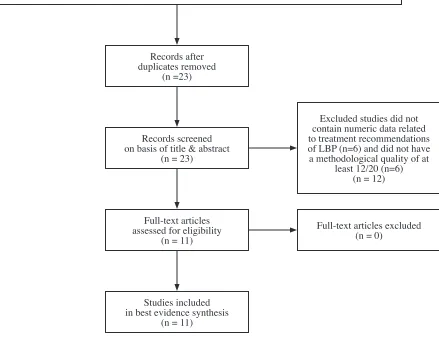
Of 23 studies initially identified, 6 did not contain num-eric data related to treatment recommendations of LBP, and 6 did not have a methodological quality of at least 12/20 so were not included in this study. Thus, 11 studies met the inclusion criteria outlined above, were relevant
Records in English identified through database searching articles published between January 1995 and July 2013. Medline, Web of Science, EMBASE, SportDiscus, Google Scholar and The Cochrane Library.
Reference lists examined until no new papers identified.
Records after duplicates removed
(n =23)
Records screened on basis of title & abstract
(n = 23)
Full-text articles assessed for eligibility
(n = 11)
Studies included in best evidence synthesis
(n = 11)
Excluded studies did not contain numeric data related to treatment recommendations of LBP (n=6) and did not have a methodological quality of at
least 12/20 (n=6) (n = 12)
Full-text articles excluded (n = 0)
Figure 1:
within the framework of this study, and contained data that provided insight into guideline adherence. Methodo-logical quality scores of the 11 studies included in this
review ranged from 12 to 19, with a mean of 16.4 (Table I), and data from these studies were used to estimate con-cordance scores for the EBG recommendations (Table II).
Table I
Methodological Quality Findings for Included Studies
Question and Wing Bishop (118)
Bishop et al (119)
Briggs et al (115)
Buchbinder and Jolley
(120)
Coudeyre et al (121)
Harte et al (122)
Li & Bombardier
(123)
Linton et al (124)
Little et al (125)
Pollentier & Langworthy
(126)
Walker et al (127) 1. Is the hypothesis/aim/objective of the study clearly
described? 1 1 1 1 1 1 1 1 1 1 1
2. Are the main outcomes to be measured clearly
described in the Introduction or Methods section? 1 1 1 1 1 1 1 1 1 0 1 3. Are the characteristics of the participants included in
the study clearly described? 0 1 1 1 1 1 1 0 0 1 1
4. Are the distributions of principal confounders in each
group of subjects to be compared clearly described? 1 1 1 0 2 1 2 1 0 1 1 5. Are the main findings of the study clearly described? 1 1 1 1 1 1 1 1 1 1 1 6. Does the study provide estimates of the random
variability in the data for the main outcomes? 0 1 1 1 1 1 1 1 1 1 1 7. Have actual probability values been reported (e.g.,
0.035 rather than <0.05) for the main outcomes except
where the probability value is less than 0.001? 0 0 1 0 1 1 0 1 0 1 0 8. Were the subjects asked to participate in the study
representative of the entire population from which they
were recruited? 1 1 1 0 1 1 1 1 0 1 1
9. Were those subjects who were prepared to participate representative of the entire population from which they
were recruited? 0 0 1 0 0 1 1 0 0 0 0
10. Were the staff, places, and facilities representative of
the treatment the majority of patients would receive? 1 1 0 1 1 1 1 1 0 1 1 11. If any of the results of the study were based on ‘data
dredging’, was this made clear? 1 1 1 1 1 1 1 1 1 1 1
12. Were the statistical tests used to assess the main
outcomes appropriate? 1 1 1 1 1 1 1 1 1 1 1
13. Were the main outcome measures used accurate (valid
and reliable)? 1 1 1 1 1 1 1 1 1 1 1
14. Was there adequate adjustment for confounding in the
analyses from which the main findings were drawn? 0 1 1 0 1 0 1 0 0 0 1 15. Did the study have sufficient power to detect clinically
important effects? 5 5 5 5 5 5 5 5 5 5 5
Total methodological quality points 14 17 18 14 19 18 19 16 12 16 17
Included studies
1. Bishop PB., Wing PC. Compliance with clinical practice guidelines in family physicians managing worker’s compensation board patients with acute lower back pain. Spine J. 2003;3:442-50.
2. Bishop A, Foster N, Thomas E, Hay E. How does the self-reported clinical management of patients with low back pain relate to the attitudes and beliefs of health practitioners? A survey of UK general practitioners and physiotherapists. Pain. 2008;135:187 – 95. PubMed PMID: doi:10.1016/j.pain.2007.11.010.
3. Briggs AM, Slater H, Smith AJ, Parkin-Smith GF, Watkins K, Chua J. Low back pain-related beliefs and likely practice behaviours among final-year cross-discipline health students. European Journal of Pain. 2012;doi: 10.1002/j.1532-2149.2012.00246.x.:[Epub ahead of print].
4. Buchbinder R, Jolley D. Improvements in general practitioner beliefs and stated management of back pain persist 4.5 years after the cessation of a public health media campaign. Spine (Phila Pa 1976). 2007;32:E156-62.
5. Coudeyre E, Rannou F, Tubach F, et al. General practitioners’ fear-avoidance beliefs influence their management of patients with low back pain. Pain. 2006; 124(330-7). 6. Harte A, Gracey J, Baxter G. Current use of lumbar traction in the management
of low back pain: results of a survey of physiotherapists in the United Kingdom. Archives Physical Medicine Rehabilitation. 2005;86:1164-9.
7. Li L, Bombardier C. Physical therapy management of low back pain: an exploratory survey of therapist approaches. Phys Ther. 1999;81:1018 – 28.
8. Linton S, Vlaeyen J, Ostelo R. The back pain beliefs of health care providers: are we fear-avoidant? J Occup Rehabil. 2002;12:223 – 32. PubMed PMID: doi:10.1023/A:1020218422974.
9. Little P, Smith L, Cantrell T, et al. General practitioners’ management of acute back pain: a survey of reported practice compared with clinical guidelines. BMJ. 1996 312:485-8.
10. Pollentier A, Langworthy J. The scope of chiropractic practice: A survey of chiropractors in the UK. Clinical Chiropractic. 2007;10:147 – 55. PubMed PMID: doi:10.1016/j.clch.2007.02.001.
Table II
GLC According to EBG Recommendation [Blank fields indicate no data]
Recommendation topic Study ChiropractorsFraction Percent PhysiotherapistsFraction Percent Medical PractitionersFraction Percent
Self-management and appropriate advice Briggs et al 41.7/46 91% 105.2/171 80% 80.3/176 52% Li and Bombardier 255.6/274
Linton et al 54.0/71 34.2/60
Little et al 94.5/163
Bed rest Briggs et al 39.0/46 97% 127.4/171 87% 114.6/176 86%
Buchbinder and Jolley 413.9/511
Coudeyre et al 785.9/845
Li and Bombardier 259.1/274 Walker et al 270.4/274
Physical Activity (including work) Bishop and Wing 55% 87% 30.6/139 71% Briggs et al 35.5/46 117.4/171 91.7/176
Buchbinder and Jolley 467.6/511
Li and Bombardier 267.7/274 Walker et al 139.7/274
Spinal manipulation Bishop and Wing 76% 18% 70.2/139 34%
Buchbinder and Jolley 143.1/511
Li and Bombardier 48.6/274
Little et al 33.2/66
Walker et al 208/274
Acupuncture Buchbinder and Jolley 93% 82% 107.3/511 38% Li and Bombardier 223.8/274
Little et al 149.5/159
Walker et al 254.1/274
Traction and short-wave diathermy Buchbinder and Jolley 95% 54% 281.1/511 55%
Harte et al 644.3/1239
Li and Bombardier 175.4/274 Walker et al 260.2/274
Recommends or uses physiotherapy Bishop and Wing 23% 50% 77.8/139 41% Briggs et al 10.6/46 85.3/171 40.3/176
Buchbinder and Jolley 219.7/511
Recommends or uses chiropractic Briggs et al 45.0/46 99% 17.4/171 10% 12.7/176 7% Pollentier and Langworthy 247.8/249
Appropriate use of diagnostic imaging Bishop and Wing 32% 88% 132.1/139 81%
Bishop et al 507.5/580 402.2/442
Buchbinder and Jolley 393.5/511
Walker et al 87.7/274
Medication Bishop and Wing N/A N/A 95.2/139 46%
Briggs et al 50.9/176
Buchbinder and Jolley 224.8/511
Trigger point injection therapy N/A N/A
Lumbar support Li and Bombardier 91% 258.6/274 94% Walker et al 250.7/274
Heat Li and Bombardier 42% 139.9/274 51%
Walker et al 116.3/274
Spinal mobilisation Li and Bombardier 69% 90.3/274 33% Walker et al 189.2/274
Red flags” and neural compression syndromes Bishop and Wing 60% 7.0/139 5% Li and Bombardier 164.4/274
Back-specific exercises Li and Bombardier 209.3/274 76%
TENS Buchbinder and Jolley 47% 132.9/511 49%
Li and Bombardier 128.8/274
LASER Li and Bombardier 267.2/274 98%
Ultrasound Li and Bombardier 155.4/274 57%
Massage Walker et al 134.8/274 49%
Reassurance
Fear avoidance and psychosomatic issues
Total: Average for recommendations where all professions had data 73.44% 61.78% 51.67%
Total: Overall for recommendations common to all three professions 70.15% 63.06% 47.08% Fraction = concordance to a particular recommendation where the denominator represents the total number of practitioners studied and the numerator represents the number of
Concordance Data
The numbers of EBG recommendations with concordance scores were 13 for chiropractors, 12 for medical practi-tioners and 17 for physiotherapists, and average concord-ance percentages over these recommendations were 70.2, 63.1 and 47.1 for each profession, respectively.
There were recommendations with concordance scores available for all three professions related to providing advice on self-management, bed rest and physical ac-tivity including work. Recommendations concerning the use of medications only had concordance scores for medical practitioners due to the inability of chiroprac-tors and physiotherapists to prescribe medication. Only physiotherapists had concordance scores for guidelines pertaining to back exercises and use of LASER, and only chiropractors had a score for the use of massage therapy. Of the recommendations common to all three profes-sions, chiropractors had the highest concordance scores for six, but the lowest concordance scores for three, and their average concordance was 73.4%. Average concord-ance was 61.8% for physiotherapists and 51.7% for med-ical practitioners. The score for chiropractors was notably negatively affected by imaging use which may technic-ally be considered a ‘triage guideline’.38
In regard to recommending their own therapy, chiro-practors scored 99% for recommending or using their treatment, while physiotherapists only scored 50% for recommending or using physiotherapy. In regard to rec-ommending each other’s discipline, chiropractors were more than twice as likely to recommend or use physio-therapy (23%) than physiotherapists were to recommend or use chiropractic (10%). Medical practitioners claim to recommended or use chiropractic and physiotherapy at very different rates: 41% for physiotherapy and 7% for chiropractic.
Although TENS and traction are considered ineffective or possibly harmful25, their dissuasion received a low con-cordance score of around 50% by physiotherapists. The use of spinal manipulation, received low recommenda-tions from both medical practitioners and physiotherapists with 33% and 17%, respectively. Likewise, medical prac-titioners and physiotherapists were not overly concord-ant with identifying red flags (5% and 60% respectively). Furthermore, medical practitioners had a lower rating for promoting self-management through advice than the other two professions (52% versus 80% and 91%).
Discussion
We examined the guideline adherence for the manage-ment of non-specific acute and subacute LBP reported in the literature relating to the professions of medicine, physiotherapy and chiropractic. These three professions were chosen because, between them, they deliver the vast majority of management of these conditions in Western societies. It is an important consideration that guidelines are intended to enable, guide, motivate, or sometimes ‘cajole’ physicians and health care providers to deliver certain types of care. However, they do not directly deter-mine the care provided to a particular patient.21 Although research is conducted and guidelines formulated for populations, their application in a specific case is still the domain of the individual practitioner. Our results, which demonstrated that no profession in the study consistently attained an overall high concordance rating (according to the Downs & Black scoring system), are consistent with other studies that demonstrate that many primary care physicians continue to be non-concordant.39-44
Utilisation
Medicine
Medical practitioners are the health professionals most likely to be consulted for spinal pain in developed coun-tries.46,53 Non-steroidal anti-inflammatory drugs and acetaminophen are popular treatments among medical practitioners and some studies find they are generally prescribed according to guidelines for acute LBP, and guideline recommendations against the use of antidepres-sants are followed. However, recent data from the USA demonstrate the opposite; ‘simple analgesia’ prescription rates are falling and inappropriate opioid prescription rates are rising, along with referral for surgical consulta-tion for non-specific back pain.55 Up to 45% of medical practitioners do not follow guidelines and prescribe oral steroids for acute LBP.39 A recent Australian study found guideline adherence for opioid prescription was poor; in fact, no medical practitioner in the study was always compliant with all guideline items, and only 31% usually followed most items.56 Given the pathway to misuse and abuse and the known illicit market for this class of drug, this is of significant concern. The rise in use of opioids for pain relief has in fact become a major issue for health care, placing a significant economic strain on developed economies.55,57
Scott et al. found that the majority of Canadian med-ical practitioners correctly recommended the use of heat or ice and discouraged prolonged bed rest for patients with acute LBP, although some studies still recorded high rates of discordance regarding the prescription of bed rest.46 Medical practitioners are more likely to be recep-tive to a guideline when they are aware of shortcomings in the care that they provide, however, somewhat iron-ically, those with a special interest in LBP are probably the group in greatest need of guidance58-60 For example, Di Iorio et al (2000) measured overall concordance in a sample of 87 family medical practitioners and found that 68% adhered to guidelines on LBP, but only 6% achieved a concordance level greater than 90%.39 Overmeer et al (2005) found no significant difference in practice behav-iour between Swedish medical practitioners who were familiar with guidelines and those who were not.61
Physiotherapy
Physiotherapists occupy a wide variety of roles in health care. These roles include working in hospitals, work-places, sports and community centres, women’s health
centres, rehabilitation centres, aged care facilities, mental health centres, chronic disease management centres, the private sector, schools, education and research facilities, and even with animals.62
Multiple studies indicate that passive interventions, such as electrotherapies, remain popular with physio-therapists, notwithstanding their lack of evidence.61,63-69 Treatments supported by guidelines, such as spinal ma-nipulation, are underused, whereas ineffective treatments are overused: specifically, contrary to guideline recom-mendations, transcutaneous electrical nerve stimulation (TENS) and ultrasound are still considered to be effective treatments for acute LBP by many physiotherapists (and medical practitioners).46,68 Contrary to the prevailing per-ception of the profession being strongly evidence-based, studies consistently demonstrate resistance to adoption of evidence-based practice among physiotherapists, even when specific education and post-graduate and profes-sional development training is undertaken.70,71
Chiropractic
for example, Imrie and Ramney (2003) found an average of 37.0% of medical practice to be based on RCTs (nota-bly excluding spinal care).82
General
Scott, Moga and Harstall use the term “Know-Do Gap” (2010) in their robust work and concluded that
“Guide-lines are often used to establish standards of care and provide a benchmark for evidence-based practice, but their directives are not always heeded”.46
Several studies have investigated possible explanations for the high levels of non-concordance with guidelines demonstrated by health professionals. Li and Bombardier (2001) concluded that only half of the (physical) ther-apists in their study confirmed the usefulness of practice guidelines in managing any clinical conditions, including LBP.63 This finding may indicate some reluctance to em-brace guidelines, especially for managing acute lumbar impairment. Other studies included patients’ demands83, excessive commitment to particular modes of therapy, lack of awareness or outcome expectancy, inertia of pre-vious practice43, and the health care practitioners’ own perceptions of treatment effectiveness84 as reasons for dis-cordance with guidelines.
Education
Suboptimal guideline adherence by medical practition-ers in the management of spinal pain may be related to deficiency of musculoskeletal medicine in undergraduate medical education, a phenomenon not lost on the World Health Organization.85-87 This observation has resulted in a number of follow-up studies highlighting the deficien-cies of medical management of spinal pain compared to physiotherapists and chiropractors88,89 and medicine in general46,90. Our study is consistent with this phenomenon with medical practitioners scoring lowest of the three.
Red Flags
Of some concern is the lack of concordance in identifying ‘red flags’. Red flags are features of the patient’s med-ical history and clinmed-ical examination that may suggest a higher risk of serious disorders, such as infection, inflam-matory disease, cancer or fracture.91-93 The exclusion of specific pathologies is step one of the clinical assessment, and clinical guidelines recommend that the identification of ‘red flags’ as the ideal method to accomplish this.94,95
Approximately 10% of all malignancies have symptom-atic spine involvement as the initial manifestation of the disease, including multiple myeloma, non-Hodgkin’s lymphoma, and carcinoma of the lung, breast and pros-tate.96 Early detection and treatment of spinal malignan-cies are important to prevent further spread of metastatic disease and the development of complications such as vertebral fracture and spinal cord compression.97 One rea-son put forward for the low rate of concordance in the red flag category is that, despite their inclusion in the guide-lines and their apparent clinical importance, the useful-ness of screening using ‘red flags’ in patients with LBP continues to be robustly debated, and there remains very little information on their diagnostic accuracy and how best to use them in clinical practice.91,93,98
Medications
Our findings in regard to the administration of medications are also consistent with a number of recent studies that have examined comparative competence and attitudes to-ward evidence-based practice among primary spinal care practitioners. Di Iorio (2000) found many medical prac-titioners recommend drugs discouraged by the applicable guideline.39 Although we did not categorise the types of medications, this trend is consistent with other studies that show that, despite there being no clear evidence sup-porting the prescription of, for example; antidepressants in the treatment of LBP, up to 23% of general practice physicians prescribe antidepressants.39,99-102
Referral Patterns
the perception that alternative care providers could be a threat to their practices. Some of the medical practition-ers also mentioned that they do not know enough about chiropractic to have an opinion or do not view chiroprac-tic as a legitimate health profession; they thereby fear malpractice litigation108, or it may simply be a manifest lack of inter-professional trust109. Traditionally, medical practitioners receive little training in common musculo-skeletal problems in undergraduate medical school, dur-ing medical internship, and in post-graduate education and often have limited knowledge about the suite of non-pharmacological treatments available to patients. Surveys and interviews indicate that medical practitioners have a lack of confidence in examining and providing treatment to patients with back pain, and many medical practition-ers feel ill-equipped, often relying on pharmacological management instead of referring to those musculoskel-etal practitioners such as musculoskelmusculoskel-etal physiother-apists, chiropractors and osteopaths that are specifically equipped to deliver manual therapy.58,110 The impact of low referral rates to chiropractors and other manual ther-apists is not benign but manifests in greater suffering and expense to the patients who present with LBP. Cost-ef-fectiveness data from randomised clinical trials indicate that primary care for patients with LBP is not cost-effect-ive unless it also involves one or more added compon-ents such as exercise, spinal manipulation or behavioural counselling.111,112 Indeed the North American Spine Soci-ety recommends spinal manipulation—5 to 10 sessions over 2 to 4 weeks—should be considered before surgery or narcotics.113
Another finding of this study was that 99% of chiro-practors would recommend or use chiropractic care for treatment of LBP, but only 50% of physiotherapists would recommend or use physiotherapy. One reason for this trend may be that some physiotherapists still use mo-dalities that have questionable effectiveness and result in unfavourable patient outcomes. For example, Li and Bombardier (2001) found mechanical spinal traction, which has consistently been shown to be of little benefit for acute and subacute lumbar impairment and is not rec-ommended by the guidelines, was preferred by about 30% of the physical therapists in their study for acute sciatica. In the same study, Li and Bombardier also found that, de-spite the reported success of spinal manipulation in the treatment of LBP, only 5% of the physical therapists
re-ported that they would use spinal manipulation to treat patients with acute lumbar impairment, as compared with more than a third of the therapists who indicated that they would use mobilisation, which may not be as effective.63 This discrepancy could be explained by the small num-ber of therapists in the study who were trained to perform spinal manipulation. Although most of the respondents in the study had received postgraduate training in manual therapy, only 8.8% completed courses that included joint manipulation.
Beliefs
Another explanation may suggest a difference in belief systems that each profession holds with respect to treat-ment of LBP and the confidence level they hold for the desired patient outcomes. While some chiropractors may hold unorthodox views which are in contrast to current scientific paradigms, at least in Canada they are definitely a minority.114 In a study that looked specifically at be-liefs held by 600 university undergraduate students in the health care professions, Briggs et al. (2012) found chiro-practic, and to a lesser extent physiotherapy students, re-ported significantly more helpful beliefs for management of spinal pain compared with the other disciplines, while medical and pharmacy students reported the least helpful beliefs. Although this study did not look specifically at the interventions of practicing health professionals, one could predict that beliefs, at least to a certain degree, may influ-ence actions. If this is true, the high levels of concordance with recommendations for physical activity, work and bed rest across disciplines may reflect practitioners’ beliefs.115 One is left to wonder what is worse, to know and not do, or not know in the first place?46
Given the substantial financial and other resources de-voted to formulating guidelines, the question could be reasonably asked; “who cares, since so many
practition-ers don’t follow them?” Health authorities clearly care
to corroborate existing evidence of the comparative cost-effectiveness of chiropractic.117
Limitations of the Study
The authors recognize the methodological study limita-tions with respect to adapting the appraisal tool to assess concordance and when comparing results from different studies that used various designs. In addition, while as-sessment of LBP can include ordering of imaging studies for some patients, concordance was not assessed in great detail in our study.
Lack of data in several categories for all professions limited our comparisons, although this seems to be min-imal since averages of the guidelines where all profes-sions had data (medicine 51.7%; physiotherapy 61.8%; chiropractic 73.4%) and the overall averages (medicine 47.1%; physiotherapy 63.1%; chiropractic 70.2%) were relatively unchanged.
This study was not designed as a systematic review, rather a best evidence synthesis so it was thorough but not exhaustive. Papers prior to 1995 were excluded; as there was less homogeneity of guidelines prior to that time, it would not be relevant to evaluate concordance to guide-lines that did not exist at the time. While our study was ‘systematic’, it was not a systematic review (according to all the PRISMA protocols), due to the constraints of hu-man and financial resources available.
Despite the limitations, we believe that the findings from this work are important. To our knowledge, this is the first in-depth study comparing the practice behaviors of medical practitioners, physiotherapists and chiroprac-tors with respect to guideline adherence for acute and sub-acute non-malignant mechanical LBP.
The authors caution that this study should not be con-sidered an end, but a beginning. Although the chiropractic profession in our study fared the best of the three, this is by no means a cause for complacency, rather it highlights the need for further research, especially within the chiro-practic sector.
Conclusion
Adoption of evidence-based practice continues to be a challenge for chiropractors, physiotherapists and medical practitioners as no profession attained satisfactorily high guideline adherence in our view.
We found chiropractors have the highest levels of
guideline adherence, and chiropractors and physiother-apists are both significantly more guideline concordant than medical practitioners with respect to management of acute and subacute low back pain. It seems clear that med-ical practitioners often rely on pharmacologmed-ical manage-ment instead of referring to musculoskeletal practitioners, who are specifically equipped to deliver manual care and other appropriate management that has a robust evidence basis. The impact of low referral rates to chiropractors and other manual therapists is not benign but manifests in greater suffering and more expense to the patients who present with acute and subacute low back pain.
More quality research is urgently needed in order to ac-curately determine levels of guideline adherence and just as importantly identify the reasons that practitioners are not concordant with guidelines. Wider concordance with guidelines for management of spinal pain has the potential to result in significant savings in health care expenditure and a significant reduction in disability and morbidity.
Abbreviations
EBG: Evidence-Based Guideline GP: General Practitioner (Australia)
LASER: Light Amplification by Stimulated Emission of Radiation Therapy
LBP: Low Back Pain
SMT: Spinal Manipulative Therapy
TENS: Transcutaneous Electrical Nerve Stimulation
Competing interests
• The authors declare they have no competing interests beyond LA-W, RB and GP-S being registered chiro-practors.
• JL was supported with a stipend as a research assist-ant.
Authors’ contributions
• LW conceived the work, conducted literature search-es, drafted and reviewed the text.
• RB conducted literature searches, cross-checked and analysed results, drafted and reviewed the text.
• GPS reviewed and edited the text.
• JL compiled and analysed data and reviewed the text. • AB drafted and reviewed the text, conducted statistical
analysis.
References
1. Itz CJ, Geurts JW, van Kleef M, Nelemans P. Clinical course of non-specific low back pain: A systematic review of prospective cohort studies set in primary care. European J Pain. 2013;17(1):5-15.
2. Henschke N, Maher CG, Refshauge KM, Herbert RD, Cumming RG, Bleasel J, et al. Prognosis in patients with recent onset low back pain in Australian primary care: inception cohort study. BMJ. 2008 2008-07-07 00:00:00;337.
3. Pengel L, Herbert R, Maher C, Refshauge K. Acute low back pain: systematic review of its prognosis. BJM. 2003:327:3.
4. Hayden J, van Tulder M, Malmivaara A, Koes B. Exercise therapy for treatment of non-specific low back pain (review). Cochrane Database Syst Rev. 2005;CD000335.
5. Goertz M, Thorson D, Bonsell J, Bonte B, Campbell R, Haake B, et al. Adult Acute and Subacute Low Back Pain. Institute for Clinical Systems Improvement [Internet]. Updated November 2012. Available from: https://www.icsi.org/_asset/bjvqrj/LBP.pdf.
6. Vasseljen O, Woodhouse A, Bjørngaard J, Leivseth L. Natural course of acute neck and low back pain in the general population: the HUNT study. Pain. 2013;154(8):1237-44.
7. Leboeuf-Yde C, Lemeunier N, Wedderkopp N, Kjaer P. Absence of low back pain in the general population followed fortnightly over one year with automated text messages. Chiropractic & Manual Therapies. 2014;22(1):1. PubMed PMID: doi:10.1186/2045-709X-22-1.
8. AIHW. Arthritis and musculoskeletal conditions in Australia. Canberra: Australian Institute of Health and Welfare; 2005.
9. Buchbinder R., Jolley D., Wyatt M. Breaking the back of back pain. Med J Aust. 2001;175:456-7.
10. Wildenhaus K. Feeling the economic effects of back pain. AHIP Coverage. 2004;45(3):78-80, 2, 4. 11. Martin BI, Deyo RA, Mirza SK, Turner JA,
Comstock BA, Hollingworth W, et al. Expenditures and health status among adults with back and neck problems. JAMA. 2008;299(6):656-64.
12. Martin BI, Turner JA, Mirza SK, Lee MJ, Comstock BA, Deyo RA. Trends in health care expenditures, utilization, and health status among US adults with spine problems, 1997-2006. Spine. 2009;34(19):2077-84.
13. Foster N. Barriers and progress in the treatment of low back pain. BMC Med. 2011;9(1):108. PubMed PMID: doi:10.1186/1741-7015-9-108.
14. Slater H, Briggs AM, Smith AJ, Bunzli S, Davies SJ, Quintner JL. Implementing evidence-informed policy into practice for health care professionals managing people with low back pain in Australian rural settings:
A preliminary prospective single-cohort study. Pain Medicine. 2014:online preview.
15. CMA Infobase: Clinical Practice Guidelines (CPGs): Canadian Medical Association. Available from: http:// www.cma.ca/cpgs/.
16. UK Clinical Guidelines. Available from: http://www.patient.co.uk/guidelines.asp.
17. National Guideline Clearinghouse: US Department of Health & Human Services; Agency for Healthcare Research and Quality. Available from:
http://www.guideline.gov/.
18. (G-I-N): The Guidelines International Network Available from: http://www.g-i-n.net/about-g-i-n.
19. Carthey J, Walker S, Deelchand V, Vincent C, Harrop Griffiths W. Breaking the rules: understanding non-compliance with policies and guidelines. BMJ. 2011 2011-09-13 00:00:00;343.
20. Cherkin D, Kovacs F, Croft P, Borkan J, Foster N, Oberg B, et al. The Ninth International Forum For Primary Care Research On Low Back Pain. International Organizing Committee Of The Ninth International Forum For Primary Care Research On Low Back Pain And All The Participants. Spine. 2009;34:304-7.
21. Eddy DM. Evidence-based medicine: A unified approach. Health Affairs. 2005;24(1):9-17.
22. Guyatt G, Oxman A, Kunz R, Falck-Ytter Y, Vist G, Liberati A, et al. Rating quality of evidence and strength of recommendations: Going from evidence to recommendations. BMJ. 2008;336(7652):1049-51. 23. Schunemann H, Best D, Vist G, Oxman A. Letters,
numbers, symbols and words: how to communicate grades of evidence and recommendations. CMAJ. 2003;169:677-80.
24. CBA. Code of Conduct for Chiropractors 2010. Available from: http://www.chiropracticboard.gov.au/index.php. 25. Department of Health WA. Spinal Pain Model of Care.
Perth: Health Networks Branch, Department of Health, Western Australia. 2009.
26. TAC and WorkSafe Victoria. Clinical Framework for the delivery of Health Services 2004. Available from: www.worksafe.vic.gov.au, www.tac.vic.gov.au. 27. Parkin-Smith GF, Norman IJ, Briggs E, Angier E,
Wood TG, Brantingham JW. A structured protocol of evidence-based conservative care compared with usual care for acute nonspecific low back pain: A randomized clinical trial. Arch Phys Med Rehab. 2012;93(1):11-20. 28. Livingston C, King V, Little A, Pettinari C, Thielke A,
29. Guidelines for Chiropractic Quality Assurance Practice Parameters. New York: Aspen Publishers, Inc; 1993. 30. Airaksinen O, Brox J, Cedraschi C, Hildebrandt J,
Klaber-Moffett J, Kovacs F, et al. COST B13 European guidelines for the management of chronic non-specific low back pain. Eur Spine J. 2006;15:S192 – S300. PubMed PMID: doi:10.1007/s00586-006-1072-1. 31. Dagenais S, Tricco AC, Haldeman S. Synthesis of
recommendations for the assessment and management of low back pain from recent clinical practice guidelines. The Spine Journal. 2010;10(6):514-29.
32. Koes B, van Tulder M, Lin C, Macedo L, McAuley J, Maher C. An updated overview of clinical guidelines for the management of non-specific low back pain in primary care. Eur Spine J. 2010;19:2075 – 94. PubMed PMID: doi:10.1007/s00586-010-1502-y.
33. Burton K, et al. The Back Book – UK Edition 2nd Edition: TSO (The Stationery Office); 2002. 34. Downs SH, Black N. The feasibility of creating a
checklist for the assessment of the methodological quality both of randomised and non-randomised studies of health care interventions. J Epidemiol Community Health. 1998 Jun;52(6):377-84. PubMed PMID: 9764259. Pubmed Central PMCID: PMC1756728. Epub 1998/10/09. eng.
35. Kaminskyj A, Frazier M, Johnstone K, Gleberzon BJ. Chiropractic care for patients with asthma: A systematic review of the literature. J Can Chiropr Assoc. 2010 Mar;54(1):24-32. PubMed PMID: 20195423. Pubmed Central PMCID: PMC2829683. Epub 2010/03/03. eng. 36. Crowe M, Sheppard L. A review of critical appraisal
tools show they lack rigor: Alternative tool structure is proposed. J Clinical Epidemiology. 2011 1//;64(1):79-89. 37. Katrak P, Bialocerkowski A, Massy-Westropp N,
Kumar VS, Grimmer K. A systematic review of the content of critical appraisal tools. BMC Medical Research Methodology. 2004;4(1):22. PubMed PMID: doi:10.1186/1471-2288-4-22.
38. Ammendolia C, Côté P, Hogg-Johnson S, Bombardier C. Do chiropractors adhere to guidelines for back
radiographs?: A study of chiropractic teaching clinics in Canada. Spine. 2007;32(22):2509-14 10.1097/ BRS.0b013e3181578dee.
39. Di Iorio D., Henley E., Doughty A. A survey of primary care physician practice patterns and adherence to acute low back problem guidelines. Arch Fam Med. 2000;9(10).
40. Webster BS. CT, Huang YH., Matz S., Christiani DC. Physicians’ initial management of acute low back pain versus evidence-based guidelines. Influence of sciatica. J Gen Intern Med. 2005;20:1132-5.
41. Mahmud M, Webster B, Courtney T, et al. Clinical management and the duration of disability for work-related low back pain. J Occup Env Med / American
College of Occupational and Environmental Medicine. 2000;42:1178-87.
42. Schers H, Braspenning J, Drijver R, et al. Low back pain in general practice: reported management and reasons for not adhering to the guidelines in The Netherlands. British J General Practice : the Journal of the Royal College of General Practitioners. 2000;50:640-4.
43. Cherkin D, Deyo R, Wheeler K, Ciol M. Physician views about treating low back pain. The results of a national survey. Spine (Phila Pa 1976). 1995;20:1-9; discussion -10.
44. Fritz JM CJ, Brennan GP. . Does adherence to the guideline recommendation for active treatments improve the quality of care for patients with acute low back pain delivered by physical therapists? . Medical care. 2007;45:973-80.
45. Nyiendo J., Haas M., Goldberg B., Sexton G. Pain, disability, and satisfaction outcomes and predictors of outcomes: A practice-based study of chronic low back pain patients attending primary care and chiropractic physicians. J Manip Physiol Ther. 2001;24:433-9. 46. Scott N, Moga C, Harstall C. Managing low back pain
in the primary care setting: The know-do gap. Pain Res Manage. 2010;15(6):392.
47. Devereaux MW. Low back pain. Prim Care. 2004;31:33-51.
48. Werner EL., Ihlebaek C., Skouen JS., Laerum E. Beliefs about low back pain in the Norwegian general population: Are they related to pain experiences and health professionals? Spine. 2005;30:1770-6.
49. Poitras S, Blais R, Swaine B, Rossignol M. Management of work-related low back pain: A population-based survey of physical therapists. Physical Therapy. 2005 November 2005;85(11):1168-81.
50. Foster NE, Thompson KA, Baxter GD, Allen JM. Management of nonspecific low back pain by physiotherapists in Britain and Ireland: A descriptive questionnaire of current clinical practice. Spine. 1999;24(13):1332.
51. McManus E, Mior S. ACC Conference Proceedings; Impact of provincial subsidy changes on chiropractic utilization in Canada. J Chiropr Educ. 2013;27(1):73. 52. Sibbritt D, Adams J. Back pain amongst 8,910 young
Australian women: a longitudinal analysis of the use of conventional providers, complementary and alternative medicine (CAM) practitioners and self-prescribed CAM. Clinical Rheumatology. 2010;29(1):25-32.
53. Walker BF, Muller R, Grant WD. Low back pain in Australian adults. Health provider utilization and care seeking. J Manipulative Physiol Ther. 2004;27(5):327 – 35. PubMed PMID: doi:10.1016/j.jmpt.2004.04.006. 54. Engel R, Brown B, Swain M, Lystad R. The provision
of recent trends. Chiropractic & Manual Therapies. 2014;22(1):3. PubMed PMID: doi:10.1186/2045-709X-22-3.
55. Mafi JN, McCarthy EP, Davis RB, Landon BE. Worsening trends in the management and treatment of back painback pain treatment trendsback pain treatment trends. JAMA Internal Medicine. 2013;173(17):1573-81. 56. Holliday S, Magin P, Dunbabin J, Oldmeadow C,
Henry J-M, Lintzeris N, et al. An evaluation of the prescription of opioids for chronic nonmalignant pain by Australian general practitioners. Pain Medicine. 2013;14(1):62-74.
57. Manchikanti L., Singh V., Datta S., Cohen SP., Hirsch JA. Comprehensive review of epidemiology, scope, and impact of spinal pain. Pain Physician. 2009;12(4):E35-70.
58. Williams C, Maher C, Hancock M, et al. Low back pain and best practice care: A survey of general practice physicians. Arch Intern Med. 2010;170:271-7.
59. Buchbinder R, Staples M, Jolley D. Doctors with a special interest in back pain have poorer knowledge about how to treat back pain. Spine. 2009;34(11):1218-26 10.097/BRS.0b013e318195d688.
60. Rashidian A, Eccles M, Russell I. Falling on stony ground? A qualitative study of implementation of clinical guidelines’ prescribing recommendations in primary care. Health Policy. 2008;85:148-61.
61. Overmeer T., Linton SJ., Holmquist L., Eriksson M., Engfeldt P. Do evidence-based guidelines have an impact in primary care? A cross-sectional study of Swedish physicians and physiotherapists. Spine. 2005;30:146-51. 62. Australian Physiotherapy Association Website 2011.
Available from: http://www.physiotherapy.asn.au/careers/ overview.
63. Li LC, Bombardier C. Physical therapy management of low back pain: An exploratory survey of
therapist approaches. Physical Therapy. 2001 April 2001;81(4):1018-28.
64. Linton S, Vlaeyen J, Ostelo R. The back pain beliefs of health care providers: are we fear-avoidant? J Occup Rehabil. 2002;12(223-32).
65. Scudds RJ, Scudds RA, Baxter GD, McDonough SM, Walsh DM. Transcutaneous electrical nerve stimulation for the treatment of pain in physiotherapy practices in Hong Kong and the United Kingdom—A survey of usage and perceived effectiveness compared with other pain relieving modalities. Hong Kong Physiotherapy J. 2009;27(1):11-20.
66. Hurwitz EL, Morgenstern H, Harber P, Kominsky GF, Belin TR, Yu F, et al. The effectiveness of physical modalities among patients with low back pain randomized to chiropractic care: Findings from the UCLA Low Back Pain Study. J Manip Physiol Thera. 2002;25(1):10-20.
67. van Tulder M, Koes B, Malmivaara A. Outcome of non-invasive treatment modalities on back pain: an evidence-based review. Eur Spine J. 2006;15(Suppl 1):S64 – 81. PubMed PMID: doi:10.1007/s00586-005-1048-6. 68. Seco J, Kovacs FM, Urrutia G. The efficacy, safety,
effectiveness, and cost-effectiveness of ultrasound and shock wave therapies for low back pain: a systematic review. The Spine Journal. 2011;11(10):966-77. 69. Balagué F, Dudler J. An overview of conservative
treatment for lower back pain. International J Clin Rheum. 2011;6(3):281-90.
70. Daykin A, Richardson B. Physiotherapists’ pain beliefs and their influence on the management of patients with chronic low back pain. Spine. 2004;29(7):783-95. 71. Stevenson K, Lewis M, Hay E. Do physiotherapists’
attitudes towards evidence-based practice change as a result of an evidence-based educational programme? J Evaluation In Clinical Practice. 2004;10(2):207-17. PubMed PMID: 15189387. . Date Revised: 20060918. Date Created: 20040610. Date Completed: 20041007. Update Code: 20101124. Publication Type: Clinical Trial. 72. Tetrault M. Chiropractic Diplomatic Corps 2011.
Available from: http://www.chiropracticdiplomatic.com/ country/.
73. Hoskins W, Pollard H, Reggars J, Vitiello A, Bonello R. Journal publications by Australian chiropractic
academics: are they enough? Chiropractic & Osteopathy. 2006;14(1):13. PubMed PMID: doi:10.1186/1746-1340-14-13.
74. Australian Bureau of Statistics. National Health Survey: Summary of Results 2004-05. Feb 2006.
75. ABS. Chiropractic and Osteopathic Services in Australia. Canberra: Australian Bureau of Statistics; 1998.
76. Charity M, French S, Forsdike K, Britt H, Polus B, Gunn J. Extending ICPC-2 PLUS terminology to develop a classification system specific for the study of chiropractic encounters. Chiropractic & Manual Therapies. 2013;21(1):4. PubMed PMID: doi:10.1186/2045-709X-21-4.
77. Lutzer K. Moving from Anecdote to Evidence. J Can Chiropr Assoc. 2006;50(4):235-7.
78. DeVocht JW. History and overview of theories and methods of chiropractic: A counterpoint. Clinical Orthopaedics and Related Research. 2006;444:243-9. 79. Breen A, van Tulder M, Koes B, Jensen I, Reardon R,
Bronfort G. Mono-disciplinary or multidisciplinary back pain guidelines? How can we achieve a common message in primary care? Eur Spine J. 2006;15(5):641-7. 80. The Free Medical Dictionary. Definition of Chiropractic
2011. Available from: http://medical-dictionary. thefreedictionary.com/chiropractic.
81. Wenban AB. Is chiropractic evidence based? A pilot study. J Manip Physiol Ther. 2003;26(1):47.
medicine. Complementary Therapies in Medicine. 2000;8(2):123-6.
83. Klingman D, Localio A, Sugarman J, et al. Measuring defensive medicine using clinical scenario surveys. J Health Politics, Policy and Law. 1996;21:185-217. 84. Tomlin Z, Humphrey C, Rogers S. General
practitioners’ perceptions of effective health care. BMJ. 1999;318:1532-5.
85. Åkesson K, DreinhöferII K, Woolf A. Improved education in musculoskeletal conditions is necessary for all doctors. Bulletin of the World Health Organization. 2003 Sept 2003;81:677-83.
86. Freedman KB, Bernstein J. The adequacy of medical school education in musculoskeletal medicine. J Bone Joint Surg Am. 1998;80(10):1421-7.
87. Freedman KB, Bernstein J. Educational deficiencies in musculoskeletal medicine. J Bone Joint Surg Am. 2002;84-A:604 – 8.
88. Childs J, Whitman J, Sizer P, Pugia M, Flynn T, Delitto A. A description of physical therapists’ knowledge in managing musculoskeletal conditions. BMC Musculoskeletal Disorders. 2005;6(1):32. PubMed PMID: doi:10.1186/1471-2474-6-32.
89. Humphreys BK, Sulkowski A, McIntyre K, Kasiban M, Patrick AN. An examination of musculoskeletal cognitive competency in chiropractic interns. J Manip Physiol Ther. 2007;30(1):44-9.
90. Carey T, Freburger J, Holmes G, Castel L, Darter J, Agans R, et al. A long way to go: Practice patterns and evidence in chronic low back pain care. Spine. 2009;34(7):718-24.
91. Downie A, Williams CM, Henschke N, Hancock MJ, Ostelo RW, de Vet HC, et al. Red flags to screen for malignancy and fracture in patients with low back pain: systematic review. BMJ: British Medical Journal. 2013;347.
92. Waddell G. The back pain revolution: Churchill Livingstone; 2004.
93. Underwood M. Diagnosing acute nonspecific low back pain: Time to lower the red flags? Arthritis & Rheumatism. 2009;60(10):2855.
94. Koes B, van Tulder M, Ostelo R, Burton A, Waddell G. Clinical guidelines for the management of low back pain in primary care: an international
comparison. Spine. 2001;26:2504 – 13. PubMed PMID: doi:10.1097/00007632-200111150-00022.
95. Amorin-Woods L, Parkin-Smith G. Clinical decision-making to facilitate appropriate patient management in chiropractic practice: ‘the 3-questions model’. Chiropr Man Therap. 2012;20(1):6. PubMed PMID: doi:10.1186/2045-709X-20-6.
96. Sciubba D, Gokaslan Z. Diagnosis and management of metastatic spine disease. Surgical Oncology. 2006;15::141-51.
97. Loblaw D, Perry J, Chambers A, Laperriere N.
Systematic review of the diagnosis and management of malignant extradural spinal cord compression: the Cancer Care Ontario Practice Guidelines Initiative’s Neuro-Oncology Disease Site Group. J Clinical Neuro-Oncology : official Journal of the American Society of Clinical Oncology. 2005; 23:2028-37.
98. Ferguson F, Holdsworth L, Rafferty D. Low back pain and physiotherapy use of red flags: the evidence from Scotland. Physiotherapy. 2010;96:282-8.
99. Urquhart D, Hoving J, Assendelft W, et al.
Antidepressants for non-specific low back pain. Cochrane Database Syst Rev. 2008;CD001703.
100. Salerno S, Browning R, Jackson J. The effect of antidepressant treatment on chronic back pain: a meta-analysis. Arch Intern Med. 2002;162:19-24.
101. Staiger T, Gaster B, Sullivan M, Deyo R. Systematic review of antidepressants in the treatment of chronic low back pain. Spine (Phila Pa 1976). 2003;28:2540-5. 102. Schnitzer T, Ferraro A, Hunsche E, Kong S.
A comprehensive review of clinical trials on the efficacy and safety of drugs for the treatment of low back pain. J Pain and Symptom Management. 2004;28:72-95. 103. Peckham C. The Physician: Healthy, Wealthy, and Wise?
Jan 23, 2014 Available from: http://www.medscape.com/ viewarticle/819212_1.
104. Greene B, Smith M, Allareddy V, Haas M. Referral patterns and attitudes of primary care physicians towards chiropractors. BMC Complementary and Alternative Medicine. 2006;6:5.
105. White A, Resch K, Ernst E. Complementary medicine: use and attitudes among GPs. Family Practice. 1997;14:302-6. 106. Berman B, Singh B, Lao L, et al. Physicians’ attitudes
toward complementary or alternative medicine: a regional survey. The Journal of the American Board of Family Practice / American Board of Family Practice. 1995;8:361-6.
107. Blumberg D, Grant W, Hendricks S, et al. The physician and unconventional medicine. Alternative Therapies in Health and Medicine. 1995;1:31-5.
108. Studdert D, Eisenberg D, Miller F, et al. Medical malpractice implications of alternative medicine. JAMA: the Journal of the American Medical Association. 1998;280:1610-5.
109. Nelson C, Lawrence D, Triano J, Bronfort G, Perle S, Metz RD, et al. Chiropractic as spine care: a model for the profession. Chiropractic & Osteopathy. 2005;13(1):9. PubMed PMID: doi:10.1186/1746-1340-13-9.
110. Breen A, Austin H, Campion-Smith C, et al. “You feel so hopeless”: a qualitative study of GP management of acute back pain. Eur J Pain. 2007 11:21-9.
112. Evidence-Based Care That Includes Chiropractic Manipulation More Effective Than Usual Medical Care. The Back Letter. 2008;23(1):3 10.1097/01. BACK.0000310518.20803.b3.
113. Dagenais S, Gay RE, Tricco AC, Freeman MD,
Mayer JM. NASS Contemporary concepts in spine care: Spinal manipulation therapy for acute low back pain. The Spine Journal. 2010 10//;10(10):918-40.
114. McGregor M, Puhl A, Reinhart C, Injeyan H, Soave D. Differentiating intraprofessional attitudes toward paradigms in health care delivery among chiropractic factions: results from a randomly sampled survey. BMC Complementary and Alternative Medicine. 2014;14(1):51. PubMed PMID: doi:10.1186/1472-6882-14-51.
115. Briggs AM, Slater H, Smith AJ, Parkin-Smith GF, Watkins K, Chua J. Low back pain-related beliefs and likely practice behaviours among final-year cross-discipline health students. European J Pain. 2012;doi: 10.1002/j.1532-2149.2012.00246.x.:[Epub ahead of print].
116. Back Pain Recognition Program: NCQA. Available from: http://www.ncqa.org/Programs/Recognition/ BackPainRecognitionProgramBPRP.aspx.
117. Davis MA, Martin BI, Coulter ID, Weeks WB. US Spending On Complementary And Alternative Medicine During 2002–08 Plateaued, Suggesting Role In Reformed Health System. Health Affairs. 2013 January 1, 2013;32(1):45-52.
118. Bishop PB., Wing PC. Compliance with clinical practice guidelines in family physicians managing worker’s compensation board patients with acute lower back pain. Spine J. 2003;3:442-50.
119. Bishop A, Foster N, Thomas E, Hay E. How does the self-reported clinical management of patients with low back pain relate to the attitudes and beliefs of health
practitioners? A survey of UK general practitioners and physiotherapists. Pain. 2008;135:187 – 95. PubMed PMID: doi:10.1016/j.pain.2007.11.010.
120. Buchbinder R, Jolley D. Improvements in general practitioner beliefs and stated management of back pain persist 4.5 years after the cessation of a public health media campaign. Spine (Phila Pa 1976). 2007;32:E156-62.
121. Coudeyre E, Rannou F, Tubach F, et al. General practitioners’ fear-avoidance beliefs influence their management of patients with low back pain. Pain. 2006; 124(330-7).
122. Harte A, Gracey J, Baxter G. Current use of lumbar traction in the management of low back pain: results of a survey of physiotherapists in the United Kingdom. Arch Phys Med Rehab. 2005;86:1164-9.
123. Li L, Bombardier C. Physical therapy management of low back pain: an exploratory survey of therapist approaches. Phys Ther. 1999;81:1018 – 28.
124. Linton S, Vlaeyen J, Ostelo R. The back pain beliefs of health care providers: are we fear-avoidant? J Occup Rehabil. 2002;12:223 – 32. PubMed PMID: doi:10.1023/A:1020218422974.
125. Little P, Smith L, Cantrell T, et al. General practitioners’ management of acute back pain: a survey of reported practice compared with clinical guidelines. BMJ. 1996 312:485-8.
126. Pollentier A, Langworthy J. The scope of chiropractic practice: A survey of chiropractors in the UK. Clinical Chiropractic. 2007;10:147 – 55. PubMed PMID: doi:10.1016/j.clch.2007.02.001.
Appendix 1: Search Terms
Main search terms Relevant associated words
Clinical Guidelines Guideline AND/OR Protocol AND/OR Clinical guideline AND/OR Model of Care AND/OR evidence based guideline
Low Back Pain Back pain AND/OR Low back pain AND/OR Non-malignant low back pain AND/OR Mechanical low back pain AND/OR Non-specific low back pain AND/OR Subacute low back pain