© Global Society of Scientific Research and Researchers
http://ijcjournal.org/
Development of Human Resource Assessment and
Selection Model for Computer System Design
Irakli Basheleishvili
a*, Avtandil Bardavelidze
ba,b
Akaki Tsereteli State University, Kutaisi,4600, Georgia
a
Email: [email protected]
bEmail:[email protected]
Abstract
The paper offers the model of assessment and selection of human resources, which is based on a multi-criteria
expert method – a TOPSIS method. The proposed model allows us for carrying out assessment and selection of
human resources based on the results of expert estimates and testing. The use of this model will allow us for
developing a computer-based system supporting the decision-making on assessment and selection of human
resources.
Keywords: Human Resource; Model; TOPSIS; Multiple-Criteria Decision; Assessment; Selection.
1.Introduction
Human resource is the most critical resource that significantly determines the effectiveness of any organization
that ensures the successful functioning of the organization. Humans are important resources for the organization,
they determine the company’s future strategy, but the implementation of strategy itself is carried out by humans.
Humans participate in producing surplus value, and in company management, but they may also cause large
losses to company by making mistakes. The main part of the mistakes made by human resource is due to their
unskillfulness. In order to minimize mistakes made by human resources, it is necessary to select the most
qualified staff, which is one of the most important tasks of human resource management. Today, the most
important research field is the assessment and selection of human resources [1]. In this context, the paper
presents the model of assessment and selection of human resources based on a method of multi-criteria decision
analysis – a TOPSIS method.
---
TOPSIS (The Technique for Order of Preference by Similarity to Ideal Solution) is a multi-criteria decision
analysis method, which was originally developed by Hwang and Yoon in 1981with further developments by
Yoon in 1987. TOPSIS is based on the concept that the chosen alternative should have the shortest geometric
distance from the positive ideal solution and the longest geometric distance from the negative ideal solution [2].
2.Assessment and selection of human resources
Assessment and selection of human resource is a big-time and responsible commitment since mistakes made in
the phase of human resource assessment and selection can bring heavy losses to the organization.
The need for assessment and selection of human resources comes once:
• the organization has determined the vacant job positions, for which the organiztion wants to select
human resources, as well as the number of job places by posts;
• the organization has announced competition for vacant positions;
• the applicants have submitted their applications for the announced one or another vacant position; • the organization has established the commission made up of expert appraisers;
• the organization has determined the assessment criteria and their importance.
In general, the selection process consists of the stages as follows:
1. review of the applicants’ CV data;
2. interview;
3. testing;
4. making the selection decision.
Of course, the given assessment stages are general and they can be broken down into sub-stages (assessment
criteria), depending on the specifics of job position.
The task of human resource assessment and selection can be formulated as follows: we have a set of job
positions (for which we want to select human resources), and the number of vacancies
by posts. – is a set of the sets of the applicants by posts, where
is a set of those applicants, who applied for the individual vacant position.
– is a set of the experts assessing the candidates to be selected by vacant posts according
to the individual criteria; , i=1, n. – are the assessment criteria for the
individual job position, where the assessment criteria are evaluated through the tests.
The assessment criteria for the individual vacant position have the weights (which determine the value of the
criterion in the final assessment) which are determined by a vector of the weights ,
of the assessment criteria of each job position should satisfy the following condition:
(1)
The above indicates clearly that selection of human resources is a multi-criteria task, that’s why to solve it we
use the method of analyzing the multi-criteria decision – a TOPSIS method.
Our goal is to ensure multilateral assessment and ranking of human resources, based on the assessment criteria,
expert assessments and testing, which will allow us for finding the optimal solution to the problem of selecting
adequate human resources.
3. A method of assessment and selection of human resources based on a TOPSIS method
The proposed method of assessment and selection of human resources provides the definition of a
decision matrix for each job position whose alternative will be a set of those applicants
who applied for the vacant position. And the criteria are represented by the job
position assessment criteria . On the derived matrix, by using a TOPSIS
method, let us determine the final assessments of the applicants applied for the job
position, and carry out ranking of the applicants in accordance with the obtained assessments. Let us select the
number of the applicants for the job position with maximum assessment points.
The developed method of assessment and selection of human resource consists of the following Stages:
Stage 1. Determine the decision matrix , i=1, n for - working position as follows:
(2)
Where
(3)
i=1,..,n,
r=1..., m,
- is the assessment (numeric value) of criterion of the working position of the applicant , which is equal
to the average arithmetic of the scores defined by the experts in the criterion of the working position of the
applicant, if the criterion is evaluated by the experts, Otherwise, it is equal to the score received by the
applicant in the criterion assessment test.
Stage 2. Calculate the normalized decision matrix:
, (4)
Stage 3. Calculate the weighted normalized decision matrix:
. (5)
Stage 4. Determine the positive ideal and negative ideal solutions:
Positive ideal solution
, (6)
Where
Negative ideal solution
(7)
where
.
Stage 5: Calculate the separation measures from the positive ideal solution and the negative ideal solution:
The separation from the ideal alternative is:
; (8)
the separation from the negative ideal alternative is:
Stage 6: Calculate the relative closeness to the positive ideal solution:
, (10)
Where
(11)
Stage 7: Ranking of applicants in terms of the values and Select top max values. Which will guarantee
you to select the most qualified applicants for a particular job position.
4. Numerical example
Consider a human resources assessment and selection example, that clearly illustrates the work of the proposed
methodology. For example, of the assessment and selection task we have the following:
- A set of job position, - number of vacancies by job position,
- A set of sets of applications: where
.
Assessment criteria and the weight of the assessment criteria for the individual job position are given in Table 1:
Table 1: Assessment criteria and the weight of the assessment criteria
The first three of the evaluation criteria are evaluated by the Expert Group and the remaining two criteria
through pricing testing. Experts assessment and test results are presented in the table 2 according to the
Table 2: Experts assessments and test results
Expert Test
8 8 7 8 9
7 8 6
7 7 7
Expert Test
8 9 5 6 9
8 7 5
7 8 6
Expert Test
6 8 7 7 8
6 8 5
7 7 6
Expert Test
8 6 7 7 6
9 5 7
9 6 6
Expert Test
8 7 7 9 8
8 7 6
7 6 6
Expert Test
8 7 7 10 10
8 7 7
7 6 6
Expert Test
8 8 7 7 9
9 7 6
7 6 7
Expert Test
8 8 7 8 9
8 7 7
7 7 6
Expert Test
9 8 7 9 9
9 7 5
8 6 6
Expert Test
9 8 7 8 8
9 7 7
7 6 6
Expert Test
8 8 7 7 9
7 8 6
7 6 6
Determine the matrix of the decision for job position table 3:
Table 2: Decision matrix of job position
7,30 7,70 6,70 8,00 9,00
7,70 8,00 5,30 6,00 9,00
6,30 7,70 6,00 7,00 8,00
Table 3: Result of assessment for job position
Rank
0,787324 1
0,698641 3
0,56257 4
0,725483 2
According to the results of the assessment, the following applicants will be selected for job position: ,
, and (Because ).
Determine the matrix of the decision for job position table 5:
Table 4: Decision matrix of job position
7,70 6,70 6,30 8,00 9,00
7,70 6,70 6,70 10,00 10,00
8,00 7,00 6,70 7,00 9,00
7,70 7,30 6,70 8,00 9,00
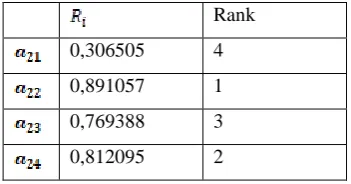
Table 5: Result of assessment for job position
Rank
0,306505 4
0,891057 1
0,769388 3
0,812095 2
According to the results of the assessment, the following applicants will be selected for job position:
and (Because ).
Table 6: Decision matrix of job position
8,70 7,00 6,00 9,00 9,00
8,30 7,00 6,70 8,00 8,00
7,30 7,70 6,30 7,00 9,00
Table 7: Result of assessment for job position
Rank
0,757885 1
0,628373 2
0,532273 3
According to the results of the assessment, the following applicants will be selected for job position:
(Because ).
4. Conclusion
The paper offers methodology for human resource assessment and selection, which allow us for ensuring the
optimal assessment and selection of human resources. The use of the model developed will allow us for
developing a computer-based system of assessment and selection of human resources.
References
[1] Rowley, C., Jackson, K. Human Resource Management,2011.
[2] Hwang, C.L., Yoon, K. Multiple Attribute Decision Making: Methods and Applications. New York:
Springer-Verlag.1981
[3] Yoon, K. A reconciliation among discrete compromise situations. Journal of Operational Research
Society. 38. 1987. pp. 277–286
[4] G.R. Jahanshahloo , F. Hosseinzadeh Lotfi , M. Izadikhah . Extension of the TOPSIS method for
decision-making problems with fuzzy data. Applied Mathematics and Computation. 2006. pp.
1544-1451
[5] Basheleishvili, I., Tsiramua, S. (2018). DEVELOPMENT OF METHOD OF MULTIFUNCTIONAL
PERSONNEL ASSESSMENT USING A TOPSIS METHOD. Journal of Technical Science and
Technologies, 7(1).
Technical Science and Technologies, 6(2).
[7] Basheleishvili, I., & Tsiramua, S. International Journal of Trend in Scientific Research and
Development (IJTSRD)..
[8] BARDAVELIDZE, A., BASHELEISHVILI, I., & BARDAVELIDZE, K. (2017). Research
Investigation on Automatic Control System of Drying Apparatus Based on Fuzzy Logic. Journal of
Technical Science and Technologies, 6(1).
[9] Bardavelidze, A., Basheleishvili, I., & Bardavelidze, K. Microcontroller-Based Water Supply Control