1375
Lean Academics: Lean Implementation On
Campus
Acim Heri Iswanto
Abstract: This paper is to analyse literature on the implementation of lean in higher education. Analysis was carried out to find out research trends and gaps, theoretical pillars, and topics commonly used in studies in this field. This study examined the trend of this topic over time so it can see the academic evolution of the implementation of lean in Higher Education. To obtain high quality articles, a systematic search process was carried out using the Emerald database. The results of the above studies are as follows: (1) Digitalization was viewed as an effort to improve management of learning resources quality in higher education. Although this activity was not explicitly a lean implementation, but discussed it from lean perspective. (2) Preparedness factors or success factors are a prerequisite for good lean implementation. (3) Faculty involvement was one of lean success factors. (4) Academic leadership in relation to lean implementation. (5) Conceptual study evaluated various fields in higher education that could be areas of LSS implementation. (6) Well implemented lean in higher education could reduce waste, increase operational efficiency, and encourage organisational sustainability. (7) Study on lean implementation in a number of courses in business schools found that lean increased student satisfaction because it provided clearer expectations, reduced ambiguity related to lectures and assignments, standard assignment formats, facilitated individual and team assignments, and improved student time management in and outside the classroom. (8) Lean curriculum that appropriate for universities.
Index Terms: lean, academic, education, quality
—————————— ——————————
1.
INTRODUCTION
Lean is a method optimizing the flow of products and services through the whole flow of values, rather than merely optimizing assets, technology, and departments separately [1]. In this way, lean is able to eliminate various types of waste existing in the organization and create organizations that work efficiently. Lean methodology has spread widely from just a methodology in manufacturing to a methodology to improve quality in various sectors, from the service sector to the public sector. Organizations from various fields that wish to improve in quality, efficiency, and service to consumers start implementing lean [2]. One of institutions that also seeks to implement lean at operational, administrative, and strategic level is Higher Institutions [3]. Lean is expected to increase competitiveness of higher education, especially at the present day where higher education are competing each other for students, research funds, industry partners, academicians, prestige, and so on. Furthermore, lean can be beneficial for higher education to reduce costs while increasing staff and teachers morale [4]. This is especially true for many higher education that implement varieties of strategy which some have negative impacts on unexpected aspects, especially aspect of human resources [5]. The scientific literature on the application of lean in higher education began to develop at the beginning of the 21st century, especially since the study by Emiliani (2004) on the development of lean implementation in a postgraduate business course at a university. In practice, meanwhile, lean has been implemented at least in the early 2000s and even before in the United States [6],[7]. There are a number of studies providing evidence that the implementation of lean in higher education can have a positive effect on this sector [8],[9],[2],[10]. In general, however, lean implementation in higher education is still at an early stage and has not achieved all potential of lean literature in general [10]. This
paper is to analyze literature on the implementation of lean in higher education. Analysis was carried out to find out research trends and gaps, theoretical pillars, and topics commonly used in studies in this field. This study examined the trend of this topic over time so it can see the academic evolution of the implementation of lean in Higher Education. The tool used for analysis was bibliometric method.
2
METHOD
To obtain high quality articles, a systematic search process was carried out using the Emerald database. Emerald was chosen because it contains a portfolio of nearly 300 journals and has been around since 1967 [11]. Most of existing journals were leading journals in their fields so keywords search in this database was likely to produce high quality research articles. The keywords used were ―lean‖ and ―higher education‖. Keywords were searched throughout the text body. It was obtained a total of 766 articles from using those keywords. The titles of all articles/chapters were then examined to find relevance to lean in higher education. Following the filtering process, 31 articles were found relevant to lean implementation in higher education.
3
ANALYSIS
Table 1 shows journals that become the main references for research and articles discussing lean implementation in universities. Two journals lead with the number of articles far exceeding the others, namely the International Journal of Quality and Reliability Management (IJQRM) and the International Journal of Productivity and Performance Management (IJPPM). In particular, International Journal of Quality and Reliability Management issued a special edition of lean implementation in university on the 9th issue of volume 32 in 2015. This issue contribute six articles in this journal. In 2017, it is the International Journal of Productivity and Performance Management issue a special edition, namely volume 66 Issue 5.
Specific journals’ contribution in the field of Lean Six Sigma (International Journal of Lean Six Sigma) is as much as the contribution of specific journals in the field of quality improvement in university (Quality Assurance in Education) ————————————————
that contribute five articles, respectively. There is also a single contribution from European Journal of Training and Development and International Journal of Sustainability in Higher Education.
Table 1. List of Journals Containing Articles of Lean Implementation in Higher Education
Journals Number of Article
International Journal of Quality and Reliability
Management (IJQRM) 10
International Journal of Productivity and Performance
Management (IJPPM) 9
International Journal of Lean Six Sigma (IJLSS) 5
Quality Assurance in Education (QAE) 5 European Journal of Training and
Development (EJTD) 1
International Journal of Sustainability in Higher
Education (IJSHE) 1
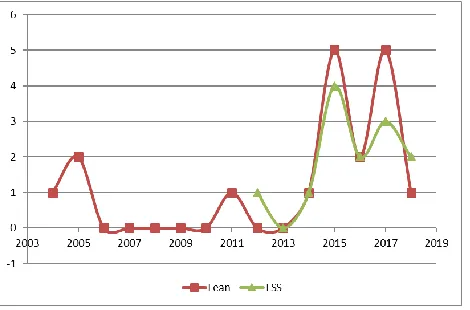
There are 18 articles discussing lean separately while 13 other articles discussing Lean Six Sigma (LSS), a combination of lean and other quality improvement methodologies, Six Sigma. As seen in Figure 1, LSS articles are much newer than the lean ones. An article discussing the application of lean in higher education had existed since 2004 while articles discussing the application of LSS in universities had only emerged in 2012. Interestingly, IJLSS does not only focus on LSS, but also lean, with a relatively balanced portion (lean 3 and LSS 2). Almost all other journals also treat Lean and LSS equally. IJQRM contain 4 lean and 6 LSS while IJPPM contain 4 Lean and 5 LSS. The only journal exclusively discussing lean is QAE.
Figure 1. Distribution of Articles Discussing Lean and LSS
Table 2 shows the distribution of articles based on the type of article. In general, the articles are in the form of research papers and case studies. There is only one article providing an overview, while conceptual papers, perspectives, and literature reviews contributed 2 articles, respectively. Interestingly, when compared to the methodology discussed, Lean is more commonly used as a research methodology. Out of the 13 research papers, 11 of which are lean and there are only two examining LSS implementation. On the contrary, LSS is discussed more theoretically. Out of two conceptual papers, all discuss LSS conceptually. In terms of case studies and literature reviews, however, lean and LSS are equally balanced.
Table 2. Types of Articles and Methodology Discussed
Article Type Lean LSS Total
Conceptual Papers 0 2 2
Research Paper 11 2 13
Non-Article 1 2 3
Case study 4 4 8
Viewpoint 0 2 2
Literature Review 1 1 2
General review 1 0 1
Seven countries were involved in the overall study. The United States of America dominated with 14 articles, followed by the United Kingdom with 10 articles. Countries with a single contribution included South Africa, Saudi Arabia, Brazil and Singapore. There were also three articles from India.
Table 3. Country and Type of Article Country Article Article Type
South Africa 1 Research Paper
Saudi Arabia 1 Case study
United States of America 14
Overview, Literature Review, Case Studies, Research Papers, Non-Articles, Conceptual
Papers
Brazil 1 Research Paper
India 3 Research Papers, Case Studies, Conceptual Papers
English 10 Literature, Non-article Reviews, Viewpoints, case studies, research papers
Singapore 1 Research Paper
1377 [25] which was cited in 16 articles per year. In fact, the article
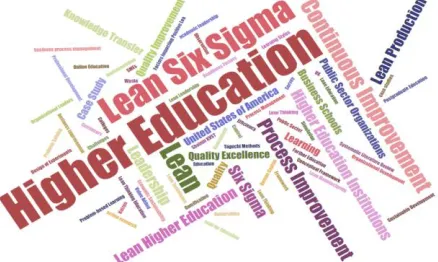
by Antony et al. [25] was an article with the highest number of citations per year compared to other articles. This could partly be due to articles by Antony et al. [25] being conceptual so it could be part of theoretical foundation. Article by Comm and Mathaisel [18] was also classified as contributive with 10 citers per year. Although Comm and Mathaisel [18] stated that the scope of the study was still narrow, this article used a sample of 18 higher education, far more than other studies. Please note that the article by Comm and Mathaisel [19] was actually a duplicate with very minimum words variation of a study by Comm and Mathaisel [18]. Several new studies present in 2018 were not cited [15],[28],[31]. However, there were some old studies that were not cited as well [10],[32],[20],[33]. Article by Anthony and Antony (2016) was only cited once even though it was almost two years old. Although it was carried out only in one higher education institution, the study by Svensson et al. [19] was quoted 29 times. Regarding keywords, it was assumed that ―higher education‖ was the most common keyword used in 18 of 31 studies (58%). Other general keywords included Lean Six Sigma (10; 32%), lean (7; 23%), and continuous improvement (5; 16%). There were 51 unique keywords. Some of these keywords were actually common in lean research (lean added value, waste, thinking), educational research (public, university, business school sectors) or general studies (readiness, MSMEs, surveys factors). However, there were also typical keywords such as Shainin KVST, simulations, and Taguchi methods). Figure 2 shows a cloud of keywords from all 31 studies.
Figure 2. Keywords Cloud of the Study (created with a program by Davies, 2018)
Keywords diversity is derived from various studies investigating various aspects. The most popular types of study were studies of lean strategy evaluation (10 studies), lean implementation on teaching (three studies), lean teaching for students (six studies), and studies about preparedness factors (three studies). Single study involved digitalization research, faculty involvement, and research review. There were also two studies discussing leadership, concepts of lean, and lean sustainability practices. The results of the above studies are as follows:
2.1 Digitalization
Digitalization was viewed as an effort to improve management of learning resources quality in higher education. This study was conducted in Singapore [14]. Although this activity was not explicitly a lean implementation, Tay and Low discussed it from lean perspective. They found that this action contained
lean principles. Moreover, they also found a number of factors affecting the success of digitalization. The identified factors included shared vision, top management support and leadership, timely information sharing, and management of relationships with stakeholders in transformation process.
2.2 Preparedness factors
Preparedness factors or success factors are a prerequisite for good lean implementation. Study by Tay and Low above can also be seen as a study of preparedness factors [14]. In addition to these studies, there were three other studies on lean implementation explicitly. A study by Tony, Krishan, Cullen, & Kumar identified challenges, constraints, success factors, and tools/techniques of LSS implementation in higher education all at once [25]. This study was followed up by Antony who identified lean implementation preparedness factors in higher education [24]. However, Antony distinguished between preparedness factors and success factors [24]. The preparedness factors have to exist prior to lean implementation while success factors are prepared when the senior management team has decided to invest in lean implementation. Balzer, Brodke, & Kizhakethalackal also examined success factors by highlighting techniques, leadership awareness, understanding, and support for lean implementation [34].
2.3 Faculty involvement
Faculty involvement was one of lean success factors. There was one article specifically highlighting this issue [30]. This article was only a theoretical point of view. Emiliani identified that leadership in universities tend to lack in respect for lean implementation which was considered to be part of industrial practice which was irrelevant to higher education [30]. However, Emiliani showed that lean was relevant for higher education and to be accepted by higher education, studies on lean implementation in higher education must be carried out with a high scientific level as to be accepted in an academic mindset [30].
2.4. Research review
Antony gave an editor introduction in the special edition of IJQRM concerning lean implementation in higher education [23]. This article reemphasized that scholars remained unwilling to implement lean because it was considered as suitable for manufacturing companies only. Antony emphasized that the characteristics of higher education were actually the same as manufacturing companies [23]. These characteristics included: facing intense competition, limited budgets, government budget cuts, and students use consumers approach to learning. For these reasons, Antony stated that lean could be applied in higher education [23]. Antony added by discussing articles of lean implementation studies in higher education one by one in the special edition of the IJQRM [23].
2.5 Leadership
akademis‖ (academic leadership) and ―lean‖, not one study was found. However, 19 studies were obtained when ―kepemimpinan akademis‖ (academic leadership) was replaced with ―universitas‖ (university). When the keywords ―kepemimpinan‖ (leadership) and ―lean‖ were used, more than 1,000 articles were found. A truly focused study on leadership was carried out by Lu et al. [27].This study formulated the LSS leadership framework for LSS leadership studies in higher education.
2.6 Conceptual
Conceptual study by Hess & Benjamin evaluated various fields in higher education that could be areas of LSS implementation [26]. Based on the findings, suitable fields were the implementation of curriculum, business services and support, management of student admission and placement, and research. Study by Sunder addressed the attributes of higher education that could be targeted for LSS implementation as well [28]. Moreover, this study also described the basic attributes of higher education that could be the target of LSS and the benefits LSS can provide for higher education.
2.7 Lean sustainability practices
Two studies by Comm & Mathaisel highlighted the sustainability aspects of lean implementation [18],[19]. They found that well implemented lean in higher education could reduce waste, increase operational efficiency, and encourage organizational sustainability. These results were based on interviews with 18 universities that have implemented lean in the northeastern United States.
2.8 Lean implementation on learning
It is necessary to distinguish between studies that show the effectiveness of learning carried out using lean and learning to teach lean. There were two studies discussing subjects that are taught using lean. The oldest study of Emiliani pointed to this aspect [8]. Results of study on lean implementation in a number of courses in business schools found that lean increased student satisfaction because it provided clearer expectations, reduced ambiguity related to lectures and assignments, standard assignment formats, facilitated individual and team assignments, and improved student time management in and outside the classroom. Another study by Thomas et al. implemented lean for curriculum development [10]. The lean technique used was KVST (Key Variable Search Technique) Shainin. The implementation of this technique allowed the team to prioritize key variables in the order of importance and allowed implementation of other lean tools to develop a good curriculum. Booker & Tucker used lean criteria to arrange well-delivered learning for students who take online classes [17].
2.9 Lean learning
There were more studies on lean learning. These studies examined various aspects related to how lean could be advised in higher education. Studies on lean learning included studies by [12],[20],[35],[36],[37],[31]. Study by Flumerfelt et al. reviewed which lean curriculum that appropriate for universities [36]. They found that the most desirable topics were thinking about continuous lean improvement and management of lean projects. The most desirable method was project-based method which aimed at mastering materials and improving organizational outcome and sustainability. Shokri
and Nabhani compiled LSS learning modules which aimed at increasing students’ ability to get a job after graduating or building their own successful businesses [37]. In this module, there were many things to improve knowledge and skills in problem solving. A study by Deif designed the game as a lean learning method and tested it on students [20]. A study by Tortorella and Cauchik-Miguel implemented problem-based learning to teach lean concepts [31]. This method was considered exemplary as it enhanced students learning experience by improving problem solving skill of the students. Even so, it was said that problem-based learning needed to be supplemented by traditional learning methods to meet the cognitive needs of students. A study by Van der Merwe used a simulated learning environment method to improve the effectiveness of learning lean concepts [12]. Students’ understanding of lean concepts increased compared to those who used conventional methods. The latest study by Doman investigated integration of lean implementation in learning and lean learning [35]. In this case, Doman explained lean to students, followed by an evaluation of how students implemented lean in administrative processes [35]. They found that lean learning could be performed quickly and significant results could be obtained as well if it is implemented directly to the university administration process.
2.10 Evaluation of lean strategies
1379 the UK was slower in delivering results than it should. A study
by Waterbury was conducted on seven universities that implemented lean [39]. This study identified organizational and personal elements and the objectives of critical questions needed to be answered before implementing lean in higher education. A study by Svensson et al. was conducted on the implementation of LSS at King Abdullah University of Science and Technology, Saudi Arabia [16]. However, as the program was still running, Svensson et al. only reported the progress of the program, specifically the results of the training that had been carried out [16]. On the other hand, Antony (2017) summarized the development of Lean and LSS in higher education from an academic perspective.
4
DISCUSSION
The results above indicate that literature in the field of lean implementation in higher education is still early. The first study was actually carried out in 2004 [8]. However, there had been a long hiatus in similar since 2005. Articles about lean implementation in higher education resurfaced in 2011, six years after the latest study [9]. In 2013, researchers held an International Conference on Lean Six Sigma for Higher Education to encourage wider academic communities to participate in study in this field [33]. As a result of this conference, a special edition journal highlighting the implementation of lean in universities emerged in 2015, although it only contained six articles. Antony explained that the existence of conferences and special edition journal publishing had triggered the scientific community to conduct more studies on the implementation of lean in higher education [33]. The result of this second run was the publication of a special edition journal on lean implementation in higher education in 2017 by IJQRM. There certainly are many other lean implementation studies in higher education in other journals outside Emerald. Even so, the description from Emerald above indicates that the overall studies on lean implementation in higher education were still not sufficiently developed but it has begun to gain momentum. As a result, further studies on the implementation of lean implementation in higher education are still required to add academic literature on this field. Furthermore, LSS rather than lean emerged in 2012. LSS is an effort to complement lean by adding methods and tools that are more quantitative and very effective, rather than efficient. In line with these developments, there have also been developments in the conceptual field to integrate LSS in higher education. However, with only two conceptual studies, conceptual research opportunities related to lean implementation in higher education are also very open. Another thing that needs to be highlighted is the lack of contributions from education sector to lean implementation in higher education. Of the overall studies, there were only two studies by researchers with educational backgrounds [39], [32]. The rest were researchers from the field of business management and technology management. This can be one of weaknesses due to education paradigm that tends to be more social, rather than instrumental as in the field of management and technology. This can prevent adoption of lean in higher education, especially in education aspect. Therefore, there needs to be contributions from researchers in the field of education to examine lean implementation issues in higher education.
5
CONCLUSION
Studies gap in the field of lean implementation in higher education is still very wide. Empirical studies in this field is still very few, let alone conceptual studies. Moreover, the contribution of researchers in the field of education is still highly required, as are the implementation studies conducted in developing countries. The opened scope can highlight the issue of lean implementation in improving the quality of learning and study in higher education, academic leadership, and as far as is relevant in the Indonesian context, is the implementation of lean for community service programs. Studies with a more rigorous design, by using social science approach or quantitative approach with large samples, for instance, can also be conducted if possible. This should be aligned with efforts to increase awareness of higher education committee on the feasibility of lean not only for administrative aspects, but also for teaching and tri dharma aspects of higher education in general.
REFERENCES
[1] Dragomir, C., & Surugiu, F. Implementing Lean in a Higher Education University. Constanta Maritime University's Annals, 18 , pp.279–282, 2013.
[2] Radnor, Z., & Bucci, G. Analysis of lean implementation in UK business schools and universities . Retrieved from
http://www.york.ac.uk/admin/po/processreview/ABS Final Report final.pdf, 2011.
[3] Vukadinovic, S., Djapan, M., & Macuzic, I. Education for lean and lean for education: A literature review. International Journal for Quality
Research , 11 (1), pp. 35–50,
2017. https://doi.org/10.18421/IJQR11.01-03
[4] Hines, P., & Lethbridge, S. New Development: Creating a Lean University. Public Money and Management , (February), pp.53–56, (2008). Retrieved from https://www.researchgate.net/publication/4779674_New _Development_Creating_a_Lean_University
[5] Barber, BJ. Lean and its Impact on Employee Empowerment within a Higher Education Institution . Pepperdine University, 2011.
[6] Moore, M., Nash, M., & Henderson, K. Becoming a Lean University TM . 2007. Retrieved from http://www.sacubo.org/docs/bestpractices/2005/Universi tyCentralOklahoma-becoming-lean.pdf
[7] Yorkstone, S. Lean Universities. In TH Netland & DJ Powell (Eds.), The Routledge Companion to Lean Management . Routledge, 2016.
[8] Emiliani, ML. Improving business school courses by applying lean principles and practices. Quality Assurance in Education , 12 (4), pp.175–187, (2004). https://doi.org/10.1108/09684880410561596
[9] Emiliani, ML. Using kaizen to improve graduate business school degree programs. Quality Assurance in Education , 13 (1), pp.37–52, 2005. https://doi.org/10.1108/09684880510578641
[10] Thomas, A., Antony, J., Haven-Tang, C., Francis, M., & Fisher, R. Implementing Lean Six Sigma into curriculum design and delivery – a case study in higher education. International Journal of Productivity & Performance Management , 66 (5), pp. 577–597, 2017.
Retrieved from
ost.com/login.aspx?direct=true&db=bth&AN=12348842 0&site=ehost- live&scope=site%0A10.1108/IJPPM-08-2016-0176
[11] Emerald Group Publishing. About Emerald Publishing, 2018. Retrieved September 1, 2018, from http://www.emeraldgrouppublishing.com/about/ind ex.htm
[12] van der Merwe, KR. A longitudinal study of the efficacy of lean learning experienced through a simulated working environment (SWE). International Journal of Productivity and Performance Management , 66 (5), pp.651–661. 2017. https://doi.org/10.1108/IJPPM-07-2016-0143
[13] Narayanamurthy, G., Gurumurthy, A., & Chockalingam, R. Applying lean thinking in an educational institute – an action research. International Journal of Productivity and Performance Management, 66 (5), pp.598–629, 2017. https://doi.org/10.1108/IJPPM-07-2016-0144 [14] Tay, HL, & Low, SWK. Digitalization of learning
resources in a HEI-a lean management perspective. International Journal of Productivity and Performance Management , 66 (5), pp.577–597. 2017. https://doi.org/10.1108/IJPPM-07-2016-0144
[15] Antony, J., Ghadge, A., Ashby, SA, & Cudney, EA. Lean Six Sigma journey in a higher education institution UK: a case study. International Journal of Quality & Reliability Management , 35 (2), pp.510-526, 2018. https://doi.org/10.18260/p.25527
[16] Svensson, C., Antony, J., Ba-Essa, M., Bakhsh, M., & Albliwi, S. A Lean Six Sigma program in higher education. International Journal of Quality & Reliability Management , 32 (9),pp. 951–969, 2015. https://doi.org/10.1108/IJQRM-09-2014-0141
[17] Booker, BW, & Tucker, W. Push-and-pull lean strategy evaluation for online graduate courses. International Journal of Quality and Service Sciences , 6 (2–3), pp.213–220, 2014. https://doi.org/10.1108/IJQSS-02-2014-0016
[18] Comm, CL, & Mathaisel, DFX A case study in applying lean sustainability concepts tor universities. International Journal of Sustainability in Higher Education , 6 (2), pp.134–146, 2005a.
[19] Comm, CL, & Mathaisel, DFX. An exploratory study of best lean sustainability practices in higher education. Quality Assurance in Education , 13 (3),
pp.227–240, 2005b.
https://doi.org/10.1108/09684880510607963
[20] Deif, A. (2017). Insights on lean gamification for higher education. International Journal of Lean Six Sigma , 8 (3), pp.359–376, 2005b. https://doi.org/10.1108/IJLSS-04-2016-0017
[21] Douglas, JA, Antony, J., & Douglas, A. Waste identification and elimination in HEIs: the role of Lean thinking. International Journal of Quality and Reliability Management , 32 (9), pp.970–981, (2015).
https://doi.org/10.1108/IJQRM-10-2014-0160
[22] Thomas, M., Francis, P., Shahid, SA, & Jani, SH. The Need for Emotional Intelligence Skills among Knowledge Workers at the Tertiary Level. International Journal of Social Science and Humanity ,5 (4), pp.347– 351, 2015. https://doi.org/10.7763/IJSSH.2015.V5.478 [23] Thomas, A., Antony, J., Francis, M., & Fisher, R. A
comparative study of Lean implementation in higher
and further education institutions in the UK. International Journal of Quality & Reliability Management , 32 (9), pp.982–996, 2015. https://doi.org/10.1108/IJQRM-09-2014-0134
[24] Antony, J. Readiness factors for the Lean Sigma Sigma journey in the higher education sector. International Journal of Productivity & Performance Management , 63 (2), pp.257-264, 2014.
[25] Antony, J., Krishan, N., Cullen, D., & Kumar, M. Lean Six Sigma for high education institutions (HEIs): Challenges, barriers, success factors, tools / techniques. International Journal of Productivity and Performance Management , 61 (8), pp.940-948, 2012. [26] Hess, JD, & Benjamin, BA. Applying Lean Six Sigma
within the university: Opportunities for process improvement and cultural change. International Journal of Lean Six Sigma , 6 (3), pp.249–262, 2015. https://doi.org/10.1108/IJLSS-12-2014-0036
[27] Lu, J., Laux, C., & Antony, J. Lean Six Sigma leadership in higher education institutions. International Journal of Productivity and Performance Management , 66 (5), pp.638–650, 2017. Retrieved from www.emeraldinsight.com
[28] Sunder M, V., & Antony, J. A conceptual Lean Six Sigma framework for quality excellence in higher education institutions. International Journal of Quality and Reliability Management , 35 (4), pp.857–874, 2018. https://doi.org/10.1108/IJQRM-01-2017-0002
[29] Anthony, S., & Antony, J. Academic Leadership and Lean Six Sigma: a novel approach to systematic literature review using Design of Experiments. International Journal of Quality & Reliability Management, 33 (7), pp.1002–1018, 2016. https://doi.org/10.1108/IJQRM-03-2015-0047 [30] Emiliani, ML. Engaging faculty in Lean
teaching. International Journal of Lean Six Sigma , 6 (1), 2015.
[31] Tortorella, G., & Cauchick-Miguel, PA =. Teaching lean manufacturing at a postgraduate level: Integrating traditional teaching methods and problem-based learning approach. International Journal of Lean Six Sigma , 9 (3), pp.301–323, 2018. https://doi.org/10.1108/IJLSS-08-2017-0101
[32] LeMahieu, PG, Nordstrum, LE, & Greco, P. Lean for education. Quality Assurance in Education , 25 (1), pp.74–90, (2017). https://doi.org/10.1108/QAE-12-2016-0081
[33] Antony, J. Lean Six Sigma for higher education. International Journal of Productivity and Performance Management , 66 (5), pp.574–576, 2017. [34] Balzer, WK, Brodke, MH, & Kizhakethalackal, ET. Lean
higher education: successes, challenges, and realizing potential. International Journal of Quality and Reliability
Management , 32 (9), pp.924–933,
2015. https://doi.org/10.1108/IJQRM-08-2014-0119 [35] Doman, MS. A new lean paradigm in higher education:
A case study. Quality Assurance in Education , 19 (3),
pp.248–262, (2011).
https://doi.org/10.1108/09684881111158054
1381 Development , 40 (5), pp.302–320. 2016.
https://doi.org/10.1108/EJTD-01-2015-0005
[37] Shokri, A., & Nabhani, F. LSS , a problem solving skill for graduates and SMEs Case study of investigation in a UK business. International Journal of Lean Six Sigma , 6 (2), pp.176–202, (2015). https://doi.org/10.1108/IJLSS-06-2014-0014
[38] Balzer, WK, Francis, DE, Krehbiel, TC, & Shea, N. A review and perspective on Lean in higher education. Quality Assurance in Education , 24 (4), pp.442–462, 2016. https://doi.org/10.1108/QAE-03-2015-0011
[39] Waterbury, T. Learning from the pioneers: Amount of case analysis of implementing Lean in higher education. International Journal of Quality & Reliability
Management , 32 (9), pp.934-950,
(2015). https://doi.org/10.1108/IJQRM-08-2014-0125 [40] Sunder, VM. Lean Six Sigma in higher education