Efficient production of soluble recombinant
single chain Fv fragments by a Pseudomonas
putida strain KT2440 cell factory
Dammeyer
et al.
R E S E A R C H
Open Access
Efficient production of soluble recombinant
single chain Fv fragments by a
Pseudomonas
putida
strain KT2440 cell factory
Thorben Dammeyer
1*, Miriam Steinwand
2, Sarah-C Krüger
1, Stefan Dübel
2, Michael Hust
2, Kenneth N Timmis
1,3Abstract
Background:Recombinant antibody fragments have a wide range of applications in research, diagnostics and therapy. For many of these, small fragments like single chain fragment variables (scFv) function well and can be produced inexpensively in bacterial expression systems. AlthoughEscherichia coliK-12 production systems are convenient, yields of different fragments, even those produced from codon-optimized expression systems, vary significantly. Where yields are inadequate, alternative production systems are needed.Pseudomonas putidastrain KT2440 is a versatile biosafety strain known for good expression of heterologous genes, so we have explored its utility as a cell factory for production of scFvs.
Results:We have generated new broad host range scFv expression constructs and assessed their production in thePseudomonas putidaKT2440 host. Two scFvs bind either to human C-reactive protein or to mucin1, proteins of significant medical diagnostic and therapeutic interest, whereas a third is a model anti-lysozyme scFv. The KT2440 antibody expression systems produce scFvs targeted to the periplasmic space that were processed precisely and were easily recovered and purified by single-step or tandem affinity chromatography. The influence of promoter system, codon optimization forP. putida, and medium on scFv yield was examined. Yields of up to 3.5 mg/l of pure, soluble, active scFv fragments were obtained from shake flask cultures of constructs based on the original codon usage and expressed from thePtacexpression system, yields that were 2.5-4 times higher than those from equivalent cultures of anE. coliK-12 expression host.
Conclusions:Pseudomonas putidaKT2440 is a good cell factory for the production of scFvs, and the broad host range constructs we have produced allow yield assessment in a number of different expression hosts when yields in one initially selected are insufficient. High cell density cultivation and further optimization and refinement of the KT2440 cell factory will achieve additional increases in the yields of scFvs.
Background
Recombinant antibodies and antibody fragments are indispensable tools for research, diagnostics and therapy [1-5]. Complete and natively glycolsylated antibodies, like IgGs, needed for therapeutic purposes must thus far be produced in mammalian cells. However, although yields from mammalian cells tend to be good, produc-tion times and costs are high [6]. However, for many non-therapeutic applications, and also some therapeutic applications for which effector functions are not
necessary, antibody modules, such as single chain frag-ment variable (scFv) and fragfrag-ment antigen binding (Fab) are sufficient [7,8]. Because of their lower costs and fas-ter production cycles, microbial systems are more attractive than mammalian cell systems for the produc-tion of antibody fragments. The folding and export of scFvs in Gram-negative systems is usually more efficient than that of Fab fragments [9]. One problem with pro-karyotic production systems is that expression levels of fragments of different antibodies tend to differ markedly [10,11] and, in many instances, only synthetic, codon-usage adapted, genes provide significant yields. The availability of a core suite of distinct efficient host-broad host range expression cloning vector systems, differing * Correspondence: [email protected]
1
Environmental Microbiology Laboratory, Helmholtz Centre for Infection Research, Inhoffenstr. 7, 38124 Braunschweig, Germany
Full list of author information is available at the end of the article
in their expression specificities, should enable determi-nation of optimal production systems for different proteins.
Pseudomonas putidastrain KT2440 is a metabolically versatile soil bacterium with considerable potential in a broad range of diverse industrial and environmental applications [12]. Its certification as a biosafety strain [13,14], its ability to express a broad spectrum of foreign proteins at high levels and the availability of powerful customized tools for genetic analysis and manipulation [15], make KT2440 an important prokaryotic cell fac-tory. These features suggest that it might be a useful production system for antibody fragments.
In this study, we have assessed the potential of KT2440 for the soluble production of different recombi-nant scFvs namely, the model murine anti-hen egg-white lysozyme scFv, D1.3 [11,16-19], and two phage display-selected human scFvs: TOB5-D4 [[11], Al-Halabi
et al.in preparation], directed against C-reactive protein (CRP) [20], an inflammation indicator in human blood, and HT186-D11 [21], directed against mucin1 (MUC1), a diagnostic marker and potential therapeutic target of cancer [22,23].
Results and Discussion
Expression plasmids and synthetic genes
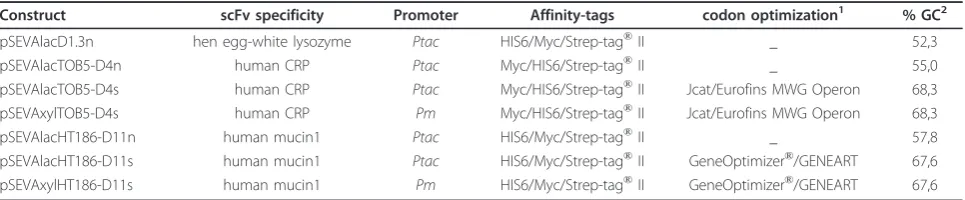
The key features of the antibody expression plasmids constructed in this study are shown in Table 1. They were generated using new synthetic RK2 broad host range plasmid-based chassis developed by the group of Victor de Lorenzo (in preparation) carrying either the induciblePtac[13,24] or TOL plasmid xyl operonPm
[25,26] promoters. We further modified the chassis by equipping it with the G10L ribosome binding site (RBS) with epsilon enhancer [27] and the Erwinia carotovora pelB leader sequence [28] to effect the export of expressed polypeptides to the periplasm. The scFv for-mat consists of variable regions of the antibody heavy and light chains (VH and VL, respectively), joined by a 15-25 amino acid linker [29]. Polynucleotide sequences encoding Myc-HIS6-Strep-Tag® II or HIS6
-Myc-Strep-Tag® II affinity tags were placed downstream of the VH-linker-VL coding sequences (Table 1) to facilitate purification and detection of the scFvs in western blots and enzyme-linked immunosorbent assays (ELISA). In addition, synthetic scFv genes were generated to assess the influence of codon usage adaptation on expression levels in P. putida (Table 1). The original scFv gene constructs were expressed from the Ptac promoter, whereas the synthetic gene constructs were expressed from eitherPtac or Pm promoters (Table 1). Although synthetic codon usage adapted gene constructs of TOB5-D4 (anti-CRP) and HT186-D11 (anti-mucin1) scFvs were readily generated, for unknown reasons the equivalent version of D1.3 (anti-lysozyme) scFv could not be synthezised by the commercial supplier. For gen-eration of the native sequence constructs, the RBS and Strep-tag®II were added using primer overhangs.
Affinity isolation of scFvs
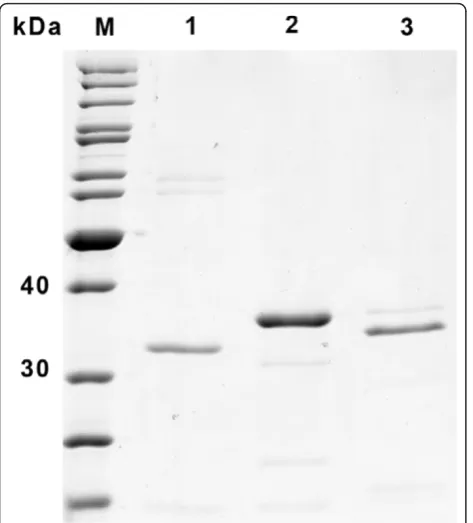
Different combinations of cell lysis and affinity purifica-tion strategies were tested in order to determine a rapid, simple isolation/purification protocol. Purification of hexahistidine-tagged scFvs from clarified whole cell extracts by immobilized metal ion affinity chromatogra-phy (IMAC) resulted in a protein mixture containing three major species between 30-50 kDa, of which the mid band was confirmed by N-terminal sequencing to be the scFv. The addition of a second affinity chromato-graphy on Strep-Tactin Superflow in series (tandem) resulted in scFv fragments of high purity with no visible background in sensitively Coomassie Blue-stained SDS-PAGE (data not shown). Single step purification on Strep-Tactin Superflow resin in gravity flow columns, however, proved sufficient for most purposes, including yield determination. This single-step protocol yielded scFv fragments with a purity of ~95%. Incubation of the purified fragments for 16-24 h on ice, followed by at least one freeze thaw cycle in elution buffer, did not cause significant degradation of the scFvs (Figure 1). Lysis of cells by sonication or use of the bacterial pro-tein extraction reagent (B-Per, Thermo fisher scientific),
Table 1 Properties of the RK2-based broad-host range plasmid constructs with thePtac/lacIq(pSEVAlac) orPm/xylS
(pSEVAxyl) promoter/regulator gene systems used in this study
Construct scFv specificity Promoter Affinity-tags codon optimization1 % GC2
pSEVAlacD1.3n hen egg-white lysozyme Ptac HIS6/Myc/Strep-tag®II _ 52,3
pSEVAlacTOB5-D4n human CRP Ptac Myc/HIS6/Strep-tag®II _ 55,0
pSEVAlacTOB5-D4s human CRP Ptac Myc/HIS6/Strep-tag®II Jcat/Eurofins MWG Operon 68,3 pSEVAxylTOB5-D4s human CRP Pm Myc/HIS6/Strep-tag®II Jcat/Eurofins MWG Operon 68,3
pSEVAlacHT186-D11n human mucin1 Ptac HIS6/Myc/Strep-tag®II _ 57,8
pSEVAlacHT186-D11s human mucin1 Ptac HIS6/Myc/Strep-tag®II GeneOptimizer®/GENEART 67,6 pSEVAxylHT186-D11s human mucin1 Pm HIS6/Myc/Strep-tag®II GeneOptimizer®/GENEART 67,6 1
Synthetic scFv determinants with optimized codon usage: - indicates the original scFv sequence, Jcat/Eurofins MWG Operon and GeneOptimizer®/GENEART indicates a codon adaptation tool and a supplier;2
%GC content of the scFv coding sequence.
Dammeyeret al.Microbial Cell Factories2011,10:11 http://www.microbialcellfactories.com/content/10/1/11
or both in combination, gave similar results, which is perhaps not surprising, given that the scFvs are targeted to the periplasmic space. Moreover, purification of selec-tively released periplasmic proteins (see below) by single step Strep-Tactin Superflow chromatography resulted in a purity comparable to those obtained by the tandem strategy.
scFv yield optimization
Induction
Two transcriptional expression systems based on thePtac
andPmpromoters, that are widely used to express hetero-logous genes, were assessed for their efficacy in scFv production by KT2440 in otherwise identical RK2 plas-mid-based expression constructs (Table 1). In the case of the TOB5-D4s and HT186-D11s scFvs, yields from the
Ptacpromoter constructs were more than twice those from thePmpromoter constructs. Optimal yield condi-tions determined forPtacconstructs were 3 h induction by 1 mM IPTG at 30°C in LB-medium, which gave yields of 1.5 mg/l for the D1.3 scFv, 2.9 mg/l for the anti-CRP scFv, and 3.6 mg/l for the HT186-D11 scFv (Figure 2; yield means of 3-6 individual expression experiments involving 100 ml cultures agitated at 180 rpm, and
isolation by single step affinity purification on 1 ml Strep-Tactin Superflow gravity columns). The influence of med-ium composition on yield was also assessed and it was found that yields decreased in the order: Terrific Broth (TB) > LB > M9 (15 mM succinate) > R2A (Figure 3), indicating that enriched, buffered media favour scFv pro-duction and that medium optimization has considerable potential for yield enhancement.
Codon usage optimization
KT2440 is an expression host with a high average GC content (~61.5%) and a codon usage preference distinct from those of the scFv determinants used in this study [14]. To assess to which extent adaptation of the scFv codons to those preferred by KT2440 could influence scFv yields, synthetic scFv determinants composed of the preferred codons were designed in silico, synthesized and tested in the expression systems. Although synthetic versions of the TOB5-D4 (anti-CRP) and HT186-D11 (anti-MUC1) scFv sequences were made, it was not possible to obtain a synthetic version of the D1.3 (anti-lysozyme) scFv (Table 1). For the two former scFvs, it was found that the yields - 2.4 mg/l for TOB5-D4s (anti-CRP) and 2.1 mg/l for HT186-D11s (anti-MUC1) (Figure 2) - were lower than those from the original constructs, so in these cases, codon usage optimization Figure 1Purity of single-step affinity-purified scFvs from
KT2440. Proteins were isolated, affinity purified, incubated and subjected to freeze:thaw cycles to assess their stability in elution buffer, as described above and run on a 12.5% SDS polyacrylamide gel. M = PAGE Ruler unstained protein molecular weight marker (Fermentas); 1, D1.3; 2, TOB5-D4 CRP), 3, HT186-D11 (anti-MUC1).
Figure 2Yields of soluble scFvs from KT2440 constructs. Mean values and standard deviations are given of yields from single-step purified soluble scFvs obtained from 3-6 independent expression and purification experiments.
Figure 3 Effect of different culture media on HT186-D11 production. SDS-PAGE of single step purified scFvs from
did not increase expression levels. This might reflect the ability of KT2440 to efficiently express a broad range of foreign genes, or limitation of higher levels of expression otherwise attainable due to the higher than normal (for KT2440) GC contents of the synthetic genes (Table 1), or sub-optimal mRNA secondary structures created by the changes [30].
The key question arising from these results is how the scFv yields obtained compare with those obtainable from existing expression systems. Unfortunately, perti-nent information could not be found in the literature, and values that are available are not usable due to dif-ferences in antibody and/or experimental procedures followed. To obtain relevant information on this issue, we introduced the broad range constructs into the
Escherichia coliexpression strain BL21 (DE3). Yields of the TOB5-D4n and HT186-D11n scFvs from E. coli
were 2.5 to 4-fold lower than those from KT2440, and, as might be predicted, even lower in the case of the high GC synthetic genes (data not shown). Literature yields inE. coli for an anti-CRP scFv antibody of 0.55 mg/l [31] and the D1.3 scFv antibody of 0.29 mg/l [10] lie within the same low range.
Periplasmic export
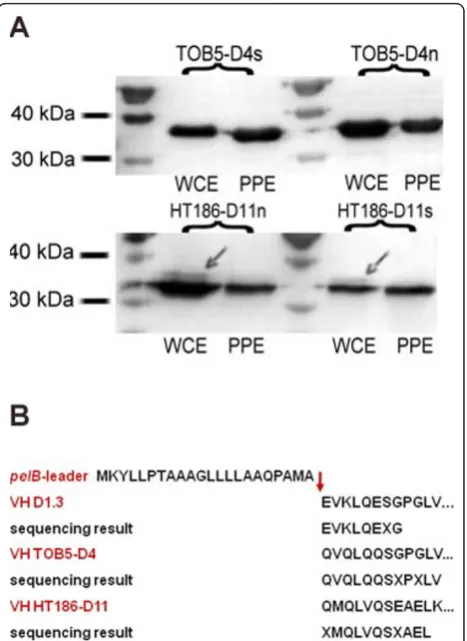
All genetic constructs were designed to create precise amino-terminal translational fusions of the scFv-coding sequences with theE. carotovora pelBsignal sequence to target the scFvs for secretion by the Sec pathway. For assessment of the efficiency of processing of the scFv fragments produced in KT2440, and their translocation to the periplasm, periplasmic fractions were isolated. This procedure generally gave scFv yields in the same range as, though with greater variability than, those obtained by whole cell lysis. To ascertain whether the increased variation in yield is due to incomplete release of periplasmic proteins during the isolation procedure or incomplete translocation to the periplasm, perhaps resulting from overloading of the secretion apparatus, Sec-mediated proteolytic cleavage of the pelBleader sequences of the scFvs was analyzed by electrophoretic separation followed by western blot detection of the C-terminal Strep-tag®II (Figure 4A). As expected, only fully processed scFvs were detected in periplasmic pre-parations, indicating that periplasmic scFvs are comple-tely processed. In the case of proteins extracted from whole cells, only fully processed mature anti-CRPs were detectable, although small amounts of unprocessed HT186-D11n and HT186-D11s scFvs were identified (Figure 4A, compare Figure 1), indicating that at the moment of sampling small amounts of untransported protein were still in the cytoplasm. The ratio of pro-cessed:unprocessed polypeptide did not seem to correlate with expression levels, since unprocessed protein was
also observed in cells carrying the lower expressing HT186-D11s construct. More likely is the possibility that the VH-coding amino acid sequence affects the second-ary structure around the cleavage junction and negatively impacts on the efficiency of processing. The variable yields in periplasmic extracts probably reflect incomplete disruption of the outer membrane by the procedure we used, but might also result from partial non-specific leak-age of periplasmic proteins to the medium, a phenom-enon previously observed for antibody fragments exported by means of the PelB leader peptide inE. coli
[32]. It should, nevertheless, be emphasized that this pro-cedure for selective isolation of periplasmic proteins has the major advantage of yielding active, soluble antibody fragments uncontaminated by cytoplasmic proteins.
The signal peptide cleavage sites of the recombinant scFvs were predicted by means of the in silico tool Figure 4 Periplasmic export of scFvs and signal peptide cleavage. A.) Western-blot of purified antibodies extracted from whole cells (WCE) and periplasmic preparations (PPP) and chromogenic detection of the Strep-tag®II at the C-terminus. A minor fraction of incomplete N-terminal processing (cleavage of the 22 amino acidpelB-leader sequence) is visible only in the case of HT186-D11 whole cell extracts (arrows). B.) N-terminal sequencing by Edman degradation confirmed the predicted cleavage sites following the A-M-A motif. X, amino acid position with ambiguous identification.
Dammeyeret al.Microbial Cell Factories2011,10:11 http://www.microbialcellfactories.com/content/10/1/11
Predisi [33] to be located between amino acids 22 and 23, directly after the A-M-A motif, which is also the preferred sequence motif (A-X-A) for interaction with signal peptidase I [34], and experimentally confirmed by N-terminal sequencing of isolated antibody (Figure 4B). Other sites of cleavage were not detected, which indi-cates that the KT2440 LepB peptidase (PP_1432), which shares 39% amino acid identity and 52% similarity with the E. coli K-12 peptidase, precisely recognizes and cleaves the PelB processing site.
Antibody activity
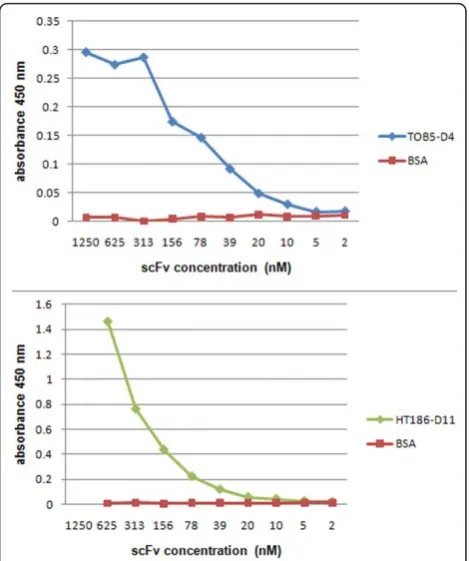
In order to assess whether the extracted periplasmic scFv polypeptides were correctly folded and had acquired correct binding activity, the binding of the TOB5-D4 and HT186-D11 antibodies to their cognate antigens were measured by ELISA assays using plates coated with 100 ng per well of either CRP antigen (Bios-Pacific, Emeryville, USA), MUC1 32 aa peptide with a C-terminal cysteine (APDTRPAPGSTAPPAHGVT-SAPDTRPAPGSTA-C) [21], or bovine serum albumin (BSA; controls). A primary mice anti-Myc-tag IgG, com-bined with a secondary Fab-specific goat anti-mice IgG horseradish peroxidase (HRP) conjugate were used for detection of bound antibody, as previously described [35]. As can be seen in Figure 5, high specific antigen binding was observed for both recombinant scFvs, with significant signals recorded till antibody concentrations of 10 nM, which corresponds to dilutions of 1:256, for an antibody having an initial concentration of 2.5μM. Recombinant anti-CRP antibody preparations obtained from both whole cells and periplasmic extracts had similar binding activities (data not shown), which is con-sistent with the findings shown in Figure 4A and the correct folding of periplasmic antibody.
Conclusions
We have presented here an assessment of the potential of
Pseudomonas putida KT2440 as a cell factory for the production of soluble recombinant antibody fragments that bind to antigens of high interest for diagnostics and therapy. With the described construct design, good yields of soluble, active scFvs are obtained through simple extraction of periplasmic polypeptides and single step affinity purification. These yields considerably exceeded those obtained from equivalent constructs inE. coliK-12, so KT2440 would seem to be a promising cell factory for recombinant antibody fragment production. It is likely that high density fed-batch cultivation of KT2440 [36], which are typically characterized by cell densities of up to more than 100 g/l, will allow achievement of much higher yields by this host. A common means of optimiz-ing expression levels of recombinant proteins is the use of synthetic genes with host-optimized codon usage. In
our study, this approach did not achieve increased expression, possibly due to the expression versatility of this host for foreign genes. However, the possibility that a less rigorous adaptation that maintains theP. putida
KT2440 natural % G+C value might give better expres-sion would seem worth exploring in future, especially in conjunction with other optimization efforts involving exploration of media and cultivation conditions as well as genetic engineering and genome streamlining approaches. The broad host range feature of the con-structs presented here will of course allow their testing in other host systems and potential discovery of even more powerful cell factories for antibody production.
Methods
Vector construction
TC-3’) and cloning viaEcoRI andXbaI to pSEVA-RK2-Sm-lac (pSEVA424). Vector pSEVAlacHT186-D11n was generated amplifying HT186-D11 from phage display vector pHAL14-HT186-D11 [11,21] using primers A and C (5’-GCTCTAGA TTACTTTTCGAACTGCGGG TGCGACCATGCGGCCCCATTCAGATCCTCTTCTG AGATG-3’), and cloning via EcoRI and XbaI into pSEVA-RK2-Sm-lac. Plasmid pSEVAlacD1.3n was con-structed using the same primers and restriction sites for the amplification product of pHAL14-D1.3 [11]. Sequences for ribosome binding sites [27], restriction sites and the Strep-tag®II [37] were added with the cor-responding primer overlaps.
Vector pSEVAlacTOB5-D4s and pSEVAxylTOB5-D4s were generated using anin silico-designed synthetic con-struct incorporating the RBS and Strep-tag® II. The sequence was codon-usage adapted to that ofP. putida
KT2440, using Jcat [38], and synthesized by Eurofins MWG (Ebersberg, Germany). The construct was cloned into pSEVA-RK2-Sm-lac and pSEVA-RK2-Sm-XylPm via
MfeI/EcoRI andXbaI. A synthetic construct was also gen-erated from HT186-D11, codon usage adapted to P. putida, and synthesized by GENEART (Regensburg, Ger-many). Cloning in Sm-lac and pSEVA-RK2-Sm-XylPm via EcoRI/HindIII resulted in pSEVA-lacHT186-D11s and pSEVAxylHT186-D11s respectively. All constructs contained the 66 bpErwinia carotovora pelB-leader sequence for periplasmic export and are sum-marized in Table 1.E. colistrain DH5a, chemicals and enzymes for PCR and cloning were purchased from Fer-mentas (St. Leon-Rot, Germany) and New England Biolabs (Ipswich, MA, USA). Integrity of the constructs was veri-fied by sequencing the synthetic construct prior to cloning, and restriction digestion after cloning. Native sequences were amplified from sequence validated templates [11,21], using high fidelity proof-reading polymerase (Phusion™) and confirmed by restriction digestion after cloning.
Transformation ofPseudomonas putidaKT2440
Competent cells were prepared using buffer containing 300 mM sucrose as described before [39]. 30 ng of plasmid constructs were used to transform 40μl of competentP. putida KT2440 (DSM 6125) cells by electroporation, which was carried out in prechilled 2 mm cuvettes using a Gene Pulser II with pulse controller plus and capacitance extender plus (Bio-Rad, Hempel Hempstead, UK). Cell: DNA mixes were pulsed at 2.5 kV, 25μF and 200-500Ω resistance, and subsequently plated on selection medium containing 100μg/ml of streptomycin and spectinomycin.
Production of scFvs withPseudomonas putidaKT2440
An 50 ml overnight liquid culture of the P. putida
KT2440 clone freshly transformed with the respective construct (Table 1) was used to inoculate the production
culture 1:100. Production test-cultures were grown in 200 ml cultures at 150 rpm at RT, 30°C and 37°C. Luria Bertani (LB) (5 g/l yeast extract, 10 g/l tryptone, 10 g/l NaCl), rich Luria Bertani Broth (10 g/l yeast extract, 10 g/l tryptone, 10 g/l NaCl), M9 containing 15 mM succinate, TB, and R2A [40,41] containing 50 μg/ml streptomycin were used in 500 ml baffled Erlenmeyer flasks. In the mid logarithmic phase (at OD595of ~0.5-0.6), production was induced by addition of isopropyl-ß-D-thiogalactopyranoside (IPTG) at concentrations ranging between 100 μM and 1 mM, or 15 mM 3-methylbenzoate, for pSEVAxyl-TOB5-D4s and pSE-VAxyl-HT186-D11s. Final yields reported in Figure 2 are from lysis of cells cultured in 100 ml LB at 180 rpm and 30°C. The cells were harvested by centrifugation.
Production of scFvs inE. coli
To compare yields of recombinant antibody fragments fromP. putidaKT2440 with those fromE. coliK-12, we introduced the pSEVAlacTOB5-D4 and pSEVA-lacHT186-D11 constructs containing thetac promoter for expression intoE. coli strain BL21 (lDE3) (Strata-gene). K-12 and KT2440 constructs were cultured at RT for HT186-D11n and 30°C for TOB5-D4n with other parameters being as described for KT2440, which in initial experiments also gave the best antibody yields in
E. coli.
Periplasmic export and signal peptide cleavage
To obtain periplasmic extracts, harvested cells were resuspended in PE buffer (20% (w/v) sucrose, 50 mM Tris, 1 mM EDTA, pH 8), incubated for 30 min on ice with brief vortexing every 5 minutes, and centrifuged at 20,000 rcf for 30 min.
Completeness of signal peptide cleavage was assessed by electrophoresis of antibody fragments on 12.5% SDS-PAGE, semi-dry transfer to PVDF membranes (Peqlab), and anti-Strep-tag detection using Strep-Tactin alkaline phosphatase (AP) conjugate (IBA, Göttingen, Germany) and chromogenic BCIP (5-Bromo-4-Chloro-3’ -Indoly-phosphate p-Toluidine Salt), NBT (Nitro-Blue Tetrazo-lium Chloride) detection (AP Blue Membrane Substrate Solution, Sigma). The cleavage position was determined by N-terminal sequencing by Edman degradation and compared to thein silico predicted sites obtained with the Predisi tool [33].
Affinity purification of antibody fragments
The proteins were obtained by whole cell lysis by soni-cation in sonisoni-cation buffer (50 mM Tris, 100 mM NaCl, 5 mM MgCl2, 0,05% (v/v) Triton X-100, pH 8,0), bacter-ial protein extraction reagent B-Per (Thermo Fischer scientific) according to the manufacturer’s instructions, sonication in B-Per or by periplasmic extraction (see
Dammeyeret al.Microbial Cell Factories2011,10:11 http://www.microbialcellfactories.com/content/10/1/11
below). Whole cell extracts were centrifuged for 15 min at 15,000 rcf to obtain cell-free extracts which, like peri-plasmic preparations were applied directly to affinity chromatography columns.
We used IMAC on Ni-TED (Machery-Nagel), for HIS-tag-based affinity purification, or Strep-Tactin Superflow (IBA) columns for Strep-tag®II-based affinity purification, or both in sequence. The washing and elution procedures were carried out according to the manufacturers’ recom-mendations. Protein concentrations of purified scFv solu-tions were determined by the method by Gill and van Hippel [42], using the individually calculated molar extinc-tion coefficients for the processed amino acid sequences without signal peptides (Protein Calculator v3.3, http:// www.scripps.edu/~cdputnam/protcalc.html), and the UV absorbance at 280 nm (protein) and 260 nm (as control for possible nucleic acid contamination), determined with the NanoDrop®ND-1000 spectrophotometer (Peqlab) or lab spectrometer (Eppendorf).
Antigen binding ELISA
The antigens, in PBS, were used to coat wells of 96-well microtitre plates (Maxisorp, Nunc). After coating over-night at 4°C, the wells were washed three times with PBST, and blocked with 2% (w/v) skim milk powder in PBST (2% M-PBST) for 1.5 h at room temperature, fol-lowed by three washes with PBST. For the ELISA, solu-ble scFvs were diluted in 100 μl 2% M-PBST and incubated in the antigen-coated plates for 1.5 h at room temperature, followed by three PBST washes. Bound scFvs were detected with the murine mAb (9E10, Sigma), which recognises the C-terminal c-myc tag, and a goat anti-mouse serum, conjugated with horseradish peroxidase (HRP) (Sigma; 1:10,000). For visualisation the chromogenic substrate 3,3’,5,5’-tetramethylbenzidine (TMB) was added. The staining reaction was stopped by addition of 100μl 1 N sulphuric acid and absorbance at 450 nm and 620 nm was measured using a SUNRISE™ microtitre plate reader (Tecan, Crailsheim, Germany).
Abbreviations used
aa: amino acid; AP: alkaline phosphatase; RBS: ribosome binding site; CRP: human C-reactive protein; EDTA: ethylenediaminetetraacetic acid; ELISA: enzyme-linked immunosorbent assay; Fab: fragment antigen binding; HRP: horseradish peroxidase; IgG: immunglobulin G; IMAC: immobilized metal ion affinity chromatography; IPTG: isopropyl-β-D-thiogalactopyranoside; MUC1: human mucin1; PBS(T): phosphate-buffered saline (tween); PVDF: polyvinylidene fluoride, RPM: rotations per minute; rcf, relative centrifugal force; scFv: single chain fragment variable; VH: antibody variable domain of the heavy chain; VL: antibody variable domain of the light chain.
Acknowledgements
We are deeply indebted to Prof. V. de Lorenzo (CNB-CSIC Madrid) for providing prototypes of RK2 based pSEVA plasmids. Thanks are also due to R. Getzlaff (HZI) for conducting N-terminal protein sequencing and B. Jung (HZI) for technical assistance. We greatly acknowledge the financial support by the
Federal Ministry of Education and Research to KNT (BMBF,“Psysmo”in the EraNet) and by the German Research Foundation (DFG, SFB 578) to SD.
Author details 1
Environmental Microbiology Laboratory, Helmholtz Centre for Infection Research, Inhoffenstr. 7, 38124 Braunschweig, Germany.2Institut für
Biochemie und Biotechnologie, Technische Universität Braunschweig, Spielmannstr. 7, 38106 Braunschweig, Germany.3Institut für Mikrobiologie,
Technische Universität Braunschweig, Spielmannstr. 7, 38106 Braunschweig, Germany.
Authors’contributions
TD designed and coordinated the study, drafted the manuscript, performed the experiments with lab support of SCK and analyzed the data. MS conducted the antigen ELISA, MH and SD provided the scFv sequences, MH, SD and KNT helped to draft the manuscript and to design the study. All authors read and approved the final manuscript.
Competing interests
MH and SD are inventors on a patent application regarding anti-MUC1 antibodies (PCT/EP2009/005218). This does not alter our adherence to all the Microbial Cell Factories policies on sharing data and materials. The other authors declare that they have no competing interests.
Received: 14 January 2011 Accepted: 21 February 2011 Published: 21 February 2011
References
1. Dübel S:Recombinant therapeutic antibodies.Applied Microbiology and Biotechnology2007,74:723-729.
2. Dübel S, Stoevesandt O, Taussig MJ, Hust M:Generating recombinant antibodies to the complete human proteome.Trends in Biotechnology 2010,28:333-339.
3. Hoet RM, Cohen EH, Kent RB, Rookey K, Schoonbroodt S, Hogan S, Rem L, Frans N, Daukandt M, Pieters H,et al:Generation of high-affinity human antibodies by combining donor-derived and synthetic complementarity-determining-region diversity.Nature Biotechnology2005,23:344-348. 4. Hust M, Dübel S:Mating antibody phage display with proteomics.Trends
in biotechnology2004,22:8-14.
5. Thie H, Meyer T, Schirrmann T, Hust M, Dübel S:Phage display derived therapeutic antibodies.Current Pharmaceutical Biotechnology2008, 9:439-446.
6. Schirrmann T, Al-Halabi L, Dübel S, Hust M:Production systems for recombinant antibodies.Frontiers in Bioscience2008,13:4576-4594. 7. Hust M, Maiss E, Jacobsen HJ, Reinard T:The production of a
genus-specific recombinant antibody (scFv) using a recombinant potyvirus protease.Journal of virological methods2002,106:225-233.
8. Meyer T, Stratmann-Selke J, Meens J, Schirrmann T, Gerlach GF, Frank R, Dübel S, Strutzberg-Minder K, Hust M:Isolation of scFv fragments specific to OmpD of Salmonella Typhimurium.Veterinary Microbiology2011, 10(1-2):162-9, 147.
9. Skerra A, Pfitzinger I, Pluckthun A:The functional expression of antibody Fv fragments in Escherichia coli: improved vectors and a generally applicable purification technique.Biotechnology (N Y)1991,9:273-278. 10. Jordan E, Hust M, Roth A, Biedendieck R, Schirrmann T, Jahn D, Dübel S:
Production of recombinant antibody fragments in Bacillus megaterium. Microbial cell factories2007,6:2-2.
11. Hust M, Steinwand M, Al-Halabi L, Helmsing S, Schirrmann T, Dübel S: Improved microtitre plate production of single chain Fv fragments in Escherichia coli.New Biotechnology2009,25:424-428.
12. Timmis KN:Pseudomonas putida: a cosmopolitan opportunist par excellence.Environ Microbiol2002,4:779-781.
13. Bagdasarian M, Lurz R, Ruckert B, Franklin FC, Bagdasarian MM, Frey J, Timmis KN:Specific-purpose plasmid cloning vectors. II. Broad host range, high copy number, RSF1010-derived vectors, and a host-vector system for gene cloning in Pseudomonas.Gene1981,16:237-247. 14. Nelson KE, Weinel C, Paulsen IT, Dodson RJ, Hilbert H, Martins dos
15. de Lorenzo V, Herrero M, Jakubzik U, Timmis KN:Mini-Tn5 transposon derivatives for insertion mutagenesis, promoter probing, and chromosomal insertion of cloned DNA in gram-negative eubacteria.J Bacteriol1990,172:6568-6572.
16. Hust M, Jostock T, Menzel C, Voedisch B, Mohr A, Brenneis M, Kirsch MI, Meier D, Dübel S:Single chain Fab (scFab) fragment.BMC biotechnology 2007,7:14-14.
17. Jordan E, Al-Halabi L, Schirrmann T, Hust M, Dübel S:Production of single chain Fab (scFab) fragments in Bacillus megaterium.Microb Cell Fact 2007,6:38-38.
18. Kirsch M, Zaman M, Meier D, Dübel S, Hust M:Parameters affecting the display of antibodies on phage.Journal of immunological methods2005, 301:173-185.
19. Thie H, Binius S, Schirrmann T, Hust M, Dübel S:Multimerization domains for antibody phage display and antibody production.New Biotechnology 2009,26:314-321.
20. Genest J:C-reactive protein: risk factor, biomarker and/or therapeutic target?The Canadian Journal of Cardiology2010,26(Suppl A), 41A-44A-41A-44A.
21. Thie H, Toleikis L, Li J, von Wasielewski R, Bastert G, Schirrmann T, Esteves IT, Behrens CK, Fournes B, Fournier N,et al:Rise and Fall of an Anti-MUC1 Specific Antibody.PLoS ONE2011,6:e15921.
22. Henderikx P, Neer NC-v, Jacobs A, Linden Evd, Arends JW, Müllberg J, Hoogenboom HR:A human immunoglobulin G1 antibody originating from an in vitro-selected Fab phage antibody binds avidly to tumor-associated MUC1 and is efficiently internalized.The American Journal of Pathology2002,160:1597-1608.
23. Schoonooghe S, Burvenich I, Vervoort L, Vos FD, Mertens N, Grooten J: PH1-derived bivalent bibodies and trivalent tribodies bind differentially to shed and tumour cell-associated MUC1.Protein Engineering, Design & Selection: PEDS2010,23:721-728.
24. de Boer HA, Comstock LJ, Vasser M:The tac promoter: a functional hybrid derived from the trp and lac promoters.Proc Natl Acad Sci USA1983, 80:21-25.
25. Franklin FC, Bagdasarian M, Bagdasarian MM, Timmis KN:Molecular and functional analysis of the TOL plasmid pWWO from Pseudomonas putida and cloning of genes for the entire regulated aromatic ring meta cleavage pathway.Proc Natl Acad Sci USA1981,78:7458-7462.
26. Gallegos MT, Marques S, Ramos JL:Expression of the TOL plasmid xylS gene in Pseudomonas putida occurs from a alpha 70-dependent promoter or from alpha 70- and alpha 54-dependent tandem promoters according to the compound used for growth.J Bacteriol1996,
178:2356-2361.
27. Olins PO, Rangwala SH:A novel sequence element derived from bacteriophage T7 mRNA acts as an enhancer of translation of the lacZ gene in Escherichia coli.J Biol Chem1989,264:16973-16976.
28. Lei SP, Lin HC, Wang SS, Callaway J, Wilcox G:Characterization of the Erwinia carotovora pelB gene and its product pectate lyase.J Bacteriol 1987,169:4379-4383.
29. Bird RE, Hardman KD, Jacobson JW, Johnson S, Kaufman BM, Lee SM, Lee T, Pope SH, Riordan GS, Whitlow M:Single-chain antigen-binding proteins. Science1988,242:423-426.
30. Griswold KE, Mahmood NA, Iverson BL, Georgiou G:Effects of codon usage versus putative 5’-mRNA structure on the expression of Fusarium solani cutinase in the Escherichia coli cytoplasm.Protein Expr Purif2003, 27:134-142.
31. Jordan E, Al-Halabi L, Schirrmann T, Hust M, Dubel S:Production of single chain Fab (scFab) fragments in Bacillus megaterium.Microb Cell Fact 2007,6:38.
32. Georgiou G, Segatori L:Preparative expression of secreted proteins in bacteria: status report and future prospects.Curr Opin Biotechnol2005, 16:538-545.
33. Hiller K, Grote A, Scheer M, Munch R, Jahn D:PrediSi: prediction of signal peptides and their cleavage positions.Nucleic Acids Res2004,32: W375-379.
34. Pugsley AP:The complete general secretory pathway in gram-negative bacteria.Microbiol Rev1993,57:50-108.
35. Schirrmann T, Hust M:Construction of human antibody gene libraries and selection of antibodies by phage display.Methods in Molecular Biology (Clifton, NJ)2010,651:177-209.
36. Sun Z, Ramsay JA, Guay M, Ramsay BA:Automated feeding strategies for high-cell-density fed-batch cultivation of Pseudomonas putida KT2440. Appl Microbiol Biotechnol2006,71:423-431.
37. Schmidt TG, Skerra A:The Strep-tag system for one-step purification and high-affinity detection or capturing of proteins.Nat Protoc2007, 2:1528-1535.
38. Grote A, Hiller K, Scheer M, Munch R, Nortemann B, Hempel DC, Jahn D: JCat: a novel tool to adapt codon usage of a target gene to its potential expression host.Nucleic Acids Res2005,33:W526-531.
39. Thomas AW, Topping AW, Slater JH, Weightman AJ:Localization and functional analysis of structural and regulatory dehalogenase genes carried on DEH from Pseudomonas putida PP3.J Bacteriol1992, 174:1941-1947.
40. Sambrook FaM:Molecular Cloning: A Laboratory ManualCold Spring Harbor, N.Y.: Cold Spring Harbor Laboratory; 1989.
41. Reasoner DJ, Geldreich EE:A new medium for the enumeration and subculture of bacteria from potable water.Appl Environ Microbiol1985, 49:1-7.
42. Gill SC, von Hippel PH:Calculation of protein extinction coefficients from amino acid sequence data.Anal Biochem1989,182:319-326.
doi:10.1186/1475-2859-10-11
Cite this article as:Dammeyeret al.:Efficient production of soluble recombinant single chain Fv fragments by aPseudomonas putidastrain KT2440 cell factory.Microbial Cell Factories201110:11.
Submit your next manuscript to BioMed Central and take full advantage of:
• Convenient online submission
• Thorough peer review
• No space constraints or color figure charges
• Immediate publication on acceptance
• Inclusion in PubMed, CAS, Scopus and Google Scholar
• Research which is freely available for redistribution
Submit your manuscript at www.biomedcentral.com/submit
Dammeyeret al.Microbial Cell Factories2011,10:11 http://www.microbialcellfactories.com/content/10/1/11