R E S E A R C H A R T I C L E
Open Access
Initial blood pressure is associated with
stroke severity and is predictive of
admission cost and one-year outcome in
different stroke subtypes: a SRICHS registry
study
Chi-Hung Liu
1,2†, Yi-Chia Wei
3†, Jr-Rung Lin
4, Chien-Hung Chang
1,5, Ting-Yu Chang
1, Kuo-Lun Huang
1, Yeu-Jhy Chang
1,
Shan-Jin Ryu
1, Leng-Chieh Lin
6, Tsong-Hai Lee
1*and the Stroke Registry in Chang Gung Healthcare System (SRICHS)
Investigators
Abstract
Background:To investigate if initial blood pressure (BP) on admission is associated with stroke severity and predictive of admission costs and one-year-outcome in acute ischemic (IS) and hemorrhagic stroke (HS). Methods:This is a single-center retrospective cohort study. Stroke patients admitted within 3 days after onset between January 1stand December 31stin 2009 were recruited. The initial BP on admission was subdivided into high (systolic BP≥211 mmHg or diastolic BP≥111 mmHg), medium (systolic BP 111–210 mmHg or diastolic BP 71–110 mmHg), and low (systolic BP≤110 mmHg or diastolic BP≤70 mmHg) groups and further subgrouped with 25 mmHg difference in systole and 10 mmHg difference in diastole for the correlation analysis with demographics, admission cost and one-year modified Rankin scale (mRS).
Results:In 1173 IS patients (mean age: 67.8 ± 12.8 years old, 61.4 % male), low diastolic BP group had higher frequency of heart disease (p=0.001), dehydration (p=0.03) and lower hemoglobin level (p<0.001). The extremely high and low systolic BP subgroups had worse National Institutes of Health Stroke Scale (NIHSS) score (p=0.03), higher admission cost (p<0.001), and worse one-year mRS (p=0.03), while extremely high and low diastolic BP subgroups had higher admission cost (p<0.01). In 282 HS patients (mean age: 62.4 ± 15.4 years old, 60.6 % male), both low systolic and diastolic BP groups had lower hemoglobin level (systole:p=0.05; diastole:p<0.001). The extremely high and low BP subgroups had worse NIHSS score (p=0.01 andp<0.001, respectively), worse one-year mRS (p=0.002 andp=0.001, respectively), and higher admission cost (diastole:p<0.002).
Conclusions:Stroke patients with extremely high and low BP on admission have not only worse stroke severity but also higher admission cost and/or worse one-year outcome. In those patients with low BP, low admission hemoglobin might be a contributing factor.
Keywords:Blood pressure, Stroke, Ischemia, Hemorrhage, Cost, Outcome
* Correspondence:[email protected] †Equal contributors
1Stroke Center and Department of Neurology, Chang Gung Memorial
Hospital, Linkou Medical Center and College of Medicine, Chang Gung University, 5 Fu-Hsing St., Kueishan, Taoyuan 33333, Taiwan
Full list of author information is available at the end of the article
Background
Cerebrovascular disease (CVD) is an important global socioeconomic issue due to high disease prevalence, high morbidity, and aging populations worldwide. The direct cost of stroke care is related to the intensity of hospital treatment, in-hospital complication, cardiac disease, stroke severity, and related disabilities, etc. [1, 2]. More and more studies have focused on the cost of stroke care with the purpose to achieve better control of health care expenditure. In Taiwan, over 99 % of the population and nearly all the hospitals are compulsorily enrolled in the National Health Insurance (NHI) sys-tem. There is a need to determine the potentially modi-fiable patient factors that are associated with increased medical costs, which may help to redirect resources to take care of other patients.
Several factors have been proposed to predict the out-come and costs of acute stroke. Blood pressure (BP) is a common outcome predictor in acute ischemic (IS) and hemorrhagic stroke (HS), and elevated initial BP has been reported to be associated with poor short-term and long-term outcomes in acute stroke [3]. Previous studies have found J- or U-shaped correlations between initial BP and outcome in stroke patients [3]. In IS, high BP on admission increases the frequency of early neurological deterioration and predicts unfavorable 90-day outcomes [4]. The cutoff values of high BP in predicting poor
out-come or mortality were assumed to be 180–220 mmHg
in systolic BP and 120 mmHg in diastolic BP [3, 5]. In HS, high BP during admission increases the risk of hematoma extension and predicts poor clinical outcome and mortality [3, 6]. Previous study noted a threshold of
systolic BP over 170–200 mmHg may predict hematoma
expansion and neurological deterioration [7]. Low BP during admission has been less extensively studied but is reported to be predictive of poor outcome [5]. Cardio-vascular complications could be one factor leading to
poor outcome in HS patients with low BP [8–10]. Some
stroke-related comorbidities such as physical inactivity, health-care associated infection, and cardiovascular cost
may have financial impacts on these patients [11–13].
The other possible reason why extremely low and high BP causes poor outcome needs further investigation, and the correlation between initial BP and admission medical cost has not been addressed. The aim of our study was to assess the correlation of initial BP with admission cost and one-year stroke outcome and study the potentially associated factors in both IS and HS.
Methods
Patient enrollment and data collection
Patient data were prospectively recorded and retrospect-ively analyzed from the Stroke Registry of the Chang Gung Healthcare System (SRICHS). The Human Studies
Institutional Review Board in Chang Gung Memorial Hospital at Linkou approved this study. SRICHS is a ma-ture electronic chart-based stroke registry system set up on March, 2007 [14]. The clinical information of patients
with the diagnosis of acute IS and HS (ICD9 430–437)
was automatically enrolled into this registry and was anonymized and de-identified prior to analysis. Laboratory and imaging reports were auto-downloaded from the hos-pital information system. Clinical data were collected by the primary care staff and further proofread by the task force to ensure accuracy.
All acute stroke patients registered in the SRICHS
be-tween January 1st and December 31st in 2009 were
re-cruited for this study if they were admitted within 3 days after symptom onset in Chang Gung Memorial Hospital, Linkou Medical Center. All patients received brain com-puted tomographic (CT) scans and/or magnetic resonance imaging (MRI) scans to confirm the clinical diagnosis and were classified into IS and HS groups. Patients were ex-cluded if (1) the time of stroke onset was uncertain; (2) intravascular intervention was carried out during admis-sion; (3) subarachnoid hemorrhages due to aneurysm, ar-teriovenous malformation, and other vascular anomalies were diagnosed; (4) admission costs were more than $33,333 US dollars (equal to 100,000 New Taiwan dollars; 1 US dollar = 30 New Taiwan dollars). We excluded the pa-tients with exceptionally high costs because most of them were related to social problems (such as prolonged hospital stay due to lack of family support or under lawsuit) and were not associated with the stroke or stroke care treat-ment per se. The eligible patients were classified into
high, medium, and low systolic BP groups (≥211, 111–
210, ≤110 mmHg, respectively) and also diastolic BP
groups (≥111 mmHg, 71–110 mmHg,≤70 mmHg,
re-spectively) according to the initial BP on admission. Initial BP was defined as systolic BP and diastolic BP on admission which was examined by nurses after bed rest for 5 min. The extremely high BP was defined when
systolic BP≥211 mmHg or diastolic BP≥111 mmHg due
to increased risk of neurological deterioration, mortality, or disability in these patients [3, 5, 7]. The extremely low
BP was defined as systolic BP≤110 mmHg or diastolic
BP ≤70 mmHg based on the increased risk of
cardio-vascular complications in such patients [8, 9]. For cor-relation analysis with admission cost and one-year
outcome, BP was further subdivided into systolic BP≤110,
111–135, 136–160, 161–185, 186–210, and≥211 mmHg
subgroups and diastolic BP ≤70, 71–80, 81–90, 91–100,
101–110, and≥111 mmHg subgroups.
Health Stroke Scale (NIHSS) score on admission were obtained for all recruited patients. Hypertension was defined as previous diagnosis of hypertension or under antihypertensive treatment. DM was defined as fasting
blood sugar ≥126 mg/dl, previous diagnosis of DM or
under hypoglycemic agent and/or insulin treatment. Dyslipidemia was defined as fasting blood cholesterol
level ≥200 mg/dl, triglyceride level ≥150 mg/dl, LDL
cholesterol level > 130 mg/dl, HDL cholesterol level < 40 mg/dl, previous diagnosis of dyslipidemia and/or under current lipid-lowering agent usage according to our previ-ous study [15]. Dehydration was defined as blood urea nitrogen to creatinine ratio over 15 (BUN/Cr > 15) and infection was defined as concurrent infections during admission [16]. History of heart disease included atrial fibrillation, coronary artery disease, and/or heart failure. Cigarette smoking was defined as daily smoking for at least 6 months prior to stroke onset.
Cost and outcome assessment
The direct medical cost of acute stroke care was calcu-lated from the time of admission to that of discharge, in-cluding the expense for the personnel, imaging studies, laboratory examinations, medications, and any interven-tional management in the emergency department, inten-sive care unit (ICU), and neurology ward with a similar costing method across hospitals in Taiwan. The costs in the rehabilitation department were not included because stroke patients may be assigned different types of post-acute rehabilitation programs in different institutions with a similar length of stay according to the regulations by NHI Administration. The cost data of this study were retrieved by linking the SIRCHS to our hospital-based fi-nancial system [16]. However, the medical costs in other institution were unavailable. The long-term outcome of each patient was assessed one year after discharge with modified Rankin scale (mRS) by neurologists or stroke case managers.
Statistical analysis
Data were analyzed using the Statistical Package for the Social Sciences (SPSS) 17.0 (SPSS, Chicago, IL, USA). Kolmogorov-Smirnov test was initially used to test the normality. When comparing the characteristics of pa-tients with IS and HS, the continuous data were expressed as mean ± standard deviation, and were
ana-lyzed using an independent t test. Nominal variables
were examined by the chi-square test for parametric data. When analyzing the IS and HS patients of different BP subgroups, non-parametric tests were used due to non-Gaussian distribution of these clinical data. The continuous data were expressed as median (quartile 1, quartile 3), and were analyzed using the Kruskal-Wallis test. The Nemenyi-Damico-Wolfe-Dunn test was used
for post-hoc comparison. Nominal variables were also examined by the chi-square test. Multivariate linear regression models were further used to analyze the coef-ficient of factors associated with admission costs. We plotted the correlation of initial BP subgroups with
admission cost and one-year mRS score. Apvalue of <0.05
indicated statistical significance.
Results
Comparison between IS and HS patients
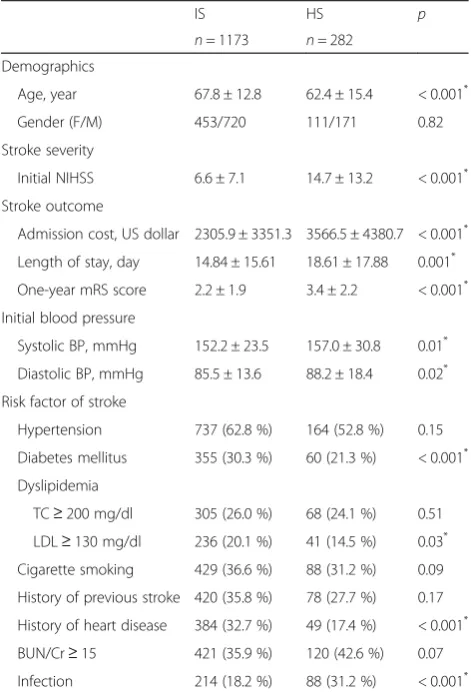
A total of 1173 IS and 282 HS patients were recruited
be-tween January 1st and December 31st in 2009. Compared
with HS patients, IS patients had older age of onset (IS vs.
HS: 67.8 ± 12.8 vs. 62.4 ± 15.4 years old, p <0.001) and
higher frequency of DM (30.3 % vs. 21.3 %, p <0.001),
infection (31.2 % vs. 18.2 %, p <0.001), elevated LDL
(20.1 % vs. 14.5 %, p=0.03) and heart disease (32.7 % vs.
17.4 %,p<0.001) (Table 1). Compared with IS patients, HS
Table 1Characteristics of patients with IS and HS
IS HS p
n= 1173 n= 282
Demographics
Age, year 67.8 ± 12.8 62.4 ± 15.4 < 0.001*
Gender (F/M) 453/720 111/171 0.82
Stroke severity
Initial NIHSS 6.6 ± 7.1 14.7 ± 13.2 < 0.001*
Stroke outcome
Admission cost, US dollar 2305.9 ± 3351.3 3566.5 ± 4380.7 < 0.001*
Length of stay, day 14.84 ± 15.61 18.61 ± 17.88 0.001*
One-year mRS score 2.2 ± 1.9 3.4 ± 2.2 < 0.001*
Initial blood pressure
Systolic BP, mmHg 152.2 ± 23.5 157.0 ± 30.8 0.01*
Diastolic BP, mmHg 85.5 ± 13.6 88.2 ± 18.4 0.02*
Risk factor of stroke
Hypertension 737 (62.8 %) 164 (52.8 %) 0.15
Diabetes mellitus 355 (30.3 %) 60 (21.3 %) < 0.001*
Dyslipidemia
TC≥200 mg/dl 305 (26.0 %) 68 (24.1 %) 0.51
LDL≥130 mg/dl 236 (20.1 %) 41 (14.5 %) 0.03*
Cigarette smoking 429 (36.6 %) 88 (31.2 %) 0.09
History of previous stroke 420 (35.8 %) 78 (27.7 %) 0.17
History of heart disease 384 (32.7 %) 49 (17.4 %) < 0.001*
BUN/Cr≥15 421 (35.9 %) 120 (42.6 %) 0.07
Infection 214 (18.2 %) 88 (31.2 %) < 0.001*
Mean ± standard deviation is reported for continuous variables and number (%) for categorical variables. Independentttest for continuous variables, and chi-square test for discrete variables.ISischemic stroke,HShemorrhagic stroke,
patients had more initial NIHSS (IS vs. HS: 6.6 ± 7.1 vs.
14.7 ± 13.2,p<0.001), initial systolic BP (IS vs. HS: 152.2
± 23.5 vs. 157.0 ± 30.8 mmHg,p=0.01) and diastolic BP
(IS vs. HS: 85.5 ± 13.6 vs. 88.2 ± 18.4 mmHg, p =0.02),
more admission costs (2305.9 ± 3351.3 vs. 3566.5 ±
4380.7 US dollars, p <0.001), and worse one-year mRS
score (2.2 ± 1.9 vs. 3.4 ± 2.2,p<0.001).
Analyses of IS patients
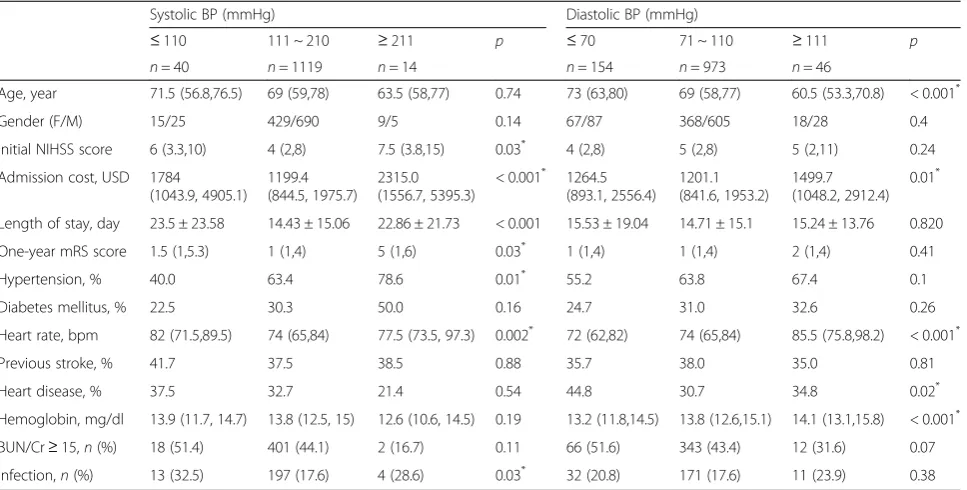
Table 2 shows in the IS patients, high systolic BP group had
the highest frequency of hypertension (78.6 %, p =0.01).
Low systolic BP group had the greatest frequency of
infec-tion (p=0.03), and low diastolic BP group had the least
hemoglobin level (p <0.001), the oldest age of onset
(p <0.001), and the greatest frequency of heart disease
(p =0.02) among the three BP groups. Compared with
the medium BP group, high systolic BP group was
male predominant (p =0.048) and had worse initial
NIHSS score (p =0.02). The low systolic BP group had
more infection (p=0.02), while the high diastolic BP group
had younger age of onset (p=0.003), and the low diastolic
BP group was older (p=0.004) and had more heart disease
(p=0.001) and lower hemoglobin level (p<0.001).
Dehy-dration was more common in the low systolic and dia-stolic BP groups compared with high sydia-stolic and diadia-stolic
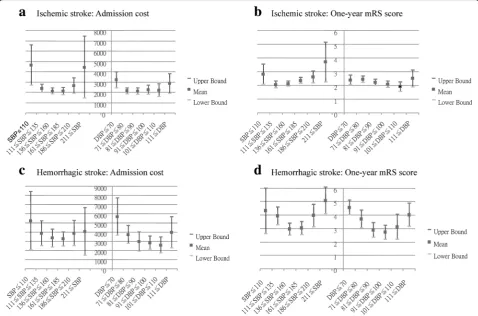
BP groups (p =0.04 and 0.03, respectively). When
cor-related with systolic BP subgroups, admission cost
(Fig. 1a, p <0.001) and one-year mRS score (Fig. 1b,
p =0.03) showed a U-shape distribution. Similarly,
when correlated with diastolic BP subgroups,
admis-sion cost (Fig. 1a, p <0.01) also showed a U-shape
distribution.
The multivariate linear regression (Table 4) revealed that
admission cost was associated with initial SBP≤110 mmHg
(95 % CI, 55.8 to 2338.6; p =0.04), initial NIHSS score
(95 % CI, 9.5 to 145.2; p<0.001), heart rate (95 % CI,
20.8 to 49.5; p <0.001), hemoglobin (95 % CI, −220.3
to −12.4; p <0.03), and infections during hospital stay
(95 % CI, 967.2 to 2037.3; p <0.001) after adjusting for
confounding variables including extremely high and low initial systolic BP, extremely low initial diastolic BP, initial NIHSS score, heart rate, hemoglobin, ratio of BUN and creatinine, infection during admission, dyslipidemia with total cholesterol > 200 mg/dl, smoking, and history of pre-vious stroke, heart disease, and hypertension.
Analyses of HS patients
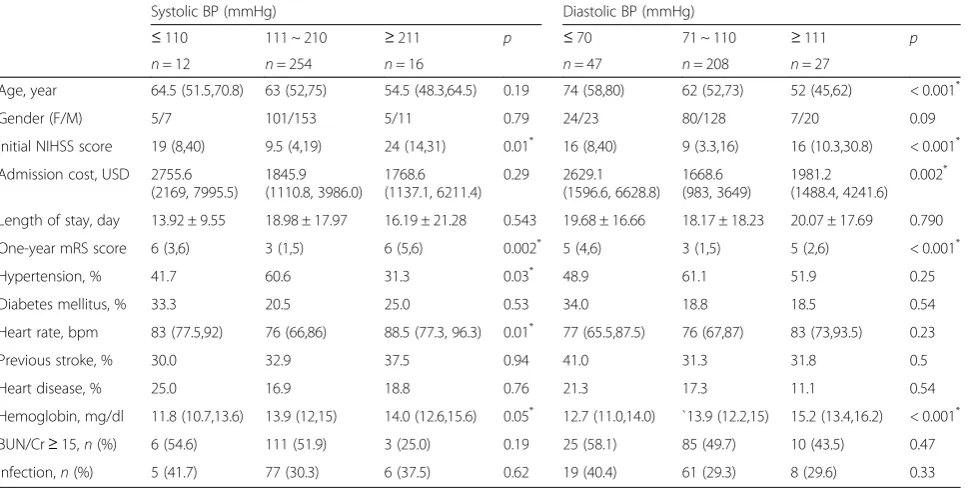
Table 3 shows that when compared with the medium BP group, high systolic BP, high diastolic BP and low diastolic
BP groups had worse initial NIHSS score (p=0.01, < 0.001,
and < 0.001, respectively). Similar to IS patients, HS pa-tients also had correlation between initial BP and
hemoglobin level (systolic BP: p =0.05; diastolic BP: p
< 0.001). When correlated with systolic BP subgroups, a U-shape distribution was seen in one-year mRS score
(Fig. 1d, p=0.002) but not in admission cost (Fig. 1c,
Table 2Analyses of parameters associated with systolic and diastolic BP in patients with acute IS
Systolic BP (mmHg) Diastolic BP (mmHg)
≤110 111 ~ 210 ≥211 p ≤70 71 ~ 110 ≥111 p
n= 40 n= 1119 n= 14 n= 154 n= 973 n= 46
Age, year 71.5 (56.8,76.5) 69 (59,78) 63.5 (58,77) 0.74 73 (63,80) 69 (58,77) 60.5 (53.3,70.8) < 0.001*
Gender (F/M) 15/25 429/690 9/5 0.14 67/87 368/605 18/28 0.4
Initial NIHSS score 6 (3.3,10) 4 (2,8) 7.5 (3.8,15) 0.03* 4 (2,8) 5 (2,8) 5 (2,11) 0.24
Admission cost, USD 1784 (1043.9, 4905.1)
1199.4 (844.5, 1975.7)
2315.0 (1556.7, 5395.3)
< 0.001* 1264.5 (893.1, 2556.4)
1201.1 (841.6, 1953.2)
1499.7 (1048.2, 2912.4)
0.01*
Length of stay, day 23.5 ± 23.58 14.43 ± 15.06 22.86 ± 21.73 < 0.001 15.53 ± 19.04 14.71 ± 15.1 15.24 ± 13.76 0.820
One-year mRS score 1.5 (1,5.3) 1 (1,4) 5 (1,6) 0.03* 1 (1,4) 1 (1,4) 2 (1,4) 0.41
Hypertension, % 40.0 63.4 78.6 0.01* 55.2 63.8 67.4 0.1
Diabetes mellitus, % 22.5 30.3 50.0 0.16 24.7 31.0 32.6 0.26
Heart rate, bpm 82 (71.5,89.5) 74 (65,84) 77.5 (73.5, 97.3) 0.002* 72 (62,82) 74 (65,84) 85.5 (75.8,98.2) < 0.001*
Previous stroke, % 41.7 37.5 38.5 0.88 35.7 38.0 35.0 0.81
Heart disease, % 37.5 32.7 21.4 0.54 44.8 30.7 34.8 0.02*
Hemoglobin, mg/dl 13.9 (11.7, 14.7) 13.8 (12.5, 15) 12.6 (10.6, 14.5) 0.19 13.2 (11.8,14.5) 13.8 (12.6,15.1) 14.1 (13.1,15.8) < 0.001*
BUN/Cr≥15,n(%) 18 (51.4) 401 (44.1) 2 (16.7) 0.11 66 (51.6) 343 (43.4) 12 (31.6) 0.07
Infection,n(%) 13 (32.5) 197 (17.6) 4 (28.6) 0.03* 32 (20.8) 171 (17.6) 11 (23.9) 0.38
p =0.29). There was also a U-shape distribution of
dia-stolic BP subgroups with admission cost (Fig. 1c,p=0.002)
and one-year mRS score (Fig. 1d,p<0.001). The
multi-variate linear regression (Table 4) revealed that admis-sion cost was associated with initial NIHSS score (95 %
CI, 0.02 to 78.50; p =0.05), and infection during
hos-pital stay (95 % CI, 892.84 to 2947.16; p <0.001) after
adjusting for confounding factors including extremely low initial diastolic BP, initial NIHSS score, heart rate, hemoglobin, infection during admission and history of hypertension.
Discussion
Different to previous studies, our results disclosed that in both IS and HS, patients with extremely high and low diastolic BP had greater admission cost. Moreover, we found that low hemoglobin level, presence of infec-tion, severe stroke, and increased heart rate could be the main contributors to the greater admission cost in stroke patients with extreme BP. The modification of these factors may help to reduce the medical expense in the future.
The extremely low BP and admission costs
Similar to previous reports [4, 17, 18], our results also provided evidence that extremely high and low systolic BP were associated with poor one-year outcome in acute IS and HS patients, demonstrating a U-shape relation-ship between initial BP and outcome [3, 19]. Further-more, we noted both our IS and HS patients with low initial diastolic BP had lower hemoglobin level and greater admission cost than patients without these con-ditions. Hemoglobin level was inversely associated with admission costs but not one-year mRS after adjusting for confounding variables in IS patients. In contrast, our HS patients with low initial diastolic BP had lower hemoglobin and more admission cost, but the correl-ation between hemoglobin and admission cost was insig-nificant after adjusting for confounding factors. The plausible explanation is that diastolic BP could be influ-enced by blood volume [20], and anemia may cause in-sufficient cerebral blood flow resulting in reduced oxygen-carrying capacity [21]. The low hemoglobin level was previously reported to lead to high cardiovascular and non-cardiovascular mortality in patients with old age,
acute coronary syndrome, heart failure, or life-threatening
illness [22–25], and could cause prolonged ICU stay and
mechanical ventilator use in IS patients [23]. All these conditions may lead to more acute care costs.
The low BP during admission could be secondary to heart failure, coronary heart disease, dehydration, or sepsis [5, 26]. Heart diseases including atrial fibrillation, ischemic heart disease, and congestive heart failure may result in reduced cardiac output, and increased length of hospitalization and inpatient cost in patients with transi-ent ischemic attack or who are dependtransi-ent [27, 28]. It is
possible that patients with incident heart disease are frail and prone to have worsening heart failure during sion [29, 30]. Dehydration may cause low BP, high admis-sion infection rate, and poor clinical outcome [16]. Concurrent infection and sepsis is also known to prolong hospital stay and increase medical cost especially in in-sured patients, such as our patients under a universal health insurance system [31, 32]. Our IS patients with low diastolic BP had more heart disease and dehydration, and those with low systolic BP had more infection (Table 2). After adjusting for the confounding factors, our study
Table 3Analyses of parameters associated with systolic and diastolic BP in patients with acute HS
Systolic BP (mmHg) Diastolic BP (mmHg)
≤110 111 ~ 210 ≥211 p ≤70 71 ~ 110 ≥111 p
n= 12 n= 254 n= 16 n= 47 n= 208 n= 27
Age, year 64.5 (51.5,70.8) 63 (52,75) 54.5 (48.3,64.5) 0.19 74 (58,80) 62 (52,73) 52 (45,62) < 0.001*
Gender (F/M) 5/7 101/153 5/11 0.79 24/23 80/128 7/20 0.09
Initial NIHSS score 19 (8,40) 9.5 (4,19) 24 (14,31) 0.01* 16 (8,40) 9 (3.3,16) 16 (10.3,30.8) < 0.001*
Admission cost, USD 2755.6 (2169, 7995.5)
1845.9 (1110.8, 3986.0)
1768.6 (1137.1, 6211.4)
0.29 2629.1 (1596.6, 6628.8)
1668.6 (983, 3649)
1981.2 (1488.4, 4241.6)
0.002*
Length of stay, day 13.92 ± 9.55 18.98 ± 17.97 16.19 ± 21.28 0.543 19.68 ± 16.66 18.17 ± 18.23 20.07 ± 17.69 0.790
One-year mRS score 6 (3,6) 3 (1,5) 6 (5,6) 0.002* 5 (4,6) 3 (1,5) 5 (2,6) < 0.001*
Hypertension, % 41.7 60.6 31.3 0.03* 48.9 61.1 51.9 0.25
Diabetes mellitus, % 33.3 20.5 25.0 0.53 34.0 18.8 18.5 0.54
Heart rate, bpm 83 (77.5,92) 76 (66,86) 88.5 (77.3, 96.3) 0.01* 77 (65.5,87.5) 76 (67,87) 83 (73,93.5) 0.23
Previous stroke, % 30.0 32.9 37.5 0.94 41.0 31.3 31.8 0.5
Heart disease, % 25.0 16.9 18.8 0.76 21.3 17.3 11.1 0.54
Hemoglobin, mg/dl 11.8 (10.7,13.6) 13.9 (12,15) 14.0 (12.6,15.6) 0.05* 12.7 (11.0,14.0) `13.9 (12.2,15) 15.2 (13.4,16.2) < 0.001*
BUN/Cr≥15,n(%) 6 (54.6) 111 (51.9) 3 (25.0) 0.19 25 (58.1) 85 (49.7) 10 (43.5) 0.47
Infection,n(%) 5 (41.7) 77 (30.3) 6 (37.5) 0.62 19 (40.4) 61 (29.3) 8 (29.6) 0.33
Median (Q1, Q3) is reported for continuous variables and number (%) for categorical variables.BPblood pressure,HShemorrhagic stroke,Ffemale,Mmale,USD
US dollar, One US dollars = 30 New Taiwan dollars, Previous stroke = history of previous stroke, Heart disease = history of heart disease,bpmbeats per minute,
NIHSSNational Institutes of Health Stroke Scale,mRSmodified Rankin scale,BUN/Crblood urea nitrogen to creatinine ratio.*p
value < 0.05
Table 4Multivariate linear regression analyses of factors associated with admission costs in stroke patients
IS HS
Admission cost, USD
Factors Linear regression coefficient
95 % CI P
value
Factors Linear regression coefficient
95 % CI P
value
Initial NIHSS score
112.4 79.5 to
145.2
<0.001 Initial NIHSS score
39.26 0.02 to 78.50 0.051
Heart rate, bpm
35.1 20.8 to 49.5 <0.001 Infection 1920.00 892.84 to
2947.16
<0.001
Hemoglobin,
mg/dl −
116.4 −220.3 to
−12.4
0.028
Infection 1502.3 967.2 to
2037.3
<0.001
Low SBP (≤110 mmHg)
1197.2 55.8 to
2338.6
0.040
High SBP (≥211 mmHg)
1763.8 −8.4 to
2526.0
0.051
provided evidence that infection could be a major con-tributor to increased admission costs in patients during the acute treatment of stroke (Table 4).
The extremely high BP to admission costs
Early intensive BP control in HS was reported to im-prove outcomes in INTERACT 2 and ATACH-II trials [33, 34]. Our observational study was consistent with the results demonstrating a linear association between physical dysfunction and baseline systolic BP in INTER-ACT 2 trial [35]. The elevated BP during acute stroke could be related to previous history of hypertension, increased intracranial pressure, stress of hospitalization, or autonomic system activation [26, 36, 37]. The Cush-ing reflex (raised BP, reduced heart rate, and irregular breathing) which is a CNS homeostatic response to in-creased intracranial pressure [38] could occur in intrace-rebral hemorrhage or large ischemic stroke. Both our IS and HS patients with extremely high BP had increased HR instead of bradycardia. It is possible that acute stroke may induce sympathetic activation or develop-ment of Cushing reflex which contributes to extremely high BP in the beginning [38]. It is known that high ad-mission blood sugar is associated with poor outcome [39], and our study showed the DM was more common
in IS patients with high BP (p=0.05) than low BP.
Initial stroke severity and admission costs
Our results suggested that initial stroke severity is the important contributor to admission cost in IS and HS patients with initial extreme BP (Table 4). Besides, our IS patients with extreme systolic BP and HS patients with extreme diastolic BP had more admission cost and worse one-year outcome especially when associated with worse initial NIHSS score. In previous studies, it has been shown that HS patients with worse initial stroke severity may have longer hospital stay and more post-stroke infection [13, 40]. It is also reported that high baseline NIHSS score is likely to be associated with large infarct volume in patients with anterior circulation stroke and can predict progression of neurological deficit and poor 3-month clinical outcome in patients with pos-terior circulation stroke [41, 42].
Limitations
First, our study only included the direct medical costs of acute care but did not collect the costs up to 12 months to correlate with the long-term outcome. Second, since this is a single center study, the generalizability may be limited. However, Chang et al. reported that similar to previous results, the initial stroke severity may predict costs of acute care in Taiwanese IS patients [2]. Since Taiwan has one-payer insurance system that covers more than 99 % of the population, the results of our study
could be well generalized in Taiwan. However, the generalizability beyond Taiwan may need further valid-ation because of the diversity of medical insurance sys-tem among different countries. Third, we used the initial BP but not the 24-h ambulatory BP as the predictor. The initial BP may be influenced by many factors and is sometimes unreliable. Fourth, we did not consider im-aging findings such as infarction/hematoma location and volume, as infarction/hematoma expansion with brain stem destruction may result in low initial BP and is asso-ciated with high admission cost and poor stroke out-come. Fifth, we did not make a distinction between infection on admission and in-hospital infection. Finally, the small sample size of our patients with extreme BP may also have limited power to show the significance. Nevertheless, our study has provided evidence that fu-ture studies should be undertaken to examine whether the correction of these factors may help reduce the med-ical expense related to acute hospital care and improve the long-term outcome.
Conclusions
A U-shape relationship can be seen between initial sys-tolic/diastolic BP and admission cost as well as one-year mRS score in both IS and HS patients. Infection is associ-ated with high admission costs in both IS and HS patients. Severe stroke, increased heart rate, and low hemoglobin and systolic BP on admission significantly increased total admission costs and patients with these conditions should be carefully monitored to avoid complications.
Competing interests
The authors declare that they have no competing interests.
Authors’contributions
CHL and YCW drafted the manuscript. JRL performed the statistical analysis. CHL, CHC, TYC, KLH, YJC, SJR and LCL contributed to data collection and registration of this registry study. THL generated the idea of this study and gave final approval of the manuscript. All authors read and approved the final manuscript.
Acknowledgement
We thank Chang Gung Memorial Hospital for financial support under medical research contract nos. CMRPG35072, 35073, 39082, 39083, CMRPG3B0611, CMPRG3A0352, and CMRPG3B0111.
Funding
None
Author details
1Stroke Center and Department of Neurology, Chang Gung Memorial
Hospital, Linkou Medical Center and College of Medicine, Chang Gung University, 5 Fu-Hsing St., Kueishan, Taoyuan 33333, Taiwan.2Graduate Institute of Clinical Medical Sciences, Division of Medical Education, College of Medicine, Chang Gung University, Taoyuan, Taiwan.3Department of
Neurology, Keelung Chang Gung Memorial Hospital, Keelung, Taiwan.
4
Clinical Informatics and Medical Statistics Research Center, Chang Gung University, Taoyuan, Taiwan.5Department of Electrical Engineering, College
of Engineering, Chang Gung University, Taoyuan, Taiwan.6Department of
Received: 23 July 2015 Accepted: 12 February 2016
References
1. Christensen MC, Valiente R, Sampaio Silva G, Lee WC, Dutcher S, Guimaraes Rocha MS, et al. Acute treatment costs of stroke in Brazil.
Neuroepidemiology. 2009;32(2):142–9.
2. Chang KC, Tseng MC. Costs of acute care of first-ever ischemic stroke in Taiwan. Stroke. 2003;34(11):e219–21.
3. Vemmos KN, Tsivgoulis G, Spengos K, Zakopoulos N, Synetos A, Manios E, et al. U-shaped relationship between mortality and admission blood pressure in patients with acute stroke. J Intern Med. 2004;255(2):257–65. 4. Pezzini A, Grassi M, Del Zotto E, Volonghi I, Giossi A, Costa P, et al. Influence
of acute blood pressure on short- and mid-term outcome of ischemic and hemorrhagic stroke. J Neurol. 2011;258(4):634–40.
5. Leonardi-Bee J, Bath PM, Phillips SJ, Sandercock PA. Blood pressure and clinical outcomes in the International Stroke Trial. Stroke. 2002;33(5):1315–20. 6. Ohwaki K, Yano E, Nagashima H, Hirata M, Nakagomi T, Tamura A. Blood
pressure management in acute intracerebral hemorrhage: relationship between elevated blood pressure and hematoma enlargement. Stroke. 2004;35(6):1364–7.
7. Rodriguez-Luna D, Muchada M, Pineiro S, Flores A, Rubiera M, Pagola J, et al. Potential blood pressure thresholds and outcome in acute intracerebral hemorrhage. Eur Neurol. 2014;72(3–4):203–8.
8. Bangalore S, Messerli FH, Wun CC, Zuckerman AL, DeMicco D, Kostis JB, et al. J-curve revisited: An analysis of blood pressure and cardiovascular events in the Treating to New Targets (TNT) Trial. Eur Heart J. 2010; 31(23):2897–908.
9. Bangalore S, Qin J, Sloan S, Murphy SA, Cannon CP, Investigators PI-TT. What is the optimal blood pressure in patients after acute coronary syndromes?: Relationship of blood pressure and cardiovascular events in the PRavastatin OR atorVastatin Evaluation and Infection Therapy-Thrombolysis In Myocardial Infarction (PROVE IT-TIMI) 22 trial. Circulation. 2010;122(21):2142–51.
10. Banach M, Aronow WS. Blood Pressure J-Curve: Current Concepts. Curr Hypertens Rep. 2012;14(6):556–66.
11. Lee J, Imanaka Y, Sekimoto M, Ikai H, Otsubo T. Healthcare-associated infections in acute ischaemic stroke patients from 36 Japanese hospitals: risk-adjusted economic and clinical outcomes. Int J Stroke. 2011;6(1):16–24. 12. Roberts CS, Gorelick PB, Ye X, Harley C, Goldberg GA. Additional
stroke-related and non-stroke-stroke-related cardiovascular costs and hospitalizations in managed-care patients after ischemic stroke. Stroke. 2009;40(4):1425–32. 13. Yoneda Y, Okuda S, Hamada R, Toyota A, Gotoh J, Watanabe M, et al.
Hospital cost of ischemic stroke and intracerebral hemorrhage in Japanese stroke centers. Health Policy. 2005;73(2):202–11.
14. Lee TH, Chang CH, Chang YJ, Chang KC, Chung J. Establishment of electronic chart-based stroke registry system in a medical system in Taiwan. J Formos Med Assoc. 2011;110(8):543–7.
15. Lee TH, Hsu WC, Chen CJ, Chen ST. Etiologic study of young ischemic stroke in Taiwan. Stroke. 2002;33(8):1950–5.
16. Liu CH, Lin SC, Lin JR, Yang JT, Chang YJ, Chang CH, et al. Dehydration is an independent predictor of discharge outcome and admission cost in acute ischaemic stroke. Eur J Neurol. 2014;21(9):1184–91.
17. Chiquete E, Ochoa-Guzman A, Vargas-Sanchez A, Navarro-Bonnet J, Andrade-Ramos MA, Gutierrez-Plascencia P, et al. Blood pressure at hospital admission and outcome after primary intracerebral hemorrhage. Arch Med Sci: AMS. 2013;9(1):34–9.
18. Castillo J, Leira R, Garcia MM, Serena J, Blanco M, Davalos A. Blood pressure decrease during the acute phase of ischemic stroke is associated with brain injury and poor stroke outcome. Stroke. 2004;35(2):520–6.
19. M'Buyamba-Kabangu JR, Longo-Mbenza B, Tambwe MJ, Dikassa LN, Mbala-Mukendi M. J-shaped relationship between mortality and admission blood pressure in black patients with acute stroke. J Hypertens. 1995;13(12 Pt 2):1863–8. 20. Protogerou AD, Safar ME, Iaria P, Safar H, Le Dudal K, Filipovsky J, et al.
Diastolic blood pressure and mortality in the elderly with cardiovascular disease. Hypertension. 2007;50(1):172–80.
21. Tsai CF, Yip PK, Chen CC, Yeh SJ, Chung ST, Jeng JS. Cerebral infarction in acute anemia. J Neurol. 2010;257(12):2044–51.
22. Zakai NA, Katz R, Hirsch C, Shlipak MG, Chaves PH, Newman AB, et al. A prospective study of anemia status, hemoglobin concentration, and
mortality in an elderly cohort: the Cardiovascular Health Study. Arch Intern Med. 2005;165(19):2214–20.
23. Kellert L, Schrader F, Ringleb P, Steiner T, Bosel J. The impact of low hemoglobin levels and transfusion on critical care patients with severe ischemic stroke: STroke: RelevAnt Impact of HemoGlobin, Hematocrit and Transfusion (STRAIGHT)–an observational study. J Crit Care. 2014;29(2):236–40. 24. Liu Y, Yang YM, Zhu J, Tan HQ, Liang Y, Li JD. Anaemia and prognosis in
acute coronary syndromes: a systematic review and meta-analysis. J Int Med Res. 2012;40(1):43–55.
25. Groenveld HF, Januzzi JL, Damman K, van Wijngaarden J, Hillege HL, van Veldhuisen DJ, et al. Anemia and mortality in heart failure patients a systematic review and meta-analysis. J Am Coll Cardiol. 2008;52(10):818–27. 26. Treib J, Haass A, Krammer I, Stoll M, Grauer MT, Schimrigk K. Cardiac output
in patients with acute stroke. J Neurol. 1996;243(8):575–8.
27. Qureshi AI, Adil MM, Zacharatos H, Suri MF. Factors associated with length of hospitalization in patients admitted with transient ischemic attack in United States. Stroke. 2013;44(6):1601–5.
28. Kurichi JE, Vogel WB, Kwong PL, Xie D, Bates BE, Stineman MG. Factors associated with total inpatient costs and length of stay during surgical hospitalization among veterans who underwent lower extremity amputation. Am J Phys Med Rehabil / Association of Academic Physiatrists. 2013;92(3):203–14.
29. Foraker RE, Rose KM, Chang PP, Suchindran CM, McNeill AM, Rosamond WD. Hospital length of stay for incident heart failure: Atherosclerosis Risk in Communities (ARIC) cohort: 1987–2005. J Healthc Qual. 2014;36(1):45–51. 30. Fumagalli S, Tarantini F, Guarducci L, Pozzi C, Pepe G, Boncinelli L, et al.
Atrial fibrillation is a possible marker of frailty in hospitalized patients: results of the GIFA Study. Aging Clin Exp Res. 2010;22(2):129–33.
31. Kumar G, Taneja A, Majumdar T, Jacobs ER, Whittle J, Nanchal R. The association of lacking insurance with outcomes of severe sepsis: retrospective analysis of an administrative database. Crit Care Med. 2014; 42(3):583–91.
32. Chang KC, Lee HC, Huang YC, Hung JW, Chiu HE, Chen JJ, et al. Cost-effectiveness analysis of stroke management under a universal health insurance system. J Neurol Sci. 2012;323(1–2):205–15.
33. Anderson CS, Heeley E, Huang Y, Wang J, Stapf C, Delcourt C, et al. Rapid blood-pressure lowering in patients with acute intracerebral hemorrhage. N Engl J Med. 2013;368(25):2355–65.
34. Qureshi AI, Palesch YY. Antihypertensive Treatment of Acute Cerebral Hemorrhage (ATACH) II: design, methods, and rationale. Neurocrit Care. 2011;15(3):559–76.
35. Arima H, Heeley E, Delcourt C, Hirakawa Y, Wang X, Woodward M, et al. Optimal achieved blood pressure in acute intracerebral hemorrhage: INTERACT2. Neurology. 2015;84(5):464–71.
36. Boreas AM, Lodder J, Kessels F, de Leeuw PW, Troost J. Predictors of poststroke blood pressure level and course. J Stroke Cerebrovasc Dis. 2001; 10(2):85–91.
37. Carlberg B, Asplund K, Hagg E. Factors influencing admission blood pressure levels in patients with acute stroke. Stroke. 1991;22(4):527–30. 38. Fodstad H, Kelly PJ, Buchfelder M. History of the cushing reflex.
Neurosurgery. 2006;59(5):1132–7.
39. Alvarez-Sabin J, Molina CA, Montaner J, Arenillas JF, Huertas R, Ribo M, et al. Effects of admission hyperglycemia on stroke outcome in reperfused tissue plasminogen activator–treated patients. Stroke. 2003;34(5):1235–41. 40. Kammersgaard LP, Jorgensen HS, Reith J, Nakayama H, Houth JG, Weber UJ,
et al. Early infection and prognosis after acute stroke: the Copenhagen Stroke Study. J Stroke Cerebrovasc Dis. 2001;10(5):217–21.
41. Kim SH, Lee JY, Kim do H, Ham JH, Song YK, Lim EJ, et al. Factors related to the initial stroke severity of posterior circulation ischemic stroke. Cerebrovasc Dis. 2013;36(1):62–8.