Plant invasions in China: an emerging hot topic
in invasion science
Jian Liu1,2, Hua Chen2,3, Ingo Kowarik1, Yiran Zhang2,3, Renqing Wang2,3
1 Department of Ecology, Technische Universität Berlin, Berlin, D 12165 Germany 2 Institute of Envi-ronmental Research, Shandong University, Jinan, 250100 P. R. China 3 Shandong Provincial Engineering and Technology Research Center for Vegetation Ecology, Shandong University, Jinan 250100, P. R. China
Corresponding author:Ingo Kowarik ([email protected])
Academic editor:Ingolf Kühn | Received 31 July 2012 | Accepted 30 November 2012 | Published 14 December 2012
Citation: Liu J, Chen H, Kowarik I, Zhang Y, Wang R (2012) Plant invasions in China: an emerging hot topic in invasion science. NeoBiota 15: 27–51. doi: 10.3897/neobiota.15.3751
Abstract
China has shown a rapid economic development in recent decades, and several drivers of this change are known to enhance biological invasions, a major cause of biodiversity loss. Here we review the current state of research on plant invasions in China by analyzing papers referenced in the ISI Web of Knowledge. Since 2001, the number of papers has increased exponentially, indicating that plant invasions in China are an emerging hot topic in invasion science. The analyzed papers cover a broad range of methodological approaches and research topics. While more that 250 invasive plant species with negative impacts have been reported from China, only a few species have been considered in more than a handful of papers (in order of decreasing number of references: Spartina alterniflora, Ageratina adenophora, Mikania micrantha, Alternanthera philoxeroides, Solidago canadensis, Eichhornia crassipes). Yet this selection might rather reflect the location of research teams than the most invasive plant species in China. Considering the previous
achievements in China found in our analysis research in plant invasions could be expanded by (1)
compiling comprehensive lists of non-native plant species at the provincial and national scales and to in-clude species that are native to one part of China but non-native to others in these lists; (2) strengthening pathways studies (primary introduction to the country, secondary releases within the country) to enhance prevention and management; and (3) assessing impacts of invasive species at different spatial scales (habi-tats, regions) and in relation to conservation resources.
Keywords
Alien invasive species, biodiversity conservation, control, flora, ecological impact, management
introduction
Biological invasions are a major driver of biodiversity loss worldwide (Mack et al. 2000, Millennium Ecosystem Assessment 2005, Gaertner et al. 2009, Pyšek and Rich-ardson 2010, Vilà et al. 2011), and associated costs will continue to increase with the development of international trade and global change (Pimentel et al. 2005, Dehnen-Schmutz et al. 2007, Ding et al. 2008, Perrings et al. 2010). Concepts of modern invasion science took root in the 19th and early 20th centuries (Kowarik and Pyšek 2012), but the number of invasion studies has grown enormously since Elton (1958) published the classic book of The Ecology of Invasions by Animals and Plants (Rich-ardson and Pyšek 2008, Kühn et al. 2011). Yet studies on plant invasions are still geographically biased, with an overrepresentation of studies in Western countries and a low presentation of developing countries in Africa or Asia (Pyšek et al. 2008, Nuñex and Pauchard 2010, Khuroo et al. 2011). This leads to an unbalanced understanding of biological invasions, which are often context specific (Richardson and Pyšek 2006). Studies in developing countries are now trying to fill the geographical gaps in invasion science research, which will be crucial to counteract negative impacts associated with plant invasions (Khuroo et al. 2011).
China is a vast country with rich biodiversity and a long history of species intro-ductions (Xie et al. 2001, Ju et al. 2012). For example, in 126 B.C., Zhang Qian and his assistants introduced seeds of useful plants to China from central Asia, including alfalfa (Medicago sativa L.), pomegranate (Punica granatum L.), grape (Vitis vinifera
L.), and safflower (Carthamus tinctorius L.) (Xie et al. 2001). Human disturbance and diverse introduction pathways, which usually increase in the wake of economic growth, are widely recognized as important drivers of biological invasions (Hierro et al. 2006, Meyerson and Mooney 2007, Hulme 2009, Essl et al. 2011a) and this holds particularly for China (Liu et al. 2005, Lin et al. 2007, Weber and Li 2008). While plant invasions in Europe have clearly increased since the 19th century (Lambdon et al. 2008) corresponding processes might have started later in China, likely due to the longer political and economic isolation of this country (Ding et al. 2008, Wang et al. 2011). However, with the rapid economic growth of recent decades, increasing numbers of plant introductions and linking of previously isolated regions through the establishment of new transport corridors have promoted plant invasions in China (Lin et al. 2007, Weber and Li 2008, Wang et al. 2011, Ju et al. 2012).
The last decade yielded an increasing number of invasion studies in China. Xie et al. (2001) and Liu et al. (2001) have reviewed early papers on non-native plants in Chi-na which were published in Chinese (e.g., Hu and But 1994, Zhang and Han 1997, Ding and Wang 1998, Peng and Xiang 1999, Zan et al. 2000, Liu et al. 2001), and Ju et al. (2012) recently provided a review on different groups of plants and animals.
Here we review recent studies and research trends related to plant invasions in China, based on an analysis of papers referenced in the ISI Web of Knowledge. In particular, we were interested in the prevailing types of research (experiments, field investigations, modeling studies, reviews, or integrative analyses), the most studied species and the research topics covered by recent studies. For the latter, we screened for papers that addressed either biological features of introduced species, mechanisms, or impacts associated with plant invasions or control options. By analyzing the research trends and gaps, we also aimed to sketch future perspectives of studies on plant inva-sions in China.
Methods
Scope of papers
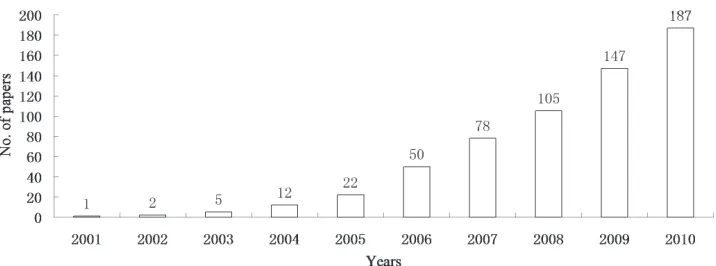
We screened the Web of Knowledge (ISI) for all papers published between 1945 and 2010 that are related to plant invasions in China. We used “all databases” including (1)Web of Science (1945–2010), (2) Current Contents Connect (1998–2010), (3) MEDLINE (1950–2010), and (4) Journal Citation Reports and analyzed all records published through the end of 2010. We found 643 papers when searching for the terms [plant* or weed*] and [invasion* or invasive* or introduced* or non-native* or neophyte*] and [China] in topic; 329 papers when searching for [invasive spe-cies] and [China]; and 143 papers when searching for [plant invasion in China]. Combining these approaches yielded matches of a total of 1,115 papers. By reading the abstracts of these papers, 187 papers were identified as addressing plant inva-sions in China. In the discussion of the results we also refer to some recently pub-lished papers. We are aware of some caveats in this approach since books on plant invasions are generally not recorded in ISI nor are some papers in non ISI-listed journals (e.g., Li and Xie 2002, Wang et al. 2004, Xu 2003, Xu and Ye 2003, Zheng and Ma 2010).
Paper analysis
on experiments, usually done in lab or greenhouse, or manipulative field experiments. Field investigations included studies mainly based on analyses in the field, e.g. of dis-tribution patterns of a single species or changes in community composition due to the naturalization of introduced species. We considered studies to be integrative analyses if they were based on databases of large numbers of species at the regional or national scales (> 300 km2), usually aiming to reveal patterns in species traits or environmental
factors related to plant invasions. In addition, we differentiated papers that provided reviews or used modeling approaches.
In a second step, we analyzed whether the papers addressed one or more of the following research topics: biological features of non-native plant species (e.g., mor-phological and physiological characters, clonal and propagation characteristics, genetic variation); mechanism of plant invasions (competition and other biotic interactions, human interference, enemy release, ecological, economic, or health impacts of plant invasions) and management approaches (mechanical, chemical, and biological meth-ods). Some papers have been attributed to more than one category. For example, anal-yses of traits belong to the topic biological features, but when the paper demonstrated plant traits to facilitate invasions it had also been assigned to the research topic of mechanisms of invasions.
results and discussion
Number of studies
The research in ISI revealed an increasing number of studies on plant invasions in China in the last decade, with an exponentially growing number of papers since 2005 (Figure 1). The review by Xie et al. (2001) on invasive species in China is the earliest paper referenced in ISI. No publications prior to 2001 were found in ISI, illustrating a rather short period of visibility of Chinese invasion studies to the international readership.
Main research types and topics
Most (89%) of the analyzed 187 papers addressed one or several non-native species studied by either field investigations (49%), experimental approaches (26%), mod-elling approaches (5%), or reviewed the existing knowledge on the species (10%; Table 1). Few papers (11%) offered integrative analyses some of which provided several lists of invasive plants in China at the national scale (Liu et al. 2005, Weber and Li 2008, Weber et al. 2008, Yang et al. 2010, He 2011). In addition, some re-cent papers listed naturalized plants (Wu et al. 2010, Jiang et al. 2011) and invasive plants (Liu et al. 2006, Weber and Li 2008, Huang et al. 2009, Xu et al. 2012). Yet, a comprehensive list of plant species non-native to China is missing thus far. In par-ticular, casual non-native plant species are strongly underrepresented in existing lists. The most studied research topics (see below) included the characterization of biological features of introduced plant species and impacts associated with biological invasions, followed by studies on the control of invasive species. Compared to the latter issues, environmental factors related to plant invasions and other mechanisms that underlie plant invasions were studied to a lesser extent. Only a few papers (5%) modeled the distribution of non-native plant species in China (Table 1).
Most-studied species
The majority of the most-studied invasive plant species (Table 2) are herbaceous, and all are native to the Americas which generally comprise the most important donor regions for plants introduced to China (Feng et al. 2011, Huang et al. 2011). The perennial grass
Spartina alterniflora Loisel.is clearly at the top of the list. An array of 47 papers cover all related research topics, with a clear focus on impacts that are complex and still in debate as reviewed by An et al. (2007) and Li et al. (2009). Consistently, most control studies
table 1. Classifications of 187 papers on plant invasions in China, published in the period 2001–2010 and referenced in the ISI Web of Knowledge, according to research types and research topics: A – biologi-cal features of non-native plants; B – impacts of plant invasions; C – control approaches; D – invasibility or environmental factors related to plant invasions; E – mechanisms of plant invasions; F – predictions of the distribution of non-native plants. Some papers have been attributed to more than one category.
Research types
Research topics
All TraitsA ImpactsB ControlC InvasibilityD MechanismsE PredictionsF
Field investigations 91 35 33 14 8 6 1 Experimental studies 48 20 12 10 3 6 0 Integrative analyses 20 5 5 3 11 4 2
Reviews 19 11 6 9 1 1 1
Modeling studies 9 1 1 0 0 0 7
addressed this species. The high numbers of studies on S. alterniflora might reflect the relevance of its impacts but might be also influenced by the fact that the invaded coast-al ecosystems are easily accessible to researchers of many universities and nationcoast-al labs that are located in these areas. The second most studied species is Ageratina adenophora
R.M.King & H.Rob.(=Eupatorium adenophorum Spreng.). Mikania micrantha Kuhnt,
Alternanthera philoxeroides (Mart.) Griseb., and Solidago canadensis L. are the topics of between 10 and 20 papers each. Other species treated by only a few papers are Ambrosia artemisiifolia L., A. trifida L., Chromolaena odorata (L.) R.M.King & H.Rob.,Conyza sumatrensis (Retz.) E.Walker, Coreopsis grandiflora Nutt. ex Chapm., Flaveria bidentis
(L.) Kuntze, Galinsoga parviflora Cav., Lantana camara L., Ipomoea cairica (L.) Sweet,
Parthenium hysterophorus L., Rhus typhina L.,Robinia pseudoacacia L.,Solanum rostratum
Dunal, Spartina anglica C.E.Hubb. and Wedelia trilobata (L.) Hitchc.
The current focus on a rather small group of invasive plant species must not necessar-ily reflect the importance of a given non-native species in terms of ecological or economic impacts but might be considerably affected by the location and scientific background of research teams. Yet the much higher number of 265 invasive plant species (Xu et al. 2012) clearly indicates strong research needs to study a broader range of invasive species in China.
Usually, papers on invasive plant species address species that are non-native to the total area of China. Species that are native to a region in China but non-native to one or more others are rarely studied. One example is Syzygium jambos (L.) Alston, which is native to some provinces of China but has been reported as an invasive plant species in Hong Kong (Leung et al. 2009). Another example is the tree Ailanthus altissima
(Mill.) Swingle which had been cultivated for a long time beyond its native range in China (Hu 1979). Today, it is not only invasive in many parts of the world (Kowarik and Säumel 2007) but also started to invade areas in China beyond its native range, e.g., in the Xinjiang province since the 1990s (Huang 1997, Säumel, personal com-munication). Analyzing the spread and impacts of species beyond their native ranges in China thus remains a challenge for future research.
Biological features
In 72 papers, the biological features of plant species non-native to China were ana-lyzed, mostly by field studies and experimental approaches (Table 1). More than 20 papers addressed physiology, genetics, or regeneration patterns of introduced species. Fewer papers are related to morphological features and seed ecology.
Studies on the genetic variation or diversity of non-native plants revealed a very low genetic diversity in most clonal invasive plants such as Alternanthera philoxeroides and
Eichhornia crassipes (Mart.) Solms (e.g., Ye et al. 2003, Ren et al. 2005, Wang et al. 2005, Li et al. 2006), while a relatively high genetic diversity has been found for a few species, such as Coreopsis grandiflora (Liang et al. 2008) and Conyza sumatrensis (Ren et al. 2010). Hao et al. (2011) illustrated a higher probability of spreading and covering a broad range in self-compatible than in self-incompatible species of Asteraceae in China.
The exploration of larger databases revealed that nearly half of 126 invasive species are clonals, and these are more frequent than other non-native plant species (Liu et al. 2006, Huang et al. 2009). Correspondingly, the top 13 plant invaders in China (based on the number of published papers) are clonally growing perennials (Huang et al. 2009). Greenhouse experiments in Alternanthera philoxeroides and Spartina alterniflora
supported the idea that clonal integration and phenotypic plasticity of clonal plants have enhanced their invasion success (e.g., Geng et al. 2006, Liu et al. 2008, Yu et al. 2009, Zhao et al. 2010). By using genetic techniques, Dong et al. (2006) found that sexual reproduction facilitated the initial establishment of Solidago canadensis popula-tions, while clonal growth led to a subsequent expansion of established populations.
Several studies analyzed the germination and seed banking of invasive species. Seed bank studies illustrated the role of sexual regeneration in the range expansion of clonal plants such as the highly invasive Ageratina adenophora and Spartina alterni-flora (Shen et al. 2006, Xiao et al. 2009). Plasticity in seed germination and seed size was considered to be a trait that allowed for acclimation to different environmen-tal conditions and facilitated invasions by M. micrantha and Ageratina adenophora
(Yang et al. 2005, Li and Feng 2009).
table 2. Most-studied alien plant species in China and related research topics (number of studies refer-enced in the ISI Web of Knowledge, 2001–2010). The native range and life form of the species are also shown. PG – perennial grass; BS – broadleaf shrub; PV – perennial vine; H – perennial herb; APH – aquatic perennial herb. The codes for the research topics A–F are the same as in Table 1.
Species Life. Form
Native range All
A Traits
B Impacts
C Control
D Mechanisms
E Invasibility
F Predictions
Spartina
alterniflora PG America 47 9 30 8 3 3 1
Ageratina
adenophora BS America 27North 12 5 4 3 5 1
Mikania
micrantha PV America 19 8 4 7 1 0 0
Alternanthera
philoxeroides PH America 12South 9 0 4 4 1 0
Solidago
canadensis PH America 10North 4 2 1 2 1 2
Eichhornia
crassipes APH South America 7 3 0 4 0 0 0
Invasion impacts
There were 57 papers related to impacts of plant invasions in China (Table 1), affect-ing native plants, birds and other animals, soil biota, climate and economy. Several papers revealed negative effects of Spartina alterniflora on native plants, birds, and macrobenthic invertebrate communities (reviews by An et al. 2007, Li et al. 2009, Gan et al. 2009, Xie and Gao 2009). Yet, impacts due to Spartina invasions are still contro-versially discussed. Field research suggested a significant decrease in the abundance of native species and coverage of resident vegetation as well as negative impacts on birds feeding on native plants (Chen et al. 2004). Other studies, however, identified positive impacts of S. alterniflora, such as an enhanced storage of carbon dioxide (Liao et al. 2007), an increased inorganic nitrogen pool in the soil (Peng et al. 2010) and better shelter and food sources for a native crab species (Wang et al. 2008).
Ageratina adenophora was found to inhibit native species by altering soil microbial communities (Niu et al. 2007), while Solidago canadensis and M. micrantha can reduce the seed germination of native plants by allelopathic effects (Yang et al. 2007, Wu et al. 2008). A couple of papers described changes in soil conditions and soil biota due to invasions by, e.g., M. micrantha (Chen et al. 2009) and A. adenophora (Niu et al. 2007). A recent study illustrated, that allelopathic effects of the latter species can be reduced by native soil biota (Zhu et al. 2011). Chen et al. (2011) surprisingly found that Coreopsis grandiflora enhanced the functional diversity of soil microbial communi-ties of invaded habitats.
Rather few papers addressed economically relevant invasion impacts. The review by Xie et al. (2001) as well as the integrative study by Xu et al. (2006) highlighted the relevance of economic impacts due to biological invasions for several sectors such as agriculture, forestry, water transportation, and human health. The authors estimated a total of USD14.45 billion in losses caused by all groups of invasive species to China in the year of 2000 but did not differentiate the contribution of plants and other organ-ism groups to these losses. Xu et al. (2006) also stated that sound and strict case studies are lacking – and this still holds today.
To our surprise no paper particularly addressed human health, although some books recorded the harmful impacts of invasive plants on human health, in particu-lar of allergenic plants (Ageratina adenophora,Ambrosia species, Li and Xie 2002, Xu 2003, Xu and Ye 2003).
Control and management
Most papers on control or management of plant invasions addressed biological control (Table 1).Several papers explored approaches of using thenative parasite Cuscuta camp-estris Yunck. to restrain the non-native M. micrantha (e.g., Shen et al. 2005, Lian et al. 2006b, Zhao et al. 2008, Yu et al. 2008, Yu et al. 2009). The beetle Agasicles hygrophila
philoxeroides as it had only limited effects on the non-target species Alternanthera sessilis
(L.) R.Br. ex DC. (Li and Ye 2006, Lu et al. 2010a). The ant Dorylus orientalis Westwood was found to be a potential control agent of Ageratina adenophora (Niu et al. 2010).
While most studies on biological control focus on invasive plants as target species, some ecologists have begun to study the restoration of native plant communities after performing control. For example, field studies found that native Cuscuta campestris
could not only restrain the non-native M. micrantha but might also contribute to the recovery of native communities by enhancing the availability of soil resources for na-tive species (Yu et al. 2008, Yu et al. 2009).
Mechanical control approaches were studied in a few papers. The main target spe-cies were Spartina alterniflora (Li and Zhang 2008, Gao et al. 2009, Tang et al. 2009a) and M. micrantha (Lian et al. 2006a). Mostly, methods of mechanical control were tested. For example, Lian et al. (2006a) found that periodic cutting reduced the com-petitiveness of M. micrantha and fostered the growth of native species. The authors consider this approach an effective and easy method to reduce the dominance of M. micrantha although control of the invader was not perfect. Moreover, it also enhanced the growth of some other non-native species. Other papers covered chemical control approaches but most of them were reviews (e.g., An et al. 2007, Pan et al. 2007). The functioning of different or combined control approaches has been rarely studied thus far. As an exception, Guo et al. (2009) analyzed the effects of herbicides, uprooting, and cutting in the flowering stage on the sexual regeneration of Solidago canadensis. To reduce seed production the authors recommend herbicide application at the flower bud stage or uprooting at the flowering stage. Cutting flowering branches for orna-mental purposes should be avoided
Policies related to the management of invasive plants were covered by a small selection of papers, and most of them were reviews. As control approaches are usually costly, an economically beneficial use of the harvested biomass could increase the ef-ficiency and sustainability of control measures. Lu et al. (2010b) suggested an innova-tive approach in the field of bio-resource engineering. Their experiments showed that mixing biomass of the invasive water hyacinth (Eichhornia crassipes) with pig manure leads to a much higher biogas production than by using pig manure alone.
Underlying mechanisms
found that increased temperatures enhance the aboveground biomass in Ipomoea cairica
as well as the phytotoxicity of aqueous leachates from fresh leaves of this introduced liana. They concluded that global warming will foster invasions by this species.
Some studies tested the EICA hypothesis. For example, Feng et al. (2009, 2011) found that the invasive Ageratina adenophora have evolved an increased N allocation to growth and a reduced N allocation to defenses. Gao et al. (2011) provide evidence of the correlation between epigenetic reprogramming and the reversible phenotypic response of Alternanthera philoxeroides to particular environment in China. Pan et al. (2012) studied five populations of this invasive speciesand found that slow-growing genotypes experienced a stronger enemy release than fast-growing genotypes.
Biotic interactions other than competition have been studied to a lesser extent in China. Some papers studied the role of soil biota (e.g., Chen et al. 2011, Zhu et al. 2011). Based on studies of Ageratina adenophora, for example, Yu et al. (2005) suggested that non-native plants might inhibit native plants by changing soil microbe communities.
A few papers, mostly integrative data analyses, addressed ways of human interfer-ence to invasion processes. The fast growing economy of China has been often suggest-ed to accelerate plant invasions through an enhancsuggest-ed international trade and associatsuggest-ed species introductions (Lin et al. 2007, Ding et al. 2008, Wu et al. 2010), but studies on the relevance of different pathways are scarce (but see Xu et al. 2012 on the introduc-tion pathways of invasive plant species). Data on the introducintroduc-tion history of non-native plants are limited, but analyzing the history of 123 plant species showed a continuous influx of non-native species to China after 1800 (Huang et al. 2011). However, much more species are known as naturalized in China (861 species according to Jiang et al. 2011), and casuals are usually underrepresented in species lists. It remains thus an open question whether the influx of non-native species since 1800 took place linearly or rather exponentially as indicated by the exponential growth of the number of invasive alien species of plants and animals since 1850 (Xu et al. 2012). Deeper insights into the history of plant invasions are an intriguing area of future research.
The example of Parthenium hysterophorus illustrates with evidence from nuclear and chloroplast DNA that multiple introductions were responsible for subsequent in-vasions in China (Tang et al. 2009b). As in other parts of the world, annuals were mostly introduced accidentally while perennials were mainly introduced intentionally (Xu et al., 2004).
Environmental factors related to invasions
factors were more important for species introduced from Eurasia or North America (Huang et al. 2011). Other studies illustrated the significance of environmental factors at the habitat scale. Lu and Ma (2006) and Dong et al. (2008), for example, found that roadside habitats favor invasions by Ageratina adenophora and revealed a decreas-ing abundance of this species with increasdecreas-ing distance from the road. A field survey in southeast China found that Alternanthera philoxeroides dominates in microhabitats with high soil nutrients and water availability, whereas the cover of its native congener
A. sessilis was relatively high in habitats with low soil nutrients and low water availabil-ity. High resource availability therefore appears to facilitate invasions by A. philoxeroides
(Pan et al. 2006). A study on tropical East Asian islands (some belonging to China) found that closed-canopy forests appear to resist plant invasions (Corlett 2010).
Modelling the distribution of non-native plants
Only a few papers modelled the potential distribution of non-native species (Table 1), based on current environmental factors and biological features of the species, while no paper addresses the potential abundance of non-native plants in China. For example,
ecological niche modelling was used to predict the invasion potential of Ageratina
adenophora on the basis of occurrence points within colonized areas (Wang and Wang
2006). Using datasets on known localities invaded by A. adenophora and the environ-mental variables generated by the genetic algorithm for rule-set production (GARP) model, the potential future distribution of this invasive plant was modeled (Zhu et al. 2007). Using the homoclime approach, Lu et al. (2007) found that the potential range of Solidago canadensis in China is remarkably larger than the current range. A cellular automata model in conjunction with remote sensing and a geographical information system (GIS) was used to simulate the expansion process of Spartina alterniflora and
support the hypothesis of space pre-emption as well as subsequent range expansion
(Huang et al. 2008).
Conclusions
strongly needed and would also help counteracting the continuing global imbalance in the understanding of invasion patterns (Richardson and Pyšek 2006).
We argue for an additional reason for encouraging further studies on plant inva-sions in China. This country has undergone far-reaching socio-economic changes in a relatively short period of about 30 years, and several drivers of this change are well known to enhance biological invasions (Lin et al. 2007, Ding et al. 2008, Weber and Li 2008, Huang et al. 2010). Experience from other regions indicates that a signifi-cant part of the “invasion echo” following economic changes might come decades or even centuries later. In different countries, recent invasion patterns could be better ex-plained by economic parameters from the past (Sullivan et al. 2004, Essl et al. 2011a), and decades to centuries can elapse between the first introduction of a species to a region and subsequent invasions (Kowarik 1995, Aikio et al. 2010). Thus, the enor-mous recent increase in urbanization, transport corridors, and use of introduced plants in horticulture, landscaping, and forestry will certainly evoke a wave of future plant invasions in China (Ding et al. 2008, Ju et al. 2012). Strengthening invasion research in China, with special emphasis on the points described below, could help to mitigate foreseeable economic damage and negative impacts on the high biological diversity of this country. Some of the following points are generally relevant, others are more specific for China due to the special history of this country.
Lists of non-native species at regional and national scales
Although some lists of naturalized plants in China have recently been compiled (Wu et al. 2010, Jiang et al. 2011) and some on invasive species already exist (Liu et al. 2005, Weber and Li 2008, Weber et al. 2008, Huang et al. 2009, Xu et al. 2012), a compre-hensive list of all non-native plants in China is still lacking. China is a large country in area with starkly varying environmental conditions. Thus, complete lists of non-native species compiled at the regional scale (e.g., provinces or metropolitan areas, Wang et al. 2011) and then aggregated at the national scale might be useful. As in other regions (Lambdon et al. 2008), two categories of non-native species can then be differentiated: species non-native to China and species native to one part of China but non-native to others. This differentiation is promising as species from both categories can induce severe invasion impacts. At the province scale, the number of non-native species can be underestimated if only species non-native to a larger unit, the whole country, are considered non-native (see Guo 2011, Pyšek 2011). Additional information on the taxonomy, native range, residence time, biological characters, and propagule pressure of non-native plants as well as on invaded habitats would help to reveal traits related to invasiveness and habitat invasibility and might strengthen the use of such lists in early warning approaches (Pyšek et al. 2004, Lambdon et al. 2008).
different lengths of their invasion history in China could help to better understand in-vasion processes and associated impacts in the long run. Many early introductions that have experienced a long-term selection and adaptation to their new range are known for China (Xie et al. 2001), and considering the performance of non-native species with a long invasion history might help to predict the future performance of species with a much shorter introduction history (La Sorte and Pyšek 2009). While a temporal differentiation of archaeophytes and neophytes (pre-Columbian and post-Columbian introductions, respectively) is useful for European or American studies (Pyšek et al. 2005) another definition of “early” and “late” introductions might be appropriate for China because of the different history of this country.
Invasion pathways
Human-mediated dispersal is a key process in plant invasions, and identifying and assessing the strength of dispersal vectors helps to set priorities in prevention and man-agement (Carlton and Ruiz 2005, Kowarik and von der Lippe 2007, Hulme et al. 2008). Thus far, a few papers have studied the role of human interference on plant invasions in China. Xu et al. (2012), for example, found that about two thirds of 265 invasive plant species in China were intentionally introduced. As in other regions (Křivánek et al. 2006, Dehnen-Schmutz et al. 2007, Essl et al. 2010) horticulture and forestry are important introduction pathways. Yet as most plants are dispersal-limited even after an initial introduction to a country, subsequent secondary releases within a region often function as an important driver of plant invasions for a long period of time after the initial introduction to a country (Kowarik 2003). The case of Spartina alterniflora shows that repeated plantings can have highly relevant ecological conse-quences (An et al. 2007, Li et al. 2009). Information on negative invasion impacts of a given species can be used for regulating the relevant invasion pathways. One example is the recommendation to abandon the previously common practice of planting the North American tree Rhus typhina in Beijing (Wang et al. 2008).
The recent economic growth of China is associated with an increasing develop-ment of road systems, the linking of watersheds by canals, and a powerful growth of cities. The huge project of water transfer from the southern part of China to the northern part (namely the South-to-North Water Transfer Project of China), which will deliver about 45 billion m3 of water annually from the Yangtze River to the north
habitat- or dispersal-related mechanisms would help to counteract such invasions by optimizing either prevention or management efforts. As the role of socio-economic factors in driving plant invasions is often underestimated, both human-mediated and natural factors should be considered in analyzing patterns of plant invasions (Liu et al. 2005, Meyerson and Mooney 2007).
Impacts and management
Risk assessment and management of invasive plants are essential approaches to prevent potentially harmful new introductions or mitigate negative impacts of already intro-duced species. While classifications of species as “invasive,” i.e., problematic, in other regions might be helpful in early warning systems (“invades elsewhere” criterion; Wil-liamson 1999), setting priorities in management would certainly profit from regionally based impact assessments (Essl et al. 2011b). As the performance of non-native plant species depends on regional and local environmental conditions, impacts might differ significantly (Thiele et al. 2011, Vilà et al. 2011). The same species can affect biodi-versity negatively or positively in different regions (e.g., Jäger et al. 2009, Fischer et al. 2009). As a consequence, existing (regional) lists of invasive species in China could be expanded by adding information on conservation resources that are (or might be) affected by an invasive species and on the conservation value of these resources (Bartz et al. 2010). As control actions often fail, monitoring the desired decline of non-native target species as well as effects on other species (e.g. Yu et al. 2008, 2009) would help to optimize control. Moreover, management actions can be combined with approaches of ecological restoration (Gaertner et al. 2012).
Acknowledgements
We thank Professor Shili Miao, Ingolf Kühn and two anonymous reviewers for com-ments on earlier versions of the paper and Kelaine Vargas for improving our Eng-lish. Jian Liu was financially supported by the Key Science and Technology Project of Shandong Province (No. 2011GGH21605) and the China Scholarship Council for a research stay at Technische Universität Berlin.
references
Aikio S, Duncan RP, Hulme PE (2010) Lag-phases in alien plant invasions: separating the facts from the artefacts. Oikos 119: 370–378. doi: 10.1111/j.1600-0706.2009.17963.x An SQ, Gu BH, Zhou CF, Wang ZS, Deng ZF, Zhi YB, Li HL, Chen L, Yu DH, Liu YH
(2007). Spartina invasion in China: implications for invasive species management and
Bartz R, Heink U, Kowarik I (2010) Proposed definition of environmental damage illustrated by the cases of genetically modified crops and invasive species. Conservation Biology 24: 675–681. doi: 10.1111/j.1523-1739.2009.01385.x
Carlton JT, Ruiz GM (2005) Vector science and integrated vector management in bioinvasion ecology: conceptual frameworks. In: Mooney HA, Mack RN, McNeely JA, Neville LE, Schei PJ, Waage JK (Eds) Invasive alien species. Island Press (Washington, DC): 36–58.
Chen BM, Peng SL, Ni GY (2009) Effects of the invasive plant Mikania micrantha HBK
on soil nitrogen availability through allelopathy in South China. Biological Invasions 11: 1291–1299. doi: 10.1007/s10530-008-9336-9
Chen H, Liu J, Zhang YL, Wang Q, Ge XL, Wei YH, Wang RQ (2011) Influence of invasive
plant Coreopsis grandiflora on functional diversity of soil microbial communities. Journal of
Environmental Biology 32: 567–572. http://www.ncbi.nlm.nih.gov/pubmed/22319870
Chen Z, Li B, Zhong Y, Chen J (2004) Local competitive effects of introduced Spartina
alterni-flora on Scirpus mariqueter at Dongtan of Chongming Island, the Yangtze River estuary
and their potential ecological consequences. Hydrobiologia 528: 99–106. doi: 10.1007/ s10750-004-1888-9
Chytrý M, Maskell LC, Pino J, Pyšek P, Vilà M, Font X, Smart SM (2008) Habitat invasions by alien plants: a quantitative comparison among Mediterranean, subcontinental and oce-anic regions of Europe. Journal of Applied Ecology 45: 448–458. doi: 10.1111/j.1365-2664.2007.01398.x
Corlett RT (2010) Invasive aliens on tropical East Asian islands. Biodiversity and Conservation 19: 411–423. doi: 10.1007/s10531-009-9624-4
Dehnen-Schmutz K, Touza J, Perrings C, Williamson M (2007) A century of the ornamental plant trade and its impact on invasion success. Diversity and Distributions 13: 527–534. doi: 10.1111/j.1472-4642.2007.00359.x
Ding JQ, Mack RN, Lu P, Ren MX, Huang HW (2008) China’s booming economy is spark-ing and acceleratspark-ing biological invasions. BioScience 58: 317–324. doi: 10.1641/B580407 Ding JQ, Wang R (1998) Invasive alien species and their impact on biodiversity in China.
In: The Compilation Group of China’s Biodiversity (Ed) China’s biodiversity: a country study. China Environmental Science Press (Beijing): 58–63.
Dong M, Lu BR, Zhang HB, Chen JK, Li B (2006) Role of sexual reproduction in the spread
of an invasive clonal plant Solidago canadensis revealed using intersimple sequence repeat
markers. Plant Species Biology 21: 13–18. doi: 10.1111/j.1442-1984.2006.00146.x Dong SK, Cui BS, Yang ZF, Liu SL, Ding ZK, Zhu JJ, Yao WK, Wei GL (2008) The
role of road disturbance in the dispersal and spread of Ageratina adenophora along the
Dian–Myanmar International Road. Weed Research 48: 282–288. doi: 10.1111/j.1365-3180.2008.00640.x
Elton CS (1958) The ecology of invasions by animals and plants. Methuen (London): 1–181. Essl F, Dullinger S, Rabitsch W, Hulme PE, Hülber K, Jarosík V, Kleinbauer I, Krausmann
Essl F, Moser D, Dullinger S, Mang T, Hulme PE (2010) Selection for commercial forestry determines global patterns of alien conifer invasions. Diversity and Distributions 16: 911– 921. doi: 10.1111/j.1472-4642.2010.00705.x
Essl F, Nehring S, Klingenstein F, Milasowszky N, Nowack C, Rabitsch W (2011b) Review of risk assessment systems of IAS in Europe and introducing the German-Austrian Black List Information System (GABLIS). Journal for Nature Conservation 19: 339–350. doi: 10.1016/j.jnc.2011.08.005
Feng HL, Cao HL, Liang XD, Zhou X, Ye WH (2002) The distribution and harmful effects of
Mikania micrantha Guangdong. Journal of Tropical and Subtropical Botany 10: 263–270.
http://europepmc.org/abstract/CBA/377165
Feng JM, Zhu YY (2010) Alien invasive plants in China: risk assessment and spatial patterns. Biodiversity and Conservation 19: 3489–3497. doi: 10.1007/s10531-010-9909-7
Feng YL, Lei YB, Wang RF, Callaway RM,Valiente-Banuet A, Inderjit, Li YP, Zheng YL
(2009) Evolutionary tradeoffs for nitrogen allocation to photosynthesis versus cell walls in an invasive plant. Proceedings of the National Academy of Sciences of the United States of America 106: 1853–1856. doi: 10.1073/pnas.0808434106
Feng YL, Li YP, Wang RF, Callawy RM, Valiente-Banuet A, Inderjit (2011) A quicker return energy-use strategy by populations of a subtropical invader in the non-native range: a po-tential mechanism for the evolution of increased competitive ability. Journal of Ecology 99: 1116–1123. doi: 10.1111/j.1365-2745.2011.01843.x
Feng JM, Zhang Z, Nan RY (2011) The roles of climatic factors in spatial patterns of alien invasive plants from America into China. Biodiversity and Conservation 20: 3385–3391. doi: 10.1007/s10531-011-0122-0
Fischer LK, von der Lippe M, Kowarik I (2009) Tree invasion in managed tropical forests facilitates endemic species. Journal of Biogeography 36: 2251–2263. doi: 10.1111/j.1365-2699.2009.02173.x
Gaertner M, Den Breeyen A, Hui C, Richardson DM (2009) Impacts of alien plant invasions on species richness in Mediterranean-type ecosystems: a meta-analysis. Progress in Physical Geography 33: 319–338. doi: 10.1177/0309133309341607
Gaertner M, Fisher JL, Sharma GP, Esler KJ (2012) Insights into invasion and restoration ecology: Time to collaborate towards a holistic approach to tackle biological invasions. NeoBiota 12: 57–75. doi: 10.3897/neobiota.12.2123
Gan XJ, Cai YT, Choi CY, Ma ZJ, Chen JK, Li B (2009) Potential impacts of invasive Spartina
alterniflora on spring bird communities at Chongming Dongtan, a Chinese wetland of
in-ternational importance. Estuarine, Coastal and Shelf Science 83: 211–218. doi: 10.1016/j. ecss.2009.03.026
Gao LX, Geng YP, Li B, Chen JK, Yang J (2011) Genomewide DNA methylation alterations of Alternanthera philoxeroides in natural and manipulated habitats: implications for epige-netic regulation of rapid responses to environmental fluctuation and phenotypic variation. Plant, Cell and Environment 33 1820–1827. doi: 10.1111/j.1365-3040.2010.02186.x Gao Y, Tang L, Wang JQ, Wang CH, Liang ZS, Li B, Chen JK, Zhao B (2009) Clipping at
early florescence is more efficient for controlling the invasive plant Spartina alterniflora.
Geng YP, Pan XY, Xu CY, Zhang WJ, Li B, Chen JK (2006) Phenotypic plasticity of invasive
Alternanthera philoxeroides in relation to different water availability, compared to its native congener. Acta Oecologica 30: 380–385. doi: 10.1016/j.actao.2006.07.002
Guo SL, Jiang HW, Fang F, Chen GQ (2009) Influences of herbicides, uprooting and use as
cut flowers on sexual reproduction of Solidago canadensis. Weed Research 49: 291–299.
doi: 10.1111/j.1365-3180.2009.00693.x
Guo Q (2011) Counting “exotics”. NeoBiota 9: 71–73. doi: 10.3897/neobiota.9.1316 Hao JH, Qiang S, Chrobock T, van Kleunen M, Liu QQ (2011) A test of baker’s law: breeding
systems of invasive species of Asteraceae in China. Biological Invasions 13: 571–580. doi 10.1007/s10530-010-9850-4
He CS, He XY, Fu L (2010) China’s South-to-North Water Transfer Project: is it needed? Geography Compass 4: 1312–1323. doi: 10.1111/j.1749-8198.2010.00375.x
He JQ (2011) Exotic Plants in China. Shanghai Scientific and Technical Publishers, Shanghai. Hierro JL, Villareal D, Eren Ö, Graham JM, Callaway RM (2006) Disturbance facilitates inva-sion: the effects are stronger abroad than at home. The American Naturalist 167: 144–156. doi: 10.1086/505767
Hu SY (1979) Ailanthus. Arnoldia 39: 29–50. http://arnoldia.arboretum.harvard.edu/pdf/ articles/1979-39-2-ailanthus.pdf
Hu YJ, But PPH (1994) A study on life cycle and response to herbicides of Mikania
mi-crantha. Acta Scientiarum Naturalium UN 33: 88–95. http://en.cnki.com.cn/Article_en/
CJFDTOTAL-ZSDZ404.015.htm
Huang CH (1997) Ailanthus DESF. In Chen S (Ed.) Flora Republicae Popularis Sinicae.
Sci-ence Press (Beijing), 43 (3): 1–5.
Huang HM, Zhang LQ, Guan YJ, Wang DH (2008) A cellular automata model for
popula-tion expansion of Spartina alterniflora at Jiuduansha Shoals, Shanghai, China. Estuarine,
Coastal and Shelf Science 77: 47–55. doi: 10.1016/j.ecss.2007.09.003
Huang QQ, Qian C, Wang Y, Jia X, Dai XF, Zhang H, He F, Peng SL, Wang GX (2010) Determinants of the geographical extent of invasive plants in China: effects of biogeo-graphical origin, life cycle and time since introduction. Biodiversity and Conservation 19: 1251–1259. doi: 10.1007/s10531-009-9751-y
Huang QQ, Wu JM, Bai YY, Zhou L, Wang GX (2009) Identifying the most noxious invasive plants in China: role of geographical origin, life form and means of introduction. Biodiver-sity and Conservation 18: 305–316. doi: 10.1007/s10531-008-9485-2
Huang QQ, Wang GX, Hou YP, Peng SL (2011), Distribution of invasive plants in Chi-na in relation to geographical origin and life cycle. Weed Research 51: 534–542. doi: 10.1111/j.1365-3180.2011.00868.x
Huang W, Carrillo J, Ding J, Siemann E (2012) Invader partitions ecological and evolu-tionary responses to above- and belowground herbivory. Ecology 93: 2343–2352. doi: 10.1890/11-1964.1
Hulme PE, Bacher S, Kenis M, Klotz S, Kühn I, Minchin D, Nentwig W, Olenin S, Panov V, Pergl J, Pyšek P, Roque A, Sol D, Solarz W, Vilà M (2008) Grasping at the routes of biological invasions: a framework for integrating pathways into policy. Journal of Applied Ecology 45: 403–414. doi: 10.1111/j.1365-2664.2007.01442.x
Jacquemyn H, Van Looy K., Breyne P, Honnay O (2010) The Meuse River as a corridor for
range expansion of the exotic plant species Sisymbrium austriacum: evidence for
long-dis-tance seed dispersal. Biological Invasions 12: 553–561. doi: 10.1007/s10530-009-9461-0 Jarošik V, Pyšek P, Kadlec T (2011) Alien plants in urban nature reserves: from red-list species
to future invaders? NeoBiota 10: 27–46. doi: 10.3897/neobiota.10.1262
Jäger H, Kowarik I, Tye A (2009) Destruction without extinction: long–term impacts of an invasive tree on Galápagos highland vegetation. Journal of Ecology 97: 1252–1263. doi: 10.1111/j.1365-2745.2009.01578.x
Jiang H, Fan Q, Li JT, Shi S, Li SP, Liao WB, Shu WS (2011) Naturalization of alien plants in China. Biodiversity and Conservation 20: 1545–1556. doi: 10.1007/s10531-011-0044-x
Jiang LF, Luo YQ, Chen JK, Li B (2009) Ecophysiological characteristics of invasive Spartina
alterniflora and native species in salt marshes of Yangtze River estuary, China. Estuarine, Coastal and Shelf Science 81: 74–82. doi: 10.1016/j.ecss.2008.09.018
Ju RT, Li H, Shih C, Li B (2012) Progress of biological invasions research in China over the last decade. Biodiversity Science 20: 581–611. (in Chinese) http://english.cast.org.cn/ n1181872/n1182068/n12716933/14264356.html
Khuroo AA, Reshi ZA, Rashid I, Dar GH (2011) Towards an integrated research framework and policy agenda on biological invasions in the developping world: a case-study of India.
Environmental Research 111: 999–1006. doi: 10.1016/j.envres.2011.02.011
Kowarik I (1995) Time lags in biological invasions with regard to the success and failure of alien species. In Pyšek P, Prach K, Rejmànek M, Wade PM (Eds) Plant invasions. General aspects and special problems. SPB Academic Publishing (Amsterdam): 15–38.
Kowarik I (2003) Human agency in biological invasions: secondary releases foster naturalisa-tion and populanaturalisa-tion expansion of alien plant species. Biological Invasions 5: 293–312. doi: 10.1023/B:BINV.0000005574.15074.66
Kowarik I, Pyšek P (2012) The first steps towards unifying concepts in invasion ecology were made one hundred years ago: revisiting the work of the Swiss botanist Albert Thellung. Diversity and Distributions 18: 1243–1252. doi: 10.1111/ddi.12009
Kowarik I, Säumel I (2007) Biological Flora of Central Europe: Ailanthus altissima (Mill.)
Swingle. Perspectives in Plant Ecology, Evolution and Systematics 8: 207–237. doi: 10.1016/j.ppees.2007.03.002
Kowarik I, von der Lippe M (2007) Pathways in plant invasions. In: Nentwig W (ed) Biological inva-sions, Ecological studies (193). Springer (Berlin): 29–47. doi: 10.1007/978-3-540-36920-2_3 Křivánek M, Pyšek P, Jarosik V (2006) Planting history and propagule pressure as predictors
of invasion by woody species in a temperate region. Conservation Biology 20: 1487–1498. doi: 10.1111/j.1523-1739.2006.00477.x
Molofsky J, Murray BR, Nentwig W, Osborne B, Pyšek P, Rabitsch W, Rejmánek M, Roques A, Shaw R, Sol D, van Kleunen M, Vilà M, von der Lippe M, Wolfe LM, Penev L (2011) Open minded and open access: introducing NeoBiota, a new peer-reviewed journal of biological invasions. NeoBiota 9: 1–12. doi: 10.3897/neobiota.9.1835
La Sorte FA, Pyšek P (2009) Extra-regional residence time as a correlate of plant invasiveness: European archaeophytes in North America. Ecology 90: 2589–2597. doi: 10.1890/08-1528.1
Lambdon PW, Pyšek P, Basnou C, Hejda M, Arianoutsou M, Essl F, Jarošík V, Pergl J, Win-ter M, Anastasiu P, Andriopoulos P, Bazos I, Brundu G, Celesti-Grapow L, Chassot P, Delipetrou P, Josefsson M, Kark S, Klotz S, Kokkoris Y, Kühn I, Marchante H, Perglová I, Pino J, Vila M, Zikos A, Roy D, Hulme P (2008) Alien flora of Europe: species diversity, temporal trends, geographical patterns and research needs. Preslia 80: 101–149. http:// www.specii-invazive.ro/system/files/lambdon-et-al-alien-flora-of-europe.pdf
Leung GPC, Hau BCH, Corlett RT (2009) Exotic plant invasion in the highly degraded up-land up-landscape of Hong Kong, China. Biodiversity and Conservation 18: 191–202. doi: 10.1007/s10531-008-9466-5
Li B, Liao CZ, Zhang XD, Chen HL, Wang Q, Chen ZY, Gan XJ, Wu JH, Zhao B, Ma ZJ,
Cheng XL, Jiang LF, Chen JK (2009) Spartina alterniflora invasions in the Yangtze River
estuary, China: an overview of current status and ecosystem effects. Ecological Engineering 35: 511–520. doi: 10.1016/j.ecoleng.2008.05.013
Li HP, Zhang LQ (2008) An experimental study on physical controls of an exotic plant
Spar-tina alterniflora in Shanghai, China. Ecological Engineering 32: 11–21. doi: 10.1016/j.
ecoleng.2007.08.005
Li J, Ye WH (2006) Genetic diversity of alligator weed ecotypes is not the reason for their different responses to biological control. Aquatic Botany 85: 155–158. doi: 10.1016/j. aquabot.2006.02.006
Li WG, Wang BR, Wang JB (2006) Lack of genetic variation of an invasive clonal plant
Eichhornia crassipes in China revealed by RAPD and ISSR markers. Aquatic Botany 84:
176–180. doi: 10.1016/j.aquabot.2005.09.008
Li YP, Feng YL (2009) Differences in seed morphometric and germination traits of crofton
weed (Eupatorium adenophorum) from different elevations. Weed Science 57: 26–30. doi:
10.1614/WS-08-068.1
Li ZY, Xie Y. (2002) Invasive alien species in China. China Forestry Publishing House (Beijing): 1–211.
Lian JY, Ye WH, Cao HL, Lai ZM, Liu SP (2006a) Effects of periodic cutting on the
struc-ture of the Mikania micrantha community. Botanical Study 47: 185–190. http://ejournal.
sinica.edu.tw/bbas/content/2006/2/Bot472-10.pdf
Lian JY, Ye WH, Cao HL, Lai ZM, Wang ZM, Cai CX (2006b) Influence of obligate
para-site Cuscuta campestris on the community of its host Mikania micrantha. Weed Research
46: 441–443. doi: 10.1111/j.1365-3180.2006.00538.x
Liang Y, Liu J, Zhang SP, Wang SJ, Guo WH, Wang RQ (2008) Genetic diversity of the
invasive plant Coreopsis grandiflora at different altitudes in Laoshan Mountain, China.
Liao CZ, Luo YQ, Jiang LF, Zhou XH, Wu XW, Fang CM, Chen JK, Li B (2007) Invasion of
Spartina alterniflora enhanced ecosystem carbon and nitrogen stocks in the Yangtze
Estu-ary, China. Ecosystems 10: 1351–1361. doi: 10.1007/s10021-007-9103-2
Lin W, Zhou G, Cheng X, Xu R (2007) Fast economic development accelerates biological invasions in China. PLoS ONE 2(11)e1208. doi: 10.1371/journal.pone.0001208
Liu J, Dong M, Miao SL, Li ZY, Song MH, Wang RQ (2006) Invasive alien plants in China: role of clonality and geographical origin. Biological Invasions 8: 1461–1470. doi: 10.1007/ s10530-005-5838-x
Liu J, He WM, Zhang SM, Liu FH, Dong M, Wang RQ (2008) Effects of clonal integration
on photosynthesis of the invasive clonal plant Alternanthera philoxeroides. Photosynthetica
46: 299–302. doi: 10.1007/s11099-008-0054-4
Liu J, Liang SC, Liu FH, Wang RQ, Dong M (2005) Invasive alien plant species in China: re-gional distribution patterns. Diversity and Distributions 11:341–347. doi: 10.1111/j.1366-9516.2005.00162.x
Liu J, Wang RQ, Zhang ZG (2001) Advances in nonindigenous plant species. Advances in Plant Sciences 4: 335–344.
Lu JJ, Zhao LL, Ma RY, Zhang PP, Fan RJ, Zhang JT (2010a) Performance of the biological
control agent flea beetle Agasicles hygrophila (Coleoptera: Chrysomelidae), on two plant
species Alternanthera philoxeroides (alligator weed) and A. sessilis (joyweed). Biol Control
54: 9–13. doi: 10.1016/j.biocontrol.2010.02.012
Lu JZ, Weng ES,Wu XW, Weber E, Zhao B, Li B (2007) Potential distribution of Solidago
canadensis in China. Acta Phytotaxonomica Sinica 45: 670–674. doi: 10.1360/aps06200
Lu JB, Zhu L, Hu GL, Wu JG (2010b) Integrating animal manure-based bioenergy produc-tion with invasive species control: A case study at Tongren pig farm in China. Biomass Bioenerg 34: 821–827. doi: 10.1016/j.biombioe.2010.01.026
Lu ZJ, Ma KP (2006) Spread of the exotic croftonweed (Eupatorium adenophorum) across
southwest China along roads and streams. Weed Science 54: 1068–1072. doi: 10.1614/ WS-06-040R1.1
Mack RN, Simberloff D, Lonsdale WM, Evans H, Clout M, Bazzaz FA (2000) Biotic inva-sions: causes, epidemiology, global consequences, and control. Ecological Applications 10: 689–710. doi: 10.1890/1051-0761(2000)010[0689:BICEGC]2.0.CO;2
Meyerson LA, Mooney HA (2007) Invasive alien species in an era of globalization. Frontiers in Ecology and the Environment 5: 199–208. doi: 10.1890/1540-9295(2007)5[199:IAS IAE]2.0.CO;2
Millennium Ecosystem Assessment (2005) Ecosystems and human well-being: synthesis. Island Press (Washington, DC).
Niu HB, Liu WX, Wan FH, Liu B (2007) An invasive aster (Ageratina adenophora) invades and
dominates forest understories in China: altered soil microbial communities facilitate the invader and inhibit natives. Plant and Soil 294: 73–85. doi: 10.1007/s11104-007-9230-8
Niu YF, Feng YL, Xie JL, Luo FC (2010) Noxious invasive Eupatorium adenophorum may be
a moving target: Implications of the finding of a native natural enemy, Dorylus orientalis.
Nuñex MA, Pauchard A (2010) Biological invasions in developing and developed countries: does one model fit all? Biological Invasions 12: 707–714. doi: 10.1007/s10530-009-9517-1
Pan XY, Geng YP, Sosa A, Zhang WJ, Li B, Chen JK (2007) Invasive Alternanthera
philox-eroides: biology, ecology and management. Acta Phytotaxonomica Sinica 45: 884–900.
doi: 10.1360/aps06134
Pan XY, Geng YP, Zhang WJ, Li B, Chen JK (2006) The influence of abiotic stress and
pheno-typic plasticity on the distribution of invasive Alternanthera philoxeroides along a riparian
zone. Acta Oecologica 30: 333–341. doi: 10.1016/j.actao.2006.03.003
Pan XY, Jia X, Chen JK, Li B (2012) For or against: the importance of variation in growth rate for testing the EICA hypothesis. Biological Invasions 14: 1–8. doi: 10.1007/s10530-011-9941-x Pauchard A, Alaback PB (2004) Influence of elevation, land use, and landscape context on
patterns of alien plant invasions along roadsides in protected areas of South-Central Chile. Conservation Biology 18: 238–248. doi: 10.1111/j.1523-1739.2004.00300.x
Peng RH, Fang CM, Li B, Chen JK (2010) Spartina alterniflora invasion increases soil
in-organic nitrogen pools through interactions with tidal subsidies in the Yangtze Estuary, China. Oecologia 165: 797–807. doi: 10.1007/s00442-010-1887-7
Peng SL, Xiang YC (1999) The invasion of exotic plants and effects of ecosystem. Acta Eco-logica Sinica 19: 560–569. http://europepmc.org/abstract/CBA/321270
Perrings C, Mooney H, Williamson M (Eds) (2010) Bioinvasions & globalization: ecology, economics, management, and policy. Oxford University Press (Oxford).
Pimentel D, Zuniga R, Morrison D (2005) Update on the environmental and economic costs associated with alien-invasive species in the United States. Ecological Economics 52: 273– 288. doi: 10.1016/j.ecolecon.2004.10.002
Pyšek P (2011) Knowing what we count: a comment on Guo. NeoBiota 10: 81–88. doi: 10.3897/neobiota.10.1976
Pyšek P, Jarošík V, Chytrý M, Kropáè Z, Tichý L, Wild J (2005) Alien plants in temperate weed communities: prehistoric and recent invaders occupy different habitats. Ecology 86: 772–785. doi: 10.1890/04-0012
Pyšek P, Richardson DM (2010) Invasive species, environmental change and management, and health. Annual Review of Environment and Resources 35: 25–55. doi: 10.1146/annurev-environ-033009-095548
Pyšek P, Richardson DM, Pergl J, Jarošík V, Sixtová Z, Weber E (2008) Geographical and taxonomic biases in invasion ecology. Trends in Ecology and Evolution 23: 237–244. doi: 10.1016/j.tree.2008.02.002
Pyšek P, Richardson DM, Rejmánek M, Webster GL, Williamson M, Kirschner J (2004) Alien plants in checklists and floras: towards better communication between taxonomists and ecologists. Taxon 53: 131–143. doi: 10.2307/4135498
Ren MX, Li XQ, Ding JQ (2010) Genetic variation and spread pattern of invasive Conyza
sumatrensis around China’s Three Gorges Dam. Acta Oecologica 36: 599–603. doi:
10.1016/j.actao.2010.09.004
Ren MX, Zhang QG, Zhang DY (2005) Random amplified polymorphic DNA markers reveal
low genetic variation and a single dominant genotype in Eichhornia crassipes populations
Richardson DM, Pyšek P (2006) Plant invasions: merging the concepts of species invasive-ness and community invasibility. Progress in Physical Geography 30: 409–431. doi: 10.1191/0309133306pp490pr
Richardson DM, Pyšek P (2008) Fifty years of invasion ecology - the legacy of Charles Elton. Diversity and Distributions 14: 161–168. doi: 10.1111/j.1472-4642.2007.00464.x Säumel I, Kowarik I (2010) Urban rivers as dispersal corridors for primarily wind-dispersed
invasive tree species. Landscape and Urban Planning 94: 244–249. doi: 10.1016/j.lan-durbplan.2009.10.009
Shen H, Ye WH, Hong L, Cao HL, Wang ZM (2005) Influence of the obligate parasite
Cus-cuta campestris on growth and biomass allocation of its host Mikania micrantha. Journal of Experimental Botany 56: 1277–1284. doi: 10.1093/jxb/eri128
Shen YX, Liu WY, Baskin JM, Baskin CC, Cao M (2006) Persistent soil seed banks of the
globally significant invasive species, Eupatorium adenophorum, in Yunnan Province,
south-western China. Seed Science Research 16: 157–162. doi: 10.1079/SSR2006240
Song LY, Li CH, Peng SL (2010) Elevated CO2 increases energy-use efficiency of invasive
Wedelia trilobata over its indigenous congener. Biological Invasions 12: 1221–1230. doi:
10.1007/s10530-009-9541-1
Song LY, Wu JR, Li CH, Li FR, Peng SL, Chen BM (2009) Different responses of invasive
and native species to elevated CO2 concentration. Acta Oecologica 35: 128–135. doi:
10.1016/j.actao.2008.09.002
Sullivan JJ, Williams PA, Cameron EK, Timmins SM (2004) People and time explain the distribution of naturalized plants in New Zealand. Weed Technology 18: 1330–1333. doi: 10.1614/0890-037X(2004)018[1330:PATETD]2.0.CO;2
Tang L, Gao Y, Wang JQ, Wang CH, Li Bo, Chen JK, Zhao B (2009a) Designing an effective
clipping regime for controlling the invasive plant Spartina alterniflora in an estuarine salt
marsh. Ecological Engineering 35: 874–881. doi: 10.1016/j.ecoleng.2008.12.016 Tang SQ, Wei F, Zeng LY, Li XK, Tang SC, Zhong Y, Geng YP (2009b) Multiple
introduc-tions are responsible for the disjunct distribuintroduc-tions of invasive Parthenium hysterophorus in
China: evidence from nuclear and chloroplast DNA. Weed Research 49: 373–380. doi: 10.1111/j.1365-3180.2009.00714.x
Thomas JR, Middleton B, Gibson DJ (2006) A landscape perspective of the stream corridor
invasion and habitat characteristics of an exotic (Dioscorea oppositifolia) in a pristine
wa-tershed in Illinois. Biological Invasions 8: 103–1113. doi: 10.1007/s10530-005-8155-5 Thiele J, Isermann M, Kollmann J, Otte A (2011) Impact scores of invasive plants are biased
by disregard of environmental co-variation and non-linearity. NeoBiota 10: 65–79. doi: 10.3897/neobiota.10.1191
Vilà M, Espinar JL, Hejda M, Hulme PE, Jarošík V, Maron JL, Pergl J, Schaffner U, Sun Y, Pyšek P (2011) Ecological impacts of invasive alien plants: a meta-analysis of their effects on species, communities and ecosystems. Ecology Letters 14: 702–708. doi: 10.1111/j.1461-0248.2011.01628.x
Wang BR, Li WG, Wang JB (2005) Genetic diversity of Alternanthera philoxeroides in China. Aquatic Botany 81: 277–283. doi: 10.1016/j.aquabot.2005.01.004
Wang BS, Wang YJ, Liao WB, Zan QJ, Li MG, Peng SL, Han SC, Zhang WY, Chen DP
(2004) The invasion ecology and management of alien weed Mikania micrantha H.B.K.
Science Press (Beijing): 1–177.
Wang GM, Jiang GM, Yu SL, Li YH, Liu H (2008) Invasion possibility and potential effects of Rhus typhina on Beijing municipality. Journal of Integrative Plant Biology 50: 522–530. doi: 10.1111/j.1744-7909.2008.00660.x
Wang HF, López-Pujol J, Meyerson LA, Qiu JX, Wang XK, Ouyang ZY (2011) Biological invasions in rapidly urbanizing areas: a case study of Beijing, China. Biodiversity and Con-servation 20: 2483–52509. doi: 10.1007/s10531-011-9999-x ISBN: 0960-3115
Wang R, Wang YZ (2006) Invasion dynamics and potential spread of the invasive alien plant
spe-cies Ageratina adenophora (Asteraceae) in China. Diversity and Distributions 12: 397–408.
doi: 10.1111/j.1366-9516.2006.00250.x
Wang RL, Zeng RS , Peng SL, Chen BM, Liang XT, Xin XW (2011) Elevated temperature
may accelerate invasive expansion of the liana plant Ipomoea cairica. Weed Research 51:
574–580. doi: 10.1111/j.1365-3180.2011.00884.x
Weber E, Li B (2008) Plant invasions in China: what is to be expected in the wake of economic development? BioScience 58: 437–444. doi: 10.1641/B580511
Weber E, Sun SG, Li B (2008) Invasive alien plants in China: diversity and ecological insights. Biological Invasions 10: 1411–1429. doi: 10.1007/s10530-008-9216-3
Williamson M (1999) Invasions. Ecography 22: 5–12. doi: 10.1111/j.1600-0587.1999. tb00449.x
Wilson JRU, Dormontt EE, Prentis PJ, Lowe AJ, Richardson DM (2009) Something in the way you move: dispersal pathways affect invasion success. Trends in Ecology and Evolu-tion 24: 136–144. doi: 10.1016/j.tree.2008.10.007
Wu AP, Yu H, Gao SQ, Huang ZY, He WM, Miao SL, Dong M (2008) Differential
below-ground allelopathic effects of leaf and root of Mikania micrantha. Trees - Structure and
Function 23: 11–17. doi: 10.1007/s00468-008-0249-0
Wu SH, Sun HT, Teng YC, Rejmánek M, Chaw SM, Yang TYA, Hsieh CF (2010) Patterns of plant invasions in China: Taxonomic, biogeographic, climatic approaches and anthro-pogenic effects. Biological Invasions 12: 2179–2206. doi: 10.1007/s10530-009-9620-3 Wu XW, Luo J, Chen JK, Li B (2006) Spatial patterns of invasive alien plants in China and
its relationship with environmental and anthropological factors. Chinese Journal of Plant Ecology 30: 576–584. http://www.plant-ecology.com/CN/Y2006/V30/I4/576
Xiao D, Zhang L, Zhu Z (2009) A study on seed characteristics and seed bank of Spartina
al-terniflora at saltmarshes in the Yangtze estuary, China. Estuarine, Coastal and Shelf Science 83: 105–110. doi: 10.1016/j.ecss.2009.03.024
Xie WJ, Gao S (2009) The macrobenthos in Spartina alterniflora salt marshes of the Wanggang
tidal-flat, Jiangsu coast, China. Ecological Engineering 35: 1158–1166. doi: 10.1016/j. ecoleng.2009.03.014
Xu HG, Ding H, Li MY, Qiang S, Guo JY, Han ZM, Huang ZG, Sun HY, He SP, Wu HR, Wan FH (2006) The distribution and economic losses of alien species invasion to China. Biological Invasions 8: 1495–1500. doi: 10.1007/s10530-005-5841-2
Xu HG, Qiang S, Han ZM, Guo JY, Huang ZG, Sun HY, He SP, Ding H, Wu HR, Wan FH (2004) The distribution and introduction pathway of alien invasive species in China. Biodiversity Science 12: 626–638. (in Chinese) http://www.cabdirect.org/ab-stracts/20053133642.html
Xu HG, Qiang S, Genovesi P, Ding H, Wu J, Meng L, Han Z, Miao J, Hu B, Guo J, Sun H, Huang C, Lei J, Le Z, Zhang X, He S, Wu Y, Zheng Z, Chen L, Jarošík V, Pyšek P (2012) An inventory of invasive alien species in China. NeoBiota 15: 1–26. doi: 10.3897/ neobiota.15.3575
Xu RM (2003) Biological invasion-data collection, quantitative analysis and alarm in advance. Science Press (Beijing): 1–343 .
Xu RM, Ye WH (2003) Biological invasion theory and practice. Science Press (Beijing): 1–250. Yang B, Zhuoga Y, Pan X, Xu HG, Li B (2010) Alien terrestrial herbs in China: diversity and
ecological insights. Biodiversity Science 18: 660–666. (in Chinese) http://www.doaj.org/ doaj?func=abstract&id=719962
Yang H, Zehnder AJB (2005) The South-North Water Transfer Project in China: an analysis of water demand uncertainty and environmental objective in decision making. Water In-ternational 30: 339–349. doi: 10.1080/02508060508691874
Yang QH, Ye WH, Deng X, Cao HL, Zhang Y, Xu KY (2005) Seed germination
eco-phys-iology of Mikania micrantha HBK. Botanical Bulletin of Academia Sinica 46: 293–299.
http://ejournal.sinica.edu.tw/bbas/content/2005/4/Bot464-02.pdf
Yang RY, Mei LX, Tang JJ, Chen X (2007) Allelopathic effects of invasive Solidago canadensis
L. on germination and growth of native Chinese plant species. Allelopathy Journal 19: 241–247. http://www.indianjournals.com/ijor.aspx?target=ijor:aj&volume=19&issue=1 &article=021
Ye WH, Li J, Cao HL, Ge XJ (2003) Genetic uniformity of Alternanthera philoxeroides in
South China. Weed Research 43: 297–302. doi: 10.1046/j.1365-3180.2003.00346.x
Yu H, He WM, Liu J, Miao SL, Dong M (2009) Native Cuscuta campestris restrains exotic
Mikania micrantha and enhances soil resources beneficial to natives in the invaded
com-munities. Biological Invasions 11: 835–844. doi: 10.1007/s10530-008-9297-z
Yu H, Yu FH, Miao SL, Dong M (2008) Holoparasitic Cuscuta campestris suppresses invasive
Mikania micrantha and contributes to native community recovery. Biological
Conserva-tion 141: 2653–2661. doi: 10.1016/j.biocon.2008.08.002
Yu XJ, Yu D, Lu ZJ, Ma KP (2005) A new mechanism of invader success: Exotic plant inhibits natural vegetation restoration by changing soil microbe community. Chinese Science Bul-letin 50: 896–903. doi: 10.1360/04WC0280
Zan QJ, Wang BS, Wang YJ, Liao WB, Li MG (2000) The distribution and harm of the exotic
weed Mikania micrantha. Chinese Journal of Ecology 19: 58–61. http://www.cje.net.cn/
Zhang SM, Han QZ (1997) Preliminary study on the foreign plants in Dalian. Journal of Liaoning Normal University (Natural Science) 20: 323–330. http://en.cnki.com.cn/Arti-cle_en/CJFDTOTAL-LNSZ704.012.htm
Zhao HB, Peng SL, Wu JR, Xiao HL, Chen BM (2008) Allelopathic potential of native plants
on invasive plant Mikania micrantha HBK in South China. Allelopathy Journal 22: 189–
195.
Zhao YJ, Qing H, Zhao CJ, Zhou CF, Zhang WG, Xiao Y, An SQ (2010) Phenotypic
plastic-ity of Spartina alterniflora and Phragmites australis in response to nitrogen addition and
in-traspecific competition. Hydrobiologia 637: 143–155. doi: 10.1007/s10750-009-9992-5 Zheng JM, Ma KP (2010) Invasion ecology. China Higher Education Press (Beijing): 1–280. Zhu L, Sun OJ, Sang WG, Li ZY, Ma KP (2007) Predicting the spatial distribution of an
invasive plant species (Eupatorium adenophorum) in China. Landscape Ecology 22: 1143–
1154. doi: 10.1007/s10980-007-9096-4
Zhu XZ, Zhang JT, Ma KP (2011) Soil biota reduce allelopathic effects of the invasive