REVIEW
Fluid simulations in heritage science
Josep Grau‑Bové
1*, Luca Mazzei
2, Matija Strlic
1and May Cassar
1Abstract
This review addresses the use of computational fluid dynamics for the interpretation and preservation of heritage. Fluid dynamic simulations in the heritage field focus mostly on slow air movement in indoor spaces and they usually involve temperature and humidity. Simulations have different roles: they may be exploratory, they may be used to support preventive conservation and occasionally they aid historical or archaeological interpretation. The research questions rarely involve testing or development of new mathematical formulations; instead, existing computational models are used as a means to help solve practical issues. Computationally, the simulations are typically steady‑state and they always use a turbulence model. Experimental validations against measured data are uncommon and there is a need for the production of benchmarking cases and the publication of experimental data. Further research is needed in order to explore suitable approximations to the simulation of change in the time‑scale of months or years, low turbulence flows for which current mainstream turbulence models are ill‑suited, and new mathematical formula‑ tions for near‑wall transport phenomena.
© The Author(s) 2019. This article is distributed under the terms of the Creative Commons Attribution 4.0 International License (http://creat iveco mmons .org/licen ses/by/4.0/), which permits unrestricted use, distribution, and reproduction in any medium, provided you give appropriate credit to the original author(s) and the source, provide a link to the Creative Commons license, and indicate if changes were made. The Creative Commons Public Domain Dedication waiver (http://creat iveco mmons .org/ publi cdoma in/zero/1.0/) applies to the data made available in this article, unless otherwise stated.
Introduction
Computational fluid dynamics (CFD) involves the cal-culation of fluid flows and their interaction with solids. Most historic materials are surrounded by a fluid, mostly air, in rare occasions water, sometimes a solid with a cer-tain water content. It is widely acknowledged that air transports many of the agents of deterioration of con-cern for preventive conservation: heat, water in vapour phase, aerosols, spores and gaseous pollutants, as listed by Michalski [1]. Light, whilst aiding chemical reactions, also has heat generation as a by-product. Undoubtedly, the interaction of materials with agents of change does not only involve chemical reaction, but also some form of transport phenomena of matter and energy, between the fluid and the material it surrounds. In some instances the fluid motion is laminar, such as an air plume over a hot surface, in others turbulent, such as drafts in a historic house. All these processes can be described by CFD.
For the reasons above, computational fluid dynamics has been used for many years to interpret fluid motion in heritage contexts. Here we understand fluid dynamics as the scientific discipline that studies flows. The adjective
“computational” refers to the methods of solving the equations that describe fluid motion in complex systems (i.e. too complex to be solved without a computer). This review uses some technical concepts that are specific to CFD. For an overview of the foundations of fluid dynam-ics, readers may refer to the classic textbook by Batch-elor [2]. The development of this discipline is linked to the evolution of computation capacity and therefore it became widespread with the advent of affordable com-puters [3]. It was first applied to buildings and then to historic buildings, with some delay: The oldest paper cited in this review dates back to 1999 [4].
The use of CFD in historic buildings is preceded by the use of building energy simulations. Its application in ordinary buildings as well as those in the cultural heritage sector was reported at a Building Environmen-tal Performance Analysis Club Seminar, RIBA London on 9 June 1994 by May Cassar in “Design Criteria for the Museums and Galleries Environment”. This report identified the challenges and opportunities of simu-lation and described building projects that included simulations of energy and moisture transfer that were realised for organisations including Tate Gallery, St Ives; Tate Modern; Lady Lever Art Gallery, Liverpool; the Gas Hall, Birmingham, amongst others. The design advice included new totally passive museum buildings as well as the refurbishment of many existing museum
Open Access
*Correspondence: [email protected]
1 Institute for Sustainable Heritage, University College London, London, UK
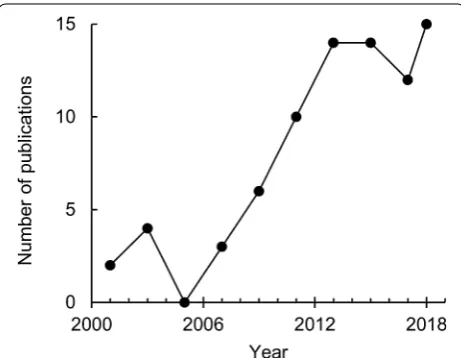
buildings with conventional HVAC (Heating, Ventila-tion, and Air Conditioning) systems that were seeking to evaluate environmental performance options. Since then, the number of publications and applications has been rising steadily, as shown in Fig. 1, which shows the number of articles identified in this review. The scope of the research has diversified, expanding beyond build-ings to cover all kinds of fluid motion in and around heritage spaces.
Even though fluid dynamics has been used notably in the field of heritage, there has not been until now any attempt to review the existing research. There have not been, in fact, any events, conferences or other aca-demic initiatives that could act as fora for the definition of a shared research agenda. It seems, at a first glance, that the research efforts in this field have occurred in relative isolation. This review attempts to define this knowledge gap. We review the most significant research in fluid dynamics applied to heritage environments and materials, studying issues of model creation, set up and experimental validation. The purpose of the paper is to identify common themes, problems and research needs. The reviewed work has been published in var-ied outputs, ranging from conservation to engineering journals and including several conference papers. Of all the published papers that involve fluid dynamics and heritage (about 110), approximately half have been dis-carded for several reasons, the main one being a weak focus on heritage issues.
Uses of fluid dynamics
The subject of the majority of papers that describe fluid dynamic simulations in heritage is air motion (90% of the 60 or so papers reviewed in this article), most of which indoors (70%) and the rest outdoors (30%). The remaining papers deal with a diversity of topics, such as water movement in ancient hydrological structures [5, 6].
The intent of CFD simulations in heritage is diverse. We have identified three loose categories of simulations according to their purpose. Firstly, we find the simula-tions that aim at obtaining a visualisation of air flow in an environment. Secondly, there are simulations that provide evidence for the historical interpretation of a site. Finally, there are simulations intended as an integral step of a design process, a conservation project or, more gen-erally, that support decision-making. As we shall see, in all of these three categories we can find significant tech-nological innovation, even though advancing the state of the art in fluid dynamics is rarely the main research objective of the reviewed articles. This was also a feature of the early building simulations of the 1990s which were undertaken in response to specific design questions and which were preceded by RH (Relative Humidity) and temperature monitoring campaigns.
Type 1: Air flow visualisation
As a general rule, obtaining the air flow pattern is the main objective of simulations of this type. Conserva-tion implicaConserva-tions are not necessarily part of the research. The simulations may be a tool to generate a hypothesis. They are motivated by very open research questions. For example, Balocco et al. [7] determined numerically the spatial distributions of temperature and humidity in the Salone dei Duecento of the Palazzo Vecchio (Florence, Italy). This research provides an understanding of two concepts (1) the dynamic behaviour of the environment and (2) a practical demonstration that this behaviour can be reproduced with simulations. These two are typical outputs of a large group of simulations.
The analysis of wind over the Giza plateau [8], a very different geometry, has similar outcomes: it produces a simulation at an scale unprecedented in a heritage setting and concludes that CFD is a useful tool for similar prob-lems. The simulations of Corbusier houses by Raquena-Ruiz [9] also have the main purpose of understanding the role of aérateurs (ventilation holes) in the regulation of the environment, without further conservation or design objectives. Often, such exploratory simulations result in interesting insights on the dynamics of a historic envi-ronment. An interesting example is the simulation of Fig. 1 Number of articles per year, counting only the publications
a shipwreck site by Smyth and Quinn [10], who explain how the presence of the ship alters flow patterns.
Many more examples can be cited: the simulation of natural ventilation in a historic house in Palermo [11], the simulation of air movement in a church and an art gallery in Prague (Czech Republic) [12], wind over a his-toric Chinese settlement [13], ventilation in vernacular Vietnamese structures [14], or dust in the historic cen-tre of the city of Najaf (Iraq) [15]. In all these cases, the visualisation of the flow is the main output. An outstand-ing example of an exploratory simulation is the research on the effect of ventilation and occupancy in the his-toric Palatina Library (Parma, Italy) [16]. As shown in Fig. 2a, this simulation illustrates environmental dynam-ics that would be difficult to observe using experimental approaches.
This category of studies identify or display the main environmental processes, demonstrate the use of CFD and offer evidence for further interpretation. Their main purpose is to produce a computational reconstruction of the fluid motion alone i.e. without comparative physical measurements of that environment.
Type 2: Simulations as historical evidence
This category uses the simulations as evidence to aid the interpretation of a site. The hypothesis or research questions are historical or interpretative and the simula-tion is used as addisimula-tional evidence. The simulasimula-tion of a 10th Century Spanish waterwheel [6] is not only a good example of this category but also one of the few instances
where the simulated fluid is water instead than air. The authors use simulations of the interaction between the river and the wheel to estimate the range of operating velocities (0.91 to 1.01 m/s) and the flow levels required for a successful operation, as shown in the contours of velocity around the wheel in Fig. 2c. They conclude that the waterwheel would be operative for 124 days a year, with an additional 74 days if dams were used to regu-late the channel. In a similar vein, the study of a historic watermill in Besalú (Catalonia) provides an estimation of its energy efficiency [5] which improves previous assumptions based on historical sources.
Simulations of water flows have also been successfully used to validate hypothesis on the principle of operation of ancient hydrological designs. For example, simulations of a water pipeline in Petra (Jordan) have show that its designers had advanced knowledge of fluid dynamics [17]. The inclination of the pipes is sufficient to promote the flow of water, but low enough to avoid pressure losses due to turbulence. Similar water supply systems have been simulated in Apamea (Syria) [18] and in the case of Minoan terracotta pipes [19].
There are instances where ancient structures were created to induce certain air flow patterns. The simula-tion of warehouses in the ancient Roman ports of Portus and Ostia (Italy) is another case of historical evidence obtained through fluid simulations [20]. In this collabo-rative research, archaeologists provided different possible interpretations of the layout of the ancient warehouses based on the existing remains. The authors simulated the
hypothetical designs in order to investigate which options were more suitable for food storage. The CFD simula-tions demonstrate conclusively that only the designs that include ventilation outlets in certain locations were likely to achieve appropriate storage conditions in the sum-mer months, when the warehouses were in use. Huang et al. [21] simulate iron smelting furnaces in order to interpret the historical evolution of their design. Their research reveals the role of some design features, which improved air circulation. A Sri Lankan furnace is simu-lated by Tabor [22]. Similarly, a study of the Pitti Palace in Florence validates with simulations an hypothesis of the operation of the original ventilation system [23]. A CFD study of the Tjibaou Cultural Center (New Caledo-nia), rather than exploring a historical question, evaluates whether the intent of the architects is satisfied by the aer-odynamic performance of the final design [24].
Type 3: Simulations for preventive conservation
Finally, we find simulations that are used to support decision-making processes. These processes may consist of the design of ventilation systems, building layouts or urban plans and in some instances preventive conser-vation plans. Often, CFD is needed in order to explore design alternatives in systems that offer little flexibility for environmental control. A seminal example that sets the capabilities of the technology is the use of CFD in combination with monitoring and other simulation tech-niques to explore heating strategies for churches in the project Friendly Heating [25].
One of the projects that can be considered as an exem-plary use of fluid dynamic as a preventive conservation tool is the simulation of moisture dynamics in the crypt of the Lecce Cathedral (Italy) [26]. This study involves the simulation of air motion and moisture transport (includ-ing evaporation from walls) in a large, naturally ventilated space. An example of the moisture maps produced in this research can be found in Fig. 2c. Several features make this work stand out. Firstly, air velocity is experimentally validated—a key step which is further discussed in the following sections. Secondly, the simulations success-fully inform the preventive conservation strategy with evidence that would have been difficult to obtain solely with experimental methods. Specifically, the simulations indicate which windows have a dominant effect on the presence of moisture in areas where it should be avoided and therefore can be used to choose those windows that should remain closed or be sealed. Fluid dynamics also plays a key role in the investigation of suitable ventila-tion strategies for the conservaventila-tion of St. Martin church in Oberesslingen (Germany) [27]. This research aims at avoiding temperature gradients in the air volume sur-rounding the pipes of a historic organ. It is based on a
sound discussion of the ideal thermal conditions for the conservation of pipe organs.
The analysis of hypothetical scenarios is one of the main ways in which CFD can be used in conservation. For example, it has been used to simulate aerosol depo-sition in indoor heritage under different scenarios of wind direction, and under different ventilation strategies [28]. Pineda and Iranzo [29] have simulated how several preservation strategies can reduce the erosion of stone columns. Their simulations include hypothetical future scenarios where protective walls are installed around a site. CFD has also has been used to investigate different directions of ventilation outlets in the Palazzo Madama (Turin, Italy) [30] in order to obtain good air mixing and stable temperatures. Occasionally, simulations are used as an investigative tool to find the causes of ongo-ing or existongo-ing damage in historic materials. In a study of drifting sand particles in the Mogao Caves (Dunhuang, China), the simulated near-wall air velocity was found to correlate well with the observed spatial distribution of deterioration [31].
The three types of simulations of heritage environ-ments identified in this section (As air-flow visualisation, as historical evidence, and for preventive conservation) share an interest in obtaining practical solutions. It is rare that simulations are carried out for purely developmen-tal reasons, such as creating a new computational model for a specific conservation problem. Instead, research is almost exclusively driven by case studies and practical issues.
Relationship of the models with reality
The processes of change of interest in heritage environ-ments take place generally over decades or years rather than hours or seconds [32]. Short term processes such as humidity or temperature fluctuations are usually a con-cern because of their long-term effects. The emphasis on long-term material change and the cumulative effects of rapid variations could be seen to be at odds with the nature of CFD, which is best suited for the simulation of short time-spans or steady state problems. There are, however, many ways to represent reality with CFD. The key is the choice of the time span represented by the simulations.
Time representation
series of steady state scenarios that approximate a tinuous variation, for example, winter and summer con-ditions or monthly concon-ditions. In other words, time steps that are significantly longer than the time that the system takes to reach steady-state conditions. Finally, there are transient simulations, which aim to resolve the equations for every time step of the evolution of the system.
All these methods have been used in the simulation of heritage environments. When the simulations involve the design of a ventilation system, or the layout of a site, it is usual to use steady state simulations that represent the typical operating scenarios. Some simulations divide the year in two seasons [4, 30, 33], some in three, such as winter, summer and intermediate seasons [34] and some use constant conditions during single months [35]. Steady state simulations usually represent any time period where boundary conditions can be considered constant. They may also represent design scenarios that are not associated with any time-span. For example, dif-ferent combinations of open or closed windows [36], dif-ferent wind directions [8] or different positions of the ventilation inlets [27].
Finally, we find transient simulations that approximate the evolution of a system. These simulations by nature must represent shorter time-spans, such as the evolution of indoor temperature distributions during a few hours [37], half a day [38, 39] or a day [7]. A day is the long-est time identified in this review for a transient simula-tion. On the one hand, transient simulations have the disadvantage of representing only a short period of time, which may limit the interpretation of the results. On the other hand, their main advantage is that the results can be easily compared with experiments, because it is gen-erally easy to monitor during the simulated period. The transient simulation of air movement and moisture in the Palatina library (Parma, Italy) [38, 40] is an example of a successful validation with representative results. In this case, the transient simulations are validated using a 12 h
dataset of temperature. Afterwards, the model is used to simulate several scenarios of ventilation and heating [16].
Experimental validation
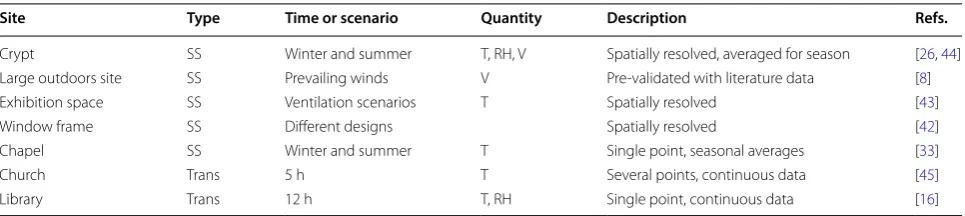
Only a quarter of the published simulations are experi-mentally validated. This is lower than other instances of the use of CFD. For example, a random sample of 50 CFD papers published in Building and Environment from 2010, reveals that 78% of the CFD simulations are experimentally validated. Most experimental validations in the heritage field consist of a pre-validation, i.e. a vali-dation with similar data collected in the site of interest or elsewhere, which is used to gain confidence in the model before applying it to other scenarios. For example, one can validate a model in a small-scale lab experiment before simulating more complex geometries [41]. Valida-tion is closely linked to the time representativeness of the simulations, because the data available for comparison often defines the length of time that simulations need to cover and vice versa. For this reason, some examples of both are summarised in Table 1. Validation can be car-ried out with any of the parameters predicted by the models. The more parameters are used, the more aspects and equations of the model can be validated.
Temperature is the most common parameter used to compare simulations with reality. This is understand-able: temperature is easy to measure in different locations simultaneously. It is also an indication of the thermal energy, which is a transported scalar in the computa-tional models and as such, it can be used to validate the performance of the solution of the transport equations. Only two simulations are validated with measurements of velocity, which contrasts with the common practice in other fields. For example, in the simulation of wind in street canyons validations against velocity measure-ments are usual. Only three simulations are validated with spatially-resolved data. In a simulation of window frames [42] the measurements are of a vertical profile of Table 1 Summary of experimental validations and definitions of the representativeness of simulations
The column type indicates whether a simulation is steady state (SS) or transient (Trans). The column time or scenario shows the criteria used to define each simulation, which is either a timespan or certain steady‑state situation. The column Quantity indicates the parameter measured in the validation experiments (T is temperature, RH is the relative humidity, V is air velocity)
Site Type Time or scenario Quantity Description Refs.
Crypt SS Winter and summer T, RH, V Spatially resolved, averaged for season [26, 44] Large outdoors site SS Prevailing winds V Pre‑validated with literature data [8] Exhibition space SS Ventilation scenarios T Spatially resolved [43]
Window frame SS Different designs Spatially resolved [42]
Chapel SS Winter and summer T Single point, seasonal averages [33]
Church Trans 5 h T Several points, continuous data [45]
temperature. Two building simulations are validated with measurements of temperature in different locations [43, 44]. In one instance, simulations of dust deposition have been compared with data of dust deposition in several rooms [28]. Comparisons with experimental data, com-mon in other fields, are relatively rare in heritage.
Physical systems
Historic objects interact with many types of fluid motion, from moisture diffusion in a multi-layered painting to rain over a large outdoor sculpture. The reality is, how-ever, that CFD simulations in the heritage context are concerned with a small subset of all the possible geom-etries and flow regimes. This section reviews the different physical systems that have been simulated using CFD.
Geometry and space
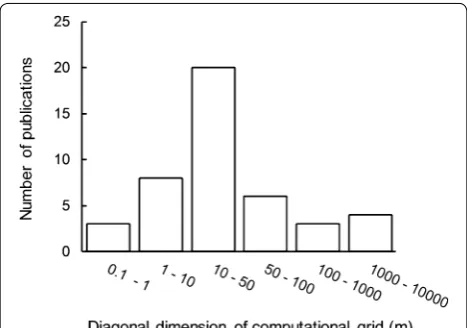
Rooms are the most usual subject of CFD studies in her-itage. Figure 3 shows a histogram of the dimension of the computational domain used in the publications reviewed here. We calculate the size of the computational domain as the diagonal dimension (i.e. the distance between the two most distant vertexes), calculated as for two dimen-sional spaces and for three dimendimen-sional spaces, where x, y and z are the three dimensions of the smallest parallel-epiped enveloping the whole geometry. The majority of the simulations (77%) have a dimension between 1 and 100 m, which corresponds to indoor spaces. The majority of these have a dimension between 10 and 50 m and they are halls, churches, exhibition spaces and galleries. Fig-ure 4 shows some examples of the diversity of size-scales that have been simulated. These range from a metre to several kilometres.
It is relatively rare (less than 5% of cases) that spaces smaller than 1 m are simulated. The cases reported here correspond to a study of evaporation of rising damp in a wall section of a historic building [46], a simulation of a protective glass frame [37] and the erosion of a marble statue due to the impact of airborne particles [47]. There are no simulations of indoor micro-environments such as display cases, which have been successfully simulated in other areas of inquiry such as the case of refrigerated display cases for the food industry [48]. The performance of double-glazing is another small-scale process of inter-est to heritage that can be well described with CFD [49]. Another under-used application of CFD in heritage, is the simulation of the interaction between small objects and their surrounding environment. In the food industry, it is usual to use CFD to predict the drying rate of fruit [50]. These simulations could be directly translated to processes of water absorption in historic materials.
The largest heritage environments simulated with CFD range from hundreds of meters to several kilometres. This is the case of simulations of historic villages or city centres [13, 14, 51, 52] or large building complexes [8, 24]. These simulations are at the largest end of the spec-trum of application of CFD. When working with geom-etries of several kilometres, the compromise between detail and computation time often implies that geometri-cal detail needs to be proportionally reduced. As a result, simulations larger than several kilometres are rare in the application of CFD in heritage sites.
In view of the evidence, it can be said that in heritage science CFD is predominantly being used as a tool for the simulation of indoor phenomena, with a few notable exceptions.
Field variables of interest
We have already seen that the vast majority of simula-tions involve air motion, with the exception of a few investigations of water flows [5]. In many instances, how-ever, air is the carrier of other scalar quantities of interest. Less than a quarter of the reviewed papers is concerned exclusively with air motion. It is usual to simulate the distribution of temperature. The other most simulated parameter (26% of the publications) is relative humidity. Only a minority of articles involve a simulation of other scalars, such as particulate matter [38] or gaseous pollut-ants. These observations are summarised in Fig. 5. The interaction between surfaces and pollutants is absent in heritage publications, while it has been successfully sim-ulated in other fields. For example, CFD has been used to simulate the emissions of volatiles from building materi-als [53]. This approach would have clear uses in heritage spaces such as storage of plastics, where emission and deposition of volatiles can be of interest.
The predominance of simulations of temperature and humidity may be explained by the predominant role of these parameters in many processes that affect heritage materials. Temperature has been simulated as a concern for materials, such a church organ preservation [27], but also for human comfort [9]. Temperature is the key parameter in the design of sustainable heating strate-gies that minimise energy consumption while obtaining appropriate conditions, for objects and for occupants [43, 54]. The simulations of temperature often aim at obtaining a homogeneous environment (i.e. without sharp gradients), as in the work by Corgnati [30]. All the reviewed simulations of humidity focus on its transport through air, but not on transport towards or from walls
(condensation, absorption or evaporation). The assump-tion that these transport phenomena are negligible is not usually justified, even though it can be understood from the context that they would not change the results sig-nificantly. One of the few examples of a CFD simulation of moisture transport through heritage materials is the simulation of the hydrothermal behaviour of a protective glass frame for paintings [37]. This work reports a model for the transport of moisture in air and within the porous elements of the frame. The model is experimentally vali-dated in laboratory conditions before being used to simu-late the frame of interest.
complexity of the models. Temperature, humidity (if it does not interact with surfaces) and gases (if they do not deposit) can be simulated with well-established equations for scalar transport, which are provided by default in many commercial codes (see, for example, [55]). In order to simulate phenomena that involve some type of surface interaction (e.g. deposition, condensation, evaporation, adsorption or emission), the models need to be extended with estimations of boundary conditions or improved transport equations, which often require further research that falls outside the scope of many of the CFD studies of heritage environments.
Predicted velocities and their origin
The estimation of fluid movement is the main role of CFD models. The choice of mathematical models depends on the type of fluid motion. Diffusive or convective systems, high or low turbulence systems, should be simulated using different approaches.
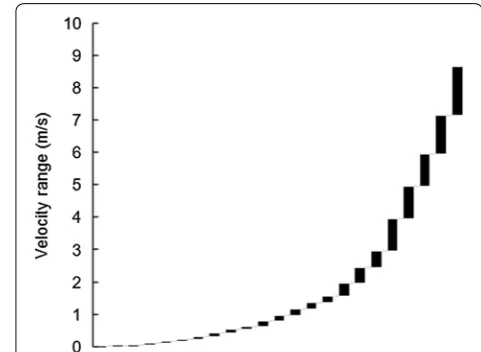
The velocities of interest in indoor heritage spaces, draughts excluded, are low, below 0.5 m/s. Figure 6 shows the velocity ranges of the CFD output of all the articles reviewed (for simplicity, references are not pro-vided in the Figure). There are several general issues to consider. Firstly, the simulated velocities are usually too low for the sensitivity of common air velocity sensors. For example, a contemporary high sensitivity hot-plate sensor would be able to measure a minimum velocity of 0.1 m/s with an accuracy of 3.8% [56]. However, 30% of the reviewed simulations report values under this limit. This indicates a great difficulty of experimental
validation. It may be one of the reasons why only two of the reviewed papers validate the simulations using measurements of air velocity.
Secondly, the CFD simulation of air flow motion requires the use of different models for laminar and tur-bulent flows. Given the low velocities indoors, some flows are usually below or very close to the threshold of turbulence. It should be highlighted that low turbu-lence is actually more problematic than high turbuturbu-lence. The majority of turbulence models, and certainly all the models available in commercial codes, are prepared for very high turbulence levels. It is unclear how applicable these models are to the potentially low turbulence levels found in historic buildings, and yet these are the models that are commonly used. Using turbulence models when the flow is not turbulent can result in overestimations in the transport of heat and mass. Only the simulation of a protective painting frame by Steeman [37], which leads to very small velocities (the geometry can be seen in Fig. 3a), acknowledges that the flow field is laminar.
Sources of high velocity flows
The highest velocities, as expected, appear when wind plays an important role. For example, the study of wind around a minaret (Konya, Turkey) [57] in relation to its capacity to cool or heat its thermal mass, finds veloci-ties between 0.4 and 1.6 m/s. The analysis of ventila-tion patterns in vernacular courtyards in la Havana (Cuba) finds velocities between 0.5 and 3 m/s [58] and the study of wind-driven particle collisions on the wall paintings of the Mogao Caves (Dunhuang, China), finds velocities between 0.2 and 1.5 m/s [31].
Fig. 5 Number of reviewed publications that simulate different agents of deterioration. The bars show the number of publications that have as a main focus each field variable. It should be noted that velocity is not a field variable, instead it indicates the simulations that do not include any other field variable other than momentum. T
indicates the simulation of thermal energy. Naturally, RH simulations also require thermal energy
Sources of low velocity flows
Lower velocities have more diverse causes. A com-mon source are temperature differences. The study of the Palatina Library (Parma, Italy), is an example of air motion generated by the presence of visitors [38]. In this case visitors are considered as an immobile source of thermal energy, which creates a vertical plume rise. In fact, introducing humans as static thermal sources is not an uncommon approach. In the field of building physics, occupants have been simulated in CFD either as simple cuboid geometries [59] and more recently with realistic human shapes [60]. One of the first appli-cations of CFD to model a heritage space is the simu-lation of the Archaeological Museum of Athens [4], where visitors were accounted for as a source of heat.
The inclusion of visitor movement is a very recent development [16] and its simulation and interpreta-tion may still require further research. Specifically, the air motion caused by visitor motion needs to be experimentally determined. Models should also be able to reflect the variability in visitor behaviour. Another common source are ventilation inlets, which display initial high turbulence which reduces as the air moves away from the source. One example is the study of ven-tilation in a historic hall of the university of Wroclaw (Poland), where air inlets are located underneath the seats [61]. In this case the inlet velocity is 0.5 m/s and reduces to under 0.05 m/s in the areas further away from the air sources. The simulation of a design of ven-tilation around a church organ shows a similar decay of velocity, from 3 m/s at the input to a few centimetres per second in the spaces between the organ pipes [27]. This is a common feature of air motion indoors: after leaving the ventilation output, the air velocity decays by at least one order of magnitude, sometimes two, in a few meters, as seen in many of the reviewed articles [33, 62, 63].
A notorious absence: turbulence and boundary conditions
When setting up a CFD simulation, the user has to make several choices regarding the mathematical equations that need to be solved. Some of the most important choices are: what type of turbulence model is used, how is the transport of other quantities (energy, pollutants, moisture) implemented and how does the model describe the interaction of these quantities with surfaces. The lat-ter is a very notorious absence in the reviewed papers. It can be argued that the interaction between objects and environment is precisely the main interest of heritage sci-entists. However, the equations that describe this near-wall phenomena are never explicitly discussed.
Even though we have found a great variety of types of fluid motion, all of them are simulated with the same model. All the studied examples use the k − ε turbulent model, with very few exceptions: the simulation of a watermill uses k − ω [5] and a simulation of air condition-ing in a museum uses a zero-equation model [64]. Only one article compares the performance of different turbu-lence models [27]. The predominance of the k − ε model may be explained because of the suitability of this model for the simulation of air flow in rooms. This model is fre-quently used for simulations of the built environment [65] and has been shown to produce acceptable results for low turbulence when it is combined with dampening functions [66]. However, the reviewed literature gener-ally reports the use of the k − ε model with little or no justification.
The most used code to solve these equations is ANSYS Fluent, in approximately half of the papers, while the other half uses a great diversity of codes: Phoenics, Pardiso, Comsol, Star-CD, OpenFOAM, CFX or Design Builder. The predominance of Fluent is constant over the years. All these codes have similar core capabilities (they can solve fluid flow equations in laminar and turbulent conditions). Many of them, including OpenFoam, CFX and Fluent, are highly customizable with user-defined equations. However, most of the reviewed papers do not use this functionality.
Conclusions
The simulation of fluid motion in heritage is predomi-nantly concerned with air motion, particularly indoors. We have observed that there are great similarities between the many published simulations: geometries tend to have a size between 10 and 50 m, the simulated fluid is typically air, mainly transporting thermal energy and humidity. The air motion is usually simulated as tur-bulent and k − ε is the model of choice to simulate turbu-lence. The research questions can be classified in defined groups: historical interpretation, exploration of the dynamics of an environment, and improvement of envi-ronmental design for preventive conservation.
• The time-scale problem There is a miss-match between the time-scales that are usually simulated (from hours to months) and the long-term nature of processes of change. Simply put, hourly varia-tions that cause damage over years cannot be real-istically simulated with the existing CFD technol-ogy. Researchers approach this issue in many ways: using representative conditions for long periods of time, or simulating change during a few hours. However, research is needed to find the appropri-ate time-scale for the variety of issues of interest for heritage science.
• The need for validation There is a need for more comparisons between simulations and real world data, collected in the simulated environment. The difficulties of this task in heritage environments are many: slow change, difficulty of monitoring, the uniqueness of the sites studied and their condi-tions. But there is scope for further research on the validation of CFD models. Firstly, since CFD aims at simulating the spatial distribution of a quantity, validations should also use spatially distributed data. Secondly, there is a need for the development of benchmark cases that can be used for the valida-tion of models of a diversity of conservavalida-tion issues, to be used when other types of validation are not possible.
• The low-turbulence problem Velocities indoors are usually low (under 0.1 m/s) and sometimes air flows may not be fully turbulent. Even though the
k − ε model seems to provide acceptable results, there needs to be a critical reflection on the use of turbulence models in indoor heritage spaces. Fur-ther research is needed in the assessment of the levels of turbulence found indoors and the meth-ods to model it.
• The near-wall problem In the authors’ experi-ence, the interest of heritage managers is not only on the value of transported quantities in the cen-tre of rooms, but particularly on the value close to valuable surfaces. Despite the emphasis on the interaction between air and heritage materials, few published simulations include estimations of wall fluxes, such as evaporation or condensa-tion of moisture or dust and gas deposicondensa-tion. This may be a valid assumption in many instances, but in any case it should be explicitly discussed. The implementation of such models will, additionally, require computational refinements close to sur-faces that may differentiate heritage CFD models from other indoor simulations.
Towards best practice guidelines for heritage simulation
The quantity and quality of publications in this field has been increasing steadily during the last decade. There are several publications that set an example of the possibili-ties of CFD in heritage science. There is scope to develop guidelines on what should be considered best practice in the simulation of flows in heritage. Best practice guide-lines exist for many CFD applications, for example, there are well-known guidelines for the simulation of flows in the urban environment [67] and indoor flows [68]. Future research should aim at establishing similar guidelines for CFD simulations in heritage contexts. As a first approxi-mation, we have observed exemplary uses of CFD in her-itage to fulfil the following criteria:(1) the simulations are experimentally validated, if possible in the environment of interest and if possible using spatially resolved data, (2) the authors critically assess the suitability of the boundary con-ditions, turbulence models and assumptions on the inter-action with surfaces, (3) the authors report and assess the time-scale of the problem and its relationship with the real world and finally (4) the authors use conservation criteria in order to analyse the results and the usefulness of the model. Given the difficulties for experimental validation, it would be desirable that future publications report the experimental data in sufficient detail, in order to allow oth-ers to use the data for validation.
Authors’ contributions
JG‑B has compiled the papers and produced the final manuscript, MC, MS and LM have contributed to interpretation and written several sections. All authors read and approved the final manuscript.
Author details
1 Institute for Sustainable Heritage, University College London, London, UK. 2 Department of Chemical Engineering, University College London, London, UK.
Acknowledgements
Not applicable.
Competing interests
The authors declare that they have no competing interests.
Availability of data and materials
Not applicable.
Funding
No funding sources to report.
Publisher’s Note
Springer Nature remains neutral with regard to jurisdictional claims in pub‑ lished maps and institutional affiliations.
Received: 25 July 2018 Accepted: 6 March 2019
References
2. Batchelor CK, Batchelor G. An introduction to fluid dynamics. Cambridge: Cambridge University Press; 1967.
3. Wendt J. Computational fluid dynamics: an introduction. A von Karman Institute book. Berlin: Springer; 2008.
4. Papakonstantinou KA, Kiranoudis CT, Markatos NC. Computational analy‑ sis of thermal comfort: the case of the archaeological museum of Athens. Appl Math Model. 2000;24(7):477–94.
5. Pujol T, Solà J, Montoro L, Pelegrí M. Hydraulic performance of an ancient Spanish watermill. Renewable Energy. 2010;35(2):387–96.
6. Castro‑García M, Rojas‑Sola JI, de Morena‑de la Fuente E. Technical and functional analysis of Albolafia waterwheel (Cordoba, Spain): 3D modeling, computational‑fluid dynamics simulation and finite‑element analysis. Energy Conv Manag. 2015;92:207–14.
7. Balocco C. Daily natural heat convection in a historical hall. J Cult Herit. 2007;8(4):370–6.
8. Hussein AS, El‑Shishiny H. Influences of wind flow over heritage sites: a case study of the wind environment over the Giza Plateau in Egypt. Environ Model Softw. 2009;24(3):389–410.
9. Requena‑Ruiz I. Thermal comfort in twentieth‑century architectural herit‑ age: two houses of Le Corbusier and André Wogenscky. Front Archit Res. 2016;5(2):157–70.
10. Smyth TAG, Quinn R. The role of computational fluid dynamics in under‑ standing shipwreck site formation processes. J Archaeol Sci. 2014;45:220– 5. https ://doi.org/10.1016/j.jas.2014.02.025.
11. Balocco C, Grazzini G. Numerical simulation of ancient natural ventilation systems of historical buildings. A case study in Palermo. J Cult Herit. 2009;10(2):313–8.
12. Barták M, Drkal F, Hensen J, Lain M, Matuska T, Schwarzer J, et al. Simula‑ tion to support sustainable HVAC design for two historical buildings in Prague. In: Proc. 18th conference on passive and low energy architecture, PLEA; 2001. p. 903–8.
13. Tang L, Nikolopoulou M, Zhao F, Zhang N. CFD modeling of built air environment in historic settlements: village microclimate. In: 2011 international conference on computer distributed control and intelligent environmental monitoring; 2011. p. 1086–92.
14. Nguyen AT, Tran QB, Tran DQ, Reiter S. An investigation on climate responsive design strategies of vernacular housing in Vietnam. Build Environ. 2011;46(10):2088–106.
15. Al‑Baghdadi MAS. CFD modeling of dust dispersion through Najaf his‑ toric city centre. Int J Energy Environ. 2014;5(6):723–9.
16. Balocco C, Petrone G, Cammarata G. Numerical multi‑physical approach for the assessment of coupled heat and moisture transfer combined with people movements in historical buildings. Build Simul. 2014;7(3):289–303. 17. Ortloff CR. Water engineering at Petra (Jordan): recreating the decision
process underlying hydraulic engineering of the Wadi Mataha pipeline system. J Archaeol Sci. 2014;44:91–7.
18. Haut B, Viviers D. Analysis of the water supply system of the city of Apamea, using computational fluid dynamics. Hydraulic system in the north‑eastern area of the city, in the Byzantine period. J Archaeol Sci. 2007;34(3):415–27.
19. Tseropoulos G, Dimakopoulos Y, Tsamopoulos J, Lyberatos G. On the flow characteristics of the conical Minoan pipes used in water supply systems, via computational fluid dynamics simulations. J Archaeol Sci. 2013;40(4):2057–68.
20. Pagliaro F, Bukowiecki E, Gugliermetti F, Bisegna F. The architecture of warehouses: a multidisciplinary study on thermal performances of Portus’ roman store buildings. J Cult Herit. 2015;16(4):560–6.
21. Huang X, Qian W, Wei W, Guo J, Liu N. 3D numerical simulation on the flow field of single tuyere blast furnaces: a case study of the Shuiquangou iron smelting site dated from the 9th to 13th century in China. J Archaeol Sci. 2015;63:44–58.
22. Tabor GR, Molinari D, Juleff G. Computational simulation of air flows through a Sri Lankan wind‑driven furnace. J Archaeol Sci. 2005;32(5):753–66.
23. Balocco C. Analysis of ancient natural ventilation systems inside the pitti palace in florence. In: Proceedings of the COMSOL conference 2008 Han‑ nover; 2008.
24. Wu YC, Yang AS, Tseng LY, Liu CL. Myth of ecological architecture designs: comparison between design concept and computational analysis results of natural‑ventilation for Tjibaou Cultural Center in New Caledonia. Energy Build. 2011;43(10):2788–97.
25. Camuffo D, Pagan E, Rissanen S, Łukasz B, Kozłowski R, Camuffo M, et al. An advanced church heating system favourable to artworks: a contribu‑ tion to European standardisation. J Cult Herit. 2010;11(2):205–19. 26. D’Agostino D, Congedo PM. CFD modeling and moisture dynamics
implications of ventilation scenarios in historical buildings. Build Environ. 2014;79:181–93.
27. Pitsch S, Holmberg S, Angster J. Ventilation system design for a church pipe organ using numerical simulation and on‑site measurement. Build Environ. 2010;45(12):2629–43.
28. Grau‑Bové J, Mazzei L, Malki‑Ephstein L, Thickett D, Strlič M. Simulation of particulate matter ingress, dispersion and deposition in a historical build‑ ing. J Cult Herit. 2016;18:199–208.
29. Pineda P, Iranzo A. Analysis of sand‑loaded air flow erosion in heritage sites by computational fluid dynamics: method and damage prediction. J Cult Herit. 2017;25:75–86.
30. Corgnati SP, Perino M. CFD application to optimise the ventilation strategy of Senate Room at Palazzo Madama in Turin (Italy). J Cult Herit. 2013;14(1):62–9.
31. Mikayama A, Hokoi S, Ogura D, Okada K, Su B. Effects of drifting sand particles on deterioration of mural paintings on the east wall of Cave 285 in Mogao Caves, Dunhuang. Energy Procedia. 2015;78:1311–6.
32. Dillon C, Lindsay W, Taylor J, Fouseki K, Bell N, Strlič M. Collections demog‑ raphy: stakeholders’ views on the lifetime of collections. In: Climate for collections conference, vol. 79. Munich: Doerner Institut; 2012. p. 4558. 33. Baggio P, Bonacina C, Romagnoni P, Stevan AG. Microclimate analysis of
the scrovegni chapel in padua—measurements and simulations. Stud Conserv. 2004;49(3):161–76.
34. Ascione F, Minichiello F. Microclimatic control in the museum environ‑ ment: air diffusion performance. Int J Refrig. 2010;33(4):806–14. 35. Albero S, Giavarini C, Santarelli ML, Vodret A. CFD modeling for the
conservation of the Gilded Vault Hall in the Domus Aurea. J Cult Herit. 2004;5(2):197–203.
36. Stazi F, Vegliò A, Di Perna C, Munafò P. Experimental comparison between 3 different traditional wall constructions and dynamic simula‑ tions to identify optimal thermal insulation strategies. Energy Build. 2013;60:429–41.
37. Steeman HJ, Van Belleghem M, Janssens A, De Paepe M. Coupled simulation of heat and moisture transport in air and porous materi‑ als for the assessment of moisture related damage. Build Environ. 2009;44(10):2176–84.
38. Pasquarella C, Balocco C, Pasquariello G, Petrone G, Saccani E, Manotti P, et al. A multidisciplinary approach to the study of cultural heritage envi‑ ronments: experience at the Palatina Library in Parma. Sci Total Environ. 2015;536:557–67.
39. Litti G, Audenaert A, Braet J. Natural ventilation as passive cooling strat‑ egy aimed at summer overheating reduction in heritage buildings: the case study of Vleeshuis Museum in Antwerp (Belgium). In: The European conference on sustainability, energy and the environment.
40. Balocco C, Petrone G, Maggi O, Pasquariello G, Albertini R, Pasquarella C. Indoor microclimatic study for cultural heritage protection and preven‑ tive conservation in the Palatina Library. J Cult Herit. 2016;22:956–67. 41. Grau‑Bové J, Strlič M, Mazzei L. Applicability of a drift‑flux model of aero‑
sol deposition in a test tunnel and an indoor heritage environment. Build Environ. 2016;106:78–90.
42. Brandl D, Ruisinger DIU. Analysis of the thermal behavior of historical box type windows for renovation concepts with CFD. In: Sustainable building conference, Graz; 2013.
43. Kurabuchi T, Ogasawara T, Ochiai H, Lee S. A study on the indoor environment of the main building of the national museum of west‑ ern art, in Japan, for the development of a retrofit scheme. Int J Vent. 2013;12(2):119–28.
44. D’Agostino D, Congedo PM, Cataldo R. Computational fluid dynam‑ ics (CFD) modeling of microclimate for salts crystallization control and artworks conservation. J Cult Herit. 2014;15(4):448–57.
45. Schellen H, van Schijndel A, Neilen D, van Aarle M. Damage to a monu‑ mental organ due to wood deformation caused by church heating. In: 2nd international conference on research in building physics, Leuven, Belgium; 2003.
47. Caruso G, Mariotti M, de Santoli L. CFD analysis and risk management approach for the long‑term prediction of marble erosion by particles impingement. CFD Lett. 2013;5(3):108–19.
48. Cortella G, Manzan M, Comini G. CFD simulation of refrigerated display cabinets. Int J Refrig. 2001;24(3):250–60.
49. Sun Y, Wu Y, Wilson R, Lu S. Experimental measurement and numerical simulation of the thermal performance of a double glazing system with an interstitial Venetian blind. Build Environ. 2016;103:111–22.
50. Malekjani N, Jafari SM. Simulation of food drying processes by compu‑ tational fluid dynamics (CFD); recent advances and approaches. Trends Food Sci Technol. 2018;78:206–23.
51. Tang L, Nikolopoulou M, Zhang N. Bioclimatic design of historic villages in central‑western regions of China. Energy Build. 2014;70:271–8. 52. Fintikakis N, Gaitani N, Santamouris M, Assimakopoulos M, Assimakopou‑
los DN, Fintikaki M, et al. Bioclimatic design of open public spaces in the historic centre of Tirana, Albania. Sustain Cities Soc. 2011;1(1):54–62. 53. Clausen PA, Liu Z, Xu Y, Kofoed‑Sørensen V, Little JC. Influence of air flow
rate on emission of DEHP from vinyl flooring in the emission cell FLEC: measurements and CFD simulation. Atmos Environ. 2010;44(23):2760–6. 54. Aste N, Torre SD, Adhikari RS, Buzzetti M, Pero CD, Leonforte F, et al. Sus‑
tainable church heating: the Basilica di Collemaggio case‑study. Energy Build. 2016;116:218–31.
55. Manual FU. Fluent Inc. Chapter. 2003;6:14–16.
56. Liu HB, Lin N, Pan SS, Miao J, Norford LK. High sensitivity, miniature, full 2‑D anemometer based on MEMS hot‑film sensors. IEEE Sens J. 2013;13(5):1914–20.
57. Yasa E, Fidan G, Tosun M. Analysis of historic buildings in terms of their microclimatic and thermal comfort performances “example of Konya slender minaret Madrasah”. J Arch Eng Technol. 2014;3(126):2. 58. Tablada de la Torre AE, Blocken B, Carmeliet J, De Troyer F, Verschure H.
Airflow conditions and thermal comfort in naturally‑ventilated courtyard buildings in a tropical‑humid climate. In: 6th international conference on urban climate; 2006.
59. Srebric J, Vukovic V, He G, Yang X. CFD boundary conditions for contami‑ nant dispersion, heat transfer and airflow simulations around human occupants in indoor environments. Build Environ. 2008;43(3):294–303. 60. Oh W, Kato S. The effect of airspeed and wind direction on human’s
thermal conditions and air distribution around the body. Build Environ. 2018;141:103–16.
61. Lipska B, Trzeciakiewicz Z, Ferdyn‑Grygierek J, Popiołek Z. The improve‑ ment of thermal comfort and air quality in the historic assembly hall of a university. Indoor Built Environ. 2012;21(2):332–47.
62. Bonacina C, Cappellati F, Peron F, Romagioni P, Stevan AG. On the applicability of HVAC system for cultural heritage: the Wedding Chamber (Camera Picta) in Mantova (Italy). In: Historical and existing buildings: designing the retrofit. An overview from energy performances to indoor air quality; 2014.
63. Cao LN, Cao J, Lee S, Zhang Y, Tie X. Numerical simulation of the micro environment in the Han Yang Mausoleum museum. Aerosol Air Qual Res. 2012;12(4):544–52.
64. Ascione F, Bellia L, Capozzoli A. A coupled numerical approach on museum air conditioning: energy and fluid‑dynamic analysis. Appl Energy. 2013;103:416–27.
65. Hussain S, Oosthuizen PH, Kalendar A. Evaluation of various turbulence models for the prediction of the airflow and temperature distributions in atria. Energy Build. 2012;48:18–28.
66. Nielsen PV. The selection of turbulence models for prediction of room airflow. Dept. of Building Technology and Structural Engineering; 1998. 67. Franke J, Hellsten A, Schlünzen H, Carissimo B. The COST 732 best practice
guideline for CFD simulation of flows in the urban environment: a sum‑ mary. Int J Environ Pollut. 2011;44(1–4):419–27.
![Fig. 2 The different uses of CFD. to occupancy in a library [shows the profile of water velocity used to aid the historical interpretation of an ancient waterwheel [a The contours of velocity and temperature used to understand the behaviour of the environment in connection 16], b shows the distribution of humidity used to aid decision making in a preventive conservation context [26] and c 6]](https://thumb-us.123doks.com/thumbv2/123dok_us/839923.2078696/3.595.60.540.476.685/interpretation-temperature-understand-environment-connection-distribution-preventive-conservation.webp)
![Fig. 4 Examples of different size scales. a Temperature inside a protective painting frame of less than 1 m [37], b air velocity surrounding a historic organ in a space of less than 10 m in height [27], c wind speed around a Mosque of a little less than 100 m in width [57] and d air pressure on the pyramids of Gyza in a site of several square kilometres [8]](https://thumb-us.123doks.com/thumbv2/123dok_us/839923.2078696/7.595.55.540.83.486/examples-different-temperature-protective-surrounding-pressure-pyramids-kilometres.webp)