
Formulation and evaluation of matrix type rosuvastatin sustained release tablets
14
0
0
Full text
(2) P. Sreelatha, et al / Int. J. of Pharmacy and Analytical Research Vol-3(4) 2014 [370-383] benefits not only the patients but the care given as well. The basic rationale of a sustained drug delivery system is to optimize the Biopharmaceutics, Pharmacokinetic and Pharmacodynamic properties of a drug in such a way that its utility is maximized through reduction in side effects and cure or control of condition in the shortest possible time by using smallest quantity of drug, administered by the most suitable route. The novel system of drug delivery offer a means of improving the therapeutic effectiveness of incorporated drugs by providing sustained, controlled delivery and / or targeting the drug to desired site. The goal of any drug delivery system is to provide a therapeutic amount of drug to the proper site in the body to achieve promptly and then maintain the desired drug concentration. Oral route has been the most popular and successfully used for sustained delivery of drugs because of convenience and ease of administration, greater flexibility in dosage form design and ease of production and low cost of such a system. The sustained release systems for oral use are mostly solid and based on dissolution, diffusion or a combination of both mechanisms in the control of release of drugs. In this type of dosage forms, a sufficient amount of drug is initially made available to the body to cause a desired pharmacological response. The remaining fraction is released periodically and is required to maintain the maximum initial pharmacological activity for some desirable period of time in excess of time expected from usual single dose. Several terms have been used to describe the various types of drug delivery systems intended to provide long duration of action. Today, most time-release drugs are formulated so that the active ingredient is embedded in a matrix of insoluble substance(s) such that the dissolving drug must find its way out through the holes in the matrix. Some drugs are enclosed in polymerbased tablets with a laser-drilled hole on one side and a porous membrane on the other side. GIT acids push through the porous membrane, thereby pushing the drug out through the laser-drilled hole2. In time, the entire drug dose releases into the system while the polymer container remains intact, to be later excreted through normal digestion. Most conventional oral drug products, such as tablets and capsules, are formulated to release the active drug immediately after oral. administration, to obtain rapid and complete systemic drug absorption. Such immediate-release products result in relatively rapid drug absorption and onset of pharmacodynamic effects.. DIFFUSION SYSTEMS In these systems, the release rate of drug is determined by its diffusion through water –insoluble polymer. There are basically two types of diffusion devices Reservoir devices Matrix devices Reservoir devices In this a core of drug is surrounded by a polymeric membrane. Common methods used to develop reservoir-type devices include: Micro encapsulation of drug particles. Press-coating Micro encapsulation of drug particles method is most widely used method. Drug release usually involves a combination of dissolution and diffusion, with dissolution being the process that controls the release rate. Some material used as the membrane barrier coat, alone or in combination, are hardenedgelatin. MC, EC, polyvinyl acetate, poly hydroxyl methacrylate, HPMC and various waxes.. Matrix devices In this dissolved or dispersed drug is distributed uniformly in an inert polymeric matrix. In this model it is assumed that solid drug dissolves from surface layer of the dives first. A) Common methods used are develop matrix -type devices include Direct compression in case of compressible polymers Melt granulation method in case of waxes.. OSMOTIC SYSTEMS Osmotic pressure can be employed as the driving force to generate a constant release of drug, provided a constant osmotic pressure is maintained and a few other features of the physician Osmotically active drug, or a core of an Osmotically inactive drug, in combination with an Osmotically active sail surrounded by a semi permeable membrane containing a small orifices shown in fig.. www.ijpar.com. ~ 371~.
(3) P. Sreelatha, et al / Int. J. of Pharmacy and Analytical Research Vol-3(4) 2014 [370-383]. Osmotic delivery orifice. Semi-permeable membrane. Osmotic core containing drug Figure-1: Osmotic System The membrane will allow free diffusion of water but not drug. When tablet is exposed to water or any fluid in the body Water will flow into tablet because of osmotic difference.. Normally tablets are manufactured by any one of the following methods: Direct compression. Granulation.. ION EXCHANGE RESINS. DIRECT COMPRESSION. Ion exchange resins are water insoluble, cross- linked polymers containing salt-forming groups in repeating positions on the polymer chain. Drug is bonded to the resin by repeated exposure of the resin to the drug in a chromatographic column or by prolonged contact of resin with the drug solution. The drug-resin then is washed to remove contamination ions and dried to form particles or beads. Drug release from the drugresin complex depends on the ionic environment, i.e., pH and electrolyte concentration, within the GI tract as well as properties of the resin. Drug molecules attached to the resin are release by exchanging with appropriately changed ions in the GI tract followed by diffusion of free drug molecules out of the risen. Most ion-exchange resins currently employed in sustained release product contain sulfuric acid groups that exchange cationic drugs such as those with an amine functionality. Examples: Amphetamine, phenyl-butylamine (phentermine), phenyltoloxamine, and hydrocodon.. Direct compression is a process where the ingredients are compressed directly without going for granulation process. Direct compression offers the most expeditious method of manufacturing tablets because it utilizes the least handling of materials, involves no drying step, and is thus the most energy-efficient method, and is also the fastest, most economical method of tablet production. This process is possible if the medicaments or additives are crystalline in nature. Manufacturing steps for direct compression Direct compression involves comparatively few steps: i) Milling of drug and excipients. ii) Mixing of drug and excipients. iii) Tablet compression.. GRANULATION It is a part of the pharmaceutical process 1.9that attempts to improve the flow of powdered materials by forming spheres like aggregates called granules.. Dry granulation. TECHNIQUES TO FORMULATE THE TABLETS. In the dry methods of granulation the primary powder particles are aggregated under high pressure and no liquid is used.. www.ijpar.com. ~ 372~.
(4) P. Sreelatha, et al / Int. J. of Pharmacy and Analytical Research Vol-3(4) 2014 [370-383]. Granulation by slugging is the process of compressing dry powder of tablet formulation with tablet press having die cavity large enough in diameter to fill quickly. Only sufficient pressure to compact the powder into uniform slugs should be used. Once slugs are produced they are reduced to appropriate granule size for final compression by screening and milling.. also considered to maximize the quality of the final product. Wet granulation involves the massing of the mix of dry primary powder particles using a granulating fluid. The fluid contains a solvent, which can be removed by drying and it must be non-toxic. Important steps involved in the wet granulation i) Mixing of the drug(s) and excipients ii) Preparation of binder solution iii) Mixing of binder solution with powder mixture to form wet mass. iv) Coarse screening of wet mass using a suitable sieve (6-12 screens). v) Drying of moist granules. vi) Screening of dry granules through a suitable sieve (14-20 screen). vii) Mixing of screened granules with glidant, and lubricant.. Roller compaction. MATERIALS AND METHODS. The compaction of powder by means of pressure roll can also be accomplished by a machine called chilsonator. Unlike tablet machine, the chilsonator turns out a compacted mass in a steady continuous flow. The powder is fed down between the rollers from the hopper which contains a spiral auger to feed the powder into the compaction zone. Like slugs, the aggregates are screened or milled for production into granules.. The materials and instruments used in this project are listedbelow.. Steps in dry granulation i) Milling of drugs and excipients ii) Mixing of milled powders iii) Compression into large, hard tablets to make slug iv) Screening of slugs v) Mixing with lubricant and disintegrating agent vi) Tablet compression Two main dry granulation processes. Slugging process. Wet granulation Tableting by wet granulation process is the most widely used method for pharmaceutical materials. The technique involves a number of stages. During the development of a tablet formulation, all the physical variables that affect the resultant granules have to be. MATERIALS Drugs & Chemicals 1. Rosuvastatin was generously gifted by Fleming Laboratories Ltd. Hyderabad, Andhra Pradesh. 2. HPMCK15M,HPMCK50M and Ethylcellulose were gifted by Unisule Pvt.Ltd., Haryana. 3.Potassium dihydrogen orthophosphate and Disodium hydrogen orthophosphate were procured from Color con Pvt.Ltd.Goa. 4. Ethanol,methanol and acetone were purchased from Ranbaxy Fine Chemical Ltd.,New Delhi. 5.Sodium bicarbonate Citric acid (anhydrous) Polyvinylpyrollidine-k-30 and Hydrochloric acid LR were purchased from S.D fine chemicals, Mumbai.. Table: 1. Instruments Equipments Electronic Balance Standard sieve (#60) Hardness Tester Friability Tester USP Tablet dissolution apparatus typeII UV Spectrophotometer TapDensityTester(USP) www.ijpar.com. ~ 373~. Company Shimadzu2000 Ajanta Sieves, Chennai Monsanto Roche Friabilator Disso2000Lab India Shimadzu 1700, Japan Electrolab.
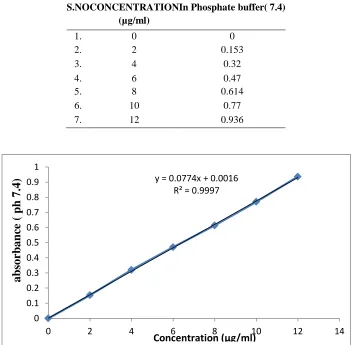
(5) P. Sreelatha, et al / Int. J. of Pharmacy and Analytical Research Vol-3(4) 2014 [370-383]. METHODS Preformulation studies It is one of the important prerequisite in development of any drug delivery system.Preformulation studies were performed on the drug,which included melting point determination, solubility and compatibility studies.. Determination of Melting Point Melting point of Rosuvastatin was determined by capillary method.Fine powder of Rosuvastatin was filled in glass capillary tube (previously sealed on one end).The capillary tube is tied to thermometer and the thermometer was placed in fire.The powder at what temperature it will melt was noticed.. The standard stock solution was then serially diluted with 0.1 NHCl/Phosphate buffer pH7.4 to get 1to12µg/ml of Rosuvastatin.The absorbance’s of the solution were measured against 0.1NHCl/ Phosphate buffer 7.4 as blank at 258.2& 260.8nm using UV spectrophotometer respectively.The absorbance values were plotted against concentration (µg/ml) to obtain the standard calibration curve.. Evaluation of Powder Blend2,3,4,5 a. Angle of repose. Solubility of Rosuvastatin was determined in ethanol(95%), chloroform,acetone,ether,water and 0.1 NHCl. Solubility studies were performed by taking excess amount of Rosuvastatin in different beakers containing the solvents.The mixtures were shaken for 24hrs at regular intervals.The solutions were filtered by using what tmann’s filter paper gradeno.41.The filtered solutions are analyzed spectrophotometrically.. The angle of repose of powder blend was determined by the funnel method.The accurately weight powder blend were taken in the funnel.The height of the funnel was adjusted in such away the tip of the funnel just touched the apex of the powder blend.The powder blend was allowed to flow through the funnel freely on to the surface.The diameter of the powder cone was measured and angle of repose was calculated using the following equation. Tan θ = h/r Where, h and r are the heightand radius of the powder cone.. Compatibility Studies. b. Bulk density. Compatibility with excipients was confirmed by carried out IR studies.The pure drug and its formulations along with excipients were subjected to IR studies.In the present study,the potassium bromide disc (pellet) method was employed.. Both loose bulk density (LBD) and tapped bulk density1 (TBD) was determined. A quantity of 2 gm of powder blend from each formula, previously shaken to break any agglomerates formed, was introduced in to 10 ml measuring cylinder. After that the initial volume was noted and the cylinder was allowed to fall under its own weight on to a hard surface from the height of 2.5 cm at second intervals. Tapping was continued until no further change in volume was noted. LBD and TDB were calculated using the following equations. LBD= Weight of the powder blend/Untapped Volume of the packing TBD=Weight of the powder blend/Tapped Volume of the packing.. Solubility. Identification of Rosuvastatin A solution of Rosuvastatin containing the concentration 10µg/ml was prepared in 0.1 NHCl and UVspectrum was taken using Systronics UV/V is double beam spectrophotometer. The solution was scanned in the range of 200 – 400. Preparation of Standard Calibration Curve of Rosuvastatin. Method 100 mg of Rosuvastatin was accurately weighed and transferred into 100ml volumetric flask.It was dissolved and diluted to volume with 0.1NHCL/Phosphate buffer pH 7.4 to give stock solution containing 1000µg/ml.. c. Compressibility Index The Compressibility Index of the powder blend was determined by Carr’s compressibility index. It is a simple test to evaluate the LBD and TBD of a powder. www.ijpar.com. ~ 374~.
(6) P. Sreelatha, et al / Int. J. of Pharmacy and Analytical Research Vol-3(4) 2014 [370-383] Carr’s Index (%) = [(TBD-LBD) x100]/TBD. and the rate at which it packed down. The formula for Carr’s Index is as below:. d. Total Porosity Total porosity was determined by measuring the volume occupied by a selected weight of a powder (Vbulk) and. the true volume of the powder blend (The space occupied by the powder exclusive of spaces greater than the intermolecular spaces, V). Porosity (%) =Vbulk-V/Vbulk x 10.. Table: 2: Composition of Rosuvastatin Tablet. INGREDIENTS Rosuvastatin HPMCK15M HPMCK50M Ethylcellulose Sodiumbicarbonate Citric acid (anhydrous) PVP-K-30 MagnesiumStearate Talc Total wt.. FT1 FT2 FT3 FT4 FT5 FT6 FT7 FT8 FT9 FT10 20 20 20 20 20 20 20 20 20 20 80 90 45 45 35 85 95 50 45 30 85 95 45 50 35 85 80 80 75 75 70 70 75 75 70 25 25 20 25 20 25 25 20 25 20 25 25 30 25 25 25 25 25 25 25 8 8 8 8 8 8 8 8 8 8 7 7 7 7 7 7 7 7 7 7 250 250 250 250 250 250 250 250 250 250. Total weight of tablet =250 mg All quantities were in milligrams. All the batches contained 1% w/w talc and 0.5% w/w magnesium Stearate.. EVALUATION OF TABLETS 4. a. Weight variation test. To study weight variation twenty tablets of the formulation were weighed using an Essay electronic balance and the test was performed according to the official method.Twenty tablets were selected randomly from each batch and weighed individually to check for weight variation.. Hardness indicates the ability of a tablet to withstand mechanical shocks while handling. The hardness of the tablets was determined using Monsanto hardness tester. It is expressed in kg/cm2. Three tablets were randomly picked and hardness of the tablets was determined. The thickness of the tablets was determined by using vernier3 calipers. Five tablets were used, and average values were calculated.. d. Friability Test. b. Drug content6 Five tablets were weighed individually and powdered. The powder equivalent to average weight of tablets was weighed and drug was extracted in Phosphate buffer pH 7.4, the drug content was determined measuring the absorbance at 260.8 nm after suitable dilution using a shimadzu UV- Vis double beam spectrophotometer.. c. Hardness. The friability of tablets was determined using Roche Friabilator. It is expressed in percentage (%). Ten tablets were initially weighed (W0) and transferred into friabilator. The friabilator was operated at 25 rpm for 4 minutes or run up to 100 revolutions. The tablets were weighed again (W). The % friability was then calculated by – %F = 100 (1-W0/W) % Friability of tablets less than 1% are considered acceptable.. www.ijpar.com. ~ 375~.
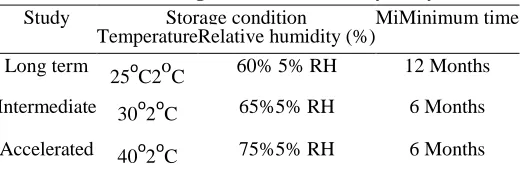
(7) P. Sreelatha, et al / Int. J. Pharm. & Analytical Res. Vol-3(4) 2014 [ 370-383] Wt = Weight of tablet at time t. W0 = Initial weight of tablet.. e. Tablet Density Tablet density is an important parameter for floating tablets. The tablet will float when its density is less than that of 0.1N HCl. The density was determined using following formula. V = r2h d = m/v Where; v = volume of tablet (cc) r = radius of tablet (cm) h = crown thickness of tablet (cm) m = mass of tablet F. In Vitro dissolution studies11 The release rate of Rosuvastatin from sustained tablets was determined using The United States Pharmacopoeia (USP) XXIV dissolution testing apparatus II (paddle method). The dissolution test was performed using 900 ml of 0.1 N HCl, at 37 ± 0.5°C and 75 rpm. A sample (5 ml) of the solution was withdrawn from the dissolution apparatus hourly for 8 hours, and the samples were replaced with fresh dissolution medium. The samples diluted to a suitable concentration with 0.1N HCl. Absorbance of these solutions was measured at 252.2 nm using a Shimadazu UV-Vis double beam spectrophotometer 1700. Cumulative percentage of drug release was calculated using the equation obtained from a standard curve. The same is done in the phosphate buffer pH 7.4 also.. STABILITY STUDIES 10 In designing a solid dosage form it is necessary to know the inherent stability of the drug substance, to have an idea of what excipients to use, as well as how best to put them together with the drug and to know that no toxic substance are formed. Limits of acceptability and therefore compromises must be reasonably defined. Because the measurements of these aspects of stability as well as determination of shelf life or expiration date for the final dosage form require long term stability studies for confirmation, they can be expensive and time consuming. Consequently it is necessary to define those study designs and conditions that show the greatest probability of success. The objective therefore of a stability study is to identify and help avoid or control situations where the stability of the active ingredient may be compromised. For a drug substance to be developed into a tablet dosage form, this objective may be achieved by investigating the stability of the drug under the following three categories, (1) solid state stability of drug alone, (2) compatibility studies in presence of excipients, (3) solution phase stability.. Rationale for stability studies There may be chemical degradation of active drug leading to a substantial lowering of the quantity of therapeutic agent in the dosage form. Although chemical degradation of the active drug may not be expensive, a toxic product may be formed in the decomposition process. Instability of drug product can lead to substantial lowering in the therapeutic efficiency of the dosage form.. G. Swelling index12. The swelling index of tablets was determined n 0.1 N HCl (pH 1.2) at room temperature. The swollen weight of the tablets was determined at predefined time intervals. The swelling index was calculated by the following equation: Swelling index WU = Wt - Wo * 100 W0 Where; Table. 3 ICH guidelines for stability study Study Storage condition MiMinimum time TemperatureRelative humidity (%) Long term o o 60% 5% RH 12 Months 25 C2 C Intermediate 30o2oC 65%5% RH 6 Months Accelerated. o o. 75%5% RH. 40 2 C. Note: The analyst can select any one of the three study conditions. Stability study was carried out at 400C / 75%. 6 Months. RH for the optimized formulations. The procedure was divided into two parts,. www.ijpar.com. ~ 376~.
(8) P. Sreelatha, et al / Int. J. Pharm. & Analytical Res. Vol-3(4) 2014 [ 370-383] Saturated solution of sodium chloride was prepared and placed in the desiccators over which a wire mesh was placed, over which the dosage form was placed and the desiccators’ was sealed. The desiccator was kept in oven maintained at 400C to create the relative humidity of 75%.. Part one Achieving of 60% RH 26.66 gm of sodium hydroxide was weighed and dissolved in 100 ml of distilled water to get 26.66% sodium hydroxide solution. The solution was placed in the desiccator over which a wire mesh was placed, over which the dosage form was placed and the desiccator was sealed. The desiccator was placed in the oven maintained at 250C to create the Relative Humidity OF 60%.. Part two The sealed formulation were placed in amber colored bottles, tightly plugged with cotton and capped. They were then stored at 250C /60% RH and 400C / 75% RH for two months and evaluated for their physical appearance and drug content.. Achieving of 75% RH. RESULTS Table: 4. Standard Curve of Rosuvastatin: ABSORBANCE S.NOCONCENTRATIONIn Phosphate buffer( 7.4) (µg/ml) 1. 2. 3. 4. 5. 6. 7.. 0 2 4 6 8 10 12. 0 0.153 0.32 0.47 0.614 0.77 0.936. absorbance ( ph 7.4). 1 y = 0.0774x + 0.0016 R² = 0.9997. 0.9 0.8 0.7 0.6 0.5 0.4 0.3 0.2 0.1 0 0. 2. 4. 6. 8. 10. Concentration (µg/ml). 12. Figure 2. Standard Curve of Rosuvastatin by Phosphate buffer ( 7.4). www.ijpar.com. ~ 377~. 14.
(9) P. Sreelatha, et al / Int. J. Pharm. & Analytical Res. Vol-3(4) 2014 [ 370-383]. FT-IR Studies. Figure (3): FT-IR Spectrum of Rosuvastatin. Figure (4): FT-IR Spectrum of Drug + HPMC K15 M. www.ijpar.com. ~ 378~.
(10) P. Sreelatha, et al / Int. J. Pharm. & Analytical Res. Vol-3(4) 2014 [ 370-383]. Figure (5): FT-IR Spectrum Of Rosuvastatin And HPMC K50M. Figure (6): FT-IR Spectrum Of Rosuvastatin + Ethyl cellulose. www.ijpar.com. ~ 379~.
(11) P. Sreelatha, et al / Int. J. Pharm. & Analytical Res. Vol-3(4) 2014 [ 370-383]. Figure (7): I.R. SPECTRUM OF ROSUVASTATIN + SODIUM BICARBONATE +Citric Acid + PVP k-30 +Mg STEARATE + Talc. Table: 5. Micrometric properties of powder blend Powder blend. Angle of Repose (o). FT1 FT2 FT3 FT4 FT5 FT6 FT7 FT8 FT9 FT10. 24.50' 26.40' 25.35' 28.60' 29.50' 25.40' 26.50' 24.32' 26.68' 28.82'. Loose Bulk Density Tapped Bulk Density (g/ml) (g/ml) 0.131 0.112 0.092 0.110 0.123 0.113 0.133 0.135 0.140 0.110. 0.156 0.128 0.108 0.132 0.145 0.132 0.152 0.154 0.160 0.130. www.ijpar.com. ~ 380~. Compressibility Hansner Index Ratio (%) 16.02 1.19 15.62 1.14 14.81 1.20 16.66 1.20 15.17 1.17 14.39 1.16 12.50 1.14 13.47 1.14 12.35 1.42 15.38 1.18.
(12) P. Sreelatha, et al / Int. J. Pharm. & Analytical Res. Vol-3(4) 2014 [ 370-383] Table 6. Effect of different polymers on drug release by paddle method Cumulative % Drug release in 7.4 Phosphate Buffer Time (hrs) 0 1 2 3 4 5 6 7 8 9 10 24 FLT (sec.) TFT (hrs). FT1 0.0 2.48 4.36 6.41 9.43 13.88 17.34 20.15 25.28 29.38 32.46 60.58 175 8. FT2 0.0 4.32 6.86 6.46 12.9 18.4 20.1 25.3 30.4 37.2 39.4 49.4 102 8. FT3 0.0 1.54 2.26 4.80 6.48 9.42 10.3 14.7 19.3 22.6 25.8 30.8 NO NO. FT4 0.0 3.41 5.80 7.68 10.2 14.8 16.3 22.4 28.8 32.5 35.9 45.3 95 12. FT5 0.0 1.94 3.78 5.24 8.40 11.8 14.8 18.8 22.4 24.4 28.5 35.4 136 12. FT6 0.0 2.24 3.94 6.52 8.40 11.8 14.8 18.8 22.4 24.3 28.5 35.4 NO NO. FT7 0.0 2.48 4.78 6.58 8.60 12.3 16.6 20.2 26.2 30.4 32.1 44.2 100 >12. FT8 0.0 3.86 5.24 7.94 10.3 14.3 17.4 22.2 28.6 32.5 35.3 47.2 78 6. FT9 0.0 1.24 2.58 5.91 8.24 10.2 12.2 16.2 20.9 22.3 26.2 32.2 190 8. FT10 0.0 2.36 5.48 8.32 10.6 13.4 16.8 20.3 24.3 27.4 30.2 38.8 45 >12. FLT= Floating lag time TFT=Totalfloatingtime. % Drug release. 70. Time FT1. 60. Time FT2. 50. Time FT3. 40. Time FT4. 30. Time FT5. 20. Time FT6. 10. Time FT7. 0 0. 5. 10. 15. 20. 25. 30. Time FT8. Time (hrs ) Figure:8 Dissolution study of Cumulative % Drug release in 7.4 Phosphate Buffer F1-F10 Table: 7. Effect of hardness on Buoyancy Lag Time 2 Hardnessin kg/cm 4 5 6 7 8. Buoyancy Lag Time (sec). www.ijpar.com. ~ 381~. 52 61 79 94 190.
(13) P. Sreelatha, et al / Int. J. Pharm. & Analytical Res. Vol-3(4) 2014 [ 370-383] Table: 8 Kinetic values obtained fromin vitroreleaseddata of Formulation F7. Kinetic Model. Slope. Zero-order plot First-order plot Higuchi plot Korsmeyer-Peppas Hixson- crowell. 8.3466 0.0041 29.935 0.7212 0.0298. 2 R 0.9366 0.9364 0.9974 0.9680 0.9283. RESULTS OF STABILITY STUDIES The results of the stability studies for formulation FT7 are in the following table. Table: 9. Results of stability studies Timeinday. 0 30 60. o. o At25 C temperature. At 40 C(75%RH) temperature. o At 50 c temperature. PA HD%DC +++4.2 99.05 +++4.1 99.02 +++4.1 98.04. PA +++ +++ +++. PA HD%DC +++4.0 97.65 +++4.1 97.54 +++4.2 97.64. HD%DC 4.2 101.5 4.2 100.2 4.3 100.4. Where, PA=physical appearance 2 H D=Hardness (Kg/cm ). SUMMARY Rosuvastatin is a competitive inhibitor of HMG-CoA reductase. HMG-CoA reductase catalyzes the conversion of HMG-CoA to mevalonate, an early rate-limiting step in cholesterol biosynthesis. Review of literature indicated that floating drug delivery system can minimize the fluctuation of plasma level and can be used to maintain drug concentration at a therapeutic level by means of controlled drug release. The aim of the study was to develop and physicochemically characterized sustained release matrix tablet of Rosuvastatin based on a matrix polymer. Rosuvastatin has a biological half-life (19 hours). Development of sustained release formulation of Rosuvastatin can be advantageous. A traditional oral sustained release formulation releases most of the drug at the colon, thus the drug should have absorption window either in the colon or throughout the gastrointestinal tract. Being weak acid, pKa – 4.55, the Rosuvastatin well absorbed from the upper portion of the duodenum. Moreover, less solubility in alkaline pH of Rosuvastatin is partly. responsible for the poor bioavailability of Rosuvastatin from the colon. These properties of Rosuvastatin favor the traditional approach to sustained release delivery. Hence, clinically acceptable sustained release dosage forms of Rosuvastatin prepared with conventional technology may not be successful. Different types of matrix forming polymers were studied: HPMC k15m, HPMC k50m, ethyl cellulose, for the study. The tablets eroded upon contact with the release medium, and the relative importance of drug diffusion, polymer swelling and tablet erosion for the resulting release patterns varied significantly with the type of matrix former. the release rate could effectively be modified by varying the ‘‘matrix-form.polymer’’, the tablet geometry (radius), the type of matrix forming polymer. The use of polymer blends. The controlled behavior of the matrix drug delivery systems could successfully be combined with accurate control of the drug release patterns. The batch optimization was done using HPMC K15M, HPMC K50M and Ethyl cellulose as matrix polymers as they gave optimum SDDS as well. www.ijpar.com. ~ 382~.
(14) P. Sreelatha, et al / Int. J. Pharm. & Analytical Res. Vol-3(4) 2014 [ 370-383] as long acting affect and no / least eroding effect. It was also found that the tablet formulations released more than 90 % drug in 12 hours as desired. The use of HPMC K15M, HPMC K50M polymer in matrix tablets as density reducing agent has given a different look while Ethyl cellulose used as release retardant polymer. During the study with the polymer various characteristics of the material were observed; like highly porous spherical structure, good compressibility, good flow property with drug and other polymers, no significant effect on drug release and compatibility with drug and other polymers as seen through IR spectra. Thus it is summarized and concluded that HPMC K15M, HPMC K50 M and Ethyl cellulose can be successfully used in the formulation of Rosuvastatin sustained release drug delivery system.. CONCLUSION. From the compatibility studies, it was concluded that HPMC K15M, HPMC K50M, and Ethyl cellulose were compatible with Rosuvastatin and thus suitable for the formulation of Rosuvastatin sustained tablets. In vitro buoyancy studies were performed for all the formulations, FT 1 to FT 10 by using 0.1 N HCl solutions at 37oC. All the formulations were floated except FT 3 and FT 6. The formulation FT 7 containing 90 mg of HPMC K15M, 45 mg of HPMC K50M and 45 mg of Ethyl cellulose showed more sustained drug release time (12 hours) than other formulations. In vitro dissolution studies were also performed for all formulations. The formulation FT 7 showed the controlled release for 24 hours. Thus FT 7 was identified as ideal batch based on its results. Finally, it was concluded that HPMC K15M, HPMC K50 M and Ethyl cellulose can be successfully used in the formulation of Rosuvastatin sustained release drug delivery system.. BIBLIOGRAPHIES [1] Rouge N, Buri P, Doelker E. Drug absorption sites in the gastrointestinal tract and dosage forms for site-specific delivery. Int J Pharm 1996;136:117-39. [2] Reddy L, Murthy R. Floating dosage systems in drug delivery. Crit Rev Ther Drug Carrier Syst 2002; 19:553-85. [3] Deshpande AA, Shah NH, Rhodes CT, Malick W. Development of a novel controlled release system for gastric retention. Pharm Res 1997;14:815-9. [4] Chien YW. Novel drug delivery system. 2nd ed. New York; Marcel Dekker; 1993. vol 29 p.139-196. [5] Chungi VS, Dittert LW, Smith RB. Gastrointestinal sites of furosemide absorption in rats. Int J Pharm 1979;4:2738. [6] Sheth PR, Tossounian J. The hydro dynamically balanced system (HBSTM): a novel drug delivery system for oral use. Drug Dev Ind Pharm 1984;10:313-39. [7] Gutierrez-rocca J, Omidian H, Shah K. Progress in Gastro retentive drug delivery systems. Business Briefing, Pharmatech 2003;152-6. [8] Hou SY, Cowles VE, Berner B. Gastric retentive dosage forms: a review. Crit Rev Ther Drug Carrier Syst 2003;20(6):459-97. [9] Chatterjee CC. Human Physiology. Vol I, Medical Allied Agency; Kolkata; 2004; 435-38. [10] Waugh A, Grand A. Ross and Wilson Anatomy and Physiology: In Health and Illness.10th edi, Churchill Livinstone Elsevier; Edinburgh; 2006; 293-95. [11] Chein YW. Novel Drug Delivery Systems, 2nd edition, Marcel Dekker, New York,2005, 157-63. [12] Brahmankar DM, Jaiswal SB. Biopharmaceutics and Pharmacokinetics. Vallabh Prakashan; Delhi; 2005; 53-63.. www.ijpar.com. ~ 383~.
(15)
Figure


+3


Related documents
They sought to cover the major life domains associated with their refugee experience: expe- riences growing up in Vietnam, motivations for leaving the country and sense of
It then discusses the impact of these reforms on the corporate sector under five main heads: corporate governance, risk management, capital structure, group structure and
We evaluated VMR by measuring the application turnaround, server network traffic and overhead while running widely used MapReduce applications, which are representative of
More specifically, it interrogates four strands of the gendered migration debate related to marriage migration: various forms of precarity faced by migrant women and their
The asset tracking system tracked the locations of as- sets throughout every ward in the hospital using the existing WiFi infrastructure; however, we used separate BLE beacons
A plain X-ray of the chest and abdomen will show the tip of the catheter arrested in the superior mediastinum (T 2–4) while gas in the stomach and intestine signifies the presence of
This paper intends to use Social Integration (SI) developed at Erasmus University Rotterdam on the basis of Karl Weick’s organization theory to enrich current social network theory
