R E S E A R C H
Open Access
Decoding subtle forearm flexions using fractal
features of surface electromyogram from single
and multiple sensors
Sridhar Poosapadi Arjunan
*†, Dinesh Kant Kumar
†Abstract
Background:Identifying finger and wrist flexion based actions using a single channel surface electromyogram (sEMG) can lead to a number of applications such as sEMG based controllers for near elbow amputees, human computer interface (HCI) devices for elderly and for defence personnel. These are currently infeasible because classification of sEMG is unreliable when the level of muscle contraction is low and there are multiple active muscles. The presence of noise and cross-talk from closely located and simultaneously active muscles is
exaggerated when muscles are weakly active such as during sustained wrist and finger flexion. This paper reports the use of fractal properties of sEMG to reliably identify individual wrist and finger flexion, overcoming the earlier shortcomings.
Methods:SEMG signal was recorded when the participant maintained pre-specified wrist and finger flexion movements for a period of time. Various established sEMG signal parameters such as root mean square (RMS), Mean absolute value (MAV), Variance (VAR) and Waveform length (WL) and the proposed fractal features: fractal dimension (FD) and maximum fractal length (MFL) were computed. Multi-variant analysis of variance (MANOVA) was conducted to determine thep value, indicative of the significance of the relationships between each of these parameters with the wrist and finger flexions. Classification accuracy was also computed using the trained artificial neural network (ANN) classifier to decode the desired subtle movements.
Results:The results indicate that thepvalue for the proposed feature set consisting of FD and MFL of single channel sEMG was 0.0001 while that of various combinations of the five established features ranged between 0.009 - 0.0172. From the accuracy of classification by the ANN, the average accuracy in identifying the wrist and finger flexions using the proposed feature set ofsinglechannel sEMG was 90%, while the average accuracy when using a combination of other features ranged between 58% and 73%.
Conclusions:The results show that the MFL and FD of a single channel sEMG recorded from the forearm can be used to accurately identify a set of finger and wrist flexions even when the muscle activity is very weak. A comparison with other features demonstrates that this feature set offers a dramatic improvement in the accuracy of identification of the wrist and finger movements. It is proposed that such a system could be used to control a prosthetic hand or for a human computer interface.
Background
Controlling devices such as prosthetic or robotic hand requires automated identification of the command. To provide the user with a natural feeling and benefit of the dexterity of the hand, the (intended) finger and
hand movements of the user have to be identified. One method to determine movement and posture is by esti-mating the strength of contraction of associated muscles based on the electrical activity of the muscles. The bene-fit of this over other sensing techniques is that it is sui-table for people who have suffered amputation of their hands and the control can be based on the user’s inten-tion. A recent survey on myoelectric prosthesis by Oskoei and Hu [1] has reported that the applications of
* Correspondence: [email protected] †Contributed equally
Bio-signals Lab, School of Electrical and Computer Engineering, RMIT University, GPO Box 2476, Melbourne, Victoria 3001, Australia
sEMG based control are widespread such as multifunc-tion prosthesis, wheelchairs, grasping control, virtual keyboards, and gesture-based interfaces.
Surface electromyography (sEMG) [2,3] is a non-invasive, easy to record electrical activity of the skeletal muscles recorded from the skin surface. Classification of sEMG to identify the hand movement and gesture is a desired option [4-7]. Identified hand and finger actions can be used to command robotic and prosthe-tic hand which will allow the users to benefit from high degrees of freedom offered by recently developed devices such as Shadow Robot hand (Shadow Com-pany, London). However identification of the gestures and movements is not simple when there are a number of simultaneously active muscles and the muscle activ-ity is weak such as during finger and wrist flexion and extension. To overcome this, often sEMG based com-mands are treated as binary and the user need to give a series of commands for functionality [8]. While able to overcome the issue of noise, the system is not nat-ural and very limiting. As a result, modern prosthetic hands such as I-Limb (Touchbionics, Scotland) and Kinetic Human-type (KH) Hand S1 (Dainichi, Japan), while having the provision of controlling individual fin-gers, are able to provide only limited control to the user. The user can perform hand grasp actions where all the fingers move together and is unable to benefit from the control of individual fingers. If the finger and wrist actions of the user could be reliably identified from sEMG, such systems could be controlled by sEMG of the user and these devices would become very useful and more readily acceptable.
The fundamental principle underlying the identifica-tion of acidentifica-tions and gestures using sEMG is by measur-ing the strength of contraction of the associated muscles. This may be done in time or frequency domain or a combination. Various analogous measures such as root mean square (RMS), integral of the signal, auto-regression, signal length and wavelet coefficients have been used to identify the movement and/or posture [5,9-13]. The classification of these features has been achieved using a range of parametric and non-para-metric techniques, such as Bayesian statistical classifiers, artificial neural networks (ANN) [10,13,14], support vec-tor machine (SVM) [9] and predictive approach [12].
To identify actions that are a result of multiple simul-taneously active muscles require an estimation of the relative strength of contraction of the different muscles. Researchers have used artificial intelligence and genetic algorithms [5,9,10,13,14] or an array of electrodes to estimate the relative strength of contraction based on the spatial distribution [7,10,15]. While these studies have successfully used multiple channels for identifying actions such as subtle finger and wrist movements,
these have limited applications because of the need for precise location of the electrodes and most of these sys-tems need to be calibrated for each session [16].
Recent work [9] has compared number of features of sEMG and classified these using SVM to determine the most effective set of features for identifying the hand actions for controlling the prosthetic devices. While it is a very useful evaluation of the different features, however it has limited applications because the system requires train-ing for each session and only suitable for user selected actions. A comparison of the different features that have been proposed in recent literature [5,9] shows that these features are sensitive to the experimental conditions. There is a need for a simple and reliable system that does not require large number of electrodes is easy to use and does not require the system to be trained for each session.
One general limitation of the established and widely reported features of sEMG is that these are unreliable at low levels of contraction due to low signal-to-noise ratio [17]. At low level of contraction the relationship between sEMG and the force of contraction is not linear [17] and the signal to noise ratio for sEMG is very poor. Due to this reason, it is difficult to automatically seg-ment the muscle activity from the background activity [3,18]. While statistical based segmentation techniques are suitable when the muscle activity is large, manual selection of the muscle activation period is required when muscle activity is small.
When the muscle activity is low, the density of motor unit action potentials (MUAP) can be used to determine the strength of muscle contraction [19,20]. The funda-mental principle of determining MUAP density reported in literature [11,14,20,22,23] is based on shape matching. Strategies used include template matching [11], use of neural networks [10,13-15,18] and wavelet decomposi-tion [12]. While such systems are suitable to be trained for any shape of MUAP but these are sensitive to changes in these shapes after training. Due to the differ-ences in the conduction pathways of MUAPs originating from different muscles, there would be a variation in the shape of MUAP in the recordings at the surface. This makes shape based MUAP identifying techniques unsui-table when there are multiple active muscles.
Czerniecki [26] have reported that FD of the EMG sig-nal correlates with muscle force. Gupta et al [27] have also reported that FD could be used to characterize the EMG signal.
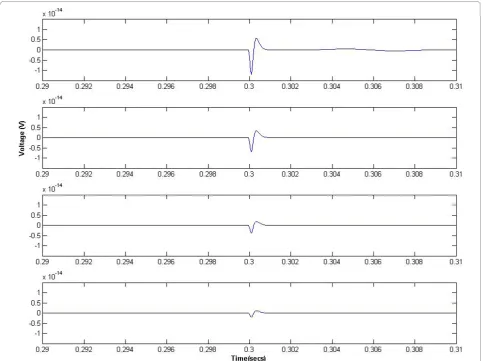
Based on the fundamental model of sEMG [10], MUAPs originating from superficial muscles have higher frequency and magnitude at the surface compared to the MUAPs originating from deeper muscles. Figure 1 shows the estimated shape of MUAPs at the surface when they originate from different distances (10 mm and 30 mm) from the electrodes [10]. Preliminary experiments [33] have shown that the FD of sEMG resulting from deeper muscles is significantly less than from superficial muscles, and signal from very distant muscles do not exhibit fractal properties. While high level of contraction or muscle stretch could also have an impact on FD [27], there would not be any significant variations of FD of a muscle with small changes of mus-cle contraction.
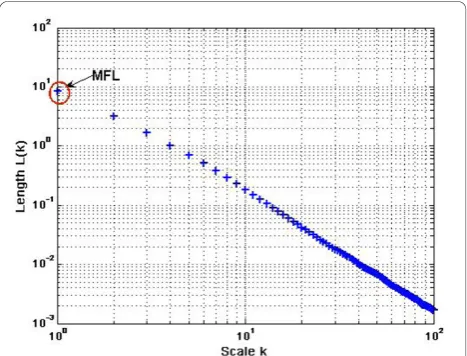
A new feature, the maximum fractal length (MFL) of the signal, as a measure of the muscle activation has been proposed. This is the intercept of the fractal relationship with the length of the curve at lower scale (Figure 2). This is similar to the wavelength but because it is on the logarithmic scale, it is less sensitive to background noise and is a good indicator of the density of MUAPs irrespec-tive of the shape [32]. Preliminary experiments [32,33] indicate that it is an easy to identify change in MFL in response to muscle contraction, and thus can be used to segment the muscle activity from the background activity.
Authors have identified the maximum fractal length (MFL) as a measure of the strength of contraction [32,33]. While similar to the wave-length [9], MFL incor-porates the logarithmic scale, making it less sensitive to noise. Based on the above, it is hypothesized that the fea-ture set consisting of FD and MFL of single channel sEMG are indicators of relative strength of contraction of
the associated muscles and thus can accurately identify actions with multiple muscles and low-level contractions such as finger and wrist flexions. This paper reports the testing of this hypothesis. This feature set has also been compared with number of other features reported in lit-erature [9].
Methods
The aim of this work was to develop a sEMG based technique that can accurately identify the basic hand and wrist gestures which may be used by people in spe-cial circumstances to communicate or give commands. This requires determining suitable features of sEMG that can be used to identify the actions even when the muscle activity is low. It is also important to differenti-ate between activities of different muscles.
SEMG is the electrical recording resulting from the interferential summation of MUAPs at the surface. All MUAPs are similar at the source [11,14,20-23,34] sug-gesting the self-similarity in the signal. Differences arise
in the shape and spectral content due to attenuation of the signal and the spatial filtering characteristics of the tissues through which the signal travels. Work reported by Gupta et al [27] and Gitter and Czerniecki [26] have demonstrated that sEMG signal has fractal properties. Based on this self-similarity, it is hypothesised that the fractal dimension of sEMG would indicate the property (such as size and complexity) of the active muscle while the MFL of the signal would indicate the MUAP density [32,33]. A combination of these can be used to identify different hand movements for controlling a prosthetic hand or a powered device.
Subjects
Five subjects (four male and one female) volunteered to participate in this study. Mean age was 26.6 (s= 2.05) years; mean weight 70.6 (s= 6.56) kg; and mean height was 170.6 (s= 7.42) cm. The participants’inclusion criter-ion was; (i) healthy with no history of myo or neuro-pathology, and (ii) no evident abnormal motion restriction. All participants in this study were right-handed. Experi-ments were conducted after receiving approval from Uni-versity Ethics Committee for Human Experiments. Each participant was given an oral and written summary of the experimental protocol and the purpose of the study and then was required to sign a consent form prior to participation.
EMG Recording Procedures
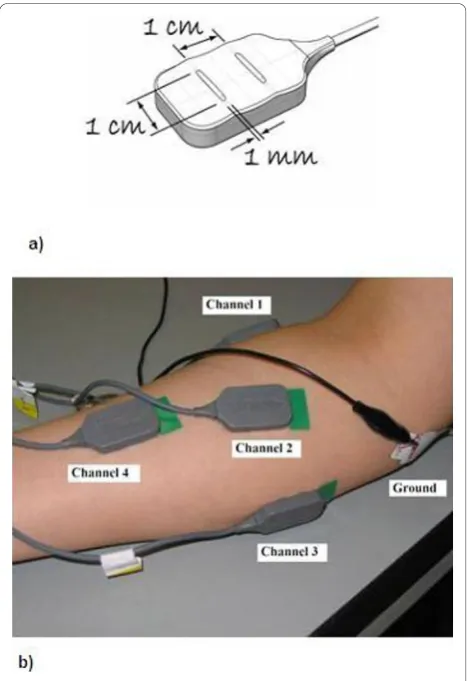
Four bipolar electrodes were placed on the following forearm muscles [35] as shown in Figure 2 and in accor-dance with standard procedures [11,36,37] to record surface electromyogram (sEMG):
Channel 1: Brachioradialis
Channel 2: Flexor Carpi Radialis (FCR) Channel 3: Flexor Carpi Ulnaris (FCU)
Channel 4: Flexor digitorum superficialis (FDS) DELSYS (Boston, MA, USA), a proprietary sEMG acquisition system, was used for recording sEMG. This system has bipolar differential electrodes units with each unit having two parallel bars with fixed inter-electrode distance of 10 mm (Figure 2) and a preamplifier with gain of 1000, notch filter of 50 Hz and associated har-monics and with 8thorder butterworth band pass filter from 20 to 450 Hz. The sampling rate of the system is 1024 samples/second for each channel. Prior to placing the electrodes, the skin of the participant was prepared by shaving (if required) and exfoliation to remove dead skin. Skin was cleaned with 70% v/v alcohol swab to remove any oil or dust from the skin surface. The skin impedance during the recording was measured and in all cases was less than 6 KΩ. Standard electrode place-ment procedures were followed [2,36,37].
Experimental Protocol
At the start of the experiment, the participants were given a demonstration towards maintaining finger and wrist flexion. Prior to the recording, the participants were encouraged to familiarize themselves with the experimental protocol and with the equipment. SEMG was recorded from the four electrodes when the partici-pant maintained the specific wrist and finger flexions:
M1 - All fingers and wrist flexion, M2 - Index and Mid-dle finger flexion, M3 - Wrist flexion towards little finger, M4 - Little and ring finger flexion. The flexions were performed without any resistance and as were conveni-ent to and easily reproducible by the participant.
The recordings from four channels were used to com-pare with other similar studies, however for the single channel analysis, only channel 2, located closest to the elbow (Figure 2) was considered. The command for the action was displayed on the screen as well as given verb-ally. The order of the flexions was arbitrary and each flexion was maintained for about 7-8 seconds to obtain sEMG recordings during isometric contraction. Each flexion was repeated twelve times and the duration of each run of the experiment was about 120 seconds. The experiments were repeated on two days to test the relia-bility and robustness.
Analysis of sEMG recordings 1. Computing the established features
The first step in the analysis of the data was to com-pute the following features of sEMG that have been proposed by other researchers. For details, the reader is directed to [9]:
•Root mean Square (RMS)
RMS
N xi
i N = =
∑
1 2 1 (1)•Mean absolute value (MAV),
MAV
N xi
i N = =
∑
1 1 (2)•Variance (VAR)
VAR
N xi x
i N = − =
∑
1 2 1( ) (3)
•Waveform length (WL).
WL
N xi xi
i N = + − = −
∑
1 1 1 1 (4)whereNis the number of samples in a segment andxi
is the signal.
2. Computing the proposed set of features
The next step was the computation of the proposed set of features; Fractal Dimension (FD) and Maximum Frac-tal Length (MFL) of sEMG. This is described below:
FD was calculated using Higuchi algorithm [38,39] for non-periodic and irregular time series. This algorithm yields a more accurate and consistent estimation of FD for physiological signals than other algorithms [40].
The first step for computing the MFL requires the computation of the length of the curve, Xkm, for a time signal sampled at a fixed sampling rate,x(n) = X (1), X (2), X (3), ..., X(N)as follows:
L k
X m ik X m i k N N m m i N m k ( ) . = + ( )− ( +( − ) ) ⎛ ⎝ ⎜ ⎜ ⎜ ⎜ ⎞ ⎠ ⎟ ⎟ ⎟ ⎟ − − = − ⎡ ⎣⎢ ⎤⎦⎥
∑
1 11 kk k k ⎡ ⎣⎢ ⎤ ⎦⎥ ⎧ ⎨ ⎪ ⎪ ⎩ ⎪ ⎪ ⎫ ⎬ ⎪ ⎪ ⎭ ⎪ ⎪ . (5)
where [ ]denotes the Gauss’notation and bothkand
mare integers. m = initial time;k= time interval; i = 1
to N m
k− ⎡
⎣⎢ ⎤⎦⎥.
The term NN m
k k − − ⎡ ⎣⎢ ⎤⎦⎥ 1
. represents the normalization
factor for the curve length of subset time series. The length of the curve for the time interval k, 〈L(k)〉 is defined as the average value over k sets ofLm (k). If
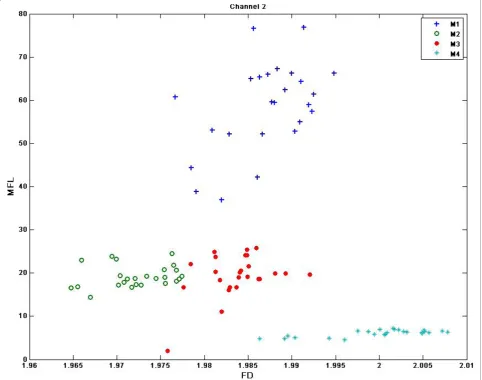
Figure 5Grouped Scatter plot of FD and MFL of single channel sEMG. Channel 2 is shown in this plot.
〈L(k)∝k-D〉, then the curve is fractal with the dimension
D. Maximum fractal length (MFL) was determined from the plot (Figure 3) as the average length L(k) at the smallest scale. The slope of the line gives the fractal dimension (FD). The computation MFL and FD is shown in Figure 3. A threshold, T, was obtained based on the maximum MFL value (after removing the out-liers) when there was no hand action. The MFL was compared with T and this was used to determine the onset of muscle activity.
Feature extraction and classification
A sliding window of 1024 samples corresponding to one second was used for computing the features of sEMG recorded from each flexion. This corresponds approxi-mately to one hertz, which is faster than the normal speed of human finger actions. While this paper reports 1024 sample window, experiments were also conducted where the window size was 512 samples and the outcome was identical. SEMG corresponding to the isometric con-traction was analyzed and sEMG corresponding to the action was removed by removing the first and the last one-second of the contraction.
After removing the first and the last second data of each flexion, 5 seconds long recordings corresponding to each flexion were selected. With a window size of 1024 samples, this provided 5 segments for each flexion. The data of all 5 segments and for all the 12 repetitions for each flexion (total number of flexions = 4) was con-sidered for statistical analysis. The data of the 5 subjects were analyzed together. Hence the total sample size of (12*5*5*4 =) 1200 was used for the statistical analysis. It was observed that inter-experimental variations were very significant for RMS compared with other features. Hence the RMS was normalized by taking a ratio of all
the channels with respect to channel 1. This resulted in channel 1 becoming redundant and effectively reduced the four channels to three. While computing MFL, the threshold, T was considered for data from every subject individually. The threshold, T did not vary much with the subjects as it was computed from sEMG when the participant performed no hand movement (when the muscle is at rest).
Multi-variant analysis of variance (MANOVA) was conducted to determine the significance of the relation-ships and to obtain the two out of four most representa-tive channels for each of the features. MANOVA identifies a linear combination of the variables, called the canonical variable, that has the highest multiple cor-relations with the groups, and these canonical variables provide the order of level of correlation. Statistical ana-lysis was performed to determine the significance of separation of the different features to identify the differ-ent actions. A combination of various variables and mul-tiple channels were taken:
•Two channels (selected using MANOVA) for each of the 6 features.
•Four channels for each of the 6 features.
•Single channel with FD paired with each of the other 5 features.
The next step was the classification of each of the fea-ture set listed above using Artificial Neural Network (ANN). The ANN with two hidden layers and 20 neu-rons for each hidden layer was simulated. The Sigmoid threshold function with a learning rate of 0.05 was used to reduce the likelihood of local minima. The ANN ana-lysis was repeated for each feature sets, with input to the ANN being the sEMG features and the target being the associated actions. ANN was trained using 50% of the data and tested with the other 50% which has not Table 1 F-statistic table for two Channels combined
(Channel 2 and Channel 3)
F-value RMS MAV WL VAR FD MFL
Average 19.95 41.56 44.50 20.22 34.52 102.21 SD 2.593 4.259 12.738 1.3076 5.259435 5.225
Significance, Averagep*
0.0167 0.01 0.0099 0.017 0.01 0.004
*Significance based on 3 degrees of freedom.
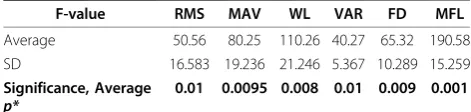
Table 2 F-statistic table for all four Channels combined for different features
F-value RMS MAV WL VAR FD MFL
Average 50.56 80.25 110.26 40.27 65.32 190.58 SD 16.583 19.236 21.246 5.367 10.289 15.259
Significance, Average
p*
0.01 0.0095 0.008 0.01 0.009 0.001
*Significance based on 3 degrees of freedom.
Table 3 F-statistic table for single Channel (Channel 2) for various feature sets
F-value FD & MFL
FD & RMS
FD & MAV
FD & WL
FD & VAR
Average 210.936 93.334 101.33 123.064 50.43 SD 15.778 21.652 27.061 26.211 38.238
Significance, Averagep*
0.0001 0.1 0.098 0.02 0.199
*Significance based on 3 degrees of freedom.
Table 4 Classification Accuracy of the various features using two channels (Channel 2 and Channel 3) sEMG
RMS MAV WL VAR FD MFL
been used for training. Ten cross validation was per-formed by changing the training and testing data. Classi-fication accuracy was computed as the average accuracy based on the results from cross validation testing. The data of the proposed set of features, FD and MFL of a single channel (Channel 2 is the channel closest to the elbow and represents the condition suitable for a trans-radial amputee) was plotted for visualization to assess the separation of the different classes. This provides a qualitative analysis of the data.
Results
Figure 4 is the sample representation of the MFL of multi-ple channels for different wrist flexions. From this figure, it can be observed that the pattern of the MFL is different for the two wrist flexions (M1 and M3). Figure 5 is the two-dimensional plot of the MFL and FD of single channel (channel 2) of sEMG. While all of the channels had similar results, channel 2 was selected for this figure because of its proximity to the elbow making it most suitable for the prosthetic control. It is also observed from figure 4 that each of the actions form distinct clusters indicating clear separation between the different actions.
Statistical Analysis
From table 1 and table 2, it is observed that for the mul-tiple (two and four) channels, the MFL is more signifi-cant than that of the other five features. This clearly demonstrates that MFL of multiple channels is the more reliable feature for identifying the hand gestures. The value of pinversely indicates the significance of separa-tion of the classes.
The results of statistical analysis of single channel sEMG for FD paired with each of the other features are tabulated in table 3. From the results, it is observed that while the value of pfor FD and MFL combination is 0.0001, the value of p for other combinations ranges between 0.02 and 0.199. TheF value results also indi-cate that the most suitable feature set is FD and MFL of a single channel. This demonstrates that FD and MFL
of a single channel are suitable for identifying the four different hand gestures.
Classification accuracy
The average classification accuracy of multiple (two and four) channels of the six features for identification the associated actions are shown in table 4 and table 5. The average accuracy of each feature paired with FD with only single channel sEMG has been tabulated in table 6. These results reconfirm the above observation based on statistical analysis of the data. MFL and FD of single channel were accurately able to identify the actions with 90.7% accuracy, while the accuracy based on other fea-tures (single channel, paired with FD) ranged from 58% to 73%. The comparable accuracy was obtained when using 4 channels MFL.
The accuracy using a combination of FD and MFL obtained from single channel was even better than when using all four channels, where the accuracy of identifica-tion of the acidentifica-tions ranged between 70% and 90%. This indicates that FD and MFL combination of single chan-nel sEMG was significantly more accurate in identifying finger and wrist flexions compared with any other fea-ture that was tested.
Discussion and Conclusion
SEMG is a measure of the muscle activity that has been used by many researchers to identify control commands for controlling prosthetic hands and for human machine interface. One shortcoming in the use of sEMG for identifying control commands is the unreliability when the muscle activity is weak and there are multiple active muscles. This is because of the presence of background noise, other artefacts and cross-talk. This study has overcome the above limitations and developed a techni-que that can reliably identify control commands even when the strength of sEMG is weak, and there are mul-tiple active muscles such as during finger and wrist flexions.
This study has demonstrated that the combined use of FD and MFL of single channel sEMG recorded from the forearm is the most accurate feature set to identify fin-ger and wrist flexion movements when compared with the established features reported in literature. While the features set (FD and MFL) accurately identified finger and wrist flexion movements with average accuracy of 90.7% by comparison the accuracy of identification using other features of the signal reported in literature [9,41] ranged from 61% to 83.7%. The statistical analysis also confirmed the significance of the relationship of FD and MFL with the hand gestures, and the lower signifi-cance for all the other features. There was no observable difference of the outcomes for experiments conducted on two different days, indicating that there was Table 6 Classification Accuracy of the various features
using single channel (Channel 2) sEMG
FD & MFL FD & RMS FD & MAV FD & WL FD & VAR
Average 90.67% 68.33% 69.67% 73.35% 58.68%
SD 2.04 7.45 8.26 8.78 5.786
Table 5 Classification Accuracy of the various features using all four channels sEMG
RMS MAV WL VAR FD MFL
Average 80.23% 82.25% 89.33% 68.58% 69.67% 90.33%
insignificant impact of inter-experimental variations on the efficacy of this technique. Small variations that would have been in the location of electrodes between the experiments do not appear to have an impact on the ability of the system to accurately identify the different actions.
Based on the experimental outcomes of this study, it is concluded that a combined use of FD and MFL of single channel sEMG is suitable for reliably identifying various finger and wrist flexion actions without being sensitive to inter-experimental variations and does not require strict electrode positioning. While comparable accura-cies are obtainable using number of channels, a single channel is desirable because of lower complexity and it being suitable for amputees who may not have a large area of the forearm available for multi-channel sEMG recording. Such a system can be used for controlling the individual fingers of a prosthetic hand for amputees. The system may be suitable for other applications such as human computer interface for the elderly and for people in special circumstances such as defence.
Acknowledgements
The work was supported by School of Electrical and Computer Engineering, RMIT University.
Authors’contributions
SPA has conducted the experiments, developed the signal processing technique and performed the data analysis. He has also written the first draft of the manuscript. DKK has designed the experiment, and discussed and developed the underlying concepts for the technique. He has also done the proof-reading, and finalized the manuscript. All authors have read and approved the manuscript.
Competing interests
The authors declare that they have no competing interests.
Received: 22 April 2010 Accepted: 21 October 2010 Published: 21 October 2010
References
1. Oskoei MA, Hu H:Myoelectric control systems–A survey.Biomedical Signal Processing and Control2007,13:275-294.
2. Basmajian J, De Luca CJ:Muscles Alive: Their Functions Revealed by ElectromyographyBaltimore, MD: Williams & Wilkins, 5 1985. 3. Duchene J, Francis G:Surface electromyogram during voluntary
contraction: processing tools and relation to physiological events.Critical Reviews™in Biomedical Engineering1993,21:313-397.
4. Hu X, Wang Z, Ren X:Classification of surface EMG signal with Fractal dimension.Journal of Zhejiang University Science2005,6B(8):844-848. 5. Momen K, Krishnan S, Chau T:Real time classification of forearm
electromyographic signals corresponding to user-selected intentional movements for multifunction prosthesis control.IEEE Trans. Neural Systems and Rehabilitation Engineering2007,15(4):535-542. 6. Chan FHY, Yang YS, Lam FK, Parker PA:Fuzzy EMG Classification for
prosthesis control.IEEE Trans Rehab Engg2000,8(3):305-312.
7. Tenore F, Ramos A, Fahmy A, Acharya S, Etienne-Cummings R, Thakor NV:
Towards the control of individual fingers of a prosthetic hand using surface EMG signals.Proceedings of the 29th Annual International Conference of the IEEE EMBS, Lyon, France2007, 6145-6149.
8. Pons JL, Rocon E, Ceres R, Reynaerts D, Saro B, Levin S, Van Moorleghem W:
The MANUS-HAND dextrous robotics upper limb prosthesis: mechanical and manipulation aspects.Autonomous Robots2004,16:143-163.
9. Oskoei MA, Hu H:Support vector machine-based classification scheme for myoelectric control applied to upper limb.IEEE transactions on biomedical engineering2008,55(8):1956-1965.
10. Merletti R, Lo Conte L, Avignone E, Guglielminotti P:Modelling of Surface Myoelectric Signals–Part I: Model Implementation.IEEE transactions on biomedical engineering1999,46(7):810-820.
11. Zhou P, Rymer WZ:MUAP number estimates in surface EMG: template -matching methods and their performance boundaries.Annals of Biomedical Engineering2004,32:1007-1015.
12. Ren X, Hu X, Wang Z, Yan Z:MUAP extraction and classification based on wavelet transform and ICA for EMG decomposition.Medical and Biological Engineering and Computing2006,44:371-382.
13. Coatrieux JL, Toulouse P, Rouvrais B, Le Bars R:Automatic classification of electromyographic signals.EEG Clin Neurophysiol1983,55:333-341. 14. Kumar DK, Ma N, Burton P:Classification of dynamic multi-channel
Electromyography by Neural Network.Electromyogr Clin Neurophysiol
2001,41(7):401-408.
15. Ma N, Kumar D, Pah N:Classification of hand direction using multi-channel EMG by neural network.Proceedings of the seventh
Australian and New Zealand Intelligent Information Systems Conference2001, 504-510.
16. Ahsan MR, Ibrahimy MI, Khalifa OO:EMG Signal Classification for Human Computer Interaction: A Review.European Journal of Scientific Research
2009,33(3):480-501.
17. Staudenmann D, Roeleveld K, Stegeman DF, van Dieen JH:Methodological aspects of SEMG recordings for force estimation - A tutorial and review.
Journal of Electromyography and Kinesiology2010,20(3):375-387. 18. Christodoulou CI, Pattichis CS:Unsupervised pattern recognition for the
classification of EMG signals.IEEE Transactions on Biomedical Engineering
1999,46(2):169-178.
19. Karlsson S, Yu J, Akay M:Time-Frequency Analysis of Myoelectric Signals during Dynamic Contractions: A Comparative Study.IEEE transactions on Biomedical Engineering2000,47(2):228-238.
20. Katsis CD, Exarchos TP, Papaloukas C, Goletsis Y, Fotiadis DI, Sarmas I:A two-stage method for MUAP classification based on EMG
decomposition.Computers in Biology and Medicine2007,37(9):1232-1240. 21. Stashuk D:EMG signal decomposition: how can it be accomplished and
used?Journal of Electromyography and Kinesiology2001,11:151-173. 22. Yang Z, Zhao G:Phase Space Analysis of EMG.ACTA BIOPHYSICA SINICA
1998,14(2):210-214.
23. Gazzoni M, Farina D, Merletti R:A new method for the extraction and classification of single motor unit action potentials from surface EMG signals.J Neurosci Methods2004,136:165-77.
24. Anmuth CJ, Goldberg G, Mayer NH:Fractal dimension of EMG signals recorded with surface electrodes during isometric contractions is linearly correlated with muscle activation.Muscle & Nerve1994,
17:953-954.
25. Chen B, Wang N:Determining EMG Embedding and Fractal Dimensions and its application.Proceedings of the 22nd Annual EMBS International ConferenceChicago IL USA 2000, 1341-1344.
26. Gitter JA, Czerniecki MJ:Fractal analysis of electromyographic interference pattern.Journal of Neuroscience Methods1995,58:103-108. 27. Gupta V, Suryanarayanan S, Reddy NP:Fractal analysis of surface EMG signals from the biceps.International Journal of Medical informatics1997,
45:185-192.
28. Xu Z, Xiao S:Fractal Dimension of surface EMG and its Determinants.
Proceedings of 19th International Conference - IEEE/EMBSChicago, IL. USA 1997, 1570-1573.
29. Mandelbrot BB:Fractals: Form, chance, and dimensionSan Francisco: W. H. Freeman and Co, 1 1977.
30. Kalden R, Ibrahim S:Searching for Self-Similarity in GPRS.Proceedings of PAM2004France 2004.
31. Acharya RU, Bhat PS, Kannathal N, Rao A, Lim CM:Analysis of cardiac health using fractal dimension and wavelet transformation.ITBM-RBM
2005,26:133-139.
32. Arjunan SP, Kumar DK:Fractal theory based non-linear analysis of sEMG.
Proceedings of 3rd International Conference on Intelligent Sensors, Sensor Networks and Information Processing (ISSNIP), Melbourne, Australia2007, 545-548.
Annual International Conference of the IEEE EMBS, Lyon, France2007, 1961-1964.
34. Zhou P, Rymer WZ, Suresh N, Zhang L:A study of surface motor unit action potentials in first dorsal interosseus (FDI) muscle.Proceedings of the 23rd Annual International Conference of the IEEE Engineering in Medicine and Biology Society2001, 1074-1077.
35. Palastanga N, Field D, Soames R:Anatomy and Human movement: structure and functionPhiladelphia: Butterworth-Heinemann, Elsevier, 5 2006. 36. Hermens HJ, Freriks B, Disselhorst-Klug C, Rau G:Development of
recommendations for SEMG sensors and sensor placement procedures.
Journal of Electromyography and Kinesiology2000,10:361-374. 37. Fridlund AJ, Cacioppo JT:Guidelines for Human Electromyographic
research.Journal of Biological Psychology1986,23(5):567-589.
38. Higuchi T:Approach to irregular time series on the basis of the fractal theory.Physica D1988,31:277-283.
39. Theiler J:Estimating fractal dimension.Journal of the Optical Society of America A1990,7(6):1055-1073.
40. Esteller R, Vachtsevons G, Echautz J, Litt B:A comparison of waveform fractal dimension algorithms.IEEE Transactions on Circuit and Systems-I: Fundamental theory and applications2001,48(2):177-183.
41. Hudgins B, Parker P, Scott RN:A new strategy for multifunction myoelectric control.IEEE Transactions on Biomedical Engineering1993,
40(1):82-94.
doi:10.1186/1743-0003-7-53
Cite this article as:Arjunan and Kumar:Decoding subtle forearm
flexions using fractal features of surface electromyogram from single and multiple sensors.Journal of NeuroEngineering and Rehabilitation2010
7:53.
Submit your next manuscript to BioMed Central and take full advantage of:
• Convenient online submission
• Thorough peer review
• No space constraints or color figure charges
• Immediate publication on acceptance
• Inclusion in PubMed, CAS, Scopus and Google Scholar
• Research which is freely available for redistribution