R E V I E W
Open Access
Microvascular bioengineering: a focus on
pericytes
Huaning Zhao
1,2and John C. Chappell
1,2,3*Abstract
Capillaries within the microcirculation are essential for oxygen delivery and nutrient/waste exchange, among other
critical functions. Microvascular bioengineering approaches have sought to recapitulate many key features of these
capillary networks, with an increasing appreciation for the necessity of incorporating vascular pericytes. Here, we
briefly review established and more recent insights into important aspects of pericyte identification and function
within the microvasculature. We then consider the importance of including vascular pericytes in various
bioengineered microvessel platforms including 3D culturing and microfluidic systems. We also discuss how vascular
pericytes are a vital component in the construction of computational models that simulate microcirculation
phenomena including angiogenesis, microvascular biomechanics, and kinetics of exchange across the vessel wall. In
reviewing these topics, we highlight the notion that incorporating pericytes into microvascular bioengineering
applications will increase their utility and accelerate the translation of basic discoveries to clinical solutions for
vascular-related pathologies.
Keywords:
Pericytes, Endothelial cells, Capillary, Microfluidics, Computational modeling
Background
Oxygen, nutrients, and immune cells are among the
many critical elements contained in blood that
circu-lates throughout the human vascular system [1]. The
interconnected blood vessels comprising this system
are therefore essential for sustaining the health and
homeostasis of the tissues and organs in which they
reside [2]. Arteries carrying oxygenated blood from
the heart ramify into smaller diameter arterioles.
Vas-cular smooth muscle cells (vSMCs) wrap around
these vessels to distribute blood into even smaller
diameter capillaries where oxygen diffusion and
nutri-ent delivery primarily occur [3]. These intricate
microvascular networks also facilitate the removal of
carbon dioxide and cellular waste from all tissues.
These and other byproducts are returned into the
sys-temic circulation for clearance via small-diameter
ve-nules
that
converge
into
larger
veins.
Because
microvessels (i.e. blood vessels with a diameter of less
than 10
μm) are such a vital component of the
vascu-lar system [4], significant effort has been made to
en-gineer various platforms to better understand the
biology of the microcirculation as well as to develop
clinically relevant, vascular-focused therapies.
The field of vascular bioengineering includes a focus on
microvessels and generating functional capillary networks
[5,
6] but also encompasses advancing biotechnologies to
synthesize larger diameter vessels for bypass grafts [7,
8],
for example. Thus, to delineate the scope of this review,
we will focus on
“microvascular bioengineering”, that is,
the biology and technological developments relevant to
capillary-sized vessels. As discussed above, the
microcircu-lation is fundamental to the metabolic exchange that
sus-tains every tissue of the human body. Microvessels also
regulate the movement of fluid and other solutes across
the blood vessel wall [9–14]. The endothelial cells that
compose the inner surface of all blood vessels are integral
in maintaining this barrier function. Endothelial cells form
a selective barrier by assembling various types of junctions
amongst themselves including adherins junctions via
vas-cular endothelial-cadherin (VE-Cadherin, or Cadherin5)
[15–18] and, highly enriched in neural tissues, tight
junc-tions using zona occludins-1 (ZO-1), claudin5, and/or
© The Author(s). 2019Open AccessThis article is distributed under the terms of the Creative Commons Attribution 4.0 International License (http://creativecommons.org/licenses/by/4.0/), which permits unrestricted use, distribution, and reproduction in any medium, provided you give appropriate credit to the original author(s) and the source, provide a link to the Creative Commons license, and indicate if changes were made. The Creative Commons Public Domain Dedication waiver (http://creativecommons.org/publicdomain/zero/1.0/) applies to the data made available in this article, unless otherwise stated. * Correspondence:[email protected]
1
Center for Heart and Reparative Medicine, Fralin Biomedical Research Institute, 2 Riverside Circle, Roanoke, VA 24016, USA
2Department of Biomedical Engineering and Mechanics, Virginia Polytechnic State Institute and State University, Blacksburg, VA 24061, USA
occludin [11]. Microvascular bioengineering approaches
often focus on the formation of these junctions as an
im-portant read-out for the success of a particular platform.
Equally as important for promoting microvessel barrier
function are vascular pericytes [11,
12,
19–21], a cell type
that remains poorly understood relative to endothelial
cells and is only beginning to be considered in
micro-vascular bioengineering applications.
Pericyte identity
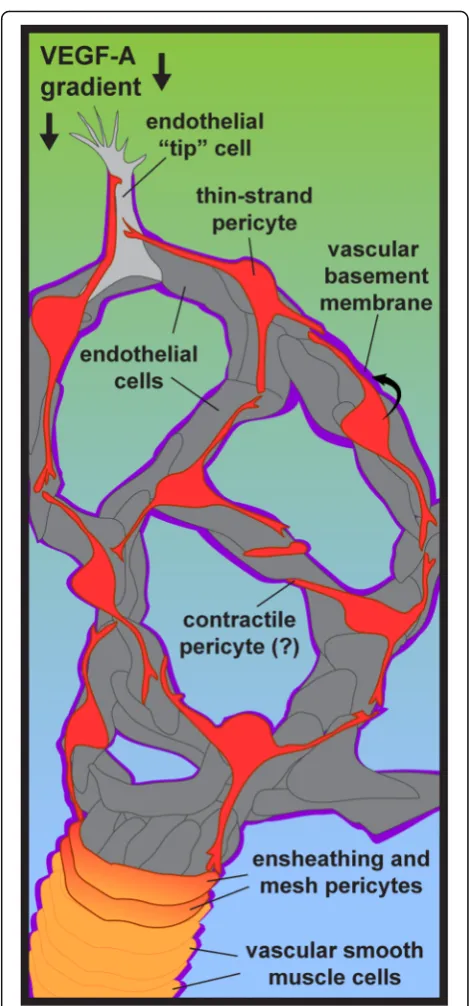
Pericytes extend along nearly every capillary within the
human body, making direct contact with the underlying
endothelium and embedded within the vascular
base-ment membrane (vBM). Rouget and Eberth are credited
with first distinguishing these cells from vSMCs by
not-ing their unique appearance [22–24]. Specifically,
peri-cytes were identified in perivascular locations but
elongated along capillaries, at microvessel branch points
and along microvascular segments resembling
“bump-s-on-a-log”
[25] (Fig.
1). Scanning electron microscopy
further confirmed their formation of
“peg-and-socket”
junctions with endothelial cells, and their presence
within the vBM, a specialized extracellular matrix
(ECM) that surrounds the vascular unit. Vascular
peri-cytes likely arise during embryonic development from
unique cellular niches that depend on the specific tissue
and organ. Nonetheless, neural crest and primordial
mesenchyme are frequently noted as giving rise to
peri-cytes [20,
26–28], with hematopoietic origins also being
described (though these may be present primarily during
angiogenesis and less so during vessel maturation) [29].
Pericytes depend heavily on platelet-derived growth
factor-BB (PDGF-BB) signaling for their recruitment and
retention along vessels [30–36]. They highly express
PDGF Receptor-β
(PDGFRβ), which is a useful cell
sur-face marker for identifying pericytes on capillary
branches within many tissues, though interpretation of
this signal must also include a consideration that vSMCs
and certain brain glia also express PDGFRβ
[33,
37,
38].
Neural glial antigen-2 (NG2, gene name:
chondroitin
sul-fate proteoglycan-4, Cspg4
) is also a helpful marker for
pericytes,
though
oligodendrocyte
precursor
cells
(OPCs) in the brain also express NG2/
Cspg4
[39–41].
Because of this overlap in marker expression, no single
marker, or even combination of markers, can be used to
specifically identify pericytes. Next-generation
sequen-cing and single-cell profiling techniques will likely yield
a more specific marker for pericytes [42–48], but
coup-ling marker expression with morphological features
cur-rently offers a high degree of confidence in identifying
microvascular pericytes [49].
As criteria for bona fide pericytes continue to
strengthen [50], it is becoming possible to identify
peri-cyte subtypes that correspond to their locations within
a microvascular network. Grant et al. for example
re-cently conducted a thorough analysis of microvessels in
the mouse brain using two-photon and confocal
im-aging in conjunction with tissue clearing techniques
[51]. The authors were able to classify pericytes into
three unique categories: 1- ensheathing pericytes (on
pre-capillary arterioles), 2- mesh pericytes [on
capillar-ies just downstream of ensheathing pericytes containing
α-smooth muscle actin (αSMA)], and 3- thin-strand
pericytes (on capillaries immediately adjacent to mesh
pericytes) (Fig.
1). Even within these subpopulations,
pericytes appear to maintain non-overlapping spatial
domains along the microvasculature. These potential
distinctions between pericyte subtypes suggest that
each subpopulation may play diverse roles within the
microcirculation in addition to a subset of common
functions [51–54]. Additional studies will be necessary
to determine if functional differences do indeed exist
among pericyte subtypes, as well as if these pericyte
subpopulations are present in other tissues and organs
beyond the brain [42]. Complementary imaging
ap-proaches will also be useful in characterizing potential
pericyte
subtypes.
Imaging
modalities
such
as
super-resolution microscopy, scanning electron
micros-copy (SEM) [55], and serial block face-SEM [56] can
capture ultra-structural details that are likely beyond
the resolution of optical microscopes but could be
im-portant in understanding the configuration of these
pericyte subtypes.
Continued advancement of pericyte-specific tools and
markers alongside next-generation imaging and
sequen-cing modalities will not only illuminate distinctions
be-tween pericyte subtypes, but will also offer more insight
into how pericytes differ from other cell types the reside
in perivascular locations. For instance, gross pericyte
morphology is well known to contrast with that of vSMCs,
which concentrically wrap around endothelial cells in a
configuration consistent with their primary role in
regulat-ing vascular tone. In spite of these and other distinctions,
pericytes have often been grouped together with vSMCs
and labeled as
“mural cells”
[57–59]. Pericytes may indeed
give rise to vSMCs as seen in the development of mouse
coronary arteries [60]. Distinct molecular signals such as
those
from
the
Notch
pathway
coordinate
this
pericyte-to-vSMC transition, but these cues do not appear
to be required for pericyte differentiation, recruitment, or
retention within the microcirculation [37,
61
–
64].
Peri-cytes have also been associated with and classified as
“perivascular fibroblasts”
[58], despite the fact that
fibro-blasts are rarely, if ever, embedded within the vBM as
peri-cytes are. Additionally, periperi-cytes have been described as
perivascular mesenchymal stem cells (MSCs) capable of
trans-differentiation and tissue regeneration [53,
65
–
70],
though
this
identity
may
be
context-
and/or
model-dependent [67,
71–80]. Therefore, as progress
con-tinues in developing markers and tools to identify
peri-cytes and distinguish them from other cell types,
microvascular bioengineering approaches will be able to
incorporate these essential cells to enhance our
under-standing of the microcirculation and to generate clinically
relevant, microvessel-focused therapies.
Pericyte function
Pericytes play a variety of important roles in the
devel-opment, maturation, and functionality of microvascular
networks. During the growth of new blood vessel from
pre-existing vessels, a process known as angiogenesis,
pericytes dynamically interact with endothelial
“tip”
cells
that sprout to form new branches [81–86]. We are just
beginning to understand pericyte-endothelial cell
cross-talk during sprouting angiogenesis, but what is clear is
that pericytes modulate the stability of newly formed
microvessel branches [87] and structurally maintain
ca-pillary diameter within an appropriate range [88,
89]
(Fig.
1). Pericytes also promote and sustain the integrity
of the microvessel wall by stimulating endothelial cell
junction formation [12–14], as discussed above. In the
brain, pericytes appear to provide a level of regulation
for the movement of solutes across the vessel wall
through transcytosis and vesicular transport [12].
Peri-cytes also regulate the composition of the blood vessel
wall by synthesizing and depositing specific elements
within the vBM [20,
88,
90,
91]. Fibronectin, vitronectin,
laminins, and Type IV collagen (Col-IV) are among the
extracellular matrix (ECM) components that pericytes
secrete into the microvessel wall [43,
92] (Fig.
1). In
addition to structural regulation of the capillary wall,
pericytes have been implicated in dynamic modulation
of microvessel tone and diameter, particularly in the
cen-tral nervous system (CNS) [26,
93–101]. Although
peri-cyte contractility remains an open question [94,
102],
recent observations of calcium fluctuations in brain
peri-cytes suggests that they participate at some level in
mechanisms coordinating blood flow regulation with
region-specific metabolic demand [52]. These diverse
roles for pericytes within the microcirculation
under-score their importance in maintaining tissue health by
promoting and sustaining microvessel stability, barrier
function, and perfusion.
proliferative diabetic retinopathy,
“pericyte dropout”
(and thus destabilization of the retina capillary wall) is
thought to be a key step in the progression of this
dis-order [103–105]. This loss of pericytes may occur
through apoptosis and cell death [106], but may also
re-sult from pericyte detachment and emigration away
from the microvessel wall [107,
108]. This mode of
peri-cyte loss has been implicated in other disease conditions
as well, notably idiopathic pulmonary fibrosis (IPL) [108]
and kidney fibrosis [109,
110], among others. In
patholo-gies of fibrosis, pericytes have been identified as major
producers of ECM components that exacerbate the
fi-brotic content of affected tissues and organs [65,
108–
112]. An emerging role for pericytes in certain
patho-logical states is their aberrant progression towards a
more highly contractile phenotype, as suggested by a
notable increase in expression of vasomotor proteins
such as
αSMA (i.e. hyper-muscularization). In a model
of defective col-IV synthesis, for example, pericytes have
been shown to acquire higher levels of
αSMA [113,
114],
as we have also seen in a model of perturbed oxygen
sensing [i.e. via mutations in the von Hippel-Lindau
(VHL) gene] [115]. Pathological pericyte
vasocontracti-lity may adversely affect blood flow within the
microcir-culation [93,
94,
96,
116] and undermine pressure
regulation, which could in turn increase the risk for
ves-sel rupture. Further investigation will be needed to
understand the underlying mechanisms that may
aber-rantly drive pericytes towards a contractile phenotype.
New insights into pericyte biology have emerged with
the recent flourish of interest regarding pericyte identity,
differentiation, and function within the microcirculation.
More detailed understanding of established functions as
well as novel roles are still being elucidated, inspiring
many thoughtful and comprehensive reviews [14,
19,
20,
25,
117–120]. Indeed, a wide range of intriguing
pericyte-focused studies have recently been contributed
to the scientific literature; space limitations however
pre-vent an exhaustive review of all of these interesting
dis-coveries. Nevertheless, in this review, we focus on the
importance of incorporating pericytes into engineered
microvascular constructs across a variety of platforms.
We give specific consideration to incorporating pericytes
(i) into bioengineered vessels for exploratory purposes
and for potential therapeutic applications, and (ii) into
computational models of vascular-specific processes.
Incorporating Pericytes into bioengineered
microvessels
The most simplified models of the blood vasculature are
often endothelial cell-based, mostly in 2D on cell culture
plastic and under static conditions. Human umbilical
vein endothelial cells (HUVECs) have served as a
pre-dominant source for the cell line utilized, though
additional sources have been developed including
micro-vascular endothelial cells. Embryonic stem cells (ESCs)
[121–124] as well as induced pluripotent stem cells
(iPSCs) [125] have also been used to generate
endothe-lial cells. These basic 2D models were further developed
in unique ways to address specific research questions.
Endothelial cells and differentiated ESCs and iPSCs have
been embedded in 3D matrixes such as Type I Collagen
(Col-I) [126,
127] or fibrinogen [128,
129] to investigate
vascular remodeling processes such as sprouting
angio-genesis and vessel lumen formation [130]. In 2D
plat-forms, endothelial cells have also been subjected to fluid
movement and shear stress by a variety of methods [8,
131–135]. These studies in particular ushered in
tremen-dous insight into the coupling between fluid mechanics
and endothelial cell biology, including concepts such as
endothelial mechano-transduction [136]. Fluidics
plat-forms recapitulating fluid flow across cells in initial
con-figurations were likely more comparable to scenarios of
larger diameter vessels. Capillary-like fluidic systems
however were relatively limited until the advent of
microfluidics technology.
For the models aiming to mimic the microvasculature,
incorporation of pericytes represents a logical next step
in building complexity and moving closer to modeling in
vivo microvessels. Several challenges exist in establishing
standard methods to isolate and culture purified
peri-cytes for in vitro use. Because pericyte markers overlap
with other cell types, selecting pericyte populations via
marker expression (i.e. for magnetic- or fluorescent
reporter-based sorting) can yield isolates that are
enriched but not necessarily pure. The same obstacles
limit validation approaches using certain markers in
ex-pression analysis by qRT-PCR and Western Blot, though
combinatorial approaches can be useful. An additional
challenge in validating pericyte identity in vitro is that
their cell fate plasticity may depend heavily on culture
conditions [80]. Given that pericyte functions are tightly
coupled to endothelial cell activities such as barrier
func-tion as well as angiogenic sprouting and remodeling [50,
137], validation strategies that rigorously test for these
key features of microvascular pericyte identity, even
ap-plied to commercially available cell lines, will bolster
confidence in techniques used for their isolation and
culture. Similar strategies may also need to be developed
for exploring the potential stem cell properties of
peri-cytes, which may exhibit broad plasticity after
dissoci-ation from the vessel wall.
contributions of both cell types to these processes.
Vessel-like structures form within these 3D in vitro
models via coalescence of cells into basic vascular
net-works (i.e. resembling in vivo vasculogenesis such as in
the yolk sac [139,
140]). Primitive vasculature in these
models can also arise through subsequent endothelial
cell sprouting and angiogenic remodeling as observed in
vivo in tissues such as the developing mouse retina [115,
141]. Although these 3D in vitro models cannot
recap-itulate all aspects of the corresponding in vivo scenarios
such as including blood flow, oxygen gradients, and the
full range of relevant cell types, coupling these models
with synthetic or naturally occurring ECM scaffolds
[142–144] may also shed light on disease-related
phe-nomena. Pericyte migration away from vessels, as seen
in diabetic retinopathy and IPL discussed above, has
been successfully modeled with such systems [108].
Incorporating pericytes into vascular fluid mechanics
models has been uniquely challenging. A distinct spatial
configuration is required for such a platform, that is,
po-sitioning endothelial cells only on the
“luminal”
side
while not exposing pericytes to fluid flow on the
“ablum-inal”
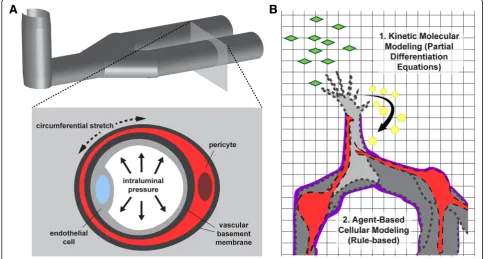
side. Thus, microfluidic approaches have offered a
viable means to create endothelialized micro-channels
(i.e. microvessel-like structures) [142,
145,
146] that can
be adapted to include pericytes alongside these channels
(Fig.
2a). Work from the labs of Steven George and
Chris Hughes has yielded one such microfluidics
plat-form that reproducibly develops perfused vessels and
al-lows incorporation of other cell types including pericytes
[147–149]. These types of bioengineered microvessels
can be further adapted and interrogated to better
under-stand the interface between the microcirculation and
cells in the surrounding parenchyma. Blood-brain barrier
models for example integrate brain astrocytes (either in
basic co-culture and in microfluidics devices) [9] to gain
insight into how this uniquely selective barrier is formed
and how certain pharmacological agents might
transi-ently disrupt it [10,
150]. Additionally, interactions
be-tween surrounding tumor cells and microvessels can be
explored in these models to explore effects of
chemo-therapeutic compounds, efficacy of drug delivery
vehi-cles such as nanopartivehi-cles [151,
152], and assessing
toxicity profiles for the microvasculature [147].
Bioengi-neered microvascular fluidics platforms offer tools to
better understand the microcirculation during formation
of microthrombi and acute pressure changes that might
lead to microvessel rupture [153], the risk for which may
vary according to pericyte investment. Mechanisms
underlying extravasation of leukocytes and perhaps even
metastatic tumor cells might also be addressed in these
constructs [148]. Pericytes and endothelial cells likely
coordinate the selective permeability of the microvessel
wall to allow cells to transmigrate from the lumen into
the interstitial space [21]. For instance, pericytes may
alter their connections with each other and the
endothe-lium, as well as the surrounding vBM, in conjunction
with endothelial cell remodeling of their cell-cell
junc-tions [17]. As these microfluidic systems continue to
evolve and grow in their utility, so will our insight into
the fundamental properties and functions of the
micro-vasculature in sustaining tissue health and in
contribut-ing to certain disease conditions [154].
A number of opportunities remain in fully optimizing
the design of microfluidic platforms to more faithfully
recapitulate the microcirculation. One major challenge is
that many vascular channels that form in fluidics devices
rarely remain at a diameter size that would be
consid-ered on the order of capillaries. Specifically, microvessel
diameters typically fall within a range of 3–10
μm, while
many microfluidic platforms operate at diameters larger
than 10
μm. In addition, the materials used in generating
these systems may limit the ability to incorporate
mul-tiple cell types along the microvessel wall. These
mate-rials may also affect the synthesis and deposition of
ECM proteins, causing further divergence from vBM
compositions found in vivo. Because the vBM derived
from pericytes and endothelial cells provide a level of
structural and mechanical integrity to the microvessel
wall, the cell-biomaterial interface becomes a very
im-portant parameter to optimize for strengthening
confi-dence in the observations made. This challenge is also
relevant in use of these models to understand how fluid
inside the vessel exerts specific forces on the vessel wall
beyond the shear stresses that impinge upon the
endo-thelium. Specifically, intraluminal
“blood”
pressure
cre-ates circumferential, radial, and axial wall stresses that
are counteracted by biological elements in vivo (i.e. cell
stress fibers, ECM components, etc.) (Fig.
2a). In
micro-fluidic devices, these forces might be absorbed by
syn-thetic elements in the system and may therefore prevent
endothelial cells and pericytes from adapting
physiolo-gically to their mechanical environment.
Recent technological advances in both biomaterials and
micro-fabrication techniques including bio-printing
cap-abilities are pushing microfluidic systems into an era of
enormous potential for modeling the microcirculation.
These bioengineered models will expand our
understand-ing of microvascular biology and how to use insight into
these
“
first principles
”
to guide development of clinically
relevant therapies for vascular-related pathologies. These
rapidly advancing bioengineered microvasculature systems
are not without critical limitations however. For example,
challenges remain in adequately accounting for key
differ-ences and potential heterogeneities in the diffusion barrier
of vessels relative to the cell types that may be close spatial
proximity to the vessel wall [155]. Work from Dr. Roger
Kamm and colleagues for instance demonstrated that
biochemical crosstalk with macrophages influences
endo-thelial barrier function and impacts tumor cell migration
dynamics, among other modulation of the vessel barrier
[155]. Incorporating vascular pericytes into these novel
bioengineered microvessel platforms will be an important
component of overcoming current technological hurdles,
which will usher in new insights into the complex biology
of the microcirculation that is relevant to tissue
engineer-ing applications [6], cancer immunotherapy [156,
157],
and beyond.
Computational modeling of microvascular
Pericytes
As our appreciation of biological complexity grows with
each new discovery, we must also develop tools and
methods to integrate those insights into working models
that will (i) enhance our understanding of biological
sys-tems at all levels, and (ii) generate new hypotheses to
test, yielding new discoveries and model refinement.
Computational modeling represents a primary example
of such a tool that facilitates synthesis of data sets and
observations from a wide range of experimental systems
[158]. In addition, properly validated computational
models can offer a means for exploring specific
pertur-bations that might be beyond what is feasibility in
ex-perimental models. The field of vascular biology has
benefited from the application of in silico models to a
variety of questions focused on the microcirculation.
Computer simulations have been developed for
sprout-ing angiogenesis [159–161] (Fig.
2b), systemic and
local-ized growth factor kinetics [162,
163], and microvascular
biomechanics [164], as well as for oxygen/nutrient
ex-change within tissue microcirculation [101,
165] and
drug delivery across the microvessel wall [166].
Endothe-lial cells have been the focus for many of these models,
but as we learn more about how pericytes influence
endothelial cell function (and vice versa), it will be
im-portant to build upon previous models and incorporate
the pericyte compartment into the parameter space, rule
sets, and governing algorithms.
Computational models of angiogenesis
for by specific equations [158] (Fig.
2b). This type of
modeling has been used to address the complexities of
Vascular Endothelial Growth Factor-A (VEGF-A)
signal-ing and crosstalk with the Delta-like 4 (Dll4)-Notch
pathway during angiogenic sprouting [16,
168–170],
among other signaling mechanisms. Recently, Ubezio et
al. utilized complementary experimental and
computa-tional models to demonstrate the importance of dynamic
fluctuations in endothelial Dll4 levels for normal blood
vessel growth [168]. It is becoming increasingly apparent
that vascular pericytes are present on, and track very
closely along, sprouting endothelial cells [83], suggesting
that these and other similar models might provide
add-itional insight into angiogenesis by considering the
po-tential involvement of pericytes.
The various roles that pericytes may play during
angiogenesis are still being elucidated. Sprouting
endo-thelial cells are known to secrete PDGF-BB [171], to
which pericytes respond by maintaining close proximity
to these outwardly migrating cells. Because of their
proximate location to endothelial sprouts, pericytes are
likely capable of directly or indirectly influencing Notch
signals exchanged by endothelial
“tip”
and
“stalk”
cells
[83]. Pericytes may also provide feedback regulation of
angiogenic sprouting by a variety of other mechanisms.
For instance, pericytes secrete Angiopoietin-1 (Angpt1)
that binds Tie2 on the endothelium to stabilize
micro-vessels, attenuate vascular remodeling and permeability,
and induce quiescence [172]. Pericytes have also been
proposed to regulate VEGF-A signaling via synthesis of
VEGF-A receptors [173,
174], but this role may be
context-dependent as observations from a range of
models suggest that pericytes produce little, if any, of
the known VEGF receptors [43–46,
175–179]. In
addition to pro- and anti-angiogenic signaling
regula-tion, pericytes also make unique contributions to the
ECM at the pericyte-endothelial cell interface as well as
surrounding developing vessels, i.e. the vBM [43,
90].
These ECM components such as fibronectin, collagens
and laminins provide structural stability for nascent
ves-sels [126], and are also known to retain and present
growth factors that modulate angiogenesis [30,
31,
180].
Our collective understanding of these and emerging
modes of pericyte involvement in angiogenesis is still
expanding, and as it does, it will be useful to integrate
these molecular mechanisms and cellular behaviors into
new and existing computational models of angiogenesis
to gain even more insight into how endothelial cells and
pericytes coordinate the formation of new blood vessels.
Mathematical approaches to growth factor kinetics
In contrast to the models described above that capture
the localized growth factor effects, in silico models have
also been developed to describe the systemic distribution
and effects of soluble growth factors and their receptors.
Kinetics of the VEGF-A pathway for example have been
implemented in computational models, giving
predica-tions for VEGF-A concentrapredica-tions in the blood as well as
for levels of soluble VEGF-A receptors such as soluble
Flt-1 (sFlt-1/sVEGFR1) [162,
163]. These models require
a precise accounting of all sources of both VEGF-A
li-gands as well as VEGF-A receptors. For this reason,
studies implicating pericytes as potential sources of
VEGF-A ligand and/or its receptors [173,
174] are
im-portant to validate and further establish the extent to
which these potential pericyte sources of VEGF-A
li-gands and receptors are functionally relevant [57].
Simi-lar analysis is likely warranted for other signaling
pathways related to pericyte function, such as the
PDGF-BB pathway. Soluble isoforms of PDGFRβ
have
been described in several contexts [137,
181] including
the developing brain [182], which may be able to diffuse
into the systemic circulation and exert effects more
broadly. Computational platforms that can simulate both
local and systemic PDGF-PDGFRβ
dynamics will be
es-sential for understanding how pericytes might respond
to both near-field and circulating cues.
Microvascular biomechanics
Studies exploring the effects of biomechanical cues on
the microcirculation have largely focused on shear
stresses from blood flowing along the apical surface of
the endothelium [8,
131–135]. As mentioned above,
intraluminal blood pressure also exerts forces on the
microvessel wall, namely circumferential, radial, and
axial wall stresses [135]. Pericytes within the vessel wall
certainly experience these mechanical inputs and likely
respond in specific ways such as contracting [183] or
perhaps increasing ECM deposition into the vBM.
Con-firmation that pericytes contribute to vessel wall
compli-ance in response to intraluminal pressure was provided
recently by studies in which pericytes were selectively
ablated [19,
184]. In microvessel regions void of pericyte
investment, capillary diameters passively increased until
a pericyte extension restored coverage in these areas
[184]. These observations support the idea that pericytes
contribute to the mechanical properties and structural
integrity of the microvessel wall, and should therefore be
included in computational models focused on capillary
biomechanics during both angiogenic remodeling and
microvascular homeostasis.
Microcirculation transport modeling
addressed by recent methodological advances [35,
101,
186]. Complementing the development of experimental
approaches, computational methods have been used to
predict solute exchange throughout microvascular
net-works [187]. These approaches are essential to
under-standing how physiological and pathological changes in
the microvessel wall, including in the pericyte
compart-ment and with their associated ECM, can affect
distribu-tion of nutrients and oxygen within a tissue. Sweeney et
al. recently developed a mathematical model that also
captured pericyte contributions to cerebral blood flow
regulation by acting primarily as signaling conduits to
activate vSMCs upstream [101]. Dynamic imaging of the
mouse cortical microvasculature provided corresponding
experimental observations in support of this model,
demonstrating the utility of combining high-power
im-aging modalities with rigorous computational methods.
Similar approaches focused on drug delivery applications
can provide insight into how these vehicles might be
de-signed for optimal transfer within the microcirculation
[151]. Given the importance of pericyte contributions to
the microvessel wall, and perhaps in regulating
endothe-lial uptake and transcytosis [12], it will be important to
integrate pericytes into these models to better predict
how certain drugs cross from the bloodstream into
sur-rounding tissues.
Conclusions
As transcriptional profiling and high-resolution imaging
technologies continue to advance at an exciting pace, so
too will our understanding of pericytes and their
import-ant contributions to the microvasculature. New insights
will allow us to effectively incorporate pericytes into in
vitro and in silico bioengineered constructs and more
faithfully replicate essential features of in vivo
micro-vascular networks. These novel platforms will facilitate
testing new therapeutic approaches to enhancing
micro-vascular growth in clinically relevant scenarios. They will
also strengthen our ability to screen new and existing
drug compounds for intentional and unexpected effects
on the microcirculation [188], and specifically on
micro-vascular pericytes [149]. For example, drugs given to
myocardial infarction or stroke patients to induce
vaso-dilation and restore tissue perfusion might actually have
deleterious effects on pericytes, directly or indirectly
(e.g. reperfusion injury), and contribute to
“no reflow”
within capillary networks [93,
96,
189,
190]. Cell-based
therapies harnessing iPSC technology and the like can
also be evaluated in these pre-clinical models,
accelerat-ing the translation of basic discoveries into medical
solu-tions. It is therefore imperative to continue sharpening
our knowledge of pericytes, uncovering their potential as
drug targets as well as increasing the fidelity of
bioengi-neered microvascular constructs.
Abbreviations
ABM:Agent-Based Model; CNS: Central Nervous System; Col-I: Type I Collagen; Col-IV: Type IV Collagen; Dll4: Delta-Like 4; ECM: Extracellular Matrix; ESC: Embryonic Stem Cell; HUVEC: Human Umbilical Vein Endothelial Cell; IPL: Idiopathic Pulmonary Fibrosis; iPSC: Induced Pluripotent Stem Cell; MSC: Mesenchymal Stem Cell; NG2: Neural Glial Antigen-2;
OPC: Oligodendrocyte Precursor Cell; PDGF-BB: Platelet-Derived Growth Factor-BB; PDGFRβ: Platelet-Derived Growth Factor Receptor-β;
SEM: Scanning Electron Microscopy; vBM: Vascular Basement Membrane; VE-Cadherin: Vascular Endothelial Cadherin; VEGF-A: Vascular Endothelial Growth Factor-A; VEGFR1: Vascular Endothelial Growth Factor Receptor-1; VHL: Von Hippel-Lindau; vSMC: Vascular Smooth Muscle Cell;; ZO-1: Zona Occludins-1;
αSMA:α-Smooth Muscle Actin
Acknowledgements
We thank Chappell Lab members for critical and extensive discussions of published data and important concepts in the field.
Funding
This review was supported by the National Institutes of Health (R00HL105779 and R56HL133826 to JCC) and the National Science Foundation (CAREER Award, Proposal # 1752339 to JCC).
Availability of data and materials Not applicable.
Authors’contributions
HZ collected references, formulated a detailed outline, and edited the review. JCC wrote and edited the manuscript. Both authors read and approved the final manuscript.
Ethics approval and consent to participate Not applicable.
Consent for publication Not applicable.
Competing interests
The authors declare that they have no competing interests.
Publisher
’
s Note
Springer Nature remains neutral with regard to jurisdictional claims in published maps and institutional affiliations.
Author details
1Center for Heart and Reparative Medicine, Fralin Biomedical Research Institute, 2 Riverside Circle, Roanoke, VA 24016, USA.2Department of Biomedical Engineering and Mechanics, Virginia Polytechnic State Institute and State University, Blacksburg, VA 24061, USA.3Department of Basic Science Education, Virginia Tech Carilion School of Medicine, Roanoke, VA 24016, USA.
Received: 3 December 2018 Accepted: 15 March 2019
References
1. Potente M, Gerhardt H, Carmeliet P. Basic and therapeutic aspects of angiogenesis. Cell. 2011;146(6):873–87.
2. Carmeliet P. Angiogenesis in life, disease and medicine. Nature. 2005; 438(7070):932–6.
3. Majesky MW, Dong XR, Regan JN, Hoglund VJ. Vascular smooth muscle progenitor cells: building and repairing blood vessels. Circ Res. 2011;108(3): 365–77.
4. Larrivee B, Freitas C, Suchting S, Brunet I, Eichmann A. Guidance of vascular development: lessons from the nervous system. Circ Res. 2009;104(4):428–41. 5. Leslie-Barbick JE, Saik JE, Gould DJ, Dickinson ME, West JL. The promotion of
microvasculature formation in poly(ethylene glycol) diacrylate hydrogels by an immobilized VEGF-mimetic peptide. Biomaterials. 2011;32:5782–9. 6. Campagnolo P, Gormley AJ, Chow LW, Guex AG, Parmar PA, Puetzer JL, et
7. von Bornstadt D, Wang H, Paulsen MJ, Goldstone AB, Eskandari A, Thakore A, et al. Rapid self-assembly of bioengineered cardiovascular bypass grafts from scaffold-stabilized, tubular bilevel cell sheets. Circulation. 2018;138(19): 2130–44.
8. La A, Tranquillo RT. Shear conditioning of adipose stem cells for reduced platelet binding to engineered vascular grafts. Tissue Eng Part A. 2018; 24(15–16):1242–50.
9. Gastfriend BD, Palecek SP, Shusta EV. Modeling the blood-brain barrier: beyond the endothelial cells. Curr Opin Biomed Eng. 2018;5:6–12. 10. Jamieson JJ, Searson PC, Gerecht S. Engineering the human blood-brain
barrier in vitro. J Biol Eng. 2017;11:37.
11. Zhao Z, Nelson AR, Betsholtz C, Zlokovic BV. Establishment and dysfunction of the blood-brain barrier. Cell. 2015;163(5):1064–78.
12. Armulik A, Genove G, Mae M, Nisancioglu MH, Wallgard E, Niaudet C, et al. Pericytes regulate the blood-brain barrier. Nature. 2010;468(7323):557–61. 13. Daneman R, Zhou L, Kebede AA, Barres BA. Pericytes are required for
blood-brain barrier integrity during embryogenesis. Nature. 2010;468(7323):562–6. 14. Balabanov R, Dore-Duffy P. Role of the CNS microvascular pericyte in the
blood-brain barrier. J Neurosci Res. 1998;53(6):637–44.
15. Barry DM, Xu K, Meadows SM, Zheng Y, Norden PR, Davis GE, et al. Cdc42 is required for cytoskeletal support of endothelial cell adhesion during blood vessel formation in mice. Development. 2015;142(17):3058–70.
16. Bentley K, Franco CA, Philippides A, Blanco R, Dierkes M, Gebala V, et al. The role of differential VE-cadherin dynamics in cell rearrangement during angiogenesis. Nat Cell Biol. 2014;16(4):309–21.
17. Wessel F, Winderlich M, Holm M, Frye M, Rivera-Galdos R, Vockel M, et al. Leukocyte extravasation and vascular permeability are each controlled in vivo by different tyrosine residues of VE-cadherin. Nat Immunol. 2014;15(3): 223–30.
18. Winderlich M, Keller L, Cagna G, Broermann A, Kamenyeva O, Kiefer F, et al. VE-PTP controls blood vessel development by balancing Tie-2 activity. J Cell Biol. 2009;185(4):657–71.
19. Berthiaume AA, Hartmann DA, Majesky MW, Bhat NR, Shih AY. Pericyte structural remodeling in cerebrovascular health and homeostasis. Front Aging Neurosci. 2018;10:210.
20. Trost A, Lange S, Schroedl F, Bruckner D, Motloch KA, Bogner B, et al. Brain and retinal pericytes: origin, function and role. Front Cell Neurosci. 2016;10:20. 21. Hurtado-Alvarado G, Cabanas-Morales AM, Gomez-Gonzalez B. Pericytes:
brain-immune interface modulators. Front Integr Neurosci. 2014;7:80. 22. Sims DE. The pericyte--a review. Tissue Cell. 1986;18(2):153–74. 23. Rouget C. Memoire sur le developpement, la structure et les proprietes
physiologiques des capillaires sanguins. Archives Physiol Normale Pathol. 1873;5:603–61.
24. Eberth CJ. Handbuch der-Lehre von den Gewebwn des Menschen und der Tiere, vol. 1. Leipzig: Engelmann; 1871.
25. Armulik A, Genove G, Betsholtz C. Pericytes: developmental, physiological, and pathological perspectives, problems, and promises. Dev Cell. 2011;21(2):193–215. 26. Alarcon-Martinez L, Yilmaz-Ozcan S, Yemisci M, Schallek J, Kilic K, Can A, et
al. Capillary pericytes express alpha-smooth muscle actin, which requires prevention of filamentous-actin depolymerization for detection. Elife. 2018;7.
https://doi.org/10.7554/eLife.34861.
27. Trost A, Schroedl F, Lange S, Rivera FJ, Tempfer H, Korntner S, et al. Neural crest origin of retinal and choroidal pericytes. Invest Ophthalmol Vis Sci. 2013;54(13):7910–21.
28. Korn J, Christ B, Kurz H. Neuroectodermal origin of brain pericytes and vascular smooth muscle cells. J Comp Neurol. 2002;442(1):78–88. 29. Blocki A, Beyer S, Jung F, Raghunath M. The controversial origin of pericytes
during angiogenesis - implications for cell-based therapeutic angiogenesis and cell-based therapies. Clin Hemorheol Microcirc. 2018;69(1–2):215–32. 30. Abramsson A, Kurup S, Busse M, Yamada S, Lindblom P, Schallmeiner E, et
al. Defective N-sulfation of heparan sulfate proteoglycans limits PDGF-BB binding and pericyte recruitment in vascular development. Genes Dev. 2007;21(3):316–31.
31. Lindblom P, Gerhardt H, Liebner S, Abramsson A, Enge M, Hellstrom M, et al. Endothelial PDGF-B retention is required for proper investment of pericytes in the microvessel wall. Genes Dev. 2003;17(15):1835–40. 32. Abramsson A, Lindblom P, Betsholtz C. Endothelial and nonendothelial
sources of PDGF-B regulate pericyte recruitment and influence vascular pattern formation in tumors. J Clin Invest. 2003;112(8):1142–51. 33. Hellstrom M, Kalen M, Lindahl P, Abramsson A, Betsholtz C. Role of PDGF-B and
PDGFR-beta in recruitment of vascular smooth muscle cells and pericytes during
embryonic blood vessel formation in the mouse. Development. 1999;126(14): 3047–55.
34. Lindahl P, Johansson BR, Leveen P, Betsholtz C. Pericyte loss and microaneurysm formation in PDGF-B-deficient mice. Science. 1997; 277(5323):242–5.
35. Kisler K, Nelson AR, Rege SV, Ramanathan A, Wang Y, Ahuja A, Lazic D, Tsai PS, Zhao Z, Zhou Y, Boas DA, SakadžićS, Zlokovic BV. Pericyte degeneration leads to neurovascular uncoupling and limits oxygen supply to brain. Nat Neurosci. 2017;20(3):406–16.https://doi.org/10.1038/nn.4489Epub 2017 Jan 30 36. Bell RD, Winkler EA, Sagare AP, Singh I, LaRue B, Deane R, et al. Pericytes control
key neurovascular functions and neuronal phenotype in the adult brain and during brain aging. Neuron. 2010;68(3):409–27.
37. Jin S, Hansson EM, Tikka S, Lanner F, Sahlgren C, Farnebo F, et al. Notch signaling regulates platelet-derived growth factor receptor-beta expression in vascular smooth muscle cells. Circ Res. 2008;102(12):1483–91.
38. Cuervo H, Pereira B, Nadeem T, Lin M, Lee F, Kitajewski J, et al. PDGFRbeta-P2A-CreER(T2) mice: a genetic tool to target pericytes in angiogenesis.
Angiogenesis. 2017;20(4):655–62.
39. Trotter J, Karram K, Nishiyama A. NG2 cells: properties, progeny and origin. Brain Res Rev. 2010;63(1–2):72–82.
40. Zhu X, Bergles DE, Nishiyama A. NG2 cells generate both oligodendrocytes and gray matter astrocytes. Development. 2008;135(1):145–57.
41. Murfee WL, Rehorn MR, Peirce SM, Skalak TC. Perivascular cells along venules upregulate NG2 expression during microvascular remodeling. Microcirculation. 2006;13(3):261–73.
42. Vanlandewijck M, He L, Mae MA, Andrae J, Ando K, Del Gaudio F, et al. A molecular atlas of cell types and zonation in the brain vasculature. Nature. 2018;554(7693):475–80.
43. He L, Vanlandewijck M, Raschperger E, Andaloussi Mae M, Jung B, Lebouvier T, et al. Analysis of the brain mural cell transcriptome. Sci Rep. 2016;6:35108. 44. Hrvatin S, Hochbaum DR, Nagy MA, Cicconet M, Robertson K, Cheadle L, et
al. Single-cell analysis of experience-dependent transcriptomic states in the mouse visual cortex. Nat Neurosci. 2018;21(1):120–9.
45. Zeisel A, Hochgerner H, Lonnerberg P, Johnsson A, Memic F, van der Zwan J, et al. Molecular architecture of the mouse nervous system. Cell. 2018;174(4): 999–1014 e22.
46. Daneman R, Zhou L, Agalliu D, Cahoy JD, Kaushal A, Barres BA. The mouse blood-brain barrier transcriptome: a new resource for understanding the development and function of brain endothelial cells. PLoS One. 2010;5(10): e13741.
47. Zhang Y, Chen K, Sloan SA, Bennett ML, Scholze AR, O'Keeffe S, et al. An RNA-sequencing transcriptome and splicing database of glia, neurons, and vascular cells of the cerebral cortex. J Neurosci. 2014;34(36):11929–47. 48. He L, Vanlandewijck M, Mae MA, Andrae J, Ando K, Del Gaudio F, et al. Single-cell
RNA sequencing of mouse brain and lung vascular and vessel-associated cell types. Sci Data. 2018;5:180160.
49. Jung B, Arnold TD, Raschperger E, Gaengel K, Betsholtz C. Visualization of vascular mural cells in developing brain using genetically labeled transgenic reporter mice. J Cereb Blood Flow Metab. 2018;38(3):456–68.
50. Zhao H, Darden J, Chappell JC. Establishment and Characterization of an Embryonic Pericyte Cell Line. Microcirculation. 2018:e12461.https://doi.org/10. 1111/micc.12461.
51. Grant RI, Hartmann DA, Underly RG, Berthiaume AA, Bhat NR, Shih AY. Organizational hierarchy and structural diversity of microvascular pericytes in adult mouse cortex. J Cereb Blood Flow Metab. 2017.https://doi.org/10. 1177/0271678X17732229.
52. Rungta RL, Chaigneau E, Osmanski BF, Charpak S. Vascular
compartmentalization of functional hyperemia from the synapse to the pia. Neuron. 2018;99(2):362–75 e4.
53. Birbrair A, Zhang T, Files DC, Mannava S, Smith T, Wang ZM, et al. Type-1 pericytes accumulate after tissue injury and produce collagen in an organ-dependent manner. Stem Cell Res Ther. 2014;5(6):122.
54. Birbrair A, Zhang T, Wang ZM, Messi ML, Olson JD, Mintz A, et al. Type-2 pericytes participate in normal and tumoral angiogenesis. Am J Physiol Cell Physiol. 2014;307(1):C25–38.
55. Egginton S, Hudlicka O, Brown MD, Graciotti L, Granata AL. In vivo pericyte-endothelial cell interaction during angiogenesis in adult cardiac and skeletal muscle. Microvasc Res. 1996;51(2):213–28.
57. Evensen L, Micklem DR, Blois A, Berge SV, Aarsaether N, Littlewood-Evans A, et al. Mural cell associated VEGF is required for organotypic vessel formation. PLoS One. 2009;4(6):e5798.
58. Greenberg JI, Shields DJ, Barillas SG, Acevedo LM, Murphy E, Huang J, et al. A role for VEGF as a negative regulator of pericyte function and vessel maturation. Nature. 2008;456(7223):809–13.
59. Liu H, Zhang W, Lilly B. Evaluation of Notch3 deficiency in diabetes-induced Pericyte loss in the retina. J Vasc Res. 2018;55(5):308–18.
60. Volz KS, Jacobs AH, Chen HI, Poduri A, McKay AS, Riordan DP, et al. Pericytes are progenitors for coronary artery smooth muscle. Elife. 2015;4.https://doi. org/10.7554/eLife.10036.
61. High FA, Lu MM, Pear WS, Loomes KM, Kaestner KH, Epstein JA. Endothelial expression of the notch ligand Jagged1 is required for vascular smooth muscle development. Proc Natl Acad Sci U S A. 2008;105(6):1955–9. 62. Kofler NM, Cuervo H, Uh MK, Murtomaki A, Kitajewski J. Combined
deficiency of Notch1 and Notch3 causes pericyte dysfunction, models CADASIL, and results in arteriovenous malformations. Sci Rep. 2015;5:16449. 63. Liu H, Kennard S, Lilly B. NOTCH3 expression is induced in mural cells
through an autoregulatory loop that requires endothelial-expressed JAGGED1. Circ Res. 2009;104(4):466–75.
64. Domenga V, Fardoux P, Lacombe P, Monet M, Maciazek J, Krebs LT, et al. Notch3 is required for arterial identity and maturation of vascular smooth muscle cells. Genes Dev. 2004;18(22):2730–5.
65. Birbrair A, Zhang T, Wang ZM, Messi ML, Mintz A, Delbono O. Pericytes at the intersection between tissue regeneration and pathology. Clin Sci (Lond). 2015;128(2):81–93.
66. Birbrair A, Zhang T, Wang ZM, Messi ML, Enikolopov GN, Mintz A, et al. Role of pericytes in skeletal muscle regeneration and fat accumulation. Stem Cells Dev. 2013;22(16):2298–314.
67. Crisan M, Yap S, Casteilla L, Chen CW, Corselli M, Park TS, et al. A perivascular origin for mesenchymal stem cells in multiple human organs. Cell Stem Cell. 2008;3(3):301–13.
68. Caplan AI. All MSCs are pericytes? Cell Stem Cell. 2008;3(3):229–30. 69. Caplan AI. Adult mesenchymal stem cells for tissue engineering versus
regenerative medicine. J Cell Physiol. 2007;213(2):341–7.
70. Diaz-Flores L, Gutierrez R, Madrid JF, Varela H, Valladares F, Acosta E, et al. Pericytes. Morphofunction, interactions and pathology in a quiescent and activated mesenchymal cell niche. Histol Histopathol. 2009;24(7):909–69. 71. Davidoff MS, Middendorff R, Enikolopov G, Riethmacher D, Holstein AF,
Muller D. Progenitor cells of the testosterone-producing Leydig cells revealed. J Cell Biol. 2004;167(5):935–44.
72. Crisan M, Deasy B, Gavina M, Zheng B, Huard J, Lazzari L, et al. Purification and long-term culture of multipotent progenitor cells affiliated with the walls of human blood vessels: myoendothelial cells and pericytes. Methods Cell Biol. 2008;86:295–309.
73. Feng J, Mantesso A, De Bari C, Nishiyama A, Sharpe PT. Dual origin of mesenchymal stem cells contributing to organ growth and repair. Proc Natl Acad Sci U S A. 2011;108(16):6503–8.
74. Olson LE, Soriano P. PDGFRbeta signaling regulates mural cell plasticity and inhibits fat development. Dev Cell. 2011;20(6):815–26.
75. Tang W, Zeve D, Suh JM, Bosnakovski D, Kyba M, Hammer RE, et al. White fat progenitor cells reside in the adipose vasculature. Science. 2008; 322(5901):583–6.
76. Dore-Duffy P, Katychev A, Wang X, Van Buren E. CNS microvascular pericytes exhibit multipotential stem cell activity. J Cereb Blood Flow Metab. 2006;26(5):613–24.
77. Dellavalle A, Sampaolesi M, Tonlorenzi R, Tagliafico E, Sacchetti B, Perani L, et al. Pericytes of human skeletal muscle are myogenic precursors distinct from satellite cells. Nat Cell Biol. 2007;9(3):255–67.
78. Paquet-Fifield S, Schluter H, Li A, Aitken T, Gangatirkar P, Blashki D, et al. A role for pericytes as microenvironmental regulators of human skin tissue regeneration. J Clin Invest. 2009;119(9):2795–806.
79. Yianni V, Sharpe PT. Molecular programming of perivascular stem cell precursors. Stem Cells. 2018.https://doi.org/10.1002/stem.2895.
80. Guimaraes-Camboa N, Cattaneo P, Sun Y, Moore-Morris T, Gu Y, Dalton ND, et al. Pericytes of multiple organs do not behave as mesenchymal stem cells in vivo. Cell Stem Cell. 2017;20(3):345–59 e5.
81. Ozerdem U, Stallcup WB. Early contribution of pericytes to angiogenic sprouting and tube formation. Angiogenesis. 2003;6(3):241–9. 82. Chang WG, Andrejecsk JW, Kluger MS, Saltzman WM, Pober JS. Pericytes
modulate endothelial sprouting. Cardiovasc Res. 2013;100(3):492–500.
83. Walpole J, Gabhann FM, Peirce SM, Chappell JC. Agent-based Computational Model of Retinal Angiogenesis Simulates Microvascular Network Morphology as a Function of Pericyte Coverage. Microcirculation. 2017.https://doi.org/10.1111/ micc.12393.
84. Eglinger J, Karsjens H, Lammert E. Quantitative assessment of angiogenesis and pericyte coverage in human cell-derived vascular sprouts. Inflamm Regen. 2017;37(1):2.
85. Seynhaeve ALB, Oostinga D, van Haperen R, Eilken HM, Adams S, Adams RH, et al. Spatiotemporal endothelial cell - pericyte association in tumors as shown by high resolution 4D intravital imaging. Sci Rep. 2018;8(1):9596. 86. Jakobsson L, Kreuger J, Claesson-Welsh L. Building blood vessels--stem cell
models in vascular biology. J Cell Biol. 2007;177(5):751–5.
87. Simonavicius N, Ashenden M, van Weverwijk A, Lax S, Huso DL, Buckley CD, et al. Pericytes promote selective vessel regression to regulate vascular patterning. Blood. 2012;120(7):1516–27.
88. Stratman AN, Malotte KM, Mahan RD, Davis MJ, Davis GE. Pericyte recruitment during vasculogenic tube assembly stimulates endothelial basement membrane matrix formation. Blood. 2009;114(24):5091–101. 89. Hellstrom M, Gerhardt H, Kalen M, Li X, Eriksson U, Wolburg H, et al. Lack of
pericytes leads to endothelial hyperplasia and abnormal vascular morphogenesis. J Cell Biol. 2001;153(3):543–53.
90. Sava P, Cook IO, Mahal RS, Gonzalez AL. Human microvascular pericyte basement membrane remodeling regulates neutrophil recruitment. Microcirculation. 2015;22(1):54–67.
91. Courtoy PJ, Boyles J. Fibronectin in the microvasculature: localization in the pericyte-endothelial interstitium. J Ultrastruct Res. 1983;83(3):258–73. 92. Mandarino LJ, Sundarraj N, Finlayson J, Hassell HR. Regulation of fibronectin
and laminin synthesis by retinal capillary endothelial cells and pericytes in vitro. Exp Eye Res. 1993;57(5):609–21.
93. O'Farrell FM, Mastitskaya S, Hammond-Haley M, Freitas F, Wah WR, Attwell D. Capillary pericytes mediate coronary no-reflow after myocardial ischaemia. Elife. 2017;6.https://doi.org/10.7554/eLife.29280.
94. Hall CN, Reynell C, Gesslein B, Hamilton NB, Mishra A, Sutherland BA, et al. Capillary pericytes regulate cerebral blood flow in health and disease. Nature. 2014;508(7494):55–60.
95. Mishra A, O'Farrell FM, Reynell C, Hamilton NB, Hall CN, Attwell D. Imaging pericytes and capillary diameter in brain slices and isolated retinae. Nat Protoc. 2014;9(2):323–36.
96. O'Farrell FM, Attwell D. A role for pericytes in coronary no-reflow. Nat Rev Cardiol. 2014;11(7):427–32.
97. Hamilton NB, Attwell D, Hall CN. Pericyte-mediated regulation of capillary diameter: a component of neurovascular coupling in health and disease. Front Neuroenerg. 2010;2.https://doi.org/10.3389/fnene.2010.00005. 98. Peppiatt CM, Howarth C, Mobbs P, Attwell D. Bidirectional control of CNS
capillary diameter by pericytes. Nature. 2006;443(7112):700–4. 99. Hillman EM. Coupling mechanism and significance of the BOLD signal: a
status report. Annu Rev Neurosci. 2014;37:161–81.
100. Fernandez-Klett F, Offenhauser N, Dirnagl U, Priller J, Lindauer U. Pericytes in capillaries are contractile in vivo, but arterioles mediate functional hyperemia in the mouse brain. Proc Natl Acad Sci U S A. 2010;107(51):22290–5.
101. Sweeney PW, Walker-Samuel S, Shipley RJ. Insights into cerebral haemodynamics and oxygenation utilising in vivo mural cell imaging and mathematical modelling. Sci Rep. 2018;8(1):1373.
102. Hill RA, Tong L, Yuan P, Murikinati S, Gupta S, Grutzendler J. Regional blood flow in the Normal and ischemic brain is controlled by arteriolar smooth muscle cell contractility and not by capillary Pericytes. Neuron. 2015;87(1):95–110. 103. Antonetti DA, Klein R, Gardner TW. Diabetic retinopathy. N Engl J Med.
2012;366(13):1227–39.
104. Valdez CN, Arboleda-Velasquez JF, Amarnani DS, Kim LA, D'Amore PA. Retinal microangiopathy in a mouse model of inducible mural cell loss. Am J Pathol. 2014;184(10):2618–26.
105. Mendel TA, Clabough EB, Kao DS, Demidova-Rice TN, Durham JT, Zotter BC, et al. Pericytes derived from adipose-derived stem cells protect against retinal vasculopathy. PLoS One. 2013;8(5):e65691.
106. Geraldes P, Hiraoka-Yamamoto J, Matsumoto M, Clermont A, Leitges M, Marette A, et al. Activation of PKC-delta and SHP-1 by hyperglycemia causes vascular cell apoptosis and diabetic retinopathy. Nat Med. 2009;15(11):1298–306.
108. Sava P, Ramanathan A, Dobronyi A, Peng X, Sun H, Ledesma-Mendoza A, et al. Human pericytes adopt myofibroblast properties in the
microenvironment of the IPF lung. JCI Insight. 2017;2(24).https://doi.org/10. 1172/jci.insight.96352.
109. Stefanska A, Eng D, Kaverina N, Duffield JS, Pippin JW, Rabinovitch P, et al. Interstitial pericytes decrease in aged mouse kidneys. Aging (Albany NY). 2015; 7(6):370–82.
110. Lin SL, Kisseleva T, Brenner DA, Duffield JS. Pericytes and perivascular fibroblasts are the primary source of collagen-producing cells in obstructive fibrosis of the kidney. Am J Pathol. 2008;173(6):1617–27.
111. Rock JR, Barkauskas CE, Cronce MJ, Xue Y, Harris JR, Liang J, et al. Multiple stromal populations contribute to pulmonary fibrosis without evidence for epithelial to mesenchymal transition. Proc Natl Acad Sci U S A. 2011;108(52): E1475–83.
112. Suzuma K, Naruse K, Suzuma I, Takahara N, Ueki K, Aiello LP, et al. Vascular endothelial growth factor induces expression of connective tissue growth factor via KDR, Flt1, and phosphatidylinositol 3-kinase-akt-dependent pathways in retinal vascular cells. J Biol Chem. 2000;275(52):40725–31. 113. Joutel A, Faraci FM. Cerebral small vessel disease: insights and opportunities
from mouse models of collagen IV-related small vessel disease and cerebral autosomal dominant arteriopathy with subcortical infarcts and
leukoencephalopathy. Stroke. 2014;45(4):1215–21.
114. Ratelade J, Mezouar N, Domenga-Denier V, Rochey A, Plaisier E, Joutel A. Severity of arterial defects in the retina correlates with the burden of intracerebral haemorrhage in COL4A1-related stroke. J Pathol. 2018;244(4):408–20.
115. Arreola A, Payne LB, Julian MH, de Cubas AA, Daniels AB, Taylor S, et al. Von Hippel-Lindau mutations disrupt vascular patterning and maturation via Notch. JCI Insight. 2018;3(4).https://doi.org/10.1172/jci.insight.92193. 116. Li Y, Lucas-Osma AM, Black S, Bandet MV, Stephens MJ, Vavrek R, et al.
Pericytes impair capillary blood flow and motor function after chronic spinal cord injury. Nat Med. 2017;23(6):733–41.
117. Winkler EA, Bell RD, Zlokovic BV. Central nervous system pericytes in health and disease. Nat Neurosci. 2011;14(11):1398–405.
118. Kelly-Goss MR, Sweat RS, Stapor PC, Peirce SM, Murfee WL. Targeting pericytes for angiogenic therapies. Microcirculation. 2014;21(4):345–57. 119. Armulik A, Abramsson A, Betsholtz C. Endothelial/pericyte interactions. Circ
Res. 2005;97(6):512–23.
120. Gerhardt H, Betsholtz C. Endothelial-pericyte interactions in angiogenesis. Cell Tissue Res. 2003;314(1):15–23.
121. Chappell JC, Cluceru JG, Nesmith JE, Mouillesseaux KP, Bradley V, Hartland C, et al. Flt-1 (VEGFR-1) coordinates discrete stages of blood vessel formation. Cardiovasc Res. 2016;111(1):84–93.
122. Zeng G, Bautch VL. Differentiation and dynamic analysis of primitive vessels from embryonic stem cells. Methods Mol Biol. 2009;482:333–44.
123. Keller G. Embryonic stem cell differentiation: emergence of a new era in biology and medicine. Genes Dev. 2005;19(10):1129–55.
124. Risau W, Sariola H, Zerwes HG, Sasse J, Ekblom P, Kemler R, et al. Vasculogenesis and angiogenesis in embryonic-stem-cell-derived embryoid bodies. Development. 1988;102(3):471–8.
125. Kusuma S, Shen YI, Hanjaya-Putra D, Mali P, Cheng L, Gerecht S. Self-organized vascular networks from human pluripotent stem cells in a synthetic matrix. Proc Natl Acad Sci U S A. 2013;110(31):12601–6. 126. Jakobsson L, Domogatskaya A, Tryggvason K, Edgar D, Claesson-Welsh L.
Laminin deposition is dispensable for vasculogenesis but regulates blood vessel diameter independent of flow. FASEB J. 2008;22(5):1530–9. 127. Chappell JC, Taylor SM, Ferrara N, Bautch VL. Local guidance of emerging
vessel sprouts requires soluble Flt-1. Dev Cell. 2009;17(3):377–86.
128. Nakatsu MN, Hughes CC. An optimized three-dimensional in vitro model for the analysis of angiogenesis. Methods Enzymol. 2008;443:65–82.
129. Nakatsu MN, Davis J, Hughes CC. Optimized fibrin gel bead assay for the study of angiogenesis. J Vis Exp. 2007;3:186.
130. Koh W, Stratman AN, Sacharidou A, Davis GE. In vitro three dimensional collagen matrix models of endothelial lumen formation during vasculogenesis and angiogenesis. Methods Enzymol. 2008;443:83–101. 131. Masumura T, Yamamoto K, Shimizu N, Obi S, Ando J. Shear stress increases
expression of the arterial endothelial marker ephrinB2 in murine ES cells via the VEGF-notch signaling pathways. Arterioscler Thromb Vasc Biol. 2009; 29(12):2125–31.
132. Obi S, Yamamoto K, Shimizu N, Kumagaya S, Masumura T, Sokabe T, et al. Fluid shear stress induces arterial differentiation of endothelial progenitor cells. J Appl Physiol. 2009;106(1):203–11.
133. Kang H, Bayless KJ, Kaunas R. Fluid shear stress modulates endothelial cell invasion into three-dimensional collagen matrices. Am J Physiol Heart Circ Physiol. 2008;295(5):H2087–97.
134. Garcia-Cardena G, Comander J, Anderson KR, Blackman BR, Gimbrone MA Jr. Biomechanical activation of vascular endothelium as a determinant of its functional phenotype. Proc Natl Acad Sci U S A. 2001;98(8):4478–85. 135. Skalak TC, Price RJ. The role of mechanical stresses in microvascular remodeling.
Microcirculation. 1996;3(2):143–65.
136. Hahn C, Schwartz MA. Mechanotransduction in vascular physiology and atherogenesis. Nat Rev Mol Cell Biol. 2009;10(1):53–62.
137. Darden J, Payne LB, Zhao H, Chappell JC. Excess vascular endothelial growth factor-A disrupts pericyte recruitment during blood vessel formation. Angiogenesis. 2019;22(1):167–83. https://doi.org/10.1007/s10456-018-9648-z. Epub 2018 Sep 20
138. Zhou X, Gallicano GI. Microvascular tubes derived from embryonic stem cells sustain blood flow. Stem Cells Dev. 2006;15(3):335–47.
139. Kawasaki T, Kitsukawa T, Bekku Y, Matsuda Y, Sanbo M, Yagi T, et al. A requirement for neuropilin-1 in embryonic vessel formation. Development. 1999;126(21):4895–902.
140. Shalaby F, Rossant J, Yamaguchi TP, Gertsenstein M, Wu XF, Breitman ML, et al. Failure of blood-island formation and vasculogenesis in Flk-1-deficient mice. Nature. 1995;376(6535):62–6.
141. Gerhardt H, Golding M, Fruttiger M, Ruhrberg C, Lundkvist A, Abramsson A, et al. VEGF guides angiogenic sprouting utilizing endothelial tip cell filopodia. J Cell Biol. 2003;161(6):1163–77.
142. Akbari E, Spychalski GB, Song JW. Microfluidic approaches to the study of angiogenesis and the microcirculation. Microcirculation. 2017;24(5).https://doi. org/10.1111/micc.12363.
143. Vickerman V, Blundo J, Chung S, Kamm R. Design, fabrication and implementation of a novel multi-parameter control microfluidic platform for three-dimensional cell culture and real-time imaging. Lab Chip. 2008;8(9): 1468–77.
144. Davis GE, Senger DR. Endothelial extracellular matrix: biosynthesis, remodeling, and functions during vascular morphogenesis and neovessel stabilization. Circ Res. 2005;97(11):1093–107.
145. Mannino RG, Pandian NK, Jain A, Lam WA. Engineering
“Endothelialized”microfluidics for investigating vascular and hematologic processes using non-traditional fabrication techniques. Curr Opin Biomed Eng. 2018;5:13–20.
146. Murfee WL, Peirce SM. Microfluidics Technologies and Approaches for Studying the Microcirculation. Microcirculation. 2017;24(5).https://doi.org/ 10.1111/micc.12377.
147. Sobrino A, Phan DT, Datta R, Wang X, Hachey SJ, Romero-Lopez M, et al. 3D microtumors in vitro supported by perfused vascular networks. Sci Rep. 2016;6:31589.
148. Moya ML, Hsu YH, Lee AP, Hughes CC, George SC. In vitro perfused human capillary networks. Tissue Eng Part C Methods. 2013;19(9):730–7. 149. Phan DTT, Wang X, Craver BM, Sobrino A, Zhao D, Chen JC, et al. A
vascularized and perfused organ-on-a-chip platform for large-scale drug screening applications. Lab Chip. 2017;17(3):511–20.
150. Campisi M, Shin Y, Osaki T, Hajal C, Chiono V, Kamm RD. 3D self-organized microvascular model of the human blood-brain barrier with endothelial cells, pericytes and astrocytes. Biomaterials. 2018;180:117–29.
151. Sefidgar M, Soltani M, Raahemifar K, Sadeghi M, Bazmara H, Bazargan M, et al. Numerical modeling of drug delivery in a dynamic solid tumor microvasculature. Microvasc Res. 2015;99:43–56.
152. Welter M, Rieger H. Interstitial fluid flow and drug delivery in vascularized tumors: a computational model. PLoS One. 2013;8(8):e70395.
153. Tsai M, Kita A, Leach J, Rounsevell R, Huang JN, Moake J, et al. In vitro modeling of the microvascular occlusion and thrombosis that occur in hematologic diseases using microfluidic technology. J Clin Invest. 2012;122(1):408–18. 154. Tourovskaia A, Fauver M, Kramer G, Simonson S, Neumann T. Tissue-engineered
microenvironment systems for modeling human vasculature. Exp Biol Med (Maywood). 2014;239(9):1264–71.
155. Zervantonakis IK, Hughes-Alford SK, Charest JL, Condeelis JS, Gertler FB, Kamm RD. Three-dimensional microfluidic model for tumor cell intravasation and endothelial barrier function. Proc Natl Acad Sci U S A. 2012;109(34):13515–20.