Effect of conservative tillage on physical properties of
soil in irrigated wheat production
Mohammad Younesi Alamooti
1*, Abolfazl Hedayatipoor
2(1. Agricultural Engineering Research Institute, Agricultural Research Education and Extension Organization (AREEO), Karaj, Iran; 2. Markazi Agricultural and Natural Resources Research and Education Center, Agricultural Research, Education and Extension
Organization (AREEO), Arak, Iran)
Abstract: In order to compare conservation tillage treatments on physical properties of soil, a randomized complete block design (RCBD) with three replications was conducted in the field of Agricultural Research, Education and Extension Center of Markazi Province of Iran, during the two cropping seasons (2012 and 2013). The treatments were: 1) Moldboard plow + disc (conventional method), 2) Chisel packer, 3) Combined Tillage Tools, and 4) Direct seeding. In both cropping seasons, the tillage operations were carried out based on the experimental treatments in a plot containing corn residues (var. SC-704). The physical properties of soil included soil bulk density, soil permeability (infiltration), mean weight diameter (MWD) of aggregates, and soil mechanical strength. Results showed that the tillage method had no significant effect (p>0.05) on wheat yield at the 5% level. The water infiltration rate for the conventional, chisel packer, combined plow, and direct seeding was 6.8, 8.9, 8.2, and 12.1 mm h-1 respectively. Tillage methods had no significant effects (p>0.05) on soil bulk density in depths from 0 to 10 cm. In depths from 10 to 20 cm, the lowest soil bulk density belonged to the conventional tillage.
Keywords: conservation tillage, wheat, physical properties of soil, infiltration, yields
Citation: Alamooti M. Y., and A. Hedayatipoor. 2019. Effect of conservative tillage on physical properties of soil in irrigated wheat production. Agricultural Engineering International: CIGR Journal, 21(4): 90–95.
1 Introduction
Conventional tillage (CN) or Conventional tillage
System (CS), No-Tillage (NT) and Minimum Tillage
(MT) systems have effects on soil compaction (Troldborg
et al., 2013; Kladivko, 2001; Hösl and Strauss, 2016).
Soil tillage system and its intensity (CS and MT) are
modified by direct and indirect action of soil temperature,
moisture, bulk density, porosity, penetration resistance
and soil structural condition (Moraru and Rusu, 2012).
Measurements of resistance to penetration can provide a
composite image of the effect of compaction and
moisture status (Moraru and Rusu, 2010). Several authors
have concluded that high penetration resistance in
Received date: 2018-01-22 Accepted date: 2019-08-22
*Corresponding author: Mohammad Younesi Alamooti,
Associate Professor, Agricultural Machinery Department, Agricultural Engineering Research Institute (AERI), Karaj, Iran. P.O. Box: 31585-854. Tel: +98 261 2706101, 2753866, Email: [email protected].
conservative systems reduces root growth (Ren et al.,
2018; Moraru and Rusu, 2010). Low soil-surface
temperatures due to accumulation of crop residues (Li et
al., 2013; Alvarez and Steinbach, 2009) can adversely
affect emergence and seedling growth under no-tillage in
mid-latitudes (Munawar et al., 1990). Soil water content
is also another factor that is affected by tillage because of
changes produced in infiltration, surface runoff, and
evaporation (Jemai et al.,2013; Aziz et al., 2013; Kahlon
et al., 2013). The increase in soil water storage under
conservation tillage can be attributed to reduced
evaporation, greater infiltration, and soil protection from
rain drop impact (Sarauskis et al., 2009). The soil
conservation systems in different areas have to show
specific features according to ecological properties and
cultivated plant characteristics; thus, this system must be
applied in different ways (Fabrizzi et al., 2005; Riley et
al., 2005; Jitareanu et al., 2006). By increasing the
plowing depth, the soil organic carbon and crop yields
between the semi-deep and deep tillage systems
(Alamouti and Navabzadeh, 2007). Tillage operations
provide sufficient soil moisture and prepare appropriate
environment for seed germination and longer root
development by suppressing weeds and controlling soil
erosion (Ehsanullah et al., 2013; Alamouti and
Navabzadeh, 2007). Seedbed preparation is an important
operation to achieve uniform crop emergence, plant
growth and high yield under different soil and climatic
conditions for any crop in drylands (Bayhan et al., 2005;
Younesi and Navabzadeh, 2009). Conservation tillage
(CT) has desirable effects on soil moisture content, field
capacity, energy consumption, grain yield and production
cost in rainfed wheat planting (Younesi and Mohammadi,
2015). Mixing plant residues with soil in wheat rotations
after seven years can improve yield and also soil organic
carbon stock (Moraru and Rusu, 2010; Alamouti and
Navabzadeh, 2007). The results of a 10-year study by
Chang and Lindwall (1990) revealed that, although
saturated hydraulic conductivity and field capacity were
higher at the depth range of 10 to 60 mm, no yield
improvement was observed in any of the 10-year
experiments. Soil penetration resistance as measured with
a cone penetrometer is an important parameter in many
soil management and geotechnical studies (Schneider et
al., 2001; Whalley et al., 2008). One of the goals of
tillage is to increasing soil porosity or reduces soil bulk
density (BD). This effect of tillage on BD is temporary,
and after tillage, the soil rapidly settles, recovering its
former BD. In the first years of NT, BD of the soil may
increase due to the repeated passes of the tractor and the
lack of the loosening action of tillage. (Campbell and
Henshall, 1991; Franzen et al., 1994; Franzluebbers et al.,
1995). If the soil is plowed in very low soil moisture or
high soil moisture content, it will produce large soil
blocks in both cases (Shittu et al., 2017). Friable soil has
higher pulverization than wet soil by percentage of
47.76% (Aday and Al-Edan, 2004). The moldboard plow
had soil pulverization greater than chisel plow by 32.57%
(Nassir, 2017). Low soil moisture content can make the
cohesive force between soil particles to be very strong
and a lot of energy is needed to overcome this during
tillage (Kepner et al., 1982). In the silty clay loam and
loam soil the best soil moisture content for tillage are
15%-18% and 13%-15%, respectively. However, with the
higher soil moisture content, the effectiveness of tillage
equipment in the field is reduced to prepare a good
seedbed (Ahmadi and Mollazade, 2009). The aim of this
study was to investigate different tillage systems on soil
physical properties and wheat yield in order to achieve
knowledge that reveals the importance of the
conservation agriculture in some part of Iran.
2 Material and methods
A plot of land was selected in the Agricultural
Research, Education and Extension Organization
(AREEO) of Markazi Province (49°45'E, 33°51'N), in
order to study the effects of the experimental treatments
on the agronomic traits (crop characteristics), and some
soil properties such as soil mechanical strength, mean
weight diameter (MWD) of aggregates, soil permeability
and soil bulk density, within two years of study. Fodder
corn (var. Single Cross, SC-704) was planted in this field
in early June. Following corn harvest (as fodder) at
mid-September, the experimental treatments were carried
out. In this study, 100% of plant residues were left on the
ground (stalks were not collected after harvesting). The
split-plot method in a randomized complete block design
(RCBD) with three replications was used for comparison
of the treatments. The study treatments were: 1)
Moldboard plow + disc (conventional method), 2) Chisel
packer, 3) Combined Tillage Tools, and 4) Direct seeding.
The moldboard plow was used for primary tillage and 2
or 3 days after plowing, disk harrow was used as a
secondary tillage operation before planting. The
specifications of the tillage and seeding implements are
given in Tables 1 and 2. Given the gravel, clay and silt
percentages, the soil of the study field was classified as
loamy-clay (FAO-UNESCO, 1989).
Table 1 Specifications of the study tillage implements
Implement type Produced by Working Width (cm) Number of units Chisel packer Taka 200 5 Combined plow Taka 200 5 Moldboard plow Ahangari Khorasan 105 3
Table 2 Direct seed drill (Jiran Sanaat, Iran)
Implement width (cm)
Furrow opener type
Drill unit spacing (cm)
Number of drill units
2.1 Soil mechanical strength
Using an Eijkelkamp penetrologger in AREEO, the
mechanical resistance (MPa) of soil was measured at 10,
15, 20 and 25 cm depths at 30 points for each plot (ASAE,
2002).
2.2 Mean weight diameter (MWD) of aggregates
To determine the clod mean weight diameter, soil
samples were randomly taken from the tilled plots, with
three replications, using a special auger at the 0-30 cm
depth soon after the tillage operation. The moist soil
samples were allowed to air dry at room temperature for
three months. The air dried soil sample was sieved using
a set of sieves (mesh openings of 0.62, 1.2, 2.5, 3.7, 5, 6.2,
7.5, 88 and 10 cm) with a shaking time of 30 s (Eghball et
al., 1993). The clod mean weight diameter was calculated
by using the formula below (Smith et al., 1994):
1 1
n
i i
W
MWD D
W =
=
∑
× (1)where, Wi = Weight of soil crushed on sieve (kg); W =
Total weight of crushed soil in each sample (kg); MWD =
Mean Weight Diameter of aggregates (cm); Di = Mean
diameter of the sieve (cm).
2.3 Soil permeability
The double ring method was used to measure this
parameter. The cumulative infiltration was determined
using the following equation. Finally, the arithmetic
means of water infiltration into soil was measured in
cm h-1 (ASTM, 2009).
I=aTn (2)
where, I = Cumulative infiltration (cm); T = Time of
cumulative infiltration (min); n = Infiltration slope.
2.4 Soil bulk density
To measure this parameter, samples were taken at
multiple points in each plot (at least 3 samples) using a
sampling cylinder (diameter = 76 mm, height = 42 mm).
The samples were then dried in an oven to be prepared
for bulk density measurement using Eq. (3) (Gardner,
1986).
2 1
. M M
B D V
−
= (3)
where, M1 = Mass of empty cylinder (g); M2 = Mass of
full cylinder with dry soil (g); V = Volume of empty
cylinder (cm3).
In mid-July, by removing the edges or borders of
from each experiment plot, a 6 m2 frame was picked up by the worker and was threshed by a Wintersteiger
combine. The weight of 1000 grains was then measured.
3 Results and discussion
3.1 Soil water infiltration
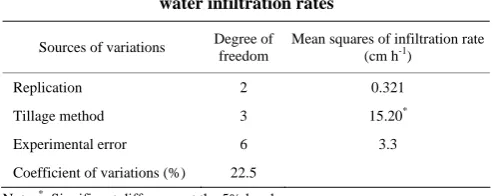
Table 3 shows the ANOVA results for the effect of
tillage method on the infiltration rate. According to the
table, the effect of tillage on infiltration rate was
significant at the 5% level. Table 4 compares these
parameters. According to the table, the water infiltration
rate in soil was higher in the direct seeding treatment than
other treatments. The infiltration rate in this treatment
was in the same statistical level as direct seeding. The
lowest infiltration rate belonged to the conventional
tillage method. An important reason for the low
infiltration rate in soils prepared by conventional tillage
was the destruction of both capillary tubes and
macroporosity of the soil as a result of using moldboard
plows. A higher infiltration rate can lead to higher water
holding capacity.
Table 3 ANOVA results for the effect of tillage method on soil water infiltration rates
Sources of variations Degree of freedom
Mean squares of infiltration rate (cm h-1)
Replication 2 0.321
Tillage method 3 15.20* Experimental error 6 3.3 Coefficient of variations (%) 22.5
Note: *: Significant difference at the 5% level.
Table 4 Infiltration results of different tillage methods
Tillage method Chisel plow
Combined moldboard plow
Direct seeding
Conventional method Infiltration rate
(mm h-1) 9.8 ab 8.2 b 12.1 a 6.8 b
3.2 Soil mechanical strength
Table 5 shows values for mechanical strength of soil
at the 4 depths. According to the table, soil mechanical
strength in the conventional method (moldboard plow)
was lower than other treatments. Because moldboard
plow loosens the soil profile up to a depth range of 25 to
30 cm (tillage depths for all treatments) while fully
turning over the soil. The observed difference was
negligible between chisel and combined plows.
Regarding direct seeding, soil penetration resistance in
was almost like other methods. Soil penetration resistance
for depths larger than the seed placement depth (more
than 10 cm), was equal to that of unplowed soil
(untreated soil).Soil mechanical strength increased with
increasing the soil depth so that the penetrologger didn’t
penetrate on the soil at depths greater than 20 cm. Large
amounts of soil mechanical strength in the no-till method,
may be due to the passing of the truck and the chopper for
harvesting the previous product (wheat is planted in place
of the forage maize). This result is similar with the other
researchers that reported higher penetration resistance in
no till systems (Ren et al., 2018, Moraru and Rusu, 2010).
Table 5 Soil penetration resistance (MPa)
Depth (cm) Chisel packer
Combined moldboard plow
Moldboard
tillage No-till 10 0.69 0.86 0.15 4.16 15 0.98 1.27 0.19 3.9
20 1.8 5.4 1.8 24
25 1.6 3.5 1 -
3.3 Mean weight diameter
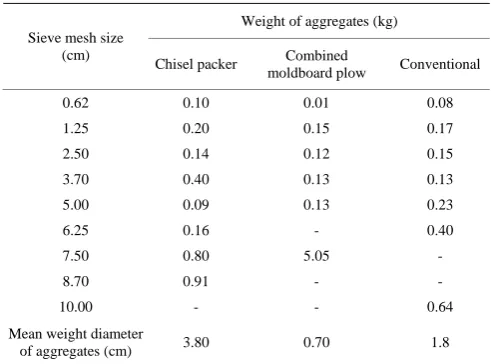
Table 6 shows WMDs of aggregates in detail. As
shown, the WMD of aggregates was lower in the
combined plow treatments than that in chisel plow and
conventional methods. Combined plow has spring tooth
cultivator (S shaped shank or stems) and discs. So the
further crush and more pulverization of the soil
aggregates (less than 7.5 cm) may be due to disks as well
as the vibration of the plow stems.
In conventional method for preparing the fields,
moldboard plow is used as a primary tillage and two or
three days after plowing, three to four times, disk harrow
is used as a secondary tillage operation for pulverizing
the soil before planting. So the mean WMD of aggregates
in conventional method is lower than the other methods
(Table 6). Soil was cut better when using the combined
moldboard plow, thus the aggregate diameter was lower.
Another reason can be the higher weight of the combined
moldboard plow. However, soil moisture content is an
important parameter in soil preparation. If soil moisture is
very low, soil blocks have a larger diameter. This is
similar to the results of other researchers, who reported:
when the soil is plowed in very low or high soil moisture
content, it will produce large soil blocks in both cases
(Shittu et al., 2017), Friable soil has higher pulverization
than wet soil (Aday and Al-Edan, 2004), the moldboard
plow had soil pulverization greater than chisel plow
(Nassir, 2017) and Low soil moisture content can make
the cohesive force between particles of soil to be very
strong and a lot of energy is needed to overcome this
during tillage. However, with the higher soil moisture
content, the effectiveness of tillage equipment in the field
is reduced (Ahmadi and Mollazade, 2009). This is an
important issue that should be observed in tillage
practices regardless of their type. The smaller the WMD
of aggregates, lead to the easier germination of the grains
and seeds (Guerif et al., 2001; Hakansson and Lipiec,
2002).
Table 6 MWD of aggregates (cm)
Weight of aggregates (kg) Sieve mesh size
(cm)
Chisel packer Combined
moldboard plow Conventional 0.62 0.10 0.01 0.08 1.25 0.20 0.15 0.17 2.50 0.14 0.12 0.15 3.70 0.40 0.13 0.13 5.00 0.09 0.13 0.23
6.25 0.16 - 0.40
7.50 0.80 5.05 -
8.70 0.91 - -
10.00 - - 0.64
Mean weight diameter
of aggregates (cm) 3.80 0.70 1.8
3.4 The effect of tillage treatments on soil bulk
density
According to the ANOVA table (Table 7), the effect
of tillage on soil bulk density was not significant (p>0.05)
between the depths of 0 to 10 cm. However, the effect of
tillage method on this parameter was significant (p<0.05)
at the depth range of 10 to 20 cm.
Table 7 ANOVA results for the effect of tillage methods on soil bulk density
Mean squares of soil bulk density (g cm-3) Source of
variations
Degree of Freedom
Depths of 0 to 10 cm Depths of 10 to 20 cm) Replication 2 0.117 ns 0.002 ns Tillage method 3 0.019 ns 0.041*
Experimental error 6 0.038 0.007 Note: Coefficient of variations (%).
3.5 Soil bulk density
Soil bulk density values were almost the same for all
tillage methods for 0-10 cm of soil depth (Table 8). It
may be due to the surface compaction of soil and
disappearance and fade of the effects of tillage on the
the tillage operation). In a depth of 10 to 20 cm, the
lowest specific weight belonged to the conventional
tillage treatment. This is due to the high soil agitation
caused by the moldboard plow and the disc, which in turn
reduced the soil bulk density. Also in conventional
method the soil plowing depth was more than the other
methods. Effect of tillage on BD is temporary, and after
tillage, the soil rapidly settles, recovering its former BD.
(Campbell and Henshall, 1991; Franzen et al., 1994;
Franzluebbers et al., 1995).
Table 8 Mean comparison results for the effect of tillage methods on soil bulk density
Tillage methods Soil depth
(cm) Conventional method
Combined plow
Chisel packer plow
Direct seeding 0-10 1.18 a 1.11 a 1.09 a 1.11 a 10-20 1.08 b 1.24 ab 1.35 a 1.29 a
3.6 Yield and its components
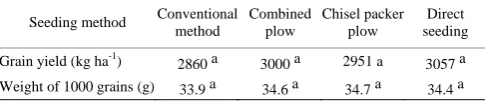
Table 9 compares the mean values of the effects of
tillage methods on the grain yield and the weight of 1000
grains at the 5% level. According to the table, there is no
significant effect (p>0.05) between these two parameters.
Table 9 Mean comparison results for the effect seeding method on yield and 1000-grain weight
Seeding method Conventional method
Combined plow
Chisel packer plow
Direct seeding Grain yield (kg ha-1) 2860 a 3000 a 2951 a 3057 a Weight of 1000 grains (g) 33.9 a 34.6 a 34.7 a 34.4 a
4 Conclusions
Results of this study showed that:
• The tillage method had no significant effect (p > 0.05) on wheat yield.
• Tillage methods had no significant effects (p > 0.05) on soil bulk density and depths from 0 to 10 cm.
• In depths from 10 to 20 cm, the lowest soil bulk density (specific weight) belonged to the
conventional tillage.
• The soil water infiltration rates for the conventional, chisel packer, combined plow, and direct seeding
was 6.8, 8.9, 8.2, and 12.1 mm h-1 respectively.
References
Aday, S. H., and A. A. Al-Edan. 2004. Comparison between the field performance of moldboard plow and conventional moldboard plow in wet and friable silty clay soils. The
specific resistance and equivalent energy efficiency. Basrah Journal of Agricultural Sciences, 17(1): 87–101.
Ahmadi, H., and K. Mollazade. 2009. Effect of plowing depth and soil moisture content on reduced secondary tillage. CIGR Journal, 11: 1–9.
Alamouti, Y. M., and M. Navabzadeh. 2007. Investigation of plowing depth effect on some soil physical properties.
Pakistan Journal of Biological Sciences, 10(24): 4510–4514. Alvarez, R., and H. S. Steinbach. 2009. A review of the effects of
tillage systems on some soil physical properties, water content, nitrate availability and crops yield in the Argentine Pampas.
Soil and Tillage Research, 104(1): 1–15.
ASAE Standards, 49th Ed. 2002. S313.2. Soil cone penetrometer. St. Joseph, Mich.: ASAE.
ASTM. 2009. D3385-09. Standard test method for infiltration rate of soils in field using double-ring infiltrometer. West Conshohocken, PA: ASTM International.
Aziz, I., T. Mahmood, and K. R. Islam. 2013. Effect of long-term no-till and conventional tillage practices on soil quality. Soil and Tillage Research, 131: 28–35.
Bayhan, A. K., A. A. Isildar, and M. Akgul. 2005. Tillage impacts on aggregate stability and crop productivity in a loam soil of a dryland in Turkey. Acta Agriculturae Scandinavica, Section B-Soil and Plant Science, 55(3): 214–220.
Campbell, D. J., and J. K. Henshall. 1991. Bulk density. In Soil Analysis. Physical Methods, eds. K. A. Smith, and C. E. Mullins, 329–366. New York: Marcel Dekker.
Chang, C., and C. W. Lindwall. 1990. Comparison of long term tillage on corn and soybean growth and grain yield. ASAE Paper No. MCR-88-111st. St. Joseph, Mich.: ASAE.
Eghball, B., L. N. Mielke, G. A. Calvo, and W. W. Wilhelm. 1993. Fractal description of soil fragmentation for various tillage methods and crop sequences. Soil Science Society American Journal, 57(5): 1337–1341.
Ehsanullah, A. R., S. Khan, and R. Qamar, A. Ghaffar, and G. Mustafa. 2013. Impact of tillage and mulch on water conservation in wheat (triticum aestivum l.) Under rice-wheat cropping system. Journal of Agricultural Research, 51(3): 255–265.
Fabrizzi, K. P., F. O. Garcia, J. L. Costa, and L. I. Picone. 2005. Soil water dynamics, physical properties and corn and wheat responses to minimum and no-tillage systems in the southern Pampas of Argentina. Soil and Tillage Research, 81(2): 57–69. FAO-UNESCO. 1989. Soil Map of The World, Revised Legend. Wageningen: International Soil Reference and Information Centre.
Franzen, H., R. Lal, and W. Ehlers. 1994. Tillage and mulching effects on physical properties of a tropical Alfisol. Soil and Tillage Research, 28(3-4): 329–346.
water content, temperature, and bulk density. Applied Soil Ecology, 2(2): 95–109.
Gardner, W. H. 1986. Water content. In Methods of Soil Analysis, 2nd ed., part 1, 33–50. Madison: Soil Science Society of America.
Guerif, J., G. Richard, J. Durr, M. Machet, S. Recous, and J. Roger-Estrade. 2001. A review of tillage effects on crop residue management, seedbed condition and seedling establishment. Soil and Tillage Research, 61( 12 ): 13–32. -Hakansson, I., and J. Lipiec. 2000. A review of usefulness of
relative bulk density values in studies of soil structure and compaction. Soil and Tillage Research, 53(2): 71–85.
Hösl, R., and P. Strauss. 2016. Conservation tillage practices in the alpine forelands of Austria 547-Are they effective? Catena, 137: 44–51.
Jemai, I., N. B. Aissa, S. B. Guirat, M. Ben-Hammouda, and T. Gallali. 2013. Impact of three and seven years of no-tillage on the soil water storage, in the plant root zone, under a dry subhumid Tunisian climate. Soil and Tillage Research, 126: 26–33.
Jitareanu, G., C. Ailincai, and D. Bucur. 2006. Influence of tillage systems on soil physical and chemical characteristics and yield in soybean and maize grown in the Moldavian Plain (North – Eastern Romania). In Soil Management for Sustainability, 70-379. IUSS, Catena Verlag, Germany.
Kahlon, M. S., R. Lal, and M. A. Varughese. 2013. Twenty-two years of tillage and mulch impact on physical characteristics.
Soil and Tillage Research, 126: 151–158.
Kepner, R. A., R. Bainer, and E. L. Barger. 1982. Principles of Farm Machinery. 3rd ed. Westport: AVI Publishing, INC. Kladivko, E. J. 2001. Tillage systems and soil ecology. Soil and
Tillage Research, 61(1-2): 61–76.
Li, R., X. Hou, Z. Jia, Q. Han, X. Ren and B. Yang. 2013. Effects on soil temperature, moisture, and maize yield of cultivation with ridge and furrow mulching in the rainfed area of the Loess Plateau. Agricultural Water Management, 116: 101–109.
Moraru, P. I., and T. Rusu. 2010. Soil tillage conservation and its effect on soil organic matter, water management and carbon sequestration. Journal of Food, Agriculture and Environment, 8(3-4): 309–312.
Moraru, P. L., and T. Rusu. 2012. Effect of tillage systems on soil moisture, soil temperature, soil respiration and production of wheat, maize and soybean crops. Journal of Food Agriculture and Environment, 10(2): 445–448.
Munawar, A., R. L. Blevins, W. W. Frye, and M. R. Saul. 1990. Tillage and cover crop management for soil water
conservation. Agronomy Journal, 82(4): 773–777.
Nassir, A. 2017. The effect of tillage methods on energy pulverization requirements under various operating conditions in silty loamy soil. Thi-Qar University Journal for Agricultural Researches, 6(2): 55–73.
Ren, B., X. Li, S. Dong, P. Liu, B. Zhao and J. Zhang. 2018. Soil physical properties and maize root growth under different tillage systems in the North China Plain. Crop Journal, 6(6): 669–676.
Riley, H. C. F., M. A. Bleken, S. Abrahamsen, A. K. Bergjord, and A. K. Bakken. 2005. Effects of alternative tillage systems on soil quality and yield of spring cereals on silty clay loam and sandy loam soils in the cool, wet climate of central Norway.
Soil and Tillage Research, 80(1-2): 79–93.
Sarauskis, E., K. Romaneckas, and S. Buragiene. 2009. Impact of conventional and sustainable soil tillage and sowing technologies on physical-mechanical soil properties.
Environmental Research of Engineering and Management, 49(3): 36–43.
Schneider, J. A., P. W. Mayne, and G. J. Rix. 2001. Geotechnical site characterization in the greater Memphis area using cone penetration tests. Engineering Geology, 62(1): 169–184. Shittu, K., D. Oyedele, and K. Babatunde. 2017. The effects of
moisture content at tillage on soil strength in maize production.
Egyptian Journal of Basic and Applied Sciences, 4(2): 139–142.
Smith, D. W., B. G. Sims, and D. H. O’Neill. 1994. Testing and Evaluation of Agricultural Machinery and Equipment: Principles and Practices. Rome, Italy: Food and Agriculture Organization.
Troldborg, M., I. Aalders, W. Towers, P. D. Hallett, B. M. McKenzie, A. G. Bengough, A. Lilly, B. C. Ball, and R. L. Hough. 2013. Application of bayesian belief networks to quantify and map areas of risk to soil threats: Using compaction as an example. Soil and Tillage Research, 132: 56–68.
Whalley, W. R., C. W. Watts, A. S. Gregory, S. J. Mooney, L. J. Clark, and A. P. Whitmore. 2008. The effect of soil strength on yield of wheat. Plant Soil, 306: 237–247.
Younesi, A. M., and P. Mohammadi. 2015. Field evaluation of some tillage practices in rainfed wheat planting: their effects on crop yield components and implements. CIGR Journal, 17(2): 45–56.