Journal on Today’s Ideas – Tomorrow’s Technologies, Vol. 3, No. 1, June 2015 pp. 27–40
DOI: 10.15415/jotitt.2015.31002
Effect of Aggregate Flakiness on the Compressive
Strength of Concrete Cubes
HImaNsHu Kumar malVIya raHul DHOKe aND K.K. PaTHaK
National Institute of Technical Teachers’ Training and research, Bhopal (mP) India
E-mail: [email protected]
received: april 17, 2015| revised: may 11, 2015| accepted: may 30, 2015 Published Online: June 29, 2015
The author(s) 2015. This article is published with open access at www.chitkara.edu. in/publications
Abstract: In this paper effects of aggregate flakiness on the compressive
strength of concrete cubes have been studied using experiments. Total 30 cubes have been cast using normal, 5% of 8 mm, 10 mm and 12 mm size of flaky aggregates and 10% of 12mm size of flaky aggregate. NDT of the cast cubes using rebound hammer and ultrasonic pulse velocity have been also carried out. all the cubes were tested for compressive strength. Based on these data, comparative studies have been carried out to quantify the effect of flakiness and salient conclusions are drawn.
Keywords: Concrete, Normal aggregates, Flaky aggregates, Compressive
strength, Concrete cube.
1. INTRODUCTION
malviya, HK Dhoke, r Pathak, KK
interaction starting to take place between the aggregate and the cement paste. rough surfaces also tend to increase the water requirement to achieve a certain workability level; therefore, the small advantage due to better physical bond may be lost as far as the strength is concerned. an aggregate is termed flaky when its least dimension (thickness) is less than three-fifth of its mean dimension. The mean dimension of aggregate is the average of the sieve sizes through which the particles pass and are required, respectively. The particle is said to be elongated when its greatest dimension (length) is greater than nine-fifth of its mean dimension.
effect of aggregate Flakiness on the Compressive strength of Concrete Cubes
malviya, HK Dhoke, r Pathak, KK
out experimental study on standard concrete cubes. effect of flakiness will be studied using various destructive and non-destructive tests for two grades of concrete i.e. m15 and m20.
2. METHODOLOGY
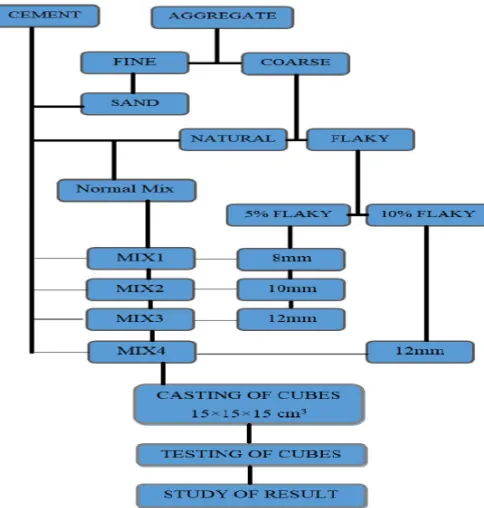
In this study two types of aggregate, normal and flaky were used in preparing cube specimens. Two types of mixed proportions m15 and m20 were used. The concrete prepared using normal aggregate and 5% and 10% of flaky aggregate of different size 8mm, 10mm, 12mm were used for cubes. These cubes were tested on 7 and 28 days. The compressive strength of this cubes are determined with the help of destructive and non-destructive testing. The cement used in all mixers is Portland pozzolana cement and natural sand is used. The sizes of sand vary from 2mm to 4.75 micron.
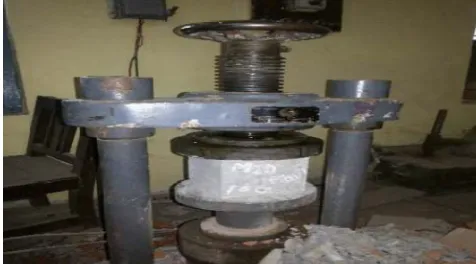
The ultrasonic pulse velocity and rebound hammertest (non-destructive) and compressive strength using universal testing machine (destructive) were performed on 30 specimens prepared using different concrete mixtures. In order to determine the effect of flakiness, cube specimens with standard dimensions were tested at 2 ages, i.e.7 and 28 days. The determination of the strength of each mixture and specimen ages are based on the average of 3 specimens.
The comparative study is carried out to evaluate the compressive strength
of cube of M15 and M20 grade of concrete mix with flaky and normal
aggregates having five type mix conditions including nominal mix and
four types of special mix conditions.
In this way, there are five types of mix ingredients and three cubes are cast for each mix.Five sample mixes were prepared,
namely-Nominal mix i.e. water + cement + fine aggregate + coarse aggregate.
special mix 1 i.e. water + cement + fine aggregate + coarse aggregate (5% 8 mm, flaky aggregate + 95% coarse aggregate).
special mix 2 i.e. water + cement + fine aggregate + coarse aggregate (5% 10 mm, flaky aggregate + 95% coarse aggregate).
special mix 3 i.e. water + cement + fine aggregate + coarse aggregate (5% 12 mm, flaky aggregate + 95% coarse aggregate).
special mix 4 i.e. water + cement + fine aggregate + coarse aggregate (10% 12 mm, flaky aggregate + 95% coarse aggregate).
effect of aggregate Flakiness on the Compressive strength of Concrete Cubes
of flaky aggregates of 8, 10 and 12 mm size passing in flaky sieve apparatus with cement, sand, and water. similarly fifth type of mix conditions having 90% of normal aggregate with 10% replacement of flaky aggregate of 12 mm size. results have been compared on the basis of NDT and uTm based results.
Following procedure is adopted for the study using flaky and normal
aggregate-1. making of concrete mix with water, cement, sand and aggregates (flaky + normal).
2. selection of mould and mouldpreparation for casting of cubes.
3. Compaction of concrete mix, compact each layer by using tampering rod. 4. Demoulding of cubes.
5. Curing of the cubes for 28 days in the curing tanks. 6. Testing of the cubes with help of NDT and uTm.
7. Comparative analysis of results in terms of flaky and normal aggregates with different mixing conditions.
8. Critical study of results.
Figure 1 shows the flow chart of the proposed methodology
malviya, HK Dhoke, r Pathak, KK
3. EXPERIMENTAL PROGRAM 3.1 Selection of Material
selection of material for making of concrete mixes are given
below-1. Cement
– PPC (Portland pozzolona cement) was used.
Following tests were conducted, on cement:
Consistency limit test:- Three samples were tested and results are given in •
Table 1
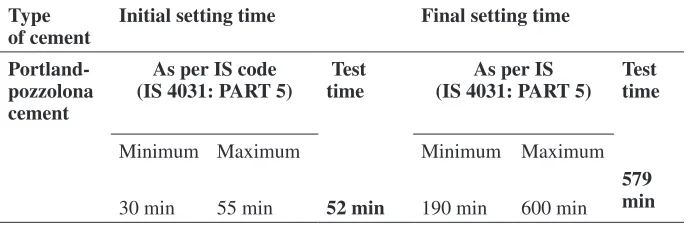
Initial setting time and final setting time: results are given in Table 2. •
2. Sand
sieve analysis for the sand was carried out in the laboratory as per the procedure mentioned in Is 2386 (part-I)-1963. The sizes of sand vary between 2 mm to 4.75 micron.
4. AGGREGATES
For this study the locally available coarse aggregate was used. Grading of natural coarse aggregate considered as per Is: 456:2000. Following tests were conducted, on aggregates.
4.1 Aggregate Impact Test
This test has been designed to evaluate the toughness or the resistance of stones aggregate to breaking down under repeated application of impact. aggregate impact value specifies a relative quantity of the conflict of aggregate to impact. The aggregate impact test apparatus and procedure have been standardized by the Bureau of Indian standard (BIs).
The aggregate impact value is the ratio of fines passing 2.36 mm sieve expressed in terms of total weight of sample. The impact value of the aggregate obtained is 20.9%.
4.2 Selection of Flaky Aggregates
For flaky aggregate, bar sieve is used for passing different shape of flaky aggregates as given below;
effect of aggregate Flakiness on the Compressive strength of Concrete Cubes
Figure 2 and 3 shows appearance of flaky aggregatesand flakiness index test apparatus.
5. WATER
The water content of concrete is influenced by a number of factors, such as aggregate size, aggregate shape, aggregate texture, workability, water-cement ratio, cement and other supplementary cementitious material type and content, chemical admixture and environmental conditions. In this study potable water was used.
6. PREPARATION OF CONCRETE
Nominal mix of concrete of 1:1.5:3 and 1:2:4 were used for making m20 and m15 grade concrete. The concrete was mixed by hand in the laboratory, in such a manner as to avoid loss of water or other materials, each batch of concrete is such a size as to leave about 10 percent excess after moulding the desired number of test specimens. To determine the workability of concrete
Type of cement As per IS code Standard consistency limit IS: 4031 (part 4) 1988 As per lab test
Portland-pozzolona
cement 30.5
sample 1 26
sample 2 31.5
sample 3 30
Table 1: Consistency limit test result.
Type
of cement Initial setting time Final setting time
Portland-pozzolona cement
As per IS code
(IS 4031: PART 5) Test time
52 min
As per IS
(IS 4031: PART 5) Test time
579 min
minimum maximum minimum maximum
30 min 55 min 190 min 600 min
malviya, HK Dhoke, r Pathak, KK
Figure 2: Flaky aggregates.
Figure 3: Bar sieve.
effect of aggregate Flakiness on the Compressive strength of Concrete Cubes
Figure 5: Test of rebound hammer.
Figure 6: Test of pulse velocity.
Figure 7: Compressive testing of beam.
malviya, HK Dhoke, r Pathak, KK
Figure 8: Pulse velocity of m15 test specimen having different compositions
of aggregate at 7 days.
Figure 9: Pulse velocity of m 20 test specimen having different compositions
of aggregate at 28 days.
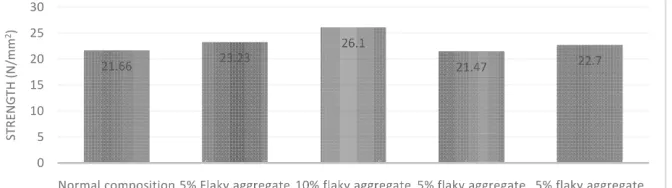
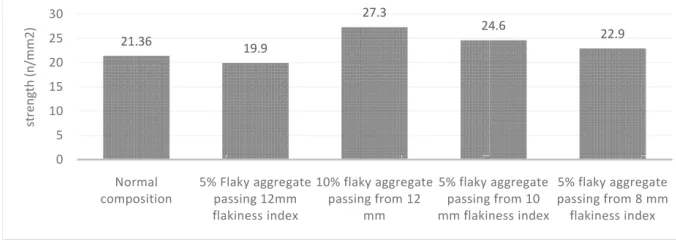
Figure 10: rebound value for different composition of aggregate after 7 days
of casting the cubes of m15 grade.
effect of aggregate Flakiness on the Compressive strength of Concrete Cubes
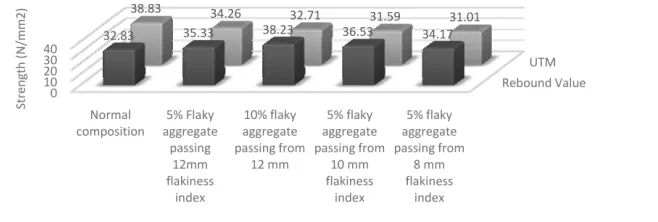
Figure 11: rebound and uTm values obtained for different composition of
aggregate after 28 days of casting the cubes.
Figure 12: rebound value obtain for different composition of aggregate after
7 days of casting the cubes.
7. CASTING OF CUbE SPECIMENS
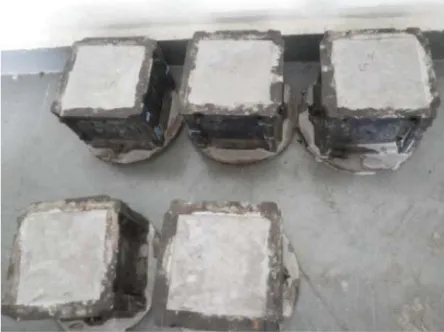
The casting of cube was done in single stage. all cubes were cast for m15 and m20 grade of concrete mix. The cubes were cast in mould of size 150 X 150 X 150 mm. First entire cubemould is oiled, so that the formwork is easily removed from the mould after 24 hours. The compaction is done until the mould is completely filled and no gaps left. The cube is removed from the mould after 24 hours. after demoulding the cubes are cured for 28 days.
Figure 4 shows the cube specimen after casting.
malviya, HK Dhoke, r Pathak, KK
8.
RESULTS AND DISCUSSIONVarious tests were performed on the prepared specimens. results extracted from all these experiments are illustrated below on the basis of following sub-heads:
a) Ultrasonic-Pulse Velocity Test
The uPV test results for concrete cube with normal and flaky aggregate mix for 7 days and 28 days are shown in figure 8 and 9 respectively.
For m15 concrete, it can be observed that the pulse velocity is maximum for higher size and high percentage flaky aggregate and the minimum velocity is obtained for minimum size flaky aggregate.
For m20 concrete, it can be observed that uPV results aremaximum in lower percentage of flaky aggregate irrespective of the size of the aggregate.
b) Rebound Hammer and Compressive Strength Test
The rebound hammer and universal test results for concrete cube with normal and flaky aggregate mix for 7 and 28 days are shows in Figure 10, 11, 12 and 13. (i). m15 Grade of Concrete
It is observed that rebound strength is maximum for 10 % flaky aggregate passing from 12 mm and it lowers down as aggregate size reduces for 7 and 28 days. But uTm strength is maximum for normal aggregate.
(ii). m20 Grade of Concrete
It is observed that rebound strength is maximum for 10% flaky aggregate passing from 12 mm flakiness index and it lowers down as aggregate size reduces for 7 and 28 days. uTm results show greater compressive strength in
Figure 13: rebound and uTm values obtained for different composition of
effect of aggregate Flakiness on the Compressive strength of Concrete Cubes
normal aggregate concrete and strength reduces as the percentage and size of aggregate reduces.
9. CONCLUSIOIN
From the results of destructive and non-destructive tests, following salient conclusions can be drawn:
a) Rebound hammer
1. rebound hammer reading for flaky aggregate are higher than normal aggregate cubes for m15 and m20 grade of concrete.
2. maximum value is recorded for 10% flaky aggregate passing from 12 mm bar sieve.
3. rebound value for m15 and m20 are almost same for 7 and 28 days respectively
b) Ultrasonic pulse velocity
1. ultrasonic Pulse velocity reading for flaky aggregate is higher than normal aggregate cubes for m15 and m20 grade of concrete.
2. maximum value is recorded for 10% flaky aggregate passing from 12 mm bar sieve for m15 grade of concrete.
3. maximum value is recorded for 5% flaky aggregate passing from 12 mm and 8 mm bar sieve for m20 grade of concrete.
4. ultrasonic Pulse velocity for m15 and m20 are almost same for 7 and 28 days respectively.
c) Universal testing machine
1. Highest value of compressive strength is obtained for normal aggregate. 2. Compressive strength increases with the decrease in the size of flakiness
index for m15 and m20 grade of concrete.
3. Compressive strength for normal aggregate concrete is higher than its rebound strength. For flaky aggregate the trend is reversed.
REFERENCES
[1] a abdullahi. m, The effect of aggregate type on Compressive strength of concrete, International Journal of Civil and structural engineering, Volume 2, No 3, pp. 791-800, 2012.
http://dx.doi.org/10.6088/ijcser.00202030008
[2] Bureau of Indian standards: Is- 516: 1959, methods of Test for strength of Concrete, New Delhi, 2003.
malviya, HK Dhoke, r Pathak, KK
[4] Bureau of Indian standards: Is- 2386-1963(Part-I), Indian standard methods of test for aggregates for concrete, New Delhi.
[5] Bureau of Indian standards: Is- 10262-1982, Indian standard recommended Guidelines for concrete mix design, New Delhi.
[6] Bureau of Indian standards Is: 4031: Part 4, methods of physical tests for hydraulic cement, Part 4- Determination of consistency of standard cement paste, New Delhi, 1988.
[7] Bureau of Indian standards: Is 4031: Part 5, methods of physical tests for hydraulic cement, Part 5- Determination of initial and final setting times, New Delhi, 1988.
[8] Kaplan, m F, The effect of the properties of coarse aggregate on the workability of concrete, magazine of concrete research, Volume 10, no. 29, pp. 63-74, 1958.
http://dx.doi.org/10.1680/macr.1958.10.29.63
[9] m mansur m. a., Islam m. m., Interpretation of concrete strength for non-standard specimens. J. mater. Civil eng. as Ce, Vol.14, No.2, pp. 151–155, 2002.
http://dx.doi.org/10.1061/(asCe)0899-1561(2002)14:2(151)
[10] m mathew B s, Bhuduru s and Issac K P, Influence of Flaky and elongated aggregates on the properties of Bituminous Concrete mix, Ie (I) Journal-CV, Vol. 87, pp.54-58, November 2006. [11] m markandeya raju Ponnada, Combined effect of flaky and elongated aggregates on strength
and workability of concrete, International Journal of Civil and structural engineering, Volume 5, no.4, pp. 314-325, 2014. http://dx.doi.org/10.1504/IJsTruCTe.2014.065915
[12] r rogers, Chris and Gorman Bob, a flakiness test for fine aggregate, 16th annual ICar symposium. austin, Texas: International Center for aggregates research, 2008.