Implementation of Buffer Zone in Industrial Area
Mohd Hilmi Izwan Abd Rahim
Faculty of Technology Management and BusinessUniversiti Tun Hussein Onn Malaysia (UTHM), 86400 Batu Pahat, Johor, Malaysia.
Narimah Kasim
Faculty of Technology Management and Business Universiti Tun Hussein Onn Malaysia (UTHM),
86400 Batu Pahat, Johor, Malaysia. [email protected] Haryati Shafii
Faculty of Technology Management and Business Universiti Tun Hussein Onn Malaysia (UTHM),
86400 Batu Pahat, Johor, Malaysia. [email protected]
Abstract— Malaysia is one of the emerging countries in the main sectors such as economic, educational and social. These positive developments have lead to the development in manufacturing, construction, and various other industries that contribute to the country's revenue. The research will focus on the level of compliance of the buffer zone guideline among the developer. Failure to comply with the buffer zone guidelines will contribute to noise pollution. A buffer zone is created as noise abatement in the noise polluted areas which could be designed in various forms such as a recreational park and a barrier wall. Normally, buffer zone will be developed in order to separate the source of noise from the affected region. This paper reports on the findings from data collection which is investigating the implementation of buffer zone guidelines. As a precursor to this work, this paper reviews the implementation of buffer zone guidelines in the Pasir Gudang Municipal Council. The data or information on implementation regarding the buffer zone guidelines will be gathered by conducting interview session with the Local Authority Officers. The finding of the study will help to ensure the implementation of buffer zone guidelines among the construction industry. Findings from interviews showed that the buffer zone implementation is very useful especially in the development area such as Pasir Gudang. Buffer zone can reduce the noise pollution and other pollutions produced by industrial area. As conclusion, this paper provides greater awareness of the construction industry players to improve the usage of buffer zone implementation guidelines.
Keywords— Implementation; Buffer Zone; Guidelines; Local Authority; Construction Industry
I. INTRODUCTION A. Noise Pollution
Noise pollution is the environmental pollution which contributes by the human activity and development in tandem with an increase in the current population. Noise pollution which is happening nowadays is very annoying and cause harm, especially to men [1]. Noise pollution could be defined as any sound that interferes and causes harm in which they are unwelcome and unwanted by the listener. Environmental Quality Act [2] states that noise means any changes either
directly or indirectly related to the physical properties, chemical, biological or radioactive level in any part of the environment by discharging, emitting or depositing wastes at the expense of functionality and usability to health, safety or welfare or life, people, animals, and plants.
The resulting noise pollution impairs the comfort as a whole because people have the ability to receive a minimum frequency of sound only [3]. However, there are a few people who are able to receive a maximum sound frequency level such as a musician which exposed to a loud noise produced by musical instruments. Noise pollution can contribute an adverse effect on human physiology and psychology [3]. Noise pollution is a hidden pollutant which would impact in damage and cause harm in long-term period and permanent nature.
Sound is a vibration that continuously flows to human ears, but the term is usually used to shaking alone. The sound is produced by the vibration of solid bodies that vibrates in the air. Noise pollution comes from three main sources: point source, area source and source line [1]. Dotted source is sound that caused by a known source. Example of noise contribute by the dotted source is sound of fans and the piling sound and others. The area source is the resulting noise contributes by the entertainment area, factories, construction sites and other areas. The source line pollution is results from the movement such as rail, vehicular movement on the road and so on. B. Buffer Zone
A buffer zone is an area that was created in the noise pollution affected area. It is an area of green network that covers parking lots, vehicle access, pedestrian walkways and areas for tree planting, landscaping and grassland. There are various forms of buffer zone such as recreational parks and barrier walls. Usually, the buffer zones will be developed in areas which function to separate the affected regions to prevent noise emissions to the particular neighbourhoods. The buffer space requirement is in accordance with the standard proposed by DOE in which not less than 70% of the buffer zone should be provided [4].
A buffer zone should be provided with a distance of 30 meters to crop band special and heavy industry, 20 meters to 10 meters medium industry to light industry. The buffer zone is a method used to control pollution in residential areas. The fast development in line with economic growth contributes to the increase in pollution, especially in rapidly developing areas [3].
II. BUFFER ZONE IMPLEMENTATION
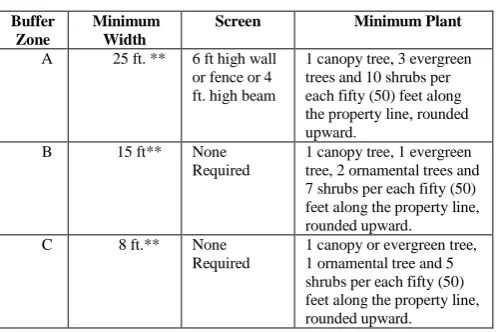
[image:2.595.38.289.363.529.2]The design and guidelines for buffer zone development was provided by the Town and Country Planning Department with the proposal of DOE. It is stated that the designated buffer zone is not including the road reserve area. A buffer zone is necessary not less than 70 percent of the designed area. A buffer zone should be provided with a strip of 30 meters crops for special and heavy industry, 20 meter buffer zone design for small and medium industries; and 10 meters in the light industry. Development areas can be considered in the physical buffer zone is not more than 30 percent of the buffer zone areas being like roads, drains and ditches, rivers and lakes, parking, open space, service industries, warehousing and non-food agricultural crops [4]. Designing and building a buffer zone to the edge of the building facing the main road to provide a 1.5 meter wide landscape reserve 5 feet. Table 1 shows the description of the required buffer zone
TABLE I. REQUIRED OF BUFFER ZONE
Buffer Zone
Minimum Width
Screen Minimum Plant
A 25 ft. ** 6 ft high wall or fence or 4 ft. high beam
1 canopy tree, 3 evergreen trees and 10 shrubs per each fifty (50) feet along the property line, rounded upward.
B 15 ft** None Required
1 canopy tree, 1 evergreen tree, 2 ornamental trees and 7 shrubs per each fifty (50) feet along the property line, rounded upward. C 8 ft.** None
Required
1 canopy or evergreen tree, 1 ornamental tree and 5 shrubs per each fifty (50) feet along the property line, rounded upward.
**The Planning Board shall allow the width of any Buffer Zone to be reduced by no more than fifty (50) percent, provided that the required plant density is increased by one hundred and fifty (150) percent and a screen is included if not already required. Table 2 shows the guidelines for the sitting and Zoning of Industries.
TABLE II. TABLE OF SUMMARY SITTING AND ZONING INDUSTRIES [5]
Type of Industries
Description and Standard Requirements Buffer Zone Light Industries shall not generate excessive
noise.
Industries shall not discharge industrial effluent apart from sewage and Industries shall not use any raw
materials which are toxic and hazardous and therefore will not produce any scheduled wastes.
Industries shall have height restrictions determined by the Local Authority.
50 m
Medium These industries could generate significant noise from machineries, generators etc. But which could be controlled to meet the level not exceeding 65dB (A) Leq at the factory boundary, and not exceeding 55 and 45 dB (A) Leq at the residence/buffer zone boundary during day and night time respectively.
Industries could emit some gaseous emission but which can be controlled to comply with the Environmental Quality (Clean Air) Regulation 1978. The industries could produce some
industrial effluent that can be treated on site before being discharged to meet the Environmental Quality (Sewage and Industrial Effluent) Regulation 1979, standard A or B depending on the site. The industries shall be located in
designated industrial estates or zones With good compatibility within the industrial estates and zones to ensure good industrial mixing.
250 m
Heavy Heavy industries must be sited in designated industrial estates or designated industrial zones with sufficient buffer zones from residential areas, livestock farm, agricultural farms, recreation areas and tourist designated areas. A minimum distance from the fence of the industry to the nearest residential area is 500 meters, to be finalized by the EIA Report. These industries could generate
excessive noise from its operations but for which design solutions are incorporated in the form of appropriate high technologies to reduce the noise level generated to a level to meet the WHO recommended level of not greater that 65 dB (A) at the factory boundary and not exceeding 55 and 45 dB (A) at the residence/ buffer zone boundary during day and night time respectively
500 m
Fig. 1. The Sitting and Zoning Industries [5]
The next section will discuss on methodology.
III. METHODOLOGY
Research methodology refers to the principles and procedures of logical thought processes which apply to a scientific investigation [7]. Method concerns the techniques which are available and those which are actually employed in a research project [8]. It has been set up in order to achieve the aim of this paper. Literature review has been conducted to gain information on noise pollution, use of buffer zone, and buffer zone guidelines implementation. The literature review can form in various sources such as books, journal papers, reports, Conference paper and material sources from the internet.
Moreover, semi-structured interviews were used as a method of data collection in order to study the implementation of buffer zone guidelines in the industrial area by the Local Authority. The interviews have been conducted with the respondents from Pasir Gudang Municipal Council. The respondents are Head of Landscape Department, and The Planner of Urban Planning Development of Pasir Gudang Municipal Council. The Respondets is responsible to monitor and control the development area of Pasir Gudang. The Landscape Department is responsible to manage and assist the green buffer zone in an industrial area in Pasir Gudang. The Department of Urban Planning Development is responsible to control, and review planning permission in a development area in Pasir Gudang. Table 3 shows the details of the respondents.
TABLE III. DETAILS OF RESPONDENT
Respondent Roles and responsibilities Experience (Years) Head of
Landscape Department
To manage and assist the green buffer zone in an industrial area in Pasir Gudang
15
Planner of Urban Planning and Development
Monitoring and control the development area in Pasir Gudang.
Planning Permission
7
Several questions have been asked to the respondents on understanding of noise pollution, buffer zone and buffer zone guidelines implementation. Further discussion in this paper, the respondents will be coded as R1 covered by Landscape Department and R2 covered by Urban Planning Department. All data obtained from the interviews were analyzed using content analysis and data representation through text, images and expressions [12]. The next section will discuss on result and finding from the interview. Figure 2 shows the areas of the Pasir Gudang Municipal Council.
Legend
PGMC Area
River Roads
[image:3.595.317.552.177.390.2]Highway
Fig. 2. Areas of Pasir Gudang Municipal Council [6]
IV. RESULT AND FINDINGS A. Noise Pollution in Pasir Gudang
Noise pollution is occurring in the area between Pasir Gudang is huge pollution. Based on R1 and R2 reported, among the problems reported by residents in Pasir Gudang is the problem of noise pollution. Many complaints have been reported by residents such as noise pollution generated by factories and vehicle's factory near a residential area. Based on the Environmental Quality Act [2] states that noise means any changes either directly or indirectly related to the physical properties, chemical, biological or radioactive level in any part of the environment by discharging, emitting or depositing wastes at the expense of functionality and usability to health, safety or welfare or life, people, animals, and plants.
According to state R1 is indeed happening noise pollution near residential areas with an industrial plant. Distances less than 10 meters from residential areas have caused an issue with the residential population.
B. Buffer Zone in Industrial Area
[image:3.595.31.288.619.704.2]the industrial areas in an industrial area close to residential areas established by local authorities. Efforts by local authorities are among the planned effort by local authorities to reduce noise pollution. The proper planning of the design development in the industrial areas should include a landscaped area as what is specified in the guidelines of the Town and Country Planning Department.
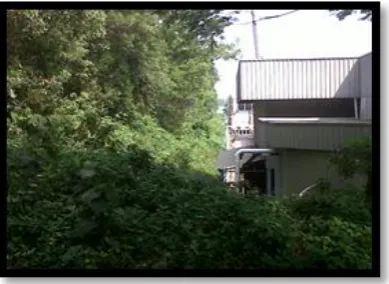
[image:4.595.349.527.83.218.2]For residential areas, The Town and Country Planning Department has also drawn up a guideline to prevent residential areas of the exposed of noise pollution. This is through the creation of landscape as a buffer zone. Photo 1 shows the buffer zone provided by the Pasir Gudang Municipal Council.
Fig. 3. Buffer Zone Industrial View
C. Implementation of Buffer Zone
Implementation of the buffer zone is one step that can be used to reduce noise pollution. Based on the literature, the buffer zone is the isolation area which is created in order to prevent noise dissemination into unwanted areas [9]. Failures to comply with the provision of a buffer zone in the manufacturing industry have contributed to noise pollution. Through interviews from R1 and R2, which is the buffer zone, should be provided by the industry. Local authorities only provide landscaping on the government reserve land beside the roads. Failure preparation buffer zone was causing the government to provide a buffer zone for the purpose of reducing pollution problems occur.
According to John [10], a buffer zone reduces noise pollution in particular. These are the positive impact of the noise pollution problems in residential areas. Among the methods used to control external noise are to ensure that the distance is appropriate, avoid directional sound zone, containment, planning to use part of the building that are not sensitive to noise as a deterrent, placing the aperture away from the noise source and the noise insulation of the exterior building [11]
Through information obtained from R1 and R2 states that there are a variety of purposes acquired in the use of buffer zones. The main purpose is to reduce pollution problems such as noise pollution. At this same time, buffer zones can also be used to protect the area from the public. Photo 2 shows the green buffer zone provided by the Pasir Gudang Municipal
[image:4.595.72.267.217.359.2]Council. There are lots of trees that covered the industrial areas behind the buffer zone.
Fig. 4. Buffer Zone Roads View
V. CONCLUSION
The buffer zone is one of the measures to control noise pollution. A previous study conducted has proved that the use of buffer zones can reduce noise pollution in particular. The buffer zones have been extensively used in overseas for residential areas which having exposed to noise pollution. It was also widely used along the highways and industrial areas as measures for reflection and sound absorption. Implementation, the buffer zone is one alternative that is able to reduce noise pollution. Buffer zones not only in physical form or inflexible but it could be in the form of soft or forage. Buffer usage can be in various functional like to keep the earth's ecosystem, landscape or recreational areas. The use of buffer zones should be widely used as it has been applied in other countries. Should all be the key emphasis on conformity with the guidelines in the development of the buffer zone as in Pasir Gudang. Failure to comply with this certainly contributes to a variety of negative effects. The next stage of the study will aim at developing a framework for the compliance of buffer zone implementation. Therefore these studies see the use of guidelines, especially in the buffer zone development.
ACKNOWLEDGMENT
The authors would like to thank the Office of Research, Innovation, Commercialization and Consultancy (ORICC), UTHM, for supporting this research under Postgraduate Incentive Research grant (GIPS) Vot No. 1161.
REFERENCES
[1] K. Zakaria, "Perhutanan Bandar dan Kawalan BunyiBising, Kesan Haba dan Habuk," UTM Skudai, Malaysia,1988.
[2] Department of Environment, The Planning Guidelines for Noise Labelling and Emission Limits of Outdoor Source, Department of Environment, Ministry of Natural Resources and Environment, 2004.
[4] Jalal, A. And , Fikri, M., Awareness of Noise Hazard From Construction Site, UTM Skudai, 2008.
[5] Jabatan Perancang Bandar dan Desa Negeri Selangor, Garis Panduan dan Piawaian Perancangan Negeri Selangor, 2nd edi, Jabatan Perancang Bandar dan Desa, 2012.
[6] Pasir Gudang Municipal Council, Laporan Tahunan Majlis Perbandaran Pasir Gudang, 2012 edi, 2012. [7] J. W. Creswell, “Qualitative Inquiry and Research
Design: Choosing Among Five Approaches,” Sage Publications Ltd, London, 2007.
[8] F. Richard And L. Anita, "Research Methods Of Construction," Blackwell Science Ltd, USA, 1997. [9] Environment Protection Agency (EPA), Noise Pollution -
A Health Hazard for Seniors, EPA, 2012
[10] John Glasson. , Pengenalan Perancangan Wilayah Konsep, Teori dan Amalan, Department of Town Planning, (1st edi). Oxford Polytechnic. 1991
[11] Benz, K. and English, C., Environment Noise Barriers. Replika Press PVT Ltd. New York, 2009.
![Fig. 2. Areas of Pasir Gudang Municipal Council [6]](https://thumb-us.123doks.com/thumbv2/123dok_us/8766330.896624/3.595.317.552.177.390/fig-areas-pasir-gudang-municipal-council.webp)