STEM Education Research: Content Analysis
Devkan Kaleci
*, Özge Korkmaz
Department of Computer and Instruction Technology, Faculty of Education, İnönü University, Turkey
Copyright©2018 by authors, all rights reserved. Authors agree that this article remains permanently open access under
the terms of the Creative Commons Attribution License 4.0 International License
Abstract People need to be qualified to adapt to
innovations caused by the rapid change in information and
technology. This would be realized with the integration of
technology into education. In order to subsist in the world
of science and technology the disciplines with an
important role both now and in the future are science,
technology, engineering and mathematics. In this regard,
the number of studies conducted on the improvement of
science, technology, engineering and mathematics (STEM)
education is also increasing day by day. In this study
information is given about the studies conducted on
STEM and a total of 40 academic studies consisting of
articles and papers published in national and international
journals are discussed. Within this scope, studies
conducted on the subject matter according to the results of
the content analysis are investigated. Research approaches,
research methods, learning environments, learning
outcomes, data collection tools, research samples, STEM
subjects of these studies and body of literature are
evaluated. Data collected from the studies are analyzed
with methods of descriptive statistics. Results are
presented as frequencies and percentage tables. As a result
of the study it stands out that qualitative researches are
preferred more in STEM education studies, experimental
studies and surveys are used as research methods and
studies are conducted mostly with primary school students.
It is considered that this study would be helpful to
researchers eager to study on the subject.
Keywords STEM, STEM Education, Technology
Education,
Content Analysis
1. Introduction
Some changes have also occurred in education
approaches as a result of the improvements in science and
technology. At the same time, new education approaches
that would enable training of people who have high
problem solving skills, can think critically and work
together are needed in educating the manpower essential to
make the national economy better [1]. This would be made
possible through an education that involves modern
approaches. STEM (Science, Technology, Engineering,
Mathematics) education is one of these approaches [2].
STEM education is very important because it enables
scientific and technological development and contributes
to a sustainable growth [2]. Instead of learning the
disciplines involved separately, STEM education focuses
on skills such as problem solving, research, effective
communication and design [3]. STEM education aims for
students to look at problems with a perspective in
connection with other fields and to acquire information and
skills with a holistic education approach [4]. STEM
education is regarded as an interdisciplinary system that
covers the whole education process starting from preschool
education to higher education [5]. STEM education
provides the improvement of individuals’ STEM literacy
and competition competency and at the same time the
connection among society, school and work by adopting an
interdisciplinary approach [6]. STEM training brings
together all the knowledge and skills in science, technology,
engineering and mathematics disciplines, improving
individuals' attitudes towards science and scientific process
skills in a positive way, and ultimately achieving a product.
For this reason, STEM training should be extended both in
schools and outside school activities [7].
Scientific and technological changes play an important
role in the development of countries' military defense level,
emergence of new industries, increase of productivity in
existing industries, raise of quality of life and improvement
of the accessibility of education. Therefore, achieving
higher success in economy for a country depends on its
development, its capacity to produce scientific products
and its ability to innovate [8].
[10]. An education program with a STEM substructure
should help the students solve problems in real
environment [6].
STEM education establishes a connection between a real
life problem and the content and endeavors to combine
science, technology, engineering and mathematics
disciplines [11]. Students have developed a sense of
internalizing the work they have done and their thoughts
and they felt better, more successful and more productive
in STEM education [4]. Şahin, Ayar and Adıgüzel (2014)
evaluated after-school STEM activities in their study. The
students worked on problem solving in these activities and
they worked in groups and gained more freedom and
flexibility. At the same time, these activities led students to
think about STEM disciplines as a future career choice and
allowed students to develop skills to collaborate for
lifelong learning. As a result of their studies, it is observed
that after-school activities help them develop their skills,
learn from each other, and make their interest towards
STEM [4]. Yıldırım and Altun (2015) formed experimental
and control groups for an activity for STEM and
engineering education applications. In this activity
“Solar-Powered Helicopter Model” was prepared for the
renewable energy sources, a problem for the whole world,
by using engineering design processes. As a result of the
study, it was determined that there was a significant
increase in the learning levels of the experimental group
participating in the activity prepared for STEM and
Engineering education applications [10].
The addition of art to STEM does not reduce any aspect
of STEM areas, but brings them into a stronger and more
attractive form. In the study prepared by Gülhan and Şahin
(2018) it was seen that the biggest innovation of STEAM
education was bringing art to the science courses. It is also
noted that the art dimension attracted attention of the
students more than the other fields and therefore the other
sub-dimensions fall behind [12].
The purpose of this study is to investigate domestic and
foreign studies conducted on STEM education. The studies
attained following the survey performed in accordance
with this purpose are presented. The research questions
below are searched for an answer within the context of the
study:
What research approaches are widely used in
STEM education studies?
What research methods are widely preferred in
STEM education studies?
What learning environments are widely used in
STEM education studies?
How do the learning outcomes vary in STEM
education studies?
What are the data collection tools used in STEM
education studies?
How do the sample groups widely vary in STEM
education studies?
What research subjects are widely preferred in
STEM education studies?
2. Materials and Methods
The method is determined as “content analysis” in this
study. With this method analyses about the subject under
research are presented. Studies on STEM education are
accessed using many databases and these studies are
investigated. These studies consist of academic papers and
articles published in various journals. Within the context
of the study the data obtained from the studies in question
with content analysis are analyzed by using methods of
descriptive statistics (percentage and frequency). The
studies are investigated under seven titles. These are
research approaches, research methods, learning
environments, learning outcomes, data collection tools,
research samples, STEM subjects of the studies and
literature survey. In this process, 40 academic studies, 22
Turkish sources and 18 English sources of which were
analyzed. In this study, sources between 2009-2018,
predominantly between 2015-2017 are used. All sources
founded using Google Scholar and searched with keywords
of STEM, STEM Education, STEM Approach.
3. Findings
3.1. Findings Regarding Research Approaches
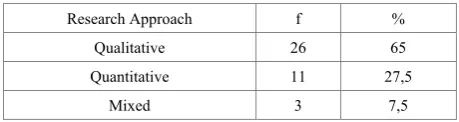
[image:2.595.306.536.562.623.2]The findings in Table 1 are obtained when the research
approaches of the studies investigated are examined
according to the first study question. When Table 1 is
examined it is seen that 26 of 40 studies adopted a
qualitative approach and 11 adopted a quantitative
approach. It is observed that the mixed approach is
preferred in the other 3 studies. It is seen that a majority of
the studies (65%) are qualitative.
Table 1. Research approaches of the studies investigated
Research Approach f %
Qualitative 26 65
Quantitative 11 27,5
Mixed 3 7,5
3.2. Findings Regarding Research Methods
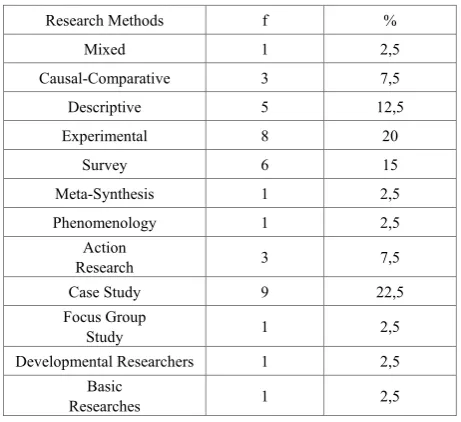
Table 2. Research methods of the studies investigated
Research Methods f %
Mixed 1 2,5
Causal-Comparative 3 7,5
Descriptive 5 12,5
Experimental 8 20
Survey 6 15
Meta-Synthesis 1 2,5
Phenomenology 1 2,5
Action
Research 3 7,5
Case Study 9 22,5
Focus Group
Study 1 2,5
Developmental Researchers 1 2,5
Basic
Researches 1 2,5
3.3. Findings Regarding Learning Environments
Learning environments of the studies investigated are
identified in Table 3. It is observed that studies are
conducted mostly in formal education (65%). Non-formal
education (10%) is preferred less. The other 10 studies are
literature surveys. As there is no learning environment in
literature surveys they are given separately and their rate
is 25%.
Table 3. Learning environments of the studies investigated
Learning Environments f %
Formal Education 26 65
Non-formal Education 4 10
Literature Survey 10 25
[image:3.595.59.289.89.301.2]3.4. Findings Regarding Learning Outcomes
Table 4. Learning outcomes of the studies investigatedLearning Outcomes f %
COGNITIVE SKILLS
Achievement 8 20
Memorability,
Effectuality 2 5
Aptitude 2 5
Ability 2 5
SENSORY
FACTORS
Attitude, sensitivity,
perception, attention 9 22,5
Motivation 1 2,5
OTHERS 10 25
Literature survey 10 25
Table 4 represents the learning outcomes of the studies
investigated. It is found in this study that learning outcomes
exceed the total study number. This is because more than
one learning outcomes are included in some studies. When
the table is examined it is concluded that cognitive skills
outcomes amount to 35% and sensory skills outcomes
amount to 25%. According to Table 4, achievement
outcome from cognitive skills (20%), and attitude,
sensitivity, perception and attention outcomes from
sensory skills (22,5%) are in the forefront. 25% of the
studies are about other things than cognitive and sensory
skills. It is observed that the other 25% of the studies are
literature surveys.
3.5. Findings Regarding Data Collection Tools
Findings about data collection tools of the studies
investigated are given in Table 5. As observed in Table 5,
although there are a total of 40 studies addressed in the
context of this study, data collection tools are more. This is
because more than one data collection tools were used in
some of the studies. When the studies are examined it is
specified that researchers mostly used documents (37,5%)
and interviews (32,5%). Also, perception, attitude, aptitude,
personality and ability tests et cetera (10%), and
survey/observation tool (10%) are concentrated upon.
Questionnaires (7,5%) and alternative assessment and
evaluation instruments (2,5%) are included the least. The
rate of 5% shows other data collection tools.
Table 5. Data collection tools of the studies investigated
Data Collection Tools f %
Achievement Tests 4 10
Questionnaires 3 7,5
Perception, attitude, aptitude,
personality, ability tests etc. 7 17,5
Interview 13 32,5
Alternative assessment and
evaluation instruments 1 2,5
Documents 15 37,5
Observation 4 10
Other data collection tools 2 5
[image:3.595.59.290.90.301.2]3.6. Findings Regarding Sample Groups
Table 6. Sample groups in the studies investigatedSample Groups f %
Science teacher 2 5
Science teacher candidate 4 10
Academician, teacher, expert
and administrator 1 2,5
Primary school teacher
candidate 1 2,5
Pre-school teacher candidate 1 2,5
Primary education (6-8),
secondary education (9-12) 20 50
Mixed (teacher and student) 1 2,5
Findings about the sample groups chosen for the studies
investigated are presented in Table 6. Primary and
secondary education students (50%) are mostly chosen as
sample levels in the studies. Besides that, studies
conducted with science teacher candidates (10%) and
science teachers (5%) are observed to be quite many.
Studies with primary (2,5%) and pre-school teacher
candidates (2,5%) and mixed (teacher-student) studies are
observed to be minimal. No samples are specified for
literature surveys as they are done on the body of literature.
3.7. Findings Regarding STEM Subjects Studied
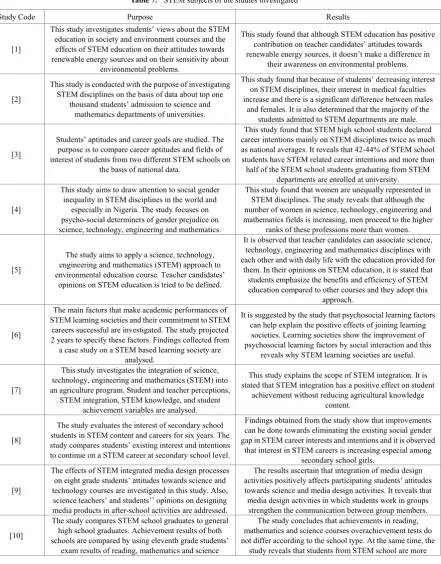
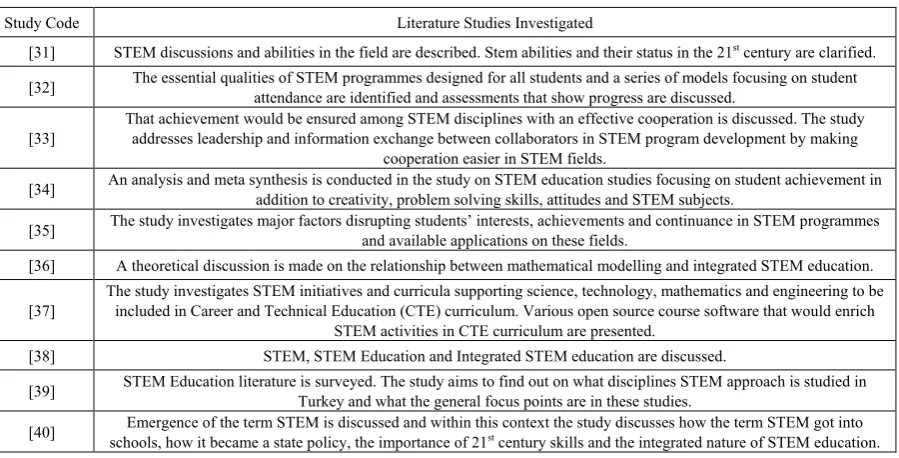
[image:4.595.83.525.195.760.2]The components discussed in the studies are given in
detail in Table 7 and Table 8 according to the STEM
subjects of the studies.
Table 7. STEM subjects of the studies investigated
Study Code Purpose Results
[1]
This study investigates students’ views about the STEM education in society and environment courses and the
effects of STEM education on their attitudes towards renewable energy sources and on their sensitivity about
environmental problems.
This study found that although STEM education has positive contribution on teacher candidates’ attitudes towards renewable energy sources, it doesn’t make a difference in
their awareness on environmental problems.
[2]
This study is conducted with the purpose of investigating STEM disciplines on the basis of data about top one
thousand students’ admission to science and mathematics departments of universities.
This study found that because of students’ decreasing interest on STEM disciplines, their interest in medical faculties increase and there is a significant difference between males
and females. It is also determined that the majority of the students admitted to STEM departments are male.
[3]
Students’ aptitudes and career goals are studied. The purpose is to compare career aptitudes and fields of interest of students from two different STEM schools on
the basis of national data.
This study found that STEM high school students declared career intentions mainly on STEM disciplines twice as much as national averages. It reveals that 42-44% of STEM school students have STEM related career intentions and more than half of the STEM school students graduating from STEM
departments are enrolled at university.
[4]
This study aims to draw attention to social gender inequality in STEM disciplines in the world and
especially in Nigeria. The study focuses on psycho-social determiners of gender prejudice on science, technology, engineering and mathematics.
This study found that women are unequally represented in STEM disciplines. The study reveals that although the number of women in science, technology, engineering and mathematics fields is increasing, men proceed to the higher
ranks of these professions more than women.
[5]
The study aims to apply a science, technology, engineering and mathematics (STEM) approach to environmental education course. Teacher candidates’
opinions on STEM education is tried to be defined.
It is observed that teacher candidates can associate science, technology, engineering and mathematics disciplines with each other and with daily life with the education provided for
them. In their opinions on STEM education, it is stated that students emphasize the benefits and efficiency of STEM education compared to other courses and they adopt this
approach.
[6]
The main factors that make academic performances of STEM learning societies and their commitment to STEM
careers successful are investigated. The study projected 2 years to specify these factors. Findings collected from a case study on a STEM based learning society are
analysed.
It is suggested by the study that psychosocial learning factors can help explain the positive effects of joining learning
societies. Learning societies show the improvement of psychosocial learning factors by social interaction and this
reveals why STEM learning societies are useful.
[7]
This study investigates the integration of science, technology, engineering and mathematics (STEM) into an agriculture program. Student and teacher perceptions,
STEM integration, STEM knowledge, and student achievement variables are analysed.
This study explains the scope of STEM integration. It is stated that STEM integration has a positive effect on student
achievement without reducing agricultural knowledge content.
[8]
The study evaluates the interest of secondary school students in STEM content and careers for six years. The study compares students’ existing interest and intentions to continue on a STEM career at secondary school level.
Findings obtained from the study show that improvements can be done towards eliminating the existing social gender gap in STEM career interests and intentions and it is observed
that interest in STEM careers is increasing especial among secondary school girls.
[9]
The effects of STEM integrated media design processes on eight grade students’ attitudes towards science and technology courses are investigated in this study. Also, science teachers’ and students’’ opinions on designing media products in after-school activities are addressed.
The results ascertain that integration of media design activities positively affects participating students’ attitudes towards science and media design activities. It reveals that media design activities in which students work in groups
strengthen the communication between group members.
[10]
The study compares STEM school graduates to general high school graduates. Achievement results of both schools are compared by using eleventh grade students’
exam results of reading, mathematics and science
The study concludes that achievements in reading, mathematics and science courses overachievement tests do not differ according to the school type. At the same time, the
courses. likely to be enrolled into basic STEM departments of universities.
[11] The study investigates students’ perceptions on STEM activities carried out in an out-of-school STEM education program.
The study presents the nature of STEM activities that provide students with opportunities to design products and deal with
design problems. It is indicated that combining STEM activities with out-of-school education programs can support
students’ improvement towards following Stem related careers.
[12]
The study investigates how to specify secondary school students’ interest in STEM careers. STEM Career Pioneers Study, which is a five point Likert scale, is
adapted into Turkish in the study.
It is stated that the scale adapted to Turkish can be utilised to assess secondary school students’ interests in science, technology, mathematics and engineering professions. It is
indicated that courses on scientific research, engineering design and technological activities can be included in teacher
training programmes and that students can be interested in STEM discipline at earlier ages.
[13] The purpose of the study is to increase students’ efficacy by catalysing STEM based learning.
It is observed that the nature and use of discourses change semantically and syntactically like students’ aptitudes in completing tasks. It is determined that the clear, traceable lines of STEM language development are an intermediary of
performance variations observed.
[14]
This study compares engineering design curricula in different schools and engineering projects in the two curricula. The study provides vital information for technology education that tries to apply engineering design and how students solve unidentified problems.
The results of this study reveal that students in both engineering design curricula successfully improve their problem solving skills in order to pass from “problem field” to “solution space” because they work on an open-ended and
unidentified problem. Also, class observation revealed that student design teams have sound design discussions and
work together to solve technical problems.
[15]
The effects of STEM education on secondary school fifth grade students’ attitudes towards science and on their scientific process skills are investigated in the
study.
The results ascertain that STEM activities positively improve students’ scientific process skills and their attitudes towards science. Another result that can be concluded from this study is that STEM education positively improves fifth grade
students’ attitudes towards science.
[16]
The study aims to apply a process planned with Design Based Science Education which is suggested in order to project STEM education approach to science classes in science teacher candidates’ training and to determine
teacher candidates’ opinions.
It is determined in the study that teacher candidates assess engineering design process with such characteristics as
providing learning by doing the strongest aspects, motivating, providing permanent learning and being inquiry based. It is also concluded that creating a product during the lesson is assessed by the teacher candidates as a positive
aspect of the process.
[17]
The study aims to determine the awareness of sixth grade students who attend science, technology, engineering
and mathematics (STEM) education projects of the importance of science, technology, engineering and mathematics education, and their attainment of essential
information and skills on digital multimedia design technologies and STEM perceptions.
It is found that students consider STEM spot activity as improving their knowledge and skills on technology and computer subjects. Students specifically emphasise that their
design skills have improved. It is observed that student attitudes and information on science, engineering, technology and mathematics disciplines improved with the
projected STEM spot.
[18]
The purpose of this study is to investigate the characteristics of out-of-school activities with science, technology, engineering and mathematics content and to reveal students’ experiences with and learning outcomes on these activities and the effects of these activities on
students. Students’ learning circumstances and profession preferences towards STEM fields are
investigated within the scope of the study.
It is observed in the study that STEM related out-of-school activities increase students’ interests towards STEM disciplines and encourage them to choose science and
engineering disciplines as professions in future.
[19] The purpose of this study is to find out science teachers opinions on STEM and STEM based course activities.
Participants do not have negative thoughts about STEM and STEM based course activities. It is concluded in accordance with science teachers’ opinions that STEM and STEM based course activities have positive effects on students. These
positive effects can be listed as scientific process and psychomotor skills improvement, positive perspective, and
sense of responsibility development.
[20]
The purpose of this study is to investigate science teacher candidates’ opinions on STEM (science, technology, engineering, mathematics) disciplines and
education.
Teacher candidates state that engineering makes human life easier and creates a product. They express that it is necessary
to utilise technology in science and mathematics education and that technological products are used in education. It is
[21]
The study is conducted to determine the effects of STEM education and engineering applications carried out in science and technology courses on achievement. This study focuses on the integration of STEM into lessons.
It is identified that there is a significant increase in students learning levels following lessons in which STEM and engineering education applications are carried out. Thus, it
reveals that STEM education applications are effective in increasing the learning level in science laboratory course.
[22]
The purpose of the study is to determine deficiencies, insufficiencies and relative solution proposals on science, technology, engineering and mathematics
education given in K-12 and higher education institutions in their continuance into higher education
with respect to academicians, experts, teachers and administrators’ views.
It is found out that the most important deficiencies and insufficiencies are interdisciplinary cooperation, insufficient
applications and insufficient STEM courses in general and counselling, assessment and evaluation and curriculum
integration in continuance into higher education. It is determined that there is no interdisciplinary cooperation between STEM discipline courses with regard to continuance into higher education in Turkey. The lack of interdisciplinary cooperation and approaching these disciplines separately causes a rote-learning based education program instead of a
production based program.
[23]
The purpose of this study is to investigate academic performances of students studying at Texas-STEM (T-STEM) academies located in different regions in relation to Education Service Centres (ESC) in the regions they operate. T-STEM students’ performances
for three years are investigated in the study with the purpose of determining whether there is difference
between student performances depending on ESC locations.
No significant difference is found between mathematics scores of students studying at T-STEM academies located at different ESC regions in the study. It is identified that male students’ progress rate of mathematics is higher than that of females. No significant difference is detected between the
groups considering students’ socioeconomic status.
[24] The purpose of the study is to develop and introduce a STEM approach based in-service course program for science teachers.
STEM Da Vinci workshop that was developed to introduce STEM engineering design tools was effective for teachers to recognize and use the tools. The video presentations screened at the beginning provided participants to attend the workshop
in a more motivated manner. Some problems hindering models to be creative were encountered while drawing design
of STEM models. Therefore, it is concluded that design and drawing courses need to be included in the program.
[25]
The study investigates whether students studying at a number of STEM schools serving disadvantaged students can get more advanced science and mathematics
courses than their peers studying in traditional schools. The study focusing on under-represented students in STEM inquiries into how students in STEM schools progress in passing and achieving advanced science and
mathematics courses.
The findings show that STEM schools are fairer than non-STEM schools. Almost in all comparisons, gaps in advanced traineeship and passing courses are smaller in
STEM schools than non-STEM schools.
[26]
The purpose of the study is to determine the effects of STEM applications and complete learning on secondary school students’ academic achievements, perceptions on
inquiry based learning skills regarding science, motivation towards science, attitudes towards STEM and
memorability of information.
It is concluded in the study that STEM applications and complete learning positively affect students’ academic achievements and their motivation towards science. It is also observed that STEM applications and complete learning have no positive effect on students’ attitudes towards STEM and
perceptions on inquiry based learning skills regarding science.
[27]
The purpose of the study is to find out students’ opinions on STEM applications that developed as learning and teaching centred theoretic approach in which science, technology, engineering and mathematics (STEM) disciplines are taught in an interdisciplinary manner.
According to the study students positively express that STEM applications are helpful in many aspects, they want to
improve themselves more in these disciplines and lessons need to be taught with STEM activities.
[28]
The purpose of the study is to investigate teacher candidates’ abilities to combine their achievements in primary education science programmes and engineering
skills.
The abilities of pre-service teachers using STEM education in associating their achievement skills in primary education science programmes with engineering disciplines are tested in the study. It is observed in the study that pre-service
teachers can easily associate their achievements.
[29]
The purpose of this study is to identify the changes in students’ interests in STEM disciplines and areas of
interest in pursuing STEM careers after attending informal STEM education programmes.
Study findings reveal that short-term informal STEM intervention is effective in changing participants’ interest on
STEM.
[30]
The purpose of the study is to develop a STEAM program on learning and teaching a traditional Korean music instrument and to apply it in a high school class in
order to identify its effectiveness.
It is observed in the study that STEAM programmes in science classes contribute to STEAM literacy by integrating
science, technology and art, as well as they are capable of improving creative problem solving skills by generating new
Table 8. STEM subjects of the literature studies investigated
Study Code Literature Studies Investigated
[31] STEM discussions and abilities in the field are described. Stem abilities and their status in the 21st century are clarified.
[32] The essential qualities of STEM programmes designed for all students and a series of models focusing on student attendance are identified and assessments that show progress are discussed.
[33] That achievement would be ensured among STEM disciplines with an effective cooperation is discussed. The study addresses leadership and information exchange between collaborators in STEM program development by making cooperation easier in STEM fields.
[34] An analysis and meta synthesis is conducted in the study on STEM education studies focusing on student achievement in addition to creativity, problem solving skills, attitudes and STEM subjects.
[35] The study investigates major factors disrupting students’ interests, achievements and continuance in STEM programmes and available applications on these fields.
[36] A theoretical discussion is made on the relationship between mathematical modelling and integrated STEM education.
[37] The study investigates STEM initiatives and curricula supporting science, technology, mathematics and engineering to be included in Career and Technical Education (CTE) curriculum. Various open source course software that would enrich STEM activities in CTE curriculum are presented.
[38] STEM, STEM Education and Integrated STEM education are discussed.
[39] STEM Education literature is surveyed. The study aims to find out on what disciplines STEM approach is studied in Turkey and what the general focus points are in these studies.
[40] schools, how it became a state policy, the importance of 21Emergence of the term STEM is discussed and within this context the study discusses how the term STEM got into st century skills and the integrated nature of STEM education.