ScholarWorks @ Georgia State University
ScholarWorks @ Georgia State University
Nursing Dissertations (PhD) School of Nursing
Fall 12-14-2011
Sleep Loss and its Health Impact Among Family Caregivers of
Sleep Loss and its Health Impact Among Family Caregivers of
Persons with a Primary Malignant Brain Tumor
Persons with a Primary Malignant Brain Tumor
Jean Pawl
Georgia State University
Follow this and additional works at: https://scholarworks.gsu.edu/nursing_diss Part of the Nursing Commons
Recommended Citation Recommended Citation
Pawl, Jean, "Sleep Loss and its Health Impact Among Family Caregivers of Persons with a Primary Malignant Brain Tumor." Dissertation, Georgia State University, 2011.
https://scholarworks.gsu.edu/nursing_diss/25
iii
All dissertations deposited in the Georgia State University Library must be used in accordance with the stipulations prescribed by the author in the preceding statement.
The author of this dissertation is:
Jean D. Pawl
811 Shackleford Place Evans, GA 30809
The director of this dissertation is:
Dr. Patricia C. Clark Professor
Byrdine F. Lewis School of Nursing and Health Professions Georgia State University
P.O. Box 3995
Atlanta, GA 30302-4019
Users of this dissertation not regularly enrolled as students at Georgia State University are required to attest acceptance of the preceding stipulations by signing below. Libraries borrowing this dissertation for the use of their patrons are required to see that each user records here the information requested.
NAME OF USER ADDRESS DATE TYPE OF USE
iv
Jean D. Pawl
ADDRESS: 811 Shackleford Place Evans, GA 30809
EDUCATION:
Ph.D. 2011 Georgia State University Atlanta, Georgia
M.S.N. 1994 University of Nebraska Medical Center Omaha, Nebraska
B.S.N. 1985 University of Nebraska Medical Center Omaha, Nebraska
A.D.N. 1983 University of Nebraska Medical Center Omaha, Nebraska
PROFESSIONAL EXPERIENCE:
1997 - Present Assistant Professor, Augusta State University
1993 -1997 Clinical Instructor, Augusta State University
1989 - 1993 Charge Nurse, Oncology/Hematology Special Care Unit, University of Nebraska Medical Center
1987 - 1989 Staff Nurse, Oncology/Hematology Special Care Unit, University of Nebraska Medical Center
1986 - 1987 Charge Nurse, 7 West Medical-Surgical Unit University of Nebraska Medical Center
v
1985 - Present Oncology Nursing Society
1994 - Present Augusta, Georgia Chapter of the Oncology Nursing Society
1985 - Present Sigma Theta Tau International
1994 - Present Beta Omicron Chapter of Sigma Theta Tau
1985 - 1994 Gamma Pi Chapter of Sigma Theta Tau
1985 - Present Oncology Certified Nurse
2009 - Present The Honor Society of Phi Kappa Phi
2009 - Present Golden Key International Honour Society, Alpha Chapter
2010 - Present Southern Nursing Research Society
HONORS:
2005 Spirit of Nursing Award, Augusta State University, Department of Nursing
2000 Spirit of Nursing Award, Augusta, Georgia Chapter of the Oncology Nursing Society
vi
SLEEP LOSS AND ITS HEALTH IMPACT AMONG FAMILY CAREGIVERS OF
PERSONS WITH A PRIMARY MALIGNANT BRAIN TUMOR
by
JEAN D. PAWL
Sleep impairments for caregivers are multifactorial. Assumptions are that
caregivers of those with primary malignant brain tumors (PMBT) are similar to
caregivers of persons with dementia as cognitive impairments are present at diagnosis.
The shorter trajectory of PMBTs and rapid deterioration of recipients‘ health may
influence sleep in caregivers of persons with a PMBT. The purposes of this study were to
use a sleep impairment model to characterize caregiver sleep using objective and
subjective measures, and to examine sleep loss effects on psychosocial and physiologic
health outcomes.
A secondary data analysis using baseline data from a larger study of mind-body
interactions in caregivers of family members with PMBTs was used. Caregiver data
included standardized questionnaires, serum blood draw, and three-day sleep-wake
activity data from an accelerometer. Analyses included descriptive statistics, correlations,
t-tests, and hierarchical regression models.
Caregivers (N = 133) were White (94%), female (69.2%) spouses (75.2) and on
vii
with shorter total sleep time (TST) (357 min, SD = 84.6) and more frequent wake after
sleep onset (WASO; 15.1%, SD = 9.2) than in the general population. Caregivers
reported high anxiety (59.4%). Caregiver comorbidities and care recipient functioning
explained higher perceptions of health (R2 = 26, F(2, 84) = 14.94, p < .001). Whereas,
longer TST, more WASO and poorer sleep quality explained poorer quality of life (R2 =
.27, F(4, 66) = 6.19, p < .001). Sleep loss variables explained little variance in physical
health status, interleukin-1ra and interleukin-6 levels, fatigue, depressive symptoms,
spiritual health, social support, and work limitations.
Nurses need to assist caregivers with anxiety management and ways to improve
sleep at time of PMBT diagnosis. Sleep impairments place these caregivers at risk for
viii
PERSONS WITH A PRIMARY MALIGNANT BRAIN TUMOR
by
JEAN D. PAWL
A DISSERTATION
Presented in Partial Fulfillment of Requirements for the Degree of Doctor of Philosophy in Nursing in the Byrdine F. Lewis
School of Nursing and Health Professions Georgia State University
Atlanta, Georgia
ix
Copyright by
Jean D. Pawl
x
This dissertation is dedicated in loving memory of my father, Norman Runge,
diagnosed with a glioblastoma multiforme March 21, 2006, died June 20, 2006, and his
caregiver, my mother, Jean Runge, and to all the other caregivers and care recipients who
must walk this journey.
No journey is possible without financial support. I thank the Byrdine F. Lewis
School of Nursing & Health Professions for funding my ability to attend school full-time
through release time from my work as a full-time professor; for assisting with purchasing
supplies and travel to and from Augusta to Atlanta; and for supporting out of state travel
to Pittsburgh, PA to work with Dr. Sherwood and to Jacksonville, Fl to attend the
Southern Nursing Research Society conference to present my preliminary research.
To reach this point in my journey, I thank Dr. Patricia Clark for her infinite
patience and wisdom in pointing the way when the path became congested and when I
wanted to go down roads that should not be traveled. I would be remiss not to thank the
other guides on my journey; Dr. Sylvia Lee and her expertise in sleep and actigraphy and
unfailing sense of humor, Dr. Paula Sherwood whose generosity and mentorship made
the data set available; and Dr. Dale White for his insight with working with bereaved and
ever supportive words of encouragement. And to thank my other professors who helped
xi
coworkers at Augusta State, and my family and friends who have lifted me up at times
and helped to carry me on this journey.
Every journey is enriched by a travel companion and I thank with all my heart and
love, my husband, Rich, for traveling this journey with me. I simply could have not done
xii
Section Page
List of Tables ... xvi
List of Figures ... xvii
List of Abbreviations ... xviii
Chapter I. INTRODUCTION ... 1
Overview of PMBTs and Caregiving ... 1
Overview of Normal Sleep ... 5
Use of a Sleep Impairment Model for Caregivers of Those with PMBTs... 7
Risk Factors for Sleep Deprivation and Sleep Disruption ... 8
Sleep Deprivation... 9
Sleep Disruption... 10
Adverse Health Outcomes Related to Sleep Loss ... 11
Caregiving for a Person with a PMBT and Sleep Loss ... 11
Research Question and Hypotheses ... 12
Research Question ... 14
Hypotheses ... 14
II. REVIEW OF THE LITERATURE ... 17
Primary Malignant Brain Tumors ... 17
Health Impacts of Family Caregiving ... 18
xiii
Impaired Sleep as a Result of Informal Caregiving ... 26
Impaired Sleep in Caregivers of Persons with PMBTs ... 32
The Effects of Sleep Loss on Physical and Mental Health ... 33
Sleep Impairment Effects on Immune Functioning ... 36
Measures of Sleep in Caregivers... 39
Objective Measures ... 39
Subjective Measures ... 40
Relationships Between Stress, Depression, Sleep Loss, and Health Outcomes ... 43
Summary ... 45
III. METHODOLOGY ... 47
Research Design... 47
Participants and Setting... 48
Instruments ... 48
Outcomes Related to Sleep Loss... 49
Physiological dimension ... 49
Cognitive/behavioral dimension ... 50
Emotional dimension ... 51
Social dimension ... 53
Sleep Loss ... 54
Additional Sleep Characteristics ... 56
Sleep Deprivation Variables ... 56
Sleep Disruption Variables ... 58
Caregiver and Caregiving Characteristics ... 60
xiv
Data Collection Procedures ... 60
Data Management ... 61
Data Analysis ... 61
Threats to Internal Validity ... 63
IV. RESULTS ... 65
Sample Characteristics ... 66
Descriptive Statistics ... 67
Major Study Variables ... 70
Research Question ... 74
Relationships among Descriptive Characteristics and Major Study Variables .... 75
Hypothesis Testing... 81
Hypothesis 1... 81
Hypothesis 2... 84
Hypothesis 3... 86
Hypothesis 4... 88
Hypothesis 5... 90
V. DISCUSSION AND CONCLUSION ... 93
Sleep Characteristics of Caregivers of Persons with PMBTs ... 93
Sleep Variable Predictors of Health Outcomes ... 98
Predictors of Sleep Loss... 99
Predictors of physiological health ... 102
Predictors of cognitive/behavioral health ... 104
Predictors of emotional health ... 105
xv
Other Associations in the Sleep Impairment Model ... 108
Limitations of the Study... 110
Strengths of the Study ... 112
Implications for Practice ... 113
Recommendations for Future Research ... 115
Conclusion ... 116
REFERENCES ... 118
APPENDICES ... 152
Appendix A: Variables and Instruments for Caregiver Study ... 152
Appendix B: Interleukin (Il-1 And 1l-6) Policy from Parent Study ... 155
Appendix C: Instructions for Bodymedia® Sensewear™ Armbands for Caregivers from Parent Study ... 158
Appendix D: Full Hierarchical Regression Models for Hypotheses 1 - 5 ... 160
xvi
Table Page
1. Cytokines Involved in Abnormal Sleep Situations ... 38
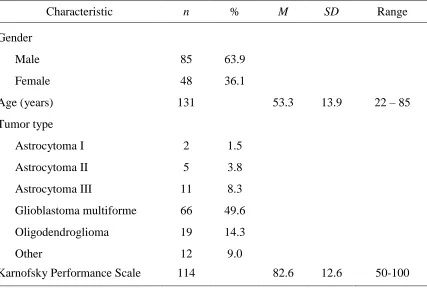
2. Care Recipient Characteristics ... 66
3. Caregiver Characteristics ... 68
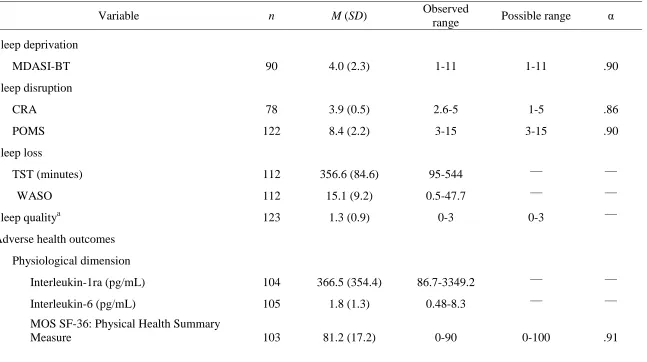
4. Descriptive Statistics and Cronbach‘s Alpha Coefficients for Conceptual Variables of Sleep Loss in Caregivers ... 71
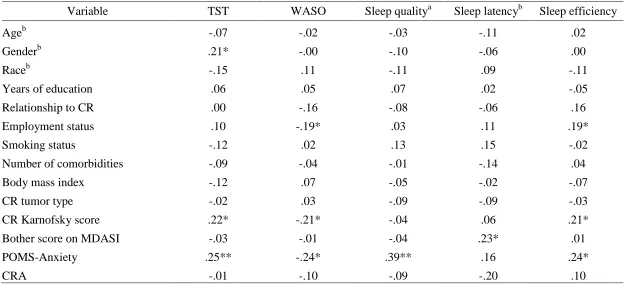
5. Relationships Among Caregiver Characteristics and Sleep Predictors Variables ... 77
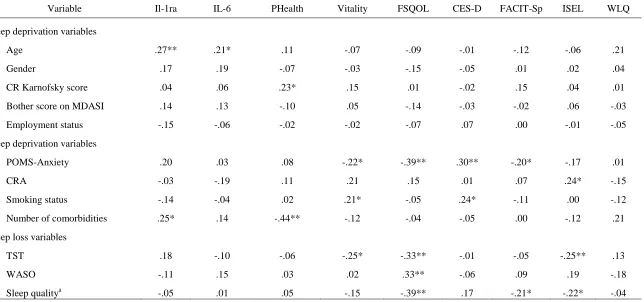
6. Relationships Among Model Predictor Variables and Caregiver Health Outcome Variables ... 78
7. Relationships Among Caregiver Health Outcomes ... 80
8. Variables Associated with Caregiver Sleep Loss ... 82
9. Variables Associated with Caregiver Physiological Health ... 85
10. Variables Associated with Caregiver Cognitive/Behavioral Health ... 87
11. Variables Associated with Caregiver Emotional Health ... 89
xvii
Figure Page
1. Conceptual model of impaired sleep ... 8
xviii
AASM American Academy of Sleep Medicine
ACS American Cancer Society
ADL Activity of Daily Living
BMI Body Mass Index
CBTRUS Central Brain Tumor Registry of the United States
CES-D Center for Epidemiologic Studies – Depression Scale
CRA Caregiver Reaction Assessment
EEG Electroencephalogram
ESS Epworth Sleepiness Scale
FACIT-Sp Functional Assessment of Chronic Illness Therapy- Spiritual
FSQOL Fox Simple Quality of Life
GBM Glioblastoma Multiforme
GH Growth Hormone
HPA Hypothalamic-Pituitary-Adrenocortical
IADL Instrumental Activity of Daily Living
IL Interleukin
ISEL Interpersonal Support Evaluation List
KPS Karnofsky Performance Scale
xix
NREM Nonrapid Eye Movement
PMBT Primary Malignant Brain Tumor
POMS Profile of Mood States
PSG Polysomnography
PSQI Pittsburgh Sleep Quality Index
QOL Quality of Life
REM Rapid Eye Movement
SE Sleep Efficiency
SWS Slow Wave Sleep
TIB Time in Bed
TNFα Tumor Necrosis Factor Alpha
TST Total Sleep Time
WASO Wake After Sleep Onset
1
CHAPTER I
INTRODUCTION
This chapter provides an overview of the significance of providing care to a
family member with a primary malignant brain tumor (PMBT) and its impact on sleep. In
theory, sleep loss in these caregivers has a deleterious effect on health. In this study, a
sleep impairment model as applied to caregivers of those with a PMBT is proposed.
Overview of PMBTs and Caregiving
PMBTs account for 2% of all cancers yet are associated with disproportionate
morbidity and mortality (Omay & Vogelbaum, 2009; Schnell & Tonn, 2009). Persons,
typically males in their mid-60s or older, diagnosed with the most common PMBT,
malignant gliomas, have an average life expectancy of 14 months after diagnosis (Omay
& Vogelbaum, 2009). At the time of diagnosis, those with PMBTs often present with
focal deficits, which can include headache (56%); memory loss (35%); cognitive changes
(34%); motor deficits (33%); language deficits (32%); seizures (32%); personality
changes (23%), visual disturbances (22%), and/or other symptoms such as nausea and
vomiting, changes in level of consciousness, and sensory deficits (Chandana, Movva,
Arora, & Singh, 2008). During the course of the treatment trajectory, which may include
a craniotomy for tumor debulking, radiation therapy for 6 weeks, and chemotherapy
(Armstrong, 2009; Schnell & Tonn, 2009), the person with a PMBT experiences the
inability to perform activities of daily living (ADLs), cognitive impairments, and
the person with PMBT falls upon members of the family, as the physical and cognitive
manifestations of tumor invasion and treatment do not warrant hospitalization (Sherwood
et al., 2006).
There has been extensive research on the effects of providing care on the
caregiver‘s emotional and physical health, defined in the literature as caregiver burden
(Braun, Mikulincer, Rydall, Walsh, & Rodin, 2007; Kim & Schulz, 2008; Pinquart &
Sorensen, 2003a, 2003b; Van Den Wijngaart, Vernooij-Dassen, & Felling, 2007;
Vitaliano, Zhang, & Scanlan, 2003). Intertwined in caregiver burden are sleep
disturbances, which have been shown to worsen physical and psychological health
(Perrin, Heesacker, Stidham, Rittman, & Gonzalez-Rothi, 2008; Wilcox & King, 1999).
Caregivers of those with PMBTs report sleep disturbances as well (Muñoz et al., 2008;
Sherwood et al., 2006; Wideheim, Edvardsson, Pahlson, & Ahlstrom, 2002). However,
the effects of sleep disruptions and their impact on health outcomes have not been the
focus of any study in the scant literature on caregivers of persons with PMBTs. It is
unknown (a) what types of sleep disturbances are reported; (b) the antecedents to the
sleep disturbances; and (c) if these sleep disturbances impact family caregivers‘ daily
functioning and quality of life (QOL).
Sleep disturbances affect the complex interaction between (a) the circadian
pacemaker rhythms (such as sleep/wake, thermal [body temperature], neuroendocrine
[heart rate, hormones such as melatonin and cortisol], and immune [cytokines]), (b) the
sleep homeostat (the pressure to sleep, i.e., sleepiness or the lack of pressure to sleep,
alertness), and (c) the architecture of the sleep cycles (Birchler-Pedross et al., 2009;
with negative mood (McCurry, Logsdon, Teri, & Vitiello, 2007) and impaired cognitive
and motor functioning (Banks & Dinges, 2011; Curcio, Casagrande, & Bertini, 2001).
For caregivers who must provide care and support to care recipients with PMBTs, sleep
disruptions may adversely impact their ability to meet the challenges of caring for a loved
one with cognitive, physical, and neuropsychiatric impairments and whose disease may
change rapidly.
The research in caregivers of adults with PMBTs is limited: most studies are
qualitative or descriptive in nature and limited to Caucasian female spousal caregivers
who provided care for less than 3 years—most for 6 months or less (Cashman et al.,
2007; Keir, 2007; Keir et al., 2006; Muñoz et al., 2008; Salander & Spetz, 2002; Schmer,
Ward-Smith, Latham, & Salacz, 2008; Sherwood, Given, Doorenbos, & Given, 2004;
Sherwood et al., 2006; Sherwood et al., 2007; Wideheim et al., 2002). Rapid changes in
care recipient functioning from PMBTs has been associated with increased levels of
depressive symptoms (Bradley et al., 2009; Schubart, Kinzie & Farace, 2008; Sherwood
et al., 2006; Sherwood et al., 2007; Strang & Strang, 2001; Strang, Strang, & Ternestedt,
2001), anxiety (Cashman et al., 2007; Keir et al., 2006; Schubart et al., 2008) and fatigue
(Cashman et al., 2007; Schubart et al., 2008; Sherwood et al., 2004) in these caregivers.
Furthermore, greater dependence of the care recipient has been associated with an
increase in caregiver distress and feelings of burden (Sherwood et al., 2006). Whether
sleep disturbances create or add to caregiver depressive symptoms, anxiety, or fatigue is
unknown in this caregiving population. Brooks, Girgenti, and Mills (2009) found that
sleep complaints put an individual at risk for development of depression, particularly in
persons typically experience sleep complaints such as prolonged sleep latency, increased
wakefulness in the night, and decreased sleep efficiency (Swanson, Hoffmann, &
Armitage, 2010).
In other cancer caregiving populations, sleep impairments in the form of
insomnia, other nocturnal sleep disturbances (such as arousals by the care recipient), and
daytime fatigue are common complaints (Berger et al., 2005). Poor sleep has been
associated with reactive depression that interferes with daily functioning, QOL, and
ability to provide care (Berger et al., 2005). Chronic sleep loss has only recently been
associated with increased stress in caregivers of persons with cancer (Berger et al., 2005).
These sleep impairments also are noted in other caregiving populations, such as dementia
care and the frail elderly (Iecovich, 2008; McCurry et al., 2007) and may lead to
institutionalization of the care recipient (Chenier, 1997; Pollack & Perlick, 1991; Stewart,
1995). Furthermore, sleep impairments can continue to be present long after the
caregiving situation has terminated either through the death or institutionalization of the
care recipient (Carlsson & Nilsson, 2007; Carter, 2005; Carter, Mikan, & Simpson, 2009;
Waldrop, 2007). The continued sleep impairments may be a result of habituation to the
sleep conditions imposed by caregiving and effects on the circadian system (Rogers &
Dinges, 2008). Carter et al. (2009) reported that sleep pattern disturbances may continue
for years after the care recipient‘s death and that these prolonged disturbances are
associated with increased incidence of depression and prolonged grief trajectory, which
may be related to the effects of sleep deprivation on the neurochemistry of the sleep
Overview of Normal Sleep
Sleep is an interweaving of complex physiologic and behavioral processes that
result in a reversible behavioral state of perceptual disengagement from and
unresponsiveness to the environment (Carskadon & Dement, 2011). Sleep is divided into
two stages: nonrapid eye movement sleep (NREM) and REM. Non-REM sleep consists
of four stages that represent a continuum of sleep depth as seen on the
electroencephalogram (EEG): Stage 1 is the lightest sleep stage in which a person is
easily aroused, and Stage 4 is the deepest. Stages 3 and 4 are typically categorized
together and called deep, delta, or slow wave sleep (SWS). During SWS, voluntary
muscle control and tone remains intact while mental activity becomes slower. In contrast,
REM sleep is characterized by (a) a high level of brain activity, resembling waking
activity on the EEG, and (b) paralysis of the voluntary muscles, which is believed to keep
people from acting out their dreams (Carskadon & Dement, 2011). Non-REM sleep
accounts for about 75% to 80% of total sleep—REM sleep for 20% to 25%. A typical
night‘s sleep includes four to six sleep cycles lasting approximately 90 to 110 minutes
with NREM and REM alternating during each cycle (Carskadon & Dement, 2011; Carter,
2005; Vena, Parker, Cunningham, Clark, & McMillan, 2004). Early in the night, the
stages of SWS dominate the sleep cycle, whereas in the latter half of the night, REM
sleep prevails (Walker, 2009).
Sleep/wake is regulated through three distinct processes. The homeostatic process
mediates the increase in sleep pressure while awake and the dissolution of sleep pressure
during sleep. The circadian process is composed of alternating periods of high and low
process occurs during sleep and is composed of the alteration between the NREM and
REM sleep states (Kunz & Herrmann, 2000). These processes interact to determine the
timing, duration, and architecture of sleep. Sleep propensity in the circadian process is
almost opposite in phase to the homeostatic process. Circadian sleep propensity is low in
the evening time when the homeostatic sleep pressure is high, which allows an individual
to stay awake with appropriate daytime brain functioning. In contrast, circadian sleep
propensity is high in the early morning when the homeostatic sleep pressure is low,
facilitating consolidated sleep during the night. REM sleep in the ultradian process is
heavily influenced by the circadian process, which results in more REM sleep during the
early morning hours of sleep (Beersma, 1998; Kunz & Herrmann, 2000).
Researchers have hypothesized that two major functions of sleep are restoration
of the brain and the creation of memory through encoding and consolidation. The
restoration of the brain hypothesis is supported through research findings that (a) sleep
deprivation affects cognitive functioning more than physical functioning, (b) quiet
waking rests the body but does not satisfy the need to sleep, and (c) there are predictable
EEG pattern changes after sleep deprivation in SWS (Kunz & Herrmann, 2000).
Furthermore, in rat studies, neuronal degeneration occurs in the supraoptic nucleus of the
hypothalamus after sleep deprivation, leading to a predictable syndrome of temperature
dysregulation, weight loss, skin lesions, and eventual death if sleep deprivation continues
for 2 to 3 weeks (Eiland et al., 2002). Sleep deprivation has a profound effect on the
encoding of emotional stimuli, particularly positive and neutral stimuli, whereas negative
emotional stimuli are more resistant to the effects of sleep loss (Walker, 2009). The
learning of formal tasks and exposure to high stimulation environments (Kunz &
Herrmann, 2000). Furthermore, people tested after a night of sleep have been found to
have memories more resistant to interference with other information across the day than
those who experienced disrupted sleep (Walker, 2009).
Use of a Sleep Impairment Model for Caregivers of Those with PMBTs
Optimal sleep, defined by Hamilton, Nelson, Stevens, and Kitzman (2007) as
between 6 and 8 1/2 hours of sleep, was associated with better psychological health,
greater environmental mastery, positive relations with others, and fewer symptoms of
anxiety and depression (N = 502). Sleep must occur in a regular pattern with only
minimal disruptions to serve as a restorative function for the mind and body (Carter,
2005). During sleep, hormones are released, and neuronal restoration occurs to support
memory and learning. Sleep mediates stress, anxiety, and tension and provides
individuals with emotional, mental, and physical energy to accomplish the tasks of daily
living and cope with stressful life events (Carter, 2005).
A sleep impairment model by Lee (2003) illustrates how impaired sleep
quantity/quality can negatively influence daily functioning, QOL, and health of the
individual. Sleep impairments may be in the form of sleep deprivation, sleep disruptions,
or both, with all resulting in sleep loss (see Figure 1). This loss of sleep may impact
health adversely through its effects on physical, cognitive/behavioral, emotional, and
Figure 1. Conceptual model of impaired sleep. From ―Impaired Sleep― by K. A. Lee, 2003, In V. Carrieri-Kohlman, A. M. Lindsey, & C. M. West (Eds.), Pathophysiological phenomena in nursing: Human responses to illness (p. 364). St. Louis, MO: Saunders. Copyright 2003 by Elsevier. Reprinted with permission.
Risk Factors for Sleep Deprivation and Sleep Disruption
There are three primary categories of risk factors for sleep deprivation and sleep
disruption: environmental, personal, and developmental (Lee, 2003). Unexpected
environmental noise or light during sleep results in arousals from sleep and subsequent
maintenance insomnia. For older adults who experience less-deep sleep than younger
adults, there is less capacity to sleep through loud noises and bright daylight (Lee, 2003).
The personal or the internal environment is influenced by physiological and
psychological stressors. Stressors can include poor nutrition, situational crises, inadequate
or overly strenuous physical activity, disease processes, or medical treatments. Chronic
stress also is known to inhibit the immune response and the cytokines involved in sleep
regulation (Lee, 2003) whereas acute stress releases catecholamines and other stimulants,
making sleep difficult. Other personal stressors may include work schedules or travels
Sleep Deprivation
Inadequate amount of sleep
Sleep Disruption
Fragmented sleep
Sleep Loss
across time zones. In caregiving, the stress may be the additional responsibilities
caregivers assume when a family member is ill. Developmental risk factors are formed
from chronic unhealthy lifestyle behaviors that develop in young adulthood as a result of
stressful life situations or undiagnosed sleep disorders. Behaviors can include drinking
caffeinated beverages in the evening, poor diet, lack of exercise, and/or watching late
night television while in bed. These behaviors perpetuate poor sleep and the continuation
of the behaviors in a futile effort to obtain sleep whereas in reality, the behaviors
exacerbate the poor sleep (Lee, 2003).
Sleep Deprivation
Lee et al. (2004) defined sleep deprivation as an inadequate amount of sleep.
Inadequate amounts of sleep may be related to delayed bedtime, early wake time, poor
sleep hygiene, or performing multiple roles or having multiple responsibilities such as
when being a caregiver. Other factors impacting sleep quantity include environmental
noxious stimuli and circadian phase desynchronosis through jet lag, shiftwork, or
seasonal light/dark exposure. Further factors can occur because of developmental
adaptations during infancy/childhood, adolescence/puberty, pregnancy/postpartum, and
aging/retirement. Lastly, total sleep time (TST) may be impacted by grief and
bereavement. For caregivers who may assume multiple roles and tasks, sleep restrictions
may occur in the context of performing these duties and result in being awake during the
night. In persons with PMBTs, the tumor and its treatment may lead to insomnia,
excessive daytime sleepiness, and increased nighttime arousals (Gapstur, Gross, & Ness,
2009). These sleep disruptions in the care recipient may (a) awaken caregivers in the
the care recipient‘s needs. Sleep obtained in the day or at irregular times that may be a
result of providing care is of poorer quality than sleep obtained during usual nighttime
sleep (Achermann & Borbely, 2011; Lee et al., 2004).
Sleep Disruption
Sleep disruption in the impaired sleep model is defined as fragmented sleep (Lee
et al., 2004). Fragmentation can be a result of sleep disorders such as sleep apnea, restless
leg syndrome, or parasomnias. Other disruptions can be related to hyperarousal from
stress and anxiety, violence, or post-traumatic events. Drugs such as caffeine, nicotine, or
other stimulants or those with the opposite effect such as alcohol and other central
nervous system depressants also can cause fragmented sleep by affecting sleep rhythm.
Health conditions and/or the treatments of these conditions may fragment sleep; for
example, the nocturia of cardiac and renal dysfunction can cause arousal from sleep.
Other health conditions implicated in sleep fragmentation include esophageal reflux;
obesity; immobility; pain; pulmonary disorders such as asthma or chronic obstructive
pulmonary disease; gastro-intestinal disorders such as irritable bowel syndrome or hiatal
hernia; and neuroendocrine disorders such as diabetes, Alzheimer‘s disease, Parkinson‘s
disease, pregnancy, and menopause. Traumatic experiences, relationships, situations at
home or at work, or noisy or restless bed partners can be an environmental stressor and
source of sleep loss (Lee et al., 2004). In the context of caregiving for persons with
PMBTs, above and beyond caregiver sleep disorders or comorbidities, caregivers may
experience increased stress and anxiety related to the gravity of the diagnosis and the
suffering sleep fragmentation may or may not be aware of the disruptions in the night,
much less the impact of sleep losses on personal health.
Adverse Health Outcomes Related to Sleep Loss
Sleep loss, particularly chronic losses (Banks & Dinges, 2011), puts a person at
risk for adverse health outcomes. It matters not whether the sleep loss is a result of
deprivation or disruption, or both. Health outcomes from sleep loss are categorized by
Lee et al. (2004) as physiological, cognitive/behavioral, emotional, or social responses.
Current literature shows that physiological responses to sleep loss include altered
immune function (Benca & Quintans, 1997; Moldofsky, 1995; Von Kanel et al., 2006),
altered metabolic/endocrine function (Moldofsky, 1995), and increased incidences of
comorbidities such as hypertension (Von Kanel et al., 2006) and depression (Hamilton et
al., 2007). Cognitive/behavioral responses include impaired daytime functioning, fatigue,
increased risk for accidents and/or errors, impaired short-term memory loss, and impaired
problem solving and coping (Banks & Dinges, 2011; Bonnet, 2011). Sleep loss effects on
the emotional domain include altered mood and low motivation (Hamilton et al., 2007).
Social responses to sleep loss include impaired social interactions, impaired family
interactions, impaired work performance and productivity, and the increased use of health
care services (Lee, 2003). Collectively, the adverse health outcomes resulting from sleep
loss may affect one‘s overall QOL.
Caregiving for a Person with a PMBT and Sleep Loss
The nature of PMBTs, especially those that are highly malignant, and their
associated shortened trajectory imposes great stress and strain on a caregiver. Families
confront the loss of personhood and rapidly changing cognitive, physical, and
neuropsychiatric impairments (Sherwood et al., 2004). The literature for this population
describes and quantifies the depression and fatigue felt by these caregivers; however, no
studies have examined sleep disturbances as a part of this depression and fatigue even
though the sleep literature for other caregivers demonstrates a greater number of
caregivers with sleep disturbances reporting depressive symptoms (Brummett et al.,
2006; Carter & Chang, 2000; Castro et al., 2009; Kochar, Fredman, Stone, & Cauley,
2007; McCurry et al., 2007). In a study by Sherwood et al. (2006), the researchers briefly
reported that awakening in the night by the care recipient caused disruptions, but how this
interplays with the depressive symptoms and fatigue reported by these caregivers has not
been studied. Families of those with brain tumors report that they live in constant anxiety
and fear of losing their loved one (Wideheim et al., 2002), but how this anxiety
associated with the uncertainty of the situation impacts sleep is not known. Furthermore,
sleep loss may affect the caregiver‘s ability to respond to the care recipient, both
physically and emotionally. By examining sleep loss characteristics of deprivation and
disruption, caregiver characteristics, care recipient characteristics, and adverse health
outcomes (see Figure 2), insights for future interventional studies that may assist
caregivers during a time of great tension and turmoil may be developed.
Research Question and Hypotheses
Based on the theoretical model of impaired sleep and the context of providing
care for the unforeseen and relatively rare diagnosis of PMBTs, the purposes of this study
were to explore the influence of sleep disruptions and deprivations and resultant sleep
Figure 2. Conceptual model for sleep impairment for a caregiver of a person with a PMBT. Adapted from ―Impaired Sleep‖ by K. A. Lee, 2003, In V. Carrieri-Kohlman, A. M. Lindsey, & C. M. West (Eds.), Pathophysiological phenomena in nursing: Human responses to illness (pp. 364). St. Louis, MO: Saunders. Copyright 2003 by Elsevier. Reprinted with permission.
Associated Factors of
Sleep Deprivation
Caregiving demands
Care recipient physical function
Age
Gender
Employment
Sleep/wake cycle
Associated Factors of
Sleep Disruption
Stress
Anxiety
Nicotine use
Health conditions (obesity, diabetes, emphysema, heart problems)
Sleep Loss
Total Sleep Time (TST)
Wake After Sleep Onset (WASO) Sleep Quality
Adverse Health Outcomes
Physiological: altered immune function (increases in interleukin 1 & 6 levels) and poorer physical health
Cognitive/Behavioral: fatigue, poorer overall quality of life
Emotional: depression, low spiritual well-being
secondary data analysis of baseline data of informal caregivers of those with PMBTs
enrolled in the nonexperimental, longitudinal study, Mind-Body Interactions in
Neuro-Oncology Caregivers (National Cancer Institute R01 [CA118711-02], Sherwood, PI,
2007), referred to in this study as the parent study. The specific aims of the proposed
secondary analysis were (a) to examine the relationships among sleep disruption and
sleep deprivation on perceived sleep quality and quantified sleep loss, (b) to examine the
relationships among sleep quality and sleep loss on the health outcomes of the caregiver,
and (c) to determine the contribution of the sleep disruptions and sleep deprivation to
caregiver health outcomes.
Research Question
1. What are the sleep characteristics (sleep onset times, sleep awake time, TST,
wake after sleep onset [WASO], naps, sleep efficiency, sleep/wake cycle) of family
caregivers of those with PMBTs?
Hypotheses
In a sample of family caregivers providing care for persons with PMBTs:
1. Sleep deprivation (caregiving demands, a reflection of care recipient function;
care recipient physical function; and employment) and sleep disruption (stress, anxiety,
nicotine use, and health conditions) will contribute significant variance (p < .05) to sleep
loss (TST, WASO, and sleep quality) while controlling for caregiver age and gender.
2. Sleep deprivation (caregiving demands, a reflection of care recipient function;
care recipient physical function; and employment), sleep disruption (stress, anxiety,
nicotine use, and health conditions), and sleep loss (TST, WASO, and sleep quality) will
immune function [increased serum levels of Interleukin 1 and Interleukin 6] and poorer
physical health) while controlling for caregiver age and gender.
3. Sleep deprivation (caregiving demands, a reflection of care recipient function;
care recipient physical function; and employment), sleep disruption (stress, anxiety,
nicotine use, and health conditions), and sleep loss (TST, WASO, and sleep quality) will
contribute significant variance (p < .05) to adverse cognitive/behavioral outcomes (higher
fatigue and poorer overall QOL) while controlling for caregiver age and gender.
4. Sleep deprivation (caregiving demands, a reflection of care recipient function;
care recipient physical function; and employment), sleep disruption (stress, anxiety,
nicotine use, and health conditions), and sleep loss (TST, WASO, and sleep quality) will
contribute significant variance (p < .05) to adverse emotional outcomes (higher
depression and lower spiritual well-being) while controlling for caregiver age and gender.
5. Sleep deprivation (caregiving demands, a reflection of care recipient function;
care recipient physical function; and employment), sleep disruption (stress, anxiety,
nicotine use, and health conditions), and sleep loss (TST, WASO, and sleep quality) will
contribute significant variance (p < .05) to adverse social outcomes (poorer social
interactions and poorer work interactions for those caregivers who are employed) while
controlling for caregiver age and gender.
This study adds to the existing body of literature on caregivers and sleep by
examining a population of unique caregivers who may experience similar disruption in
their lives after a family member‘s unforeseen diagnosis of a PMBT. Examining what
characteristics (e.g., anxiety, burden, comorbidities, care recipient functioning) lead to
these caregivers (physical, cognitive/behavioral, emotional, and social) may facilitate the
17
CHAPTER II
REVIEW OF THE LITERATURE
This chapter provides an overview of the literature regarding PMBTs, responses
to informal caregiving, the effects of providing care on caregiver health and sleep, and
more specifically, what is known about caregivers of those with PMBTs and sleep. A
brief review of the effects of sleep loss on physical and mental health; measurements of
sleep and sleep loss; and a discussion of the relationships between stress, depression,
sleep loss, and health outcomes are discussed. Gaps in the literature are identified.
Primary Malignant Brain Tumors
The American Cancer Society (ACS; 2010) estimated that 22,020 malignant
tumors of the brain and spinal cord were diagnosed in the United States in 2009 and of
those diagnosed, approximately 13,140 died. These brain and spinal tumors account for
1.5% of all cancers and 2.3% of all cancer deaths (ACS, 2010). Of those diagnosed with
malignant brain and spinal cord tumors in 2010, 14,555 were a glioblastoma, the most
common PMBT (ACS, 2010). The average age at diagnosis for glioblastoma multiforme
(GBM), a Stage IV malignant glioma, is 64 years (Central Brain Tumor Registry of the
United States [CBTRUS], 2010). GBM is the PMBT found in adults over the age of 20,
with greater incidences occurring after the age of 65 (ACS, 2010; CBTRUS, 2010). GBM
is associated with a poor prognosis; average survival is 14 months after diagnosis (Omay
& Vogelbaum, 2009). As the elderly population is increasing faster than any other age
CBTRUS, 2010) and continues to rise (de Robles & Cairncross, 2008; Iwamoto, Reiner,
Panageas, Elkin, & Abrey, 2008).
At time of diagnosis, many patients with PMBTs experience memory loss (35%),
cognitive changes (34%), motor deficits (33%), language deficits (32%), seizures (32%),
personality changes (23%), visual disturbances (22%), and changes in level of
consciousness (16%; Chandana et al., 2008). With these functional disabilities already
present at time of diagnoses coupled with the changing dynamics of health care delivery
into the outpatient setting, the care of the person diagnosed with a PMBT usually
becomes the concern and responsibility of the immediate family (Sherwood et al., 2006).
Inherent in caring for those with malignant brain tumors, informal caregivers are at
increased risks for poor physical and mental health stemming from a variety of
pre-existing and situational conditions.
Health Impacts of Family Caregiving
With changes in healthcare delivery and the aging of populations, more families
are providing care to members with physical, emotional, and cognitive disabilities
(Jansson, Nordberg, & Grafstrom, 2001; Kim & Schulz, 2008). There is extensive
literature on the effects of providing care on the caregivers‘ emotional, physical, social,
and financial well-being, defined in the literature as caregiving burden (Braun et al.,
2007; Kim & Schulz, 2008; Pinquart & Sorensen, 2003a, 2003b; Van Den Wijngaart et
al., 2007; Vitaliano et al., 2003). The chronic stress of providing care is exacerbated by
length of caregiving time, degree of care recipient suffering perceived by the caregiver,
the unpredictability and uncontrollability of the situation, as well as social and financial
Goldscheider, & Intrator, 2008). Furthermore, the caregivers‘ sense of ability to assume
the role and to manage the care necessary for their family member has been shown to
negatively affect caregiver health (Schulz & Sherwood, 2008).
The amount of stress (Schulz, O‘Brien, Bookwala, & Fleissner, 1995; Wilcox &
King, 1999), grief (Schulz & Sherwood, 2008), and depression (Schulz et al., 1995;
Wilcox & King, 1999) experienced by caregivers are indices that have been used to
quantify caregiver burden. Studies have shown that the greater the care recipients‘
disabilities and cognitive impairments, the greater the caregiver depression and mental
fatigue (Kim & Schulz, 2008; Nagatomo et al., 1999; Pinquart & Sorensen, 2004).
Depression has been noted to be the highest among caregivers of those with dementia as
well as in older caregivers, female caregivers, and spousal caregivers (Pinquart &
Sorensen, 2003a, 2003b; Schulz & Sherwood, 2008). Socially isolated caregivers,
especially spousal caregivers, experienced a marked increase in depressive symptoms
when compared to women not providing spousal care responsibilities over time (OR 11.8,
95% CI 4.8, 28.9; Cannuscio et al., 2004).
Grief during the caregiving experience has only been recently studied in the
caregiving literature. Grief encompasses the daily losses as well as the inevitable
outcome of the caregiving experience (Sanders, Ott, Kelber, & Noonan, 2008; Silverberg,
2006-2007). Stress and its untoward effects on health such as depression, immune
function, and cardiovascular function and health habits such as smoking, alcohol use, or
sleep have been studied (Pinquart & Sorensen, 2003a, 2003b; Schulz et al., 1995; Schulz
have more untoward effects on health. In a landmark study, caregiving has even been
associated with increased caregiver mortality (Schulz & Beach, 1999).
Within the emotional context of these situational demands, caregivers must
perform complex medical interventions, make decisions, solve problems, supervise the
care recipient, and coordinate care. Many assist with ADLs (e.g., grooming, feeding) as
well as instrumental activities of daily living (IADLs; e.g., providing transportation,
grocery shopping, doing laundry; Given, Sherwood, & Given, 2008). The situational
demands are greater in those with cognitive impairments; when caregiving skill demands
change as the disease progresses; and when the care recipient‘s condition deteriorates,
especially near the end of life (Given et al., 2008; Pinquart & Sorensen, 2003a, 2003b;
Vitaliano et al., 2003).
In the last 15 years, the literature has focused on the effects or outcomes for
providing care in a variety of caregiving situations. Schulz et al. (1995) reviewed 41
manuscripts of caregivers of those with dementia because research has shown these
caregivers to be the most stressed. Psychiatric symptoms reported in these reviewed
caregiver manuscripts included depressive symptoms in up to 39% of caregivers and
anxiety in 35.4% of the caregivers. Furthermore, in a comparison between caregivers and
noncaregivers of ages over 65, 18% of the caregivers met criteria for a depressive
disorder, whereas none of the noncaregivers did. Similarly, none of the comparison
subjects met criteria for an anxiety disorder, while 9% of the caregivers did.
Thompson, Fan, Unutzer, and Katon (2008) found more depressive symptoms and
anxiety in the disabled elderly population as well. Caregivers developed depressive
the criteria for an anxiety disorder. Family caregivers who experienced work inflexibility
reported more depressive symptoms (β = .29, p < .05), whereas family caregivers with
full-time employment (β = .25, p < .01) and more difficulty reconciling work and
caregiving roles (β = .36, p < .01) reported significantly more role strain than caregivers
working part-time or who were unemployed (Wang, Shyu, Chen & Yang, 2010). Strained
caregivers (n = 179), those who provided more ADLs, more IADLs, and spent more time
providing care than caregivers who were less strained (n = 213) or noncaregivers (n =
472), reported more depressive symptoms, exhibited higher levels of anxiety, and
reported inadequate time for sleep, self-care, and other health related activities (Schulz et
al., 1997).
Poorer health status in caregivers has been associated with low financial
adequacy, high psychological distress, high levels of cognitive impairment in the care
recipient (Schulz et al., 1995), difficulty in providing care, recipient need for higher
intensity of care, older age, marital status (married), educational background (less than 12
years of education; Navaie-Waliser et al., 2002) and heightened stress (Campbell, 2009).
Of caregivers (N = 1002), caregivers who were providing high intensity care (n = 383)
believed that their physical health suffered as a result of caregiving (Navaie-Waliser et
al., 2002). In a correlational study, Caswell et al. (2003) found that chronic stress in
caregivers of spouses with Alzheimer‘s disease (N = 44) was associated with impaired
memory, attention, and concentration. Other negative health effects experienced by
caregivers may be associated with (a) financial stress and strain (Hanratty, Holland,
Jacoby & Whitehead, 2007), (b) negative changes in social support (Phillips & Crist,
study of 356 caregivers, Higginson and Priest (1996) found that predictors of family
anxiety in the weeks before bereavement included (a) being the spouse of the patient, (b)
being a younger patient age, (c) having a shorter time from diagnosis, and (d) having low
patient mobility.
In their meta-analysis of caregiver physical health of those caring for persons with
dementia (176 studies), Pinquart and Sorensen (2007) found that poorer physical health
was associated with older age, not being a spouse, co-residency, higher levels of behavior
problems and cognitive impairments in the care recipient, fewer caregiving tasks, longer
time in the caregiver role, lower educational levels, lower income, receipt of less informal
support, and higher levels of burden and depression. In contrast, in their study of
caregivers of those with dementia (N = 107), Shaw et al. (1997) found no significant
difference between 150 spousal caregivers and married controls (n = 46) with regard to
health events such as extended illness, unhealthy rating by a nurse, or hospitalization.
However, there was a trend for more serious illness in the caregivers (X2 = 3.13, p = .08).
This serious illness was associated with providing more ADLs (X2 = 3.83, p = .05) than
with problem behaviors (Shaw et al., 1997). The authors hypothesized that there was a
reluctance for caregivers of those with problematic behaviors to leave their spouses alone
and schedule necessary medical care, which could have further implications for long-term
health (Shaw et al., 1997). Pinquart and Sorensen (2007) recommended longitudinal
studies of the caregiving trajectory because the timing of symptoms appears to affect the
health trajectory of caregivers, especially as feeling depressed was more strongly
Van Ryn et al. (2011) theorized that a large group of informal caregivers may be
at risk for serious health and social consequences due to their cancer care burden. In their
study of 677 caregivers of those with colorectal and lung cancer, the researchers found
(a) 49% of the caregivers were working for pay; (b) 21% reported poor or fair health, and
(c) 21% provided care for other individuals while watching for treatment side effects
(68%), managing medication administration (29%), and changing dressings (19%).
Caring for persons with PMBTs was similar to other caregiving situations as caregivers
of persons with PMBTs perform ADLs for the care recipient, manage disease and
treatment effects, and are challenged by memory and behavior changes, which were
associated with worse caregiver outcomes (Sherwood et al., 2006). However, caring for a
person with a PMBT differs from some other caregiving situations in that the diagnosis is
sudden in onset and the illness often progresses rapidly (Armstrong, 2009).
Caregiving for Persons with PMBTs
Like other family caregivers, caregivers of those with PMBTs experience
significant caregiver burden similar to those caring for patients with dementia (Schubart
et al., 2008; Van Den Wijngaart et al., 2007). This burden for caregivers of those with
PMBTs has been quantified in qualitative and descriptive studies to date through stories
of distress and measures of depression, stress, and economic hardship (Bradley et al.,
2009; Cashman et al., 2007; Keir et al., 2006; Locke et al., 2008; Muñoz et al., 2008;
Salander & Spetz, 2002; Schmer, Ward-Smith, Latham, & Salacz, 2008; Sherwood et al.,
2004; Sherwood et al., 2006; Sherwood et al., 2007; Sherwood et al., 2008; Wideheim et
al., 2002). Sherwood et al. (2006) found that, like with other caregivers, the greater the
caregiver burden—particularly because of cognitive impairments and neuropsychiatric
symptoms. Caregivers in the studies of patients with PMBTs were predominantly
Caucasian females who provided care for less than 3 years of time, most 6 months or less,
and were studied at different points in the treatment trajectory. Many were spouses
(ranging from 50 to 87% of the study groups) and of varying ages (21-81 years, mean of
51 years; Cashman et al., 2007; Keir et al., 2006; Muñoz et al., 2008; Salander & Spetz,
2002; Schmer et al., 2008; Sherwood et al., 2004; Sherwood et al., 2006; Sherwood et al.,
2007; Wideheim et al., 2002).
In their study of 95 caregivers, Sherwood et al. (2006) reported that care recipient
neuropsychiatric symptoms are the most difficult to handle for caregivers—the most
common symptoms being dysphoria/depression, irritability/lability, night-time
disturbances in the form of awakening the caregiver in the night, rising too early in the
morning or taking excessive naps during the day, and apathy/indifference. In their
qualitative study, Wideheim et al. (2002) found that caregivers acknowledged that they
lived with constant fear and anxiety of losing the patient, fear of suffering and death, and
uncertainty of the future. This worry and anxiety made concentration difficult.
In their study of 60 caregivers, Keir et al. (2006) used the Perceived Stress Scale
(PSS-10) to measure caregiver stress and found higher levels of stress in caregivers
especially in younger well-educated caregivers of those with low-grade tumors. In Cohen
Karmarck, and Mermelstein‘s (1983) study using the PSS-10, the average stress reported
for males in the general population was 12.1 and for females, 13.7. In comparison, Keir et
al.‘s mean PSS-10 average scores for men were higher (17, range 10 - 26, SD = 4.66)
statistically different from stress scores in the general population was not tested. Keir et
al. raised the concern of how these stressed caregivers are called upon to make decisions
regarding the care of the care recipient because of the care recipient‘s functional,
cognitive, and psychological deficits.
Through qualitative studies, researchers (Cashman et al., 2007; Schmer et al.,
2008; Schubart et al., 2008) found that caregivers must provide emotional support to the
patient despite the caregivers‘ personal feelings of distress resulting from intense pressure
to (a) juggle roles, (b) battle fatigue, and (c) face their own sadness and fears for the
future. Furthermore, caregivers must adapt to the ever changing status of the tumor,
leaving the caregivers feeling fearful, anxious, and apprehensive even with social
support. Using a grounded theory approach, Sherwood et al. (2004) found that caregivers
(N = 62) appreciated social support but some had trouble asking for it. In their qualitative
study of five family members, Wideheim et al. (2002) found that caregivers were aware
of the need for other self-care support through eating properly and getting enough sleep;
however, whether this was occurring was not explored.
Within the population of caregivers of those with PMBTs is a select population
who are caring for persons with malignant gliomas. These brain tumors are known for
their aggressiveness (survival rate of 12 months from diagnosis) and propensity for those
of older age (65 years and older; Krex et al., 2007). For the patient who is 70 years of age
or older, the survival time is 6 months or less (de Robles & Cairncross, 2008; Iwamoto et
al., 2008). There is very little research in this select population. Muñoz et al. (2008)
looked at the QOL in patients (N = 20) and caregivers (N = 17) living with malignant
trajectory. Even at this early stage, Muñoz et al. (2008) noted that the number one
physical complaint by caregivers was less restful sleep. Conditions contributing to this
poor sleep quality were not the focus of their study.
Impaired Sleep as a Result of Informal Caregiving
Common to caregivers are sleep disorders which have been shown to worsen
physical and psychological problems (Perrin et al., 2008, Wilcox & King, 1999). For
caregivers, interruptions in optimal sleep are multifactorial (Brummett et al. 2006;
McCurry et al., 2007). Interruptions in caregiver sleep routines can be secondary to
physiological effects, emotional effects, and caregiving functional effects. There are
distinct physiological effects of aging (McCurry et al., 2007) and physical health status
because of comorbidities and medications for such conditions (McCurry et al., 2007; Vaz
Fragoso & Gill, 2007).
In an extensive review of the literature of caregivers of persons with cancer,
Berger et al. (2005) found several caregiver characteristics to be consistently associated
with impaired sleep. These characteristics included age, gender, and presence of
comorbidities. Although older age is associated with poorer quality of sleep (Fonareva,
Amen, Zajdel, Ellingson, & Oken, 2011; Kochar et al., 2007; McCurry et al., 2007),
comorbidities may play a more important role in sleep disturbances (Berger et al., 2005).
Women report poorer sleep than men (Berger et al., 2005). Other caregiver characteristics
affecting sleep include poor sleep hygiene such as irregular sleep/wake schedules and
prolonged naps, caffeine and alcohol intake, and smoking (Berger et al., 2005). The sleep
environment may affect sleep through excess light, noise, and other stimuli (Berger et al.,
limited health promotion time (McCurry et al., 2007). Fonareva et al. (2011) found that
sleep architecture differs between caregivers of persons with dementia and noncaregivers
when using home polysomnography (PSG). The groups differed on (a) Stage 1 sleep,
F(1,37) = 4.56, p = .04, (b) REM sleep, F(1,37) = 5.16, p = .03, and (c) sleep latency,
F(1,37) = 4.56, p = .04, with the caregivers spending more time in Stage 1 sleep, less
time in REM sleep, and taking longer to fall asleep.
Psychological conditions that may affect sleep include depression and anxiety,
stress and poor coping, and loneliness and poor social support (Berger et al., 2005).
Fragmented sleep has been shown to have effects on cognition in healthy populations
(Cole & Richards, 2005); however, this effect has not been studied in the caregiving
literature. Other researchers have noted that caregiver burden and depression, worry,
anxiety or cognitive arousal, and bereavement (i.e., emotional distress) all have a
detrimental influence on sleep (Brummett et al., 2006; Edell-Gustafsson, Gustavsson, &
Uhlin, 2003; Kelly, 2003; McCurry et al., 2007; Vaz Fragoso & Gill, 2007). McCurry et
al. (2007) noted that anxiety and depression lead to insomnia and that worry or intrusive
thoughts and cognitive arousal interrupt sleep even after the caregiver situation has
ended. Cognitive anxiety influenced difficulty falling asleep and sleep quality in 15% of
145 chronically ill patients (Edell-Gustafsson et al., 2003). Sleep disturbances attributed
to worry may be related to low self-esteem and increased anxiety and stress (Kelly,
2003). With sleep restrictions, Van Dongen, Rogers, and Dinges (2003) postulated that a
person gains a sleep debt which has significant effects on sleep latency and behavioral
individual-specific daily sleep need. Caregivers may experience sleep debt due to the
demands of the caregiver role.
Negative affect and lack of social support are related to poor sleep quality in
dementia caregivers (McCurry et al., 2007). In depressive situations, sleep aids and
sedatives show little evidence of being effective; however, psychological interventions
have proven to be helpful. Kochar et al. (2007) found that caregivers with depressive
symptoms were twice as likely to report sleep disturbances as caregivers without
depressive symptoms; n = 375) and noncaregivers (n = 694) with low levels of
depression. Those with depressive symptoms had more difficulty falling asleep and
awakened early. Otherwise, the elderly women, ages 69 to 95 (M = 81.3, SD = 3.7), did
not significantly differ for sleep problems defined as trouble falling asleep, trouble
staying asleep, and trouble with awakening early.
Unique to caregivers is the disruption of sleep because of care recipient needs. In
Brummett et al.‘s (2006) study of 175 caregivers and 169 noncaregiver controls,
interruptions due to awakenings by the care recipient or sleeping light because of
―feelings of being on duty‖ (p. 223) lead to poor sleep quality due to its effects on
negative affect. More negative affect is significantly related to worse sleep quality (p =
.001). Erratic daytime activities contribute to sleep disruptions. Wilcox and King (1999)
reported that 60% of their sample of women 50 years of age or older (N = 90)
self-reported care recipient interruptions that occurred 3 or more times per week. These
interruptions were associated with poorer overall sleep quality. Like the earlier study,
63% of total caregivers (N = 60) self-reported sleep disruptions due to the nocturnal
caregivers, 47% reported being awakened 3 or more times per week. The frequency of
the nocturnal disruptions were associated with poorer caregiver mental health (r = -.34, p
=.009) and greater number of depressive symptoms (r = .38, p = .003; Creese et al.,
2008).
In a correlational study of 51 cancer caregivers, Carter and Chang (2000) found
that 95% of caregivers expressed severe sleep problems, and 57% were experiencing
depressive symptoms at a level that would suggest risk for clinical depression. Higher
caregiver depression was associated with worse quality of sleep (r = .70, p < .001), worse
habitual sleep efficiency (r = .54, p < .001), and worse daytime dysfunction (r = .59, p <
.001). These subscales predicted 63.6% of the variance in the depression scales in their
final regression model (Carter & Chang, 2000). In nine bereaved caregivers, scores on the
Pittsburgh Sleep Quality Index indicated moderate to severe sleep problems (M = 12, SD
= 6.2; Carter, 2005). These caregivers, based on actigraphic measures, experienced mean
sleep latencies of 37 minutes (range 0 -120). The American Academy of Sleep Medicine
(AASM, 2010) recommends a sleep latency of less than 15 minutes, a sleep duration of
more than 7 hours, and a sleep efficiency of 85%. Sleep duration of the nine caregivers in
Carter‘s (2005) study ranged from 1 to 7.5 hours with a mean of 4.3 hours (SD = 2.2),
while sleep efficiency scores ranged from 27% - 87.5%, with an average of 58.7% (SD =
18).
In 35 female Japanese family caregivers over the age of 40, sleep interruptions
were more frequent in those with higher blood pressure and worse chronic fatigue
although the findings were not statistically significant (Tsukasaki et al., 2006). Of these
scores for mental energy and highest mean scores for sense of fatigue. Tsukasaki et al.
(2006) concluded that caregivers who provide care at night suffer from a general sense of
fatigue, physical disorders, and reduced mental energy. In a study by Teel and Press
(1999) using self-report measures, older caregivers (age > than 70) reported more fatigue,
less energy, and more sleep difficulty than older noncaregivers (Wilks‘s Lambda = .78, df
= 9,111, p = .001). There were no statistical differences between types of caregiving, as
the caregivers in this sample cared for family members with dementia, Parkinson‘s
disease, and cancer. In caregivers caring for those receiving palliative care, 28% of the
sample (n = 37) reported less than 4 hours of sleep per night (Bramwell, MacKenzie,
Laschinger, & Cameron, 1995). In a sample of 248 cancer caregivers, Jensen and Given
(1991) found that fatigue resulted from both anxiety and performing caring tasks. This
fatigue impacted caregivers‘ daily schedule through low energy levels and napping.
Caregivers in many caring situations experience sleep deprivation and daytime
fatigue (Berger et al., 2005; Castro et al., 2009; McCurry et al., 2007; Wilcox & King,
1999). Sleep disruptions have been associated with increased age (Berger et al., 2005;
Bliwise, 2005), nocturnal arousals of the care recipient (Brummett et al., 2006; Wilcox &
King, 1999), depression (Castro et al., 2009), and poorer QOL (Carter & Chang, 2000).
Caregivers who experienced stress while providing care for family members reported
poorer quality of sleep when matched with noncaregivers (Berger et al., 2005; McCurry
et al., 2007). The caregivers in the study by Castro et al. (2009) reported poorer sleep
quality; however, TST and sleep stages as measured by PSG reflected adequate sleep
Rowe, McCrae, Campbell, Benito and Cheng‘s (2008) results differed in
caregivers of persons with dementia (n = 31) and noncaregivers (n = 102) than the
objective measures of the Castro et al. (2009) study. Caregivers had shorter TSTs (t =
3.19, p = .002), less sleep efficiency (t = 4.81, p < .001), took longer to fall asleep (t =
2.87, p = .007), and although not statistically significant, had more WASO (t = 1.84, p =
.07). Like Castro et al., these caregivers reported poorer sleep quality on self-report
measures; however, unique to this study was the finding that caregivers experienced more
night-to-night sleep variability than their noncaregiver counterparts (Rowe et al., 2008).
Unlike Castro et al., Fonareva et al. (2011) found differences between caregivers (n = 20)
and noncaregivers (n = 20) in sleep architecture from PSG, F(1, 37) = 2.83, p = .03 (see
previous discussion); however, perceived sleep quality was similar from self-report
measures.
These differences help to highlight the need for more research regarding (a)
quality of sleep for restoration versus the time spent in sleep stages as measured by
objective means and (b) the interplay of the perception of sleep quality and actual
physical sleep. Brief periodic arousals from sleep, which can occur for caregivers, reduce
the restorative power of sleep (Bonnet, 2011). Sleep deprivation effects are cumulative,
such that even a mild reduction in sleep per night can, over a period of time, result in
significant functional deficits (Simpson & Dinges, 2007). Without sleep to (a) mediate
stress, anxiety, and tension and (b) provide individuals with emotional, mental, and
physical energy, caregivers may not have the restorative effects of sleep to accomplish
who are still working, commutes and shift work may further interfere with quantity of
sleep (Lee, 2003).
Impaired Sleep in Caregivers of Persons with PMBTs
Caregivers of those with PMBTs have reported sleep disturbances (Muñoz et al.,
2008; Sherwood et al., 2006; Wideheim et al., 2002). Yet, sleep has not been the focus of
any study in the scant literature of caregivers of those with PMBTs. It is unknown what
types of disturbances are reported, the antecedents to the sleep disturbances, and if these
disturbances impact daily functioning and QOL.
The prevalence of sleep disturbances in those with brain tumors (i.e., the care
recipient) are unknown as well; however, the incidence in other cancer patients has been
reported ranging from 30 to 88% (Clark, Cunningham, McMillan, Vena & Parker, 2004).
Gapstur, Gross, and Ness (2009) reported that patients with brain tumors may experience
sleep/wake disturbances, especially if there was damage to the hypothalamus, which
results in excessive daytime sleepiness, melatonin and hypocretin secretion defects which
result in poor arousal, and damage to the suprachiasmatic nuclei which affects circadian
rhythm. Location of the tumor and/or subsequent treatment with radiation may lead to
insomnia, excessive daytime sleepiness, and increased nighttime awakenings.
Furthermore, unique to the population with PMBTs is the aggressiveness of the disease
leading to rapid changes in cognitive, physical, and neuropsychiatric functioning
(Sherwood et al., 2004). Those with PMBTs live an average of 14.6 months with
chemotherapy (Omay & Vogelbaum, 2009), while those who are 70 years or older at time
of diagnosis live an average of 6 months (de Robles & Cairncross, 2008; Iwamoto et al.,