http://dx.doi.org/10.4236/ajps.2014.53036
Use of Desirability Function Method in Optimization of
Regeneration and Callus Induction of Alhagi camelorum
Maryam Honari1*, Hossein Askari2*, Mahmood Khosrowchahli3
1
Biotechnology, Department of Plant Breeding, Faculty of Agriculture and Natural Resources, Tehran Azad University, Science and Research Branch, Tehran, Iran; 2Department of Biotechnology, Faculty of New Technology Engineering, Shahid Beheshti University, Tehran, Iran; 3Department of Plant Breeding, Faculty of Agriculture and Natural Resources, Tehran Azad University, Science and Research Branch, Tehran, Iran.
Email: *[email protected], *
Received November 21st, 2013; revised December 27th, 2013; accepted January 14th, 2014
Copyright © 2014 Maryam Honari et al. This is an open access article distributed under the Creative Commons Attribution License, which permits unrestricted use, distribution, and reproduction in any medium, provided the original work is properly cited. In accor- dance of the Creative Commons Attribution License all Copyrights © 2014 are reserved for SCIRP and the owner of the intellectual property Maryam Honari et al. All Copyright © 2014 are guarded by law and by SCIRP as a guardian.
ABSTRACT
In this study, the desirability function approach was used to simultaneously optimize multiple factors. The vari- ables evaluated were combinations of growth regulators, media and organs in affecting the organogenesis of Al-
hagi. In the first step of this study, various experiments were carried out in order to optimize the callus induction
and its growth. The highest rate of callus induction was achieved from the leaf segment on MS medium supple- mented with 3 mg·l−1 BAP + 6 mg·l−1 NAA. Moreover, the highest rate of regeneration was recorded on MS me- dium supplemented with those 4 mg·l−1 BAP using for leaf segments. The optimized condition of roots induction per shoot was observed in the 1/4 MS medium without activated charcoal and supplemented with 0.25 mg·l−1 IAA. The well rooted plantlets were acclimatized and successfully established into soil where 70% plantlets were survived. The data indicate that media, BAP, and NAA levels may be manipulated to increase or decrease qual- ity factors chosen.
KEYWORDS
Desirability Functions; Multiple Factors; Organogenesis; Alhagi; Callus Induction; Optimized Condition
1. Introduction
Medicinal plants are of great interest to the researchers in the field of biotechnology as most of the drug industries depend, in part, on plants for the production of pharma- ceutical compounds. Among the World’s 25 best selling pharmaceutical medicines, 12 are plant derived [1]. Fur-thermore, herbs and herbal products are still an important part of the primary health care systems in many parts of the world [2].
Alhagi camelorum (camel thorn)is aninvasive, peren- nial shrub in the Legume family with fairly deep creep- ing root, 60 to 100 cm long. It is used in Iranian herbal medicine and is known for its antiasthmatic, aphrodiasiac, antipyretic, diuretic, expectorant and laxative effects [3]. Its flowers are used to treat piles, migraine, and warts.
Oil from the leaves is used in the treatment of rheumat- ism [4]. Water extracts of its roots are used to relax the ureter and to remove kidney stones [5]. Chemical inves- tigation of the Alhagi species also revealed the presence of several compounds such as fatty acids and sterols, flavonoids, coumarins, alkaloids and vitamins [6].
effects of NAA on seedling rooting had been determined [9]. Hypocotyl tissue culture and plant regeneration of
Alhagi were studied [10]. None protocol has yet been standardized for regeneration through callus using a var- iety of explants in different media. The objective of this research was to evaluate optimum levels of various fac- tors affecting the callus induction, initiation of multiple shoots and rooting of camel thorn. This paper reports the use of desirability function to study the effects of differ- ent growth regulators on callus initiation with following shoot development from those calluses on MS and B5 medium supplemented with BAP, NAA and IAA at var- ious concentrations.
2. Materials and Methods
2.1. Preparation of Plant MaterialsMature fruits of Alhagi cameloroum were collected in September from Semnan province, Iran. Then the seeds were removed from fruits with sandpaper. They were brown green and almost enclosed with coat. The seeds were soaked in sulfuric acid 96% for 8 minutes under a laminar flow hood as a dormancy breaking treatment, and then they were surface-sterilized by immersion in 70% (v/v) ethanol for 5 min and rinsed 5 times with sterile water.
2.2. Media and Culture Conditions
Sterilized seeds were cultured on Gamborg medium at
37˚C day/26˚C night, 80% relative humidity, and 16 h 500 mol·m−2·s−1. After 2 weeks seedlings were reached about 15 cm, each with 4 - 5 new nodes (Figure 1). Stems and leaves were then cut into 0.5 cm long seg- ments and 0.5 cm × 0.5 cm pieces; respectively. Ap- proximately 0.5 cm dead tissue at each end of petioles was cut off.
The effects of four factors on callus induction were investigated. These factors were: media (MS, Gamborg), BAP (1,2,3 mg·l−1) and IAA,NAA (2,3,4,5 and 6 mg·l−1), explants (stem and leaf, root) all in 4 treatments . Ex- plants were transferred to Petri dishes containing 20 ml MS or B5 media (Gamborg et al., 1968) with different concentrations of plant growth regulators (BAP, IAA and NAA). The interaction between BAP and both IAA, NAA was also considered. PH was adjusted to 5.8 and the media were solidified with 0.8% agar. The media were autoclaved at 121˚C and 1.06 kg·cm−2
pressure for 15 min. All the cultures were incubated in a growth chamber at temperature of 26˚C ± 1˚C and 16 d/8n photoperiod. Visual observations were made for up to 4 or 5 weeks.
[image:2.595.58.538.431.677.2]The callus derived from leaves, stems and roots ex- plants were cut into 0.25 cm × 0.25 cm pieces and trans- ferred into the regeneration medium shoot number per explants, shoot length and percentage of regeneration 30 days after culture initiation using 4 replicates for each treatment were analyzed. As elongation treatment of small shoot buds, we used either MS basal medium or
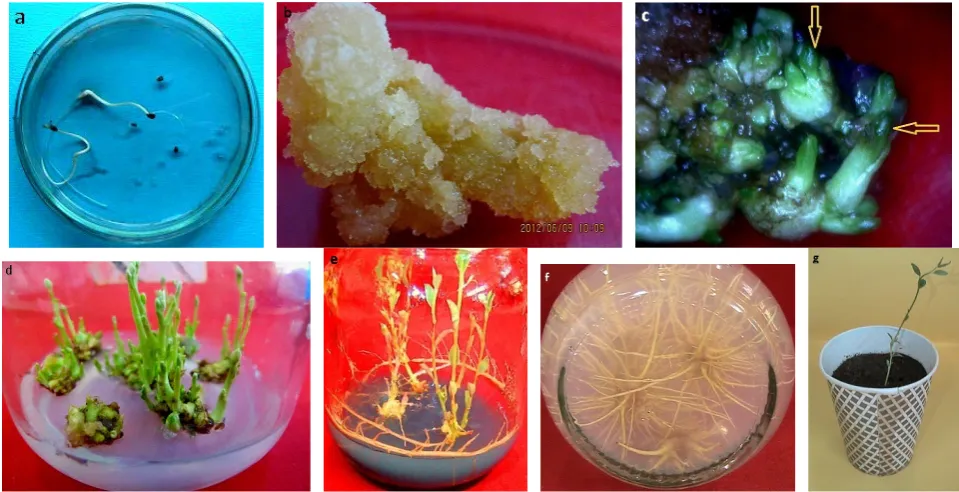
Figure 1. Showing the different steps from callus induction to maturity in Alhagi seed germination in B5 media after 2 weeks. (a) Seed germination; (b) Leaf callus after within 4 weeks of culturing; (c) SEM showing early formation of somatic embryos; (d) Multiple shoots within 4 weeks regenerating callus on shoot generating media after four weeks; (e) rooting of shoot in media supplied with activated charcoal; (f) high number of root in media with lack of AC; (g) Well-rooted Plantlets in the plastic pots for acclimation.
MS medium supplemented with different concentrations of BAP.
Regenerated shoots measuring about 3 cm in length were transferred into the rooting medium. Rooting me- dium was consisted of three types of medium (MS, half MS and quarter strength MS). As hormonal treatment we used different concentrations of Indole acetic acid IAA (0.25, 0.5, 0.75 and 1 mg·l−1) or A-naphthalene acetic acid NAA (0, 0.5 mg·l−1) alone or in combination with activated charcoal. Percentage of rooting, root number, and root length were recorded after transplanting to the growing mix for 1 month. Plantlets with well-developed roots and shoot systems were transferred into the clay pots containing garden soil and vermiculite in the ratio of 3:1. Acclimatization was not required before transferring the plantlets to the field.
3. Statistical Analysis
In this research we used a full factorial design. Factors affecting regeneration were 2 culture media; MS and B5, 3 explants; leaf, shoot and root and growth regulators. The statistical analysis was performed using one-way ANOVA and goodness of fit was checked too. Each character was analyzed separately and then desirability function was used to determine the optimum conditions for this multivariable system which consequently will allow the optimizing culture media for an adequate expe- rimentation. The programs Design Expert 8 and SPSS 20 were used. The model was designed with the assumption that, initiation of multiple shoots from callus originated from the leaf, shoot and root explants and their subse- quent development are function between interacting fac- tors; such as explants, culture media (MS, Gamborg), and growth regulators (BAP, NAA and IAA).
4. Results
The seeds cultured on B5 basal medium, devoid of any plant growth regulator, germinated normally, developed into seedlings with roots and shoots without any callus formation (Figure 1(a)). 100% of callus induction was observed in all explants grown on MS medium supple- mented with 2 and 5 mg·l−1 NAA. In the 6 mg·l−1 con- centration of NAA, when other factors were varied, maximum fresh weight of callus per culture was 1.7
grams and the maximum dry weight was 0.07 grams. The color of leaf callus was pinkish white and with compact texture and stem and root callus were yellow cream in color (Figure 1(b)). It was found that the opti- mum conditions for callus induction included MS me- dium supplemented with 3 mg·l−1 BAP and 6 mg·l−1 NAA and among three types of explants (leaf, shoot and root),best callus induction was observed in leaf explants
(Table 1).
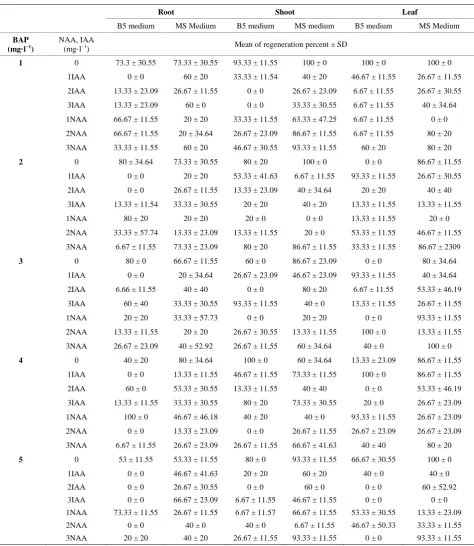
In plantlet development, green spots were observed developing on the embryogenic callus surface after being cultured on regeneration media for 3 - 4 weeks (Figure 1(c)). Subsequently, the green spot developed into green plantlets. Different concentrations of BAP with and without auxins showed various degrees of regeneration. We observed 100% regeneration, maximum of 40 shoot per explant and the maximum shoot length of 7.5 cm (mean) with different concentrations of BAP without auxins. The statistical results showed that all four factors, media, explants, BAP, NAA and IAA significantly (P < 0.05) would influence regeneration percentage (Table 2). As the following table shows, 100% regeneration from root explants were occurred in the medium B5 (BAP of 4 mg·l−1 and NAA 1 mg·l−1), and 100% regeneration from shoot explants happened in the medium B5 contained BAP level 4th and NAA level first (4 mg·l−1 and 0 mg·l−1, respectively), and also in the MS medium with BAP lev- el first and NAA level first (1 mg·l−1 and 0 mg·l−1, re- spectively). The leaf explants showed 100% regeneration with BAP and NAA in their first levels caused 100%, regardless of the medium used (Table 2). In MS medium, the shoots elongated and thickened more, and became intensively green (Figure 1(d)).
Due to the differential and multiple responses to dif- ferent studied factors including regeneration percent, shoot length and shoot number per callus we used the desirability optimization methodology (DOM) to trans- form a multiple response factor into a single factor. Ac- cordingly, the optimum conditions for regeneration were MS medium (A2), BAP 4 mg·l−1 (C4) and the best ex- plants was leaf (B3) (Table 3).
Root induction was achieved using well elongated shoots cultured on 1/4 MS medium supplemented with 0.5 mg·l−1 NAA (Figure 1(e)) and no rooting was observed in full and half strength MS. 100% rooting was observed
Table 1. Desirability function for the optimize condition of callus induction.
Media Expellant BAP NAA Wet weight Dry weight Callus percent Desirability
1 A1 B1 C3 D5 0.43 0.17 100 0.385
2 A2 B2 C1 D5 0.21 2.19 100 0.294
3 A1 B2 C1 D1 0.38 3.01 100 0.273
Table 2. Effect of different concentration of BAP, NAA and IAA on regeneration percent in two medium (B5, MS).
Root Shoot Leaf
B5 medium MS Medium B5 medium MS medium B5 medium MS Medium
BAP (mg·l−1)
NAA, IAA
(mg·l−1) Mean of regeneration percent ± SD
1 0 73.3 ± 30.55 73.33 ± 30.55 93.33 ± 11.55 100 ± 0 100 ± 0 100 ± 0
1IAA 0 ± 0 60 ± 20 33.33 ± 11.54 40 ± 20 46.67 ± 11.55 26.67 ± 11.55
2IAA 13.33 ± 23.09 26.67 ± 11.55 0 ± 0 26.67 ± 23.09 6.67 ± 11.55 26.67 ± 30.55
3IAA 13.33 ± 23.09 60 ± 0 0 ± 0 33.33 ± 30.55 6.67 ± 11.55 40 ± 34.64
1NAA 66.67 ± 11.55 20 ± 20 33.33 ± 11.55 63.33 ± 47.25 6.67 ± 11.55 0 ± 0
2NAA 66.67 ± 11.55 20 ± 34.64 26.67 ± 23.09 86.67 ± 11.55 6.67 ± 11.55 80 ± 20
3NAA 33.33 ± 11.55 60 ± 20 46.67 ± 30.55 93.33 ± 11.55 60 ± 20 80 ± 20
2 0 80 ± 34.64 73.33 ± 30.55 80 ± 20 100 ± 0 0 ± 0 86.67 ± 11.55
1IAA 0 ± 0 20 ± 20 53.33 ± 41.63 6.67 ± 11.55 93.33 ± 11.55 26.67 ± 30.55
2IAA 0 ± 0 26.67 ± 11.55 13.33 ± 23.09 40 ± 34.64 20 ± 20 40 ± 40
3IAA 13.33 ± 11.54 33.33 ± 30.55 20 ± 20 40 ± 20 13.33 ± 11.55 13.33 ± 11.55
1NAA 80 ± 20 20 ± 20 20 ± 0 0 ± 0 13.33 ± 11.55 20 ± 0
2NAA 33.33 ± 57.74 13.33 ± 23.09 13.33 ± 11.55 20 ± 0 53.33 ± 11.55 46.67 ± 11.55
3NAA 6.67 ± 11.55 73.33 ± 23.09 80 ± 20 86.67 ± 11.55 33.33 ± 11.55 86.67 ± 2309
3 0 80 ± 0 66.67 ± 11.55 60 ± 0 86.67 ± 23.09 0 ± 0 80 ± 34.64
1IAA 0 ± 0 20 ± 34.64 26.67 ± 23.09 46.67 ± 23.09 93.33 ± 11.55 40 ± 34.64
2IAA 6.66 ± 11.55 40 ± 40 0 ± 0 80 ± 20 6.67 ± 11.55 53.33 ± 46.19
3IAA 60 ± 40 33.33 ± 30.55 93.33 ± 11.55 40 ± 0 13.33 ± 11.55 26.67 ± 11.55
1NAA 20 ± 20 33.33 ± 57.73 0 ± 0 20 ± 20 0 ± 0 93.33 ± 11.55
2NAA 13.33 ± 11.55 20 ± 20 26.67 ± 30.55 13.33 ± 11.55 100 ± 0 13.33 ± 11.55
3NAA 26.67 ± 23.09 40 ± 52.92 26.67 ± 11.55 60 ± 34.64 40 ± 0 100 ± 0
4 0 40 ± 20 80 ± 34.64 100 ± 0 60 ± 34.64 13.33 ± 23.09 86.67 ± 11.55
1IAA 0 ± 0 13.33 ± 11.55 46.67 ± 11.55 73.33 ± 11.55 100 ± 0 86.67 ± 11.55
2IAA 60 ± 0 53.33 ± 30.55 13.33 ± 11.55 40 ± 40 0 ± 0 53.33 ± 46.19
3IAA 13.33 ± 11.55 33.33 ± 30.55 80 ± 20 73.33 ± 30.55 20 ± 0 26.67 ± 23.09
1NAA 100 ± 0 46.67 ± 46.18 40 ± 20 40 ± 0 93.33 ± 11.55 26.67 ± 23.09
2NAA 0 ± 0 13.33 ± 23.09 0 ± 0 26.67 ± 11.55 26.67 ± 23.09 26.67 ± 23.09
3NAA 6.67 ± 11.55 26.67 ± 23.09 26.67 ± 11.55 66.67 ± 41.63 40 ± 40 80 ± 20
5 0 53 ± 11.55 53.33 ± 11.55 80 ± 0 93.33 ± 11.55 66.67 ± 30.55 100 ± 0
1IAA 0 ± 0 46.67 ± 41.63 20 ± 20 60 ± 20 40 ± 0 40 ± 0
2IAA 0 ± 0 26.67 ± 30.55 0 ± 0 60 ± 0 0 ± 0 60 ± 52.92
3IAA 0 ± 0 66.67 ± 23.09 6.67 ± 11.55 46.67 ± 11.55 0 ± 0 0 ± 0
1NAA 73.33 ± 11.55 26.67 ± 11.55 6.67 ± 11.57 66.67 ± 11.55 53.33 ± 30.55 13.33 ± 23.09
2NAA 0 ± 0 40 ± 0 40 ± 0 6.67 ± 11.55 46.67 ± 50.33 33.33 ± 11.55
3NAA 20 ± 20 40 ± 20 26.67 ± 11.55 93.33 ± 11.55 0 ± 0 93.33 ± 11.55
Table 3. Desirability function for the optimize condition of regeneration.
Media Expellant BAP NAA Percent Number Length Desirability
1 A2 B3 C4 D1 9.35 3.487 0.456 0.937
2 A2 B3 C1 D1 10.05 3.055 0.542 0.919
3 A2 B3 C2 D1 9.35 3.18 0.47 0.913
4 A2 B3 C4 D2 9.35 2.965 0.674 0.871
[image:4.595.59.540.670.735.2]on the 1/4 MS medium provided with 0.5 mg·l−1 NAA
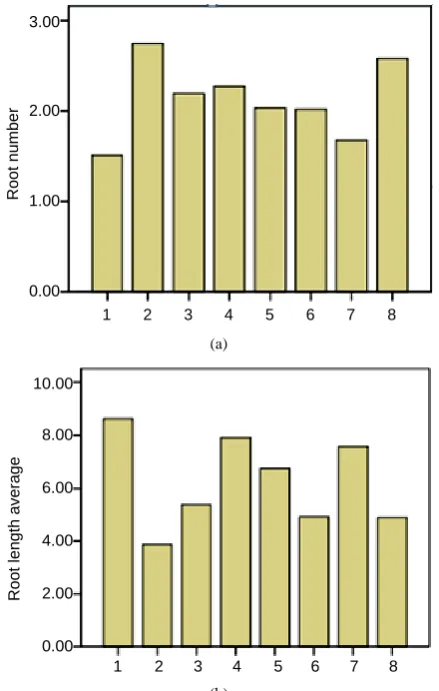
(Figure 1(f)), the highest number of roots per shoot
gained from the medium without activated charcoal
(Figure 2(a)) and the longest roots were achieved on the
medium containing activated charcoal (Figure 2(b)). The optimum conditions for rooting observed on the medium containing 0.25 mg·l−1 IAA with activated charcoal and no NAA. Regenerated plants were successfully estab- lished into complete plants where 70% plantlets were survived (Figure 1(g)).
5. Discussion
5.1. Dormancy Breaking
In order to investigate methods of dormancy breaking in camel thorn seeds, scarification by sandpaper for 2 mi- nutes followed by immersion in 70% (v/v) ethanol for 30 seconds, although there was no infection but germination rate was low. It was found that the most effective treat- ments for breaking the dormancy in camel thorn was
3.00
2.00
1.00
0.00
Root num
be
r
1 2 3 4 5 6 7 8
(a)
10.00
8.00
6.00
4.00
2.00
0.00
Root l
ength av
er
age
1 2 3 4 5 6 7 8
[image:5.595.63.283.337.683.2](b)
Figure 2. Effect of activated charcoal and growth regulators on root length. (a) Second treatment (without activated charcoal) results in the highest root number; (b) first treat- ment (activated charcoal) results in the highest root length.
soaking the seeds in boiling water or scarification by sandpaper, each for 3 minutes under light/dark conditions which resulted in 65% and 55% germination, respectively [11]. This difference can be due to the different condi- tions in which sandpaper was used. In this study soaking seeds in concentrated sulfuric acid for 8 minutes followed by rinsing with tap water and immersion in 70% ethanol led to best germination rate and least infection rate. Sim- ilar results showed soaking A. sparsifolia seeds in con- centrated sulfuric acid shortens seed germination from 1 to 4 days [12]. Sulfuric acid also could break dormancy of Alhagi sp. [13], so it is possible that Sulfuric acid re- moves seedling emergence inhibitors from the seed coat of A. sparsifolia, and then breaking of dormancy occurs.
5.2. Callus Induction
A stimulation of callus growth was observed on hypoco- tyls segments cultivated on the MS medium contained both BAP (3 mg·l−1) and NAA (6 mg·l−1), as compared to the medium supplemented with IAA. A strong callus induction of the Alhagi was observed on the MS medium. Callus segments also were obtained on MS medium sup- plemented with 0.56 mg·l−1 BAP, 0.93 mg·l−1 1-naph- thaleneacetic acid (NAA) and 0.11 mg·l−1 2,4-dichloro- phenoxyacetic acid (2,4-D) [14]. In addition, small callus size has been reported to be an important factor in ab- sorption of nutrients and proliferation of callus in wheat [15]. So to improve callus growth and embryogenic cal- lus formation, we divided the callus into small pieces (50 mg) for each subculture.
5.3. Organogenesis
with the study that showed shoot formation from callus in
Alhagi graecorum happened when it was transferred to MS medium supplemented with 0.56 mg·l−1 BAP [7].
Based on this experiment, the presence of activated charcoal (AC) in the rooting medium increased the root length (up to 5.50 cm) but reduced the root numbers (20% - 25%). This is in agreement with an earlier report that showed activated charcoal could suppress callus forma- tion [21]. Activated charcoal absorbs inhibitory sub- stances accumulated in the culture medium and thus is often used to reduce the oxidation of phenolic com-pounds in tissue culture in order to increase cell growth and development [22]. Moreover, no rooting was ob- served in full and half strength MS; but 1/4 MS salt yielded a suitable result. So rooting in Alhagi is positive- ly influenced by low concentrations of minerals and ap- propriate culture media for initiation and elongation of the roots.
In conclusion, we believe, in this study for the first time, we established an efficient plant regeneration sys- tem for A. camelorum, which can offer an effective ap- proach to achieve a rapid propagation, and to provide a foundation for its genetic transformation attempts in the future.
REFERENCES
[1] B. C. Binita, M. D. Ashok and T. J. Yogesh, “Bacopa monnieri (L.) Pennell: A Rapid, Efficient and Cost Effec- tive Micropropagation,” Plant Tissue Culture & Biotech-nology, Vol. 15, No. 2, 2005, pp. 167-175.
[2] M. Jawahar, A. V. P. Karthikeyan, D. Vijai, M. Mahara- jan, S. Ravipaul and M. Jeyseelan, “In Vitro Plant Rege- neration from Different Explants of Cardiospermum he- licacabum L. International,” Journal of Biological & Chemical Sciences, Vol. 2, No. 1, 2008, pp. 14-20. [3] S. Ahmad, I. Ahmad, M. Saleem, A. Jabbar, N. U. Reh-
man and S. S. U. Hassan, “Secondary Metabolites from
Alhagi maurorum,” Journal of Chemical Society of Pa- kistan, Vol.31, No. 6, 2009, pp.960-963.
[4] D. Brown, “Encyclopaedia of Herbs and Their Uses,” Dorling Indersley, London, 1995.
[5] M. S. Marashdah and A. L. Farraj, “Pharmacological Ac- tivity of 2% Aqueous Acetic Acid Extracts of Alhagi maurorum roots,” Journal of Saudi Chemical Society, Vol. 14, No. 3, 2010, pp. 247-250.
http://dx.doi.org/10.1016/j.jscs.2010.02.015
[6] A. S. Awaad Amani, D. J. Maitland and G. A. Soliman, “Antiulcerogenic Activity of Alhagi maurorum,” Journal of Pharmaceutical Biology, Vol. 44, No. 4, 2006, pp. 292-296.http://dx.doi.org/10.1080/13880200600714160
[7] A. M. Hassanein and A. M. Mazen, “Adventitious Bud Formation in Alhagi graecorum,” Cell Tissue & Organ Culture, Vol. 65, No. 1, 2001, pp. 31-35.
http://dx.doi.org/10.1023/A:1010637407780
[8] A. M. Hassanein, “Hormonal Requirements Induced Dif-
ferent Regeneration Pathways in Alhagi graecorum,”
Journal of Plant Biotechnology, Vol. 6, No. 3, 2004, pp. 171-179.
[9] J. Zhao, B. Zhang, Y. X. Wang, G. Y. Jia and P. Y. Li, “Study on Vitro Propagation of Alhagi sparsifolia Cut- tings,” Pratacultural Science, Vol. 26, No. 5 ,2009, PP. 72-75.
[10] G. Wenying, W. Nahan, Z. Jianmin, H. Dixia and S. Lina, “Hypocoty Tissue Culture and Plant Regeneration of Al- hagi,” Pratacultural Science, Vol. 14, No. 3, 1997-2003 , pp. 32-33.
[11] A. Esmaili and S. V. Esmaili, “Breaking of Dormancy and Germination in Camel Thorn Seeds (Alhagi camelorum
Fish.),” Weed Biology & Physiology, Vol. 1, 2010, pp. 45-48.
[12] Z. Liu, F. J. Zeng, B. Liu, G. X. An, X. L. Zhang and X. D. Li, “Effects of Water Supply Volume and Seed Treat- ments on Seedling Emergence of Alhagi sparsifolia,”
Journal of Acta Prataculturae Sinica, Vol. 19, No. 6, 2010, pp. 93-99.
[13] M. K. Hosseini, K. Orooji and Z. Avarseii, “Evaluation of Some Seed Dormancy Breaking Methods on Twenty Weeds Species,” Journal of Weed Biology & Ecophysiol- ogy, Vol. 1, 2010, pp. 167-169.
[14] A. M. Hassanein and A. M. Mazan, “Adventitious Bud Formation in Alhagi graecorum,” Plant Biotechnology, Vol. 65, No. 1, 2001, pp. 31-35.
[15] H. Benkirane, K. Sabounji, A. Chlyah and H. Chlyah, “Somatic Embryogenesis and Plant Regeneration from Fragments of Immature Inflorescence and Coleoptiles of Durum Wheat,” Journal of Plant Cell Tissue & Organ Culture, Vol. 61, No. 2, 2000, pp. 107-113.
http://dx.doi.org/10.1023/A:1006464208686
[16] C. K. Yew, B. Balakrishnan, J. Sundasekaran and S. Sub- ramaniam, “The Effect of Cytokinins on in Vitro Shoot Length and Multiplication of Hymenocallis littoralis,”
Journal of Medical Plants Research, Vol. 4, No. 24, 2010, pp. 2641-2646.
[17] A. A. H. S. Malki and K. M. S. Elmeer, “Influence of Auxin and Cytokinine on in Vitro Multiplication of Ficus Anastasia,” African Journal of Biotechnology, Vol. 9, No. 5, 2010, pp. 635-639.
[18] S. A. Bekheet, H. S.Taha and M. A. Matter, “In Vitro
Regeneration of Sugar Beet Propagules and Molecular Analysis of the Regenerates,” Arab Journal of Biotech- nology, Vol. 10, No. 2, 2007, pp. 321-332.
[19] B. H. McCown and J. C. Sellmer, “General Media and Vessels Suitable for Woody Plant Culture,” In: J. M. Bonga and D. J. Durza, Eds., Cell & TissueCulture in Forestry, Martinus Nijhoff Publishing, Dordrecht, 1987, pp. 4-16.
[20] N. M. Crawford, “Nitrate Nutrient and Signal for Plant Growth,” Journal of Plant Cell, Vol. 7, No. 7, 1995, pp. 859-868.
[22] D. T. Nhut, B. Van Le, S. Fukai, M. Tanaka and K. Van, “Effects of Activated Charcoal, Explants Size, Explants Position and Sucrose Concentration on Plant and Shoot
Regeneration of Lilium Longiflorum via Long Stem Cul- ture,” Journal of Plant Growth Regulation, Vol. 33, No. 1, 2001, pp. 59-65.
Abbreviations
MS: Murashige and Skoog (1962) medium BAP: 6-Benzyladenine