ORIGINAL RESEARCH ARTICLE
THE ADVENT OF PRIVATE EQUITY IN INDIA & ITS IMPACT ON VALUATION LANDSCAPE
*1
Gowtham, J.,
1Karthik Krishnan and
2Dr. Varsha Agarwal
1
Student, BBA, Center for Management Studies, Jain University
2
Assistant Professor, Management, Center for Management Studies, Jain University
ARTICLE INFO ABSTRACT
Private Equity is a rapidly growing alternative investment fund (AIF) where a company raises Capital through limited partnership from Financial Institutions and High Net worth Individuals (HNIs). The noticeable fundamental difference between Ordinary Equity & Private Equity is as follows; Common Stock could be listed in a Recognized Investment Exchange for active trading which determines the Market Price for the Company’s Stock & consequently the Company’s Market Capitalization, whereas Private Equity deals with strategic investment in companies through the Buyout of Majority Stake in-order to acquire control over the business. PE firms often than not plan to exit within 10 Years span. PE firms invest in companies with high growth potential, sustained competitive parity powered by innovation and long term business objectives. They keenly focus on multitude advancing technologies especially in the fields like Bio-tech, Chemical-Sciences, Nano-Technology, Financial services, Software & SaaS.Growth equity is also a concept that falls under this bracket where an investor tries to maximize the value of their investment by being a catalyst to facilitate the transformation of a smaller company into a more Profitable Business Organization in a significantly narrow timeframe. This research paper intends to validate the progress witnessed by the private equity industry in India and the consequent developments observed in the valuation of private companies funded by this means. The research does not just limit itself in educating the readers about the known factors driving the valuation but also consider factors that have not been primarily credited but are equally crucial for the rate at which PE has been appreciated by investors and companies. The comparative analysis of empirical data discloses that certain sectors mostly funded by private equity have outperformed their peers and companies funded by PE have shown substantially higher returns as opposed to those companies funded otherwise within any given sector. The readers will gain a sound understanding about the dynamic valuation landscape, modes of deal exits responsible for value creation.
Copyright © 2018,Osemeahon et al. This is an open access article distributed under the Creative Commons Attribution License, which permits unrestricted use, distribution, and reproduction in any medium, provided the original work is properly cited.
INTRODUCTION
PE & VC Investments can be traced back to the late 1940’s in the USANi was the American research and development corporation (ARDC) a closed ended publicly traded company to offer loans to private sector. However, the real boost came after the enactment of Small Businesses Act in 1958 and modification in the American Internal Revenue Code which allowed a write off against capital losses for those invested above $25,000.
*Corresponding author: Gowtham, J.,
Student, BBA, Center for Management Studies, Jain University
The 60’s saw a rising trend in investments through VC’s, later in 80’s the take-over of RJR Nabisco by KKR & Co. was a milestone deal amounting to $31.1billion & further 2000 more VC deals going through successfully. The 90’s witnessed apple Inc., Microsoft and other software companies booming while VC’s stood behind the liking of Yahoo, Amazon etc. Although the modern Private Equity Industry has emerged as a resultant of multifaceted growth cycles, notable development in PE was initiated from the ashes of Savings & Credit Crisis, insider trading scandals, collapse in real estate, recession of the early 90’s and the burst of the ‘Dot com’ bubble. Private Investments in Public Equity (PIPE) and massive volumes of high leveraged Buyouts led to the Institutionalization of
ISSN: 2230-9926
International Journal of Development Research
Vol. 08, Issue, 10, pp.23410-23416, October,2018
Article History:
Received 17th July, 2018
Received in revised form 20th August, 2018
Accepted 22nd September, 2018
Published online 29th October,2018
Available online at http://www.journalijdr.com
Key Words:
Buyout of Majority, Private Equity,
Profitable Business Organization Nano-Technology.
ORIGINAL RESEARCH ARTICLE
OPEN ACCESS
Citation: Gowtham, J., Karthik Krishnan and Dr. Varsha Agarwal. 2018. “The advent of private equity in India & its impact on valuation landscape”,
Private Equity firms. These Institutional Private Equity firms did not merely concentrate on Financial Engineering & Capital restructuring but aimed at value addition to the invested entity through Business Process Management to achieve greater financial efficiency. A close look at the current global private equity market will denote that there has been a 14% growth rate surpassing the deal value of $ 1.2 trillion according to a report by Mckinsey. Also it has been stated that total assets under management in the private market (Private and Growth equity and Venture Capital) are roughly $ 2.8 trillion globally. The Previous Year saw a rise in the Exits, forming a new trend of Partial Exit where a major part of the stake was sold by a PE firm but a minority stake maintained (Mckinsey& co. 2015).
Increased Acceptance for Private Equity: The Investors have become financially sound to understand the quality of returns (Consistency) & associate the potential returns with the
corresponding risk attached (Leverage). Arbitrage
Opportunities arise due to the difference in global savings availability & Interest rates. Cost of Private Equity is relatively less than the Equity financing which has proven expensive after the tech bubble collapse. The steady growth in Asia-Pacific focused fund raising has been powered by the investments in India which amounts to $5.7Billions at a galloping 48% growth rate. The growth in registered AIF and Distressed Asset Management Instruments has doubled since 2016.
Factors boosting the investor’s confidence in India
Narrowing Budget Deficit through improved spending
efficiency.
Consistent decrease in Fiscal Deficit and the wake of
New Act by Fiscal Responsibility & Budget Management (FRBM) will further reduce Fiscal Deficit to 2.5% of GDP by 2023 as estimated by Bain & Company.
Stabilization of GDP around 6.5% - 7% despite
fluctuation in WPI and CPI during 2017-18.
Indian Government’s effort to strengthen business
infrastructure and implement reforms with the Unification of Taxation under GST is expected to reap Revenue Receipts of $467 billion by 2019 (Bain & Company Estimations)
The progress in Fund tracking, Curbing Black Market
for subsidized goods, transparency & acceptance in Digital Transactions and other Financial Technological Services.
Recapitalization of Public Sector Banks & RBI’s effort
to limit the NPA to less than 10% (As per the RBI Reports March 2018) are strong indicators that the Economy is expecting increase in Credit to 15% (Bain & Co.)
Disinvestments in Public Sector Units (Eg: Air India,
Indian Railways etc)
Improved Moody’s rating for Sovereign Bonds owing
to the stable Economic Outlook.
India has skipped 30 positions and has become one of
the 100 best countries on the World Bank’s Ranking for Ease of Doing Business.
All these driving factor have certainly turned India into a hotbed for Private Equity & Venture Capital, however the research will further focus on the unexplored yet crucial &
prudent elements that makes India the Investor’s favorite amongst its Asia-Pacific peers.
Literature Review
According to Thomas Wetzer’s value creation in portfolio companies is one of the core functions of PE firms. This factor validates the shorterexits with incredibly high ROI. The literature begins with a comparison between Strategic Acquisitions & PE with an attempt to distinctly distinguish the both, in the context of creating synergized opportunities. When the Capital is induced with PE fund it enforces discounted prices sensing synergy in opportunities. It also discusses how PE firms exit at market value with generous returns realized. A comparative analysis led to a conclusion that PE firms and Strategic Buyers target different types of firms (Thomas Wetzer, 2017). “How valuable is being local in an emerging private equity market? Deal evidence from Asia.” In this research Thomas Wetzer illustrates the importance of Companies and Managers in emerging markets (Asia Specific). The initiation was powered by foreign investors but it wasn’t long before the budding market’s potentiality attracted local investors. This proved unfavorable to Foreign Investors since local investors had a better understanding of the market. At the outset returns were low but post 2000 developed countries realized that emerging markets can yield magnanimously higher returns than mature markets. According to EMPEA 2015, 75% of all PE funds raised over the past 15 years have been in Asian markets. India accounted for 12% of the investments in 2005 and grew to 19% in 2015 according to EMPEA. This study’s empirical results found that local investors outperform foreign players, measured by Return Multiples (Based on 770 observations). (Thomas Wetzer, 2017)
“Venture capital financing and the growth of start-ups”
This study correlates start up financing by venture capitalists and their growth, the sample population size is 494 start ups in the Silicon-Valley. Factors (internal and external) that affect the growth of start-ups and attract VC funding have been discovered, growth in this studyis measured in terms of employment created by the firm. It is a comparative study to analyze the growth of start- ups funded by VC as opposed to those entities funded otherwise.It revealed that the VC funded firms are more innovative and have grown faster. The next part of the research explains whether Venture Capitalists select companies in the growth stage or undercapitalized companies with great potential capable of delivering prospective/high returns when the investment is scaled (George Foster, 2000).
“Venture Capital & Private Equity in India: an analysis of Investments & Exits”
This paper intends to develop a comprehensive understanding of Indian PE industry through inductive reasoning & connect the dots despite the lack of information especially after 2008 because the amount of investment, the lifecycle of these investments, the timing of investments & modes of Exit for PE & VC has not been traced accurately. Although there are multiple routes of Exit, Indian markets seem to have picked Secondary Trade Sales & IPOs as more rewarding. Out of 252 Deal Exits for a period of 5 years (2003-2008) 168 were M&A and the rest were IPOs. Especially since many sectors are not asset intensive they pick M&A. Exits are also affected by the
Currentstate of capital market, it can be the core deciding factor in the time taken to exit. The modes of exit can also be decided in accordance with the company’s future plans, growth strategy and capacity of earnings (Thillai Rajan A and Ashish Deshmukh, 2010). The paper discusses the significance of Leverage in the pretext of Innovative Global Financial Markets & their policies to determine the price of money in various parts of the world. Besides Leverage, arbitrage opportunities have played a prudent role in asset price inflation with the wake of Private Equity Deals. Investor’s Demand, Increasing in pressure to acquire new deals, decreasing yields from traditional investment instruments has fueled the progress of PE. The paper also discloses PE Value proposition for Companies.
Private Equity Value Proposition
Capital Structure: There’s an evident change in the Capital Structure with the employment of Innovative Financing methods to achieve the ultimate.
Capital Structure: Ease in Capital accessibility in Private Equity Funds, drawing down Idle Capital, seeking investors for more funds when needed results in Risk being well spread. Effective Trade Negotiations with lenders & increased use of Low-Covenant loans will facilitate liquidity management.
Operational Change: On attaining full control of the company the Private Equity managers unlike the Public Companies do not shift their primary focus on Corporate Reporting, Shareholder Meetings, dealing with brokers and other aspects of Corporate Governance. Instead they focus on Stringent Cost Reductions by repayment of Debt quickly, eliminating duplication of Back-Office functions, enhancing
flexible labor arrangements, selling non-core assets (not used
in company's business operations) and create better Synergies.
Equity Incentives: Managers are rewarded with an Equity Incentive of upto 1% of the Deal Value. This is a strategy to lure good managers who are essential to achieve the business trajectory as estimated by the PE Firm. The Managers are committed to meet the expected results due to certain restrictions: The management can’t exit before the Investors & would have to forfeit any equity on premature termination of the Contract.
Exit Options: The PE Firm will sell the company after it is completed transformed. It can decide the ideal selling time & the bestselling option from the range of available options namely: IPO, Trade sale to a strategic listed or unlisted buyer,
Secondary Buyouts, Share Buybacks, Leveraged
recapitalization and Dual-track Process. The Private Equity Firm’s investment in a company is closely seen as an invitation for its transformation into a sound technology enterprise which is less likely to happen otherwise (Adrian Blundell-Wignall, 2007).
Statement of Problem: The emergence and development of alternative investment funds with special regards to private equity,growth equity and venture capital in India, the research also intends to conduct an informative analysis on the prevailing valuation landscape in India because of the inflow of these alternative investments.
Source: OECD (Organization for Economic Co-operation & Development)
This represents the Private Equity Value Proposition as justified by the author
Objectives
To understand the following:
The amount of PE & VC investment inflow and growth
over the last 10 years in Indian Markets.
Ease of raisingthis form of capital has made it the most
desired source of Capital. These Investments by PE &VC firms in Start-ups or other private companies have inflated their artificial valuations.
Thedilution levels of these PE investments or the
liquidity risk associated with the PE Investments.
The Exit Value of the investment made (ROI’s) is so
high; one shouldn’t be surprised to see a return of 100% or more.
The growth rate or development of companies funded
by Private equity in ’x’ years as opposed to a company without this form of funding.
Need for Research: To interpret the performance of companies after being funded by private equity. Analyze how the start-ups have had a major boom in their valuations despite lack of substantiate returns, tangible/realizable assets & investments to match their valuation level. Although, the value & volume of investments by PE & VC firms in India is on par with the International standards, the reasons for the industry to be considered under tapped & miniscule is to be researched.
RESEARCH METHODOLOGY
The proposed research is applied, descriptive, informative and
Co-relational.It is developed from quantitative point of view.
The research is restricted to the Indian Economy & the data is collected from reliable secondary sources which intend to primarily address the statement of research. The following statistical methods are employed to achieve the Objectives of the Research: Comparative Analysis, Variance Analysis, Time series Analysis, Growth Rate analysis.
Analysis& Interpretation
Deal Value; predominantly because of high Entrepreneurial Activity in the Country. Increasing rate of participation by PE Firms, Investors’ Confidence in PE & Capital attracted by Companies at extremely High Valuations (Multiples) have influenced most Economists to opine that the Private Equity
[image:4.595.313.553.53.155.2]Market in India is yet to unfold itself to its full potential.
Table 1. Value andVolumes of Investments
Year Deal Value ($ Billions) Deal Volume
2006 7.9 381
2007 19 432
2008 10.6 362
2009 3.6 226
2010 6.2 372
2011 9 446
2012 7.4 416
2013 10 485
2014 12.2 604
2015 15.8 1050
2016 13.7 980
[image:4.595.50.274.155.271.2]Source: Grant Thornton’s Report on PE Investments in India titled “The Fourth Wheel”
[image:4.595.311.555.236.335.2]Figure 1. Graph tracing the Value of PE Investments and the Volume of PE Deals in India
Table 2. Private Equity Investments in Information Technology, Banking & Financial Services and Healthcare Sectors have
outnumbered other sectors
Year IT/ITES ($Billions)
BFSI ($Billions)
Pharmacy& Healthcare ($Billions)
2012 1.315 0.747 0.907
2013 1.126 1.109 1.391
2014 0.895 1.257 0.586
2015 0.586 1.924 0.981
2016 1.37 1.87 0.653
[image:4.595.40.287.299.440.2]The total private equity investment in India 2013 approximately 10 billion dollars according to Grant Thornton - The Fourth Wheel 2017, analyzing all the sectors revealed that IT/ITES, BFSI and Pharmaceuticals & Healthcare contributed to almost 38% of the total investment. Despite the fluctuations observed in preceding years each of these sectors have attracted enormous investment occupying major portion of the pie. These sectors have witnessed advancements over the recent past due to reforming economic policies, growing need for digitalization, increase in research & development in the healthcare industry favored development, also the rise of many sub-sectors within each sector has emerged as a trend only to lead private equity investors to focus their dry powder on these particular industries. With the increase in penetration of Global Pension Funds, Sovereign funds, etc. from across the world into local markets, Open Market and Strategic Exits have become rewarding options.
Figure 2. Comparative analysis of three sectors that are most benefited by PE
[image:4.595.306.562.414.529.2]Private Equity Exit Deals Analysis
Table 3. Private Exit Deal Information
Year Exits Exit Value ($Billions)
∆ Change in Number of Exits
∆ Change in Value of Exits
2010 123 6.6 - -
2011 88 4.1 -28.46% -37.88%
2012 115 6.8 30.68% 65.85%
2013 164 6.8 42.61% 0.00%
2014 193 6 17.68% -11.76%
2015 213 9.4 10.36% 56.67%
2016 197 9.6 -7.51% 2.13%
2017 211 15.7 7.11% 63.54%
PE firms commit large capital for long periods with a desire to make profitable exits by transforming the investee companies’ operational potential into a great top-line. Although the numbers of IPOs haven’t increased drastically, the value of Exits by this mode has soared touching new highs.
Figure 3. Value & Volume of PE Exit Chart
Figure 4. Modes of Exits in terms of Volume
Despite the drop in the number of Exit Deals, the Exit Value has been significantly high. The visual aid above is intended to elicit the same. Post 2014 the Change in Exit Value Curvecuts the Change in Number of Exits Curveon the up-side, this is a sound indication for the rapid growth in Deal Value. The following years will further strengthen this point; 2015 had only 10.36% increase (compared to the previous year) in the number Exit Deals but the Value of Exits had a massive 56.67% rise. 2017 witnessed the highest Average Deal Value, touching a record high of $675 million per deal.
[image:4.595.41.282.521.593.2] [image:4.595.308.559.558.654.2]Hence the Year is considered as a milestone in Indian PE Industry. From the graph one can infer that a marginal rise (7.11%) in the number of Exits have seen a phenomenal increase of 58.54% in the Value of Exits during 2017. This may lead to a trend in quicker exits & it’s known that Traditional PE Deal Exits happen in 5-6 year time but if valuation multiples remain this high, there are possibilities for deal exits as short as 2 years.
[image:5.595.35.290.159.305.2]The above graph correlates Exit Volumes & Exit Value
Figure 5. Comparative analysis of Variation in the Value & Volume of Exit Deals
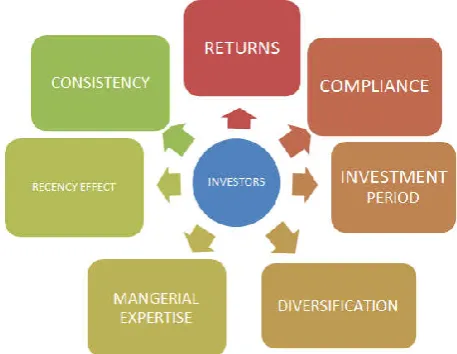
Reasons for Investors to consider Private Equity as a reliable investment avenue
Returns: The most crucial factor of all, investors love returns. Especiallythe affluent HNIs with greater risk appetite are ready to invest in rewarding investment instruments even if characterized with higher risks. Over the years private equity has emerged as an Investment Opportunity with high Yields compared to traditional Stocks, Bond & Cash Investments. They are relatively less regulated as opposed to traditional instruments and enjoy high flexibility in their investments and operations to suit their needs and make their investments grow exponentially.
Compliance: In the recent years the focus on compliance has been emphasized. The effectiveness in which funds are administered & operations are assisted in the Investee Company in compliance with the Industry specific standards have resulted in optimal returns.
Investment duration: Private equity companies mostly decide on the Exit time-frame before entering the deal. They will not leave a stone unturned to achieve the desired results & meet the revenue trajectory as planned. The PE firm can have Exit time-frames as short as 3 months, at times longer than 7 years. PE firms having various investing opportunities with different Investment Durations has encouraged investors to confidently park their money with private equity investors& reap such high returns in relatively shorter duration is intriguing.
Diversification: Private equity companies not just have diversified portfolios in terms of the companies they invest in but also are specialists in sector specific Investments. Choosing a Broad sector like IT/ITES means it has diversified its investments and each of the investees has its own proprietary technology that the private equity firm views as an opportunity to make huge returns.
Expertise: Investors consider the expertise of private equity management team as the most crucial asset. Having an efficient team of managers capable of handling multiple investee companies and have generated exponential growth in the past is prudent. This becomes a promising reason for any investor be it HNIs, Sovereign funds etc. The risk associated with PE investment is offset / compensated by the Managerial Expertise to stabilize returns.
Herd effect: Growing awareness and attractiveness of alternate investment funds and high returns generated by private equity firms have further motivated more investors to pool money into private equity funds in the recent past.
Consistency: Investors desire consistency in returns; PE firms throttle the operations & administer funds effectively in their investee companies to realize quality returns.
Figure 6. Graphical Representation of Factors Influencing Investor’s Investment
Reasons for Companies to choose PE to raise Capital:
There could be numerous reasons for companies to choose private equity as a form of raising capital, some of them that have been highlighted in this research.
High rate of returns: PE firms come with all the necessary resources to help the investee company meet its objectives & promote a sustainedall-round development, thereby ensuring exponential returns on their Investment which is mostly unrealizablethrough any other asset class. Value Creation indicates growth in the value of company’s total asset(tangible & intangible).
Cost effective capital inflow: PE firms have less constraint on the funds available at their disposal for quality investments, making it readily accessible for companies with great strategies & operational efficiency. Procuring such huge capitalat a relatively lesser cost is a bonus to companies. The company seeking PE investment is too young to raise funds through IPO; hence that option cannot be considered.
[image:5.595.318.547.266.443.2]Widens the network: Along with the huge capital inflow the PE firm also facilitates in widening the investee company’s network. It renders its infamous and core intangible asset, the PE firm’s network. The companies can take complete advantage of their network to benefit in terms of increasing market share, building stronger strategic partnerships, venture into new markets andintroduce new products/services to meet the market’s demand.
Gain larger market share: The PE firm’s investing ability, strong industry networks, managerial expertise & high returns oriented attitude facilitates the company with adequate resources to compete against much larger players to acquire large market share which is impracticable without the private equity funding.
Aspiration grow: In the current competitive world all companies including start-ups at various stages want to grow at extremely high rates to stand a chance against the market leaders and this is only desirable & implausible with the normal cash inflows from regular operations & no leverage in financing the transactions, hence private equity as a funding option gives them the opportunity to grow at exponential rates. Although Private equity firms do not guarantee any such returns, the data shows that they have steered the growth of companies at phenomenal rate to beat their benchmark predictions in shorter span.
Market valuation: Apart from the potential growth factors we have listed above, our study reveals that the very interest of a PE firm to invest in a company is seen as an appreciation for their business. PE firm recognizes an investee’s ability to grow & their investment will result in value creation which leads to extremely high valuation of the business in the market.
Factorsthat PE Firms are keen about while making the Investment Decision
Industry Potential: A PE firm while selecting its investee companies would choose an industry with a high growth potential instead of a mature industry with little room for new entrants. It is rational to conduct a comparative analysis to understand the relative growth potential of each industry in-order to make the scientific investment decision. Sector-specific PE Firms invest in select sectors based on their expertise in the line of business, past experience controlling a company similar industry or the strength of their network in a specific industry/sector.
Company’s Growth Potential - One of the most important factors that a PE Firm considers while evaluating their investment opportunity is the company’s capability to grow with a sustained competitive advantage & continue to excel with product/service differentiation. They take into account the past performance of the company in terms of revenue, profit, scalability of business, optimum utilization of resources and operational efficiency. They look at the strategies employed to reach the current position and whether the business has capacity to fetch high returns for the PEFirm. They mostly identify companies that have an excellent USP with commendable strategies capable of being successful in the near future provided the right guidance and financing is offered.
Company Goals: PE Firmstry to fund companies whose goals or mission is in line with their ideology. Hence for a PE firm to
choose a company to invest, it’s very important for them to align their goals. This facilitates cordiality & becomes much easier for the PE Firm to guide its investee company and take decisions that will help the both achieve their goals mutually.
Current Market Conditions: A PE Firm before choosing its investee company has to analyze the current market conditions and performance to understand if their investment in the investee company is going to yield the expected returns. Market conditions can play a huge role in deterring a company’s results and performance. Hence the market conditions have to be favorable for the PE firm to invest. This mandates the PE firm to very carefully analyze the market before making an investment decision.
Inclusiveness of Investee’s LOB: This point stresses on the fact that the investee company’s line of business (LOB) has to match with the interests of the PE Firm in terms of expertise and network. They refrain from investing in a business which they lack complete knowledge, else will be exposed to extremely high risk. It is futile just for their goals to be aligned if the PE firm doesn’t have thorough knowledge and experience in the LOB its investee company is operating.
Comparative analysis of Companies’ growth rate when funded by Private Equity V/S Public Equity: Private equity backed companies in most scenarios have outperformed their corporate competitors that are not funded by private equity. The PEFirm leverages the financing in the investee companies resulting in high Internal Rate of Return despite the fact that this exposesthem to much higher risks; PE firm’s ability to hedge the riskrewards it with higher returns. They have experienced managers who are experts in managing risks and delivering the expected performance to meet estimated revenue trajectory. Also access to not just cost effective capital but a great network and a strategic partner with similar interest further synergizes private equity &investee companies to power their mutual growth.
Factors driving the Inflation of Artificial Valuation: In the recent past huge capital inflow is witnessed in India through private equity, strengthening the fact that there is huge demand for PE funding among investee companies. Private Equity firms are ready to infuse capital at stakes that would be considered extremely low on their optimistic prediction when compared with the companies’ ability to grow; ideally at rates much higher than the industry or market average. This validates companies to be valued at unmatched rates based on their future performance, the growth projections & not merely on the value of their current cash-flows, assets and performance. On the contrary this has resulted in the birth of another bubble in the economy as traditional methods of valuation aren’t adapted. Company’s predictions could be inaccurate, intangible assets being overpriced, exaggerated future projections& highly optimistic revenue estimations. The current landscape has encouraged multiple companies to raise funds from PE/VC investors on a regular basis. These examples demonstrate the scenario better; Swiggy an online food ordering & delivery company trending in the food tech sub-sector has raised $465.5million through 8 rounds of funding and is in negotiations to raiseadditional funds between $500-$700 million (which is equal to twice the amount funded in the last round in 2018 Q1) at an all-timehigh valuation of$2.5 Billion. Flipkart was bought out entirely by Walmart at a valuation of $20.8 Billion. Several start-ups, to name a few:
OLA, Zomato, Redbus, Paytm, W (Women’s Clothing Brand) have raised various amounts of funds at different stages of funding.
Summary & Conclusion
The demand for private equity is consistently soaring high among Investors & Companies due to enhanced investor’s confidence & exponential growth rate respectively. This hasconsequently attracted more PE firms with great funding ability which could readily be invested in companies capable of delivering returns in unimaginable multiples. The growth rate of PE Industry in Indiahas exceeded the average rate of Asian Private Equity & this makes India the Investor’s favorite. Global Economists consider the potential in PE Industryis only getting better due to increase in wealth of people; resulting in availability of funds for investment, thereby leading companies to value themselves at higher multiples at any given stage of the business life-cycle. Therefore the paper justifies why India has turned into a hotbed for PE investments and growing entrepreneurial activity boosted by the PE firms.
REFERENCES
Antonio Davila, G. F. 2000. Venture Capital Financing and the Growth of Start Up Firms. Graduate School of Business, Stanford University.
Bain & Company. 2018. Indian Private Equity report. BAIN & CO.
Blundwell-Wignall, A. 2007. Private Equity Boom: Causes & Policy Issues. Organization for Economic Cooperation and Development.
Corporate reporting. 2017. The fourth wheel. Grant Thornton India.
Ernst & Young. 2018. PE/VC Agenda-India trendbook . EY. Foster, G. 2000. Venture capital financing and the growth of
start-ups.
Goold, F. B. (2007, September). The Strategic Secret of Private Equity. Harvard Business Review.
Grant Thornton IndiaCorporate reporting. 2017. The Fourth Wheel.
Harroch, R. (2018, March 29). Do Private Equity pay less? A synegy related explanation. Forbes.
HVCA. 2018. The Development of Private Equity and Venture Capital. Hungarian Private Equity and Venture Capital Association.
Mckinsey & Company. 2015. Indian Private Equity Route to Resurgence. Mckinsey & Co.
Mckinsey & Company. 2018. The Rise & Rise of Private Equity Markets. Mckinsey&Co.
Richhard. D. Harroch, M. S. (2018, March). A Guide to Veenture Capital Financing for Startups. Forbes.
Thillai Rajan A & Ashish Deshmukh 2011. Venture Capital and Private Equity in India: An Analysis of investments
and exits. Journal of Indian Business Research, 3(1): 6 –
21pgs
Wetzer, T. 2017. Papers on Value Creation in Private Equity. University of St.Gallen.