ORIGINAL RESEARCH ARTICLE
ELDERLY PEOPLE WITH SELF-REPORTED SYSTEMIC ARTERIAL HYPERTENSION:
HEALTH CONDITIONS AND FUNCTIONAL CAPACITY
1
Luana Caroline Gaviraghi,
2Aline Piaceski Kovalski,
3Diana Cristina Buz Mainardi,
4Alitéia
Santiago Dilélio,
5Sandra da Silva Kinalski,
6Morgana Christmann,
7Leila Mariza Hildebrandt
and
8Marinês Tambara Leite
1
Nurse. Specialist in Management of Public Health Organization (UFSM), Master student of the Graduate
Program in Gerontology (UFSM)
2
Student of the Undergraduate Nursing Course of UFSM/PM. Scholarship Tutorial Program - PET Nursing
3
Nurse, Master student of the Graduate Program in Gerontology/Federal University of Santa Maria
4
Nurse, PhD in Epidemiology, Professor of the Faculty of Nursing, Federal University of Pelotas/Pelotas, RS
5
Nurse, Master Student in the Graduate Program Associate Master's Degree in Comprehensive Health Care
(UNIJUÍ), Professor of Nursing at the Federal University of Santa Maria
6
Physiotherapist, Master in Education, PhD student in Education (UFSM), Professor at the Franciscan University
(UFN)/Santa Maria
7
Nurse, PhD in Sciences, Professor/Tutor of the PET Nursing of the Federal University of Santa Maria/Palmeira
das Missões Campus
8
Nurse, PhD in Biomedical Gerontology, Professor/Tutor of the PET Nursing of Federal University of Santa
Maria/Palmeira das Missões Campus
ARTICLE INFO ABSTRACT
Systemic arterial hypertension with a significant incidence in the elderly population, associated with functional disability and other comorbidities, is a public health problem. This study aimed to verify the functional capacity and comorbidities of elderly patients with systemic arterial hypertension. It is a cross-sectional, population-based study using questionnaires on sociodemographic, behavioral and anthropometric data, as well as on morbidity, use of medicines and functional capacity assessment. We interviewed 286 elderly individuals who self-reported arterial hypertension. There was predominance of the female sex (70.3%), age between 60 and 70 years (40.6%), and from 0 to 4 years (55.9%) of schooling. Regarding functional capacity, 74.8% had maintained it and were independent for daily life activities. Most of the hypertensive seniors have maintained their functional capacity, however, approximately one-fourth presented functional dependence with limitations to perform activities of daily living.
Copyright © 2018, Luana Caroline Gaviraghi et al. This is an open access article distributed under the Creative Commons Attribution License, which permits
unrestricted use, distribution, and reproduction in any medium, provided the original work is properly cited.
INTRODUCTION
Systemic arterial hypertension (SAH) is an organic change involving multiple dimensions whose incidence has increased and is included among the most prevalent chronic non-communicable diseases (CNCD) in the elderly population.
*Corresponding author:Luana Caroline Gaviraghi
Nurse. Specialist in Management of Public Health Organization (UFSM), Master student of the Graduate Program in Gerontology (UFSM)
In Brazil, a study on the prevalence and factors associated with hypertension in the elderly showed that 67.4% of them had SAH. In addition, marital status, body mass index (BMI) and
waist circumference were positively associated with
hypertension among male elderly people (Esperandio, 2013). Studies in Europe, the United States and Canada also showed that between 30 and 35% of the elderly population had this disease (Allen, 2013; Chrysant, 2013 and Olives, 2013). On the other hand, in Nigeria and China, the percentage was
ISSN: 2230-9926
International Journal of Development Research
Vol. 08, Issue, 09, pp.22819-22825, September,2018
Article History: Received 14th June, 2018 Received in revised form 17th July, 2018
Accepted 10th August, 2018 Published online 29th September,2018
Available online at http://www.journalijdr.com
Key Words:
Elderly Health. Functional capacity. Health care for the elderly. Systemic Arterial Hypertension.
Citation: Luana Caroline Gaviraghi, Aline Piaceski Kovalski, Diana Cristina Buz Mainardi et al. 2018. “Elderly people with self-reported systemic
arterial hypertension: health conditions and functional capacity”, International Journal of Development Research, 8, (09), 22819-22825.
66.7% and 56.5%, respectively (Asekun-Olarinmoye, 2013 and Gao, 2013), evidencing that elderly people living in developing countries had higher prevalence of SAH than those living in developed countries. In this perspective, human aging is one of the challenges of public health, especially in developing countries such as Brazil. The aging of the population is partially due to the demographic transition that occurred in the last decades, when there was a reduction in
mortality and birth rates (Pereira et al., 2017). It is worth
mentioning that this process was also due to the increase in life expectancy, derived from technological advances in the health field (Miranda, Mendes and Silva, 2016). In this scenario, one draws attention to the fact that Brazilian society as a whole is not yet ready to meet the demands of aging populations, with the need to adapt services, especially health systems. The growth in the number of elderly people, their morbidity and
mortality profile exacerbates the heterogeneous
epidemiological picture, with diseases, disabilities and sequel that require a continuous and multidisciplinary organization of the health system. In this sense, population aging requires re-planning and reformulation of public policies so that they are feasible (Miranda, Mendes and Silva, 2016. In old age, the chances of the individual developing a chronic disease increase, which may affect the functionality and performance of the elderly's daily activities and establish a functional disability. The functional capacity is proportional to the elderly person’s frailty level. Therefore, the greater the frailty level, the greater the probability of functional disability in the elderly. Many factors trigger functional disability, namely decreased muscle strength, fatigue, reduced physical activity and chronic diseases (Miranda, Mendes and Silva 2016). The reduction of functional capacity, together with decreased mobility, independence and quality of life of the elderly, may be associated with the advancement of age and the presence of
hypertension (Lenardt et al., 2016). Functional capacity refers
to the individual's independence to perform daily life activities, such as bathing, dressing, preparing meals, eating, taking medications, doing chores, walking and using the telephone, among others (Abdala, 2017).
Combined to this, the epidemiological profile of the Brazilian population characterized by the increase of chronic non-communicable diseases and reduction of infectious diseases requires reorganization in public services and guarantee of public policies for the comprehensive care of the elderly person, focusing on the active and healthy aging supported in the principles of functional capacity, which is an important factor in the elderly’s lives (Joaquim, 2016). People should be aware of their own health condition and be able self-report it. This is a way to take care of oneself, because on knowing to have a particular pathology, the individual will have greater control over the risk factors, being able to avoid the occurrence of possible complications and preserve his/her functional capacity. For example, when the elderly recognizes he/she has hypertension, he/she may take actions aimed at controlling their blood pressure values and eliminating the risk factors that would lead to other comorbidities and/or functional limitations. Considering the aspects previously addressed, the present study had as a research question: How is the functional capacity of elderly people with systemic arterial hypertension? Centered on this issue, the objective was to verify the functional capacity and associated comorbidities in elderly patients with systemic arterial hypertension.
MATERIALS AND METHODS
A cross-sectional, population-based study was conducted with a sample of the elderly living in the urban area of a city in the northwestern region of Rio Grande do Sul/Brazil. This is a clipping of the project "Prevalence of chronic diseases in the elderly population of a city of Rio Grande do Sul", which sought to identify the prevalence of cancer, systemic arterial hypertension, diabetes mellitus, depression and functional capacity in elderly residents in the area of a city in the northwestern part of Rio Grande do Sul/Brazil. To investigate systemic arterial hypertension, we estimated a prevalence of 50.7% with an error of 0.5%, obtaining a sample of 385 elderly. A 95% confidence level and 80% power were adopted and after adding 10% to losses, the largest required sample was 424 elderly people. For this study we considered only the elderly who reported having hypertension, that is, a sample of 286 elderly people. The representative sample of the elderly was located through a sample process with individuals living in urban areas, considering the 42 census tracts and households, using the official figures of the 2010 Population Census of the Brazilian Institute of Geography and Statistics (IBGE) (Hartmann Júnio, 2014). Households were selected according to the proportional distribution of the elderly, following a systematic "jump" of 10 households in the tract, with random start, expecting to find between 3 and 16 elderly people per tract, depending on the total number predicted for each census tract. All the elderly residents in the households were eligible for the interviews.
The data were collected in the households between April and July 2016 by previously trained interviewers through the application of a standardized and pre-tested questionnaire
containing socioeconomic, demographic, behavioral,
anthropometric data, self-reported morbidities, use of medications, use of health services, self-perception of health conditions and functional capacity. The functional capacity outcomes were obtained by performing the Activities of Daily Living (ADLs), which was evaluated using the Portuguese version of the Barthel Index, which measures the degree of care required by an individual in 10 items, namely eating, bathing, combing or cutting the toenails, dressing, controlling the urinary sphincter, controlling the bowel sphincter, using the toilet, lying down/getting up from bed or chair, climbing a bid of stairs, walk on level surfaces (Mahoney and Barthel, 1965). Each item is scored according to the patient's ability to perform tasks independently, with some help or in a dependent manner. These items were summed up, reaching from 0 to 100 points. A total of 0-20 indicates total dependence; 21-60, severe dependence; 61-90, moderate dependence; 91-99, very
mild dependence, and 100, independence15. In this study, the
year (0; 1; ≥ 2), attending a hypertensive group (yes; no), and having been visited by a health professional in the last 3 months (yes; no). Regarding the health status, the variables were associated morbidities (diabetes mellitus; cancer), depressive symptomatology (no symptoms of depression; symptoms of depression), use of medication for SAH (yes; no), use other resources to treat hypertension (no; yes). Regarding the anthropometric data, we measured weight, height and blood pressure, considering (no overweight - composed of BMI<25; overweight - composed of BMI>25) and blood pressure level (normal - composed of BP≤130/70mmHg; and increased - composed of BP≥140/90 mmHg). Among the morbidities associated with hypertension, diabetes mellitus and cancer and depression, which was evaluated according to the presence of depressive symptoms by using the Geriatric Depression Scale (GDS), in its abbreviated form, with 15 items, which is one of the most used instruments for detecting severe and mild depressive symptoms in the elderly, validated in Brazil for this population (Yesavage, 1983). GDS-15 data were evaluated by summing up the obtained scores and classifying them from 0 to 5 points as normal; from 6 to 10 as mild depression; and above 11 points as probable severe depression.
In this study, the elderly were grouped in those with depressive symptomatology (6 to 15 points) and no depressive symptomatology (0 to 5 points). After collecting the data, they were coded, entered into the Excel® program and the database was cleaned up. All analyzes were performed with the SPSS (Statistical Package for Social Sciences) Software 11.0 and included the chi-square and exact Fischer proportions and tests, with a significance level of p <0.05. The research followed the standard established by Norms and Guidelines for Research Involving Human Beings - National Health Council Resolution No. 466/12 and was approved by the Ethics and Research Committee of the Federal University of Santa Maria, no. 1,479,784 of April 6, 2016.
RESULTS
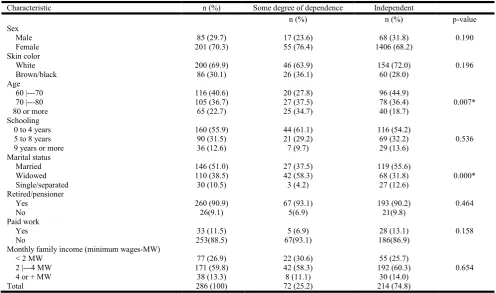
[image:3.595.54.551.222.515.2]The 286 participants who reported having systemic arterial hypertension corresponded to 67.5% of the total number of elderly interviewed in the first phase of the study. Among these, 74.8% had functional capacity preserved, presenting independence for daily life activities, while 25.2% had some level of dependence, as shown in Figure 1. Regarding the sociodemographic characteristics of the hypertensive elderly,
Figure 1. A. Distribution of the elderly who reported being hypertensive according to degrees of dependence; B: Distribution of the elderly who reported being hypertensive according to the degree of dependence, 2016
Characteristic n (%) Some degree of dependence Independent
n (%) n (%) p-value
Sex
Male 85 (29.7) 17 (23.6) 68 (31.8) 0.190
Female 201 (70.3) 55 (76.4) 1406 (68.2)
Skin color
White 200 (69.9) 46 (63.9) 154 (72.0) 0.196
Brown/black 86 (30.1) 26 (36.1) 60 (28.0)
Age
60 |---70 116 (40.6) 20 (27.8) 96 (44.9)
70 |---80 105 (36.7) 27 (37.5) 78 (36.4) 0.007*
80 or more 65 (22.7) 25 (34.7) 40 (18.7)
Schooling
0 to 4 years 160 (55.9) 44 (61.1) 116 (54.2)
5 to 8 years 90 (31.5) 21 (29.2) 69 (32.2) 0.536
9 years or more 36 (12.6) 7 (9.7) 29 (13.6)
Marital status
Married 146 (51.0) 27 (37.5) 119 (55.6)
Widowed 110 (38.5) 42 (58.3) 68 (31.8) 0.000*
Single/separated 30 (10.5) 3 (4.2) 27 (12.6)
Retired/pensioner
Yes 260 (90.9) 67 (93.1) 193 (90.2) 0.464
No 26(9.1) 5(6.9) 21(9.8)
Paid work
Yes 33 (11.5) 5 (6.9) 28 (13.1) 0.158
No 253(88.5) 67(93.1) 186(86.9)
Monthly family income (minimum wages-MW)
< 2 MW 77 (26.9) 22 (30.6) 55 (25.7)
2 |---4 MW 171 (59.8) 42 (58.3) 192 (60.3) 0.654
4 or + MW 38 (13.3) 8 (11.1) 30 (14.0)
Total 286 (100) 72 (25.2) 214 (74.8)
Minimum wage (Brazil) in 2016 equal to R$ 880.00. Chi-square test; Significant value equal to p≤0.05
.
there was a predominance of females (70.3%). And when analyzing the elderly who had some level of dependence, the highest percentage with impairment of functional capacity was also of women, with 76.4% (Table 1). As to age, 40.6% had between 60 and 70 years. However, the prevalence of care-dependent elderly people for daily activities was aged between 70 and 80 years (37.5%), and those who were 80 years or older (34.7%) (Table 1). Of the respondents, 55.9% had from 0 to 4 years old of schooling, in which there was a prevalence of 61.1% of elderly people who were dependent on daily life activities. As for the marital status, 51% of the elderly were married and 38.5% were widowed. The functional dependency was higher for those who were widowed (58.3%). In this variable, we observed a statistically significant result (p <0.005) (Table 1). In addition, 90.9% of the participants were retired, and 6.9% of the elderly with functional dependency also reported continuing to work. The prevalent monthly family income was two to four minimum wages (59.8%), and 30.6% of the dependent elderly had income below two minimum wages (Table 1). Regarding health conditions, the hypertensive elderly and those with functional dependence have diabetes mellitus (30.6%) and some type of cancer (11.1%) as associated comorbidities.
There was also a greater presence of depressive
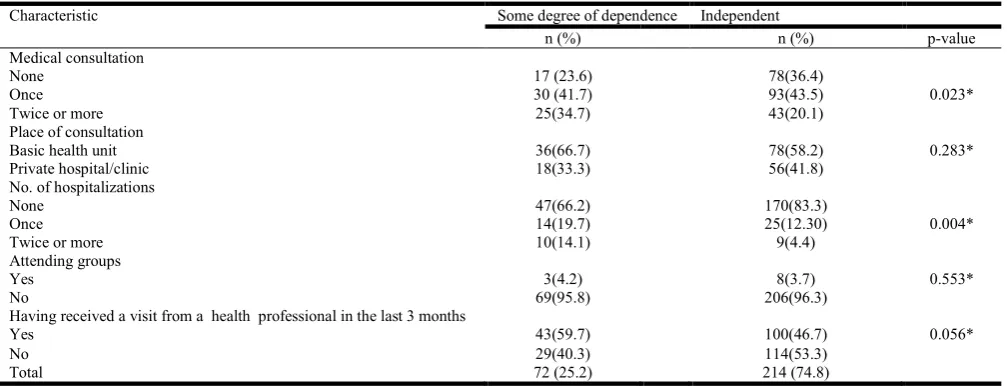
[image:4.595.43.552.73.257.2]symptomatology among dependent elderly people (46%) to the detriment of the independent ones (12.8%). Regarding the use of medication for hypertension, 100% of the dependent elderly and 96.7% of the independent elderly reported making use thereof. Also, 16.7% of the dependent elderly and 20.6% of the independent elderly mentioned using other forms of care regarding hypertension (Table 2). When questioned about medical consultations, it was identified that 41.7% of the dependent elderly and 43.5% of the independent elderly had attended at least one consultation in the six months prior to the interview. The most searched place for the consultation was the basic health unit 66.7% and 58.2% of the elderly dependents and independent, respectively. There was a predominance of elderly people that have not been hospitalized in the last two years, with a higher number of hospitalizations among the dependents (33.8%) versus 16.7% of the independent elderly, being statistically significant (Table 3). It is noteworthy that the majority of the elderly, about 95.8%, do not participate in group activities, regardless of whether their functional capacity is compromised or not. In relation to home visits, 59.7% of the dependent elderly had been visited by a health professional in the three months prior to the interview.
Table 2. Health status according to functional capacity, 2016
Characteristic Some degree of dependence Independent
n (%) n (%) n (%) p-value
Associated morbidities Diabetes Mellitus
Yes 69(24.1) 22(30.6) 47(22.0) 0.140*
No 217(75.9) 50(69.4) 167(78.0)
Cancer
Yes 30(10.5) 8(11.1) 22(10.3) 0.842*
No 256(89.5) 64(88.9) 192(89.7)
Depressive symptomatology #
No 218(79.6) 34(54.0) 184(87.2) 0.000*
Yes 56(20.4) 29(46.0) 27(12.8)
Using medications for hypertension
Yes 279(97.6) 72(100) 207(96.7) 0.128**
No 7(2.4) 0(0.0) 7(2.0)
Using other forms of care
Yes 56(19.6) 12(16.7) 44(20.6) 0.471*
No 230(80.4) 60(83.3) 160(79.4)
Total 286(100) 72 (25.2) 214 (74.8)
*Chi-square test ** Fischer's test; Significant value equal to p ≤ 0.05
# 3 to 20 elderly people did not respond due to cognitive difficulty or did not agree to respond.
Table 3. Characteristics of use of health service according to functional capacity, 2016
Characteristic Some degree of dependence Independent
n (%) n (%) p-value
Medical consultation
None 17 (23.6) 78(36.4)
Once 30 (41.7) 93(43.5) 0.023*
Twice or more 25(34.7) 43(20.1)
Place of consultation
Basic health unit 36(66.7) 78(58.2) 0.283*
Private hospital/clinic 18(33.3) 56(41.8)
No. of hospitalizations
None 47(66.2) 170(83.3)
Once 14(19.7) 25(12.30) 0.004*
Twice or more 10(14.1) 9(4.4)
Attending groups
Yes 3(4.2) 8(3.7) 0.553*
No 69(95.8) 206(96.3)
Having received a visit from a health professional in the last 3 months
Yes 43(59.7) 100(46.7) 0.056*
No 29(40.3) 114(53.3)
Total 72 (25.2) 214 (74.8)
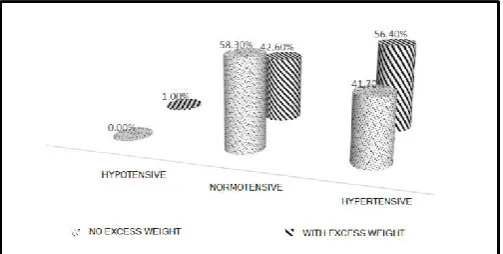
[image:4.595.44.548.304.497.2]This percentage is higher than that of the independent elderly, which was 46.7% (Table 3). When measuring the blood pressure of the interviewed elderly, it was observed that 51.6% it was still high, with blood pressure levels above SBP ≥ 140 mmHg and DBP> 90 mmHg. When compared with the body mass index (BMI), 56.4% of the elderly with high BP were overweight.
Figure 2. Distribution of the elderly who reported to be hypertensive, according to blood pressure level at the time of
interview and body mass index (BMI), 2016
DISCUSSION
The present study allowed identifying the functional capacity, associated comorbidities, and access to health services for elderly individuals who reported being hypertensive.
According to a study by Malta et al. (2014), cardiovascular
morbidities are chronic non-communicable diseases with higher incidence in the Brazilian population, accounting for 30.4% of the causes of death, thus being a public health problem. Hypertension is a characteristic risk factor of these diseases and has a high incidence in individuals over 60 years of age, according to results presented in the studies of
Esperandio (2013) and Zattar et al. (2013). Hypertension is not
a natural consequence of aging, but it may be associated with reduced quality of life due to impairment of functional
capacity (Zattar et al. 2013). The maintenance of the preserved
functional capacity of the majority of the elderly interviewed in this study seems to be associated with the recognition that they had SAH and adhered to the use of the medications for this disease. However, an expressive portion of the seniors still has impaired functional capacity, since approximately one quarter of the interviewees have functional dependence with difficulties to perform daily life activities, resulting in a reduction in the quality of life of the elderly. The impaired functional capacity observed in this study (25.2% of the respondents) was most prevalent in the elderly over 70 years of age, female, with no partner and less than four years of schooling. Similar data were also found in other studies, which pointed out that the elderly, female, with low schooling and living without partners are more likely to have functional
dependence on the basic activities of daily living (Zattar et al.
2013; Barbosa, 2014; Freitas and Pereira, 2012).
Reduced functional capacity was prevalent in older seniors.
According to the study by Pereira et al. (2017), the progression
of age is significantly associated with a higher prevalence of functional disability, both for basic activities and for instrumental activities of daily living. In a research carried out with elderly individuals who were 80 years of age or older in Bahia/Brazil, it was possible to identify that there was a prevalence of 80.9% of older seniors who were dependent for
instrumental activities and basic activities of daily living (Brito
et. al, 2015). There was prevalence of female hypertensive
seniors in the present study. This condition may be related to the greater demand of females to the health services when compared to men, which makes possible diagnosing more
cases of SAH in this population (Brito et. al, 2014). Moreover,
it may be associated with the process of feminization of old age, also identified in this study, in which there is a higher percentage of older women than men. Similarly, a study carried out in Colombia showed that, over the years, the percentage of elderly women was always higher than the elderly men and that among the individuals with some degree of dependence there was prevalence of women. This may be associated with some changes that occur in adulthood, when health conditions begin to decrease, a greater burden of disease, usually chronic conditions, occurs, and physical
difficulties appear to be sometimes disabling (Moreira et. al,
2011). Among the social factors linked to functional disability in the elderly, we observed that those who live without partners showed greater functional dependence. Therefore, the presence of a spouse and the social involvement of the elderly are considered as protective factors, that is, they contribute to the maintenance of their functional capacity (Valencia, 2015). Functional dependence was also prevalent in the elderly who had less than four years of schooling. Similar data were found
in the study by Cruz et al. (2015), who observed that cognitive
impairment in the elderly may directly favor a greater risk of falls.
According to this study, the preservation of functional capacity is linked to several factors, of which the economic condition stands out. Thus, the financial stability of the elderly is an important factor for the maintenance of functional capacity and also for a good quality of life, even after a process of illness or functional dependence. However, most of the elderly in this study had income of less than four minimum wages, which left them in an unfavorable economic situation. In addition, it was verified that 30.6% of the dependent elderly had income of less than two minimum wages, evidencing greater financial vulnerability. In addition to the interactions of social, demographic, economic and environmental factors, functional capacity is also associated with the behavioral factors and the health condition of the elderly. Regarding the health situation, it was observed that the presence of comorbidities associated with hypertension may influence their functional capacity.
According to Barbosa et al. (2013), chronic diseases constitute
a risk factor for the functional disability of the elderly, in which DM, stroke and heart disease have been associated with dependence on BADL. In the present study, approximately one third of hypertensive elderly patients with functional dependence also had diabetes mellitus and 11,1% had some type of cancer.
The frequency of depressive symptoms was higher in the elderly with some degree of functional dependence than among the independent seniors. Similar results were found in the study by Possatto and Rabelo (2017), carried out with 134 elderly people enrolled in the basic health unit of a city located in the state of Bahia/Brazil, which identified a frequency of depressive symptoms and higher level of anxiety among the elderly with functional dependence on basic and instrumental activities of daily living. In view of this, the aging population evidenced in the country together with the epidemiological changes demonstrated in recent years has a direct impact on health services, as with the increase of chronic diseases and the
impairment of the functional capacity of the elderly, the demand for health services grows each year. In this study, the search for medical care was of 41.7% of the elderly dependent, and 43.5% of the independent seniors had attended a consultation once in the six months prior to the interview. The place of greatest demand for the consultation was the basic health unit. A study carried out on the access to health services by the elderly in Brazil showed that health units and hospitals accounted for about 50% of the places attended by the elderly, although the consultation with private doctors was also significant, over 20% for both genders (Possatto and Rabelo, 2017). There was a reduced number of hospitalizations by the elderly during the study period. We identified that the hospital admissions occurred in the last two years were prevalent among the elderly with functional dependence. In a national study with data from various organs and institutions, (Miranda, Mendes and Silva, 2016), in observed that, in Brazil, in recent times there has been a reduction in hospitalizations of the elderly due to circulatory, respiratory and endocrine-nutritional and metabolic diseases. These researchers related this decrease to the expansion of basic care services in the country and to its quality. On the other hand, they identified an increasing and significant trend of hospitalizations due to neoplasms and external causes.
Another data investigated in this study was associated with the participation of the elderly in social groups, which allows them to remain socially active in their community, with greater social involvement. It was pointed out that of the interviewed elderly, only 7.9% of them were attending a senior group. This experience enables the elderly to assume various tasks, such as coordination, leadership, secretariat, besides leaving them inserted in the social space in which they live. This participation in social groups allows the elderly to exercise their role as a citizen, use their potential, share experiences and develop bonds of friendship with elderly people who live alone and have the need of attention, need to talk and to be heard (Almeida, 2015). Regarding the linkage with health services, we highlight the importance of home visits for the elderly, since more than half of those with functional dependence reported having received such visits in the three months prior to data collection. For Amthauer and Falk (Almeida, 2015), on the perspective of the health professional, the home visit is included in the care for the elderly as a possibility for the health team to know the context in which the elderly are inserted and their living and health conditions. The bond established between professional and user is important for the relationship of trust and the prevention of injuries, with the aim of minimizing the risk of morbidity and mortality. Taking into account that the present study was performed with 286 elderly individuals who reported having hypertension, most of them taking antihypertensive medication, it was found that more than half of them still had high blood pressure at the time of the interview, as well as overweight, when calculating by Body Mass Index (BMI).
Conclusions
This research aimed to verify the functional capacity and associated comorbidities in elderly patients with systemic arterial hypertension. It was identified that the majority (74.8%) of the elderly interviewed maintained their functional capacity preserved, presenting independence for the activities of daily living. Among those who had some degree of dependence, women were in greater percentage. Regarding
health conditions, hypertensive elderly patients with functional dependence had diabetes mellitus (30.6%) and some type of cancer (11.1%) as associated diseases. In addition, among the
dependent elderly, 46% of them had depressive
symptomatology. Human aging is a major challenge for society since it requires that the different sectors be prepared to meet the demands of the large contingent of elderly people.
Concomitant to the demographic transformation,
epidemiological changes occur, demonstrating the prevalence of chronic diseases in the elderly, as well as modifications in the functional and cognitive capacity of this population. This study had as a limitation the fact that it was performed with a cross-sectional design, in a non-probabilistic sample of elderly individuals who referred to be hypertensive, therefore without having previously measured their blood pressure. It also does not allow us to identify whether the comorbidities associated with hypertension preceded the occurrence of the disease or are in some way a consequence thereof. Thus, further research addressing the theme with another methodological design should be developed. Also, public policies should contemplate the entire population, with special attention to the elderly, both for the actions of health promotion and to prevent and control hypertension.
Conflito de interesses: The authors declare that there is no conflict of interest.
REFERENCES
Abdala RP, Barbieri Junior W. Bueno Junior CR. Gomes MM. Padrão de marcha, prevalência de quedas e medo de
cair em idosas ativas e sedentárias. Rev Bras Med Esporte
[online]. 2017, vol.23, n.1, pp.26-30. http://dx.doi.org/
10.1590/1517-869220172301155494.
Allen M, Kelly K, Fleming I. Hypertension in elderly patients
recommended systolic targets are not evidence based. Can
Fam Physician, 2013; 59, 19-21.
Almeida NA. O acesso aos serviços de saúde pelos idosos no Brasil com base na Pesquisa Nacional por Amostra de
Domicílios (PNAD) entre 1998 e 2008. J Bras Econ Saúde;
2015; 7(1): 43-52.
Amthauer C, Falk JW. Discursos dos profissionais de saúde da
família na ótica da assistência à saúde do idoso. J. res.:
fundam. care. Online. 2017; 9(1): 99-105.
Asekun-Olarinmoye EO, Akinwusi PO, Adebimpe WO, Isawumi MA, Hassan MB, Olowe OA, Makanjuola OB, Alebiosu CO, Adewole TA. Prevalence of hypertension in the rural adult population of Osun State, southwestern
Nigeria. Int J Gen Med, 2013; 6, 317-3222.
http://dx.doi.org/10.2147/IJGM.S42905
Azeredo Z, Matos E. Grau de dependência em doentes que
sofreram AVC. Rev Facul Med Lisboa.; 2003;
8(4):199-204.
Barbosa BR, Almeida JM, Barbosa MR, Rossi-Barbosa LAR. Avaliação da capacidade funcional dos idosos e fatores
associados à incapacidade. Ciência & Saúde Coletiva.
2014; 19(8):3317-3325. http://dx.doi.org/10.1590/1413-81232014198.06322013.
Brito KQD, Menezes TN, Olinda RA. Incapacidade funcional e fatores socioeconômicos e demográficos associados em
idosos, Rev Bras Enferm. 2015 68(4):633-41.
no Nordeste do Brasil. Fisioter Pesq. 2014; 21(4):308-313. http://dx.doi.org/10.590/1809-2950/11556021042014 Chrysant SG. Treating blood pressure to prevent strokes: the
age factor. World J Cardiol, 2013; 5(3) 22-27.
Cruz DT, Cruz FM, Ribeiro AL, Veiga CL, Leite ICG. Associação entre capacidade cognitiva e ocorrência de
quedas em idosos. Cad. Saúde Colet. Rio de Janeiro. 2015;
23 (4): 386-3933
Esperandio EM, Espinosa MM, Martins MAS, Guimarães LV, Lopes MAL & Scala LCN. (2013) Prevalência e fatores associados à hipertensão arterial em idosos de municípios
da Amazônia Legal, MT. Rev. bras. geriatr.
gerontol.; 16(3):481-493.
http://dx.doi.org/10.1590/S1809-98232013000300007
Freitas RS, Fernandes MH, Coqueiro RS, Reis Júnior WM, Rocha SV, Brito TA. Capacidade funcional e fatores
associados em idosos: estudo populacional. Acta Paul
Enferm; 2012; 25(6):933-9.
Gao Y, Chen G, Tian H, L de Lin, Lu J, J de Weng. (2013) Prevalence of hypertension in China: a cross-sectional
study. PLoS ONE, 2013; 8(6), 1-8. DOI: 10.1371 /
journal.pone.0065938
Hartmann Júnio JAS, Gomes GC. Depressão em idosos institucionalizados: as singularidades de um sofrimento
visto em sua diversidade. Rev. SBPH. Rio de Janeiro. 2014
17(1): 83-105.
Instituto Brasileiro de Geografia e Estatística (IBGE). Bases cartográficas/mapas municipais, 2010.
Joaquim FL, Camacho ACLF, Sabóia VM, Santos RC, Santos LSF, Nogueira GA. Impact of home visits on the functional
capacity of patients with venous ulcers. Rev Bras Enferm
[Internet]. 2016; 69(3):439-47. http://dx.doi.org/10.1590/
0034-7167.2016690308i.
Lenardt MH, Carneiro NHK, Binotto MA, Willig MH, Lourenço TM, Albino J. Frailty and quality of life in
elderly primary health care users. Rev Bras Enferm
[Internet]. 2016;69(3):448-53. http://dx.doi.org/10.1590/
0034-7167.2016690309i
Mahoney FI, Barthel DW. Functional evaluation: the Barthel
Index. Md State Med J.; 1965 14s/n:61-5.
Malta DC, Moura L, Prado RR, Escalante JC, Schmidt MI, Duncan BB. Mortalidade por doenças crônicas não transmissíveis no Brasil e suas regiões, 2000 a 2011.
Epidemiol. Serv. Saúde, Brasília. 2014; 23(4):599-608.
Miranda GMD, Mendes ACG. Silva ALA. O envelhecimento populacional brasileiro: desafios e consequências sociais
atuais e futuras. Rev. Bras. Geriatr. Gerontol. Rio de
Janeiro. 2016; 19(3):507-519.
Moreira JPL, Moraes JR, Luiz RR. Utilização de consulta médica e hipertensão arterial sistêmica nas áreas urbanas e
rurais do Brasil, segundo dados da PNAD 2008. Ciência &
Saúde Coletiva. 2011; 16(9):3781-3793.
Olives, C, Myerson R, Mokdad AH, Murray CJL, Lim SS.
Prevalence, awareness, treatment, and control of
hypertension in United States countries, 2001-2009. PloS
ONE, 2013; 8(4): 1-8.
Pereira LC, Figueiredo MLF, Beleza CMF, Andrade EMLR, Silva MJ, Pereira AFM. Predictors for the functional
incapacity of the elderly in primary health care. Rev Bras
Enferm [Internet]. 2017;70(1):106-12. http://dx.doi.org/
10.1590/0034-7167-2016-0046.
Pereira, G.N, Bastos GAN, Del Duca GF, Bós AJG. Indicadores demográficos e socioeconômicos associados à
incapacidade funcional em idosos. Cad. Saúde Pública,
Rio de Janeiro, 2012; 28(11):2035-2042. http://dx.doi.org/ 10.1590/S0102-311X2012001100003
Pinto FNFR, Oliveira DC. Capacidade funcional e
envolvimento social em idosos: há relação?; RBCEH,
Passo Fundo. 2015; 12(1): 56-68.
Possatto JM, Rabelo DF. Condições de saúde psicológica,
capacidade funcional e suporte social de idosos. Revista
Kairós ― Gerontologia. 2017; 20(2): 45-58.
Santos GS, Cunha ICKO. Avaliação da capacidade funcional de idosos para o desempenho das atividades instrumentais
da vida diária: um estudo na atenção básica em saúde. R.
Enferm. Cent. O. Min. 2013 3(3):820-28.
Sheikh JI, Yesavage J. A geriatric depression scale (GDS):
recent evidence and development of a shorter version. Clin.
Gerontol. 1986; 5:165-173.
Valencia AL. Situación demográfica y epidemiológica de los
adultos mayores. Santander. Med UNAB. 2015;
18(1):58-65.
Yesavage JA, Brink TL, Rose TL, Lum O, Huang V, Adey M, Leirer VO. Development and validation of a geriatric
depression screening scale: a preliminary report. J
Psychiatr Res. 1983; 17(1):37-49. https://doi.org/
10.1016/0022-3956(82)90033-4
Zattar LC, Boing AF, Giehl MWC, d'Orsi E. Prevalence and factors associated with high blood pressure, awareness, and
treatment among elderly in Southern Brazil. Cad. Saúde
Pública. 2013; 29(3): 507-21. http://dx.doi.org/10.1590/
S0102-311X2013000300009