Journal of Chemical and Pharmaceutical Research
__________________________________________________
ISSN No: 0975-7384 CODEN(USA): JCPRC5
J. Chem. Pharm. Res., 2011, 3(1):180-187
Development, characterization and solubility study of solid
dispersion of Valsartan
Raja rajeswari.K*1 and Abbulu.K2, Sudhakar. M1
1
Malla Reddy College of Pharmacy, Maisammaguda, Dhulapally, Secunderabad
2
Malla Reddy Institute of Pharmaceutical Sciences, Maisammaguda, Dhulapally, Secunderabad
__________________________________________________________________
ABSTRACT
For a successful formulation, various formulation parameters that play a crucial role are aqueous solubility; stability at ambient temperature and humidity, photostability, compatibility with solvents and excipients etc Among all these, Solubility is the most important property for developing formulations. In the present study, an attempt was made to improve the solubility and dissolution rate using solid dispersion of a poorly soluble drug valsartan by using Soluplus as carrier material to enhance the solubility as well as dissolution rate. Five different formulations were prepared using hot melt extrusion technique in different ratios i.e., 1:1, 1:3, 1:5, 1:7, and 1:9. The formulations were further characterized by FTIR, DSC, and SEM analysis. The results of FTIR revealed that there exist no chemical interaction between the drug and the polymer. DSC studies showed that the drug was in amorphous state completely entrapped by the polymer. SEM studies showed the surface morphology of the solid dispersion. All the formulations showed a marked increase in the solubility behavior and improved drug release when tested for their Invitro studies. Formulation containing drug: polymer of 1:9 showed the best release with a cumulative release of 100%. Hence, it was concluded that soluplus as a carrier can be very well utilized to improve the solubility of poorly soluble drugs.
______________________________________________________________________________
INTRODUCTION
class II drugs according to Biopharmaceutical Classification Scheme (BCS)[1].Valsartan is a potent and specific competitive angiotensin II receptor antagonist (more commonly called an “ARB”, which stands for Angiotensin Receptor Blocker) acting on AT1 subtype [2,3]. It has a
molecular formula of C24 H29 N5 O3 and a molecular mass of 435.519 g/mol. with a low
bioavailability of 23%. Various techniques for the improvement of the dissolution rate of poorly water-soluble drugs include micronization, inclusion complexes with cyclodextrins [4,5] amorphous drug, Surface adsorption, and solid dispersions with hydrophilic carriers [6], micellar drug solubilization [7], dendrimers for drug solubilization [8], self micro-emulsifying drug delivery systems [9], spray drying [10], nanoparticle engineering processes [11], Prodrug approach [12], Salt synthesis [13]. etc. Among all the above said methods, Solid dispersion technology using incorporation of drugs into hydrophilic carriers by hot melt extraction technique has frequently been reported to increase the dissolution rate of poorly water-soluble drugs, often leading to improved drug bioavailability.
The most commonly used hydrophilic carriers for solid dispersions include polyvinylpyrrolidone [14], polyethylene glycols [15], colloidal silicon dioxide [16], and lipids, such as polyglycolized glycerides (gelucire) [17, 18]. The solvent evaporation [19], melt adsorption [20, 21], fusion, spray drying, spray freezing [22], melt extrusion [23], and supercritical fluid precipitation [24], are the techniques reported for the preparation of solid dispersions. Many works related to the above said technique have been already reported with the use of hydrophilic carriers such as PEG, PVP, colloidal silicon dioxide, skimmed milk powder [25], and lipids, such as polyglycolized glycerides (Gelucire) etc. Soluplus, a novel amphiphilic polymeric solubilizer is a polyvinylcaprolactam-polyvinylAcetate-polyethyleneglycol grafted copolymer with both hydrophilic and lipophilic properties.Hence, the present study aimed to improve the solubility and/or dissolution rate of poorly water-soluble drug through the solid dispersion approach using Soluplus in various ratios.
EXPERIMENTAL SECTION
2.1. Materials and Methods:
Valsartan and Soluplus were provided as gift samples from Alembic Pharmaceuticals Ltd, Ahmedabad and BASF, The Chemical Company, Germany respectively. All other solvents and reagents used were of analytical grade and used as such.
2.2. Preparation of Solid dispersion:
Solid dispersions of Valsartan with Soluplus were prepared in the ratios of 1:1, 1:3, 1:5, and 1:7and 1:9 using hot melt extrusion technique. The drug and the polymer were accurately weighed and solid dispersions were prepared by incorporating the drug into the melt of Soluplus at a temperature of 115-120oC until a homogenous melt was obtained. This was simultaneously dried by cooling to the room temperature, pulverized and passed through sieve no: 85.
2.3. Determination of Percentage purity of Valsartan in the Solid dispersion:
Valsaratan by observing at 250nm using (Lab India UV3000+) UV-Visible Spectrophotometric method.
2.4. Invitro Dissolution Studies:
The Invitro dissolution rate studies were performed in triplicate for all the five formulations on a USP –type-I Dissolution test Apparatus (model- ElectroLab TDT-O8L) using phosphate buffer of PH 7.4 as dissolution medium at 37±0.5o C. at a rotation speed of 50. Aliquots of (5ml) of the dissolution medium were with drawn at regular time intervals, filtered using a 0.45 µm filter (Millipore)and the volume was made up with the dissolution medium. The amount of Valsartan present in the sample was spectrophotometrically determined at 250nm.
Characterization of The Solid Dispersion
3.1 Fourier transforms infrared spectroscopy (FTIR):
The KBr disks with Valsartan, Soluplus, and optimized solid dispersion were prepared using electrically operated KBr Press Model SHIMADZU FTIR-5300 Fourier transform spectrophotometer was used to record IR spectra of the prepared discs, to confirm for any interaction of Valsartan with other excipients of dispersion.
3.2 Differential Scanning Calorimeter (DSC):
Thermal characterization of Valsartan and soluplus and optimized dispersion was performed by DSC using a Universal Thermal Analyzer DSC Q200 V23.12. Samples (2-4 mg) were sealed in aluminum pans for analysis. The DSC thermograms were recorded from 20oC to 120oC at a heating rate of 10oC/min.. Nitrogen flow rate of 20 ml/min was used for each DSC run.
3.3 Scanning Electron Microscopy (SEM):
The SEM analysis of the samples was performed to investigate the surface morphology and homogeneity of the particles.The samples of optimized solid dispersion were sputter-coated with gold at room temperature before examination to render the surface of particles electroconductive. The SEM analysis of the sample was done by Jeol JSM-840 (Japan) scanning electron microscope.
3.4 X-Ray Diffraction Studies:
X-ray diffraction patterns of Valsartan and Soluplus, and optimized solid dispersion were recorded to assess the solid state of Valsartan, using a PHILLIPS X-ray Diffractometer with a copper target, voltage 40 kV, current 20 mA, at a scanning speed of 20 per min.
RESULTS AND DISCUSSION
4.1 FTIR:
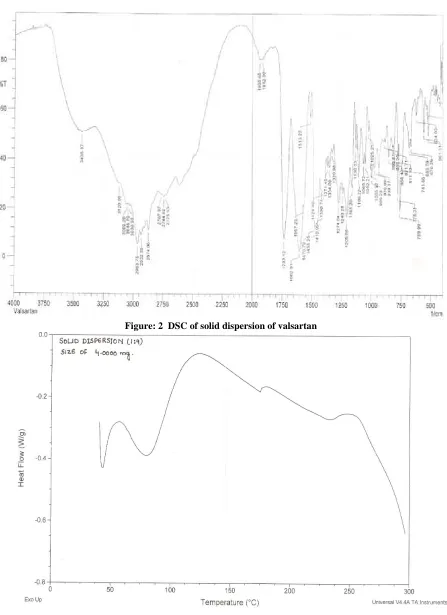
Figure :1 FTIR of solid dispersion of Valsartan
The FT-IR spectra of dispersion showed almost all the bands of Soluplus, without affecting its peak position and trends, which indicated the absence of well-defined interactions between valsartan and Soluplus.
4.2 DSC:
DSC was one of the techniques employed for the characterization of the complexes. The DSC thermal profiles for the samples are represented in Figure 2. DSC curve for the drug shows an endothermic peak at 100.5 ºC related to drug melting point. The absence of a melting peak of the drug in the solid was taken as an indication that the drug was entrapped by the polymer, leading to a reduction in the overall crystalline of the system.
4.3 SEM:
SEM studies showed the surface morphological properties of the solid dispersion indicating that the solid dispersion was in amorphous state. SEM was shown in the figure: 3.
Figure: 3 SEM of solid dispersion of valsartan
4.4 Invitro Dissolution Studies:
GRAPH: 1
COMPARITIVE DISSOLUTION STUDIES OF SOLID DISPERSIONS OF
VALSARTAN -20 0 20 40 60 80 100 120
0 25 50 75 100 125
TIME IN MINUTES
P E R C E N T A G E D R U G R E L E A S S E
F1 F2 F3 F4 F5
GRAPH: 2
TIM E VS LOG%DRUG RELEASE
-0.5 0 0.5 1 1.5 2 2.5
0 25 50 75 100 125
TIM E IN MINUTES
L O G % D R U G R E L E A S E
F1 F2 F3 F4 F5
GRAPH:3
S Q U A R E R O O T O F T I M E VS C U M U L A T I VE %D R U G R EL EA S E( H I G U C H I )
-20 0 20 40 60 80 100 120
0 2 4 6 8 10 12
SQU A R E R OOT OF T I M E
F1 F2 F3 F4 F5
CONCLUSION
The solubility and dissolution rate of a poorly soluble drug, Valsartan can be effectively enhanced by using Soluplus in the form of solid dispersion that imparts good surface adsorbent properties and leaves the drug in amorphous state that increases the surface area, which in turn enhances the dissolution rate. Also because of its excellent flow properties and extrudability soluplus enables for good compaction as well as other processibility processes.,
Acknowledgements
I am thankful to Alembic Pharmaceuticals Ltd and BASF, the chemical company for providing gift samples of Valsartan and Soluplus respectively. My sincere thanks to Nishka Labs, Hyderabad.
REFERENCES
[1] The Biopharmaceutics Classification System (BCS) Guidance, Office of Pharmaceutical Science, http://www.fda.gov/cder/OPS/BCS_guidance.htm
[2] Criscione, L.; Gasparo, M. D.; Buehlmayer, P.; Whitebread, S.; Ramjoue, H.P.;Wood J.M.
Br. J. Pharmacol., 1993, 110, 761-71.
[3] Dina, R.; Jafari, M. Am. J. Health Syst. Pharm., 2000, 57, 1231-41. [4] Carlos Eduardo de Matos Jensen,. Molecules 2010, 15, 4067-4084;
[5] Loftsson, T.; Brewster, M.E.; Masson, M. Am. J. Drug Deliv., 2004, 2, 261-75. [6] Gohel, M.C.; Patel, L.D. Drug. Dev. Ind. Pharm., 2005, 29, 299-310.
[7] Carlota, O.; Rangel,Y.; Adalberto, P.; Leoberto, C.T. J. Pharm.Pharmaceut. Sci., 2005, 8, 147- 63.
[8] Gupta, U.; Agashe, H.B.; Asthana, A.; Jain, N. K. Biomacromolecules, 2006, 7, 649-58. [9] Hong, J.Y.; Kim, J.K.; Song, Y.K.; Park, J.S.; Kim, C.K. J. Control. Release, 2006, 110, 332-8.
[10] Chauhan, B.; Shimpi, S.; Paradkar, A. AAPS Pharm Sci Tech., 2005, 6, E405-E412.
[11] Troy, P.; Jason, M. V.; True, L. R.; Xiaoxia, C.; Kirk, A. O.; Prapasri, S.; Jiahui, H.; Jason, T. M.; Keith, P. J.; Williams III, R.O. Int. J. Pharm., 2006, 324, 43-50.
[12] Banerjee, R.; Chakraborty, H.; Sarkar, M. Biopolymers, 2004,75, 355-65.
[13] Bastin, R. J.; Bowker, M. J.; Slater, B. J. Org. Process Res. Dev., 2000, 4, 427-35. [14] Ambike, A.A.; Mahadik, K.R.; Paradkar, A. .Int. J. Pharm., 2004, 282, 151-62.
[15] Doshi, D.H.; Ravis, W.R.; Betageri, G.V. Drug. Dev. Ind. Pharm., 1967, 23, 1167- 76. [16] Takeuchi, H.; Nagira, S.; Yamamoto, H.; Kawashima, Y. Powder Technol., 2004, 141, 187- 95.
[17] Damian. F.; Blaton, N.; Naesens, L.; Balzarini, J.; Kinget, R.;Augustijns, P.; Vanden
Eur. J. Pharm. Sci., 2000, 10, 311-22.
[18] Fattah, A.A.M.; Bhargava, H.N. Int. J. Pharm., 2002, 235, 17- 33.
[19] Gupta, M.K.; Goldman, D.; Bogner, R.H.; Tseng, Y.C. Pharm. Dev. Technol., 2001, 6, 563-72.
[20] Gupta, M.K.; Bogner, R.H.; Goldman, D.; Tseng, Y.C. Pharm. Dev. Technol., 2002, 7, 103-12.
[21] Hu, J.; Rogers, T.L.; Brown, J.; Young, T.; Johnston, K.P.; Williams,R.O. III. Pharm. Res.,
[22] Fini, A.; Rodriguez, C.; Cavallari, C.; Albertini, B.; Passerini, N. Int. J. Pharm., 2002, 247, 11-22.
[23] Brietenbach, J.; Berndl, G.; Neumann, J.; Rosenberg, J.; Simon, D.; Zeidler, J. Proc.
Control. Release Soc., 1998, 25, 804-5.
[24] Sethia, S.; Squillante, E. Int. J. Pharm., 2004, 272, 1-10.
[25] K.Venkates Kumar, N.Arunkumar, PRP. Verma, C. Rani. Int. J. PharmTech Research. Vol.1, No.3, pp 431-437, 2009