Florida International University Florida International University
FIU Digital Commons
FIU Digital Commons
FIU Electronic Theses and Dissertations University Graduate School 6-6-2019
Spatio-Temporal Multimedia Big Data Analytics Using Deep
Spatio-Temporal Multimedia Big Data Analytics Using Deep
Neural Networks
Neural Networks
Samira PouyanfarFlorida International University, [email protected]
Follow this and additional works at: https://digitalcommons.fiu.edu/etd
Part of the Databases and Information Systems Commons, Numerical Analysis and Scientific Computing Commons, and the Other Computer Sciences Commons
Recommended Citation Recommended Citation
Pouyanfar, Samira, "Spatio-Temporal Multimedia Big Data Analytics Using Deep Neural Networks" (2019). FIU Electronic Theses and Dissertations. 4265.
https://digitalcommons.fiu.edu/etd/4265
FLORIDA INTERNATIONAL UNIVERSITY Miami, Florida
SPATIO-TEMPORAL MULTIMEDIA BIG DATA ANALYTICS USING DEEP NEURAL NETWORKS
A dissertation submitted in partial fulfillment of the requirements for the degree of
DOCTOR OF PHILOSOPHY in COMPUTER SCIENCE by Samira Pouyanfar 2019
To: Dean John L. Volakis
College of Engineering and Computing
This dissertation, written by Samira Pouyanfar, and entitled Spatio-Temporal Mul-timedia Big Data Analytics using Deep Neural Networks, having been approved in respect to style and intellectual content, is referred to you for judgment.
We have read this dissertation and recommend that it be approved.
Xudong He
Sitharama S. Iyengar
Jainendra K Navlakha
Keqi Zhang
Shu-Ching Chen, Major Professor
Date of Defense: June 6, 2019
The dissertation of Samira Pouyanfar is approved.
Dean John L. Volakis College of Engineering and Computing
Andres G. Gil Vice President for Research and Economic Development and Dean of the University Graduate School
c
Copyright 2019 by Samira Pouyanfar
DEDICATION
I dedicate this work to my parents, Maman Behjat and Baba Abbas, and my husband, Ramin, who offered unconditional love and support and have always
ACKNOWLEDGMENTS
This research is supported by the Dissertation Year Fellowship award from Florida International University’s Graduate School, NSF 0833093, NSF HRD-1547798, NSF CNS-1126619, NSF CNS-1461926, DHSs VACCINE Center under Award Number 2009-ST-061-CI0001, Florida Public Hurricane Loss Model (FPHLM), Volkswagen Group of America Electronics Research Lab, and FIU NSF Center of Research Excellence in Science and Technology (CREST).
First of all, I would like to express my utmost gratitude to my advisor Professor Shu-Ching Chen, for his invaluable guidance, encouragement, patience, and support throughout so many years of research. In addition, I would also like to thank Pro-fessor Mei-Ling Shyu of the Department of Electrical and Computer Engineering at University of Miami (UM), professors Sitharama S. Iyengar, Jainendra K Navlakha, and Xudong He of the School of Computing and Information Sciences, and Professor Keqi Zhang of the Department of Environmental Studies and International Hurri-cane Research Center for the suggestions they provided. Secondly, my thanks go to the friends and colleagues from the Distributed Multimedia Information Systems (DMIS) Laboratory at FIU and the Data Mining, Database & Multimedia (DDM) Research Group at UM, in particular Yudong Tao, Haiman Tian, Maria Presa Reyes, Tianyi Wang, Hector Cen, Yilin Yan, Saad Sadiq, Hsin-Yu Ha, Yimin Yang, Yingxin Li, Diana Machado, Raul Garcia, Yuexuan Tu, and Daniel E. Martinez. I would also thank my dear friend Leila Zahedi. Last, but not least, I am extremely grateful for the deep love from my kind parents, sisters, and my supportive husband, Ramin. I would never have been able to finish my dissertation without their support and
ABSTRACT OF THE DISSERTATION
SPATIO-TEMPORAL MULTIMEDIA BIG DATA ANALYTICS USING DEEP NEURAL NETWORKS
by
Samira Pouyanfar
Florida International University, 2019 Miami, Florida
Professor Shu-Ching Chen, Major Professor
With the proliferation of online services and mobile technologies, the world has stepped into a multimedia big data era, where new opportunities and challenges appear with the high diversity multimedia data together with the huge amount of social data. Nowadays, multimedia data consisting of audio, text, image, and video has grown tremendously. With such an increase in the amount of multimedia data, the main question raised is how one can analyze this high volume and variety of data in an efficient and effective way. A vast amount of research work has been done in the multimedia area, targeting different aspects of big data analytics, such as the capture, storage, indexing, mining, and retrieval of multimedia big data. However, there is insufficient research that provides a comprehensive framework for multimedia big data analytics and management.
To address the major challenges in this area, a new framework is proposed based on deep neural networks for multimedia semantic concept detection with a focus on spatio-temporal information analysis and rare event detection. The proposed frame-work is able to discover the pattern and knowledge of multimedia data using both static deep data representation and temporal semantics. Specifically, it is designed to handle data with skewed distributions. The proposed framework includes the following components: (1) a synthetic data generation component based on
simula-tion and adversarial networks for data augmentasimula-tion and deep learning training, (2) an automatic sampling model to overcome the imbalanced data issue in multimedia data, (3) a deep representation learning model leveraging novel deep learning tech-niques to generate the most discriminative static features from multimedia data, (4) an automatic hyper-parameter learning component for faster training and conver-gence of the learning models, (5) a spatio-temporal deep learning model to analyze dynamic features from multimedia data, and finally (6) a multimodal deep learn-ing fusion model to integrate different data modalities. The whole framework has been evaluated using various large-scale multimedia datasets that include the newly collected disaster-events video dataset and other public datasets.
TABLE OF CONTENTS
CHAPTER PAGE
1. INTRODUCTION . . . 1
1.1 Background and Introduction . . . 1
1.2 Proposed Solutions . . . 4
1.3 Contributions . . . 6
1.4 Scope and Limitations . . . 8
1.5 Outline . . . 9
2. RELATED WORK . . . 10
2.1 Domain Adaptation and Randomization . . . 10
2.2 Imbalanced Data Classification . . . 12
2.3 Deep Learning . . . 14
2.3.1 Visual Data Processing . . . 15
2.3.2 Multimodal Learning . . . 18
2.3.3 Hyper-parameter Learning for Neural Networks . . . 20
2.4 Spatio-Temporal Data Analytics . . . 21
3. OVERVIEW OF THE PROPOSED FRAMEWORK . . . 23
3.1 Synthetic Data Generation . . . 24
3.2 Automatic Sampling for Imbalanced Data . . . 26
3.3 Deep Static Representation Learning . . . 26
3.4 Automatic Hyper-parameter Learning . . . 27
3.5 Deep Spatio-Temporal Learning . . . 28
3.6 Multimodal Deep Learning Fusion . . . 28
4. SYNTHETIC DATA GENERATION . . . 30
4.1 Data Generation using Generative Adversarial Networks . . . 30
4.1.1 Adversarial Data Augmentation . . . 32
4.1.2 Experimental Analysis . . . 34
4.2 Data Generation using Simulation . . . 38
4.2.1 Domain Randomization for Bridging the Reality Gap . . . 39
4.2.2 Data Preparation and Model Training . . . 45
4.2.3 Experimental Analysis . . . 47
4.3 Conclusion . . . 53
5. AUTOMATIC SAMPLING FOR IMBALANCED DATA CLASSIFICATION 56 5.1 Spatio-Temporal Synthetic Oversampling . . . 56
5.1.1 Experimental Analysis . . . 59
5.2 Dynamic Sampling . . . 63
5.2.1 Real-time Data Augmentation . . . 64
5.2.3 Experimental Analysis . . . 66
5.3 Conclusion . . . 70
6. DEEP REPRESENTATION LEARNING . . . 71
6.1 Ensemble Deep Learning . . . 71
6.1.1 Preprocessing . . . 73
6.1.2 Deep Feature Extraction . . . 73
6.1.3 Classification . . . 76
6.1.4 Experimental Analysis . . . 79
6.2 Efficient Deep Residual-Inception Network . . . 90
6.2.1 Residual Module . . . 91
6.2.2 Inception Module . . . 92
6.2.3 Network Architecture . . . 93
6.2.4 Experimental Analysis . . . 96
6.3 Conclusion . . . 98
7. AUTOMATIC HYPER-PARAMETER LEARNING . . . 101
7.1 Trend-based Learning Rate Annealing . . . 101
7.1.1 Stochastic Gradient Descent . . . 102
7.1.2 Non-Parametric Trend Analysis . . . 104
7.1.3 Online Learning Rate Schedule . . . 106
7.2 Experimental Analysis . . . 108
7.3 Conclusion . . . 114
8. DEEP SPATIO-TEMPORAL LEARNING . . . 116
8.1 Spatio-Temporal Representation Learning . . . 117
8.1.1 Transfer Learning with Deep CNNs . . . 117
8.1.2 LSTM . . . 117
8.1.3 Bidirectional LSTM . . . 118
8.1.4 CNN-Residual Bidirectional LSTM . . . 119
8.1.5 Experimental Analysis . . . 122
8.2 An Integrated Spatio-Temporal Sampling and Deep Learning Model . . . 125
8.2.1 Experimental Analaysis . . . 128
8.3 Conclusion . . . 128
9. MULTIMODAL DEEP REPRESENTATION LEARNING . . . 132
9.1 Static Feature Extraction Module . . . 133
9.1.1 Visual Feature Extraction . . . 133
9.1.2 Audio Feature Extraction . . . 136
9.1.3 Textual Feature Extraction . . . 136
9.2 Temporal Feature Extraction Module . . . 137
9.3 Fusion Module . . . 138
9.5 Conclusion . . . 144
10. CONCLUSIONS AND FUTURE WORK . . . 146
10.1 Conclusions . . . 146
10.2 Future Work . . . 148
10.2.1 Automatic Hyper-Parameter Learning . . . 148
10.2.2 Integrated Synthetic Data Generation . . . 150
10.2.3 Other Future Work . . . 151
BIBLIOGRAPHY . . . 156
LIST OF TABLES
TABLE PAGE
4.1 The size of the collected flood image datasets . . . 35
4.2 Recall scores on the flood dataset separated by style . . . 37
4.3 Comparison results between different style transfer techniques and the baseline . . . 38
4.4 Comparison results on simulation (Domain 2) . . . 52
4.5 Comparison results on real world (Domain 3) . . . 53
5.1 Performance evaluation results of the proposed spatio-temporal syn-thetic oversampling algorithm on disaster dataset. . . 61
5.2 Performance evaluation results of the proposed spatio-temporal syn-thetic oversampling algorithm on imbalanced UCF101. . . 61
5.3 Performance evaluation of the proposed dynamic sampling. . . 69
6.1 Pre-trained reference models for feature extraction . . . 76
6.2 Average performance of various feature sets and classifiers on the disas-ter dataset . . . 83
6.3 Statistic summary of selected concepts in TRECVID . . . 87
6.4 Performance evaluation for different concepts on the TRECVID dataset 88 6.5 Deep Residual-Inception architecture . . . 94
6.6 Performance evaluation for different concepts on the disaster dataset . . 99
7.1 Accuracy comparison on CIFAR-10 for different iterations and two dif-ferent values for the significance factor (ϕ0) . . . 113
8.1 Classification results on UCF101. The proposed CNN-ResBiLSTM com-pared with baselines and state-of-the-art models. . . 124
8.2 Performance evaluation results on UCF101 using different techniques based on our experimental setup. . . 125
8.3 Performance evaluation results on Disaster dataset. . . 130
8.4 Performance evaluation results on imbalanced UCF101. . . 130
LIST OF FIGURES
FIGURE PAGE
2.1 The network top-5 errors (%) and layers in the ImageNet classification
over the time . . . 17
3.1 The proposed framework for multimedia big data analytics . . . 25
4.1 Samples of (a) noisy and (b) normal flooding images . . . 31
4.2 The proposed adversarial data augmentation model . . . 32
4.3 Cycle-GAN style transfer samples on the flood dataset . . . 36
4.4 Correctly classified samples by the proposed framework for each style category on the flood dataset . . . 39
4.5 Transferring the knowledge to the real world (center) from a photo-realistic simulation (left) vs a primitive simulation (right) . . . 40
4.6 The proposed model for collision-free autonomous driving based on do-main randomization . . . 42
4.7 Samples of three domains including Domain 1 or primitive simulation (a), Domain 2 or photo-realistic simulation (b) and Domain 3 or the real world (c) . . . 44
4.8 Examples of various randomizations applied to Domain 1 . . . 46
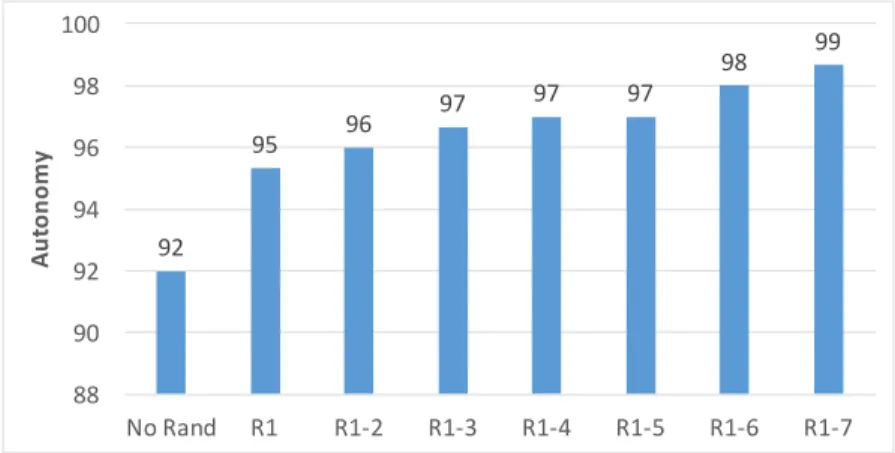
4.9 Impact of adding individual randomization to the model on autonomy . 52 4.10 Examples of results on parking and Kitti datasets . . . 55
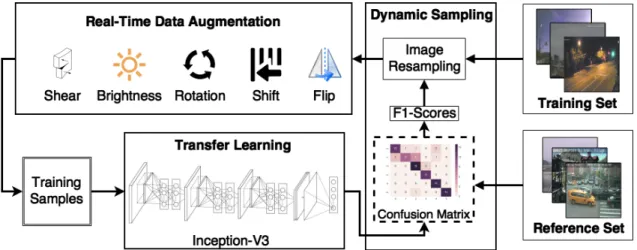
5.1 The proposed dynamic sampling model . . . 64
5.2 Comparison of F1-scores for each concept in the network camera dataset 69 6.1 The proposed ensemble deep learning model . . . 72
6.2 Sample keyframes for each concept in the disaster dataset . . . 81
6.3 Performance evaluation for different concepts on the disaster dataset . . 84
6.4 Sample keyframes for each concept in TRECVID dataset . . . 86
6.5 Performance evaluation on the TRECVID dataset . . . 89
6.6 A comparison of True Positive value on the TRECVID dataset . . . 89
6.8 An Inception building block [2] . . . 93
6.9 The proposed deep Residual-Inception network . . . 95
6.10 CIFAR-10 image dataset [3] . . . 96
6.11 Performance comparison on the disaster and CIFAR-10 datasets . . . . 98
7.1 Neural network layers . . . 104
7.2 The Network In Network structure [4] . . . 109
7.3 Performance comparison of original SGD and T-LRA using Cox-Stuart
and Mann-Kendall . . . 112
8.1 The architectures of (a) the LSTM cell and (b) unfold Bidirectional LSTM.119
8.2 Comparison of validation (a) loss and (b) accuracy on UCF101. . . 126
8.3 The proposed integrated spatio-temporal deep learning model for
im-balanced video classification . . . 127
9.1 The proposed multi-label multimodal deep learning model. . . 134
9.2 Performance comparison between the fusion models . . . 144
10.1 Stochastic gradient descent with restarts (photo by Hafidz Zulkifli [5]) . 149 10.2 Style transfer from real to simulation (and vice versa) using Cycle-GAN 151 10.3 Style transfer from primitive simulation to a photo-realistic simulation
CHAPTER 1
INTRODUCTION
1.1
Background and Introduction
The explosive growth and widespread accessibility of digital data have led to a surge of research activity in the big data, and data sciences fields. The conventional approaches for data management have achieved limited success as they are incapable of handling the huge amount of complex data with high volume, high velocity, and high variety [6, 7, 8, 9, 10].
In the last few years, the fast and widespread use of multimedia data, including image, audio, video, and text, as well as the ease of access and availability of mul-timedia sources, have resulted in a big data revolution in mulmul-timedia management systems [11, 12, 13, 14, 15, 16, 17, 18, 19, 20, 21, 22, 23, 24, 25, 26]. Multimedia data analytics addresses the issue of manipulating, managing, mining, understand-ing, and visualizing different types of data in effective and efficient manners to solve real-world challenges. The solutions include but are not limited to text analysis, image/video processing, computer vision, audio/speech processing, and database management for a variety of applications such as healthcare, education, entertain-ment, and mobile devices [27, 28, 29, 30, 31, 32, 33, 34, 35].
For decades, machine learning and data mining researchers have tried to dis-cover the patterns and data representations from the raw data [36, 37]. The field of machine learning is witnessing its golden era as deep learning slowly becomes the leader in this domain. Deep learning uses multiple layers to represent the ab-stractions of data to build computational models. Some key enabler deep learning algorithms such as Generative Adversarial Networks (GANs) [38], Convolutional Neural Networks (CNNs) [39, 40], and model transfers have completely changed our
perception of information processing. With the acute development in deep learning and its research venues being in the top limelight, deep learning has gained extraor-dinary momentum in speech, language, and visual detection systems. However, several domains are practically still untouched by Deep Neural Networks (DNNs) either due to their challenging nature or the lack of data availability for the general public. This creates significant opportunities and fertile ground for rewarding future research avenues.
The scope of this dissertation is to provide a systematic and comprehensive framework for multimedia big data analytics using deep neural networks. This study aims to address some of the main challenges in this area and provide solutions to manage and analyze multimedia big data effectively. There exist many challenges to analyze such data which can be summarized as follows:
• The success of many machine learning and deep learning algorithms heavily
depends on the existence of clean, large-scale, and annotated datasets. Col-lecting such datasets is challenging and time-consuming. This issue is even more daunting in real-world applications such as disaster information man-agement [41, 42, 43, 44] or autonomous driving cars [45] in which the dataset should represent different locations, noise, lighting, etc., as well as rare sce-narios (e.g., accidents, bad weather, unusual movements). Automatic data generation using simulators and generative models is an efficient solution to synthetically generate large-scale datasets with sufficient varieties. However, bridging the gap between real-world and synthetic data is still an open ques-tion.
• Another main challenge faced by the multimedia community is the non-uniform
im-than the others. Examples of the imbalanced data problem include rare dis-ease identification, fraud detection, and natural disaster recognition. It has been widely shown in the literature that techniques such as data resampling (oversampling and under-sampling) can enhance the prediction results of rare classes, especially for the binary classification tasks (e.g., cancer detection). However, it is challenging to employ such techniques on a class or multi-label imbalanced data problem while maintaining the temporal information on the multimedia data.
• Discovering the patterns and discriminative features from raw data has been a
challenging task in machine learning area. This method is called representation learning. Unlike conventional machine learning and data mining techniques, deep learning is able to generate very high-level data representations from massive volumes of raw data. Therefore, it has provided a solution to many real-world applications. However, deep learning usually requires large-scale datasets with manually labeled data. The most relevant future machine learn-ing problems will not have sufficient trainlearn-ing samples with labels [47]. Current deep learning models will also need to adapt to the rising issues such as data sparsity, missing data, and messy data in order to capture the approximated information through observations.
• Many real-world problems are characterized as time series (e.g., human
activ-ity recognition, stock prediction, and sentiment analysis), and it is critical to discover the temporal patterns in a time series problem [48, 49]. For exam-ple, video data consisting of sequences of image frames can be considered as a time series problem in which both static and motion information need to be extracted and analyzed [50, 51]. However, most existing multimedia classifi-cation techniques either ignore temporal information or utilize very complex
engineering features for spatio-temporal data analysis [52, 53] to model the temporal features which are not very efficient in practice.
• Multimedia data usually contains various types of modalities such as image,
audio, and text. For example, a video may contain sequences of frames, audio clips, as well as text descriptions and meta data. These data modalities are usually complementary, which can be integrated to enhance the final decisions. However, many existing studies only focus on one or two data modalities due to the complexity and difficulty of multimodal data collection, analysis, and fusion [54]. In addition, despite the great success of deep learning models on processing of single data modalities, there are a few studies to propose a comprehensive deep learning framework for multimodal data analysis.
1.2
Proposed Solutions
To address these challenges, this dissertation presents a new multimedia big data framework that effectively handles the multi-class multi-label data imbalance prob-lems using DNNs. The proposed solutions include:
• Synthetic data generation: To address the big data collection and gener-ation issues, in this dissertgener-ation, novel synthetic data genergener-ation techniques are proposed that are later integrated to our proposed deep learning models. In particular, deep adversarial networks and simulators are leveraged to gen-erate synthetic data for deep learning training automatically. These models are specifically applied to real-world applications such as disaster information management and autonomous driving. This study extends the idea of domain adaptation and randomization to bridge the reality gap between simulation
to regular data, which increases the generalization capability of deep learning models while reducing the need to have large-scale annotated datasets. • Automatic sampling for imbalanced data: To address the data
imbal-ance problem, in this study, an automatic sampling method is proposed to be integrated with CNNs. First, an early spatio-temporal oversampling is presented specifically for video data, that contains spatial and temporal infor-mation. The proposed spatio-temporal oversampling model utilizes random data augmentation techniques to generate new synthetic data for minority classes in the imbalanced dataset. Second, the dynamic sampling model is in-tegrated with existing CNNs to automatically modifies the samples of classes in each training iteration. This model is proposed to further enhances the classification performance especially for those classes with minor or complex samples.
• Deep static representation learning: Successful machine learning models generally rely on rich data representations since various hidden characteris-tics and patterns can be derived from original data. Thus, in this dissertation, efforts have been devoted to generate the most discriminative data representa-tion using unsupervised transfer learning. As a single model may not be able to handle large datasets with multiple feature sources, an integrated model is utilized to enhance the data representation by taking advantages of multi-ple pre-trained deep learning models. This study proposes a mixture of deep learning feature extractors integrated with an enhanced ensemble algorithm. Also, a new deep learning structure is designed based on Inception and Resid-ual modules to efficiently extract significant and robust features from the raw data.
• Deep spatio-temporal learning: Upon the proposed spatio-temporal syn-thetic sampling schema and multimedia deep representation learning, a new deep learning structure is proposed to classify data with spatio-temporal in-formation. In particular, deep Recurrent Neural Networks (RNNs) with bidi-rectional and residual connections are integrated to capture past and future temporal information from time-series data which remembers the information for a longer period of time compared to the conventional machine learning algorithms. Specifically, the model is employed for a large-scale video clas-sification task to discover the dynamics and motions using DNNs without utilizing complex engineering features.
• Multimodal deep learning fusion: DNNs have been successfully applied for single modality feature extraction and classification. To further extend the proposed framework, we propose a novel deep learning model to extract unsupervised features from multiple modalities (e.g., image, text, audio) and train a new fusion model to combine different data modalities in an effective manner. Particularly, a multi-label multimodal deep learning model is pro-posed to integrate the deep spatio-temporal features obtained for each data modality. This model will efficiently discover the correlation between different modalities and the final classes in the dataset.
1.3
Contributions
This dissertation has several major contributions as listed below:
• An automatic sampling is proposed for imbalanced data classification. This
sam-works especially in datasets with skewed distribution. The first method is used as a preprocessing step to balance the dataset and generate synthetic video samples for minority classes. While there might be still some complex classes in the dataset which can be distinguished using the dynamic sampling combined with CNNs.
• A new hyper-parameter learning is proposed for DNNs namely “Trend-based
Learning Rate Annealing (T-LRA)”. T-LRA is a drop-based learning rate scheduling that improves the SGD algorithm in deep learning. It reduces the task of selecting an appropriate learning rate using the statistical trends of the training process. Specifically, T-LRA automatically determines how and when to modify the learning rate based on the previous losses during the training. In particular, it is applied to the CNNs. To the best of our knowledge, this is the first algorithm that schedules the learning rate using statistical trend analysis.
• A new deep spatio-temporal model is proposed namely “CNN-ResBiLSTM”
for large-scale multimedia classification. This model integrates the pre-trained CNN deep representations with a new temporal structure. The temporal com-ponent contains two-layers of Residual Bidirectional Long Short Term Memory (LSTM) to capture dynamics, motion, and temporal information from video datasets. This component does not require any handcrafted features for mo-tion analysis and automatically combines space and temporal features from the video.
• A novel multimodal multi-label fusion which considers the correlations
be-tween different data modalities and final classes is proposed. It bridges the gap between low-level data representations and high-level abstractions. This
multimodal data fusion model is proposed to enhance the final classification performance and reduce the complexity of multiple modalities.
• Two new applications are used in this dissertation to evaluate the proposed
framework. Specifically, autonomous driving in simulation is used to assess the proposed synthetic data generation and domain randomization techniques. This is the first time domain randomization is used for the application of “deep driving” which can avoid obstacles. Disaster information management is another new application used in this study to evaluate the whole multimedia deep learning framework.
1.4
Scope and Limitations
The proposed framework has still several limitations and assumptions as follows:
• Without loss of generality, the proposed framework is evaluated on video and
image datasets. However, proposed models such as automatic sampling, hyper-parameter learning, spatio-temporal deep learning, and multimodal fusion can be extended to cover other data types.
• The hyper-parameter learning model concentrates on learning rate scheduling
as one of the main hyper-parameters in DNNs. However, there are other parameters such as momentum, kernel size, number of layers, and number of epochs that can be automated in the future.
• Although the unsupervised deep representation is used in this dissertation, the
proposed framework mainly focused on supervised learning and multimedia classification tasks. Some of the proposed techniques can be easily extended for unsupervised learning, however, it is out of the scope of this dissertation.
• The proposed framework alleviates the big data challenges in multimedia data using efficient algorithms and techniques which speed up the training and test-ing process. However, the distributed processtest-ing and other big data solutions (such as GPU programming, Hadoop, Spark) are not taken into considerations in this framework.
1.5
Outline
This dissertation is organized as follows. Chapter 2 reviews the literature in the area of multimedia big data analytics including domain adaptation, imbalanced data clas-sification, multimodal deep learning, and spatio-temporal data analytics. The pro-posed framework and its main components are presented in chapter 3. In chapter 4, two new techniques are proposed for synthetic data generation using simulators and adversarial networks. Chapter 5 discusses the proposed sampling techniques includ-ing spatio-temporal synthetic oversamplinclud-ing and dynamic samplinclud-ing. In chapter 6, several techniques are discussed for multimedia static deep representation learning including ensemble deep learning and deep Residual-Inception network. Chapter 7 presents a new algorithm for automatic hyper-parameter learning in deep learn-ing. Chapter 8 describes the proposed spatio-temporal deep learning model and its components. In chapter 9, a new multi-label multimodal deep learning fusion is presented. Finally in chapter 10, the conclusions and several future directions are given.
CHAPTER 2
RELATED WORK
In this chapter, the literature in the area of domain adaptation and random-ization, imbalanced data classification, visual and multimodal deep learning, and spatio-temporal data analytics are presented.
2.1
Domain Adaptation and Randomization
Deep learning achievements heavily depend on the existence of large-scale datasets [55, 56]. Collecting such datasets in real-world is expensive and laborious. In particu-lar, for different real-world applications, it is challenging to collect large-scale data for a diverse set of scenarios (e.g., day and night, various lighting conditions, users movements, etc.).
An alternative technique to collect a large amount of data is data augmentation with label-preservation that is commonly used in various computer vision appli-cations [57, 58]. The goal of data augmentation is to enhance generalization and overcome the overfitting problem [55]. However, data augmentation cannot generate a high variability in the environment. since it is usually limited to image brightness, translation, color, and cropping rather than generating completely new scenes and scenarios.
In recent years, GANs have shown promising results in domain adaptation and deep learning generalization [59, 60, 61]. In addition, recent advances in deep learn-ing enable the transformation of styles from one domain (source) to another domain (target) [59, 62, 63, 64, 65, 66]. In [62], separation and recombination of content with neural representations were used to transfer the style. A generalized frame-work that combines untied weight sharing, discriminative modeling, and a GAN loss
domain adaptation method without the need of source and target domain pairs was
developed to learn the style transformation [64]. Hoffman et al. [59] proposed a
model based on cycle-GAN that is able to capture both pixel-level and image-level
domain shifts. Shrivastava et al. [65] developed a method to improve the
perfor-mance of unsupervised adversarial domain adaptation by combining techniques such as local adversarial loss, periodically updated discriminator using refined image his-tory and self-regulation term. The Multi-Style Generative Network (MSGNet) [66] uses a CoMatch Layer approach that learns to match the lower order statistics of
content image with the style images. Longet al.[67] extends the conditional GANs
by studying the cross-covariance dependency between the domain-specific feature representations and classifier predictions. Nevertheless, GAN models still need real-world data for training which is usually expensive.
Another practical approach for synthetic data generation and style transfer is utilizing simulators. Collecting data from game engines and generating synthetic data for deep learning training has attracted significant attention in recent years. It is used for car and pedestrian detection [68, 69, 70] as well as robotic grasping and motion control [71, 72, 73]. Synthetic data is also utilized in different tasks such as optical flow and geometric problems [74, 75]. Flying Chairs dataset, for instance, is a popular example of synthetic data generated for optical flow learning with CNNs [76]. However, few deep learning models are generated based on only synthetic data due to the reality gap challenge. In other words, the networks that are purely trained on synthetic data may not generalize well to the real world. Conventional approaches usually use synthetic data to train the network and then fine tune it on the real-world data [77]. Moreover, some studies used photo-realistic synthetic images to bridge the reality gap [69, 75]. However, generating photo-realistic images is expensive and often requires laborious manual designing.
Compared to the aforementioned approaches, DR is a relatively new topic among
deep learning training methods. DR is originally used in various robotics
ap-plications to transfer deep learning from simulation to the real world [73, 78].
CAD2RL [73] is one of the first applications of DR that flies a quadcopter through
indoor environments using reinforcement learning. Although CAD2RL is based on
only simulation data, it is still leveraging realistic scenes (e.g., chairs, doors, etc.) in
the simulation which represent the real world quite well. Tobin et al. [78] proposed
DR for object localization and robot manipulation. Using data from simulator and non-realistic textures, they are able to train a deep learning model for object
de-tection that is accurate to 1.5cm in the real world. Similarly, Bousmalis et al. [72]
leveraged both domain adaptation and randomization to transfer simulation to the real world for robotic grasping systems. In that work, a GAN is employed to make
synthetic images more realistic. In a recent work by Tremblay et al.[68], it is shown
how DR can be used for object (cars) detection and it also illustrates the benefit of fine-tuning deep neural networks on real data after training on simulated data.
2.2
Imbalanced Data Classification
A critical challenge in multimedia data is how to process data with skewed distri-butions or in other words, the imbalanced datasets. This can be seen commonly in real world multimedia applications where the classes are not distributed uni-formly [79, 80, 81, 82, 83, 84]. There are usually two classes: the major classes (or called the negative classes) and the minor one (or called the positive class), where we are more interested in detecting the minor class. For instance, in medical lab results, cancer instances are rare but more important than those instances for reg-ular diseases. Other applications of imbalanced data are fraud activities detection,
bomb detection, failure predictions of technical equipment, etc. [85, 86]. In such conditions, conventional machine learning and data mining algorithms often fail to detect the minor class, and they are biased toward the negative classes, which may have serious effects. Suppose an instance of a medical lab result is predicted as non-cancer (a negative class), while in reality the patient has the cancer. This error is called false negative, which can cause very serious harm.
Regarding the data imbalance issue, conventional approaches can be mainly cat-egorized into the following groups [85, 87, 88]: Sampling methods, cost sensitives learning, and hybrid algorithms. Typically, sampling methods modify the data dis-tribution in order to balance the dataset and improve the classification results. There are two main re-sampling approaches in the literature: over-sampling the minority (positive) class [89] or under-sampling the majority (negative) class [90]. In other words, the techniques in this group either decrease the frequency of the majority class (under-sampling) or increase the frequency of the minority class (oversam-pling) [88]. Either way can be used in any machine learning algorithm as a prepro-cessing phase. Although these techniques can address the data imbalance problem, they may discard potentially important information or increase the likelihood of overfitting. More advanced techniques such as Synthetic Minority Over-sampling Technique [91] are proposed to avoid overfitting and information loss.
The solutions of the latter group are algorithmic techniques in which the classi-fiers are designed to naturally handle the imbalanced datasets [92, 93]. For example, Cost Sensitive Learning (CSL) modifies the learning process by incorporating the misclassification costs of the different classes [94]. Currently, CSL has been applied in various learning algorithms such as decision trees [95], AdaBoost [96], and Naive Bayes [97]. Also, ensemble techniques such as bagging and boosting can improve the performance of classification and overcome the overfitting problem [98]. Recently,
various hybrid methods have been proposed, which combine the traditional solutions for data imbalance subject [98].
Existing work on imbalanced data classification is mainly limited to binary clas-sification since multi-class imbalanced data clasclas-sification has more complicated re-lations between its classes. An intuitive strategy to handle multi-class imbalanced data is to apply decomposition methods to turn the problem into a set of binary clas-sification problems [99]. However, this method needs careful combination strategies to reconstruct the original multi-class dataset.
In the deep learning literature, the challenges of imbalanced data classification have not been thoroughly investigated. Few recent studies have focused on this problem by generating synthetic data [100] or changing the loss function to improve the detection performance of minority classes [101]. To the best of our knowledge, there is no framework for multi-class and multi-label multimodal imbalanced data classification using deep neural networks
2.3
Deep Learning
Deep learning techniques have become the main parts of various state-of-the-art multimedia systems and computer vision [102]. More specifically, CNNs have shown significant results in different real-world tasks, including image processing, object detection, video processing, etc. This section discusses more details about the most recent deep learning models and algorithms proposed over the past few years for multimedia data processing.
2.3.1
Visual Data Processing
In 1998, LeCun et al. presented the first version of LeNet-5 [103]. LeNet-5 is a
conventional CNN that includes two convolutional layers along with a subsampling layer and finally ended with a full connection in the last layer. Although, since the early 2000s, LeNet-5 and other CNN techniques were greatly leveraged in different problems, including the segmentation, detection, and classification of images, they were almost forsaken by the data mining and machine learning research groups. More than one decade later, CNN algorithm has started its prosperity in computer vision communities. Specifically, AlexNet [40] is considered the first CNN model that substantially improved the image classification results on a very large dataset (e.g., ImageNet). It was the winner of the ILSVRC 2012 and improved the best results from the previous years by almost 10% regarding the top 5 test error. To improve the efficiency and the speed of training, a GPU implementation of the CNN is utilized in this network. Data augmentation and dropout techniques are also used to substantially reduce the overfitting problem.
Since then, a variety of CNN methods have been developed and submitted to the ILSVRC competition. Among them, ZFNet [104] demonstrates its supremacy and could achieve the lowest top 5 error 11.7 in the ILSVRC 2013. Although ZFNet is very similar to AlexNet and can be considered a fine tuning of that network, it still provides some key ideas and modifications. In 2014, two influential but different models are presented which mostly focused on the depth of neural networks. The first one, known as VGGNet [105], includes a very simple 19 layer CNN. In this network, at each layer, the spatial size of the input is reduced, while the depth of the network is increased to achieve a more effective and efficient model. Although VGGNet was not the winner of the ILSVRC 2014, it still shows a significant improve-ment (7.3% top 5 error) over the previous top models which came from its two major
specifications: the simplicity and depth. In contrast to VGGNet, GoogleNet [2], the winner of this competition (6.7% error), proposed a new complex module named “Inception”, allowing several operations (pooling, convolutional, etc.) to work in parallel. This network is basically inspired by the Network in Network model [4],
which provides dimensionality reduction using micron neural network (1×1
convo-lutions).
Microsoft deep residual network (known as ResNet) [1] took the lead in the 2015 competitions including ILSVRC 2015 and COCO detection and segmentation tasks by introducing the residual connections in CNNs and designing an ultra deep
learning model (50-152 layers). This model achieved an incredible performance
(3.6% top 5 error) which means, for the first time, a computer model could beat human brains (with 5-10% error) in image classification. On the contrary of the extremely deep representation of ResNet, it can handle the vanishing gradients [106] as well as the degradation problem (saturated accuracy) in deep networks by utilizing residual blocks.
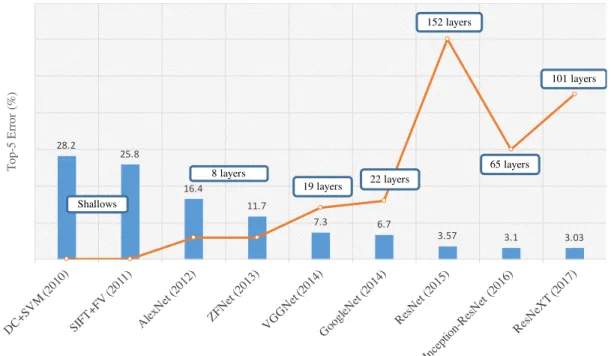
In the last few years, several variations of ResNet have been proposed. The first group of methods has tried to increase the number of layers more and more. Current CNN models may include more than 1000 layers [107]. Finally, in 2017, ResNeXT [108] is proposed as an extension of ResNet and VGGNet. This simple model includes several branches in a residual block, each performing a transforma-tion which is finally aggregated by a summatransforma-tion operatransforma-tion. This general model can be further reshaped by other techniques such as AlexNet. ResNeXT outper-forms its original version (ResNet) using half of the layers and also improves the Inception-v3 as well as Inception-ResNet networks on the ImageNet dataset. Fig-ure 2.1 demonstrates the revolution of depth and performance in image classification (e.g., ImageNet) over the time. The problem of supervised image classification is
28.2 25.8 16.4 11.7 7.3 6.7 3.57 3.1 3.03 T op -5 E rr or ( % ) 19 layers Shallows 22 layers 152 layers 8 layers 65 layers 101 layers
Figure 2.1: The network top-5 errors (%) and layers in the ImageNet classification over the time
regarded as “solved” and the ImageNet classification challenge concluded in 2017. On the other hand, video analytics has attracted considerable attention in the computer vision community and is considered as a challenging task since it includes
both spatial and temporal information. In an early work, large scale YouTube
videos containing 487 sport classes are used to train a CNN model [109]. The model includes a multi-resolution architecture which utilizes the local motion information in videos and includes context stream (for low-resolution image modeling) and fovea-stream (for high-resolution image processing) modules to classify videos. An event detection from sport videos using deep learning is presented in [110]. In that work, both spatial and temporal information are encoded using CNNs and feature fusion via regularized Autoencoders.
3-Dimensional CNN (C3D) [111] has demonstrated a better performance on video analysis tasks over the traditional 2D CNNs. It automatically learns spatiotemporal
features from video inputs and models the appearance and motions at the same time. Two-stream networks [112] are another set of video analysis techniques that model spatial (RGB frame) and temporal information (optical flow) separately and average the predictions in the last few layers of the network. This network is extended in a recent work called Inflated 3D ConvNet (I3D), utilizing the idea of C3D. It is also pre-trained on Kinetics dataset [113].
Deep Long Short Term Memory (LSTM) networks have been widely utilized in different applications such as NLP, speech processing, and time-series that require long-term temporal information. Specifically, it is used for video classification tasks in recent few years [114, 115]. Deep residual networks (ResNet) [1] were originally proposed by Microsoft Research (MSR) for an image competition task (ILSVRC 2015). This idea was later applied to many different applications and also video classification tasks [116].
2.3.2
Multimodal Learning
Multimodal contents provide a vast amount of data from social media websites such as Facebook and YouTube in a daily manner. Multimedia data is not restricted to a single modality and usually contains multimodal data, such as textual, visual and acoustic [117]. An intelligent multimodal analysis framework is proposed in [118] to extract information and aggregate the semantic information efficiently. Multimedia data represents features from different media sources. In [119], the fusion techniques such as PCA and ICA that are popularly applied to multimedia data are discussed. Feature extraction and feature fusion are two crucial improvements for multimodal data analysis. Multimodal fusion methods, especially bimodal, have been proposed in numerous research studies, but optimal solutions remain elusive. A multimodal
analysis is frequently applied to facial expression and face recognition tasks [120]. Several fusion models [121, 122, 123] target the facial expressions by fusing the speech models with the visual models. Specifically, in [123], bi-directional Long Short-Term Memory (LSTM) networks are utilized to improve the classification performance compared to the traditional Hidden Markov Model (HMM) and Support Vector Machine (SVM) classification frameworks. There has been a surge of progresses in the field of deep multimodal representation learning in the past several years. Most of the models present improvement in bi-modal learning with specific tasks, such as facial expression, emotion recognition [124]. EmoNets [124] explored multiple combination methods to fuse modalities into one classifier by using SVM and won the EmotiW challenge in 2013. In [125], it is shown that finding the relationship between the image data and the audio data in the early stage is not straightforward since there is no direct connection between the raw pixels and audio waveforms or spectrograms. Thus, a cross-modality feature learning is proposed for speech recognition which generates the shared representation features utilizing the videos of the lip movements. Finally, in [126], Gibbs sampling is applied to generate the fused representation for bi-modal feature learning.
Despite the fast growth of deep learning and its applications (e.g., NLP, computer vision, and speech processing), current research in multimedia big data analysis us-ing deep learnus-ing is still in its initial stage. Multimodal deep learnus-ing techniques are needed to analyze different modalities of data [124]. Moreover, handling high-dimensional, heterogeneous, and unlabeled multimedia data is a great potential for the future deep learning research. However, computational efficiency still remains a big challenge in multimedia deep learning since deep learning requires a great amount of resources and (usually) more training time in comparison to the tradi-tional machine learning approaches.
2.3.3
Hyper-parameter Learning for Neural Networks
Artificial neural networks have been widely used in a wide range of applications. Specifically in recent years, it has been extended to deep learning, which has shown its strength in dealing with real-world problems [55]. Till now, several algorithms have been proposed to train neural networks and minimize the loss functions, in-cluding Stochastic Gradient Descent (SGD) [127], AdaDelta [128], AdaGrad [129], Adam [130], to name a few. In a gradient descent process, selecting the appropriate parameters such as the learning rate (step size) is crucial for a better and faster learning. It also needs expert knowledge and differs for each problem. LeCun et al. [131] proposed an online estimation of principal eigenvalues and eigenvectors of the loss function’s Hessian or second derivative matrix. Generally, the optimal learning rate can be selected as the inverse of the largest eigenvalue of the Hessian matrix. However, since computing the Hessian matrix for large learning algorithms (e.g., backpropagation) with thousands of parameters is computationally expen-sive, an online version of this algorithm was proposed by LeCun et al. In another work [132], the learning rate is changed in each epoch based on the weights and gradient values of the previous epoch in order to minimize the loss function. This method is inspired by the learning rate adaptation proposed in [133], which derives two-point step sizes approximation to the secant equation.
AdaGrad [129] has shown promising results on the large learning tasks. This method utilizes the first order information but relies on some second order features and annealing. In this method, small gradients have large learning rates and vise versa. However, it is very sensitive to the initial conditions and network hyperpa-rameters. AdaDelta [128], an extension of AdaGrad, is a dynamic method adapting the learning rate over time using only the first order information. This approach
rate during the training process and the need for manually selecting the global learn-ing rate. Adam [130] is another algorithm for the first-order optimization of gradient descent. It combines the advantage of AdaGrad and RMSProp [134], an optimiza-tion for online and non-staoptimiza-tionary environments. Currently, Adam has been applied in popular deep learning architectures [1] and has shown its effectiveness.
2.4
Spatio-Temporal Data Analytics
Video classification is challenging due to its multimodality and spatio-temporal na-ture [25]. Traditional methods combined several modality representations to en-hance the classification performance. Chen et al. [135] proposed a multimodal data mining framework for semantic event detection from sports videos. Despite the great capability of the framework, it still needs human efforts for temporal analysis and also uses handcrafted features. In computer vision, several techniques have been proposed to detect motion and temporal information from videos. Among them, optical flow [52] and iDT [53] are able to generate discriminative motion features from the data. However, using engineering techniques for temporal analysis is a computationally expensive task.
Deep learning has been applied greatly in recent years to overcome the challenges of traditional methods and generate general-purpose models for feature analysis, ei-ther static or temporal [136, 137]. Spatio-temporal deep learning techniques can be divided into two groups: 1) Those generating separate models for each modality and fusing the information in the final layers [112], and 2) Those designing a comprehen-sive model to handle spatio-temporal information and their connections in one single model [111]. The 3D convolutional neural networks (called C3D) [111] fall under the second category that inherently applies both pooling and convolutional layers in
the 3D space. In that work, the third dimension is time. This network requires very large-scale datasets to converge and very powerful and parallel machines including GPUs with high memory to train the deep 3D networks.
LSTM was originally proposed in 1997 [138] which is a variant of RNNs. Deep LSTM networks have been widely utilized in different applications such as NLP, speech processing, and time-series that require long-term temporal information. Specifically, it is used for video classification tasks in recent few years [114, 115]. Deep residual networks (ResNet) [1] were originally proposed by Microsoft Research (MSR) for an image competition task (ILSVRC 2015). This idea was later applied to many different applications and also video classification tasks [116].
All the aforementioned methods employ complex and computationally intensive handcrafted features such as optical flow [52] or iDT [53] for video classification and usually fuse several models to capture the spatio-temporal information. Moreover, these techniques usually ignore the imbalanced distribution of real-world data and are only evaluated on very balanced datasets.
CHAPTER 3
OVERVIEW OF THE PROPOSED FRAMEWORK
Multimedia semantic concept detection is an emerging research area in recent years. Many multimedia search engines often use textual descriptions and metadata to retrieve data such as image or video. However, due to the limitation and sub-jectivity of multimedia metadata, such engines may not provide accurate results. Thus, automatic concept detection is crucial in multimedia analysis. Therefore, the goal of this work is to address existing challenges in multimedia big data analysis and support multimedia semantic representation.
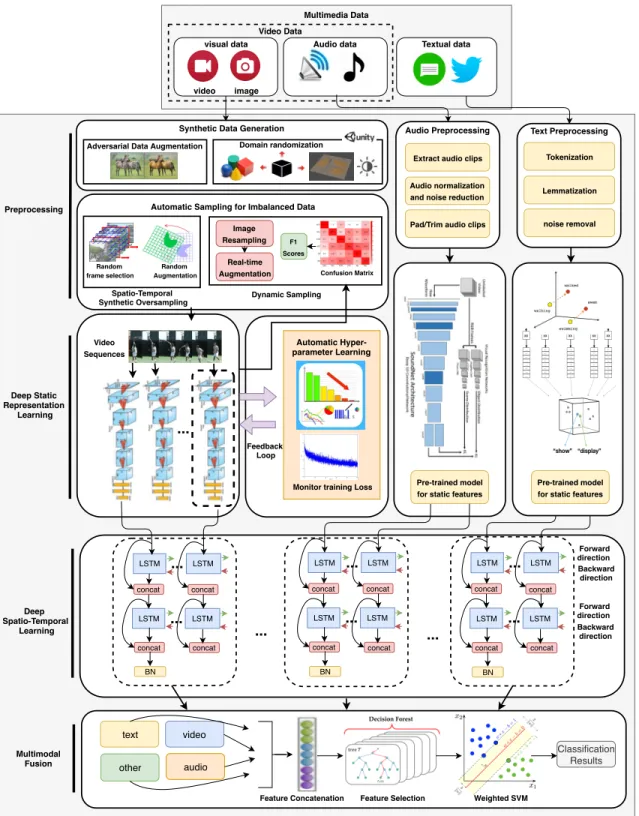
Currently, many research studies have been done in multimedia data manage-ment. However, very few research provides a comprehensive framework to address the multimedia challenges such as imbalanced data problem, large-scale data prepa-ration, multimodal data representation learning, and spatio-temporal information extraction. For this purpose, in this dissertation, an integrated framework is pro-posed for multimedia big data analytics especially multimedia semantic concept
detection. The whole framework is shown in Figure 3.1 which consists of five
major components: synthetic data generation, automatic sampling for imbalanced data classification, deep static representation learning using transfer learning, deep spatio-temporal learning, and multimodal deep learning fusion. These components are coherently integrated to address the challenges in multimedia big data and sup-port different functionalities in this area. In this framework, synthetic data are automatically generated using generative models and simulators to overcome lack of real-world data. A novel sampling technique is proposed to handle imbalanced data problem. Also, DNNs are utilized as the main learning algorithm due to their great capability in multimedia data analytics. Specifically, an ensemble of deep rep-resentation learning together with an efficient Residual-Inception model are utilized
for static feature analysis of visual data. This framework also utilizes an automatic parameter learning to further enhance the efficiency of model training. A deep spatio-temporal model is proposed to handle both static and temporal features in multimedia data, then different modalities (e.g., audio, image, etc.) are combined using a novel fusion model.
3.1
Synthetic Data Generation
Existing deep learning models require very large-scale datasets with enough variety that represent various scenarios and conditions in the real world. However, these kinds of datasets may not be available for many multimedia applications. An effi-cient solution to address this challenge is automatically generating synthetic data for training deep learning models. This dissertation presents two novel synthetic data generation methods for two challenging real-world applications:
• The first method addresses the problem of flood event detection from images
with real-world conditions [139]. This work proposes a new image classification model based on adversarial data generation and augmentation to overcome the unavailability of real-world data in rare scenarios.
• Another method based on simulation data is proposed for the application of
autonomous driving and obstacle avoidance [140]. This dissertation proposes new domain and scenario randomization techniques to reduce the gap between simulation and the real world.
The experimental results of both flood event detection and autonomous driving models demonstrate the effectiveness of the proposed models compared to the con-ventional methods. These technique increases the generalization in deep learning,
Text Preprocessing
Tokenization
Lemmatization
noise removal
Audio Preprocessing
Extract audio clips
Audio normalization and noise reduction
Pad/Trim audio clips
video
audio text
other
Feature Concatenation Feature Selection Weighted SVM
Classification Results Multimodal Fusion Deep Spatio-Temporal Learning concat concat LSTM ... LSTM LSTM ... LSTM concat concat BN concat concat LSTM ... LSTM LSTM ... LSTM concat concat BN concat concat LSTM ... LSTM LSTM ... LSTM concat concat BN Forward direction Backward direction Forward direction Backward direction ... ... Deep Static Representation Learning ... Video Sequences
Automatic Sampling for Imbalanced Data
Dynamic Sampling F1 Scores Confusion Matrix Image Resampling Random frame selection Random Augmentation Spatio-Temporal Synthetic Oversampling Real-time Augmentation Preprocessing Automatic Hyper-parameter Learning
Monitor training Loss Feedback
Loop
Pre-trained model for static features
Pre-trained model for static features
Synthetic Data Generation
Domain randomization Adversarial Data Augmentation
Multimedia Data
visual data
video image
Audio data Textual data Video Data
improves the model performance, and reduces the need to have a large-scale anno-tated dataset. Both models can be extended for other applications and domains.
3.2
Automatic Sampling for Imbalanced Data
Current deep learning techniques do not automatically consider the data imbalance problem. As mentioned earlier, the existing machine learning techniques that handle the imbalanced datasets can be divided into sampling and algorithmic methods. In this dissertation, we proposed new methods to overcome the datasets with non-uniform distributions in multi-class classification. This method mainly contains two steps:
• We propose a new spatio-temporal synthetic oversampling [141] to
automati-cally resample the data using both spatial and temporal information.
• A dynamic sampling method [142] is presented which modifies the data
sam-ples of each class during the training using the evaluation score for that class in the reference set.
3.3
Deep Static Representation Learning
Finding the best attributes or features which represent each data modality and discover the knowledge and relationship between them, is an essential phase of data mining. Thus, we propose a new multimedia representation learning using transfer learning and pre-trained deep learning models. This component contains two main parts:
by the great success of transfer learning and deep learning, the most discrimi-native deep features are extracted from various pre-trained models and then a new ensemble technique based on Support Vector Machine (SVM) is designed to enhance the semantic event detection in imbalanced datasets.
• We further enhance this model by proposing a new deep learning model based
on traditional CNNs integrated into a two levels of Residual-Inception com-bination [146]. The proposed model is able to automatically detect semantic events from multimedia data.
In summary, based on the experiments on different multimedia datasets, the pro-posed deep static representation learning model has shown its superiority and effec-tiveness while maintaining low computational costs in multimedia semantic event detection.
3.4
Automatic Hyper-parameter Learning
In this dissertation, we conduct an algorithm to automatically adjust the hyper-parameters (especially learning rate) in deep neural networks [147]. In particular, an automatic drop-based learning rate scheduling is proposed to improve the SGD algorithm in deep learning. This work alleviates the task of selecting an appropriate learning rate by analyzing the statistical trends of the training process in an online manner. It automatically decides when to drop the learning rate based on the losses in the previous training iterations. Specifically, this algorithm is applied on CNNs and send the feedback to the learning model in each training iteration. It not only improves the performance but also significantly speeds up the training and convergence processes.
3.5
Deep Spatio-Temporal Learning
Retrieving valuable information from large-scale multimedia data is yet another big challenge. In recent years, video classification has attracted significant attention in the multimedia and deep learning community. It is one of the most challenging tasks since both visual and temporal information should be processed effectively. Existing techniques either disregard temporal information between video sequences or generate very complex and computationally expensive models to integrate the spatio-temporal data. In this dissertation, we propose an effective deep learning model for imbalanced video classification by utilizing both spatial and temporal information [141]. The model includes a series of residual bidirectional LSTM to capture temporal knowledge in video datasets. Experimental results on two imbal-anced video datasets demonstrate the superiority of the proposed spatio-temporal model compared to the state-of-the-art approaches.
3.6
Multimodal Deep Learning Fusion
When the volume of multimedia data increases exponentially, so do the complication and connection between the data. As multimedia data contains various media types, extracting multi-modal discriminative information from the data instances is imper-ative. In general, multi-modal data can be categorized into visual (e.g., image and video), audio, and textual modalities. It is critical how to effectively integrate the information from different data modalities to better manage multimedia systems. In this dissertation, we address this challenge by proposing a new multimodal deep learning model [148, 149, 150, 151]. The main purpose of this model is to bridge the gap between multimedia data low-level characteristics and its high-level
seman-(multimedia static representation learning and deep spatio-temporal learning) using a new fusion model which considers the correlations between data modalities and final classes. The results on a collected disaster-events video dataset demonstrate the effectiveness of both visual model and fusion model compared to the baseline approaches.
CHAPTER 4
SYNTHETIC DATA GENERATION
Deep learning achievements heavily depend on the existence of clean, annotated, and large-scale datasets [55, 56]. Collecting such datasets is expensive and labori-ous. Moreover, many existing visual data classification techniques use datasets that usually include high-resolution images without considering real-world noise. How-ever, in many real-world applications, it is challenging to collect large-scale clean data for a diverse set of scenarios and conditions (e.g., day and night, various light-ing or weather conditions, users movements, etc.) that would allow the systems to work robustly. Therefore, in this dissertation, new techniques are proposed for synthetic data generation for deep learning training. In particular, two challenging applications are used to evaluate the proposed solutions. The first application is a flood event detection using GANs while the second one is an autonomous driving and obstacle avoidance in simulation using domain randomization techniques.
4.1
Data Generation using Generative Adversarial Networks
Although machine learning and deep learning have achieved substantial progresses in image classification, there are only very few methods that leverage deep learning for real-world disaster detection and management [152]. This is mainly due to the limited annotated data available in this domain. Existing work usually collects the data from Web/social media and annotates them manually. Nevertheless, the variability of images in such datasets may not be sufficient to create a robust model which can be used in different real-world situations. For example, many flood images in social media were taken during the day, most users posted clear images without
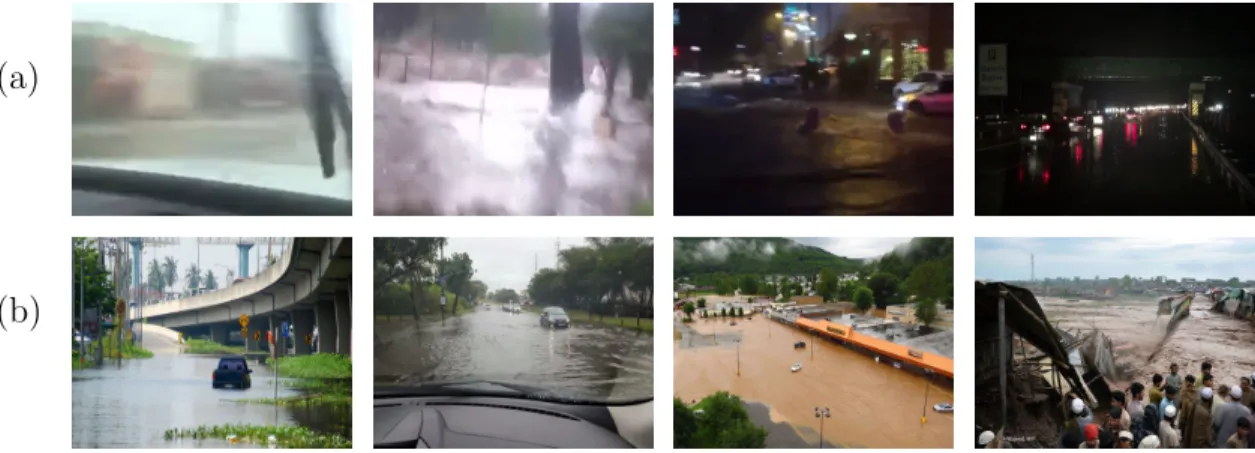
(a)
(b)
Figure 4.1: Samples of (a) noisy and (b) normal flooding images
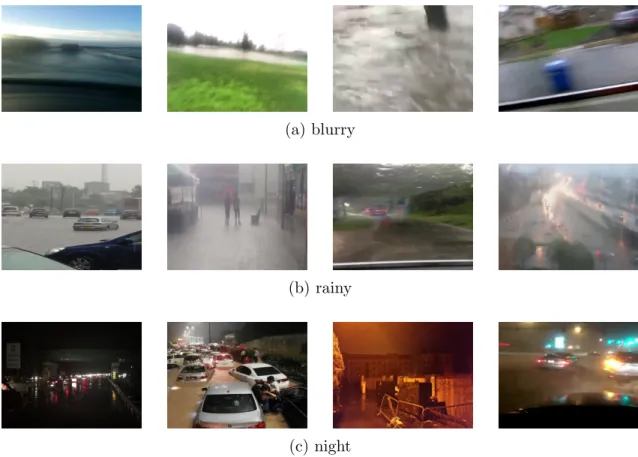
disaster from the real-world noisy images (e.g., blurry or night images). Figure 4.1(a) shows several noisy flood images that cannot be detected by a deep learning model trained on normal flood images (Figure 4.1(b)).
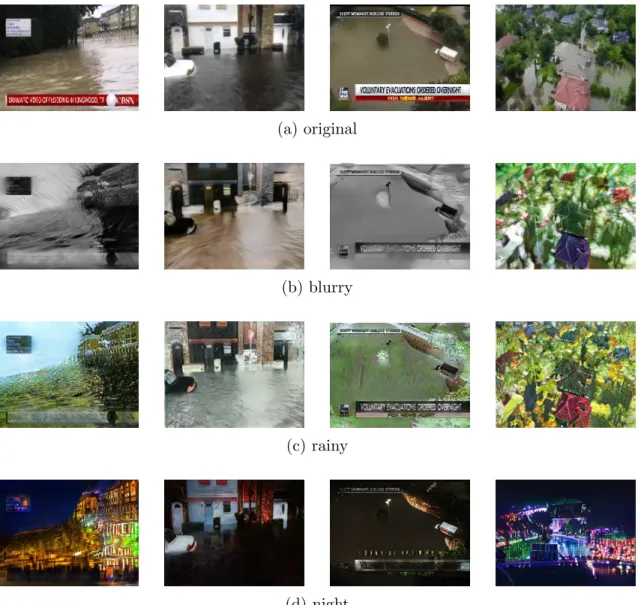
In this study, three sets of image styles including “night”, “blurry”, and “rainy” is used. Since collecting and annotating these sets of images are difficult and tedious, recent photorealistic style transfer techniques are utilized to transfer images between two different domains (normal to style) in an unsupervised manner. Specifically, a new data augmentation method based on Cycle-Consistent Generative Adversarial Networks (CycleGANs) is proposed. For each set of styles, a CycleGAN is trained to transfer the images from regular flood to the styled flood (e.g., to night-flood, rainy-flood, and blurry-flood.). These images are later utilized in the data augmentation step to train a Convolutional Neural Network (CNN). To the best of our knowledge, this is the first work that applies style transfer to flood event detection. In addition, this is the first flood detection framework that can detect unusual flood images without seeing such irregular images in the training set.
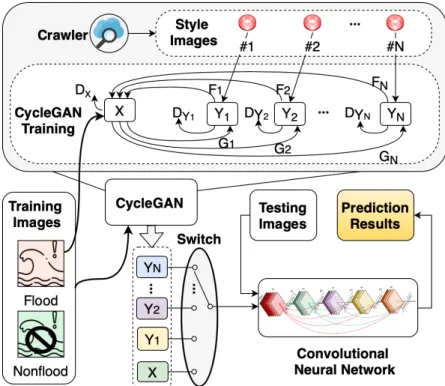
Figure 4.2: The proposed adversarial data augmentation model
4.1.1
Adversarial Data Augmentation
The proposed method aims to train a CNN model for image classification which is
robust to various contexts (styles), denoted as Y1, Y2, . . . , YN. For the application
of flood event detection, the training images are classified into two categories: flood
and non-flood. Therefore, a training dataset I ={I0
1, I20, . . . , IM0 }, containing both
flood-related and non-flood images, is collected to train the model. Figure 4.2 depicts the proposed adversarial data augmentation method in which CycleGAN is utilized as data augmentation to enhance the CNN classifier for flood event detection.
Data augmentation is a common way to enhance the training dataset and im-prove the performance of the CNN models and its generalization capability. The conventional approaches performing data augmentation include flipping, scaling, cropping, rotation, etc., which manipulate the pixel values in a simple manner. However, the patterns of the images can significantly change in various contexts
with a complicated transformation. In the case of flood event detection, the images show different visual characteristics in day or night, in rainy or sunny weather, and when the camera is moving or not. GAN has shown powerful performance to learn the patterns/styles of contexts regardless of the objects in the images, and thus in this work, we propose a novel approach of data augmentation by utilizing Cycle-GAN [153] to perform carefully curated style transfer for flood in different contexts.
We first define the most common context as the regular context X. All the original
images in the training dataset are fromX. Then, for each stylized target contextYi,
a CycleGAN model is trained to translate a given flood image from X toYi without
any paired image samples. The goal is to learn a set of functionsGi :X →Yi, ∀iso
that the learned transformation of images after applying Gi(X) are
indistinguish-able from the style references Yi by using an adversarial loss. The adversarial loss
(LAdv) is applied to the mapping functionsGi(X) as follows.
LAdv(Gi, DYi, X, Yi) = Eyi∼p(yi)[logDYi(yi)] +Ex∼p(x)[log(1−DYi(Gi(x))] (4.1)
where Gi generates images Gi(x) or ybi, and DYi discriminates the training sample
Gi(x) from the real target yi. A similar loss is applied to the inverse mapping Fi :
Yi → X and its discriminator DX. Since these adversarial mapping functions are
under-determined and prone to overfitting, further reduction of mapping functions
is achieved through cycle-consistency, i.e., x→ Gi(x)→ Fi(Gi(x))≈x. Similarly,
another inverse cycle-consistency is introduced that learns the transformation back
yi → Fi(yi) → Gi(Fi(yi))≈ yi. This is achieved by using a cycle consistency loss,
defined as:
Lcyc(Gi, Fi) = Ex∼p(x)[||Fi(Gi(x))−x||1] +Eyi∼p(yi)[||Gi(Fi(yi))−yi||1] (4.2)
The aforementioned generative model is trained with images of regular floods
closely match the input images x. These stylized images Gi(x) are then used in the
training of the CNN flood detection model.
Given all the CycleGAN models, each training image I0
i can be transferred into
N types of contexts. The synthetic images can be represented by I1
i, Ii2, . . . , IiN,
re-spectively. In each training epoch, the switch randomly selects one of the transferred or original contexts for each image in the training dataset. Then, it feeds the selected images into the CNN model and updates the model parameters accordingly. In other
words, in each epoch, a proxy dataset Ik = {I
n1,k 1 , I n2,k 2 , . . . , I nM,k M } is generated to
train the CNN model, where k is the epoch number and ni,k ∈ {0,1,2, . . . , N} is
the selected context of image I0
i, randomly generated by the uniform distribution.
For the image classification, ResNet50 is applied, where the last layer is replaced by a fully connected layer with sigmoid activation. After the CNN model is trained, the test images are directly used to compute the prediction results, without using any CycleGAN model to transfer the style.
4.1.2
Experimental Analysis
Datasets. We collected flood-related and non-flood images from YouTube and Twitter with the corresponding keywords and tags. First, we used the keyword “Harvey” which was a major hurricane that occurred in the United States in 2017 with a severe inland flooding to search flood-related videos on YouTube. Mean-while, Twitter is leveraged to collect flood-related visual data via Twitter API [154]. Both images and videos are collected from the tweets with hashtags “flooding” and “flood”. The training set included all the data collected from YouTube, however it randomly selected 30% of Twitter’s data. The remaining data from Twitter are used as the testing set. All the images are manually labeled as flood and non-flood