prevention
of
postpartum hemorrhage
study
prevention
of
postpartum hemorrhage
study
West Java, Indonesia
Harshad Sanghvi
Gulardi Wiknjosastro
Gail Chanpong
Joy Fishel
Saifuddin Ahmed
Mohammad Zulkarnain
The Maternal and Neonatal Health (MNH) Program is committed to saving mothers’ and newborns’ lives by increasing the timely use of key maternal and neonatal health and nutrition practices. The MNH Program is jointly implemented by JHPIEGO, the Johns Hopkins Center for Communication Programs, the Centre for Development and Population Activities, and the Program for Appropriate Technology in Health.
www.mnh.jhpiego.org
JHPIEGO, an affiliate of Johns Hopkins University, builds global and local partnerships to enhance the quality of health care services for women and families around the world. JHPIEGO is a global leader in the creation of innovative and effective approaches to developing human resources for health.
www.jhpiego.org
Copyright© 2004 by JHPIEGO. All rights reserved. Published by:
JHPIEGO Brown’s Wharf 1615 Thames Street
Baltimore, Maryland 21231, USA Editorial Assistance: Melissa McCormick Cover design: Youngae Kim
TABLE OF CONTENTS
LIST OF TABLES AND FIGURES... iv
ACKNOWLEDGMENTS ... v
ABBREVIATIONS, ACRONYMS, ANDFOREIGNTERMS ... vi
EXECUTIVE SUMMARY ... vii
PREVENTION OF POSTPARTUM HEMORRHAGE: WEST JAVA, INDONESIA Introduction ... 1 Methods ... 3 Findings ... 16 Lessons Learned ... 20 Recommendations ... 21 Conclusion ... 22
Implications for Future Programming ... 22
Guidance for Introduction in Other Countries... 23
APPENDIX A: SUPPLEMENTAL CLARIFICATION OF EMERGENCY MEDICAL CARE ... 25
APPENDIX B: SAFETY MONITORING GUIDELINE ... 27
LIST OF TABLES AND FIGURES
LIST OF TABLES
Table 1. PPH Study Review and Authorization Timeline (January to August 2002) ...3
Table 2. PPH Study Implementation Timeline (August 2002 to July 2003) ...4
Table 3. PPH Study Areas by District and Village...7
Table 4. Characteristics of Data Collectors...9
Table 5. Methods of Qualitative Data Collection ...13
Table 6. Summary of PPH Study Participant Followup ...16
Table 7. Characteristics of Study Participants...17
Table 8. Birth Attendants among PPH Study Participants...17
Table 9. Safety Monitoring Related to the Use of Misoprostol ...18
Table 10. Emergency Referrals among All Study Participants...18
Table 11. Acceptability of Misoprostol to Prevent PPH ...19
Table 12. Location of Childbirth among PPH Study Participants in Bandung Intervention Area ...20
LIST OF FIGURES Figure 1. PPH Study Organizational Structure...5
Figure 2. PPH Study Socialization Infrastructure to Promote Community Awareness...9
Figure 3. PPH Study Supervision System: Service Delivery and Research Components ...10
Figure 4. PPH Study Implementation Infrastructure, Bandung District Intervention Area ...14
ACKNOWLEDGMENTS
Acknowledgments for the successful completion of the Prevention of Postpartum Hemorrhage Study go to our many supporters, including the Indonesia Association of Obstetricians and Gynecologists (POGI), the Ministry of Health at the national and district levels, and the National Steering Committee, as well as the implementing organizations, the Maternal and Neonatal Health (MNH) Program/Indonesia and the World Health Organization Collaborating Center for Perinatal, Maternal, and Child Care (WHO-CC) in Bandung.
Special thanks are given to the individuals who helped make this study possible, including: Anna Alisjahbana
Nanet Prihatini Ambaretnani Yusti Friandini Kristina Gryboski Erna Herawati Herlina Sari Husniati Jaswadi Erlina Kartabrata Bima Mohsin Mahendra Yanti Yulianti Maskoen Johannes Moses Dadang Mulyansyah Ruchiyat Nedi Nyanita Noviantina Hendra Nugraha Laili Rahayuwati Erie Resmisari Retnowati Sri Heny Rohani Darwat Ruhiat Tatan Rustandi
Soedebyo Sastroasmoro Anita Shankar
Ratnayu Sitaresmi Boyke Indrah Sumirat Dede Sukma Sumpena Dede Sutarmin
Agus Odang Sutarya Ahmad Taufik Atte Trianti Lucy Velina Dadang Wahyudin Lies Zakaria Mohammad Zulkarnain
Finally, we’d like to express our gratitude, respect, and admiration to the 18 communities in the West Java districts of Bale Endah and Subang for sharing their knowledge, perspectives, ideas, and recommendations for the study and the betterment of the community.
This publication was made possible through support provided by the Maternal and Child Health Division, Office of Health, Infectious Diseases and Nutrition, Bureau for Global Health, U.S. Agency for International Development, under the terms of Award No. HRN-00-98-00043-00. The opinions expressed herein are those of the author(s) and do not necessarily reflect the views of the U.S. Agency for International Development.
ABBREVIATIONS, ACRONYMS, AND
FOREIGN TERMS
This list includes all abbreviations, acronyms, and definitions of foreign terms (in italics) that appear in this report.
Bahasa language
bidan midwife (Bahasa Indonesia)
BP/CR birth preparedness/complication readiness BPS Badan Pusat Statistik, Central Bureau of Statistics
Bupati Head of District
DepKes Departemen Kesehatan, Indonesia National Health Department
desa village
DinKes Dinas Kesehatan, Indonesia Provincial/District Health Department
FGD focus group discussion
IDI in-depth interview JHU The Johns Hopkins University
kader community volunteer (neighborhood peer educator)
MNH Maternal and Neonatal Health MOH Ministry of Health
ob/gyn obstetrics and gynecology
PAS perdarahan atasi segera, avoid bleeding immediately
POGI Perkumpulan Ahli Obstetri dan Ginekologi, Indonesia Association of Obstetricians and Gynecologists
PPH postpartum hemorrhage
Puskesmas Pusat Kesehatan Masyarakat, public community health center
Rupiah Indonesia currency
SAFE safety, acceptability, feasibility, and program effectiveness
tablet PAS bayi “tablet that avoids bleeding immediately” (i.e., misoprostol; Bahasa Indonesia) TBA traditional birth attendant
USAID United States Agency for International Development USD United States dollar
WHO World Health Organization
WHO-CC World Health Organization Collaborating Center WIRB Western Institutional Review Board
EXECUTIVE SUMMARY
The purpose of the prevention of postpartum hemorrhage (PPH) study, conducted in West Java, Indonesia, was to demonstrate the safety, acceptability, feasibility, and program effectiveness (SAFE) of community-based distribution and use of oral misoprostol to reduce PPH in areas where a large proportion of births are not attended by skilled providers. The study was funded by the United States Agency for International Development (USAID) and was a collaborative partnership between the Indonesian Department of Health and the Indonesia Association of Obstetricians and
Gynecologists. The study was implemented by the World Health Organization Collaborating Center in Bandung, and JHPIEGO’s Maternal and Neonatal Health (MNH) Program in Indonesia.
Of the 3,111 women originally identified as eligible for the study, 1,855 women (1,360 from
Bandung district intervention area and 495 from Subang district comparison area) remained eligible at the time of study enrollment and agreed to participate. Misoprostol (tablet PAS bayi [“tablet that stops bleeding immediately”]) was prepared in sealed packets with safety information and distributed within the intervention area by midwives and trained community volunteers. Women in both study areas were counseled on the prevention of PPH and offered free medical care for treatment of any birth complication occurring during the study period. Postpartum interviews were completed for 1,811 participants. Additional information was obtained using in-depth interviews and focus group discussions with 20 study participants and 70 community members, including midwives, traditional birth attendants, and community volunteers.
More than three-quarters of the active participants in the intervention area used misoprostol, increasing uterotonic treatment coverage and decreasing the risk of PPH. Women in the
intervention area were approximately 25% less likely to perceive excessive bleeding after birth, 30% less likely to need an emergency referral for any birth complication, and 45% less likely to need an emergency referral for PPH compared to women in the comparison area. Women took misoprostol correctly, demonstrating that trained and supervised community volunteers can successfully share health information with pregnant women who are unlikely to be reached by skilled providers, and that the women can understand this information and correctly use misoprostol to prevent PPH at a home birth.
Women and their families accepted misoprostol, and a large proportion of women who took misoprostol stated that they would be willing to use it in their next pregnancy, recommend it to a friend, and pay for it in the future. The study showed that distribution of misoprostol was
programmatically feasible in the two districts in West Java, demonstrating that a prevention of PPH program could be successfully implemented nationally in Indonesia through the existing network of community volunteers.
Lessons learned from the PPH Study highlight the importance of having a program coordinator who is based in community health centers and responsible for completing logbooks and keeping a running count of misoprostol tablets issued to community volunteers. Community volunteers need to be given responsibility and accountability for each packet of misoprostol distributed, or re-collected if unused, to avoid the uncontrolled sharing of misoprostol with individuals who may not have had the benefit of safety information or counseling on the prevention of PPH. Another lesson learned is that a competency-based training workshop is necessary to adequately prepare skilled providers and community volunteers to implement use of misoprostol for prevention of PPH. Monthly meetings to share updates should be integrated into periodic meetings with community
volunteers for continual re-training as a part of a routine supervision system. Once initial
orientation, training, and practice sessions are completed, biweekly contacts between community volunteers and health center coordinators provide an appropriate level of supervision to complete counseling and distribution of misoprostol.
In summary, the study provides evidence that trained and supervised community volunteers can successfully provide PPH prevention counseling and information and safely distribute misoprostol to those women who are unlikely to be attended by skilled providers. The study also provides evidence that women understood the information given by community volunteers, acted on it, and safely took misoprostol at the correct time. Finally, the study provides evidence that pregnant women are likely to continue to seek childbirth care with a skilled provider, and are not more inclined to home birth because they have access to a drug that prevents PPH. Overall, the
combination of the use of active management of the third stage of labor using oxytocin provided by the midwife and the use of misoprostol by the woman if a midwife is not available at a home birth has the greatest potential of current healthcare interventions for expanding prevention of PPH. The study team recommends a step-wise approach to rolling out the use of misoprostol for prevention of PPH, beginning in the current study areas by integrating this intervention fully into the existing service delivery system. A new area should be identified as a means of scaling up the use of misoprostol within the province of West Java. The existing counseling booklets, service provision training materials, and supervision protocols can be adapted to meet service delivery rather than research needs. In planning to scale up the PPH intervention nationally, government policies regarding distribution of misoprostol by community volunteers will need to be addressed, as will means for districts to finance the intervention. The network of Ministry of Health staff and skilled providers must be clearly designated in order to ensure sound training and supervision of a national program for prevention of PPH. Finally, we recommend that the cost of misoprostol be subsidized to the extent possible or, alternatively, that the government negotiate a lowered public sector price.
PREVENTION OF POSTPARTUM HEMORRHAGE STUDY:
WEST JAVA, INDONESIA
INTRODUCTION Background
Reducing maternal mortality in Indonesia—currently estimated to be 340 deaths per 100,000 live births—has been a priority for Indonesia’s Ministry of Health (MOH) since 1991. Between 4.5 and 5 million women give birth in Indonesia each year. Only 66% of women in Indonesia and 48% of women in West Java give birth with a skilled provider (Statistics Indonesia and ORC Macro 2003). Approximately 7% of all live births are accompanied by self-reported excessive postpartum bleeding, or postpartum hemorrhage (PPH), and PPH is estimated to cause almost half of the 18,000 maternal deaths in Indonesia each year (Central Bureau of Statistics 1991; Central Bureau of Statistics et al. 1998). The percentage of maternal deaths due to PPH in Indonesia (45%) is much higher than in other parts of the world, such as sub-Saharan and West Africa (25% and 27%, respectively). PPH can lead to death within 2 hours if it is not managed immediately. Because it is impossible to predict who will get PPH, all women who give birth should have present a skilled provider who can perform active management of the third stage of labor. This involves giving an injection of oxytocin (10 units intramuscularly) immediately after the birth of the baby, using controlled cord traction to facilitate delivery of the placenta, and massaging the uterus to keep it contracted after delivery of the placenta. Giving women oxytocin immediately after childbirth is probably the single most important intervention used to prevent PPH (Goldberg, Greenberg, and Darney 2001). Women given oxytocin lose less blood, decreasing the incidence of PPH and anemia. A woman who receives oxytocin delivers her placenta faster and is less likely to require manual removal of her placenta, a painful procedure that increases the risk of infection. Other uterotonic drugs, such as prostaglandins, are effective in controlling hemorrhage but most have the disadvantages of being more expensive and having increased side effects such as diarrhea, vomiting, and abdominal pain. One notable exception is misoprostol (Cytotec®, Searle AG; Misoprost®, Cipla Inc.), a prostaglandin E
1 analogue that is
available in tablet form. Although first developed for treatment of stomach ulcers, misoprostol has become an important drug in obstetric practice due to its ability to make the uterus contract and become firm (Goldberg, Greenberg, and Darney 2001). Its action is similar to oxytocin, but its advantage over oxytocin—which can be given only by injection—is that it is stable at room temperature and can be given orally, vaginally, or rectally. Furthermore, misoprostol is relatively inexpensive and does not require administration by a skilled provider.
Studies have shown that misoprostol is effective and very safe for preventing PPH. El-Refaey et al. (1997) showed that misoprostol given immediately after birth of the baby resulted in significantly lower rates of PPH than when no uterotonic drug was used. This finding has been confirmed by several other studies (as reviewed by Broekhuizen 2000).
Compared to oxytocin, misoprostol is slightly less effective in preventing PPH. A meta-analysis of several studies found that 18% of women would have PPH if no uterotonic drug were given, 3.6% would have PPH if misoprostol were used, and 2.7% would have PPH if oxytocin were used
(Prendiville et al. 1988). In hospital settings or when proper storage conditions and safe injection can be guaranteed, oxytocin is preferable to misoprostol for active management of the third stage of labor (Gülmezoglu et al. 2001; Hogerzeil, Walker, and De Goeje 1993). In other circumstances, such
as home birth without a skilled provider, misoprostol should be considered. Goldberg, Greenberg, and Darney (2001) concluded in their review that where oxytocin is not available, misoprostol use to prevent PPH should be considered a category A recommendation (i.e., good and consistent evidence to support the recommendation), and the US Pharmacopoeia Expert Advisory Panel recommended that prevention of PPH be considered an “accepted” indication in the US Drug Information Monograph on misoprostol (Carpenter 2001).
Misoprostol taken immediately after the birth of the baby is safe but is associated with some minor side effects, such as shivering, nausea, and loose stool. Shivering typically begins 5 to 10 minutes after taking misoprostol but usually lasts no more than 30 minutes and requires no additional therapy. El-Refaey et al. (2000) and Ng et al. (2001) found shivering in 72% and 32%, respectively, of women given misoprostol. However, El-Refaey et al. (2000) observed shivering in 37% of women given oxytocin and in 20% of women who were not given a uterotonic drug. Lumbiganon et al. (1999) documented that the side effects are dose dependent, and determined that the optimal dose of misoprostol for postpartum use is 600 µg.
The U.S. Agency for International Development (USAID) is seen by the Indonesian Government as a critical partner in providing technical assistance to reduce maternal mortality and morbidity
through programs such as JHPIEGO’s Maternal and Neonatal Health (MNH) Program/Indonesia. MNH Program goals include increasing maternal and neonatal survival by expanding interventions to prevent and manage complications of pregnancy and childbirth and encouraging pregnant women to seek care from skilled providers during pregnancy, childbirth, and the postpartum period.
The MNH/Indonesia Program began work in Indonesia in November 1999 in partnership with the MOH, Ministry for Women’s Empowerment (Meneg-PP), National Family Planning Coordinating Board (BKKBN), Indonesia Association of Obstetricians and Gynecologists (Perkumpulan Ahli Obstetri dan Ginekologi; POGI), Indonesian Midwifery Association (IBI), National Clinical Training Network (NCTN), local nongovernmental organizations (NGOs), and donor partners such as the World Health Organization (WHO) and USAID. The MNH/Indonesia Program has supported several initiatives to reduce PPH through promoting the practice of active management of the third stage of labor as part of a national effort to improve basic childbirth skills, as well as to support better community participation through birth preparedness and complication readiness (BP/CR). In 2001, the MNH/Indonesia Program began collaborating with the MOH through a national steering committee, POGI, and the WHO Collaborating Center for Perinatal, Maternal, and Child Care (WHO-CC) in Bandung to conduct the Prevention of Postpartum Hemorrhage Study to investigate the prevention of PPH using misoprostol at home births.
Study Objectives
This study offered an intervention designed to lower the incidence of PPH in rural Indonesia where a large proportion of births are not attended by skilled providers. The purpose of the study was to demonstrate the safety, acceptability, feasibility, and program effectiveness (SAFE) of community-based distribution of misoprostol for prevention of PPH, as addressed by the following questions:
Can community health workers (kader) safely and effectively distribute misoprostol and provide information to women and their social supports on correct timing and use of misoprostol after home birth?
Can women giving birth at home, unaided by skilled providers, accept and correctly take misoprostol immediately after the birth of the baby, based on education provided during the antenatal period?
How acceptable is misoprostol to women receiving it?
How effective is misoprostol when controlled by the woman?
METHODS
The study protocol, which called for a non-random experimental design, was approved through the Western Institutional Review Board (WIRB) in the US, on behalf of JHPIEGO as an affiliate of The Johns Hopkins University (JHU) and partner of the MNH Program; the University of Indonesia Institutional Ethical Review Board; and the Indonesian MOH. The study was also reviewed and authorized by POGI.
Timeline
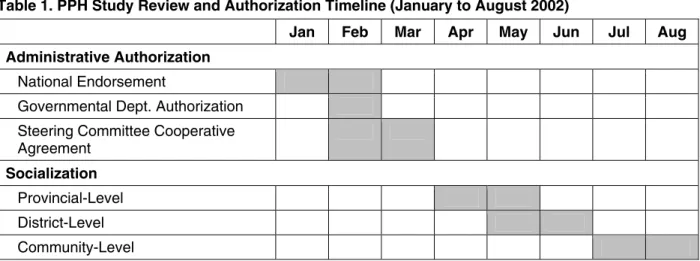
The study review and authorization timeline is shown in Table 1. The review process included national-level recognition of the serious problem of PPH by the MOH and the need for appropriate socialization among regional- and district-level health departments and community orientation to support the use of misoprostol.
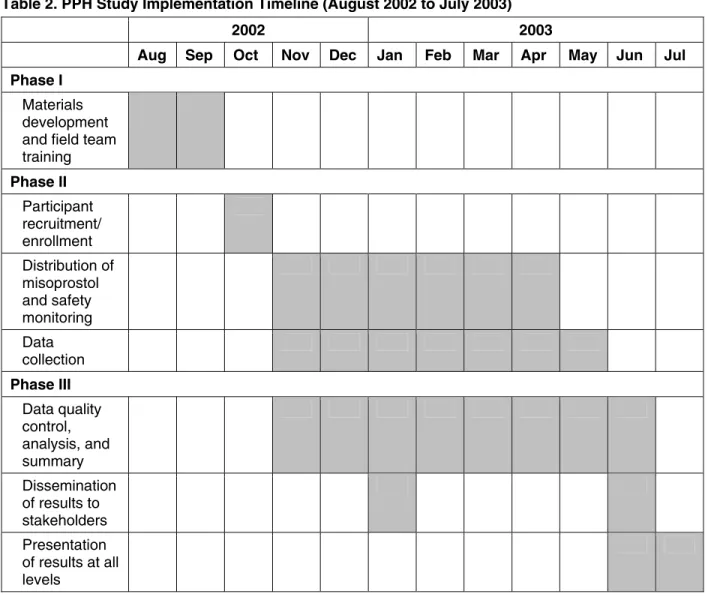
The implementation of the PPH Study had a 12-month timeline (Table 2) and occurred in three phases: materials development and field team training; participant enrollment, distribution of misoprostol, and data collection; and data analysis and dissemination and presentation of results. PPH Study training modules were developed by MNH/Bandung field staff based on the study protocol and implementation strategy. The orientation and training of the field team was accomplished by the study manager, field epidemiologist, lead field supervisors, three trainer midwives, and two obstetrician physicians. Initially, the eight field supervisors were trained 10–12 September 2002. The field supervisors then assisted with the three training sessions, conducted from 16 September to 5 October 2002, to train the midwives, postpartum interviewers, and community volunteers. The field supervisors, midwives, and postpartum interviewers were given a 3-day
orientation and training session. For the community volunteers, the training session was extended to 5 days to allow for additional role play and practice with the counseling material. An integral part of the training for field implementation teams was strengthening their skills in facilitation, counseling, and interpersonal communication.
Table 1. PPH Study Review and Authorization Timeline (January to August 2002)
Jan Feb Mar Apr May Jun Jul Aug
Administrative Authorization National Endorsement
Governmental Dept. Authorization Steering Committee Cooperative Agreement
Socialization
Provincial-Level
District-Level
The study findings were presented to the Prevention of PPH National Steering Committee in June 2003. The results were presented during formal project completion meetings including provincial-, district-, and community-level officials in June 2003, and at the national level at the annual POGI conference in July 2003 (Table 2).
Table 2. PPH Study Implementation Timeline (August 2002 to July 2003)
2002 2003 Aug Sep Oct Nov Dec Jan Feb Mar Apr May Jun Jul
Phase I Materials development and field team training Phase II Participant recruitment/ enrollment Distribution of misoprostol and safety monitoring Data collection Phase III Data quality control, analysis, and summary Dissemination of results to stakeholders Presentation of results at all levels Organizational Structure
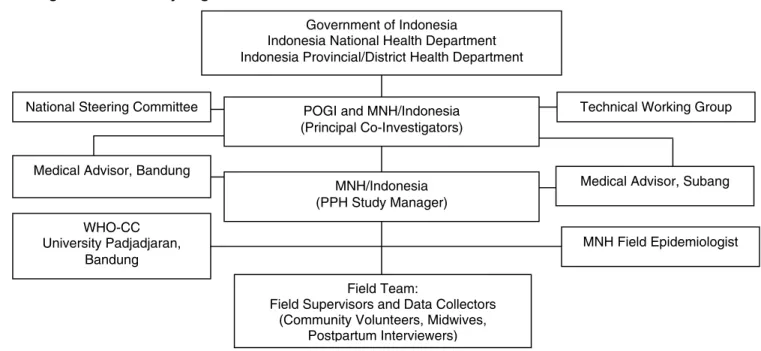
One of the strengths of the organizational structure of the study was the establishment of strong linkages between the MOH, POGI, and MNH/Indonesia through the establishment of a National Steering Committee and a Technical Working Group (Figure 1). These organizational relationships facilitated national and regional support to ensure successful project implementation.
Figure 1. PPH Study Organizational Structure
Study Areas
The study was implemented through the MNH/Indonesia Program in the province of West Java. Based on the Indonesian 2000 census report, West Java has a population of 42 million, which is equivalent to the population of California, Oregon, and Washington states combined. Data from the annual health profile indicated that there were 5,772 midwives practicing in West Java, confirming that there is a low ratio of midwives to pregnant women.
Bandung District was chosen as the intervention area and Subang District was chosen as the
comparison area. Villages in these two areas were reported to be comparable with respect to level of use of skilled providers during childbirth and availability of a hospital for emergency treatment of complications within reasonable reach (1- to 2-hour travel time) for the majority of women in the district. The villages also met low-resource criteria (Central Bureau of Statistics et al. 1998). Each of the two study areas has an existing network of community volunteers (kader) who work as peer-educators in association with public community health centers (Puskesmas). The population in each study area selected met the sample size requirement for the study design, which called for a 2:1 ratio of intervention area women to comparison area women to ensure sufficient power to detect the difference in perceived excessive bleeding.
Identification and Recruitment of Participants
Identification through Household Census
Before initiation of the PPH Study, a census was completed in both study areas. The Central Bureau of Statistics (Badan Pusat Statistik [BPS]) in Bandung District completed the household survey to identify all women in the two study areas who were pregnant in August 2002. The census was completed by screening teams that included men and women who worked with BPS to create the original maps for the year 2000 national census.
A total of 180 BPS screeners were responsible for visiting 57,900 households in the two districts during a 4-week survey period. Screeners were expected to visit 15 households per day, on average. To complete the screening phase in 25 working days, each screener was responsible for an area of
Government of Indonesia Indonesia National Health Department Indonesia Provincial/District Health Department
POGI and MNH/Indonesia (Principal Co-Investigators)
MNH/Indonesia (PPH Study Manager)
National Steering Committee Technical Working Group
Medical Advisor, Bandung
Medical Advisor, Subang
WHO-CC University Padjadjaran,
Bandung
MNH Field Epidemiologist
Field Team:
Field Supervisors and Data Collectors (Community Volunteers, Midwives,
approximately 300–375 households. Screeners were paid Rupiah (Rp) 4,000 (about $0.50 USD) per household and reimbursed for transportation costs after questionnaire submission.
BPS screeners visited each house within their assigned areas. Upon arriving in the neighborhood, the screener introduced her/himself to the neighborhood community volunteer. The volunteer
facilitated the introduction of the screener to families in the neighborhood, showed the
Provincial/District Health Department (Dinas Kesehatan [DinKes]) letter of permission, and explained the purpose of the household census. The screener then spoke to the head of household, or any adult if the head of household was not present, and requested the names of all women in the household between the ages of 15 and 49 years. The screener spoke with each of these women in person to ask if they were currently pregnant. The screener’s instructions were to continue to re-visit the houses in her/his assigned area until s/he had spoken with each woman personally.
Screeners used a standard protocol and special consent form for enquiry about pregnancy, including asking “have you missed two menstrual periods?” A followup question was phrased in a way to allow women who were not sure about the date of their last menstrual period to answer in the affirmative (“Is there a possibility that you may be pregnant?”). Pregnancy status was confirmed (by a midwife, if necessary) during the study enrollment in October, 4–6 weeks later.
All women, not just women who were planning a home birth, were placed on the list and coded for pregnancy status. Each household that was visited by a BPS screener received a
POGI-MNH/Indonesia orange and white sticker with a unique identification number (geocode). At the time of study enrollment, women who were misidentified as pregnant or who were no longer pregnant were recorded in the field supervisor logbook and reported to the MNH/Bandung office.
Recruitment
Participant recruitment occurred during the 4-week period from 10 October to 5 November 2002. Eligible women were recruited to participate in the study when they visited the community health center or antenatal care clinic (comprehensive services post, Posyandu), or during a home visit by a community volunteer. Pregnant women who agreed to participate in the study and completed the informed consent process were enrolled in the study.
An oral consent process, which does not require a signature from the survey participant, was used for the study because of the low education level of community members, with only 20% of ever-married women having 4 years or more schooling (Central Bureau of Statistics et al. 1998). The consent form was read to each woman, and oral consent was requested and documented for those who agreed to participate in the study.
The consent process was conducted in the language (e.g., Bahasa Sunda, Java, or Indonesia) that was appropriate for the participant. The consent forms and questionnaires were created in English, translated into Bahasa Indonesia, pre-tested, approved by the WIRB, and translated back into English to ensure accuracy of translations. A Bahasa Sunda dictionary of appropriate substitute words was provided to data collectors for use with Bahasa Indonesia questionnaires so that a standardized definition was used for each word. The consent process involved describing the purpose of the study, measures taken to ensure confidentiality, and the details of what the visits and interviews involved. The women were given assurance that declining to participate in the study, or withdrawing from the study at any time, would in no way jeopardize the services they would receive.
All women received counseling about prevention of PPH and were told that emergency medical care for any complication of pregnancy or birth would be provided free of cost at the nearest specified health center or referral hospital. The cost of care and materials was reimbursed under a contractual agreement with the midwives, health centers, and district hospitals, and transportation costs were prepaid through health centers (see Appendix A for clarification). Women were given the names and telephone numbers of the midwives, doctors, and obstetricians in their district who formed a health safety network for the study, and maps showing the location of the nearest health center and district hospital. The potential side effects were discussed during the counseling, and women were encouraged to drink warm sweet tea or use a blanket if they felt chilled. If more than normal
bleeding occurred after taking misoprostol or if side effects persisted, participants were reminded to seek care with the nearest skilled provider or at the nearest health center.
Comparison Area
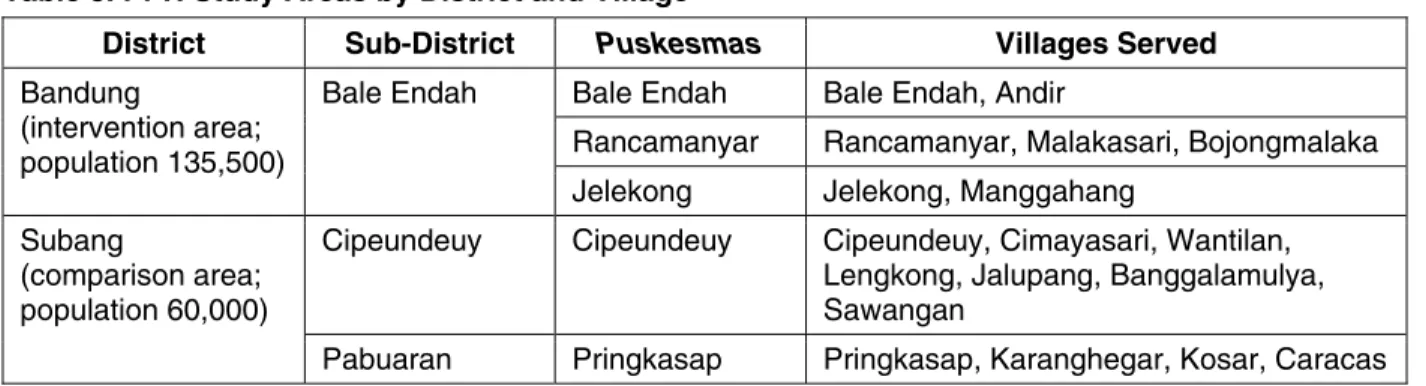
Two sub-districts in Subang District (population 60,000), Cipeundeuy and Pabuaran, served as the comparison area. Eleven villages served by two public health clinics were included in the
comparison area (Table 3).
Participants in the Subang comparison area received counseling on prevention of PPH and agreed to participate in one interview by a trained postpartum interviewer within 4 weeks after giving birth. The participants were advised to seek care should they experience any complication during pregnancy or birth, but they were not offered misoprostol and had no additional risk from participating in the study.
Table 3. PPH Study Areas by District and Village
District Sub-District Puskesmas Villages Served
Bale Endah Bale Endah, Andir
Rancamanyar Rancamanyar, Malakasari, Bojongmalaka
Bandung
(intervention area; population 135,500)
Bale Endah
Jelekong Jelekong, Manggahang
Cipeundeuy Cipeundeuy Cipeundeuy, Cimayasari, Wantilan,
Lengkong, Jalupang, Banggalamulya, Sawangan
Subang
(comparison area; population 60,000)
Pabuaran Pringkasap Pringkasap, Karanghegar, Kosar, Caracas
Intervention Area
Seven villages in Bandung District (population 135,500), served by three public health clinics, formed the intervention area (Table 3).
Participants agreed to take part in three interviews (initial visit, visit during third trimester, and visit within 4 weeks after birth). The home visits consisted of counseling that included the purpose of the study, the correct timing and use of misoprostol to prevent PPH, the risks of taking misoprostol before birth of the baby, and common side effects of misoprostol. The counseling also included details of what to do in case a side effect or complication occurred, and where and from whom to seek care. A flip-book visual aid and dual language script was used for the counseling session. This information was shared in the local language, as appropriate. Women were encouraged to have a family member or other support person listen to the counseling session. Approximately 75% of the women had their spouse, mother, mother-in-law, and/or other support person present during the counseling session.
After the counseling session, women and household members were asked to describe in their own words what misoprostol was used for (tablet PAS bayi [“tablet that avoids bleeding immediately”]), the safe use of misoprostol, and the risks associated with misuse of misoprostol, as a means of verifying their understanding. To ensure the safety of study participants, counseling was repeated until participants could correctly restate the information provided. At the conclusion of the second counseling visit during the third trimester of pregnancy, women who agreed to accept misoprostol were given the package containing three 200-µg misoprostol tablets. The tablets were packaged in a heat-sealed plastic bag, together with pictorial and written safety instructions. Women who chose to give birth with a midwife (bidan) at home could take misoprostol, but these women were counseled that the midwife could administer oxytocin if she chose to, thereby overriding the research protocol.
Socialization and Community Orientation
The study socialization and community orientation consisted of a series of public meetings in communities in each of the study areas, although the study did not use extensive advertising or promotion. The socialization strategy targeted expectant families and was primarily designed to offer a community forum to clarify the nature of the short-term study. These forums were based on the existing MNH BP/CR model that encourages birth preparedness at the individual level, enabling families to take responsibility for protecting their own health. The meetings included informal community leaders (Head of District [Bupati], Head of Sub-District [Kapala Camat], and Head of Village [Kapala Desa]), religious leaders, health professionals, traditional birth attendants (TBAs), and other community members, and provided an introduction to the study as well as the study
leadership team and trained community volunteers. Discussions highlighted that the intervention offered a broader range of choices about preparations for childbirth. Through community contacts, midwife coordinators and village midwives (bidan di desa) were encouraged to share information about the initiation of the PPH Study. Figure 2 illustrates the review and dissemination of the study’s socialization messages.
Data Collector Characteristics
The data collectors, including community volunteers, midwives, and postpartum interviewers, were recruited from the study areas and selected by the WHO-CC, Bandung, in collaboration with
MNH/Indonesia. Selection criteria included educational background, work experience, and previous training. Community volunteers and postpartum interviewers were interviewed, screened for their communication skills, and given a 2-minute acuity evaluation. During the data collector recruitment, emphasis was placed on selecting highly-motivated community volunteers who were committed to serving in their own neighborhoods. Community volunteers were asked a question about why they were motivated to assist with the PPH Study. Their most common response was “to gain experience working with pregnant women and knowledge about the risk of pregnancy and childbirth” (20/52 volunteers interviewed). More than 20% (11/52) of the community volunteers mentioned that they felt it was their responsibility to the community to participate in the PPH Study. One volunteer said, “I want to help because the project concerned somebody else’s life and I am interested in
encouraging the bidan.” Only one community volunteer mentioned an interest in gaining extra income from the small payment for submitting questionnaires. The characteristics of the selected data collectors are shown in Table 4.
Figure 2. PPH Study Socialization Infrastructure to Promote Community Awareness
Table 4. Characteristics of Data Collectors
Characteristic Community
Volunteers
Postpartum
Interviewers Midwives
Average age (range) 40 years (24–65) 37 years (23–54) 34 years (25–62)
Ethnicity 86% Sundanese 77% Sundanese 76% Sundanese
Gender 96% women (50/52) 90% women (17/19) 100% women (31/31)
Average number of children (range)
3 (1–8) 3 (1–8) 2 (1–5)
Educational level 48% junior high
graduates, 24% high school graduates 82% high school graduates, 16% college graduates 100% nursing academy graduates
Occupation 81% housewives 63% housewives 70% health center
midwives, 30% village midwives Years of work experience
(range)
12 years (1–28 years) 9 years (1–21 years) 11 years (5–41 years)
Active in comprehensive services post/Family Welfare Program
92% 88% 0%
NATIONAL
Indonesia National Health Department, POGI, Ministry for Women’s Empowerment, White Ribbon Alliance
PROVINCIAL
Indonesian Provincial Health Department, Family Welfare Program, Provincial (Regional) Hospital
WHO-CC, Bandung; University Padjadjaran; University Indonesia; District Hospitals
DISTRICT
Indonesian District Health Department Head of District and His Wife, Leaders of the Community
Family Welfare Program
SUB-DISTRICT Head of Sub-District Community Health Center/Post Midwife Coordinators and Doctors
VILLAGE
Head of Village and His Wife Informal Leaders and Village Midwives Village and Neighborhood Community Volunteers
Figure 3 illustrates the distribution of the field team by study area. The study was specifically designed to be implemented using existing healthcare infrastructure and community resources, including the existing network of community volunteers. The figure differentiates the service delivery component (white boxes) from the research component (gray boxes).
Figure 3. PPH Study Supervision System: Service Delivery and Research Components
Data Collection
The study outcome measures included:
Number of pregnant women in the intervention area who agreed to receive information and misoprostol, measured by the number of participants who accepted counseling and misoprostol. Number of pregnant women who actually took misoprostol immediately after birth, measured by participants reporting use of misoprostol after childbirth and tabulation of reasons for use and non-use of misoprostol.
Number of participants who perceived excessive postpartum blood loss among women who used misoprostol compared to those who did not use misoprostol, measured by participants’ responses to postpartum interview questioning about whether they experienced more than normal bleeding after birth.
Quantitative Component
Standardized survey questionnaires were used to gather information from study participants who were interviewed. Four main questionnaires were used:
The recruitment (“Kader First Visit”) questionnaire collected data on sociodemographic characteristics, obstetric history, and level of knowledge about PPH and misoprostol. The questionnaire also asked the woman to identify a support person who would be with her when she gave birth, and that person was included in the counseling session.
The third trimester (“8th Month Visit”) questionnaire, used only in the intervention area, was primarily a job aid the community volunteer used to determine whether the woman had already received her third trimester counseling session and the misoprostol. If not, the questionnaire guided the community volunteer through the survey process.
Subang Puskesmas in Cipeundeuy and Pringkasap
Field Supervisors: 3 Medical Advisor, Bandung
PPH Study Manager
Field Epidemiologist
Lead Field Supervisor, Subang, and Administrative
Assistant Medical Advisor, Subang
Lead Field Supervisor, Bandung, and Administrative
Assistant Midwives (20) Interviewers Postpartum (12) Community Volunteers (31) Midwives (11) Community Volunteers (21) Postpartum Interviewers (7) Bandung Puskesmas in Bale Endah,
Rancamanyar, and Jelekong Field Supervisors: 5
The postpartum interview questionnaire for the Bandung intervention area was used to collect information on the woman’s understanding of the counseling given to her about PPH and about misoprostol; information about any complications the woman experienced during birth,
including perceived blood loss; if and when she used the misoprostol; and if she would recommend it to others. The postpartum interview questionnaire for the Subang comparison area collected information about complications the woman experienced during birth, including perceived blood loss.
The midwife delivery questionnaire was a self-administered questionnaire completed by
midwives attending births in the two study areas. The questionnaire collected similar information to that collected in the postpartum interview in the intervention area, focusing on use of the misoprostol and symptoms or complications experienced by the woman during birth and the immediate postpartum period, including an estimate of the amount of blood loss (measured in a kidney bowl). It also covered the midwife’s willingness to recommend use of misoprostol for other women.
During the recruitment month, community volunteers visited all houses of the women on their assigned list. If a women had not been recruited, the volunteer conducted the consent process and completed the recruitment visit questionnaire. After the interview, the community volunteer recorded the unique identifying number (geocode) on the woman’s PPH Study ID card and coversheet of the questionnaire, including the date, data collector’s name, participant’s name, address, head of household’s name, study area, sub-location (neighborhood), and house number. If the woman had not yet started her 8th month of pregnancy, the community volunteer checked the woman’s antenatal care card for the estimated due date. The community volunteer counseled the woman on prevention of PPH and told her that she would visit again later in the pregnancy, but did not give the misoprostol at this visit. If the woman had started her 8th month of pregnancy, the volunteer asked the participant if she had already been offered and accepted misoprostol:
If the participant had not been offered misoprostol, the community volunteer began completing the third trimester visit questionnaire, invited the support person, if present, to join in the counseling session, and offered counseling about prevention of PPH and the safe storage and use of misoprostol. The volunteer recorded whether or not the woman accepted the
misoprostol.
If the participant had been offered misoprostol but declined to accept it at the first visit, the community volunteer asked the woman if she had changed her mind and if she was now
interested in receiving the misoprostol. If the participant did not wish to accept the misoprostol, the community volunteer stopped the interview. If the participant did wish to accept the
misoprostol at that time, the community volunteer began the questionnaire and offered counseling and the misoprostol. The community volunteer recorded that the participant accepted the misoprostol during the second visit.
If the participant had accepted misoprostol previously, the community volunteer stopped the interview and did not provide additional counseling or record information. The community volunteer reported the case to the field supervisor, who then reconciled the participant records. Misoprostol packets that were reported lost or damaged were not replaced by the community volunteer. The participant was told to contact the midwife coordinator at the community health center for replacement packets of misoprostol, which allowed strict control of misoprostol distribution.
Participants were asked about use of misoprostol at the postpartum interview. If the participant volunteered that she took the misoprostol before birth, the postpartum interviewer was told to immediately contact the field supervisor to complete a participant followup interview. A separate questionnaire on misuse of misoprostol was prepared as part of the PPH Study safety monitoring. Although there were no cases of misuse of misoprostol, this questionnaire would have been
completed if any participant had mistakenly taken misoprostol while still pregnant (Appendix B). A separate questionnaire was created for use in the event of an adverse event (ruptured uterus or maternal death).
Qualitative Component
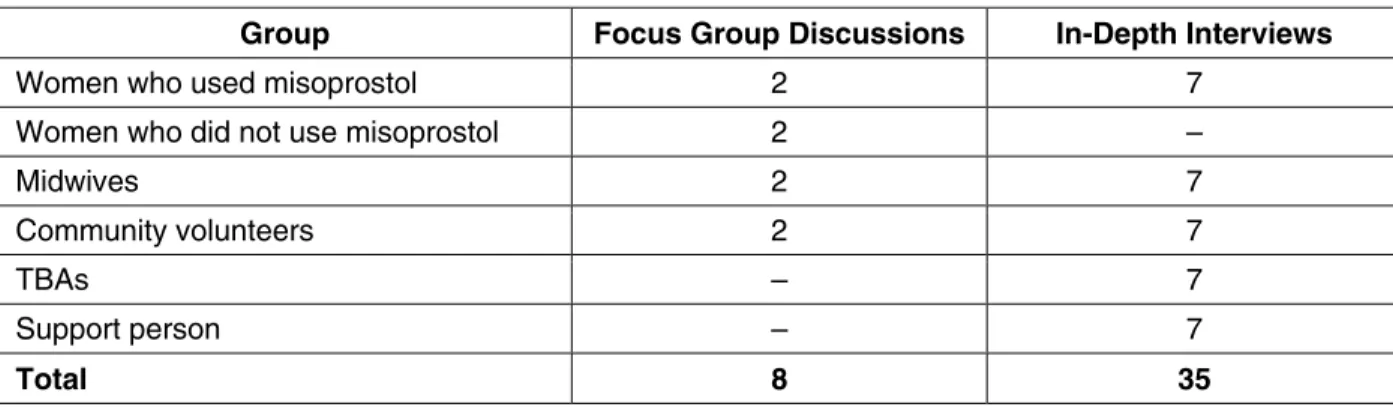
Focus group discussions (FGDs) and in-depth interviews (IDIs) were used to elicit further opinions about the acceptability of misoprostol. The objectives of the qualitative component were to:
Provide information on perception, attitude, and behavior on various issues related to pregnancy and the use of misoprostol in the intervention area;
Collect information on the distribution process and the acceptability and effectiveness of misoprostol, which are influenced by various factors in the community; and
Provide programmatic recommendations about potential scale-up and replication within a district-wide program to prevent PPH.
Qualitative data collection was completed by an experienced, trained qualitative research team from the WHO-CC, Bandung, in collaboration with MNH/Indonesia. A total of 90 participants (85 women and five men: 20 women who had recently given birth and 70 community members, including midwives, TBAs, and community volunteers) from the Bale Endah intervention area participated, and qualitative data were gathered from verbatim transcripts from eight FGDs and 35 IDIs. FGDs were used to collect general information from community members and healthcare providers, and IDIs were used to collect more detailed information from selected community members.
The FGDs consisted of four groups of women who had recently given birth, two groups of midwives, and two groups of community volunteers:
Two groups of women who had recently given birth and who used misoprostol: one group of women who had a skilled provider at the birth and one group who did not have a skilled provider present;
Two groups of women who had recently given birth who did not use misoprostol: one group of women who had a skilled provider at the birth and one group who did not have a skilled
provider present;
Two groups of midwives: one group of midwives who attended the PPH Study training session and one group of private midwives who did not attend the training session; and
Two groups of community volunteers: one group of MNH-trained volunteers who had
participated in the 5-day training and one group of non-MNH volunteers who did not attend the training session.
Table 5. Methods of Qualitative Data Collection
Group Focus Group Discussions In-Depth Interviews
Women who used misoprostol 2 7
Women who did not use misoprostol 2 –
Midwives 2 7
Community volunteers 2 7
TBAs – 7
Support person – 7
Total 8 35
The FGD facilitator guidelines included essential questions about the study grouped within five topics and three themes. Transcripts were organized and coded using an alphanumeric coding system for the theme and relevant topic (e.g., Theme A, Topic 2, or Theme B, Topic 1):
Theme A: PPH Study information and counseling. For example, What do respondents say and think about misoprostol and PPH counseling? What do they say about the connection between misoprostol and PPH? What do they think of the community meetings or other sources of information they had? What do community volunteers and midwives think about the effectiveness of the counseling and community information meetings?
Theme B: distribution of misoprostol. For example, How do women get misoprostol? What do they think about the way they received it through the community volunteer network? What are the best ways to distribute misoprostol to all pregnant women, including the women who don’t use the services of midwives or doctors? Where is misoprostol available for sale, and is it accessible to women (cost, location)?
Theme C: decision-making about use of misoprostol. For example, What reasons do women have for taking or not taking misoprostol? What did they discuss with other people after finding out about misoprostol? How did that influence them? What do women hear about experiences of others who use misoprostol, and perceptions about who uses misoprostol? How did using misoprostol influence decisions about childbirth planning (such as with whom and where to give birth)? What are the partnerships or cooperation between midwives, community volunteers, and TBAs? How did using misoprostol influence care-seeking, referral, and care practices during pregnancy, childbirth, and postpartum?
Topic 1: perceived benefits/advantages Topic 2: perceived barriers/disadvantages
Topic 3: how barriers were overcome (problem solving)
Topic 4: cues or triggers to decisions or action (social, economic, and physical reasons) Topic 5: recommendations for improvements/how to replicate successes
Study and Safety Monitoring
The PPH Study supervision system served to ensure that consent procedures, counseling, and distribution of misoprostol were conducted according to a standard protocol. Data collection and submission of the completed questionnaires were monitored, including tracking the performance of each community volunteer with regard to questionnaire accuracy and timeliness. The field
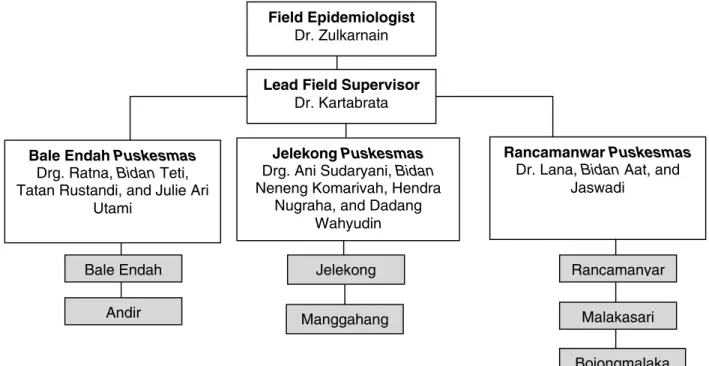
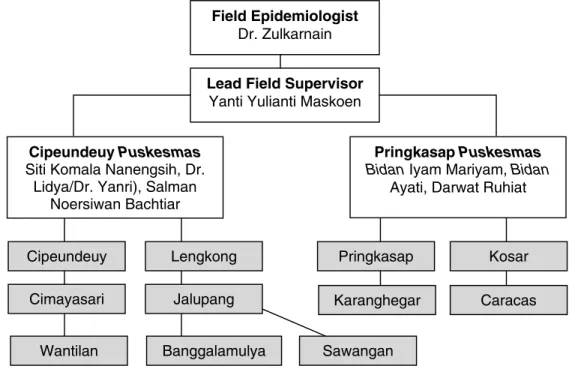
supervision structure of the PPH Study included a field epidemiologist, two field supervisors, and eight community health center-level field supervisors divided between the two study areas (Figures
4 and 5). The field team supervisors were responsible for reporting on safety indicators, including quick identification of any woman who may have taken misoprostol before the baby was born. Safety protocols for the PPH Study included a detailed written protocol for reporting of adverse events (maternal death or ruptured uterus) to the University of Indonesia Institutional Ethical Review Board and the WIRB within 10 days of becoming known to the study team. For details related to protocols for detection and reporting of adverse events, verbal autopsy reports, and reporting misuse of misoprostol, see Appendix B.
Figure 4. PPH Study Implementation Infrastructure, Bandung District Intervention Area (boxes shaded in gray are villages)
Lead Field Supervisor Dr. Kartabrata Field Epidemiologist
Dr. Zulkarnain
Rancamanwar Puskesmas Dr. Lana, Bidan Aat, and
Jaswadi Bale Endah Andir Manggahang Jelekong Bojongmalaka Malakasari Rancamanyar Bale Endah Puskesmas
Drg. Ratna, Bidan Teti, Tatan Rustandi, and Julie Ari
Utami
Jelekong Puskesmas Drg. Ani Sudaryani, Bidan Neneng Komarivah, Hendra
Nugraha, and Dadang Wahyudin
Figure 5. PPH Study Implementation Infrastructure, Subang District Comparison Area (boxes shaded in gray are villages)
Data Entry and Data Analysis
Completed questionnaires were submitted to field supervisors based in health centers or auxiliary field offices who reviewed the questionnaires for completeness and accuracy before submission to the lead field supervisor at the MNH/Bandung field office. When the questionnaires arrived at MNH/Bandung, they were reviewed again for completeness, recorded in a logbook, and sent to data operators for data entry.
Electronic and hardcopy data were stored under lock and key. Personal identifiers were entered into the data file during the course of the study and then stripped from the questionnaires and the
electronic data file at the completion of the study. The study manager, field epidemiologist, lead field supervisors, data operators, and those involved in the provision of technical assistance from the Baltimore and Jakarta offices had access to the data throughout the study to allow for consultation on data quality and data cleaning, but without identification of study participants. None of the information collected in the questionnaires was of a sensitive nature.
Two trained data operators entered data from the questionnaires using SPSS Data Entry Station software. Data cleaning for all questionnaires was the responsibility of the lead field supervisors who worked closely with field supervisors and data operators at the MNH/Bandung field office. Results were checked for consistency and summarized using routine frequency and cross tabulation
techniques with SPSS statistical software. The quality of the data was checked through dual entry of a 10% random sample of participant questionnaires to confirm or correct data values.
Questionnaires with inconsistent or missing data were rechecked in the field for completion by the
kader or postpartum interviewer. Approximately 9% of the questionnaires were found to have missing data and were sent back to the field for correction. Typically, one question was left
incomplete in the eight-page questionnaire. The most common errors were related to either the 20-digit participant identification number (geocode) or the serial number of the misoprostol packet, and were resolved by re-checking the participant identification number or misoprostol log sheets.
Cipeundeuy Cimayasari Lengkong Wantilan Karanghegar Pringkasap Jalupang Banggalamulya Sawangan Caracas Kosar Lead Field Supervisor
Yanti Yulianti Maskoen Field Epidemiologist
Dr. Zulkarnain
Pringkasap Puskesmas Bidan Iyam Mariyam, Bidan
Ayati, Darwat Ruhiat Cipeundeuy Puskesmas
Siti Komala Nanengsih, Dr. Lidya/Dr. Yanri), Salman
The PPH Study protocol called for intent-to-treat–based comparisons when information about preventing PPH or side effects related to use of misoprostol was summarized. The research team summarized quantitative results of the PPH Study primarily using frequency and cross tabulation in SPSS statistical software. In-depth analyses were completed using logistic regression multivariate models with STATA statistical software to allow for the use of adjustment factors representing differences in parity, education level, socioeconomic status, and history of antepartum hemorrhage between the two groups of study participants.
The qualitative interview transcript analysis and summarization was completed by the trained qualitative research team from the WHO-CC, Bandung, in collaboration with MNH/Indonesia. Verbatim transcripts from the FGDs and IDIs were summarized using word and phrase searches in MS Excel and NUD*IST software based on thematic guidelines. The verbatim transcripts were also translated into English for review by the PPH Study team.
FINDINGS
Characteristics of Study Participants
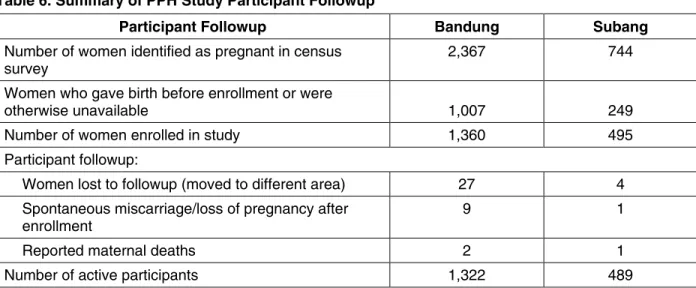
Of the 3,111 women who were initially identified as pregnant, a total of 1,855 pregnant women agreed to participate in the study (Table 6). Based on the language spoken most often at home, the study participants were primarily Sundanese (91% in Bandung and 95% in Subang). A few
participants were Javanese or Batak. A total of 44 women were lost to followup (31), experienced a loss of pregnancy after enrollment (10), or died (3), leaving a total of 1,811 women as active
participants in the study. The maternal deaths, which were unrelated to the use of misoprostol, were reported to the University of Indonesia Institutional Ethical Review Board and the WIRB within 10 days by the study manager, in accordance with IRB regulations. One death was due to dengue shock syndrome, one was due to multiple organ failure related to eclampsia, and one was due to congestive heart failure related to pre-existing heart disease. These three cases received a full review, including completion of a verbal autopsy report by the PPH Study ob/gyn medical advisors.
All study participants had similar socioeconomic backgrounds. Subang women tended to be younger and were more likely to be first-time mothers, although the difference in age was small (average age 27.0 years in Bandung compared to 26.4 years in Subang; see Table 7). Women in Bandung were more likely to have higher education level and socioeconomic status (e.g., own a TV or motorcycle), although a few participants from both areas owned cars.
Table 6. Summary of PPH Study Participant Followup
Participant Followup Bandung Subang
Number of women identified as pregnant in census survey
2,367 744 Women who gave birth before enrollment or were
otherwise unavailable 1,007 249
Number of women enrolled in study 1,360 495
Participant followup:
Women lost to followup (moved to different area) 27 4
Spontaneous miscarriage/loss of pregnancy after enrollment
9 1
Table 7. Characteristics of Study Participants
Participant Characteristic Bandung (N = 1,322) Subang (N = 489)
Age 27.0 years 26.4 years
Education:
Literate 1,223 (92.5%) 418 (85.5%)
Junior high or beyond 773 (58.5%) 181 (37.0%)
Parity:
First-time mother 427 (32.3%) 199 (40.7%)
One or more children 895 67.7%) 290 (59.3%)
Five or more children 54 (4.1%) 5 (1.0%)
Obstetric history:
Previous cesarean section 43 (3.3%) 3 (0.6%)
Previous birth where postpartum bleeding was perceived to be more than normal
76/895 (8.5%) 20/469 (4.3%)
Of the active participants in the intervention area, 1,291 women accepted the misoprostol. Thirty-eight of these women had cesarean sections and 182 were given oxytocin instead of misoprostol by their midwives, leaving 1,071 participants who were still eligible to use misoprostol. Of these women, 72 chose not to use misoprostol, leaving 999 women who accepted and used misoprostol. The details of attendance at birth, as determined by the postpartum interview, are summarized in
Table 8. Of interest is that the number of women in the Bandung intervention area who had a skilled provider at birth (54.5%) was significantly lower than the number of women in the Subang comparison area (76.0%). The lower number in Bandung is probably a result of the Subang area health department’s economic incentive to encourage midwives and TBAs to work together during a birth, rather than a result of the Bandung women’s decision against using a skilled provider because they had access to misoprostol to prevent PPH (see also Table 12).
Table 8. Birth Attendants among PPH Study Participants
Bandung Subang
Total number of births among active participants 1,322 489
Birth attended by skilled provider: 721 (54.5%) 372 (76.0%)
Doctor 137 (10.4%) 53 (10.8%)
Midwife 584 (44.2%) 319 (65.2%)
Birth attended by TBA 580 (43.9%) 117 (23.9%)
Birth attended by family member or other untrained assistant
21 (1.5%) 0 (0.0%)
Assessment of Safety
Findings of this study showed that the counseling and distribution of misoprostol are safe. Following one-on-one counseling sessions, women were successful in taking misoprostol in a self-directed manner without the supervision of a skilled healthcare provider. Table 9 summarizes safety data related to the use of misoprostol. Few women taking misoprostol reported nausea, abdominal cramps, vomiting, or diarrhea, which are commonly caused by oxytocin. Shivering was a common side effect with misoprostol (Table 9); however, it is also common in normal childbirth, even
among women who do not receive a uterotonic drug. The side effects were usually noticed 5–10 minutes after ingestion of misoprostol and lasted about 15–30 minutes.
Logistic regression analysis was used with adjustment for inter-group differences. Study results indicate that women in the intervention area were 25% less likely to perceive excessive bleeding (as measured by the number of cloths used during the first 24 hours after the birth; odds ratio [OR] = 0.76, 95% confidence interval [CI] 0.55–1.05; p = 0.094). Women in the intervention area were 30% less likely to need an emergency referral for any birth complication (OR 0.69, 95% CI 0.49–0.98; p = 0.035) and 45% less likely to need an emergency referral for PPH (OR = 0.55, 95% CI 0.24–1.23; p = 0.144) compared to women from the comparison area The overall number of emergency referrals due to birth complications was less than 10% (176/1,811), with only 47 emergency referrals
suspected to be due to PPH (Table 10).
Table 9. Safety Monitoring Related to the Use of Misoprostol
Bandung Intervention Area (N = 999)a
Subang Comparison Area (N = 489) Percentage of participants who perceived
excessive postpartum blood loss
117 (11.7%) 66 (13.5%)
Level of minor side effects:
Shivering after childbirth 442 (44.2%) 48 (9.8%)
Fever after childbirth 352 (35.2%) 28 (5.7%)
Percentage who had emergency referral for
PPH 22 (2.2%) 19 (3.9%)
a
Number includes only women who accepted and used misoprostol. Table 10. Emergency Referrals among All Study Participants
Emergency Referral Bandung Intervention Area (N = 1,322)a Subang Comparison Area (N = 489) Referrals due to all birth complications, including
suspected PPH
114 (8.6%) 62 (12.7%)
Referrals due to suspected PPH 28 (2.1%) 19 (3.9%)
a
Number includes all women in intervention area.
Interviews with the midwives showed that the midwives believed that study participants took
misoprostol at the correct time, felt safer having the misoprostol at home, and were well prepared to cope with the anticipated minor discomforts or potential side effects after use of misoprostol.
Comments on the Safe Use of Misoprostol
“They feel safer because there won’t be bleeding. The aim is good. If [the misoprostol] is in the health center, it is fine as long as it is under the control of the midwife.” Bidan N.T.
“For the first [woman], the shivering was not too long…one experienced [shivering] for 2 hours, but some didn’t experience shivering in my practice.” Bidan N.
Assessment of Acceptability
Misoprostol was accepted by the study participants, and most women gained approval for use of misoprostol from their husbands and family members after the community volunteer visits. Most participants reported that they would recommend misoprostol to a friend, use it for their next birth, or pay for it if it was available (Table 11).
Table 11. Acceptability of Misoprostol to Prevent PPH
Bandung Women who gained approval for use of misoprostol from husband and
family members
1,288/1,291 (99.8%)
Women who would recommend misoprostol to a friend 926/999 (92.7%)
Women willing to use misoprostol again at their next birth 858/999 (85.9%)
Women who would purchase misoprostol if available 837/999 (83.8%)
Comment on the Acceptability of Misoprostol
“They seemed to accept it. The women are grateful because they are afraid of bleeding. But with this tablet PAS bayi program, they become more at ease. She was bleeding when she delivered her first baby, but the second one, she participated in this program, got the medicine, so [there was] no bleeding.” TBA D.
Assessment of Feasibility
The feasibility of this intervention depended on identifying a means of distributing misoprostol to all pregnant women, including those who planned to give birth at home. Specific questions related to the feasibility of continuing the intervention and potential expansion to a national program to prevent PPH were addressed by qualitative survey among participants.
Based on summary information from IDIs, the majority of people interviewed felt that the best way to ensure that every pregnant woman has an opportunity to receive information about prevention of PPH, including those who do not plan to use skilled providers, is to allow trained community volunteers to work cooperatively with skilled midwives within their respective communities. Midwives are trusted healthcare providers, and the FGDs and IDIs showed that the midwives supported the training of community volunteers and worked cooperatively with community
volunteers. Most community volunteers indicated they felt valued and would continue to volunteer in the future.
Another aspect of feasibility relates to the availability of misoprostol in the community. Misoprostol was found to be readily available and in stock at local pharmacies, as well as peripheral health
centers. The cost of misoprostol for private purchase ranged between Rp 5,000 and 10,000 ($0.55 to $1.10 USD), making it comparable in cost to oxytocin. What makes misoprostol less expensive is that it can be taken orally; therefore, there is no cost for a syringe and needle, and no fee for the skilled provider as there would be with injection of oxytocin or other injectable uterotonic drug. Another important measure of feasibility relates to community members’ willingness to pay for misoprostol. Of the 84% of women in the intervention area who reported willingness to pay for misoprostol, 60% reported that they would pay at least Rp 5,000.
PPH study results provide positive evidence that pregnant women are likely to continue to seek childbirth care at the midwife’s house and are not inclined to home birth just because they have a drug that can prevent PPH (Table 12).
Table 12. Location of Childbirth among PPH Study Participants in Bandung Intervention Areaa Location of Childbirth Previous Childbirth Current Childbirth during Study
Participant’s home 475 (54.8%) 408 (47.1%) Midwife’s home 244 (28.2%) 328 (37.9%) TBA’s home 67 (7.7%) 47 (5.4%) Healthcare facility 77 (8.9%) 81 (9.4%) Otherb 3 (0.3%) 2 (0.2%) a
N = 866. Women who gave birth to their first child were excluded. b
Includes births that occurred in a car.
Assessment of Effectiveness
This study focused on the safe use and programmatic effectiveness of the distribution of
misoprostol among pregnant women who planned to have home births. The purpose of this study was not to demonstrate the clinical effectiveness of misoprostol or compare it to other methods of preventing PPH, as this has already been well documented (as reviewed by Broekhuizen 2000). However, results described in the section on safety assessment show that women in the intervention area were less likely to require referral for PPH or any other birth complication, demonstrating the effectiveness of misoprostol. This finding was confirmed during interviews with midwives, the majority of whom reported that they believed that misoprostol was effective in preventing PPH and was an effective alternative if oxytocin was not available.
The distribution by community volunteers proved to be effective. The community volunteers are respected members of the neighborhood and were effective in gaining pregnant women’s approval to participate in the study as well as in encouraging women to accept and use misoprostol.
Comment on the Effectiveness of Misoprostol “This drug is beneficial... no diarrhea, no vomiting, just that shivering.” Bidan E.
LESSONS LEARNED
An important lesson learned during the PPH Study in Indonesia was that the active participation of the National Steering Committee was important not only for the success of the study, but also for the rapid acceptance of the study findings. The National Steering Committee included Indonesia government officials at the national, provincial, district, and sub-district levels; leaders within the health profession; and our Indonesian collaborating and implementing partners. The National Steering Committee leadership, including the Director of the MOH, immediately confirmed their commitment to roll out the intervention as a national prevention of PPH program in Indonesia after presentation of the study findings. The active participation of the National Steering Committee was important for the success of the study, because national leadership facilitated: