Middlesex University Research Repository:
an open access repository of
Middlesex University research
http://eprints.mdx.ac.uk
Nash, Michael, 2014. A mixed methods approach to exploring mental
health nurses diabetes education and skills needs. Available from
Middlesex University’s Research Repository.
Copyright:
Middlesex University Research Repository makes the University’s research available electronically. Copyright and moral rights to this thesis/research project are retained by the author and/or other copyright owners. The work is supplied on the understanding that any use for commercial gain is strictly forbidden. A copy may be downloaded for personal,
non-commercial, research or study without prior permission and without charge. Any use of the thesis/research project for private study or research must be properly acknowledged with reference to the work’s full bibliographic details.
This thesis/research project may not be reproduced in any format or medium, or extensive quotations taken from it, or its content changed in any way, without first obtaining permission in writing from the copyright holder(s).
If you believe that any material held in the repository infringes copyright law, please contact the Repository Team at Middlesex University via the following email address:
IPH 5180
A Mixed Methods Approach to
exploring Mental Health Nurses
Diabetes Education and Skills
Needs
Submitted to Middlesex University in
fulfilment of the requirements for the
degree of Doctor of Professional
Studies
Michael Nash
School of Health and Social Sciences
Middlesex University
2 | P a g e
Table of Contents
Page No.
Appendices ... 4 Glossary of Abbreviations ... 5 List of tables and figures ... 6 - 7 Abstract ... 8 - 9 Acknowledgements ... 14 Chapter 1 Introduction ... 11 Study Rationale ... 12 Context of the project ...13 - 19 Project outline ...19 - 20 Chapter 2 ... 21 Research Objectives and Questions ... 22 Literature Search Strategy ...23 - 26 Curriculum development and Mental Health Nursing ... 27 What influences Mental Health Nursing Education? ...28 - 36 MHSU Participation in Mental Health Nurse Education ...36 - 41 Critical reflection on my curriculum development activity... 41 - 43 Chapter 3:Research Method ... 46 Paradigms ... 46 Study Philosophical Framework ...50 - 52 Rationale for selecting Mixed Methods ...53 - 59 Hierarchy of Evidence ……… 59 - 60 Diabetes care and Mental Health Nurses Knowledge ……….. 61 - 65 Study Integrity and Rigour ...65 - 73 Ethical Aspects of the project ...74 - 80 Critical Commentary on my role in the research ...80 - 82
3 | P a g e
Insider-Outsider Researcher ...83 - 87 Reflections on Leadership ...87 - 92 Chapter Summary ...92 - 93 Chapter 4 Project Activity ... 94 Quantitative Data Collection Methods ... 95 Training Needs Analysis ...95 - 99 TNA Survey Design ...99 - 102 Development of Qualitative Interview Schedule ...102- 105 Sampling...107 - 110 Data Collection ...110 - 113 Telephone Interviews ...113 - 114 Data Analysis ...114 - 117 Data Integration ...117 - 119 Reflexivity ...119 - 121 Chapter Conclusion ... 121 Chapter 5 Findings ... 122 Quantitative Findings ... 123 - 135 Qualitative Findings ...135 - 152 Chapter 6 Discussion ... 153 Study Limitations ...153 - 159 Discussion of Findings ...159 - 174 Critical Reflection on my own learning ...174 - 177 Recommendations and Products of the Research ...177 - 184 Conclusion ...186 - 187 References ...188 - 207 Appendices ... 208
4 | P a g e
List of Appendices
Appendix 1 Nash M (2013) submission of peer reviewed article
Appendix 2 Nash M (2009): Exploring Mental Health Nurses Diabetes Care
Skills: A Training Needs Analysis, British Journal of Nursing, Vol.18, No.10 pp626 – 630
Appendix 3 Confirmability check qualitative data
Appendix 4 Quantitative Ethics information pack
Appendix 5 Qualitative Ethics information pack
Appendix 6 Ethics confirmation letter NHS
Appendix 7 Ethics confirmation letter Middlesex University
Appendix 8 Local Research Ethics Department confirmation letter NHS
Appendix 9 Honorary contract for NHS research
Appendix 10 Training Needs Analysis Survey tool
Appendix 11 Qualitative Interview Schedule
Appendix 12 Mental Health Service Users Diabetes information booklet
Appendix 13 Nash (2011) Detecting diabetes in the mentally ill Diabetes Professional Vol.7, Iss.4, pp8-10 Autumn 2011
Appendix 14 Network for Psychiatric Nursing Research Conference
Presentation 2012
Appendix 15 Journal of Psychiatric and Mental Health Nursing article submission
Appendix 16 International Nursing Research Conference, Trinity College Dublin, poster presentation
Appendix 17 Presentation for Mental Health in Higher Education Conference “Let’s Get Physical” 22nd May 2008
Appendix 18 Detailed literature search strategy
Appendix 19 Figure 17 the TNA process adapted from (Pedder 1998, Gould 2004 and Phillips and Dromgoole 2005a)
5 | P a g e
Glossary of abbreviations
List of abbreviations
CPD Continuous Professional Development
CNO Chief Nursing Officer
DoH Department of Health
DProf Doctorate in Professional Studies
DRC Disability Rights Commission
HEI Higher Educational Institution
MHN Mental Health Nurse
MHSU Mental Health Service User
NICE National Institute for Health and Clinical Excellence
NSF National Service Framework
6 | P a g e
List of tables and figures
Table 1: Explanations for poor physical health in Mental Health Service Users p11 Table 2: Curriculum type and potential influence p28
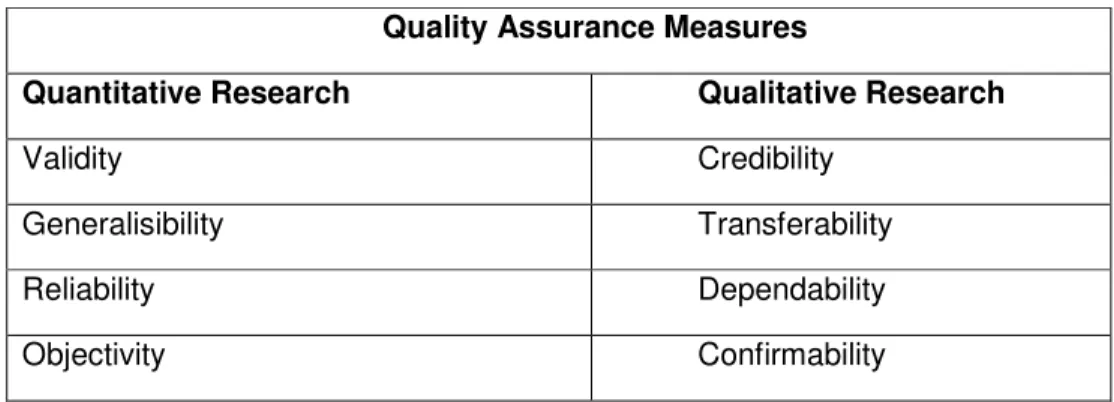
Table 3: Major assumptions of positivist and naturalistic paradigms p48 Table 4: Paradigm assumptions of this mixed method project p52 Table 5: Quality Assurance Measures p66
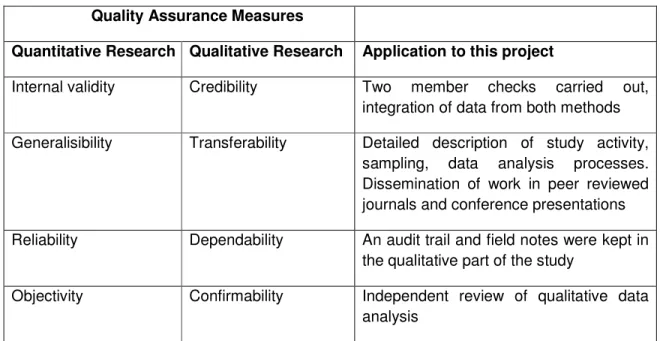
Table 6: Managing Threats in Sequential Exploratory Designs p67 Table 7: Quality assurance applied to this study p73
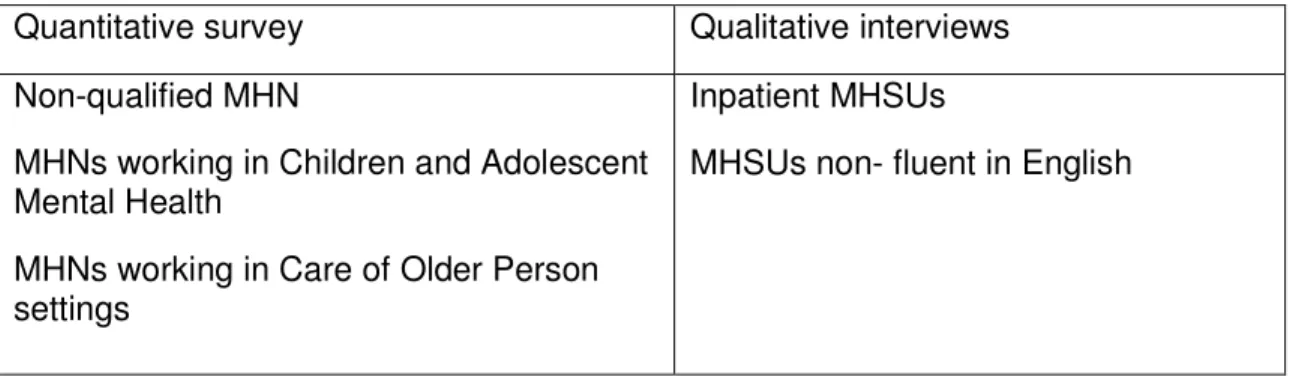
Table 8: Outsider researcher: Advantages and disadvantages in this project p87 Table 9: Benefits and drawbacks of Training Needs Analysis p106
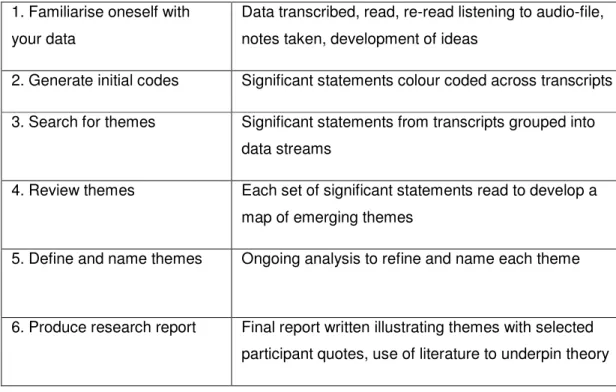
Table 10: Project inclusion criteria p108 Table 11: Project exclusion criteria p109 Table 12: Process of thematic analysis p116
Table 13: Impact of diabetes care on Mental Health Nurses workload p123
Table 14 Valid and missing cases for statistical analysis of diabetes knowledge p128 Table 15 Differences in self-assessed knowledge of MHNs with and without past diabetes training concerning diet and diabetes p128
Table 16 Differences in self-assessed knowledge of MHNs with and without past diabetes training concerning knowledge of blood sugar levels p129
Table 17 Differences in self-assessed knowledge of MHNs with and without past diabetes training concerning knowledge of complications of diabetes p129
Table 18 Valid and missing cases for statistical analysis of self-efficacy p131 Table 19 Identifying diabetes in your client group p131
Table 20 Assessing blood sugar levels in people with diabetes p132 Table 21 Diabetes care planning p132
Table 22 Managing diabetes care in people with mental illness p132 Table 23 Giving health education advice regarding diabetes p133 Table 24 Liaison with local diabetes services p133
7 | P a g e
Table 25: Mental Health Nurses attitudes towards diabetes care p134 Table 26: Mental Health Service Users Participant Profile p137
Table 27: Advantages and disadvantages of telephone interviews p158
Figure: 1 A Ladder of Citizen Participation applied to Mental Health Nurse Education p38
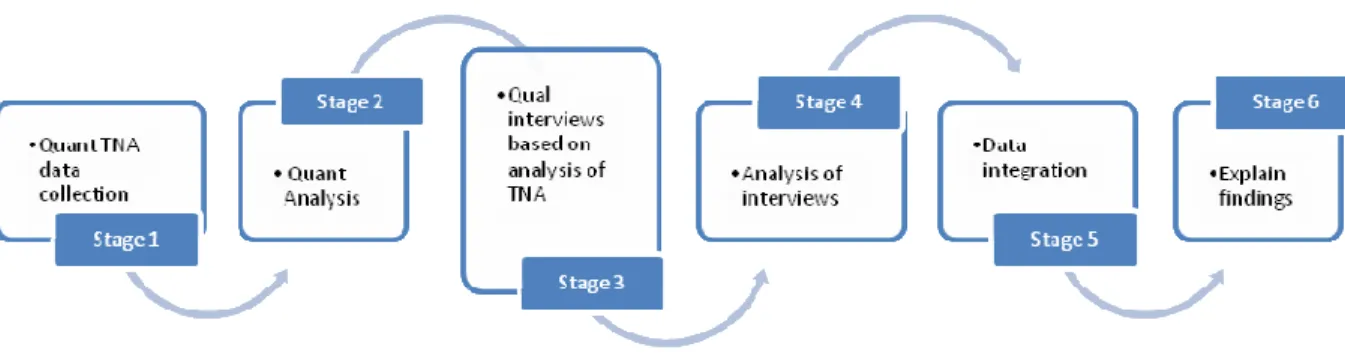
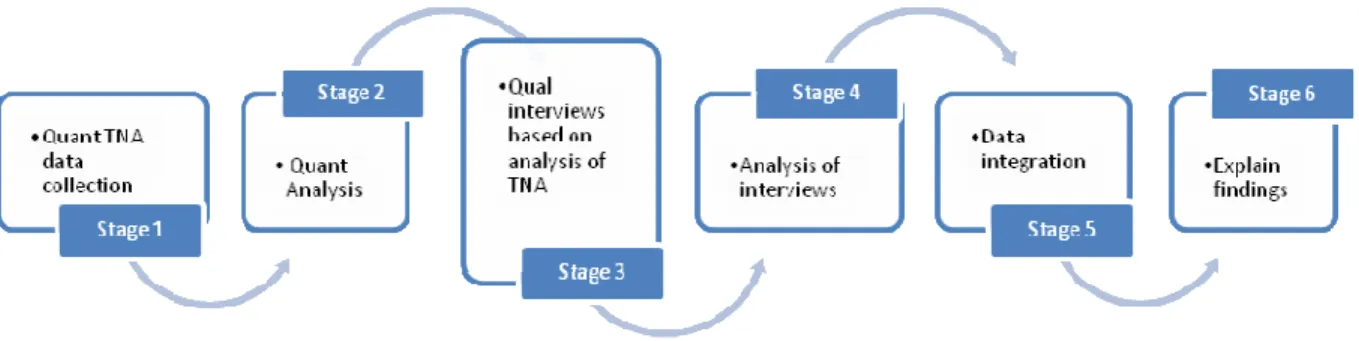
Figure 2: A conceptual model of influences on curriculum development p42 Figure 3: A hierarchy of evidence for assessing qualitative health research p60 Figure 4: Study sequential explanatory design p65
Figure 5: Project data collection process p110
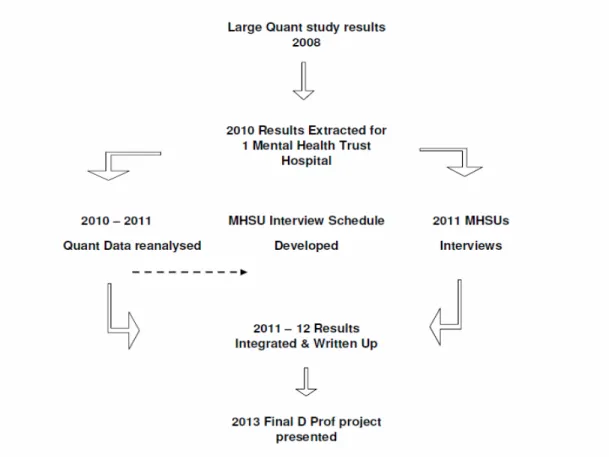
Figure 6: Project qualitative data analysis depicted as a funnelling process p117 Figure 7: Integration of qualitative and quantitative data p118
Figure 8: Types of diabetes care given by Mental Health Nurses p124 Figure 9: Sample previous diabetes training activity and location p125 Figure 10: Sample self-reported overall knowledge of diabetes p125
Figure 11: Sample self-reported specific knowledge of general aspects of diabetes care p126
Figure 12: Sample self-assessment of diabetes knowledge p127 Figure 13: Perceived self-efficacy p130
Figure 14: Sample self-reported diabetes care training needs p135 Figure 15: Process of transcript analysis p138
Figure 16: Illustration of the stigma process p168
Figure 17: Diagnostic Overshadowing as an illustration of stigma p168 Figure 18: The TNA process Appendix 19 p212
8 | P a g e
Abstract
Diabetes is emerging as a clinical practice and educational concern in mental healthcare. However, there is little research into the diabetes education and skills needs of practitioners such as Mental Health Nurses. Furthermore, there is very little research into Mental Health Service Users experiences of diabetes or diabetes care and how these could be used to enhance the education and training of Mental Health Nurses in this area.
This research project used a mixed methods research approach to explore Mental Health Nurses diabetes education and skills needs from the view of both Mental Health Nurses and Mental Health Service Users. A quantitative Training Needs Analysis survey was undertaken in 2008 with a sample of 220 Mental Health Nurses regarding their diabetes care education and skills needs. 146 responded giving a response rate of 66%. The results of this survey where used to develop a qualitative interview schedule to explore the experiences of diabetes care of a purposive sample of seven Mental Health Service Users in 2011 and how these experiences could be used to inform Mental Health Nurses diabetes education and training.
This study found that diabetes care is becoming a frequent care activity for Mental Health Nurses. While the sample reported prior training in diabetes care, this was predominantly in the period of student nurse training. This has an implication for the currency of clinical skills and knowledge. Mental Health Nurses reported varying levels of general and specific knowledge of diabetes. They also reported varying levels of confidence in aspects of diabetes care such as recognising symptoms of diabetes, knowledge of local diabetes services and liaison with local diabetes services. There was a recognition that further training was required and the sample reported high levels of motivation to attend training and retain diabetes care as an area of Mental Health Nursing practice.
9 | P a g e
Mental Health Service Users reported negative experiences of diabetes care. This consisted of stigma, diagnostic overshadowing, a splitting of mental and physical health and low levels of confidence in Mental Health Nurses ability to provide diabetes care. Service Users broadly agreed with Mental Health Nurses expressed training needs but felt that education and training on stigma and how this can be a barrier to diabetes care is a priority area for education.
This study recommends that Mental Health Service Users experiences of physical illness, in this instance diabetes, should be a foundation part of any training and education of Mental Health Nurses in this area. This is because these experiences can promote critical reflection on practice and encourage professionals to reflect on negative attitudes that may be an unwitting barrier to care. It also recommends that service users are more involved in identifying education and training needs so that education is responsive not only to the needs of nurses and Higher Education Institutions, but service users also.
10 | P a g e
Acknowledgements
I would like to take this opportunity to thank a number of people who have helped me to complete this research project.
A sincere thanks to my Academic Supervisor Dr Gordon Weller who has helped, supported and encouraged me through the whole process. He was always available with helpful suggestions and constructive feedback for the many drafts that I sent him to read.
I would also like to thank Dr Anna Baker who acted as my external adviser.
Sincere thanks also go to Nicky Torrance who gave much appreciated advice and encouragement when writing up the project.
I would also like to thank Dr Orla Dempsey for her help with this project
I would also like to thank the Mental Health Nurses and Mental Health Service Users who agreed to participate in the study.
Finalmente, unos abrazos y unos besos muy fuertes para mi mujer Maite y mis ninos Ruben, Erin y Jorge. Ti amo todos con todo de mi corazon.
11 | P a g e
Chapter 1:
Introduction
The physical health of Mental Health Service Users (MHSUs) is a contemporary policy and practice concern in mental healthcare. Evidence consistently shows that MHSUs have poor physical health (Phelan et al 2001). Nationally Harris and Barraclough (1998) found higher standardised mortality rates (SMRs) in MHSUs than the general population for conditions such as cardiovascular disease (SMR 250), respiratory disorders (SMR 250) and Infections (SMR 500). This means that MHSUs die 2.5 times more often from cardiovascular disease and respiratory disorders and five times more often from infections than the general population. Internationally evidence suggests a loss of between 13 to more than 30 potential years of life in MHSUs compared with the general population (Colton and Manderscheid 2006), with Parks et al. (2006) finding that MHSUs die, on average, 25 years earlier than the general population.
Poor physical health in MHSUs
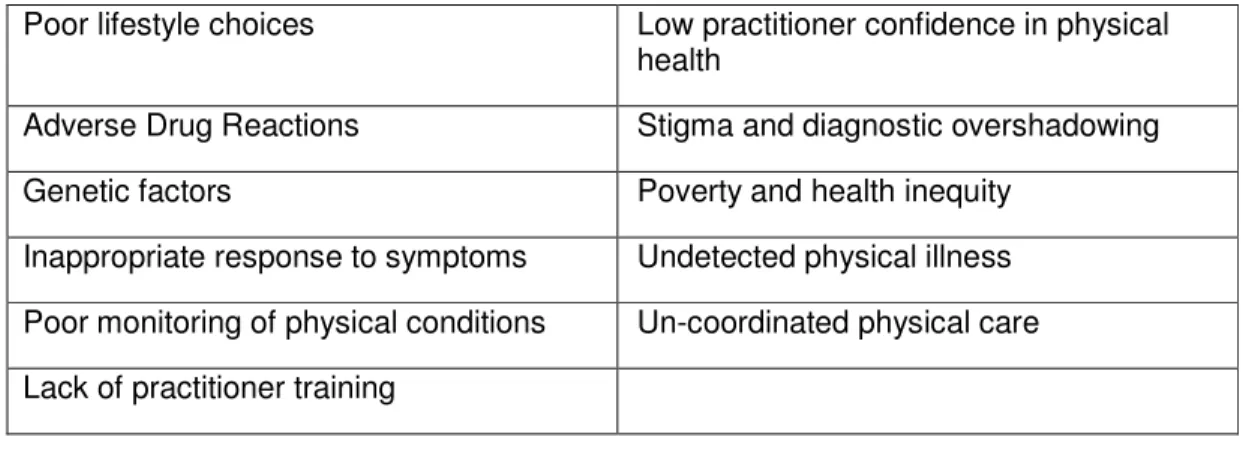
Reasons for poor physical health in MHSUs are listed in table 1. However, Nash (2013 in press) suggests that inequalities in health, stigma and diagnostic overshadowing are under-investigated reasons for poor physical health.
Table 1: Explanations of poor physical health in MHSUs (Nash & Rethink 2012 in press see appendix 1)
Poor lifestyle choices Low practitioner confidence in physical health
Adverse Drug Reactions Stigma and diagnostic overshadowing Genetic factors Poverty and health inequity
Inappropriate response to symptoms Undetected physical illness Poor monitoring of physical conditions Un-coordinated physical care Lack of practitioner training
12 | P a g e
While the evidence paints a dispiriting picture, it also offers a solid rationale for exploring Mental Health Nurses (MHNs) education, skills and training needs in physical healthcare in general; and diabetes in particular. Enhancing MHNs knowledge and skills in physical health, for the provision of safe and competent physical health care, is an emerging issue in nurse education (Nash 2010).
This project is the final part of a Doctorate in Professional Studies in Health (DProf) where the overarching aim has been the development of MHNs physical care knowledge and skills. The specific research focus of this study is an examination of MHNs diabetes care knowledge and skills.
Study Rationale
Teddlie and Tashakkori (2009:116) suggest four sources for developing research ideas,
“…intuitions based on previous experiences, reactions to practical problems, results from previous research and theory or conceptual frameworks”
The rationale for this current research project derives from three of these criteria;
1. Intuitions based on previous experiences – in my clinical, managerial and academic experience MHSUs physical health is often overlooked in practice and educational programmes
2. Reactions to practical problems - liaison with local NHS Mental Health Trusts who were identifying physical care as an urgent training need following care review recommendations
3. Results from previous research - in my previous DProf project (IPH 5140), I examined the physical care skills and training needs of MHNs in community
13 | P a g e
and inpatient settings. This showed that diabetes was the physical condition with the biggest impact on MHN physical care activity. It also constituted the biggest perceived learning need. This was published in a peer-reviewed journal and presented at conference (see appendix 2).
Mental Healthcare is embracing a new pluralism where MHSUs input is actively sought in policy, service development and evaluation. In keeping with this philosophy of inclusion, I became aware that research conducted in the area of physical health (including my own) was largely professionally driven and often lacking a MHSU perspective. Therefore, I felt that exploring MHSUs experiences of diabetes care would give an added dimension to MHNs education and skills needs. This would make a valuable contribution to professional learning on a number of fronts such as
• MHSUs involvement in identifying education and trainings needs of MHNs, • promote partnership and collaboration which is an important component of
diabetes management and
• using real life MHSUs experiences to help learning and promote critical
reflection on practice
Context of the project
In this era of inter-professional working and service user involvement, contexts for research are seldom unitary. This project has both macro and micro contexts. For example, macro contexts include physical health of MHSUs as a contemporary issue in mental health care and the concern that the physical health of MHSUs is frequently poor (Phelan et al 2001). The micro contexts include education and practice for appropriate clinical skills and knowledge, a policy driven context with the review of mental health nursing (Department of Health (DoH) 2006a) and a wider NHS organisational context of providing high quality care in times of
14 | P a g e
austerity. These different contexts have influenced the choice of topic to investigate and will be discussed here.
Macro contexts
MHSU Physical Health: The evidence base
MHSUs tend to have worse health when compared to the general population. This results in poorer outcomes in two key areas; higher mortality and higher morbidity from long term conditions that are effectively managed in the general population (Disability Rights Commission (DRC) 2006). The UK National Psychiatric Morbidity Survey showed high levels of physical ill health and higher rates of death amongst those with mental health problems compared to the rest of the population (DoH 1999a).
Diabetes has emerged as a major clinical concern in mental healthcare. The prevalence of diabetes in MHSUs is significantly higher than the general population; Bushe and Holt (2004) estimating a prevalence of type 2 diabetes in people with schizophrenia as 2 – 4 times greater. In respect to MHSUs with bipolar disorder, Cassidy et al (1999) found the prevalence of diabetes mellitus to be almost three times that of the general population.
Research by the DRC (2006), shows that MHSUs live longer with unrecognised and untreated diabetes, which can increase the risk of severe complications. De Hert et al (2009) suggest that the increased mortality rates in MHSUs can be attributed, in part, to increased risk of the modifiable factors such as diabetes.
Micro contexts
The cruel irony behind the statistics is that in many cases MHSUs are in contact with health care professionals, and in the majority of cases MHNs, but physical
15 | P a g e
health remains poor. This is most probably due to the emphasis and focus on the presenting mental health problem rather than a discounting of physical health needs. Mental Health Nursing has always espoused a philosophy of holistic care. However, Nash (2010) has questioned the veracity of this espousal in light of the poor physical health and health outcomes for MHSUs. Yet, little research exists relating to MHNs knowledge and skills in this area. One could presume, however, that a lack of knowledge and skills in diabetes may diminish the ability of MHNs to recognise symptoms and provide effective and timely care.
The education and practice context
In 2000 Jordan et al asked the question “Does mental health nursing need the biosciences?” They suggested that the answer is yes because inadequate preparation of MHNs in biological sciences may mean, “they will not be able to meet their professional obligations” (Jordan et al 2000:883). Physical care depends on a biological science knowledge base (Jordan and Reid 1997). Therefore, while diabetes care is complex the theory underpinning nursing care is straightforward to teach due to the high biological science content. Diabetes education requires a large proportion of propositional knowledge – therapeutic blood glucose levels, blood glucose monitoring, risk factors or types of insulin treatments. However, MHN education and practice does not appear to have any strategic direction regarding the importance of biological sciences and physical health education and skills. Jordan et al (2000) found that both students and lecturers agreed that the common foundation course in bioscience was biased towards adult nursing students and failed to meet the needs of MHNs.
It may be that the problem is the lack of a specific mental health context for the application of biological sciences curricula rather than a problem with biological sciences content (Jordan et al 2000). Therefore, it is anticipated that the MHSU aspect of this study, their unique experiences of diabetes care, can bring a
16 | P a g e
counterbalance to the biological science content. For example, knowing the therapeutic blood glucose level is not the same as experiencing the effects of it.
The MHN profession will need to develop a coherent education and skills agenda to keep pace with public health challenges such as diabetes and associated complications e.g. obesity and coronary heart disease. The Chief Nursing Officer’s review of mental health nursing (DoH 2006a) sets a broad agenda for improving MHN practice with recommendation seven stating;
“MHNs will have the skills and opportunities to improve the physical well-being of people with mental health problems.”
However, it does not stipulate specific areas of training only broad types of skills required. The Knowledge and Skills Framework (KSF) (DoH 2004) fulfils this dilemma, in part, as it seeks to; “identify the knowledge and skills that individuals need to apply in their post”.
There is no real consensus as to what types of knowledge or skills are required or where and when these should be introduced. Should it be at undergraduate level to prepare students for the future, at post-registration level where MHNs have more responsibility for clinical decision making, or in specialist areas only e.g. in respect to nurse prescribing?
In practice terms, the context makes for grim reading. Phelan et al (2001) state many mental health practitioners have little training in physical care. In respect to MHNs Gournay (1996) found that the monitoring of physical health by Community Mental Health Nurses (CMHNs) was generally unsatisfactory with 8 out of 11 districts studied having no protocol for monitoring physical health. Nash (2005) found evidence of MHNs providing physical care without training or experience. In respect of knowledge, Nash (2010) found that qualified MHNs did not have appropriate propositional knowledge of basic physical health issues in mental health nursing practice e.g. only five participants out of 88 knew the therapeutic
17 | P a g e
blood plasma level of lithium, which would be one of the few clinical measurements MHNs would be required to know.
The lack of evidence relating to the physical care training needs of MHNs is therefore surprising. MHNs are the largest occupational group in mental health care (DoH 2006b) and they tend to know more about their clients than other team members because they spend more time with them (Jackson and Stevenson 2000). This may place MHNs in an important strategic position for screening and identifying symptoms of complex conditions such as diabetes. However, without the concomitant knowledge and skills in this area MHNs may not have the confidence to undertake such work.
The Policy Context
While the physical healthcare of MHSUs is high on the policy and practice agenda, this agenda lacks clarity, which is a constraining factor in meeting these healthcare needs. A range of policies and guidelines exist e.g. significant policies include National Service Frameworks (NSFs) that were introduced as a way of setting national standards for services and models for service delivery, aimed at ending the ‘post code’ lottery of care through equality of access to health care services. NSFs are available in a number of areas and those relevant to this project include Diabetes (2001a), Coronary Heart Disease (DoH 2000a) and Long Term Conditions (DoH 2005b). Evidence based guidelines have also been developed that can bridge the policy – practice gap, for example the development of Diabetes and Obesity Clinical Guidelines by the National Institute of Health and Clinical Excellence (NICE).
Yet, a significant problem with policy is synthesising it from paper to embedded practice. For example, the NSF for Mental Health does not mention, or refer to the other NSFs even though diabetes and coronary heart disease are reasons for high mortality and morbidity in MHSUs. Nash (2010) suggests that this reflects a
18 | P a g e
partisan approach to policy implementation where it is still unclear just how effectively NICE guidelines and NSFs have been integrated into mental health services for the provision of truly holistic care.
The lack of joined up policy implementation may be a reason for the traditional lack of focus on physical health needs. Without a coherent, or holistic, framework to assess and manage these needs, they may slip off the radar, despite their prevalence and impact on service users. However, the policy agenda for MHNs is developing with the report of the Chief Nursing Officer’s review of Mental Health Nursing (DoH 2006a) recommending the development of physical care skills as an important area for MHNs practice.
The NHS Organisational context
In these times of wider economic instability and austerity measures, there is a danger that NHS training budgets will be used to reduce financial deficits. Pitcher (2007), reports that £547m in training budgets was used to fund NHS Trust financial deficits. The reality of the choice facing NHS leaders and managers may be between the least worst options of patients not getting treatment due to lack of finances or having an under skilled workforce. However, this seems like a short-term gain over long-short-term stability.
The risk of having an under skilled workforce is the inadvertent contribution to increased health care costs if knowledge and skills are not up to date. If MHNs are placed in a position of not being able to access appropriate training and professional development opportunities, the result may be sub-optimal care. This can reduce the quality of care and patient outcome but also raises practical, professional and ethical concerns regarding MHNs practice. This project offers a partnership model for identifying MHNs education and skills needs in diabetes care with the added dimension of service user input.
19 | P a g e
Personal context for the project
Jordan (2000) suggests that
“…by developing a research agenda for educational effectiveness, teacher researchers can empower themselves to monitor the curriculum and demonstrate their contribution to patient care”
As a Lecturer in Mental Health, I have a desire and duty to contribute to my community of practice and my profession. Physical care in general and diabetes care in particular, remain a largely under assessed area of learning need in mental health. Therefore, there is an opportunity to lead in this area and begin to foster new knowledge that develops the MHN profession and professional practice.
Furthermore, there is also the incentive of promoting evidence based and inclusive curriculum development. Jordan et al (2000) suggest that curriculum restructuring should be informed by service users’ views of their needs. I think MHSUs experiences are a valuable, yet neglected, form of evidence that can contribute enormously to developing MHNs skills in this area, but also increase their understanding of coping with dual complex conditions. A personal driver is my own academic and professional development in pursuing a higher qualification. However, the process of completing this DProf has already enriched my career with publications and conference presentations.
Project outline
This project has commenced with an introduction in Chapter 1 that has outlined the importance of physical health and diabetes to MHNs and an exploration of the various contexts of the research. Chapter 2 will define the terms of reference for the project, outline the research objectives and include a research statement and questions. A literature review will also be undertaken, which will explain how the literature shaped and influenced this study. Chapter 3 will examine the research
20 | P a g e
methodology employed in this project and consider the rationale for this. It will also examine research roles adopted during the project and limitations of the method will be discussed. Chapter 4 will discuss project activity and the development of the data collection tools and examine data analysis. Chapter 5 will be a presentation of key findings of the research in respect to MHNs education and skills needs in diabetes care. Chapter 6 will be a discussion that will integrate the main aspects of the project as a whole and strive to demonstrate personal learning through reflecting on issues such as leadership in education and clinical practice. It will also consider factors that contributed or hindered the research activity. The final chapter, chapter 7, will outline products from the research and conclude the project with recommendations for the development of education and training for MHNs in the area of diabetes care.
21 | P a g e
Chapter 2: Terms of Reference, Research Objectives &
Literature Review
Introduction
This chapter will provide a literature review and detailed literature search strategy including databases and key search terms used. The terms of reference for the project will be defined and the research objectives stated including research questions. This chapter will also identify and critically reflect how the existing literature shaped and influenced this project, especially in relation to methodology. The literature review will explore MHNs education and training and examine MHSU input to curriculum development.
The terms of reference for the project
Sharpe et al (2004) suggest that there is now a requirement for evidence based teaching in order to bridge the theory-practice gap. However, a broad interpretation of what evidence based teaching is, is required. I believe that evidence based teaching is more than using tried and tested teaching and learning methods, it extends into what is actually taught; how we find a curriculum that meets various stakeholder needs and which can transform practice.
Objectives of the Literature Review
• To determine previous work in this area
• To explore factors that influence MHN education and training
• Examine methods employed in TNA
• Examine MHSU involvement in identifying training needs
22 | P a g e
Research objectives and questions
The main study objectives are to get a picture of current clinical practice in diabetes care. This will entail mapping MHNs past training and education in this area and an assessment of their skills, knowledge and confidence in this area. A critical review of practice will come from exploring MHSUs experiences of diabetes care to determine if this can contribute anything to the identification of MHNs education and training needs regarding diabetes care.
On a personal level, this project will help to develop my awareness of the complexities involved in identifying MHNs education and skills needs and engagement with key stakeholders from the prospective of an outsider researcher.
The key research questions are
1. What are MHNs diabetes education and skills needs
2. What are MHSUs experiences of receiving diabetes care by MHNs
3. How can MHSUs experience contribute to a better understanding of MHNs diabetes education and skills needs
4. What recommendations can be derived from this work regarding the process of developing MHNs education and skills in physical care
What purpose does a literature review serve?
The literature review is one of the fundamental building blocks of any research project. It helps to determine if gaps in the literature exist and how research can contribute to the body of existing knowledge. Hart (2009:1) suggests that a literature review serves to,
23 | P a g e
“...justify the particular approach to the topic, the selection of methods, and demonstration that the research contributes something new”.
A literature review requires a clear structure in order to be systematic. Appropriateness is the key component of the literature review and this would refer to the key search terms and databases/journals and articles retrieved and reviewed. The dates of the search are also important to ensure contemporary relevance. However, other important literature may not be of an academic nature e.g. government policy that drives change, so relevant policy documents also need to be examined.
Literature Search Strategy
A literature search of multiple databases was undertaken to explore the diabetes education and training needs of MHNs and of MHSUs experiences of diabetes care. Both MeSH and keyword search terms were used to identify appropriate publications for the literature review. Mental Health Nurse was a MeSH term under psychiatric nurse. The search was limited to English language, peer reviewed publications published between 1982 and 2011.
Databases searched included CINAHL [1982 - March 2011], Medline [1986 – March 2011], PsychInfo [1985 – March 2011], British Nursing Index and Archive [1995 – Feb 2011], The RCN Journals Database [1985 – March 2011] and OVID Full Text [1985 - March 2011].
The Department of Health and National Institute of Health and Clinical Excellence (NICE) websites were also searched to examine the policy perspectives regarding this issue.
24 | P a g e
Stage 1
MHNs Diabetes Education and Training Needs
1. Training Needs Analysis
2. Learning Needs Analysis
3. Mental Health Nurse
4. Psychiatric Nurse
5. Community Mental Health Nurse
6. Community Psychiatric Nurse
7. Diabetes care skills
(Psychiatric nurse is used as an alternative search term as this is an alternative title for MHN.)
Stage 2
MHSUs experiences of diabetes care
1. Mental Health Service User 2. Experiences of diabetes
3. Mixed Methods
Results of Literature Search
Terms were searched separately and then combined in different groups (see appendix 18 for detailed searches). For example, training needs analysis (n=12,359), mental health nurse (n=25,579) and diabetes care skills (n=793) were searched individually and then combined together (final result n=6). The same process was repeated for each combination of psychiatric nurse (23,466 final total
25 | P a g e
n=1), community mental health nurse (4,755 final total n=1) and community psychiatric nurse (4,109 final total n=0).
In all thirteen articles were identified for mental health nurses training needs analysis and diabetes care skills but some of these were overlaps between searches. The abstracts of returned searches were screened by title and method to select those that closely met the study purpose. After screening all articles only seven papers were identified for inclusion in the literature review for MHNs training needs analysis.
The same process was employed for searching the literature regarding MHSUs experiences of diabetes care. Thirty one articles were identified for the MHSU part of the study. However, when abstracts were screened these papers covered only experiences in mental health care with none on experiences of diabetes. One article was included as it used a mixed methods approach. The main articles retrieved had their reference sections checked to look for other relevant articles. Burnard (1993) refers to this as an incremental search of the literature. Appendix 18 outlines the literature search strategy in more detail.
The results of the literature review show a paucity of published research in this area, making it an emerging and valid area for investigation. The only direct ‘hits’ were articles published by the author e.g. physical care training needs of MHNs (Nash 2005), diabetes care skills training needs analysis (Nash 2009), monitoring physical adverse drug reactions in MHSUs . This articles are primarily products of this DProf programme.
The literature review highlighted two gaps in research. Firstly, TNA for MHNs usually focuses on those skills necessary for psychiatric interventions e.g. general therapy skills (Devane et al 1998) or working with personality disorders, psychosocial interventions and dual diagnosis (RCN 2001). Even in clients with substance misuse disorders, physical health training needs were not explicitly identified as a training priority (Nash 2005).
26 | P a g e
Secondly, much of the writing on curriculum development is from a pre-registration level perspective. This leaves a gap in respect of what post-registration curriculum should be and how this should be mapped and developed. This has clear implications for Higher Education Institutions (HEIs) in respect of planning and provision of relevant courses for qualified MHNs and how these meet MHSUs needs.
Thirdly, while MHSU involvement is a policy and practice objective in services, involvement in higher education is not as advanced e.g. Higgins et al (2011) found that the vast majority of course curricula they researched was planned and delivered without consultation or input from service users. Therefore, involving MHSUs is an emerging area of practice in higher education.
Defining the context
Planning the right type of education for nurses to meet today’s healthcare demands is essential (Claflin 2005). In mental health nursing, post-registration curriculum development requires an evidence base. However, Jordan (2000:461) suggests that, “there is little empirical evidence that CPD enhances the care delivered to patients”. A lack of service user input into curriculum development may be partly responsible for this.
Jordan (1994:418) also alludes to a ‘Theory – Practice gap’ in nursing which is defined as “…the divide between abstract, possibly esoteric, concepts and the real problems of everyday clinical practice”. Diabetes care for MHNs may be illustrative of a practice – theory gap, where MHNs are aware of diabetes as a ‘real problem of everyday clinical practice’ but may not have had the appropriate theory to be able to bridge this gap effectively.
Nevertheless, MHN education needs to be inclusive and include the service user experience in the generation of its theory. If ‘patients’ are no longer to be seen as
27 | P a g e
passive recipients of care, how can they be passive recipients of the education and training that underpins the care?
Curriculum development and Mental Health Nursing
Definitions of curriculum are naturally imbued with educational perspectives, coalescing around organizational behaviour in HEIs that is designed to enhance the student learning experience. Bevis (1989:72) defines curriculum as the,
“...transactions and interactions that take place between students and teachers and among students with the intent that learning take place”
Keating (2006:2) suggests that curriculum is
“...the formal plan of study that provides the philosophical underpinnings, goals and guidelines for the delivery of a specific educational program.”
A general difficulty in defining ‘curriculum’, as both definitions illustrate, is the broadness of the term. Glatthorn et al (2005:3) suggest that, “curriculum has been used with quite different meanings”. Bevis and Keating’s definitions omit the service user as someone who should be involved in the curriculum process. In healthcare education there is the added complexity that students do not only interact with tutors or each other. They are part of a tripartite relationship that includes the service user/patient and definitions of curriculum tend not to include those on whom the curriculum is practised.
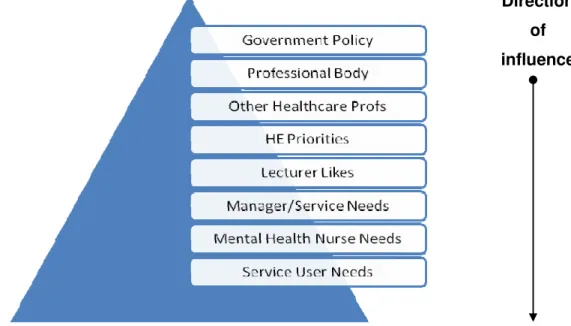
Glatthorn et al (2005) categorise curriculum into five types (see table 2) which I have aligned to potential influences.
28 | P a g e
Table 2: Curriculum type and potential influence
Curriculum Type Potential influence
Recommended curriculum Policy makers, professional bodies, experts Written curriculum HEI, NHS stakeholders
Supported curriculum Available resources in HEI or practice area
Taught curriculum Evidence base of content, lecturer knowledge and skills
Learned curriculum Increased quality of practice, change in learner knowledge or attitude
Keogh et al (2010) suggest that the traditional approach to curriculum development involves developing the curriculum and then consulting with stakeholders. This is a rather traditional interpretation of curriculum development and one that does not represent the current drive for stakeholder involvement in the entire process. Traditional views such as this may stifle innovation in seeking out stakeholder involvement. MHSU involvement is a contemporary reality in mental health and this is reflected in this project. I felt a collaborative approach between key stakeholders was required to determine the diabetes education and skills needs.
What influences mental health nursing education?
Simpson (2006) suggests that educational development is complex as there is a need to ensure courses meet the requirements of various governing bodies, such as the Nursing and Midwifery Council, which set professional standards and competencies, which are then mapped to specific learning outcomes. Oermann (2007) suggests that nursing education research is not guiding our teaching. A critical reflection on my own teaching brought me to question where the curricula content came from. Who decides on what new knowledge is generated raises questions of power and authority dynamics and hence the importance of equitable relations (Lawson 2004). My literature review illustrated a tendency for lecturers to over reflect on their teaching methods and under reflect on the origins of curricula
29 | P a g e
they teach. Oermann (2007) suggests that reflection like this is a crucial step because, unless we ask questions, we continue to teach as it has “always been done”.
Government Policy
The DoH (2001b:26) outlines government ambitions to,
“...create a patient centred NHS...where the voice of the patient is heard through every level of the service, acting as a powerful lever for change and improvement and...towards a model of partnership, whereby citizens have a greater connection with their local services, and have a say in how they are designed, developed and delivered.”
Changes to clinical practice are often driven by government policy. The New NHS: Modern, Dependable (DoH 1997:5) has targets for the “effective delivery of appropriate healthcare which focuses on clinically effective care delivered by appropriately trained and educated staff.” The need for high quality care is a goal that can be achieved by good clinical governance, risk management and protection of the public (DoH 1999b). This is underpinned by Continuing Professional Development (CPD).
While CPD is a key factor underpinning clinical governance and increasing quality in the NHS development programmes need to go beyond meeting the learning needs of practitioners to meeting the needs of service users and the wider service development needs of the NHS (DoH 1999b). However, this aspect seems more
fait accompli than evidence based – what type of curricula is required to underpin governance (content) and who decides what this content will be?
Naturally mental health curriculum development leans toward the knowledge and skills to provide high quality mental health care. Nash (2005) notes that this has served to weaken the concept of holistic care in MHN as physical care skills are under-developed and MHSU health outcomes so poor. From a project perspective,
30 | P a g e
the NSF Diabetes (DoH 2001a) helped in constructing some of the quantitative questions around knowledge and skills e.g. in liaison with diabetes services and qualitative questions e.g. concerning empowerment and decision-making in managing diabetes.
The Chief Nursing Officer’s (CNO) review of mental health nursing (DoH 2006a) is a specific policy driver for this subject area. To strengthen pre-registration nurse education, CNO's review recommends that users and carers should be routinely involved in four key areas of the educational process: recruitment, curriculum planning, teaching and assessment (DoH 2006a). While this is aimed specifically at pre-registration education, I feel it should also apply to post-registration education and training too.
The main criticism of the policy drivers is that they seem to be written from the perspective that mental health practitioners, such as MHNs, have up to date knowledge and skills. This may not be the case where (Nash 2011) found a gap in the knowledge of MHNs in basic concepts of physical health care.
What is clear is the DoH (2006b:16) statement that “commissioning of education and training needs to be informed by a Training Needs Analysis”. Thus health policy implementation is a significant driving force in the development of curriculua which aims to bridge the policy - practice gap is bridged. By extension this places a significant pressure on HEIs to ensure it’s curricula is responsive to these policy drivers.
Professional bodies
Professional bodies such as the Nursing Midwifery Council (NMC) also play a role in MHN education and training by dictating the nursing curriculum and pursuing a professional theory and knowledge and practice base that underpins nursing practice. The NMC is committed to strengthening practice with the introduction and
31 | P a g e
development of four competency sets for each branch of nursing; (i) professional values, (ii) communication and interpersonal skills, (iii) nursing practice and decision making and (iv) leadership, management and team working (NMC 2010). These pre-registration competencies for nurses can make a positive contribution to the emerging physical health agenda in mental health.
For example, the nursing practice and decision making competency makes reference to all nurses having an in-depth knowledge of common physical problems and treatments including co-morbidity and physiological and psychological vulnerability. To achieve this MHNs must “carry out comprehensive, systematic nursing assessments that take account of relevant physical factors …
through interaction, observation and measurement” (NMC 2010). Furthermore, the
leadership and management competency requires all nurses to work effectively across professional and agency boundaries. This will be of particular relevance to the primary and secondary care management of complex, co-morbid conditions like diabetes, where MHNs may not be the primary care givers but will have a liaison role between mental health and general healthcare services.
Nurses have a requirement to keep up-to-date. Gass et al (2006) suggest that in the UK attention has been focussed on meeting the requirements of fitness to practice for nurses. However, MHNs have traditionally lacked specific guidance to do this effectively in regard of the physical health agenda. This might have been a constraining factor for MHNs in physical health as they may feel they cannot meet physical care needs as these are traditionally outside of their scope of practice.
The NMC competencies, however, appreciate the importance of competencies for students in physical health and this can give HEIs a strategic direction in incorporating physical health into pre-registration nursing curriculum. The challenge, however, for HEIs will be facilitating the crossover of these competencies from pre-registration to post-registration nursing education as there are no corresponding NMC post-registration competencies.
32 | P a g e
Other health care professions
Other healthcare professions also have an impact on nursing education and training e.g. changes to junior doctors working hours has meant more nurse practitioner roles and more multi-disciplinary working (Ford 2009). Yet such large scale change (not forgetting nurse prescribing) shows that nurses are a highly adaptable workforce. Nursing curriculum has managed to keep apace with these ‘grander’ organisational changes even though the nursing workforce hold reservations about its nature, or scale e.g. Ford (2008) found many nurses had serious concerns about taking on the role of junior doctors, especially at night. However, Nash (2005) found that MHNs did not want to pass the responsibility for providing physical care to general nurses and that MHNs were highly motivated to engage in training.
Higher Education
Carlisle et al (1999) state that the place of nurse education is now becoming more established in Higher Education Institutions (HEIs). HEIs also work under a quality framework whose priorities also impact on training and development. Any curricula must be provided to a level that can gain accredation and strengthen, rather than weaken, the HEI’s reputation. O’Driscoll et al (2010) suggest that there is a deficit of leadership for learning manifested by the ‘uncoupling’ of education and practice following the move of nurse education into higher education. However, the collaborative nature of this project lends itself to strengthening my own leadership skills. For example, being involved in evidence based teaching practice and involving various stakeholders in curriculum development are examples of re-coupling practice and education (O’Driscoll et al 2010).
HEIs need to increase collaboration and involve practitioners and service users more in the curriculum development process. Simpson (2006) suggests that MHSU involvement in education has been more hesitant than in service provision but
33 | P a g e
points to the Quality Assurance Agency for Higher Education recommendation of increased involvement of service users in all aspects of health and social care education (QAA 2005). Oermann (2007:250) suggests that,
“...if there were more high quality, rigorous local studies done in nursing education, the findings would eventually provide the critical mass for synthesis”.
However, Pardue et al (2006) found that in a survey of 219 nurse educators covering a range of nursing programmes, more than half did not partner students in designing educational programmes while under half surveyed stated that they did not partner with nursing services in designing educational programmes.
Gibbs et al (1994) suggest that knowledge is not produced in the enclosed space of the university but in the context of application. By examining diabetes care from both professional and service user perspectives, I felt that learning needs could be more effectively identified. This may also reconcile competing needs i.e. the needs of professional bodies, MHSUs needs for quality care and HEI and NHS organisations needs to work effectively in commissioning education and training.
Lecturer’s likes
DeSilets (2006) suggests that we are often tempted to develop educational content based on a hunch or a bias as we think we know what the audience needs. Nurse lecturers usually have clinical backgrounds which inform their teaching practice and subject matter. Lecturers are able to bring a mix of the rhetoric of theory with the reality of practice that learners value. This is true of my own experience. However, my clinical practice is not recent and I feel that service user input is valuable for me to get a contemporary reality to any policy or professional rhetoric.
Jordon et al (2000:887) suggest that
“...unless curriculum planning is based on the views of all stakeholders, there is a danger that lecturers will be unduly influenced by their own academic backgrounds.”
34 | P a g e
Therefore, the process of investigating the learning needs of MHNs might be threatening to lecturers not skilled in research or by being so long out of practice they are unfamiliar with new trends, such as the problem with diabetes. This will mean lecturers may need to change their practice and some might find this threatening. Therefore, HEIs may also need to invest in their own workforces’ skills so they can involve service users more, conduct TNA for curriculum development, or in developing the skills to deliver the curriculum.
Local NHS Service Management
Dyson et al (2009) suggest that health care management often pays ‘lip service’ to ongoing education initiatives, as this area is often the first to be cut when financial restraints are necessary.
The DoH (2006b) has set four key priority areas in modernising nursing careers
• Develop a competent and flexible nursing workforce
• Update career pathways and career choices
• Prepare nurses to lead in a changed health care system
• Modernise the image of nursing and nursing careers.
HEIs need to develop a curriculum that meets these priority areas. Mostly it works at the pre-registration level where the requirement is to prepare students for independent practice. CPD at post-registration level is usually a matter for the individual and is dictated by internal and external motivating factors e.g. specialist interests or requirements of professional bodies and work organisations. However, meeting the needs of current service users should be a key feature of CPD.
Edwards (2008:131) suggests that trends in curriculum design are subservient to NHS management bureaucracies – it reflects what managers want for corporate
35 | P a g e
governance where in “many cases the NHS corporate mentality prevails”. There is an element of truth in Edwards’ assertion in relation to this project, which originated from local NHS Trust managers desire to provide physical care training to staff. This affirms what Cheek and Gibson (1997) suggest that identifying areas for development is usually reactive in nature and has institutional interests in mind. I have made specific recommendations that recognise both managerialism and professionalism issues;
• physical health care skills should be mandatory training for MHN
• assessing physical health care skills should be a mandatory part of the
annual Individual Performance Review (IPR) for MHNs.
IPR and employee development in the NHS are guided by policies such as Agenda for Change and the Knowledge and Skills Framework (KSF) (DoH 2004). The basic concept is that each nursing job can fall into a designated pay scale based on a job profile which considers knowledge and skills required to perform at that level. This method then links performance to NHS pay grades in nursing. Therefore local NHS Service Management should have a general idea of service training requirements dervied from IPR. However, the Audit Commission (2001:1) found
…“one third of NHS staff have not had development needs identified and that training needs across services are not systematically identified”.
IPR has the potential to impact on HEIs curriculum development, constraining design into narrow, ‘mechanical’ governance requirements rather than an educational and learning philosophy that promotes a deeper level of appreciation of theory and practice. Furthermore the HEI has only a provider role in this, which can disempower it when looking to broaden the curriculum. Changes to nursing pay grades is an external motivation which can impact on curriculum development – individuals may opt for courses that can enhance their salary rather than what may be most beneficial to service users.
36 | P a g e
Mental Health Nurses
Jordan et al (1999) suggest that little empirical evidence on the clinical effectiveness of education programmes exists. Nevertheless, CPD is a key principle of clinical governance. However, tensions may exist between what organisations require of their staff in respect of CPD and what professional bodies require of them for professional practice. For example, in times of austerity there may be more of an emphasis on mandatory in-house training in areas such as food hygiene and moving and handling. While such training is important and highly transferable, this training does not enhance MHN as a profession as it is a mandatory requirement of many staff groups.
Research in physical care training needs finds that MHNs feel unprepared to take on the demands of the role (Nash 2005). Indeed, Nash also suggests that in some cases MHNs reported involvement in physical care activity without appropriate training. However, in the same research MHNs are found to be eager to learn new skills in this area, but probably more importantly not to ‘surrender’ this area of practice to other nursing disciplines.
MHSU Participation in Mental Health Nurse Education
Hicks et al (1996) suggest that many post-registration courses are constructed and delivered in a haphazard way, without systematic reference to the direct and indirect consumers of the educational programmes. Jordan et al (2000:881) suggest that, “wider stakeholders, particularly health service users, are rarely consulted on the knowledge base expected of practitioners.” However, MHSU input is a key driver of change in national health policy (DoH 1999a) and international health policy where the World Health Organisation (WHO 2010:8) recommends that mental health professional training is designed "in systematic partnership with users and carers".
37 | P a g e
MHSU involvement has grown beyond service planning, delivery and evaluation and into the classroom. Skar (2010) states that several studies have questioned how well nursing education provides students with the knowledge and skills needed to practice. This may be a reflection of the lack of user involvement in curriculum development where service users’ perspectives regarding issues on knowledge and skills could make an invaluable contribution to the quality of nurse education. While little evidence exists as to the effectiveness of curricula developed with and without the input of MHSUs, intuitively one has to assume that MHSU involvement is inherently good and at worst benign. This is because including the experiences of what it is like to be ill or on the ‘receiving’ end of care, can help develop critical reflection and by extension promote empathy with MHSUs experiences.
Jordan (1994:421) suggests that “explicit links need to be made between the individuals’ learning and their environments”. However, ‘patients’ have been a largely neglected part of the learning environment as Jordan et al note above. Yet Crawford et al (2002) in a systematic review of service user involvement found such involvement contributed to changes in the provision of services, positive changes in attitudes of organisations to involving patients and positive responses from patients who took part in such initiatives.
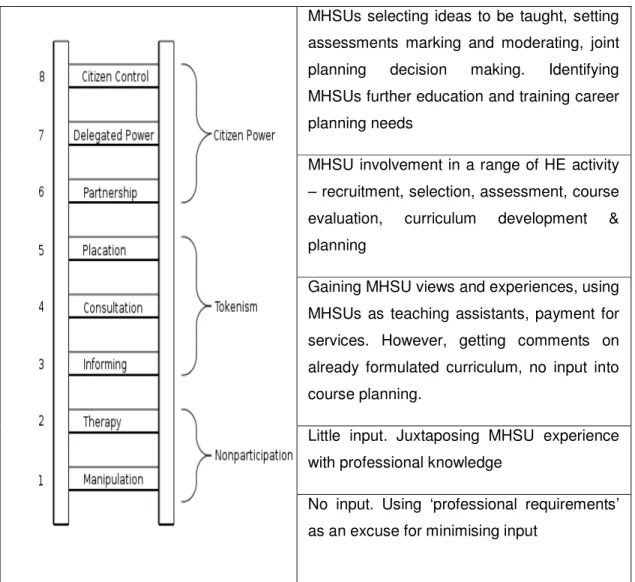
I have used Arnstein’s “Ladder of Citizen Participation” (1969) to illustrate MHSU’s participation in MHN education. This ladder has a typology of eight levels of participation (see figure 1 below). I have juxtaposed some examples of types of involvement of MHSUs in education adapted from Repper and Breeze (2006) to illustrate how this ties with the notion of MHSUs involvement.
However, the nature of what MHSU involvement in MHN education should be has not been fully explored in respect to what constitutes tokenism or citizen power. For example, Higgins et al (2011:5) state that in their study, MHSU involvement in MHN education in Ireland was, “limited to tokenism in planning and delivery with
38 | P a g e
little involvement in programme management”. Yet planning curriculum content and how it is delivered is an integral part of Arnstein’s (1969) model.
Furthermore, effective identification of MHNs education and skills requires MHSUs input and this principle is not new. Rudman (1996) explored MHSUs views of pre-registration nursing curriculum using semi-structured group interviews. He found that service users wanted an emphasis on ‘curing’ as well as the rational knowledge MHNs require for practice.
Figure 1 - Arnstein (1969): “A Ladder of Citizen Participation” applied to MHN curriculum development
MHSUs selecting ideas to be taught, setting assessments marking and moderating, joint planning decision making. Identifying MHSUs further education and training career planning needs
MHSU involvement in a range of HE activity – recruitment, selection, assessment, course evaluation, curriculum development & planning
Gaining MHSU views and experiences, using MHSUs as teaching assistants, payment for services. However, getting comments on already formulated curriculum, no input into course planning.
Little input. Juxtaposing MHSU experience with professional knowledge
No input. Using ‘professional requirements’ as an excuse for minimising input
39 | P a g e
Chitty (2001) defines collaboration as the process of toiling directly with other individuals in an attitude of teamwork that benefits the organization, individuals, and health care consumers. Collaboration is a key feature of mental health policy. For example, within health and social care there has been a broad programme of service integration e.g. the creation of specialist health and social care trusts and integrated community mental health teams (DoH 1999a). Leutz (1999) suggests that there are three levels of integration in health and social care;
(a) linkage which is a minimalist approach to integration operating within existing systems and characterised by fragmented and ad hoc partnerships systems,
(b) co-ordination which involves the development of defined structures or mechanisms that help to alleviate confusion, poor communication, fragmentation, and discontinuity to promote information sharing and (c) full integration via a ‘virtual’ network that functions through contractual
relationships.
Reflecting on my experience of this project, I felt that collaboration and integration in Higher Education has not kept pace with health and social care organisations and I would suggest we are currently in a ‘linkage’ state of integration. This project has found that while some links exist, e.g. my incorporation onto NHS trust groups, more strategic integration is required. A more strategic collaboration and integration is required so that effective development and commissioning of education can be pursued with collaboration with MHSUs a key aspect of this.
However, this type of linkage may not be transparent when exploring training and development issues where Findlay (2005) suggests that the approach to post-registration nurse training needs has been arbitrary and almost entirely based on personal interest or manager’s conjecture. Maloney and Kane (1995) suggest that traditional needs assessments for continuing education reflect personal interests
40 | P a g e
and perceptions of learning needs rather than actual knowledge deficits. Hence, the need to move toward a more co-ordinated approach to integration as suggested by Leutz (1999); underpinned by MHSU input.
Such collaboration in TNA is required to enable HEIs to develop more responsive curricula that meets practitioners and MHSUs needs. In the same way that collaboration is the key to innovation in developing integrated health and social services (Lawson 2004), collaboration between HEIs and ‘the services’ will be vital to develop curricula and sustain learning in times of austerity and rapid change.
Claflin (2005:269) states that,
“...learning must be relevant to the current environment in which healthcare is delivered, including the environment in which the nurse works”.
Constant change in healthcare services and the current austerity constraints may affect nurses’ ability to engage in CPD so targeted development through TNA may mitigate against this. However, Grant (2002) suggests that, TNA is often missed and what follows is ad hoc curriculum reflecting system rather than professional requirements. The approach adopted in this project would reconcile service goals of user involvement and redress the balance between system and professional needs by promoting service user input. Service users are an under-appreciated part of the learning environment. Having their unique insights into care experiences can only enhance the accuracy of identifying learning needs leading to more valuable learning experiences for MHNs.
Mullins (2010) suggests that learning is a self managed process of acquiring new knowledge and skills with the aim of increasing performance. However, TNA occurs within an organisational or professional context with service users seldom included. The research methodology adopted here differs from the literature review as it includes the views of service users, which can be an effective balance to the subjective nature of MHNs felt needs in respect to diabetes education and skills.