UC Irvine
UC Irvine Electronic Theses and Dissertations
TitleMotivation for and within Online College Courses
Permalink
https://escholarship.org/uc/item/1ff360ph
Author
McPartlan, Peter Michael
Publication Date
2019
UNIVERSITY OF CALIFORNIA, IRVINE
Motivation for and within Online College Courses
DISSERTATION
Submitted in partial satisfaction of the requirements for the degree of
DOCTOR OF PHILOSOPHY in Education
by Peter McPartlan
Dissertation Committee Members: Distinguished Professor Jacquelynne Eccles, Chair Professor Mark Warschauer Assistant Professor Di Xu Assistant Professor Teomara Rutherford
DEDICATION
To
my parents and my wife, Denise who have always made me feel like I belong
“Whether you think you can, or think you can’t, you are right” -Henry Ford
TABLE OF CONTENTS
LIST OF FIGURES ... V LIST OF TABLES ... VI ACKNOWLEDGEMENTS ... VIII MCPARTLAN, P., UMARJI, O., & ECCLES, J. SELECTIVE ATTENTION AND EXPOSURE TO ENCOURAGEMENT: HOW MULTIPLE SOURCES OF ABILITY FEEDBACK AFFECT ADOLESCENTS’ MATH SELF-CONCEPT. SUBMITTED TO JOURNAL OF EARLY
ADOLESCENCE, FEBRUARY, 2018. ... XI ABSTRACT OF THE DISSERTATION ... XVIII
INTRODUCTION – THE STATE OF ONLINE EDUCATION IN THE U.S. ... 1
LITERATURE REVIEW – THE ROLE OF MOTIVATION IN ONLINE COURSES ... 8
DOES MOTIVATION EXPLAIN WHO SELECTS INTO ONLINE COURSES?(INTRO TO STUDY 1) ... 8
DO ONLINE COURSES AFFECT STUDENTS’ MOTIVATION?(INTRODUCTION TO STUDY 2) ... 13
ARE MOTIVATIONAL INTERVENTIONS ESPECIALLY EFFECTIVE FOR ONLINE STUDENTS?(INTRO TO STUDY 3) ... 19
MODALITY MOTIVATION: SELECTION EFFECTS AND MOTIVATIONAL DIFFERENCES IN STUDENTS WHO CHOOSE TO TAKE COURSES ONLINE ... 27
METHODS ... 28
RESULTS ... 33
DISCUSSION ... 47
CONCLUSION ... 54
BELONGING ACROSS CONTEXTS: IMPLICATIONS FOR THEORY AND MEASUREMENT OF A POPULAR MOTIVATIONAL CONSTRUCT ... 56
METHODS ... 56
RESULTS AND DISCUSSION ... 60
THE UTILITY OF CLICK DATA: BEHAVIORAL MEDIATORS OF MOTIVATIONAL INTERVENTIONS ... 79 METHODS ... 79 RESULTS ... 85 DISCUSSION ... 97 CONCLUSION ... 102 GENERAL DISCUSSION ... 104 REFERENCES ... 109
APPENDIX A: STUDY 1 - MODALITY MOTIVATION REASONS BY COURSE ... 123
APPENDIX B: STUDY 2 - QUALITATIVE CODING SCHEME AND RESULTS ... 127
LIST OF FIGURES
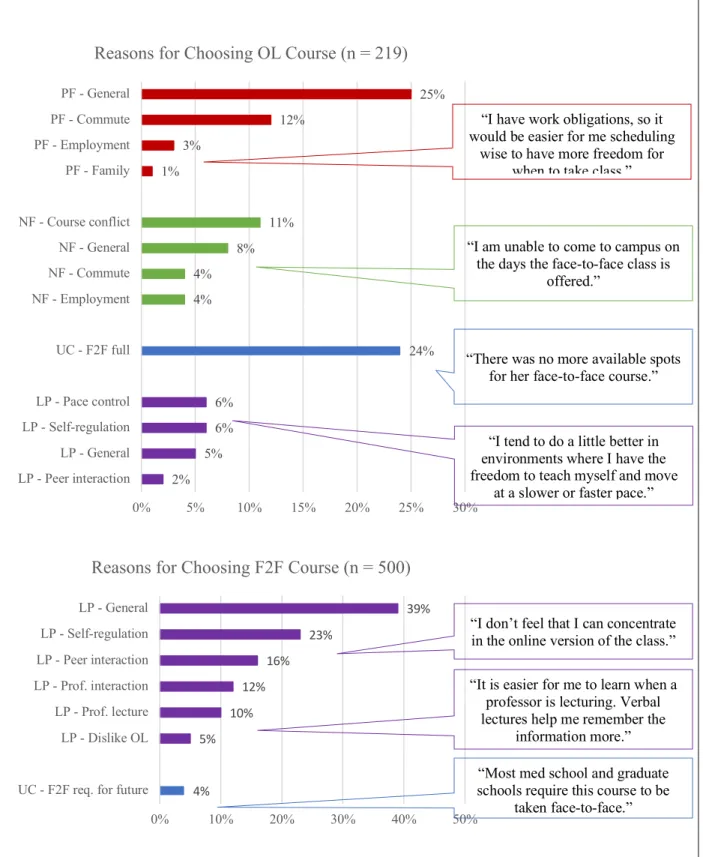
FIGURE 1.1 STUDENT REASONS FOR CHOOSING ONLINE OR FACE-TO-FACE
LIST OF TABLES
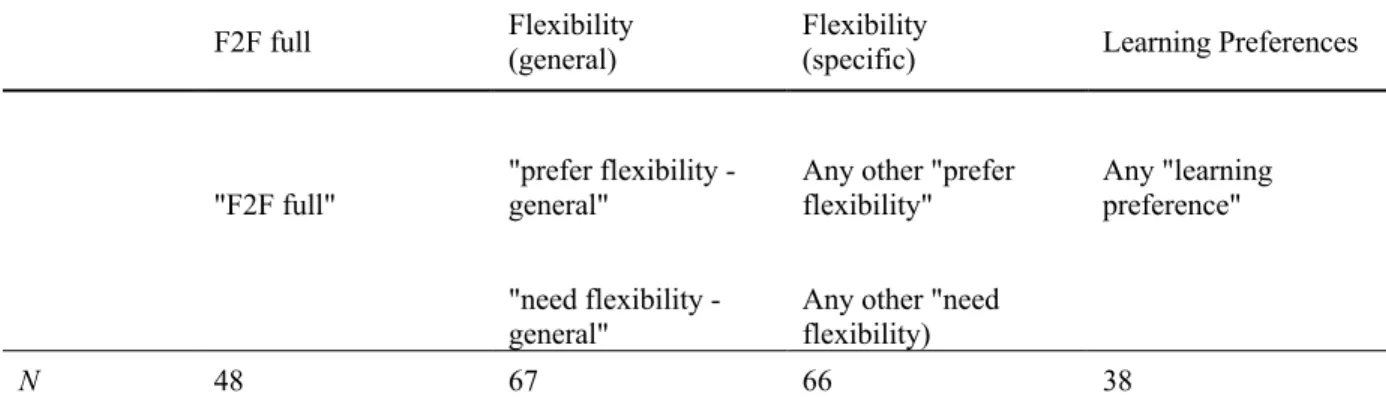
TABLE 1.1 OVERVIEW OF COURSES INCLUDED IN STUDY ... 29 TABLE 1.2 COMPARISON OF MOTIVATION VARIABLES BY COURSE MODALITY ... 35 TABLE 1.3 COMPARISON OF RELATIVE IMPORTANCE AND TARGET GRADES BY COURSE MODALITY ... 36 TABLE 1.4 COLLAPSED CATEGORIES OF REASONS FOR CHOOSING OL COURSE ... 41 TABLE 1.5 MEDIANS FOR COURSE OUTCOMES BY COURSE MODALITY AND
REASONS FOR SELECTING OL COURSE ... 43 TABLE 1.6 ASSOCIATION OF DEMOGRAPHIC VARIABLES WITH COURSE
MODALITY CHOICE AND MODALITY SELECTION REASON ... 45 TABLE 1.7 ASSOCIATIONS OF DEMOGRAPHIC VARIABLES AND COURSE
PERFORMANCE BY COURSE MODALITY ... 47 TABLE 3.1 SUMMARY STATISTICS AND RANDOMIZATION CHECK OF
DEMOGRAPHIC AND MOTIVATIONAL VARIABLES BY INTERVENTION CONDITION ... 86 TABLE 3.2 ASSOCIATIONS OF MISSING PRE-SURVEY DATA WITH MEANS OF
DEMOGRAPHIC AND ACHIEVEMENT VARIABLES ... 87 TABLE 3.3 EFFECTS OF UVI IN F2F COURSE - ITT AND TOT ESTIMATES ... 89 TABLE 3.4 EFFECTS OF UVI IN OL COURSE - ITT AND TOT ESTIMATES ... 90 TABLE 3.5 EFFECTS OF UVI BY COURSE MODALITY - ITT AND TOT ESTIMATES ... 91 TABLE 3.6 PARTIAL CORRELATIONS OF FINAL GRADE WITH EXPECTANCY-VALUE CONSTRUCTS BY WAVE ... 92 TABLE 3.7 CORRELATIONS OF FINAL COURSE GRADE WITH CLICK BEHAVIOR .... 94 TABLE 3.8 CORRELATIONS OF MOTIVATIONAL VARIABLES WITH CLICK
ACKNOWLEDGEMENTS
This work was supported by the National Science Foundation [grant number 1535300].
An incredible amount of time, energy, and resources were given to me in order to support not only this dissertation, but also my overall experience as a doctoral student. I would like to thank my biggest supporters, Jacque Eccles and Mark Warschauer, for their time, which is clearly a coveted resource across campus. I decided to join the research community as a doctoral student because I felt it was just that: a community. Jacque and Mark’s unwavering support of so many students, including myself, reaffirms more than anything that I made the right choice to join this group of academics. You have set a fantastic example of how to help others through the rigorous application of scientific principles to the study of education, all the while pushing for innovative approaches and strengthening the communities around you.
I’d also like to thank advisors Teya Rutherford and Di Xu. You showed your confidence in me by bringing me onto your own projects and always made me feel comfortable that I could ask you the questions I was too scared to ask others. I’m so excited to have you as mentors and look forward to working with you even more in the years to come.
My family has been incredibly supportive of my journey to this point. From my parents encouraging my young love of psychology to my wife Denise helping me understand entirely new cultures and experiences, I’ve had so many opportunities to grow my passion for this subject outside of school alone. Most importantly, you’ve nurtured an incredibly important life skill that also happens to be crucial for this field of study, which is the ability to put myself in the shoes of another. I can’t thank you enough for how that has helped give me perspective both in my work and in my life.
Finally, I’d like to thank the peers with whom I completed this program. They’ve
reluctantly discovered that every conversation can be related to sense of belonging somehow, but their support and camaraderie has been the biggest part of creating that sense of belonging for me. Osman, I’m so glad that we got to share so much of this experience. I can’t imagine having had a better research partner, coteacher, and sounding board!
CURRICULUM VITAE Peter McPartlan
EDUCATION
Ph.D. Education: Learning, Teaching, Cognition, and Development June, 2019 Advisor: Dr. Jacquelynne Eccles
School of Education, University of California, Irvine
B.A. Psychology, Global Studies minor June, 2013
University of California, Los Angeles
RESEARCH FOCUS
Evaluation of motivational interventions that target social-psychological experiences (e.g., sense of beloniging)
The impact of technology on classroom social dynamics and academic motivation
PUBLICATIONS
Wilton, M., Gonzalez-Niño, E., McPartlan, P., Terner, Z., Christoffersen, R., & Rothman, J. (2019). Improving academic performance, belonging, and retention through an increased structure introductory biology course. CBE – Life Sciences Education, Advance Online Publication.
Solanki, S., McPartlan, P., Xu, D., & Sato, B. K. (2019). Success with EASE: Who benefits from a STEM learning community? PloS one, 14(3), e0213827.
Umarji, O., McPartlan, P., & Eccles, J. (2018). Patterns of math and English self-concepts as motivation for college major selection. Contemporary Educational Psychology, 53, 146-158.
Xu, D., Solanki, S., McPartlan, P., & Sato, B. (2018). EASEing Students Into College: The Impact of Multidimensional Support for Underprepared Students. Educational Researcher, 47(7), 435–450 DOI: 10.3102/0013189X18778559.
Manuscripts Under Review
McPartlan, P., Rutherford, T., Rodriguez, F., Shaffer, J., & Holton., A. (2019). Modality Motivation: Selection effects and motivational differences in students who choose to take courses online. Submitted to The Internet and Higher Education, August, 2019.
Lee., H. R., McPartlan, P., Umarji, O., Li, Q., & Eccles, J. (2019). Hey Mr. Tambourine: The jingle-jangle of self-related beliefs in motivational measures. Submitted to Contemporary Educational Psychology, August, 2019.
McPartlan, P., Solanki, S., Xu, D., & Sato, B. Look before you leap: When we shouldn’t expect mindset and belonging interventions to succeed among underrepresented college students. Submitted to
McPartlan, P., Umarji, O., & Eccles, J. Selective attention and exposure to encouragement: How multiple sources of ability feedback affect adolescents’ math self-concept. Submitted to Journal of Early Adolescence, February, 2018.
Manuscripts in Preparation
Fischer, C., McPartlan, P., Orona, G., Yu, R. Design characteristics of online courses: Examining course syllabi.
McPartlan, P., Dicke, A. L., Safavian, N., Rodriguez, F., Li, Q., Rutherford, T., Eccles, J., & Holton, A.
The utility of click data: Behavioral mediators of motivational interventions
McPartlan, P., Rutherford, T., & Holton., A. Belonging across contexts: Implications for theory and measurement of a popular motivational construct.
Umarji, O., McPartlan, P., Dicke, A. L., Rutherford, T., Eccles, J. How the fish pond feeds the STEM pool: Middle school class composition associates with self-concept and choice of STEM major
PRESENTATIONS
McPartlan, P. (2019, May). How students with performance goals compare themselves when class is online. Paper to be presented to the Association for Psychological Science annual meeting, New York, NY.
McPartlan, P. (2018, August). Belonging in the blind spot: Do some students suffer negative effects in learning community programs? Poster presented at the American Psychological Association annual meeting, New York, NY.
McPartlan, P., & Umarji, O., & Eccles, J. (2018, April). “Fitting” sense of belonging in an Expectancy-Value framework: Directionality and development among first-year college students. Poster presented at the American Educational Research Association annual meeting, New York, NY. McPartlan, P., & Rutherford, T. (2018, April). Are our measures offline? Critiquing measures of
motivation in online courses. Poster presented at the American Educational Research Association annual meeting, New York, NY.
McPartlan, P., Solanki, S., Xu, D., Sato, B., Hanselman, P., Duncan, G., & Eccles, J. (2017, November). Growth mindset interventions in college: Considerations of gender, measurement, and combining interventions. Paper presented at the Association for Public Policy Analysis and Management annual meeting, Chicago, IL.
McPartlan, P., Rutherford, T., Rodriguez, F., & Schaffer, J. (2017, August). Modality motivation: Assessing motivational differences in online and face-to-face students. Poster presented at the American Psychological Association annual meeting, Washington, D.C.
McPartlan, P. (2017, April). What selective attention tells us about effective self-concept interventions. Poster presented at the American Educational Research Association annual meeting, San Antonio, TX.
McPartlan, P. (2016, August). “My momma loves me”: Selective attention when developing math self-concept. Poster presented at the American Psychological Association annual meeting, Denver, CO.
Umarji, O., McPartlan, P., Rutherford, T., Dicke, A.L., & Eccles, J. (2016, April). How the fish pond feeds the STEM pool: Middle school class composition associates with self-concept and choice of STEM major. Poster presented at the Society for Research on Adolescence biannual meeting, Baltimore, MA.
McPartlan, P. & Banerjee, M. (2015, August). The links between perceived competition in math
classrooms and academic identity in adolescents. Poster presented at the American Psychological Association annual meeting, Toronto, Canada.
Wu, M., Tjokrosurjo, J., Cortez, P., McPartlan, P., Schenke, K., Tran, C. (2015, July). What lactose intolerance, peristalsis, and chicken nuggets have in common: Using card sorting to inform the content of a digital game. Poster presented at Games and Learning Society annual meeting, Madison, WI.
McPartlan, P. (2015, April). Increasing STEM major persistence through social interactive pedagogies. In-Progress Research presented at the American Educational Research Association annual meeting, Chicago, IL.
INVITED TALKS
McPartlan, P. (2019, May). Instructor Presence in Online College Classrooms. Digital Discovery Series, Division of Teaching Excellence and Innovation, UC Irvine.
McPartlan, P. (2018, March). Battle to Belong: Keeping Underrepresented Students in STEM. Graduate Research Advocacy Day at California State Capitol, Sacramento, CA.
McPartlan, P. (2016, October). Science Games: Lying for the Sake of Learning. Ignite! talk, the annual meeting of Digital Media and Learning, Irvine, CA.
McPartlan, P., Tulagan, N., Yang, Q., Simpkins, S. (2016, August). Cultivating Academic Motivation in After School Programs. Presented to the staff and college counselors of Boys and Girls Club, Orange County, CA.
WORKSHOPS
McPartlan, P. (2019, January). Studying Psychology and Motivation in STEM Classrooms. Society for the Advancement of Biology Education Research, Irvine, CA.
McPartlan, P. (2018, November). UsingQualtrics to collect survey data. Digital Learning Lab, UC Irvine.
HONORS AND AWARDS
Outstanding Graduate Student Poster, APA Division 15 2017
Graduate Student Seminar, APA Division 15 2017
Graduate Student Travel Award, APA 2017
Honorable Mention, NSF Graduate Research Fellowship Program 2016 Dean’s Fellowship, University of California, Irvine 2014 Latin Honors & College Honors, UCLA Bachelor’s in Psychology 2013
Eagle Scout 2007
RESEARCH EXPERIENCE
Graduate Researcher, Collaborative Studies with UCI Biology Dept. June 2016-July 2019 University of California, Irvine
PI: Dr. Mark Warschauer, Dr. Jacquelynne Eccles, Dr. Di Xu
Organized multiple collaborative studies with Biology professors. The first compares Online and Face-to-face modalities of a single course, for which I spearheaded survey design. The second analyzes the effectiveness of a learning community program for retaining at-risk students in Biology, investigating the mediating roles of performance, motivation, and belongingness. Contributed to experimental design and theory sections of grant proposal. The third will replicate a promising Utility Value intervention for underrepresented students in an introductory Biology course.
Graduate Research Fellow, Multidisciplinary Design Project 2015-2017 University of California, Irvine
PI: Dr. Cathy Tran
Led team of interdisciplinary undergraduates in the development of a research-based educational game called “Down With Food.” Contributed knowledge of educational theory to game’s development and facilitated play-testing sessions with children of target age range.
Graduate Student Researcher, Achievement Research Lab 2014-2019 University of California, Irvine
PI: Dr. Jacquelynne Eccles
Worked on coding longitudinal data and creating scales. In charge of managing and guiding undergraduate research assistants.
Research Assistant, Middle School Diversity Project 2012-2014 University of California, Los Angeles
Worked on independent research project investigating links between identity formation and academic engagement as a function of extracurricular involvement. Spearheaded creation of lab’s first digital version of its 30-page survey, increasing efficiency of data collection and analysis. Led teams of undergraduates through data collection at middle schools and trained over 50 lab members on data collection tasks.
Research Assistant, Relationships and Health Lab 2011-2013 University of California, Los Angeles
PI: Dr. Theodore Robles
Worked directly with families in their homes to collect physiological data samples and administer Life Stress Interviews. Coded daily diary entries, recognizing presence of risk factors and categorizing their severity.
Research Assistant, Social Interaction and Social Stigma Lab 2011-2013 University of California, Los Angeles
PI: Dr. Jenessa Shapiro
Lead experimenter as well as confederate in studies that investigated gender- and race-based stereotype threat in academic domains. Helped generate study design ideas, conducted literature searches, and recruited participants.
TEACHING EXPERIENCE
Instructor of Record, Statistics for Education 2018
University of California, Irvine
Designed new syllabus for undergraduate students on introductory statistical methods. Due to students’ low perceptions of interest and utility of math, changed traditional curriculum to emphasize the relevance and consumption of statistics in educational settings using project-based learning.
Teaching Assistant, Structural Equation Modeling 2016-2017 University of California, Irvine
Advisor: Dr. George Farkas
Designed syllabus and taught lab sessions among undergraduate students on the statistical method of structural equation modeling.
Teaching Assistant, Technology and Education 2016
University of California, Irvine Advisor: Dr. Viet Vu
Online course about digital education techniques for online teaching and online collaboration. Teaching Assistant, Multicultural Education in K-12 Schools 2015
University of California, Irvine Advisor: Dr. George Farkas
Led discussions among undergraduate students on the role of race and culture in educational inequality, and different paradigms through which the issue can be addressed. Shared lecturing responsibilities with the instructor and graded assessments.
Student Teacher, Undergraduate Student Initiated Education 2012-2013 University of California, Los Angeles
Advisor: Dr. Jim Stigler
Conceived the idea for a seminar called “The Psychology of Gamifying Education,” and taught the class to undergraduates at UCLA in spring quarter of 2013. Designed curriculum and syllabus, introducing students to “gamification,” developmental psychology concepts, and how the two are beginning to converge within the school environment. Utilized academic articles and TED talks to generate discussion questions for class. Facilitated students’ efforts to incorporate class sources into a final project.
PROFESSIONAL DEVELOPMENT
AERA Division C Graduate Student Seminar 2018
APA Division 15 Graduate Student Seminar 2017
AERA Division E Graduate Student Seminar 2016
Latent Class Analysis, Stats Camp Seminar 2016
PROFESSIONAL EXPERIENCE
ACT Tutor, Test Prep Gurus 2016-2019
Irvine, CA
Taught 1:1 sessions on math and science sections of the ACT to aspiring college students.
SAT Tutor, Elite Educational Institute 2015-2019
Irvine, CA
Designed class sessions and taught groups of 18 students for an 8-week SAT prep program.
Private Tutor, Brighter Minds Tutoring 2012-2014
Los Angeles, CA
One-on-one, in-home tutor for 7th-12th grade students, teaching algebra, calculus, physics, world
history, writing, and SAT prep. Discovered students’ individual motives and learning styles by developing personal relationships with them.
User Experience Analyst, Kickstage 2012
Recruited by a startup company to apply my knowledge of social psychology to build user loyalty strategy. Implemented “gamification” techniques into website to attract and retain users.
Designed an outreach strategy to entice content contributors.
SERVICE
Graduate Student Co-Chair, Motivation in Education SIG 2017-2019 American Educational Research Association (AERA)
Elected to represent international group of graduate students in AERA’s Motivation SIG and manage events for them throughout the year. Authored initiatives including the Living Syllabus and online student collaborations. Managed regular events including peer mentorship program. IT Manager and Peer Mentor, School of Education DECADE 2015-2019
University of California, Irvine
Created and managed first SoE DECADE website for the purpose of informing students of events, opportunities for fellowships, important documents for program benchmarks, and member information.
Research Coordinator, Data Sciences Initiative Mini-symposium 2015-2018 University of California, Irvine
Published submission standards for undergraduate and graduate research posters to be presented at interdisciplinary mini-symposium on Text and Data Mining for Interactive Online Learning. Coordinated accepted posters for presentation during mini-symposium and headed committee to determine top posters.
President, Delta Tau Delta Fraternity 2011-2013
University of California, Los Angeles
In two years as president, tripled the size of Delta Tau Delta’s UCLA chapter and created an awards/accreditation report for our chapter that was recognized as one of the top twelve in the country. Managed chapter’s executive board while working closely with staff from both the national fraternity and UCLA’s Greek Life Office.
Leadership Development Director, Alumni Scholars Club 2011-2012 University of California, Los Angeles
Selected and managed a committee of eight Alumni Scholars Club members responsible for organizing workshops for other club members to learn professional skills from UCLA alumni. Implemented an original program, the Leadership Certification Program, which combined alumni workshops and tasks around campus to promote leadership skills.
Site Leader, UCLA Volunteer Partner Program 2011
University of California, Los Angeles
Organized service project to beautify grounds of La Brea Tar Pits. Coordinated with staff from La Brea Tar Pits, planned volunteer tasks and schedule, and recruited student volunteers.
College Mentor, Los Angeles Team Mentoring 2009-2011 Los Angeles, CA
Provided guidance to a group of ten middle school students at an underprivileged school. Worked with a teacher after school on a weekly basis and facilitated discussions and games designed to teach about health, study habits, and peer relationships.
ABSTRACT OF THE DISSERTATION
Motivation for and within Online Courses By
Peter McPartlan
Doctor of Philosophy in Education University of California, Irvine, 2019 Distinguished Professor Jacquelynne Eccles, Chair
Online courses have been heralded as efficient and cost-effective higher education solutions, but have negative associations with student learning and retention. In light of online learning’s increasing prevalence, yet disappointing outcomes, it is imperative to investigate which features of online courses may be contributing to disparities in student performance. In this dissertation, I focus on a critical, yet understudied predictor of performance in online
courses: motivation. I use Expectancy-Value Theory to investigate how motivation impacts who decides to take online courses, how motivation is affected by online courses, and how motivation can be improved within online courses. In my first study, I find that students select into online courses largely due to the need for flexibility, and that motivational, behavioral, and performance differences between OL and F2F students become more apparent once students are grouped by their reasons for selecting into an OL course. In my second study, I identify that by increasing the transactional distance between students, asynchronous online courses degrade belonging, increasing social uncertainty around classmates and a perceived lack of access to the instructor. Furthermore, interview data suggest that students conceptualize belonging differently across contexts, and that quantitative measures designed to measure school belonging may produce misleading results when adapted to the classroom level. In my final study, I address a gap in the
theory behind the popular utility value intervention (UVI): the behavioral mechanisms linking greater motivation to greater performance. I was able to utilize click data to discover behaviors that are associated with both motivation and course performance, finding that motivated click behavior (i.e., interest) is best identified by the patterns of spacing one’s engagement with the course across many days, especially days not surrounding course deadlines. I identify lingering questions about the directionality in the strengthening association between motivation and engaged behavior over time, discussing their implications for future intervention work. Overall, this study uses motivational theory to improve performance in online courses, and online course performance to inform motivational theory, demonstrating the potential for a symbiotic
INTRODUCTION – The state of online education in the U.S.
The prevalence of online education
Online courses have rapidly become available in the past decade. As of 2011, online course enrollment had grown by over 9% in each year of the previous decade (Allen & Seaman, 2013). This growth rate bears remarkable resemblance to the growth witnessed for school acquisition of computers and Internet connections before that time (Means, Bakia, & Murphy, 2014). In the years since, these growth rates have continued, with the most recent national report showing that one in three college students now takes at least one course online (Allen & Seaman, 2017). The uptake of online courses into the curricula of higher education institutions has only increased with every passing year (excluding private, for-profit institution), and has showed no signs of plateauing.
The growth of online courses throughout higher education institutions is largely because, amidst the growing expenses of and demand for higher education in the United States, online courses have been heralded as a cost-efficient remedy of the future (Bowen, 2012). In the wake of the United States’ recent economic recession, political and education leaders alike have advocated for investments in online education as a means of meeting the increasing demand for higher education without exacerbating the heavy financial burden imposed on students (Means et al., 2014). From 2012 to 2015, this idea was reflected by decreasing on-campus enrollment coupled with increasing distance enrollment (Allen & Seaman, 2017).
This growth been especially evident in California following the 2008 recession, in which the CSU schools became the first university system in the country to cap enrollment even though applicant pools were increasing. Soon after, California’s UC and community college systems followed suit (Bowen, Chingos, Lack, & Nygren, 2012). Since then, in response to Governor
Brown’s call for increasing access to high-demand courses, California’s CSU and UC
universities have rapidly expanded their fully online course offerings, making hundreds of them available for “cross-campus” enrollment. The CSU system offers fully online programs for over 30 bachelor’s degrees (“CSU Degree Programs”, 2017), and the UC system’s Innovative
Learning Technology Initiative is actively prioritizing funding for transforming face-to-face courses to fully online courses (“ILTI Request for Proposals”, 2017). Meanwhile, Governor Brown has even created a controversial new push within the community college system to create a fully-online college (Zinshteyn, 2017). Overall, both national trends and those among the hundreds of thousands of students in California alone suggest that fully online course development will receive ample funding in years to come.
Fortunately, research seems to support the merits of adopting online education as a cost-effective solution. Online courses are associated with lower costs for students (Deming et al., 2015; Means et al., 2014), along with less of a need for transportation and greater flexibility for balancing school with other responsibilities (Rickard, 2010). Meanwhile, university cost analyses have reported that transitioning from traditional courses to online formats result in a significant amount of savings to the school without sacrificing student learning (Twigg, 2003). More recent, rigorous studies of these economic issues have been skeptical that contemporaneous assessments of costs between traditional and online courses can provide accurate predictions of future, large-scale, state-wide expenses (Bowen, 2012). Still, there is optimism that online learning could help reduce the costs of higher education without reducing the quality of the educational experience (Bowen, 2012). Moreover, as the case of California depicts, policymakers have shown they are willing to use online learning to save money without rigorous cost-analyses to support the decision (Means et al., 2014).
Overall, the growing economic necessity of online education is coupled with optimism surrounding its other theoretical benefits, especially for traditionally disadvantaged students. Online courses have proven effective for granting access and flexibility to students who cannot travel to a physical campus, or for whom the residential experience is overly expensive (Rickard, 2010). Additionally, they offer the promise of differentiated instruction and the ability to go at one’s own pace (Means et al., 2014). Furthermore, online courses also allow universities greater capacity to accommodate at-risk students who fail required courses (Means et al., 2014). This ability to offer cost-effective solutions that could be particularly helpful for at-risk and hard-to-reach students has led some researchers to predict that both public and private universities will make the growth of online courses and the courtship of online course-takers a focal point of their plans for growth (Allen & Seaman, 2013; Deming et al., 2015).
Defining online education
Synthesizing the body of literature on online education can be quite daunting if one does not understand the terms that help differentiate between various types of online learning. This is especially true when determining if studies on “hybrid” or “blended” courses should be lumped in with fully online courses. An overview of these terms is presented by Means and colleagues (2014), who point out that many interchangeable terms synonymous with online learning have emerged, including “Web-based learning” and “cyber learning.” Importantly, though, a course involving the Internet is not considered an “online course” if the amount of the course
experienced online is below a certain threshold. The Babson Survey Research Group, which has been heavily cited for its annual surveys on online learning in higher education, considers an “online course” one that presents more than 80 percent of its content online (Allen & Seaman, 2013; Means et al., 2014). “Hybrid” or “blended courses” are those that present over 30 percent
of their content online, but have at least 21 percent of their content in person. Meanwhile, “Web-enhanced” courses are those that use online applications to support the face-to-face learning experience, with less than 30 percent of the course operating online. As several studies have noted, outcomes of hybrid and online courses are often quite different when analyzed separately (Alpert, Couch, & Harmon, 2016; Means, Toyama, Murphy, & Baki, 2013). In this dissertation, the courses examined will all be online courses that meet the criteria of having over 80 percent conducted online.
Online or blended: What is being prioritized?
Up-to-date national trends are slowly emerging around which kinds of online education are growing most rapidly, but preliminary reports suggest that colleges are prioritizing the
growth of fully online programs rather than blended learning programs. These data, coming from Quality Matters’ new Changing Landscape of Online Education (CHLOE) survey in 2017, were broken down among different types of institutions, including two-year public, four-year public, four-year private, and for-profit institutions. This breakdown showed that at public institutions, faculty are especially likely to be the main drivers of online course creation, and they are the least likely to have support available for designing their courses. This mirrors the situation in California’s UC system described above. Its Innovative Learning Technology Initiative (ILTI) has put funding directly into the hands of faculty as principal investigators for the development of online courses. At the same time, the UC ILTI explicitly states that funding for online course development is being prioritized over funding for new hybrid courses. Importantly, the top funding priority for the ILTI is transforming a face-to-face course to a fully online course. In line with this trend of course translation, as opposed to creation, the studies of this dissertation draw from online courses that faculty have recently converted from face-to-face iterations.
Trouble with the effectiveness of online education
Working, shopping, and communicating with friends have all been made more
convenient and efficient by the affordances of online tools. However, the quality of education has not experienced such benefits from the shift to online spaces. In fact, there is concern whether deficiencies in the quality of online education may end up overshadowing its cost-saving virtues (Bowen, 2012; Deming et al., 2015). Although a majority of chief academic officers at U.S. universities report that online learning is just as effective, if not better, than face-to-face offerings (Allen & Seaman, 2013), researchers have bemoaned the lack of hard evidence supporting this conclusion (Bowen, 2012). Though disappointing, the lack of rigorous research is unsurprising given the near impossibility of getting approval to randomly assign students to different course modalities (Means et al., 2014). Still, the most recent meta-analyses find that across a wide range of K-12, undergraduate, and graduate settings, only 45 studies rigorously compared equivalent face-to-face and online courses, and none involved random assignment between modalities. Results showed that whereas blended learning (combining face-to-face and Internet-based instruction) demonstrated a positive association with learning outcomes, there was no significant advantage to taking a course online (Lack, 2013; Means, Toyama, Murphy, Bakia, & Jones, 2009).
More recent analyses of online course effectiveness have not painted online courses more favorably. On top of persistent concern for the relatively poor retention rates of online courses (Bettinger & Loeb, 2017; Dupin-Bryant, 2004), new evidence from randomized studies suggests that equivalent online courses are no better (Bowen, Chingos, Lack, & Nygren, 2012), if not worse than, equivalent face-to-face courses (Alpert et al., 2016; Figlio, Rush, & Yin, 2013). Among college students, for whom the traditional, passive, lecture style of learning is already
heavily criticized (Freeman et al., 2014; PCAST, 2012), it is troubling to think that online
courses may be even poorer alternatives for learning. A recent study by Bettinger and colleagues (2017) used data from a for-profit institution in which the same instructors, curricula, and
textbooks were used in both the online and face-to-face versions of its courses. Using a wide range of statistical controls with a very large sample (N=230,000), the authors were able to conclude that taking an online course was associated with higher rates of dropout. In addition, the decision to take a course online was associated with an average decrease in grade by one-third of a standard deviation. In line with results from smaller randomized studies, this is a compelling finding amidst a field of research often criticized either for small sample sizes or an inability to control for selection effects (Bowen, 2012).
Paradoxically, although one of the supposed benefits of online instruction is its potential to improve the experiences of low-performing students through differentiation of instruction, it is these very students for whom online instruction is often worse (Alpert et al., 2016; Bettinger & Loeb, 2017; Figlio, Rush, & Yin, 2013). This is particularly alarming considering the greater prevalence of online courses in less-selective public institutions (Deming et al., 2015). This includes community colleges, where online courses indeed have a significant negative impact on student grades and persistence (Xu & Jaggars, 2013). It is also concerning that online courses are often used as tools for remedial learning (Means et al., 2014) given the especially negative outcomes online courses have for below-average achievers (Figlio et al., 2013). In an American society that is experiencing the greatest levels of income inequality in nearly 50 years (Saez, 2010), it is troubling that even our educational institutions feel forced to adopt a system that may further disadvantage traditionally low-performing segments of society. These trends further
emphasize the urgency with which researchers must identify the reasons for online education’s poor outcomes.
Therefore, in this dissertation, I address theoretical and methodological questions associated with studying course outcomes in online education. I focus my studies on an
increasingly relevant sample of online courses: those by California’s UC faculty who are in the process of translating their face-to-face courses into online courses (in which > 80% of course is delivered online). As the following literature review outlines, these studies attempt to address the lack of literature on the role motivation may be playing in online course outcomes. Specifically, these studies will explore students’ motivation for taking online courses and students’ motivation
LITERATURE REVIEW – The role of motivation in online courses
Does motivation explain who selects into online courses? (Intro to Study 1)
Despite the need to improve the quality of online education, our ability to rigorously assess it can be difficult. Often, researchers design studies in which online (OL) courses are compared to equivalent face-to-face (F2F) courses. As the traditional form of education, F2F courses are standards by which we intuitively judge newly developed OL courses (Means et al., 2013). Although conducting randomized control trials would be ideal for this task, only a handful have ever been carried out (e.g. Figlio, Rush, & Yin, 2010) due to the near impossibility of getting approval to randomly assign students to different course modalities (Means et al., 2014). Without the benefit of randomization, the majority of researchers in this field must make do with quasi-experimental studies, using statistical techniques to estimate whether differences between OL and F2F course outcomes are caused by the course formats themselves, or are simply due to pre-existing differences in the students who choose OL courses. The validity of conclusions from these studies rests heavily on the assumption that selection effects can be statistically controlled.
Unfortunately, most research overlooks potentially important psychological differences between students who choose OL and F2F courses. A review of studies comparing OL and F2F courses cited by prominent meta-analyses (Lack, 2013; Means et al., 2013) reveals that these studies rarely consider group differences beyond superficial demographic variables such as age, race, gender, and SES. This is likely due to the convenience of collecting demographic variables. However, psychological variables are just as, if not more important for predicting student
success in a course. Students’ motivation when beginning a course, for example, is considered a much more proximal predictor of academic success than race or gender (Wigfield & Eccles,
F2F students by even the most rigorously controlled studies (e.g. Xu & Jaggars, 2011). This is especially concerning considering recent qualitative findings suggesting that students prefer to take more “important” or “interesting” courses face-to-face (Jaggars, 2014). According to the Eccles and colleagues (1983) Expectancy-Value Theory of motivation, finding a course important or interesting indicates that the student is more likely to value participating and succeeding in the course. Valuing a course, in turn, is predictive of achievement. Therefore, if online students are more likely to believe a course is less interesting or important, they are often less likely to succeed.
Eccles and colleagues’ Expectancy-Value Theory of motivation
Although the past couple centuries have seen many different ideas of how motivation should be defined and measured, the Eccles and colleagues (1983) Expectancy-Value Theory offers one of the most prominent and nuanced frameworks of motivation available today (APA, 2017). Building off the simple questions we often ask ourselves, “Can I do it?” and, “Do I want to do it?”, Expectancy-Value theories of motivation (e.g., Atkinson, 1957) suggest that people will be motivated to engage in a task if they expect they can succeed and if they see value in succeeding. A key contribution of the Eccles and colleagues model is the delineation of different reasons one might assign value to a task: utility, interest, attainment, and cost. Whereas utility value is the usefulness the task holds for helping achieve future goals, interest value is the natural enjoyment one gets out of a task, similar to the idea of intrinsic motivation as defined by Deci and Ryan’s Self-Determination Theory (Wigfield & Eccles, 1992). Meanwhile, tasks that are important to maintaining our desired personal identities hold attainment value. Finally, perceiving that there are costs to succeeding in a task detracts from its value. In recent years, an expanding body of research has even identified subcomponents of cost such as opportunity cost,
effort cost, and psychological cost (Flake, Barron, Hulleman, McCoach, & Welsh, 2015; Perez, Cromley, & Kaplan, 2014). Altogether, assessments of students’ expectancies of success and various values for school subjects have been used to successfully predict their choices, behavior, and performance (Eccles, 2005). Therefore, the present studies measure motivation by capturing students’ expectancies for success and subjective values of the specific course subjects they are studying.
Who is more likely to choose online courses and why?
Compounding the lack of work on motivational differences in OL and F2F students, large scale data sets have yielded limited findings on how selection effects play out in OL and F2F courses, as these data sets are armed with little beyond basic demographic information. Women are generally more likely to enroll in online courses than men (Price, 2006). Additionally, online students are more likely to be older (Moore & Kearsley, 2005; Romero & Usart, 2014),
employed, and single parents (Escueta, Quan, Nickow, & Oreopoulos, 2017), reflecting the flexibility desired for completing studies alongside employment and family responsibilities (Bailey, Ifenthaler, Gosper, Kretzschmar, & Ware, 2015). These demographic characteristics are therefore seen as important covariates for controlling for bias due to selection effects.
However, demographic differences such as being female or being older are not
considered causes for poor performance in school. Rather, any observed associations between demographic characteristics and poor course performance should be mediated by behavioral or psychological processes conducive to poor course performance. Consequently, more nuanced information about students who choose OL courses is needed to understand what characteristics could make them predisposed to perform more poorly compared to F2F peers. To discover more meaningful differences between OL and F2F enrollees, students’ actual reasons for selecting into
OL courses may offer insight. Understanding the core reasons that students choose OL courses can lead to a more nuanced understanding of who these students are more likely to be in terms of behavioral and psychological processes. This information could even be used to improve our understanding of why certain demographics of people tend to choose OL courses.
Only a handful of studies to date have explicitly examined students’ reported reasons for choosing between OL and F2F courses. Several have found that students do so for the flexibility it provides (Bailey et al., 2015; Johnson, Stewart, & Bachman, 2015; Vanslambrouck, Zhu, Lombaerts, Philipsen, & Tondeur, 2018), and not because they believe it will provide a better learning experience (Aslanian & Clinefelter, 2013; Jaggars, 2014). On the other hand, students who choose F2F courses seem to do so after considering their learning preferences. Often, there is a concern that interactions with the instructor would be diminished in an online environment, which is cited as a common reason for choosing F2F courses (Jaggars, 2014; O’Neill & Sai, 2014). Similarly, students who believe online classes diminish interactional quality will often pick F2F courses if they value the social elements of their school experience or believe that interactional quality will help them self-regulate and manage their studies (Hagel & Shaw, 2010). Finally, qualitative work has suggested that, when weighing the flexibility of OL courses against the higher interactivity of F2F courses, students will consider the difficulty of the class. If students believe the class is “easy,” and presumably, that they won’t need to depend upon
interactions with the instructor, they may be more willing to take the course online (Jaggars, 2014). Overall, the clear differences between OL and F2F students’ reasons for selecting their respective course modalities hints that selection effects may be responsible for disparities in course performance. Yet no studies have related students’ reasons for taking OL and F2F courses to their motivational, behavioral, and performance outcomes.
Research Questions
Online courses and the students that take them can vary dramatically from context to context. Therefore, it is important to consider that the present study was done in a large, research university of traditional college students.
1. Are there baseline motivational differences in students who take courses online?
2. What are the reasons that students take courses online and face-to-face at a large research university in the United States?
3. How are student reasons for choosing OL courses associated with their motivation, behavior, and performance?
4. How are demographic characteristics associated with choosing OL courses and reasons for choosing OL courses?
The first research question immediately addresses the lack of literature on the possibility that OL students may simply be less motivated to succeed than their F2F peers, as suggested by a recent qualitative study (Jaggars, 2014). The second research question then moves to a broader investigation of why students choose an OL or F2F course when both modalities are available. We anticipate that these results will largely reproduce previous findings in the literature.
However, reproducing these findings in a large, American research university would confirm that patterns in students’ reasons are consistent with those from community college (Jaggars, 2014), professional development (Vanslambrouck et al., 2018), and international settings (Bailey et al., 2015). The third research question extends this body of literature by connecting students’ reasons to their motivational, behavioral, and performance outcomes, leaving us with the most nuanced evidence to date of how selection effects may be impacting comparisons between student
on the psychology of student choice to the quasi-experimental body of literature on estimating the effectiveness of OL courses relative to F2F courses.
Do online courses affect students’ motivation? (Introduction to Study 2)
In light of the increasing prevalence of online course-taking, it is imperative to identify which features of online learning may be contributing to its relatively poor achievement
outcomes. The phrase “distance” education itself highlights the most distinguishing characteristic of online courses: an increase in the physical distance between students and instructors. Since the advent of online education, scholars have noted how this physical distance impacts the
“transactional” distance that colors interactions among instructors and students when those interactions are mediated by computers (Moore, 1993). Especially in asynchronous courses, students may be able to consume the entire curriculum of a course from wherever and whenever it most suits them, devoid of interpersonal interactions with both instructors and classmates. When they do interact, students are often forced to deal with the lower interactional quality afforded by computers. This may have important implications for online students’ motivation and subsequent course achievement.
As Jaggars and Xu (2016) note, interpersonal interactions are hypothesized to promote students’ psychological connection to their course. They outline that this is done by addressing two fundamental features of online courses detrimental to a strong psychological connection. First, interpersonal interactions reduce “transactional distance,” or the separation of students and instructors from one another by space and/or time (Moore, 1993). At the same time,
interpersonal interactions increase social presence, or the intimacy and immediacy that affect our perception of the other person as a “real person” (Short, Williams, & Christie, 1976). Theoretical and scale development on social presence have suggested that this concept comprises feeling
connectedness and accessibility in psychological, emotional, and social manners. Ultimately, as one meta-analysis has concluded, the quality of interpersonal interactions has been found to positively affect students’ performance outcomes (Bernard et al., 2009). This underscores the importance of addressing how a lack of quality interpersonal interactions may be undermining students’ psychological connection to their online courses.
Potential motivational shortcomings of an online course – sense of belonging
Research has indeed supported the hypothesis that students have lower psychological connections to courses when they are online. Although no study has yet measured this in terms of expectancy-value motivational constructs, the literature suggests that online students feel less classroom connectedness, which is highly related to an increasingly popular construct called sense of belonging (Cho, Hathcoat, Bridges, Mathew, & Bang, 2014; Rovai & Lucking, 2003). Notably, sense of belonging has been found to be positively associated with both expectancies and values (Freeman, Anderman, & Jensen, 2007; Goodenow, 1993; Goodenow & Grady, 1993; Zumbrunn, McKim, Buhs, & Hawley, 2014), and has been an increasingly well-recognized motivational construct since the early 1990s (Faircloth, 2011).
The motivational frameworks of Maslow (1954) and Deci and Ryan (1985), all recognize the need to belong as a fundamental human need, a claim which has been supported by
Baumeister and Leary’s (1995) seminal review of empirical literature. As Eccles and Midgley (1989) point out, academic motivation is supported when the school environment meets these fundamental needs, making sense of belonging an important antecedent of students’ motivation. This notion is reflected in seminal theories of college persistence (Spady, 1971; Tinto, 1993), which posit that students’ sense of belonging is critical to their engagement and persistence (see Hurtado & Carter, 1997, for review). For this reason, sense of belonging has become a prominent
motivational construct, defined as the extent to which one feels personally accepted, respected, included, and supported by others (Goodenow, 1993). Additionally, sense of belonging is thought to be closely tied to “fit” and valued involvement (Hoffman, Richmond, Morrow, & Salomone, 2003), and implies the importance of lasting, positive, and significant interpersonal relationships (Baumeister & Leary, 1995).
Given this definition, it is likely that students’ sense of belonging may be degraded by the features of online courses. The “transactional distance” between students and instructors may decrease their perceptions of the instructor’s respect and support for them. In asynchronous courses that offer few opportunities to interact with classmates, students may also be less likely to perceive that classmates will value the effort they invest in the course. Such hypotheses regarding these key components of belonging are supported by work showing that students report feeling less connected to both classmates and instructors in online courses (Cho et al., 2014; Jaggars, 2014). Overall, then, one of the most promising hypotheses regarding the effects of online courses on students’ motivation is that it lowers their sense of belonging within the course.
Issues with measuring belonging in online courses
Though studies have compared OL and F2F students’ perceptions of classroom connectedness (Cho et al., 2014; Rovai & Lucking, 2003), a construct similar to sense of belonging (Summers & Svinicki, 2007), researchers have yet to compare OL and F2F students’ perceptions of belonging. However, an important theoretical and methodological issue may stand in the way of studying this. Due to a lack of theory regarding whether student’s conceptualize sense of belonging differently across context, quantitative studies have largely operated under the assumption that sense of belonging develops the same way in different contexts. Carol
Goodenow’s Psychological Sense of School Membership(PSSM) scale (1993) was created to assess belonging in the middle school context, but it has been adapted to measure belonging in universities and even in individual college classrooms (Freeman et al., 2007; Zumbrunn et al., 2014). However, differences in these contexts could conceivably change the way that students think about sense of belonging.
There are theoretical reasons to hypothesize that belonging in a university classroom context, not to mention an online classroom context, may occur differently than in the middle school context. Whereas middle school students are in early adolescence, college students are typically in late adolescence, which could potentially change collectively understood norms for the social interactions that form the foundation of belonging. Similarly, whereas middle school students are often in class sizes of 20-40, college students may experience class sizes of 200-400. These circumstances may deemphasize peer and instructor interactions, altering students’
expectations and criteria for developing a sense of belonging. Finally, a student’s experience in a college course can be as short as 10 weeks in duration, whereas their experience in middle school may last around three years. Such a short window of interacting with classmates may not afford the “temporally stable and enduring” interactions that Baumeister and Leary theorized are necessary conditions for developing belonging (Baumeister & Leary, 1995).
Recent qualitative work suggests that belonging is indeed conceptualized differently when the context in which it is studied changes. Slaten and colleagues, for instance, recently developed a separate scale for measuring university belonging informed by qualitative data suggesting that belonging is thought of differently in university contexts than middle school contexts (Slaten et al., 2014; Slaten, Elison, Deemer, Hughes, & Shemwell, 2017). When narrowing our focus on belonging within a single classroom setting, it may be important to
consider that the context has a narrower range of valued outcomes: academic knowledge and achievement. Green and colleagues (2016) recently explored how belonging was conceptualized in a STEM school, noting the context as one that intentionally exudes a culture of advanced academic achievement. Importantly, they concluded from their interviews that belonging in that school context was tied more heavily to academic achievement than is typically discussed in other studies of school belonging. They therefore introduced the idea of complementary processes that can build belonging, social belonging and academic belonging. Whereas social belonging represents feelings of acceptance, respect, and inclusion that popular school belonging instruments are trying to measure as a result of interactions with others, academic belonging
represents students’ experiences of meeting academic expectations and participating in a range of activities and sharing in educationally-oriented experiences with peers. Similarly, shifting focus from a school to a classroom context that exalts a narrower set of achievement-based goals may de-emphasize the value of social belonging and instead make more salient belonging that is tied to one’s academic achievement.
Quantitative analyses also imply support for the idea that sense of belonging should be measured differently in different contexts. Factor analyses of Goodenow’s PSSM have
consistently shown on multiple occasions that whereas school-level belonging can be broken down into three or more factors (Freeman et al., 2007; Ye & Wallace, 2013; You, Ritchey, Furlong, Shochet, & Boman, 2011), those same items produce only one factor when adapted to the classroom-level (Freeman et al., 2007; Zumbrunn et al., 2014). This is simply done by
changing the word “school” to “class,” but clearly this change alone is enough to change the way students interpret and answer questions about belonging. The disparity provides empirical
classroom-level contexts. Considering the differences between university-wide and classroom-classroom-level belonging, it is certainly possible that online college courses require a different form of measurement as well.
Many different (often non-validated) measures of belonging have been used in college contexts for individual studies (e.g., Hausmann, Ye, Schofield, & Woods, 2009; Meeuwisse, Severiens, & Born, 2010; Summers & Svinicki, 2007), but Goodenow’s Psychological Sense of School Membership (PSSM) is considered the gold-standard for measuring school belonging among adolescents (Faircloth, 2011). This is becoming true even among late adolescents in college, despite the existence of instruments designed for college students (e.g., Hoffman et al., 2003; Slaten et al., 2017). Likely, it is due to the positive reputation the PSSM has gained through its extensive use in middle school and high school (see You et al., 2011, for review). Because of this, we will use the PSSM in the present study to investigate whether belonging should be measured differently in different contexts and, if so, how.
Research Questions
This study will address the methodological issue of measuring sense of belonging in online courses and offer insight into the elements of online courses that may hinder the development of belonging. The study will be guided by the following research questions:
1. Do students conceptualize sense of belonging in different ways across contexts? (university, face-to-face classroom, online classroom)
2. Does a popular instrument measure sense of belonging when adapted to an online classroom context?
These questions will address the theoretical gap regarding the measurement of sense of belonging across classroom contexts and test a promising hypothesis for the ways in which online courses impact students’ motivation.
Are motivational interventions especially effective for online students? (Intro to Study 3)
To complement the previous study’s investigation of students’ motivation in online courses, I will also explore the potential of motivational interventions to help online course-takers. Documenting and addressing online students’ motivation from an expectancy-value framework has yet to be done. This may be unsurprising given past studies that have found a disproportionately low number of publications regarding online students’ motivation (Huett, Kalinowski, Moller, & Huett, 2008; Visser, Plomp, Amirault, & Kuiper, 2002). Nevertheless, two recent studies suggest that online students may have lower value for their courses. First, a qualitative study by Jaggars (2014) reported that when students take courses that they find “important” or “interesting,” they prefer to take them face-to-face. According to Eccles and colleagues’ expectancy-value theory, this would imply that online students are likely to have lower interest and utility value. Second, preliminary data analyses from the first study of this dissertation suggests that even if online students’ baseline utility and interest values are equivalent to those of their face-to-face peers, their values are likely to go down over time, whereas, the values of face-to-face students are more likely to go up. This provides ample cause to examine how online students’ expectancies and values both at the beginning of the course and throughout the course compare to those of their face-to-face peers.
Theoretically, though, why might online students have lower values for their courses? One simple explanation proposed above is that the students who don’t value a particular subject are simply more likely to take the course online (Jaggars, 2014). However, the positive
correlation between student’s sense of belonging and their subjective task values hints at the possibility that it may be a process related to connectedness and belonging (Freeman, Anderman, & Jensen, 2007; Goodenow, 1993; Goodenow & Grady, 1993; Zumbrunn, McKim, Buhs, & Hawley, 2014), which is another way of referring to students’ “psychological connection” to their class (Jaggars & Xu, 2016). When online courses increase the “transactional distance” between students, classmates, and instructors, and decrease students’ connectedness and belonging in the class, students may find less utility value. Importantly, utility value can be derived from connecting course content to both professional and social goals. Whereas utility value is traditionally thought of as the connection that students make between course content and their academic/ professional goals, students may also find that engaging in a course is useful for engaging with and being accepted by peers (Gaspard et al., 2015). Therefore, if the online course context diminishes students’ sense of belonging (Cho et al., 2014; Rovai & Lucking, 2003), students may have fewer reasons to actively engage with the course material.
Although this makes online courses an ideal context for interventions focusing on either sense of belonging or expectancy-value constructs, the far more established motivational interventions are those rooted in expectancy-value constructs (Harackiewicz & Priniski, 2018). Whereas a review of literature reveals no studies explicitly testing sense of belonging
interventions at the college classroom level (Harackiewicz & Priniski, 2018), at least four studies specifically focusing on utility value in college classrooms have been conducted in the past several years (Canning et al., 2017; Harackiewicz, Canning, Tibbetts, Priniski, & Hyde, 2016; Hulleman, Godes, Hendricks, & Harackiewicz, 2010; Hulleman, Kosovich, Barron, & Daniel, 2017). These utility value interventions (UVIs) have successfully promoted students’ value of and performance in both STEM and non-STEM courses (Harackiewicz & Priniski, 2018).
Because of the number of successful replications, as well as the increasingly nuanced
understanding of the mechanisms driving that success (Wigfield, Rosenzweig, & Eccles, 2017), ample funding continues to be invested in the replication of this intervention in different
university and classroom contexts. Yet, no research has investigated the effectiveness of UVIs in a classroom environment where they may be especially effective: online college courses.
Therefore, the final study of my dissertation will investigate the effectiveness of a utility value intervention in an online college course.
Theoretical underpinnings of utility value interventions
Utility value is the perception that completing a task will hold relevance for one’s future goals (Wigfield & Eccles, 1992). Although it is just one of several subcomponents of value in Eccles and colleagues’ Expectancy-Value model, it is thought to be one of the most malleable, making it an appropriate target for intervention. As Harackiewicz and Priniski (2018) detail in their review, UVIs are driven by the hypothesis that if educators can help students connect course content to their short- or long-term goals, students will have stronger reasons, and thus stronger motivation, to engage with the material. Ultimately, this serves as a motivational mechanism responsible for improving students’ performance.
The majority of utility value interventions accomplish these outcomes by having students self-generate connections between their goals and the course content they are studying, often through writing assignments. In these assignments, students are asked to choose a topic covered in the current unit of course material and write about the relevance of that topic to their lives. This treatment condition is then juxtaposed with a control condition in which students write a summary of that topic (Harackiewicz & Priniski, 2018). Although some variations of this intervention involve having a researcher or instructor simply tell students about the utility of a
subject (e.g., Durik & Harackiewicz, 2007), or having students read quotes from other students (Gaspard et al., 2015), the majority of field-based experiments direct students to self-generate ideas. Because students essentially convince themselves of the benefits of learning the course material, researchers are able to limit the possibility that students actually view the exercise as an intervention, contributing to the theoretical validity of the findings by guarding against the possibility of a “good-subject” bias.
Although positive effects have been found in many studies, the heterogeneous effects that often emerge suggest that online courses may be a context in which UVIs are the most impactful. A strength of the evolving body of work on UVIs is the number of moderators that have been identified. Although several of these focus on the delivery of the intervention (e.g., Tibbetts et al., 2016), another line of work has focused on identifying subsets of students for whom these interventions have been most effective. Foremost among them are students who begin the course with low initial exam grades (Harackiewicz et al., 2016; Hulleman et al., 2010, 2017).
Sometimes these subgroups of students are the only ones for whom the intervention actually has a significant effect (e.g., Hulleman et al., 2010), though this should not necessarily be considered a weakness of the intervention if the goal is to close achievement gaps. The takeaway, however, is that UVIs have proven to be especially effective among students who seem to struggle the most.
Although online college courses may be an especially appropriate context for
motivational interventions, no researchers have implemented a UVI in this setting. That is not to say motivational interventions have not been tested in online settings. Recently, an unpublished study tested the effectiveness of a UVI on online high school students. This study had only modest findings regarding the success of a UVI featuring both quotes from other students and a
writing assignment connecting course material to personal goals. However, this study may have underestimated the intervention’s effectiveness because participants opted-in to the study, making it likely that many of the low-performing, less-motivated students who would stand to benefit the most were not represented in the sample (Rosenzweig, 2017).
Meanwhile, a separate line of motivation research that has targeted online college students has found positive effects for interventions based on the ARCS model of motivation (Keller, 1987). This model, which focuses on building students’ (A)ttention, (R)elevance, (C)onfidence, and (S)atisfaction in their courses, is said to be based in several prominent motivational theories, including socio-cognitive theory and interest theories (Keller, 2010). Additionally, it is based in expectancy-value theory, as it reflects the importance of utility value (relevance) and expectancies of success (confidence) (Fritea & Opre, 2015). Studies have
focused on the impact of things as simple as biweekly emails intended to convey the relevance of the course (Huett et al., 2008), to entire versions of courses intended to maximize links between content and learner’s objectives (Fritea & Opre, 2015). Although these randomized studies found positive effects on students’ motivation, effects on students’ task values were often not measured as defined by expectancy-value theories. In the one study in which utility value was targeted and significantly improved, the intervention was incredibly resource-intensive, involving the entire design of the course around the idea of utility value (Fritea & Opre, 2015). Therefore, this body of research shows that motivational interventions can be effective in online courses, but that work remains to be done to discover whether short, cost-effective interventions such as UVIs can impact students’ task value and performance in online college courses.