"A Public Health Approach to Innovation"
Update on 2004 Background Paper
Background Paper 6.21
Hearing Loss
By Béatrice Duthey, Ph.D
Table of Contents
Executive Summary ... 4
1. Introduction ... 5
1.1 Hearing Loss definitions ... 5
1.2 Possible Causes of hearing loss ... 7
1.2.1 Ear infections... 7
1.2.2 Untreated infections during childhood ... 8
1.2.3 Congenital hearing loss ... 8
1.2.4 Injury/trauma ... 9
1.2.5 Aging ... 9
1.2.6 Exposure to prolonged or excessive noise ... 9
1.2.7 Medications and other chemicals that are toxic to the ear ... 9
1.2.8 Nutritional Deficiency Causes ... 10
1.3 Diagnosis ... 11
1.3.1 New borns and Infants Diagnosis ... 11
1.3.2 Children and Adult Diagnosis ... 11
2. What are the Epidemiological Trends for Europe and the World? ... 11
2.1 General ... 11
2.2 Prevalence ... 12
2.2.1 Prevalence in the world ... 12
2.2.2 Prevalence in Europe ... 15
3. What is the control Strategy? ... 17
3.1 Prevention Measures ... 17
3.1.1 Primordial Prevention ... 17
3.1.2 Secondary Prevention ... 18
3.1.3 Tertiary prevention ... 18
3.2 Therapies ... 19
4. What is known of the Availability, Feasibility and Sustainability of the Control Strategy? .... 20
4.1 The European Burden of Hearing Loss and cost ... 20
4.2 Feasibility and Control Strategy ... 21
5. Why does the Disease Burden Persist? ... 22
5.1 Lack of awareness of the problem ... 22
5.2 Poor Diagnosis ... 23
5.3 A lack of epidemiological data ... 23
5.4 Poor living conditions and lack of vaccination coverage ... 23
5.5 Underuse of hearing devices ... 23
5.6 Exposure to noise ... 24
5.8 Gaps of research into pharmacological interventions ... 24
6. Past/Current Research into Pharmaceutical Interventions for this Condition ... 25
6.1 Antioxidants and ROS scavengers ... 25
6.1.1 Sodium thiosulfate (STS) ... 25
6.1.2 Alpha Lipoic Acid ... 26
6.1.3 N-acetylcysteine ... 27
6.1.4 Ginkgo Biloba ... 27
6.1.5 Dietary supplements: Vitamins and minerals ... 27
6.2. Anti-inflammatory agents ... 28
6.2.1 Salicylate/Aspirin ... 28
6.2.2 Steroids ... 28
6.2.3 TNF-α inhibitors ... 29
6.3 Anti-apoptotic agents ... 30
6.4 New Promising drug candidates from animal studies ... 30
6.4.1 RNA interference ... 30
6.4.2 Nanotechnology for drug administration to the cochlea ... 31
6.4.3 D-methionine ... 31
6.4.4 Resveratrol ... 31
6.4.5 Neurotrophic factors ... 31
6.4.6 Caspase Inhibitors ... 31
6.4.7 Stem cell transplantation ... 32
6.4.8 Targeted Neural Stimulation ... 32
7. What is the Current “Pipeline” of Products that Are to Be Used for this Particular Condition? .. ... 33
7.1 Extended Wear Hearing Aids ... 33
7.2 Cochlear Implants ... 34
7.3 Middle Ear Implants ... 35
7.4 Sign Language ... 35
8. What is the Current Status of Institutions and Human Resources Available to Address the ear disease and hearing impairment and disability? ... 35
8.1 Public Fundings ... 35
8.1.1 European Sources of Funding ... 35
8.1.2 Initiatives from the World Health Organization (WHO) ... 36
8.2 Private Fundings ... 36
9. Gaps between current research and potential research issues which could make a difference 37 10. Conclusion ... 38
References ... 38
Annexes ... 45
Annex 6.21.1: Countries and territories in analysis regions. ... 45
Annex 6.21.2: DALYs caused by hearing loss, by age group, regions and sex* ... 46
Executive Summary
The World Health Organization (WHO) estimated in 2008 that over 360 million persons have disabling hearing loss which represents 5.3% of the world population. Eighty per cent of these people reside in low- or middle-income countries (LMIC). In Europe, about 52 million people are affected and more than 50% of European adults beyond 65 years old present slight to severe hearing loss according 2010 estimates. Epidemiological surveys are scarce and particularly in low-income countries as a result of difficulty field testing of hearing levels, poor diagnosis and reporting as well as lack of awareness of the problem leading to shortage of funding to conduct surveys. With the aging of the world population these numbers are expected to rise substantially.
Hearing loss is an important public health concern with substantial economic and societal costs. In infants and children hearing impairment retards developmental language and educational progress. In adults, it causes difficulties in both professional and social life as well as stigmatization. Apart from consequences to the individual person, hearing loss also leads to high costs to society.
Hearing impairment can be caused by a number of factors including infections during childhood such as measles, mumps and meningitis, chronic otitis media, exposure to excessive or prolonged noise, head/neck injuries, use of ototoxic medications such as certain types of chemotherapies and antibiotics, industrial solvents, congenital abnormalities and infections and perinatal problems, certain nutritional deficiencies, genetic disorders and aging.
Use of hearing devices such as aids and cochlear implants as well as sign language, lip reading and special amplification systems in schools are strategies to help affected people manage their communication. Although the prevalence of hearing impairment is high, very little research towards pharmaceutical treatment has been made in the previous decades.
Within the past few years, exciting research on genetic manipulation, gene therapy, and stem cell transplantation as well pharmaceutical agents, suggest that a therapeutic treatment for hearing loss may eventually be possible in the future.
1.
Introduction
In 2004, Warren Kaplan and Richard Laing wrote the Priority Medicines for Europe and the World Report. This report did not address hearing loss, but by 2012 the burden of disease caused by hearing loss justified an in-depth study.
The ability to hear is critical to understanding the world around us as well as interacting
with each other. Hearing impairment is the most frequent sensory deficit in human populations and affects newborns, children, adults and elderly.1
In children, hearing loss can be inherited, or acquired as sequalae of viral or bacterial infections during pregnancy, childhood or complications during birth, also due to ototoxic drugs, excessive noise and specific nutritional deficiencies. In adults, the major causes of hearing loss are presbycusis which is related to ageing, excessive and prolonged exposure to noise, acoustic and physical trauma, and use of ototoxic drugs such as certain types of chemotherapies, antibiotics, and industrial chemicals.
This background report reviews global data on hearing loss among children and adults in Europe and the world and provides estimates on disability prevalence and costs of management. In addition this report reviews scientific progress and identifies gaps and opportunities for research interventions towards prevention or cure.
There has been exciting research performed recently on a possible preventive treatment of hearing loss caused by ototoxic medications or high level of noise. Following the success of research from animal experiments, several promising clinical trials have been launched. These trials offer exciting possibilities not only for prevention of hearing loss but also for a possible treatment to restore auditory functions.
1.1
Hearing Loss definitions
Hearing is the ability to perceive sounds. Sound occurs over a wide spectrum of frequencies. The human ear is sensitive to a frequency band within that spectrum expressed in decibels (dB). Frequencies capable of being heard by humans are called audio or sonic. The range is typically considered to be between 20 Hz and 20 ,000 Hz (Hertz). Frequencies higher than audio are referred to as ultrasonic, while frequencies below audio are referred to as infrasonic.1 Loss of the ability to hear sound frequencies in the normal range of hearing is
called hearing impairment.
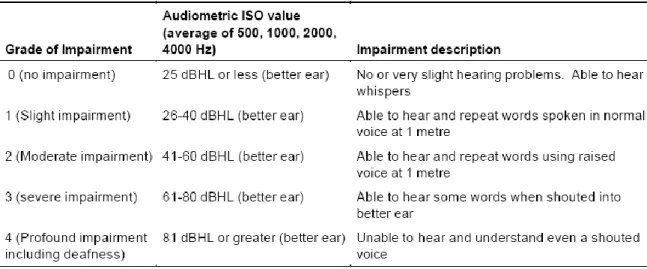
There is a diversity of definitions of hearing impairment, thus, comparison among studies is difficult and may be invalid. The definition used by any study should always be checked before attempting to make such comparisons. The World Health Organization (WHO) defines disabling hearing impairment in adults as a permanent unaided hearing threshold level (average for frequencies 0.5, 1, 2, 4 kHz (kiloHertz)) for the better ear of 41 dB or greater (WHO, 2001).2 In children under 15 years of age, disabling hearing impairment is defined as
permanent unaided hearing threshold level (average for frequencies 0.5, 1, 2, 4 kHz) for the better ear of 31 dB or greater. The WHO classifies hearing impairment into five grades, as shown in Table 6.21.1. Categories of hearing impairment range from “no impairment” to
“profound impairment” according to the threshold. Thus, for both adults and children “disabling hearing impairment” means the same as moderate or worse hearing impairment.
Table 6.21.1. WHO grades of hearing impairment
Source: WHO Report of the Informal Working Group On Prevention Of Deafness And Hearing Impairment Programme Planning. Geneva, 1991 and Global burden of hearing loss in the year 2000 World Health Organization.1
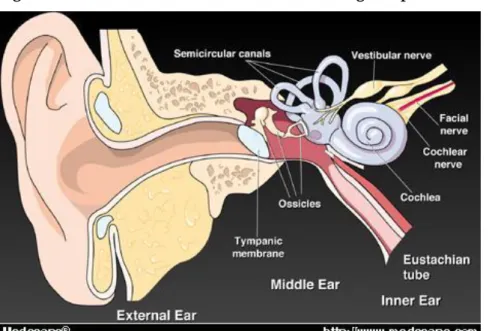
The auditory pathway comprises the external ear, the middle ear and the inner ear, followed by the auditory nerve ending up in the auditory centres in the auditory cortex.3
The external ear consists of the pinna, ear canal and eardrum. Sound travels down the ear canal, striking the eardrum and causing it to move or vibrate.
The middle ear is a space behind the eardrum that contains three small bones called ossicles. This chain of tiny bones is connected to the eardrum at one end and to the oval window at the other end which connects to the inner ear. Vibrations from the eardrum cause the ossicles to vibrate which, in turn, creates movement of the fluid in the inner ear.
Movement of the fluid in the inner ear, or cochlea, causes changes in tiny structures called hair cells. This movement of the hair cells sends electric signals from the inner ear up the auditory nerve (also known as the hearing nerve) to the brain.
The brain then interprets these electrical signals as sound. Figure 6.21.1 shows the different compartment of the ear described above.
Figure 6.21.1. Illustration of the different hearing compartment of the ear.3
Source: Medscape http.medscape.com
(http://www.google.fr/search?q=hearing+loss&hl=fr&tbo=u&tbm=isch&source=univ&sa=X&ei=agHrU LHZCoSdtAbE4oCABw&sqi=2&ved=0CHoQsAQ&biw=1070&bih=618 )
There are three basic types of hearing loss: conductive hearing loss, sensorineural hearing loss and mixed hearing loss based on which part of the auditory system is damaged.
Conductive hearing loss occurs when sound is not conducted efficiently through the
external ear canal to the eardrum and the ossicles of the middle ear. This type of hearing loss usually involves a reduction in sound level or the ability to hear faint sounds and can be corrected medically or surgically.
Sensorineural hearing loss (SNHL) occurs when there is damage to the inner ear (cochlea), or to the nerve pathways from the inner ear to the brain. Sensorineural hearing loss is the most common type of hearing loss and cannot be medically treated so far. Persons affected have difficulties in hearing faint sounds even when the speech is loud enough.
1.2
Possible Causes of hearing loss
1.2.1 Ear infections
Hearing loss can be caused by viral, bacterial or parasitic infections. Middle ear infections are important causes of hearing impairment for many children in the world. For example chronic suppurative otitis media is the commonest cause of hearing loss in children in developing countries.4 Children are more prone to ear infections than adults as the
Eustachian tube, the passage between the middle ear and the back of the throat is smaller and more horizontal than in adults. This allows it to be more easily blocked by inflammation from infections in the ear or adenoid and tonsillar enlargement which blocks the Eustachian tube and impairs the ventilation and drainage of the middle ear, thus preventing drainage of purulent fluids.5
Chronic suppurative otitis media (CSOM), caused by chronic bacterial infections in the middle ear, is an important cause of hearing loss in low- and middle-income countries. Chronic otitis media is associated with perforation of the tympanic membrane and can lead to death from complications such as meningitis or brain abscess.678
According to the WHO “High rates of chronic otitis media have been attributed to overcrowding, inadequate housing, poor hygiene (through transmission of the pathogens by physical contact with a contaminated individual, inhalation of infected droplets, or contact with an infected surface), lack of breastfeeding, poor nutrition, passive smoking, anecdotally to wood-burning smoke, high rates of naso-pharyngeal colonization with potentially pathogenic bacteria, and inadequate or unavailable health care. Poverty is a major risk factor in developing countries and certain neglected populations.” 6, 7, 8
Because of availability of ear care facilities with appropriately trained staff together with topical and systemic antibiotic therapies, chronic otitis media has markedly decreased in high income countries. However, it is still a serious public health concern in many low- and middle-income countries.
1.2.2 Untreated infections during childhood
The difficulty of access to health care facilities and other factors such as poor personal hygiene and overcrowding cause many children in low- and middle-income countries to become deaf or hard of hearing following infections such as meningitis, measles, viral encephalitis, chicken pox, influenza, mumps or other viral infections. In the so-called “meningitis belt” in the sub-Saharan Sahelian region of Africa, epidemics of meningococcal meningitis happen regularly, and many survivors are left with sensori-neural hearing loss and other neurological sequelae.7
1.2.3 Congenital hearing loss
The term congenital hearing loss means that hearing loss is present at birth. Congenital hearing loss can be caused by genetic or non-genetic (acquired) factors. Non-genetic factors that are known to cause congenital hearing loss are linked to pregnancy and birth delivery and include:
Maternal infections during pregnancy, such as rubella (German measles),
Cytomegalovirus, or herpes simplex virus
Prematurity
Low birth weight
Cranio-facial abnormalities
Birth injuries
Toxins including certain drugs and alcohol consumed by the mother during
pregnancy
Complications associated with severe jaundice in the newborn baby often due to maternal-fetal blood type incompatibility
Maternal diabetes
Lack of oxygen (anoxia)
Hearing loss from genetic defects can be present at birth or develop later on in life. Most genetic hearing loss can be described as autosomal recessive or autosomal dominant, linked to X-chromosome or to mitochondrial inheritance patterns. In autosomal recessive hearing loss, both parents carry the recessive gene and pass it along to the child. Marriages between
cousins, especially first cousins, which occur in certain communities, favour this type of genetically inherited disorders.9
Autosomal dominant hearing loss occurs when an abnormal gene from one parent is able to cause hearing loss even though the matching gene from the other parent is normal.
Other genetically inherited syndromes such as Down syndrome, Usher syndrome, Treacher Collins syndrome, Crouzon syndrome, Alport syndrome and Waardenburg syndrome include hearing loss as part of the syndrome.9
1.2.4 Injury/trauma
Head injury, acoustic trauma, ear and brain tumors can induce a permanent sensori-neural hearing impairment. The auditory nerve is then not able to transfer signals to the brain.
1.2.5 Aging
Aging contributes substantially to damage and deterioration of the peripheral and central auditory system. Age related loss of audition is called presbyacusis. In humans, inner and outer hair cells present in the cochlea of the inner ear cannot self reconstitute, therefore a loss of or damage to these cells is irreversible and causes permanent hearing impairment. Neural loss and strial loss may also be factors. Frequency loss is progressive from high to low.
1.2.6 Exposure to prolonged or excessive noise
Exposure to high levels of noise is the most common cause of hearing loss in adults but presbycusis, which is potentiated by noise has the highest prevalence in older adults.10 1112
Exposure to excessive duration and intensity of noise causes progressive loss of outer and inner hair cells with damage and eventual death of the organ of Corti, ischemia of the inner ear, and increased metabolic activity leading to excessive reactive oxygen species (ROS) generation and lipid peroxidation.131415 Exposure to high level of noise such as during loud
concerts or use of headphones contribute to hearing loss. Noise is also a particular concern for soldiers who are exposed to noise bombardments, hunters exposed to rifle fire, pilots and industrial workers especially in developing countries where there is more likely to be lack of available protection and the legislation to enforce it. This type of hearing loss can be either transient (called temporary threshold shift) or permanent (called permanent threshold shift). With the latter, the part of the cochlea where hair cell death occurs initially is related to the noise frequency that causes it, partly due to direct mechanical damage. The over-stimulation of hair cells also causes excessive generation of free radicals, which may continue for some time after the initial trauma.
1.2.7 Medications and other chemicals that are toxic to the ear
Certain medications are considered ototoxic as they may cause damage of hair cells in the inner ear. There are more than 200 known ototoxic medications (prescription and over-the-counter) on the market today. These include medicines used to treat serious infections, cancer and heart disease.15 16 17 18 19 20 Hearing loss caused by these drugs is often
discontinued (e.g. loop diuretics, quinine, salicylates). Sometimes, however, the damage is permanent.
Ototoxic medications known to cause permanent damage include all commonly used aminoglycoside antibiotics, such as gentamicin (family history may increase susceptibility), streptomycin, amikacin, kanamycin and neomycin. They all affect the vestibular system (organ of balance) as well as the cochlea although streptomycin has a greater effect on the former and neomycin acts mainly on the latter.21 Increased sensitivity to deafness caused by
aminoglycosides can be inherited maternally. Cancer chemotherapy drugs, such as cisplatin and carboplatin can cause effects on the cochlear similar to aminoglycosides. Elevations of audiometric thresholds have been reported in some studies in 75–100% of patients treated with cisplatin.15Cisplatin ototoxicity results from the production of reactive oxygen species (ROS) within the cochlea, overwhelming endogenous antioxidant mechanisms and causing irreversible free–radical-related apoptosis of cochlea outer hair cells, spiral ganglion cells, and the stria vascularis.16
Hearing loss is usually bilateral and irreversible, and is particularly severe in young children with neuroblastoma, CNS malignancies, and in adults with head and neck cancers, in which the base of the skull or brain may be irradiated.16
Aminoglycoside antibiotics are used in the treatment of gram-negative bacterial infections like tuberculosis; tularemia and other hospital acquired serious infections. Dose-limiting side effects include cochlear and/or vestibular toxicity and nephrotoxicity. Cochlear toxicity is primarily due to death of outer hair cells in the organ of Corti .17 The outer hair cells in the
part of the cochlear where high frequencies are detected, die first but successively lower frequencies are then affected. Loss of inner hair cells follows after some delay.
Medications known to cause temporary damage include salicylate pain relievers (aspirin, used for pain relief and to treat heart conditions), macrolide antibiotics such as erythromycin, quinine (to treat malaria), and loop diuretics – furosemide, bumetanide or ethacrynic acid (used to treat certain heart and kidney conditions).20, 22 23 A single dose of the
last group which by itself would only cause completely reversible hearing loss, in combination with an aminoglycoside may cause rapid, profound permanent loss. Various industrial chemicals including toluene, p-xylene, ethylbenzene, styrene, trichloroethylene have been implicated in ototoxicity. The effects of solvents may be potentiated by exposure to high noise levels or noise induced hearing loss may become worse. Damage occurs particularly in the mid frequency range of hearing.242526
There is some evidence that excessive alcohol consumption may damage auditory centres in the brain and be ototoxic to the ear.
1.2.8 Nutritional Deficiency Causes
Iodine deficiency is common in certain parts of the world and is one of the leading causes of preventable mental handicaps worldwide, including cretinism, in which hearing loss is a feature. Maternal hypothyroidism results in congenital hypothyroidism which is fully treatable if detected soon after birth. If it is untreated the child will develop cretinism. Hypothyroidism may potentiate presbycusis in the elderly.
1.3
Diagnosis
Early diagnosis and early intervention is essential to prevent further damage and provide adaptive therapies.
1.3.1 New borns and Infants Diagnosis
In high income countries, most hospitals screen all babies’ hearing shortly after they are born. Infant screening is very important because, without such programs, the average age of detection of significant hearing loss is approximately 14 months.1,2 When hearing loss is
detected late, language development is delayed, affecting a child’s ability to learn and perform in school. The screening procedures for newborns and infants are simple and painless, and can be done while the infant is resting quietly. The two common screening methods used with infants are otoacoustic emissions (OAE) and auditory brainstem response (ABR). These tools can detect hearing loss averaging 30 to 40 decibels (dB) or more in the frequency region important for speech recognition, e.g., approximately 500–4000 Hertz (Hz).27
Otoacoustic emissions (OAEs) are sounds given off by the inner ear when the cochlea is stimulated by a sound. When sound stimulates the cochlea, the outer hair cells vibrate. The vibration produces a nearly inaudible sound that echoes back into the middle ear. The sound can be measured with a small probe inserted into the ear canal. People with normal hearing produce emissions. Those with hearing loss greater than 25–30 decibels (dB) do not produce these very soft sounds. This test can detect blockage in the outer ear canal, as well as the presence of middle ear fluid and damage to the outer hair cells in the cochlea. The high cost of the electronic instrument may preclude use in low- and middle-income countries.
1.3.2 Children and Adult Diagnosis
Hearing can be measured by partially subjective tests using a pure-tone audiometer in children aged over four years. Electrophysiological tests of hearing can provide accurate objective measurements of hearing thresholds even in unconscious subjects. Such tests include auditory brainstem evoked potentials (ABR), otoacoustic emissions (OAE) and electrocochleography (EchoG). Technical advances in these tests have allowed hearing screening for infants to become widespread.
2.
What are the Epidemiological Trends for Europe and the World?
2.1
General
The WHO estimateds that in 2008, over 360 million persons in the world have disabling hearing loss. This constitutes 5.3% of the world population, nearly 183 million adult males above 15 years old and 145 million females, which is 7.5% of the adult male population and approximately 6% of the adult female population respectively. With the ageing of the world population these numbers are expected to double by 2030-2050. Hearing impairment is considered the most prevalent impairment worldwide.
2.2
Prevalence
2.2.1 Prevalence in the world
Disabling hearing loss is unequally distributed across the world. Population based studies are rare particularly in developing countries where newborns and children are not systematically screened for hearing impairment.
Prevalence of child and adult hearing impairment appears to be substantially higher in middle- and low-income countries than in high-income countries, demonstrating the global need for attention to hearing impairment. Approximately 15% of the world's adult
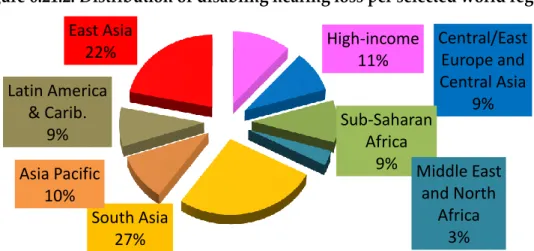
population has some degree of hearing loss. Fifty per cent of those who are affected, have disabling hearing loss. Figure 6.21.2 shows the distribution of hearing loss per selected world region. Table 6.21.2 shows the estimates of disabling hearing loss in adults and children in 2012.
South and East Asia and sub-Saharan Africa remain the world regions with the highest prevalence of hearing impairment in both adults and children. This can be explained by the high rates of pre- and post-natal childhood infections such as chronic otitis media, meningitis, rubella, measles, use of ototoxic drugs and excessive noise.1, 15-20 High prevalences
in adults are due to higher rates of infections such as chronic otitis media, and meningitis, excessive noise, ototoxic drugs and ageing populations in developing countries which increase the prevalence of presbyacusis.
The lack of a comprehensive health care system, especially ear and hearing care at primary and secondary levels, lack of trained personnel at all levels, poor personal hygiene and overcrowding, poor accessibility to medications and other interventions, lack of primary, secondary and tertiary prevention interventions, lack of national planning and programmes for ear and hearing care, low resource allocation in this field also account for these high prevalence rates of hearing impairment in low and middle income countries.
Figure 6.21.2. Distribution of disabling hearing loss per selected world region
Source: World Health Organisation 2012
High-income
11%
Central/East
Europe and
Central Asia
9%
Sub-Saharan
Africa
9% Middle East
and North
Africa
3%
South Asia
27%
Asia Pacific
10%
Latin America
& Carib.
9%
East Asia
22%
Table 6.21.2. Region-wise estimate of disabling hearing loss, in adults 15 years or older and children 0-14 years in millions and percentage of population (by World Bank Regions).
Source: World Health Organisation 2012 (Countries within regions are listed in Annex 6.2.1)
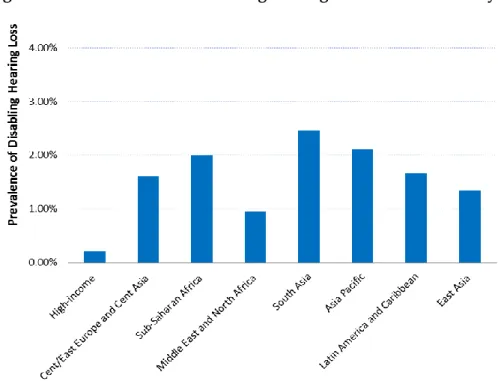
Figures 6.21.3, 6.21.4 and 6.21.5 show the prevalence rate of disabling hearing impairment per world region in children, adults and elderly respectively.
Figure 6.21.3. Prevalence of disabling hearing loss in children 0-14 years
Figure 6.21.4: Prevalence of disabling hearing loss for adults of 15 years or older by selected regions.
Source: Contribution from Disability Department, WHO, Geneva.
Figure 5. Prevalence of disabling hearing loss for children, adults: 15-65 years and 65 years or older by selected regions (WHO 2011)
Source: Contribution from Disability Department, WHO, Geneva. 0.00% 5.00% 10.00% 15.00% 20.00% 25.00% 30.00% 35.00% 40.00% 45.00% 50.00% Pr e val e n ce o f D isab lin g H e ar in g
Loss Prevalence of DHL for
children until 14 years old (per 1000 children)
Prevalence of DHL for adults 15 years or older (per 100 populuation)
Prevalence of DHL for adults 65 years or older (per 100 population)
*MBD, WHO, 2011 DHL estimates, where DHL adult threshold is ≥41 dB and children threshold is ≥31 dB (children 0 until 14 years old).
Hearing loss prevalence increases as age increases, reaching its highest prevalence level for adults over the age of 65 years old (from 18% in high income region to almost 50% in the South Asia region).
The prevalence increase with age is more than five times for all the regions except high-income and Central/East Europe and Central Asia region.
A recent study (2011) led by Johns Hopkins University researchers showed that nearly a fifth of all Americans aged 12 years or older have hearing loss that may make communication difficult. Researchers stated that they used the World Health Organization’s definition for hearing loss (not being able to hear sounds of 25 decibels hearing level (dB HL) or greater in the speech frequencies).28 However the WHO definition is 26 dB HL or greater for any level
of hearing loss so the results of this study are not completely comparable with other surveys using the WHO criteria, and would produce a slightly greater prevalence. They collected data from the National Health and Nutritional Examination Surveys (NHANES) and analyzed data from all participants age 12 and over whose hearing was tested during NHANES examinations from 2001 to 2008.
Researchers found that overall, about 30 million Americans, or 12.7 per cent of the population aged 12 years or older, had hearing loss in both ears and this figure increased to 48.1 million, or 20.3 per cent, when also including people who have hearing loss in one ear. The prevalence was lower in women than men, and in black than white individuals across nearly all age decades. The findings, thought to be the first nationally representative estimate of hearing loss that used audiometric hearing testing, suggest that many more people than previously thought are affected by hearing impairment. In high income countries, studies have usually been performed on children and elderly and data on adults are scarce.29
2.2.2 Prevalence in Europe
The prevalence of hearing loss in Europe is not well defined, due in part to the use of countries own classification systems for hearing impairment. As a consequence, comparison of data from several studies is difficult. Moreover, the majority of studies have focused on prevalence among people aged 65 and over and there are few detailed reports on the prevalence of hearing impairment of different grades among adults or children. There is clearly a gap in knowledge and understanding of how hearing loss affects young people that needs to be addressed.
The need for standardized procedures when collecting and reporting epidemiological data on hearing loss is essential. In this regard, WHO provided a classification on hearing impairment and recommends countries to use standard audiometric measures in population based surveys.1 WHO has developed a survey protocol, the WHO Ear and Hearing
Disorders Survey Protocol, in order to standardize other aspects of survey methodology in addition to hearing levels. At least 12 surveys have been conducted in developing countries using this protocol.30
Report from Shield (2006) found that 19 per cent of the UK men and 13 per cent of UK women above 16 years of age report that they suffer from hearing loss.31 Most European
general prevalence of the impairment. Shield presents specific facts on the prevalence of hearing impairment in Europe.
The frequency in Germany may be as high as one in five.
In Finland, one in seven suffers from varying degrees of hearing loss.
In Italy, one in six are suffering from some form of hearing loss.
One in 10 has hearing loss in Denmark and Sweden.
Figure 6.21.6 shows the repartition of hearing impairment according to gender, age range and level of impairment in Western Europe in 2010. Figures are from the World Health Organization from Stevens et al, unpublished data.
Figure 6.21.6. Level of impairment repartition of hearing loss according to gender, age range in Western Europe in 2010.
Source: unpublished data (World Health Organization from Stevens et al).
People lose their hearing much earlier than in the past. This disconcerting trend is caused by the generally higher noise levels in today’s society.
In a systematic literature review, in which data were crudely averaged and interpolated, Roth et al. estimated that “roughly 55% of men and 45% of women in Europe were found to have a
hearing loss of 30 dB HL or more by age 70 years.32 Because of the ageing of the population in
Europe these figures are expected to rise in the future.
Hearing loss prevalence estimates for 2025
According to Hear-it.com (2011); Professor Adrian Davis of the British MRC Institute of Hearing Research estimates that “the total number of people suffering from hearing loss of more than 25 dB will exceed 700 million worldwide by 2015. Davis’s statistics suggest that more than 900
0-1 years 2290 0,8 (0.6, 1.1) 0,1 (0.1, 0.2) 0,0 (0.0, 0.0) 0,0 (0.0, 0.0) 0,5 (0.4, 0.7) 1-4 years 9061 0,8 (0.6, 1.2) 0,2 (0.1, 0.2) 0,0 (0.0, 0.0) 0,0 (0.0, 0.0) 0,6 (0.4, 0.8) 5-14 years 22728 1,0 (0.7, 1.3) 0,2 (0.1, 0.3) 0,0 (0.0, 0.0) 0,0 (0.0, 0.0) 0,6 (0.5, 0.9) 15-34 years 52683 2,1 (1.6, 3.0) 0,4 (0.3, 0.6) 0,1 (0.0, 0.1) 0,0 (0.0, 0.0) 0,5 (0.4, 0.7) 35-44 years 31874 4,7 (3.5, 6.4) 0,9 (0.7, 1.3) 0,1 (0.1, 0.2) 0,0 (0.0, 0.1) 1,1 (0.8, 1.5) 45-54 years 28887 8,0 (6.0, 10.7) 1,6 (1.2, 2.3) 0,2 (0.2, 0.3) 0,1 (0.0, 0.1) 1,9 (1.4, 2.7) 55-64 years 24044 17,7 (14.2, 22.1) 4,2 (3.2, 5.7) 0,6 (0.4, 0.8) 0,2 (0.1, 0.3) 5,0 (3.7, 6.8) 65-74 years 17829 31,7 (27.5, 35.8) 10,3 (7.9, 13.4) 1,6 (1.2, 2.1) 0,5 (0.4, 0.7) 12,4 (9.5, 16.2) 75+ years 12775 39,1 (38.1, 39.7) 25,0 (20.6, 29.7) 5,1 (3.9, 6.8) 1,7 (1.2, 2.3) 31,9 (25.7, 38.9) Age range Males Population
Per cent of population
26-40 dBHL 41-60 dBHL 61-80 dBHL 81+ dBHL Disabling Hearing 0-1 years 2171 0,5 (0.3, 0.7) 0,1 (0.1, 0.1) 0,0 (0.0, 0.0) 0,0 (0.0, 0.0) 0,3 (0.2, 0.5) 1-4 years 8607 0,5 (0.4, 0.7) 0,1 (0.1, 0.1) 0,0 (0.0, 0.0) 0,0 (0.0, 0.0) 0,3 (0.2, 0.5) 5-14 years 21576 0,6 (0.4, 0.8) 0,1 (0.1, 0.2) 0,0 (0.0, 0.0) 0,0 (0.0, 0.0) 0,4 (0.3, 0.6) 15-34 years 50818 1,3 (1.0, 1.8) 0,2 (0.2, 0.4) 0,0 (0.0, 0.0) 0,0 (0.0, 0.0) 0,3 (0.2, 0.4) 35-44 years 31339 2,9 (2.2, 4.0) 0,6 (0.4, 0.8) 0,1 (0.1, 0.1) 0,0 (0.0, 0.0) 0,7 (0.5, 0.9) 45-54 years 29074 5,1 (3.7, 6.9) 1,0 (0.7, 1.4) 0,1 (0.1, 0.2) 0,0 (0.0, 0.1) 1,2 (0.9, 1.6) 55-64 years 24969 12,0 (9.3, 15.5) 2,6 (2.0, 3.6) 0,4 (0.3, 0.5) 0,1 (0.1, 0.2) 3,1 (2.3, 4.2) 65-74 years 20388 24,4 (20.1, 29.1) 6,6 (5.0, 8.8) 1,0 (0.7, 1.3) 0,3 (0.2, 0.4) 7,9 (6.0, 10.5) 75+ years 21609 38,0 (35.7, 39) 19,4 (15.4, 23.8) 3,6 (2.7, 4.8) 1,2 (0.8, 1.6) 24,1 (18.9, 30.2) 61-80 dBHL Age range Females Population
Per cent of population
81+ dBHL Disabling Hearing 26-40 dBHL 41-60 dBHL
million people worldwide will suffer from hearing loss of more than 25 dB in 2025. Of those 900 million hearing impaired in the world in 2025, some 90 million will be Europeans. Generally, more is known about the incidence and prevalence of hearing impairment in Europe and the United States due to the development of the healthcare systems. This sophistication allows for better record keeping and facilitates more accuracy than in underdeveloped countries where data is scarce.”33
All in all, the different surveys and estimates indicate that hearing loss is much more common than previously thought and that young adults and not only children and elderly people are affected.
3.
What is the control Strategy?
3.1
Prevention Measures
3.1.1 Primordial Prevention
Preventing excessive exposure to noise
Noise-induced hearing loss is preventable but is often not prevented, especially in developing countries. The incidence of noise-induced hearing loss at the work place can be reduced or eliminated through the successful application of engineering controls and hearing conservation programs. Wearing ear plugs or special earmuffs when exposed to high level of noise, reducing the volume of headphones, designing less noisy machines, lowering noise pollution from auto traffic, trains, airplanes and industry are all measures that will make a difference. Countries should enact legislation to reduce noise pollution in the workplace and enable adequate compensation, and to reduce social and other environmental noise sources. Noise pollution needs to be monitored and sanctions enforced. Building design needs to consider the acoustic environment both for normal and hard of hearing persons. Older children and young adults should be made aware that high levels of noise such as in clubs and from personal stereos can permanently damage their hearing; ear plugs should be made readily available and role models such as rock musicians should lead the way to make prevention of noise-induced hearing loss fashionable.
Preventing hearing loss due to infectious diseases
Immunisation against vaccine preventable infections especially rubella, measles, meningitis contribute to reduce the burden of hearing loss as sequalaesequelae of these diseases are known to cause irreversible hearing damage. As Morris and Leach stated (2012) “the largest gains in the prevention of severe to profound sensorineural hearing loss have come from the measles and rubella vaccines, and the protein-conjugated bacterial meningitis vaccines (targeting Hemophilus influenzae type b (Hib), pneumococcal and meningococcal disease).34 Most of the mild and moderate
conductive hearing loss in the world is associated with otitis media. To some extent, OM is a vaccine preventable disease. In the future, the development of otitis media vaccines (or combinations of vaccines) that reduce colonisation and protect against common respiratory bacterial and viral pathogens has the potential to dramatically reduce the frequency of mild and moderate hearing loss in
young children.” The WHO’s original Expanded Programme of Immunization (EPI) started in
prevention of tuberculous meningitis causing hearing loss and a reduction in use of sytreptomycin, and ototoxic antibiotic, as second line treatment of TB. A rubella vaccine is usually used now as part of the MMR vaccine against measles, mumps, and rubella, all of which cause hearing loss, rubella as an often devastating congenital infection. It is important to note that rubella vaccination should not be introduced in a country until the coverage rate for vaccines such as measles has reached 80% to produce “herd immunity”. If rubella vaccine is commenced before this coverage is reached it may have the paradoxical effect of more women reaching child bearing age who are susceptible to rubella infection (by reducing opportunities for natural protection through infection in early childhood) and hence lead to an increase in incidence of congenital rubella syndrome. In developed countries women of child-bearing age are tested for rubella susceptibility and immunised provided they are not pregnant. Because rubella vaccine is a live vaccine there is a slight risk of teratogenicity to the foetus, so pregnant women should be vaccinated immediately after birth.
Other infections which cause hearing loss and for which research is seeking vaccines include
Cytomegalovirus and HIV.
3.1.2 Secondary Prevention
Screening
Universal neonatal hearing screening programmes are expensive if fully implemented, and even in developed countries there were assessments of the effectiveness and cost-benefits. The expense has precluded introduction of UNHS in most developing countries. Most developed countries and a few developing countries have implemented UNHS. Targeted neonatal screening is more common in developing countries.
Most developed countries and a few developing countries have implemented UNHS. Targeted neonatal screening is more common in developing countries. In low- and middle-income countries, due to the difficult access to health care facilities, and it is not always possible to implement such screening. Child delivery often takes place at home and health care facilities are sometimes at several hours of walking away. School screening is common in developed countries but much less common in developing countries. Screening campaigns for adults and elderly are however lacking in most countries even in developed countries and should be implemented.
3.1.3 Tertiary prevention
Raising awareness of users of ototoxic medications
Very few people, including few health care professionals, know that medications such as non-steroidal anti-inflammatory drugs (NSAIDs) such as ibuprofen or naproxen, antibiotics such as gentamicin, and streptomycin, anti-malarial drugs such as quinine, chemotherapy agent cisplatin and some diuretic drugs and certain industrial chemicals can cause transient or permanent hearing loss. In a study published by the American Journal of Medicine researchers found that regular users of NSAIDs who were 50 or younger were 61 per cent more likely to develop hearing loss than those who were not regular users.24
Prevention involves ongoing awareness raising through information and campaigns amongst the general public, people who are hard of hearing, health care professionals, and
legislators. This should be associated with an enforceable pharmaceutical licensing, distribution and clinical testing programme.
Genetic counselling
Other approaches to prevention include genetic counselling for some inherited causes of hearing loss, improved primary ear and hearing care including more trained personnel, better ante-natal and peri-natal care, nutritional supplementation in areas where critical nutrients are lacking (e.g. iodine), more widespread availability of affordable hearing aids and services to fit and follow up (this can be classed as tertiary prevention or rehabilitation).
Raising awareness of decision makers
Although hearing loss is considered to be the most prevalent chronic impairment worldwide, awareness of the problem amongst decision makers is rare because data from well-conducted, population-based epidemiological surveys are scarce, especially from developing countries. Monitoring the incidence and prevalence of hearing loss in the entire population ranging from infants to elderly would help implement appropriate measures for prevention and allocate fundings for research towards better treatment and rehabilitation.
3.2
Therapies
Hearing loss is not yet curable but research into auditory hair cell and nerve regeneration has made considerable progress. Hearing aids such as cochlear implants and hearing aids and other amplification systems, especially in schools, can help a person to recover partly his/her hearing and communication skills.
Audiologic rehabilitation is essential to provide appropriate training on how to best use these devices and improve hearing capacity.
Audiologic Rehabilitation
Audiologic rehabilitation is the process of providing training and treatment to improve hearing for those who are hearing impaired. Hearing rehabilitation services focus on adjusting to hearing loss, making the best use of hearing aids, exploring assistive devices, managing conversations and other hearing strategies, and taking charge of communication.
With infants and children, audiologic rehabilitation focuses on restoring a skill that is lost. In very young children, a skill such as talking or understanding speech may not be there in the first place and needs to be taught. The services provided will depend on each child’s individual needs and are based on the following factors: age of the child, age of onset of the hearing loss, age when hearing loss was discovered, degree of hearing loss, type of hearing loss, age of child when hearing aids were first used, commitment and capability of the parents or guardians. Early detection of hearing loss and early use of hearing aids or cochlear implants are critical for the development of speech, language, and communication skills in children with hearing loss. In fact, infants identified with a hearing loss before the onset of the critical period of language development around six months of age who received a hearing aid or cochlear implant and habilitation services have been shown years later to have language skills similar to those of children of the same age who have normal hearing.2,25 The
cost of cochlear implants is high ($40,000 in the United States) but are ranked as among the
most cost effective procedures in the USA.
(http://www.asha.org/about/news/tipsheets/cochlear_facts.htm) and also in other developed countries. In developing countries the cost is prohibitive for the majority of individuals with severe or profound hearing loss, and for their state health care providers. There is little data on this at present from developing countries at present. However it appears that such financial resources used in a national programme would alleviate a far larger proportion of the burden of hearing loss if allocated to strengthening of ear and hearing care services at primary and secondary levels and provision of affordable hearing aids and services, than if used for cochlear implant programmes. More research is needed on this issue.
4.
What is known of the Availability, Feasibility and Sustainability
of the Control Strategy?
4.1
The European Burden of Hearing Loss and cost
According to the international scientific report “Evaluation of the Social and Economic Costs of Hearing Impairment” by Shield (2006) untreated hearing loss costs Europe 213 billion euros per year.31 Figures of a similar order of magnitude have been estimated in the USA and
Australia.3536
“In the EU alone, more than 55 million people are hearing impaired, and the costs in the EU of unaided hearing impairment of all grades are estimated to 168 billion Euros per year.18
Based on population statistics, here are some examples of the estimated cost of untreated adult hearing loss per country:
Germany €30 200 000 000 France €22 400 000 000 United Kingdom €22 000 000 000 Italy €21 300 000 000 Spain €16 300 000 000 Poland €14 000 000 000 The Netherlands €6 000 000 000
The calculations are made in accordance with the European Commission standard, setting a statistical value for ‘one quality life year’ at 44 000 euros, and the commonly used Health Utility Index, rating different types and degrees of diseases and sufferings/conditions in relation to a healthy person.
According to the report, a mild hearing loss costs society 2 200 euros per individual each year, a moderate hearing loss costs 6 600 euros annually per person, while a severe or profound hearing loss costs 11 000 euros per person per year. These figures do not include lost income and lost tax revenues due to unemployment or early retirement because of hearing loss.”37
These figures do not include the societal costs of unemployment or early retirement caused by hearing loss. Compared to many other diseases, hearing loss more often involves the social welfare system rather than the medical care system. Therefore, medical costs, e.g. hearing aids, only account for a small percentage of the real general cost.
4.2
Feasibility and Control Strategy
Hearing devices are a viable option for hearing impaired persons to live a better quality of life but still with reduced auditory capacity. Hearing devices such as hearing assistive technologies or cochlear implants remain very expensive and many health care systems do not reimburse the cost of such devices.50 For most low- and middle-income countries, hearing
aids and devices are just not affordable. Studies based on hearing aids production indicate that, relative to need, few hearing aids are sold in developing countries. There is likely a large unmet need for innovative interventions including affordable hearing aids and possibly cochlear implants in low- and middle-income countries.50, 52The global partnership
WWHearing (Website for WWHearing: www.wwhearing.org) was set up to address the need to provide affordable, good quality hearing aids and services on a large scale in low- and middle-income countries, through its collaboration agreement with WHO.39 They do not
currently advocate cochlear implants in developing countries, believing that the resources needed would be more effectively utilized on provision of hearing aids and thereby help much larger numbers of people with moderate or severe hearing loss.
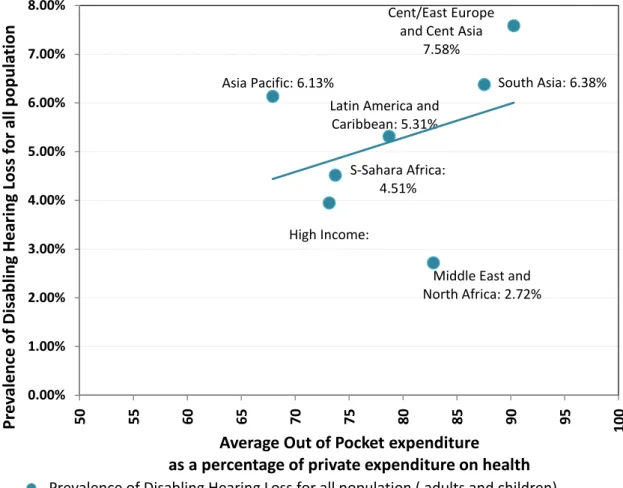
Prevalence of disabling hearing loss for the entire population increases as the out of pocket expenditure ratio (against private expenditure on health) increases for some regions such as: high Income, sub-Saharan Africa, Latin America and Caribbean region, and South Asia region as shown in Figure 6.21.6.
Despite their intensive attempts, Stevens et al. were unable to address hearing aid use in developing countries. They stated in their discussion “We did not have sufficient data to estimate hearing aid use in developing countries, but suspect that coverage is small to negligible: one study in Brazil did not identify anyone who used a hearing aid, and combining our data with data on hearing aid production indicates that, relative to need, few hearing aids are sold in developing countries. A primary obstacle to hearing aid provision in developing countries is their cost. There is likely a large unmet need for innovative interventions including low-cost hearing aids in developing countries.” Since the burden of hearing loss is much greater in developing countries, this is where the focus of action should be, from a public health point of view.
Figure 6.21.6. Prevalence of Disabling Hearing Loss for all population versus average out of pocket expenditure ratio as percentage of private expenditure on health for selected regions. (WHO 2011)
Source: WHO report on hearing impairment 2011
5.
Why does the Disease Burden Persist?
5.1
Lack of awareness of the problem
Although hearing loss is the most important cause of disability worldwide, there is a lack of awareness of the problem in all sectors of the population including health care professionals as well as a lack of health educational programmes for prevention and detection (in addition to the lack of investment by most developing countries in programmes, infrastructure and trained personnel). Because hearing loss is an invisible disability, and most people and governments are not aware of the large size of the problem, children with hearing loss are not discovered and may be mistaken to have intellectual disabilities in school. In adults, hearing loss more often evokes irritation than sympathy. In health care, there is a lack of national programmes to address hearing loss, especially in developing countries where the burden and need is greatest, and a lack of investment in training, equipment, career structures and infrastructure.
Cent/East Europe and Cent Asia
7.58%
S-Sahara Africa: 4.51%
Middle East and North Africa: 2.72%
South Asia: 6.38% Asia Pacific: 6.13%
Latin America and Caribbean: 5.31% 0.00% 1.00% 2.00% 3.00% 4.00% 5.00% 6.00% 7.00% 8.00% 5 0 5 5 6 0 6 5 7 0 7 5 8 0 8 5 9 0 9 5 1 00
Pr
e
va
le
n
ce
of
Di
sa
b
lin
g
He
ar
in
g
Los
s
for
a
ll
p
op
u
la
ti
on
Average Out of Pocket expenditure
as a percentage of private expenditure on health
Prevalence of Disabling Hearing Loss for all population ( adults and children) *MBD, WHO, 2011 DHL estimates, where DHL children threshold is ≥31 dB. MBD, WHO, 2011 DHL estimates, where DHL adult threshold is ≥41 dB.5.2
Poor Diagnosis
Diagnosis for hearing loss is often neglected. In most high income countries, only newborns infants and school children are screened systematically, but not young adults and elderly. In high income countries, people with moderate hearing loss delay diagnosis because they are afraid to be stigmatized.
In low- and middle-income countries, screening of newborns and children is sparse and adults are not diagnosed for hearing impairment due to difficulty of access to medical facilities, and lack of trained personnel and equipment. Moreover, cochlear implants remain too expensive and not affordable. Studies based on hearing aid production indicates that, relative to need, few hearing aids are sold in developing countries. There is likely a large unmet need for innovative interventions including affordable hearing aids in low and middle income countries.3738
5.3
A lack of epidemiological data
There is a lack of epidemiological data worldwide, especially from population-based, random sample surveys using standardised methods in developing countries. Only a few countries, even in Europe, have implemented programmes of detection to cover the entire population. Hearing loss remains poorly reported and many countries and surveys use different classification systems, making it difficult to compare data between countries. There is a need for standardized procedures when collecting and reporting epidemiological data on hearing loss, such as the WHO Ear and Hearing Disorders Survey Protocol.
5.4
Poor living conditions and lack of vaccination coverage
In developing countries, disease burden of hearing loss persists because of the poor health care systems, especially at the primary level of health care, absence or lack of vaccination coverage for children and mothers, poor personal hygiene factors and poor living conditions as well as cultural issues such as consanguineous marriage that favors the transmission of genetically inherited forms of hearing impairment. It is estimated that 50% of these hearing losses could be prevented by primary, secondary and tertiary means, and the lack of programmes and poor availability and cost of health care in these developing nations often makes preventive interventions unavailable and treatment expensive.1 Cochlear implants
remain too expensive and are not affordable.39
5.5
Underuse of hearing devices
Hearing aids can be used effectively for patients with moderate to severe hearing loss, however, only one out of five people who could benefit from a hearing aid actually wears one.39 In high income countries, because of stigmatization and as hearing loss is negatively
perceived, the usage of these devices is low and only occurs when a person realizes that he/she needs help from a professional or when their hearing is very poor. Major barriers to improve hearing in older adults include lack of recognition of hearing loss, perception that hearing loss is a normal part of aging or is not amenable to treatment, and patient non-adherence with hearing aids because of stigma, cost, inconvenience, disappointing initial results, or other factors.22, 28, 334041
While the development of the cochlear implant has been remarkable, the prognosis for those individuals receiving an implant is still variable and, even with the best outcomes, normal hearing is not restored. Therefore patients with severe hearing loss would welcome alternative strategies, and in particular, medical treatments for hearing rehabilitation.
This may not apply to persons with profound or complete hearing loss, some of whom regard themselves as a distinct cultural and linguistic group with their own language (sign language) and rights similar to other minorities.42
5.6
Exposure to noise
Urbanisation and modern living life style has generated a noisier environment. Loud concerts, use of headphones, road traffic, are all likely to contribute to the loss of audition in many young adults.
Exposure to excessive noise is the major avoidable cause of permanent hearing impairment worldwide according the World Health Organization (WHO).2 Occupational noise and
urban, environmental noise are increasing risk factors for hearing impairment worldwide, including in developing countries.
WHO recommends that countries should implement National Programmes for the Prevention of noise-induced hearing loss, integrated with Primary Health Care, and including elements on health promotion, and measures to reduce noise sources and introduce properly enforced legislation and effective hearing conservation.2, 41
5.7
Aging of the population
Aging leads to deterioration of hearing function in the majority of elderly persons and is one of the major key factor for hearing loss. As the world population ages people affected by hearing loss are expected to rise significantly. According to the World Health Organization “In 2010, an estimated 524 million people were aged 65 or older, 8% of the world’s population. By 2050, this number is expected to nearly triple to about 1.5 billion, representing 16% of the world population. Although more developed countries have the oldest population profiles, the vast majority of older people, and the most rapidly aging of the world’s populations, are in less developed countries. Between 2010 and 2050 the number of older people in less developed countries is projected to increase more than 250 per cent, compared with a 71 per cent increase in developed countries. “
(From the WHO Global Health and Aging Report 2012.)
5.8
Gaps of research into pharmacological interventions
As a result of a lack of awareness of decision makers, very limited research funding has been allocated towards search for pharmaceutical compounds. The search for pharmaceutical agents to prevent or treat hearing loss has been for many years under-investigated. New research and clinical trials towards a possible treatment have started to emerge in the past few years.
6.
Past/Current Research into Pharmaceutical Interventions for this
Condition
Based on the successful results from animal studies, several clinical trials have been launched to investigate the effects of a wide variety of compounds in preventing hearing loss in humans. Most of these studies are focused on patients exposed to ototoxic medications such as cisplatin or aminoglycoside therapies or exposed to high level of noise. The different strategies such as the use of antioxidants, anti-inflammatory agents, anti-apoptotic factors as well as RNA silencing or use of stem cells to restore hair cell function within the cochlea are described below.43
Ototoxicity is an alteration caused by medications that compromises the auditory and vestibular functions. Cisplatin is a potent agent used for the treatment of cancer in both adults and children although it has several side effects. Current opinion is that cisplatin ototoxicity occurs due to alterations in the antioxidant system of the outer hair cells (OHC) of the cochlea. The distortion-product otoacoustic emissions (DPOAE) has been showed to be a sensitive test for diagnosis of OHC injury and has been used for monitoring treatment with ototoxic drugs.
6.1
Antioxidants and ROS scavengers
6.1.1 Sodium thiosulfate (STS)
Sodium thiosulfate is an inactive ingredient contained in sulfacetamide ophthalmic solution which is used routinely as an otic solution delivered to the middle ear space.
Sodium thiosulfate is a free–radical-scavenging thiol agent.44
In vitro, STS acts in several ways: it directly inactivates cisplatin by the covalent binding of cisplatin to its thiol moiety to form an inactive complex, it scavenges cisplatin-related reactive oxygen species, and it may concentrate in the perilymph or endolymph, further inactivating cisplatin in the inner ear.45
A large Clinical Study with 250 participants led by the German GPOH, the Japanese Study Group for Pediatric Liver Tumors, and several USA centers, began the first large randomized trial of STS (SIOPEL 6) in 2007 to reduce ototoxicity in children with hepatoblastoma.26 In this
trial, sodium thiosulfate is given intravenously and there are concerns that it could potentially affect the antitumorigenic effect of cisplatin by interacting in the blood and inactivating it.
In a parallel study, the Children’s Oncology Group launched a randomized phase III clinical trial NCT00716976 to evaluate the efficacy of STS for preventing cisplatin-related hearing loss in newly diagnosed children with hepatoblastoma, germ cell tumors, medulloblastoma, and osteosarcoma.4647
The primary objective of clinical trialNCT00716976 “Sodium Thiosulfate in Preventing Hearing Loss in Young Patients Receiving Cisplatin for Newly Diagnosed Germ Cell Tumor, Hepatoblastoma, Medulloblastoma, Neuroblastoma, Osteosarcoma, or Other Malignancy” is to “compare the efficacy of sodium thiosulfate versus observation in preventing hearing loss in young patients receiving cisplatin
for the treatment of newly diagnosed germ cell tumor, hepatoblastoma, medulloblastoma, neuroblastoma, osteosarcoma, or other malignancy.”
Two clinical trials are currently in phase III and are recruiting participants.
The primary outcome of clinical trial NCT01369641 “The Effect of sodium thiosulfate (STS) Eardrops on Hearing Loss in Patients Who Receive Cisplatin Therapy” is “to assess the efficacy of intratympanic sodium thiosulfate (STS) on reducing the degree or incidence of hearing loss in patients receiving systemic cisplatin therapy using puretone and speech audiometry, and distortion product otoacoustic emissions (DPOAE). Hearing will be assessed prior to any initiation of cisplatin therapy, again at three weeks, six weeks, 12 weeks, and every six months thereafter for up to one year.” The trial is currently recruiting patients and final data collection date for primary outcome measure is expected for 2015.
The hypothesis of this study is that local administration of sodium thiosulfate (STS) will result in improved hearing compared to ears not receiving the study drug in patients receiving systemic cisplatin therapy.
Clinical trial NCT00652132 “Cisplatin With or Without Sodium Thiosulfate (STS) in Treating Young Patients With Stage I, Stage II, or Stage III Childhood Liver Cancer”, was sponsored by Children's Cancer and Leukaemia Group. This randomized phase III trial is studying how well sodium thiosulfate (STS) works to decrease hearing loss caused by cisplatin in treating young patients with stage I, stage II, or stage III childhood liver cancer as well as carefully monitor any potential impact of STS on response to cisplatin and survival.
Results are expected in the following years. In this trials, sodium thiosulfate is given intravenously and there are concerns that it could potentially affect the antitumorigenic effect of cisplatin by interacting in the blood and inactivating it. New ways of injections of STS in the inner ear will certainly help circumvent this potential effect. Cisplatin is an important anticancer drug in children, potentially limited by its ototoxic effect which is particularly serious in children. Thus research on minimising or eliminating this side effect would be important for the children’s oncology field although this would not make a large reduction to the overall burden of hearing loss. However research in this may have spin-off in protecting against other causes of ototoxicity. This would increase its prioritization from a public health point of view.
6.1.2 Alpha Lipoic Acid
Alpha lipoic acid is a fatty acid found naturally inside every cell. As an antioxidant it protects against free-radical damage, supports nerve system function, and plays an essential role in generating mitochondria in the hair cells of the inner ear. Animal models have shown that alpha lipoic acid protected tested animals from age, noise and cisplatin induced ototoxicity.484950
Phase II and III clinical trials (NCT00477607) Alpha-Lipoic Acid in Preventing Hearing Loss
in Cancer Patients Undergoing Treatment with Cisplatin were completed in 2011.
In this trial “patients received oral alpha-lipoic acid supplement or placebo once a day beginning one week before the start of cisplatin treatment and continuing for up to one month after the completion of
cisplatin. During cisplatin treatment, patients discontinue supplement one day prior to the cisplatin
treatment and resume daily supplements two days post treatment.” Results have not been posted
yet.
6.1.3 N-acetylcysteine
Animal studies have shown that N-acetylcysteine can protect the inner ear against damage.38
It is not known whether the drug has similar effects in humans. This compound is currently being tested in several clinical trials.
The clinical trial (NCT00552786) Antioxidation Medication for Noise-induced Hearing Loss, sponsored by the National Taiwan University Hospital, showed that N-acetylcysteine prevented temporary daily threshold shifts at high noise frequencies but did not seem to affect the temporary threshold shift at low frequencies.43
The clinical trial (NCT01271088) Protective Effect of N-acetylcysteine Against From Ototoxicity, sponsored by TC Erciyes University, has been completed and no results have been posted so far.43
The clinical trial (NCT01131468)on Prevention of Drug Induced Ototoxicity in Peritoneal Dialysis Patients by N-acetylcysteine has been completed in 2010 but no results have been posted so far.43
The clinical trial (NCT00525551) on the Efficacy of N-acetylcysteine in Patients Undergoing Surgery for Otosclerosis, sponsored by Karolinska Institutet and AstraZeneca, is currently recruiting participants. This study will assess the efficacy of N-acetylcysteine in patients undergoing surgery for otosclerosis.43
6.1.4 Ginkgo Biloba
Ginkgo biloba is a potent antioxidant and ROS scavenger that has been shown to be an effective otoprotectant in sudden hearing loss and cisplatin ototoxicity in animal models.51
A clinical trial (NCT01139281) on “The Protective Effect of Ginkgo Biloba Extract
(GBE761) on Cisplatin-induced Ototoxicity in Humans” has been completed. Side effects have been reported such as bleeding, gastrointestinal disturbances, headaches, dizziness, and allergic skin reactions. Results concerning the protective effect of ginkgo biloba extract
(GBE761) have not been posted so far.52
6.1.5 Dietary supplements: Vitamins and minerals
Antioxidant therapy has been shown to be effective in animal studies. Vitamins that act as ROS scavengers (such as vitamins A, C, and E) act in synergy with minerals like magnesium (Mg) to effectively prevent noise-induced damage to the inner ear.53
Results from Phase II Clinical trial (NCT00808470) “Micronutrients to Prevent Noise-induced
Hearing Loss”, sponsored by University of Brasilia, are expected. Pharmaceutical
interventions against noise-induced hearing loss would be a public health priority since this is a widespread cause which can be prevented by primary prevention but has as yet no therapeutic interventions that can prevent or treat it.