A STUDY OF PROVISION FOR SPECIFIC LEARNING
DIFFICULTIES (DYSLEXIA) IN PRIMARY EDUCATION
IN THE KINGDOM OF SAUDI ARABIA
A thesis submitted to the University of Birmingham
for the degree of Doctor of Philosophy
Layla Al-Shareef
School of Education The University of Birmingham April 2016
University of Birmingham Research Archive
e-theses repository
This unpublished thesis/dissertation is copyright of the author and/or third parties. The intellectual property rights of the author or third parties in respect of this work are as defined by The Copyright Designs and Patents Act 1988 or as modified by any successor legislation.
Any use made of information contained in this thesis/dissertation must be in accordance with that legislation and must be properly acknowledged. Further distribution or reproduction in any format is prohibited without the permission of the copyright holder.
i
ABSTRACT
This is a case study of two mainstream primary schools in one city in the Kingdom of Saudi Arabia (KSA) in order to investigate the educational provision for students with SpLD. The aim of the study was to identify the provision for students with SpLD with the aim to contribute to policy development with regard to special educational needs (SEN). Nineteen participants were selected using purposive sampling, comprising regular and SEN teachers, parents, students with SpLD and one officer from the Ministry of Education (MoE). Data was collected through interviews, observation and document analysis. The emerging themes from the data were coded and analysed with the use of constructivist approach together with Frith (1995) as a theoretical framework. The data from this study suggested that although the Saudi Government has initiated programmes for the support of students with SpLD, these programmes were only used in a few selected schools and could only cater for limited number of students with SpLD. The study further suggested that students with SpLD were marginalised due to other factors such as negative attitudes towards including them in the mainstream classrooms.
Keywords: Biological Perspective, Cognitive Perspective, Behavioural Perspective, Dyslexia, SpLD, Inclusive Education.
ii
DEDICATION
I dedicate this thesis to my mother, to someone who is very special and always has been there during difficult times. I dedicate this thesis to my brothers and sisters and to all my family.
iii
ACKNOWLEDGEMENT
First, I would like to thank my supervisors for their valuable advice and guidance throughout my studies. I honestly welcome their endurance and efforts since this study would have not been possible without their amazing support.
I would like to thank all my friends and colleagues who gave me comments on my translations, who gave me comments on my thesis chapters and for the technical support.
Then, I would like to thank my family for the emotional support throughout my studies and my nephew with dyslexia who gave me inspiration to investigate this topic.
I would also like to thank King Abdul-Aziz University in KSA for giving me scholarships to cover the fees of my studies. I would like to express my appreciation to the Ministry of Education in KSA for their cooperation and support.
Finally, I wish to thank the participants of this study for the time they devoted to it and their participation without which I would not be able to have collected the data I have.
iv
TABLE OF CONTENTS
1 INTRODUCTION ... 1
1.1 ORGANIZATION OF THESIS ... 1
1.2 RATIONALE OF THE STUDY ... 2
1.3 RESEARCH BACKGROUND: KEY ISSUES REGARDING DYSLEXIA IN KSA ... 3
1.4 RESEARCH CONTEXT ... 5
1.5 MY JOURNEY TO STUDY DYSLEXIA ... 7
1.6 AIM OF THE STUDY ... 9
1.7 CONCLUSION ... 10
2 FRITH’S FRAMEWORK FOR UNDERSTANDING DYSLEXIA ... 12
2.1 INTRODUCTION ... 12
2.2 FRITH’S FRAMEWORK FOR UNDERSTANDING DYSLEXIA ... 12
2.2.1 The Biological perspectives ... 16
2.2.2 Cognitive perspectives ... 19
2.2.3 Behavioural perspectives ... 31
2.3 ENVIRONMENTAL EXPLANATIONS OF DYSLEXIA ... 35
2.4 MISCONCEPTIONS ABOUT DYSLEXIA ... 41
2.5 CONCLUSION ... 45
3 THE SAUDI CONTEXT ... 49
3.1 INTRODUCTION ... 49
3.2 BACKGROUND INFORMATION ... 49
3.3 OVERVIEW OF THE EDUCATION SYSTEM IN KSA ... 51
3.4 A HISTORICAL VIEW:SEN IN KSA ... 54
3.5 ISLAMIC LAW AND DISABILITY IN KSA ... 56
v
3.7 THE CONCEPT OF SPLD IN KSA AND OTHER CONTEXTS ... 58
3.8 DYSLEXIA: DEFINING THE CONCEPTS ... 60
3.9 EDUCATIONAL PROVISION FOR STUDENTS WITH SPLD IN PRIMARY SCHOOLS IN KSA ... 62
3.9.1 Inclusion of students with SpLD in primary settings in KSA ... 63
3.9.2 Exclusion of SpLD students from general classrooms ... 73
3.9.3 Awareness of SpLD in KSA ... 75
3.10 CONCLUSION ... 77
4 METHODOLOGY ... 78
4.1 INTRODUCTION ... 78
4.1.1 Philosophical position informing the methodology ... 78
4.1.2 Constructivist approach ... 79
4.2 RESEARCH DESIGN ... 84
4.2.1 Ethnographic approach ... 84
4.2.2 Case study ... 87
4.2.3 Rationale for the multiple case study design ... 89
4.2.4 Limitation of using case study design ... 90
4.2.5 Selection of case studies and the participants ... 91
4.2.6 Sampling strategy ... 93
4.2.7 Pilot study ... 96
4.2.8 My role and identity in the field ... 98
4.3 ETHICAL CONSIDERATIONS ... 99
4.4 TRUSTWORTHINESS OF THE STUDY ... 101
4.4.1 Reflexivity ... 101
4.4.2 Member checking ... 103
4.5 METHODS OF DATA COLLECTION AND DATA ANALYSIS ... 104
4.5.1 Introduction ... 104
vi
4.5.3 Observation and field notes ... 110
4.5.4 Documents ... 115
4.6 DATA ANALYSIS ... 116
4.6.1 Data analysis process ... 117
4.7 DOCUMENT ANALYSIS ... 122
4.8 LIMITATIONS OF USING COMPUTER SOFTWARE FOR ANALYZING QUALITATIVE DATA ... 123
4.9 CONCLUSION ... 124
5 DATA PRESENTATION ... 126
5.1 INTRODUCTION ... 126
5.2 EDUCATIONAL PROVISION FOR STUDENTS WITH SPLD ... 127
5.2.1 Demographic data for the schools ... 127
5.2.2 Policy on educational provision for students with SpLD ... 129
5.2.3 Provisions in place within the schools ... 134
5.3 AWARENESS OF THE CONCEPT OF SPLD ... 150
5.3.1 Teachers’ awareness ... 150
5.3.2 Parents’ awareness ... 155
5.4 IDENTIFICATION OF STUDENTS WITH SPLD IN PRIMARY SCHOOLS IN KSA ... 157
5.4.1 Identification process ... 157
5.5 INCLUSIVE EDUCATION FOR STUDENTS WITH SPLD ... 163
5.5.1 Teachers’ perceptions of inclusive education for children with SpLD ... 163
5.5.2 Parents’ perceptions of inclusive education for their children with SpLD ... 169
5.5.3 Children’s feelings about learning alongside others in the regular classrooms ... 170
5.6 OBSERVATION DATA ... 172
5.6.1 Analysis of reading difficulties of students with SpLD and teachers’ responses ... 172
5.6.2 Writing difficulties of SpLD students and teachers’ responses ... 173
5.6.3 Teachers’ effectiveness in spelling lessons in the resource room ... 174
vii
6 IMPLICATIONS OF THE THEORETICAL FRAMEWORK FOR THE STUDY ... 179
6.1 INTRODUCTION ... 179
6.2 BIOLOGICAL AND MEDICAL PERSPECTIVE ... 182
6.2.1 Genetic factors ... 185
6.2.2 Dyslexia as a disease ... 187
6.2.3 Dyslexia and pregnancy ... 188
6.2.4 Dyslexia and food consumption ... 188
6.2.5 Other disabilities ... 190 6.3 THE COGNITIVE PERSPECTIVE ... 191 6.3.1 Phonological deficits ... 192 6.3.2 Reading difficulties ... 193 6.3.3 Writing difficulties ... 196 6.3.4 Short-term memory ... 198
6.3.5 Short attention span ... 200
6.3.6 Understanding problems ... 202
6.4 BEHAVIOURAL PERSPECTIVE ... 205
6.4.1 Lazy / Not willing to study ... 206
6.4.2 Absence / avoiding schools ... 210
6.4.3 Embarrassment ... 215
6.4.4 Organization and homework ... 218
6.4.5 Reading behaviours at home ... 220
6.4.6 Negligence at school at and home ... 223
6.5 PEDAGOGIC STRATEGIES ... 225
6.6 CULTURAL AND TRADITIONAL PERCEPTIONS OF DISABILITY ... 227
6.7 CONCLUSION ... 231
viii
7.1 INTRODUCTION ... 233
7.2 EDUCATIONAL PROVISION FOR STUDENTS WITH SPLD IN PRIMARY SCHOOLS IN ONE CITY IN KSA ... 237
7.3 INCLUSION OF STUDENTS WITH SPLD IN REGULAR SCHOOLS ... 239
7.4 AWARENESS OF SPLD ... 241
7.4.1 Awareness regarding the biological perspective ... 243
7.4.2 Awareness regarding the cognitive perspective ... 244
7.4.3 Awareness regarding the behavioural perspective ... 247
7.5 IDENTIFICATION AND ASSESSMENT OF SPLD ... 252
7.6 FUNDING ... 253
7.7 SENPOLICY ... 254
7.8 STAFFING ... 255
7.9 TEACHER TRAINING ... 256
7.10 CULTURAL ISSUES REGARDING DISABILITY IN KSA ... 257
7.11 RIGID CURRICULUM ... 259
7.12 LACK OF MOTIVATION BY CLASSROOM TEACHERS ... 260
7.13 CONCLUSION ... 261 8 CONCLUSION ... 271 8.1 CHAPTER OVERVIEW ... 271 8.2 CONCLUSIONS ... 271 8.3 RECOMMENDATIONS ... 277 8.4 FUTURE RESEARCH ... 279 8.5 STUDY LIMITATIONS ... 280
8.6 DISSEMINATION OF RESEARCH FINDINGS ... 281
REFERENCES ... 282
APPENDICES ... 315
ix
APPENDIX 2:LETTER TO WORK ... 317
APPENDIX 3:LETTER FROM THE MOE ... 318
APPENDIX 4:LETTER TO SENTEACHER ... 319
APPENDIX 5:LETTER TO PARENTS ... 321
APPENDIX 6:CONSENT FORM FOR MINISTRY OFFICER ... 322
APPENDIX 7:CONSENT FORM FOR THE HEAD TEACHER ... 323
APPENDIX 8:CONSENT FORM FOR PARENTS ... 324
APPENDIX 9:INTERVIEW GUIDE FOR SENSUPERVISOR ... 325
APPENDIX 10:INTERVIEW GUIDE FOR SCHOOLS ... 327
APPENDIX 11:INTERVIEW GUIDE FOR STUDENTS WITH SPLD ... 329
APPENDIX 12:INTERVIEW GUIDE FOR PARENTS ... 331
APPENDIX 13:DATA FROM PARTICIPANTS IN SCHOOL 1 ... 333
APPENDIX 14:DATA FROM SCHOOL 2 ... 351
APPENDIX 15:DATA FROM PARENTS IN SCHOOL 1 ... 373
APPENDIX 16:DATA FROM PARENTS IN SCHOOL 2 ... 381
APPENDIX 17:DATA FROM SENSUPERVISOR ... 388
APPENDIX 18:DATA FROM STUDENTS IN SCHOOL 1 ... 396
APPENDIX 19:DATA FROM STUDENTS IN SCHOOL 2 ... 401
APPENDIX 20:RESOURCE ROOM FIELD NOTES ... 405
Appendix 20.1: Cd1, School 1 ... 405
Appendix: 20.2: Cd 1 and Cd2, School 1 (small group) ... 407
Appendix: 20.3: Cd1 and Cd2, School 1 (small group) ... 409
Appendix: 20.4: Cd1 and Cd2, School 1 (small group) ... 411
APPENDIX 21:CLASSROOM FIELD NOTES ... 412
Appendix 21.1: Cd1, School 1 ... 412
Appendix 21.2: Cd1, School 1 ... 415
x
Appendix 21.4: Cd1, School 2 ... 421
Appendix 21.5: Cd2, School 2 ... 424
Appendix 21.6: My own field notes of the four students ... 426
Appendix 21.7: Teachers’ awareness (data from my field notes) ... 429
APPENDIX 22:SCHOOL TIMETABLES ... 431
Appendix 22.1: An example of classroom timetable ... 431
Appendix 22.2: An ex ample of resource room timetable ... 433
APPENDIX 23:PHOTOS ... 435
Appendix 23.1: Students’ spelling tests ... 435
Appendix 23.2: An example of a student’s file ... 439
Appendix 23.3: An example of some students’ IEP ... 440
Appendix 23.4: Classrooms’ photos ... 441
Appendix 23.5: Resource rooms’ photos ... 442
xi
LIST OF FIGURES
Figure 1: Frith's Framework of Understanding Dyslexia (Adopted from Frith, 1995) 14
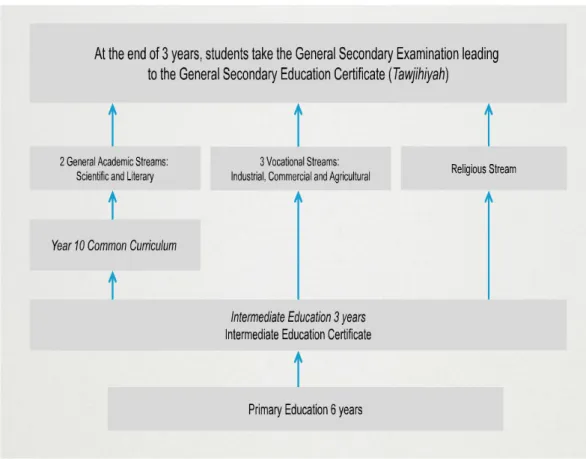
Figure 2: Structure of Education in KSA (Mihael, 2015) ... 54
Figure 3: Design of the Case Study ... 89
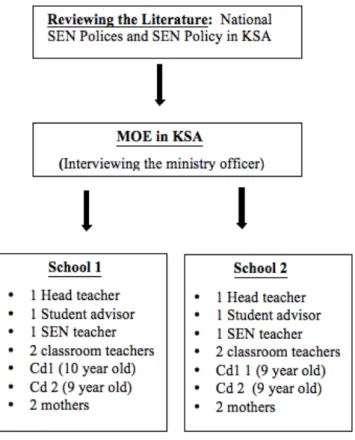
Figure 4: Distribution of Participants in The Main Study ... 94
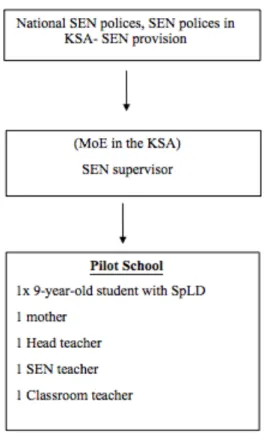
Figure 5: Distribution of Participants in The Pilot Study ... 97
Figure 6: Multiple Sources/ Triangulation ... 105
Figure 7: An Example of One of The Sub-Themes Analysis ... 120
Figure 8: Thematic Map ... 182
Figure 9: My Framework for Understanding Dyslexia ... 267
xii
LIST OF TABLES
Table 1: Observation Facts ... 112
Table 2: An Example of The Data From School 1 ... 122
Table 3: An example of The Documents Analysis Process (Policy of SpLD: Inclusive Education) ... 123
Table 4: The Participants' Codes Used in The Study ... 128
Table 5: Population Per School ... 129
xiii
LIST OF ABBREVIATIONS
BDA ... British Dyslexia Association
CRC ... Convention on the Rights of the Child DBI ... Dyslexia Belief Index
DfEE ... Department for Education and Employment IEP ... Individual educational plan
IQ ... Intelligence quotient KSA ... Kingdom of Saudi Arabia KAU ... King Abdul-Aziz University LD ... Learning disability
LEA ... Local education authority LRE ... Least Restrictive Environment MLD ... Moderate learning difficulties MoE ... Ministry of Education
PMLD ... Profound and multiple learning difficulties
RESPI ... Regulations for Special Education Programs and Institutes RtI ... The Responsiveness to Intervention
SAS ... Supervisory Attentional System SEN ... Special educational needs
SEND ... Special educational needs and disability
SENDO ... Special Educational Needs and Disability (Northern Ireland) Order 2005 SLD ... Specific learning disability
SLD ... Severe learning difficulties
SpLD ... Specific learning difficulties/ dyslexia UoB ... University of Birmingham
1
1
INTRODUCTION
1.1 Organization of thesis
For the better understanding of the research problem and accomplishment of the research aim and the objectives of this study, this thesis is divided into eight chapters, including the introduction chapter. The first chapter provides the rationale for the study, the research background and the context. In this chapter I provide the reason for choosing this subject for my investigation. The aim of this study and the research questions are also discussed in this chapter.
In Chapter 2 I discuss the theoretical framework adopted for this study by focusing on the biological, cognitive, and behavioural theories of dyslexia. Frith’s (1995) framework for understanding dyslexia, which forms the basis for data collection and analysis, is discussed in detail; her perspective for understanding dyslexia provided the initial themes for data analysis.
Chapter 3 highlights in detail the Saudi context with regard to development of education from a historical perspective, and the position of my study with regard to Islamic beliefs. The chapter then highlights the social model of disability and the concept of specific learning difficulties (SpLD) /dyslexia in KSA. The aim of this chapter is to provide a clear understanding of the research context which was essential in forming the basis for the study.
Chapter 4 provides a comprehensive methodological framework for the study. It sets out the research approach and design, and methods for data collection and
2
analysis of data collected through interviews, document analysis and observations. Ethical considerations for the study are also covered in this chapter.
Chapter 5 comprises data analysis and presentation, following the approaches explained in the methodology chapter. The chapter focuses on the emerging themes from the data gathered from the participants and from documents, including from observations.
In Chapter 6 I focus on the implications of the theoretical framework for the study. In the chapter I analyse data in relation to the three perspectives from Frith’s model of understanding dyslexia (1995): the biological, the cognitive and the behavioural perspectives.
Chapters 7 and 8 contain the discussion and conclusion. The conclusion chapter includes the recommendations following the findings of the study as well as the methods for disseminating the research findings.
1.2 Rationale of the study
Formal education, especially the emphasis on the ability to read and write as a tool for promoting Islamic religion, brought about a great revolution in the Middle Eastern countries, including KSA, where Islam is the predominant religion (House, 2012). What started as a means of promoting Islam resulted in the current modern education in the region (House, 2012). However, where on one hand, Islam and other religions encourage education and literacy as a means of propagating their doctrines, on the other hand, a range of other factors may have a negative effect on the endeavour. For example specific learning difficulties can make literacy lessons challenging for students with SpLD.
3
My study examines the provisions for students with SpLD in primary schools, in one city in KSA. The study is important in that it provides a view on the current situation in KSA with regard to the support given to students with SpLD. This study is significant in that it aims to provide the basis for the development of educational policies, which would focus on awareness and inclusion of students with SpLD, and consequently lead to reduced exclusion from the mainstream school system.
1.3 Research background: key issues regarding dyslexia in KSA
There are several specific learning difficulties which include dyspraxia, dysgraphia, dyscalculia, dyslexia and other learning difficulties. Individual learners with these difficulties are unable to read, write or comprehend mathematical problems smoothly (British Dyslexia Association, 2007). Among these difficulties, dyslexia is recognised as a highly prevalent learning difficulty in the eastern as well as western countries of the world and can be found in all age groups from children to adults (Elbeheri et al., 2006).
Westwood (2013) indicates that teachers of students with learning problems in inclusive settings are confronted with a range of issues like challenging behaviour in the classrooms, cultural pressures, additional teaching workload, regulatory requirements which they are expected to perform, and parental expectations as well as inadequate time and resources to be able to support such learners (Hussain, 2009). According to Al-Mousa (2010), some of these challenges, including overcrowded classroom and increasing diversity of multilingual and multicultural classes are common in most Asian and Middle Eastern countries, including KSA.
4
Faced with such challenges, in KSA teachers find it difficult to identify the students with SpLD and give them the support required for them to achieve their full potential (Al-Mousa, 2010). In some cases, children with SpLD are considered by teachers and parents as ‘backward’, ‘stupid’, ‘lazy’ and’ inattentive’, which adversely affects their difficulties (Riddick, 1996; Gwernan-Jones and Burden, 2010). This can result in a child becoming withdrawn, or developing behavioural problems (Afeafe, 2000; Al-Khateeb and Hadidi, 2010). This key point highlights the critical aspect about the lack of awareness and support for children with dyslexia in KSA and other Arabic countries.
Western countries have made efforts to make suitable provisions for such students in order to help them to deal with their difficulties. For example, in England the special educational needs and disability (SEND) Code of Practice (Department for Education, 2015) lays down guidelines for the provision for children with SEN, which all stakeholders, including teachers, school heads, educational authorities, regulatory bodies, and parents should adhere to. Such provisions include programmes for children with dyslexia (Dyslexia Action, 2012).
The current philosophy in the educational provision is that children, regardless of their individual differences, including children with SEN, should be educated in an inclusive setting; the efforts made by the KSA are also commendable in this regard. For example, the Saudi Arabian national provision for students with SEN is based upon the three-tier systems that support children with special needs by targeting their individual needs. Tier-1 is focused on early identification and quality classroom teaching for the students with transient or mild learning difficulties.
Tier-5
2 is developed for additional support for students with persistent learning difficulties, and Tier-3 is aimed to offer intensive individualised support for students with severe learning difficulties (Al-Mousa, 2010; Alquraini, 2013).
1.4 Research context
In KSA, programmes designed for students with literacy difficulties are known as ‘learning disabilities programmes’ (Ministry of Education, 2013). They normally emphasise awareness and inclusion of children with a learning disability (LD). According to the SEN policy in the KSA, students with dyslexia are categorised as students with LD, which is basically a general term for children experiencing significant difficulties in learning, and so the terms SpLD or dyslexia are never used (Al-Hano, 2006; Alquraini, 2011). As I stated earlier, SpLD is an umbrella term for various learning difficulties, and my focus in this study is on children with dyslexia.
Another issue worth mentioning regarding this study, which had an effect in sampling of participants is the gendered educational context of KSA. In KSA, there are no mixed schools for girls and boys. Also, as a female researcher, I could only access schools with girl students and female teachers. Furthermore, I could only interview mothers and female relatives. In that case references to children, teachers and parents in this study refer to females only.
A study by Al-Mousa (2010) shows that the lack of awareness about SpLD in KSA is one of the underlying factors affecting people’s perception about children with SpLD such that parents and teachers who have no knowledge about SpLD link the children’s difficulties with conditions related to mental health issues and
6
superstition. For example, parents of children with disability are usually stigmatized by the society (Al-Jadid, 2013) which views it as a curse or a punishment by God, as a result of the disability exhibited by children with SpLD, which is normally manifested by poor performance in schools compared to their peers. Such children in some cases may not be sent to school and parents may deny that their child needs extra help, like other children with a disability (Fletcher et al., 2002; Hussain, 2009; Al-Mousa, 2010).
Despite the existence of SEN policy, which regulates the programmes for children with learning disabilities, the country is yet to provide sufficient support to students with SpLD. This can be attributed to several factors. First, in KSA, educational provisions for students with literacy difficulties are not offered in all primary schools in the country; instead, the Ministry of Education (MoE) selects and offers support to students with literacy difficulties in just a few schools. The selection of these schools is based on certain criteria set by the MoE (Al-Mousa, 2010). The criteria are discussed in Chapter three.
Second, the classroom teachers in the selected schools lacked the knowledge and skills regarding how to identify and support students with SpLD. In KSA, although there are students with SpLD in primary schools, identification, assessment and awareness of SpLD is problematic due to lack of trained personnel in the field (Al-Ahmadi, 2009; Alquraini, 2011). Due to limited knowledge of dyslexia, teachers tend to have negative attitudes towards learners with dyslexia in KSA (Hornstra et al., 2010); as a result, children who perform poorly are most likely to be excluded by teachers (Hussain, 2009).
7
All these issues, as well as this researcher’s personal experience in the Saudi Arabian primary education system, substantiate the fact that current support programmes for students with SpLD in the context do not meet the needs of students with SpLD. The introduction and specification of the role of SEN teacher is recognised as a significant approach, recommended by the Saudi Arabian government, yet general observation suggests that students with SpLD enrolled in such programmes struggle with literacy and are only able to gain low-level literacy skills. All these challenges associated with the students’ with SpLD literacy learning in primary schools have identified a strong need to undertake investigations to find out better ways for the organisation of resources in order to address this problem (Hussain, 2009). In addition, apart from these problems identified in the literature, my personal and professional experiences are also motivating factors for my study.
1.5 My journey to study dyslexia
My nephew is the key motivator for my investigation of dyslexia provision in KSA. Due to lack of support by the teachers, my nephew kept repeating classes at primary school, intermediate and secondary schools. The teachers would only allow him to move to the next class as a way of ‘getting rid’ of him from the school, which greatly had an effect on his self-esteem. This was made worse by his parents who could not understand why he was performing poorly in school as compared to his siblings; as a result, they would punish him for poor performance in school.
A study in KSA by Al-Ahmadi (2009), reports that due to lack of awareness of learning needs of children with SpLD, classroom teachers quite often have negative
8
attitudes toward them in class. Hence, my nephew who, at the age of twenty-one might have been at university, was still in secondary school, hence being the oldest student in the school. The study also indicates that universities in KSA also lack provision for students with SpLD because the current provisions are only drafted for primary schools and for some intermediate and secondary schools.
The experience I had with my nephew developed my interest in learning more about dyslexia. I realised that there is a strong need to identify the main issues regarding the lack of support for students with SpLD in KSA. Therefore, after completing my undergraduate degree in 2007, I started my career as a teaching assistant in the special educational needs department in one university in KSA. The following year, in 2008, I was awarded a KSA scholarship to study a Master’s degree in special educational needs at the University of Exeter in England. During my masters study and placement in UK schools, I familiarised myself with the education system in England.
The present study, funded by KSA, studies the current policy and provision for SpLD in primary schools in one city in KSA and to gather views from different stakeholders. The aim is to bridge a research gap in KSA studies in this field. I have chosen Frith’s framework as my theoretical framework to interpret the different views and beliefs of SpLD in KSA. Dyslexia in KSA is explored from three different perspectives (biological, cognitive and behavioural) as guided by Frith’s framework for understanding dyslexia (Frith, 1995). I also used a constructivist approach with all my data to gain more understating about the educational provision for students with SpLD in primary schools in one city in KSA.
9
1.6 Aim of the study
The key aim of this research study is to evaluate and describe the policy and provision for learners with SpLD in the city of my study in KSA.
The objectives are to find out how SpLD is defined by parents and professionals in KSA. Also, it aims to investigate parents’ and teachers’ perceptions towards inclusion of children with dyslexia in primary schools in one city, in KSA. Moreover, my research objectives tend to investigate how the government’s policy on inclusion of children with dyslexia is implemented in classrooms in primary schools in one city in KSA, and to investigate the collaboration between teachers, parents and the government in supporting children with dyslexia in primary schools in that city. Lastly it seeks to identify measures that can be taken to improve the support given to children with dyslexia in primary schools in KSA.
1.6.1 Research Questions
To achieve the research aims, one main research question has led me to pursue the investigation in the current study. The research question is:
1. Given the idiosyncratic definition and discussion of specific learning difficulties (SpLD) in the Kingdom of Saudi Arabia, how are strategies for identification and provision framed in the context of actual classrooms?
As part of this, I intend to look at a range of issues concerning the difficulties children and teachers encounter in the classroom, teachers’, advisers’, parents’ and childrens’ with SpLD perspectives of inclusion as well as the kind of identification and support that is offered in two primary schools in one city in KSA.
10 The issues to be investigated are:
• Current provisions for children with SpLD in two primary schools in one city in KSA.
• Teachers’ advisors’ and parents’ perspectives regarding SpLD from two primary schools in one city in KSA (Definitions and causes).
• Identification and assessment of students with SpLD in these two primary schools.
• Difficulties children with SpLD encounter in terms of teaching and inclusion. • Difficulties teachers face in teaching children with SpLD.
• Teachers’ advisers’ and parents’ perceptions about inclusion of children with SpLD in regular classrooms.
The research question and its issues are also informed by the literature reviewed on the importance of educational provision. According to MacKay (1997) and MacKay (2006), proper awareness of the educational provision can help in transforming the existing set of knowledge about a specific learning difficulty into a more enhanced set of knowledge.
1.7 Conclusion
In this chapter, I present a case for the need to investigate students with SpLD in primary schools of KSA, drawing on relevant research literature. Despite the fact that Islam, the religion of KSA, encourages education and literacy and there are provisions for SpLD in KSA education, a range of issues still confront students,
11
teachers and other stakeholders in identifying, assessing and supporting students with SpLD. The chapter sets out some of the reasons for limited educational support for primary school students with SpLD in KSA. An important issue is a lack of awareness by the stakeholders regarding considering a shared framework that includes biological, cognitive and behavioural perspectives (Frith, 1995). In the next chapter, I extensively discuss the theoretical framework of my study.
12
2
FRITH’S FRAMEWORK FOR UNDERSTANDING DYSLEXIA
2.1 Introduction
In this chapter I examine the theory explored in this study to explain the concept under investigation. A theoretical framework was significant in linking the literature review to the methodology and in the interpretation of the research findings. The theoretical framework introduces and describes the philosophical viewpoint that explains why the research problem under investigation exists (Morse, 1994) cited in Martens (1998: 51).
Frith’s theoretical approach to understanding dyslexia is extensively discussed in this chapter. Frith’s model of dyslexia was deemed appropriate for this study due to her approach in understanding dyslexia which is quite similar to my research approach. By examining some of the dyslexia theoretical backgrounds, I was able to understand the nature of the difficulties faced by learners with dyslexia and how these influence approaches to teaching and learning.
2.2 Frith’s framework for understanding dyslexia
There is a rich body of research on dyslexia dating more than one hundred years ago. The focus of my investigation covers a wide scope including the nature, causes, assessment, and various forms of support and provision based on different underpinning theories and philosophies. The most recent research acknowledges that both genetic and environmental influences are contributory factors in dyslexia. Likewise, further attention has been given to a better understanding of the interactions between the behavioural, social and emotional dimensions experienced
13
by learners with dyslexia and in so doing, using them to this group of learners’ advantage. In the midst of all these research studies, the review also found that a universal consensus on the precise nature of dyslexia has still to be reached. On a positive note, there now exist a vast and still growing number of psychologists, academics and researchers who support the view that the development of phonological processing skills for learners with dyslexia plays a significant role in helping them learn to read.
There is no consensus among experts on the definition of dyslexia, nor is there agreement on its causes, hence there are many schools of thought, leading to different theories about dyslexia (Reid, 2009). For example, while some scholars view it as a developmental abnormality (Fawcett, 2001), to others, dyslexia is considered a neurological disorder with a genetic origin (Shaywitz, 1998; Frith et al., 2011). There are yet others who are sceptical whether dyslexia exists or is just a myth (Elliott and Grigorenko, 2014).
Since the definition of SpLD states that it is a disorder in one or more of the basic psychological processes, some professionals regard SpLD as a biologically based disorder that is associated with specific neurological dysfunctions (Shaywitz, 1998). While it is still unclear what precedes the neurological disorders that may lead to SpLD, heredity is considered to be a major factor, with SpLD occurring at higher rates within members of the same families (Frith et al., 2011). Nonetheless, Frith et al. (2011) argue that biological theory lacks rigorous empirical evidence since the existence of the “condition” is virtually unproven. After years of research, it has
14
still not been demonstrated that neurological dysfunctions exist in more than a minuscule number of children with SpLD (Coles, 1989).
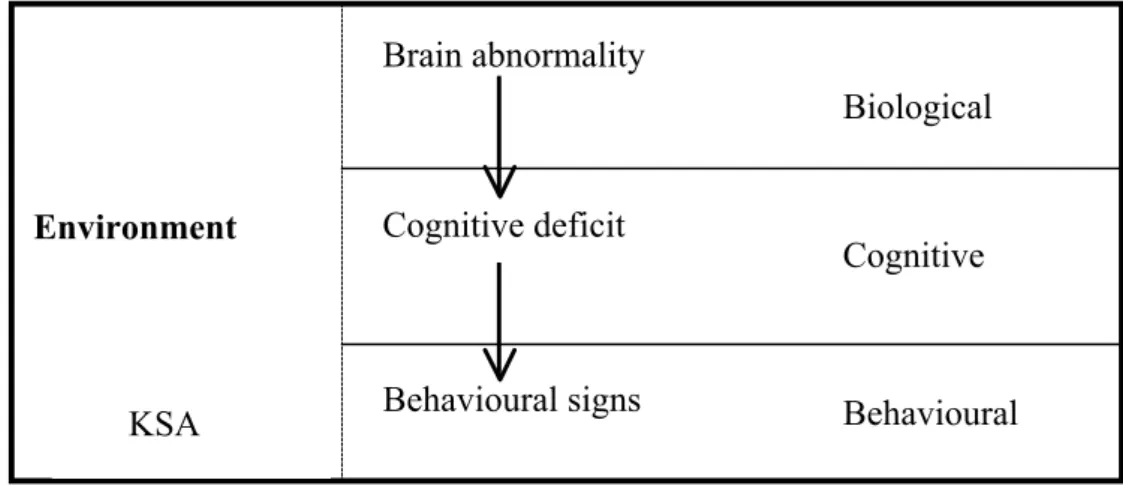
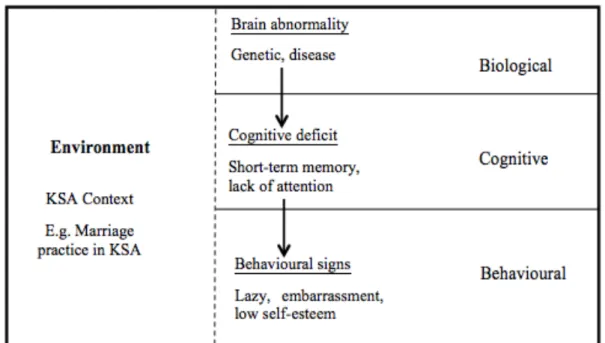
To clearly explain the theories of developmental dyslexia, I critically examined a multi-level causal modelling framework which was introduced by Frith (1995). This led to a clear understanding of different aspects to dyslexia, hence helping to clarify issues related to the condition, including some which are far beyond the reading, writing and spelling problems, especially those with biological and behavioural signs. The framework accounts for diverse theories of developmental dyslexia and classifies them into three main categories or levels, namely biological, cognitive, and behavioural as shown in Figure 1 below.
Figure 1: Frith's Framework of Understanding Dyslexia (Adopted from Frith, 1995)
Figure 1 shows the conceptual framework adapted for this study, which according to Martens (1998) should provide a bearing on the planning and conducting of the literature review. Likewise, Maxwell (1996) in Robson, (2002: 63) describes conceptual frameworks as ‘the system of concepts, assumptions, expectations,
Environment Brain abnormality Cognitive deficit Behavioural signs Biological Cognitive Behavioural KSA
15
beliefs, and theories that supports and informs your research’. In the same vein, Miles and Huberman (1994) argue that ‘a conceptual framework explains, either graphically or in narrative form, the main things to be studied ‒ the key factors, constructs, or variables ‒ and the presumed relationships among them’ (p.18). Singleton (2002) has shown that there is a relationship between certain cognitive abilities and dyslexia, for example in the cognitive neuropsychological perspective in which dyslexia is seen as a deficit in certain cognitive functions. Dyslexia is viewed as a form of learning difficulty resulting from a specific combination of cognitive limitations. It is not surprising then that the cognitive domain most researched in relation to dyslexia is that of phonological skills. Since cognitive abilities can be assessed in children before they begin to read and write, therefore it is possible to anticipate which children are likely to struggle in literacy.
Frith’s framework is looking into the different aspects of dyslexia and its relationship with the environment. The focus on the environmental factors supported me in exploring how SpLD is defined and identified in KSA and the support given to the students identified with SpLD. Second, the conceptual framework provides the structure for the study based on literature, personal experience and research findings. Third, despite the debates on the neurological basis of dyslexia, neither Frith’s model nor the present study focused on this. Although, Frith’s framework does not fit completely with my study, it supported me in addressing some of the study’s aims as it helped me frame the distinct characteristics of the Arabic environment.
16
In her framework, Frith (1995) focuses mainly on students with dyslexia, however, in my study, I include different categories of participants, including students with dyslexia. The focal point of the study was the Arabic literacy lessons; nonetheless, the similarities of this research in relation to Frith’s framework as well as other SpLD difficulties were included.
In the environmental elements I also included different aspects such as the use of technology and multimodality in classrooms. These aspects are now part of the environment, in which children are living and are working with the expectation to be able to use the smart devices and be able to text. Also there are a lot of computer programmes and software that help children with SpLD. Spell checker programmes help those children a lot, therefore the children do not have to wait for their teachers or parents to correct them (BDA, 2013).
Finally, Frith, in her framework for understanding dyslexia, discusses more about cognitive perspective and focused on phonological deficits. She focuses a lot on identification and assessment of students with SpLD, while I focus more on educational aspects (Frederickson and Cline, 2009). In order to take account of the relationship between cognitive theories and pedagogies, the difficulties that are usually faced by students with SpLD and teachers in the selected primary schools in this study are presented.
2.2.1 The Biological perspectives
Dyslexia is generally described as a disorder in learning to read, which scientists, educators, and parents have for years debated the causes. In this section I explore the first perspective of Frith’s framework of understanding dyslexia; I critically
17
discuss the biological factors that lead to dyslexia and the influence of environmental factors. I therefore look at the biological explanation of dyslexia, including genetic and heredity factors and how these factors may or may not influence reading.
One of the basic assumptions in this study is that dyslexia and associated problems have a biological basis, and relate primarily to constitutional features of the brain. According to Frith (1995) biological factors may explain dyslexia, including: genetic, neurobiological, and hormonal factors. The genetic and neurobiological influences are considered as the most influential causes of dyslexia in current scientific research. For example the International Dyslexia Association (formerly the Orton Dyslexia Society) provides the following definition of dyslexia:
Dyslexia is a specific learning disability that is neurobiological in origin. It is characterized by difficulties with accurate and/or fluent word recognition and by poor spelling and decoding abilities. These difficulties typically result from a deficit in the phonological component of language that is often unexpected in relation to other cognitive abilities and the provision of effective classroom instruction. Secondary consequences may include problems in reading comprehension and reduced reading experience that can impede growth of vocabulary and background knowledge. (International Dyslexia Association, 2002).
Although Frith is strongly inclined towards the biological explanation of dyslexia, she at the same acknowledges that interactions between biology and environment cannot be ignored (Frith, 1995; Frith, 2002). According to Frith (1995), as a developmental disorder dyslexia can be explained by linking evidence from the three levels shown in figure 1: Frith argues that dyslexia has a biological origin leading to a cognitive deficit hence resulting in particular pattern of behavioural signs as expressed in Figure 1 (Frith, 1995).
18
Family studies have shown that there is more risk of having a child with dyslexia if you are born into a family with a history of this problem in the general population (Firth et al., 2013). In a major longitudinal study, Frith et al. (2011) followed children with dyslexia from 2.5 years to 8 years and found that 65% were assessed with dyslexia at the endpoint. Proponents of biological theory like Gilger et al. (1991) cited in Reid (2009) relied on data derived from genetic studies to estimate that the risk of a son having dyslexia if he has a father with dyslexia are about 40%. Gilger (2008) cited in Reid (2009) states that although there is a need to be wary of studies that make sweeping generalisations about the impact of genes on learning and literacy, there is strong evidence that genes do have an impact on dyslexia, and that there will be children who are genetically at risk of dyslexia. Study of twins has over the years provided valuable insight into the contribution of genetic and environmental factors to dyslexia. For example Hensler et al. (2010) in their study, which involved 1,024 first grade twins, observed high heritabilities for reading ability and dyslexia indicating significant genetic influences.
Further studies have also been conducted on consanguineous marriages to determine their effect on dyslexia. For example, a study of the effect of consanguineous marriage on reading disability in the Arab community by Abu-Rabia and Maroun (2005) involved children of first-cousin marriages, second-cousin marriages, disantly related parents and children of unrelated parents. The results of their study indicated that the rate of reading disabilities among children of first-cousin parents was higher than that of children of second-cousin parents, distantly related parents, or unrelated parents. Although in Frith’s causal model this did not feature, it was one of the themes which emerged from the participants
19
during data collection. Some participants attributed the causes of learning disabilities to consanguinity.
Although genetic factors are considered some of the dimensions of dyslexia, nonetheless, the occurrence of dyslexia in a family is not sufficient to support the genetic explanation of the problem since elements such as the environment are part of the shared components of child development. Hence, even in the case of monozygotic twins, the effect of environment cannot be entirely ruled out. To conclude this section I will refer back to Frith’s framework (see Figure 1) in which she indicated that the environment can be heavily involved in each perspective. 2.2.2 Cognitive perspectives
This section highlights major issues pertaining to the cognitive perspective of understanding dyslexia. I concentrate on issues such as phonological deficit, visual and auditory deficit, automaticity, working memory, phonological awareness, and orthographic skills.
Over the last three decades, the phonological deficit hypothesis has remained dominant in providing a cognitive explanation for dyslexia (Snowling, 1998). Frith (2011) argues that healthcare professionals must be aware of the cognitive perspectives of dyslexia in order to apply significant measures. According to Morgan and Klein (2000: 18), “An understanding of the SpLD cognitive style may overcome the mismatch between how people with dyslexia learn, remember, and process information and the ideas, expectations, and assumptions of their teachers, colleagues, employers, friends, and spouses who have no dyslexia.”
20
The rationale for reviewing the cognitive theory was to link the data collected during this study to existing knowledge of the subject under investigation. Just as I stated earlier, a review of existing literature was beneficial in developing themes for the study and for broadening my understanding of dyslexia as well. Since one of my research aims was to investigate teachers’ and parents’ perspectives of SpLD in primary schools in one city in KSA, it was prudent that I consider the cognitive aspect of dyslexia in examining the Saudi context of how children with dyslexia are viewed in order to develop a strong argument from the data. Just as stated by Frith, (See figure 1) the environment interacts with all three perspectives to influence the extent to which children with dyslexia are influenced by the ‘disorder'.
There are a number of theories regarding the cognitive nature of developmental dyslexia. The most common theory suggests that individuals with dyslexia have a phonological deficit. Frith (1995) describes phonology as a concept that belongs to the cognitive level of description. According to Snowling (2000), individuals with dyslexia seem to be slow in developing phonemic analysis skills; therefore they tend to underperform in tasks involving phonological awareness, such as phonemic segmentation, short-term memory, rapid naming, and the manipulation of speech sounds.
Another perspective of the phonological theory of developmental dyslexia focuses on orthography in phonological mappings of reading acquisition (Tops et al., 2012). A study by Swanson, Zheng and Jerman (2009) comparing children with and without reading disabilities with measures of short-term memory and working memory concluded that deficits related to the phonological loop contribute to
21
observed reading and spelling difficulties in children with literacy impairments. A number of studies on neuro-imaging data, the functions of the brain, and its anatomical structure support the phonological deficit hypothesis, while others have highlighted phonological processing as a key to reading development. Nation et al. (2004) argue that most current theories of reading development stress the fundamental importance of phonological skills in learning to read.
Theorists such as Snowling (2000) recognize phonological deficit as a possible indicator of dyslexia; but are not of the view that there is any causal role in the reading disorder. Despite the fact that the phonological deficit hypothesis has been widely accepted amongst researchers as the main cognitive deficit in dyslexia, there are those of the opinion, for example Undheim and Sund (2008), that phonological deficit theory cannot fully explain or account for the causes of dyslexia: other causes such as visual processing might have a great impact on reading acquisition. Nonetheless, according to Undheim et al. (2011) there is a consensus amongst researchers that not all poor readers have deficits in phonological processing.
The limitation of the phonological deficit theory is that it does not account for difficulties in ‘broader areas of functioning’. According to Nicolson and Fawcett (1995), it is evident that children with dyslexia face difficulties with some skills that are not related to phonological processing, such as “forgetfulness, distractibility and clumsiness” (p.20). Additionally, the phonological deficit hypothesis becomes less significant in relation to other factors such as “communication skills, processing speed and self-esteem” in cases of adult dyslexics; there is a significant amount of data of dyslexia cases which are not phonological. Several researchers
22
such as McArthur and Bishop (2001), Mody (2003) and Rosen (2003) have argued that deficits observed in processing phonological awareness may be due to lower-level auditory deficits resulting from perception of brief or rapid speech and non-speech sounds, or due to visual difficulties and visual attention problems in the perception of motion or even a combination of multimodal “auditory and visual” deficits in processing dynamic and transient stimuli. According to Farmer and Klein (1995), any damage in early auditory pathways affects the quality of phonemic representation, causing disturbances in typical reading development due to the lack of interaction between auditory temporal processing, speech perception/production and reading acquisition.
Proponents of the phonological disorder hypothesis as a core factor in reading deficits, such as Ramus and Szenkovits (2008), argue that the phonological deficit affects three main cognitive abilities; phonological awareness, phonological short-term memory, and slow lexical retrieval ability. Tamboer and Vorst (2015) describe phonemic awareness as a meta-linguistic skill, which involves efficient understanding of the relationship between alphabetical letters and their corresponding phonemes. Throughout phonological processing, children link the speech they hear (phonetic input) with the utterance they produce (phonetic output). Individuals with adequate phonological awareness skills have the ability to break down sentences into words, manipulate these parts into rhymes, substitute one sound for another, blend sounds together, recognize words as a sequence of phonemes (i.e. /r/a/t) and delete sounds (i.e. “blend” without the /b/).
23
Bradley and Bryant (1983) have investigated the comparative effectiveness of training in rhyming and alliteration skills (sound categorization) as compared to training in semantic categorization. In their study, the group of pre-readers who were trained in sound categorization showed more significant progress in reading but equivalent progress in mathematics, providing evidence for a causal link between phonological awareness skills and reading acquisition. Bradley and Bryant (1983) as well as Bradley (1983) confirmed their findings through a series of studies of both normal readers and of children with dyslexia by relating the ability to rhyme to the knowledge of nursery rhymes. The phonological deficit hypothesis claims that individuals with dyslexia have a difficulty specifically in the representation, storage and retrieval of speech sound (Callens et al., 2012).
Studies reviewed by Ramus and Szenkovist (2008) identified impairments that are specific to the segmental phonology; these are the phonemes, which are distinctive in a language. Phonology also extends to the prosody of a language, which comprises intonation, pausing patterns, and rhymes. Prosodic awareness is developed prior to the development of phonemic awareness; young infants are sensitive to prosody and they incorporate it in their cry patterns. Prosody plays a key role in language awareness in infants; as pitch variation and pausing facilitate the phrase boundaries’ identification, rhyme helps with identification of syllables, and “envelope rise time” frequency of the intensity change from vowel onset to intensity maximum. Hence, impaired ability to recognize acoustic features of the prosodic phonology of a language is associated with difficulties in segmental phonology. The phonological deficit hypothesis provides a causal explanation for dyslexia, describing the reading difficulties of people with dyslexia as an inability
24
to store and retrieve the grapheme/phoneme correspondence of the letters with the constituent sounds of speech (Doyle, 2002; Shaywitz and Shaywitz, 2005). This difficulty hinders the basis of reading with an alphabetical system, which in turn obstructs progress in learning to read. Phonological awareness is a fundamental prerequisite for reading acquisition (Peterson and Pennington, 2012). Tops et al. (2012) have highlighted that in cases of mild hearing loss, where the formation of phonological representation, speech perception and production is disturbed, reading acquisition could still take place, while in cases where mild phonological deficit is present and speech perception and production are intact, learning to read can be a huge challenge. This implies that phonological development is disrupted in individuals with dyslexia, which in turn lead to poor language acquisition.
Most people with dyslexia learn better if the knowledge is presented in a larger context, for example, they would have a difficult time remembering three steps in a procedure if they did not know how those steps fit into the rest of the procedure (Mortimore, 2008; Bell, 2013). Many people with dyslexia also tend to be very visual thinkers (Morgan and Klein, 2000). Also people with dyslexia usually think of problems in very holistic terms, often seeing the “big picture” before seeing any small details (Morgan and Klein, 2000; Mortimore, 2008). Additionally, people with dyslexia tend to be very good at visualizing multiple dimensions of drawings, often being able to extrapolate the third dimension from two dimensional drawings and plans (Gotshall and Stefanou, 2011). They tend to learn very well from visual aids such as diagrams and transparencies (Morgan and Klein, 2000; Powell, et al., 2004). Tactile-kinesthetic methods of learning can also be very beneficial as many
25
people with dyslexia are very good at learning through a “hands on” approach (Mortimore, 2008; Gotshall and Stefanou, 2011).
Paulesu et al. (1996) reported around 10% of the population in English-speaking countries has great difficulty learning to read in spite of adequate educational resources, normal cognitive development, and no obvious sensory or oral language defects. Researchers and educators generally agree that difficulties with phonological processing, short-term memory, rapid automatic naming skills, and orthographic processing are the root causes of early reading problems. Pennington, van der Lely and Marshall (2010) have argued that the root deficit in reading disability is a subtle language processing problem that gives rise to difficulty with analysis, synthesis, memory, and/or rapid recall of the sounds of the language. Children who are most at risk of developing reading difficulties lack skills in: 1) phonological awareness, including phoneme analysis, segmentation, and blending in spoken words; 2) the ability to say rapidly the names of known objects, colours, letters, or numbers; and 3) short-term auditory/verbal memory.
Phonological awareness is a precursor to understanding the alphabetical principle that phonemes correspond to alphabetical letters in a spelling unit. Rapid naming is related to the ability to associate names automatically with orthographic symbols, a skill that is needed to acquire automatic word recognition. Some of the studies have found that the naming system offers powerful early differential prediction of reading problems, and that speed and accuracy of word-finding differentiate average from readers with dyslexia at all ages (Wolf and Segal, 1999; van der Lely and Marshall, 2010; Peterson and Pennington, 2012). Some of the investigators
26
have also reported that low scores on memory-span tasks in persons with reading disabilities seem to be a marker for poor response to remediation. Torgesen (2005) reported that people with reading disabilities tend to do worse consistently on memory-span tests than on any other single type of task commonly found in intelligence tests.
Waring et al. (1996) have found that the working memory task that requires the student to repeat digits presented aloud in reverse order was important in distinguishing between poor readers who recovered by sixth grade and those who did not. Phonological awareness, rapid naming, and phonological memory deficits as markers for dyslexia come from the theoretical perspective that reading disabilities are the result of problems with a core phonological processing deficit. Other research studies have made certain contributions of orthographic skills to reading and reading disabilities. Growth in reading was predicted by Verbal IQ, orthographic, phonological, and RAN skills. Berninger et al. (2001) have found an orthographic factor, based on short-term coding and long-term memory for orthographic word forms was one of the strongest predictors of reading and writing disability in children and adults. Gotshall and Stefanou (2011) have supported the idea of more cognitive trait deficiencies that the learner is experiencing. There is a general agreement in research that every student having reading, writing, and memory related problems must be explicitly taught sound-symbol correspondences to acquire phonological decoding skills. The methodical teaching of phonological analysis and synthesis skills is necessary to remediate dyslexia (Gotshall and Stefanou, 2011).
27
Initial problems with learning sound-symbol correspondence commonly give rise to spelling problems, with resulting writing failure and avoidance of writing activities (Frith, 1980). Large numbers of middle school students report writing difficulty, and writing as the most common problem of high school students with learning disabilities (Gotshall and Stefanou, 2011). As is the case with reading, disabilities in writing often involve the short-circuiting of foundational skills. Without the necessary foundational skills, fluency in composition is elusive. Writing problems typically range from lower order technical problems, such as difficulty with handwriting and handling of pen, to higher order cognitive and meta-cognitive/executive functioning problems involving planning, goal-setting, clarity, organization, and genre concerns.
Students with writing difficulties often show fine motor, orthographic, and/or orthographic-motor integration problems (Gotshall and Stefanou, 2011). These difficulties affect their handwriting fluency, and poor handwriting skills, along with poor spelling, impair compositional fluency. Thus, it takes these children longer both to generate ideas for writing and to physically write text. Gotshall and Stefanou (2011) argued that poor handwriting is generally not primarily the result of poor motor skills, but of poor letter representation in memory. The compromised letter knowledge of children with poor handwriting, contributes to their difficulty in producing written text fluently. The quality of phonological and orthographic representations of letters in memory may influence the spelling and learning processes.
28
Berninger et al. (1997) in a surprising finding, reported that their sample of children receiving training in handwriting fluency and composition improved in word recognition in reading, a skill that was not directly taught. It would appear, then, that handwriting may be a tool for developing orthographic awareness, which, along with phonological awareness, is essential for decoding. Explicit instinct in handwriting may transfer to both word recognition in reading and to text generation in written composition. These authors suggest that, since writing is a multi-component process, training in one process may have had unanticipated beneficial effects on other literacy processes. As children develop, they need to use higher-level cognitive skills of memory and executive function for writing. For intermediate grade children, the verbal working memory system, that function by which we hold ideas in mind long enough to use them, becomes more important. Spelling becomes more apparent after third grade because there are more unknown and low frequency words that students cannot simply memorize. Students do not have visual cues, and they usually start to randomly guess at unknown words, typically using just the first consonant (Bell, 2013). Hudson et al. (2007) described the two most obvious difficulties displayed by children with dyslexia when asked to read grade-level text. First, they accurately read fewer words in a passage by sight than average readers. They frequently guess at or attempt to sound out many of the words, displaying difficulty with fluent word recognition. The second difficulty is regarding decoding, which has resulted in many errors when reading words they do not know (Bell, 2013). This difficulty is related to the previously described weakness in connecting letters and sounds when decoding words. Both of these
29
weaknesses lead to difficulty with comprehending what they read because of the extreme effort and time involved in reading printed words.
In addition to problems with phonological functioning and literacy, many people with dyslexia have problems with issues such as motor coordination and balancing. The cerebellum could be the prime candidate for the cause of difficulties experienced by people with dyslexia, as argued by Nicolson and Fawcett (1990). Assessing a range of skills in cognitive study, severe deficits were detected in motor skills, balance, phonological skills and rapid processing, a similar pattern to the automatization deficit hypothesis of people with dyslexia (Nicolson and Fawcett, 1995).
Difficulties experienced by individuals with dyslexia may be due to cerebellar deficits, as this is the major brain structure which is responsible for sensory information integration, prediction of muscular outcomes and automatization. From a biological perspective, people with dyslexia have a mildly dysfunctional cerebellum, which results in a number of cognitive difficulties (Gotshall and Stefanou, 2011). For example: (i) the cerebellum plays a vital role in motor coordination which results in impaired or dysfunctional speech articulation, in turn leading to deficiencies in phonological representation; and (ii) the cerebellum is responsible for the automatization of learned tasks such as reading, driving and typing.
A weak ability to automatize would affect the ability to learn phoneme-grapheme correspondences, and in particular may lead to apraxia of speech, which prevents the smooth and efficient translation of phonology into verbal-motor commands.
30
Finally, (iii) the cerebellum is a support structure for cognitive processes of all types, and therefore its impairment affects the co-ordination of sensory data acquired by the brain (Gotshall and Stefanou, 2011). A study carried out by Fawcett et al. (1996) to explore the correlation between incidents of dyslexia and cerebellar functions (posture, muscle tone, hypotonia of the upper limbs and complex voluntary movement) reported that the performance of individuals with dyslexia was worse than that of the control group in eleven out of fourteen tasks. They concluded that individuals with dyslexia are deficient in cerebellar-based tasks. Bosse et al. (2007) found that the attention span of children with dyslexia is usually very low, they get distracted quite easily and they are generally inattentive in class hence failing to follow instructions leading to poor performance in school. Teachers are required to seek specialist support when they notice such children in their classes. According to Gotshall and Stefanou, (2011) the support of a specialist teacher would be necessary to ensure that these children achieve their potential. In summary, children with dyslexia have deficiencies in a core group of phonological skills involving phonological awareness, rapid serial naming, short-term memory, and orthographic skills. Letter identification and sound symbol correspondence difficulties lead to later-emerging problems with spelling, handwriting, and written language composition. Children, having reading problems, should be taught explicit sound/symbol connections, while children with writing problems need explicit instruction in mechanical writing skills of letter formation and spelling (Gotshall and Stefanou, 2011). Students with dyslexia do not generally become proficient in these areas without specific instruction. Lack of automaticity
31
in skills like letter recognition, spelling, and handwriting interferes with emergence of later meta-cognitive skills like reading comprehension and writing composition. 2.2.3 Behavioural perspectives
This section is aimed at developing an understanding of the behavioural perspective of dyslexia by critically discussing behavioural difficulties associated with dyslexia. Students with dyslexia usually have low self-esteem, hence they hardly participate in class for fear of getting embarrassed. They often underestimate personal skills and knowledge and tend to believe that because they have difficulties in reading, spelling and writing, they cannot perform as good as their peers. In this section I discuss some of the behavioural and emotional factors characterised in students with dyslexia, such as lack of self-confidence, low self-esteem, truancy and laziness.
Years of continuous failure in school have a detrimental effect on students. Most students experiencing learning difficulties usually have low self-esteem and lack confidence. Students with dyslexia experience serious emotional outcomes due to the inability to develop effective skills and strategies in literacy. Emotional damage is worsened when parents and teachers fail to understand the student’s difficulties and misinterpret it as laziness, immaturity or defiance, hence failing to manage the learning difficulty appropriately (Riddick, 1996; Riddick et al., 1999). Just as I stated in the case of my nephew, many children experiencing difficulties in learning are often subjected to verbal and physical abuse from their peers, from parents and from their teachers (UNICEF, 2005; Saylor and Leach, 2009; The International NGO Advisory Council, 2011). This causes them to become defensive and often
32
they try avoiding school including truancy and eventually quitting school (Frith, 2011). Schools and parents have an important role to play in preventing behavioural difficulties that may develop as a reaction to learning difficulties.
Firth et al. (2013) reported that most pre-schoolers with dyslexia were happy and well adjusted. Their emotional and behavioural problems began when there was a measurable discrepancy between cognitive ability and academic performance. The frustration in children with dyslexia often comes from their inability to meet expectations or from being misunderstood by others. As they progress in school years, the frustration increases as their classmates outshine them in literacy skills. Due to the learning difficulty associated with dyslexia they most often make many ‘careless’ or ‘stupid’ mistakes, which is extremely frustrating to them as it makes them feel incompetent and inadequate due to their inability to meet expectations. Most parents and teachers perceive a bright child who is not doing enough to learn to read and write. Unlike physical disabilities, dyslexia is physically invisible. Firth et al. (2013) described how children with dyslexia find it difficult to cope in class when they begin to read. They find it hard to perceive and understand a set of codes that their schoolmates operate easily with.
Children with dyslexia are struggling with the sequence of the order of the letters of the alphabet (Mortimore, 2008), they poorly understand and remember the text they read and hear. In addition they have difficulties in distinguishing between left and right, smooth swapping in the correct order, for example, of month names, days of the week, and numbers (Elbeheri et al., 2006; Mortimore, 2008). Dyslexia is a very critical concern for the parents and teachers who in most cases perceive the child as