i √ Confidential
Non-confidential
STATUS OF THESIS
Title of thesis
I, MOHAMMAD ARIF ROHMAN hereby allow my thesis to be placed at the Information Resource Center (IRC) of Universiti Teknologi PETRONAS (UTP) with the following conditions:
1. The thesis becomes the property of UTP.
2. The IRC of UTP may make copies of the thesis for academic purposes only. 3. This thesis is classified as
If this thesis is confidential, please state the reason:
Some of the information related disclosed in this thesis belongs to the contractors and the owners right.
The contents of the thesis will remain confidential for - years. Remarks on disclosure:
-
Endorsed by
_________________________ ________________________ Signature of Author Signature of Supervisor
Assoc. Prof. Ir. Dr. Arazi Idrus
Permanent Address:
Puri Surya Jaya E3-58 Sidoarjo, Indonesia
Date: __________________________ Date: ___________________ Project Cost Contingency Estimation Modeling Using
ii
APPROVAL PAGE
UNIVERSITI TEKNOLOGI PETRONAS Approval by Supervisor (s)
The undersigned certify that they have read, and recommend to The Postgraduate Studies Programme for acceptance, a thesis entitled “Project Cost Contingency Estimation Modeling Using Risk Analysis and Fuzzy Expert System” submitted by Mohammad Arif Rohman for the fulfillment of the requirements for the degree of Master of Science in Civil Engineering.
_______________________ Date
Signature : ______________________________ Main supervisor : Assoc. Prof. Ir. Dr. Arazi Idrus
Date : ______________________________
Co-Supervisor 1 : Assoc. Prof. Ir. Dr. Muhd. Fadhil Nuruddin Co-Supervisor 2 : ______________________________
iii
TITLE PAGE
UNIVERSITI TEKNOLOGI PETRONAS
Project Cost Contingency Estimation Modeling Using Risk Analysis and Fuzzy Expert System
By
Mohammad Arif Rohman
A THESIS
SUBMITTED TO THE POSTGRADUATE STUDIES PROGRAM AS A REQUIREMENT FOR THE
DEGREE OF MASTER OF SCIENCE IN CIVIL ENGINEERING
BANDAR SERI ISKANDAR, PERAK
iv
DECLARATION
I hereby declare that the thesis is based on my original work except for quotations and citations which have been duly acknowledged. I also declare that it has not been previously or concurrently submitted for any other degree at UTP or other institutions.
Signature :
Name : MOHAMMAD ARIF ROHMAN Date :
v
ABSTRACT
Determination of the appropriate project cost contingency, especially during the tendering stage is very important to ensure a successful bidding of the project. Setting too high a cost contingency will not make the tender look competitive, while putting too low will not cover risks that may cause cost overrun during the construction. Traditionally, contractors estimate cost contingency based on subjective judgment, such as 5-10% from the base cost estimated by considering past similar project. This method is typically derived from intuition, past experience and historical data. However, such method does not have a sound basis and is difficult to justify or defend. More objective methods for estimating project cost contingency have been presented. However, most of the methods still rely on formal modeling techniques which sometimes require the user to have knowledge and familiarity with statistical techniques. This research proposes a method to estimate cost contingency using a flexible and rational approach based on risk analysis and fuzzy expert system concept. This method could accommodate contractors’ subjective judgment and also the use of risk analysis and management concept in the analysis process. The proposed method involved the development of cost contingency model for building and infrastructure projects in Malaysia. To develop the model, a number of common risk factors were identified from the literature. Data and information from the literature were also acquired to specify fuzzy expert system properties, such as membership function, rule base and fuzzy inference mechanism. The fuzzy expert system was developed using scenarios to predict percentage cost contingency allocation. The scenarios were then validated using three case projects by conducting face to face interviews with the project managers. From the validation, it was found that the predictions given by the system were within 20% accuracy compared to actual cost contingencies. A computer program was also developed using MATLAB software to demonstrate the model’s application in estimating tender price during the bidding stage.
Keywords: cost contingency, construction project, fuzzy expert systems, risk management
vi
ABSTRAK
Penentuan kos luar jangka yang sesuai bagi sesebuah projek, terutamanya semasa fasa tender berlangsung adalah sangat penting untuk memastikan kejayaan dalam membida sesebuah projek. Meletakkan kos luar jangka yang terlampau tinggi tidak akan menjadikan tender mampu bersaing, manakala meletakkan kos luar jangka yang terlampau rendah tidak akan menutup risiko yang mungkin dapat menyebabkan kos meningkat semasa pembinaan. Secara tradisional, kontraktor menganggarkan kos luar jangka berdasarkan pertimbangan subjektif, seperti 5-10% daripada kos asas dianggarkan dengan mengambil kira projek yang sama pada masa lampau. Kaedah ini biasanya berasal daripada intuisi, pengalaman dan data sejarah. Namun, kaedah seperti ini tidak mempunyai asas kukuh dan sukar untuk memberikan alasan yang kuat mahupun mempertahankannya. Beberapa kaedah objektif untuk menganggarkan kos luar jangka projek juga turut dibentangkan. Namun, sebahagian besar kaedah masih lagi bergantung kepada teknik permodelan formal yang mana kadang kala ianya memerlukan pengguna yang mempunyai pengetahuan dan terbiasa dengan teknik statistikal. Penyelidikan ini mencadangkan suatu kaedah untuk menganggarkan kos luar jangka menggunakan pendekatan yang fleksibel dan rasional berasaskan kepada analisis risiko dan konsep fuzzy expert system. Kaedah ini dapat menyesuaikan pertimbangan subjektif kontraktor dan juga penggunaan analisis risiko dan konsep pengurusan dalam proses analisis. Dalam penyelidikan ini, kaedah yang dicadangkan melibatkan pembangunan model kos luar jangka untuk bangunan dan projek prasarana di Malaysia. Untuk membangun model, beberapa faktor risiko biasa telah dikenalpasti dari literatur. Data dan maklumat daripada literatur juga turut digunakan untuk menentukan properti fuzzy expert system, seperti membership function, fuzzy inference mechanism. Fuzzy expert system dibangunkan menggunakan beberapa senario untuk meramalkan peratusan peruntukan kos luar jangka. Senario kemudian disahkan menggunakan beberapa kes projek dengan menjalankan temu duga bersemuka dengan para pengurus projek. Daripada pengesahan, didapati bahawa ramalan yang diberikan oleh sistem berada dalam kejituan 20% dibandingkan dengan kos luar jangka sebenarnya. Suatu program komputer menggunakan perisian
vii
MATLAB turut dibangunkan untuk membuktikan aplikasi model dalam menganggarkan harga tender semasa fasa membida berlangsung.
viii
ACKNOWLEDGEMENT
First and foremost, all praises and thanks are due to Allah SWT., the almighty God, the source of my life and hope for giving me the strength and wisdom to succeed in life. May prayers and peace be always upon the Prophet Muhammad SAW.
I would like to express my appreciation and thanks to my supervisor, Assoc. Prof. Ir. Dr. Arazi Idrus, for his invaluable advice, support and guidance throughout all stages of this research. I would like to thank Assoc. Prof. Ir. Dr. Muhd. Fadhil Nuruddin, my co-supervisor, for his suggestions and motivations.
I am also grateful to Universiti Teknologi PETRONAS (UTP) that provides the opportunity to conduct my study. My sincere thank is also due to postgraduate office staffs for their assistance during my study.
I would like to thank all contractors’ project managers who participated in the survey and provided me with the valuable data and information to accomplish this research. Special thanks to all my friends and colleagues in UTP. Special thanks to Mrs. Ervina, Mr. Christiono, Mr. Suwardo, Mr. Agus Arif and Mr. Bambang Sumantri for their help and supports.
Last but not least, this work could not be completed without the love and support of my family. I deeply thank to my wife, Ratna, for her patience and support, and also to my beloved children, Vira and Ikmal that always give me strength motivation. And I would like to thank my mother and father, my mother and father in law, and my entire brothers and sisters that always give supplication to succeed in my life.
ix
TABLE OF CONTENTS
STATUS OF THESIS... i
APPROVAL PAGE ... ii
TITLE PAGE ... iii
DECLARATION ... iv
ABSTRACT...v
ABSTRAK... vi
ACKNOWLEDGEMENT ... viii
TABLE OF CONTENTS... ix
LIST OF TABLES... xiii
LIST OF FIGURES ... xiv
LIST OF ABBREVIATIONS... xvi
CHAPTER 1. INTRODUCTION ...1 1.1 Background...1 1.2 Problem Statement ...3 1.3 Research Objectives...3 1.4 Scope of Study ...4 1.5 Thesis Outline ...4
CHAPTER 2. LITERATURE REVIEW ...6
2.1 Introduction...6
2.2 Cost Contingency...6
2.2.1 Definition ...6
2.2.2 Types of Contingency...8
2.3 Risk and Risk Management Concept...9
2.3.1 Risk Definition...9
2.3.2 Risk Related Terms...10
2.3.2.1 Risk Factor or Risk Event ...10
2.3.2.2 Risk Relationship...11
x
2.3.3 Risk Management Concept ...14
2.3.3.1 Risk Identification...15
2.3.3.2 Risk Assessment ...16
2.3.3.3 Risk Response...19
2.4 Fuzzy Logic and Fuzzy Expert System ...20
2.4.1 Fuzzy Set and Fuzzy Logic Theory ...21
2.4.2 Development of Fuzzy Expert System ...23
2.4.2.1 Fuzzy Membership Function ...23
2.4.2.2 Fuzzy Rule Base ...25
2.4.2.3 Fuzzy Inference Mechanism...25
2.5 Cost Contingency Practice...30
2.6 Methods of Estimating Cost Contingency ...31
CHAPTER 3. RESEARCH METHODOLOGY ...37
3.1 Introduction...37
3.2 Development a Conceptual Model for Project Cost Contingency...37
3.3 Data Collection ...39
3.3.1 Data Collection from Literature...39
3.3.1.1 Determination of Risk Factor used in The Model ...40
3.3.2 Data Collection from Interview Survey...40
3.4 Fuzzy Expert System Development...42
3.4.1 Specification of Model Input and Output ...42
3.4.2 Assumptions used in Fuzzy Expert System Design...42
3.4.3 Data used to Develop the Model...42
3.4.4 Development of Preliminary Fuzzy Expert System Properties ...43
3.4.4.1 Construction of Membership Function ...43
3.4.4.2 Development of Fuzzy Rule Base...43
3.4.4.3 Specification of Fuzzy Inference Mechanism...44
3.4.5 Composition of Scenarios of Preliminary Fuzzy Expert System...44
3.4.6 Model Testing and Tuning...44
3.5 Model Validation ...46
xi
CHAPTER 4. DEVELOPMENT OF COST CONTINGENCY MODEL ...47
4.1 Introduction...47
4.2 Development of a Conceptual Model for Project Cost Contingency ...47
4.2.1 Possible Cost Contingency Models ...48
4.2.1.1 Influence Diagram Model ...49
4.2.1.2 Event Tree Diagram Model ...50
4.3 Determination of Risk Factor for the Model...51
4.3.1 Identification of All Potential Risk Factors ...52
4.3.2 Risk Factor Classification...52
4.3.3 Risk Factor Screening and Development Project Risk Hierarchy...53
4.4 Fuzzy Expert System Development...55
4.4.1 Specification of Input and Output...56
4.4.2 Assumptions Used in Fuzzy Expert System Design...57
4.4.3 Data Used to Develop the Model...58
4.4.4 Development of Preliminary Fuzzy Expert System Properties ...59
4.4.4.1 Fuzzy Membership Function ...60
4.4.4.2 Fuzzy Rule Base ...65
4.4.4.3 Fuzzy Inference Mechanism...69
4.4.5 Composition of Scenarios for Preliminary Fuzzy Expert System ...72
4.4.6 Model Building using MATLAB Fuzzy Logic Toolbox...73
4.4.7 Model Testing ...77
4.4.7.1 Testing Procedure ...77
4.4.7.2 Testing Example ...78
4.4.7.3 Testing Results...85
4.4.8 Tuning the Model...86
CHAPTER 5. MODEL VALIDATION AND APPLICATION ...91
5.1 Introduction...91
5.2 Model Validation ...91
5.3 Determination of the Final Model of Project Cost Contingency ...92 5.4 Development of Computer Tool for Project Cost Contingency Estimation.96
xii
5.5 Application of the Computer Tool for Tendering Activity...98
5.6 Contractors’ Feedback ...101
CHAPTER 6. CONCLUSION AND RECOMMENDATIONS ...106
6.1 Conclusions...106
6.2 Limitations and Recommendations for Future Works...107
6.3 Contributions to Knowledge ...108
PUBLICATIONS...109
REFERENCES ...110
APPENDIX A. Identification All Potential Risk Factors...114
APPENDIX B. Classification of Risk Factors...122
in Major Risk Categories ...122
APPENDIX C. Interview Form ...124
APPENDIX D. Case Project Data and Risk Parameters Estimation ...127
xiii
LIST OF TABLES
Table 2.1 Example of Qualitative Risk Analysis Method ...18
Table 2.2 Example of Semi-Quantitative Risk Analysis Method...18
Table 2.3 Cost Contingency Estimation Methods ...35
Table 4.1 Construction Experts Background...59
Table 4.2 Preliminary Membership Function Properties for RL Variable ...62
Table 4.3 Preliminary Membership Function Properties for RS and RM Variables...64
Table 4.4 Overall Membership Function Properties for Five Alternatives of ...65
Table 4.5 Preliminary Fuzzy Rule Base Alternative A...67
Table 4.6 Preliminary Fuzzy Rule Base Alternative B...67
Table 4.7 Composition of Scenarios Used in Fuzzy Expert System ...73
Table 4.8 Project 1 Information ...79
Table 4.9Input Values for Project 1 Risk Parameters...79
Table 4.10Implication Process Result...82
Table 4.11Comparison Result from Five Scenarios in Group A Scenario...85
Table 4.12Comparison Result from Five Scenarios in Group B Scenario ...86
Table 4.13Comparison of Tuning Results ...89
Table 4.14Comparison from the Application of Several Defuzzification Methods ...90
Table 5.1 Validation Result from the Optimum Model...92
Table 5.2 The Final Fuzzy Rule Base for the Model...96
Table 5.3 Project Information for Project 10...98
xiv
LIST OF FIGURES
Figure 2.1 Risk Management Process-Overview...14
Figure 2.2 Fuzzy Expert System Block Diagram ...20
Figure 2.3 Risk Level (Risk Magnitude) in Boolean Set...22
Figure 2.4 Risk Level (Risk Magnitude) in Fuzzy Set ...22
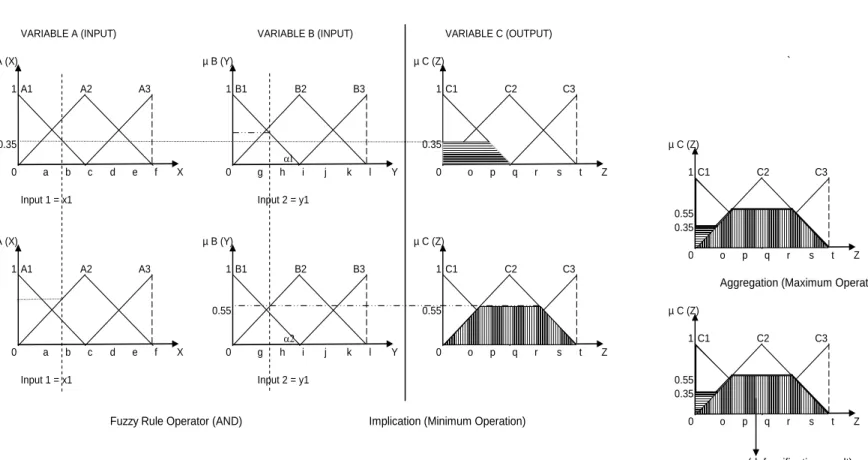
Figure 2.5 Example of Fuzzy Inference Mechanism Process using Crisp Input ...27
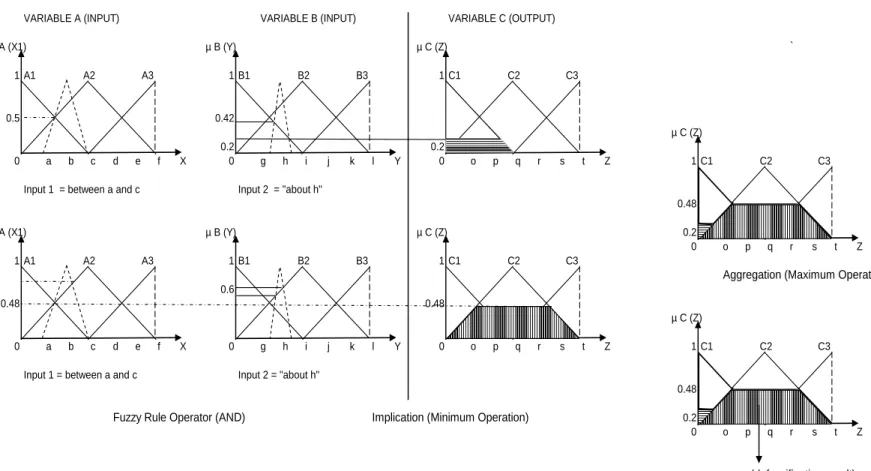
Figure 2.6 Example of Fuzzy Inference Mechanism Process using Fuzzy Input...28
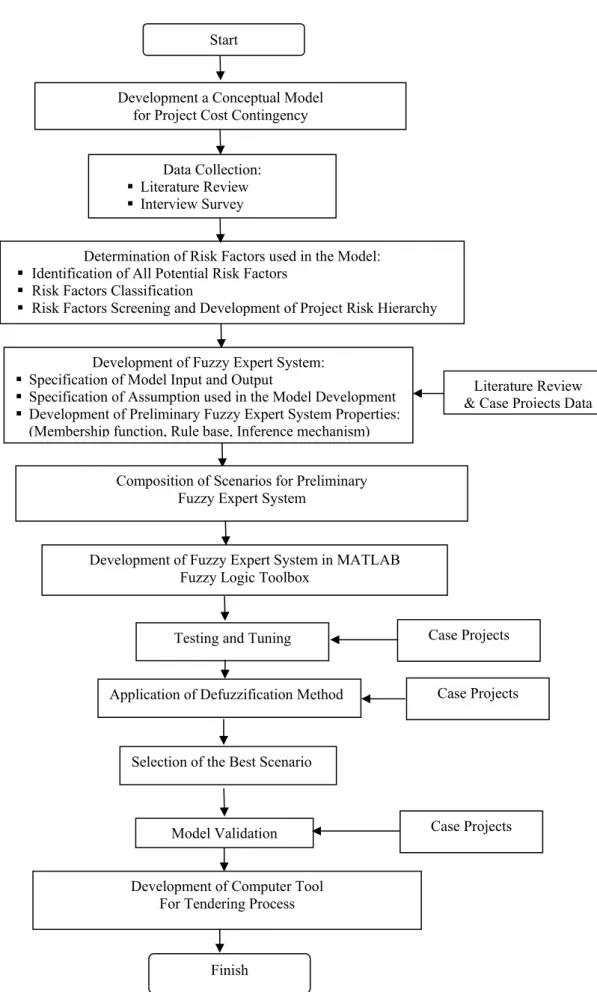
Figure 3.1 Flowchart of Research Methodology………..38
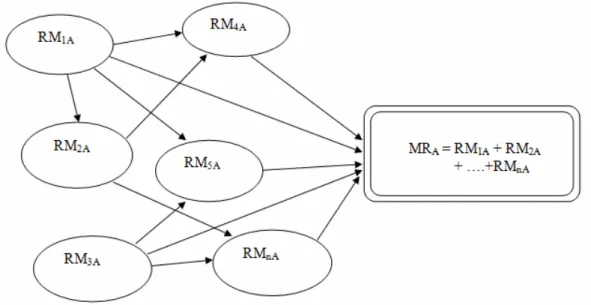
Figure 4.1 First Project Cost Contingency Model: Relationship of Risk Magnitude of Risk Factor (RM) with Major Risk (MR) ...49
Figure 4.2 First Project Cost Contingency Model: Relationship of Major Risk (MR) with Project Cost Contingency ...50
Figure 4.3 Second Project Cost Contingency Model using Event Tree Diagram ...51
Figure 4.4 Project Risk Hierarchy ...54
Figure 4.5 Fuzzy Expert System for Cost Contingency Model ...56
Figure 4.6 Preliminary Membership Function of RL Variable...62
Figure 4.7 First Alternative of Preliminary Membership Function ...64
Figure 4.8 Development of RL Membership Function in MATLAB Fuzzy Logic Toolbox...74
Figure 4.9 Development of RS Membership Function in MATLAB Fuzzy Logic Toolbox...75
Figure 4.10 Development of RM Membership Function in MATLAB Fuzzy Logic Toolbox...75
Figure 4.11 Fuzzy Rule Base Development in MATLAB Fuzzy Logic Toolbox...76
Figure 4.12 Fuzzy Inference Mechanism Setting in MATLAB Fuzzy Logic Toolbox...77
Figure 4.13 Fuzzification Process for RL Input...80
Figure 4.14 Fuzzification Process for RS Input...81
Figure 4.15 Implication Result for RM = M (0.6) ...82
xv
Figure 4.17 Aggregation of the Implication Result ...83
Figure 4.18 Defuzzification Result ...84
Figure 4.19 First Tuning for Scenario 1A (Shifting RL Membership Function)...87
Figure 4.20 Second Tuning for Scenario 1A (Shifting RS Membership Function) ....88
Figure 4.21 Third Tuning for Scenario 1A (Shifting RM Membership Function)...88
Figure 5.1 Final Cost Contingency Model: Risk Analysis Parameter ...93
Figure 5.2 Final RL Membership Function ...94
Figure 5.3 Final RS Membership Function...95
Figure 5.4 Final RM Membership Function ...95
Figure 5.5 GUIDE Model Input for Estimating Tender Price Value...100
Figure 5.6GUIDE Model Output for Estimating Tender Price Value ...100
Figure 5.7The Output Analysis for RL = 10 (Safety Risk Factor) ...102
Figure 5.8GUIDE Model Output after Reducing the RL Value (Safety Risk Factor) ...103
Figure 5.9The GUIDE Model Input for RL = 0 (Safety Risk Factor) ...104
xvi
LIST OF ABBREVIATIONS
AS/NZS : Australian Standard/ New Zealand Standard AHP : Analytical Hierarchy Process
CC : Cost Contingency CO : Control Output
GUIDE : Graphical User Interface Development Environment
H : High
L : Low
M : Medium
MF : Membership Function MR : Major Risk
PMI : Project Management Institute RL : Risk Likelihood
RM : Risk Magnitude RS : Risk Severity VL : Very Low VH : Very High
Chapter 1. Introduction 1
CHAPTER 1 INTRODUCTION
CHAPTER 1. INTRODUCTION 1.1 Background
The construction industry has a significant role in the economic development of a country, especially in developing countries. However, construction business is challenging and is categorized as a high risk business since it is always surrounded by many uncertainties which are present due to the unique and dynamic nature of the construction project itself.
Those uncertainties create many risks in almost all phases of the construction process [1]. Examples of the construction risks are natural disaster, changes in economic condition and several internal contractors’ risks due to productivity problems. According to Mills [2], risk cannot be eliminated, but it can be minimized, transferred or retained.
One of the attempts to handle risks in the early stages of a project lifecycle is by representing risk in monetary value and adding to the base cost estimate, which is known as “project cost contingency”. The determination of an appropriate project cost contingency is very significant for the successful management of a project. Setting high contingency value will make the tender price unattractive, while setting too low contingency may not be adequate to cater for risks that might occur during the construction process.
Traditionally, project cost contingency is simply determined by adding; say 10 percent from total project cost [2]. This method is based on the contractor’s subjective judgment according to his/her experience. However, this method is arbitrary and difficult to justify or defend. It is a reason why so many projects are over budget [3].
Chapter 1. Introduction 2 Several methods to determine project cost contingency in the construction industry have been introduced such as Monte Carlo Simulation (MCS) [1], linear regression [4], belief network [5], and Artificial Neural Network (ANN) [6]. In general, most of these methods are based on mathematical formulas which are sometimes not easy to understand. Sometimes, these methods also require the user to have basic knowledge in statistical analysis. This becomes one of its limitations since most of the construction’s project managers or construction personnel do not have any knowledge of the formalized technique to estimate cost contingency [7].
According to Dikmen et al. [8], in the construction field, often the use of expert knowledge, experience, intuitive judgment and rules of thumb that are usually ill-defined and vague cannot be avoided due to limited statistical data. The impreciseness and vagueness are usually characterized by the use of linguistic terms such as low, medium and high. Fuzzy set or fuzzy logic concept is a mathematical tool that can accommodate the use of such linguistic terms which is based on subjective judgment [9].
Previous researchers have presented the use of fuzzy sets in estimating project cost contingency method [10], [11]. However, these methods have limitation which is yet to be overcome such as the difficulty in their application [4]. The fuzzy expert system, which is developed based on fuzzy logic concept, is a technique that provides an easy method in dealing with the fuzzy set. Fuzzy logic could accommodate the human approximate reasoning, which is usually represented using IF-THEN rule. It is very useful to be used in the decision making process when statistical data is incomplete or unavailable such as in the construction field. This method is easy to be developed, understood and applied and has been widely used in many areas such as control, decision making, management, etc. [9].
The method of risk analysis has been widely used for estimating cost contingency in construction project [12]. In this research, fuzzy expert system which is capable of
Chapter 1. Introduction 3 accommodating subjective judgment is incorporated in risk analysis technique for estimating project cost contingency.
1.2 Problem Statement
Several methods in estimating project cost contingency have been developed by earlier researchers [1], [4], [5], [6]. However, several limitations of the previous methods still exist, particularly with regard to the difficulty of their application in practice. Most of these methods still require statistical and mathematical knowledge from the user. According to Smith and Bohn [7], contractor project managers do not have such knowledge as used in these methods. The contractor project managers are more familiar with the use of subjective judgment in estimating project cost contingency than using statistical and mathematical methods. Fuzzy set is a mathematical tool that can accommodate the use of subjective judgment. Previous researchers have introduced fuzzy set to estimate cost contingency [10], [11]. However, the limitations are still exist, particularly in the difficulty in their application [4]. Fuzzy expert system gives a more flexible way in dealing with fuzzy set. It can accommodate the use of human approximate reasoning which is represented as fuzzy IF THEN rule. Therefore, this research is intended to propose fuzzy expert system to estimate cost contingency that can accommodate subjective judgment. This can be achieved by incorporating fuzzy expert system in risk analysis technique.
1.3 Research Objectives
The research aim is to develop a method to estimate project cost contingency based on risk analysis and fuzzy expert system concept from the project contractor point of view. The research objectives are as follows:
1. To develop a model to estimate project cost contingency based on risk analysis and fuzzy expert system.
2. To demonstrate the applicability of the proposed model by developing a computer tool in estimating tender price during bidding stage.
Chapter 1. Introduction 4
1.4 Scope of Study
The scope of this research is divided into three areas:
1. The development of a model to estimate project cost contingency for construction project based on risk analysis and fuzzy expert system. The object is common construction, namely building and infrastructure projects. The Infrastructure project involve in this research are roads and bridges construction. Therefore, the type of risk factor specified in the model is based on these types of projects. 2. Risk factors used in the model are from contractor’s perspective. These types of
risk factors were obtained from literature review.
3. The collections of data or information that used to develop and to validate the model were obtained both from the literature and field interview. The interviews were conducted with the contractors under the G7 class (large contractor) registered with the Construction Industry Development Board (CIDB), Malaysia.
1.5 Thesis Outline
The thesis consists of six chapters. Chapter 1 is introduction. This chapter explains the background that motivates this research. The importance and significance of cost contingency estimation as one of the key element to ensure the success of a project is discussed.
Chapter 2 is literature review. Background theory related to cost contingency, the concept of risk analysis and the fuzzy expert system are reviewed. In order to give references to the cost contingency estimation method, the works of previous researchers who have introduced methods of estimating cost contingency are also reviewed.
Chapter 3 is research methodology. This chapter describes the steps conducted during the data collection process, model development, model validation and application.
Chapter 1. Introduction 5 Chapter 4 describes the development of project cost contingency model. In this chapter, every phase of the model development is presented. The model testing and tuning involved eight case projects; which is part of the model development are also presented.
Chapter 5 describes the validation and application of the model. The validation is intended to check whether the model is working according to the cost contingency model behavior. Three case projects obtained from the interview survey are used to validate the model. Finally the computer tool application, which has been developed based on the proposed model, is also presented. This computer tool is then applied to one of the case projects to estimate tender price based on risk analysis and risk management concept.
Finally, in Chapter 6, the conclusions and contributions of the research are presented. The limitations of the research are addressed and recommendations for future works are also proposed.
Chapter 2.Literature Review 6
CHAPTER 2 LITERATURE REVIEW CHAPTER 2. LITERATURE REVIEW
2.1 Introduction
This chapter presents a review related to theory and several previous works on cost contingency methods. The concepts of risk analysis and fuzzy expert system as the proposed method in this research are also discussed.
2.2 Cost Contingency
“Cost contingency” or often simply called as “contingency” is a common term used in the construction industry. Even though this term is usually used in construction practice, contractors can have a different interpretation of project cost contingency [3]. Therefore, theories to cost contingency will be reviewed which will involve its definition, cost contingency practice, and several methods to estimate cost contingency.
2.2.1 Definition
According to Oxford Dictionaries [13], contingency can have three meanings: (1) a future event or circumstance which is possible but cannot be predicted with certainty; (2) a provision for such an event or circumstance, and (3) the absence of certainty in events. Beside those definitions, contingency can also mean contingency planning that considers alternative plan with exact processes or procedures in developing an information system or program, in a disaster relief effort, or an organizational contingency plan [12].
In this research, the term “contingency” is related to provision for such an event or circumstance, which is usually represented as the amount of funds or budget that is
Chapter 2.Literature Review 7 normally used for unpredictable event or condition. In this work, such contingency is referred to as cost contingency.
In the context of project management, Project Management Institute (PMI) [14] defines contingency as the amount of funds, budget, or time needed above the estimate to reduce the risk of overruns of project objectives to a level acceptable to the organization. American Association of Cost Engineer (AACE) in Cost Engineers’ Notebook, as cited by Ng [12], defines contingency as the amount added to an estimate to allow for additional costs, that previous projects have shown, will likely be required. This amount may be derived either through statistical analysis of past project costs, or by applying experience gained on similar projects.
According to Boukendor [15], cost contingency allocation is intended to prevent cost overrun during the construction process. Cost contingency usually covers the costs that may result from incomplete design, unforeseen and unpredictable conditions, or uncertainties within the defined project scope. However, it does not include changes in scope or schedule or unforeseeable major events such as strikes or earthquakes. Peurifoy and Oberlender [16] stated that cost contingency is a real and necessary component of an estimate. It is assigned based on uncertainty such as pricing, escalation, schedule, omission, and errors. In simple word, cost contingency can be interpreted as the amount of money that must be added to the base cost estimate to account for work that is difficult or impossible to identify at the time a base estimate is being prepared.
According on those definitions, in this research, cost contingency can be categorized as:
1. A fund, budget, or time above the estimate to reduce risk overruns. 2. A cost estimate element.
Chapter 2.Literature Review 8
2.2.2 Types of Contingency
According to Gunhan and Arditi [17], there are three types of contingency, which depend on the phase of the project and the party involved. Those three contingencies are designer contingency, contractor contingency, and owner contingency. Designer contingency is included in the preliminary budget for potential cost increases during the pre-construction phase. Contractor contingency is included in the construction budget to cover unforeseen condition that may occur during the construction phase. Owner contingency is controlled by the owner and is included in the owner’s budget. Holm et al. [18] categorizes contingency in two types: owner contingency and contractor contingency. There are five categories of owner contingency as follows: 1. Design contingency, which is used as in budget estimates, because final decisions
have not been made and appropriate drawings and specifications have not been prepared.
2. Document contingency, used to cover the risk associated with potential conflicts among contract documents. Any contract document discrepancies usually result in change orders.
3. Permit contingency, used to cover the risk associated with potential conflicts among contract documents.
4. Scope contingency, used to cover the cost of owner-directed changes in project scope after the drawings and specification have been completed, and construction has been initiated.
5. Unforeseen condition contingency, for covering unknown risk at site conditions. Whereas for the contractor’s contingency, there are three categories:
1. Design contingency, used to cover risks associated with elements of the design that have not been completed.
2. Escalation contingency, used early in the design process to cover the risk associated with material and labor inflation.
Chapter 2.Literature Review 9 3. Estimating contingency, used when the estimator has not completely taken off the
entire project and has not obtained material and subcontractors pricing.
With regard to this research, cost contingency is defined as the amount of money that should be allocated by the contractors in a tender price to cater risks which might happen during the construction process in order to avoid project cost overrun.
2.3 Risk and Risk Management Concept
In this section, background theories related to risk definition, risk parameters and risk management concept will be described.
2.3.1 Risk Definition
The term “risk” is often used in many areas of human life, including in construction projects. “Risk” originates from the Latin word risicum, which means the challenge presented by a barrier reef to a sailor [19]. Several literatures have introduced risk definition. Oxford Dictionary [13] defines risk as the chance of hazard, bad consequence, loss, etc. or the chance of negative impact. Australian Standard/New Zealand Standard (AS/NZS) [20] states risk as the chance of something happening that will have an impact on objectives.
Within the context of construction projects, risk is defined as an uncertain event or condition that, if occurs, has either a positive or negative effect on the objectives of a project [19]. Al-Bahar [1] defines risk as the exposure to the chance of occurrences of events adversely or favorably affecting project objectives as a consequence of uncertainty. PMI [14] states project risk as an uncertain event or condition that, if occurs, has either a positive or negative effect on at least one project objective, such as time, cost, scope or quality. Loosemore et al. [21] expresses risk as a potential future event which is uncertain in likelihood and consequence, and if occurs could affect company’s ability to achieve its project objectives. In these definitions, besides having a negative meaning, risk can also has a positive meaning, such as opportunity.
Chapter 2.Literature Review 10 Sometimes, risk cannot be separated from opportunity. Risk is usually used to refer to potential events, which could adversely affect a company’s objectives and opportunity is referred to potential events, which could beneficially affect company’s objectives [21].
The term risk can also have different meaning for different people [1], and it is often used interchangeably with uncertainty. According to Loosemore et al. [21] and Perminova et al. [22], risk and uncertainty are two things that should be distinguished. These two phenomena are not synonymous; in fact they are better described as cause and consequence. Risk is understood as one of the implication of uncertainty and is more often stated as something that can be quantified and measured. On the other hand, uncertainty is defined as something that is less quantifiable.
Since risk is something that can be quantified, therefore its nature can be identified by characteristics in order to estimate its value. Risk characteristic that have been suggested by other researchers to measure the level of risk will be discussed in the next section.
2.3.2 Risk Related Terms
Risk can be identified by its components in order to distinguish it from uncertainty. By knowing those risk components, the measurement of risk level can be performed. Several literatures have presented those risk components as the method to identify the nature of risk such as risk factor, risk factor relationship and parameters used to quantify level of risk.
2.3.2.1 Risk Factor or Risk Event
Risk factor is an event that categorizes risk. Risk factor or event is the occurrence of a particular set of circumstances [14]. It can be meant as what might happen to the detriment or in favor of the project [1]. Risk factor is usually identifiable from the
Chapter 2.Literature Review 11 source of risk such as client, government, nature, site, labor, equipment, material, management and so on.
2.3.2.2 Risk Relationship
Risk factors are connected to each other. Every risk factor can influence each other. Therefore, in order to quantify the level of risk, it is necessary to identify the risk relationship.
The way to identify the risk relationship can be performed by several techniques. One of the techniques is called risk breakdown structure (RBS) [19]. This technique proposes a method to identify the risk factor based on risk hierarchy from the top to the bottom levels.
2.3.2.3 Risk Parameters
Three risk parameters have been identified from literature, namely “risk probability” or likelihood, “risk impact” or risk severity or risk consequence, and “risk level” or magnitude. Risk likelihood is used as a general description of probability or frequency [20]. Probability is usually expressed as a number between 0 and 1 or 0 to 100%, which represents a judgment about the relative likelihood of some event [21]. In this case, 0 means that the event is non-existence, while 1 means that it will always happen. An event is identified as a risk if it has a probability of occurrence between 0 to 1.
Al-Bahar [1] proposed the idea of probability as a judgmental measure of personal belief. The subjective approach does not require two people to assess the same probability for a specific event provided that the assessed probabilities are coherent. Risk severity or also known as risk consequence, is defined as the outcome of an event [20]. Ayyub [19] stated risk consequence as the degree of damage or loss from
Chapter 2.Literature Review 12 some failure. Each failure of a system has one or more consequences which can be economic damage, environmental damage, injury or loss.
The level of risk is often stated as risk magnitude, which is measured as a combination of the consequences or risk severity and their probability or risk likelihood of an event. Al-Bahar [1] defines risk level or risk magnitude as a function of uncertainty of an event and the potential loss/gain from an event which is represented in Equation 2.1.
Risk Magnitude = Uncertainty x Potential loss/gain (2.1)
According to the definition, uncertainty and potential loss/gain are necessary condition for risk magnitude. Uncertainty is defined as how likely the event is to occur, i.e., the chance of event occurring while potential loss/gain is a consequence of the event happening.
Mills [2] stated that the risk magnitude can be measured as the likelihood of specific unwanted event and its unwanted consequence or loss, which can be expressed as Equation 2.2. RM = L x C (2.2) Where: RM = risk magnitude L = risk likelihood C = risk consequence
AS/NZS [20] states that the level of risk is a combination of a level of likelihood and a level of consequence. In a simple form, it can be written as Equation 2.3.
Chapter 2.Literature Review 13 The relationships between these two variables depend on many factors that reflect the nature of the risk and the way it is perceived. When human values are applied, the relationship may well be nonlinear and even discontinues. If it is taken that the level of risk is proportional to each of its two components, the risk function is essentially a product which can be written as Equation 2.4.
Risk Magnitude = Consequence x Likelihood (2.4) If the complicating factors such as nonlinear relationship are taken into account, the relationship can be written as Equation 2.5.
Risk Magnitude = (C x weighted factor)x x (L)y (2.5) The weighting factor and an exponential operator (raised to power operator, x and y) are added to achieve a required relative scale.
Loosemore et al. [21] stated that risk is normally expressed in terms of probabilities and consequences (impact on objectives). A probability is a number, between zero and one inclusive, which represents a judgment about the perceived relative likelihood of some event. A potential event having a probability of between 0 and 1 is a risk. On the other hand, consequence is a representation of the impact of risk in terms of project cost as can be written as Equation 2.6.
Chapter 2.Literature Review 14
2.3.3 Risk Management Concept
Risk analysis is a part of the risk management concept, which usually consists of three components: risk identification, risk analysis and risk response. The concept of risk management proposed by AS/NZS [20] can be seen in Figure 2.1.
Figure 2.1 Risk Management Process-Overview [20]
In this concept, risk management is an iterative process that begins with establishing the context, followed by risk identification, risk assessment, risk evaluation, and risk treatment. In the first step, i.e. establishing the context, the basic parameters in risk must be managed. This step sets the scope for the rest of the risk management process. Secondly, risk identification is the process to identify what, where, when, why and how it can happen.
Thirdly, risk analysis or also called risk assessment, is a step of quantifying the level of risk (risk magnitude) from several risks that have been identified from the previous step. It can be performed either by qualitative or quantitative method, by combining the risk consequence and risk likelihood. Finally, risk evaluation is a decision-making
Chapter 2.Literature Review 15 process based on the outcome of risk analysis. It is the time to decide how to treat the risk. This step involves comparing the level of risk found during the analysis with the risk criteria established at the beginning.
Other concepts of risk management are also presented by Al-Bahar and PMI. Al-Bahar [1] stated that risk management is a formal orderly process for systematically identifying, analyzing, and responding to risk events throughout the life of a project to obtain the optimum degree of risk elimination or control. PMI [14] defined project risk management as the processes concerned with conducting risk management planning, identification, analysis, responses, and monitoring and control a project, which most of these processes are updated throughout the project.
According to these several definitions, it can be concluded that the detail concept of risk management can vary from one literature to another. However, broadly speaking, risk management consists of the three steps, store-mentioned namely risk identification, risk assessment or analysis, and risk response. Therefore, these three steps are used in this research context. The three risk management steps are discussed further in the following sections.
2.3.3.1 Risk Identification
Risk identification is the first step in risk management procedure, which is aimed to identify all risks related to a construction process. This step is very important since the analysis and response to risks cannot be conducted without examining the risks that might happen.
AS/NZS [20] defined risk identification as the process of determining what, where, when, why and how something could happen. Al-Bahar [1] states that risk identification is the process of systematically and continuously identifying, classifying, and assessing the preliminary significance of risks associated with a construction project.
Chapter 2.Literature Review 16 Based on these definitions, with regard to this research, risk identification is defined as the process of identify risk factors that could happen during the construction process. The contractor’s experience from the previous project which has similar characteristic can be used for the identification of risk factor.
Several techniques have been introduced to identify risks. AS/NZS [20] suggested team-based brainstorming, structured techniques, what-if and scenario analysis, checklist and multi-level risk identification. PMI [14] proposed documentation reviews, information gathering techniques (brainstorming, Delphi technique, interviewing and root cause identification analysis), checklist analysis, assumption analysis and diagramming techniques (cause and effect diagram, system or process flowcharts, influence diagram). Loosemore et al. [21] classified the risk identification techniques into two types, namely proactive and reactive techniques.
Al-Bahar [1] proposed six steps in the identification stage: (1) recognizing the existence of uncertainty of potential risk, (2) preparing a preliminary checklist of all sources of project risks, (3) identifying all possible risk events/consequence scenarios, (4) constructing a risk mapping for every potential risk, (5) developing a formal categorization scheme of project risks, and (6) preparing a summary sheet for every risk category.
2.3.3.2 Risk Assessment
Risk assessment or also known as risk analysis is defined as a systematic process to understand the nature of and to deduce the level of risk [20]. It can also be stated as a process that incorporates uncertainty in a quantitative manner, using probability theory, to evaluate potential impact of risk [1].
Loosemore et al. [21] divided risk assessment into two stages:
o Stage one, a qualitative analysis of risks and opportunities using
Chapter 2.Literature Review 17
o Stage two, a quantitative analysis of risks and opportunities using numerical
estimates. This is normally conducted on risks and opportunities that are categorized as important from stage one, and where reliable data for analysis are available.
AS/NZS [20] divided risk assessment types into three categories, namely qualitative, semi-qualitative, and quantitative analysis. Qualitative analysis is a method that uses description rather than numerical scale to define the level of risk. It usually uses linguistic terms to represent the level of risk. In semi-quantitative analysis, a numerical scale is assigned to the linguistic terms, which have been specified earlier, to achieve a more expanded ranking scale. While quantitative analysis is a method that uses the numerical value of the risk likelihood and consequence to measure the risk level (or risk magnitude).
In terms of risk analysis method, those qualitative, semi-quantitative and quantitative assessments are conducted by assessing the probability and consequence of occurrence. It is important to consider both probability and consequence when assessing risk because although something may have a very low probability of occurring, extreme consequences can make it very high risk [21].
Qualitative analysis method is usually represented using risk matrix as can be seen in Table 2.1. In the matrix, the level of risk factor (risk magnitude) is assessed by comparing the likelihood of occurrence and its consequence. Based on these, a risk level in linguistic terms such as Low (L), Medium (M), and High (H) is assigned to the risk factor. An example of semi-quantitative analysis method can be seen inTable 2.2 . The table shows that likelihood is represented using frequency of risk factor/event occurrence per year and the consequence in terms of monetary value. The risk level itself is quantified based on the multiplication of those two parameters.
Chapter 2.Literature Review 18 Table 2.1 Example of Qualitative Risk Analysis Method [21]
Insignificant Minor Moderate Major Extraordinary
Almost Certain L M H H H Likely L M M H H Possible L L M H H Unlikely L L L M M Rare L L L M M Risk Consequence Risk Likelihood Where:
L = “Low” risk level or magnitude M = “Medium” risk level or magnitude H = “High” risk level or magnitude
Table 2.2 Example of Semi-Quantitative Risk Analysis Method [20]
Very Low Low Medium High
100 300 1000 3000 0.1 10 30 100 300 0.01 1 3 10 30 0.001 0.1 0.3 1 3 0.0001 0.01 0.03 0.1 0.3 Consequence ($ x 1000) Frequency (Event/Yr)
In terms of the technique used, several risk assessment techniques have been proposed in the construction project area, such as Analytical Hierarchy Process (AHP) [23], Monte Carlo Simulation [1], and fuzzy set or fuzzy logic [24], [25], [8]. In general, Kangari [24] classified those types of risk assessment methods into two types, classical models (i.e. probabilistic analysis) and conceptual models (i.e. fuzzy set analysis). However, although these classical models are useful for risk analysis, they
Chapter 2.Literature Review 19 are limited in their applicability in real construction analysis, which is usually imprecise, ill-defined, and vague in nature. This type of problem is caused by incomplete or unavailable information in the construction field. Therefore, linguistic terms are usually used to express the uncertainty related to the risk level such as low, medium, and high. In this case, the use of fuzzy set analysis can be used to overcome the limitation of the probabilistic model. The concept of fuzzy set and fuzzy expert system will be described in section 2.4.
2.3.3.3 Risk Response
After assessing and analyzing the level of risk from each risk factor that is considered significant to the project, the next step of risk management is risk response. Risk response is the action that should be conducted by the management to treat the risk in order to remove as much as possible the potential impact and to increase the control of risk.
According to Al-Bahar [1], the response to risk can be divided into five actions, namely risk avoidance, loss reduction and risk prevention, risk retention, risk transfer (non insurance or contractual transfer), and insurance. First, risk avoidance is the action where the contractor does not proceed to bid or take the project since according to their feeling, the project has high risk level. Second, loss reduction and risk prevention program is conducted by reducing the probability of risk, and reducing the financial severity of risk if it does occur. Third, risk retention is financial plan within the company, where the company may decide to absorb the potential losses. Fourth, risk transfer is the action than can be taken by the contractor to transfer the risk to other parties such as sub contractor or the owner. This risk response is usually performed by making a contractual arrangement between the contractors and other parties. And finally, insurance is the response when the contractor uses the premium insurance to cover their business.
Chapter 2.Literature Review 20
2.4 Fuzzy Logic and Fuzzy Expert System
Fuzzy expert system is one of the most widely used applications of the fuzzy set and fuzzy logic concept [26]. It is also known as fuzzy-rule-based systems, fuzzy model, fuzzy expert system, fuzzy inference system, fuzzy logic controller and fuzzy associative memory. It is an expert system that is developed based on fuzzy set or fuzzy logic concept. An expert system is a program that behaves like an expert for some problem domain that consists of three major blocks: a knowledge base, an inference engine, and a user interface. In short, fuzzy expert system is an expert system that incorporates fuzzy set and/or fuzzy logic into its reasoning process and/or knowledge representation scheme [9].
Kasabov [9] stated that fuzzy expert system consists of five components: fuzzy rule and the membership functions as the system knowledge base, fuzzy inference machine that activates all the fired rules at every cycle, fuzzification and defuzzification, interface unit, and an explanation module. In general, the concept of fuzzy expert system can be depicted in a block diagram as presented in Figure 2.2 . All of these components will be described in more detail in section 2.4.2.
Chapter 2.Literature Review 21 According to Jang et al. [26], the basic structure of a fuzzy expert system consists of three conceptual components: a rule base, which contains a selection of fuzzy rules; a data base (or dictionary) which defines the membership functions used in the fuzzy rules; and reasoning mechanism, which performs the inference procedure upon the rules and given fact to derive a reasonable output or conclusion. In order to know the concept of the fuzzy expert system, the basic theory of the fuzzy set and fuzzy logic theory will be presented in the following section.
2.4.1 Fuzzy Set and Fuzzy Logic Theory
Fuzzy set can be simply stated as a set with fuzzy boundaries. This is the concept of a set that is used to represent the fuzziness and imprecision. The basic idea of the fuzzy set comes from the condition that there are phenomena that cannot be represented perfectly using conventional set concept (Boolean set).
Fuzzy set is different from Boolean (or also known as crisp) set. In fuzzy set, the degree of belief of every fuzzy subset from “belong to set” to “not belong to set” is represented in a gradual transition which is known as a membership function. The membership function represents the degree of belief of every subset in the universe of discourse by a number between 0-1.
The differences between Boolean and fuzzy set can be described using Figure 2.3 and Figure 2.4 For example, in the case of defining the element of a set or a subset, a linguistic term set is used to represent the risk level such as low, medium and high. By using Boolean concept, a subset is separated sharply as a member of a set or not a member of a set. If it is a member, it is represented as 1 and not a member as 0.
Chapter 2.Literature Review 22
Figure 2.3 Risk Level (Risk Magnitude) in Boolean Set
Figure 2.4 Risk Level (Risk Magnitude) in Fuzzy Set
However, in the real condition, to determine the subset of each linguistic term set is not easy since the boundary between each linguistic term is vague. In fuzzy set, this vagueness is represented by the overlapping area between each set as illustrated in Figure 2.4.
Fuzzy logic is a mathematical tool that is used to model a problem usually surrounded by ambiguity and impreciseness (fuzziness). Fuzzy logic or multi-valued logic was
Chapter 2.Literature Review 23 first introduced in 1930 by Jan Lukasiewicz, a Polish logician and philosopher [27], [28]. In 1965, Lotfi Zadeh rediscovered fuzziness, identified and explored and promoted this concept into a formal system of mathematical logic, which is called fuzzy logic.
2.4.2 Development of Fuzzy Expert System
In general, fuzzy expert system consists of three components, namely membership function, rule base and inference mechanism. Every step involved in developing fuzzy expert system will be described in each of the following sub-sections.
2.4.2.1 Fuzzy Membership Function
Membership function represents the degree of belief of the member of linguistic terms set used in the fuzzy set. Several techniques of developing the fuzzy membership have been proposed by other researchers. Kasabov [9] classified the methods into three types: expert interview, designer’s imagination, and using the method of machine learning such as neural network and genetic algorithm. In the expert interview technique, an expert is expected to define the shape of membership function, and the number of labels used. However, this method is sometimes difficult to be applied since human expert is usually unfamiliar with fuzzy set or fuzzy logic. By using the imagination of the designer, the system designer has to imagine the physical behavior of the real system and think about the physical meaning in natural and technical language. While by using the methods of machine learning, a neural network and genetic algorithm are used to learn fuzzy rules from data.
Sivanandam et al. [29] classified the method to assign membership function into seven types, i.e., intuition, inference, rank ordering, angular fuzzy sets, neural networks, genetic algorithm, and inductive reasoning. Intuition is a method that is based on human intelligence and understanding to develop the membership function. This technique requires a person with knowledge of the problem and linguistic variables.
Chapter 2.Literature Review 24 Inference is a method that requires knowledge to perform deductive reasoning. The membership function is formed from known facts and knowledge of the intended area. Rank ordering is a polling concept that assigns membership values by a rank ordering process. In this case, preferences are determined by the use of pair wise comparisons. The result of the rank ordering will then be used to construct the membership function. The angular fuzzy set is a method that is different from the standard fuzzy set in the coordinate description. This set is defined by the universe of angles.
Using the neural network method, the fuzzy membership function is created based on input data set. In this method, the process can be divided into two steps, i.e., training and testing of data set. In the genetic algorithm method, the concept of Darwin’s theory of evolution which involves reproduction, crossover, and mutation is applied. Preliminary fuzzy membership function types are assumed in the beginning. In the process, the fitness function is applied to evaluate and choose the fittest membership function. Finally, in the inductive reasoning method, the fuzzy membership function is developed by performing the entropy minimization principle. This method requires a well-defined database for the input-output relationship.
Several important considerations during the construction of the fuzzy membership function are the type of membership function, the model of membership function (linguistic value used and its subset), and also the method used to construct the membership function. The type of membership function can be classified as single valued or singleton, triangular, trapezoidal, sigmoid, Z function and Bell function [9]. There is no specific guidance to determine the number of fuzzy set based on linguistic terms. More importantly, the term used actual field condition [9]. The more fuzzy sets used are better since it will increase the precision of the result, but sometimes it is difficult for the expert to determine its membership function subset. The trial and error method can be used to determine the suitable member of fuzzy sets. The result of analysis can be compared between the actual condition and the output of the
Chapter 2.Literature Review 25 system. The number of fuzzy set can be adjusted during testing and tuning of the system.
2.4.2.2 Fuzzy Rule Base
Fuzzy rule base is the basis or backbone of the fuzzy expert system. Fuzzy rule is also known as fuzzy “IF – THEN” rule, “fuzzy implication” or “fuzzy conditional statement” [26]. It is used as the basis of the composition or reasoning process of the fuzzy expert system model. Fuzzy rule base provides a foundation for approximate reasoning with an imprecise proposition using fuzzy set theory. This concept gives a possibility to model a complex problem by imitating human approximate reasoning that is usually present in IF (antecedent) THEN (consequent) rules. It is represented as a conditional statement in the form of “IF x is A THEN y is B”. Here x and y are linguistic variables, while A and B are linguistic values determined by fuzzy sets in the universe of discourse X and Y, respectively. Examples of linguistic variables are risk level, depth, height and so on. While examples of linguistic value are very low, medium, and high. In the case, “x is A” is called as antecedent or premise part, while “y is B” is called as consequence or conclusion part.
Examples of the fuzzy IF-THEN rules are:
o IF pressure is high, THEN volume is small
o IF the speed is high, THEN apply the brake a little
If there are more than one antecedent (multiple parts) used in the fuzzy rule, the AND or OR fuzzy operator can be used to connect those antecedents part. Example of the fuzzy rule base that uses more than one antecedent part is as follows.
o IF the demand is high AND the supply is low THEN the production is high.
2.4.2.3 Fuzzy Inference Mechanism
Inference mechanism is a process of mapping an input value to the fuzzy expert system for obtaining the output from the system. This process is generated by the use of fuzzy IF-THEN rule that has been embedded into the system.
Chapter 2.Literature Review 26 There are three inference mechanisms that are usually used namely Mamdani, Sugeno and Tsukamoto [26]. However, Mamdani inference mechanism is the most commonly used or applied, especially in fuzzy expert systems [27], [29].
The Mamdani inference mechanism can be divided into five steps, i.e., fuzzification, rule evaluation, implication, aggregation and defuzzification [27]. These five steps can be described graphically as in Figure 2.5 and Figure 2.6 for crisp input and fuzzy input, respectively. In general, the process of fuzzy inference mechanism from these two inputs is the same. The only difference between these two inference mechanisms is in the fuzzification process.
Fuzzification is a process of converting an input into fuzzy data by specifying the input into appropriate fuzzy membership function. In Figure 2.5, the inference mechanism uses a crisp input. In that figure, there are two input variables and one output variable. The input for the variable A “is x1” (a number within the universe of discourse X) and the input for variable B “is y1” (a number within the universe of discourse Y).
The fuzzification process is performed by mapping the input values, x1and y1 in the fuzzy set A1 and B1 for the first rule, and fuzzy set A2 and B2 for the second rule. The
fuzzification result is obtained by getting the intersection between the inputs with the fuzzy membership function curves.
The intersection is obtained by drawing a vertical line from the input to the membership function. The number of intersection can be more than one. The intersection of the vertical line with the fuzzy membership function can be obtained in the value of the membership degree (μ) which is known as “the strength of fire” (α). In the example, since two rules are fired, therefore two strength of fires are produced (α1 and α2). This “α” value is then used as the basis in the next process which is called
Chapter 2. Literature Review 27
VARIABLE A (INPUT) VARIABLE B (INPUT) VARIABLE C (OUTPUT)
µ A (X) µ B (Y) µ C (Z) ` 1 A1 A3 1 B1 B3 1 C1 C3 Rule 1 0.35 0.35 µ C (Z) 0 a b c d e f X 0 g h i j k l Y 0 o p q r s t Z 1 C1 C3 Input 1 = x1 Input 2 = y1 0.55 0.35 µ A (X) µ B (Y) µ C (Z) 0 o p q r s t Z 1 A1 A3 1 B1 B3 1 C1 C3
Aggregation (Maximum Operation)
Rule 2 0.55 0.55 µ C (Z)
1 C1 C3
0 a b c d e f X 0 g h i j k l Y 0 o p q r s t Z
Input 1 = x1 Input 2 = y1 0.55
0.35
Fuzzy Rule Operator (AND) Implication (Minimum Operation) 0 o p q r s t Z
z(defuzzification result)
Defuzzification (Center of Area Method) C2 A2 A2 B2 B2 C2 C2 C2 α1 α2
Chapter 2. Literature Review 28
VARIABLE A (INPUT) VARIABLE B (INPUT) VARIABLE C (OUTPUT)
µ A (X1) µ B (Y) µ C (Z) ` 1 A1 A3 1 B1 B3 1 C1 C3 Rule 1 0.5 0.42 µ C (Z) 0.2 0.2 0 a b c d e f X 0 g h i j k l Y 0 o p q r s t Z 1 C1 C3
Input 1 = between a and c Input 2 = "about h"
0.48
µ A (X1) µ B (Y) µ C (Z) 0.2
0 o p q r s t Z
1 A1 A3 1 B1 B3 1 C1 C3
Aggregation (Maximum Operation)
0.6
Rule 2 0.48 0.48
µ C (Z)
0 a b c d e f X 0 g h i j k l Y 0 o p q r s t Z 1 C1 C3
Input 1 = between a and c Input 2 = "about h"
0.48
Fuzzy Rule Operator (AND) Implication (Minimum Operation) 0.2
0 o p q r s t Z z(defuzzification result) C2 A2 A2 B2 B2 C2 C2 C2
Chapter 2. Literature Review 29 While for fuzzification using fuzzy input, the input value is represented as a shape constructed from the concept of fuzzy number. It can be represented either in a trapezoidal or triangular form. The example of fuzzy input in Figure 2.6 is the triangular form (dashed line) with the values “between a and c” (a range of number between a and c in the universe of discourse X) and “about h” (a number within the universe of discourse Y). The fuzzification result is obtained from the intersection between the fuzzy number and the fuzzy membership function, which is also called the strength of fire (α).
Implication is the process of mapping the antecedent part from IF-THEN rule into the consequence part. This step is performed by mapping the strength of fire (α) obtained from the fuzzification process to the fuzzy membership of consequence variable (C1 and C2). If there is more than one antecedent part, there must be a fuzzy operator that connects both antecedent parts. There are two fuzzy operators that can be used to connect the antecedent parts, namely the AND and OR operators. An ‘AND’ operator is used for evaluating the conjunction of the rule antecedents, while ‘OR’ operator is used for disjunction of rule antecedents [27]. In both Figure 2.5 and Figure 2.6, ‘AND’ fuzzy operator is used to connect the antecedents parts. The use of ‘AND’ fuzzy operator means the ‘MIN’ function will be used to combine the antecedent parts. Consequently, the minimum value of strength of fire (α) will be used to map the antecedent parts (fuzzy set A and B) to the consequence part (fuzzy set C).
Aggregation is the process of combining or unifying all outputs from the implication process. The number of combined implication depends on the number of fuzzy rules fired at the same time. In the case when the number of rules fired is two, aggregation is conducted from the result of the first and the second rules. However, the result of this aggregation process is a fuzzy set. In order to obtain the crisp number (in this case represented as Z1), the defuzzification process has to be performed on the aggregation
Chapter 2. Literature Review 30 Defuzzification is the process to convert the aggregation result into a crisp value. According to Sivanandam et al. [29], there are seven types of defuzzification method i.e. max-membership principle, centroid method, weighted average method, mean-max membership, centre of sums, centre of largest area, and first of mean-maxima or last of maxima. In MATLAB Fuzzy Logic Toolbox, the defuzzification type can be classified into five, namely, “centroid”, “bisector”, largest of maximum (LOM), middle of maximum (MOM), and smallest of maximum (SOM).
“Centroid” is also called as “center of area” (COA) or “center of gravity” (COG) and is the most widely used method. It uses the center of gravity as the defuzzification result. The bisector method is used by bisecting the area under the curve of the aggregate output se, while “LOM”, “MOM”, and “SOM” use the largest value, mean value and the smallest value, respectively.
2.5 Cost Contingency Practice
Cost contingency has been practiced for a long time in the construction industry. Smith and Bohn [7] interviewed 12 small to medium contractors in the scope of Pennsylvania State University, US. The interviews were intended to identify the risk models and factors that were most frequently considered by contractors in common size projects. According to the results, only 1 out of 12 contractors had used cost contingency in their work. The other 11 contractors did not use contingency since using contingency allowance will most likely make their bids less competitive. The interview also discovered that contractors considered contingency and markup changes separately. It also showed that none of the contractors interviewed had any knowledge of the mathematical models used to formulate contingency, and they did not have any formalized technique for estimating contingency. The interview also revealed that contingency was primarily considered as line item in estimate based on percentage of the total project cost.
Chapter 2. Literature Review 31 In practice, the most common approach for estimating project cost contingency is traditional estimate [3]. This method is mainly based on contractor‘s intuition and experience. For example, if in the previous project the contractor had been successful by allocating 5% cost contingency to the base cost estimate of the project. Then, in the next tender bidding process the same amount of cost contingency, which is around 5%, will be added again to the base estimate.
However, this is a subjective method based on intuition. Therefore, it has several weaknesses such as danger of being overly simplistic and heavily dependent on the estimators’ faith in their own experiences [30]. To overcome this condition, several methods of estimating cost contingency for the construction industry have been proposed by several researchers.
2.6 Methods of Estimating Cost Contingency
According to Burrough and Juntima [31] as cited by Ng [12], in general, the cost contingency method can be classified into four types, namely predetermined percentage, expert judgment, risk analysis and regression analysis.
Predetermined percentage is determined by the owner and project management team by allocating a cost contingency of 5 to 10 percent of base cost estimate. This method is easy to use, but it removes the specificity of the project characteristic. Whereas, expert judgment uses the educated judgment of experts, which involves skilled estimators and project team members to assist in setting the contingency level. This method considers specific risk factors and base estimate competitiveness. The advantage is if the experts are very knowledgeable and objective in their estimate, this method will result in good estimation and vice versa.
Risk analysis examines the risk factors in a structured way by applying quantitative method of translating risks into cost contingency values. Monte Carlo Simulation (MCS) is most commonly applied in this method. A probability distribution is assigned to each line item and randomly simulated to select a possible outcome for
Chapter 2. Literature Review 32 each line item’s distribution and aggregates the item outcomes into a total expected project cost outcome. The advantage of this method is that it allows for confidence level to be explicitly considered. The limitation is difficulty in assigning probability distribution to each line item.
Regression analysis is a statistical technique that relates explanatory variables with cost contingency value. The explanatory variables in the regression model are quantified risk drivers based on past projects. The advantage of this method is that it is probabilistic in nature and allows for a statistical confidence level of cost outcomes to be considered. A disadvantage of this method is that sometimes estimate may be based on incomplete data sets.
Previous researchers have presented cost contingency estimation methods. Al-Bahar [1] proposed the use of Monte Carlo Simulation (MCS) to estimate project cost contingency during the tendering stage and construction process. These techniques were incorporated in the risk analysis concept, which consists of risk identification and risk assessment. In this proposed method, the types of risk factors were identified. The relationship between risk factors was modeled by influence diagram technique. Al-Bahar finally proposed the MCS method to estimate the amount of project cost contingency. However, as previously described, the limitation of MCS method is difficulty in assigning probability distribution to each line item and how to interpret the analysis result.
Artificial Neural Network (ANN) has been proposed by Chen and Hartman [6] as a method to estimate cost contingency. This method was proposed for predicting the cost contingency and time allowance at the earliest stage of project development. However, the limitation of this method is that there is no rational explanation to describe and analyze the relationship between inputs and outputs because ANNs are essentially black-box methods. Data go in and predictions come out but there is no understanding of what happens in between [6].
![Figure 2.1 Risk Management Process-Overview [20]](https://thumb-us.123doks.com/thumbv2/123dok_us/10926383.2981543/30.892.204.743.358.727/figure-risk-management-process-overview.webp)
![Figure 2.2 Fuzzy Expert System Block Diagram [9]](https://thumb-us.123doks.com/thumbv2/123dok_us/10926383.2981543/36.892.187.755.755.1084/figure-fuzzy-expert-system-block-diagram.webp)