Agricultural Crop Yield Prediction using Deep Learning Approach
Rohan Yadav
1, Satyam Yadav
2, Neha Gunjal
3, Shilpa Mandal
41,2,3,4
Dept. of Computer Engineering, SKN Sinhgad Institute of Technology and Science, Lonavala,
Maharashtra, India
---***---Abstract – Manual agricultural systems are terribly advanced and agitated to use as a result of it deals with an enormous dataset and large quantity of knowledge process. several techniques and approaches are made to predict the crop and crop yield. The neural network is employed to predict such styles of advanced system with large quantity of dataset in it. During this survey paper a review on the utilization of the substitute neural network (ANN) for the prediction of the crop yield is projected. This paper contains some basic information of Artificial neural network. The utilization of parameters like pH scale, Nitrogen, carbon, Rainfall, Temperature, soil, phosphate is employed. Artificial Neural Network is employed for prediction of the crop yield. This paper shows the necessity of this kind of the system techniques like Artificial Neural network.
Key Words: Artificial neural networks, PH, Nitrogen, Temperature, Rainfall, phosphate, potassium, organic carbon, calcium, magnesium, sulphur, manganese, copper, iron, humidity.
1. INTRODUCTION
To get most crop yield at minimum value is one of the primary goals in agriculture. Detecting and dealing with troubles related with crop yield indicators in early stages of the rural field can give benefits in expanded yield and elevated earnings too. By reading weather styles of a specific location, massive-scale meteorological phenomena will have a completely green impact on agricultural production. The crop yield predictions can be utilized by farmers to reduce losses when negative conditions may occur. Also, predictions may be used to maximize crop prediction while there is favourable situation for farming.
Prediction of crop yield plants like Pulses, wheat, rice, sugarcane, onion has always been an absorbing research area to agro meteorologists, because this researches are important in economics of a nation. It is an intelligent system which can predict the more accurate prediction using meteorological data. Till date, there are many yield prediction models and application, they are classified in two group: a) Statistical Models, b) Crop Simulation Models (e.g. CERES). Lately, Artificial Intelligence (AI) based applications like Artificial Neural Networks (ANNs) and Genetic Algorithm are more efficient in dissolving the problem than the traditional methods. The application of Artificial intelligence can make working models easier and more accurate from complex manual systems with many inputs. In this review paper the focus is
ANNs. If an effective Artificial intelligence based effective climatic factor based Crop yield predictions are done a farmer can use it very efficiently. In addition, using Artificial neural networks a user can find the most effective factors on crop yield. To handle such a situation, an extremely versatile approach of “Artificial neural networks” (ANNs) is developing rapidly.
Most widely used ANN is feed forward back propagation artificial neural network. The method has been applied for modelling and forecasting of various crop yield on the basis of various predictor variables, viz. type of soil, PH, Nitrogen, Temperature, Rainfall, phosphate, potassium, organic carbon, calcium, magnesium, sulphur, manganese, copper, iron, humidity. ANN with zero, one, and two hidden layers have been considered. Optimum numbers of hidden layers as well as optimum numbers of units in each hidden layer have been found by computing MSEs.
2. LITRATURE SURVEY
[2]B. J I ET AL developed an application using the simple and accurate estimation techniques to predict rice yields in the planning process. The necessity of the present study were to: (1) Identify whether that an artificial neural network model could predict rice yield approximately for a typical climatic conditions of the mountainous region, (2)Evaluate Artificial neural network model performance related to variety of developmental parameters and (3) Compare the effectiveness of multiple linear regression models with Artificial neural network models. In this paper it is described that the development of artificial neural network models as an alternate and more accurate technique for yield prediction is very impressive.
[3]B.A. Smith et al discuss year-round air temperature prediction models were developed for prediction horizons of 1 to 12 h using Ward-style ANNs. The ANN design modifications described herein provided increased accuracy over previously developed, winter specific models during the winter period. It was shown that models that included rainfall terms in the input vector were more accurate than those that did not.
clover/grass mix, lucerne, lucerne/grass mix, fodder grass as well as the two grassland kinds such as the intensive and extensive in the Eastern Germany cutting across diverse scales up to the regional scale. The YIELDSTAT accounted for a v variety of yield-motivating features obtained from the weather, soil, relief and management data, and for the long-term varying atmospheric CO2 concentration and for the tendency on account of the advancement in the breeding and agro-technology. They were effectively assessed in the background of modern yield observations from the Federal State of Thuringia, Germany. It was notable that the YIELDSTAT efficiently replicated the observed data in respect of all the three scales, with the entire crops and scales.
3. PROPOSED SYSTEM
3.1Artificial Neural Network
Artificial neural networks (ANN) are a computational systems that processes much likely to that of the biological neural networks that constitute animal brains. Such Computational have ability to perform tasks by learning through its experiences.
An ANN basically consists of many simple computing unit called the processing units, that are wired together in a complex communication network as that in a human brain. Each of these processing unit is called as artificial neuron. It consists of input signals, that are assigned with specific weights. A processing function f which computes the summation of the input weights and output signal. The main aim of the ANN approach is to solve problems in the same way as that of a brain. This paper deals with the ANN Approach to be used in agriculture sector in order to predict the crop yield.
Thus this paper will examine some common neural network architectures:
FEED FORWARD
BACK PROPAGATION
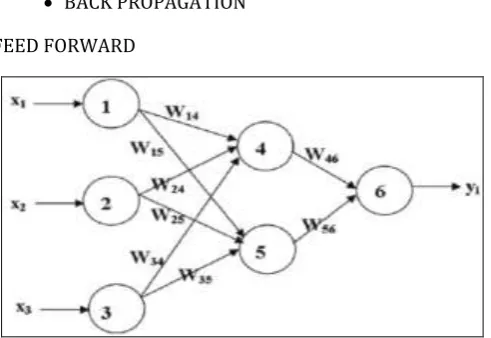
[image:2.595.319.561.310.486.2]FEED FORWARD
Figure 1: Feed Forward Propagation
These are the networks without feedback loops and hence they are called as feed forward network or perception.
The flow is unidirectional.
A node sends information to other node from which it does not receive any information.
The nodes on the left are the input layer. These input layer neurons distribute the inputs and these nodes don’t perform any computation. Each of the inputs X1,X2,X3 is assigned with specific weights.
Here, the input nodes passes the data to the nodes of the first hidden layer, then the outputs from the hidden layer are passed the next layer, and so on which finally generates the output.
[image:2.595.40.286.580.749.2]BACK PROPAGATION
Figure 2: Back Propagation
This “back propagation” type of neural network states how this type of neural network is trained. Back propagation is a type of supervised learning technique. When applying this technique the network must be provided with sample inputs as well as desired outputs. After computations the desired outputs are compared against the actual outputs for particular given input. Using the desired outputs, the back propagation training algorithm then compares it with the actual output and then calculates error and accordingly adjusts the weights of the various layers backwards from the output layer to the input layer.
The training of back propagation neural network will have the following three phases.
Phase 1 − Feed Forward Phase
Phase 2 − Back Propagation of error
3.1.1 Input Layer
The input is in a vector format, where each of them represents an attribute under consideration. Along with input, a desired output is also provided in order to check the accuracy of the neural network.
3.1.2 Hidden Layer
This layer contains weights and thresholds, that enhances the attributes. This layer performs two operations respectively. Firstly, multiplication of weights and attributes and then summation of all such resultants. Secondly, an integral over sigmoid function that is used to generate the output.
3.1.3 Output Layer
Inorder to achieve accuracy of the neural network comparison occurs in this layer between the desired and the actual output. If much dissimilarity is found, the feedback is given to the hidden layer. Further, permutation and combination of the weights and attributes take place, to achieve better accuracy.
3.2 Activation function
Activation function is the next step of the hidden layer. The output of a neuron (y) is a function of the weighted sum y=f(x), called the Activation function. Activation function is used to predict the output in such a format where resulting values are between 1 and -1. The different activation functions are mentioned below:
3.2.1Linear function
f(x)=a+x where a is a bias
3.2.2Heviside step function
f(x)={1 if x>=a
{1 otherwise
3.2.3 Sigmoid Function
In order to use sigmoid functions, values need to be under 0 and 1. Probability of any event lies between minimum of 0 to maximum 1. Thus, sigmoid function is a best when it comes to predict probability of certain events. The derivative of the sigmoid function can be found. A curve between two points is the derivative of the sigmoid function.
3.3 Design flow for Crop yield prediction
The Process of developing the proposed model system involves the following process:
1. Data Collection/Preparation 2. Build the predicted Model 3. Classification
Figure 3: Design Flow
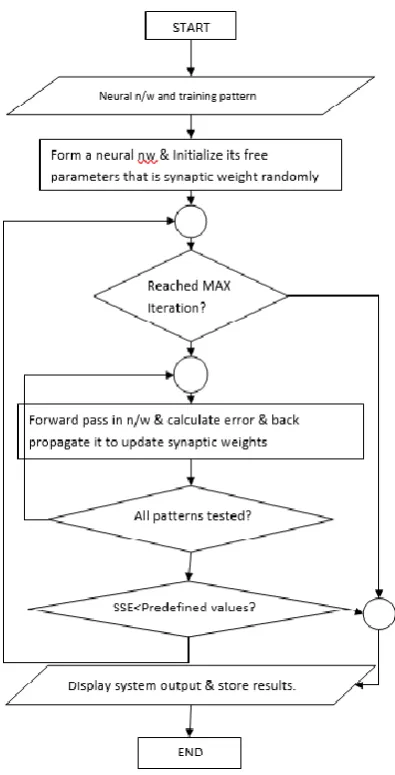
3.4 Flow Chart of the Proposed System
Figure 4: FlowChart
3.5 Learning process on a neural network
4. CONCLUSION
We are trying to develop a system that would help in the agricultural sector by using the 21st century’s modern approach (ANN). Our study tried to give a prediction on how a simple machine learning algorithm can change our country’s agriculture image. Being dependent on the agricultural side for a long time our country has not meet much between agriculture and technology so far. Right now, the people of our generation are in a position where everyone is in touch with modern things. So it is high time we should aim at a future to live a better lifestyle. Our government has already taken so many good initiatives in the agricultural sector. It is high time to precede digitally in this sector so that; not only the government but also stockholder and society might get benefitted out from it. Our one little step will be enough to introduce digital agriculture system for best crop selection and yield prediction.
ANN is a beneficial tool for crop prediction.
5. REFERENCES
[1] Aggarwal Sachin (2001). Application of Neural Network to Forecast Air Quality Index. Thesis submitted in partial fulfillment of requirements for a degree in Bachelor of Technology, April 2001.
[2] B. J I ET AL Artificial neural networks for rice yield prediction in mountainous regions. Journal of Agricultural Science (2007), 145, 249–261.
[3] B.A. Smith et al,. Artificial Neural Networks for Automated Yearround Temperature Prediction. Computers and Electronics in Agriculture 68 (2009) 52–6.
[image:4.595.64.262.353.741.2][5] D.L. Ehret et al, Neural network modeling of greenhouse tomato yield, growth and water use from automated crop monitoring data.
Computers and Electronics in Agriculture 79 (2011) 82–89.J