© 2019, IRJET | Impact Factor value: 7.34 | ISO 9001:2008 Certified Journal
| Page 205
A Performance of Hybrid Control in Nonlinear Dynamic Multirotor UAV
Alaa Bensaid
1, Mostafa Moussid
2, Selwa EL Ouarouar
3, Adil Sayouti
4, Hicham Medroumi
51
Doctoral Student in Computer Engineering, the National Higher School of Electricity and Mechanics, Morocco
2Doctoral Student in computer Engineering, the National Higher School of Electricity and Mechanics, Morocco
3Doctoral Student in computer Engineering, the National Higher School of Electricity and Mechanics, Morocco
4
Dr. Professor, Royal Navy School (ERN) Casablanca, Morocco
5
Dr. Professor and Director, the National Higher School of Electricity and Mechanics (ENSEM), Morocco
---***---Abstract -
Unmanned Aerial Vehicles (UAVs) have drawnmuch attention from many researchers for decades and their studies still keeps growing intensely. The use of UAVs which can operate autonomously in dynamic and complex operational environments is becoming increasingly more common. There exists many categories of UAVs, one of the most interesting and challenging, in terms of capability, is the type of vertical take-off and landing (VTOL) UAVs. The multirotor unmanned aerial vehicle is a great platform for control systems research as its nonlinear nature and under-actuated configuration make it ideal to synthesize and analyze control algorithms. The nonlinear dynamic model of the multirotor is formulated using the Newton-Euler method, the formulated model is detailed including aerodynamic effects and rotor dynamics that are omitted in many literature. Based on the mathematical model, several algorithms have been analyzed including their advantages and disadvantages: Sliding mode, Backstepping, Fuzzy logic and a hybrid Integral-backstepping/ FSMC. Simulation based experiments were conducted to evaluate and compare the performance of the proposed control techniques in terms of dynamic performance, stability and the effect of possible disturbances. The conclusion of this work is a proposal of hybrid systems to be considered as they combine advantages from more than one control philosophy.
Key Words: Multirotors, Nonlinear control, Newton-Euler method, Backstepping, sliding-mode, Fuzzy logic Key
1. INTRODUCTION
This work will focus on the modeling and control of a multirotor type UAV. The reason for choosing the multirotor is in addition to its advantages high agility and manoeuvrability, relatively better payload, vertical take-off and landing, the multirotor does not have complex mechanical control linkages due to the fact that it relies on fixed pitch rotors and uses the variation in motor speed for vehicle control [1]. However, these advantages come at a price as controlling a multirotor is not easy because of the coupled dynamics and its commonly under-actuated design configuration [2]. In addition, the dynamics of the multirotor are highly no-linear and several uncertainties are encountered during its missions [3], thereby making its flight controls a challenging venture. This has led to
several control algorithms proposed in the literature. The contributions of this paper are: firstly, deriving an accurate and detailed mathematical model of the multirotor UAV, developing nonlinear control algorithms and applying those on the derived mathematical model in computer based simulations and to provide a valid confrontation and a comparison between several different control techniques in terms of their dynamic performance and their ability to stabilize the system under the effect of possible disturbances. The conclusion of this work is a proposal of hybrid systems to be considered as they combine advantages from more than one control philosophy.
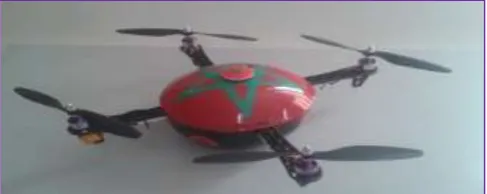
Fig -1: A picture of the developed multirotor
(SMART\ENSEM)
2. DYNAMIC MODEL OF THE MULTIROTOR
The goal of this section is to define physical Equations of Motion that describes the dynamics and aerodynamics of the UAV involved. The mathematical model of the multirotor has to describe its attitude according to the well-known geometry of this UAV.
To derive the dynamic model of the multirotor (position and attitude); the Newton-Euler formalism is used.
[image:1.595.313.557.393.490.2]© 2019, IRJET | Impact Factor value: 7.34 | ISO 9001:2008 Certified Journal
| Page 206
{
̇⃗( ) ⃗⃗⃗( ) ̇⃗⃗⃗( ) ⃗⃗⃗ ⃗⃗⃗ ⃗⃗
̇⃗⃗ [ ⃗⃗⃗( )] ⃗⃗⃗( ) ( ) ⃗⃗⃗( ) ⃗⃗⃗⃗
The multicopter’s total torque control inputs
[
]
are [4]{
(∑ [( ) ]
)
(∑ [( ) ]
)
(∑( )
)
{ ⁄
The dynamic equations for multirotor are [4]:
{
̈ [( ) ̇]
̈ [( ) ̇]
̈ [( ) ̇]
̈ ̇ ̇ ( ) ̇ ̇
̈ ̇ ̇ ( ) ̇ ̇ ̈ ̇ ̇ ( ) ̇ ̇
The multicopter’s total thrust force and torque control inputs
are related to the motor’s speed by the following equations:
⃗⃗⃗ [
]
is the vector of (artificial) input variables [5]:
[
( ) ( ) ( )
( ) ( ) ( ) ( ) ]
3. NONLINEAR CONTROLLER FOR MULTIROTOR
In this section, a control strategy is based on two loops (inner loop and outer loop). The inner loop contains four control laws: roll command (ϕ), pitch command (θ), yaw control (ψ) and controlling altitude Z. The outer loop includes two control laws positions (x, y). The outer control loop generates a desired for roll movement (θd) and pitch (ϕd) through the correction block. This block corrects the rotation of roll and pitch depending on the desired yaw (ψd). The figure below shows the control strategy we will adopt Fig.4:
Before In this section, a Backstepping, Sliding-Mode and fuzzy logic controllers are used to control the attitude, heading and altitude of the multirotor.
The Backstepping controller is based on the state space model derived in (1). Using the backstepping approach, one can synthesize the control law forcing the system to follow the desired trajectory. Refer to [6] and [7] for more details.
Intelligent control algorithms apply several artificial intelligence approaches, some biologically-inspired, to control a system. Examples include fuzzy logic, neural networks, machine learning, and genetic algorithm. They typically involve considerable uncertainty and mathematical complexity. This complexity and abundant computational resources required are limitations to the use of intelligent systems
.
A Backstepping Controller
Backstepping control is a recursive algorithm that breaks down the controller into steps and progressively stabilizes each subsystem. Using Lyapunov stability analysis, the closed-loop attitude system was found to be asymptotically stable with all states uniformly ultimately bounded in the presence of external disturbance. It was also implicit that the quaternion formulation also helped in the computational side for stabilization in addition to avoiding singularity.
© 2019, IRJET | Impact Factor value: 7.34 | ISO 9001:2008 Certified Journal
| Page 207
Using perturbation forces following Zaxis ( ) at time t= 25s bellow shape as:
Fig -2: The influence of disturbance according to ⃗⃗ .
we notice that the backstepping command generates a static error after applying a drag force "wind" to the drone movement in the case of the vertical flight control at time t = 25s so finally we can say that the command does not provide disturbance rejection, the system is stabilized, but the error is not null.
B Sliding mode control
Sliding mode control is a nonlinear control algorithm that works by applying a discontinuous control signal to the system to command it to slide along a prescribed path. The basic sliding mode controller is performed in two steps. Firstly, choice of sliding surface (S) is made according to the tracking error, while the second step consist the design of Lyapunov function which can satisfy the necessary sliding condition (S ̇<0) [8-9].
A sliding mode controller based on Lyapunov stability theory is articulated by Runcharoon and Srichatrapimuk in [9]. The SMC controller was able to stably drive the quadrotor to a desired position and yaw. Tracking was equally good with injected noise, which showed good robustness for the SMC controller.
Fig -3: Shows the general block diagram of an SMC
controller.
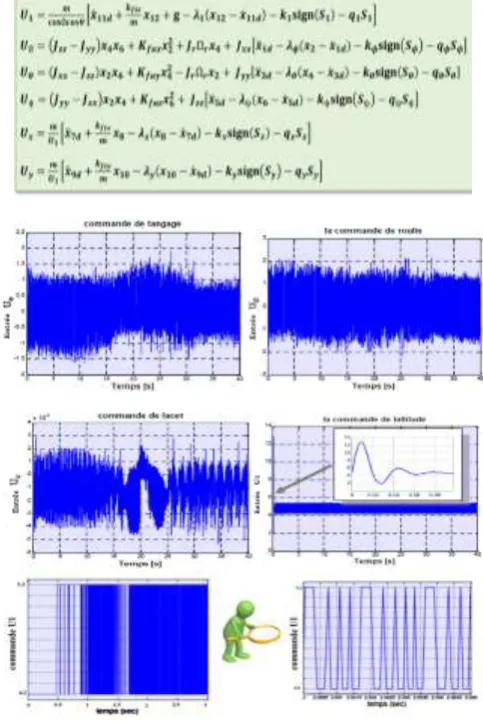
[image:3.595.312.554.131.492.2]Sliding mode of the Rotations & Translations Subsystem are:
Fig. -4: Command Signals(
)
.The Results showed good stability and robustness of the system but the main limitation with the algorithm is the Chattering effect consuming power (energy).
C. Fuzzy Logic Control
A fuzzy control system is a control system based on fuzzy logic a mathematical system that analyses analogy input values in terms of logical variables that take on continuous values between 0 and 1, in contrast to classical or digital logic, which operates on discrete values of either 1 or 0 (true or false, respectively) [11]
[image:3.595.38.281.131.327.2] [image:3.595.39.286.648.728.2]© 2019, IRJET | Impact Factor value: 7.34 | ISO 9001:2008 Certified Journal
| Page 208
understand, so that their experience can be used in the design of the controller. This makes it easier to mechanize tasks that are already successfully performed by humans. [11].
Fig -5: Shows the general blok diagram of fuzle logic
We opted for three triangular membership functions by input variable. Each controller receives as input the position error and the speed of displacement (or rotation). Thanks to nine rules of inferences we obtain, by applying a max-min type inference, an output of the regulator to which we apply a defuzzification uses the method of center of gravity.
[image:4.595.36.288.155.250.2]Mamdani-type inference is used for the inference engine with centroid defuzzification method and it lays out the foundation rules for the Fuzzy system [17]. The details of these variables can be seen in Fig. 6. Two inputs and one output are normalized
in the same interval [-1, 1] with
a scaling factor variable of 0.2 for every linguistic
group. Controller φ, θ: The membership functions of
its inputs and output:
Fig -6.The membership functions for controller inputs
and its output.
[image:4.595.308.559.226.504.2]They are of the Mamdani type with the center of gravity as the method of deffuzification. Each input and output are divided into 7 groups of linguistic variables, i.e., negative large (NL), negative medium (NM), negative small (NS), zero (Z), positive small (PS), positive medium (PM), and positive large (PL). These linguistic variables express the degree of error and also the error rate in roll and pitch angle while moving on the circular trajectory. The rules of the fuzzy controller are shown in Table 1.
Table -1: The rules of the fuzzy controller
̇\e NLy NMy NSy PSy PMy PLy NLx NL NL NL NM NS Z NMx NL NL NL NS Z PS
NSx NL NL NM Z PS PM PSx NM NS Z PM PL PM PMx NS Z PS PL PL PL PLx Z PS PM PL PL PL
The figures about Stabilization of attitude by commanding by fuzzy logic.
Fig -7.Stabilization of attitude by commanding by fuzle
logic
[image:4.595.37.291.473.597.2]© 2019, IRJET | Impact Factor value: 7.34 | ISO 9001:2008 Certified Journal
| Page 209
D Control Using Hybrid control “Backstepping+FSMC
”
It is evident that even the best linear or nonlinear algorithms had limitations and no single controller had it all.
Researchers have tackled this by combining the philosophies of one or more algorithms. Here are few examples, which are not in any way exhaustive of what is in literature. A hybrid fuzzy controller with backstepping and sliding mode control was implemented in [14] and successfully eliminated chattering effect of the sliding mode control algorithm. A feedback linearization controller was applied parallel with a high-order sliding mode controller to a quadrotor in [15]. The sliding mode controller was used as an observer and estimator of external disturbances. The system showed good disturbance rejection and robustness.
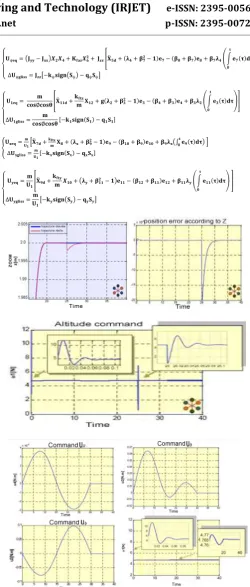
[image:5.595.307.558.48.637.2]Adaptive control via backstepping combined with neural networks was presented by Madani and co-researchers in [16]. The backstepping was used to achieve good tracking of desired translational positions and yaw angle whilst maintaining stability of roll and pitch angles. Neural networks were used to compensate for unmodeled dynamics. The major contribution of the paper was the fact that the controller did not require the dynamic model and other parameters. This meant greater versatility and robustness. As shown in Figure 9, the complete system control is composed by a cascade-connection of altitude, position and attitude controllers. However, attitude control is the heart of the control system, which maintains the UAVs stable and oriented towards the desired direction. This section shows roll- control derivation based on hybrid backstepping and the Frenet-Serret equations previously introduced.
Fig. -8. The Proposed control approach
The attitude, the altitude and the linear
(
)
Motion Control are obtained using the same approach described in my article [10].{
( ) * ̈ ( ) ( ) (∫ ( ) )+
[ ( ) ]
{
( ) * ̈ ( ) ( ) (∫ ( ) )+
[ ( ) ]
{
( ) * ̈ ( ) ( ) (∫ ( ) )+
[ ( ) ]
{
* ̈ ( ) ( ) (∫ ( ) )+
[ ( ) ]
, * ̈ ( ) ( ) (∫ ( ) ) +
[ ( ) ]
{
* ̈ ( ) ( ) (∫ ( ) ) +
[ ( ) ]
Fig -9.Simulation results of altitude and latitude using
hybrid control
E Comparison of Control Algorithms
[image:5.595.41.280.515.622.2]© 2019, IRJET | Impact Factor value: 7.34 | ISO 9001:2008 Certified Journal
| Page 210
Characteristic SMC BS FLC BS+FSMCRobust A LN LN A Adaptive H H A H Optimal A LN LN LN Intelligent LN LN A A Tracking ability H H LN H Fast convergence H LN A A Precision H A A A Simplicity A LN H H Disturbance
rejection H H A H Noise (signal) LN LN A A No Chattering LN H A H
Legend: LN—low to none; A—average; H—high
4.
CONCLUSIONS AND FUTURE WORKS
The goal of this work was to develop nonlinear control algorithms to stabilize the states of the multirotor, which include its altitude, attitude, heading and position in space and to verify the performance of these controllers with comparisons via computer simulations. Three different controllers are presented for the attitude, altitude and heading of a multirotor. The first control technique is the Backstepping, its ability to control the orientation angles in presence of relatively high perturbations is very interesting. To increase robustness (to external disturbances) of the general backstepping algorithm, an integrator is added and the algorithm becomes Integrator backstepping control. The integral approach was shown to eliminate the steady-state errors of the system, reduce response time and restrain overshoot of the control parameters. The second one is the sliding-mode technique SMC. It was well enough to stably drive the multirotor to a desired position, but it did not provide excellent results. This controller has the problem of chattering, the switching nature of the controller seems to be ill adapted to the dynamics of the multirotor. The third, last but not least, the hybrid control algorithms based on a novel technique developed during this work called: hybrid Backstepping + FSM control. As evident from the review, no single algorithm presents the best of the required features. It was found out, in recent literature, that using only one type of flight control algorithms was not sufficient to guarantee a good performance, especially
when the multirotor is not flying near its nominal condition.
As evident from the review, no single algorithm presents the best of the required features. It also been discussed that getting the best performance
usually requires
hybrid
control schemes that have the best combination of robustness, adaptability, tracking ability, optimality, fast response, simplicity and disturbance rejection among other factors. However, such hybrid systems do not guarantee good performance; hence a compromise needs to be found for any control application on which of the factors would be most appropriate.Our future work is to implementing the developed control techniques on real hexarotor hardware to give a more fair comparison between their performances. The development of novel control strategies and methodologies for improving the level of autonomy of miniature flying vehicles remains under current research. The research in the Computer Laboratory, systems and renewable energy (LRI) of the National School of Electrical and Mechanical (ENSEM) is continuing toward implementing these algorithms in real time.
The positive results achieved through this development enhance our knowledge of this very unstable system and encourages us to continue towards full autonomy multirotor.
REFERENCES
[1] Huo, X., Huo, M. and Karimi, H.R. (2014) Attitude
Stabilization Control of a Quadrotor UAV by Using Backstepping Approach. Mathematical Problems in Engineering, 2014, 1-9.
[2] Mahony, R., Kumar, V. and Corke, P. (2012) Multirotor
Aerial Vehicles: Modeling, Estimation, and Control of Quadrotor. RoboticsAutomationMagazine,19,20-32.
[3] Lee, B.-Y., Lee, H.-I. andTahk, M.-J. (2013) Analysis of
adaptive Control Using On-Line Neural Networks for a Quadrotor UAV.13th International Conference on Control, Automation and Systems (ICCAS), 20-23 October 2013, 1840- 1844.
[4] M. Moussid, A. Bensaid, A. Sayouti, M. Radoui and H. Medroumi, “A comparison of closed loop performance of multirotor configurations using nonlinear dynamic control” International Research Journal of Engineering and Technology, E-ISSN: 2395-0056. VOLUME: 04 ISSUE: 07 July-2017.
© 2019, IRJET | Impact Factor value: 7.34 | ISO 9001:2008 Certified Journal
| Page 211
[6] R. M. Murray and S. S. Sastry, A mathematicalintroduction to robotic manip-ulation. CRC press, 1994.
[7] A.W.A. Saif, M. Dhaifullah, M.A.Malki and M.E.
Shafie,“ModiffiedBackstepping Control of Quadrotor”, InternationalMulti-Conference on System, Signal and Devices, 2012.
[8] V.G. Adir, A.M.Stoica and J.F. Whidborne, “Sliding ModeControl of 4Y Octorotor”, U.P.B. Sci. Bull., Series D, Vol.74, Iss. 4, pp. 37-51,2012.
[9] K. Runcharoon and V. Srichatrapimuk, “Sliding Mode
Control of Quadrotor” International Conference of TechnologicalAdvances in Electrical, Electronics and Computer Engineering,pp. 552-556 May 9-11, 2013.
[10] [M. Moussid, A. Sayouti and H. Medroumi, “Autonomous HexaRotor Arial Dynamic Modeling and a Review of Control Algorithms” International Research Journal of Engineering and Technology (IRJET), E-ISSN: 2395-0056. VOLUME: 02 ISSUE: 05 AUG-2015.
[11] Xu, R and Ozguner, U. 2006 Sliding Mode Control of Quadcopter, Proceeding of the 45th IEEE Conference on decision and control, San Diego, 13-15 December 2006, 4957-4962.
[12] Cetinsoy, E., Dikyar, S., Hancer, C., Oner, K.T., Sirimoglu, E., Unel, M. and Aksit, M.F. (2012) Design and Construc- tion of a Novel Quad Tilt-Wing UAV. Mechatronics, 22, 723-745.
[13] Senkul, F. Altug, E. Modeling and Control of a Novel
Tilt-Roll Rotor Quadrotor UAV. Proceedings of the 2013 International Conference on Unmanned Aircraft Systems, Atlanta, 28-31 May 2013, 1071-1076.
[14] Zeghlache, S., Saigaa, D., Kara, K., Harrag, A. and
Bouguerra, A. (2012) Backstepping Sliding Mode Controller Im- proved with Fuzzy Logic: Application to the Quadrotor Helicopter. Archives of Control Sciences, 22, 315-342.
[15] Benallegue, A., Mokhtari, A. and Fridman, L. (2006) Feedback Linearization and High Order Sliding Mode Observer for a Quadrotor UAV. Proceedings of the International Workshop on Variable Structure Systems, Alghero, 5-7 June 2006, 365-372.
[16] Madani, T and Benallegue, A.(2008) Adaptive Control
via Backstepping technique and Neural Networks of a Quadrotor Helicopter. Proceedings of the 17 the Word Congress of the International Federation Of Automatic Control, Seoul, July 6-11-2008, 6513-6518.
[17] Xu, H.; Vilanova, R. (2015); PI and Fuzzy Control for P-removal in Wastewater Treatment Plant, International Journal of Computers Communications & Control, ISSN 1841-9836, 10(6):936-951, 2016. Application to the Quadrotor Helicopter. Archives of Control Sciences, 22, 315-342.
BIOGRAPHIES
Alaa Bensaid Doctoral student in computer engineering of the National Higher School of electricity and mechanics (ENSEM), Morocco
Mostafa Moussid Doctoral student in computer engineering of the National Higher School of electricity and mechanics (ENSEM), Morocco
Selwa El Ouarouar Doctoral student in computer engineering of the National Higher School of electricity and mechanics (ENSEM), Morocco
Adil Sayouti received the PhD in computer science from the ENSEM, Hassan II University in July 2009, Morocco. In 2003, he obtained the Microsoft Certified Systems Engineer.