Numerical and experimental optimisation of a high
performance heat exchanger.
SIM, Lik F.
Available from Sheffield Hallam University Research Archive (SHURA) at:
http://shura.shu.ac.uk/20362/
This document is the author deposited version. You are advised to consult the
publisher's version if you wish to cite from it.
Published version
SIM, Lik F. (2007). Numerical and experimental optimisation of a high performance
heat exchanger. Doctoral, Sheffield Hallam University (United Kingdom)..
Copyright and re-use policy
See http://shura.shu.ac.uk/information.html
Adsetts Centre City Campus Sheffield 31 1WB
1 0 1 8 9 3 0 6 8 X
\
Sheffield Hallam University ] Learning and IT Servicesr e f e r e n c e
'j Adsetts Centre City CampusSheffield SI 1WB
ProQuest Number: 10701008
All rights reserved
INFORMATION TO ALL USERS
The quality of this reproduction is dependent upon the quality of the copy submitted.
In the unlikely event that the author did not send a com plete manuscript and there are missing pages, these will be noted. Also, if material had to be removed,
a note will indicate the deletion.
u
est
ProQuest 10701008
Published by ProQuest LLC(2017). Copyright of the Dissertation is held by the Author.
All rights reserved.
This work is protected against unauthorized copying under Title 17, United States C ode Microform Edition © ProQuest LLC.
ProQuest LLC.
789 East Eisenhower Parkway P.O. Box 1346
Numerical and Experimental Optimisation
of a High Performance Heat Exchanger
Lik Fang Sim
A thesis submitted in partial fulfilment o f the requirements o f Sheffield Hallam University
for degree o f Doctor o f Philosophy
This thesis is dedicated to my beloved parents and Teresa Lim, who have been giving me endless love and absolute support through life.
Abstract
The aim o f this research is to numerically and experimentally scrutinise the thermal performance o f a typical heat exchanger fitted in a domestic condensing boiler. The optimisation process considered the pins' geometry (circular pins and elliptical pins), pins' spacing, pitch distance, the pressure drop across the heat chamber and the occurrence of thermal hot spots. The first part o f the study focused on the effect o f altering the circular pins spacing and pins pitch distance o f the heat exchanger. .Computational Fluid Dynamics (CFD) is used to scrutinise the thermal performance and the air flow properties o f each model by changing these two parameters. In total, 13 circular pin models were investigated. Numerical modelling was used to analyse the performance o f each model in three-dimensional computational domain. For comparison, all models shared similar boundary conditions and maintained the same pin height o f 35 mm and pin diameter o f 8 mm. The results showed that at a given flow rate, the total heat transfer rate is more sensitive to a change in the pins spacing than a change of the pins pitch. The results also showed that an optimum spacing o f circular pins can increase the heat transfer rate by up to 10%.
The second part of the study, focused on investigating the thermal performance o f elliptical pins. Four elliptical pin setups were created to study the thermal performance and the air flow properties. In comparison with circular pins, the simulation results showed that the optimum use o f eccentricity o f elliptical pins could increase the total energy transfer by up to 23% and reduce the pressure drop by 55%.
To validate the acquired CFD results, a Thermal Wind Tunnel (TWT) was designed, built and commissioned. The experimental results showed that the numerical simulation under predicted the circular pin models’ core temperatures, but over predicted the elliptical models core temperatures. This effect is due to the default values o f the standard k - e
transport equations model used in the numerical study. Both numerical and experimental results showed that the elliptical models performed better compared to its circular pins counter parts.
The study also showed that heat exchanger optimisation can be carried out within a fixed physical geometry with the effective use o f CFD.
Acknowledgements
First o f all, I wish to thank my Director o f study Dr. Saud Ghani for his constant support, patience and encouragement throughout these years of study. Thank you for giving me the opportunity to work with you on this unique research project. It was a bumpy ride but I enjoyed every single moment o f the journey. Secondly, I would like to thank my sponsor company, Vaillant Group and Mr Steve Keeton for having me as researcher to work in parallel with the research and development group. I have enjoyed my three years working along with the research and development group.
I would like to thank Sheffield Hallam University for providing an excellent study environment and facilities for me during my research. I would also like to extend my gratitude to my second supervisor Dr. Malcolm Denman for his guidance. In no particular order, I wish to thank, Mr. Tim O' Hara, Mr. John Bickers, Mr. Brain Palmer and the technicians from the precision workshop for their assistance on setting up the thermal wind tunnel. Without their help, the experimental tests would not have been carried out successfully.
I would like to thank my parents for their understanding, belief and constant support. Sorry for not being able to stay beside you all these times.
I wish to thank my two sisters for their constant support and looking after mum and dad while I was away.
I wish to thank all my friends for their encouragement and support. I also like to express my special gratitude to my research colleague Mr. Ben Hughes for his constant support and friendship.
Finally, but by no means the least, I wish to thank a very special lady, Miss Teresa Lim for her understanding, belief, and constant support throughout my studies. Sorry for not being able to spend more time with you during this study and hopefully you will allow me to make up this time with you from this point forward.
CONTENTS
Table o f Figures... ... VIII Table o f Tables... XII Nomenclature...XIII
Chapter 1 Introduction... 1
Overview...1
1.1 Research Obj ectives...6
1.2 Research Methodology... 7
Summary... 9
Chapter 2 Literature Review ... ...11
2.1 Introduction to Heat Exchangers...11
2.2 Heat Exchangers Classification...11
2.3 Changing Pins Geometries... 12
2.4 Inline and Staggered Pins Configuration... ... 14
2.5 Comparative Study o f Circular and Elliptic Tubes...15
2.6 Design Parameters o f Heat Exchanger...16
Summary... 18
Chapter 3 Introduction to Computational Fluid Dynamics (CFD)...19
Introduction... 19
3.1 Theory of Computational Fluid Dynamics (CFD) M odelling... 20
3.1.1 Pre-processing...20
Defining the physical geometry... 20
Mesh generation... 21
Mesh independent solutions and refinement...25
Defining Boundary conditions...26
3.1.2 Solving equations... 27
Continuity equation... 27
Momentum conservation equation... 28
Navier-Stokes equations for a Newtonian fluid...29
Energy equation...30
k- s transport equation... 31
3.1.3 Post - processing... 32
3.2 Computational Fluid Dynamics (CFD) Codes... 33
3.2.1 Continuous phase modelling in FLUENT ...33
3.2.2 FLUENT Solution Algorithms... 38
Segregated solver...38
Coupled Solver...40
Summary... 41
Chapter 4 Computational Fluid Dynamics (CFD) M odelling ... 42
Introduction... 42
4.1 Defining the Physical Dom ain...43
4.1.1 Circular Pins Setup... 43
4.1.2 Elliptical Pins Setup... 47
4.2 Creating the Computational Domain... 48
4.2.1 Creating surface meshing... 48
[image:8.614.49.553.45.705.2]4.2.3 Mesh independent solutions...49
4.3 Defining Boundary Conditions... 52
4.4 Selecting Solvers and Equations... 54
4.5 Solution Convergence...55
Summary...55
Chapter 5 Thermal Wind Tunnel Design...56
Introduction... 56
5.1 Thermal Wind Tunnel Design Parameters and Requirements...57
5.1.1 Closed loop wind tunnel... 58
5.1.2 Uniformity o f test section air velocity...59
5.1.3 Heating elements selection... 59
5.1.4 High temperature bifurcated fa n ... 61
5.1.5 Specimen observation windows... 61
5.1.6 Water channel assembly and test section accessibility ... .'... 62
5.1.7 Tunnel insulation... 63
5.2 Thermal Wind Tunnel Design... 64
5.2.1 Numerical calculations... 66
5.2.2 TWT preliminary calculation summary...67
5.2.3 CFD optimisation... ...69
5.2.4 Tunnel air quality...71
Summary...73
Chapter 6 Specimens and Equipment... 74
Introduction... 74
6.1 Specimen Geometry...75
6.2 Specimens’ Manufacturing Process... 76
6.3 Specimen Material Properties ... 78
6.4 Experimental Equipment...80
6.4.1 K-type thermocouples... 81
6.4.2 Pico TC-08 temperature data logger... 83
6.4.3 Water pump...85
6.4.4 Water flow control valves...85
6.4.5 Water flow rate sensor...86
6.4.6 Water flow rate display unit... 88
6.4.7 Wind tunnel variable fan speed controller...91
6.4.8 Heaters fuzzy logic PID controller...93
Proportional Integral Derivative (PID) action... 94
Fuzzy logic control...94
6.4.9 Pitot tube...97
6.4.10 Testo 521-3 flow measurement instrument... 99
6.5 Specimens Preparation... 100
6.6 Water Loop Pressure Testing...102
6.7 Accuracy o f Equipment...104
Summary... 105
Chapter 7 Numerical Simulation Results ... 106
Introduction...106
7.1 CFD Energy Transfer Results...108
7.1.1 Circular pins' spacing and pitch distance CFD energy transfer results 108 7.1.2 Elliptical pins CFD energy transfer results... 109
7.2 CFD Pressure Difference Results... 110
7.2.1 Circular pins' spacing and pitch distance pressure difference results 110 7.2.2 Elliptical pins CFD pressure difference results... I l l Summary...I l l
Chapter 8 Numerical Simulation Results Analysis...112
Introduction...112
8.1 Thermal Performance o f Circular P in s...113
8.2 , Pressure Drop Across Circular Pins... 117
8.3 Circular Pins Performance Summary... 123
8.4 Thermal Performance o f Elliptical Pins... 127
8.5 Elliptical Pins - Pressure Difference...131
8.6 Pins’ Performance Summary... 133
Chapter 9 Experimental Results... 134
Introduction... 134
9.1 Experimental Testing Parameters... 135
9.2 The Benchmark Model Experimental Results... 135
9.3 Model S I8.5 Experimental Results ... 136
9.4 Model Ellip(8.0, 2.0) Experimental Results...137
9.5 Model Ellip(10.0, 1.6) Experimental Results... 138
Summary...139
Chapter 10 Experimental Results A nalysis... 140
Introduction... 140
10.1 Benchmark Model Experimental Results Analysis... 141
10.2 Model S I8.5 Experimental Results Analysis... 144
10.3 Model Ellip(8.0, 2.0) Experimental Results A nalysis... 147
10.4 Model Ellip(10, 1.6) Experimental Results Analysis...149
Summary ... :... 151
Chapter 11 Conclusions and Future Work... 153
11.1 Conclusions...153
11.2 Future W ork... 155
References...156
Bibliography...163
Appendix A Fan Drawing...167
Appendix B Thermal Wind Tunnel (TWT) Design and Calculations...168
B .l Introduction...168
B.2 Test section...170
B.3 Wind tunnel diffuser...173
B.4 Third comer... 175
B.5 Guide vanes in third comer...176
B.6 Downstream straight duct...177
B.7 Fourth Comer... 178
B.8 Downstream Wire M esh...179
B.9 Contraction... 180
B.10 Test Section Wire M esh... 181
B .l 1 Second comer...182
B .l2 Expansion duct... 184
B . 13 Upstream straight duct... 185
B.14 First com er... 186
B. 15 First comer vanes...187
B. 16 Upstream Wire M esh...188
B. 17 Annular outlet...189
B .l8 Annular Inlet... ... 191
B. 19 Pressure Loss Breakdown List...192
Appendix C Fan's Performance Graph...193
Appendix D PID Controller... ...194
D .l Proportional action... 194
D.2 Integral action...194
D.3 Derivative action... 195
D.4 Proportional - integral - derivative (PID) action...196
Appendix E Wind Tunnel Operation Procedures...197
E. 1 Water channel operating sequence... 197
E.2 Data logger operating sequence...197
E.3 Fan operating sequence...197
E.4 Heaters operating sequence... 197
Table of Figures
Figure 1-1: Conventional central heating system [3]...2
Figure 1-2: Modem central heating system [3]...3
Figure 1-3: Heat exchanger in condensing boiler [courtesy of Vaillant Group] ...4
Figure 1-4: Natural gas and fuel oil water vapour dew point [5]...5
Figure 1-5: Research methodology and structure... 8
Figure 2-1: Parallel flo w ... 12
Figure 2-2: Counter flow ... 12
Figure 2-3: Multiple flow s...12
Figure 2-4: (a) top view o f computational domain, (b) side view o f computational domain [11, 12]...13
Figure 2-5: Multi row plate-fin and tube heat exchanger used in Jang et al. study [1 3 ]...14
Figure 2-6: Elliptical tubes and fins used on Matos et al. studies [16]...15
Figure 2-7: Rectangular fins used on Sahin et al. studies [17 ]...16
Figure 2-8: (a) Arrangement of hexagonal pins, (b) Isometric view of hexagonal pins. [18] ...17
Figure 3-1: Algebraic methods transfer from physical domain to computational domain (a) two dimension (b) three-dimension [20]... 22
Figure 3-2: PDE mapping methods (a) physical domain, (b) computational domain [20].. 22
Figure 3-3: (a) Polygon bisected by triangles (b) DVM meshing on computational domain [21]...23
Figure 3-4: Advancing front methods (AFM) meshing construction [21]...24
Figure 3-5: FLUENT simulation structure... 35
Figure 3-6: Segregated solution method [19]... 39
Figure 3-7: Coupled solver method [19]...40
Figure 4-1: Section view o f the whole heat exchanger...43
Figure 4-2: Generic m odel... 44
Figure 4-3: Pins' spacing and pitch distance... 45
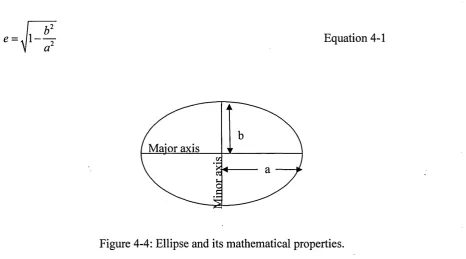
Figure 4-4: Ellipse and its mathematical properties...47
Figure 4-5: 2D and 3D cell types [24]... 49
Figure 4-6: Circular pins mesh adaption... 50
Figure 4-7: Elliptical pins mesh adaption... 50
Figure 4-8: Mesh near circular p ins...51
Figure 4-9: Mesh near elliptical pins...51
Figure 5-1: Vertical closed loop thermal wind tunnel...58
Figure 5-2: Tubular heating element § 9.53 mm x 200 mm long...60
Figure 5-3: 1/4" BSP female lock nut fitting...60
Figure 5-4: Bifurcated fan...61
Figure 5-5: Side view o f bifurcated fan ...61
Figure 5-6: Flow observation windows...62
Figure 5-7: 5 mm thick ceramic glass... 62
Figure 5-8: Specimen access window... 62
Figure 5-9: Water channel in position... 62
Figure 5-10: Industrial wire mat insulation without the protection foil... 63
Figure 5-11: Tunnel insulation with protection foil... 63
Figure 5-12: Exploded view of each section o f the TW T...65
Figure 5-13: TWT without guide vanes and screens (pressure contours)...69
Figure 5-14: Velocity magnitude o f the initial TWT design...69
Figure 5-15: TWT design with guide vanes in first comer and third com er...70
Figure 5-16: Large eddy occurred at settling zone...70
Figure 5-17: Final design o f TWT with guide vanes and wire mesh screens...71
Figure 5-18: Velocity magnitude o f the TW T...71
Figure 5-19: Wind tunnel air velocity profile...72
Figure 6-1: Benchmark CAD model... ... 76
Figure 6-2: EOS laser sintering manufacturing process [56]...77
Figure 6-3: EOSINT M270 direct metal laser sintering machine. [5 7 ]... 78
Figure 6-4: Elliptical and circular pins specimens... 80
Figure 6-5: K-type thermocouple operation principle... ...81
Figure 6-6: 2m K-type glass fibre thermocouple with miniature plug...83
Figure 6-7: 12 mm diameter flow control v alve...86
Figure 6-8: Hall effect principle [62]... 87
Figure 6-9: Fluid flow sensor...88
Figure 6-10: Frequency counter block diagram [6 3 ]... 89
Figure 6-11: Top view o f digital flow meter... 90
Figure 6-12: Front view o f digital flow meter... 90
Figure 6-13: Three phase variable fan speed controller diagram [64]...91
Figure 6-14: Single phase AC waveform rectification to DC waveform [65]...92
Figure 6-15: Three phase 1.1 kW variable speed controller...93
Figure 6-16: Fuzzy logic PID control unit...95
Figure 6-17: Inside the fuzzy logic PID control unit...96
Figure 6-18: Wind tunnel air temperature control system ... 97
Figure 6-19: Pitot tube... 98
Figure 6-20: Section view o f the pitot tube [70]...98
Figure 6-21: Absolute pressure measurement [72]... 99
Figure 6-22: Gauge pressure measurement [72]...99
Figure 6-23: Differential pressure measurement [72]... 99
Figure 6-24: Testo 521-3 flow measurement instrument... 100
Figure 6-25: Thermocouples were sealed inside the core o f the pins...101
Figure 6-26: Silicon sealant was used to fill in the hole and thermocouples position 101 Figure 6-27: Folic graphite sealant was used to secure the specimen on the water channel 102 Figure 6-28: Water flow pathway... 103
Figure 6-29: Pressure testing on specimen Ellip(8.0, 2.0) m odel ... 104
Figure 7-1: Pressure difference measurement points...107
Figure 8-1: The effects o f total energy transfer to the water side when altering the pins' spacing... 114
Figure 8-2: Benchmark model's velocity vector graph... 115
Figure 8-3: Model S I8.5 velocity vector graph... 115
Figure 8-4: Benchmark model's pins temperature contour... 116
Figure 8-5: S I8.5 model's pins temperature contour...116
Figure 8-6: The effects o f total energy transfer to the water side when altering the pins pitch distance... 117
Figure 8-7: Pressure contours on benchmark m odel... 119
Figure 8-8: Benchmark model's velocity vectors (horizontal plane)... 119
Figure 8-9: Pressure contours on S I8.5 m odel...120
Figure 8-10: Velocity vectors of model S18.5 (horizontal plane)... 120
Figure 8-11: Pressure difference o f different pins’ spacing...121
Figure 8-12: Pressure difference o f different pitch distance...121
Figure 8-13: Velocity vectors o f model PI 2.5 (horizontal plane)... 122
Figure 8-14: Temperature contours o f Benchmark-26 model... 125
Figure 8-15: Temperature contours o f model S18.5... 125
Figure 8-16: Total pressure contours of Benchmark-26 m odel...126
Figure 8-17: Velocity vectors o f Benchmark-26 model...126
Figure 8-18: Total energy transfer o f different eccentricity...127
Figure 8-19: Velocity flow vectors o f Ellip(5.5, 2.9)... 129
Figure 8-20: Model Ellip(8.0, 2.0) velocity flow vectors... 129
Figure 8-21: Model Ellip(10.0, 1.6) pins temperature contours... 130
Figure 8-22: Pressure contours o f Ellip(5.5, 2.9) model...131
Figure 8-23: Pressure distribution on Ellip(8.0, 2.0) model...132
Figure 8-24: Pressure difference o f different elliptical pins m odel... 132
Figure 8-25: Heat transfer and pressure difference performance graph... 133
Figure 9-1: Thermocouples positions in Benchmark m odel...136
Figure 9-2: Thermocouples positions in model S I8 .5 ... 137
Figure 9-3: Thermocouples positions in model Ellip(8.0, 2.0 )... 138
Figure 10-1: Benchmark model’s pins core temperature with tim e... 142
Figure 10-2: Benchmark model's water outlet temperature with tim e...142
Figure 10-3: Benchmark pins' core temperature...143
Figure 10-4: Model S18.5 pins temperatures with time...144
Figure 10-5: Model S I8.5 water outlet temperature against time...145
Figure 10-6: Model S I8.5 pins' core temperature... 146
Figure 10-7: Model Ellip(8.0,2.0) pins core temperature with tim e ...147
Figure .10-8: Ellip(8.0, 2.0) model's water outlet temperature with tim e...148
Figure 10-9: Model Ellip(8.0, 2.0) pins' core temperature... 148
Figure 10-10: Model Ellip(10,l-6) water outlet temperature against time...149
Figure 10-11: Ellip(10, 1.6) model pins' core temperature... 150
Figure B - l: Exploded view at every section o f the wind tunnel... 169
Figure B-2: Bird's eye view at the thermal wind tunnel...170
Figure B-3: Cross sectional view on test section...171
Figure B-4: Test section's dimension... 171
Figure B-5: Diffuser section's dimension... 173
Figure B-6: Third comer's dimension... 175
Figure B-7: Guide vane dimension... 176
Figure B-8: Downstream straight duct dimension... 177
Figure B-9: Fourth comer's dimension...178
Figure B-10: CAD model shows the contraction's dimension...180
Figure B -l 1: CAD model shows the dimension o f 2nd comer...183
Figure B-l 2: CAD model shows the dimension o f the expansion duct...184
Figure B-13: CAD model shows the dimension of the upstream straight duct... 185
Figure B -l 4: CAD model shows the dimension o f the 1st com er... 186
Figure B -l 5: CAD model of first comer guide vanes...187
Figure B -l 6: CAD model o f annular outlet...189
Figure B -l7: Annular Cp graph...190
Figure B -l8: Annular inlet’s CAD model... 191
Figure D -l: Step response using Proportional control...194 Figure D-2: Step response using proportional and integral (PI) controller... 195 Figure D-3: Step response using proportional and derivative (PD) controller... 196
Table of Tables
Table 3-1: Gambit face meshing elements options [2 4 ]...36
Table 3-2: Gambit face meshing type options [24]...36
Table 4-1.: Benchmark model’s geometric parameters...44
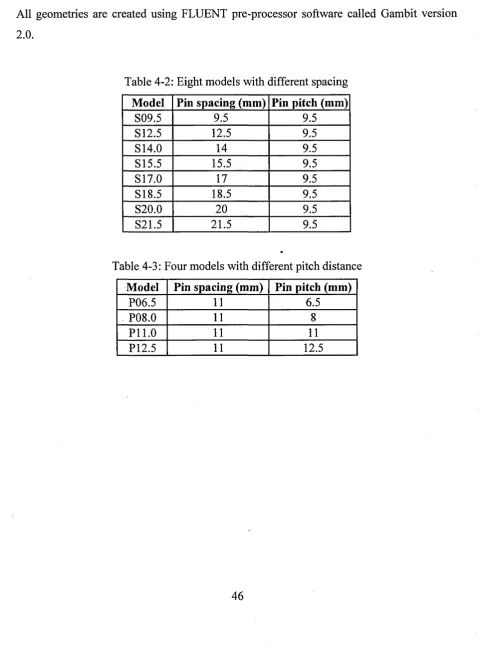
Table 4-2: Eight models with different spacing... 46
Table 4-3: Four models with different pitch distance... 46
Table 4-4: Elliptical m odels... 47
Table 4-5: Initial boundary conditions...52
Table 5-1: TWT net pressure loss calculation summary... 68
Table 5-2: Coefficient of uniformity of each design...72
Table 6-1: Material properties of DirectMetal 2 0 ... 79
Table 6-2: Pico TC-08 data logger specifications [59]... 84
Table 6-3: Equipment accuracy...104
Table 7-1 Total energy transfer o f each model with different pin spacing...108
Table 7-2: Total energy transfer o f each model with different pitch distance ... 109
Table 7-3: Elliptical pins energy transfer... 109
Table 7-4: Pressure difference at hot air channel (circular p ins)...110
Table 7-5: Total pressure difference at hot air channel (elliptical pin s)... I l l Table 8-1: Comparison between pins' spacing and number o f pins... 124
Table 9-1: Experimental and numerical simulation results o f the Benchmark m odel 135 Table 9-2: Experimental and numerical simulation results o f model S18.5... 136
Table 9-3: Experimental and numerical simulation results o f Ellip(8.0, 2.0) m odel 137 Table 9-4: Experimental and numerical simulation results o f Ellip(10.0, 1.6) model 139 Table 10-1: Total energy transfer o f each m odel...151
Table 10-2: Numerical simulation results o f Benchmark model when CM = 0.085... 152
Table B -l: Pressure loss coefficient for diffuser...174
Table B-2: Pressure loss coefficient for elbow ...175
Table B-3: 90 degree bend guide vane pressure loss coefficient table ...187
Nomenclature
u x - momentum, (kg-m/s) V y - momentum, (kg-m/s)
w z - momentum, (kg-m/s)
Sm Mass added to the continuous phase from the dispersed second phase and any user defined sources, (kg)
P Static pressure, (Pa)
keff Effective conductivity, (W/ m-K)
J J Diffusion flux, (mol/ m s)
sh
Heat o f chemical reaction and other volumetric heat sources from user, (W)h
Enthalpy, (J/kg)Yj Mass fraction o f species j
I
Unit tensork Turbulence kinetic energy, (m2/s2)
G k Generation of turbulence kinetic energy due to the mean velocity gradients
Gb Generation o f turbulence kinetic energy due to buoyancy
Ym Fluctuating dilation in compressible turbulence to the overall dissipation rate
sk
User defined source term for turbulence kinetic energy, (m2/s2)S£ User defined source term for turbulence dissipation rate, (m2/s3) Dh Hydraulic diameter, (m)
m Mass to be heated, (kg)
cp
Specific heat capacity o f the fluid, (kJ/kg-K)AT Temperature difference, (K)
t Temperature rise time, (hrs)
U Overall heat transfer coefficient, (W/ m-K) A Wind tunnel surface area, (m2)
BSP British Standard Pipe Re Reynolds Number
P0 Pressure head at fan outlet, (Pa) Vo Outlet velocity, (m/s)
vi Inlet velocity, (m/s)
Pi Pressure head at fan inlet, (Pa)
K-i Sum of total pressure head loss between fan outlet and inlet, (Pa)
Q
Volume flow rate, (m /s)Pa Fan power, (W)
cu
Coefficient o f uniformityVmax Maximum air velocity, (m/s)
Pm in Minimum air velocity, (m/s) Vavg Average air velocity, (m/s) V Voltage, (V)
Th Measured temperature, (°C) EMF Electro Magnetic Field
VH Hall effect voltage, (V)
I Current, (A)
B Magnetic field, (N s)
d Depth o f the plate, (m)
e Electron charge, (m kg s)
n Bulk density o f carrier electrons, (m'3) f Frequency, (Hz)
n Number of cycles o f the repetitive signal
t Time, (s)
P Pulses per minute
K Pulses per litre
RPM Revolution Per Minute
/ Supplied frequency to the motor, (Hz)
P Number o f motor poles Pout Proportional term
K P Proportional gain
e Measured error
t
Process time, (s)^out Integral term
Kt Integral gain Dout Derivative term Kd Derivative gain
Pt Measured total pressure , (Pa) Ps Measured static pressure, (Pa)
V Defined velocity, (m/s) AP Pressure difference, (Pa)
PupstreamUpstream pressure, (Pa)
P^nstrcan,Downstream pressure, (Pa)
Greek symbol
v Fluid flow velocity, (m/s)
p Local density, (kg/m3)
2 2
p g Gravitational body force, (kg/ m s ) r Stress tensor, (N/m )
p. Molecular viscosity, (Pa s) 0 ^ s Turbulence dissipation rate, (m /s )
<Jk Turbulent Prandtl number for turbulence kinetic energy
c £ Turbulent Prandtl number for energy dissipation rate t Time in the past contributing in the integral response, (s)
Chapter 1
Introduction
Research shows that the earth’s surface temperature increased by 0.6 ±0.2°C during the 20
century. This caused the global mean sea level to increase at an average annual rate o f 1 to
2 mm [1]. By the year 2010, the United Kingdom's (UK) Government pledges to reduce the
carbon emissions from British homes by 20% compared with the average emission rate of
the year 1990 [2]. Domestic home boilers have direct impact on the domestic emissions
target, thus it is important to design more efficient and intelligent boilers.
Overview
The majority of UK homes utilise gas fired central heating to supply hot water and heating
around the house. As depicted in Figure 1-1, a conventional central heating system consists
of the following:
1. Conventional boiler
2. Timer
3. Room thermostat
4. Cold water storage tank
5. Cylinder
6. Expansion tank/ vessel
7. Radiators
Cold water storage tank
(4)
Radiator
Room H oorn
1 h e r m us Lit
thermostat
ram mer
Timer (2)
Expansion tank/ vessel
(6)
Cylinder
Conventional
boiler (1)
Figure 1-1: Conventional central heating system [3]
Cold water from the storage tank or mains supply, replenishes the cylinder when water has been released from the cylinder. A conventional boiler is used to raise the water temperature inside the cylinder for household usage and home heating. A pump is used to circulate the water from the cylinder to the radiators. As illustrated, a conventional central heating system utilises more heating space in the house. If the cylinder does run out of hot water it will usually take 25 to 30 minutes for the water to recover. Another disadvantage of a traditional boiler is that a large quantity of excessive heat is wasted when there is no demand for hot water.
Figure 1-2 shows a modem condensing boiler supply hot water and heating around the house without using any cylinder or cold water tank. Unlike conventional central heating, hot water is supplied on demand basis. A modem condensing boiler converts more than 90% of fuel into heat, compared to 78% using a conventional boiler. Any conventional boiler over 15 years old is considered inefficient because it only converts 50% of fuel into heat [4].
2
Radiator
Condensing boiler
Figure 1-2: Modem central heating system [3]
A high efficiency condensing boiler bums natural gas in a heat chamber surrounded by a water jacket as illustrated in Figure 1-3. This unit is known as the heat exchanger. The heat exchanger plays a vital role within the boiler, as it is where the energy conversion and exchange would occur. The heat exchanger is a device in which energy is transferred from one fluid to another across a solid surface. The solid surface usually contains large quantities of pins to increase the total surface area available for heat exchanging process. Water channels or waterways externally encase the heat chamber to pick up the generated heat and transfer it to the water side.
Hot gas inlet
Water outlet
Water inlet
Hot gas outlet
Figure 1-3: Heat exchanger in condensing boiler [courtesy of Vaillant Group]
The principle behind a condensing boiler is to recover as much heat as possible from the gas and further absorb the sensible heat from the condensate water before rejecting it to the
atmosphere. In natural gas (methane CH4), the simplified combustion equation can be
written as:
CH4 + 2 02 + 7.2 N2 -> 2 H20 + C 02 + 7.2N2 + 30 kW of heat Equation 1-1
Fuel: CH4 = 16 kg/k mol
Air: 2 02 + 7.2 N2 = 274.6 kg/k mol
Products: 2 H20 + C 02 + 7.2N2 = 290.6 kg/k mol
If the wall temperatures at the heat chamber fall below the water vapour dew point, condensation will occur. Figure 1-4 illustrates that the water vapour dew point is
approximately 57 °C. Currently, for natural gas (95% CH4) condensing boilers exiting
temperature is between 50°C to 60°C compared with 120 to 180 °C in current non condensing boilers. Figure 1-4 also shows that the lower the sensible heat from the water vapour that is drawn out, the lower the carbon dioxide content released to the atmosphere.
60
Natuial gas (95% CH4) 57
55
EL
-ue
50
45
40
O
+-» .£ 35
oa o
-O 30
3
oa
5 25 *—
o
to
5
1 2 3 4 5 6 7 8 9 10 11 12 13 14 15
C02 content [vol. %]
Figure 1-4: Natural gas and fuel oil water vapour dew point [5]
[image:23.615.141.496.160.553.2]1.1 Research Objectives
The aim o f this research was to numerically and experimentally scrutinise the thermal
performance o f a typical heat exchanger fitted in a domestic condensing boiler. The
optimisation process took into account the pins’ geometry (circular and elliptical pins),
pins' spacing, pins pitch, the pressure drop across the heat chamber and the occurrence o f
thermal hot spots.
The main objectives of this research on current heat exchangers are to:
1. Scrutinise the sensitivity o f the geometrical performance o f circular pins
2. Scrutinise the sensitivity of the geometrical performance o f elliptical pins
3. Design, build and commission a thermal wind tunnel
4. Validate numerical simulation results against experimental results
5. Improve the thermal efficiency o f a current heat exchanger taken as a benchmark
without physically altering the size, weight and volume o f the unit.
The first stage o f this research investigates the thermal and fluid flow performance o f fixed
diameter circular pins. In total 13 models with different pins' spacing or pitch distance were
investigated. The second stage o f the research evaluates the performance o f the
conventional circular pins’ thermal performance against elliptical pins.
The third stage of the research introduces the experimental equipment used. A thermal wind
tunnel was designed and enhanced using Computational Fluid Dynamics (CFD) tool. The thermal wind tunnel was then built and commissioned to experimentally validate the
acquired numerical results. Direct Metal Laser-Sintering (DMLS) technology was used to
build the pin models out o f copper alloy which was tested on the thermal wind tunnel.
Experimental data acquired from the thermal wind tunnel were then used to validate the
numerical results.
1.2 Research Methodology
Both computational and experimental methods were used to study the thermal performance
o f the heat exchanger. Figure 1-5 illustrates the methodology and the logical thread
structure used in this research. The first stage o f the study focuses on the thermal and fluid
flow performance of 4 x 4 staggered circular pins, with different spacing and pitch distance
in a fixed channel. The numerical studies were conducted using commercially available
CFD code, FLUENT 6.2. A model taken from a current market production heat exchanger
was used as a benchmark design. From this model, several different pins configuration
models with the same boundary conditions were then compared on the basis o f maximising
the total energy transfer from the pins to the water and reduce the pressure loss within the
hot air channel.
The second stage o f the research focused on the thermal and fluid flow performance o f 4 x
4 staggered elliptical pins with different eccentricities. All elliptical models have the same
material volume as their circular pins counterparts.
The third stage o f this research shows the design, building and commissioning of a thermal
wind tunnel. Due the specific application requirements, the thermal wind tunnel had to be
custom made to suit the experimental tests. The initial design focuses on the flow quality
within the thermal wind tunnel. Furthermore, the thermal wind tunnel design enhancement
was carried out using CFD code, FLUENT 6.2. The specimens are then experimentally
assessed in the thermal wind tunnel. Experimental results obtained from the thermal wind
tunnel gave the thermal distribution o f the pins' core temperature and thermal performance
of each model. The experiment data was used to validate the numerical models.
The acquired data for numerical validation provides confidence in concluding the
justification.
CFD Studies Experimental Study
CO
<+H
co
co
C
w
3
a)
R
JtJ
.a
-3
£
§
.3
+-*
O
Summary
This thesis is divided into 11 chapters. Each chapter covers a topic deemed necessary for
this research. A summary of each chapter is listed below:
Chapter 1 provides an introduction o f present domestic heating system and
conventional heating system. This chapter also summarises the research objectives and
methodology used in this research.
Chapter 2 presents previous related publications that have been published in different
journals. Topics selected ranging from heat exchanger classification to the design
parameters o f heat exchanger.
Chapter 3 introduces CFD and its solution algorithms as a design tool used in this research. The chapter covers the theory o f CFD and the modelling methods employed.
Chapter 4 summarises the numerical modelling methods employed in this research. The
chapter covers the topics from computational meshing to solution convergence.
Chapter 5 introduces the design criteria o f the thermal wind tunnel. A summary o f the
thermal wind tunnel numerical calculations is given in the chapter. A further design
optimisation o f the thermal wind tunnel is also discussed in the chapter.
Chapter 6 introduces the manufacturing process used to create the generic models
namely, Direct Metal Laser Sintering (DMLS) technology. The chapter also introduces
the instruments used throughout the experimental tests. Specimen preparation and water
loop pressure testing were also described in the chapter.
Chapter 7 summarises the numerical simulation results.
Chapter 8 evaluation and analysis o f the flow pattern and heat transfer results acquired
from computer simulation is given.
Chapter 9 summarises the flows conditions and data acquired from the experimental tests.
Chapter 10 evaluates and validates the numerical results using the data acquired from
the experimental tests.
Chapter 11 concludes this research and presents future work that could be carried out.
Chapter 2
Literature Review
A literature review has been carried out in this study to gather the previous related work on
heat exchanger design and optimisation.
2.1 Introduction to Heat Exchangers
A heat exchanger is a device, which is used to transfer thermal energy from hotter fluid to a
colder fluid [6]. Heat exchangers can be operated in three different ways and they are
recuperation, regeneration and direct contact [7]. The most common heat exchanger is the
recuperation heat exchanger, which transfers heat between two fluids separated from each
other by a wall or a partition. Regeneration heat exchangers consist o f either a moving
wheel or fixed matrix. They are often found in gas turbines, where they are used to preheat
combustion gases by the exhaust stream. Direct contact heat exchangers are commonly
found in the metal sheet drawing industry. For example, cooling metal sheet by water
droplets as it leaves a rolling press and in cooling towers where water droplets are cooled
by an up draught o f air [7].
2.2 Heat Exchangers Classification
Heat exchangers can be classified according to the flow arrangement. The flow
arrangements can be parallel flow, counter flow, cross flow or multiple passes. In parallel
flow heat exchangers, both fluids flow in from the same direction into the heat exchanger
[8]. Conversely with counter-flow, two fluids at different temperature enter the heat
exchanger at opposite ends and heat is transferred continuously from the hotter fluid to the
colder fluid along the length of the heat exchanger [6]. Both flow characteristics can be
found in Figure 2-1 and Figure 2-2. When two working fluids flow paths are perpendicular
then the process is known as cross flow. In complex heat exchangers, multiple passes are
used to increase the heat transfer rate because fluid transverse the heat exchanger several
times before exiting. The operating principle o f multiple passes can be found in Figure 2-3.
Hot fluid
C old fluid
7
Length or area
S h ell
7
Tube
Length or area Hot fluid
7
Cold fluid
Length qr area
Figure 2-1: Parallel flow Figure 2-2: Counter flow Figure 2-3: Multiple flows
[
6
]
[
6
]
[
6
]
2.3 Changing Pins Geometries
Research [9 -1 8 ] has been carried out to discover the most efficient pins geometry for each
individual heating application. The common pins geometry used in the heating industry
ranges from convectional circular pins to hexagonal pins. This research conducted a
thorough review on different pins geometries. Behnia et al. [9] used computational fluid
dynamics software to analyse the thermal performance of circular, square, elliptical and
parallel plate fins heat sinks. The authors also used both inline and staggered arrays on each
geometry studied. All geometries in the study were compared based on air velocity between
0.5 to 5 m/s and equal wetted area o f the fins per unit base area. The authors concluded that
at a given pressure drop, the staggered plate and staggered elliptical heat sink performed
better than other geometries. The authors concluded that at lower values o f pressure drop
and pumping power, elliptical fins work best.
Christopher et al. [10] used an experimental approach to study elliptical pins, cross cut pins
and straight fins. The authors conducted a series of tests on different air velocities ranging
from 0.5 m/s to 1 m/s in a wind tunnel. Their report showed that the heat transfer on
elliptical pins is much better than cross cut pins and straight fins. In open or confined flow,
straight fin showed less effect on the pressure drop.
Kyoungwoo et al. [11] studied the flow and heat transfer o f staggered cone shape pins
geometry (spacing and pitch) and its shape (upper and lower diameter o f the cone pin) in
two-dimensional form. The flow and thermal characteristics of the reference staggered cone
pins were first analysed using Finite Volume Method (FVM). Later, a Sequential Linear
Programming (SLP) algorithm method was used to optimise the design. They concluded
that the most dominant factor for pressure drop and heat transfer rate is the lower diameter
D2, as depicted in Figure 2-4, o f the cone pin and the pins’ spacing. The research work
showed that increasing the pins’ spacing is more efficient than altering the pins pitch
distance. The authors also concluded that the total heat transfer is more sensitive on the
change of the heat exchanger area than the temperature gradient.
Similar study, but in three-dimensional form was found using four dimensionless geometric
parameters to study cone pins in a fixed channel by Lee et al. [12]. Four dimensionless
geometric parameters of the pins were selected as an important design variables in the
study, namely the pins' spacing (L), pin volume (V), the angle (p) and pitch distance (G) as
depicted in Figure 2-4.
outlet
periodic
x
{ }
inlet
( f l) T o p '
MMZX-ji'n'm ciric plane
z
x
(b) ITont 1, icv.
Figure 2-4: (a) top view of computational domain, (b) side view o f computational domain
[11, 12]
The authors affirmed that when increasing the cone spacing, the heat transfer rate increases
and the pressure drop reduces. The study also showed that changing pitch distance does not
give any significant improvements on heat transfer and pressure drop because most o f the
flow passes through both sides of the channel as in the case o f small pins’ spacing. The
authors also carried out an optimisation process to minimise a global objective function
consisting o f the correlation between the Nusselt number and the friction factor. The
authors concluded that the optimum geometric parameters obtained can be applied to
Reynolds number ranging between 500 and 1500. The most influencing parameters to the
thermal and flow performance in the highest sensitivity order is pins' spacing, volume, cone angle and pitch distance.
2.4 Inline and Staggered Pins Configuration
The most common pin configurations can be inline or staggered configurations. Some
research has been carried out to study the effectiveness o f both configurations. Previous
study was found from Jang et al. [13] who used computational and experimental methods
to study the fluid flow and heat transfer o f a multi row plate-fin and tube heat exchanger.
The study focused on two different arrangements; inline and staggered pin configuration as
illustrated in Figure 2-5.
Tube
Tube
Fin G*$ —
-Fin
Gas
(b) In-lined arrangement
(a) Staggered arrangement
Figure 2-5: Multi row plate-fin and tube heat exchanger used in Jang et al. study [13]
The authors found that the average heat transfer coefficient of the staggered arrangement is
15% to 27% higher than the inline arrangement but it suffered from high-pressure drop.
The pressure drop was 20% to 25% higher than the inline arrangement. In the staggered array, the authors detected a small recirculation zone behind each tube, due to repeated
blockage of the staggered tube bank. On the inline array, the flow separates at the rear
portion o f a tube and reattaches at the front portion o f the following tube to form a larger
stationary recirculation region between the two adjacent tubes, causing a stagnant zone.
This work showed that the staggered array outperformed the inline array.
2.5 Comparative Study of Circular and Elliptic Tubes
More direct comparison studies between circular and elliptic tubes were found through out
this review. Rocha et al. [14] analysed the heat transfer performance of one and two rows
of circular and elliptical tubes. Throughout their studies, elliptical configuration showed better efficiency than a circular counterpart. The maximum relative efficiency gain on
elliptical tube was 18% on eccentricity of 0.5. A further study from Matos et al. [15] was
found, which used numerical approach to investigate a two-dimensional heat transfer performance of circular and elliptic tube heat exchangers. The study used Finite Element Method (FEM) to define the model’s fluid flow and heat transfer. The study focused on the optimal spacing of staggered circular and elliptical tubes in a fixed volume. The circular and elliptical arrangements with the same flow obstruction cross-sectional area were compared. They concluded that elliptical arrangement heat transfer was about 13% more than the circular counter parts. The authors also stated that the flatter the ellipses are, the higher the overall heat transfer will be.
Recently, Matos et al. [16] presented another study on circular and elliptical tubes fins’
thermal performance. The study focused on three-dimensional numerical and experimental geometric optimisation. The optimisation parameters were tube to tube spacing, eccentricity and fin to fin spacing as shown in Figure 2-6.
(t+6)/2
flow
tube /
Figure 2-6: Elliptical tubes and fins used on Matos et al. studies [16]
The investigations were based on laminar regime for Re = 100 and 125. The study concluded that the three-dimensional elliptical model has a relative heat transfer gain up to 19% in comparison with circular tubes. The results also showed that fin’s temperature on elliptical tubes is more uniform than the one on circular tubes.
2.6 Design Parameters of Heat Exchanger
Recently, Sahin et al [17] studied the heat transfer and pressure drop characteristics of
rectangular fins by changing the fins width (b), stream wise distance between slices (e),
span wise distance slices (/'), angle of attack (a), heights of the fins (/ik), stream wise
distance between fins (c), span wise distance between fins (a) and flow velocity as shown in
Figure 2-7.
f s
o r *
Figure 2-7: Rectangular fins
(b)
sd on Sahin et al. studies [17]
The authors used experimental techniques to analyse the identified design factors. According to their argument, the most influential parameters on heat transfer rate were identified as follows: fin height, fluid velocity, stream-wise distance between slices, span wide distance between slices, fin width, span wise distance between fins, angle of attack and stream wise distance between fins. The results also showed that when increasing the fin height, the heat transfer surface increases but the heat transfer coefficient decreases. As for the most influencing pressure drop factors were: angle of attack, fin width, fluid velocity
and span wise distance between slices where, the rest of the parameters does not show any significant changes in friction factor. Overall, the optimisation priorities among all these factors were found to be the fin width, angle of attack, fin height and span wise distance between fins.
A study carried out by Yakut et al. [18] examined the design parameters of hexagonal pins
heat exchangers. As depicted in Figure 2-8, the effect of the height, widths of the hexagonal pins, streamwise and spanwise distance between pins and flow velocity on thermal resistance and pressure drop were investigated. The study concluded that the most important parameters affecting the heat resistance and pressure drop are pin height, pin width, spanwise distance between pins and streamwise distance between pin.
flow
(a) (b)
Figure 2-8: (a) Arrangement of hexagonal pins, (b) Isometric view of hexagonal pins. [18]
Summary
After reviewing previous related published works, it is evident that most previous studies
only focused on the effects o f different pins geometries, for example square pins or
elliptical pins. Although, Sahin et al. [17] studied the effects o f the fin stream-wise and
spam-wise distance, rectangular fins were used instead o f circular pins in their study.
Furthermore, Matos et a l [16] investigations were very similar to this research but the
authors only focused on laminar flow scenario. To the author’s knowledge no publication
was found, studying heat transfer from the solid phase to fluid phase.
Using Kwan-Soo Lee et al. [6] publication as a reference material, this research will focus
more on pins' spacing to improve the heat exchanger performance rather than focusing on
the pins pitch. This research differs from Kwan-Soo Lee et al. [6] as they only focused on
laminar flow on cone pins and further more, the authors did not utilise any coolant or water
in their study.
Consequently, this research will focus on:
• Air flow on circular and elliptical pins at Reynolds number o f 1.7 x 10⁴.
• Using two different fluids on test models. Air temperature o f 200°C and cold water
of 17°C as the heat carrier.
Chapter 3
Introduction to Computational Fluid
Dynamics (CFD)
Introduction
During the earlier twentieth century, physicists and scientists used experimental and
theoretical methods to study fluid dynamics. However, the advancement of high speed
computing power and mathematical modelling introduced an important new approach in
fluid dynamics known as Computational Fluid Dynamics (CFD). CFD is a scientific tool of
predicting fluid flow, heat transfer, mass transfer, phase change, chemical reaction,
mechanical movement, stress or deformation o f related solid structure and related
phenomena by solving the mathematical equations that govern processes using a numerical
algorithm on a computer [19]. CFD is an important tool in modem research. Numerous
fluid dynamics problems have been studied and optimised using computational studies
before any experimental work was carried out. Sometimes CFD simulation permits the
investigation to be carried out, where controlled experiments are difficult to achieve. For
example, temperature at a particular point inside the heat chamber o f the heat exchanger.
CFD simulations are most useful in predicting the trends o f how shape changes affect the
flow field and heat transfer o f the system. The ultimate advantage o f the CFD over
experiment is practically the unlimited level o f detail o f results it has.
This chapter presents a brief introduction o f the theories behind CFD and modelling steps
using CFD codes. Only relevant numerical models for this study will be presented here.
The numerical simulation steps described in this study are based on FLUENT 6.2 CFD
code.
3.1 Theory of Computational Fluid Dynamics (CFD) Modelling
There are several commercially available CFD codes on today’s market. The most
commonly used CFD codes are FLUENT, STAR-CD, CFX and CFD-FASTRAN. CFD
simulations are summarised in three main steps:
1. Pre-processing
2. Solving equations
3. Post - processing
Each step will be discussed briefly within this chapter.
3.1.1 Pre-processing
Pre-processing can be carried out using different Computer Aided Design (CAD) or
Computer Aided Engineering (CAE) package for example Pro/Engineer Wildfire,
SolidWorks or Gambit. The activities involved in pre-processing are:
1. Defining the physical geometry o f the region o f interest
2. Mesh generation
3. Mesh independent solutions and refinement
4. Define appropriate boundary conditions at boundaries
Defining the physical geomet
ry
Before any CFD models can be solved, the geometry o f the interested system must be
defined. All CFD codes require a geometrical model as a starting point. A geometrical
model o f a system is also known as the physical domain. A geometrical model can be
created in any CAD package that is available on the market.
Mesh gene
ra
tion
Mesh generation is one o f the most important and most time consuming processes in CFD
simulation. It is also known as grid generation. Mesh generation is the approximation of the
continuous surfaces o f the object and the continuous physical volume through a set o f
discrete x, y, z coordinates. The quality o f mesh plays a significant role on the results
accuracy and solution stability. The attributes associated with mesh quality including node
point distribution, smoothness and skewness o f mesh. An improper mesh can affect the
physics o f the flow simulated, solution stability and computing time. There are two types o f
mesh generation schemes to represent the model in computational domain. They are:
1. Structured mesh
2. Unstructured mesh.
Structure mesh can be divided into two types:
1. Algebraic methods
2. Partial Differential Equation (PDE) mapping methods.
As shown in Figure 3-1, in algebraic methods, geometric data o f the Cartesian coordinates
in the interior o f a domain are generated from the values specified at the boundaries
through interpolations or specific functions o f the curvilinear coordinates [20]. PDE
mapping methods are more complicated than algebraic methods but provide smoother mesh
generation. PDE mapping methods use partial differential equations to transfer physical
domain to computational domain. The partial differential equations can be elliptic,
hyperbolic, or parabolic. The mesh generated using PDE mapping methods is shown in Figure 3-2.
4
1
Physical domain
i
(0,1) (1,1). 3
2 _
(0,0) (1,0)
Transformed computational domain
(a)
z
(0,1,1) (1,1,1)
✓ ✓
IX
(0,0,0) (1,0,0) /
/ /
^ (1,1,0)
(b)
Figure 3-1: Algebraic methods transfer from physical domain to computational domain (a)
two dimension (b) three-dimension [20]
Streamlines or x-coordinates Velocity potential
or y-coordinates
(a)
Figure 3-2: PDE mapping methods (a) physical domain, (b) computational domain [20].
Unstructured mesh offers more flexibility on complex and irregular geometry. Structured
mesh is restricted to where physical domain can be transformed into computational domain
through one to one mapping. There are two major unstructured mesh generation methods:
(a) Delaunary-Voroni Methods (DVM) and (b) Advancing Front Methods (AFM) for
triangles in two dimensional and tetrahedral in three dimensional. In DVM a two
dimensional domain may be triangulated as shown in Figure 3-3. Each side line o f the triangles can be bisected in a perpendicular direction such that these three bisectors join a
point within the triangle forming a polygon surrounding the vertex o f each triangle. DVM
prefer triangle close to an equilateral triangle than distorted triangular shapes.
(a) (b)
Figure 3-3: (a) Polygon bisected by triangles (b) DVM meshing on computational domain
[
21
]
AFM use internal nodal formation and triangulation to generate mesh. As shown in Figure
3-4, simple domains with six nodes are used as initial active front face. Node 7 is created to
form a triangular 1-2-7 and then side 1-2 is deleted so that now two new front faces 1-7 and
2-7 are created. The process continues until all front faces are deleted as shown in Figure
3-4. The deleted sides then represent the generated mesh [21]. This type o f mesh generation
method is more controllable on the node spacing especially when coarse and fine meshes
are together. This type o f meshing can also cause cells to be skewed for example cells
collapse on other cells. In some CFD codes, the quality o f the generated mesh as a function
of its skewness can be shown after meshing.
4(1 0, 2)
(a) Given domain
6
(c) Choose new node (7), delete side (1-2), new active fronts (1-7,2-7)
(e) Delete sides (3-8,3-4), new active front (8-4)
1
2
(b) Background boundary nodes (initial fronts)
6
(d) Choose new node (8), delete side (2-3), new active fronts (2-8,3-8)
(f) Delete sides (4-8,4-5), new active front (5-8)
1
(g) Delete side (5-6), new active fronts (5-7, 6-7)
1
1
(h)Delete sides (6-7,6-1,1-7), no new active front
6
1
(i) Delete sides (2-7,2-8), new active front (7-8) (j) Delete sides (7-8,7-5, 8-5), no new active front
Figure 3-4: Advancing front methods (AFM) meshing construction [21]
Mesh independent solutions and
r
efinement
The aim o f CFD simulation is to obtain acceptable results while minimising the
requirements o f computing power. In general, the larger the number o f cells used in a
model the better the representation o f the physical domain and hence the better the
accuracy. In many cases, CFD users want to achieve accuracy and efficiency at the same
time. Thus, mesh independent methods are utilised to assess both accuracy and efficiency at
the same time. Depending on which mesh generation scheme used, a suitable mesh
independent method could be selected. Structured mesh scheme can use (1) control
function methods or (2) variation function approach. Both methods use redistribution
method to move the grid points in accordance with the weight or control functions on the
gradients of the variable. More details o f these two methods can be found in reference [22].
Due to flexibility on node spacing, unstructured mesh scheme allows users to adopt more
than two different mesh independent methods. The mesh independent methods used on
unstructured method are:
1. Mesh refinement methods (h - methods)
2. Mesh movement methods (r - methods)
3. Mesh enrichment methods (p- methods)
4. Combined mesh refinements and movements (hr - methods)
5. Combined mesh refinements and enrichments (hp - methods) [22].
This Chapter will focus on unstructured mesh independent methods because it is adopted in
this research. Mesh refinement methods (h - methods) is to refine the mesh based on an
error indicator. An error indicator is the solution gradient variables for example density,
pressure or temperature. It indicates how fast the error changes as the refinement changes.
This refinement is carried out until the solution reaches the user specified tolerance. Mesh
movement methods (r - methods) is slightly different compared with mesh refinement
methods (h - methods) because instead o f mesh refinement, grid point can be moved
around to more sensitive areas. This method can reduce the number o f cells, but also
increase the results accuracy. This method also use error indicator to reach user specified
tolerance. Mesh enrichment methods (p- methods) is different from the above methods.
Geometry is assigned with a fixed mesh and the solutions are expected to improve by running higher polynomials or higher order functions. If the solution fails to reach the user
specified tolerance, the relating order must be raised. Combined mesh refinements and
movements (hr - methods) is the most flexible mesh improvement method. It refines and
moves around the grid points to more sensitive areas to achieve better accuracy in
simulation results. If a simulation model is involved in a shock wave interacting with
turbulent boundary layers, combined mesh refinements and enrichments (hp - methods) is
not recommended [22]. This method begins with lower polynomial or order until h
-methods reach to a certain level i.e. shock discontinue, then followed by p - enrichment.
Defining Bounda
ry con
ditions

![Figure 1-4: Natural gas and fuel oil water vapour dew point [5]](https://thumb-us.123doks.com/thumbv2/123dok_us/765235.582371/23.615.141.496.160.553/figure-natural-gas-fuel-oil-water-vapour-point.webp)