Fingerprint Based Door Lock System
Ayesha Samreen1, Veeresh Pujari2, Dr. Baswaraj Gadgay3
1
Dept. Of VLSI Design and Embedded Systems VTU Centre for PG Studies Kalaburagi, Karnataka, India,
2
Assistant Professor, VTU Centre for PG Studies Kalaburagi, Karnataka, India,
3
Research Guide and Professor, VTU Centre for PG Studies Kalaburagi, Karnataka, India,
Abstract: Biometrics-based personal authentication system that use physiological (fingerprint, face) or behavioral (speech, handwriting) traits are becoming increasingly popular, compared to traditional systems that are based on tokens (key) or knowledge (password).Fingerprint-based identification is one of the most important biometric technologies which have drawn a substantial amount of attention recently. Fingerprint technology is so common in personal identification that it has been well established. Each human has unique owns fingerprint, even the twin have different fingerprint. So fingerprint recognition is useful in security law application. The electronic lock using fingerprint recognition involves a process of verifying the user's identity by using fingerprint recognition as a key to the electronic lock. This work highlights the development of fingerprint recognition system using LPC2148 microcontroller to recognize the input fingerprint image from the stored data. Then the information of the recognized fingerprint image will be store in database for verification authorized user. These fingerprint recognition systems are based on the hypothesis that the human fingerprint is unique. It is important to validate the individuality of fingerprint in order to use the fingerprint image for security related system. If the user's fingerprint has a positive match then GSM module gets triggered and the registered user gets an OTP on mobile phones, we have to enter the OTP then the door will open. If unauthorized person access the buzzer connected will be initiated to alert the people or the security official in the surroundings.
Keywords: Biometric, Fingerprint, GSM, LPC2148 microcontroller, buzzer.
I. INTRODUCTION
Security has become the primary concerned of most individual in this new era. To overcome it manually has become a real challenge for everyone. Instead, we found an alternative way which can help us to overcome our needs as well as automized. In this automated world where technology is transforming very fast one can have access to information, database sitting at any parts of the world but it also comes with some great disadvantages. Pin verification, password protection, barcode ID card and other identification system used can be copied or stolen by the imposters. One of the latest technologies is the finger print biometrics system which is now considered as one of the most efficient and trusted security system. The main reason for its reliability is that a finger print cannot have a positive match with someone else who is an unauthorized user. Each and every individual has a unique finger print and making it impossible to hack it. Many other biometrics technology such as retina, iris, voice recognition are also been a key subject of research and implementation nowadays but among these available biometric technology fingerprint is considered as having one of the least mismatch ratio and one of the most reliable in the security and surveillance world.
II. RELATED WORK
A. Lock and Key System: First step towards security was Lock and key system. Security protocol followed in this system was Single key for a single lock. Initially, this system was considered to provide utmost security but soon it proved to me wrong by the fact that multiple keys of a single lock can easily made. Hence this system is an outdated system to provide security.
B. Password Authentication: In the second level of security password was used as an authenticating tool. In this type of system a multiple set of numbers or alphabets is stored in the database for the purpose of authentication. Only the authorized user get to know the stored combination in the database so entering the correct combination results a positive match for the user. This system also have a disadvantage that password can be hacked or acquired by unauthorized user by continuously trying all the possible combinations.
C. RFID Authentication: Later a new technology for providing security was developed “The authentication by RFID card". This system enriched the level of security. Access is granted only for the user whose RFID code has a positive match for authorized code. This system also have disadvantage of duplication of RFID card or by RFID skimming and anyone who possess this card could unlock the door.
III. PROPOSED DESIGN METHODOLOGY
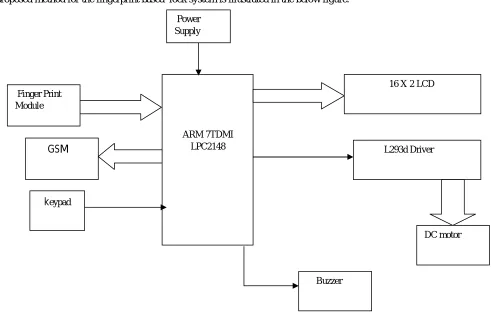
[image:2.612.63.554.269.581.2]The proposed method for the fingerprint based lock system is illustrated in the below figure.
Fig. 2 The proposed method of the fingerprint based lock system
The supply of 5Volt DC is given to the system which is converted from 230Volt AC supply. Firstly, the step down transformer will be used here for converting 230Volt AC into 12Volt AC. The microcontroller will support only the Direct Current supply, so the Alternating Current supply will be converted into DC using the bridge rectifier. The output of rectifier will have some ripples so we are using the 2200uf capacitor for filtering those ripples. The output from the filter which is given to the 7805 voltage regulator which will convert the12Volt Direct Current into 5Volt DC. The output from the regulator will be filtered using the 1000uf capacitor, so the pure 5Volt DC is getting as the output from the power supply unit. One of the latest technologies is the finger print biometrics system which is now considered as one of the most efficient and trusted security system. The main reason for its reliability is that a finger print cannot have a positive match with someone else who is an unauthorized user. Each and every individual has a unique finger print and making it impossible to hack it.
ARM 7TDMI LPC2148
16 X 2 LCD
L293d Driver
Buzzer
keypad
DC motor Power
Supply
Finger Print Module
IV. HARDWARE IMPLEMENTATION
A. Power Supply
The power supply must deliver a constant output regulated supply. A 230V/0-12V (1mA) transformer is used for this purpose. The primary of the transformer is connected through switch for protection. The secondary is connected to the diodes to convert 12V AC to 12V DC voltage. And filtered by the capacitors, which are further regulated to +5v, by using IC 7805.
B. Fingerprint module
The fingerprint module scans the fingerprint and sends this data to the GSM by the help of microcontroller. Here fingerprint module is the input device.
C. GSM
A GSM stands for global system for mobile communication. GSM is used for transmitting the data. Here it is used for transmitting the OTP to the mobile phone.
D. L293D Driver Circuit
L293D is a dual H-Bridge motor driver, so with one IC we can interface two DC motors which can be controlled in both clockwise and counter clockwise direction and if you have motor with fixed direction of motion you can make use of all the four I/Os to connect up to four DC motors.
E. DC Motor
A DC motor is any of a class of rotator electrical machines that converts direct current electrical energy to mechanical energy. A DC motor is an electric motor that runs on DC electricity. It works on the principle of electromagnetism. A current carrying conductor when placed in an external magnetic field will experience a force proportional to the current in the conductor. Here DC motor is used to opening and closing the door.
F. Buzzer
The buzzer is a output device. When an unauthorized person wants to access the door buzzerbeeps the sound.
V. EXPERIMENTAL SETUP AND RESULTS
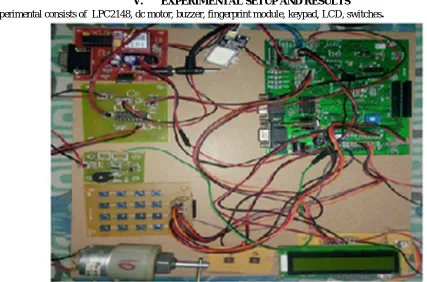
[image:3.612.69.496.433.715.2]The experimental consists of LPC2148, dc motor, buzzer, fingerprint module, keypad, LCD, switches.
1) Results
When we give power supply to the kit in LCD display like this.
Fig .4 welcome to finger print locker system
To initialize GSM
[image:4.612.174.411.105.191.2]
Fig . 5 GSM initialized
[image:4.612.184.436.346.446.2]When Press finger on the fingerprint module it display like this
Fig. 6 Press finger on the fingerprint module
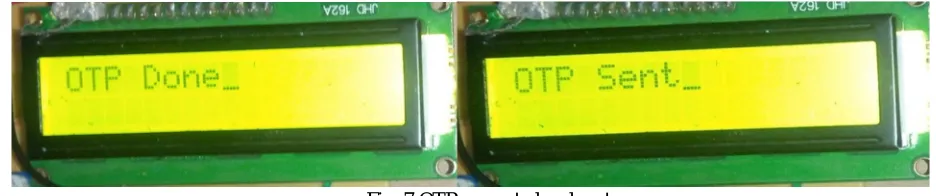
When OTP is generated it is sent to mobile number
Fig. 7 OTP generated and sent
Enter OTP is display, we have to enter it. If it matches then door will opens
`
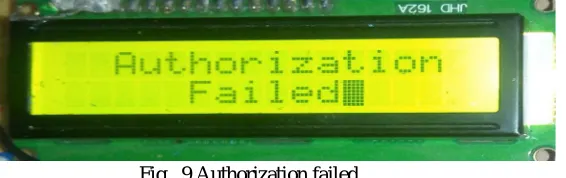
[image:4.612.62.530.482.580.2]If unauthorized person wants to access then this happens
Fig . 9 Authorization failed
VI. CONCLUSION
The aim of the work is to design a fingerprint lock system that can be used to lock and unlock a door system but its use can be extended to other electronic locking systems such as vaults. Having realized the device and found it working properly according to its design specifications and couple with the facts that relatively cheap components were involved in its realization, the aim of the research can be said to be achieved. The system can be used as an effective security lock.
REFERENCES
[1] R. P. Wildes. Iris recognition: an emerging biometric technology. Proceedings of the IEEE, vol. 85, no. 9, pp. 1348-1363, September, 1997.
[2] D. Maio, D. Maltoni, R. Cappelli, J. L. Wayman, and A. K. Jain. FVC2002: Fingerprint Verification Competition. Proceedings of International Conference on Pattern Recognition (ICPR), pp.744-747, Quebec City, Canada, August 2002.
[3] Anil K. Jain, Arun Ross and Salil Prabhakar. An Introduction to Biometric Recognition. IEEE Transactions on Circuits and Systems for Video Technology, Special Issue on Image and Video Based Biometrics, Vol.14(1), January, 2004.
[4] Raffaele Cappelli, Alessandra Lumini, Dario Maio and Davide Maltoni. Fingerprint Image Reconstruction from Standard Templates. IEEE Trans Pattern Analysis and Machine Intelligence, 29(9), pp. 1489-1503. September 2007
[5] Ross J. Anderson. Security Engineering: A Guide to Building Dependable Distributed Systems, 2nd edition, 2008. John Wiley & Sons, Inc., New York, NY, USA.
[6] Yu-Chih Huang. Secure Access Control Scheme of RFID System Application. Fifth International Conference on Information Assurance and Security, China, 2009.
[7] Anil K. Jain, Jianjiang Feng and Karthik Nandakumar. Matching Fingerprints IEEE Computer, 43(2), pp. 36-44, February, 2010.
[8] Mary Lourde R and Dushyant Khosla. Fingerprint Identification in Biometric Security Systems. International Journal of Computer and Electrical Engineering, 2(5), October, 2010.