University of Dublin, Trinity College
School of Medicine,
Department of Gerontology
Cardiovascular Associations of Falls
and Syncope in the Elderly
PhD Thesis Submission
Submission date: September 2016
Jaspreet Bhangu
Declaration
I declare that no part of the material contained within my thesis has been
submitted as an exercise for a degree in Trinity College Dublin or any other
institution.
I certify that I performed all work contained within this thesis, from analysis and
interpretation of data to manuscript preparation. Professor Rose Anne Kenny and
Dr Geraldine Mc Mahon provided guidance and direction to the issues addressed
within this thesis and acted as supervisors.
Following acceptance of my PhD submission, I agree that the library may lend or
copy my thesis upon request
Jaspreet Bhangu
Signed:
Acknowledgements
I wish to acknowledge my supervisors Professor Rose Ann Kenny and Dr
Geraldine Mc Mahon, for their clinical supervision, research guidance and
teaching. Without their knowledge and ideas this work would not have been
possible. I am eternally grateful for having the opportunity to work with two
inspirational figures.
To my beautiful wife Dervla. This work would not be possible without you.
I have been helped by many others along the way – the staff in the Falls and
Blackouts unit, the staff in TILDA, my co-authors, co-workers, co- researchers
and, most of all, the patients who participated in the study.
Lastly, I would like to dedicate this thesis to the memory of my father Hans Pal
Singh Bhangu. His unwavering belief in me empowered me to continually strive
Dissemination of Thesis
Publications accepted
1. The Association of Cardiovascular Disorders and Falls: A
Systematic Review.
Jansen S, Bhangu J, de Rooij S, Daams J, Kenny RA, van der Velde N. J Am
Med Dir Assoc. 2016 Mar 1;17(3):193-9. doi: 10.1016/j.jamda.2015.08.022.
Epub 2015 Oct 9.
2. Syncope Chapter
Kenny R.A, Bhangu J, 2016 . Syncope Howard M. Fillit, MD, Kenneth
Rockwood, MD, FRCPC and John B Young, MD In: Brocklehurst's Textbook of
Geriatric Medicine and Gerontology, 8th Edition, Elsevier
3. Epidemiology of syncope/collapse in younger and older Western
patient populations.
Kenny RA, Bhangu J, King-Kallimanis BL. Prog Cardiovasc Dis. 2013 Jan-
Feb;55(4):357-63. doi: 10.1016/j.pcad.2012.11.006. Review
4. Long-term cardiac monitoring in older adults with unexplained
falls and syncope.
Bhangu J, McMahon CG, Hall P, Bennett K, Rice C, Crean P, Sutton R, Kenny
RA. Heart. 2016 May;102(9):681-6. doi: 10.1136/heartjnl-2015-308706. Epub
2016 Jan 28. PMID: 26822427
Bhangu JS, King-Kallimanis B, Cunningham C, Kenny RA. Age Ageing. 2014
Jul;43(4):502-9. doi: 10.1093/ageing/afu003. Epub 2014 Feb 3
Submitted for publication
1. Unexplained falls are common with advancing age - implications
for cardiovascular assessment in older patients with falls
Bhangu J, King-Kallimanis BL, Donoghue OA, Carroll L, Kenny RA
Submitted to the Journal of the American Geriatrics Society
2.
Transient Loss Of Consciousness (T-LOC) In The Emergency Department –
Implications For Resource Use In Older Adults
Bhangu J, Hall P, Devaney N, Bennett K, Carroll L, Kenny RA, Mc Mahon CG
Table of Contents
ABBREVIATIONS ... 12
INTRODUCTION ... 14
CHAPTER 1: FALLS IN THE ELDERLY ... 17
Definitions ... 17
CHAPTER 2: THE ASSOCIATION OF CARDIOVASCULAR DISORDERS
AND FALLS: A SYSTEMATIC REVIEW ... 24
INTRODUCTION ... 24
METHODS ... 26
RESULTS ... 30
Orthostatic hypotension (OH), table 2 ... 31
Carotid sinus hypersensitivity (CSH), table 3 ... 31
Vasovagal syncope (VVS), table 4 ... 32
Hypertension (HTN), table 5 ... 32
Low blood pressure (LBP), table 6... 33
Coronary artery disease (CAD), table 7 ... 33
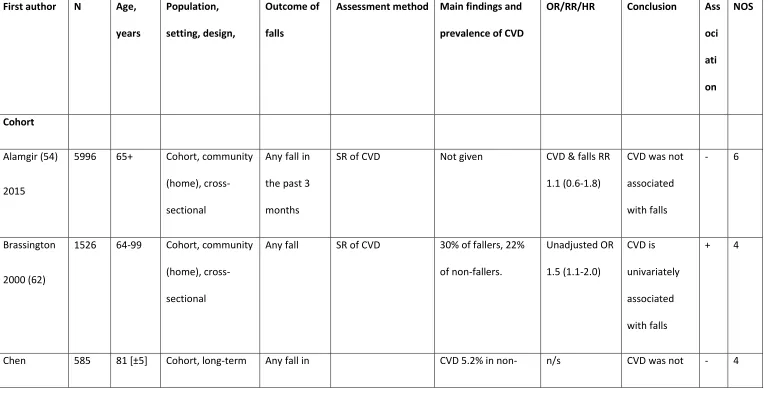
General Cardiovascular Disease (CVD), table 8 ... 34
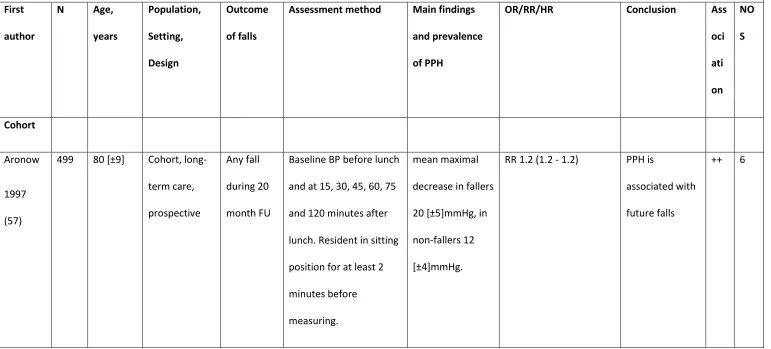
Postprandial hypotension, table 9 ... 34
Cardiac arrhythmia, table 10 ... 34
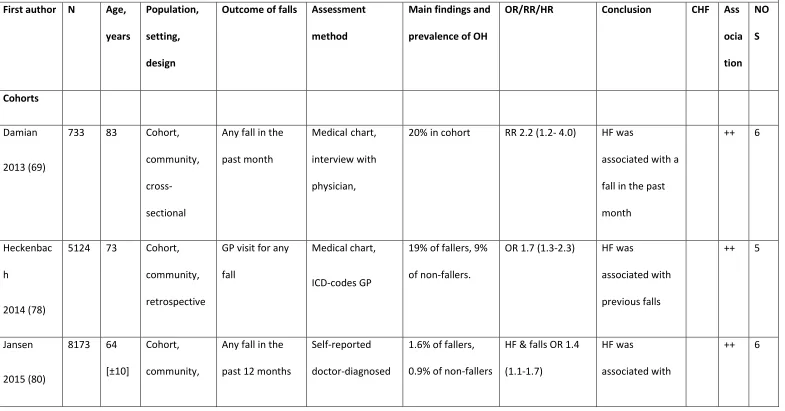
Heart failure, table 11 ... 35
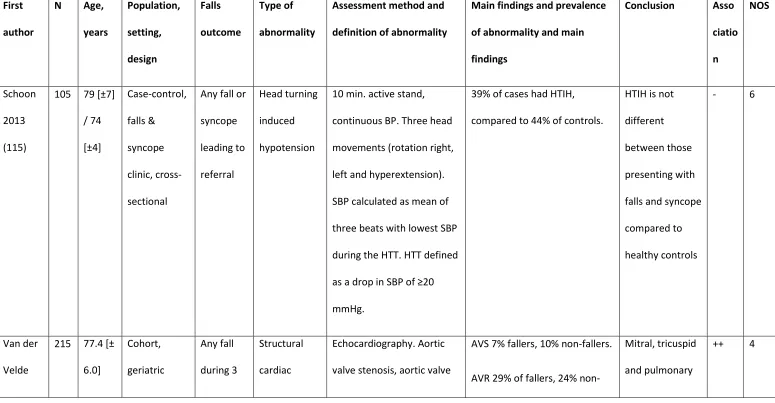
Structural abnormalities, table 12 ... 35
Clinical implications and Future perspectives ... 42
Limitations... 43
Conclusion ... 43
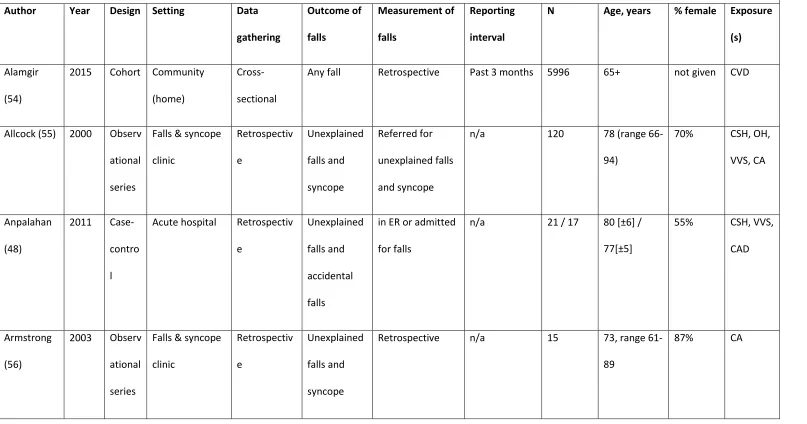
Table 1. Overview of studies published on cardiovascular abnormalities and falls, included in systematic review ... 45
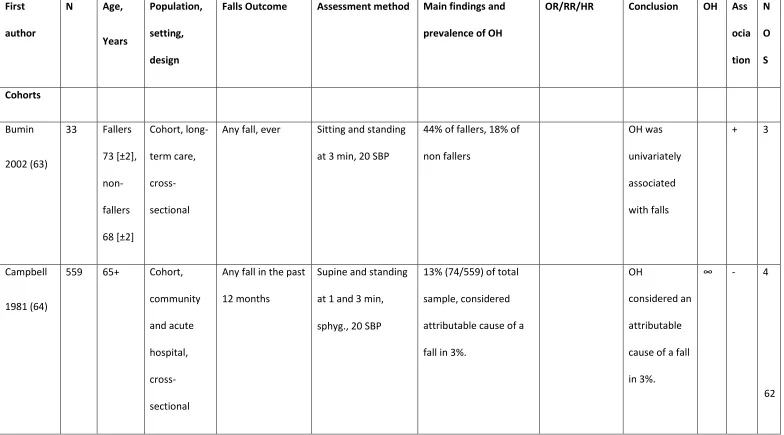
Table 2. Orthostatic hypotension and falls ... 62
Table 3. Carotid sinus hypersensitivity and falls ... 77
Table 4. Vasovagal syncope and falls ... 85
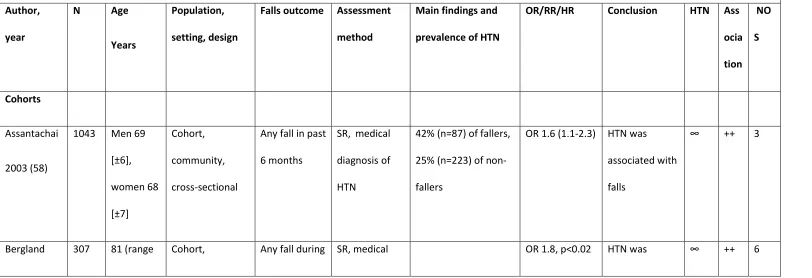
Table 5. Hypertension and falls ... 89
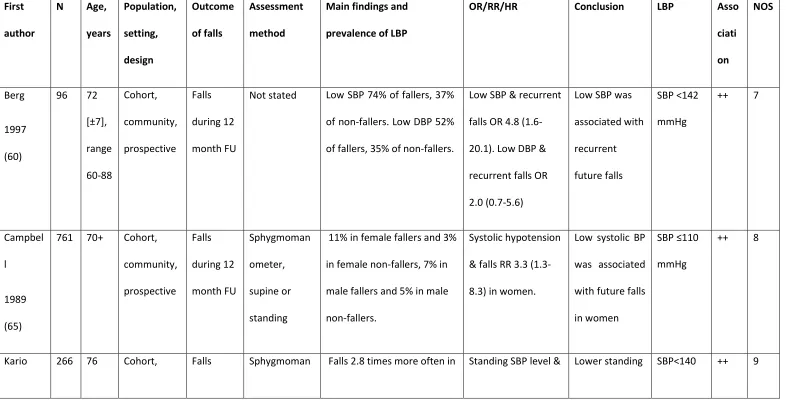
Table 6. Low blood pressure and falls ... 99
Table 7. Coronary artery disease (Angina, ischemic heart disease and myocardial infarction) and falls ... 102
Table 8. General cardiovascular disease and falls ... 108
Table 9. Postprandial hypotension (PPH) and falls ... 112
Table 10. Cardiac arrhythmias and falls ... 115
Table 11. Heart failure and falls ... 121
Table 12. Structural cardiovascular abnormalities and falls ... 124
Figure 1. Flow diagram of study screening and inclusion ... 127
Identification ... 127
Screening ... 127
Appendix S1. Search strategy and actual search ... 127
Appendix S2. Actual searches for MEDLINE and EMBASE. ... 129
Appendix S3. Quality Assessment ... 132
Quality review for- case-control studies or observational series .... 133
CHAPTER 3: SYNCOPE IN THE ELDERLY ... 138
DEFINITION ... 138
ORTHOSTATIC HYPOTENSION ... 140
POST-PRANDIAL HYPOTENSION ... 143
CAROTID SINUS SYNDROME AND CAROTID SINUS HYPERSENSITIVITY ...143
Cardiac Syncope ... 144
Table 45-3: Causes of Syncope ... 148
CHAPTER 4: EPIDEMIOLOGY OF SYNCOPE/COLLAPSE IN YOUNGER
AND OLDER WESTERN PATIENT POPULATIONS ... 152
Syncope and the Framingham studies ... 152
Syncope in the young ... 154
Syncope in Older Populations ... 154
Syncope and hospital attendance ... 156
Syncope in general practice. ... 157
Syncope in the ER. ... 158
Prevalence and causes of syncope. ... 158
Table 1 ... 161
Figure 1 ... 164
Incidence Rates of Syncope According to Age and Sex ... 164
Figure 2 ... 165
Age-specific lifetime prevalence of syncope ... 165
CHAPTER 5: UNEXPLAINED FALLS ARE COMMON WITH
ADVANCING AGE - IMPLICATIONS FOR CARDIOVASCULAR
ASSESSMENT IN OLDER PATIENTS WITH FALLS ... 170
Methods ... 171
Measures ... 172
Statistical Analysis ... 173
Results ... 174
Discussion ... 176
Conclusions ... 179
Table 1 Baseline variables for all participants reporting all falls (n=1,579), unexplained falls (UF) (n=406) and syncope (n=363) in wave one of TILDA ... 180
Table 2 Univariate and adjusted (OR) ods ratios for all falls, unexplained falls (UF) and syncope in the 12 months prior to wave 1 based on self-reported health variables for all TILDA participants (n=8172) ... 183
Table 3 Multi-variate analysis of participants reporting all falls (n=1,579), unexplained falls (UF) (n= 406) and syncope (n= 363) in wave one of TILDA (n = 8,172) ... 186
(T-LOC) IN THE EMERGENCY DEPARTMENT – IMPLICATIONS FOR
RESOURCE USE IN OLDER ADULTS... 189
Introduction ... 189
Methods ... 190
Statistical Analysis ... 192
Results ... 193
Discussion ... 195
Limitations ... 197
Figure 1- Flow sheet of recruitment, exclusion numbers and subsequent analysis ... 204
Figure 2- Age breakdown of patients over the age of 50 who had presented the emergency department (ED) in a six month period. Numbers represent percentages of patients in each category who presented to ED, numbers admitted from ED and mean length of stay (LOS) with regression line ... 205
CHAPTER 7- FALLS AND SYNCOPE IN THE EMERGENCY
DEPARTMENT (FUSE) – BENEFITS OF LONG-TERM CARDIAC
MONITORING ... 206
Introduction ... 206
Methods ... 208
Results ... 211
Secondary end points ... 213
Discussion ... 214
Limitations ... 218
Conclusion ... 218
... 222
Table 2 - Description and classification of arrhythmias detected in patients with ILR inserted at a mean of 9 months ... 223
Table 3 – Univariate analysis of patients with an ILR inserted who experienced further falls during a mean follow-up of 9 months ... 225
CHAPTER 8 –THE RELATIONSHIP BETWEEN SYNCOPE,
DEPRESSION AND ANTI-DEPRESSANT USE IN OLDER ADULTS ..226
Introduction ... 226
Methods ... 227
Measures ... 228
Statistical Analysis ... 230
Results ... 231
Discussion ... 234
Table 1. Demographic and Clinical Characteristics of Participants (n = 7,993) ... 239
Table 2. Weighted Prevalence and Standard Errors of Syncope by Medication and Depression ... 242
Table 3. Bivariate Multinomial Regression Results Comparing a Single and Multiple Syncopal Episode to No Syncopal Episode in the Past 12 Months (n = 7,993) ... 243
Table 4. Multivariate Multinomial Regression Results Comparing a Single and Multiple Syncopal Episode to No Syncopal Episode in the Past 12 Months (n = 7,993) ... 244
Figure 1. Prevalence of Syncope by age and history of depression ... 246
CHAPTER 9 - CONCLUSIONS ... 247
Future directions ... 257
Abbreviations
AD = Alzheimer’s disease
Ad = Adrenaline
A-LOC = Amnesia for loss of consciousness
ATC = Anatomical therapeutic classification
BMI = Body mass index
BP = Blood pressure
CA = Cardiac arrhythmia
CAPI = Computer-assisted personal interview
CES-D = Centre for epidemiological studies depression scale
CBF = Cerebral blood flow
CNS = Central nervous system
CSH = Carotid sinus hypersensitivity
CSS = Carotid sinus syndrome
CT = Computed tomography
CVD = Cardiovascular disease
DBP = Diastolic blood pressure
ECG = Electrocardiogram
FTD = Frontotemporal dementia
HR = Heart rate
LOC = Loss of consciousness
MCI = Mild cognitive impairment
MI = Myocardial infarction
MMSE = The Mini-Mental State Examination
MOCA = The Montreal Cognitive assessment
MRI = Magnetic resonance imaging
NCVI = Neurocardiovascular instability
OH = Orthostatic hypotension
RCT = Randomised controlled trial
SBP = Systolic blood pressure
SCQ = Self-completion questionnaire
SD = Standard deviation
T-LOC = Transient loss of consciousness
TILDA = The Irish longitudinal study on ageing
VaD = Vascular dementia
VVS = Vasovagal syncope
WHO = World Health Organisation
WML = White matter lesions
Introduction
In chapter one I will include the concept and formal definition of unexplained
falls and its links with cardiovascular disease. Chapter two will examine the links
in greater detail and forms a systematic review of falls and cardiovascular
disease in the literature to date. It provides the reader with a detailed review of
the literature which has explored the association between falls and
cardiovascular disease. It provides succinct summaries of each study and
establishes the associations already explored to date and any gaps which exist in
the literature. It also firmly establishes the need for greater exploration of these
associations and further emphasizes the overlap between falls and syncope-
especially in those older adults who experience unexplained falls.
Chapter three has been taken partly from the textbook chapter which was co-
written by myself and Professor Kenny. It introduces the current definitions and
pathophysiology of syncope and introduces the reader to concepts which are
explored in greater detail throughout this thesis alongside their underlying
pathophysiology. It allows an introduction and further exploration of the syncope
syndromes which were discussed in the literature review and finally focuses on
some of the links between syncope and falls, its unusual presentation in the
The fourth chapter focuses on the epidemiology of syncope in the literature to
date. This will introduce the concepts of the overlap between falls and syncope in
elderly adults and will lay the foundation for the research questions explored in
the thesis.
Chapter 5 is an epidemiological study of the associations between falls, syncope
and unexplained falls in a longitudinal population study. Using the TILDA sample,
I have firstly established the incidence and prevalence of these three conditions
in the community dwelling population. I then undertook an exploration of
associated cardiovascular and chronic diseases with each of the conditions. This
paper allowed me to establish whether the observed associations from the
literature review were present in an Irish population sample. It also allowed
specific associations to be discerned from the TILDA database.
Chapter 6 identifies the clinical characteristics of older adults who present to the
emergency department with a fall or syncopal event. It highlights the prevalence
of accidental falls, unexplained falls and syncope which present to the
emergency room. This chapter will also further highlight the difficulties in trying
to classify patients into fall sub-type based on their presenting complaint. It also
allowed for a picture into the resource use associated with these conditions
within a hospital setting.
In chapter seven I have focused on an exploration of one of the associations in
more depth. I had undertaken a clinical trial using a prospective, observational
design to explore the association of arrhythmia with unexplained falls and
Chapter 8 is also an exploration of one of the associations commonly mentioned
with regards to syncope and falls- specifically the association of depression and
anti-depressant medications. Using the TILDA database again I had focused on
the patients who had reported depressive symptoms as well as the anti-
depressant medications which they may have been on. Chapter 9 will form the
Chapter 1: Falls in the Elderly
Definitions
Falls have many different definitions in the literature. For this thesis, I will be
using the World Health Organization (WHO) definition which defines a fall as an
event which results in a person coming to rest inadvertently on the ground or
floor or other lower level (1). This definition was chosen as it does not focus
solely on those falls which occurred from a standing position. It also does not
specifically exclude syncope or seizures. Other definitions of falls stipulate that
there must be no known loss of consciousness (2). This definition would exclude
syncope as a cause of falls and therefore exclude potentially important causes of
falls in older adults as will be discussed in this thesis.
The exact incidence of falls in most western populations can be difficult to
measure and compare directly. This is due to different methodologies of
obtaining the results, differences in definitions used and differences in
populations studied. A systematic review of falls incidence by Rubenstein had
reported the incidence to be 0.2 to 1.6 falls per person per year with an average
of 0.7 falls per person per year (3). This gave an average incidence of 34% of
the older population who fall per year. However, looking in more detail at the
individual studies used to calculate this we can see significant heterogeneity in
the methods used to estimate incidence. Most prospective reporting, using falls
diaries along with regular follow-up by a member of the investigating team, has
reported an annual falls incidence of 30-40% in community dwelling cohorts
using retrospective recall (4-6). This may point to problems with recall bias with
regards to incident falls reporting which will be highlighted later in this thesis.
The incidence of falls in hospital and institutionalised cohorts also considerably
differed from community dwelling cohorts. It is estimated that institutional fall
incidence is 1.5 falls/bed per year. (3) This was 3x greater than that measured
in community dwelling older adults. As a result, in the large differences between
community and institutional dwelling older adults I have not included
institutionalised adults in this thesis. Instead I have focused on older adults who
were considered community dwelling adults.
Consequences of falls
1. Injury – This is the single most common and feared consequence of falls.
Falls will most often result in so called fragility fractures. These can be
defined as fractures which occur as a result of a low energy trauma (7). Hip fractures are one such type of fragility fracture. According to the WHO, falls
are the leading cause of hip fractures worldwide (1). They result in prolonged
periods of immobility, significant pain and subsequent loss of independence
(8). Patients who have suffered a hip fracture have a 26% excess disability in
their activities of daily living attributable to the hip fracture when compared
those patients who did not suffer a hip fracture (9). Up to 29% of older
people who suffer a hip fracture will not return to their previous functioning
within one year post fracture (10). In fact, it is estimated that 1/3rd of older
adults will die within 6 months of suffering a hip fracture (11). In addition
independence. Other fragility fractures include Colles’ fracture of the wrist,
femoral fractures and osteoporosis related fractures also commonly result
from falls (12). Although these fractures have not been as well studied as hip
fractures they also result in considerable morbidity (13). Head injuries are
also a common consequence of falls and result in significant morbidity and
mortality (14).
2. Fear of falling – The psychological impact of falling cannot be
underestimated. A significant number of older adults will describe fear of
falling which is defined as an ongoing concern about falling which
ultimately limits the performance of activities of daily living (15). The
prevalence of this disorder varies widely but it has been reported as high
as 80% in older adults who have experienced a fall. (16). Most studies
have reported it in 40-50% of older adults who suffer falls (16). Fear of
falling will compound any physical injury suffered and has been shown to
lead to increases in depressive symptoms, physical decline and loss of
activities of daily living (17).
3. Institutionalisation and death- Falls have been quoted as the most
common reason for admission to a nursing home facility (18). This risk
appears to increase depending on the number of falls experienced and the
type of injury suffered (18). In addition to nursing home admission falls
are the commonest reason for an elderly patient to present to an
emergency department (19). They are the commonest reason for older
adults to be admitted to hospital and are often associated with prolonged
hospital stays(20). Both the Center for disease control and prevention
leading cause of death in the United States and there is evidence that this
rate has been increasing over time(22). Falls are estimated to account for
at least €400 million (3.7%) of the total health care expenditure in Ireland
(23), £2 billion (4%) in the UK(24) and $34 Billion in the US (25).
Associations and causes of falls
Falls risk factors are often divided into intrinsic and extrinsic risk factors(26).
Intrinsic risk factors are those which are unique to the individual affected by the
condition such as age and medications. Extrinsic factors usually refer to
environmental risk factors or exposures which can contribute to falls such as
uneven surfaces or footwear. Often these risk factors do not occur in isolation
but instead are combined in one patient leading to a fall- i.e. an older adult with
visual impairment who is walking on an uneven surface. Therefore, most falls are
considered multifactorial with a combination of risk factors contributing to overall
falls risk (27). The more common associations with falls risk are summarized
below:
Intrinsic risk factors
- Increasing Age (doubling in prevalence in the over 80s age group)
- Female Gender
- Gait and mobility deficits-
o Self-reported use of assisted walking aids
o objective gait deficits arising from prior disability o intrinsic lower limb weakness
o Muscle weakness
- Sedentary behavior
- Foot deformities
- Cognitive deficits
- Visual deficits - Psychosocial factors
o depression o social isolation o fear of falling
- Previous falls
- Disability as measured by impairment of activities of daily living
- Medications (commonest reported associations listed below): o Benzodiazepines and hypnotic (sedative) medications o Anti-depressant medications
o Anti-psychotic medications o Anti-hypertensive medications o Anti-arrhythmic medications o Dopaminergic medications o Anti-cholinergic medications o Diuretic medications
- Cardiovascular disease
- Multi-morbidity as measured by number of chronic diseases
- Nutritional status o Sarcopenia
o Vitamin D deficiency
Extrinsic risk factors
Falls assessment
The American and British Geriatric society last released guidelines on the
prevention of falls in the elderly in 2011 (28). These guidelines are quoted
extensively in this thesis. They have emphasized the importance of a
multifactorial assessment of older adults to prevent falls. This approach has been
validated in prior studies using a multi-component intervention (29). In this way
patients would be initially screened for the presence of multiple risk factors and
then have these addressed in a more comprehensive manner. An algorithm
Chapter 2: The association of
cardiovascular disorders and falls: a
systematic review
INTRODUCTION
Falls are the leading cause of injury in older people (18, 21). Approximately one
in three people over the age of 65 will suffer a fall each year, with injuries
occurring in at least one in five of these (25). As the world’s ageing population
increases, healthcare costs associated with falls are set to rise over the next 30
years (8). As it is estimated that up to 40% of falls may be preventable,
evidence for causative, treatable factors is essential (30).
Cardiovascular disorders are among the several risk factors which have been
identified to cause falls; in particular unexplained falls (defined as those for
which no attributable mechanical cause such as a trip or slip can be found) and
recurrent falls (28). Syncope secondary to underlying cardiovascular disease is
more common in older adults and may lead to injurious falls (31).
As there is considerable overlap between the symptoms of falls and syncope in
older adults, there is likely an underestimation for the role of cardiovascular
abnormalities in fall risk (32). Orthostatic hypotension, carotid sinus
hypersensitivity, vasovagal syncope and cardiac arrhythmias are the main
cardiovascular disorders that can cause syncope in older adults, but evidence
linking these abnormalities to falls included in current falls guidelines is scarce.
Up to now, one systematic review has been published that addressed
cardiovascular causes of falls (33). However, no quality assessment of included
on titles alone, potentially causing certain articles to have been overlooked. Two
recent reviews have studied the association between orthostatic hypotension and
falls, but these studies did not assess other potential cardiovascular causes of
falls (34) (35). Furthermore, as the subject has gained attention in the last five
years, there is a need to update earlier reports. The aim of this review was to
identify cardiovascular risk factors for falls systematically and to thereby provide
METHODS
A systematic search was conducted to include all articles that addressed the
question of possible cardiovascular contributions to falls in adults over the age of
50 years. Our review methodology and reporting followed standard guidance
(36).
Search strategy
In collaboration with a clinical librarian (JD), a systematic search was conducted
in PubMed and Embase for articles published until the date of the search (March
30, 2015). A customized search strategy was conducted for each database. A
manual search of references in the selected articles was also conducted to
identify additional studies. Key search terms were ‘falls’, ‘aged’ and
‘cardiovascular’. Full details of the search strategy are available as
Supplementary data, Appendix S1 as well as the actual search strategy used;
Supplementary data, Appendix S2.
Two reviewers (SJ and JB) first independently screened titles and abstracts for
inclusion and then read the full text of the eligible articles found during this first
selection. In case of differences between the two reviewers, a third independent
reviewer was consulted (NV).
Inclusion/exclusion criteria
Studies were included if they were published as a primary research paper in a
peer reviewed journal, included persons aged 50 years or older, defined falls as
an outcome measure and included diagnosis or assessment of cardiovascular
Search terms for cardiovascular abnormalities included all synonyms and
differentiations for: structural cardiac abnormalities (impaired ventricular
function, heart valve abnormalities), cardiac arrhythmia (CA), blood pressure
abnormalities (SBP and DBP), carotid sinus hypersensitivity (CSH), orthostatic
hypotension (OH), postprandial hypotension (PPH), arterial stiffness (AS), heart
failure (HF), angina, myocardial infarction (MI) and general cardiovascular or
circulatory disease (CVD). Cardiovascular assessments included:
Electrocardiogram (ECG), holter monitoring (HM), prospective external event
recorders, external loop recorders (ELR), implantable loop recorders (ILR),
remote telemetry, echocardiogram, carotid sinus massage (CSM), assessment of
orthostatic hypotension or impaired BP recovery upon active stand, tilt table
testing (HUT), electrophysiological studies, exercise stress testing and/or cardiac
catheterization. Articles using self-report of doctor-diagnosed cardiovascular
abnormalities or disease were included also, but only for the following
conditions: hypertension, general cardiovascular disease, angina, arrhythmia
and heart failure. We also included studies in institutions, nursing homes,
hospitals or other non-community dwelling settings, which were performed on
cognitively intact participants. Hospital-based studies were only included if falls
had occurred prior to admission.
Articles were excluded if the sample comprised a specific disease-defined
population (such as Parkinson's disease, diabetes or subjects with significant
cognitive impairment), if they were intervention studies, if they were reviews,
case reports or conference abstracts, and if they were not written in English. If
only one was included. For the latter, priority was given to studies that used a
control group or larger sample size.
Data extraction and Quality Assessment
Data were collected on study design, setting, type of and method of
cardiovascular assessment and definition of cardiovascular abnormality.
Demographic data, clinical characteristics, number of falls and method and
interval for reporting of falls were also collected. If applicable, data on the
association between cardiovascular abnormalities and falls was collected. To
appropriately describe reported associations, a breakdown into categories was
made: ++ denoted association multivariably adjusted for potential confounders,
+ denoted univariable association or higher prevalence compared to control
group, - denoted an absent association or similar prevalence.
To reduce the risk of reporting bias, all cardiovascular exposures that were
evaluated were extracted from individual studies, even if they were not part of
the main outcome variables. Cardiovascular exposures that were not included in
a multivariable model because they were not associated with falls in the
univariable model were considered to not be associated with falls.
Quality of included studies was assessed by the same reviewers (SJ, JB).
Because of the variety of nonrandomized study designs included, the Newcastle-
Ottawa Scale (NOS) was used to evaluate risk of bias in the case controlled and
cohort studies (37). A detailed description of the quality assessment can be
found in appendix S3. A score of 0-3 was considered low quality, 4-6
their grading of quality, but quality grades were used in the critical review of the
results.
Data Synthesis and Analysis
As included studies were heterogeneous in design and assessment methods, a
descriptive approach was used to summarize study characteristics and
outcomes. Studies that were included were categorized per exposure. No
RESULTS
Search resultAfter removing duplicates, the initial combined search retrieved 5,420 journal
articles. Of these, 194 full-texts were assessed for eligibility of which 86 were
included in this systematic review (figure 1).
Characteristics of the Studies
Table 1 shows the characteristics of included studies. Forty-eight studies were
cohort studies, thirteen were case–control studies and 25 were observational
series. Numbers of study participants in each study varied from 13 to 135,433.
Mean age varied from 50 to 88 years.
Of included studies, 39 were conducted in the community, nine in long-term care
facilities, one in both community and long-term care, 24 in outpatient clinics (20
in specialized falls- and syncope clinics), eight in emergency departments and
five in acute hospital settings.
Fifty-one studies used any falls as an outcome measure, eight used recurrent
falls, eight used unexplained falls, twelve studies used falls and/or syncope as an
outcome, and two studies used unexplained falls described as ‘drop attacks’.
Eleven types of cardiovascular abnormalities (exposures) were identified with 39
studies assessing more than one risk factor. OH, as a risk factor for falls was
examined in (36), followed by hypertension (27), CSH (21), general
cardiovascular disease (9), Angina and MI (grouped as coronary artery disease)
(14), arrhythmia (12), vasovagal syncope (10), heart failure (6), low BP (5),
Tables 2-11 show results of included studies, categorized per cardiovascular
risk factor and type of study
Orthostatic hypotension (OH), table 2
OH, was studied as an exposure in 36 studies; 23 of which were designed as
cohort studies and two as case-control studies. Six studies reported a positive
multivariably adjusted association with falls; three studies reported a higher
prevalence of OH in fallers. Eleven observational design studies reported a
prevalence of between 5-56% of fallers.
OH was defined as a drop of greater than 20 mmHg SBP and/or greater than or
equal to 10 mmHg DBP drop in twenty studies, greater than 20mmHg SBP drop
in twelve studies while the four studies did not report a value. Fifteen studies
used intermittent BP measurements, twelve studies used continuous
measurement with photopletysmography, two studies used both methods, and
seven studies did not specify their study instrument. Seven studies were scored
as high quality with the remainder (how many) scoring low and intermediate on
the NOS scale
Carotid sinus hypersensitivity (CSH), table 3
Twenty-one studies had investigated CSH as an exposure. Five were designed as
case-control studies; one reported a positive association between neurally
mediated syncope and unexplained falls compared to accidental falls; three
reported a higher prevalence of CSH in fallers compared to controls. Fifteen
observational series were performed which reported a prevalence of between 8-
pressure. Five studies used symptom reproduction during carotid sinus massage
to differentiate carotid sinus syndrome from carotid sinus hypersensitivity. All
studies had a low to intermediate NOS quality level.
Vasovagal syncope (VVS), table 4
Ten studies had investigated vasovagal syncope as an exposure for falls; two
used a case control design, both of which reported that VVS was more common
in fallers. Eight observational series reported a prevalence of VVS between 3-
46%. All studies had used a head up tilt table test as the measurement method.
All were graded as low to intermediate on the NOS quality score.
Hypertension (HTN), table 5
Twenty-seven studies assessed hypertension as an exposure for falls; 22 were
designed as cohort studies, three as case controls. Of the 25 studies with a
control group, five reported a positive multivariably adjusted association
between HTN and falls and two reported a higher prevalence of HTN among
fallers compared to controls. Two studies reported a negative association
between HTN and falls.
The two observational series reported a prevalence of HTN among fallers
between 34-73%. Nine studies only used self-report of HTN; five used medical
charts only, six studies used an objective measurement of BP and/or use of anti-
hypertensive to diagnose HTN, five used a combination of self-report and
medical charts, one used both objective and self-reporting methods and one
study did not report the measurement method. Of studies that used an objective
measurement, different cut-offs for HTN were used, ranging from >130/80
NOS scale, neither of which showed a positive association between HTN and
falls.
Low blood pressure (LBP), table 6
Five studies looked at low blood pressure as an exposure in cohort studies. Four
showed a positive, multivariably adjusted association between low BP and falls;
one did not. Prevalence of hypotension among fallers varied, from 7% to 74%.
All studies used an objective measurement of blood pressure, but various
thresholds for diagnosing hypotension were used, ranging from 100 mmHg to
142 mmHg for systolic blood pressure (SBP), and from 60 mmHg to 80mmHg for
diastolic blood pressure (DBP). The one study that did not show an association
also used the lowest BP cut-off (SBP/DBP ≤100/60). Four out of five studies
were rated high quality on the NOS scale.
Coronary artery disease (CAD), table 7
Fourteen studies assessed the association between MI or angina (grouped as
coronary artery disease) and falls. Ten studies used a control group, of which
five reported a positive multivariably adjusted association between CAD and falls
and four reported no association. The four observational series reported a
prevalence of 0.9% for acute MI, to 76% for IHD.
Six studies used self-reported history of MI or angina; four used medical chart
history of MI or angina, three used a combination of medical records and self-
report and one used a clinical definition to define MI (myocardial infarct
evidenced by chest pain and/or serial ECG’s). All cohort studies scored
General Cardiovascular Disease (CVD), table 8
Nine studies looked at general CVD without breakdown into specific
cardiovascular diseases. Seven used a cohort design; one was a case control
study. Two out of these nine studies showed a multivariably adjusted association
between cardiovascular disease and falls, two studies showed a higher
prevalence of cardiovascular disease among fallers and four studies did not show
an association. The one observational study reported a prevalence of
cardiovascular disease of 52%. Four used self-report of CVD, three used medical
records while two used both methods. All studies were graded as low to
intermediate on the NOS scale.
Postprandial hypotension, table 9
Four papers studied post-prandial hypotension (PPH) as an exposure for falls;
two cohorts and two case control studies. One reported a positive,
multivariably associated association between PPH and falls and one reported
no association. The case control studies both reported a higher prevalence of
PPH in fallers compared to controls. PPH was defined and measured in
different ways in all studies. All studies were rated as low to moderate on the
quality rating scale.
Cardiac arrhythmia, table 10
Twelve studies studied cardiac arrhythmia as an exposure; three were designed
as cohort studies, three were case-control studies. Of these six studies, four
reported a positive, multivariably adjusted association between arrhythmia and
falls, of which three were studies on AF.
recorder (ILR) (for extended arrhythmia monitoring beyond 30 days) in one
study, external loop recorder (ELR) (for arrhythmia monitoring up to 30 days) in
one study, holter monitoring (for arrhythmia monitoring up to 24 hours), 12-
lead ECG, cardiac telemetry (in-patient arrhythmia monitoring) and medical
chart review. This resulted in a variety of definitions used for cardiac arrhythmia.
Two studies were graded as high quality on the NOS scale whilst the remainder
were of low or intermediate quality.
Heart failure, table 11
Six studies looked at heart failure as an exposure; five cohort studies, with four
reporting a positive, multivariably adjusted association between CHF and falls.
One study used the New York Heart Association Classification for heart failure
and one study used the NHS–Read coding for classification. All studies that
reported an association measure were of intermediate or high quality.
Structural abnormalities, table 12
Three studies looked at exposures that could not be categorized under other
exposures.
Wong et al. studied arterial stiffness in a prospective cohort, and found that the
top quintile of pulse wave velocity (indicating arterial stiffness) was an
independent predictor of future falls.
Schoon et al. studied head-turning induced hypotension in a case control study
in a falls and syncope clinic. Prevalence of a drop in SBP following these
movements was high, but not different between cases and controls.
independent predictors of future falls: mitral-, tricuspid and pulmonary valve
DISCUSSION
Main resultsA systematic review of the literature shows strong associations between
cardiovascular disorders and falls. Of studies that used a control group, the most
consistent associations with falls were observed for low blood pressure (4/5),
heart failure (4/5) and cardiac arrhythmia (4/6), as the majority of these studies
showed a positive association with falls after performing multivariable
adjustment for potential confounders. For carotid sinus hypersensitivity (4/6),
vasovagal syncope (2/2) and post-prandial hypotension (3/4), the majority of
studies reported a higher prevalence of the exposure in fallers compared to
controls, but only few multivariable adjusted associations were reported.
Coronary artery disease (6/10), orthostatic hypotension (9/25), general
cardiovascular disease (4/9) and hypertension (7/25) all showed inconsistent
associations with falls, with a similar or smaller amount of studies reporting
positive associations as studies reporting no associations with falls. Hypertension
even showed a protective effect on falls in two out of 25 studies. Finally, arterial
stiffness was identified as an independent predictor for falls in one study, as
were several echocardiographic abnormalities.
Although orthostatic hypotension, carotid sinus syndrome and vasovagal
syncope are most frequently cited as important cardiovascular causes of falls,
the evidence on the association between these blood pressure syndromes and
falls was inconsistent, mainly due to a lack in adequate control groups and
reporting of association measures that were adjusted for potential confounders.
blood pressure and falls was evaluated. Although these studies differed
significantly in their methods, certain trends were apparent.
Low blood pressure showed a consistent association with falls. It has been
hypothesized that transient reduction in cerebral perfusion pressure may not
only lead to immediate effects of cerebral hypoperfusion (e.g. syncope or falls
during exertion or postural changes) but may also lead to chronic damage to the
areas of the brain which govern balance and gait (38) through
neurodegeneration. In addition to an association with falls, LBP has been
associated with stroke and cognitive impairment (39) (40) (41). Conversely,
hypertension was associated with falls after adjustment for confounders in only a
small number of studies reviewed, and hypertension even showed a protective
effect on fall incidence in two studies. It has been reported previously that blood
pressure behaviour is not uniform throughout all age groups and may
demonstrate a U-shaped curve, especially with regard to its effect on the
incidence of stroke and mortality (42, 43). Adults in the oldest age categories
have not been shown to benefit from aggressive lowering of their blood pressure
and in fact may be harmed by low blood pressure (43). However, whether LBP,
or conditions causing LBP can been seen as causative or contributory factors to
falls remains unclear. A consistent association with falls was also seen for heart
failure (4/5). HF can lead to a reduction in cardiac output in demanding
situations such as exertion and postural changes, which may explain this finding,
and strengthens the finding of the association between LBP and falls. Further
work on the effects of transient changes in blood pressure is needed to delineate
thresholds by which older adults are more prone to falling and elucidate
The majority of studies on arrhythmia and falls showed a positive association.
Both length of monitoring time and the definition used for CA had a large
influence on the reported associations. Those studies that employed a
monitoring time longer than 24 hours showed a positive correlation with CA and
falls. Studies that focused on finding a causative arrhythmia detected a
prevalence of between 15-46%. However, these were in predominantly
observational series, limiting the applicability of this finding. Interestingly, the
three studies which exclusively defined atrial fibrillation as an arrhythmia
reported a positive association with falls. As these were done in cross-sectional
studies, causation could not be ascribed. Cardiac arrhythmias are a potentially
treatable cause of falls and this review highlights the inconsistencies with which
they are reported on, limiting the ability to make a definitive statement of the
contribution of CA to falls risk.
Although OH is a commonly accepted cardiovascular cause of falls in older
persons, only a minority of studies reported a positive association with falls.
However, quality of included studies varied and several assessment methods to
detect OH were used. We included studies that used intermittent methods of BP
detection as well as continuous methods, neither of which showed a consistent
association with falls. Finucane et al. have recently reported new normative data
for definitions of OH, using non-invasive, beat-to-beat BP measurements (44).
Whilst they reported that initial OH (within 15 seconds) occurred in up to a third
of the population, impaired blood pressure stabilization at 40 seconds was
present in 16% of subjects and ‘classical’ OH at or after one minute of standing
explaining why only a minority of studies found a positive association between
OH and falls. In addition, only a small amount of studies included symptom
correlation for diagnosing OH or did not specifically report these results, leaving
a gap regarding the value of symptom correlation in diagnosing OH. It does
appear that OH does not follow a uniform distribution in the population, and
intermittent measurements (such as those with a standard sphygmomanometer)
may underestimate the true prevalence of OH and its clinical importance. With
the rise of the use of continuous measurement of OH, more complete research
can be performed to determine the full association between OH and falls.
Cardiovascular disease, which comprised angina, ischemic heart disease and
arterial disease, showed a positive association with falls in a few studies, as did
arterial stiffness. However, cardiovascular disease represents a diverse group of
disorders, rendering it difficult to establish individual mechanisms that may
contribute to falls risk. Potential interacting mechanisms include direct damage
to affected end organs, such as the heart or brain or downstream impacts on
physiological homoeostasis. Macro- or microvascular arterial disease may impair
muscle capacity and motor- and sensory nervous function with deleterious
effects on gait. Frailty syndromes have also been shown to have a higher
prevalence in cardiovascular diseases contributing to increased falls risk (45).
Lastly, treatments used for cardiovascular disorders have been linked to
increases in falls both through direct effects of drugs on the cardiovascular
system as well as polypharmacy (46). There is evidence that drug withdrawal of
CV drugs may reduce falls rates in practice (47), potentially through an
improvement in postural blood pressure changes (48). Although the exact
should regard those patients with a diagnosis of cardiovascular disease at a
higher risk of falls.
There is a lack of evidence regarding interventions to reduce falls risk by treating
cardiovascular disorders alone. Up to now, only OH and CSH (which are
commonly classified as syncope syndromes (49)) have been included in
intervention trials, which have shown benefit in preventing recurrent syncope
and falls. Multifactorial interventions that include recognition and treatment of
OH have been shown to be effective in reducing falls (28). Furthermore, a recent
Cochrane review on interventions aimed at reduction of falls rates has identified
only dual chamber pacemaker insertion as having a proven benefit for reduction
of falls in those patients with CSS (50). This review demonstrates a strong
overlap between CV conditions that commonly lead to syncope and those that
lead to falls. It thus enhances previous guideline conclusions that have aimed to
incorporate the potential impact that cardiovascular abnormalities were thought
to have on falls (28).
The European Society of Cardiology (ESC) has stated the need to consider
syncope as the cause of a fall in those with unexplained falls (49). Syncope
mistaken for falls presents a difficult clinical challenge as up to 50% of older
persons suffer from retrograde amnesia after vasovagal syncope, and eye-
witnesses are often absent (51). This may in part have accounted for the large
variation in prevalence rates of VVS reported. Carotid sinus hypersensitivity is a
condition that is also considered a form of reflex syncope (49). Prevalence rates
of between 10-40% were consistently reported in fallers with two notable
chamber pacemaker insertion has been found to be beneficial for treating cardio
inhibitory CSS, this has important implications for clinical practice (52).
Controversy exists over terminology and definitions, as some authors define
carotid sinus syndrome (CSS) as an abnormal response to carotid sinus massage
(CSM) only when accompanied by symptom reproduction of syncope (53). This
is distinct from carotid sinus hypersensitivity (CSH), which would produce an
abnormal response to CSM without definite symptom reproduction. In this
review only five studies had included the presence of symptoms in their
definition of CSS but thirteen studies reported on CSS as being present. Despite
difficulties in terminology this review does reveal a higher incidence of CSH in
fallers. However, the prevalence rates reported may be skewed by definitions
used.
Clinical implications and Future perspectives
This systematic review has highlighted many studies, which have shown easily
measurable cardiovascular parameters that may contribute to falls risk in older
patients. The clinical implications of these associations are important in
evaluation of falls risk reduction. Consensus is needed to adopt standard
definitions of cardiovascular risk factors, as well as the resources and settings
needed to systematically evaluate older adults at risk of falls, for the presence of
cardiovascular disease. As up to 40% of falls may be preventable, a
standardised assessment of cardiovascular risk factors is essential for falls
prevention (30). There is a need for treatment trials to be designed and carried
out in order to gauge the treatment benefits, which may accrue by systematic
Limitations
Differences in disease definition and the disparities between the qualities of
included studies make it impossible to perform proper meta-analyses. This in
turn limits our ability to describe the strength of associations between
cardiovascular disorders and falls. Therefore, as mentioned above, it is of major
importance to reach consensus for standard definitions. As we have pointed out,
falls can be very difficult to distinguish as a distinct clinical entity and overlap
syndromes such as syncope have been reported. Therefore, caution is warranted
when interpreting the data. A large majority of the studies only used self-
reported falls that had occurred in the past, and only a small minority studied
falls in a prospective manner. As such, it is difficult to attribute causation to any
one risk factor in isolation. Further prospective studies are therefore needed. The
exact effect of cardiovascular drugs on falls risk remains a confounder in most
studies. As this review specifically excluded articles where there were
therapeutic interventions made, the contribution of individual medications to falls
risk is beyond the scope of this article.
Conclusion
Cardiovascular disease has a high prevalence in older adults with falls. There is a
clear association between hypotension and falls, whilst conversely those patients
with hypertension demonstrate a lower prevalence of falls in some studies.
Furthermore, both heart failure and arrhythmia (in particular AF) are
consistently associated with falls. There is also a positive association
demonstrated between syndromes that cause syncope such as CSH, VVS and
variable to falls risk are hampered by a lack of standard definitions, methods of
assessment and the low quality of available studies. Further work on standard
definitions as well as the exact contribution of individual risk factors is of major
Table 1. Overview of studies published on cardiovascular abnormalities and falls, included in systematic review
Author Year Design Setting Data gathering Outcome of falls Measurement of falls Reporting interval
N Age, years % female Exposure (s)
Alamgir (54)
2015 Cohort Community (home)
Cross- sectional
Any fall Retrospective Past 3 months 5996 65+ not given CVD
Allcock (55) 2000 Observ ational series
Falls & syncope clinic Retrospectiv e Unexplained falls and syncope Referred for unexplained falls and syncope
n/a 120 78 (range 66- 94)
70% CSH, OH, VVS, CA
Anpalahan (48)
2011 Case- contro l
Acute hospital Retrospectiv e
Unexplained falls and accidental falls
in ER or admitted for falls
n/a 21 / 17 80 [±6] / 77[±5]
55% CSH, VVS, CAD
Armstrong (56)
2003 Observ ational series
Falls & syncope clinic Retrospectiv e Unexplained falls and syncope
Retrospective n/a 15 73, range 61- 89
Aronow (57)
1997 Cohort Long-term care Prospective Any fall Incident reports 29 [±10] months
499 80 [±9] Not given PPH
Assantachai (58)
2003 Cohort Community (home)
Cross- sectional
Any fall Retrospective Past 6 months 1043 Men 69 [± 6], women 68 [±7]
64% HTN
Benchimol (59)
2007 Case- contro l
Falls & syncope clinic Retrospectiv e Unexplained falls and syncope Referred for unexplained falls and syncope
n/a 259 / 55 50 [±24], 57 [±21]
66% / 58%
CSH, VVS
Berg (60) 1997 Cohort Community (home)
Prospective Recurrent falls
Prospective 2-weekly for 12 months
96 72 [±7], range 60-88
60% Low BP
Bergland (33)
2003 Cohort Community (home)
Prospective Any fall Prospective 3-monthly for 12 months
307 81 (range 75- 93)
100% HTN
Boddaert (61)
2004 Observ ational series
Acute hospital Cross- sectional
Any fall In ER or admitted for falls
Brassington (62)
2000 Cohort Community (home)
Cross- sectional
Any fall Retrospective n/a 1526 64-99 64% HTN, CVD
Bumin (63) 2002 Cohort Long-term care Cross- sectional
Any fall Retrospective Ever 33 fallers 73 [±2], non- fallers 68 [±2]
Not given OH
Campbell (64)
1981 Cohort Community (home and residential facility), Acute hospital
Cross- sectional
Any fall Retrospective Past 12 months
559 65+ Not given OH
Campbell (65)
1989 Cohort Community (home and residential facility)
Prospective Any fall Prospective Monthly for 12 months
761 70+ 68% OH, Low
(home) sectional months 90)
Chang (67) 2010 Cohort Community (home)
Cross- sectional
Injurious falls
Retrospective Past 12 months
1361 72 [±5] 40% OH, HTN
Chen (68) 2008 Cohort Long-term care Cross- sectional
Any fall Incident reports Past 6 months 585 81 [±5] 0% HTN, CVD
Damian (69)
2013 Cohort Community (residential facility)
Cross- sectional
Any fall Incident reports 1 month 733 83 76% HTN, CA, CAD, HF
Davies (70) 1996 Observ ational series
Emergency department
Cross- sectional
Unexplained falls and recurrent falls
Retrospective n/a 26 79 (SE 8) 75% OH, CSH, VVS, CA
Davies (41) 2001 Case- contro l
Emergency department
Cross- sectional
Unexplained falls
Retrospective n/a 26 / 54 79 [±7], 78 [±7]
80% / 80%
Davison (71)
2005 Case- contro l Emergency department Cross- sectional Recurrent falls
Retrospective 24 hours (during ECG recording)
128 / 100 77 [±6], 75 [±6]
67%, 59% CA
Dey (72) 1997 Observ ational series
Falls & syncope clinic
Cross- sectional
Drop attacks (unexplained falls)
Retrospective n/a 35 75 (range 50- 95)
80 OH, CSH, VVS
Downton (73)
1991 Cohort Community (home)
Cross- sectional
Any fall Retrospective Past 12 months
203 83 [±5], range 75-97
70% OH, HTN
Eltrafi (74) 1999 Observ ational series
Falls & syncope clinic Retrospectiv e Unexplained falls and syncope
Retrospective n/a CSS: 139 / VVS: 149 CSS: 74 [±11]. VVS: 66 [±20] CSS: 59%, VVS: 60% CSH, VVS
Ensrud (33) 1992 Cohort Community (home)
Cross- sectional
Any fall Retrospective 12 months 9704 72 (range 65-99)
100% OH
Freitas (75) 2004 Case- contro
Falls & syncope clinic
Cross- sectional
Any falls and syncope
l
Gangavati (76)
2011 Cohort Community (home)
Prospective Recurrent falls
Prospective Monthly, range 183-365 days
722 78 [±5] 64% OH
Graafmans (77)
1996 Cohort Community (home and residential facility)
Prospective Any fall and recurrent falls
Prospective Weekly, returned 2- monthly for 28 weeks
354 70+ 84% OH
Heckenbac h (78)
2014 Cohort Community (home)
Cross- sectional
Any fall ICD-10 codes n/a 5124 73 65% HTN,
CVD, HF
Heitterachi (40)
2002 Cohort Community (home)
Prospective Any fall Prospective Monthly for 12 months
70 77 [±6] 80% OH
Herndon (58)
1997 Case- contro l Community (home) Cross- sectional Injurious falls
in ER or admitted for falls
Hung (79) 2013 Observ ational series
Acute hospital Cross- sectional
Any fall Retrospective Past 3 years 401 82 [±0.2] 24% CA, HTN
Jansen (80) 2015 Cohort Community (home)
Cross- sectional
Any fall and recurrent falls
Retrospective Past 12 months
8173 64 [10], range 51-105
54% HF, HTN, CAD
Jansen (72) 2015 Cohort Community (home)
Cross- sectional
Any fall Retrospective Past 12 months
4886 62 [8] 54% CA
Jitapunkul (81)
1998 Cohort Community (home)
Cross- sectional
Any fall Retrospective Past 6 months 4480 69 [±8) 60% HTN
Kao (82) 2012 Cohort Community (home) Cross- sectional Recurrent and injurious falls
Retrospective Past 12 months
360 76 (range 64- 91)
61% HTN, CVD
Kario (83) 2001 Cohort Community (home)
Prospective Any fall Prospective and retrospective
Monthly for 12 months
Kelly (84) 2003 Case- contro l Community (home) Retrospectiv e Injurious falls
recording of fall in medical history
1 year 2278 / 9112
78.5 (7.7) / 74.5 (6.7)
69%, 57% HTN, CVD
Kenny (85) 1991 Observ ational series
Falls & syncope clinic Retrospectiv e Unexplained falls and syncope
Referred for falls not given 130 77 (67-89) 55% CSH
Klein (86) 2013 Cohort Community (home)
Cross- sectional
Any fall Retrospective Past 3 months 3544 70 (60-97) 56% HTN, Low BP
Kumar (87) 2003 Case- contro l
Falls & syncope clinic
Retrospectiv e
Unexplained falls
Referred for falls not given 265 / 44 79.5 (60–92) / 71.3 (63– 86
76%, 36% CSH
de Castro Lacerda (88)
2008 Observ ational series
Falls & syncope clinic
Prospective Unexplained falls
Referred for falls Past 12 months
502 65 [±10] 49% CSH
Lagro (89) 2013 Observ ational
series Clinic sectional falls) CSH
Lawlor (90) 2003 Cohort Community (home)
Cross- sectional
Any fall Retrospective Past 12 months
4050 71 100% OH, CAD,
HTN, Low BP
Le Couteur (36)
2003 Observ ational series Community (residential facility) Cross- sectional
Any fall Incident reports Past 12 months
179 83 [±7] 80% PPH
Lee (91) 2006 Cohort Community (home)
Cross- sectional
Any fall and recurrent falls
Retrospective Past 12 months
4000 73 [±5] 50% CVD
Lee (65) 2009 Cohort Community (home)
Cross- sectional
Recurrent falls
Retrospective Past 12 months
11,113 65-75 years 55%, 76 plus 45%
58% CAD
Liao (92) 2012 Cohort Community (home)
Cross- sectional
Any fall Retrospective Past 12 months
Lipsitz (59) 1991 Case- contro l
Long-term care Cross- sectional
Recurrent falls
Retrospective Past 6 months 70 / 56 87 [±6] / 87 [±5]
73% / 48%
OH, HTN
Liu (93) 1995 Cohort Community (residential facility)
Prospective Any fall Prospective Weekly for 12 months
100 83 [±6], range 62-96
83% OH
Luukinen (94)
1996 Cohort Community (home)
Prospective Recurrent falls
Prospective 3-montly during 12 months
1016 / 650
76 [±5] 63% OH
Mader (95) 1987 Cohort Outpatient clinic, community clinic
Cross- sectional
Any fall Retrospective Past 12 months
300 70 (range 56- 93)
77% OH
Marechaux (96)
2009 Observ ational series
Emergency department
Prospective Any fall in ER or admitted for falls
Maurer (97) 2004 Cohort Long-term care Prospective Any fall Incident reports Weekly during 270-day FU (range 8–657)
111 88 [±7] 82% OH
Maurer (98) 2005 Cohort Long-term care Prospective Any fall Incident reports 12 months 139 88+/-7 85% HTN
Midttun (99)
2011 Observ ational series
Falls & syncope clinic
Retrospectiv e
Unexplained falls
Retrospective not given 207 83 years (58–95)
70% CA
Milton (100)
2009 Observ ational series
Falls & syncope clinic
Cross- sectional
Unexplained falls
Retrospective not given 1464 78 [±10] 72% CSH, OH
Mitchell (101)
2013 Cohort Community (home)
Cross- sectional
Any fall Retrospective 12 months 5681 65+ 55% CAD, HTN
Murphy (102)
1986 Cohort Long-term care Prospective Any fall Incident reports 33 months 100 80, range 63- 97 / 83, range 61-97
Ooi (103) 2000 Cohort Long-term care Prospective Any fall and recurrent falls
Incident reports Incident reports during 18 months
844 60+ 80% OH
Paling (42) 2011 Observ ational series
Falls & syncope clinic Cross- sectional Unexplained falls Referred for unexplained falls
n/a 111 (with falls)
82, range 61- 99
59% CSH, VVS, OH
Parry (104) 2005 Observ ational series
Falls & syncope clinic
Cross- sectional
Any falls and syncope
Referred for falls nd syncope
n/a 34 (falls) / 34
(syncope)
77 [9] / 75 [9]
79%, 47% CSH
Parry (75) 2005 Observ ational series
Falls & syncope clinic
Cross- sectional
Drop attacks (unexplained falls)
Retrospective Past 6 months 93 77 [±9], range 55-92
75% CSH, OH, VVS, CA
Pasma (105)
2014 Cohort Outpatient clinic
Cross- sectional
Any fall Retrospective Past 12 months
197 82 60% OH
Philips 1999 Observ ational
(106) series department sectional syncope for falls 99
Prudham (107)
1981 Cohort Community (home)
Cross- sectional
Any fall Retrospective Past 12 months
2357 65+ 59% CVD, HTN
Puisieux (108)
2000 Case- contro l
Acute hospital Cross- sectional
Any fall in ER or admitted for falls
n/a 45 / 36 80.9 [8.5] / 78.5 [7.2]
73%, 68% PPH
Rafanelli (109)
2014 Observ ational series
Falls & syncope clinic
Retrospectiv e
Unexplained falls
Referred for falls n/a 298 75 [±11] not given CSH, OH, VVS
Rafiq (110) 2014 Cohort Community (home)
Cross- sectional
Any fall GP visit for fall 30 months baseline, 30 months FU
135.433 75 [±8], range 65-104
56% CAD, HF
Richardson (111)
1997 Observ ational series Emergency department Cross- sectional Unexplained falls and recurrent
in ER or admitted for falls
falls
Romero- Ortuno (112)
2011 Cohort Community (home)
Cross- sectional
Any fall Retrospective Past 6 months 598 72 72% OH
Rosado (113)
1989 Case- contro l
Long-term care, Community (residential facility)
Cross- sectional
Any fall Incident reports Past 7 days 51 / 27 86 not given CA
Rutan (114) 1992 Cohort Community (home)
Cross- sectional
Any fall Retrospective 12 months 4931 OH+: 73.6, OH-: 72.6
56% OH
Sanders (15)
2012 Case- contro l
Emergency department
Retrospectiv e
Unexplained falls and accidental falls
Retrospective n/a 211 / 231 82 [±9] / 79 [±7]
62%, 62% CA
Schoon 2013 Case- contro
(115) l Clinic sectional syncope [±4]
Sibley (116) 2014 Cohort Community (home)
Cross- sectional
Any fall Retrospective 12 months 16.357 65+ 55% HTN, CAD
Smebye (117)
2014 Observ ational series
Falls & syncope clinic
Cross- sectional
Any fall Referred for falls n/a 111 82 [±7] 82% OH, CVD, CSH, CA
Stenhagen (94)
2013 Cohort Community (home)
Prospective Any fall Retrospective Past 6 months, at 3 and 6 years
1763 60-93 54% HF, CAD
Tan (118) 2008 Observ ational series
Falls & syncope clinic Retrospectiv e Unexplained falls and syncope
Retrospective n/a 302 71 [±11] (range 38– 98)
Not given OH, VVS
Tan (114) 2009 Observ ational series
Falls & syncope clinic Retrospectiv e Unexplained falls and syncope
Retrospective n/a 302 71 [11], range 38–98
Tinetti (119)
1986 Cohort Long-term care Prospective Recurrent falls
Incident reports 3 months 79 81 [±7], 78 [±7]
78%, 62% OH
van der Velde (120)
2007 Cohort Outpatient clinic
Prospective Any fall Prosp