Review Article
The association of statin use with risk of kidney, bladder
and prostate cancer: a systematic review and
meta-analysis of cohort studies
Jiabi Chen, Bing Zhang, Dong Chen, Wei Zhuang
Department of Urology, The Second Affiliated Hospital of Fujian Medical University, Quanzhou, China
Received Augustl 3, 2017; Accepted June 4, 2018; Epub September 15, 2018; Published September 30, 2018
Abstract: Background: Emerging evidence suggested that statins might decrease the risk of cancer. This study
ex-amined the associations of statin use with the risk of main urologic cancer, and a sex-specific relationship between
statin use and the risk of cancer was also evaluated. Methods: A literature search in PubMed, MEDLINE, and Web of Science databases was undertaken through February 2017 evaluating the association between statin use and
risk of main urologic cancer. Pooled relative risk (RR) estimates and 95% confidence intervals (CIs) were calculated
using random-effects model. In addition, we also estimated RR ratios (RRRs) between men and women. Results: A total of 30 cohort studies contributed to the analysis. The results of the meta-analysis showed that statin users
did not experience a significantly decreased risk for developing kidney cancer in both women and men (RR = 1.01, 95% CI = 0.91-1.11). Statin use in women had the reduced tendency for the risk of kidney cancer, but statin use in men had an adverse tendency for the risk of this disease (Women: RR = 0.98, 95% CI = 0.85-1.12; Men: RR = 1.09, 95% CI = 0.99-1.19). The pooled multiple-adjusted women-to-men RRR for incident kidney cancer was 0.90 (95% CI = 0.75-1.05). Compared to non-users, statin users yielded the reduced risk of total, advanced, high-grade, and low-grade prostate cancer by approximately 12%, 18%, 14% and 7% (Total: RR = 0.88, 95% CI = 0.84-0.93; Advanced: RR = 0.82, 95% CI = 0.70-0.95; High-grade: RR = 0.86, 95% CI = 0.68-0.99; Low-grade: RR = 0.93, 95% CI = 0.86-0.99), whereas the significant effects were not observed for bladder cancer (RR = 1.03, 95% CI =
0.88-1.17). Conclusions: The results found that sex difference could affect the association of statin use with the risk of kidney cancer. The statin use could reduce the risk of prostate cancer but no associations were found between statin use and bladder cancer.
Keywords: Statin use, kidney, prostate, bladder, cancer, meta-analysis
Introduction
According to WHO estimates for 2011, cancer
now causes more deaths than all coronary heart disease in the United States and through-out the world [1]. Commonly seen urologic can-cers such as prostate cancer, kidney cancer, and bladder cancer are leading causes of can-cer-related morbidity and mortality globally. Despite rapid advances in early diagnosis and surgical treatment over the past few decades, the numbers of new urologic cancer cases and associated deaths continue to increase, mak-ing it become one of the major threats to public health worldwide [2].
To date, the exact cause of urologic cancer remains unclear, and it may involve genetic
factors and environmental factors. Certain environmental factors like smoking habit, heavy alcohol intake, high caloric diet and chemical
dyes have been identified as potential etiologi
-cal factors for urologic cancer. However, the
fact that only a small portion of individuals exposed to statin use ultimately develop uro-logic cancer suggests that statin use may play a crucial part in its pathogenesis [3, 4].
on intracellular signaling events downstream of c-Kit by lowering intracellular cholesterol levels [5]. Furthermore, statin profoundly impaired basal and growth factor-stimulated cell growth in vitro and induced apoptosis, indicating the association of statin use with the reduced risk of kidney, bladder and prostate cancer. Re- cently, many studies investigated the relation-ship between statin use and the risk of urologic cancer; however, the results of these studies were inconsistent, whether the effect of statin use was controversial during duration remained
unclear. In addition, sex-specific associations
between statin use and the risk of kidney
can-cer and bladder cancan-cer have not been defini -tively determined.
Therefore, we conducted a meta-analysis to pool the results of all available association studies between statin use and the risk of kid-ney cancer, bladder cancer and prostate can-cer. Furthermore, we evaluated women-to-men ratios of RRs for incident kidney cancer. Materials and methods
Data sources and search strategy
The meta-analysis was evaluated in accor-dance with the Preferred Reporting Items
checked and the corresponding authors would be contacted for additional information.
Study selection
The inclusion criteria were as follows: 1) cohort studies were published as an original article; 2) the major objective of the studies included in the meta-analysis was to evaluate the associa-tion of stain use with risk of urologic cancers; and 3) studies were also required to present
the relative risks (RRs) or odds ratios (ORs) or hazard ratios (HRs) with their 95% confidence interval (CI) or sufficient data to calculate these.
The exclusion criteria were as follows: 1)
repeat-ing publications or duplicates; and 2) insuffi -cient data for analysis.
Two investigators (Jiabi Chen, Bing Zhang) independently reviewed the retrieved records. Any inconsistencies were resolved through consensus with a third author (Wei Zhuang) for adjudication.
Data extraction and study quality assessment
The following characteristics of each of the
identified studies were collected independently
by two reviewers who used a standardized data
extraction form: first author, year of publication,
[image:2.612.91.375.73.346.2]for Systematic Reviews and Meta-Analyses (Supplement- ary.PRISMA). A literature sear- ch was performed using the databases of PubMed, MED- LINE, Web of Science to retri- eve all relevant studies on the statin use and main urologic cancer published before Janu- ary, 2017. The search strategy was based on a combination of the terms (hydroxymethyl- glutaryl-CoA reductase inhibi- tor or statin or lipid-lowering agent), and (urologic cancer or kidney cancer or bladder cancer or prostate cancer or neoplasm or malignancy). The search was not restricted to any language. In addition, all of the references of relevant reviews and eligibly retrieved articles were also checked. When datasets were insuffi -cient for required data, sup-plementary data would be
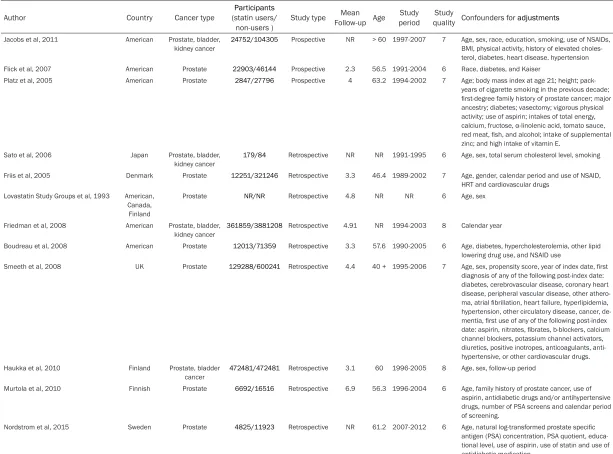
Table 1. Characteristics of studies included in this meta-analysis of statin use and the risk of kidney, bladder and prostate cancer
Author Country Cancer type (statin users/Participants
non-users ) Study type
Mean
Follow-up Age periodStudy quality Confounders for Study adjustments
Jacobs et al, 2011 American Prostate, bladder, kidney cancer
24752/104305 Prospective NR > 60 1997-2007 7 Age, sex, race, education, smoking, use of NSAIDs, BMI, physical activity, history of elevated choles-terol, diabetes, heart disease, hypertension Flick et al, 2007 American Prostate 22903/46144 Prospective 2.3 56.5 1991-2004 6 Race, diabetes, and Kaiser
Platz et al, 2005 American Prostate 2847/27796 Prospective 4 63.2 1994-2002 7 Age; body mass index at age 21; height; pack-years of cigarette smoking in the previous decade; first-degree family history of prostate cancer; major ancestry; diabetes; vasectomy; vigorous physical activity; use of aspirin; intakes of total energy, calcium, fructose, α-linolenic acid, tomato sauce, red meat, fish, and alcohol; intake of supplemental zinc; and high intake of vitamin E.
Sato et al, 2006 Japan Prostate, bladder, kidney cancer
179/84 Retrospective NR NR 1991-1995 6 Age, sex, total serum cholesterol level, smoking
Friis et al, 2005 Denmark Prostate 12251/321246 Retrospective 3.3 46.4 1989-2002 7 Age, gender, calendar period and use of NSAID, HRT and cardiovascular drugs
Lovastatin Study Groups et al, 1993 American, Canada, Finland
Prostate NR/NR Retrospective 4.8 NR NR 6 Age, sex
Friedman et al, 2008 American Prostate, bladder, kidney cancer
361859/3881208 Retrospective 4.91 NR 1994-2003 8 Calendar year
Boudreau et al, 2008 American Prostate 12013/71359 Retrospective 3.3 57.6 1990-2005 6 Age, diabetes, hypercholesterolemia, other lipid lowering drug use, and NSAID use
Smeeth et al, 2008 UK Prostate 129288/600241 Retrospective 4.4 40 + 1995-2006 7 Age, sex, propensity score, year of index date, first diagnosis of any of the following post-index date: diabetes, cerebrovascular disease, coronary heart disease, peripheral vascular disease, other athero-ma, atrial fibrillation, heart failure, hyperlipidemia, hypertension, other circulatory disease, cancer, de-mentia, first use of any of the following post-index date: aspirin, nitrates, fibrates, b-blockers, calcium channel blockers, potassium channel activators, diuretics, positive inotropes, anticoagulants, anti-hypertensive, or other cardiovascular drugs. Haukka et al, 2010 Finland Prostate, bladder
cancer 472481/472481 Retrospective 3.1 60 1996-2005 8 Age, sex, follow-up period
Murtola et al, 2010 Finnish Prostate 6692/16516 Retrospective 6.9 56.3 1996-2004 6 Age, family history of prostate cancer, use of aspirin, antidiabetic drugs and/or antihypertensive drugs, number of PSA screens and calendar period of screening.
Platz et al, 2014 American Prostate 2249/7208 Prospective NR 63.3 1994-2003 7 Age
Farwell et al, 2011 England Prostate 41079/14797 Retrospective 5.6 65.7 1997-2007 6 Age, statin use, finasteride use history, serum total cholesterol, race, smoking history, aspirin use, heart disease, diabetes mellitus, history of prostate-specific antigen test
Tan et al, 2010 AMERICAN Prostate 1022/3182 Retrospective NR 64.2 2000-2007 6 Age, BMI, African-American race, DRE, prostate volume and number of cores surveyed Hippisley-Cox et al, 2010 UK Prostate, kidney
cancer 225922/1778770 Prospective 1.5 44.4 2002-2008 7 Age, sex, comorbidity score, BMI, use of NSAID, smoking, hypertension, use of hormones Freedland et al, 2013 American Prostate cancer NR/NR Prospective 4 62.9 NR 8 Age, race, baseline PSA, prostate volume, body
mass index (BMI), comorbidities, smoking, alcohol intake and treatment arm
Kantor et al, 2015 American Prostate cancer 4503/27558 Prospective 5.2 57.2 2002-2009 8 Age, race/ethnicity, enrollment source, household income, insurance coverage, time since last doctor visit, history of prostate specific-antigen screening, history of digital rectal exam, history of high cho-lesterol, and family history of prostate cancer. Lustman et al, 2014 Israel Prostate cancer 37645/29096 Retrospective NR 58 NR 7 Age, DM, BMI, CVD and smoker
Karp et al, 2008 CaNRda Prostate, bladder, kidney cancer
11338/18738 Retrospective NR 69.6 1998-2004 6 Age, sex, marital status, comorbidities, use of non-statin cardiac medications, in-hospital procedure performed, length of hospital stay, calendar year, specialty of the treating physician, area of location, and annual volume of admissions
Chen et al, 2015 Taiwan Prostate 8861/53037 Retrospective NR 40.3 2000-2008 6 Age, sex, comorbidity condition, non- statin lipid-lowering drugs, aspirin, acetylcholinesterase (ACE) inhibitors, area, index year, and anti-HBV drug Matsushita et al, 2010 Japan Prostate 7375/6349 Prospective 4.7 57.9 NR 7 Age, sex, smoking habit
Leung et al, 2013 Taiwan Prostate, bladder cancer
6841/27364 Prospective NR 61.5 NR 6 Age, sex, and whether using other lipid-lowering
agents
Chen-Pin et al, 2014 American Prostate NR/NR Retrospective 6.4 66.9 2003-2013 6 Age, baseline HbA1c, and comorbidities Chan et al, 2012 American Prostate 1377/3692 Prospective NR 73.1
2000-20087
7 Age, study site, race, body mass index, marital status, family history of prostate cancer, number of comorbidities, physical activity, and smoking history.
Fowke et al, 2011 American Prostate 783/1365 Retrospective NR 65.1 2002-2010 7 Age, race, biopsy outcome (all only), family history, BMI, WHR, prostate volume, PSA levels, aspirin use, treatment for diabetes, BPH, or CVD Breau et al, 2010 American Prostate 634/1813 Retrospective 15.7 55.8 1990-2007 6 Age, comorbidities, use of NSAIDs, 5-α reductase
inhibitors, and α-blockers. Morote et al, 2014 Mediterrnean Prostate 744/1664 Retrospective NR 57.2 2006-2011 6 Age, sex
Marelli et al, 2011 American Prostate, bladder,
kidney cancer 45857/45857 Retrospective 4.6 69.8 1990-2009 7 Age, sex, smoking status, duration of observation window, propensity score, LDL levels, Liu et al, 2012 China Kidney cancer 22208/78722 Prospective NR 67.7 1990-2008 6 Age, smoking, body mass index, history of
hyper-tension, history of diabetes, physical activity, fruit intake, vegetable intake, alcohol intake, and dura-tion of regular non-aspirin NSAIDs use, and parity.
number of subjects and number of lung cancer cases, study period, country of the population studied, study design, mean follow-up time, average age. We extracted the RR estimates
that reflected the greatest degree of control for
potential confounders.
The quality of each study was assessed inde-pendently by two authors by using the New-
castle-Ottawa Scale (NOS), which used a ‘star system’ to evaluate data quality [6]. The NOS
criteria includes three broad perspectives-the selection, comparability and outcome, and the scores range from 0 (worst) to 9 (best). A score of 5 or greater was considered high quality, where scores less than 4 were considered low quality. Any discrepancies were settled by a joint revaluation of the original article through consensus.
Statistical analysis
The RR with 95% CI was a commonly used
mea-sure of effect of interest in the medical. ORs
were converted into RRs using the following
for-mula: RR = OR/[(1-P0) + (P0 × OR)], where P0
stands for the incidence of urologic cancers in the non-statin use group. A random-effects
model or fixed-effects model was performed in
the meta-analysis depend on degree of hetero-geneity. The heterogeneity among individual studies was evaluated by calculating the Cochran’s Q statistic (P < 0.10 suggesting
sta-tistically significance). Fixed-effects models
were chosen to pool risk estimates when het-erogeneity among studies was considered
statistically insignificant. Otherwise,
random-effects model was used to combine the re- sults. Subgroup analysis was conducted based on study design (Prospective studies v. Retro- spective studies), types of statins (Simvastatin v. Lovastatin v. Pravastatin v. Fluvastatin v. Atorvastatin v. Rosuvastatin), and duration of statin use (Long-term or Short-term). The meta-regression and sensitivity analyses also were evaluated to explore the potential sources of heterogeneity between studies. In addition, we
selected cohort studies stratified by gender
with RR and computed the women-to-men
ratios of RRs (RRR) with 95% confidence inter -vals (CI). These RRRs were estimated for the comparison of current statin user with non-users, separately for studies with the maximum adjustment variables [7]. Publication bias was detected using Begg’s test and Egger’s test [8].
We used STATA version 11.0 (Stata Corp LP, College Station, TX, USA) to conduct all
statisti-cal analyses. Statististatisti-cal significance was deter -mined using the two-tailed test, where P < 0·05
was considered significant, and in Egger’s lin -ear regression and Begg’s rank correlation, a level of 0.10 was used.
Results
A total of 3627 articles were identified during
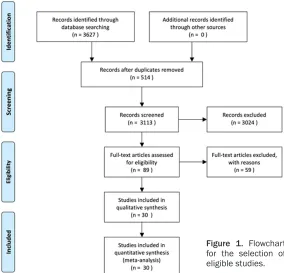
the initial search. After employing exclusion criteria, 89 potentially relevant studies were eligible for further review. After reviewing the full-text articles, 30 were included in this meta-analysis (Figure 1) [9-38].
The main characteristics of the studies were described in Table 1. Among the 30 cohort studies, eleven studies were prospective co- hort studies, and 19 studies were retrospective cohort studies. The number of subjects
includ-ed 9226757 participants, ranging from 263 to 4243067. Among these studies, 29 studies
assessed the association of statin use with the risk of prostate cancer, eight were bladder
can-cer, seven studies were kidney cancer. Of 30
included studies, sixteen studies were con- ducted in America, seven studies were con-ducted in Europe, seven studies were conduct-ed in Asia. The average age of the subjects ranged from 40.3 to 73.1 years. Participants were followed-up for 1.5 to 15.7 years. All stud-ies were all considered high quality, indicating the quality of included studies was generally good. Most of the studies were adjusted for age
(n = 28), whereas a fewer number of adjusted for gender (n = 9), race (n = 5), body mass index (n = 7), smoking (n = 8) and use of NSAIDs (n = 6).
Statins and risk of kidney cancer.
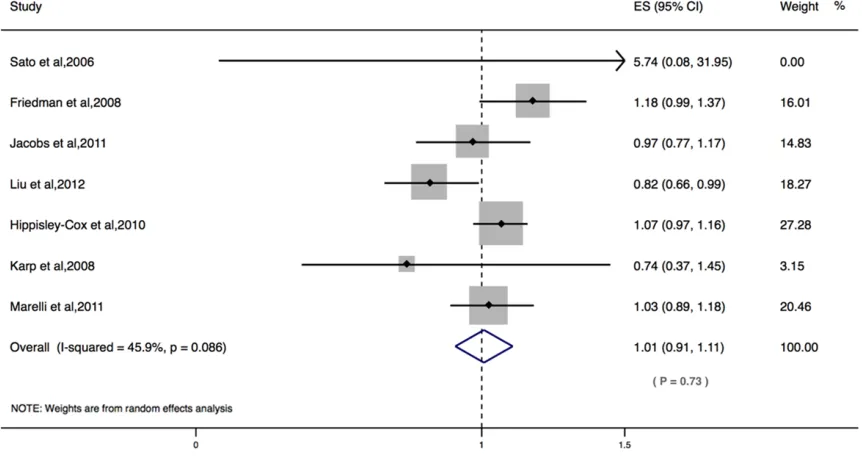
The relationship between statin use and risk of kidney cancer was evaluated in seven studies. Among these studies, one studies showed
significant associations of statin use with risk of kidney cancer, and significant associations
were not observed in six studies. The results of the present meta-analysis showed that
statin users did not experience a significantly
decreased risk for developing kidney cancer in
both women and men (RR = 1.01, 95% CI =
0.91-1.11; I2 = 45.9%; Figure 2). The results of
did not alter the association of statin use with the risk of kidney cancer (Prospective studies:
RR = 0.95, 95% CI = 0.89-1.01; Retrospective studies: RR = 0.91, 95% CI = 0.69-1.13; Table 2). This research provided no evidence to
sug-gest that long-term statin use was beneficial for the prevention of kidder cancer (RR = 0.98, 95% CI = 0.78-1.18). No publication bias was
observed among studies using Begg’s P value
(P = 0.76) and Egger’s test (P = 0.72) (Figure 3A).
Subsequently, we explored on the sex-specific
associations between statin use and the risk of kidney cancer. Four studies provided RRs for the associations of statins and this disease risk in men and women, respectively.
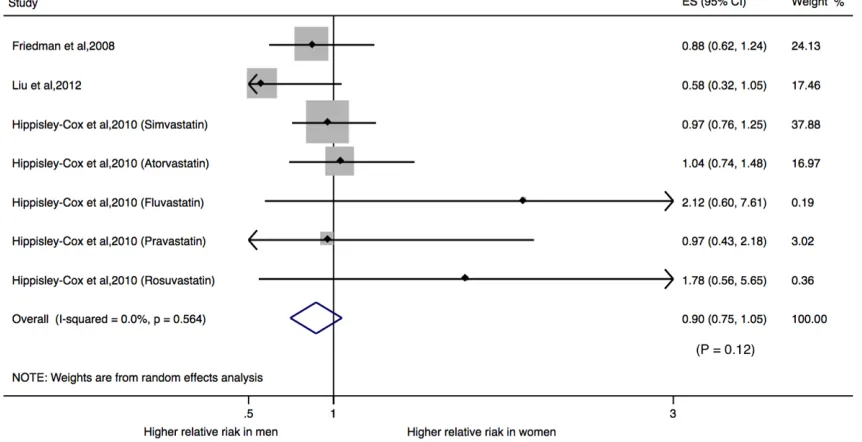
The pooled multiple-adjusted women-to-men RRR for incident kidney cancer was 0.90 (95% CI 0.75, 1.05) (Figure 4). Statin use in women had the reduced tendency for the risk of kidney cancer, but statin use in men had an adverse tendency for the risk of this disease (Women:
RR = 0.98, 95% CI = 0.85-1.12; Men: RR = 1.09, 95% CI = 0.99-1.19).
Statins and risk of prostate cancer.
The relationship between statin use and risk of prostate cancer was evaluated in 29 studies. Among these studies, eighteen studies did not
show significant associations of statin use with
risk of prostate cancer, significant associations
of statin use with reduced risk of prostate can-cer were observed in ten studies, and one study found that statin use could increase the risk of prostate cancer. When all included studies were pooled into the meta-analysis, the results
showed that statin users experienced a signifi -cantly decreased risk for developing prostate
cancer (RR = 0.88, 95% CI = 0.84-0.93; I2 = 87.9%, P < 0.001; Figure 5), especially for
long-term statin use (RR = 0·72, 95% CI: 0·60-0·83). The study design could not significantly alter
the risk of prostate cancer (Prospective
stud-ies: RR = 0.94, 95% CI = 0.89-0.99; retrospec
-tive studies: RR = 0.85, 95% CI = 0.78-0.91).
The results of subgroup analysis showed that
the use of statins is beneficial for the preven
-tion of advanced prostate cancer (RR = 0.82, 95% CI = 0.70-0.95), high-grade prostate can
-cer (RR = 0.86, 95% CI = 0.68-0.99) or low-grade prostate cancer (RR = 0.93, 95% CI = 0.86-0.99). The subgroup results based on
statin types shared consistency in the direction
[image:6.612.91.522.74.303.2]of the effect (Pravastatin: RR = 0.99, 95% CI = 0.97-1.02; Simvastatin (RR = 0.86, 95% CI = 0.61-1.12; Fluvastatin: RR = 0.86, 95% CI = 0.68-0.99; Atorvastatin: RR = 0.89, 95% CI = 0.68-1.10; Rosuvastatin: RR = 0.58, 95% CI = 0.17-1.34; Lovastatin: RR = 0.94, 95% CI = 0.93-0.96). The sensitivity analysis by remov -ing one study at a time showed the robustness
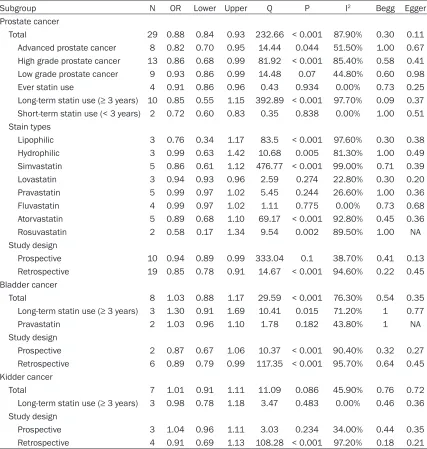
Table 2. Overall effect estimates for urologic cancers and statin use according to study characteristics
Subgroup N OR Lower Upper Q P I2 Begg Egger
Prostate cancer
Total 29 0.88 0.84 0.93 232.66 < 0.001 87.90% 0.30 0.11
Advanced prostate cancer 8 0.82 0.70 0.95 14.44 0.044 51.50% 1.00 0.67
High grade prostate cancer 13 0.86 0.68 0.99 81.92 < 0.001 85.40% 0.58 0.41
Low grade prostate cancer 9 0.93 0.86 0.99 14.48 0.07 44.80% 0.60 0.98
Ever statin use 4 0.91 0.86 0.96 0.43 0.934 0.00% 0.73 0.25
Long-term statin use (≥ 3 years) 10 0.85 0.55 1.15 392.89 < 0.001 97.70% 0.09 0.37
Short-term statin use (< 3 years) 2 0.72 0.60 0.83 0.35 0.838 0.00% 1.00 0.51
Stain types
Lipophilic 3 0.76 0.34 1.17 83.5 < 0.001 97.60% 0.30 0.38
Hydrophilic 3 0.99 0.63 1.42 10.68 0.005 81.30% 1.00 0.49
Simvastatin 5 0.86 0.61 1.12 476.77 < 0.001 99.00% 0.71 0.39
Lovastatin 3 0.94 0.93 0.96 2.59 0.274 22.80% 0.30 0.20
Pravastatin 5 0.99 0.97 1.02 5.45 0.244 26.60% 1.00 0.36
Fluvastatin 4 0.99 0.97 1.02 1.11 0.775 0.00% 0.73 0.68
Atorvastatin 5 0.89 0.68 1.10 69.17 < 0.001 92.80% 0.45 0.36
Rosuvastatin 2 0.58 0.17 1.34 9.54 0.002 89.50% 1.00 NA
Study design
Prospective 10 0.94 0.89 0.99 333.04 0.1 38.70% 0.41 0.13
Retrospective 19 0.85 0.78 0.91 14.67 < 0.001 94.60% 0.22 0.45
Bladder cancer
Total 8 1.03 0.88 1.17 29.59 < 0.001 76.30% 0.54 0.35
Long-term statin use (≥ 3 years) 3 1.30 0.91 1.69 10.41 0.015 71.20% 1 0.77
Pravastatin 2 1.03 0.96 1.10 1.78 0.182 43.80% 1 NA
Study design
Prospective 2 0.87 0.67 1.06 10.37 < 0.001 90.40% 0.32 0.27
Retrospective 6 0.89 0.79 0.99 117.35 < 0.001 95.70% 0.64 0.45
Kidder cancer
Total 7 1.01 0.91 1.11 11.09 0.086 45.90% 0.76 0.72
Long-term statin use (≥ 3 years) 3 0.98 0.78 1.18 3.47 0.483 0.00% 0.46 0.36
Study design
Prospective 3 1.04 0.96 1.11 3.03 0.234 34.00% 0.44 0.35
Retrospective 4 0.91 0.69 1.13 108.28 < 0.001 97.20% 0.18 0.21
of our findings. In addition, no publication bias
was observed among studies using Begg’s P value (P = 0.30) and Egger’s test (P = 0.11)
(Figure 3B).
Statins and risk of bladder cancer
Subsequently, we assessed the relationship between statin use and risk of bladder cancer in eight studies. Among them, one studies
showed a significantly reduced risk of bladder cancer, two studies showed a significantly increased risk of this disease and five studi-es reported no significant associations. The
results of the present analysis revealed that
bladder cancer risk did not yield statistically
significant benefit from statin use (RR = 1.03, 95% CI = 0.88-1.17; Figure 6). The results of
the stratified analysis found that study design
did not alter the tendency of association of statin use with the risk of bladder cancer (Pro-
spective studies: RR = 0.87, 95% CI = 0.67-1.06; Retrospective studies: RR = 0.89, 95% CI = 0.79-0.99). The results of the stratified
an-alysis found that pravastatin did not show a
significantly decreased risk for developing blad
-der cancer (RR = 1.03, 95% CI = 0.96-1.10). In
addition, the sensitivity analysis found that the
significant relationships in the pooled RRs
regression test did not find
any evidence for the presence of publication bias in the eli-gible studies (both P > 0.1; Figure 3C).
Discussion
The previous meta-analyses conducted by Nayan et al [39] included both RCTs and ob- servational studies demon-strated that statin use was not associated with the risk of kidney cancer.In line with this meta-analyses, the pres-ent meta-analysis did not ap- preciably show the associa-tion with the risk for kidney cancer among statin users as compared to non-users in
both men and women. How-ever, there was a significant
heterogeneity among the in- cluded studies (P < 0.001). The meta-regression and
sub-group analysis did find that
sex difference might account for the source of heterogene-ity. Compared to non-users, statin use in men had an adverse tendency for the risk of kidney cancer, but statin use in women showed the
beneficial tendency for the
risk of kidney cancer. In ag- reement with our results, the previous cohort study by Fri- edman et al demonstrated that use of statins in men would increase 23% risk of
kidney cancer (RR = 1.23, 95% CI = 1.02-1.48), and the
large prospective studies by Liu et al found that statin use could reduce marginally the 32% risk of this disease am-
ong women (RR = 0.68, 95% CI = 0.46-1.00) [14, 38]. In
[image:8.612.88.378.65.677.2]addition, the pooled multiple-adjusted women-to-men RRR in our meta-analysis might provide the potential evidence of sex difference in the effect
of statin use on risk of kidney cancer which indicating further studies to evaluate the poten-tial effect of statin use on risk of kidney cancer should take sex disparities into account [40].
However, the findings of this meta-analysis
suggested that there was no association between statin use and risk of bladder cancer. Due to limited data, we did not explore the sex difference in the relationship between statin use and the risk of bladder cancer.
We found significantly the reduced risk of total,
advanced, high-grade, and low-grade prostate cancer among statin users as compared to non-users by approximately 12%, 18%, 14% and 7%, respectively. In our subgroup analys-
es, we observed a significant protective asso -ciation of short-term statin use with the reduced risk of prostate cancer, in contrast with the absent association between long-term statin use and risk of prostate cancer, indicating the
duration of statin use might show a significant association with its efficacy.
Although there was a decreased risk of low
grade prostate cancer with a borderline signifi -cance, either residual confounding or type I error of studies could partially account for this reason. In addition, the irregular use of statins
in many participants and various definitions of
duration of exposure could was the possible explanation [41]. Therefore, the cumulative
amount of statin defined daily doses might be
small despite the long duration use. It should be noted that the inverse association between the risk of prostate cancer and statin use was dose-dependent with a cumulative amount of statin use [41-43].Therefore, future studies should take fully into account of effect of
cumu-lative amount of defined daily doses on the
overall statins exposure.
The present meta-analysis had several stre- ngths. The present review includes a large number of people from different studies. Almost the included studies had adjusted for age and smoking in the analyses and most of the studies had a high quality which gave more reliable assessment of the relation between statin use and risk of prostate cancer. Addi- tionally, the association was essentially con-
sistent among subgroups stratified by charac -teristics of participants, indicating that the conclusions of the present study were not dependent on arbitrary decisions in the pre- sent meta-analysis. Finally, the present results
were unlikely to be altered significantly from
publication bias, as indicated by the funnel plots and other analyses.
Some potential limitations of the present study should also merit consideration in interpreting
[image:9.612.92.523.77.298.2]the findings. First, although the present results showed that statin use might significantly
Figure 5. Forest plot on the associations between the statin use and the risk of prostate cancer.
[image:10.612.93.519.461.698.2]reduce the risk of prostate cancer, especially for short-term statin use, and the present study was based on observational studies and might have the problems of potential bias and con-founding effects associated with such studies, however, the combined sample size was rela-tively large, and the present results remained robust, adding to the strength of this analysis. Second, even though several confounding fac-tors had been adjusted in all the studies incor-porated, the possibility of other uncontrolled or potential residual confounding could not be fully excluded in the present meta-analysis, which might have led to underestimation or overestimation of the association. Third, both the environmental factors and genetic factors likely affected the risk of prostate cancer, which
might also partly influence our results. Our
analysis was based primarily on data and infor-mation provided from the original literature; however, the included studies did not control
for these confounding factors or report suffi -cient data to analyze the association between statin use and lung cancer risk adjusted for dif-ferent environmental factors and genes. Thus, the assessment of potential gene-gene or gene-environment interactions was limited, and the possibility that environmental factors and other genes might affect the lung cancer risk interactively that could not be excluded in the present study. Further large research stud-ies that allowed for the adjustment by these covariates, including genes and environmental factors, should be conducted. Finally, as with any meta-analysis, the potential for publication bias was a concern. Despite no publication bias
examined in the present study, it was still diffi -cult to fully rule out such bias because there
was not a sufficient number of studies to detect
it adequately.
In conclusion, the present meta-analysis found that statin use in men had an adverse tendency for the risk of kidney cancer compared to non-users, but statin use in women showed the
beneficial tendency for the risk of this disease. However, statin use was significantly associat -ed with a decrease in the risk of developing
prostate cancer, whereas the significant
eff-ects were not observed for bladder cancer. Moreover, a plausible association of a decreas- ed risk of advanced, high-grade and low-grade with statin use was also found. It should also be noted that there are only a few prospective
studies that have examined this association, which limited the power of meta-analysis. Therefore, further well-designed large studies with prospective cohort design, especially ac- cording to sex difference are required before
definitive conclusions can be drawn regarding
the potential effect of statin use on the risk of bladder and kidney cancer.
Disclosure of conflict of interest
None.
Address correspondence to: Dr. Wei Zhuang, De-
partment of Urology, The Second Affiliated
Hos-pital of Fujian Medical University, Licheng Dis-
trict Zhongshan North Road, Quanzhou 362000, Fujian, China. Tel: +86-13799222133; E-mail: [email protected]
References
[1] Torre LA, Bray F, Siegel RL, Ferlay J, Lortet-Tieu-lent J, Jemal A. Global cancer statistics, 2012.
CA Cancer J Clin 2015; 65: 87-108.
[2] Shirk JD, Tan HJ, Hu JC, Saigal CS, Litwin MS.
Patient experience and quality of urologic
can-cer surgery in US hospitals. Cancan-cer 2016; 122:
2571-2578.
[3] Nielsen SF, Nordestgaard BG, Bojesen SE. Statin use and reduced cancer-related mortal-
ity. N Engl J Med 2013; 368: 576-577.
[4] Peto R, Emberson J, Landray M, Baigent C, Col-lins R, Clare R, Califf R. Analyses of cancer data from three ezetimibe trials. N Engl J Med
2008; 359: 1357-1366.
[5] Mullen PJ, Yu R, Longo J, Archer MC, Penn LZ. The interplay between cell signalling and the mevalonate pathway in cancer. Nat Rev Cancer
2016; 16: 718-731.
[6] Wells GA, Shea B, O’Connell D, Peterson J,
Welch V, Losos M, Tugwell P. The
Newcastle-Ottawa scale (NOS) for assessing the quality
of nonrandomized studies in meta-analyses. Available online: http://www.ohri.ca/progra- ms/clinical_epidemiology/oxford.asp (access-
ed on 10 June 2016).
[7] Huxley RR, Woodward M. Cigarette smoking as
a risk factor for coronary heart disease in wom-en compared with mwom-en: a systematic review and meta-analysis of prospective cohort stud-ies. Lancet 2011; 378: 1297-1305.
[8] Egger M, Davey Smith G, Schneider M, Minder C. Bias in meta- analysis detected by a simple,
graphical test. BMJ 1997; 315: 629-634.
cancer. J Natl Cancer Inst 2006; 98:
1819-1825.
[10] Flick ED, Habel LA, Chan KA, Van Den Eeden SK, Quinn VP, Haque R, Orav EJ, Seeger JD,
Sadler MC, Quesenberry CP Jr, Sternfeld B, Ja-cobsen SJ, Whitmer RA, Caan BJ. Statin use and risk of prostate cancer in the California
Men’s Health Study cohort. Cancer Epidemiol Biomarkers Prev 2007; 16: 2218-1125.
[11] Lovastatin Study Groups I Through IV.
Lovas-tatin 5-year safety and efficacy study. Arch In -tern Med 1993; 153: 1079-1087.
[12] Friis S, Poulsen AH, Johnsen SP, McLaughlin JK, Fryzek JP, Dalton SO, Sørensen HT, Olsen JH. Cancer risk among statin users: a popula -tion-based cohort study. Int J Cancer 2005;
114: 643-647.
[13] Sato S, Ajiki W, Kobayashi T, Awata N; PCS
Study Group. Pravastatin use and the five-year
incidence of cancer in coronary heart dis- ease patients: from the prevention of coronary
sclerosis study. J Epidemiol 2006; 16: 201-206.
[14] Friedman GD, Flick ED, Udaltsova N, Chan J,
Quesenberry CP Jr, Habel LA. Screening statins
for possible carcinogenic risk: up to 9 years of
follow-up of 361,859 recipients. Pharmacoepi
-demiol Drug Saf 2008; 17: 27-36.
[15] Haukka J, Sankila R, Klaukka T, Lonnqvist J,
Niskanen L, Tanskanen A, Wahlbeck K, Tiiho-nen J. Incidence of cancer and statin
usage--record linkage study. Int J Cancer 2010; 126:
279-284.
[16] Hippisley-Cox J, Coupland C. Unintended ef -fects of statins in men and women in England and Wales: population based cohort study us-ing the QResearch database. BMJ 2010; 340: c2197.
[17] Jacobs EJ, Newton CC, Thun MJ, Gapstur SM. Long-term use of cholesterol-lowering drugs and cancer incidence in a large United States
cohort. Cancer Res 2011; 71: 1763-1771.
[18] Chen CI, Kuan CF, Fang YA, Liu SH, Liu JC, Wu LL, Chang CJ, Yang HC, Hwang J, Miser JS, Wu SY. Cancer risk in HBV patients with statin
and metformin use: a population-based cohort
study. Medicine 2015 ; 94: e462.
[19] Karp I, Behlouli H, Lelorier J, Pilote L. Statins
and cancer risk. Am J Med 2008; 121: 302-309.
[20] Leung HW, Chan AL, Lo D, Leung JH, Chen HL.
Common cancer risk and statins: a population-based case-control study in a Chinese
popula-tion. Expert Opin Drug Saf 2013; 12: 19-27.
[21] Matsushita Y, Sugihara M, Kaburagi J, Ozawa M, Iwashita M, Yoshida S, Saito H, Hattori Y.
Pravastatin use and cancer risk: a meta-analy-sis of individual patient data from long-term prospective controlled trials in Japan.
Pharma-coepidemiol Drug Saf 2010; 19: 196-202.
[22] Marelli C, Gunnarsson C, Ross S, Haas S,
Stroup DF, Cload P, Clopton P, DeMaria AN. Statins and risk of cancer: a retrospective cohort analysis of 45,857 matched pairs from an electronic medical records database of 11 million adult Americans. J Am Coll Cardiol 2011; 58: 530-537.
[23] Smeeth L, Douglas I, Hall AJ, Hubbard R, Evans
S. Effect of statins on a wide range of health outcomes: a cohort study validated by com-parison with randomized trials. Br J Clin
Phar-macol 2009; 67: 99-109.
[24] Boudreau DM, Yu O, Buist DS, Miglioretti DL.
Statin use and prostate cancer risk in a large population-based setting. Cancer Causes
Con-trol 2008; 19: 767-774.
[25] Murtola TJ, Tammela TL, Määttänen L, Huhtala H, Platz EA, Ala-Opas M, Stenman UH, Auvinen
A. Prostate cancer and PSA among statin users in the Finnish prostate cancer screening trial.
Int J Cancer 2010; 127: 1650-1659.
[26] Nordström T, Clements M, Karlsson R,
Adolfs-son J, Grönberg H. The risk of prostate cancer
for men on aspirin, statin or antidiabetic medi-cations. Eur J Cancer 2015; 51: 725-733. [27] Platz EA, Tangen CM, Goodman PJ, Till C,
Parnes HL, Figg WD, Albanes D, Neuhouser
ML, Klein EA, Lucia MS, Thompson IM Jr, Kristal AR. Statin drug use is not associated with prostate cancer risk in men who are regu-larly screened. J Urol 2014; 192: 379-384. [28] Farwell WR, D’Avolio LW, Scranton RE, Lawler
EV, Gaziano JM. Statins and prostate cancer diagnosis and grade in a veterans population. J Natl Cancer Inst 2011; 103: 885-892. [29] Tan N, Klein EA, Li J, Moussa AS, Jones JS.
Statin use and risk of prostate cancer in a pop-ulation of men who underwent biopsy. J Urol
2011; 186: 86-90.
[30] Freedland SJ, Hamilton RJ, Gerber L, Banez LL,
Moreira DM, Andriole GL, Rittmaster RS. Statin use and risk of prostate cancer and high-grade prostate cancer: results from the REDUCE
study. Prostate Cancer Prostatic Dis 2013; 16:
254-259.
[31] Kantor ED, Lipworth L, Fowke JH, Giovannucci
EL, Mucci LA, Signorello LB. Statin use and risk of prostate cancer: results from the south-ern community cohort study. Prostate 2015; 75: 1384-1393.
[32] Lustman A, Nakar S, Cohen AD, Vinker S. Statin use and incident prostate cancer risk: does the statin brand matter? A population-based co-hort study. Prostate Cancer Prostatic Dis 2014;
17: 6-9.
[33] Chen-Pin W, Javier H, Lorenzo C, Downs JR,
Thompson IM, Pollock B, Lehman D. Statins
and finasteride use differentially modify the
inci-[39] Nayan M, Punjani N, Juurlink DN, Finelli A,
Aus-tin PC, Kulkarni GS, Uleryk E, Hamilton RJ.
Statin use and kidney cancer survival out-comes: a systematic review and meta-analysis.
Cancer Treat Rev 2017; 52: 105-116.
[40] Peters SA, Huxley RR, Woodward M. Diabetes
as risk factor for incident coronary heart dis-ease in women compared with men: a
system-atic review and meta-analysis of 64 cohorts
including 858,507 individuals and 28,203 coronary events. Diabetologia 2014; 57: 1542-1551.
[41] Bansal D, Undela K, D’Cruz S, Schifano F. Statin use and risk of prostate cancer: a
meta-analysis of observational studies. PLoS One 2012; 7: e46691.
[42] Zhang Y, Zang T. Association between statin usage and prostate cancer prevention: a
re-fined meta-analysis based on literature from
the years 2005-2010. Urol Int 2013; 90:
259-262.
[43] Luo Y, She DL, Xiong H, Fu SJ, Yang L. The prog -nostic effect of statin use on urologic cancers: an updated meta-analysis of 35 observa- tional studies. Medicine (Baltimore) 2015; 94: e1523.
dence in men with type 2 diabetes. Ann Transl Med Epidemiol 2014; 1. pii: 1004.
[34] Chan JM, Litwack-Harrison S, Bauer SR, Dan -iels NA, Wilt TJ, Shannon J, Bauer DC. Statin use and risk of prostate cancer in the pros-
pective osteoporotic fractures in men (MrOS)
study. Cancer Epidemiol Biomarkers Prev
2012; 21: 1886-1888.
[35] Fowke JH, Motley SS, Barocas DA, Cookson
MS, Concepcion R, Byerly S, Smith JA Jr. The associations between statin use and prostate cancer screening, prostate size, high-grade prostatic intraepithelial neoplasia (PIN), and prostate cancer. Cancer Causes Control 2011;
22: 417-426.
[36] Breau RH, Karnes RJ, Jacobson DJ, McGree
ME, Jacobsen SJ, Nehra A, Lieber MM, St Sau-ver JL. The association between statin use and the diagnosis of prostate cancer in a popula-tion based cohort. J Urol 2010; 184: 494-499. [37] Morote J, Celma A, Planas J, Placer J, de Torres
I, Olivan M, Carles J, Reventós J, Doll A. Role of
serum cholesterol and statin use in the risk of prostate cancer detection and tumor
aggres-siveness. Int J Mol Sci 2014; 15: 13615-13623.