argmax
r(ge,)•pr(ef)
el1 Introduction
Pr (f')Comparison of Alignment Templates and Maximum Entropy Models for
Natural Language Understanding
Oliver Bender, Klaus Macherey, Franz Josef Och, and Hermann Ney
Lehrstuhl fiir Informatik VI, Computer Science Department
RWTH Aachen - University of Technology
D-52056 Aachen, Germany
fbender,k.macherey,och,[email protected]
-aachen.de
Abstract
ich warde gerne von KOln nach MUnchen fahrenIn this paper we compare two ap-proaches to natural language under-standing (NLU). The first approach is derived from the field of statistical ma-chine translation (MT), whereas the other uses the maximum entropy (ME) framework. Starting with an anno-tated corpus, we describe the problem of NLU as a translation from a source tence to a formal language target sen-tence. We mainly focus on the qual-ity of the different alignment and ME models and show that the direct ME ap-proach outperforms the alignment tem-plates method.
V V
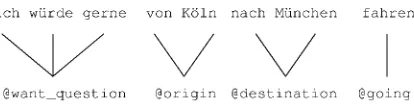
[image:1.595.342.549.269.321.2]@want question @origin @destination @going
Figure 1: Example of a word! concept mapping.
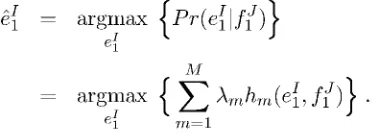
proach uses the maximum entropy (ME) frame-work (Berger et al., 1996). For both frameframe-works, the objective can be described as follows. Given a natural source sentence fiJ = fj...f./ we choose the formal target language sentence ef = el •••e,...ei with the highest probability among all possible target sentences:
argmax { Pr (ej ei
fi'
) (1)The objective of natural language understanding (NLU) is to extract all the information from a nat-ural language based input which are relevant for a specific task. Typical applications using NLU components are spoken dialogue systems (Levin and Pieraccini, 1995) or speech-to-speech transla-tion systems (Zhou et al., 2002).
In this paper we present two approaches for an-alyzing the semantics of natural language inputs and discuss their advantages and drawbacks. The first approach is derived from the field of statis-tical machine translation (MT) and is based on the source-channel paradigm (Brown et al., 1993). Here, we apply a method called alignment tem-plates (Och et al., 1999). The alternative
ap-argmax { Pr(fief) • Pr(ef) • (2)
e
ap-proaches for two NLU tasks which are derived from two different domains and show that the ME approach clearly outperforms the statistical ma-chine translation approach within these settings. 1.1 Related Work
The use of statistical machine translation for NLU tasks was firstly proposed by (Epstein et al., 1996). Whereas (Epstein et al., 1996) model hid-den clumpings, we use a method called alignment templates. Alignment templates have been proven to be very powerful for statistical machine trans-lation tasks since they allow for many-to-many alignments between source and target words (Och et al., 1999). Alignment templates for NLU tasks were firstly proposed by (Macherey et al., 2001).
Applying ME translation models to NLU has been firstly suggested by (Papineni et al., 1997; Papineni et al., 1998). Here, we use a concept-based meaning representation as formal target lan-guage and propose different features and structural constraints in order to improve the NLU results.
The remainder of the paper is organized as fol-lows: in the following section, we briefly describe the concept based meaning representation as used for the NLU task. Section 3 describes the training and search procedure of the alignment templates approach. In section 4, we outline the ME frame-work and describe the features that were used for the experiments. Section 5 presents results for both the alignment templates approach and the ME framework. For both approaches, experiments were carried out on two different German NLU tasks.
2 Concept
-based semantic representation
A crucial decision, when designing an NLU sys-tem, is the choice of a suitable semantic represen-tation, since interpreting a user's request requires an appropriate formalism to represent the mean-ing of an utterance. Different semantic represen-tations have been proposed. Among them, case frames (Issar and Ward, 1993), semantic frames (Bennacef et al., 1994), and variants of hierarchi-cal concepts (Miller et al., 1994) as well as flat concepts (Levin and Pieraccini, 1995) are the most prominent. Since we regard NLU as a special case of a translation problem, we have chosen a flat
concept-based target language as meaning repre-sentation.
A semantic concept (in the following briefly termed as concept) is defined as the smallest unit of meaning that is relevant to a specific task (Levin and Pieraccini, 1995). Figure 1 depicts an example of a concept-based meaning representation for the input utterance 'I would like to go from Munich to Cologne' from the domain of a German train-timetable information system. The first line shows the source sentence, the last line depicts the target sentence consisting of several concepts, marked by the preceding @ -symbol. The connections be-tween the words describe the alignments bebe-tween source and target words.
3 Alignment Templates
The statistical machine translation approach de-composes Pr(eflg) into two probability distri-butions, the language model probability and the translation probability. The architecture of this method is depicted in figure 2. For the transla-tion approach, we use the same training proce-dure as for the automatic translation of natural lan-guages. When rewriting the translation probabil-ity Pr(fiJ 4) by introducing a 'hidden' alignment al = with a C {1,...,1}, j we obtain:
611)
= E
Pr(fi',aPef)a
= Efl
Pr(fi,aja =
The IBM models as proposed by (Brown et al., 1993) and the HMM model as suggested by (Vo-gel et al., 1996) result from different decompo-sitions of Pr(fif ,a.i! 4). For training the align-ment model, we train a sequence of models of in-creasing complexity. Starting from the first model IBM1, we proceed over the HMM model, IBM3 up to IBMS. Using the model IBMS as a result of the last training step, we use the alignment tem-plate approach to model whole word groups.
(3)
1.3-1 3-1
U.
0
0 0
Global Search
= argmax {Pr(eI) • Pr(fiT Source Language Text
( Preprocessing )
Target Language Text
Pr(fij leD
H
Lexicon ModelH
Alignment Model Pr(e)Language Model
[image:3.595.102.320.84.224.2]@destination @origin @train determination @want_guestion @hello @yes
Figure 2: Architecture of the translation approach based on the source-channel paradigm.
[image:3.595.356.549.87.219.2]3.1 Model
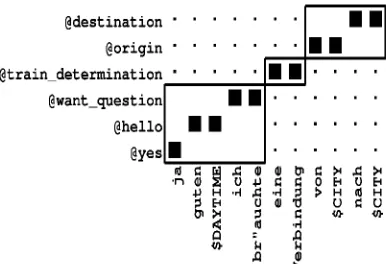
Figure 3: Example of alignment templates for rep-resenting a natural sentence as a sequence of con-cepts.
following way: The alignment templates approach provides a
two-level alignment: a phrase two-level alignment and a word level alignment within the phrases. As a re-sult, source and target sentence must be segmented into
K
word-groups, describing the phrases:=
1
3(i1.1:
61) =
/ —
ei = el ek = eik 1+1, • • • • eik
k =1
.f = .1
71
f
- = fik ,±1,• • • ,=
1a'(i,i) := {
1 if (i,
j)
are linked in a 0 otherwise.By decomposing the translation probability with the above-mentioned definitions, we arrive at:
Pr(fii
= E
Pr(R
(,
74
(TT')
af(
E
P(6k lak-1, K) • P(ik Fak ) •-6-fc k=1
Denote z =
(e ,f .a )
an alignment template, we obtainp(f) =
P(z1-) •p(fTz.").
Thephrase translation probability
p(f z, "g)
is decom-posed according to the following equation:P(f
/,.1',
71/),
-0
Cet
, F') • 6C
-1, i
-/) •
Hp(fi
a
where
6(•
;•)
denotes the Kronecker-function. The probabilityp(f
ia
can be decomposed in the3.2 Training
During training, we proceed over all sentence pairs and estimate the probabilities by determining the relative frequencies of applying an alignment tem-plate. Figure 3 shows an example of alignment templates computed for a sentence pair from the German TABA corpus.
3.3 Search
If we insert the alignment template model and a standard left-to-right language model in the source-channel approach (Eq. 2), we obtain the following search criterion in maximum approxi-mation which is used in combination with beam search:
ei-/ argmax{Pr(ef) •
Pr(fi
l{
argmax max
ef K,qc=e-f,fik,iii-cenk,zr
I K
{ H p(ei lei-1) H
P(iiklak—i)
@origin —[
@destination
...
..
..
..
• • • •
n •
@want_questionf •
@train determination
n
• • •
@yes
Source Language Text
( Preprocessing)
A1 • hi (el, fiJ)
Global Search
A2 h2
=argmax
E
Anehmel. m=1
Ad • hm (el , fiJ)
[image:4.595.45.261.83.238.2]Target Language Text
Figure 4: Architecture of the maximum entropy model approach.
4 Maximum Entropy Models
As alternative to the source-channel approach, we can directly model the posterior probability Pr(eflfil). A well-founded framework for doing this is maximum entropy (Berger et al., 1996). In this framework, we have a set of /If feature func-tions hm(ef,m = 1, , A I. For each fea-ture function hm, there is a model parameter A,. The posterior probability can then be modeled as follows:
PAiw(ef I
fi')
exp[EAm hm(ef, fil)] m=1
E
exp[E fif)]ei m=1
The architecture of the ME approach is summa-rized in Figure 4.
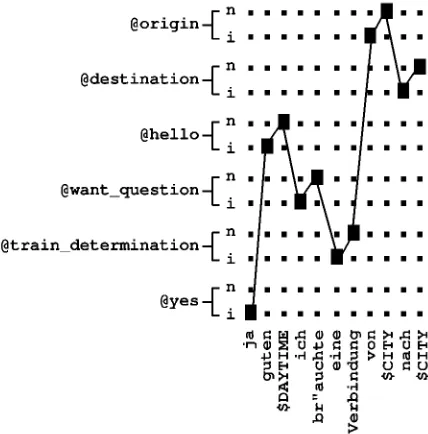
For our approach, we determine the correspond-ing formal target language concept for each word of a natural language input. Therefore, we distin-guish whether a word is an initial or a non-initial word of a concept. This procedure yields a one-to-one translation from source words to formal se-mantic concepts, i.e. the length of both sequences must be equal (I = J). Figure 5 depicts a one-to-one mapping applied to a sentence/concept pair from the German TABA corpus.
roomAcuwtroalA>4
■: 4) 0 E-1
H 0 H It H
U CD '0
CD >1 p g
tn-al
A ta 14
Figure 5: Example of a sentence/concept mapping using maximum entropy ('i' denotes initial con-cepts, 'n' non-initial concepts resp.).
Further, we assume that the decisions only de-pend on a limited window of fr92 = f3_2...f3+2
around the current source word f3 and on the two predecessor concepts. Thus, we obtain the follow-ing second-order model:
Pr (efl f
H
Pr(e I
f ij)TT
3=1
J-1
121' fj—+22) • j=1
Transition constraints: Due to the distinction
between initial and non-initial concepts, we have to ensure that a non-initial concept must only fol-low its corresponding initial one. To guarantee this, a straightforward method is to implement a feature function that models the transitions and to set the feature values of all invalid transitions to zero, so that they will be discarded during search.
4.1 Feature functions
We have implemented a set of binary valued fea-ture functions for our system:
Lexical features: The words f33+2-2 are compared
to a vocabulary. Words which are not found in the vocabulary are mapped onto an 'unknown word'. (5)
[image:4.595.282.496.87.304.2]—1
e pi+2. j. )
—2, , 3-2,
fTh)}
hZk ,dk
k=1
Zk
e
, dke
501 = argmax p(An •
E
p4i(en
n=1
Formally, the feature
hf,d,e( di121, ei , fjjf22 ) = 6(fi+d, f) • 61(e.i,e)
d {-2, ,
will fire if the word fj±d matches the vocabulary entry f and if the prediction for the current con-cept equals e. 6(•,.) again denotes the Kronecker-function.
Word features: Word characteristics are
cov-ered by the word features, which test for:
- Capitalization: These features will fire if f3
is capitalized, has an internal capital letter, or is fully capitalized.
- Pre- and suffixes: If the prefix (suffix) of f3
equals a given prefix (suffix), these features will fire.
Transition features: Transition features model
the dependence on the two predecessor concepts:
/-1 ri+2
ej • —2 = (5(ei—d, e') • 6(e
d c {I, .
Prior features: The single concept priors are
in-corporated by prior features. They just fire for the currently observed concept:
j = 6(e e)
—2•ei• .1, •
Compound features: Using the feature
func-tions defined so far, we can only specify features that refer to a single word or concept. To en-able also word phrases and word/concept com-binations, we introduce the following compound features:
have been observed on the training data at least K times. Although this method is not minimal, i e the reduced feature set may still contain features that are redundant or non-informative, it turned out to perform well in practice. Experiments were car-ried out with different thresholds. It turned out that for the NLU task, a threshold of 2 for all features achieved the best results, except for the prefix and suffix features, for which a threshold of 6 yielded best results.
4.2 Training
For the purpose of training, we consider the set of manually annotated and segmented training sen-tences to form a single long sentence. As train-ing criterion, we use the maximum class posterior probability criterion:
{ N
= argmax E log pAiv, (en, fn ) •
n=1
This corresponds to maximizing the likelihood of the ME model. The direct optimization of the posterior probability in Bayes' decision rule is re-ferred to as discriminative training in automatic speech recognition since we directly take into ac-count the overlap in the probability distributions. Since the optimization criterion is convex, there is only a single optimum and no convergence prob-lems occur. To train the model parameters we use the Generalized Iterative Scaling (GIS) algo-rithm (Darroch and Ratcliff, 1972).
In practice, the training procedure tends to re-sult in an overfitted model. To avoid overfit-ting, (Chen and Rosenfeld, 1999) have suggested a smoothing method where a Gaussian prior on the parameters is assumed. Instead of maximizing the probability of the training data, we now maximize the probability of the training data times the prior probability of the model parameters:
—1 fj+2
—2, e.), j-2
Feature selection: Feature selection plays a
cru-cial role in the ME framework. In our system we use simple count-based feature reduction. Given a threshold K, we only include those features that
where
4.3 Search
In the test phase, the search is performed using the so called maximum approximation, i.e. the most likely sequence of concepts
ef
is chosen among all possible sequencesef :
{Pr(ei fij)}
argma,x
E
Arrth,„,(e-1, fiJ)} . rrt=1Therefore, the time-consuming renormalization in Eq. 5 is not needed during search. We run a Viterbi search to find the highest probability se-quence (Borthwick et al., 1998).
5 Results
Experiments were performed on the German in-house Philips TABA corpusl and the German
[image:6.595.281.494.124.266.2]in-house TELDIR corpus2. The TABA corpus is a text corpus in the domain of a train timetable infor-mation system (Aust et al., 1995). The TELDIR corpus is derived from the domain of a tele-phone directory assistance. Along with the bilin-gual annotation consisting of the source and tar-get sentences, the corpora also provide the affil-iated alignments between source words and con-cepts. The corpora allocations are summarized in table 1 and table 2. For the TABA corpus, the tar-get language consists of 27 flat semantic concepts (23 concepts for the TELDIR application, resp.), including a filler concept. Table 3 summarizes an excerpt of the most frequently observed concepts.
In order to improve the quality of both ap-proaches, we used a set of word categories. Since it is unlikely that every city name is observed dur-ing traindur-ing, all city names were mapped onto the category $ CI TY{c it
y name}.
Table 4 shows an excerpt of different categories which were used for both the training and the testing corpora.We have computed three different evaluation criteria:
- The concept error rate (CER), which is equally defined to the well known word error
'The TABA corpus was kindly provided by Philips Forschungslaboratorien Aachen.
2The data-collection was partially funded by Ericsson
Eu-rolab Deutschland GmbH.
Table 1: Training and testing conditions for the TABA corpus.
Natural Language
Concept Language
Train Sentences 25 009
Tokens 87 213 48 325
Vocabulary 1 911 27
Singletons 621 0
Test Sentences 8 015
Tokens 22 963 12 745
00V 283 0
Trigram PP 4.36
Table 2: Training and testing conditions for the TELDIR corpus.
Natural Language
Concept Language
Train Sentences 1 189
Tokens 6 850 3 356
Vocabulary 752 23
Singletons 276 2
Test Sentences 510
Tokens 3 041 1 480
00V 194 0
Trigram PP 4.49
rate. The CER describes the ratio of the sum of deleted, inserted, and substituted concepts w.r.t. a Levenshtein-alignment for a given ref-erence concept-string, and the total number of concepts in all reference strings.
The sentence error rate (SER), which is de-fined as ratio between the number of falsely translated sentences and the total number of sentences w.r.t. the concept-level.
The concept-alignment error rate (C-AER), which is defined as the ratio of the sum of falsely aligned words, i.e. words mapped onto the wrong concept, and the total num-ber of words in the reference (Macherey et al., 2001).
The error rates obtained by using the align-ment templates method are summarized in table 5
argmax
[image:6.595.60.246.166.233.2]Concept Example
@origin von $C1TY
@destination nach $C1TY
[image:7.595.116.305.124.197.2] [image:7.595.358.534.137.199.2]@person mit Herrn $SURNAME @ organization mit der $COMPANY Table 3: Excerpt of the most frequently observed concept for the TABA and the TELDIR corpus.
Table 5: Effect of alignment templates on different error rates for the TABA corpus (Model 5* uses a given alignment in training)
Alignment 1%1
Model SER CER C-AER
Model 5 4.2 4.3 4.3
[image:7.595.137.279.241.371.2]Model 5* 3.9 3.9 3.3
Table 4: Excerpt of used word categories. Category Examples
$C1TY $DAYT1ME $COMPANY $SURNAME
• Berlin • Köln • Morgen • Vormittag • BASF AG • Porsche • Schlegel • Wagner
and table 6. Table 7 and table 8 show the per-formance of the ME approach for different types of ME features. Starting with only lexical fea-tures, we successively extend our model by in-cluding additional feature functions. As can be seen from these results, the ME models clearly outperform the alignment models. The quality of the translation approach is achieved within the ME framework by just including lexical and transition features, and is significantly improved by adding further feature functions. Comparing the perfor-mance on the TABA task and on the TELDIR task, we see that the error rates are much lower for the TABA task than for the TELDIR task; the reason is due to the very limited training data.
One of the advantages of the ME approach re-sults from the property that the ME framework directly models the posterior probability and al-lows for integrating structural information by us-ing appropriate feature functions. Furthermore, the ME approach is consistent with the features observed on the training data, but otherwise makes the fewest possible assumptions about the distri-bution. Since the optimization criterion is vex, there is only a single optimum and no
con-Table 6: Effect of alignment templates on different error rates for the TELDIR corpus (Model 5* uses a given alignment in training)
Alignment 1%1
Model SER CER C-AER
Model 5 16.1 6.9 13.6
Model 5* 14.5 5.9 6.7
Table 7: Dependence on the number of included feature types on different error rates for the TABA corpus.
Feature Types
Fel
SER CER C-AER
lexical 8.8 6.7 4.6
+ transition 4.3 3.3 3.2
+ prior 2.1 1.6 1.5
+ capitalization 1.8 1.4 1.4 + pre- & suffixes 1.6 1.2 1.3
+ compound 1.1 0.8 0.9
Table 8: Dependence on the number of in-cluded feature types on different error rates for the TELDIR corpus.
Feature Types
1%1
SER CER C-AER
lexical 17.3 8.4 5.9
+ transition 13.5 5.6 5.4
+ prior 12.7 5.1 4.9
+ capitalization 12.0 4.8 4.9 + pre- & suffixes 9.6 3.6 4.4
+ compound 9.0 3.6 4.1
[image:7.595.358.531.261.321.2] [image:7.595.343.545.384.502.2] [image:7.595.343.548.563.679.2]nat-ural language words to semantic concepts whereas the translation approach tries to learn the hidden alignment automatically. We investigated the ef-fect of this difference by keeping the segmenta-tion of the training data fixed for the translasegmenta-tion approach. This approach is referred to as Model 5*, and the results are shown in table 5 and ta-ble 6. As can be seen from these tata-bles, this variant of the translation approach has a somewhat lower error rate, but is still outperformed by the ME ap-proach.
6 Summary
In this paper, we have investigated two approaches for natural language understanding: the alignment templates approach which is based on the source-channel paradigm and the maximum entropy ap-proach which directly models the posterior prob-ability. Both approaches were tested on two dif-ferent corpora. We have shown that within these settings the maximum entropy method clearly out-performs the alignment templates approach.
References
H. Aust, M. Oerder, F. Seide, and V. Steinbiss. 1995. The Philips automatic train timetable infor-mation system. Speech Communication, 17:249— 262, November.
S. K. Bennacef, H. Bonnea-Maynard, J. L. Gauvain, L. F. Lamel, and W. Minker. 1994. A spoken lan-guage system for information retrieval. In Proc.
of the Int. Conf on Spoken Language Processing (ICSLP'94), pages 1271-1274, Yokohama, Japan,
September.
A. L. Berger, S. A. Della Pietra, and V. J. Della Pietra. 1996. A maximum entropy approach to natural language processing. Computational Linguistics, 22(1):39-72, March.
A. Borthwick, J. Sterling, E. Agichtein, and R. Gr-isham. 1998. NYU: Description of the MENE named entity system as used in MUC-7. In
Pro-ceedings of the Seventh Message Understanding Conference (MUC-7), 6 pages, Fairfax, VA, April.
http://www.itl.nist.gov/iaui/894.02/related_projects/muc/.
P. F. Brown, S. A. Della Pietra, V. J. Della Pietra, and R. L. Mercer. 1993. The mathematics of statistical machine translation: Parameter estimation.
Compu-tational Linguistics, 19(2):263-311.
S. Chen and R. Rosenfeld. 1999. A gaussian prior for smoothing maximum entropy models. Techni-cal Report CMUCS-99-108, Carnegie Mellon Uni-versity, Pittsburgh, PA.
J. N. Darroch and D. Ratcliff. 1972. Generalized iter-ative scaling for log-linear models. Annals of
Math-ematical Statistics, 43:1470-1480.
M. Epstein, K. Papineni, S. Roukos, T. Ward, and S. Della Pietra. 1996. Statistical natural language understanding using hidden clumpings. In Proc. Mt.
Conf on Acoustics, Speech, and Signal Processing,
volume 1, pages 176-179, Atlanta, GA, May.
S. lssar and W. Ward. 1993. CMU's robust spoken lan-guage understanding system. In European Conf on
Speech Communication and Technology, volume 3,
pages 2147-2149, Berlin, Germany, September.
E. Levin and R. Pieraccini. 1995. Concept-based spon-taneous speech understanding system. In European
Conf on Speech Communication and Technology,
volume 2, pages 555-558, Madrid, Spain, Septem-ber.
K. Macherey, F. J. Och, and H. Ney. 2001. Natu-ral language understanding using statistical machine translation. In European Conf. on Speech
Communi-cation and Technology, pages 2205-2208, Aalborg,
Denmark, September.
S. Miller, R. Bobrow, R. Ingria, and R. Schwartz. 1994. Hidden understanding models of natural language. In Proceedings of the Association of Computational
Linguistics, pages 25-32, June.
F. J. Och, C. Tillmann, and H. Ney. 1999. Improved alignment models for statistical machine translation. In Proc. of the Joint SIGDAT Conf on Empirical
Methods in Natural Language Processing and Very Large Corpora, pages 20-28, University of
Mary-land, College Park, MD, June.
K. A. Papineni, S. Roukos, and R. T. Ward. 1997. Feature-based language understanding. In European
Conf on Speech Communication and Technology,
pages 1435-1438, Rhodes, Greece, September.
K. A. Papineni, S. Roukos, and R. T. Ward. 1998. Maximum likelihood and discriminative training of
direct translation models. In Proc. Int. Conf on
Acoustics, Speech, and Signal Processing, pages
189-192, Seattle, WA, May.
S. Vogel, H. Ney, and C. Tillmann. 1996. HMM-based word alignment in statistical translation. In
Inter-national Conference on Computational Linguistics,
volume 2, pages 836-841, August.
B. Zhou, Y. Gao, J. Sorensen, Z. Diao, and M. Picheny. 2002. Statistical natural language generation for speech-to-speech machine translation systems. In
Proc. of the Int. Conf. on Spoken Language Pro-cessing (ICSLP'02), pages 1897-1900, Denver, CO,