Journal for ReAttach Therapy and Developmental Diversities. 2020 Jul 05; 3(1):42-53 https://doi.org/10.26407/2020jrtdd.1.27
eISSN: 2589-7799
Special Education and Rehabilitation
Effect of auditory training intervention on auditory perception problem of children with perceptual disorders in Nigeria
Patricia KWALZOOM LONGPOE Department of Special Education & Rehabilita-tion Sciences
University of Jos, Jos. Nigeria Email: [email protected]
Scientific article
Received: 20-March-2020 Revised: 17-April-2020 Accepted: 22-April-2020 Online first: 23-April-2020
Abstract
Introduction:Perceptual disorders are a broad group of disturbances or dysfunctions of the central nervous system that interfere with the conscious mental recognition of sensory stimuli. Such conditions are caused by lesions of specific sites in the cerebral cortex that may result from any illness or trauma affecting the brain at any age or stage of development.
Purpose:The purpose of the study was to find and establish the effect of auditory training intervention on the auditory perception problems of children with perceptual disorders in Alheri Special School, Yangoji, Kwali Abuja, Nigeria.
Methods: This study adopted quasi-experimental design. Specifically, the Case Study Report is applied in this study, with two (2) children identified with perceptual disorders as participants for the study. Two set of instru-ments were adapted and validated.
Results: The results of the study revealed that auditory perception of child A and B at pre-test are significantly low, and an increase in the levels of auditory perception were recorded for the two children post-test. The find-ings also showed the extent of which auditory training improves auditory discrimination, awareness, figure-ground, memory and auditory blending of children with perceptual disorders.
Conclusion: The study concluded that children with perceptual disorders who have auditory perceptual disor-ders have improved in their auditory perception, and there is need for more auditory training therapy for children with perceptual disorders. The study recommended that teachers and professionals should develop a positive attitude towards auditory training therapy for children with perceptual disorders.
Keywords: Perceptual Disorders, Auditory Perception, Auditory Training.
Citation: Kwalzoom Longopoe P.Effect of auditory training intervention on auditory perception problem of children with perceptual disorders in Nigeria. Journal for ReAttach Therapy and Developmental Diversities, 2020 Jul 05; 3(1):42-53. https://doi.org/10.26407/2020jrtdd.1.27
Copyright ©2020 Kwalzoom Longopoe P.This is an open-access article distributed under the terms of the Creative Commons Attribution-NonCommercial 4.0 International License (CC BY-NC 4.0)
Corresponding address:
Patricia KWALZOOM LONGPOE
Department of Special Education and Rehabilitation Sciences University of Jos
Jos, Nigeria
1.
Introduction
The rationale for effective intervention programmes is to identify the underlying causes of behaviours; the skills that the child needs to learn to replace the be-haviour problems; strategies to help the child devel-op the skills; and ways to respond when behaviour problems occur. If a child is experiencing behaviour problems that interfere with educational and social life, it is necessary for the child to have valid and evi-dence based intervention packages to reduce, if not eliminate the problem (Jatau, Uzo & Lere, 2009; Kolo, 1984). Children with Auditory Perceptual Disorder (APD), as one of the beneficiaries of these services, are besieged with an array of auditory prob-lems that warrant valid and effective intervention programmes.
The term perception (derived from the Latin per-cepilo, percipio), is the organisation, identification, and interpretation of sensory information in order to represent and understand the environment. All per-ception involves signals in the nervous system, which in turn result from physical or chemical stimu-lation of the sense organs. The Mosby’s Medical Dictionary 9th Edition (2009) describes perceptual disorders as a broad group of disturbance or dysfunc-tions of the central nervous system that interfere with the conscious mental recognition of sensory stimuli. Such conditions are caused by lesions of specific sites in the cerebral cortex that may result from any illness or trauma affecting the brain at any age or stage of development. Psychology Dictionary (2016) includes children with perceptual disorders as a dis-order of comprehension e.g.:
1.Not able to determine direction or size, 2.Confusion of foreground with background, 3.Not able to screen out irrelevant noises or visuals, 4.Visual distortion of body or picture
5.Problem with spatial unions, commonly referred to perceptual disorders.
The Individuals with Disabilities Education Acts (IDEA) (2004) sees perceptual disorders as a specific learning disability, meaning the person has a prob-lem in interpreting and processing visual or auditory information. It can also mean that they have a prob-lem perceiving objects in space. In addition, percep-tual disorders include visual perception, auditory perception, tactile/ kinaesthetic perception, perseve-ration perception and figure-ground perception. There is considerable overlap of the condition along the perception, meaning that children with different
diagnoses may share many characteristics. The gen-eral characteristic traits of children with perceptual disorders in auditory perception range from a diffi-culty perceiving sound, inabilities to recognise sound to inability to differentiate similarities or differences amongst phonemes (American Speech-Language-Hearing Association, 2005).
Specifically, Auditory Perceptual Disorder (APD), is the ability to recognise or interpret what is heard, providing an important pathway for learning. Accu-mulating research shows that many poor readers have auditory linguistic and phonological difficulties (Williams, 1991, Liberman 1996). These children do not have a problem in hearing or in auditory acuity; rather they have a disability in auditory perception and an inability to recognise or interpret what is heard. Because abilities in auditory perception nor-mally develop during the early years, many teachers mistakenly presume that all students have acquired these skills. Children with APD display the follow-ing signs or symptoms of delayed language devel-opment: problems in sequencing the sounds of words, inability to listen effectively, difficulty per-ceiving high frequency sounds, confusion when faced with similar sounds and poor speech compre-hension, often asking “what”, extremely poor com-prehension in a noisy environment, high distractibil-ity, short attention span, misunderstanding and poor memory for oral messages, inconsistent responses to the same auditory stimuli, inability to follow direc-tions, difficulty in expressing desires, often blaming others for not understanding academic problems particularly in spelling, reading or comprehension, behaviour problems and social difficulties. Auditory Perceptual Disorders also include problems in audi-tory awareness, audiaudi-tory discrimination, audiaudi-tory figure-ground, auditory memory, and auditory blending (Ihenacho, 1986).
method say it helps children to discriminate and re-member speech sounds (Brent, 2013). The premise of this program is that with guided practice, children can develop more efficient auditory processing and to learn to think about what they have learnt. It is designed to improved listening, accuracy and memory through games and exercises (Fry & Whetnail, 1954).
Auditory training is designed for children with audi-tory perceptual disorders, autism and Asperger’s syndrome. It is also used to treat sensory processing issues, such as being over or under sensitive to sound (Anne, 2010). Auditory training also helps children who have trouble concentrating, such as those with Attention Deficit Hyperactivity Disorder (ADHD), and it’s sometimes used to treat children with non-verbal learning disabilities.
The children identified with auditory perceptual dis-order in Alheri special school Yangoji, Kwali-Abuja suffered from the following conditions (April, 2014): 1.Inability to listen effectively
2.Trouble in sequencing the sounds of words 3.Confusion when faced with similar sounds: e.g.
“da” and “ba”
4.Inability to follow directions
5.Difficulty to perceiving high frequency sounds: “t”, “f”, “s”
6.Misunderstanding and poor memory of oral mes-sages
7.Extremely poor comprehension in a noisy envi-ronment
8.Poor comprehension, often asking “what?” It is against this background information that the re-searcher wished to study the effect of auditory train-ing intervention on auditory perception problems of children with perceptual disorders in Alheri Special School, Yangoji, Kwali Abuja, Nigeria.
2.
Statement of the problem
One of the problem areas that has not been given due attention in Nigerian educational system is children with perceptual disorders, they are children who be-cause of their unique features cannot be adequately and satisfactory catered for in the regular and special classroom setting. Unfortunately, public/private schools in Nigeria are often over crowded and this affects children with auditory perception disorders immensely. A noisy environment and crowded classroom setting interfere with the auditory percep-tion of children in these school settings. There is lack
of available perceptual intervention programmes to identify and screen children with perception difficul-ties in Nigeria.
Another area of concern is a lack of qualified per-sonnel or professionals to use the intervention pro-grammes to identify and screen children with per-ceptual disorders in Nigeria. Also, poor academic attainment amongst children with perceptual disor-ders is as result of improper identification and as-sessment of the individual and an inability to place them where their needs will be addressed adequately. This has raised concerns about auditory training on auditory perception for children with perceptual dis-orders (Rossy, 2014). Hence, the researcher is chal-lenged in carrying out this study in providing an-swers to the questions raised and finding out the effi-cacy of auditory training on auditory perception for children with perceptual disorders in Nigeria.
3.
Purpose of the study
The purpose of this study is to find out the effect of auditory training intervention on auditory perception problems of children with perceptual disorders in Alheri Special School, Yangoji, Kwali Abuja, Nige-ria.
Specifically, this study intends to:
1.Establish the auditory perceptual levels of children with perceptual disorders before intervention 2.Establish the auditory perceptual levels of children
with perceptual disorders after intervention 3.Establish the extent the auditory training improves
auditory awareness of children with perceptual disorders
4.Establish the extent the auditory training improves auditory discrimination of children with perceptual disorders
5.Establish the extent the auditory training improves auditory figure-ground of children with perceptual disorders
6.Establish the extent the auditory training improves auditory memory of children with perceptual dis-order
7.Establish the extent the auditory training improves auditory blending of children with perceptual dis-orders
4.
Research questions
The following research questions were posed for investigation:
2.What is the level of auditory perception of children with perceptual disorders after intervention? 3.To what extent will auditory training improved
auditory awareness of children with perceptual disorders?
4.To what extent will auditory training improve au-ditory discrimination of children with perceptual disorders?
5.To what extent will auditory training improve au-ditory figure-ground of children with perceptual disorders?
6.To what extent will auditory training improve au-ditory memory of children with perceptual disor-ders?
7.To what extent will auditory training improve au-ditory blending of children with perceptual disor-ders?
5.
Methodology
5.1. Research Design
This study adopted quasi-experimental design. Spe-cifically, the Case Study Report is applied in this study. This is the design based on an in-depth inves-tigation of a single individual, group or event to ex-plore the causes underlying principles (Porta, 2014). This type of quantitative research design can use single or multiple case studies, includes evidence from multiple sources and benefits from the prior development of theoretical propositions (Awotunde & Ugodulunwa, 2004).
5.2. Population and Sample
The population involved children with developmen-tal disabilities: learning disabilities, autism spectrum disorders, down syndrome, cerebral palsy etc., that were identified with perceptual disorders in Alheri Special School, Yangoji Kwali, Abuja. The re-searcher used the two (2) children identified with perceptual disorders as participants for the study. The researchers described the characteristics of the two (2) participants for the study. The description includ-ed age of the participants, the diagnosis, the nature of the condition, the onset of the samples’ condition, the history of medical condition, the social and behav-iour problems, the existing management of the sam-ples’ as contained in their case files. The description of the participants is as follows:
Child A
The participant A, Male, aged 7 classified in Level 3. The child is from a poor rural setting, living in the suburb area of Kwali district, who was referred for a
psychological evaluation to determine his current perceptual status. The child’s mother reported that she was 36 and his father was 45 at the time of his birth. The anecdotal record showed that the mother had a 9 months disturbed pregnancy. She had a pro-longed labour but later had a normal delivery. The child did not cry immediately, was later diagnosed with jaundice and was treated at the General Hospital in Kwali Abuja. He has a long history of poor school performance. Despite extensive private tutoring and accommodations from his school, he has failed to succeed academically and in social and cognitive life. He experienced sleep difficulties as an infant, rarely sleeping for more than 3 to 4 hours at a time. His appetite was said to be poor. Developmental milestones were reported as within normal range for language, and gross motor development, but poor in cognitive and perceptual development. The report indicated that the child did not respond to conversa-tion, had poor musical ability and had problems re-membering details of what was read or heard.
Child B
The participant B, Female, aged 9 classified in Level 2. The anecdotal record showed that the mother had a 9 months undisturbed pregnancy, but had a pro-longed labour which later led to a caesarean opera-tion. The child did not cry at birth. After ten days of delivery, the mother noticed that the baby was not active and did not suckle well. She was also diag-nosed with jaundice and was treated in General Hospital Kwali Abuja. The record showed that the child responded poorly to sound, struggled with oral communication and found it hard to follow spoken directions. The child’s teacher reported that she has low motivation for school achievement because of her perceptual problems and also has problems in reading and classroom behaviour. She does not un-derstand language and has poor abstract thinking. She is viewed as fearful and nervous with mood swings. She demonstrates a poor approach to plan-ning, ignores mistakes, has a problem in following through, and is disorganised. She gets frustrated and depressed when she realises that she is having a problem with her school work.
5.3. Instruments for Data Collection
the Perceptual Diagnostic Test Instrument (PDTI) was designed and validated with local content by Izuka John Ihenacho, Ph.D. for Special Education Department, University of Jos.
The instrument comprised of the following compo-nents: name, date of birth, age, date of observation, time of observation, date of observation, place of observation, situation, name of teacher, class, school and assessor. The instrument also consisted of five (5) major measurement traits and their characteristic traits. These included: Auditory perception (auditory awareness, auditory discrimination, auditory figure-ground, auditory memory and auditory blending). In practice, auditory awareness includes awareness of sounds in the classroom, cars outside, sounds of ra-dio, music, background noise etc. Auditory discrimi-nation is differentiating between the sounds of two different objects e.g. cries of animals etc. Auditory figure-ground is the location of different sounds. Au-ditory memory is recalling the sounds of objects, cries of animals etc. that have already been heard and auditory blending is the ability to imitate the sounds of objects, cries of animals and other sounds made in the environment.
Other items of the instrument include visual percep-tion (visual closure, spatial relapercep-tionship, visual dis-crimination, visual motor integration, and visual fig-ure-ground);tactual/kinaesthetic (recognising objects with shapes and forms e.g. surface texture, recognis-ing qualities e.g. hard, soft, and viscous and feelrecognis-ing pain, temperature and pressure);perseveration (shift-ing focus from one th(shift-ing to another, and accom-plishment of tasks within a given time frame);and figure-ground (recognition, relating to imageries, and recall).
The instrument used a scaling system for scoring students’ behaviour observed in all the five (5) major areas. The scale is scored from -3-0-2-1 (0)010203. Evaluation of the conversation techniques is derived using a total raw score of 100. Auditory perception will be specifically useful for this study, by using the scaling system to measure the characteristic traits of the five (5) major areas of auditory perception.
5.4. Procedure for Data Collection
The researcher sought permission to conduct as-sessments and interventions from the principal of the school and the parents of the participants and to use the teachers or caregivers as research assistants. The consent letter was signed by the principal of the school and the parental letters of permission for the
participants were given out by the participants’ teachers.
The researcher employed the services of the partici-pants’ teachers to be co-observers. The co-observers were graduates with a B.Ed. in Special Education. They were trained on how to identify, assess target behaviour of the participants and collect data at both the pre and post-test phases.
5.5. Administration of Pre-test
The pre-test of the target behaviour was determined by the use of perceptual diagnostic test instrument. The instrument was administered weekly to repeat-edly rate the behaviour of the participants until the start of the intervention. The instrument analysis de-termined the auditory perceptual level of the partici-pants, from the beginning to the end of the pre-test phase and this was observed in the classroom setting for the period of 10 to 15 minutes, three times a week for 2 weeks.
5.6. Administration of the Intervention
After the pre-test data was collected, the auditory perceptual therapy began for the period of 2 weeks on the participants by the researcher and teachers. This therapy continued for a period of 4 weeks. The researcher/special school teachers followed the pro-cedures of the assessment and intervention. The re-searcher, with the help of the research assistants, adapted and improvised locally made materials fol-lowing the items of the PDTI. Auditory awareness (awareness of sounds in the classroom, cars outside, sounds of radio, music, background noise etc.), audi-tory discrimination (differentiating between the sounds of two different objects e.g. cries of animals etc.), auditory figure-ground (location of different sounds), auditory memory (recalling the sounds of objects, cries of animals etc. already heard), and audi-tory blending (ability to imitate the sounds of objects, cries of animals and other sounds made in the envi-ronment).
5.7. Administration of Post-test
period of 10 to 15 minutes, three times a week for 2 weeks.
5.8. Method of Data Analysis
The method of data analysis used was descriptive in nature, and the two participants’ data were analysed visually using graphs for changes in perceptual dis-orders. The descriptive statistics were used in this study to supplement the visual inspection of data analysis the Case Study Report design adopted. The results of the test for both pre-test and post-test groups were analysed against the two children.
6.
Results
Research Question 1: What is the level of auditory perception of children with perceptual disorders be-fore intervention?
After using perceptual diagnostic test instrument (frequency count) before intervention, the table shows the baseline total scores obtained for both child A and child B (pre-test). In auditory awareness, child A scored 13 while child B scored 14, for audi-tory discrimination, child A scored 14 while child B scored 13, for auditory figure-ground, child A scored 14 while child B scored 15, for auditory memory, child A scored 14 while child B scored 13, and audi-tory blending, child A scored 14 while child B scored 13. Finally, the table shows that auditory per-ception of child A and B at baseline (pre-test) is sig-nificantly low.
Figure 1: Pre-test treatment for both child A and child B
Research Question 2: What is the level of auditory perception of children with perceptual disorders after intervention?
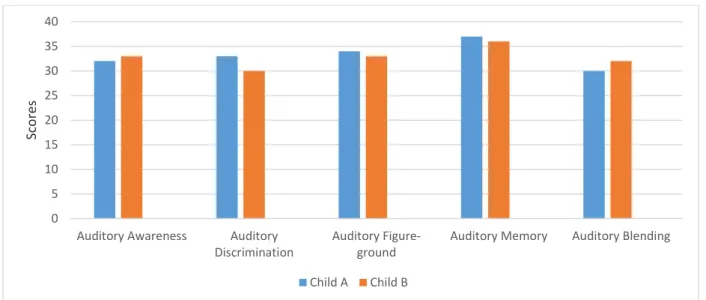
After intervention, the table shows the scores ob-tained at post-test for both child A and child B. In auditory awareness, child A scored 32 while child B scored 33, for auditory discrimination, child A scored 33 while child B scored 30, for auditory
figure-ground, child A scored 34 while child B scored 33, for auditory memory, child A scored 37 while child B scored 36 and for auditory blending, child A scored 30 while child B scored 32. Finally, comparing the scores obtained at baseline (pre-test) treatment and intervention (post-test) shows that there is significant improvement in the five (5) major areas of auditory perception after intervention.
12 12,5 13 13,5 14 14,5 15 15,5
Auditory Awareness Auditory Descrimination
Auditory Figure-ground
Auditory Memory Auditory Blending
Scores
Figure 2: Post- test treatment for child A and child B
Research Question 3: To what extent will auditory training improve auditory awareness of children with perceptual disorders?
Figure 3 shows the scores obtained from auditory awareness before and after treatment. The table shows, specifically that child A was able to score 13 points at the baseline while at the post-test he was able to score 32 points. This means that child A has
improved by scoring an additional 19 points by the end of the treatment exercise. The table also shows that child B was able to score 14 points at the pre-test while at the post-test she was able to score 33 points. This means that child B has improved by also scor-ing an additional 19 point by the end of the treatment exercise.
Figure 3: Extent of Auditory Training on Auditory Awareness
Research Question 4: To what extent will auditory training improve auditory discrimination of children with perceptual disorders?
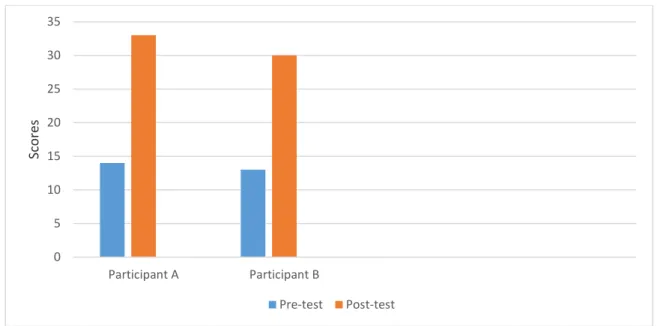
Figure 4 shows the scores obtained from auditory discrimination before and after treatment. The table shows specifically that child A was able to score 14 points at the pre-test while at the post-test he was able
to score 33 points. This means that child A has im-proved by scoring additional 19 points by the end of the treatment exercise. The table also shows that child B was able to score 13 points at the pre-test while at the post-test she was able to score 30 points. This means that child B has improved by scoring 17 additional points by the end of the treatment exercise. 0
5 10 15 20 25 30 35 40
Auditory Awareness Auditory
Discrimination
Auditory Figure-ground
Auditory Memory Auditory Blending
Scores
Child A Child B
0 5 10 15 20 25 30 35
Participant A Participant B
Scores
Figure 4: Extent of Auditory Training on Auditory Discrimination
Research Question 5: To what extent will auditory training improve auditory figure-ground of children with perceptual disorders?
Figure 5 shows the scores obtained from auditory figure-ground before and after treatment. The table shows specifically that child A was able to score 14 points at the pre-test while at the post-test he was able to score 34 points. This means that child A has
improved by scoring an additional 20 points by the end of the treatment exercise. The table also shows that child B was able to score 15 points at pre-test while at the post-test she was able to score 33 points. This means that child B has improved by scoring an additional 18 points by the end of the treatment exer-cise.
Figure 5: Extent of Auditory Training on Auditory Figure Ground
Research Question 6: To what extent will auditory training improve auditory memory of children with perceptual disorders?
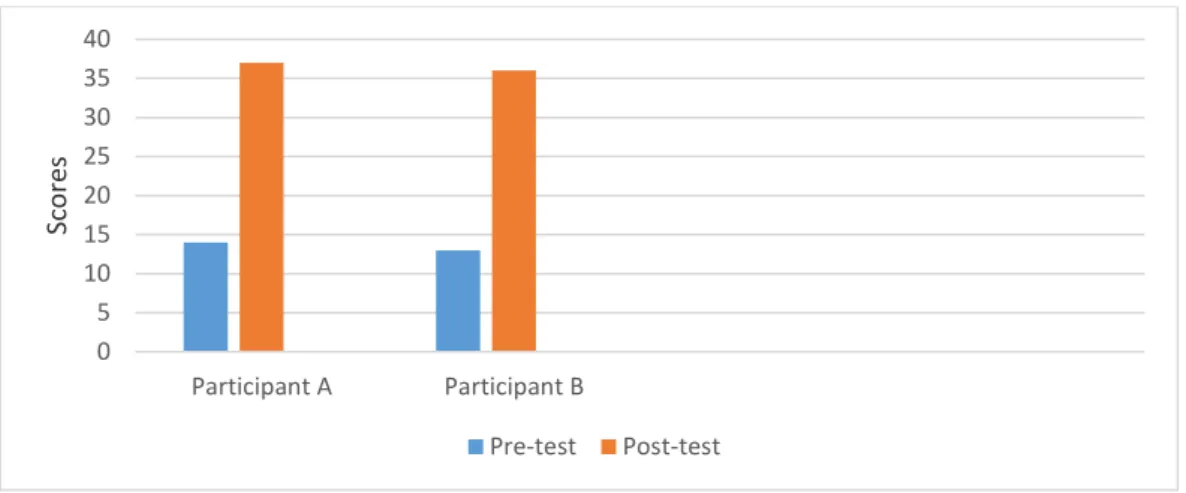
Figure 6 shows the scores obtained from auditory memory before and after treatment. The table shows
specifically that child A was able to 14 point at the pre-test while at the post-test he was able to score 37 points. This means that child A has improved by scoring an additional 23 points by the end of the 0
5 10 15 20 25 30 35
Participant A Participant B
Scores
Pre-test Post-test
0 5 10 15 20 25 30 35 40
Participant A participant B
Sco
re
treatment exercise. The table also shows that child B was able to score 13 points at the pre-test while at the post-test she was able to score 36 points. This means
that child B has improved by scoring an additional 23 points by the end of the treatment exercise.
Figure 6: Extent of Auditory Training on Auditory Figure Memory
Research Question 7: To what extent will auditory training improve auditory blending of children with perceptual disorders?
Figure 7 shows the scores obtained from auditory blending before and after treatment. The table shows specifically that child A was able to score 14 points at the pre-test while at the post-test he was able to score 30 points. This means that child A has
im-proved by scoring an additional 16 points by the end of the treatment exercise. The table also shows that child B was able to score 13 points at the pre-test while at the post-test she was able to score 32. This means that child B has improved by scoring an additional 19 points by the end of the treatment exer-cise.
Figure 7: Extent of Auditory Training on Auditory Figure Blending
7.
Discussion
The results of the finding from research question one on the level of auditory perception of children with perceptual disorders before intervention, revealed that the auditory perception of child A and B at pre-test is significantly low, and an increase in the levels of auditory perception were recorded for the two
children at post-test in research question two. A simi-lar study by Gravel, Dunn, Lee and Ellis (2006) used a comprehensive test protocol and found no evi-dence of intrinsic differences in the peripheral audito-ry system of children with autism when compared to typically developing peers. They discussed the need to systematically investigate the auditory level of 0
5 10 15 20 25 30 35 40
Participant A Participant B
Sc
ore
s
Pre-test Post-test
0 5 10 15 20 25 30 35
Participant A Participant B
Scores
children with developmental disabilities and how knowing basic peripheral function is crucial (Gravel, Dunn, Lee & Ellis, 2006; Tharpe, Bess, Sladen, Schissel, Couch & Schery, 2006). Knowing the sta-tus of the auditory perception is key to investigations of other levels of the auditory pathway in individuals and children. Additional research using assessment tools that assess higher level auditory perception abil-ities will allow investigation of auditory processing abilities of children with disabilities that go beyond the peripheral auditory system. Likewise as children with developmental disabilities is considered a spec-trum disorder for diagnostic criteria, variability and a continuum of responses can be observed in the be-havioural responses to auditory stimuli (Dunning, 2003).
The findings also revealed the extent of auditory training on auditory awareness of children with per-ceptual disorder that showed that child A and B had improved by scoring additional points at the end of the treatment exercise. The finding was consistent to the findings of the study carried out by Deshi on the effect of auditory training on speech and auditory awareness and enhancement of persons with audito-ry perception in Otana Special School, Jos, Nigeria (Deshi, 2014). The result revealed that auditory train-ing alleviates speech problems of people with audito-ry perception problems.
More so, the results showed the extent to which audi-tory training improves audiaudi-tory discrimination of children with perceptual disorders. The findings showed that child B improved in their points scored at the end of the treatment exercise. This was in tune with the findings of Arnold and Schwartz of which they suggested differences in auditory processing between the two subject groups that has not been found in dichotic listening research in children (Ar-nold & Schwartz, 1982). They found differences in dichotic speech discrimination between their sam-ples of children with developmental disabilities and typically developing control groups. Arnold and Schwartz focused on children with language deficits, typical children and children with autism between 6 to 14 years of age.
Results of the study also revealed that for these two children with perceptual disorders, auditory training improves auditory figure-ground, auditory memory and blending. These results were in agreement with a past study on the investigation of the auditory pro-cessing abilities of children diagnosed with autism
(Egelhoff, 2011; Deborah, 2007). Parents of children with autism completed the screening questionnaire through an online survey. Overall differences in sub-ject groups were impacted by significantly poorer performance in the left ear for the autism group dur-ing all conditions of dichotic word recognition. Indi-vidual variability within the children with autism was evident and resulted in three subjects with substan-tially greater deficits in auditory processing when compared to group performances for all tasks. Our findings were also consistent with past research that had shown that child performance on dichotic word recognition does not approach adult patterns of performance until around the age of 12 and individ-ual variability in maturation of the auditory system plays a role in observed performance (Hugdahl, Carlsson & Eichele, 2001). Dichotic listening in-volves auditory memory and temporal processing. These differences in performance between children and young adults may be due to underdevelopment of the auditory system in the younger age range and lack of maturation of the auditory pathways. Another longitudinal study, for example, found significant improvements in dichotic word recognition (auditory memory) performance in children can occur in as little as one year of additional auditory development (Lamm & Epstein, 1997).
8.
Conclusion
The research study was designed to investigate the effects of auditory training on the auditory perception of children with perceptual disorders in Alheri Spe-cial School Yangoji, Kwali-Abuja. Generally, the two children with perceptual disorders improved their auditory perception. Based on the findings of this study, the researchers arrived at the following conclusions: 1) Children with perceptual disorders who have auditory perceptual disorders have im-proved in their auditory perception. 2) There is a need for more auditory training therapy for children with perceptual disorders and 3) that the schools, especially the special needs schools, should provide more valid screening materials in the schools as they serve as tools for enhancing auditory perception.
9.
Recommendation
devel-op positive attitudes towards auditory training thera-py for children with perceptual disorders. Also, gov-ernments at all levels should make adequate provi-sion for identification and screening materials for special needs individuals in various schools and em-ploy competent personnel to use them. The govern-ment should organise seminars and workshops on auditory perception intervention programmes for teachers of children with perceptual disorders. Lastly, the government should, as a matter of urgency, es-tablish an early intervention programme in line with those in advanced countries of the world. This pro-gramme should include professionals, parents and caregivers. The programme should be designed to ensure the participation of interdisciplinary teams to tackle various problems emanating from perceptual and other related disorders.
Conflict of interest
The author declares no conflict of interest.
References
America Speech-Language-Hearing Association. (2005). Central auditory processing: Current status of research and implication for clinical
practice. Technical Report (1996). Working
group on auditory processing disorder. Anne, D. O. (2010). Auditory training at home for
adult hearing aid users. A Doctoral
disserta-tions, University of Kentucky.
April, P. (2014). Audio-visual speech perception training for a child with autism spectrum
dis-orders: A case study. An Undergraduate of
Department of Rehabilitation Human Re-sources and Communication disorder. Arnold, G., & Schwartz, S. (1983). Hemispheric
lateralization of language in autistic and apha-sic children. Journal of Autism and
Develop-mental Disorders, 13(2), 129-139.
Awotunde, P. O. & Ugodulunwa, C. A. (2004).
Re-search methods in education. Jos: Fab Anieh
limited.
Berard, G. (1993). Hearing equals behaviour. New Canaan, Connecticut: Keats Publishing. Brent, H. (2013). Auditory training and its effect on
the phonemic awareness development of in-dividuals with dyslexia who have a deficit in
phonological and phonemic awareness. A
M.Ed Thesis, Graduate College, Bowling Green State University.
Colman, A. M. (2016). Psychology dictionary. Ox-ford: Oxford University Press.
Deborah, R. S. (2007). The effects of auditory stimu-lation on auditory processing disorder: A summary of findings. International journal of
Listening, 21 (2), 140 – 155.
Deshi, D. G. (2014). The effect of auditory training on speech and auditory awareness and en-hancement of persons with auditory percep-tion in Otana Special School, Jos, Nigeria. Unpublished master’s thesis. University of Jos, Nigeria.
Dunning, K. (2003). Development of a questionnaire to assess auditory behaviors in children
diag-nosed with autism spectrum disorders.
Un-published master’s thesis, The Ohio State University, Columbus, OH.
Egelhoff, K. E. (2011). Auditory processing abilities of children diagnosed with autism spectrum
disorders. An unpublished Doctoral Thesis.
Graduate School of The Ohio State Universi-ty.
Fry, D., & Whetnail, E. (1954). The auditory ap-proach in the training of the diet children.
Lancet, 266, 584-587.
Gravel, J. S., Dunn, M., Lee, W. W., & Ellis, M. A. (2006). Peripheral audition of children on the autistic spectrum. Ear and Hearing, 27(3), 299-312.
Hugdahl, K., Carlsson, G., & Eichele, T. (2001). Age effects in dichotic listening to consonant-vowel syllables: Interactions with attention.
Developmental Neuropsychology, 20 (1),
445-457.
Ihenacho, I. J. (1986). Perceptual diagnostic test
in-strument. Jos, Nigeria: Department of Special
Education and Rehabilitation Sciences, Uni-versity of Jos.
Individuals with Disabilities Education Improve-ment Act of 2004, P.L. 108-446
Jatau, M. N., Uzo, C. C., & Lere, M. M. (2009). El-ement of special education for prospective
teachers. Jos. Daka publication.
Lamm, O., & Epstein, R. (1997). Dichotic listening in children: The reflection of verbal and atten-tional changes with age. Journal of
Experi-mental Child Psychology, 65 (1), 25-42.
Porta, M. (2014). Adictionary of epidemiology (6th
Ed.). New York: Oxford University Press.
Rossy, K. D. (2014). Effect of auditory training on speech enhancement of persons with post-lingualhearing impairment in Otana
inte-grated school, Jos. A M.Ed thesis,
De-parttment of Special Education & Rehabilita-tion Sciences, University of Jos, Nigeria. Tharpe, A. M., Bess, F. H., Sladen, D. P., Schissel,
H., Couch, S., & Schery, T. (2006). Auditory
characteristics of children with autism. Ear
and Hearing, 27 (4), 430-441.
The Mosby (2009). Mosby’s medical dictionary. E-ISBN 9780323112581
Williams, G. C. (1991). The relationship between discrimination and articulation training in children with disarticulations. Journal of