Testing the Socio-Autonomic Spiral Model of Social Connection and Health
Bethany Ellen Kok
A dissertation submitted to the faculty of the University of North Carolina at Chapel Hill in partial fulfillment of the requirements for the degree of Doctor of Philosophy in the Department of Psychology (Social).
Chapel Hill 2012
ii Abstract
BETHANY ELLEN KOK: Testing the Socio-Autonomic Spiral Model of Social Connection and Health
(Under the direction of Barbara L. Fredrickson)
Social closeness is inextricably tied to physical and mental health, but the
psychophysiological mechanisms that link the two are not well understood. The purpose of this dissertation is to present and test a Socio-Autonomic Spiral Model of Social Closeness and Health: A proposed self-sustaining, heritable psychophysiological system in which activity of the vagus nerve promotes self-regulation and social openness behaviors in safe situations in order to achieve the social bonds necessary for survival in the evolutionary past and health in the present. Social bonds, in turn, lead to greater psychological well-being, which results in greater vagal activity and thus more social affiliative behaviors.
iii
stimuli, an indicator of social openness. Unexpectedly, vagal tone was not associated with self-regulation or emotion regulation.
The vagus may represent an evolved psychobiological system that promotes social affiliation and health, however, many open questions remain. In particular, the relationship between vagal tone and self-regulation is unclear and requires further study. Finally, vagal moderation of social closeness inductions may be dependent on the
iv
Acknowledgements
The existence of this dissertation is a testament to the importance of social connectedness. A veritable crowd of people helped, guided, and sometimes pushed me along in my research. It is not possible for me to list everyone, but as a start I offer my most heartfelt thanks to:
My thesis advisor Barbara Fredrickson, who taught me to think and write boldly in the pursuit of knowledge. I have a clearer voice, and a sharper mind, because of her. Sara Algoe, Linda Cameron, Sy-miin Chow, Keith Payne, and Sophie Trawalter, who served on my dissertation committee (even long-distance!) and provided extremely helpful feedback and guidance.
The Center for Creative Leadership, particularly Marian Ruderman and Carol Connolly for smoothing the way, David Altman for approving data collection on CCL campus, and all the employees who generously contributed their time as participants in the field study.
My graduate colleagues and labmates, particularly Lahnna Catalino and Joe Simons, who unstintingly provided emotional support, reality checks, and distractions as needed.
v
And Bonnie Sherman, who showed me how to pursue an idea with single-minded determination.
Pamela Bacon, who introduced me to Social Psychology and suggested I might be good at it.
vi
TABLE OF CONTENTS Error! Not a valid result for
table.……….
viii
LIST OF FIGURES……….. ix
Chapter I. INTRODUCTION………... 1
Vagal Tone Leads to Social Closeness……… 5
Social Closeness Leads to Vagal Tone……… 16
The Current Work……… 20 II. SOCIAL CLOSENESS INCREASES VAGAL TONE BY INCREASING POSITIVE EMOTIONS………. 21
Pilot test of social connectedness manipulation and placebo control…….. 29
Main Study………... 33 III. PSYCHOLOGICAL MEDIATORS OF VAGAL EFFECTS ON SOCIAL CLOSENESS……… 42
Method………. 43
Results……….. 50
vii
IV. CONCLUSION……….. 66
viii
Conclusions………..
73
Error! Not a valid result for
table.……….
75
Error! Not a valid result for
table.………...
78
Error! Not a valid result for
table.………...
ix
LIST OF TABLES
2.1. Multilevel modeling of pilot test data………....75 2.2. Latent growth curve model for positive emotions………75-76 3.1. Affective and behavioral measures by condition for Caucasian
participants only………...76-77
3.2. Affective and behavioral measures by condition for African-
x
LIST OF FIGURES
1. The Socio-Autonomic Spiral Model of Social Closeness
and Health…………...78
2.1. Upward spiral model……..………78
2.2. Latent growth curve model………79 3.1. Vagal tone predicts social closeness, mediated by positive
social attention and self-regulation………...……….80 3.2. Final selection of images for the dot-probe task. Dot size
represents the standard deviation of the sociality ratings
for each image………81 3.3. Structural equation model testing mediation by emotion regulation
and social attention. Coefficients for paths significant at p > .05
are underlined……….82 3.4. Structural equation model testing mediation by social attention.
INTRODUCTION
Social closeness is an important contributor to psychological and physical well-being. Whether conceptualized as a fundamental psychological need (Baumeister & Leary, 1995; Deci & Ryan, 2000), a bodily nutrient (Beckes & Coan, 2011), or a critical element in stress and coping (Lakey & Orehek, 2011), there is a general scientific consensus that humans function better, and live longer, when they feel close to others (Holt-Lunstad, Smith, & Layton, 2010). The reverse is also true- physical illness
symptoms such as inflammation lead to social withdrawal (Eisenberger, Inagaki, Mashal, & Irwin, 2010) and greater reactivity to negative social cues (Inagaki, Muscatell, Irwin, Cole, & Eisenberger, 2012), suggesting that people are more likely to seek out others when they are in good health.
2
mechanisms influence one another. At present, the inflammation response (Miller, Chen, & Cole, 2009), the oxytocin response (Uvnas-Moberg, 2003) and vagal tone (Porges, 1998) can be considered the most likely candidates. Theoretical and empirical work is ongoing in both the inflammation and social behavior (Eisenberger et al., 2010; Ikeda et al., 2011; Inagaki et al., 2012) and oxytocin and social behavior (Bartz, Zaki, Bolger, & Ochsner, 2011; Holt-Lunstad, Birmingham, & Light, 2008; Kemp et al., 2012) literatures; in contrast, theoretically-driven empirical studies of vagal tone in the context of social closeness are scant.
The purpose of this dissertation is to present and test a theoretical model, the Socio-Autonomic Spiral Model of Social Closeness (SASM), that describes the role of vagal tone as a physiological mechanism that connects social closeness and health in a bi-directional relationship unfolding over time. Vagal tone represents the degree of
3
small, momentary changes can accumulate and compound, ultimately transforming a person’s social relationships and consequentially impacting health. The prospective
bi-directional relationship subserved by vagal tone may explain part of the strong and consistent relationship between social closeness and health.
Within this bi-directional relationship, I also test potential psychological mechanisms through which vagal tone influences social closeness or social closeness influences vagal tone. In order to promote social closeness, vagal tone must influence affect, cognition or behavior in ways that either encourage the formation and
maintenance of social relationships or cause the person to interpret social cues as
indicating social closeness. The Neurovisceral Integration Model (Thayer & Lane, 2009) situates the vagus within a neurophysiological system that promotes autonomic balance and self-regulation, while the Polyvagal Theory (Porges, 2011) describes the vagus as an evolved mechanism that promotes openness to social relationships through a variety of affective and attentional strategies including prioritizing social stimuli in attention, making positive affective associations with social partners and sending out social
4
recovery (Fredrickson & Levenson, 1998; Tugade & Fredrickson, 2004) and greater parasympathetic activation (Boehm & Kubzansky, 2012) that are associated with vagal tone (Thayer & Lane, 2007; Weber et al., 2010).
In sum, the Socio-Autonomic Spiral Model links social closeness and health in part through vagal tone, an indicator of parasympathetic activity associated with self-regulation, social openness, psychological well-being and cardiovascular health. Congruent with the Polyvagal Theory (Porges, 2007) and the Neurovisceral Integration Model (Thayer & Lane, 2009), in SASM vagal tone is hypothesized to promote emotion regulation and social openness, both of which facilitate social closeness and building social bonds. The unique contribution of SASM is to include a reciprocal pathway linking social closeness to vagal tone: Social closeness contributes to day-to-day well-being, and increased well-being promotes greater parasympathetic activation. The inclusion of a reciprocal pathway allows the model to describe how patterns of positive social behavior can be maintained over time, ultimately resulting in higher vagal tone and better health. The full model is shown in Figure 1; The paths correspond to sections within the manuscript.
Social closeness is defined as a belief or perception about a person’s
embeddedness in a social network or networks (Kok & Fredrickson, in press). In this formulation, social closeness may or may not be related to behaviors from relationship partners or objective social position: What matters is the individual’s perception of their relationships with others. In addition, social closeness is not limited to close
5
Social closeness is critical to health. In a three-year longitudinal sample of older adults ranging in age from 60 to 92, fewer interactions with family and friends predicted an increased likelihood of developing hypertension, cancer, liver disease, diabetes and emphysema, even after controlling for the negative effect of illness on frequency of social interactions (Tomaka, Thompson, & Palacios, 2006). A meta-analysis covering 148 studies and over 300,000 participants found that a lack of social closeness ultimately increases the likelihood of premature death by between 50% and 91%, making social isolation a health risk factor on par with smoking (Holt-Lunstad et al., 2010).
Initial attempts to explain the links between social closeness and health focused on the material benefits and lifestyle changes that might be caused by relationships with others, such as receiving social support when under stress (Gleason, Iida, Shrout, & Bolger, 2008), eating more healthfully (Locher et al., 2005) and getting more exercise (Hawkley, Thisted, & Cacioppo, 2009). These factors alone, however, do not account for all the variance in health explained by social closeness (Holt-Lunstad & Smith, 2012), opening the door to the possibility that social closeness may be directly implicated in physiological functioning.
Vagal Tone Leads to Social Closeness
The vagus nerve, the Xth cranial nerve, is a major component of the peripheral nervous system. It acts as a “brake” on the heart and plays a significant role in regulating
cardiovascular reactivity (Berntson et al., 1997; Porges, 1995). When the vagus is active, the heart beats more slowly, while vagal withdrawal is associated with a more rapid heart rate. Through the vagal brake, cardiovascular activity can be “customized” to the
6
rest. While cardiovascular reactivity is also influenced by the sympathetic nervous system as well as other physiological actions such as respiration, the vagus nerve is the most rapid and fine-grained regulator of cardiovascular activity, making nearly
instantaneous changes in response to shifting social cues within the environment (Porges, 1995).
7 A. Vagal tone and self-regulation
The Neurovisceral Integration Model describes the vagus as an intermediate regulatory structure that coordinates self- regulation efforts in the brain and body (Thayer & Lane, 2009) via reciprocal linkages to brain areas such as the anterior executive region and the central autonomic network, areas critical for goal directed behavior (Thayer & Brosschot, 2005). Vagal tone is associated with emotional and cognitive regulation. Emotion regulation behaviors associated with vagal tone range widely. Vagal tone predicts control over the expression of negative emotions, such as the ability to up- and down-regulate negative facial expressions at will (Demaree, Pu, Robinson, Schmeichel, & Everhart, 2006; Demaree, Robinson, Everhart, & Schmeichel, 2004; Kettunen, Ravaja, Naatanen, & Keltikangas-Jarvinen, 2000) and to inhibit hostile behavior during
relationship conflicts (Gyurak & Ayduk, 2008). High vagal tone also predicts the ability to inhibit attention to unpleasant cues (Park, Van Bavel, Vasey, & Thayer, 2012) and lower startle magnitude when viewing negative pictures (Ruiz-Padial, Sollers, Vila, & Thayer, 2003), suggesting the capacity to re-direct attention even from compelling negative stimuli.
A recent review of the neural correlates of vagal tone in humans and animals found that higher vagal activity was associated with activity of the prefrontal cortex, a brain area implicated in cognitive control (Thayer, Hansen, Saus-Rose, & Johnsen, 2009). Vagal tone is also linked to performance on behavioral indices of cognitive control,
8
Kindlon, Saul, & Earls, 1998) and task persistence after depletion (Segerstrom & Nes, 2007). In one of the only studies to manipulate vagal tone in adults, sailors from the Royal Norwegian Navy were assigned to eight weeks of aerobic training, which is known to increase vagal tone. After eight weeks, all participants completed two measures of cognitive control, a continuous performance task and a working memory task. Half the sample then continued training, while the other half was deployed in circumstances where they would be unable to train: assignment to training or deployment was not random, but based on whether the sailors had applied for future deployment. After four weeks, both the trained and ‘de-trained’ groups completed the cognitive control measures again. The ‘de-trained’ group had declined significantly in vagal tone over the four
weeks, while the trained group remained the same. The ‘de-trained’ group also performed more poorly on the measures of executive function than the group that had continued to train. Unfortunately, the authors did not report whether changes in vagal tone mediated the relationship between group assignment and changes in executive function. Though weakened by the lack of random assignment and failure to directly test mediation, this study provides suggestive evidence that vagal tone supports executive function (Hansen, Johnsen, Sollers, Stenvik, & Thayer, 2004).
B. Self-regulation and social closeness
9
to engage in socially appropriate behavior for students in elementary (Eisenberg et al., 1995; Spinrad et al., 2006) and middle school (Eisenberg et al., 2003). Teacher-reported ego control and attentional focus also predicted increases in gaze aversion, facial
expressions of sadness and self-reported sympathetic feelings when elementary-age children viewed a sympathy-inducing video (Gurthrie et al., 1997). Teacher-reported behavioral inhibition in pre-kindergarteners is associated with socially competent behaviors such as cooperativeness and sharing (Rhoades, Greenberg, & Domitrovich, 2009).
In adults, self-regulation is related to inhibiting negative relationship behaviors as well as enacting positive social behaviors. A recent review of the literature (Luchies, Finkel, & Fitzsimons, 2011) found that trait self-regulatory capacity predicted a lower likelihood of intimate partner violence (Finkel, DeWall, Slotter, Oaten, & Foshee, 2009) and infidelity (Pronk, Karremans, & Wigboldus, 2011), as well as greater forgiveness for severe transgressions (Pronk, Karremans, Overbeek, Vermulst, & Wigboldus, 2010), within romantic relationships. In two samples, one of mid-life adults and one of elderly adults, self-reported attentional and emotional control predicted sympathy and
perspective-taking (Eisenberg & Okun, 1996; Okun, Shepard, & Eisenberg, 2000). Individuals high in trait self-regulatory capacity, and individuals who had not been depleted, were also more tactful, as measured by their ability to inhibit verbal and facial expressions of disgust when presented with a meal of chicken feet by a Chinese
10
self-presentation strategies such as talking too much or acting arrogant (Vohs, Baumeister, & Ciarocco, 2005). It appears that successful social interactions and sustained positive relationships benefit from self-regulation.
The ability to control emotions is also related to a wide variety of positive social outcomes in adult samples, including global ratings of social well-being, receiving social support from a parent, and having fewer negative interactions with friends (Lopes, Salovey, & Strauss, 2003). Observer reports also reflect the importance of emotion management skills: In one study, friends reported that participants who scored higher in self-reported emotion management had more positive interactions and greater skills in providing emotional support and resolving conflicts (Lopes et al., 2004). Emotion management may also lead to romantic success: In a two-week daily diary study, college-aged participants high in emotion management reported feeling that interactions with the opposite sex were more positive across a wide range of dimensions (Lopes et al., 2004). In addition, emotion management ability predicted the extent to which participants reported that they had succeeded in their self-presentation goals during these interactions, even though emotion management ability was associated with higher self-presentation goals.
11 C. Vagal tone and social openness
Porges has proposed that the vagus influences social behavior, and thus social closeness, by promoting affiliation cues such as eye contact and smiling and creating positive affective associations with social stimuli such as the speech and behavior of other people (Porges, 2007). It is critical to note that these vagus-driven changes in attention and affect would occur only under conditions of safety, as the absence of safety cues initiates vagal withdrawal and potentiates freezing or fight-flight related affect and attitudes (Porges, 2007). The effects of these positive social behaviors would
accumulate and compound over time, creating and strengthening social bonds.
Anatomical evidence supports the role of the vagus in regulating social openness. Efferent fibers extend from the vagus to facial muscles, particularly in the eyes, and to the small bones in the middle ear that control auditory frequencies, which would enable a person to express positive social emotions with the face, make eye-contact, and focus hearing on the frequencies of the human voice (Beauchaine, 2001; Heilman et al., 2008). Unfortunately, empirical research on the effects of vagal tone on social openness is scarce and largely focused on socially dysfunctional pathologies such as autism and depression.
12
relative to age-matched controls. Denver (2004) found that autistic individuals showed deficits in vagal tone, eye contact, and the ability to extract human voice from
background noise relative to age-matched controls. I and others have speculated that low vagal activity at baseline may be a diagnostic characteristic of autism-spectrum disorders (Porges, 2003).
Depression, like autism, is characterized in part by decreases in the desire for social closeness (Watson, Clark, & Carey, 1988). Those diagnosed with major
depressive disorder show low vagal tone (Rottenberg, Clift, Bolden, & Salomon, 2007), as do women with mild depression (Light, Kothandapani, & Allen, 1998) and women suffering from premenstrual dysphonic disorder (Landen et al., 2004). Stimulation of the vagus, via a pacemaker-like device implanted in the neck, also alleviates depression symptoms. Vagus nerve stimulation (VNS) therapy was approved by the FDA in 2005 for the treatment of depression that is unresponsive to therapy and pharmaceutical treatment (Groves & Brown, 2005). In pilot studies and long-term follow up, VNS therapy
performed on patients with treatment-resistant depression resulted in a clinically significant improvement in depression symptoms (50% reduction in scores on the Hamilton Depression Rating, HDR) for 30.5% of the sample after 3 months. After one year of continued VNS treatment, 44.1% of the sample showed clinically significant improvement. After two years of treatment, the average HDR score of participants in the sample had decreased from 36.8 to 20.2, indicating clinically significant lasting
improvement in depression symptoms (Howland, 2006; Rado & Janicak, 2007).
13
attention processes in healthy individuals. Both autism and depression are characterized by widespread parasympathetic dysregulation (Agelink et al., 2004; Anderson, Colombo, & Unruh, in press). Activity of the vagus in a disordered parasympathetic system may have very different psychological and behavioral effects than a similar level of activation in a non-disordered individual, just as cortisol levels, which typically reflect stress, are suppressed in individuals suffering from Post-Traumatic Stress Disorder (Yehuda, 2002). As of this writing, we are aware of no published empirical work that directly links a behavioral measure of social closeness promotion to vagal tone in a neurotypical sample.
D. Social openness and social outcomes
One way of operationalizing a tendency to pursue social closeness is through assessing a person’s social goals. Work by Crocker has investigated the effects of
self-esteem goals and compassionate goals on relationship satisfaction and social belonging (Crocker, 2011; Crocker, Olivier, & Nuer, 2009). Self-esteem goals include the desire to present a favorable appearance to others and avoid showing weakness or flaws.
14
anxiety, depression and loneliness increased (Canevello & Crocker, 2011; Crocker & Canevello, 2008).
Compassionate social goals were also associated with perceptions from
roommates and friends that the participant was able to accurately identify and respond to their needs in a useful way (Reis, Clark, & Holmes, 2004). Responsive individuals are better able to provide wanted support and to capitalize on their relationship partner’s
good fortune (Gable, Reis, Impett, & Asher, 2004; Maisel, Gable, & Strachman, 2008). As a result, having a responsive partner is related to higher perceived social support in relationship partners and higher relationship satisfaction for both partners in the future (Gable et al., 2004). To the extent that social openness helps a person to correctly
identify another’s needs and respond to them in a responsive and satisfying way, it should
increase the likelihood of success in social interactions, leading to greater social closeness over time.
In addition to creating opportunities to build future social closeness, social openness may directly increase social closeness when in a neutral or positive social environment. Because social closeness is based on a person’s perception of their social
environment rather than objective reality, an individual who pays attention to a non-threatening social environment may notice more cues of belongingness and thus feel greater closeness than someone in the same situation who is not attending to the social environment. For example, some treatments for chronic loneliness attempt to increase attention toward social cues in order to modify the individual’s perception of themselves
15
motivates social attention, then threatening social cues would lead to vagal withdrawal and the social closeness promotion system would no longer be active. In other words, if the vagus is involved in promoting social attention and the parasympathetic system is not dysregulated, vagal withdrawal would de-activate the social engagement system almost immediately upon perceiving a threat. For truly isolated individuals, then, increasing attention to social cues would increase stress. Research on loneliness, however, has found that the perception of social isolation can be only weakly related to actual social context, which suggests that for many people, increased social awareness would lead to decreased loneliness and greater social closeness (Hawkley & Cacioppo, 2010).
From an evolutionary perspective, engagement in affiliative behaviors such sharing a food source and compassionate actions such as empathizing with another may initially appear illogical, as they temporarily reduce the resources available to an
individual and do not immediately promote either survival or reproduction. The evidence reviewed above, however, suggests that such actions, though potentially costly in the short-term, are ultimately beneficial. Selective Investment Theory posits that human beings are motivated to invest their resources in others, even when it is costly or stressful in the short term, because in the evolutionary past, those who did so accrued social resources over time that contributed positively to their reproductive success (Brown & Brown, 2006). The vagus may help to increase the likelihood of engaging in these short-term-risky, long-term-good behaviors by increasing the positive salience of the social environment and opportunities for affiliation. To the extent that vagal-supported
16
resources, like bonds, the vagus would have increased the odds of survival in the evolutionary past.
Summary
Vagal tone is prospectively associated with social closeness and theoretically linked to two predictors of social closeness, self-regulation and social openness. Behavioral and neurological studies provide empirical evidence linking vagal tone to emotional and cognitive regulation, while evidence associating vagal tone with social openness is scant. Both self-regulation and social openness, in turn, are associated with positive social outcomes including relationship satisfaction, availability of social support, and favorable evaluations from others. However, there is no empirical work that directly tests whether self-regulation or social openness is the mechanism through which vagal tone influences social perceptions or behavior, and thus social closeness.
Social Closeness Leads to Vagal Tone
17 E. Social closeness and psychological well-being
Social closeness is an integral part of many conceptualizations of mental health: Flourishing includes social well-being (Keyes, 2007), Self-Determination Theory cites relatedness (Deci & Ryan, 2000), and warm and supportive ties to others is named a psychological need (Ryff & Singer, 1996). In the absence of social closeness, adults are more likely to become depressed (Glass, De Leon, Bassuk, & Berkman, 2006), to sleep poorly (Cacioppo et al., 2002; Hawkley, Preacher, & Cacioppo, 2010), and to experience cognitive decline (Seeman, Lusignolo, Albert, & Berkman, 2001).
Interventions that aim to increase psychological well-being often target social closeness. Loving-kindness meditation (LKM) is an emotion-training practice drawn from the Buddhist tradition that is used to increase feelings of warmth and caring for self and others (Salzberg, 1995). Compared to participants in a monitoring, waitlist control group, participants randomly-assigned a 7-week LKM workshop showed steady increases in daily positive emotions, which in turn predicted growth in range of resources,
including mindfulness, positive social relations, environmental mastery, and self-reported physical health. These gains in resources were consequential for participants, in that they accounted for improved life satisfaction and reduced depressive symptoms (Fredrickson et al., 2008). Pilot evidence suggests that LKM may also effectively treat the negative symptoms of schizophrenia, which include anhedonia, amotivation, and asociality (D. P. Johnson et al., 2011).
18
participants asked to write a letter expressing gratitude to someone increased significantly in happiness over one month, while participants who kept a daily ‘gratitude journal’
increased in happiness and decreased in depression throughout the six month monitoring period (Seligman, Steen, Park, & Peterson, 2005). Fostering feelings of social closeness, whether through meditation or reflection, appears to be an effective way of increasing psychological well-being.
F. Psychological well-being and Vagal tone
An accumulation of negative life experiences can result in sustained modifications to the body’s stress-response systems. Prospective studies in the developmental literature
show that early and sustained exposure to stress can have lasting consequences for the functioning of physiological stress-regulation systems such as the Hypothalamic-Pituitary-Adrenocortical (HPA) axis (Repetti, Taylor, & Seeman, 2002). Research on Post-Traumatic Stress Disorder further shows that even in adults, the stress regulation system can be impacted in a significant and lasting way by traumatic life events (Yehuda, 2002). I posit that an accumulation of positive life experiences can work similarly, promoting healthy stress-response patterns such as faster cardiovascular recovery (Fredrickson & Levenson, 1998) that ultimately result in higher vagal tone.
My own empirical work shows that increases in psychological well-being, as indexed by daily reports of positive emotions, can raise vagal tone. In a study of loving-kindness meditation, participants were assigned to either seven weeks of training
19
and to participants in the wait-list control, and these increases in positive emotions predicted increased end-of-study vagal tone (Kok, Coffey, et al., in press). This is the first study to show change in vagal tone as a result of positive behavioral change in neurotypical adults, rather than decreases in vagal tone due to cessation of physical activity (Hansen et al., 2004) or increases in vagal tone due to treatment for depression (Arthur, 2006).
Summary
Social closeness is integral to mental health and well-being, and well-being, in turn, is closely entwined with vagal tone (Oveis et al., 2009). While initial empirical evidence links a social closeness induction to gains in positive emotions, which in turn predict increased vagal tone (Kok, Coffey, et al., in press), these findings are ambiguous. The use of a wait-list control group, combined with the complexity of the meditation practice used to induce social closeness, makes it difficult to know whether changes in social closeness played a causal role in the increased well-being and vagal tone (Kok, Waugh, & Fredrickson, in press). Loving-kindness meditation practice also includes training in body awareness, breathing and relaxation, all of which are also associated with increased parasympathetic activity (Chiesa & Serretti, 2009) and which could plausibly result in higher vagal tone. In order to test the causal role of social closeness, it is
20
The Current Work
The purpose of this dissertation is to test the twin roles of the vagus nerve as a mechanism that bi-directionally links social closeness to health and health to social closeness.
Two predictions are particularly central:
1) Small, gradual changes in social closeness will over time result in significant changes not only in daily quality of life but also in vagal tone.
2) Vagal tone influences social behavior partially by promoting self-regulation and social openness, which increases the likelihood of positive interaction outcomes.
The next two chapters comprise tests of these predictions. In Chapter Two, a
longitudinal social closeness induction is used to observe the effects of changes in social closeness on day-to-day affect and the consequences for vagal tone. In Chapter Three, an “anticipated social interaction” protocol is used to test whether self-regulation and social
openness mediate the relationship between vagal tone and affective responses to a challenging upcoming social interaction in a group of neurotypical college students.
SOCIAL CLOSENESS INCREASES VAGAL TONE BY INCREASING POSITIVE EMOTIONS1
Social closeness plays a significant role in mental and physical health. In a meta-analysis of 148 studies covering over 300,000 participants, individuals who reported satisfactory levels of social closeness had a 50% greater likelihood of survival; to contextualize the significance of this effect, regularly engaging in physical activity is associated with only a 30% greater likelihood of survival (Holt-Lunstad et al., 2010). Other prospective studies show that social closeness also buffers against age-related cognitive decline (Seeman et al., 2001) and depression (Glass et al., 2006). Correlational evidence links social closeness to a wide array of physical health indicators, including blood pressure (Hawkley, Thisted, Masi, & Cacioppo, 2010), heart attack morbidity and mortality (Arthur, 2006), immune function (Cohen, Doyle, Skoner, Rabin, & Gwaltney, 1997) and sleep quality (Hawkley, Preacher, et al., 2010). In a three-year prospective study of older adults ranging in age from 60 to 92, interactions with family and friends predicted a decreased likelihood of developing hypertension, cancer, heart disease and emphysema, even after controlling for the negative effect of illness on frequency of social interactions (Tomaka et al., 2006).
Despite this robust literature, the processes through which social closeness influences physical health are largely unknown (Berkman & Syme, 1979; Cohen & Janicki-Deverts, 2009). In order to explore the causal mechanisms that link social
22
closeness to health, it is necessary to utilize experimental and longitudinal methods that manipulate either social closeness or health and follow changes in potential mechanisms and outcomes over time. Longitudinal methods allow the researcher to track small, subtle changes in emotions, cognitions, behavior or physiological state that may not have apparent effects over a brief time period, while experimental methods are critical to identifying causal mechanisms within the complex systems of psychophysiological processes that manifest social behavior and health.
We propose a Socio-Autonomic Spiral Model of Social Closeness and Health (SASM) that represents the robust association between social closeness and health observed in the literature as the consequence of a reciprocal, mutually-reinforcing link between social closeness and health-relevant physiological states. This reciprocal relationship is driven by positive emotions, which promote physiological
down-regulation and recovery from stress (Fredrickson & Levenson, 1998), and vagal tone, a physiological measure of autonomic regulation which is associated with positive social behaviors and physical and mental health (Porges, 2007). Social closeness and positive emotions, in turn, are closely tied together, with changes in one causing changes in the other (Berry & Hansen, 1996; Lyubomirsky & Della Porta, 2010; Nelson, 2009). Over time, repeated positive emotional experiences generated by social closeness lead to health-relevant physiological changes including increases in parasympathetic activity as indexed by vagal tone (Kok, Coffey, et al., in press; Kok & Fredrickson, 2010). In turn, anatomical evidence suggests that increases in vagal tone will lead to more social engagement behaviors, such as social eye contact, attention to others and facial
23
the form of a self-reinforcing spiral, in which changes in one area, such as health, reverberate through the spiral across time, leading to congruent changes in vagal tone, social closeness and positive emotions. In this spiral, very small changes in social closeness can result, over time, in significant differences in mental and physical health, with long-lasting consequences for the individual.
Social closeness and positive emotions are closely and reciprocally linked in daily life (Kok & Fredrickson, 2010; Waugh & Fredrickson, 2006). During an average day, people report feeling more positive emotions when interacting with others (Catalino & Fredrickson, 2011; Fredrickson et al., 2008; Srivastava, Angelo, & Vallereux, 2008) than when they are alone. Reflecting on positive social relationships by writing a letter expressing gratitude to someone increases happiness (Seligman et al., 2005), as do induced social interactions with a stranger in a laboratory setting (Berry & Hansen, 1996; Mcintyre, Watson, Clark, & Cross, 1991).
In turn, positive emotions are associated with a parasympathetic functioning, including vagal tone (Kok & Fredrickson, 2010; Oveis et al., 2009). Experimentally induced positive emotions accelerate cardiovascular recovery from stress (Brummett, Boyle, Kuhn, Siegler, & Williams, 2009; Fredrickson & Levenson, 1998; Tugade & Fredrickson, 2004), an index of parasympathetic activity. Ambulatory monitoring studies link positive emotions to other indices of parasympathetic activity including lower heart rate (Steptoe & Wardle, 2005; Steptoe, Wardle, & Marmot, 2005) and decreased
24
Parasympathetic activity is regulated, in part, by the vagus nerve, a spinal nerve that plays a central role in down-regulating physiological activation, particularly as it pertains to cardiovascular activity, acting as a “brake” to slow down the heart rate in
response to environmental safety cues (Porges, 2007). Vagal tone is linked to multiple measures of cardiovascular (Bibevski & Dunlap, 2011) and immune health (Sloan et al., 2007; Thayer & Sternberg, 2006). In a review of the literature, vagal tone was found to predict morbidity and mortality from cardiovascular disease independent of traditional risk factors, and changes in vagal tone were associated with downstream changes in the profile of risk factors for cardiovascular disease (Thayer & Lane, 2007), suggesting that the vagus may play an active role in maintaining physical health.
The vagus is also involved in social behavior, as it coordinates communication between the brain and muscles involved in social communication, including tuning the ear to the frequency of the human voice and directing eye gaze (Beauchaine, 2001; Heilman et al., 2008), and is associated with emotion regulation, particularly facial expressions of emotion (Demaree et al., 2006; Demaree et al., 2004; Kettunen et al., 2000). Higher levels of resting vagal activity are positively associated with many measures of social closeness, including secure attachment (Diamond & Hicks, 2005), self-reported social connectedness (Kok & Fredrickson, 2010) and number of supportive friends (Holt-Lunstad et al., 2007).
In sum, we describe in SASM that social closeness and health may be linked in a spiral relationship where changes in social closeness result in changes in positive
25
emotion and the attendant parasympathetic activity lead to higher resting parasympathetic activity and thus, higher vagal tone. In turn, greater vagal activity leads to greater
activation of physiological systems that subserve positive social behavior, leading to increases in social closeness.
In an initial test of SASM, mid-life adults provided a measure of vagal tone and daily reports of emotion and social closeness for nine weeks, ending with a second measure of vagal tone (Kok & Fredrickson, 2010). Starting vagal tone prospectively predicted changes in social closeness and positive emotions, such that participants with higher levels of vagal tone showed greater gains in both variables over the course of the study. In addition, change in social closeness and positive emotions predicted end-of-study vagal tone, controlling for vagal tone at start of end-of-study. Across nine weeks, vagal tone both predicted increases in social closeness and positive emotions and was predicted by these same increases, evidence for a naturally-occurring spiral pattern linking social closeness, positive emotions and health through the accumulation of small changes over time.
Experimental evidence for SASM comes from research on an emotion-training intervention known as loving-kindness meditation (LKM). LKM is a Buddhist
26
extend these warm feelings first to themselves and then to an ever-widening circle of others.
Loving-kindness meditation appears to be an effective way of increasing social closeness in the laboratory and the field. In a laboratory study, participants who engaged in seven minutes of stranger-focused LKM increased in implicit and explicit feelings of closeness to the stranger, while participants in a closely-matched visualization control condition showed a smaller increase in explicitly-reported closeness but no change in implicit ratings (Hutcherson, Seppala, & Gross, 2008). In a longitudinal study of LKM, working adults assigned to learn LKM or to a monitoring wait-list control condition provided daily reports of their emotions and feelings of social connectedness. Meditators attended weekly hour-long group meditation workshops led by a practitioner experienced in teaching LKM and were encouraged to practice independently throughout the week. Participants in the meditation condition showed significant increases in both positive emotions and self-reported social closeness over the nine weeks of the study (Kok, Coffey, et al., in press).
In addition to increasing social closeness, “heart-based” practices such as LKM
27
satisfaction and reduced depressive symptoms (Fredrickson et al., 2008). Compassion meditation may benefit physical health by reducing affective and physiological reactivity to social stress. The Trier Social Stress Test (TSST) is a well-known method of inducing social-evaluative threat. In a six-week study of compassion meditation, time spent in compassion meditation predicted decreased inflammatory response to the TSST, as indexed by the inflammatory hormone interleukin-6, as well as decreased self-reported distress (Pace et al., 2009).
28
Finally, participants’ starting level of vagal tone moderated the effectiveness of
LKM (Kok, Coffey, et al., in press). SASM predicts that changes in social closeness and vagal tone are interdependent, and thus higher vagal tone should increase responsiveness to a social closeness intervention such as LKM. Supporting this prediction, participants who began the study with higher vagal tone showed a greater rate of increase in positive emotions and social closeness over time in response to LKM (Kok, Coffey, et al., in press).
In Kok et al., social closeness mediated the relationship between changes in positive emotions generated by meditation practice and change in vagal tone, suggesting that social closeness may be a mechanism of action for LKM. Mediation, however, is insufficient evidence to declare that social closeness plays a causal role in the
psychophysiological changes associated with LKM (Ospina et al., 2008). Social
closeness and positive emotions may, instead, be correlates of some other psychological construct that accounts for the connection between LKM and improved vagal tone; it is also possible that, in this instance, social closeness acts as a mediator because it is correlated with both positive emotions and vagal tone, and thus changes in these two variables will appear to be mediated by social closeness.
29
critical to test the causal role of both positive emotions and social closeness using separate manipulations in order to understand their roles in health.
In addition, we test whether social closeness, a mediator of the effect of LKM on vagal tone (Kok, Coffey, et al., in press), is also a causal mechanism of action for LKM. Social closeness was manipulated via daily questions designed to prime positive social attention. Each day for eight weeks, participants randomly assigned to the social closeness condition received a daily email containing the priming questions and an emotions questionnaire. Participants assigned to the control condition received a daily email with neutral questions, as well as the emotions questionnaire. Vagal tone was measured at the beginning and end of the study for all participants. We hypothesize that:
I. Participants in the social closeness condition will increase in positive emotions, relative to participants in the control condition.
II. Vagal tone will moderate the effect of the social closeness
manipulation, with higher vagal tone predicting greater gains in positive emotions.
III. Change in positive emotions, in turn, will predict changes in vagal tone. Figure 2.1 provides a visual representation of the hypotheses.
Pilot test of social connectedness manipulation and placebo control Before beginning the larger study, we tested the efficacy of the social
30 Participants
Participants (N=67) were recruited via a university listserv advertisement for a month-long pilot test of an online “stress reduction” study. The resulting sample was 85% Caucasian, 85% female and 43.3% married, with a mean age of 35.7 and ages ranging from 18 to 62.
Social Closeness Manipulation
In Kok & Fredrickson (2010), participants increased in social closeness and positive emotions over nine weeks independent of any experimental manipulation. As long-lasting changes in positive emotions are unlikely in the absence of an external influence (Diener, Lucas, & Scollon, 2006), we speculated that one of the questionnaires in the study might have had a psychoactive effect, and repeatedly completing the
questionnaire was causing positive emotions to increase. The emotions questionnaire had been employed in other studies without creating a main effect of time, suggesting that the social closeness questions might have caused the changes in positive affect and social closeness observed in that study.
31
“During the social interactions, I felt close to the person/s,” using a 7-point scale (1= not
at all true, 7=very true).
The placebo control condition was designed to match the social closeness condition by inducing participants to look back over their day to select particular episodes and to make a value judgment about those episodes using criteria provided by the experimenters. Participants were asked to list the three tasks in which they spent the most time that day. They then rated those three tasks in aggregate on 2 items: “During the tasks, I felt the tasks were useful for me” and “During the tasks, I felt the tasks were important for me” using a 7-point scale (1= not at all true, 7=very true).
Daily emotion reports
The modified Differential Emotions Scale was used for participants’ daily
emotion reports (Fredrickson, in press). Participants rated their strongest experiences of 20 emotions in the past day on a 5-point scale (0 = not at all to 4 = extremely).
Participants’ mean positive emotion score was composed of amusement, awe, gratitude, hope, inspiration, interest, joy, love, pride and serenity (α = .92). Participants’ mean
negative emotion score was composed of anger, boredom, contempt, disgust, embarrassment, fear, guilt, hate, sadness and shame (α =.88).
Procedure
32 Results and Discussion
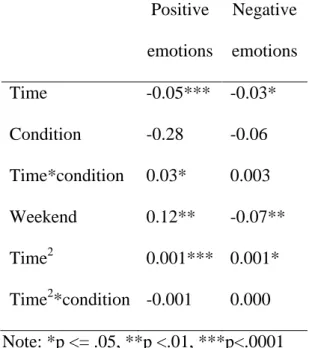
Data were analyzed using separate multilevel models for positive and negative emotions. Each model includes linear and quadratic time effects, experimental condition and the interactions between the time predictors and condition, in order to explore the linear and non-linear effects of the experimental condition on positive emotions over time. The models also control for the effects of weekends and allow the intercept, linear slope of time, quadratic slope of time and weekend estimates to vary randomly between participants.
Results are shown in Table 2.1. Participants in the social closeness condition showed a significant linear increase in positive emotions over time (β = .03, p = .05)
relative to participants in the control condition. There were no differences by condition in the negative emotions model. In both models, participants showed a linear drop in emotion intensity over the course of the study, independent of condition. This pattern was unanticipated. In the positive emotions model, it may be attributed to anticipating the end of summer, as the sample was composed entirely of university students, employees and professors and data collection started in July and ended in mid-August at the start of the fall semester. It is unclear why participants would show decreases in negative emotion intensity as well.
33 Main Study Participants
Due to an error in data collection, demographic data was only gathered at the end of the study and thus only represents participants who completed the end-of-study survey. Of the participants who completed the demographics measures, 80.5% were female, 61% were currently married, 85.4% self-identified as Caucasian and 89.6% had completed a bachelor’s degree or more. Mean age was 47.6, ranging from 27 to 62.
Social closeness manipulation
Same as in pilot study.
Vagal tone
Vagal tone was measured via respiratory sinus arrhythmia (RSA), a non-invasive measure of cardiac vagal control characterized by increases in heart rate with inspiration and decreases in heart rate with expiration (Berntson et al., 1997). Continuous recordings were made of heart rate and respiration measures at a sampling rate of 1000 Hz. From these recordings, second-by-second averages were computed. Disposable snap electrodes were placed in a bipolar configuration on lateral sides of the chest on the lowermost ribs to measure the participant’s echocardiogram (ECG). Respiration was collected with pneumatic bellows, placed around the participant’s chest at the bottom of the sternum.
34
removed by regressing RSA on respiration over the same period and extracting the residualized RSA values, free of variability due to respiration.2
Daily emotion reports
The modified Differential Emotions Scale was again used for participants’ daily emotion reports, with positive emotion (α = .92) and negative emotion (α = .81)
subscores.
Procedure
Participants were recruited from a local company for a study to “test a new method to reduce stress.” Advertisements were sent via internal email and approved by
company leadership, as well as through an informational talk given several weeks prior to commencing the study. In both formats, participants were given a description of the study and had the opportunity to sign up online for an initial testing session with an experimenter on the company grounds. Information about the participants’ identities was
not released to the company. Upon arriving at the testing session, participants were given more information about the study and had the choice to give their consent.
After consenting, participants provided a four-minute free-respiration vagal tone baseline while alone in a small, quiet room. After completing the initial meeting, participants began receiving the daily emails. For the first week, participants received only questions regarding their emotions, in order to establish a baseline. After one week, participants were randomly assigned to condition and began receiving the condition
2
35
instructions in their daily email along with the emotions questionnaire. Participants completed the daily online measures for a total of 56 days; 7 days of baseline and 49 days of experimental or control instructions. At the end of the 56-day period, participants were asked to schedule a time for a final physiological data collection session and debriefing on the company grounds. Approximately one month later, participants
received their compensation via email in the form of a password-protected in-depth report summarizing their individual responses to the intervention, compared to the group mean.
Data Analysis
Attrition. Seventy-seven participants enrolled in the study and completed the initial vagal tone measure. Forty-two participants continued in the study until the end and completed the final vagal tone and demographics measure. Participants who
completed the study reported significantly less positive emotion during the baseline week than participants who did not complete ( t= -2.23, p < .05), but did not differ reports of negative emotions (t = 1.18, p = .24) or starting vagal tone (t = -1.24, p = .22).
Participants in either condition were also equally likely to leave the study early (t=.902, p = .37).
The high rate of attrition may be attributable in part to the subtlety and day-to-day sameness of the experimental intervention. At debriefing, some participants who had not dropped out reported frustration or boredom with the study, and 88% said they thought they were in the control condition. This belief was independent of the participant’s actual condition assignment (χ2
36
distress than those who quit, and their distress motivated them to persist in the study even when it seemed tedious or ineffectual.
Hypothesis I: Participants in the social closeness condition will experience an increase in positive emotions, relative to participants in the waitlist control
condition. There will be no effect for negative emotions. Hierarchical linear modeling was used to analyze the effect of condition on change in positive emotions over time. Participants’ daily emotion reports were concatenated into week-by-week averages in
order to correspond to the SEM used to test Hypothesis II, as the small sample size meant there was insufficient power for a day-by-day SEM. The model included time, condition and the interaction of time and condition as predictors, as well as random intercepts and a random effect for time, in order to account for individual differences in participants’ starting levels of positive emotions and rate of change in positive emotions over the course of the study. Because the data were aggregated at the week level, it was not possible to include a predictor for weekend as was done in the pilot study. The interaction of condition and time was significant and positive (β = .027, p < .05), suggesting that the social closeness manipulation increased participants’ experiences of
positive emotions over the course of the study. There was no direct effect for condition (β = .020, p = .91). A model with the same predictors and error structure was fitted for
negative emotions, but the interaction of condition and time was not significant (B = .018, p = .15), nor was there a direct effect for condition (B = -.036, p = .66).
37
effect of vagal tone on change in positive emotions and the effect of positive emotions on change in vagal tone, a latent growth curve model was fitted to the data using Mplus (Muthen & Muthen, 1998-2012). Condition, starting vagal tone and their interaction predicted both the latent positive emotions intercept and the latent positive emotions slope. Consistent with the recommendations given in Curran & Hussong (2003), week-by-week positive emotions scores were constrained to one on the latent intercept term, while loadings for the slope term were as follows: 0 for the baseline week, 1 for week 1, 2 for week 2, etc. The residual of each weekly positive emotions variable was allowed to covary with the residual of the positive emotions of the following week; these
covariances were constrained to be equal, with no significant decrement in model fit relative to a model in which the week-by-week residual covariances were freely estimated. Because previous work has shown an association between vagal tone and positive affect (Oveis et al., 2009), starting vagal tone was also allowed to covary with the week 1 positive emotions score. Finally, both the positive emotions intercept and slope were used to predict end-of-study vagal tone, controlling for starting vagal tone.
38
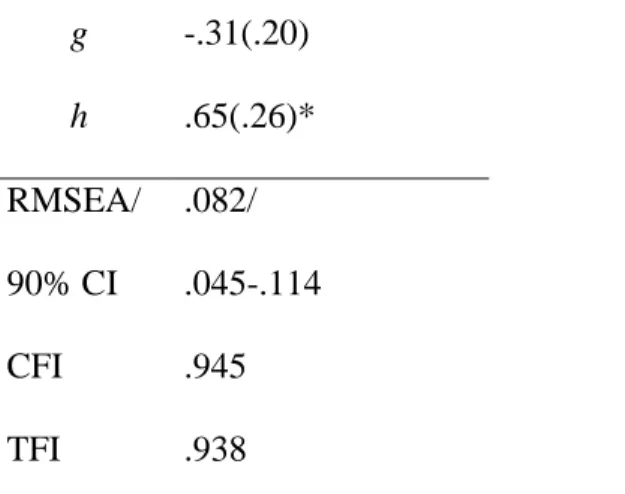
was significant and positive (path b; b = .38, p < .05), corresponding to the results of the hierarchical linear model above. The critical path representing hypothesis III (path h) was significant and positive (b = .65, p = .01), suggesting that increased positive emotions resulted in increased vagal tone. A second model was fitted that included a direct path from experimental condition to residualized end-of-study vagal tone; this path was not significant (p = .40), while all other paths remained significant, suggesting that the effect of the intervention on vagal tone was mediated by change in positive emotions.
We attempted to fit a model with the same structure and paths for negative
emotions, however, minimal variance in negative emotion scores over time meant that the model did not converge, nor did similar models with small variations in structure.
Discussion
Social closeness appears to play a causal role in generating positive affect and health-related physiological states. Consistent with our previous work (Kok, Coffey, et al., in press), experimentally manipulating social closeness set off a cascade of
psychophysiological changes, beginning with increased daily positive affect, which in turn led to greater autonomic regulation by end of study. Consistent with the Socio-Autonomic Spiral Model of Social Closeness and Health (SASM) proposed here, the robust association between social closeness and health, here represented by vagal tone, was driven by small, incremental changes in psychological state that culminated in detectable physiological change.
39
closeness manipulation. In the absence of vagal moderation, the relationship between social closeness and health in this study lacks the bi-directional and reciprocal causality that is critical to a spiral. Social closeness may increase positive emotions and vagal tone, but higher vagal tone did not appear to increase the positive emotion yield of future social closeness opportunities. It is possible that vagal tone did not moderate the effect of the social closeness intervention because the intervention was subtle and required little effort, in contrast to the time commitment and behavioral changes required by loving-kindness meditation. Self-regulation and social attention, the proposed down-stream consequences of vagal tone (Agelink et al., 2004; Porges, 2011; Thayer & Lane, 2009), could plausibly facilitate gains from LKM, but would not be needed to benefit from an intervention that consists of answering two multiple choice questions each day via email.
One purpose of this study was to test the predictions of SASM that social
closeness and health are related through a reciprocal, mutually-reinforcing link between social closeness and vagal tone that is driven by changes in positive emotions. We used a longitudinal experimental design to manipulate social closeness in healthy subjects and observed that participants in the experimental condition increased in positive emotions, which in turn increased vagal tone. These findings suggest that social closeness is related to health in part because perceived social closeness leads to more frequent positive
emotional experiences. Positive emotions, in turn, activate the parasympathetic nervous system, speeding recovery from negative events and reducing physiological wear-and-tear in ways that increase health and extend the lifespan (Chida & Steptoe, 2008).
40
emotions, which increased social closeness, which resulted in higher vagal tone (Kok, Coffey, et al., in press). In that study, social closeness mediated the relationship between positive emotions induced by LKM and vagal tone, but because social closeness was not directly manipulated, we were unable to determine whether social closeness played a causal role in bringing about change in vagal tone. Here, we have shown that
experimentally manipulated social closeness does, in fact, increase vagal tone. In
combination with our previous study, this is the first empirical evidence that LKM works by changing practitioners’ feelings of social closeness, with consequences for health.
In a recent review of the literature, loneliness, or self-perceived social isolation, was associated with a host of psychophysiological dysfunctions including increased risk of cardiovascular disease, depression, and premature death (Hawkley & Cacioppo, 2010), while interventions to treat loneliness improve mental and physical health (Masi et al., 2011). Yet what about people who are not lonely? Our work suggests that increasing social closeness can be beneficial even for people who do not report deficits in their current social lives. Social closeness, then, is more than the absence of loneliness.
41
behavior and social perceptions change during a social closeness intervention would help to address these questions. Similarly, we do not yet know how changes in positive emotions lead to changes in vagal tone. Previous work suggests that positive emotions dampen physiological responses to stress (Tugade & Fredrickson, 2004), potentially by increasing parasympathetic activity. A great deal of daily experience, however, is not stressful (Oishi, Diener, Napa Scollon, & Biswas-Diener, 2004), and it is not known whether or how positive emotions might also influence parasympathetic activity during those times. Future studies should employ more frequent measures of vagal tone in order to observe how daily events affect parasympathetic activity.
Conclusions
Feeling close to others may be beneficial for health in part because gains in social closeness increase the “daily diet” of positive emotions, which results in higher vagal tone. Vagal tone is an indicator of autonomic flexibility, meaning that people who experience frequent positive emotions may more rapidly adjust their physiological state to match the demands of the moment. This rapid and flexible responsiveness is known to decrease wear-and-tear on the heart (Thayer & Lane, 2007), thus increasing the
PSYCHOLOGICAL MEDIATORS OF VAGAL EFFECTS ON SOCIAL CLOSENESS Having evidence that social closeness increases vagal tone, the purpose of this chapter is to test whether vagal tone promotes behaviors that encourage social closeness, and if so, through what mechanisms. Social closeness promoting behaviors will be assessed in the context of an anticipated social interaction paradigm. Because American culture encourages social approach behavior in general (Riesman, Glazer, & Denney, 2001), participants were assigned to either an “easy” or a “difficult” social interaction condition. I hypothesized that vagal tone would predict social closeness promoting behavior in the difficult condition. The difficulty of the social interaction was
operationalized by varying the race of the anticipated interaction partner to be either the same or different than the race of the participant. In order to increase the salience of race, participants were told their interaction with their partner would be a conversation about “racial issues.”
The race-based manipulation of interaction difficulty was chosen because of the literature describing interracial interactions as requiring costly self-regulation and eliciting social avoidance (Richeson & Shelton, 2007; Richeson & Trawalter, 2005; Trawalter, Richeson, & Shelton, 2009). Self-regulation is central to some explanations of behavior during interracial contacts (Richeson & Shelton, 2007), as interracial
43
who are motivated to avoid appearing prejudiced (Trawalter, Adam, Chase-Lansdale, & Richeson, 2010; Trawalter & Richeson, 2006). Unfortunately, motivation to avoid
appearing prejudiced may backfire as individuals who have been depleted are less able to prevent stereotypical thoughts from resulting in prejudiced behavior (Muraven, 2008), which can lead to avoiding interracial interactions altogether as a way of preventing depletion and coping with stress (Trawalter et al., 2009). Individuals with high vagal tone may be more likely to engage in closeness-promoting behaviors even during difficult, interracial interactions due to their greater social openness and self-regulatory capacity.
Formal Statement of Hypotheses
I. Vagal tone is positively correlated with self-regulation and social openness.
II. Vagal tone, self-regulation and social openness are positively correlated with closeness-promoting behaviors in the difficult interaction condition. III. The relationship between vagal tone and closeness-promotion in the
difficult interaction condition is mediated by self-regulation and social openness.
Method Participants
44
20% black, with the remaining 7.1% split between Hispanic, Asian, not reported, and one who self-identified as “Mixed.”
Measures
Vagal tone. Vagal tone was measured via respiratory sinus arrhythmia (RSA), a non-invasive measure of cardiac vagal control characterized by increases in heart rate with inspiration and decreases in heart rate with expiration (Berntson et al., 1997). Continuous recordings were made of heart rate and respiration measures at a sampling rate of 1000 Hz. From these recordings, second-by-second averages were computed. Disposable snap electrodes were placed in a bipolar configuration on lateral sides of the chest on the lowermost ribs to measure the participant’s echocardiogram (ECG).
Respiration was collected with pneumatic bellows, placed around the participant’s chest
at the bottom of the sternum. All data were inspected offline and corrected for artifacts. RSA was calculated off-line based on changes in heart rate associated with respiration using a modified Grossman peak-to-valley method (Grossman, 1983) with re-sampling every 125 ms. Data were excluded if a peak could not be identified. The influence of respiration on RSA was removed by regressing RSA on respiration over the same period and extracting the residualized RSA values.
45
Image selection. Images were drawn from the International Affective Picture System and the Georgia Face Image Database (Center for the Study of Emotion and Attention—National Institute of Mental Health, 1999; Georgia Institute of Technology, 2007). Social and non-social images were pre-tested online with a group of college students (N=45, 51% female, M age=21.4) to ensure that the categories were similar in valence but different in degree of sociality. In total, 200 images were rated, with each participant rating a randomly-chosen and randomly-ordered sample of 50 of the images to minimize participant fatigue. Each image therefore received an average of eleven ratings of sociality and valence.
Sociality was measured via the following items: “How social is this image?” “How friendly is this image?” “How unfriendly is this image?” (reverse-scored) and “How much does this image make you want to socialize?” Valence was measured via two items: “How positive is this image?” and “How negative is this image?” (reverse-scored). All responses were on a scale from 1 (“Not at all”) to 7 (“Very much so”). Crohnbach’s alpha for the sociality items was .93; using principal components analysis
(PCA), items were combined into one Sociality factor with a standard normal
distribution. The valence items were correlated .79 (p < .0001) and were combined into one Valence factor with a standard normal distribution using PCA.
The Sociality and Valence factors were highly positively correlated (r=.88, p <.0001). As a result, selection focused on images with a standardized valence score between -1 and +1, neither extremely positive nor extremely negative. Within that set of items, images were categorized as “non-social” if the standardized sociality score was
46
initial criteria yielded a total of only 12 images, 5 non-social and 7 social. The initial selection criteria were therefore broadened to include images between -1 and 1.2 in valence, reflecting the tendency to perceive neutral stimuli as slightly positive (Ito & Cacioppo, 2005). In addition, the pool of potential social and non-social images was broadened: images were categorized as “non-social” if they fell below -.67 on the social factor and “Social” if they were over .74. This produced a total image pool of 45 images,
22 non-social and 23 social. From this pool, preference was given to images with low standard deviations in Sociality ratings, to minimize potential ambiguity in interpretation, and create high face validity.
The final image pool was 8 social and 8 non-social images, which were used for the dot-probe task (see Figure 3.2 for a comparison of the selected and non-selected item Sociality and Valence ratings). Social images were rated as significantly more “social”
than non-social images (t=15.92, p < .0001). Unfortunately, due to the strong correlation between sociality and positive valence, it was not possible to achieve a sample of images that differed significantly in sociality but not in valence: overall, the social images were rated as significantly more positively valenced than non-social images (t=-5.35, p < .0001). To address this problem, social and non-social images within the set were arranged in pairs that did not differ significantly from one another in valence, and only these pairs were presented in the dot-probe task. All social images were paired with more than one non-social image and vice versa, for a total of 23 image pairs.